The Law Offices of Anidjar and Levine can help injured victims pursue compensation after an Alafaya car accident caused by impaired or distracted driving. A claim may require proof of negligence, causation, and documented losses, including medical expenses, lost income, property damage, pain and suffering, and ongoing limitations. Important evidence may include police reports, toxicology results, phone records, witness statements, photographs, and surveillance footage. Florida comparative negligence rules and insurance deadlines may affect recovery. Learn more from an Alafaya Personal Injury Lawyer about available legal options and crucial steps to take after a crash.
Main Takeaways
- An Alafaya impaired or distracted driving lawyer can explain legal options and communicate with insurers on your behalf.
- Claims generally require proving negligence, causation, and losses such as medical expenses, lost income, and continuing limitations.
- Preserve photographs, witness information, collision records, electronic evidence, medical records, and insurance communications promptly.
- Florida comparative negligence rules may reduce compensation when an injured person shares responsibility for the crash.
- Seek immediate medical care and report the collision, providing factual information without speculating about fault.


How We Can Help With Your Alafaya Car Accident Impaired & Distracted Driving Injury Claim
When an Alafaya car accident involves impaired or distracted driving, an experienced attorney can help an injured person pursue compensation while addressing the circumstances that caused the collision. Counsel can explain available legal options, communicate with insurers, and protect the claimant from pressured statements or premature settlements. An attorney may gather photographs, medical records, employment information, witness accounts, and electronic evidence that clarify how the crash occurred. This information supports fault determination and helps establish whether another driver’s conduct contributed to the injuries.
Legal assistance also includes evaluating treatment needs, lost income, property damage, and other recoverable losses. Through careful damages calculation, counsel can present a demand that reflects the claim’s documented impact rather than an insurer’s initial assessment. The attorney can coordinate communications, monitor deadlines, and pursue negotiations designed to serve the injured person’s interests. If a fair resolution cannot be reached, counsel may prepare the claim for litigation while continuing to provide clear, responsible guidance.
OUR CONSULTATIONSARE FREE
START YOUR FREE CASE REVIEW

Understanding Alafaya Car Accident Impaired & Distracted Driving Injury Cases
An Alafaya car accident impaired and distracted driving injury case concerns a collision allegedly caused by a driver’s reduced attention, judgment, or ability to operate a vehicle safely. The injured person generally must establish that the driver owed a duty of care, breached that duty, and caused compensable harm. Evidence may include crash reports, medical records, witness accounts, vehicle data, and documented financial losses.
The case may involve physical injuries, emotional distress, treatment expenses, lost income, and continuing limitations. Florida’s Comparative negligence rules can affect recovery if an injured person is found partly responsible for the collision or resulting harm. In particularly serious circumstances, punitive damages may be considered when the conduct reflects intentional misconduct or gross negligence, rather than ordinary carelessness.
A careful evaluation also considers insurance coverage, disputed facts, deadlines, and the long-term consequences of the injuries. Legal counsel can help preserve evidence, communicate with insurers, and present the injured person’s interests with diligence, clarity, and respect.
Common Causes of Alafaya Car Accident Impaired & Distracted Driving
Common causes include texting while driving, alcohol-impaired driving, and drug-impaired driving, each of which can substantially reduce a motorist’s attention, judgment, and reaction time. Distracted passenger interactions may also divert a driver’s focus from traffic conditions and roadway hazards. These behaviors can create serious collision risks and may support liability claims when they contribute to an accident.
Texting While Driving
Texting while driving is a serious form of distracted driving that diverts a motorist’s visual, manual, and cognitive attention from the road. Reading or composing a message can require several seconds, during which a vehicle may travel the length of a football field without meaningful observation. Even brief interactions with a phone can delay braking, impair lane control, and prevent recognition of pedestrians, cyclists, traffic signals, or changing roadway conditions. These risks affect every road user, including passengers and families relying on others to drive responsibly. Practicing phone safety requires motorists to silence notifications, secure devices before movement, and use hands-free systems only when necessary. Individuals who witness unsafe conduct can encourage responsible choices without confrontation. After a collision, documenting phone use may help clarify responsibility and support injured individuals in seeking appropriate assistance.
Alcohol-Impaired Driving
When a driver operates a vehicle after consuming alcohol, impaired judgment, slowed reaction time, and reduced coordination can greatly increase the risk of a collision. Alcohol may also affect vision, decision-making, and the ability to recognize changing traffic conditions. These impairments can endanger passengers, pedestrians, cyclists, and other motorists, particularly on busy Alafaya roads. Law enforcement uses Sobriety checkpoints and roadside stops to identify drivers who may be unable to operate vehicles safely. BAC testing can provide evidence regarding alcohol concentration and may support an investigation after a crash. Individuals affected by alcohol-related collisions may need assistance understanding medical concerns, insurance issues, and available legal remedies. Prompt documentation of the scene, witness information, and official reports can help preserve important facts while supporting accountability and protecting those injured.
Drug-Impaired Driving
Drug-impaired driving can also cause serious collisions by affecting perception, coordination, judgment, and reaction time. Impairment may result from painkillers, sedatives, stimulants, cannabis, or combinations of substances that reduce a driver’s ability to respond safely. Prescription mismanagement, including taking an incorrect dosage, combining medications, or using another person’s prescription, can create risks even when the medication was legally obtained. Some drivers may also operate vehicles while experiencing fatigue, confusion, or delayed motor responses associated with treatment. Law enforcement may investigate suspected impairment through observations, field sobriety procedures, and roadside testing, although these methods may not identify every substance or accurately measure its effects in every situation. Collision evidence can include toxicology results, medication records, witness accounts, and medical documentation, helping establish whether drug impairment contributed to the crash.
Distracted Passenger Interactions
Distracted passenger interactions can divert a driver’s attention from the roadway and interfere with safe vehicle control. Passenger distraction may involve animated conversations, arguments, requests for assistance, or physical movements within the vehicle. A driver who turns to address a passenger, reaches toward a child, or attempts to manage disruptive conduct may lose awareness of traffic conditions, signals, and nearby vehicles. Distracting devices, including phones, tablets, and entertainment systems operated by passengers, can also draw a driver’s eyes or hands away from the act of driving. These interactions may become especially hazardous in congested areas, at intersections, or during emergency maneuvers. Passengers can serve others by maintaining calm conduct, securing children and belongings, and refraining from requests that require driver engagement. Preventing avoidable distractions supports safer roads and reduces the likelihood of serious collisions.
Don’t Wait. Call Our Florida Personal Injury Lawyers Now!


Legal Rights of Alafaya Car Accident Impaired & Distracted Driving Injury Victims
Victims of impaired or distracted driving crashes in Alafaya may have legal rights to pursue compensation from the responsible driver and, in some cases, other liable parties. An injured person may seek damages for medical care, lost income, property damage, pain, and ongoing rehabilitation needs.
Prompt legal guidance can help preserve evidence and protect procedural rights.
- A claim may require proof of negligence, causation, and quantifiable losses.
- Victims should document treatment, costs, employment impacts, and insurance communications.
- They may share negligence defenses raised by opposing parties with counsel for careful evaluation.
- Legal representatives can collect witness affidavits, collision records, photographs, and relevant electronic evidence.
Florida deadlines and insurance rules may affect the ability to recover compensation. A representative serving injured community members should explain available options without making promises about results. Careful case preparation can help ensure that a victim’s account is heard accurately and that responsible parties are held appropriately accountable. Families may also have separate rights when a crash causes a fatality.
Why Do Alafaya Car Accident Impaired & Distracted Driving Injuries Happen?
Impaired and distracted driving injuries in Alafaya often occur when motorists operate vehicles while their judgment, reaction time, or attention is compromised. Alcohol, cannabis, prescription medications, fatigue, and mobile-device use can reduce awareness, delay braking, and impair decisions at intersections or during lane changes. Some collisions result from drivers eating, adjusting navigation systems, talking with passengers, or responding to notifications instead of monitoring traffic.
Risky roadways may increase danger when congestion, construction, limited lighting, or confusing traffic patterns demand focused attention. During evening commutes, darkness and fatigue can compound impairment, making pedestrians, cyclists, and turning vehicles harder to detect. Distracted pedestrians also contribute to hazardous conditions when they cross while looking at screens or wearing headphones, although drivers remain responsible for exercising reasonable care and control.
These incidents frequently cause preventable harm because a momentary lapse can produce high-impact crashes. Understanding the contributing behaviors helps communities promote safer transportation practices and encourages accountability when negligent conduct injures others.
What Should You Do After an Alafaya Car Accident Impaired & Distracted Driving Injury?
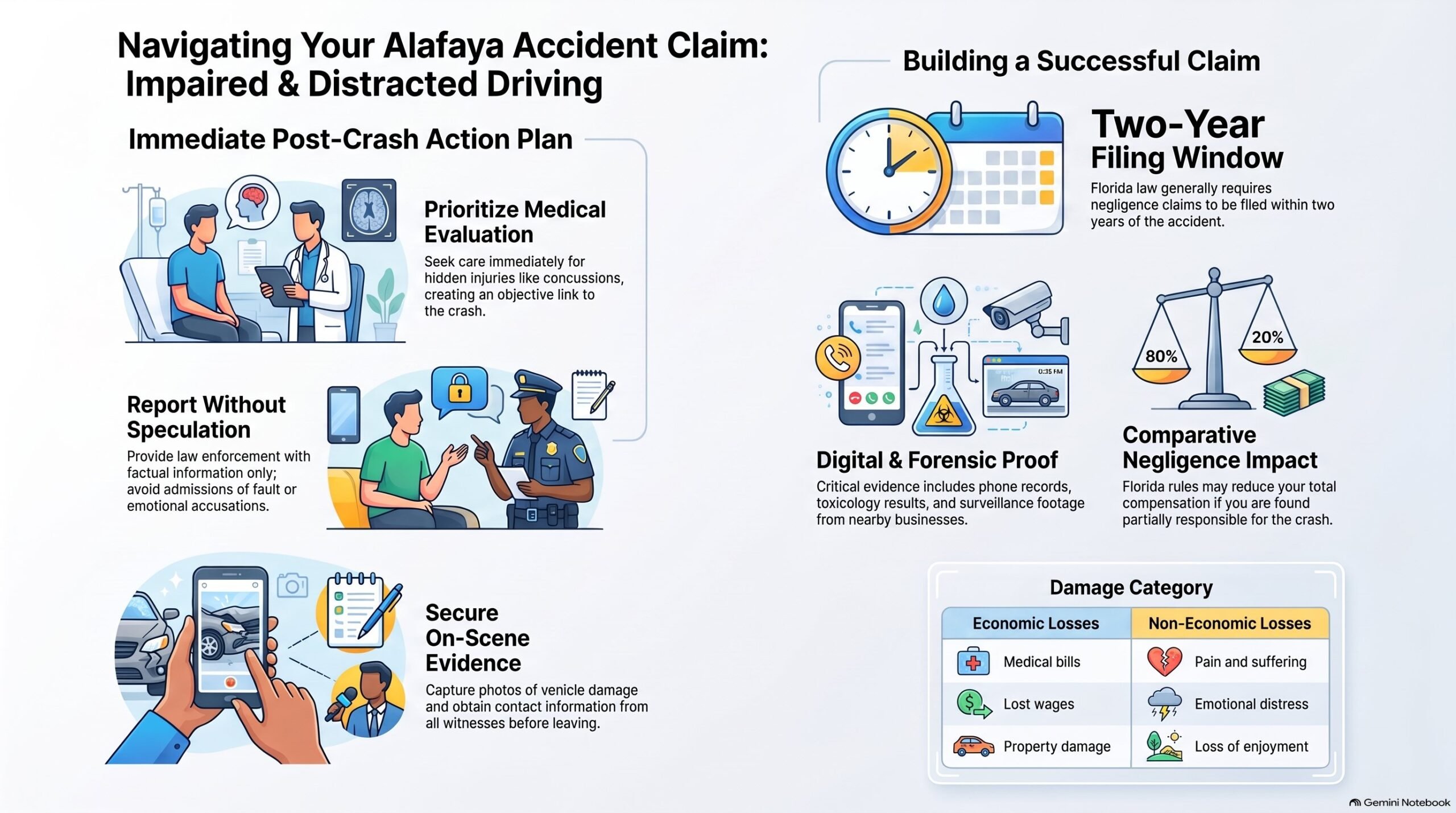
After an impaired or distracted-driving crash, the injured person should seek immediate medical care, even when symptoms initially appear minor. The accident should be reported to law enforcement, and medical records should be preserved. Photographs, witness information, vehicle damage, and documentation of injuries can help establish the circumstances and resulting harm.
Seek Immediate Medical Care
Prompt medical evaluation is essential following an Alafaya car accident involving suspected impaired or distracted driving, even when injuries initially appear minor. A qualified clinician can identify concussions, internal trauma, soft-tissue damage, and other conditions that may develop gradually. The injured person should follow medical instructions, attend recommended appointments, and preserve records of diagnoses, treatment, prescriptions, and related expenses. Immediate care also creates an objective health record connecting symptoms to the collision, which may support later insurance or legal review. Medical personnel should receive accurate information about pain, dizziness, confusion, numbness, or changes in mobility. Patients should avoid minimizing symptoms or delaying evaluation to assist with other matters. Preserving distracted-driving evidence and understanding Florida texting laws can be addressed later, after health and safety restoration takes priority.
Report The Accident
Promptly reporting the collision is an important step after an Alafaya car accident involving suspected impaired or distracted driving. If immediate danger exists, the injured person or a bystander should contact 911 and request medical assistance and law enforcement. The Emergency contact should provide the location, apparent hazards, number of vehicles, and any urgent medical concerns without speculating about fault. Once officers arrive, cooperation is appropriate, but statements should remain factual and limited. The driver should avoid admissions, arguments, or accusations, particularly while emotions remain elevated. Each involved motorist should exchange names, telephone numbers, license numbers, vehicle registration numbers, and insurance details. A person should notify the insurer promptly and avoid making recorded statements or entering into settlements before receiving legal advice. Preserving evidence also requires following official instructions and retaining all reports and communications.
Document Evidence and Injuries
With the collision reported and basic information exchanged, the injured person should begin documenting the accident, medical condition, and related losses as soon as reasonably possible. Photographs should capture vehicle damage, roadway conditions, traffic signs, visible injuries, and relevant surroundings before evidence changes. Witness names and contact information should be preserved, along with insurance details and any correspondence concerning the collision. Nearby businesses, residences, or traffic authorities may possess Surveillance footage, so preservation requests should be made promptly before recordings are overwritten. The injured person should obtain timely medical evaluation and follow recommended treatment, even when symptoms initially appear minor. Medical records, prescriptions, diagnostic results, and provider instructions can establish the injury’s development and required care. Receipts, wage documentation, and a dated symptom journal may further support claims for financial and personal losses.
Critical Evidence in an Alafaya Car Accident Impaired & Distracted Driving Injury Case
Critical evidence can establish whether impaired or distracted driving caused the Alafaya collision and support an injured person’s claim.
Key sources may include:
- Police accident reports
- Toxicology and sobriety evidence
- Phone and digital records
- Witness statements and surveillance
These materials should be preserved promptly because their availability, accuracy, and relevance may critically affect the case.
Police Accident Reports
Police accident reports can serve as important evidence in an Alafaya car accident injury case involving suspected impaired or distracted driving. Officers typically document the collision location, vehicle damage, road conditions, witness statements, and each driver’s account. Their observations may also identify signs of inattention, inconsistencies, or violations that help clarify how the crash occurred. A report can preserve contact information for witnesses and note whether nearby cameras or a dashcam video might provide additional documentation. It may record the position of vehicles and relevant markings observed on the police dashboard camera, when available. Although the report is not automatically conclusive, it can guide further investigation and support a carefully presented claim. An attorney representing injured people can review the report for omissions, inconsistencies, and evidence that requires follow-up.
Toxicology And Sobriety Evidence
Toxicology results, field sobriety tests, breath-test readings, and other sobriety evidence may help establish whether impairment contributed to an Alafaya car accident. Blood alcohol measurements can indicate alcohol concentration, while laboratory testing may identify drugs, prescription medications, or combinations affecting alertness and coordination. Records should be obtained promptly because samples, testing procedures, and collection documentation can be challenged or lost. Field observations, officer notes, and video of standardized tests may provide context, although those materials require careful evaluation for consistency and proper administration. A qualified attorney can review chain-of-custody records, calibration documentation, and expert interpretations to assess reliability. Digital forensics may also authenticate relevant timing or activity evidence, but analysis should remain focused on sobriety issues rather than broader phone records. This evidence can support a fair, service-oriented evaluation of injury claims.
Phone And Digital Records
When a driver’s phone use is suspected in an Alafaya car accident, digital records may help establish whether texting, calling, navigation, or app activity occurred near the time of the collision. Call log extraction can identify incoming and outgoing calls, their durations, and timestamps, which may clarify the driver’s activity before impact. Digital device data may also reveal messages, application use, screen interactions, location information, or hands-free connections, depending on the device and available records. Investigators may seek this information through preservation requests, subpoenas, or other lawful procedures. Because data can be overwritten, altered, or limited by privacy protections, prompt action is important. Qualified professionals can assess relevance, preserve evidence, and explain technical findings clearly. Such records may support a careful evaluation of liability, injuries, and available compensation for affected individuals and families.
Witness Statements And Surveillance
Witness statements and surveillance footage can provide critical evidence in an Alafaya car accident involving suspected impaired or distracted driving. Eyewitness accounts may describe unsafe lane changes, delayed reactions, erratic speed, visible impairment, or phone distraction immediately before impact. Their observations can help clarify disputed facts while memories remain reasonably fresh. Surveillance footage from nearby businesses, traffic intersections, residences, or vehicles may capture the collision, roadway conditions, driver behavior, and events that occurred in the seconds leading up to it. Investigators can compare these sources with police reports, vehicle damage, and electronic records to establish reliable accident timelines. Promptly preserving recordings is important because systems may automatically overwrite data. A qualified attorney can identify potential witnesses, request relevant footage, and organize evidence responsibly while protecting the injured person’s interests and supporting a fair claim.
Long-Term Effects of Alafaya Car Accident Impaired & Distracted Driving Injuries
Impaired or distracted driving injuries may produce chronic pain, lasting disability, and limitations that affect a person’s work and daily activities. Emotional and psychological trauma, including anxiety, depression, or post-traumatic stress, may also continue long after physical wounds appear to recover. Ongoing medical expenses for treatment, rehabilitation, medication, and related care can create substantial long-term financial burdens.
Chronic Pain and Disability
Chronic pain and disability can become lasting consequences of injuries caused by impaired or distracted driving crashes in Alafaya. Fractures, spinal damage, nerve injuries, and soft-tissue conditions may limit movement, endurance, and the ability to perform ordinary tasks. Some injured individuals require continuing treatment, rehabilitation, assistive devices, or corrective procedures. Others may be unable to return to their prior occupations, reducing income and affecting future earning capacity.
Documentation can help establish how these limitations influence daily life and employment. Medical records should describe diagnoses, treatment, functional restrictions, expected recovery, and permanent impairments. Work Restrictions may identify limits on lifting, standing, driving, or scheduled hours. Employer Documentation can confirm missed work, modified duties, reduced productivity, or job loss. Legal counsel may organize this evidence to support claims for medical costs, lost wages, and long-term care.
Emotional and Psychological Trauma
Emotional and psychological trauma may persist long after physical injuries from an impaired or distracted driving crash in Alafaya have begun to mend. Survivors may experience anxiety, depression, irritability, or difficulty trusting other drivers. Some avoid vehicles, intersections, or routes associated with the collision, limiting work, family responsibilities, and community participation. Post-accident nightmares, intrusive memories, and heightened alertness can disrupt sleep and concentration. These responses may affect relationships and a person’s ability to feel secure in ordinary situations. Mental health professionals can evaluate symptoms and recommend trauma therapy options, including counseling, cognitive behavioral therapy, or other evidence-based approaches. Support from family members, caregivers, and trusted advocates may encourage treatment without judgment. Documentation of psychological symptoms can help explain the crash’s continuing impact on daily life and recovery.
Ongoing Medical Expenses
Beyond psychological recovery, an Alafaya car accident involving impaired or distracted driving may create ongoing medical expenses for months or years. Injured individuals may require follow-up appointments, physical therapy, prescription medication, surgical care, or assistive equipment. Some may also need treatment for chronic pain, limited mobility, or traumatic brain injuries that affect daily functioning and employment.
Accurate case documentation can help establish the connection between the crash and continuing care. Medical records, treatment plans, invoices, and evidence of future needs may clarify the financial impact. During insurance negotiations, a thorough accounting of anticipated expenses can support a demand that reflects both current bills and reasonably projected costs. A legal professional may consult physicians and life-care experts to evaluate long-term treatment. This process helps protect resources needed for recovery and continued service to families and communities.
Don’t Wait. Call Our Florida Personal Injury Lawyers Now!
Proving Liability in Alafaya Car Accident Impaired & Distracted Driving Injury Cases
When impaired or distracted driving contributes to a collision, establishing liability in an Alafaya car accident injury case requires evidence connecting the driver’s conduct to the crash and resulting harm. Relevant proof may include toxicology results, cellphone records, witness statements, vehicle data, and police dashcam footage. Investigators may also examine traffic signals, skid marks, vehicle damage, and the timing of events to determine how the collision occurred. Medical records and qualified testimony can establish that the crash caused specific injuries, treatment needs, and functional limitations. A comparative fault analysis may be necessary when another motorist, pedestrian, or injured person allegedly contributed to the incident. Florida’s allocation of fault can affect the amount recoverable, making accurate fact development especially important. Attorneys serving injured community members may coordinate accident reconstruction, preserve time-sensitive evidence, and identify responsible parties. Prompt reporting and consistent documentation can strengthen the liability assessment and help ensure that claims are evaluated based on the available facts.
Dealing With Insurance Companies After an Alafaya Car Accident Impaired & Distracted Driving Injury
After liability evidence is developed, insurance communications become a significant part of an Alafaya car accident injury claim involving impaired or distracted driving. A representative may request recorded statements, medical authorizations, photographs, or employment information. Those requests should be reviewed carefully, because incomplete responses or unnecessary disclosures can affect how injuries and damages are evaluated.
An injured person may benefit from directing communications through legal counsel, particularly when an insurer proposes a quick settlement before treatment is complete. Counsel can organize medical records, document financial losses, and explain how impaired or distracted conduct supports responsibility without overstating the evidence. Regular Claim timeline updates help maintain accurate records of treatment, expenses, correspondence, and insurer decisions.
When coverage is denied, delayed, or undervalued, counsel can review policy terms and supporting documentation before pursuing an Insurance denial appeal. Clear written responses should identify factual errors and provide relevant evidence. This approach helps protect the injured person’s interests while keeping communications respectful, accurate, and focused on a fair resolution.
What to Expect During an Alafaya Car Accident Impaired & Distracted Driving Injury Claim Process
An impaired or distracted driving injury claim typically begins with an initial evaluation of liability, damages, and available insurance coverage. The evidence collection process may include crash reports, medical records, witness statements, phone data, and other documentation, followed by negotiations with the insurance company. If the parties cannot reach a fair settlement, the claim may proceed to trial, where liability and compensation are determined through formal litigation.
Initial Claim Evaluation
Initial claim evaluation establishes the facts, legal issues, and potential value of an impaired or distracted driving injury claim in Alafaya. The attorney typically discusses the collision, diagnosed injuries, medical treatment, employment effects, and available insurance coverage. This review helps identify potential defendants, applicable deadlines, and whether the circumstances support a negligence claim under Florida law. Liability Evidence may include facts about impairment, distraction, traffic violations, or admissions, although detailed evidence collection occurs later. The evaluation also considers comparative fault and the likely defenses raised by opposing parties. Insurance Disputes can arise when an insurer questions responsibility, medical necessity, policy limits, or the extent of damages. Counsel explains the claims process, communication expectations, and possible resolutions, allowing the injured person to make informed decisions while protecting personal interests.
Evidence Collection Process
When an Alafaya car accident claim involves suspected impaired or distracted driving, counsel begins collecting evidence that may establish fault, causation, and the full extent of the injured person’s losses. Investigators may obtain Crash Scene Photos showing vehicle positions, road conditions, traffic controls, property damage, and visible injuries. Witness statements, police reports, surveillance recordings, and available vehicle data can clarify how the collision occurred. Cell Phone Logs may help determine whether a driver was texting, calling, or using an application near the time of impact, subject to lawful access and privacy requirements. Medical records, diagnostic reports, employment information, and treatment documentation help connect injuries to the crash and measure resulting limitations. Counsel may also preserve damaged vehicles and identify expert witnesses before evidence changes, disappears, or becomes difficult to authenticate.
Insurance Company Negotiations
With the relevant evidence preserved, negotiations with the at-fault driver’s insurance company can begin. The insurer typically assigns an adjuster to review liability, medical records, documented losses, and applicable policy limits. A claimant or representative may submit a demand supported by organized evidence, while the insurer may request additional information or question aspects of the claim. Careful communication helps prevent inaccurate statements and protects the injured person’s interests. Counsel can use dispute-resolution tactics, including clarifying disputed facts, presenting corroborating documentation, and responding to unreasonable evaluations with concise explanations. Handling insurance timelines also requires monitoring response deadlines, medical developments, and required notices. Throughout this phase, records of communications and expenses should remain up to date. Professional advocacy can promote informed discussions and fair evaluation of the documented injuries.
Settlement Or Trial
If negotiations do not produce an acceptable resolution, the injured person may proceed toward litigation, where the claim can be resolved through settlement or trial. A settlement concludes the dispute without a courtroom verdict, often providing a predictable result and reducing expenses, delays, and emotional strain. Before accepting an offer, the claimant should evaluate medical evidence, future care needs, lost income, property damage, and applicable insurance coverage.
If settlement discussions continue, documented liability and credible damages can create negotiation leverage. The defense may raise comparative fault, arguing that the injured person contributed to the collision. Evidence of distracted or impaired driving, witness statements, photographs, and crash reports may address that position. If no fair agreement develops, a trial allows each side to present evidence before a judge or jury. Legal counsel can help protect the claimant’s interests throughout either process.
Compensation for Alafaya Car Accident Impaired & Distracted Driving Injury Damages
Victims injured by impaired or distracted drivers in Alafaya may be entitled to compensation for medical expenses, lost income, property damage, and pain and suffering. Recovery may also cover necessary rehabilitation, transportation costs, and other losses, provided they are supported by reliable documentation. The available amount depends on the severity of the injuries, the strength of the evidence, applicable insurance coverage, and the driver’s responsibility for causing the collision.
Prompt medical evaluation helps establish a connection between the crash and claimed injuries. Records should be preserved, including photographs, witness contact information, police reports, medical bills, employment records, vehicle estimates, and communications with insurers. Evidence preservation tips include keeping damaged property unchanged when possible and maintaining a written record of symptoms and treatment.
An effective insurance claim strategy should present organized proof, identify all potentially responsible parties, and account for future needs without making unsupported demands. A qualified lawyer may communicate with insurers, investigate evidence of impairment or distraction, and pursue a fair resolution through negotiation or litigation when appropriate.
Economic vs Non-Economic Damages in Alafaya Car Accident Impaired & Distracted Driving Cases
Economic damages may cover quantifiable losses such as medical expenses, lost income, and property damage resulting from impaired or distracted driving. Non-economic damages address less measurable harm, including pain, emotional distress, and diminished quality of life. Proving these accident losses generally requires medical records, financial documentation, witness testimony, and other reliable evidence connecting the damages to the collision.
Economic Damages
In Alafaya impaired- and distracted-driving cases, economic damages compensate an injured person for measurable financial losses caused by the collision. Recoverable amounts may include emergency treatment, hospital services, medication, rehabilitation, medical equipment, and transportation for necessary care. Documentation, such as invoices, receipts, employment records, and insurance statements, helps establish the value and causal connection of each expense. Damages may also cover income lost during recovery and reduced earning capacity when injuries affect future employment. Future wage loss calculations generally consider the person’s earnings history, work-life expectancy, qualifications, and medical evidence concerning lasting limitations. These assessments differ from Medical negligence claims, although both may require detailed proof and expert testimony. A careful legal review can identify overlooked expenses and present a reliable financial measure of collision-related losses for those seeking assistance.
Non-Economic Damages
Non-economic damages address the personal effects of an Alafaya impaired- or distracted-driving collision that do not have a fixed price. They may include physical pain, emotional distress, inconvenience, disfigurement, loss of enjoyment, and diminished quality of life. For families seeking to serve an injured person’s interests, recognizing these harms requires attention to how the collision changes daily activities, relationships, and independence. Florida claims may evaluate the severity and duration of these effects rather than rely on receipts or wage records. Liability evidence preservation remains important because credible collision documentation can support the overall circumstances surrounding the injury. Attorney-client communication tips include providing accurate updates, protecting confidential discussions, and explaining expectations without promising a specific outcome. Counsel may help present these personal consequences respectfully while pursuing compensation proportionate to the injury’s lasting impact.
Proving Accident Losses
When an Alafaya impaired- or distracted-driving collision causes injury, proving accident losses requires separating measurable financial harm from personal effects that lack a fixed dollar value. Economic damages may include medical treatment, rehabilitation, lost wages, reduced earning capacity, property damage, and future care. Non-economic damages address pain, emotional distress, disability, disfigurement, and diminished quality of life. Effective damages documentation should include invoices, wage records, medical opinions, photographs, and a consistent account of daily limitations. Evidence preservation should include invoices, wage records, medical opinions, photographs, and a consistent account of daily limitations. Evidence preservation is vital because vehicle data, surveillance footage, phone records, and physical conditions may change or disappear. A negotiation strategy should link documented losses to the collision and present credible projections for the future. Witness credibility also matters; neutral witnesses and treating professionals can strengthen testimony concerning fault, recovery, and ongoing harm. Courts and insurers evaluate consistency, causation, and proof.
When an Alafaya Car Accident Impaired & Distracted Driving Injury Case Goes to Trial vs. Settlement
Because impaired or distracted driving cases often involve disputed facts, an Alafaya car accident injury claim may proceed to trial if the parties cannot agree on liability or fair compensation. A settlement may resolve the matter earlier, allowing an injured person to receive compensation without testimony, cross-examination, or the uncertainty of a jury’s decision.
The Trial vs. settlement timeline depends on medical recovery, evidence collection, negotiations, and court scheduling. Settlement discussions can begin before filing a lawsuit and may continue after litigation starts. A careful settlement negotiation strategy evaluates documented losses, future needs, disputed facts, and the risks of accepting or rejecting an offer.
A trial may become necessary when an insurer denies responsibility, minimizes injuries, or refuses to pay reasonable compensation. During trial, each side presents evidence and arguments, while the court determines whether the evidence supports recovery and what amount is appropriate. Legal guidance can help families understand available options, prepare effectively, and pursue a resolution that supports the injured person’s recovery and long-term needs.
Florida Laws That May Affect Your Alafaya Car Accident Impaired & Distracted Driving Case
Florida law may affect nearly every stage of an Alafaya impaired or distracted driving injury case, including fault, insurance coverage, available damages, and the time allowed to pursue a claim. Florida traffic statutes establish duties involving speed, lane control, texting, and operation under the influence. Their violation may support evidence of negligence, although liability still depends on the facts and applicable defenses.
Key legal considerations include:
- Comparative fault may reduce compensation when an injured person contributed to the collision.
- No-fault insurance generally addresses initial medical expenses and lost income, subject to policy limits and eligibility requirements.
- Serious injuries may permit claims for damages beyond personal injury protection benefits, including pain, disability, and diminished quality of life.
- Distracted driving penalties can include fines, points, and enhanced penalties for repeat offenses, while impaired driving may involve criminal prosecution and administrative license sanctions.
Careful evidence preservation, respectful communication with witnesses, and coordinated assistance can help protect injured individuals and support accurate, service-oriented case evaluation. Insurance policy language and statutory exceptions also require professional review.
Don’t Wait. Call Our Florida Personal Injury Lawyers Now!
The Statute of Limitations for Alafaya Car Accident Impaired & Distracted Driving Injury Cases
Beyond insurance coverage, damages, and fault, the time limit for filing a legal claim can determine whether an injured person preserves the right to seek compensation. In Florida, car accident timelines depend on several factors, including the date of injury, the type of claim, and whether a government entity may be involved. Under current Florida law, negligence claims generally must be filed within two years after the accident. Wrongful-death claims typically carry the same two-year period, while claims against governmental defendants may require earlier notice and shorter deadlines.
Exceptions can alter when the limitations period begins or ends, particularly when injuries are discovered later, or the injured person is a minor. Missing a deadline may result in dismissal, regardless of the seriousness of the harm. Prompt medical care, documentation, witness identification, and evidence preservation support accurate evaluation of the claim. Because deadlines can be fact-specific, timely legal review helps protect an injured person’s ability to seek appropriate relief.
How an Alafaya Car Accident Impaired & Distracted Driving Lawyer Can Help You
An Alafaya car accident impaired-and-distracted-driving lawyer can help an injured person evaluate liability, preserve key evidence, and pursue compensation under applicable Florida law. The lawyer may investigate Smartphone distractions, alcohol or drug impairment, traffic violations, and roadway conditions while coordinating with appropriate professionals.
An Alafaya car accident lawyer can investigate impaired or distracted driving, preserve evidence, and pursue fair compensation under Florida law.
Key services may include:
- Gathering phone records, witness statements, crash reports, photographs, and available video before evidence disappears.
- Reviewing medical documentation and connecting injuries to the collision through qualified healthcare providers.
- Analyzing insurance evidence, policy provisions, fault allegations, and potential coverage disputes.
- Communicating with insurers and opposing parties to protect the injured person from inaccurate statements or unfair settlement pressure.
A lawyer can also calculate damages involving treatment costs, lost income, reduced earning capacity, property damage, and legally recognized non-economic losses. By managing investigation and legal communications, counsel allows an injured person to focus on recovery while supporting accountability and fair treatment. Professional representation may further promote safer driving practices by addressing conduct that places other community members at risk.
When to Contact an Alafaya Car Accident Impaired & Distracted Driving Lawyer
When a collision may involve impaired or distracted driving, an injured person should contact an Alafaya car accident lawyer as soon as reasonably possible. Early guidance can help preserve relevant records, identify witnesses, and organize information about the crash without interfering with medical care. A consultation also gives the injured person an opportunity to choose the right firm based on experience, accessibility, and a demonstrated commitment to serving clients responsibly.
During an initial meeting, case intake questions may address symptoms, treatment, vehicle damage, police reports, insurance communications, and possible signs of impairment or phone use. Clear answers can help counsel understand immediate concerns and determine appropriate next steps. Individuals should discuss client communication needs, including preferred contact methods and accommodations related to recovery.
Prompt attention is particularly important because evidence can disappear and deadlines may apply. Counsel can explain potential timelines for filing, preserve communication records, and identify documents to retain. Contact remains appropriate even when liability or injury details are still developing.
Why You Need an Experienced Alafaya Car Accident Impaired & Distracted Driving Lawyer
Experienced legal counsel can be highly important in impaired and distracted driving cases because these claims often require careful evaluation of conduct, causation, and available evidence. An experienced Alafaya attorney can investigate collision reports, medical records, witness accounts, phone data, and available video to clarify how impairment or distraction contributed to harm. The analysis may involve text distraction, passenger distraction, fatigue, medication, or alcohol use, each of which can affect responsibility differently. Counsel can also explain how DUI penalties differ from civil remedies and why criminal consequences do not automatically compensate injured individuals. In addition, Comparative negligence may affect recovery when another driver, claimant, or third party is alleged to share responsibility. By organizing evidence and presenting a clear account of losses, legal counsel can help protect an injured person’s interests while supporting family members and the broader community. This assistance promotes accountability, informed decisions, and fair treatment throughout the claim without relying on assumptions or unsupported accusations.
How to Choose the Right Alafaya Car Accident Impaired & Distracted Driving Lawyer for Your Case
Selecting the right Alafaya car accident impaired and distracted driving lawyer requires careful consideration of the attorney’s experience, investigative resources, communication practices, and approach to case evaluation. A suitable lawyer should understand impaired-driving evidence, phone records, witness accounts, roadway conditions, and insurance procedures. The attorney should also demonstrate a commitment to protecting injured individuals and pursuing accountability through careful preparation.
During consultations, prospective clients may use Case evaluation questions to clarify potential claims, evidence needs, deadlines, likely challenges, and the lawyer’s role in decision-making. Clear answers can help determine whether the attorney offers practical guidance and respectful service. Clients should also review a fee agreement checklist covering contingency percentages, litigation costs, case-related expenses, and responsibility for unpaid charges. Communication expectations, document access, and significant case updates should be addressed before representation begins. Comparing several qualified attorneys may help a family select counsel whose experience, accessibility, and professional standards align with the case’s circumstances and the client’s need for dependable advocacy.
About The Law Offices of Anidjar & Levine
The Law Offices of Anidjar & Levine represents individuals injured in car accidents, including collisions involving impaired or distracted drivers.
The firm assists Alafaya clients in understanding their legal options and pursuing compensation for medical expenses, lost income, property damage, and other accident-related losses.
Its Firm history reflects experience handling personal injury claims involving intricate liability questions and insurance disputes.
Attorneys evaluate collision evidence, communicate with insurers, and work to identify responsible parties while protecting each client’s legal interests.
This preparation may include reviewing reports, witness accounts, medical records, and available roadway or vehicle evidence.
The firm’s client-first approach emphasizes responsive communication, individualized case assessment, and practical guidance throughout the claims process.
Because every accident presents different circumstances, legal strategies are developed according to the injuries, evidence, and objectives involved.
Individuals seeking to support injured community members may contact the firm to learn how a qualified legal team can help protect their rights and pursue an appropriate resolution.
Frequently Asked Questions
Can I Pursue a Claim if the At-Fault Driver Was Uninsured?
Yes, an injured person may pursue compensation even when the at-fault driver was uninsured. Available recovery often depends on the injured person’s policy, including Uninsured coverage options that may pay medical expenses, lost income, and qualifying damages. The uninsured claim process typically requires prompt notice, evidence of fault, medical documentation, and compliance with policy deadlines. An attorney can review coverage, investigate the collision, address disputes, and identify additional responsible parties when circumstances support further recovery.
Will My Car Accident Case Affect My Immigration Status?
A car accident claim usually does not affect a person’s immigration status, particularly when the individual is seeking compensation as an injured party. However, Impact hearings, legal language, visa outcomes, and case timelines may raise concerns in unusual circumstances, such as alleged fraud, criminal conduct, or immigration-related proceedings. A licensed attorney can explain applicable protections, coordinate with immigration counsel, and help ensure accurate statements and documentation throughout the case.
Can Passengers File Separate Claims After an Impaired Driving Crash?
Yes, passengers may file separate claims after an impaired driving crash, seeking compensation for medical expenses, lost income, pain, and other damages. Each passenger’s injuries and evidence are evaluated independently, even when claims involve the same driver or insurer. A passenger’s comparative fault may reduce recovery if the passenger knowingly accepted unreasonable risks, though that issue depends on the facts. The parties may also consider joint settlement options, which require careful review before acceptance.
What Happens if the At-Fault Driver Dies After the Accident?
If the at-fault driver dies after an accident, potential claims generally continue against the driver’s estate rather than disappearing. Estate liability issues may involve insurance coverage, available assets, and probate procedures. Survival claims can preserve the injured person’s damages, while separate wrongful death timing rules may apply if someone later dies from injuries. Evidence preservation, including medical records, crash reports, witness accounts, and electronic data, is critical because estate administration may limit recovery opportunities.
Can I Recover Damages for Damage to Personal Belongings Inside My Vehicle?
Yes, an injured party may recover damages for personal belongings damaged in the vehicle, provided responsibility for the collision is established. Insurance coverage may include these losses under the at-fault driver’s property-damage liability policy, subject to applicable limits and exclusions. The claimant should preserve receipts, photographs, repair estimates, and other property evidence demonstrating ownership, condition, and replacement cost. A careful inventory and timely documentation can strengthen the claim and support fair compensation.
—————————
Victims of Alafaya car accidents involving impaired or distracted drivers may face substantial medical expenses, lost income, and lasting consequences.
Establishing liability requires a careful review of crash evidence, the driver’s conduct, available insurance coverage, and the full extent of the resulting damages.
An experienced Alafaya Personal Injury Lawyer can protect a victim’s rights, handle communications with insurers, and pursue appropriate compensation.
The Law Offices of Anidjar and Levine provide informed legal guidance to individuals seeking accountability and recovery after these preventable collisions.