The Law Offices of Anidjar and Levine protect Orlando victims of red-light violations by swiftly preserving dash-cam and traffic-camera footage, securing signal-timing records, and documenting injuries to quantify damages.
Our team coordinates medical experts and accident reconstructionists to establish liability and counter comparative-negligence defenses.
We negotiate with insurers and, when necessary, litigate to recover medical costs, lost wages, and pain and suffering.
Learn more from our Car Accident Lawyer in Orlando for aggressive advocacy and thorough case preparation.
Main Takeaways
- Hire a local Orlando attorney experienced in traffic‑signal violation cases to evaluate liability and quantify damages.
- Preserve all evidence immediately: photos, videos, dash‑cam footage, police reports, and signal‑timing records.
- Document medical treatment, lost wages, and pain‑and‑suffering to support economic and non‑economic loss claims.
- Assess comparative negligence and any prior driver violations to strengthen the negligence argument.
- Use accident reconstruction and expert testimony to prove the red‑light breach caused the injuries.


How We Can Help With Your Orlando Failure To Obey Traffic Signal Accident Injury Claim
We evaluate your case promptly, gathering evidence and consulting experts to establish liability and quantify damages. Our team then reviews the incident’s specifics, focusing on how the traffic‑signal violation caused your injuries and what compensation you merit. By analyzing police reports, medical records, and witness statements, we build a sturdy factual foundation that strengthens your claim. When insurance disputes arise, we intervene decisively, leveraging our knowledge of policy language and statutory obligations to protect your rights.
Throughout settlement negotiation, we maintain clear communication, presenting compelling arguments that emphasize the severity of your losses and the responsible party’s duty. We aim to achieve a fair resolution without unnecessary litigation, conserving resources while ensuring you receive the restitution you need for medical bills, lost wages, and pain and suffering. Our approach reflects a commitment to serving those harmed by negligence, delivering expert guidance, and relentless advocacy.
OUR CONSULTATIONSARE FREE
START YOUR FREE CASE REVIEW

Understanding Orlando Failure To Obey Traffic Signal Accident Injury Case
When a driver runs a red light or ignores a stop sign, the resulting collision often creates complex legal issues that we must untangle for you. In Orlando, a Failure To Obey Traffic Signal injury case hinges on establishing how signal timing contributed to the accident and how pedestrian rights were infringed. We examine traffic‑camera footage, police reports, and witness statements to demonstrate that the offending driver violated the lawful sequence of light changes, creating a foreseeable danger.
By highlighting the victim’s right to cross streets safely, we strengthen the claim for compensation. Our team assesses medical records, loss‑of‑income documentation, and long‑term disability implications to quantify damages. We also evaluate comparative negligence to ensure that any contributory fault is fairly apportioned. Throughout, we keep the client informed by explaining each procedural step and legal standard so they understand how we protect their interests and uphold justice.
Common Causes of Orlando Failure To Obey Traffic Signal Accident Injuries
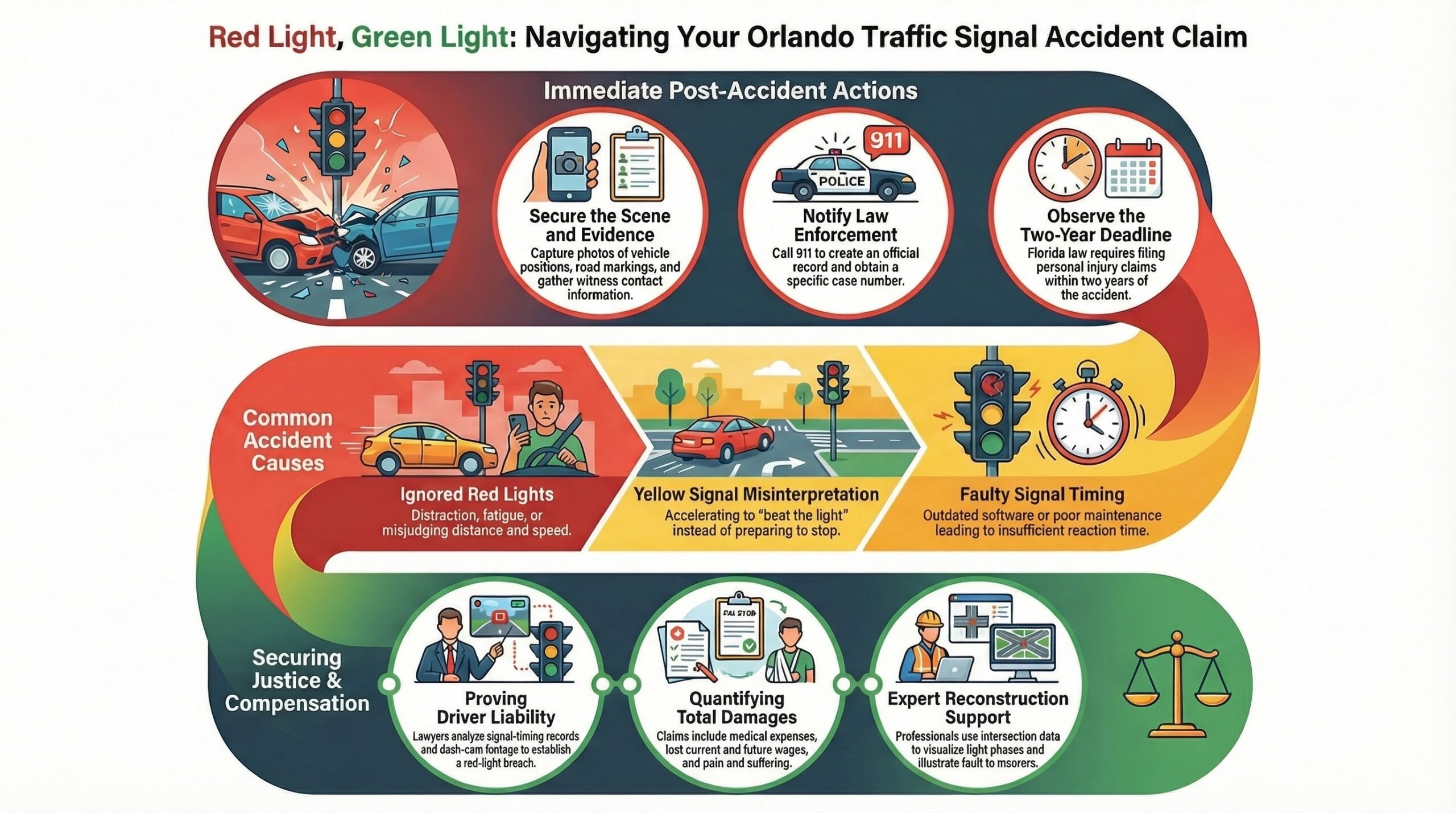
We see that many Orlando accidents stem from drivers ignoring red lights, treating yellow signals as green, or encountering faulty signal timing that creates confusion. Distractions behind the wheel often exacerbate these errors, turning a momentary lapse into a serious collision. By identifying these common causes, we can better assess liability and protect the rights of injured victims.
Ignored Red Lights
Because drivers often misjudge the distance or speed of approaching vehicles, they may run red lights, creating a primary cause of Orlando traffic‑signal accidents. We see that many ignored red‑light incidents stem from distraction, fatigue, or the mistaken belief that a brief glance is sufficient to gauge safety. Red light cameras help deter this behavior by providing objective evidence and encouraging compliance, while intersection engineering—such as clearer signage, longer clearance intervals, and better lane markings—reduces ambiguity for motorists.
By understanding these factors, we can advise victims on liability, insurance claims, and preventive measures. Our guidance emphasizes proactive community education and infrastructure improvements to protect residents and reduce future injuries.
Running Yellow Signals
Drivers often mistake the brief interval of a yellow light for a safe window to accelerate, yet this miscalculation frequently leads to collisions at Orlando intersections. We observe that many motorists assume a yellow signal allows them to proceed, but in reality, yellow signal misinterpretation often stems from inadequate awareness of signal timing. When drivers rush to beat the red, they underestimate the distance needed to stop safely, increasing the risk of rear‑end or side‑impact crashes.
We advise that should treat a yellow as a warning to prepare to halt, not as an invitation to speed up. By respecting the intended purpose of yellow lights, we can reduce injury rates and promote responsible driving throughout the community.
Faulty Signal Timing
When traffic signals are poorly timed, drivers frequently encounter unexpected changes that leave them with insufficient reaction time, increasing the likelihood of accidents at Orlando intersections. We observe that inadequate signal synchronization creates gaps that drivers cannot anticipate, while inconsistent timing calibration forces abrupt stops or accelerations. These flaws often stem from outdated software, insufficient maintenance, or rushed upgrades that overlook local traffic patterns.
As a community focused on serving others, we emphasize the need for regular audits, coordinated engineering reviews, and transparent reporting to make certain that every signal operates within safe parameters. By addressing faulty signal timing proactively, we reduce collision risk, protect vulnerable road users, and uphold the responsibility of a reliable transportation system.
Distracted Driving Incidents
Managing Orlando’s busy intersections while distracted—whether by smartphones, in‑vehicle systems, or external stimuli—significantly raises the risk of failing to obey traffic signals. We see mobile distraction as a primary cause of crashes, because drivers often glance at texts or social media at pivotal moments. In‑vehicle infotainment further compounds the problem when navigation, music, or voice assistants demand attention. Collectively, these factors erode situational awareness, leading to delayed reactions and missed red lights. Our experience shows that when drivers split focus, they misjudge signal changes and endanger pedestrians, cyclists, and fellow motorists. By educating the community on these hazards and promoting attentive driving habits, we help reduce accidents and protect lives across Orlando.


Legal Rights of Orlando Failure To Obey Traffic Signal Accident Injury Victims
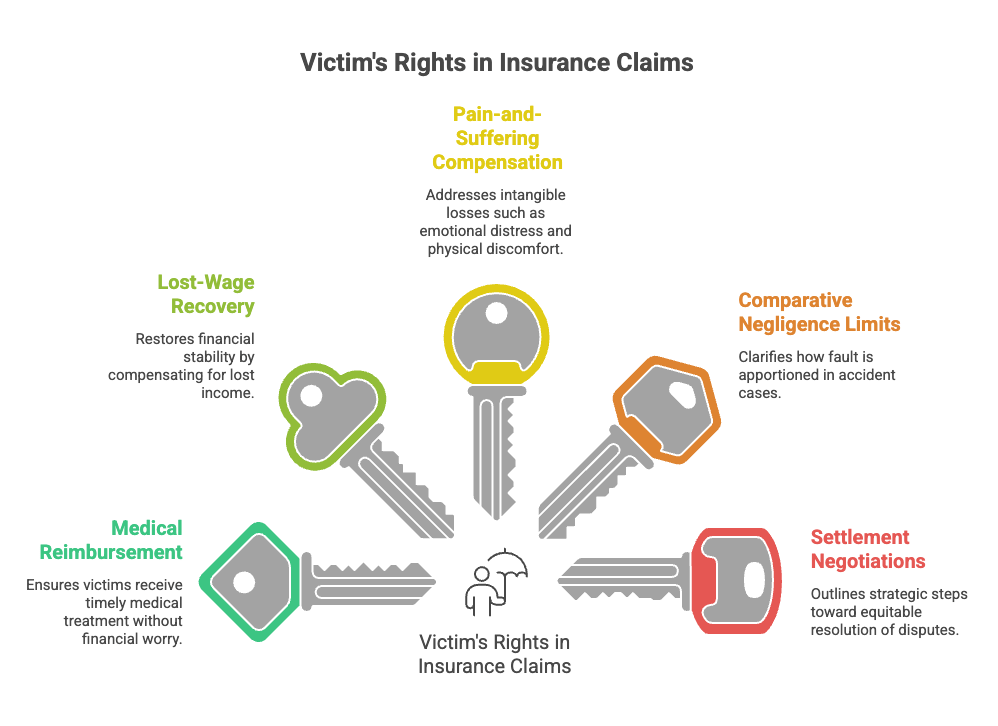
Recognizing that a traffic signal violation can profoundly affect injury victims, we must first understand the legal protections afforded to those harmed in Orlando. Our collective responsibility is to safeguard victim rights and explore settlement options that reflect the true cost of harm. By reviewing statutes and case law, we can ensure that each injured party receives fair compensation for medical expenses, lost wages, and emotional distress.
This knowledge empowers us to advocate effectively and uphold the dignity of those we serve.
- A clear path to medical reimbursement, illustrating the burden lifted from a victim’s shoulders.
- A roadmap of lost‑wage recovery, showing how financial stability can be restored.
- A depiction of pain‑and‑suffering compensation, highlighting the intangible losses addressed.
- A visualization of comparative negligence limits that clarifies how fault is apportioned.
- An outline of settlement negotiations, demonstrating the strategic steps toward equitable resolution.
Steps to Take After an Orlando Failure To Obey a Traffic Signal Accident Injury
We should first secure the scene and gather all available evidence, then promptly notify law enforcement to document the incident, and finally contact an experienced attorney who can protect our rights and guide us through the claims process.
Secure Scene Evidence
When a traffic‑signal violation results in an injury, preserving reliable evidence at the scene is essential to building a strong case. We begin by documenting the scene with photographs and video, capturing vehicle positions, damage, road markings, and any skid marks. We then secure physical evidence, such as broken glass or debris, placing it in labeled containers for later analysis. Simultaneously, we initiate witness coordination, obtaining names, contact information, and statements from anyone who observed the collision.
We ask witnesses to describe vehicle behavior, traffic light status, and the timing of events, ensuring their recollections are recorded promptly. All collected data is organized chronologically, stored securely, and shared with our legal team to support evidence preservation and strengthen the client’s claim.
Notify Law Enforcement
After gathering photographs, video, and witness statements, we promptly notify law enforcement to create an official record of the traffic‑signal violation. We call 911 or the local police department, providing clear, concise details of the incident, including location, time, and parties involved. During the call, we ask for the officer’s name, badge number, and case number to ensure we have accurate information for future reference.
We then follow reporting procedures by filing a written report at the police station, attaching all the evidence we collected. This documented account strengthens our ability to demonstrate negligence and supports any subsequent claims. By acting swiftly and responsibly, we uphold our duty to protect others and preserve the integrity of the legal process.
Contact an Experienced Attorney
If you’ve been injured in an Orlando failure‑to‑obey traffic‑signal accident, contacting an experienced attorney should be your next priority. We recommend reaching out promptly to schedule a free consultation, during which we can assess the facts, preserve evidence, and outline your legal options. Our firm works on a contingency representation basis, meaning you incur no upfront fees, and we only collect a fee if we recover compensation for you.
By engaging us early, we protect your rights, coordinate with medical providers, and begin negotiations with insurers before they attempt to minimize your claim. We recognize the urgency of your situation and are committed to guiding you through each step with skill and integrity, ensuring your recovery and justice are prioritized.
How an Orlando Failure To Obey Traffic Signal Accident Lawyer Can Help You
Although traffic‑signal violations can seem straightforward, proving liability often requires nuanced legal analysis that many drivers overlook.
We explain how an Orlando Failure To Obey Traffic Signal Accident Lawyer can protect your interests by dissecting traffic signal negligence and guaranteeing clear client-attorney communication throughout the case.
- We reconstruct the intersection scene, visualizing vehicle positions, light phases, and road markings to illustrate the fault.
- We gather dash‑cam footage, witness statements, and police reports that reveal timing discrepancies.
- We calculate damages, including medical costs, lost wages, and emotional distress, to quantify losses.
- We negotiate with insurers, presenting compelling evidence that emphasizes responsibility.
- We guide you through litigation, offering strategic counsel and timely updates to keep you informed.
Our team’s proficiency translates intricate legal concepts into actionable steps, allowing you to focus on recovery while we handle the complexities of the claim. This collaborative approach guarantees your rights are defended with precision and diligence.
Long-Term Effects of Orlando Failure To Obey Traffic Signal Accident Injuries
We recognize that chronic pain can become a persistent issue after a signal‑violation collision, affecting daily activities and requiring ongoing management. The cognitive and emotional impact may also surface, manifesting as stress, anxiety, or difficulty concentrating, which can interfere with work and personal relationships. Additionally, long‑term mobility limitations often arise, restricting movement and necessitating adaptations to maintain independence.
Chronic Pain Management
Managing chronic pain after a traffic‑signal collision requires a thorough, evidence‑based approach that addresses both physical and psychological dimensions of injury. We begin by outlining a comprehensive Pain Management plan that integrates physical therapy, targeted exercise, and behavioral strategies to restore function. We emphasize Opioid Alternatives such as NSAIDs, nerve‑blocking injections, and multimodal modalities, including acupuncture and mindfulness‑based stress reduction, to minimize dependence risks.
Our protocol includes regular assessments, dosage adjustments, and coordination with primary care providers to guarantee continuity of care. By educating patients on realistic expectations and self‑management techniques, we empower them to regain independence while reducing long‑term disability. This collaborative framework reflects our commitment to serving those affected by traffic‑signal accidents with rigor and compassion.
Cognitive and Emotional Impact
When a driver fails to obey a traffic signal and a collision occurs, the resulting injuries often extend beyond physical damage, affecting cognition and emotions for years to come. We see survivors developing cognitive fatigue that hampers concentration, decision‑making, and memory retention, making daily tasks feel exhausting. Emotional trauma frequently co‑exists, manifesting as anxiety, irritability, and heightened stress responses that can undermine interpersonal relationships and professional performance.
As advocates for those we serve, we emphasize early assessment and ongoing support to mitigate these hidden impacts. Integrated therapy, counseling, and cognitive rehabilitation can restore mental stamina and emotional resilience, helping victims reclaim confidence and productivity while steering the long‑term aftermath of their injuries.
Long‑Term Mobility Limitations
The cognitive and emotional challenges we’ve described often give way to tangible physical restrictions that persist long after the accident. We now focus on long‑term mobility limitations, which frequently require patients to rely on mobility aids and, in some cases, adaptive vehicles. These tools restore independence, yet they also introduce new responsibilities for maintenance, training, and safe operation.
We advise clients to assess home and workplace accessibility, ensuring ramps, handrails, and wide doorways accommodate wheelchairs or walkers. When selecting an adaptive vehicle, we consider modifications to controls, seat positioning, and transfer mechanisms to match each individual’s functional capacity. Our guidance emphasizes proactive planning, regular therapy, and collaboration with occupational professionals to minimize setbacks and preserve quality of life.
Proving Liability in Orlando Failure To Obey Traffic Signal Accident Car Accident Injury Cases
Establishing liability in Orlando traffic‑signal violations requires a systematic analysis of the driver’s duty to obey the signal, the breach of that duty, and the resulting damages. We begin by reviewing the signal timing records, which reveal whether the light was functioning correctly at the moment of impact. If the timing aligns with legal standards, the onus shifts to the driver’s failure to yield. Next, we assess witness credibility; statements from bystanders, passengers, and first responders must be corroborated by video evidence and police reports.
Consistent, reliable testimony strengthens our claim that the driver ignored the signal, creating a direct causal link to the injury. We also examine the driver’s prior violations, as a pattern of non‑compliance can reinforce negligence. By integrating these elements—accurate signal timing data and credible witness accounts—we construct a compelling argument that the defendant’s actions caused the accident, thereby establishing liability for the plaintiff’s injuries.
Compensation for Orlando Failure To Obey Traffic Signal Accident Damages
Justice demands that victims of traffic‑signal violations receive full restitution for the losses they endure, and we guide them through the intricate process of quantifying those damages. We begin by identifying all economic losses, which include medical expenses, property repair costs, and lost wages. Lost wages are calculated based on documented earnings and projected future income, ensuring that the compensation reflects the true impact on the victim’s livelihood.
We also assess non‑economic damages such as pain, suffering, and emotional distress, which require careful documentation and expert testimony. Medical liens must be negotiated to prevent over‑billing and to preserve the victim’s net recovery; we work with healthcare providers to reduce or eliminate unnecessary charges. By consolidating these elements into a thorough demand, we build a persuasive claim that maximizes restitution while respecting statutory limits. Our systematic approach empowers victims to receive the compensation they merit, reinforcing accountability for traffic‑signal violations.
The Statute of Limitations for Orlando Failure To Obey Traffic Signal Accident Injury Cases
When a traffic‑signal violation results in injury, we must act promptly because Florida law imposes a strict deadline for filing a claim. In Orlando, the statute deadlines for personal‑injury actions arising from a failure‑to‑obey traffic signal are two years from the date of the accident. This period is non‑negotiable, and missing it typically bars recovery, regardless of the claim’s validity.
However, there are exceptions to the filing requirement; for example, if the injured party is a minor, the clock does not start until they reach the age of majority, and if the defendant is a government entity, a notice of claim must be filed within 90 days, after which the two‑year period begins. We advise clients to document medical treatment, police reports, and witness statements as soon as possible to preserve evidence. By respecting these deadlines and understanding the limited exceptions, we protect the right to seek compensation while upholding our commitment to serve those affected by traffic‑signal negligence.
Why You Need an Experienced Orlando Failure To Obey Traffic Signal Accident Lawyer
If a traffic‑signal violation causes injury, steering the complex legal landscape alone can jeopardize your claim, so we emphasize the importance of retaining an experienced Orlando failure‑to‑obey traffic‑signal accident lawyer. We recognize that each crash involves unique facts, and we craft a case strategy that aligns with both state law and local ordinances. Our team reviews the signal timing records, police reports, and eyewitness statements to pinpoint liability, while we keep client communication clear, timely, and transparent.
By consulting with medical experts and accident reconstruction professionals, we strengthen the evidentiary foundation and anticipate defenses. We also manage insurance negotiations, ensuring that settlement offers reflect the full scope of damages, including medical expenses, lost wages, and pain. Our commitment to serving others drives us to protect your rights diligently, providing the proficiency needed to secure a fair resolution and uphold justice for those affected by traffic‑signal negligence.
How to Choose the Right Orlando Failure To Obey Traffic Signal Accident Lawyer for Your Case
Having examined the nuances of signal‑violation claims, we now turn to selecting the attorney who will best represent your interests. In the attorney selection process, we prioritize a firm’s track record in similar cases, ensuring it understands the complexities of Orlando traffic‑signal law and can steer insurance negotiations effectively. We also assess the lawyer’s credentials, years of practice, and client testimonials to gauge reliability and competence.
Communication expectations must be clearly defined at the outset; we require prompt responses, transparent fee structures, and regular case updates to ensure you feel informed throughout litigation. Additionally, we look for attorneys who demonstrate empathy for victims while maintaining assertive advocacy, aligning with our commitment to serving others. By evaluating these criteria—experience, reputation, and communication standards—we can choose a lawyer who not only protects your rights but also upholds the highest professional standards.
About the Law Offices of Anidjar and Levine
We’ve built the Law Offices of Anidjar and Levine on a foundation of extensive experience in traffic‑signal injury litigation, combining deep knowledge of Florida’s traffic statutes with a proven track record of securing favorable settlements and verdicts for our clients.
Our firm’s history reflects decades of dedicated service, during which we have refined strategies that prioritize client welfare and justice.
We collaborate closely with each client, listening to their story and translating it into compelling legal arguments that resonate with juries and insurers alike.
Client testimonials consistently highlight our responsiveness, transparency, and tenacity, reinforcing the trust we earn in every case.
By maintaining rigorous standards and a steadfast commitment to ethical advocacy, we make certain that every claim receives the thorough investigation and skilled representation it merits.
Our approach balances meticulous preparation with decisive action, delivering results that honor the seriousness of traffic‑signal injuries while upholding the highest professional standards.
Frequently Asked Questions
Can I Claim Damages for Emotional Distress After a Traffic‑Signal Accident?
We can claim damages for emotional distress after a traffic signal accident if the distress is proven to be a foreseeable result of the collision and is documented by qualified professionals. We’ll assess the emotional impact, gather medical records, and obtain trauma therapy reports to substantiate the claim. By demonstrating a direct causal link between the accident and the psychological injury, we strengthen the case for compensation.
Do I Need a Police Report to File a Personal‑Injury Claim?
We recommend obtaining a police report before filing a personal injury claim, because police involvement documents the incident and strengthens your case. The report provides crucial details for accident reconstruction, which insurers and attorneys rely on to assess liability and damages. While you can still pursue a claim without it, lacking the report may delay proceedings, reduce credibility, and limit the evidence you can present to support your injuries and losses.
Will My Insurance Premium Increase if I Sue?
We’ll tell you that filing a lawsuit can trigger an insurance hike, but the effect varies by policy and claim history. Lawsuit costs, including legal fees and court expenses, may be reflected in your premium if your insurer deems the risk higher. Some carriers separate claim‑related premiums from lawsuit‑related ones, while others aggregate them. We recommend reviewing your policy’s terms and discussing the potential impact with your insurer before proceeding.
Can I Receive Compensation for Lost Future Earnings?
We can help you secure compensation for lost future earnings and evaluate whether vocational rehabilitation benefits apply. Our team assesses your earning capacity, projects income loss, and quantifies damages with expert economic analysis. We coordinate with medical professionals to document impairments, ensuring the claim reflects both immediate and long‑term financial impacts. By presenting a thorough, evidence‑based case, we maximize the likelihood of receiving full, fair compensation.
How Long Does It Take to Settle a Signal‑Violation Case?
We typically settle a signal‑violation case within three to six months, depending on the case’s complexity and the parties’ responsiveness. Our settlement timeline hinges on gathering evidence, filing motions, and conducting discovery, while a focused negotiation strategy accelerates resolution. By engaging insurers early, presenting clear liability documentation, and proposing realistic compensation figures, we streamline discussions and reduce delays. Maintaining consistent communication and adjusting tactics as needed guarantees that we meet the projected timeframe efficiently.
—————————
We stand ready to protect your rights and secure the compensation you merit after a failure-to-obey traffic-signal accident.
The Law Offices of Anidjar and Levine have deep experience and a thorough understanding of Florida law, enabling us to steer through intricate claims efficiently.
By acting promptly and leveraging our skills, you can focus on recovery while we handle negotiations and litigation.
Trust our team to pursue your case with dedication, precision, and unwavering commitment to achieving a favorable outcome.
For more help, visit our Car Accident Lawyer in Orlando.