The Law Offices of Anidjar and Levine assist injured victims in West Palm Beach failure to obey traffic signal accident cases by preserving crucial evidence, evaluating fault, and identifying available insurance coverage. A West Palm Beach Car Accident Lawyer may gather crash reports, camera footage, witness statements, medical records, and vehicle data to support a claim. The firm also manages insurer communications, assesses settlement offers, and pursues compensation for medical bills, lost income, and pain and suffering. Additional information below explains these cases and the legal options available.
Main Takeaways
- A West Palm Beach traffic signal accident lawyer evaluates fault, injuries, insurance coverage, and damages after a red-light or failure-to-yield crash.
- Early legal help preserves critical evidence like crash reports, witness statements, traffic camera footage, vehicle data, and scene photographs.
- Lawyers investigate signal timing, vehicle speed, braking, right-of-way, and intersection conditions to prove liability and counter comparative negligence claims.
- They handle insurer communications, document medical costs and lost income, and assess pain, suffering, and future care needs.
- Prompt action matters in Florida because evidence can disappear, insurance deadlines apply, and filing limits may affect the recovery of compensation.
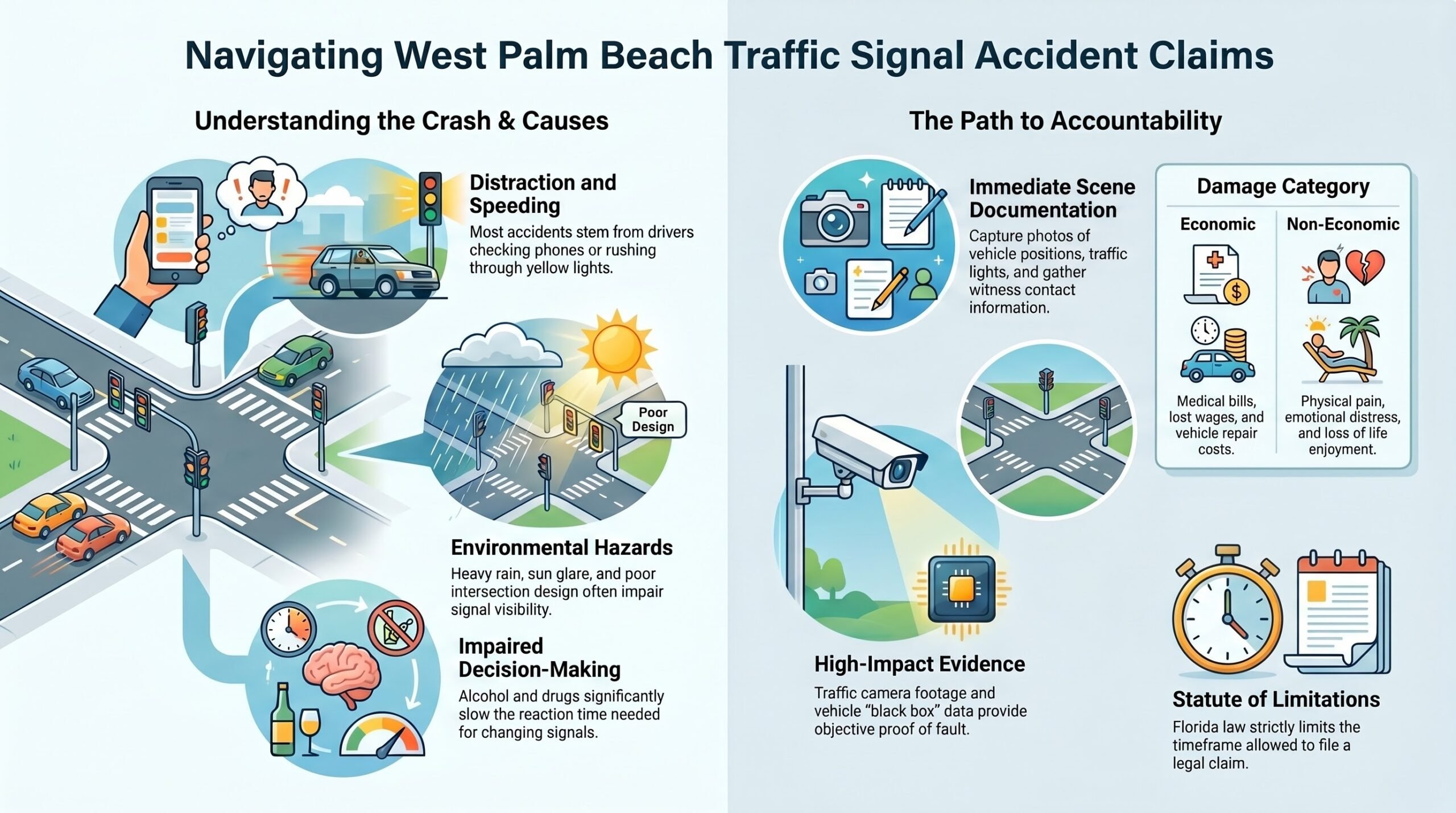


How We Can Help With Your West Palm Beach Failure To Obey Traffic Signal Accident Injury Claim
Navigate through the aftermath of a signal-related collision with a legal team that understands how these claims are built, challenged, and resolved. Counsel provides structured support from the first consultation onward, helping injured people protect records, document losses, and respond carefully to insurer requests while keeping service to family and community in view.
A firm handling these matters can gather crash reports, witness statements, photographs, medical records, and wage information, then organize that evidence into a clear claim for compensation. It can also coordinate with Local resources, including medical providers and repair professionals, to strengthen documentation and reduce unnecessary delays. Attorneys manage communications, evaluate offers, and explain Settlement timelines so clients can make informed decisions with confidence.
When disputes arise, the legal team prepares persuasive submissions and, if needed, advances the claim toward litigation. Throughout the process, the focus remains on accountability, practical guidance, and obtaining a result that supports recovery and future stability.
OUR CONSULTATIONSARE FREE
START YOUR FREE CASE REVIEW

Understanding West Palm Beach Failure To Obey Traffic Signal Accident Injury Cases
Beyond the practical steps involved in building a claim, a clear understanding of West Palm Beach failure-to-obey-traffic-signal accident injury cases begins with how these collisions occur and why liability is often contested. These cases often involve conflicting accounts, limited visibility, and questions about timing, speed, and right-of-way at busy intersections.
A careful review usually centers on objective evidence, including surveillance footage, vehicle damage, witness statements, and data showing the status of traffic signalization at the time of impact. Attorneys and investigators may also examine intersection design, lane markings, signal placement, and sightlines to determine whether roadway conditions contributed to confusion or unsafe movement. In many claims, insurers challenge fault by arguing comparative negligence or disputing the sequence of events.
A thorough legal approach helps injured people and their families pursue accountability, protect community safety, and support fair outcomes for those affected by preventable intersection crashes in West Palm Beach each year.
Common Causes of West Palm Beach Failure To Obey Traffic Signal Accident
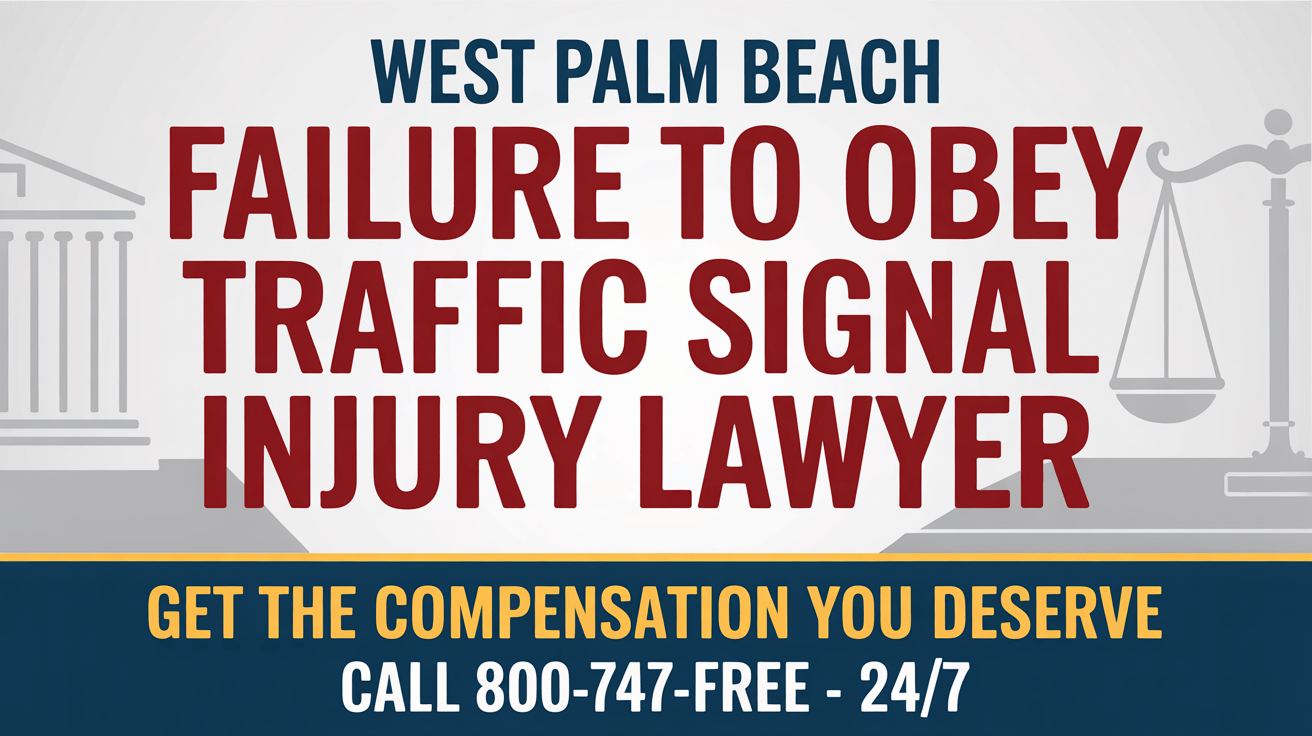
Several recurring factors contribute to West Palm Beach’s failure to obey traffic signal accidents, often beginning with distracted driving at intersections where attention to signal changes is reduced.
These collisions also frequently involve drivers speeding through yellow lights or making impaired decisions due to alcohol or drugs, both of which limit safe judgment and reaction time.
In addition, poor visibility conditions, including rain, glare, or darkness, can make compliance with traffic signals more difficult and increase the risk of serious crashes.
Distracted Driving At Intersections
At busy intersections, distracted driving remains a frequent cause of failure-to-obey-traffic-signal accidents in West Palm Beach. Drivers who glance at a cell phone, adjust navigation settings, or divert attention to passengers may miss red lights, delayed traffic movement, or crossing pedestrians. Even brief inattention can place others in immediate danger and disrupt the shared duty of roadway safety.
Pedestrian distraction also contributes to hazardous conditions at intersections, particularly when drivers and walkers both divide their attention. A motorist focused on a message rather than the signal may enter a crosswalk unlawfully, while a distracted pedestrian may misjudge vehicle movement.
In service-minded communities, careful driving reflects respect for neighbors, visitors, and families. Remaining alert at signals helps protect vulnerable road users and supports a safer, more responsible transportation environment for everyone in West Palm Beach.
Speeding Through Yellow Lights
Accelerating through a yellow light is a common factor in West Palm Beach traffic signal accidents, particularly when drivers treat the signal as an invitation to rush rather than a warning to prepare to stop.
Excess speed reduces stopping distance and increases the force of impact, placing other motorists, cyclists, and pedestrians at greater risk.
This conduct often occurs at busy intersections, where drivers rely on running clocks rather than on roadway conditions, cross traffic, and pedestrian movement.
When a vehicle enters too late, even slight errors in intersection timing can cause broadside collisions or chain-reaction crashes.
A careful review of speed, skid marks, signal phases, and witness accounts often helps clarify how the violation occurred.
Understanding these patterns supports safer driving practices and helps communities protect everyone using local roads.
Impaired Driver Decision-Making
Many traffic signal collisions in West Palm Beach involve some degree of impaired driver decision-making, where alcohol, drugs, or a combination of substances weakens judgment, slows reaction time, and disrupts the ability to respond appropriately to changing lights.
When a driver experiences impaired judgment, the ability to evaluate a yellow light, recognize a red signal, or yield lawfully at an intersection can deteriorate quickly. Substances may also reduce attention, distort distance perception, and encourage risky choices that place other motorists, pedestrians, and cyclists in danger.
In service to community safety, it is important to recognize that these crashes are often preventable through responsible planning, sober transportation choices, and public awareness. Careful accountability helps protect families, supports injured victims, and reinforces the shared duty every driver owes to others on the road.
Poor Visibility Conditions
Under poor visibility conditions, drivers may fail to observe a traffic signal in time to stop, yield, or proceed safely through a West Palm Beach intersection. Heavy rain, fog, darkness, and obstructed sightlines can create reduced visibility, limiting a driver’s ability to identify signal changes or nearby vehicles. Sun angle and wet pavement may also cause glare that interferes with safe judgment and timely reactions.
When these conditions are present, careful drivers are expected to slow down, increase following distance, and remain alert to pedestrians and cross traffic. A failure to adjust to limited visibility may lead to a signal violation and a serious collision. For those seeking to protect others on the road, understanding how environmental conditions affect traffic signal compliance can support safer driving habits and help prevent avoidable harm.


Legal Rights of West Palm Beach Failure To Obey Traffic Signal Accident Injury Victims
In the aftermath of a collision caused by a driver’s failure to obey a traffic signal, injured victims in West Palm Beach generally have the legal right to pursue compensation for the losses the crash has caused.
This Rights overview often includes medical expenses, lost income, property damage, and non-economic harm, depending on the facts and available insurance coverage.
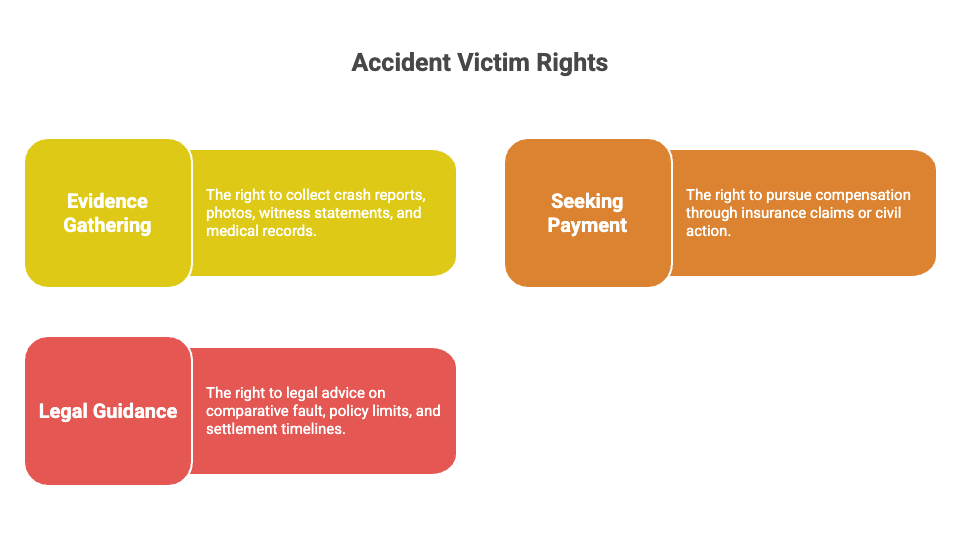
Victims may also benefit from understanding several core protections:
- The right to gather evidence, including crash reports, photographs, witness statements, and medical records.
- The right to seek payment through insurance claims or, when appropriate, a civil action against the responsible party.
- The right to legal guidance regarding comparative fault, policy limits, and Settlement timelines.
A careful legal evaluation can help protect the injured person’s ability to serve family, workplace, and community responsibilities while recovery continues.
Prompt action is often important because preserving evidence and meeting filing deadlines can materially affect the strength and value of a claim under Florida law.
Why Do West Palm Beach Failure To Obey Traffic Signal Accident Injuries Happen?
Traffic signal accident injuries in West Palm Beach often occur because a driver disregards a red light, misjudges a yellow signal, or proceeds through an intersection without yielding the right of way. These collisions frequently involve speeding, distraction, fatigue, or impaired driving, all of which reduce reaction time and increase the force of impact.
Other contributing factors may include poor visibility, obstructed signs, heavy traffic, and unsafe lane changes near busy crossings. In some cases, intersection design plays a meaningful role, especially where signal timing is confusing, turn lanes are limited, or pedestrian activity is high.
Inadequate driver education can also leave motorists unprepared to interpret signals correctly, anticipate hazards, and share the road responsibly. When these conditions combine, vulnerable road users, including passengers, pedestrians, and cyclists, may suffer serious harm.
A careful understanding of these causes helps families and community advocates promote safer driving habits and support measures that protect everyone traveling through West Palm Beach intersections.
What Should You Do After a West Palm Beach Failure To Obey Traffic Signal Accident Injury?
After a West Palm Beach failure-to-obey-traffic-signal accident injury, the first priority is to ensure safety by moving to a secure location when possible and seeking medical attention.
It is also important to document the scene carefully, including vehicle positions, visible injuries, traffic signals, and witness information, as this evidence may support a later claim.
Legal guidance should then be considered to protect the injured party’s rights and to assess the available options for recovering compensation.
Ensure Safety First
Because the moments following a failure-to-obey-traffic-signal collision are often chaotic, the first priority should be to guarantee immediate safety and prevent further harm. Those involved should assess personal safety, check passengers for urgent injuries, and move to a secure location if conditions allow. If a vehicle cannot be moved, occupants should remain as protected as possible and activate hazard lights.
Prompt emergency response is crucial when anyone appears injured, traffic remains dangerous, or fire, fuel, or debris creates additional risk. Calling 911 helps summon medical personnel and law enforcement quickly.
Individuals who are able may offer calm assistance to others, but they should avoid actions that worsen injuries. Remaining composed, following dispatcher instructions, and prioritizing vulnerable occupants can protect lives and support everyone’s well-being at the scene.
Document The Scene
At the scene of a West Palm Beach failure-to-obey-traffic-signal collision, careful documentation can preserve vital evidence for any later insurance claim or legal action. If conditions permit, photographs should capture vehicle positions, traffic lights, lane markings, debris, damage, weather, and any visible injuries. Images should be taken from several angles and distances.
Names and contact information for witnesses should be collected respectfully, since independent observations may clarify how the collision occurred. Brief notes may include signal timing, road conditions, and statements made at the scene.
Helpful details can include witness sketches, arrow measurements, and the locations of nearby surveillance cameras. A calm, organized record supports those working to protect injured people, assist families, and promote accountability. Accurate documentation often strengthens the factual foundation of a claim after a serious crash.
Seek Legal Guidance
In the aftermath of a West Palm Beach failure-to-obey-traffic-signal collision, seeking legal guidance can help an injured person understand important rights, deadlines, and obligations before speaking extensively with insurers or accepting a settlement. A timely Legal consultation may clarify liability, available insurance coverage, and the documentation needed to support a claim.
Counsel can also assist with Strategy planning, including how to preserve evidence, communicate carefully, and evaluate damages such as medical costs, lost income, and future care needs. This guidance may reduce mistakes that could weaken recovery efforts or limit compensation.
For those focused on protecting family members and easing others’ burdens, informed legal advice can support responsible decision-making. Prompt action is often beneficial because Florida filing deadlines and insurance requirements may affect the ability to pursue fair recovery.
Critical Evidence in a West Palm Beach Failure To Obey Traffic Signal Accident Injury Case
In a West Palm Beach failure to obey traffic signal accident injury case, the strength of a claim often depends on whether the available evidence clearly shows how the collision occurred and who violated the signal.
Crucial sources commonly include:
- traffic camera footage and eyewitness statement accounts
- crash scene documentation, including photographs, measurements, and roadway conditions
- vehicle data records that may help establish speed, braking, and driver actions before impact
Traffic Camera Footage
Few forms of evidence are as persuasive as traffic camera footage in a West Palm Beach failure to obey traffic signal accident injury case. Video can document vehicle positions, signal phases, lane movements, speed patterns, and the sequence of impact with unusual clarity. It may help establish whether a driver entered on red, accelerated through a yellow, or failed to yield when duty required caution.
Careful review remains critical. Counsel often examines preservation requests, chain of custody, redaction issues, and timestamp discrepancies before presenting footage as reliable proof. Nearby municipal cameras, private security systems, and intersection monitoring devices may each capture different angles that support a fuller reconstruction.
When properly obtained and authenticated, this evidence can strengthen accountability, support injured people seeking justice, and assist those working to protect community safety through responsible legal action.
Eyewitness Statement Accounts
Why do eyewitness statement accounts often matter so much in a West Palm Beach failure to obey traffic signal accident injury case? They can determine whether a driver ignored a red light, accelerated through a yellow light, or entered an intersection without due caution. Independent observations may support injured parties seeking accountability and fair recovery.
Courts and insurers often evaluate witness credibility by considering vantage point, attentiveness, consistency, and any relationship to those involved. Statement timing also carries weight, because prompt recollections are generally viewed as more reliable than versions shaped by later conversations or assumptions.
When several neutral witnesses describe the same sequence of events, their accounts can strengthen a claim and reduce disputes about fault. Careful review of these statements helps advocates serve injured people with accuracy, integrity, and focused legal guidance.
Crash Scene Documentation
Crash scene documentation often provides the clearest foundation for evaluating a West Palm Beach failure-to-obey-traffic-signal accident-injury claim. Careful records of vehicle positions, debris patterns, skid marks, roadway markings, signal placement, weather, and sight lines can clarify how the collision unfolded and whether a driver disregarded a red light or failed to yield.
When gathered promptly, this information supports photo preservation and accurate timeline reconstruction. It also helps attorneys, insurers, and investigators assess fault in a manner that protects injured people and promotes fair outcomes for everyone affected.
Measurements, diagrams, and observations from responding officers or investigators may reveal details that later become difficult to verify. In service-oriented legal advocacy, thorough crash scene documentation strengthens accountability, preserves truth, and helps families pursue informed, responsible decisions after serious roadway harm.
Vehicle Data Records
Alongside photographs, measurements, and officer observations from the roadway, vehicle data records can provide a more precise account of what occurred in the seconds before and during a West Palm Beach failure-to-obey-traffic-signal collision. Information from a vehicle’s black box may show speed, braking, wheel input, and seatbelt use, while telematics data can reveal location, timing, and driving patterns.
When preserved promptly, these records may help clarify whether a driver accelerated through a red light, failed to brake, or entered the intersection unlawfully. Such evidence can support a fair evaluation of fault and damages, which is important for those seeking accountability and resources to care for injured people. Because data may be overwritten or lost, early legal action is often necessary to protect this valuable evidence.
Long-Term Effects of West Palm Beach Failure To Obey Traffic Signal Accident Injuries
Failure to obey a traffic signal in West Palm Beach can produce injuries with consequences that extend well beyond the initial recovery period.
Victims may experience chronic pain challenges and emotional trauma effects that disrupt daily functioning, employment, and overall quality of life.
In many cases, lasting mobility limitations also create ongoing medical, financial, and personal hardships that require careful legal consideration.
Chronic Pain Challenges
In the aftermath of a West Palm Beach traffic signal accident, chronic pain can become one of the most disruptive and persistent long-term consequences for an injured person. Damage to nerves, muscles, joints, or the spine may continue to limit movement, sleep, work capacity, and daily responsibilities long after initial treatment ends.
Chronic pain often requires consistent medical attention and a structured Pain management plan tailored to the person’s condition. Physicians may recommend rehabilitation, medication oversight, interventional procedures, or lifestyle adjustments to reduce discomfort and preserve function.
For families and caregivers seeking to support recovery, understanding these ongoing limitations is crucial. When pain remains unresolved, it can complicate routine tasks, diminish independence, and increase the need for long-term assistance, making thorough care and legal guidance especially important for injured individuals.
Emotional Trauma Effects
How does emotional trauma continue to affect a person after a West Palm Beach traffic signal accident? Emotional injuries often persist long after visible wounds begin to mend. A person may experience post-traumatic stress, recurring fear, irritability, and difficulty concentrating during daily responsibilities. Ordinary tasks, travel, and social interactions can trigger anxiety, creating barriers to work, family life, and community involvement.
Sleep disturbances are also common, leaving a person fatigued, emotionally strained, and less able to serve loved ones or meet obligations. Some individuals withdraw from relationships, while others struggle with sadness, guilt, or a reduced sense of security.
Professional counseling, trauma-informed care, and consistent support from compassionate advocates can help restore stability. Early recognition of these effects often improves recovery, strengthens resilience, and supports long-term emotional well-being after trauma.
Lasting Mobility Limitations
Although many accident victims expect gradual improvement, serious injuries from a West Palm Beach traffic signal collision can leave lasting mobility limitations that affect nearly every aspect of daily life. Damage to the spine, joints, nerves, or muscles may reduce strength, balance, and range of motion, making routine tasks difficult.
Some individuals require Assistive devices such as canes, walkers, or wheelchairs to remain safe and independent. Others need Home modifications, including ramps, grab bars, and widened doorways, to function within their own households.
These limitations can also affect employment, caregiving roles, transportation, and participation in community service. Long-term rehabilitation, medical oversight, and practical support are often necessary.
When another party caused the crash, documenting these ongoing effects may be important for pursuing full financial recovery and necessary care.
Proving Liability in West Palm Beach Failure To Obey Traffic Signal Accident Injury Cases
Establishing liability in a West Palm Beach failure to obey traffic signal accident case requires clear evidence that a driver violated a traffic control device and that the violation directly caused the collision and resulting injuries. Helpful proof often includes crash reports, intersection camera footage, eyewitness accounts, vehicle damage patterns, and electronic data showing speed or braking.
A careful review may also examine signal timing, roadway markings, weather, visibility, and whether any obstruction affected a driver’s ability to respond lawfully. In some cases, driver intent becomes relevant when conduct suggests distraction, impatience, or a deliberate decision to continue through a red light. Medical records, photographs, and expert reconstruction can further connect the event to the injured person’s losses.
When presented thoroughly, this evidence supports accountability and helps families pursue outcomes that protect community safety, encourage responsible driving, and provide meaningful support to those harmed by preventable traffic signal violations in West Palm Beach.
Dealing With Insurance Companies After a West Palm Beach Failure To Obey Traffic Signal Accident Injury
Once liability evidence begins to take shape, attention often turns to the insurance process, where the value of a West Palm Beach failure-to-obey-traffic-signal accident claim may be challenged early and often. Adjusters may question injury severity, dispute medical necessity, or seek recorded statements that limit recovery. Careful documentation, consistent treatment, and disciplined communication often strengthen a compassionate, service-minded response.
A sound Claim strategy usually focuses on presenting losses clearly, protecting the injured person from unfair pressure, and supporting a result that reflects medical, financial, and personal harm. Insurance carriers frequently rely on Settlement tactics designed to minimize payouts, including quick offers, selective interpretation of records, and arguments about preexisting conditions.
In many situations, thorough preparation helps level the discussion and preserves dignity for those affected. By organizing records, identifying pressure points, and responding with clarity, the claim can be evaluated on evidence rather than insurer assumptions, serving both accountability and fairness.
What to Expect During a West Palm Beach Failure To Obey Traffic Signal Accident Injury Claim Process
A West Palm Beach failure to obey traffic signal accident injury claim typically begins with an initial evaluation of the facts, injuries, and available insurance coverage.
The process then focuses on gathering evidence, determining liability, and proceeding through structured insurance negotiations that may affect the scope and value of recovery.
If a fair resolution is not reached, the claim may advance to settlement discussions or litigation, depending on the strength of the case and the parties’ positions.
Initial Claim Evaluation
At the outset, the initial claim evaluation in a West Palm Beach failure to obey traffic signal accident case focuses on whether the available facts, injuries, and insurance coverage support a viable injury claim. During this initial assessment, counsel typically reviews the collision timeline, reported injuries, medical treatment status, and applicable policies. The purpose is to identify immediate needs, preserve important deadlines, and determine whether further legal action may responsibly serve the injured person and family.
A careful overview of damages also begins at this stage. Economic losses, such as medical expenses, lost income, and anticipated care costs, are considered alongside noneconomic harm, including pain, suffering, and reduced quality of life. This early review helps set realistic expectations, encourages organized communication, and provides a measured foundation for compassionate, service-minded decision-making thereafter.
Evidence And Liability
In evaluating evidence and liability, a West Palm Beach failure-to-obey-traffic-signal accident claim typically turns on whether the available proof shows that a driver, pedestrian, cyclist, or other road user violated a traffic control device and thereby caused the collision.
Relevant evidence often includes police reports, witness statements, traffic camera footage, vehicle damage, skid marks, signal timing data, and medical records.
In more contested matters, forensic reconstruction may help clarify speed, direction, visibility, and point of impact.
Liability is then assessed under Florida law, including comparative negligence, when more than one party may share fault.
Careful analysis serves injured people, families, and communities by identifying responsibility accurately and preserving facts that support accountability.
This process helps make sure claims rest on reliable, objective evidence and fairness.
Insurance Negotiation Steps
Once evidence has been gathered and liability has been assessed, the insurance negotiation phase typically begins with notice of the claim to the applicable insurers and a review of available coverage, including personal injury protection, bodily injury liability, and any uninsured or underinsured motorist benefits.
Adjusters then examine records, statements, and repair estimates to verify losses and identify disputed issues. Counsel often submits a demand package that summarizes injuries, treatment, expenses, lost income, and supporting documentation.
Effective policy interpretation is important at this stage because coverage limits, exclusions, and offset provisions can affect recovery. Claim valuation also develops through analysis of medical findings, future care needs, and the impact on daily responsibilities.
Throughout negotiations, timely communication, organized documentation, and respectful advocacy help protect the injured person’s interests while promoting a fair, service-minded claims review process.
Settlement Or Litigation
With negotiations underway, many traffic signal accident claims in West Palm Beach are resolved through settlement, but litigation may become necessary when liability remains contested, damages are disputed, or an insurer fails to make a reasonable offer.
Counsel typically evaluates medical records, lost income, witness statements, and traffic evidence to develop sound settlement strategies that protect the injured person’s long-term interests and support responsible recovery.
If meaningful resolution remains out of reach, a lawsuit may be filed, followed by discovery, depositions, motions, and continued negotiation under court supervision. Throughout this stage, careful preparation often encourages fairer offers while preserving readiness for trial.
Important trial considerations include evidentiary strength, expert credibility, comparative fault arguments, and the likely value of future care. Each decision should reflect service, accountability, and the pursuit of just compensation.
Compensation for West Palm Beach Failure To Obey Traffic Signal Accident Injury Damages
Accountability becomes central when a driver’s failure to obey a traffic signal causes serious harm, because the injured party may be entitled to recover compensation for both economic and non-economic losses under Florida law. In West Palm Beach, claims compensation often depends on the severity of injuries, available insurance, and the quality of evidence demonstrating fault and causation.
A careful legal review helps identify immediate losses, ongoing medical needs, and future compensation tied to lasting impairments or reduced earning capacity. Counsel may also evaluate how comparative fault arguments, policy limits, and medical documentation influence recovery.
Because injured people and their families often seek stability while continuing to serve others, understanding settlement timelines can help them plan responsibly and make informed decisions. A well-prepared claim may support fair resolution through negotiation, yet readiness for litigation remains important when insurers dispute liability or undervalue the harm caused by a signal violation. Prompt action also preserves crucial supporting evidence.
Economic vs Non-Economic Damages in West Palm Beach Failure To Obey Traffic Signal Accident Cases
In West Palm Beach failure-to-obey-traffic-signal accident cases, damages generally fall into two categories: economic losses and non-economic harm.
Economic damages often include medical expenses, lost wages, and other measurable financial costs, while non-economic damages may involve pain and suffering, emotional distress, and loss of enjoyment of life.
Establishing the value of either category typically requires clear documentation, credible testimony, and evidence that connects the collision to the claimed losses.
Economic Damage Categories
After a signal violation causes a collision, economic damages typically represent the measurable financial losses tied to the incident and its aftermath. In West Palm Beach claims, these categories often include emergency care, hospital bills, rehabilitation costs, medication expenses, and reasonably foreseeable future medical treatment.
They may also include lost wages when injuries prevent a person from working, as well as diminished earning capacity if long-term limitations affect future employment. Property damage is another common category, covering vehicle repair or replacement, towing, storage fees, and the value of damaged personal items.
For families focused on helping an injured loved one recover, careful documentation of receipts, invoices, employer records, and repair estimates can strengthen a claim. Accurate proof allows financial losses to be presented clearly during settlement discussions or litigation.
Non-Economic Losses
Losses that cannot be measured by receipts or wage records often form a substantial part of a West Palm Beach failure to obey traffic signal accident claim. These non-economic losses reflect human harm that extends beyond the monetary value of invoices, including physical pain, emotional distress, inconvenience, disfigurement, and reduced enjoyment of daily activities.
In service-oriented legal advocacy, careful attention is given to how an injury changes a person’s ability to care for family, contribute to work, and participate in the community. Pain valuation addresses suffering that accompanies treatment, recovery, and lasting symptoms.
Life impact considers diminished independence, interrupted relationships, sleep disruption, anxiety while traveling, and the loss of ordinary routines. Although these harms are intangible, they remain significant because they describe the real personal consequences of a preventable traffic signal violation.
Proving Damage Value
Establishing the value of damages in a West Palm Beach failure to obey traffic signal accident case requires more than identifying categories of harm, because each claimed loss must be supported by persuasive evidence and a sound method of calculation.
Economic damages are commonly proven through medical bills, wage records, repair estimates, and projections of future care or diminished earning capacity.
Non-economic damages require a different presentation, often relying on treatment history, testimony from family members, and documentation showing how pain, limitations, or emotional distress affect daily life and service to others.
Because these losses are less exact, jury valuation becomes especially important. Courts and insurers may also weigh expert testimony from physicians, vocational professionals, or economists to link the injury to measurable consequences and establish a reasonable amount of damages.
When a West Palm Beach Failure To Obey Traffic Signal Accident Injury Case Goes to Trial vs Settlement
In many West Palm Beach failure-to-obey-traffic-signal accident injury cases, the path to settlement or trial depends on the strength of the evidence, the seriousness of the injuries, and the extent of disagreement over fault and damages. When liability is clear and losses are well-documented, insurers may prefer settlement to limit expenses and uncertainty while helping injured people receive support sooner.
A case may proceed to trial when parties dispute responsibility, challenge medical evidence, or differ sharply on fair compensation. Trial strategy often centers on witness credibility, traffic camera footage, expert analysis, and the full effect of injuries on daily service, work, and family responsibilities. Settlement can provide faster closure and reduce stress, yet a trial may be necessary when offers fail to reflect real harm.
Verdict implications also matter because a courtroom decision can affect compensation, future care planning, and the broader sense that accountability has been honored through a careful public process for all.
Florida Laws That May Affect Your West Palm Beach Failure To Obey Traffic Signal Accident Case
Consideration of Florida law often shapes how a West Palm Beach failure-to-obey-traffic-signal accident case is investigated, valued, and resolved. Florida statutes can influence fault findings, insurance obligations, and the damages an injured person may pursue after a signal-related collision.
Key legal issues frequently include:
- comparative negligence, which may reduce recovery if multiple drivers share responsibility for entering against a light or misjudging Signal timing
- no-fault insurance rules, which often require initial use of personal injury protection benefits before other claims are fully developed
- traffic regulations governing right of way, red lights, left turns, and duties owed by commercial drivers, municipalities, and vehicle owners
Evidence is often reviewed through these rules to serve injured people and families responsibly. Police reports, witness statements, camera footage, and roadway design records may all matter.
In some cases, questions about malfunctioning equipment, obscured signals, or improper Signal timing can materially affect liability analysis and overall settlement positions.
The Statute of Limitations for West Palm Beach Failure To Obey Traffic Signal Accident Injury Cases
Timing rules also shape a West Palm Beach failure to obey traffic signal accident claim, because Florida’s statute of limitations sets the deadline for filing a lawsuit after an injury-causing crash. In many negligence actions, injured people have a limited number of years to seek accountability through the civil courts, and missing that window can bar recovery entirely.
These filing deadlines matter to families seeking resources for care, stability, and service for loved ones after a serious collision. Florida law can include important statute nuances, such as different timelines when a wrongful death claim arises, when a victim is a minor, or when specific facts affect when the clock begins running. Courts generally expect prompt action, because evidence can fade, witnesses can become harder to locate, and records may be lost.
Careful attention to the calendar helps preserve a claim and supports an orderly process focused on responsibility, recovery, and the well-being of others in the community.
How a West Palm Beach Failure To Obey Traffic Signal Accident Injury Lawyer Can Help You
After a traffic signal collision, a West Palm Beach failure-to-obey-traffic-signal accident injury lawyer can provide structure and direction during a legally and practically demanding period. Through careful legal consultation, counsel evaluates liability, reviews insurance issues, and identifies evidence that may strengthen a claim while protecting the injured person’s interests.
A lawyer’s assistance often includes:
- Investigating police reports, witness statements, medical records, and intersection evidence to build a clear factual record.
- Managing client communication with insurers, medical providers, and other parties so the injured person can focus on recovery and service to family.
- Calculating losses, preparing claim documentation, and advocating for fair compensation through negotiation or litigation when necessary.
This support can reduce confusion and promote informed decision-making. By setting deadlines, explaining available options, and presenting the case professionally, counsel helps injured individuals pursue accountability in a manner that respects both legal obligations and the broader well-being of those who depend on them.
When to Contact a West Palm Beach Failure To Obey Traffic Signal Accident Injury Lawyer
In many cases, contacting a West Palm Beach failure-to-obey-traffic-signal accident injury lawyer as early as possible is advisable, particularly when injuries require medical treatment, fault is disputed, or insurance representatives begin requesting statements and records. Early guidance can help protect documents, preserve witness information, and support orderly communication during a stressful period.
Additional timing considerations often arise when medical symptoms worsen days after the collision, repair estimates reveal substantial losses, or a police report contains disputed details. Prompt legal contact may also be appropriate when a loved one is helping an injured person manage appointments, bills, and transportation, because organized action often serves everyone involved.
Those searching for the nearest attorney should remember that convenience matters, but prompt responsiveness, clear communication, and familiarity with local procedures are also important. Reaching out soon after the crash can help ensure that deadlines are met, evidence is retained, and the injured person receives practical guidance while focusing on recovery and service to others.
Why You Need an Experienced West Palm Beach Failure To Obey Traffic Signal Accident Injury Lawyer
Because traffic signal collisions often involve conflicting accounts, comparative fault arguments, and insurers’ efforts to limit payouts, representation by an experienced West Palm Beach failure-to-obey-traffic-signal accident injury lawyer can materially affect the outcome of a claim. Counsel can gather camera footage, witness statements, vehicle data, and medical records before key evidence is lost or disputed.
Experienced representation also helps injured people protect resources needed for recovery and continued service to their families and communities. Local know-how supports efficient investigation of intersections, traffic patterns, and municipal procedures that may influence liability.
A lawyer can calculate present and future damages, answer insurer tactics with documented proof, and pursue full compensation through settlement or litigation. Trial readiness further strengthens a claim, signaling that unsupported defenses and low offers will be challenged.
In serious cases, that preparation can create leverage, preserve dignity, and help guarantee accountability for conduct that placed others at risk on the roadway and harmed innocent people.
How to Choose the Right West Palm Beach Failure To Obey Traffic Signal Accident Injury Lawyer for Your Case
For this reason, selecting the right West Palm Beach failure-to-obey-traffic-signal accident injury lawyer requires careful attention to experience, case results, and the ability to investigate liability issues related to intersection crashes. Effective Attorney selection often begins by reviewing whether counsel has handled signal-violation claims involving disputed fault, severe injuries, and multiple insurance carriers.
A thoughtful evaluation also includes Client interviews, which can reveal how clearly a lawyer explains legal options, expected timelines, and the steps necessary to protect evidence. Those seeking to serve injured family members and support community safety may value an attorney who communicates respectfully, responds promptly, and approaches each case with diligence.
It is also wise to bear in mind trial readiness, access to accident reconstruction resources, and familiarity with local courts. By weighing these factors carefully, injured individuals can identify representation prepared to pursue accountability, strengthen the claim, and work toward a recovery that supports long-term stability and care.
About The Law Offices of Anidjar & Levine
With a longstanding focus on personal injury representation, The Law Offices of Anidjar & Levine assists individuals injured in West Palm Beach traffic signal accidents by providing legal guidance tailored to the facts of each case.
The firm evaluates liability, gathers evidence, and communicates with insurers so clients can concentrate on medical care, family needs, and recovery while legal concerns are addressed with diligence.
The Office’s history reflects steady service to injured Floridians and a commitment to responsive communication throughout the claims process.
Attorneys and staff emphasize accessibility, careful case preparation, and practical advice shaped by each client’s circumstances.
Client testimonials often describe professionalism, consistent updates, and a respectful approach that recognizes the disruption a serious collision can cause.
Frequently Asked Questions
Can Dashcam Footage Help Prove a Traffic Signal Violation?
Yes, dashcam footage can help prove a traffic signal violation by showing the vehicle’s position, the signal color, speed, and timing before impact.
Courts and insurers often consider recordings from dashboard cameras alongside witness interviews, police reports, and evidence from the scene.
Clear footage may strengthen a claim by confirming who entered an intersection unlawfully.
Its value depends on video quality, camera angle, timestamp accuracy, and whether the recording reliably depicts the full sequence of events.
Are Red-Light Camera Records Admissible in Florida Injury Claims?
Yes, red-light camera records are often admissible in Florida injury claims when properly authenticated and shown to be relevant.
Courts typically examine the authentication chain, chain reliability, and whether the records accurately depict the incident.
Parties may also raise privacy concerns and questions about data retention policies.
Careful review helps make certain the evidence serves injured individuals fairly, supports truthful fact-finding, and meets applicable evidentiary standards in civil proceedings.
Can Poor Intersection Design Contribute to Signal-Related Crashes?
Yes, poor intersection design can contribute materially to signal-related crashes. Professionals recognize that sightline obstructions, confusing lane markings, inadequate signage, and improper signal timing may reduce driver reaction time and increase the number of conflict points.
When intersections are designed without sufficient regard for visibility and traffic flow, preventable collisions become more likely. A careful evaluation of roadway layout and signal operation often helps communities identify hazards and support safer travel for all road users.
What if Both Drivers Claim They Had the Green Light?
When both drivers claim a green light, investigators typically compare witness credibility, vehicle damage, surveillance footage, and event data to determine which account aligns with the facts.
They may also examine signal timing records to identify malfunctions or sequence conflicts.
Because these disputes affect injured parties and public safety, a careful, service-oriented legal review can help preserve evidence, clarify fault, and support a fair resolution for everyone involved after a collision.
Do Weather Conditions Affect Failure-To-Obey-Signal Accident Investigations?
Yes, weather conditions do affect failure-to-obey-signal accident investigations. Investigators assess whether rain, fog, glare, or storms created visibility challenges that impaired a driver’s ability to see signals, vehicles, or lane markings.
They also review road treatments, including drainage, sanding, and deicing, to determine whether surface conditions contributed to delayed stopping or loss of control. This careful analysis helps establish fair responsibility and supports informed decisions that serve all parties.
—————————
Victims of traffic signal violation accidents in West Palm Beach often face significant medical, financial, and legal challenges.
A qualified injury lawyer can evaluate the facts, protect the victim’s rights, and pursue compensation for losses caused by another party’s negligence.
With experienced legal guidance, injured individuals are better positioned to address insurance disputes and build a strong claim.
The Law Offices of Anidjar and Levine provides focused representation for those seeking accountability and recovery after a serious intersection collision, and a West Palm Beach Car Accident Lawyer can help guide you through the process.