After a nursing home slip and fall in Fort Lauderdale, you need the Law Offices of Anidjar and Levine to act fast to protect your loved one and your claim. Acting quickly can help preserve crucial evidence, such as incident reports, staffing logs, maintenance records, and surveillance video, before it disappears.
You’ll also need to prove the facility breached its duty through poor supervision, unsafe conditions, or ignored care plans, then pursue compensation for medical costs and suffering.
Keep going to see what steps matter most, and learn how a Fort Lauderdale Nursing Home Abuse and Neglect Lawyer can help.
Key Takeaways
- A Fort Lauderdale nursing home slip and fall lawyer can investigate quickly, preserve footage, incident reports, and staffing logs before records disappear.
- Liability requires proving the facility breached its duty of care under regulations, care plans, and supervision needs—not just that a hazard existed.
- Strong evidence includes medical charts, incident reports, maintenance records, prior complaints, and witness statements that show patterns like understaffing or ignored fall risks.
- An experienced lawyer handles deadlines, insurer pressure, and low offers, and prepares medical and safety experts to link failures to injuries and future care.
- Choose a firm with direct attorney access, clear timelines, written contingency terms, and a plan to obtain records, interview staff, and take the case to trial if needed.
How We Can Help With Your Fort Lauderdale Nursing Home Slip and Fall Claim
From the moment you reach out, we’ll take control of your Fort Lauderdale nursing home slip and fall claim by investigating what happened, preserving vital evidence, and identifying every party that may be responsible, so you can focus on your loved one’s recovery while we handle the legal heavy lifting.
Dig deeper into our in-depth case study: Navigating Nursing Home Slip and Fall Claims in Fort Lauderdale
You’ll get a steady advocate who treats your family with dignity and keeps your goals at the center of every decision.
You can count on a thorough case investigation, including record requests, witness outreach, and documentation of injuries and care needs. We’ll manage deadlines, communicate with insurers and facility representatives, and shield you from pressure tactics.
You’ll stay informed with clear updates and plain-language guidance, so you can serve your loved one with confidence.
When it’s time for settlement negotiation, we’ll press for a resolution that reflects the harm done and the support your family needs. If fair terms aren’t offered, you’ll be ready to escalate without losing momentum.
Understanding Fort Lauderdale Nursing Home Slip and Fall Cases
After we step in to protect your claim, it helps to understand what makes nursing home slip-and-fall cases in Fort Lauderdale different from ordinary premises accidents. You’re not just proving a dangerous condition; you’re showing how a facility’s duty to safeguard vulnerable residents was breached.
Nursing homes operate under layered state and federal regulations, detailed care plans, and supervision requirements that shape what “reasonable care” means.


You can expect the evidence to focus on records and routines: incident reports, charting, staffing schedules, and whether Staff training matched residents’ mobility and fall-risk needs. When a fall reflects Elder neglect, the case may involve patterns—missed checks, ignored warnings, or failures to follow care plans—rather than a single moment.
You’ll also weigh how promptly the facility assessed injuries, notified family, and documented changes. By centering dignity and safety, you can pursue accountability that helps protect others, too.

Common Causes of Fort Lauderdale Nursing Home Slip and Falls
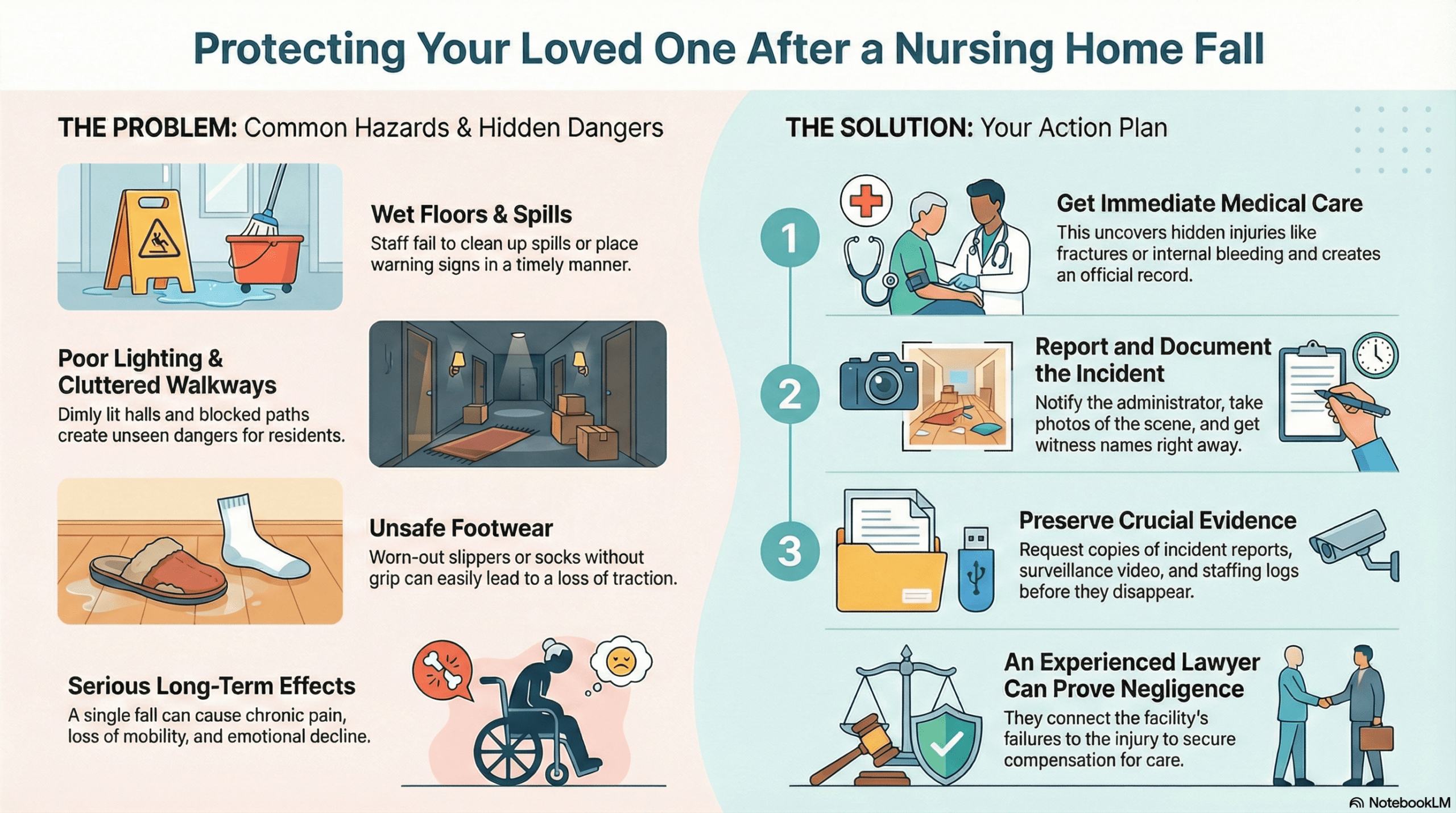
You’ll often see nursing home slip and falls start with wet floors and spills that staff don’t clean up or mark fast enough.
You can also trace many incidents to poor lighting and cluttered walkways, which make hazards hard to spot.
Even when the facility looks safe, unsafe footwear or socks can cause you to lose traction and go down.
Wet Floors And Spills
OUR CONSULTATIONSARE FREE
START YOUR FREE CASE REVIEW

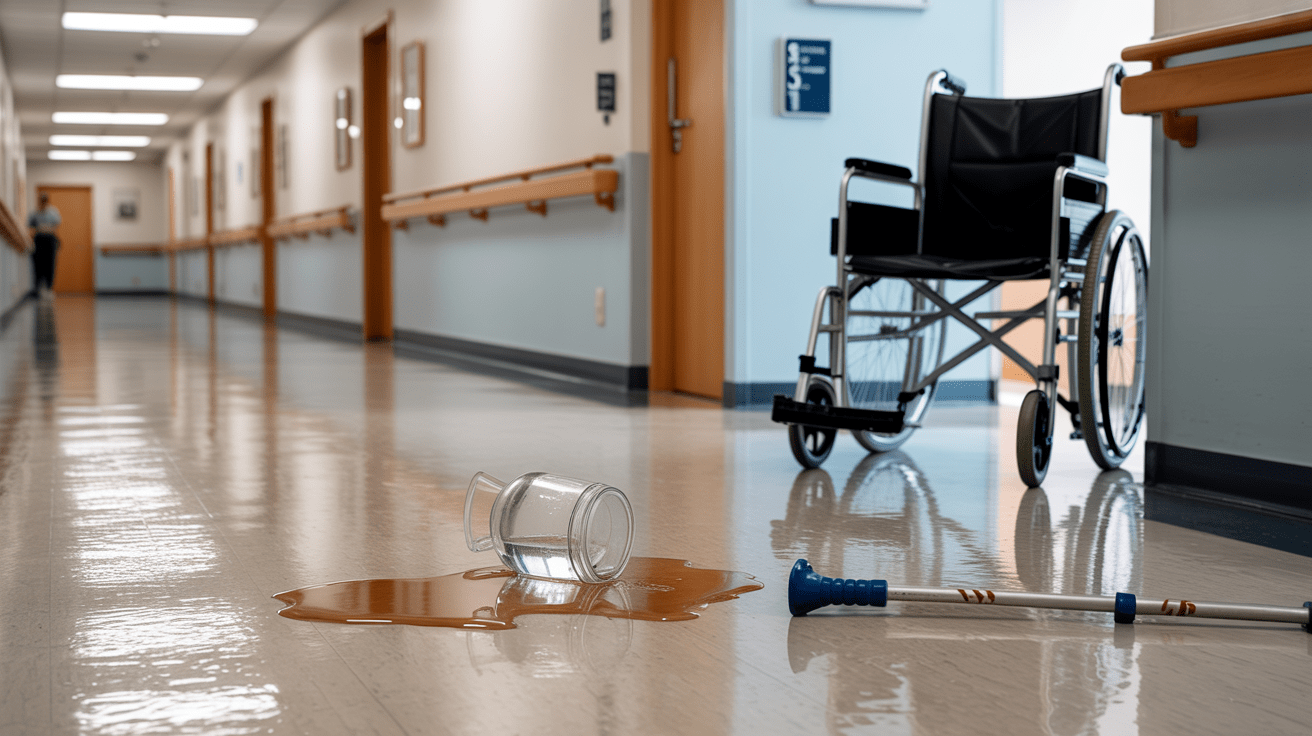
Wet floors and unexpected spills often trigger slip and fall injuries in Fort Lauderdale nursing homes, especially when staff don’t place warning signs, clean up quickly, or block off the area. You can help protect residents by pushing consistent floor maintenance, documenting recurring leak spots, and ensuring staff training covers rapid response and safe detours.
When you spot a hazard, act right away: report it, request a barrier, and confirm cleanup times. If your loved one falls, note the substance, take photos, and request incident reports and surveillance footage.
| Spill Source | Quick Fix | Prevention Step |
|---|---|---|
| Beverage carts | Mop and cone | Covered cups |
| Bathroom leaks | Shut valve | Routine checks |
| Kitchen tracking | Dry mats | Non-slip treads |
Poor Lighting Conditions
Spills and slick spots cause plenty of falls, but poor lighting can be just as dangerous in Fort Lauderdale nursing homes because residents can’t see hazards in time to avoid them. When halls, bathrooms, and bedrooms stay too dark, your loved one may miss changes in flooring, uneven thresholds, or a missed handrail and lose balance.
You can serve residents best by insisting on consistent, well-placed lighting that supports aging eyes. Ask staff to replace burned-out bulbs promptly, add night lights for safe evening trips, and use dimmer switches to prevent sudden brightness shifts.
Also request glare reduction with shaded fixtures and matte finishes, so reflections don’t wash out depth cues. If the facility ignores lighting problems, you can document conditions and seek help to protect residents.
Cluttered Walkways


Cluttered walkways often turn routine trips down a hallway or into a bathroom into a serious fall risk in Fort Lauderdale nursing homes. When staff park carts, leave bins, or stack supplies along routes residents use every day, you create narrow pathways that force awkward turns and sudden stops.
Overcrowded furniture in common areas can block handrails and shorten clear sightlines, making it harder for residents using walkers or wheelchairs to traverse safely.
If you serve in a caregiving role, you can prevent harm by keeping exits, bedside routes, and bathroom approaches clear, securing loose cords, and promptly removing spill-cleanup equipment once the area is safe.
When management ignores repeated clutter hazards, you can document locations, report patterns, and advocate for staffing and storage changes that protect everyone.
Unsafe Footwear Or Socks
Too often, unsafe footwear or slippery socks make a stable resident lose traction and fall in a Fort Lauderdale nursing home. When you’re helping someone dress, you can prevent injuries by checking soles, fit, and tread before they stand or transfer. Loose slippers, worn heels, and oversized shoes can twist at the ankle and send a resident down fast.
You can protect dignity and mobility by choosing safer options, such as grip-enhancing slippers or non-slip socks, especially on tile floors and during nighttime bathroom trips. Ask staff to replace worn pairs, keep extras labeled, and document any refusal or supply shortages.
If you notice repeated falls tied to poor footwear, speak up and request an update to the care plan immediately. Your vigilance can save a life.

Legal Rights of Fort Lauderdale Nursing Home Slip and Fall Victims
Although a nursing home may call a slip and fall “an accident,” you still have legal rights in Fort Lauderdale when preventable hazards or inadequate supervision cause an injury.
You can stand up for the resident you serve by insisting the facility honor Resident rights and address Consent issues tied to mobility assistance, medication changes, or care-plan limits.
Your protections may include:
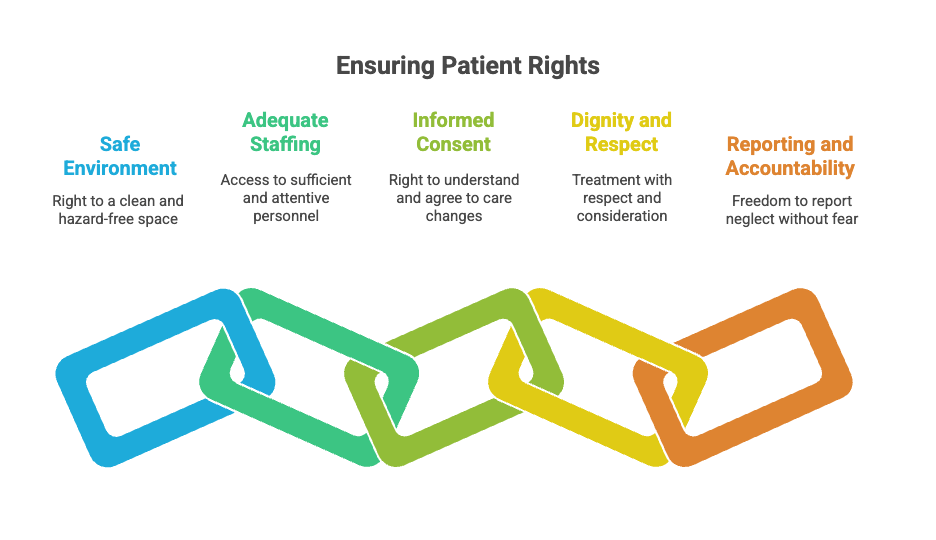
- The right to a safe, clean environment free of known hazards
- The right to adequate staffing, supervision, and timely assistance
- The right to informed consent before restraints, sedatives, or major care changes
- The right to dignity, respectful communication, and family involvement
- The right to report neglect and seek accountability without retaliation
If the home ignored fall risks, failed to monitor a high-risk resident, or concealed what happened, you may pursue compensation for medical costs, pain, and related losses. You also help protect other residents by demanding better standards and transparency.
Steps to Take After a Fort Lauderdale Nursing Home Slip and Fall
After a Fort Lauderdale nursing home slip and fall, you should get immediate medical care to treat injuries and create a clear record.
You’ll also want to report the incident right away and document what happened with notes, photos, and witness names.
Preserve evidence and records—keep medical bills, incident reports, care plans, and any relevant communications—so you don’t lose crucial proof later.
Get Immediate Medical Care
Seek medical care right away, even if the fall seems minor. You’re protecting an older adult who may not feel the full impact yet. Ask staff to call a nurse, physician, or 911 based on symptoms, and don’t hesitate to request emergency transport if there’s head trauma, confusion, severe swelling, or inability to bear weight.
A quick evaluation can uncover hidden fractures, internal bleeding, or medication-related complications.
Stay focused on comfort and dignity while care begins. Request appropriate pain management, but also ask about sedation risks, fall-risk protocols, and medication interactions. If the resident uses blood thinners or has osteoporosis, push for prompt imaging and monitoring.
Follow discharge instructions carefully, schedule follow-up care, and watch for delayed signs like dizziness, nausea, worsening pain, or changes in behavior.
Report And Document Incident
Once medical needs are addressed, you’ll want a clear record of what happened and when. Notify the charge nurse or administrator right away, and ask for the facility’s incident report to be completed promptly.
Provide accurate details, including the date, time, location, symptoms you observed, and any staff responses. Request the names and titles of everyone involved, and note any follow-up care the facility says it will provide.
Make family notifications as soon as possible so loved ones can coordinate support and communicate consistently. If the resident can share what occurred, document their account in their own words.
Keep your tone respectful but firm, because clear documentation helps improve safety and supports insurance claims later.
Preserve Evidence And Records
Hold onto anything that shows what caused the fall and how the facility responded, because vital details can disappear fast in a busy nursing home.
Ask staff to preserve surveillance video, call-light logs, cleaning schedules, maintenance records, and incident reports.
Photograph the exact area, footwear, and any hazards, and note lighting, mats, and warning signs.
Keep copies of medical charts, medication lists, imaging results, and discharge instructions, plus bills and transport records.
Save texts, emails, and voicemails with administrators, and write down the names and shifts of witnesses.
Request records in writing and track who handled each item to preserve the chain.
Don’t alter photos or files; secure originals and backups.
If footage or metadata are in question, a lawyer can use digital forensics to authenticate them.
How a Fort Lauderdale Nursing Home Slip and Fall Lawyer Can Help You
Because nursing home slip and fall cases often involve hidden records, rushed investigations, and multiple responsible parties, a Fort Lauderdale nursing home slip and fall lawyer can step in quickly to protect your claim and take the pressure off your family. You don’t have to battle a facility’s legal team alone or guess which deadlines apply.
Your lawyer builds a clear, service-minded case that honors your loved one’s dignity and helps prevent future harm to other residents.
- Secure incident reports, surveillance, and maintenance logs before they disappear
- Interview witnesses and document hazards, lighting, flooring, and staffing levels
- Review policies, staff training records, and prior complaints for patterns
- Handle insurance disputes, demand fair offers, and push back on blame-shifting
- Coordinate with medical providers and experts to explain how the fall occurred
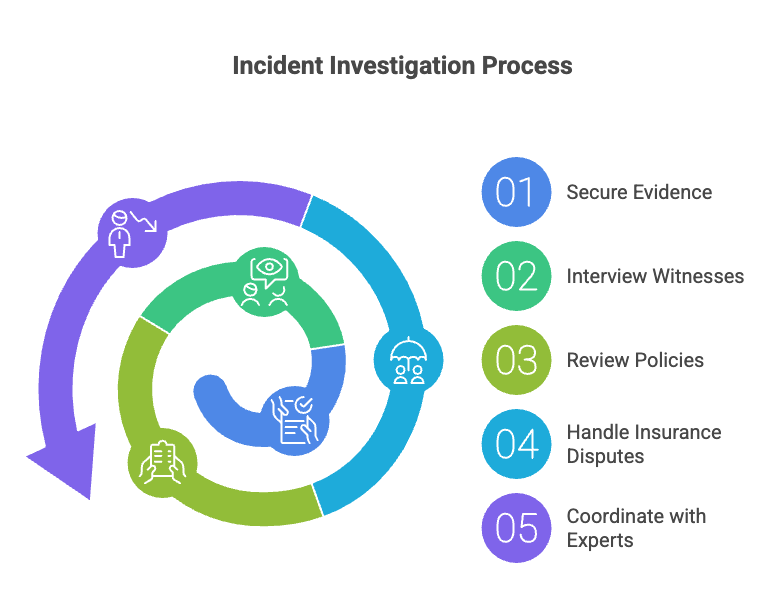
With steady guidance, you can focus on care, while your attorney pursues accountability and meaningful recovery.
Long-Term Effects of Fort Lauderdale Nursing Home Slip and Fall Injuries
After a nursing home slip and fall in Fort Lauderdale, you may face chronic mobility limitations that reduce independence and increase fall risk.
You can also experience cognitive and emotional decline, including confusion, anxiety, or depression that worsens over time.
Ongoing medical complications—like pain, infections, or repeated hospital visits—can keep you in a cycle of treatment and setbacks.
Chronic Mobility Limitations
Even when a fall seems minor at first, it can leave a nursing home resident with chronic mobility limitations that don’t fully resolve. You may see slower walking, guarded transfers, and pain that makes daily care harder.
When staffing cuts corners on rehab, you’re left coordinating appointments, encouraging balance exercises, and ensuring safe use of assistive devices so your loved one can move with dignity.
| What you notice | What it costs them | How you can help |
|---|---|---|
| Shuffling steps | Lost independence | Ask for PT goals |
| Unsteady transfers | Skin tears, bruises | Request grab bars |
| Avoiding activity | Weakness builds | Track progress daily |
You can also document setbacks and push the facility to address hazards promptly, so mobility doesn’t keep slipping away over time.
Cognitive And Emotional Decline
Ongoing mobility problems don’t just slow your loved one down—they can also change how they think and feel. After a serious slip-and-fall, they may struggle to track conversations, remember routines, or recognize familiar faces. That kind of Memory loss can make daily life confusing and exhausting, even when you’re doing everything right.
You may also notice shifts in mood: irritability, fear of moving, or sadness that lingers. When they can’t join activities or feel embarrassed about needing help, Emotional withdrawal can follow. They might stop calling family, skip communal meals, or decline therapy they once accepted.
You can serve them best by watching for these changes, documenting them, and speaking up to staff early so support and engagement stay consistent.
Ongoing Medical Complications
Because a fall can trigger more than a one-time injury, your loved one may face medical complications that linger for months or become permanent. You may see wounds heal slowly, pneumonia develop after limited mobility, or blood clots form during prolonged bed rest.
If the facility misses early warning signs, ongoing infections can take hold and drain strength. You can best serve them by tracking symptoms, requesting timely labs, and ensuring that clinicians coordinate care, especially when new prescriptions start. Medication interactions may worsen dizziness, increase bleeding risk, or cause confusion, raising the risk of another fall.
| Complication | What you may notice | Why it matters |
|---|---|---|
| Infection | fever, drainage | sepsis risk |
| Clots | leg swelling | stroke danger |
| Bedsores | skin breakdown | chronic pain |
Proving Liability in Fort Lauderdale Nursing Home Slip and Fall Cases
When a slip and fall happens in a Fort Lauderdale nursing home, you’ll need to prove the facility’s negligence—not just that the resident got hurt.
Start by showing the home owed a duty of care and failed it through a duty breach, such as ignoring wet floors, poor lighting, cluttered hallways, or missing grab bars.
Then connect that failure to the fall and resulting injuries with clear timelines and consistent reports.
Gather strong liability evidence quickly.
Request incident reports, care plans, housekeeping logs, maintenance records, and staff schedules.
Preserve surveillance video and take photos of the hazard before it changes.
Collect witness statements from residents, visitors, and employees while memories are fresh.
Look for patterns: prior complaints, repeated falls, or understaffing that left call lights unanswered.
If the facility broke state regulations or its own policies, that helps prove negligence.
Compensation for Fort Lauderdale Nursing Home Slip and Fall Damages
Accountability often starts with full compensation for every loss a nursing home slip-and-fall causes. When you pursue damages, you’re not just seeking money—you’re protecting your loved one’s dignity and helping prevent future harm to other residents.
You can request payment for medical bills, hospital transfers, surgery, therapy, mobility aids, and increased care needs. You can also claim lost quality of life when the fall limits independence, causes chronic pain, or triggers fear of walking again.
To support your financial recovery, you’ll gather records, invoices, care plans, and expert opinions showing what the injury truly costs now and later. You shouldn’t overlook emotional damages, including anxiety, humiliation, sleep disruption, and depression that often follow a traumatic fall.
If the facility’s conduct was especially reckless, you may also seek additional damages that reinforce safety standards and respectful care.
The Statute of Limitations for Fort Lauderdale Nursing Home Slip and Fall Cases
Full compensation won’t matter if you miss the legal deadline, so you also need to watch the statute of limitations for a Fort Lauderdale nursing home slip and fall. In Florida, most negligence claims must be filed within a set period, and the clock often starts on the date of injury. If your loved one can’t speak for themselves, you may need to act quickly so their medical needs and dignity are protected.
Statute nuances can change the timeline. Records delays, discovery of the cause, or questions about whose legal authority to sue can affect when you should file. If a fall leads to wrongful death, a different deadline may apply.
Filing exceptions sometimes pause or extend time, such as when a defendant can’t be located, fraud hides wrongdoing, or a resident lacks capacity under specific rules. Don’t wait for “the right moment.” Gather incident reports, medical notes, and witness names early, then calendar deadlines immediately.
Why You Need an Experienced Fort Lauderdale Nursing Home Slip and Fall Lawyer
Although a nursing home may label a slip and fall as an “accident,” an experienced Fort Lauderdale nursing home slip and fall lawyer knows how to test that claim against staffing logs, maintenance records, care plans, and surveillance footage—then build a case that ties the facility’s shortcuts to your loved one’s injuries and the costs that follow.
An experienced Fort Lauderdale lawyer tests “accident” claims against records and footage, tying facility shortcuts to injuries and costs.
You’re often juggling hospital visits, family meetings, and the moral weight of protecting someone who can’t fully protect themselves. A seasoned lawyer moves quickly to preserve evidence, interview witnesses, and identify patterns like poor staff training, rushed rounds, or ignored hazards.
They translate medical charts into clear proof of pain, disability, and future care needs, so the full impact doesn’t get minimized. When insurance disputes start—denials, delays, low offers—they handle the pressure and paperwork while you stay focused on compassion and recovery.
You don’t just seek compensation; you help push the facility toward safer care for every resident.
How to Choose the Right Fort Lauderdale Nursing Home Slip and Fall Lawyer for Your Case
When you’re choosing a Fort Lauderdale nursing home slip and fall lawyer, look for someone who can prove more than a fall happened—they should know how to pinpoint why it happened and who cut corners.
Ask how they’ll uncover maintenance logs, staffing records, incident reports, and prior complaints, and whether they’ll consult safety or medical experts to connect the hazard to harm.
You’ll also want a lawyer who listens with compassion and purpose.
During client interviews, notice if they ask about your loved one’s mobility, medications, supervision, and prior warnings to staff.
Choose someone who communicates clearly, returns calls, and explains timelines so you can focus on caring for your family.
Review the fee structure in writing, including costs, contingency terms, and what happens if the case doesn’t resolve.
Finally, evaluate their trial readiness and negotiation approach, so you can pursue accountability and safer care for others, too.
About the Law Offices of Anidjar and Levine
At the Law Offices of Anidjar and Levine, you’ll work with a team that digs into the details behind a nursing home slip and fall—what hazard existed, who knew about it, and how it should’ve been fixed.
You’ll get clear guidance, steady updates, and a plan that puts your loved one’s dignity first.
You’ll see the firm history reflected in hands-on casework, not slogans.
When you’re advocating for an injured resident, you need more than paperwork—you need people who listen, act fast, and push for meaningful change.
Client testimonials often highlight responsiveness, respectful communication, and persistence with insurers and facilities.
You’ll also get help gathering records, interviewing staff, and documenting conditions so your claim speaks for those who can’t.
Frequently Asked Questions
What if My Loved One Can’T Describe How the Fall Happened?
You can still move forward, even if your loved one can’t explain the fall. You’ll rely on medical records to confirm injuries, timing, and prior fall risks, and you’ll request incident reports and care logs.
You can also conduct witness interviews with staff, residents, and visitors to clarify what happened. By gathering these details quickly, you protect your loved one’s well-being and help guarantee the facility improves safety for everyone.
Can the Nursing Home Retaliate if We Report the Fall?
They shouldn’t retaliate if you report the fall, and many rules forbid it.
You can ask for the facility’s retaliation policies in writing and document any sudden changes in care, room, privileges, or visitation.
Report concerns to the administrator and, if needed, state regulators. Whistleblower protections may also apply to staff and families who speak up.
You can stay calm, factual, and persistent while advocating for safety.
Do We Need a Guardianship to File a Claim on a Resident’s Behalf?
You don’t always need a guardianship to file a claim on behalf of a resident. If you hold a valid power of attorney, you can usually act on their behalf.
If the resident can participate and consent, they may file directly with your support. You’ll typically need legal guardianship when the resident lacks capacity, and no existing authority document exists.
You can serve them best by gathering records and speaking with counsel promptly.
Will a Slip and Fall Claim Affect My Loved One’s Medicaid Benefits?
A slip and fall claim can affect your loved one’s Medicaid benefits if a settlement or judgment raises countable resources or income, impacting benefit eligibility.
You’ll want to plan for asset protection, such as structuring payments properly, using exempt spending, or considering a special needs trust when appropriate.
Don’t ignore liens, either—Medicaid may seek reimbursement.
You can pursue justice while safeguarding care, but you should coordinate early with counsel.
Can We Request a Room Transfer While the Claim Is Ongoing?
Yes, you can request a room transfer while the claim is ongoing. You should ask the facility in writing, explain safety concerns, and document responses to support room transferability and resident relocation.
You can also involve the care plan team and your loved one’s physician to justify the change. Don’t accept retaliation or reduced care; report it promptly.
Keep copies of incident reports, emails, and care notes to protect everyone involved.
——————————
When you’re dealing with a nursing home slip and fall in Fort Lauderdale, you don’t have to face the process alone.
The Law Offices of Anidjar and Levine can help you protect your loved one’s rights, document what happened, and pursue compensation for medical costs, pain, and ongoing care.
If you act quickly, you’ll also avoid deadline issues that could weaken your claim.
With an experienced Fort Lauderdale Nursing Home Abuse and Neglect Lawyer, you’ll have guidance, support, and a stronger case from start to finish.