The Law Offices of Anidjar and Levine represent individuals seeking a West Palm Beach Personal Injury Lawyer after collisions involving vehicle or equipment failures.
An investigation may examine defective parts, improper repairs, inadequate maintenance, failed safety systems, vehicle inspections, service records, photographs, electronic data, witness accounts, and expert analysis.
Potentially responsible parties may include manufacturers, distributors, repair facilities, vehicle owners, or insurers.
Legal guidance can address comparative fault, medical expenses, lost income, property damage, evidence preservation, and applicable filing deadlines.
Main Takeaways
- A West Palm Beach vehicle-failure lawyer investigates defective brakes, tires, airbags, seat belts, and other equipment that may have caused or worsened a crash.
- Potentially responsible parties include manufacturers, distributors, dealerships, vehicle owners, rental companies, and repair facilities.
- Preserve the vehicle, photographs, service records, repair invoices, inspection reports, and other evidence before repairs or disposal.
- Attorneys may coordinate independent inspections and qualified engineers to evaluate defects, improper repairs, maintenance failures, and causation.
- Claims may seek medical expenses, lost income, property damage, pain and suffering, and future care while addressing comparative fault and deadlines.
How We Can Help With Your West Palm Beach Car Accident Vehicle & Equipment Failures Injury Claim
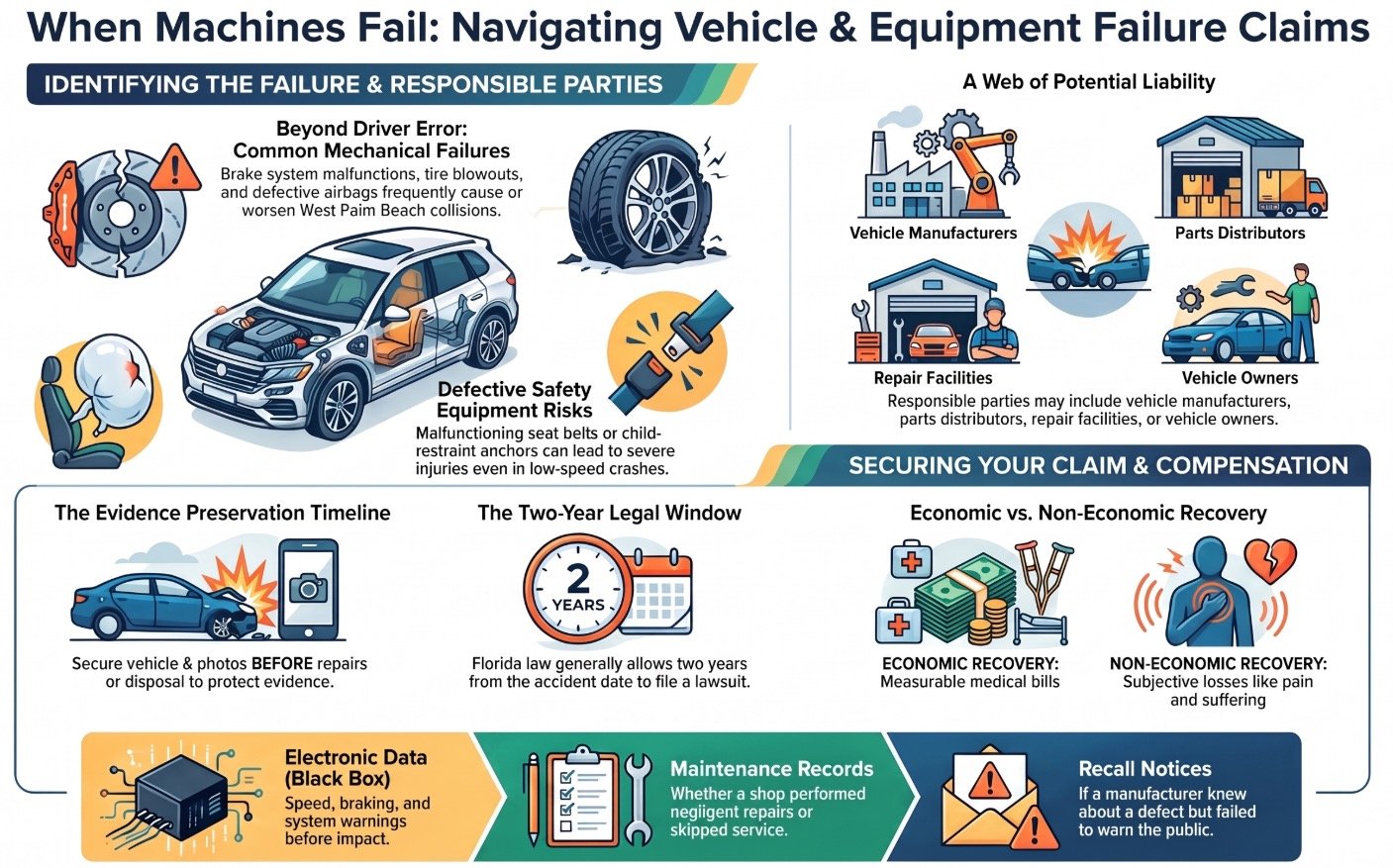
When a vehicle defect or equipment failure contributes to a West Palm Beach car accident, an injured person may have a claim beyond those arising from the collision itself. Legal counsel can help identify responsible manufacturers, distributors, repair facilities, and other parties while protecting the client’s interests throughout the process.
The evaluation may include reviewing maintenance records, service histories, crash evidence, photographs, and witness accounts. Counsel can arrange an independent vehicle inspection and examine whether Negligent inspection, defective repairs, inadequate warnings, or design problems contributed to the incident. A recall investigation may reveal prior reports, manufacturer notices, or regulatory concerns relevant to the alleged failure.


The legal team can also coordinate with qualified engineers, mechanics, and medical professionals to clarify causation and damages. By organizing documentation, communicating with insurers, and pursuing appropriate compensation, representation allows an injured person to focus on recovery. Each case receives careful attention to the facts, applicable law, and needs of those seeking fair treatment.
Understanding West Palm Beach Car Accident Vehicle & Equipment Failures Injury Cases
OUR CONSULTATIONSARE FREE
START YOUR FREE CASE REVIEW

Vehicle and equipment failure cases arise when a defect, inadequate maintenance, or improper repair contributes to a West Palm Beach car accident and resulting injuries. These claims examine whether a vehicle component, safety system, or service decision fell below applicable standards and whether that failure caused or worsened harm. The injured person may need medical treatment, income replacement, rehabilitation, and assistance with long-term limitations. Establishing responsibility often requires preserving the vehicle, reviewing service records, and obtaining qualified opinions about its condition before and after the collision.
Faulty mechanical inspections may show that a dangerous condition was overlooked, especially when inspection records conflict with later findings. Insurance dispute documentation should clearly connect the alleged failure to the crash, injuries, and financial losses. A careful case assessment also considers comparative fault, applicable deadlines, and potential claims involving manufacturers, repair facilities, owners, or insurers. Counsel can help organize evidence while supporting a fair resolution for the injured individual and family.
Common Causes of West Palm Beach Car Accident Vehicle & Equipment Failures


Vehicle and equipment failures may result from brake system defects, tire blowouts, or other conditions that impair a driver’s ability to control a car. Defective safety equipment can increase injury severity when a collision occurs, even if the crash itself was unavoidable. Poor vehicle maintenance, including neglected inspections and repairs, may also contribute to failures that create significant roadway hazards.
Brake System Failures
Brake system failures can prevent a driver from stopping or slowing a vehicle safely, creating a substantial risk of a West Palm Beach car accident. Common causes include worn brake pads, damaged rotors, leaking lines, defective master cylinders, and inadequate maintenance. Brake fluid contamination can reduce hydraulic performance and compromise reliable braking, especially when moisture or foreign material enters the system. An ABS sensor malfunction may prevent the anti-lock braking system from responding appropriately during emergency stops, increasing the likelihood of skidding or loss of control. Manufacturing defects, improper repairs, and delayed warnings may also contribute to brake failure. When these conditions cause injuries, a careful investigation can help identify responsible parties, preserve evidence, and support affected individuals seeking appropriate medical care and legal remedies.
Tire Blowouts
Although tire blowouts can occur without warning, they often result from identifiable conditions such as underinflation, excessive wear, punctures, defective manufacturing, or prolonged exposure to heat and road hazards. A damaged tire can destabilize a vehicle, reduce steering control, and create dangerous debris for nearby motorists. Regular inspections may reveal cracking, bulges, uneven wear, or objects embedded in the tread before failure occurs. Drivers should follow the vehicle manufacturer’s inflation specifications and replace tires that have exceeded their service life.
Runflat Treadwear ratings can help explain how long certain tires may remain usable, although they do not eliminate inspection requirements. Tire Pressure Monitoring systems may provide early warnings of pressure loss, but they may not detect every hazard or prevent a sudden rupture. Evidence about maintenance, purchase history, and roadway conditions can help affected individuals seek accountability and support.
Defective Safety Equipment
Defective safety equipment can prevent a vehicle from protecting its occupants during a collision, even when the driver operates it responsibly. Failures may involve airbags, seat belts, child-restraint anchors, head restraints, or electronic stability systems that do not deploy or perform as intended. Manufacturing defects, faulty components, inadequate warnings, and poorly designed controls can increase the likelihood or severity of injuries. Investigators may compare Driver error vs equipment failure by reviewing crash data, inspection records, recall notices, and witness accounts. A vehicle defect may support a claim against a manufacturer, distributor, or other responsible entity when the product was unreasonably dangerous and caused harm. Legal professionals can help preserve damaged equipment, identify applicable recalls, and coordinate qualified engineering evaluations for affected occupants and their families after a West Palm Beach collision.
Poor Vehicle Maintenance
Poor vehicle maintenance can create dangerous conditions even without a manufacturing defect. Worn brake pads, underinflated tires, broken lights, and neglected handling components may reduce a driver’s ability to respond safely in West Palm Beach traffic. Vehicle owners, commercial operators, and maintenance providers generally must address known problems and follow recommended service schedules. Routine inspections can identify developing hazards before they contribute to a collision, particularly when vehicles are used frequently or carry passengers. Defective repairs may be equally dangerous if a technician improperly installs parts, overlooks warning signs, or fails to verify completed work.
Evidence such as service records, inspection reports, repair invoices, and photographs may help establish whether inadequate maintenance contributed to vehicle or equipment failure. This documentation can help affected individuals seek accountability and support.
Legal Rights of West Palm Beach Car Accident Vehicle & Equipment Failures Injury Victims
When a vehicle or essential safety component fails and causes a West Palm Beach crash, injured victims may have legal rights beyond a claim against the at-fault driver. Depending on the facts, responsibility may involve a manufacturer, distributor, repair facility, or other party. Liability exceptions can affect deadlines, available damages, and governmental or contractual defenses. A careful legal evaluation helps protect each victim’s interests while promoting accountability.
Vehicle failures may create legal claims against manufacturers, distributors, repair facilities, and other responsible parties beyond the at-fault driver.
- Evidence preservation may include securing the vehicle, photographing damage, retaining defective parts, and obtaining maintenance or recall records.
- Medical documentation should connect diagnosed injuries, treatment plans, expenses, and future care needs to the collision.
- Insurance claim handling requires caution because recorded statements, releases, and premature settlements may restrict recovery.
An attorney can coordinate investigations, communicate with insurers, identify responsible parties, and assess compensation for medical costs, lost income, property damage, pain, and continuing limitations. Prompt guidance also helps families serve injured individuals with informed, respectful support while preserving lawful claims and essential evidence.
Why Do West Palm Beach Car Accident Vehicle & Equipment Failures Injuries Happen?
Vehicle and equipment failure injuries in West Palm Beach car accidents often arise from flaws that prevent a vehicle or safety system from functioning as intended. Common causes include defective brakes, tire blowouts, handling failures, faulty airbags, seat belt malfunctions, and inadequate child-restraint systems. Manufacturing errors, poor design, insufficient maintenance, and premature component wear may each contribute to a collision or worsen its consequences. In some cases, dealerships, repair facilities, rental companies, or parts suppliers may create risks through improper installation or failure to address known defects. Environmental conditions can expose weaknesses that were not apparent during ordinary use, while recalls may indicate a broader safety concern.
Determining causation requires examining the vehicle’s history, maintenance records, crash data, and applicable technical standards. Accurate documentation may also affect Insurance dispute timelines. An evidence preservation checklist can help identify records and physical components that clarify whether a preventable failure caused the injuries.
What Should You Do After a West Palm Beach Car Accident Vehicle & Equipment Failures Injury?
After a vehicle or equipment failure injury, the injured person should seek immediate medical care, even if symptoms seem minor at first. Report the incident to law enforcement and the appropriate vehicle manufacturer, owner, or maintenance provider. Preserve accident evidence promptly, including medical records, photographs, damaged parts, witness information, and repair documents.
Seek Immediate Medical Care
Prompt medical evaluation should be a priority for anyone injured in a West Palm Beach car accident involving a vehicle or equipment failure. A physician or emergency department can identify visible and hidden injuries, including concussion, internal bleeding, spinal trauma, and soft-tissue damage. Emergency treatment options may include ambulance transport, diagnostic imaging, wound care, medication, or expert referral, depending on the person’s condition. Individuals should follow discharge instructions carefully and attend recommended follow-up appointments, even when pain initially appears manageable. Documenting symptoms can help providers evaluate changes over time. A patient should record pain, dizziness, numbness, restricted movement, headaches, and other concerns, while preserving bills, prescriptions, and medical instructions. Prompt care supports recovery and creates an accurate health record for future treatment needs. Friends and family can assist with transportation, communication, and daily responsibilities.
Report the Vehicle Failure
Once immediate medical needs are addressed, report the suspected vehicle or equipment failure to the appropriate authorities and responsible parties. A driver, passenger, or witness may notify law enforcement and explain that a mechanical, manufacturing, maintenance, or roadway-related defect may have contributed to the collision. The vehicle owner, fleet operator, employer, rental company, manufacturer, or maintenance provider may also require prompt notice under applicable policies or agreements. Reports should remain factual and avoid speculation about driver negligence or technical causes. Medical providers should receive accurate information about how the failure occurred so treatment records reflect the reported mechanism of injury.
When appropriate, a qualified attorney can help coordinate independent expert analysis and communications with insurers, agencies, and potentially responsible organizations. Prompt reporting supports public safety and helps prevent additional harm.
Preserve Accident Evidence
Because vehicle or equipment failures can be repaired, altered, or discarded, preserve accident evidence as soon as practical. The injured person or a designated representative should photograph the vehicle, damaged components, roadway conditions, warning signs, and visible injuries before repairs or disposal occur. Maintenance records, inspection reports, purchase documents, recall notices, and communications with owners or operators may help establish whether a defect or neglected service contributed to the collision. Witness names and contact information should be collected, while surveillance footage should be requested before routine recording systems overwrite it. Detailed aftermath documentation should identify dates, locations, symptoms, and treatment. Any insurance statement should remain factual and consistent with available records. Legal counsel can issue preservation requests and coordinate inspections without compromising evidence or public safety.
Critical Evidence in a West Palm Beach Car Accident Vehicle & Equipment Failures Injury Case
Critical evidence may establish whether a vehicle or equipment failure caused or contributed to the collision and resulting injuries.
- Vehicle inspection reports and maintenance and repair records may reveal defects, neglected service, or improper repairs.
- Electronic data evidence, including event-recorder information, can clarify vehicle performance, while witness statements and crash evidence may corroborate how the incident occurred.
Vehicle Inspection Reports
Vehicle inspection reports can provide objective evidence of whether a mechanical defect or equipment failure contributed to a West Palm Beach car accident. These records may identify observed damage, malfunctioning components, warning signs, or conditions affecting braking, control, tires, lighting, and restraint systems. Reports prepared after a collision can help preserve the vehicle’s condition before repairs, disposal, or alteration changes important evidence. Investigators may compare documented findings with photographs, crash patterns, witness accounts, and onboard-system data during accident forensics. The reports can also indicate whether the vehicle met applicable Safety compliance standards at the time of inspection.
Careful review may clarify whether a defect existed before the crash, developed during impact, or resulted from subsequent handling. Preserving originals and identifying each inspector’s qualifications can support reliable evaluation and fair service to injured individuals.
Maintenance And Repair Records
Maintenance and repair records can reveal whether inadequate service, recurring defects, or delayed repairs contributed to a West Palm Beach car accident involving vehicle or equipment failure. Work orders, invoices, warranty documents, and service schedules may show whether required maintenance was completed and whether a dangerous condition was reported previously. These records can also help distinguish Driver negligence from a mechanical problem or a product defect. An attorney may preserve records from vehicle owners, repair facilities, manufacturers, fleet operators, and dealerships before information is lost or altered. Compare inspection findings with service histories to identify inconsistent statements or overlooked warnings. Through expert analysis, qualified professionals can assess whether repairs were reasonable, timely, and effective, helping establish responsibility and support an injured person’s claim for appropriate compensation.
Electronic Data Evidence
Electronic data evidence can help determine whether a vehicle or equipment failure contributed to a West Palm Beach car accident and injury claim. Event data recorders may preserve information about speed, braking, maneuvering, seatbelt use, and system warnings immediately before a collision. Diagnostic modules, onboard computers, telematics systems, and electronic maintenance alerts can reveal malfunction codes or ignored safety notifications. Because some systems overwrite information, prompt data retention requests may be necessary to prevent loss. Qualified professionals can secure the vehicle and create reliable copies without altering original records. Forensic analysis may then identify whether defective components, software errors, or operational failures affected vehicle performance. Attorneys serving injured individuals can coordinate appropriate experts and preservation measures, while respecting privacy requirements and applicable evidentiary rules. When properly authenticated, these records may clarify technical causation.
Witness And Crash Evidence
At the collision scene, witness accounts and physical crash evidence can help establish how a vehicle or equipment failure contributed to a West Palm Beach car accident and resulting injuries. Eyewitness credibility may depend on the person’s location, visibility, attention, and consistency when describing events. Independent witnesses can clarify whether brake lights appeared, maneuvering failed, tires separated, or warning signs preceded impact. Dashcam verification, including footage from nearby vehicles or businesses, may confirm speed, traffic conditions, and the sequence of events. Photographs should document vehicle damage, debris, tire marks, roadway conditions, warning indicators, and alleged defective components before repairs or removal.
Investigators may also preserve police reports, repair records, inspection findings, and product-identification information. Properly collected evidence can help injured individuals, families, insurers, and courts evaluate responsibility and secure fair treatment.
Long-Term Effects of West Palm Beach Car Accident Vehicle & Equipment Failures Injuries
Vehicle and equipment failures can leave accident victims with chronic pain, lasting disability, and substantial changes to their daily activities. Emotional and psychological trauma may also persist, affecting relationships, employment, and overall quality of life. Ongoing medical treatment and related financial burdens can further complicate recovery and may require sustained legal and personal support.
Chronic Pain And Disability
Over time, injuries caused by defective vehicle components or failed safety equipment can develop into chronic pain and permanent disability. Persistent spinal, joint, nerve, or traumatic brain injuries may limit walking, lifting, driving, working, and completing important daily activities. Some individuals require surgeries, rehabilitation, mobility devices, or continuing assistance from family members and professional caregivers. Treatment plans should be followed carefully, while providers monitor Medication side effects and adjust prescriptions when necessary. Detailed disability documentation can establish functional limitations, medical restrictions, treatment history, and the anticipated duration of impairment.
Employment records, wage information, and statements describing necessary assistance may further clarify the injury’s practical consequences. A West Palm Beach attorney can help preserve medical evidence, identify responsible parties, and pursue compensation for ongoing care, lost income, adaptive equipment, and diminished quality of life.
Emotional And Psychological Trauma
When vehicle or safety equipment failures cause serious injuries, emotional and psychological trauma may persist long after physical wounds have recovered. Survivors may experience post-accident anxiety when entering vehicles, traveling through intersections, or recalling the crash. Emotional distress can affect concentration, confidence, relationships, and the ability to resume ordinary responsibilities. Some individuals develop sleep disturbances, including recurring nightmares, insomnia, or heightened alertness that prevents restorative rest. These reactions may emerge immediately or become more apparent as recovery progresses. Family members may also observe withdrawal, irritability, or persistent fear that the injured person does not recognize.
Mental health counseling can help survivors identify trauma responses, develop coping strategies, and rebuild a sense of safety. Documenting these symptoms and obtaining appropriate professional evaluation may clarify their lasting effect on daily functioning and personal well-being.
Ongoing Medical And Financial Burdens
Long-term medical and financial burdens can continue after injuries caused by vehicle or safety equipment failures appear to stabilize. Treatment may require additional surgeries, rehabilitation, prescription medication, diagnostic testing, or assistance with daily activities. Medical bills can accumulate even when insurance payments cover only part of the necessary care. Some injured individuals also experience reduced earning capacity, interrupted careers, or lost wages while recovering. Permanent limitations may require workplace accommodations, vocational retraining, or changes to transportation and housing. These consequences can affect household stability and the ability to support dependents. Careful documentation of treatment, expenses, employment losses, and anticipated needs can help clarify the full scope of harm. A qualified attorney may evaluate available insurance coverage and pursue compensation intended to address both present and future burdens.
Proving Liability in West Palm Beach Car Accident Vehicle & Equipment Failures Injury Cases
Proving liability in West Palm Beach car accident cases involving vehicle or equipment failures requires evidence showing that a defective part, inadequate maintenance, or another mechanical problem caused or contributed to the collision. A careful investigation may include vehicle inspections, repair and service records, recall notices, photographs, electronic data, witness statements, and testimony from qualified mechanical experts. These materials can help establish when the problem developed, whether a responsible party knew or should have known about it, and how it affected vehicle control or safety. Potentially responsible parties may include drivers, owners, maintenance providers, manufacturers, distributors, or other entities.
Each may owe a distinct Duty of care to prevent unreasonable risks. Investigators also assess Comparative fault factors, including negligent driving, failure to report warning signs, or other conduct that contributed to the injuries. Preserving damaged components and promptly documenting medical consequences can support an accurate, fair evaluation of responsibility and help hold responsible parties accountable.
Dealing With Insurance Companies After a West Palm Beach Car Accident Vehicle & Equipment Failures Injury
Insurance companies may evaluate a West Palm Beach car accident involving vehicle or equipment failure through a different lens than the injured person or family. Adjusters may examine maintenance records, inspection reports, repair histories, policy exclusions, and statements from drivers or witnesses. Their review can affect whether the insurer accepts responsibility, limits available benefits, or attributes the collision to another party.
Injured individuals should provide accurate information while avoiding speculation, recorded statements without preparation, or signed releases that could restrict recovery. Insurance claim delays may arise when insurers request extensive documentation, question medical treatment, or investigate potential manufacturer, repair facility, or employer responsibility. A lawyer can help organize records, communicate with adjusters, and protect the client’s interests during those discussions.
When coverage or fault becomes contested, a carefully developed coverage dispute strategy may address policy language, applicable exclusions, multiple insurance policies, and evidence supporting liability. Prompt attention can preserve important information and promote a fair evaluation of the injury claim.
Don’t Wait. Call Our Florida Personal Injury Lawyers Now!
What to Expect During a West Palm Beach Car Accident Vehicle & Equipment Failures Injury Claim Process
A vehicle and equipment failure injury claim typically begins with an evaluation of liability, damages, and available insurance coverage. The process then involves collecting evidence, negotiating with insurers, and determining whether a fair settlement is possible. If negotiations fail, the claimant may proceed toward trial to seek appropriate compensation.
Initial Claim Evaluation
When a vehicle or equipment failure contributes to a West Palm Beach car accident, the initial claim evaluation focuses on identifying how the defect occurred and who may be legally responsible. A qualified review considers the reported injuries, crash circumstances, vehicle history, maintenance records, and applicable insurance coverage. It may assess whether responsibility rests with a manufacturer, dealership, repair facility, equipment supplier, employer, or another party. The evaluation also considers deadlines, potential claims, and whether available coverage may address medical care, lost income, property damage, and other losses. Counsel can explain insurance negotiation steps, including communicating with adjusters and evaluating settlement proposals.
Early guidance may also include evidence preservation tips, while detailed collection and analysis are addressed separately. This structured assessment helps affected individuals pursue fair treatment and informed decisions.
Evidence Collection Process
During the evidence collection process, counsel and the claimant typically identify and preserve materials that may show how a vehicle or equipment failure caused or contributed to the crash. This work may include obtaining photographs, repair records, maintenance logs, inspection reports, recall notices, electronic data, and witness accounts. Counsel may send preservation notices to vehicle owners, manufacturers, repair facilities, fleet operators, and other entities that possess relevant information. Spoliation prevention is critical because destroyed, altered, or discarded evidence can obstruct a fair evaluation of responsibility. Securing physical evidence may require inspecting and preserving the vehicle, damaged components, safety equipment, and roadway conditions before repairs or disposal occur.
Investigators may also document injuries, medical treatment, and the crash scene. Organized collection helps clarify technical issues and supports accurate claim assessment while respecting the needs of all affected individuals.
Insurance Company Negotiations
With the relevant evidence preserved, insurance company negotiations can focus on how the vehicle or equipment failure contributed to the collision and resulting injuries. The claimant’s representative may present car accident documentation, repair records, photographs, medical evaluations, witness accounts, and applicable maintenance or recall information. Insurers commonly review whether a defective component, inadequate repair, or missing safety equipment affected causation and damages. They may request recorded statements, authorizations, or additional records, making careful communication important. Organized documentation should support medical expenses, projected treatment, lost income, and functional limitations. Negotiating medical bills may involve addressing disputed charges, liens, and coverage questions while protecting the claimant’s access to necessary care. Counsel can respond to valuation tactics, clarify liability evidence, and keep discussions focused on the documented impact of the failure.
Settlement Or Trial
A settlement or trial may resolve a West Palm Beach car accident claim involving an alleged vehicle or equipment failure, depending on the strength of the evidence, the parties’ positions, and the insurer’s willingness to provide fair compensation. During negotiations, counsel may present maintenance records, recall notices, inspection findings, medical documentation, and witness testimony to establish liability and damages. Insurance negotiation tactics can include challenging inadequate offers, identifying coverage sources, and explaining how a defect or failed component contributed to the collision. If negotiations do not produce a reasonable resolution, litigation may proceed toward trial. A trial readiness strategy involves preparing exhibits, expert testimony, witness examinations, and arguments addressing causation, comparative fault, and damages. The injured person generally decides whether to accept a settlement or pursue a courtroom verdict.
Compensation for West Palm Beach Car Accident Vehicle & Equipment Failure Injury Damages
Vehicle or equipment failures can cause serious injuries in a West Palm Beach car accident, particularly when defective brakes, tires, airbags, seat belts, control systems, or other components contribute to the collision. Injured individuals may pursue compensation from responsible drivers, manufacturers, distributors, repair facilities, or other parties whose conduct or products contributed to the harm. A careful investigation can identify design defects, manufacturing errors, inadequate warnings, negligent maintenance, or improper repairs. Attorneys may preserve the vehicle, obtain maintenance and recall records, consult qualified experts, and document how the failure affected the crash. Insurance coverage limits can influence available recovery, particularly when multiple injured people seek payment from the same policy.
A comparative negligence analysis may also determine whether another party’s conduct affects responsibility for the accident. Prompt legal guidance helps protect evidence, identify all potentially liable parties, and pursue an appropriate claim while treating injured individuals and their families with care, dignity, and respect throughout the process.
Economic vs Non-Economic Damages in West Palm Beach Car Accident Vehicle & Equipment Failures Cases
Damages in vehicle and equipment failure cases may include economic losses, such as medical expenses, lost wages, repair costs, and future financial needs. Non-economic damages can address pain, emotional distress, disability, and reduced quality of life. Proving financial losses generally requires organized records, expert analysis, and evidence connecting each claimed expense to the accident.
Economic Damages
When a defective vehicle component or failed safety system contributes to a West Palm Beach car accident, injured parties may pursue economic damages to recover measurable financial losses. These damages may include medical expenses for emergency treatment, hospitalization, rehabilitation, prescription medication, and necessary follow-up care. Documentation such as invoices, medical records, and insurance statements can help establish the amount and accident-related purpose of each cost. An injured person may also claim lost wages resulting from missed work, reduced hours, or temporary disability. When injuries affect long-term employment capacity, compensation may account for diminished future earnings based on work history, qualifications, and medical evidence. Economic damages can further cover property repairs or vehicle replacement when a defect-related collision damages transportation or personal belongings. Careful records support accurate evaluation and fair recovery.
Non-Economic Damages
Non-economic damages address the personal impact of a West Palm Beach car accident caused by a defective vehicle component or failed safety system rather than a documented financial loss. They may include physical pain, emotional distress, inconvenience, loss of enjoyment, disfigurement, and diminished quality of life. In fatal cases, Wrongful Death Claims may seek compensation for survivors’ loss of companionship, protection, guidance, and emotional support. The value of these damages depends on the injury’s severity, duration, medical prognosis, and effect on family relationships. Attorneys representing injured people often explain Trial Strategy Basics, including how testimony, photographs, medical records, and witness accounts can show suffering without reducing it to a financial calculation. Florida law and case-specific evidence govern available recovery, while a careful presentation helps decision-makers evaluate the harm with fairness and dignity.
Proving Financial Losses
Proving financial losses in a West Palm Beach car accident involving a vehicle or equipment failure requires clear evidence connecting each claimed expense to the crash and resulting injuries. Economic damages may include emergency treatment, rehabilitation, prescription costs, vehicle repairs, lost wages, and reduced earning capacity. Receipts, invoices, pay records, medical statements, and insurance claim documentation can establish the amount and necessity of these losses. A detailed expense record should also identify unexpected out-of-pocket costs, such as transportation, home assistance, or medical equipment. Non-economic damages, including pain, emotional distress, and diminished quality of life, require different supporting evidence, such as medical observations and testimony regarding daily limitations. Organized documentation helps attorneys present a complete claim and ensures injured individuals receive fair consideration while serving their long-term recovery needs.
Don’t Wait. Call Our Florida Personal Injury Lawyers Now!
When a West Palm Beach Car Accident Vehicle & Equipment Failures Injury Case Goes to Trial vs Settlement
Vehicle and equipment failures can materially affect the legal path of a West Palm Beach car accident injury case, particularly when defective brakes, tires, handling components, airbags, or safety systems contributed to the collision. Settlement may be appropriate when evidence clearly connects the failure to the injuries, damages are reasonably documented, and responsible parties offer fair compensation. Negotiations can resolve the matter more efficiently while reducing the uncertainty, expense, and emotional burden of court proceedings.
Trial becomes more likely when insurers dispute causation, challenge the extent of injuries, or refuse reasonable payment. Attorneys may pursue records, inspections, witness testimony, and qualified opinions during Trial Preparation. Comparative Negligence may also influence negotiations and courtroom arguments if another party alleges that the injured person contributed to the crash. A trial allows evidence to be presented to a judge or jury, but its outcome remains uncertain. Legal counsel generally evaluates the client’s needs, available proof, risks, and long-term interests before recommending settlement or trial.
Florida Laws That May Affect Your West Palm Beach Car Accident Vehicle & Equipment Failures Case
Florida law may affect a West Palm Beach car accident case involving vehicle or equipment failures by determining liability, available damages, filing deadlines, and the evidence required to establish causation. Several legal principles can shape how an injured person, family, or responsible vehicle owner is served during the claims process:
- Comparative negligence rules may reduce compensation when the injured party contributed to the collision, including through avoidable conduct or improper vehicle use.
- Florida no-fault thresholds generally require an injured driver to seek initial personal injury protection benefits through applicable insurance. Additional injury damages may depend on whether the condition meets Florida’s statutory threshold for serious harm.
- Product liability, negligent maintenance, employer responsibility, and evidence-preservation rules may apply when a defective part, inadequate repair, or faulty equipment contributed to the crash.
Medical records, inspection reports, recall information, photographs, witness accounts, and qualified expert analysis can help clarify causation and responsibility. Legal counsel may coordinate these efforts while protecting the interests of those affected.
The Statute of Limitations for West Palm Beach Car Accident Vehicle & Equipment Failures Injury Cases
The time available to pursue a West Palm Beach car accident claim involving a vehicle or equipment failure is governed largely by Florida’s statute of limitations. In many injury cases, Florida generally allows two years from the accident date to file a lawsuit. Missing this deadline may permanently bar recovery, even when Liability evidence indicates that defective brakes, tires, restraints, or other equipment contributed to the harm.
Certain circumstances can alter the deadline. Claims involving wrongful death, governmental entities, minors, or delayed discovery may follow different rules and shorter notice periods. Product-liability claims may also involve separate deadlines, including statutes of repose that restrict when an action can be filed regardless of discovery. Accident reconstruction, maintenance records, inspection reports, medical documentation, and witness accounts should likewise be preserved promptly. Early attention helps protect an injured person’s ability to seek accountability and supports informed decisions that serve the interests of affected families. Because deadlines are fact-specific, a timely review of the circumstances remains critical.
How a West Palm Beach Car Accident Vehicle & Equipment Failures Lawyer Can Help You
When a vehicle or equipment failure contributes to a collision, a West Palm Beach car accident lawyer can investigate the mechanical cause, identify responsible parties, and protect the injured person’s legal interests. The lawyer may preserve damaged components, review maintenance records, consult qualified engineers, and assess whether negligent repairs, defective design, or manufacturing errors caused the crash.
A focused legal evaluation can address:
- Vehicle Recall Impacts, including whether a manufacturer issued warnings, failed to provide adequate notice, or left a known defect uncorrected.
- Insurance Coverage Options, including applicable liability, uninsured motorist, commercial, and product liability policies.
- Evidence and damages, such as medical documentation, wage losses, repair costs, and testimony explaining future needs.
When to Contact a West Palm Beach Car Accident Vehicle & Equipment Failures Lawyer
Prompt legal consultation is advisable after a collision involving a suspected vehicle or equipment failure, particularly if braking, steering, tires, airbags, or other safety systems malfunctioned. Early guidance can help preserve evidence before a damaged vehicle is repaired, altered, or released to an insurer, manufacturer, rental company, or salvage facility.
A lawyer may recommend photographing the scene, securing repair invoices, obtaining maintenance records, and identifying witnesses while memories remain reliable. Document request timelines can matter because electronic data, inspection reports, warranty materials, and service histories may be retained only for limited periods. Medical evaluation and insurance notifications should also occur promptly, even when injuries initially appear minor.
Legal assistance becomes especially important when responsibility is disputed, multiple parties are involved, or a commercial vehicle or defective component is implicated. Counsel can organize a fault causation analysis using collision evidence, vehicle history, and expert input. Contacting counsel before signing releases or accepting settlement funds can protect the injured person’s ability to pursue appropriate compensation.
Why You Need an Experienced West Palm Beach Car Accident Vehicle & Equipment Failures Lawyer
An experienced West Palm Beach car accident vehicle and equipment failures lawyer can identify technical and legal issues that a routine insurance investigation may overlook. Such counsel can examine maintenance records, inspection reports, repair histories, electronic data, and manufacturer warnings to determine whether a defective component or inadequate service contributed to the collision. Prompt Evidence preservation is critical because damaged vehicles, parts, and digital information may be altered, discarded, or lost before responsibility is established. An attorney can coordinate inspections and protect relevant materials while investigating all potentially responsible parties, including drivers, repair facilities, manufacturers, distributors, and commercial operators.
Legal guidance also helps address Comparative negligence, which may reduce recovery when multiple actions contributed to an accident. By developing a fact-based claim, counsel can communicate effectively with insurers and pursue appropriate compensation for medical treatment, lost income, property damage, and continuing needs. This work supports injured individuals and families seeking accountability and stability after preventable crashes.
How to Choose the Right West Palm Beach Car Accident Vehicle & Equipment Failures Lawyer for Your Case
Selecting the right West Palm Beach car accident vehicle and equipment failures lawyer requires careful evaluation of the attorney’s experience with technically complex collision claims. A suitable attorney should understand defective brakes, tire failures, handling problems, maintenance errors, and issues involving manufacturers or commercial operators. Experience with accident reconstruction, preserving physical evidence, and consulting with qualified engineers may also strengthen case preparation.
Potential clients should ask how the lawyer assesses liability, identifies responsible parties, and handles disputes involving insurers. Clear Client communication strategies are important because injured individuals and families need timely explanations, accessible updates, and respectful guidance throughout the process. The attorney should also explain the case timeline, including investigation stages, filing deadlines, negotiations, and possible trial preparation.
A careful review of professional credentials, relevant results, fee arrangements, and client-service practices can support an informed decision. The selected lawyer should demonstrate integrity, responsiveness, and a sustained commitment to protecting the client’s interests.
Don’t Wait. Call Our Florida Personal Injury Lawyers Now!
About The Law Offices of Anidjar & Levine
The Law Offices of Anidjar & Levine represents individuals injured in motor vehicle collisions, including claims involving vehicle defects, equipment failures, and negligent maintenance. Its attorneys evaluate crash circumstances, identify potentially responsible parties, and pursue compensation for medical expenses, lost income, property damage, and other legally recognized losses.
For clients and families seeking to support others during difficult circumstances, the firm provides guidance intended to make the legal process more understandable. Representation may involve reviewing repair records, maintenance histories, recalls, inspection reports, photographs, witness accounts, and available electronic data. Following evidence-preservation basics can help protect information that may clarify how a defect or failed component contributed to a collision.
The firm also helps clients understand Florida insurance timelines, notification requirements, coverage issues, and potential claims against insurers or negligent parties. Each matter requires an individualized assessment because liability and damages depend on the available evidence. The Law Offices of Anidjar & Levine offers consultations to discuss investigative steps and potential legal options.
Frequently Asked Questions
Can Defective Vehicle Equipment Cause an Accident Even When the Driver Follows All Traffic Laws?
Defective vehicle equipment can cause a crash even when a driver follows every traffic law. Brake failure, tire separation, handling defects, defective safety systems, or malfunctioning signals can suddenly prevent proper control or fail to warn other road users. Defect causation requires examining maintenance records, design specifications, recall notices, inspection evidence, and expert testimony to determine whether the equipment failure contributed to the collision. This analysis can help injured people pursue appropriate accountability and support.
Who May Be Responsible for Recalling or Repairing a Dangerous Vehicle Component?
Responsibility may rest with the vehicle manufacturer, component supplier, distributor, dealer, or repair facility, depending on how the danger arose. Manufacturer liability can apply when a design or production defect exists, while dealers and mechanics may be accountable for improper installation or negligent repairs. Regulators may require recalls when evidence shows violations of regulatory standards. Defect documentation, including notices and service records, helps identify appropriate repair remedies and responsible parties.
Can I Pursue a Claim if My Vehicle’s Warranty Has Expired?
A vehicle warranty’s expiration does not automatically eliminate a potential claim. Liability may still arise from a defective design, manufacturing error, inadequate warning, negligent repair, or a manufacturer’s failure to honor a safety recall. The injured person should preserve repair records, photographs, inspection reports, and medical documentation, then consult qualified counsel promptly because limitation periods apply. Medical insurance coordination can affect expenses, while policyholder recovery options may provide additional compensation.
What Types of Vehicle Inspections Are Available After a Suspected Equipment Failure?
Several vehicle inspections may be available after suspected equipment failure. Pre-crash inspections examine maintenance records, prior damage, recalls, and documented vehicle condition before the collision. Post-incident inspections assess braking systems, tires, handling, restraints, lighting, and other components for defects or damage. A qualified, independent mechanic or forensic engineer should preserve photographs, measurements, electronic data, and failed parts. These findings can clarify causation and support a fair claim.
Should I Stop Driving My Vehicle After a Suspected Mechanical Defect Causes a Crash?
Yes, the driver should stop operating the vehicle if a suspected mechanical defect caused or contributed to a crash. Continuing to use it may create additional danger, damage evidence, or complicate later evaluations. Move the vehicle only when necessary for immediate safety, preferably by tow. Documented symptoms, photographs, repair records, and witness information should be preserved. Prompt insurance notifications and an independent inspection can support responsible investigation and protect affected individuals.
—————————
Vehicle and equipment failures can complicate a West Palm Beach car accident claim by involving manufacturers, repair facilities, insurers, and other potentially responsible parties. Establishing liability requires a timely investigation, evidence preservation, and careful evaluation of medical and financial losses.
An experienced West Palm Beach Personal Injury Lawyer can assess the circumstances, identify applicable claims, and pursue appropriate compensation. The Law Offices of Anidjar and Levine provide informed guidance to victims seeking to protect their legal rights.