The Law Offices of Anidjar and Levine represents claimants facing unreasonable delays, denials, underpayments, or misleading insurer conduct in bad faith insurance injury cases. Counsel reviews policy terms, medical records, claim communications, and timelines to identify bad faith indicators and protect the right to full compensation. If you are also looking for a West Palm Beach Car Accident Lawyer, an attorney can help manage evidence, coordinate expert support, and pursue appeals, negotiation, or litigation when necessary. The sections that follow explain how these cases arise, what rights may apply, and how legal counsel can help.
Main Takeaways
- A West Palm Beach bad faith insurance injury lawyer reviews denials, delays, underpayment, and policy terms to determine whether the insurer acted unreasonably.
- Counsel gathers medical records, claim correspondence, phone logs, and policy documents to build evidence of unfair investigation or misrepresentation.
- A lawyer manages insurer communications, organizes proof of loss, and helps avoid statements or mistakes that could weaken the claim.
- Florida claimants may seek payment of amounts owed under the policy and damages for unreasonable delay, denial, or undervaluation of injury losses.
- Because filing deadlines are strict, early legal review helps preserve rights, shape appeals, and prepare for settlement negotiations or litigation.


How We Can Help With Your West Palm Beach Bad Faith Insurance Injury Claim
In the aftermath of an insurer’s unreasonable delay, denial, or underpayment, experienced legal counsel can help protect an injured claimant’s rights and position the case for a fair resolution. Counsel evaluates records, correspondence, and coverage terms, then identifies practical steps that support recovery while preserving the claimant’s ability to continue serving family and community.
A disciplined legal team can manage communications with the carrier, organize proof of loss, and address incomplete investigations or unsupported payment decisions. Through careful Policy negotiation, counsel seeks accurate valuation of medical costs, lost income, and related harm.
When an insurer maintains an improper position, a structured Appeals strategy can strengthen the claim by presenting additional evidence, correcting errors, and demanding timely reconsideration. Attorneys also coordinate with physicians, financial experts, and other professionals whose input clarifies damages and future needs. This focused advocacy promotes accountability, reduces avoidable delay, and helps injured people pursue stability, treatment, and fair compensation with confidence.
OUR CONSULTATIONSARE FREE
START YOUR FREE CASE REVIEW

Understanding West Palm Beach Bad Faith Insurance Injury Cases
Building on the role counsel plays in challenging improper claim handling, it helps to understand what constitutes a bad faith insurance injury case in West Palm Beach. In these matters, an insurer may fail to honor duties of fairness, honesty, and timely communication owed to a covered person after an injury-related loss.
A bad faith case generally focuses on whether the insurer acted reasonably under the circumstances and gave proper regard to the claimant’s interests. This review may involve claim valuation, policy interpretation, responsiveness, and the adequacy of the investigation before benefits are delayed, limited, or denied. In West Palm Beach, these disputes often arise after substantial injuries create pressing financial needs for medical care, household stability, and future support.
For families committed to protecting others, understanding these cases supports informed decisions and encourages accountability. A careful legal assessment can clarify obligations, preserve evidence, and measure whether the insurer’s conduct departed from accepted standards and legal expectations.
Common Causes of West Palm Beach Bad Faith Insurance
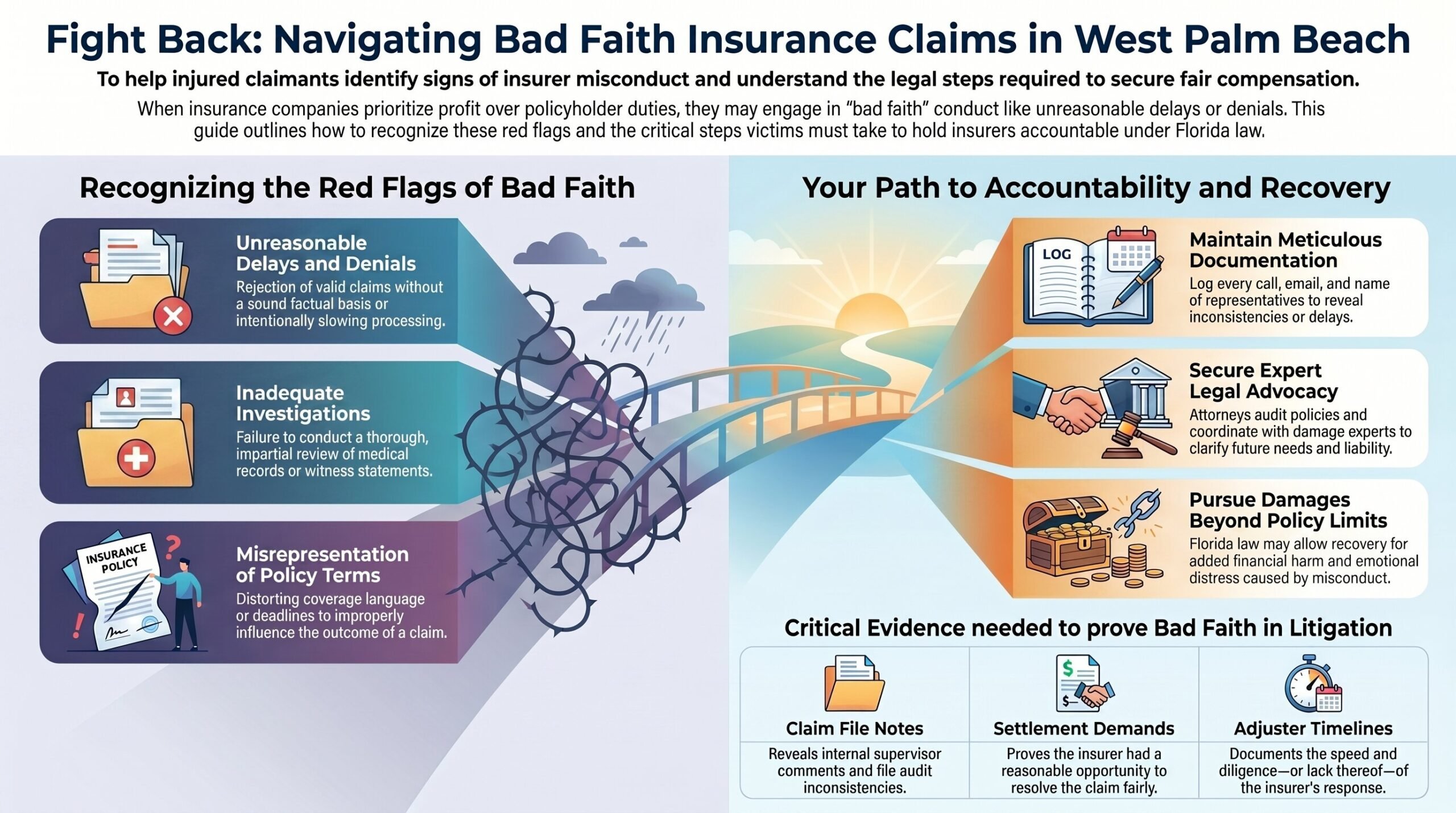
Common causes of bad-faith insurance in West Palm Beach include unreasonable claim denials, delayed claim processing, and inadequate claim investigations.
These practices may prevent policyholders from receiving timely and fair benefits, even when coverage should apply under the policy.
Misrepresentation of policy terms is also a significant concern, as it can distort an insurer’s obligations and improperly influence the outcome of a claim.
Unreasonable Claim Denials
Unreasonable claim denials often lie at the center of bad faith insurance disputes, particularly when an insurer rejects a valid claim without a fair investigation or a sound factual basis. Such conduct may arise from misinterpretations of claims, selective review of evidence, or rigid internal policies that prioritize financial interests over contractual duties. In some matters, denial patterns reveal a broader practice of minimizing payouts despite clear documentation and policy support.
For injured individuals and families seeking stability, these denials can disrupt medical care, household security, and long-term recovery. A careful legal review may uncover whether the insurer ignored relevant facts, misapplied policy language, or failed to evaluate the claim honestly. When that occurs, accountability serves not only the claimant but also the broader public interest in fair insurance practices and responsible claims handling.
Delayed Claim Processing
Many bad-faith disputes involve delayed claim processing, in which an insurer slows the evaluation or payment of a claim without a reasonable basis. In West Palm Beach injury matters, these delays can leave injured people without timely funds for treatment, transportation, or household stability. Insurers may point to a claim backlog or staffing shortages, yet those conditions do not automatically excuse prolonged inaction or poor communication.
A pattern of unanswered calls, repeated document requests, or unexplained extensions may suggest conduct that places corporate convenience over fair service. When delays become unreasonable, the harm often spreads beyond finances and affects recovery, family responsibilities, and peace of mind. A careful legal review can help determine whether the insurer acted promptly, communicated honestly, and honored its duties under Florida law and policy obligations.
Inadequate Claim Investigations
Often, bad faith disputes arise when an insurer fails to conduct a thorough and impartial investigation before limiting, delaying, or denying benefits. In West Palm Beach injury claims, this problem may appear through incomplete interviews, overlooked witness statements, or inadequate documentation of medical evidence and property damage. A rushed or one-sided review can prevent a fair understanding of the loss and its impact.
When insurers ignore relevant records, decline to consult qualified professionals, or fail to revisit conflicting facts, claim decisions may become unreliable. Such conduct can place unnecessary burdens on injured people and families seeking stability after a serious event. A careful investigation serves the public by promoting accuracy, accountability, and timely support. When that process is neglected, the foundation of trust between insurer and policyholder can be seriously undermined.
Misrepresentation Of Policy Terms
Distorting policy language can become a central feature of bad faith when an insurer presents coverage terms, exclusions, or conditions in a misleading manner. Through Coverage misstatements, claimants may be told that benefits do not exist, that deadlines are shorter than stated, or that exclusions apply more broadly than the policy allows. Such conduct can exploit Policy ambiguity rather than resolve it fairly.
In service-focused legal review, misrepresentation is examined by comparing the insurer’s statements with the actual contract, endorsements, and governing law. If discrepancies appear intentional or reckless, they may support a bad faith claim. Accurate explanations matter because injured individuals often rely on insurer guidance during difficult periods. When policy terms are distorted, access to needed medical care, financial stability, and fair treatment may be wrongfully delayed or denied.


Legal Rights of West Palm Beach Bad Faith Insurance Injury Victims
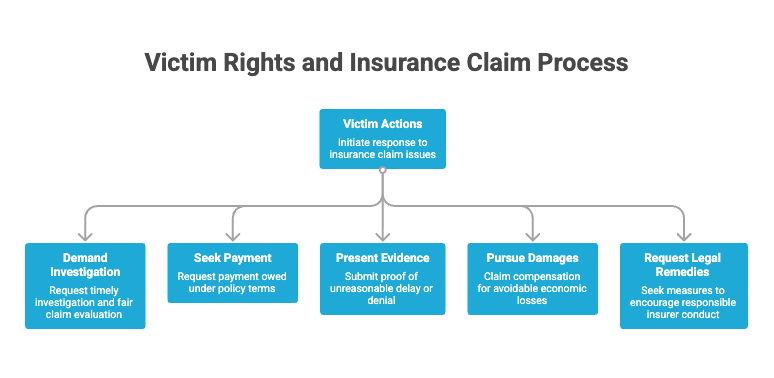
Accountability is central to the legal rights of West Palm Beach injury victims when an insurance company fails to handle a claim fairly, honestly, and in good faith. Florida law may allow affected individuals to pursue compensation beyond the original policy benefits when wrongful conduct causes added financial harm, delay, or unnecessary hardship.
Through careful Policy interpretation and informed Claim counseling, advocates can help protect families and support community stability.
- Victims may demand timely investigation and fair claim evaluation.
- They may seek payment owed under applicable policy terms.
- They may present evidence of unreasonable delay or denial.
- They may pursue damages linked to avoidable economic losses.
- They may request legal remedies that encourage responsible insurer conduct.
These rights promote ethical treatment and reinforce the duty insurers owe to the people they serve. When properly asserted, they can restore dignity, improve access to care, and help injured residents move forward with greater security, fairness, and confidence after preventable setbacks.
Why Do West Palm Beach Bad Faith Insurance Injuries Happen?
Arise when insurers place financial interests above their duty to evaluate and resolve claims fairly, bad faith insurance injuries in West Palm Beach are commonly tied to unreasonable delays, unsupported denials, inadequate investigations, or misrepresentation of policy obligations.
These practices can leave injured policyholders without timely care, income support, or essential resources needed to remain stable and continue caring for others in their households and communities.
Several factors often contribute. Policy ambiguity may be used to interpret coverage narrowly, even when the contract could reasonably support payment.
Internal pressure to reduce payouts can encourage adjusters to undervalue losses or postpone decisions.
Claim bottlenecks, whether caused by understaffing, poor supervision, or weak training, can slow communication and prevent meaningful review.
In other cases, insurers may disregard medical evidence, rely on incomplete records, or fail to explain denials clearly. When fairness yields to cost control, preventable harm can deepen, and public trust in insurance systems can suffer markedly.
What Should You Do After a West Palm Beach Bad Faith Insurance Injury?
After a West Palm Beach bad faith insurance injury, the claimant should document all communications with the insurer, including letters, emails, phone calls, and claim decisions.
Relevant evidence should also be preserved immediately, as records, policy documents, and related damages may become essential in establishing the insurer’s conduct.
Legal counsel should then be contacted promptly to assess the claim, protect the claimant’s rights, and guide the next steps.
Document All Communications
Meticulous recordkeeping can play a decisive role when an insurer’s conduct raises concerns about bad faith. A claimant should maintain a clear log of every phone call, email, letter, and portal message exchanged with the insurance company. Record timestamps, the names and titles of representatives, and concise summaries of what was said or promised.
It is also prudent to save copies of all written communications, including claim forms, requests for information, and denial explanations. Organized records can help a family advocate for fair treatment, support counsel’s review, and reveal delays, inconsistencies, or shifting explanations.
When conversations occur by telephone, a follow-up email confirming the discussion may strengthen the timeline. Careful documentation promotes accountability and helps protect the interests of those seeking justice and compassionate service after an injury.
Preserve Evidence Immediately
In the immediate aftermath of an injury, preserving physical and digital evidence should be treated as a priority, particularly when an insurer may later dispute the nature of the loss, the extent of the harm, or the timing of events. Damaged property, torn clothing, medication bottles, photographs, surveillance footage, and electronic messages should be secured without alteration. A careful record of where each item was found supports chain preservation and helps maintain reliability.
Images should be taken promptly, using timestamps when available, and repeated as injuries or conditions change. Forensic photography can provide a clear visual history of bruising, swelling, vehicle damage, unsafe conditions, or medical devices. Receipts, repair estimates, and care-related expenses should also be preserved because organized evidence often strengthens accountability and supports a fair evaluation for everyone involved.
Contact Legal Counsel
Consulting legal counsel as early as possible can help protect an injured claimant from avoidable mistakes when dealing with a bad faith insurance matter. An attorney can review policy terms, insurer communications, deadlines, and medical records, then identify whether the carrier failed to act fairly, promptly, and in good faith.
A timely legal consultation also helps preserve the claimant’s ability to seek full compensation while reducing the risk of harmful statements or incomplete documentation. Counsel may manage correspondence, gather supporting evidence, and explain practical next steps in a clear, service-minded manner.
During the first meeting, the claimant should ask about the lawyer’s experience with bad faith claims, expected strategy, and Fee structure. Clear answers can support informed decisions and strengthen accountability throughout the claims process for all parties involved.
Critical Evidence in a West Palm Beach Bad Faith Insurance Injury Case
In a West Palm Beach bad faith insurance injury case, the strength of the claim often depends on the quality and organization of the supporting evidence. Courts and counsel commonly evaluate whether claim file documentation, settlement demand records, and an adjuster communication timeline reflect unreasonable delay, inadequate investigation, or unfair claim handling. Expert damage assessments also serve an important role, as they help establish the scope of loss and whether the insurer’s response was consistent with the facts and policy obligations.
- Claim file notes, internal evaluations, and coverage analyses
- Written settlement demands and insurer responses
- A chronological record of adjuster emails, letters, and phone calls
- Expert opinions regarding injury severity, damages, and claim value
- Evidence showing delays, inconsistencies, or departures from standard claims practices
Claim File Documentation
Claim-file documentation often provides the clearest record of how an insurer evaluated, delayed, or denied an injury claim in West Palm Beach bad faith litigation. These materials may reveal a claim chronology, internal notes, supervisor comments, and file audits that measure whether handling complied with policy duties and industry standards.
When reviewed carefully, the file can show missed deadlines, incomplete investigations, shifting explanations, or disregard of medical evidence.
It may also identify instances in which adjusters recognized exposure yet failed to act promptly or fairly. Counsel often compares entries against correspondence, phone logs, and policy requirements to determine whether the insurer placed its own interests above the claimant’s needs.
For those committed to helping injured people obtain fair treatment, claim-file documentation can offer a disciplined, fact-based foundation for accountability, transparency, and meaningful civil justice.
Settlement Demand Records
Settlement-demand records often provide a time-stamped measure of whether an insurer responded to a reasonable opportunity to resolve an injury claim within policy limits. These records may include formal demand letters, supporting exhibits, delivery confirmations, and proof of carrier receipt.
In a bad-faith case, they help show what information was presented, when it was provided, and whether the demand was clear, reasonable, and supported by medical bills, liability facts, and evidence of damages. They may also reveal whether the claimant offered a fair chance to protect the insured from excess exposure.
For families and advocates focused on service, such records can illuminate whether the insurer honored its duty to evaluate settlement seriously and act with due regard for the insured’s interests when policy limits could have resolved the claim promptly.
Adjuster Communication Timeline
Reconstructing the adjuster communication timeline can reveal whether an insurer acted promptly, evaluated the claim fairly, and kept the insured’s exposure in proper focus as new information emerged.
A careful communication log may show when notice was received, how quickly the adjuster responded, and whether important updates were acknowledged or ignored.
Dates attached to calls, letters, emails, and internal notes often help clarify diligence, delay, or shifting positions.
This chronology may also indicate whether the insurer requested needed materials within a reasonable period and communicated settlement opportunities to those making decisions.
For people committed to protecting others from preventable harm, the timeline serves a practical purpose. It helps demonstrate whether the carrier acted with fairness, consistency, and due regard for the interests entrusted to its care.
Expert Damage Assessments
Beyond the timing of adjuster communications, expert damage assessments often provide the clearest measure of whether an insurer has given a serious and fair evaluation of an injury claim. In bad faith litigation, these opinions can show whether losses were minimized, ignored, or investigated with proper care.
Independent appraisals may reveal gaps between the insurer’s estimate and the actual scope of harm. Structural evaluations can be equally important when bodily injuries arise from unsafe property conditions, vehicle impact, or hidden deterioration after an accident.
When qualified experts document repair costs, medical implications, and long-term consequences, their findings help courts assess reasonableness. A careful review of expert reports may also indicate whether the insurer overlooked evidence that could have protected the injured person and supported a fuller, more responsible claim response.
Long-Term Effects of West Palm Beach Bad Faith Insurance Injuries
The long-term effects of bad faith insurance injuries may extend well beyond the initial claim dispute, often affecting an injured person’s physical condition, mental health, and financial stability.
Chronic pain challenges can limit daily function, while emotional trauma may disrupt relationships, employment, and overall well-being.
At the same time, financial recovery struggles often intensify as medical costs, lost income, and delayed benefits continue to create pressure over time.
Chronic Pain Challenges
Living with chronic pain often means confronting limitations that extend well beyond the initial injury, affecting physical function, concentration, sleep, and overall stability.
Daily tasks may require extra time, assistance, or adaptive strategies, especially when persistent discomfort reduces mobility and endurance. Many individuals also experience Chronic fatigue, which can interfere with work, caregiving, and meaningful service to others.
Effective Pain management frequently requires coordinated medical care, consistent therapy, and careful monitoring of symptoms over time. Treatment plans may include medication, physical rehabilitation, and lifestyle adjustments intended to preserve function and reduce flare-ups.
When insurers act in bad faith, delayed approvals or denied benefits can intensify these burdens, limiting access to necessary care. In such cases, legal guidance may help protect resources needed for ongoing recovery and stability.
Emotional Trauma Impact
Many individuals who face prolonged disputes with insurers after a serious injury develop lasting emotional trauma that affects daily functioning, judgment, and personal relationships. Anxiety, irritability, sleep disruption, and persistent vigilance may continue long after physical wounds begin to mend.
Family members, caregivers, and community advocates often observe withdrawal, mistrust, and diminished confidence in critical decisions. In service-oriented settings, Trauma validation is important because it helps injured people feel heard, respected, and less isolated during recovery. Without that recognition, distress may intensify and interfere with treatment participation, communication, and overall stability.
Structured Coping interventions, including counseling, peer support, mindfulness practices, and consistent routines, may reduce symptoms and improve resilience. Care teams that respond with patience, documentation, and clear guidance often support healthier emotional adjustment over time for many injured individuals.
Financial Recovery Struggles
Uncertainty often defines the financial recovery process after an insurer’s bad faith conduct delays or limits payment on a valid claim. Injured individuals may face mounting medical debt while waiting for benefits that should have been provided promptly and fairly. As balances grow, families often divert savings, postpone necessary care, or rely on high-interest borrowing to meet basic obligations.
These financial disruptions can continue long after physical injuries begin to mend. Missed payments may trigger credit damage, reduce borrowing options, and complicate housing or transportation decisions.
In many cases, lost income intensifies the strain, especially when treatment limits a person’s ability to work consistently. A careful legal response can help document these losses, pursue accountability, and support a more stable recovery for those focused on protecting their households and communities.
Proving Liability in West Palm Beach Bad Faith Insurance Injury Cases
Establishing liability in a West Palm Beach bad faith insurance injury case requires more than showing that a claim was denied or delayed. Liability often turns on whether the insurer failed to act fairly, honestly, and with due regard for the injured party’s interests under the policy and applicable law.
Courts and fact finders commonly examine claim records, internal communications, timelines, and settlement opportunities. Careful policy interpretation may reveal duties the insurer overlooked or misapplied when evaluating coverage, damages, or defense obligations. Evidence may also include expert analysis regarding industry standards, unreasonable investigation methods, or inadequate responses to clear liability and substantial injuries.
In addition, witness credibility can influence how decision-makers assess adjusters, representatives, medical providers, and others involved in the claims process. A persuasive case generally connects the insurer’s conduct to measurable harm, including added financial burdens or lost opportunities for timely recovery. This structured approach supports accountability and promotes fair treatment for injured people and families.
Dealing With Insurance Companies After a West Palm Beach Bad Faith Insurance Injury
Once liability concerns have been identified, attention often shifts to how an injured person should communicate with the insurance company going forward. Clear, measured communication is generally advisable. Statements should remain accurate, limited to known facts, and supported by records such as medical bills, treatment notes, wage information, and correspondence. Careful documentation helps preserve credibility and reduces opportunities for misinterpretation or unfair delay.
In many situations, insurers seek information that may affect valuation or responsibility. A disciplined approach to insurance negotiation can help keep discussions focused on verified losses and policy obligations rather than speculation.
Claimant advocacy also becomes important when an insurer uses pressure, partial disclosures, or repeated requests to weaken a legitimate position. Those assisting injured people often emphasize patience, civility, and organized records because respectful persistence can protect both dignity and community-centered values.
What to Expect During a West Palm Beach Bad Faith Insurance Injury Claim Process
A West Palm Beach bad faith insurance injury claim process typically begins with strict filing timelines, followed by the careful collection of evidence and supporting documentation.
Claimants may also encounter insurer delay tactics, including repeated requests for information or unexplained communication gaps, which can impede the progress of the claim.
As the matter develops, it may conclude through settlement negotiations or proceed to litigation when a fair resolution is not offered.
Claim Filing Timeline
In a West Palm Beach bad faith insurance injury claim, the filing timeline typically begins with a review of the insurance policy, the accident-related records, and the insurer’s communications to determine whether improper delay, denial, or underpayment has occurred. Counsel then evaluates filing deadlines, confirms the proper forum, and prepares a claims checklist so each required step is completed in an orderly fashion.
Notice may be sent to the insurer, followed by any mandated waiting period under Florida law. If the matter is not resolved, a formal complaint may be filed and served. The insurer generally receives time to respond, after which the court sets deadlines and procedural requirements.
Throughout this timeline, careful attention to timing helps protect the injured person’s rights and supports a process aimed at fair, responsible resolution for all parties.
Evidence And Documentation
After filing deadlines and procedural requirements are addressed, attention generally turns to the evidence and documentation that will support a bad faith insurance injury claim. Thorough records help clarify what occurred, how the insurer responded, and whether its conduct met legal obligations. Essential materials often include policy documents, correspondence, claim forms, medical records, billing statements, and repair estimates.
Additional support may come from Photographic records showing injuries, property damage, or accident conditions. Witness statements can also strengthen the claim by confirming events, timelines, and communications.
Organized documentation allows advocates to evaluate inconsistencies, identify unfair claim handling, and present facts clearly to those seeking accountability. Maintaining complete, dated files also assists professionals who work to protect injured individuals, families, and communities through careful, service-minded legal representation and informed guidance.
Insurer Delay Tactics
Expect insurers accused of bad faith to use delay tactics that can complicate and prolong the injury claim process. These tactics may include repeated requests for records, shifting explanations, unnecessary examinations, and extended response times that burden injured people and those helping them. Claim stalling often appears subtle at first, making careful attention to deadlines and communications especially important.
Paperwork bottlenecks can also arise when insurers insist that forms were incomplete, misplaced, or never received. In West Palm Beach cases, this pattern may increase financial strain, interrupt medical care, and frustrate efforts to support a family or community. A structured response, including organized files, written follow-ups, and prompt documentation of each delay, helps demonstrate whether the insurer’s conduct reflects ordinary administrative issues or a troubling disregard for fair claim-handling obligations.
Settlement Or Litigation
Steering a bad-faith insurance injury claim in West Palm Beach often involves a decision between a negotiated settlement and formal litigation, each path carrying distinct demands, timelines, and risks.
Settlement negotiations may offer faster relief, lower costs, and opportunities to secure compensation without prolonged court involvement. This approach can support injured individuals and families seeking stability while continuing to care for others in their communities.
However, if an insurer refuses to act fairly, litigation may become necessary to compel accountability and pursue full damages. A sound Litigation strategy typically includes gathering records, evaluating policy obligations, preparing witnesses, and anticipating insurer defenses.
Throughout either path, careful documentation, realistic valuation, and disciplined legal guidance remain crucial. These measures help protect the claimant’s interests and promote a result grounded in fairness, service, and responsibility.
Compensation for West Palm Beach Bad Faith Insurance Injury Damages
Recovering compensation in a West Palm Beach bad faith insurance claim often involves damages that extend beyond the value of the original policy benefits. When an insurer unreasonably delays, denies, or underpays a valid claim, Florida law may permit recovery for the additional harm caused by that misconduct. In appropriate cases, compensation may exceed policy limits if the carrier’s conduct exposed the insured to avoidable loss or legal liability.
Courts may also consider punitive damages where the insurer’s behavior reflects intentional misconduct or a reckless disregard for the rights of others. This form of recovery is not available in every case, yet it serves an important public purpose by discouraging unfair claim practices and promoting faithful treatment of policyholders.
A careful legal evaluation helps determine what compensation may be pursued, what evidence is needed, and how a claim can advance accountability while protecting the injured party’s ability to care for family, community, and others in need.
Economic vs Non-Economic Damages in West Palm Beach Bad Faith Insurance Cases
In West Palm Beach bad faith insurance cases, damages are often divided into economic losses, which include measurable financial harm, and non-economic losses, which address less tangible effects on the claimant.
Because non-economic harm is not fixed by invoices or account records, its valuation generally depends on the facts of the claim, the severity of the insurer’s conduct, and the impact on the insured.
Proving either category of damages requires clear documentation, credible testimony, and evidence showing that the insurer’s bad faith directly caused the claimed loss.
Economic Damages Explained
Why do economic damages matter so much in a West Palm Beach bad faith insurance case? They measure the direct financial harm caused by an insurer’s unreasonable delay, underpayment, or denial of a valid claim. In service to injured individuals and their families, these damages provide a concrete basis for recovery and accountability.
Economic damages typically include lost wages, medical bills, rehabilitation costs, prescription expenses, property loss, and other out-of-pocket costs tied to the injury and the insurer’s conduct. Because these losses can be documented through invoices, payroll records, receipts, and expert review, they often form the foundation of a bad faith claim.
A careful evaluation helps show what the claimant has already paid, what income was interrupted, and what future financial obligations are reasonably expected to arise after the injury.
Non-Economic Loss Valuation
While economic damages show the measurable financial impact of an insurer’s misconduct, non-economic losses address the personal harm that does not appear on a bill or payroll record. These damages recognize suffering that affects daily living, relationships, dignity, and peace of mind. In West Palm Beach, bad faith matters; non-economic loss valuation considers the human consequences of delayed, denied, or mishandled benefits.
A careful pain valuation may account for physical discomfort, emotional distress, anxiety, inconvenience, and loss of enjoyment of ordinary activities. The central concern is how the insurer’s conduct altered the person’s quality of life, including the ability to care for family, participate in community, and maintain independence.
Proving Damages In Bad Faith
Clarity is essential when proving damages in a bad-faith insurance case because recovery depends on showing not only that the insurer acted improperly but also that the misconduct caused identifiable harm.
In West Palm Beach matters, economic damages may include unpaid benefits, additional medical costs, lost income, and other measurable financial losses resulting from delayed or denied coverage.
Non-economic damages may involve emotional distress, inconvenience, and disruption to family stability when wrongful claim handling deepens hardship.
Effective bad-faith valuation requires records, expert opinion, and a clear timeline linking the insurer’s conduct to each category of loss.
In severe cases, punitive damages may be pursued when evidence shows intentional misconduct or reckless disregard, reinforcing accountability and helping protect policyholders and the wider community from similar harmful practices.
When a West Palm Beach Bad Faith Insurance Injury Case Goes to Trial vs Settlement
In many West Palm Beach bad faith insurance injury cases, the decision to resolve a claim through settlement or proceed to trial depends on the strength of the evidence, the insurer’s conduct, and the extent of the policyholder’s damages. Early settlement often becomes possible when records clearly show unreasonable delay, denial, or underpayment, giving injured parties stronger Settlement leverage during negotiations.
Trial becomes more likely when the insurer disputes liability, minimizes losses, or refuses to offer fair compensation despite well-supported proof. In those matters, counsel may prepare for courtroom presentation to hold the insurer accountable and seek a result that reflects the full harm suffered.
Jury dynamics can influence both sides, since community standards, witness credibility, and the clarity of documented conduct may shape outcomes. Even so, many claims resolve before verdict when trial risks, costs, and timing encourage a practical agreement. A careful evaluation of service, fairness, and long-term recovery often guides families’ decisions.
Florida Laws That May Affect Your West Palm Beach Bad Faith Insurance Case
Under Florida law, several statutes and legal standards may directly affect how a West Palm Beach bad faith insurance case is evaluated, investigated, and pursued. Courts often examine whether an insurer acted fairly, in a timely manner, and with due regard for the insured’s interests. Florida’s bad-faith framework may involve administrative requirements, policy-interpretation rules, and evidentiary standards that shape both liability and damages. Legislative updates can also alter procedures, available remedies, and insurer obligations, making current legal review vital for those seeking accountable, service-minded advocacy.
- Good-faith duties require honest evaluation of claims and communication.
- Civil remedy notice rules may influence pre-suit compliance obligations.
- Unfair claim settlement laws may inform insurer conduct assessments.
- Mediation preferences may affect dispute resolution strategy and timing.
- Comparative fault principles may influence valuations of related injury claims.
Because these laws interact closely, a careful analysis of policy language, claim handling history, and regulatory context often supports a more informed and community-conscious approach to pursuing relief.
The Statute of Limitations for West Palm Beach Bad Faith Insurance Injury Cases
When a bad faith insurance dispute arises in West Palm Beach, the statute of limitations can play a decisive role in whether a claim may proceed at all. Florida law sets strict filing deadlines, and missing them can prevent an injured policyholder from seeking accountability, even when the insurer’s conduct appears clearly unreasonable.
The applicable time period may depend on the type of policy, the nature of the alleged misconduct, and when the cause of action legally accrued. These statutory nuances matter because a bad faith claim is not always measured from the date of injury itself.
In many situations, courts examine when coverage obligations were determined or when damages became fixed. Careful attention to notices, denial letters, settlement history, and related litigation dates is often vital.
For individuals focused on protecting others and promoting fair treatment, understanding these timing rules helps them make informed decisions, preserve legal rights, and take responsible action before crucial deadlines under Florida law.
How a West Palm Beach Bad Faith Insurance Injury Lawyer Can Help You
Strict filing deadlines often determine whether a bad-faith insurance claim can move forward, but timing is only one part of the broader legal analysis. A West Palm Beach bad faith insurance injury lawyer helps by examining claim-handling conduct, policy language, and documented losses to determine whether an insurer failed its obligations to the injured party and community-minded family members in providing fair benefits.
- Conducts Policy audits to identify coverage gaps, exclusions, and inconsistent insurer interpretations.
- Reviews communications, payment histories, and investigative steps for unreasonable delay or denial.
- Develops Negotiation strategies to secure fair compensation without surrendering legitimate rights.
- Organizes medical records, financial evidence, and expert opinions into a coherent damages presentation.
- Prepares a disciplined case theory that supports accountability and responsible claims practices.
Through these services, legal counsel provides clarity, protects dignity, and promotes outcomes that enable injured individuals to continue caring for others while pursuing the benefits promised under the policy.
When to Contact a West Palm Beach Bad Faith Insurance Injury Lawyer
Recognizing the warning signs of insurer misconduct early can materially affect the strength of a bad faith claim. Contact should be considered when an insurer delays communication, misrepresents policy terms, demands unnecessary documentation, or refuses to evaluate a reasonable settlement after clear evidence of liability and damages appears. Prompt action may also help preserve records, timelines, and witness accounts that support a community-minded effort toward fair recovery.
Consultation is also timely when payment practices jeopardize treatment, wage replacement, or obligations tied to medical liens. If an insurer issues partial denials without explanation, pressures an injured person into a premature release, or ignores deadlines imposed by policy language, legal review becomes prudent.
Early attention is especially important where nuances of the statute may affect notice requirements, claim-handling expectations, or filing periods. By seeking guidance at these points, an injured person may better protect family stability, continue serving others, and maintain the integrity of a legitimate insurance claim under Florida law.
Why You Need an Experienced West Palm Beach Bad Faith Insurance Injury Lawyer
After warning signs of insurer misconduct appear, the value of experienced legal representation becomes more apparent. A seasoned West Palm Beach bad faith insurance injury lawyer understands how delays, underpayments, and unsupported denials can harm injured people and the families who depend on fair benefits. That experience allows counsel to identify violations quickly, preserve crucial evidence, and frame the claim with precision.
Experience also matters because bad-faith disputes often turn on Policy interpretation, claim-handling standards, and the duties insurers owe under Florida law. Skilled counsel can assess records, communications, and settlement conduct through the lens of Insurance ethics and statutory obligations.
This guidance helps protect vulnerable claimants from further pressure while advancing a claim grounded in facts and legal worth. For those motivated by service, effective advocacy supports not only personal recovery but also broader accountability, encouraging fair treatment within the insurance system and reinforcing trust in obligations meant to protect the injured.
How to Choose the Right West Palm Beach Bad Faith Insurance Injury Lawyer for Your Case
Case selection should begin with a careful review of a lawyer’s experience handling bad faith insurance disputes in West Palm Beach and throughout Florida. A strong candidate will demonstrate knowledge of insurer misconduct, litigation strategy, and the practical steps needed to protect injured policyholders and their families during difficult periods.
Careful evaluation should also include client interviews, which can reveal how clearly the lawyer communicates, how attentively concerns are addressed, and whether the representation reflects respect, diligence, and service. Reviewing case results, courtroom experience, and professional standing may help confirm credibility. Prospective clients should also compare fee structures, asking whether costs are explained plainly and whether expectations are set honestly from the start.
A well-chosen attorney will combine legal skill with responsiveness, ethical judgment, and a commitment to pursuing fair outcomes. That balanced approach can help injured individuals seek accountability while preserving stability, dignity, and support for those who depend on them.
About The Law Offices of Anidjar & Levine
In West Palm Beach and across Florida, The Law Offices of Anidjar & Levine is known for representing injured clients in insurance disputes, including matters involving alleged bad faith claim practices.
The firm serves people facing serious injuries, delayed payments, denied benefits, and difficult negotiations with insurers after accidents and other losses.
Its approach emphasizes responsive communication, careful case preparation, and practical guidance designed to protect clients and their families.
Through Attorney profiles, readers can review the backgrounds, experience, and practice focus of the lawyers who handle personal injury and insurance-related matters.
Firm history also provides useful context about the organization’s development, values, and commitment to client service throughout Florida.
For individuals seeking representation grounded in accountability and service, the firm presents itself as a resource for pursuing fair treatment under insurance policies.
This combination of advocacy, accessibility, and documented experience may help injured claimants evaluate whether the firm aligns with their needs.
Frequently Asked Questions
Can I Switch Lawyers During My Bad Faith Insurance Case?
Yes, a person may generally change counsel during a bad faith insurance case. The decision should be made carefully, because timing, fee agreements, and case strategy can affect progress and client costs.
New counsel typically reviews the file, coordinates the transfer of records, and addresses any lien or fee-sharing issues with prior counsel. When the relationship no longer supports effective advocacy, a timely shift may better protect the client’s interests and service goals.
Will My Bad Faith Claim Become Part of the Public Record?
Yes, a bad faith claim often becomes part of the public record once court filings are submitted.
However, not every detail is necessarily open to general review, because certain documents may be protected by court order, privacy rules, or sealed settlements.
If service to others and confidentiality both matter, careful legal guidance can help preserve sensitive information while still pursuing accountability, transparency, and fair treatment under the law for all parties.
Are Bad Faith Insurance Settlements Usually Taxable in Florida?
Bad-faith insurance settlements in Florida are not always taxable because the tax treatment depends on the nature of the recovery.
Amounts tied to physical injuries are often excluded, while interest, punitive awards, and certain taxable damages may be reportable as income.
A careful review of the settlement structure is crucial.
Those seeking to serve their families and communities benefit from consulting qualified tax and legal professionals before accepting settlement terms.
Can a Business File a Bad Faith Insurance Injury Claim?
Yes, a business can file a bad faith insurance injury claim when an insurer unreasonably denies, delays, or underpays covered losses. The claim usually depends on policy interpretation, the insurer’s duties, and evidence showing unfair handling.
A business may also face related concerns involving corporate liability, especially when multiple parties are affected. Careful documentation and timely legal review help protect assets, employees, customers, and the broader interests the business serves.
Do Bad Faith Insurance Cases Require Testimony From Insurance Industry Experts?
Yes, bad-faith insurance cases often require expert testimony, though not in every case.
Courts may rely on insurance industry experts to explain industry standards, claim handling practices, and whether an insurer acted unreasonably.
Their opinions can help fact finders assess conduct that may otherwise seem technical or unclear.
In service of fair outcomes, such testimony often strengthens a claim, especially when the insurer’s decisions depart from accepted professional standards.
—————————
Victims of bad faith insurance practices in West Palm Beach may face unnecessary delays, denied benefits, and added financial strain after an injury.
The Law Offices of Anidjar and Levine can evaluate the insurer’s conduct, protect the claimant’s rights, and pursue the compensation allowed under Florida law.
For those seeking additional legal help after a crash, a West Palm Beach Car Accident Lawyer may also provide guidance.
With informed legal support, injured individuals are better positioned to challenge improper claim handling and seek a fair resolution.
Prompt action often strengthens a case and helps preserve essential evidence and legal options.