

A Port St. Lucie truck accident roads and highways lawyer can investigate whether driver conduct, vehicle maintenance, cargo handling, or roadway conditions contributed to a collision. The Law Offices of Anidjar and Levine can review the circumstances, identify potentially responsible parties, and explain legal options, deadlines, and damages. Prompt medical care and careful preservation of photographs, witness details, bills, and treatment records can help document injuries and losses. Learn more from a Port St. Lucie Personal Injury Lawyer.
Main Takeaways
- A Port St. Lucie truck accident lawyer can investigate crashes on local roads and highways and explain your legal options.
- Investigators may examine driver conduct, truck maintenance, cargo loading, traffic patterns, roadway design, signage, and visibility.
- Potentially responsible parties may include the driver, trucking company, maintenance provider, cargo loader, manufacturer, or public entity.
- Preserve crash reports, photos, witness details, medical records, bills, and repair estimates to help document your claim.
- A lawyer can assess documented losses, communicate with insurers, and explain deadlines, settlement options, mediation, or a lawsuit.
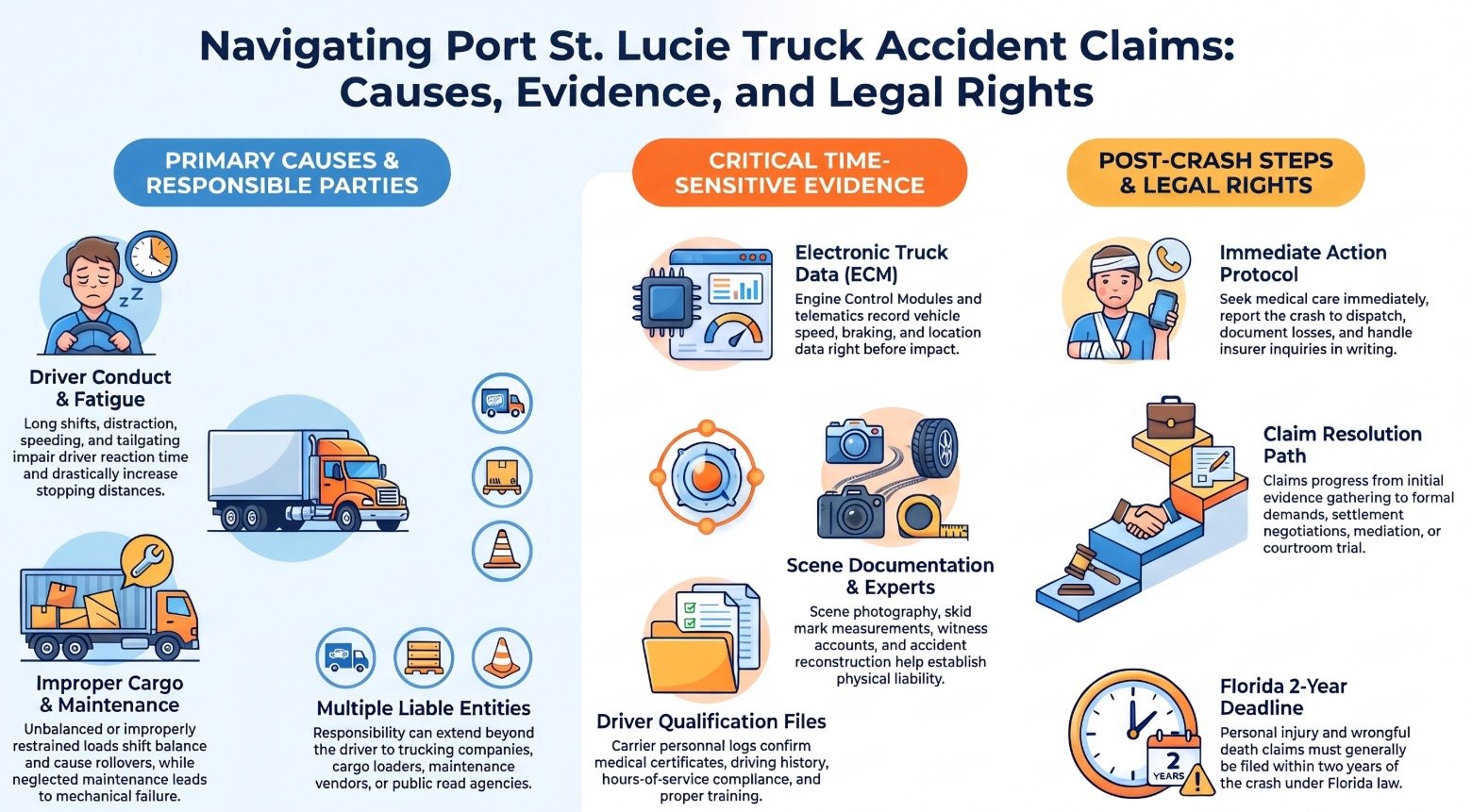
How We Can Help With Your Port St. Lucie Truck Accident Roads & Highways Injury Claim
After a truck crash on a Port St. Lucie roadway, an injured person may face medical expenses, lost income, and difficult decisions while recovering. A lawyer can help organize the claim, explain available options, and communicate with insurers so the person can focus on immediate needs. Early assistance may also preserve relevant records and support a clear account of how the crash affected daily life.
The legal team can review documents, identify responsible parties, and assess losses using evidence the client provides and other sources. It can explain each stage of the Claim timeline, outline expected deadlines, and provide updates as the matter progresses. This guidance helps clients make informed choices without pressure.


Through careful settlement planning, counsel can evaluate proposed terms against documented damages and future needs. If negotiations do not produce a fair resolution, the lawyer can explain possible next steps. Throughout the process, respectful communication and practical support help protect the client’s interests and promote a considered outcome.
Don’t Wait. Call Our Florida Personal Injury Lawyers Now!
Understanding Port St. Lucie Truck Accident Roads & Highways Injury Cases
OUR CONSULTATIONSARE FREE
START YOUR FREE CASE REVIEW

Understanding a Port St. Lucie truck accident injury case requires examining how the collision affected those involved and what evidence can establish responsibility. These cases may involve serious physical injuries, lost income, ongoing treatment, and changes to a person’s ability to manage daily responsibilities. A careful review helps clarify the harm and identify the support an injured person may need.
Road conditions and the surrounding environment can also inform the analysis. Highway design, traffic patterns, signage, and available sightlines may help explain how a collision unfolded. Investigators can review photographs, official reports, vehicle data, medical records, and witness accounts to develop a reliable account of the event. Each source must be considered in context, since incomplete or conflicting information can affect conclusions.
Truck accident claims may involve multiple parties and insurance policies, so applying the facts to legal duties can be complicated. A thorough, evidence-based assessment can help protect injured people’s interests and support fair consideration of their needs throughout the claims process.
Common Causes of Port St. Lucie Truck Accident Roads & Highways


Truck accidents on Port St. Lucie roads and highways may result from driver fatigue, distracted driving, or unsafe speeds and following distances. Improperly loaded cargo can also shift or fall, making a truck difficult to control. Identifying these contributing factors can help clarify how a collision occurred and who may be responsible.
Driver Fatigue
Driver fatigue can impair a truck driver’s attention, judgment, and reaction time, increasing the risk of a serious collision on Port St. Lucie roads. Long shifts, inadequate rest, and demanding delivery schedules may leave commercial drivers less able to respond to changing traffic conditions. Circadian rhythm disruption can also affect alertness, particularly when drivers work overnight or irregular hours. Federal hours-of-service rules limit driving time and require rest periods, but compliance alone may not prevent fatigue if sleep is poor or schedules remain demanding. Trucking companies can support safer roads by monitoring schedules, encouraging drivers to report exhaustion, and using fatigue detection technology where appropriate. When fatigue contributes to a crash, investigators may examine driving logs, dispatch records, and rest practices. Identifying these factors can help injured people seek accountability and promote safer transportation for the community.
Distracted Driving
Even when a commercial driver is adequately rested, distraction can reduce attention and delay reactions on Port St. Lucie roads. A truck operator must monitor traffic, road conditions, mirrors, and vehicle controls while maintaining awareness of nearby motorists and pedestrians. In-cab phone use, including calls, texts, or navigation adjustments, can divert a driver’s eyes, hands, or concentration from driving. Dashboard Distractions, such as unfamiliar displays, alerts, or entertainment systems, may also interrupt attention at pivotal moments. Because commercial trucks require careful handling, even a brief lapse can prevent a driver from recognizing changing conditions or responding appropriately. Employers and drivers can help protect the public through clear device policies, practical training, and procedures that limit nonessential tasks while the vehicle is moving. Evidence of distraction may help explain how a collision occurred.
Speeding and Tailgating
When a commercial truck travels too fast or follows another vehicle too closely, its size and weight can make a collision more difficult to avoid. On Port St. Lucie roads and highways, Speed Limit Violations may reduce a truck driver’s ability to respond to traffic signals, sudden congestion, or vehicles entering the roadway. A fully loaded truck needs more distance to stop than a passenger vehicle, and excessive speed can increase both stopping distance and impact force.
Unsafe Following Distance creates a similar hazard. When a truck stays too close behind another vehicle, the driver may have insufficient time to brake safely if traffic slows or stops. These behaviors can endanger motorists, passengers, and roadside workers. Careful speed management and adequate spacing help protect everyone who depends on safe, predictable travel through the community.
Improper Cargo Loading
Improperly loaded cargo can make a commercial truck unstable and difficult to control on Port St. Lucie roads. When freight is unevenly distributed, unsecured, or heavier than permitted, the truck may become harder to maneuver and stop. Cargo securement requires appropriate restraints and careful pre-trip inspection, but failures can allow freight to shift during braking, turning, or sudden lane changes. This load shifting can alter the vehicle’s balance, increase rollover risk, or cause cargo to fall onto nearby traffic. Drivers, carriers, and loading crews each have responsibilities to follow safety procedures and verify that freight is properly placed and secured. When careless loading contributes to a collision, injured road users may face serious consequences. Investigating loading records and inspection practices can help clarify how the crash occurred.
Legal Rights of Port St. Lucie Truck Accident Roads & Highways Injury Victims
Truck accident victims injured on Port St. Lucie roads may have legal rights to seek compensation when another party’s negligence contributed to their injuries. Depending on the evidence, potentially responsible parties may include a truck driver, motor carrier, maintenance provider, or public entity responsible for roadway conditions. Roadway design defects and hazardous intersection layouts may require careful review to determine whether a claim against a government agency is available. Each claim has specific proof requirements and filing deadlines.
Victims may pursue damages for documented losses, including:
- Medical expenses, rehabilitation costs, and reasonably anticipated future care.
- Lost income, reduced earning capacity, and other financial harm.
- Pain, disability, and effects on daily activities, when supported by evidence.
Prompt medical attention and organized records can help establish the nature and extent of an injury. Preserving photographs, witness information, and relevant reports may also assist a fair evaluation. An attorney can explain applicable procedures, identify potential claims, and communicate with insurers while respecting the victim’s recovery and privacy.
Why Do Port St. Lucie Truck Accident Roads & Highways Injuries Happen?
Port St. Lucie truck accidents often result from a combination of driver conduct, vehicle limitations, and roadway conditions. Large trucks require more distance to stop and more space to turn, making sudden traffic changes especially difficult to manage. Speeding, distracted driving, fatigue, and impaired judgment can reduce a driver’s ability to respond safely. Improperly secured cargo or inadequate vehicle maintenance may also contribute to a loss of control or collision.
Roadway design hazards can increase these risks. Narrow lanes, unclear markings, poor lighting, construction zones, and limited sightlines may leave truck drivers with little room to turn. Dangerous intersections are particularly concerning when traffic signals are difficult to see, turning paths are restricted, or vehicles enter from multiple directions. Congestion and abrupt merging on major routes can further complicate travel.
These conditions may endanger truck occupants, motorists, cyclists, and pedestrians. Understanding how road design and driving decisions interact helps explain why serious crashes occur and why safer infrastructure and responsible commercial driving matter to the broader community.
What Should You Do After a Port St. Lucie Truck Accident Roads & Highways Injury?
After a truck accident, injured individuals should seek medical care promptly, even if their symptoms seem minor at first. They should report the crash to law enforcement and make sure the incident is documented. When safe, preserving photographs, witness details, and other evidence may help establish what occurred.
Seek Medical Care
Even when injuries appear minor, anyone involved in a truck accident on a Port St. Lucie road should seek medical care promptly. Some conditions, including head, neck, or internal injuries, may not produce obvious symptoms at the scene. A timely assessment can identify concerns early and help prevent complications. If symptoms are severe or urgent, the injured person should go to an Emergency room or request emergency medical assistance. Otherwise, a qualified healthcare provider can evaluate the person and recommend appropriate treatment. Medical professionals should receive accurate information about the collision, symptoms, and any changes in health. Following their instructions and attending follow-up appointments can support recovery and create a clear care record. Those assisting an injured person can help arrange transportation and ensure medical advice is followed.
Report The Crash
When a truck collision occurs on a Port St. Lucie roadway, the injured person or a capable witness should contact Emergency dispatch promptly. A report allows responders to address urgent medical needs, manage traffic, and reduce danger to other road users. The caller should provide the precise location, describe the number of vehicles involved, and identify any visible injuries or immediate roadway hazards. If the truck blocks a lane, leaks cargo, or creates another danger, share that information without approaching the vehicle or entering traffic. Dispatchers can advise callers on safe steps while help is on the way. Once officers arrive, the injured person should give a factual account of what happened and answer questions clearly. Reporting the crash supports public safety and creates an official record.
Preserve Evidence
Preserve evidence as soon as safely possible, since details from a truck accident may be lost or altered over time. The injured person or a trusted representative can photograph vehicle damage, road conditions, traffic signs, skid marks, and visible injuries. Record witnesses’ names and contact information, along with the responding agency and report number. Also retain medical records, discharge instructions, repair estimates, and receipts for accident-related expenses.
Evidence preservation may include keeping damaged clothing or personal property in its current condition. The truck’s electronic data, driver logs, inspection records, and company communications may require prompt legal requests. A lawyer can send preservation notices to responsible parties, helping prevent spoliation before relevant materials are deleted, repaired, or overwritten. These steps can help protect a fair review of the crash and support accountability.
Critical Evidence in a Port St. Lucie Truck Accident Roads & Highways Injury Case
Important evidence can help establish how a truck crash occurred and who may be responsible.
Relevant materials include:
- Accident-scene photographs, measurements, and roadway conditions.
- Electronic truck data and driver qualification records.
- Witness accounts and expert testimony.
Accident Scene Documentation
Accident scene documentation can provide essential evidence in a Port St. Lucie truck crash. Prompt, careful records may help clarify how a collision occurred and support a fair assessment of injuries and responsibility. Scene photography can preserve vehicle positions, damage, skid marks, debris, traffic controls, and visibility conditions before cleanup or weather changes the site. Investigators may also record roadway measurements, including lane widths, distances between vehicles and impact points, and the location of relevant signs or signals. These details can help reconstruct the sequence of events and identify unsafe conditions. Witness names and contact information, along with observations from responding personnel, may add context to the physical evidence. Because scenes can change quickly, investigators should gather documentation lawfully and safely, without obstructing emergency responders or risking further harm.
Electronic Truck Data
Electronic truck data can help explain how a commercial vehicle was operated before a collision on a Port St. Lucie road. An engine control module may record speed, braking, engine activity, and other events shortly before impact. ECM data retrieval can preserve this information before routine use, repairs, or overwriting affect its availability. Telematics records may also show location, travel patterns, and vehicle alerts, helping establish a timeline that can be compared with scene evidence and witness accounts.
The meaning of these records depends on how they were collected and interpreted. Qualified professionals can examine the data for accuracy, limitations, and consistency with other evidence. Prompt preservation requests may be important because some systems retain information only temporarily. Careful review can help clarify what occurred and support a fair assessment of the harm and the parties’ responsibilities.
Driver Qualification Records
Driver qualification records can help determine whether a truck driver was properly licensed, medically qualified, and trained before a collision on a Port St. Lucie road or highway. These documents may include driving history, employment applications, prior employer inquiries, a medical examiner’s certificate, and records of required training. Reviewing them can show whether the carrier followed applicable Qualification standards and identified safety concerns before assigning the driver to a commercial vehicle. Personnel files may also reveal license restrictions, expired credentials, or gaps in required documentation. In an injury claim, these records can help clarify whether the driver and carrier met their responsibilities to protect other road users. Prompt preservation matters because records may be updated, misplaced, or discarded under routine retention practices. Careful review supports a fair assessment of accountability and the harm caused.
Witness And Expert Testimony
Beyond qualification records, witness accounts and expert analysis can help explain how a truck collision occurred and what injuries followed. In Port St. Lucie, witnesses may describe traffic signals, vehicle movements, road conditions, or events immediately after impact. Their observations can help clarify disputed facts, particularly when supported by photographs, dispatch records, or physical evidence. Accident reconstruction experts may assess vehicle damage, skid marks, roadway layout, and electronic data to evaluate how the crash unfolded. Medical professionals can explain the nature of injuries, treatment needs, and likely effects on daily activities. Expert credibility depends on relevant qualifications, reliable methods, and conclusions grounded in the available evidence. Careful testimony preparation helps witnesses provide accurate, consistent accounts without speculation. Clear testimony helps decision-makers evaluate responsibility and the support injured people may need during recovery.
Don’t Wait. Call Our Florida Personal Injury Lawyers Now!
Long-Term Effects of Port St. Lucie Truck Accident Roads & Highways Injuries
Truck accident injuries may lead to chronic pain that persists long after initial treatment ends. Some individuals also experience lasting mobility limitations that affect daily activities and independence. These physical effects can contribute to emotional and financial strain for injured people and their families.
Chronic Pain
Chronic pain can persist long after a truck accident on Port St. Lucie roads, even when visible injuries have recovered. Collisions may damage muscles, joints, nerves, or spinal structures, leaving injured people with ongoing soreness, burning sensations, or recurring headaches. Symptoms can vary in intensity and may worsen with stress or routine activity, affecting concentration and emotional well-being. Sleep disruption is also common when pain makes it difficult to fall asleep or remain comfortable through the night. A medical provider can assess symptoms, document their progression, and recommend appropriate care. Pain management may involve medication, physical therapy, counseling, or other supervised treatments tailored to the individual. Consistent follow-up helps evaluate whether care is effective and supports informed decisions. Clear records of treatment, expenses, and daily effects can also help establish the lasting consequences of an accident.
Lasting Mobility Limitations
After a truck accident, lasting mobility limitations can make routine activities difficult, even after the initial injuries have healed. Spinal, joint, or limb damage may limit walking, standing, lifting, or using stairs. These limitations can affect a person’s ability to work, care for family members, and participate in community life. Rehabilitation may improve strength and coordination, but some individuals continue to need support with daily tasks. Adaptive equipment, such as braces, walkers, or wheelchair-accessible home features, can help preserve independence and reduce the risk of further injury. Accessible transportation may also be necessary for medical appointments, employment, and necessary errands. Ongoing evaluations can identify changing needs and guide appropriate accommodations. Documenting mobility restrictions and recommended support can clarify the long-term effects of truck collision injuries.
Emotional and Financial Strain
The effects of a serious truck collision may extend beyond physical limitations, placing sustained emotional and financial pressure on injured people and their families. In Port St. Lucie, ongoing pain, disrupted routines, and uncertainty about recovery can contribute to anxiety, low mood, or sleep difficulties. These challenges may affect relationships and increase Family Stress, particularly when relatives take on caregiving duties alongside work and other responsibilities.
Medical appointments, rehabilitation, prescription costs, and reduced earnings can also strain household finances. Household Budgeting may become more difficult when expenses continue while income falls, requiring families to reassess savings, bills, and vital needs. Some injured people may need long-term treatment or workplace adjustments, adding further uncertainty. Access to appropriate medical care and practical support can help families manage these burdens, while careful records of expenses and lost income may clarify the financial impact.
Proving Liability in Port St. Lucie Truck Accident Roads & Highways Injury Cases
When a truck crash occurs on a Port St. Lucie road or highway, establishing responsibility requires careful attention to the facts. Liability standards generally require proof that a person or company owed a duty of care, breached that duty, and caused injuries through the breach. A Negligence analysis may examine driver conduct, vehicle maintenance, loading practices, and compliance with traffic and safety rules.
Evidence can include crash reports, photographs, witness accounts, electronic vehicle data, and inspection records. Investigators may assess whether speeding, distraction, fatigue, unsafe lane changes, or inadequate maintenance contributed to the collision. Responsibility may extend beyond the driver when a trucking company, maintenance provider, cargo loader, or vehicle manufacturer played a role.
Prompt preservation of relevant evidence can help clarify how the crash occurred and protect the injured person’s ability to pursue a fair resolution. A thorough, objective review also supports accountability and may help prevent similar harm to other road users.
Dealing With Insurance Companies After a Port St. Lucie Truck Accident Roads & Highways Injury
Understanding liability can guide how an injured person responds to insurers after a Port St. Lucie truck accident. Insurance representatives may contact the injured person soon after a collision to gather information about the crash, injuries, and treatment. Their questions may appear routine, but answers can affect how the insurer evaluates responsibility and damages. Insurance adjuster tactics may include requesting broad medical authorizations, emphasizing early settlement, or asking questions that invite speculation. An injured person can remain courteous while declining to guess or minimize symptoms and can request that communications be handled in writing.
Recorded statement risks merit particular attention. A statement given before the person understands the full injuries or available evidence may contain omissions or inconsistencies that an insurer later cites. The injured person may ask whether a statement is required and seek legal guidance before agreeing. Keeping copies of correspondence, bills, and treatment records supports accurate communication and helps protect the person’s ability to focus on recovery and family responsibilities.
What to Expect During a Port St. Lucie Truck Accident Roads & Highways Injury Claim Process
A Port St. Lucie truck accident claim typically begins with an initial case review to assess the crash, injuries, and potential liability. Evidence collection then helps establish what happened and support the injured person’s losses, while negotiations may address the claim’s value. If the parties do not reach an agreement, resolution options may include mediation or filing a lawsuit.
Initial Case Review
How does an initial case review shape a Port St. Lucie truck accident claim? It gives the injured person and counsel an organized starting point for understanding the potential legal issues and next steps. The attorney typically discusses how the collision occurred, the reported injuries, the treatment received, and the impact on daily responsibilities. This conversation helps assess case eligibility, identify possible responsible parties, and determine whether the matter may involve roadway conditions or commercial vehicle operations. The review also clarifies the client’s priorities, including recovery needs and the importance of protecting others from similar harm. Counsel explains the general review timeline, expected communications, and decisions that may arise as the claim progresses. No outcome is guaranteed, and the initial assessment may change as the circumstances become clearer. It establishes direction without promising results.
Evidence Collection
Preserving evidence early can help clarify how a Port St. Lucie truck crash occurred and who may be responsible. During evidence collection, an attorney may obtain police reports, photographs, witness statements, and records documenting road conditions, traffic controls, and vehicle damage. The trucking company may have driver logs, inspection files, dispatch communications, and electronic data that could be lost or altered if not requested promptly. Evidence preservation measures can include formal notices directing relevant parties to retain these materials. Investigators may also inspect the crash location and vehicles when appropriate. Careful chain documentation records when evidence is collected, who handled it, and where it was stored, supporting its reliability. This organized process helps establish a factual account and may protect the interests of injured people and others affected by the collision.
Claim Negotiations
Once the evidence and damages are documented, claim negotiations typically begin with a demand to the insurer outlining the injured person’s losses and the compensation sought. The demand may address medical expenses, lost income, anticipated care needs, and other documented effects of the crash. A careful Demand strategy connects each requested amount to reliable records and explains how the truck driver’s or company’s conduct caused the harm. The insurer may review the materials, request clarification, or challenge parts of the claim. Assess responses against the available evidence rather than accept them without scrutiny. Settlement timing can depend on the completeness of treatment information, the insurer’s review, and the intricacy of liability issues. Clear communication helps protect the injured person’s interests while keeping the process focused on accurate documentation and fair evaluation.
Resolution Options
When negotiations do not produce an acceptable agreement, a Port St. Lucie truck accident claim may proceed through mediation or litigation. Mediation options allow the injured person, trucking company, and insurers to meet with a neutral professional who helps identify areas of agreement. Participation may resolve disputes without a trial, although neither side must accept a proposed settlement. If mediation does not succeed, the claimant may file a lawsuit, and a court can decide liability and damages based on the evidence.
Resolution also involves choosing payment terms that fit the claimant’s needs. Structured settlements can distribute compensation over time, which may help provide ongoing support for medical care, rehabilitation, or lost income. Before accepting any resolution, the claimant should review its terms, potential tax effects, and future financial implications with qualified legal and financial advisers.
Compensation for Port St. Lucie Truck Accident Roads & Highways Injury Damages
Compensation after a truck accident on Port St. Lucie roads may help injured people address the practical consequences of a collision. The amount available depends on the evidence, the injuries sustained, and the parties legally responsible. A careful review can identify crash-related losses and support a claim that reflects the injured person’s needs.
Recoverable damages may include Medical expense reimbursement for emergency treatment, hospitalization, medication, rehabilitation, and related care. When injuries affect a person’s ability to work, future income replacement may account for reduced earning capacity or time away from employment. Documentation from healthcare providers, employers, and financial records can help establish the extent of these losses.
Compensation may also address necessary assistance during recovery, such as transportation to appointments or support with daily activities. A claim should address both immediate needs and anticipated care. By pursuing well-supported recovery, an injured person can protect household stability and preserve resources for family responsibilities, while seeking accountability from those whose conduct contributed to the collision.
Economic vs Non-Economic Damages in Port St. Lucie Truck Accident Roads & Highways Cases
Truck accident claims may include economic damages, such as medical expenses and lost income, as well as non-economic damages for pain, emotional distress, and reduced quality of life. The types and value of recoverable losses depend on the crash circumstances and the injuries involved. Proving these losses typically requires reliable records, documentation, and other supporting evidence.
Economic Damages
Economic damages in a Port St. Lucie truck accident case are measurable financial losses connected to the collision. They may include emergency care, hospitalization, surgery, medication, rehabilitation, and other reasonable medical expenses. Documentation such as bills, treatment records, and expert assessments can help establish the amount and necessity of these costs.
A claim may also account for income lost while an injured person is unable to work. If lasting injuries limit future employment or reduce wages, lost earning capacity may be considered, supported by employment history and professional evaluations. When injuries prevent a person from completing routine tasks, the reasonable cost of replacement household services may also qualify. Careful records help show how these losses affect the injured person and those who rely on them. A lawyer can organize evidence and present a clear accounting of claimed economic damages to insurers or a court.
Non-Economic Damages
Beyond documented financial losses, a Port St. Lucie truck accident may cause harm that has no direct price tag. Non-economic damages address the physical pain, emotional distress, and disruption to daily life that an injured person experiences. These losses may include ongoing discomfort, anxiety, reduced independence, and difficulty participating in family, community, or service activities. Loss of enjoyment can reflect the inability to pursue meaningful routines, relationships, and responsibilities as before the collision. A spouse or family member may also experience diminished companionship when injuries change shared activities or the injured person’s ability to provide support. Unlike medical bills or lost income, these damages don’t come from a simple calculation. They recognize the personal consequences of a crash alongside its measurable financial effects, while respecting the individual’s circumstances.
Proving Your Losses
A well-supported damages claim connects the effects of a Port St. Lucie truck crash to documented financial costs and personal harm. Economic losses may include medical bills, rehabilitation expenses, vehicle repairs, and income lost during recovery. Damage documentation should include invoices, treatment records, repair estimates, and receipts, organized by date and linked to the collision. Income verification, such as pay statements, tax records, or employer letters, can establish missed wages and support a claim for reduced earning capacity. Non-economic damages address pain, emotional distress, and disruption to daily activities, which may not appear on bills. Consistent medical records and a clear account of changed routines can help explain these effects. Careful evidence gathering enables insurers, attorneys, or a court to assess the full impact and evaluate compensation fairly.
When a Port St. Lucie Truck Accident Roads & Highways Injury Case Goes to Trial vs Settlement
When a truck accident on a Port St. Lucie road causes serious injuries, the injured person may consider resolving the claim through settlement or presenting it at trial. Settlement can provide compensation without the uncertainty, expense, and time involved in court. It may also allow the parties to reach a resolution sooner, helping the injured person focus on recovery and responsibilities to family or community. However, an offer should be assessed against documented losses and the strength of available evidence.
If the parties cannot agree on fair terms, a lawsuit may proceed to trial. The process can include jury selection, opening statements, witness questioning, and courtroom testimony about the collision, injuries, and resulting losses. A judge or jury then evaluates the evidence and determines the outcome. A trial may offer a chance to seek a decision when negotiations fail, but no result is guaranteed. Counsel can explain the practical considerations of each path and help the injured person make an informed choice.
Florida Laws That May Affect Your Port St. Lucie Truck Accident Roads & Highways Case
Florida law can shape how a Port St. Lucie truck accident claim is evaluated, including which insurance benefits may apply and how responsibility is assigned. Understanding these rules can help injured people and their families make informed decisions while protecting their ability to seek fair compensation.
- Florida’s no-fault system generally requires an injured person to seek initial medical benefits through personal injury protection (PIP) coverage, regardless of fault. No-fault thresholds matter because an injured person generally must meet a statutory injury threshold, such as significant and permanent injury, to pursue pain-and-suffering damages against another party.
- Comparative negligence may reduce compensation when an injured person shares responsibility. Under Florida’s modified comparative negligence rule, recovery is generally barred if that person is found more than 50 percent at fault. Evidence about driver conduct, road conditions, and safety practices may affect this assessment.
- Truck cases may involve multiple responsible parties, including drivers, carriers, or maintenance providers. Applicable insurance requirements and federal trucking safety rules may also influence the evidence and potential recovery.
Don’t Wait. Call Our Florida Personal Injury Lawyers Now!
The Statute of Limitations for Port St. Lucie Truck Accident Roads & Highways Injury Cases
Beyond insurance rules and fault allocation, filing deadlines can determine whether an injured person may pursue compensation after a truck crash. In Florida, you generally must file a personal injury lawsuit within two years of the crash. Missing that deadline can bar recovery, regardless of the seriousness of the injuries or the strength of the evidence. Wrongful death claims also generally carry a two-year filing period, measured from the date of death.
Some circumstances may change how a deadline applies. The discovery rule can affect when a limitations period begins if an injury was not reasonably apparent at the time of the collision, though its application depends on the facts and governing law. Claims involving government entities may require earlier notice and additional procedural steps. Exceptions can be narrow, so injured people and families should not assume that a deadline has been extended. Identifying the applicable dates promptly helps protect a claim and preserve the opportunity to seek accountability and compensation through the proper legal process.
How a Port St. Lucie Truck Accident Roads & Highways Lawyer Can Help You
A Port St. Lucie truck accident roads and highways lawyer can help injured people understand how road conditions and commercial vehicle conduct may have contributed to a collision. The lawyer’s work can also support safer outcomes for other road users by identifying hazards and presenting evidence of preventable risks.
- Investigating roadway conditions: Counsel may review crash reports, photographs, maintenance records, traffic controls, and expert assessments. This investigation can examine Roadway design, pavement defects, visibility, signage, and intersection hazards that may have affected the truck’s movement or a driver’s ability to respond.
- Identifying responsible parties: A lawyer can assess whether a truck driver, motor carrier, maintenance provider, contractor, or public entity may bear responsibility. Careful analysis helps distinguish individual conduct from broader operational or infrastructure failures.
- Managing the injury claim: Counsel can organize medical documentation, calculate financial losses, communicate with insurers, and present a supported demand for compensation. By developing a clear record, the lawyer can help protect the injured person’s interests while encouraging accountability and attention to road safety.
When to Contact a Port St. Lucie Truck Accident Roads & Highways Lawyer
Prompt legal guidance can help preserve evidence when a truck crash may involve unsafe road conditions, vehicle maintenance, or a carrier’s conduct. You should consider contacting a Port St. Lucie truck accident roads and highways lawyer as soon as you address immediate medical needs. Prompt consultation may help identify time-sensitive records, including roadway inspection reports, maintenance logs, driver records, and available video footage, before routine practices or repairs make them harder to obtain.
Early contact is especially important when a dangerous intersection, damaged pavement, inadequate signage, or disputed responsibility may have contributed to the collision. A lawyer can explain which details to document and how to direct questions to the appropriate parties while an investigation proceeds. Those steps may also support accurate reporting and accountability that benefits other road users.
Choose an attorney without unnecessary delay, but you can still ask about relevant experience, communication, and fee arrangements. If injuries or uncertainty prevent immediate action, a trusted representative may help arrange an initial discussion.
Why You Need an Experienced Port St. Lucie Truck Accident Roads & Highways Lawyer
When a truck collision may involve unsafe road design, poor maintenance, or failures by multiple parties, an experienced Port St. Lucie truck accident roads and highways lawyer can help identify the issues that require careful investigation. Roadway design may affect sightlines, turning space, drainage, or drivers’ ability to respond safely. Maintenance failures, such as unrepaired pavement damage or missing signs, may also contribute to a crash. Determining whether these conditions played a role requires gathering records, examining the scene, and evaluating evidence before it changes or disappears.
An experienced lawyer can assess potential responsibility among truck operators, trucking companies, contractors, and public entities. These cases may involve different legal duties, notice requirements, and deadlines. A thorough review can clarify which parties may be accountable and what evidence supports a claim. By addressing these questions, counsel can help injured people and their families seek fair treatment while encouraging safer roads for the wider community. This work can also reduce the burden of handling complicated claims alone.
How to Choose the Right Port St. Lucie Truck Accident Roads & Highways Lawyer for Your Case
Choosing the right Port St. Lucie truck accident lawyer requires careful consideration of experience, approach, and the injured person’s needs. A suitable attorney should understand collisions involving commercial vehicles, roadway hazards, and the records that may help establish how a crash occurred. Reviewing a Lawyer’s credentials can help you assess relevant training, professional standing, and experience handling truck accident claims. Prospective clients may also ask how the lawyer investigates cases, communicates with insurers, and explains available options.
Communication style matters throughout a legal claim. The attorney should provide clear answers, explain important developments, and make time for reasonable questions. This helps clients make informed decisions while managing medical care, work responsibilities, and family needs. A lawyer should also listen carefully and treat each person with respect, recognizing that pursuing a claim can affect more than finances. Before choosing counsel, an injured person can compare consultations, fee terms, and proposed case strategies. The right fit combines relevant knowledge with dependable guidance and a commitment to serving the client’s interests.
About The Law Offices of Anidjar & Levine
The Law Offices of Anidjar & Levine represents injured people in personal injury matters, including truck accident claims in Port St. Lucie. The firm assists clients seeking accountability and compensation after collisions involving commercial vehicles. Its attorneys can review available evidence, explain legal options, and handle communications with insurers while a claim proceeds.
The firm’s history reflects a practice focused on representing people harmed by negligence. In truck accident matters, that work may involve examining crash reports, vehicle records, and other information relevant to how a collision occurred and who may be responsible. The firm provides legal guidance while clients address medical care, financial concerns, and recovery.
Community involvement is another part of the firm’s public presence. Its service-oriented approach recognizes that injured people and their families may need clear information during difficult circumstances. Each case depends on its facts, and no particular outcome can be guaranteed. The firm evaluates claims individually and explains available steps to pursue them.

Frequently Asked Questions
Which Port St. Lucie Roads Have the Most Truck Traffic?
Port St. Lucie’s heaviest truck traffic generally travels along Interstate 95, US 1, and major east-west connectors such as Midway Road and Crosstown Parkway. The I-95 Freight Corridor carries substantial regional and long-distance freight, while US 1 Truck Traffic reflects commercial activity serving local businesses and coastal communities. Truck volumes vary by location and time of day, so current Florida Department of Transportation traffic counts provide the most reliable road-specific comparisons for planning and public safety.
Can a Truck Accident Involve a Government-Owned Vehicle?
Yes. A truck accident can involve a government-owned vehicle, such as a municipal maintenance truck, county vehicle, or public transit bus. A person injured in such a collision may have a claim, but Government immunity and special statutory procedures can affect recovery. Notice deadlines may be shorter than ordinary filing periods, so prompt reporting and careful documentation are important. Timely legal review can help protect the injured person’s rights and support accountability.
Are Truck Accident Reports Available to the Public in Florida?
Yes, truck accident reports are generally available to the public in Florida, subject to Crash report access restrictions and Florida disclosure rules. Reports are typically confidential for the first 60 days after a crash, with access limited to specified individuals and entities, such as involved parties, insurers, and attorneys. After that period, the public may request a copy from the law enforcement agency that investigated the collision or through the Florida Department of Highway Safety and Motor Vehicles.
What if a Truck Accident Happened in a Construction Zone?
When a truck crash occurs in a construction zone, responsibility may extend beyond the truck driver or carrier to contractors, subcontractors, or public agencies. Construction Zone Liability depends on who controlled the worksite and whether required safety measures were followed. Worksite Crash Evidence, including traffic plans, inspection records, photographs, and witness accounts, can help establish what happened. Prompt investigation is important because evidence may be altered or lost, and legal deadlines may apply.
Can Road Design Contribute to a Commercial Truck Crash?
Yes. Road design can contribute to a commercial truck crash when roadway geometry, such as sharp curves, steep grades, or inadequate turning space, makes a vehicle difficult to control. Poor pavement conditions, unclear lane markings, insufficient lighting, and poorly placed signs can further increase risk. These conditions may affect a truck driver’s ability to stop or navigate safely. Investigators assess road features alongside driver conduct, vehicle maintenance, weather, and other relevant circumstances.
—————————
Truck accidents on Port St. Lucie roads and highways can cause serious injuries, insurance disputes, and lasting financial consequences. Prompt investigation may help preserve evidence and clarify who may be responsible. The Law Offices of Anidjar and Levine can help injured people evaluate their legal options and pursue compensation when the evidence supports it. For guidance, consult a Port St. Lucie Personal Injury Lawyer. Keep relevant records, follow medical advice, and consider seeking legal guidance promptly.

