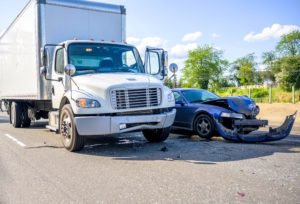
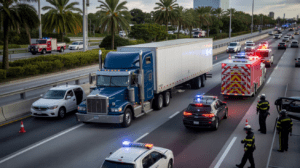
The Law Offices of Anidjar and Levine, a Florida truck accident roads and highways lawyer, investigates driver conduct, vehicle maintenance, cargo loading, roadway hazards, and electronic records to identify all responsible parties. The firm may preserve evidence, assess medical and financial losses, communicate with insurers, and pursue compensation for injuries or wrongful death. Claims may involve trucking companies, maintenance providers, manufacturers, cargo loaders, or public agencies, subject to applicable deadlines and notice requirements. Learn more from a qualified Florida Personal Injury Lawyer about investigation strategies, legal rights, and selecting appropriate representation.
Main Takeaways
- A Florida truck accident lawyer can investigate crash reports, driver conduct, cargo loading, vehicle maintenance, and roadway conditions.
- Attorneys may preserve electronic data, surveillance footage, driver logs, inspection records, photographs, and other evidence before it disappears.
- Potentially responsible parties may include the truck driver, carrier, maintenance provider, cargo loader, manufacturer, or government agency.
- Legal claims may address medical expenses, lost income, property damage, pain, long-term injuries, and wrongful death.
- Counsel can handle insurer communications and evaluate government-claim deadlines or possible insurance bad-faith conduct.
How We Can Help With Your Florida Truck Accident Roads & Highways Injury Claim
A Florida truck accident lawyer can provide structured legal support after a collision on an interstate, highway, bridge, or other roadway. Counsel may investigate the incident, preserve evidence, identify responsible parties, and explain available legal remedies. This process can include reviewing crash reports, vehicle maintenance records, driver qualifications, employment relationships, medical documentation, and financial losses.
Representation may help injured individuals and families communicate with insurers while protecting them from premature statements or inadequate settlement offers. When a death results from a commercial truck collision, counsel may evaluate Wrongful Death Claims and pursue compensation permitted under Florida law. Legal review may also identify Insurance Bad Faith, including unreasonable delays, inadequate investigations, or improper claim handling.


A lawyer can coordinate with qualified professionals, organize supporting evidence, calculate damages, and present a claim through negotiation or litigation. This support lets affected people focus on medical recovery, family responsibilities, and service to others while their legal interests receive careful, principled attention.
Understanding Florida Truck Accident Roads & Highways Injury Cases
OUR CONSULTATIONSARE FREE
START YOUR FREE CASE REVIEW

Understanding Florida truck accident injury cases requires looking beyond the immediate collision. A case may involve injuries, property damage, roadway conditions, commercial transportation records, and the conduct of multiple responsible parties. The legal analysis generally considers how the crash occurred, whether safety obligations were satisfied, and which evidence connects each circumstance to the harm sustained.
Faulty barriers, inadequate signage, or other roadway deficiencies can raise questions involving government liability, particularly when a public entity controlled maintenance or design. Government claims may require compliance with specific notice procedures, deadlines, and limitations. Emergency response also matters because dispatch records, medical reports, and witness accounts can help establish the timing and extent of injuries.


Evidence preservation should begin promptly. Photographs, vehicle data, surveillance footage, inspection records, driver logs, and maintenance documents may disappear or become difficult to obtain. Careful investigation helps protect injured individuals, clarify disputed facts, and support fair compensation while allowing public agencies, carriers, and other parties to receive an impartial assessment of their legal responsibilities.
Don’t Wait. Call Our Florida Personal Injury Lawyers Now!
Common Causes of Florida Truck Accident Roads & Highways
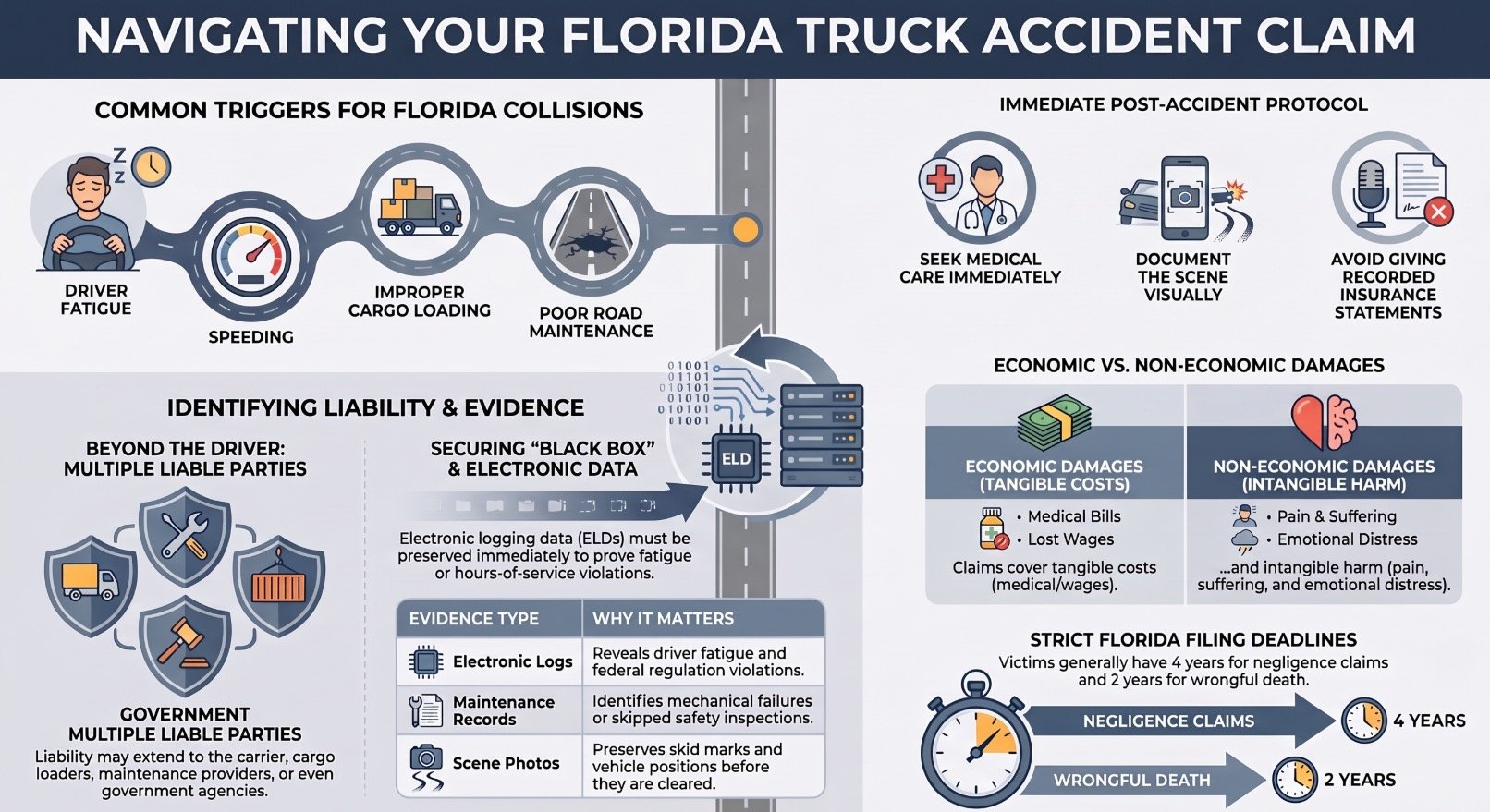
Florida truck accidents on roads and highways may result from driver fatigue, speeding, reckless driving, improper cargo loading, or poor road conditions. Each factor can impair vehicle control, increase stopping distances, or create hazards for surrounding motorists. Identifying the cause is crucial when evaluating liability and the resulting injuries or property damage.
Driver Fatigue
Driver fatigue significantly contributes to truck accidents on Florida roads and highways, especially when commercial drivers operate for extended periods without adequate rest. Extended shifts, inadequate sleep, demanding delivery schedules, and violations of federal hours-of-service requirements can impair concentration, judgment, and reaction time. Fatigued drivers may miss warning signs, drift from their lanes, or fail to recognize developing hazards. Employers and carriers may share responsibility when they pressure drivers to continue working, disregard logbook discrepancies, or fail to maintain effective safety programs. Evidence may include electronic logging data, dispatch records, personnel files, and driver statements. After a collision, a careful investigation can help injured individuals understand available remedies and protect their interests during Insurance coverage disputes. Counsel can also evaluate venue and jurisdiction when multiple parties or locations are involved.
Speeding And Reckless Driving
Speeding and reckless driving can cause severe truck accidents on Florida roads and highways because large commercial vehicles need more distance to stop and are harder to control during sudden maneuvers. Excessive speed may reduce a driver’s reaction time, increase crash force, and make ordinary traffic conditions more dangerous for motorists, pedestrians, and emergency responders. Reckless conduct can include tailgating, abrupt braking, distracted handling, and ignoring posted restrictions. Traffic signal failures may create confusion, but drivers remain responsible for proceeding cautiously and confirming that intersections are safe. Similarly, improper lane changes can result in sideswipes or collisions when a truck enters an occupied lane without adequate signaling or observation. Prompt legal guidance can help injured individuals understand their rights, preserve evidence, and pursue accountability from responsible parties.
Improper Cargo Loading
Improper cargo loading is another significant cause of truck accidents on Florida roads and highways. When freight is unevenly distributed, inadequately secured, or placed beyond a vehicle’s weight limits, it can shift during transit and affect handling, braking, and stability. Sudden lane changes, sharp turns, or weather-related hazards may increase the danger, potentially causing rollovers, jackknifing, or lost cargo that threatens nearby motorists. Federal and state regulations require carriers and drivers to inspect, balance, and secure loads properly before and during travel. After a collision, evidence of cargo shifting may include broken straps, displaced freight, damaged tie-down equipment, or inconsistent loading records. Preserving this information can help clarify whether negligent loading contributed to the crash and support efforts to protect injured individuals’ rights. It may also identify responsible parties.
Poor Road Conditions
Poor road conditions are a significant factor in truck accidents on Florida roads and highways. Potholes, uneven pavement, inadequate drainage, construction zones, and missing warning signs can reduce traction, disrupt control, or cause a commercial vehicle to shift unexpectedly. Because trucks require greater stopping distances and respond differently to roadway hazards, these defects may contribute to rollovers, jackknife collisions, and serious injuries. Investigators should document each hazard’s location, dimensions, and visibility, and obtain photographs, maintenance records, inspection reports, and witness statements. Property Damage Documentation can help establish the extent of losses and connect damage patterns to the roadway condition. If a mechanical failure also contributed, legal counsel may evaluate Vehicle Defect Lawsuits involving manufacturers or maintenance providers. Timely investigation helps preserve evidence and supports accountability for affected motorists and communities.
Legal Rights of Florida Truck Accident Roads & Highways Injury Victims
Florida truck accident victims may have legal rights to seek compensation when another party’s negligence injures them on a roadway or highway. Depending on the circumstances, an injured person may pursue damages for medical treatment, lost income, property damage, and pain and suffering. Families may also have rights when a crash results in a fatality.
- Documenting injuries and expenses can support a complete claim.
- Prompt medical care creates important treatment records.
- Insurance claim timelines may limit opportunities to recover compensation.
- Preserving witness statements can protect vital evidence before memories fade.
Victims generally have the right to communicate with insurers, obtain relevant records, and consult an attorney before accepting a settlement. Legal counsel can evaluate responsibility, identify potentially liable parties, and address disputed damages while treating affected individuals with dignity. Florida law imposes deadlines for filing certain claims, so prompt action may protect available remedies. A knowledgeable lawyer can also help families understand procedural requirements and pursue accountability through negotiation or, when necessary, litigation.
Why Do Florida Truck Accident Road & Highway Injuries Happen?
Truck accident injuries on Florida roads and highways often result from a combination of driver negligence, unsafe trucking practices, roadway conditions, and mechanical failures. Common driver-related causes include speeding, distraction, fatigue, impaired driving, and inadequate training. Commercial carriers may contribute by exceeding weight limits, pressuring drivers to violate service-hour rules, or failing to maintain vehicles properly.
Florida’s heavy traffic, construction zones, sudden weather changes, and poorly maintained pavement can increase collision risks. Defective brakes, worn tires, control issues, and improperly secured cargo may also cause a truck to lose control or strike other vehicles. These cases frequently raise Shared liability questions because responsibility may involve the driver, trucking company, maintenance provider, manufacturer, cargo loader, or a public agency.
The impact of blackboxes can be significant during investigations. Electronic data may show speed, braking, vehicle movement, and driver activity before a crash. Accurate analysis of these records, along with witness accounts and roadway evidence, can clarify how preventable conditions caused serious injuries.
What Should You Do After a Florida Truck Accident Roads & Highways Injury?
After a Florida truck accident, an injured person should seek immediate medical care, even when symptoms initially appear minor. Document the accident scene with photographs, witness information, and details about vehicle or road conditions. Contacting a truck accident lawyer promptly can help preserve evidence and protect the injured person’s legal rights.
Seek Immediate Medical Care
Prompt medical evaluation is essential for anyone injured in a Florida truck accident on a road or highway, even when symptoms initially appear minor. A qualified clinician can identify hidden trauma, document symptoms, and establish a treatment plan before conditions worsen. The injured person should follow discharge instructions, attend recommended appointments, and report new or worsening pain without delay. An Emergency symptoms checklist may include difficulty breathing, confusion, severe bleeding, weakness, loss of consciousness, or sudden numbness; these signs require immediate emergency services. The person should avoid recorded statements until medical needs are addressed and legal guidance is obtained. You may also need to notify trucking company representatives that communication should go through counsel. Finally, the injured person should preserve all receipts for medical care, prescriptions, transportation, and related expenses.
Document The Accident Scene
Once immediate medical needs have been addressed, the injured person should document the Florida truck accident scene if doing so is medically safe. Photographs can preserve important photo evidence, including vehicle positions, roadway conditions, traffic controls, skid marks, debris, visible injuries, and property damage. Take images from several distances and angles without entering dangerous traffic areas or disturbing the scene. The person should record the date, time, weather, lighting, and apparent road conditions while details remain fresh. Witness statements may provide valuable accounts of vehicle movements, signals, and driver conduct. Collect names and contact information respectfully, if witnesses are willing to share them. Digital documentation, including securely stored photographs, videos, and notes, can help preserve information for later review. An independent investigation may identify additional evidence when scene conditions change.
Contact A Truck Accident Lawyer
Why should an injured person contact a truck accident lawyer? Early legal guidance can protect an injured person’s rights and support a fair claim after a Florida roadway collision. Early contact matters because evidence may disappear, memories may fade, and insurers may seek statements before they understand the full extent of the harm. A lawyer can investigate the crash, identify responsible parties, review driver and company records, and coordinate communication with insurers. Legal counsel also helps preserve pivotal evidence, including electronic logging data, vehicle maintenance records, cargo documentation, surveillance video, photographs, and witness accounts. Prompt representation can help prevent avoidable mistakes while allowing the injured person to focus on medical care and recovery. Qualified counsel can explain available remedies and pursue evidence-supported compensation.
Critical Evidence in a Florida Truck Accident Roads & Highways Injury Case
Crucial evidence can establish how a Florida truck accident occurred and who may be legally responsible for resulting injuries.
Investigators and attorneys typically examine the following sources to evaluate driver conduct, carrier compliance, and vehicle condition:
- Crash scene documentation, including photographs, measurements, witness statements, and police reports
- Electronic logging data showing driving hours, rest periods, and possible regulatory violations
- Driver qualification records, including licensing, training, employment history, and safety evaluations
- Vehicle maintenance history, including inspections, repairs, defects, and service records
Crash Scene Documentation
When a truck collision occurs on Florida roads or highways, prompt and thorough crash scene documentation can preserve evidence that may determine how liability and damages are evaluated. Photographs should capture vehicle positions, roadway markings, skid patterns, debris, weather conditions, lighting, and visible injuries before the scene changes. Investigators may also record traffic signals, warning signs, barriers, lane conditions, and damage to surrounding property. Witness statements timing matters because memories can shift, and early accounts may clarify vehicle movements, driver conduct, and the sequence of impact. Official crash reports, emergency records, and inspection photographs can support or challenge competing explanations. Documentation may reveal Safety compliance violations, including inadequate securement, defective equipment, or improper roadway practices. Careful preservation helps attorneys, insurers, and courts evaluate responsibility while supporting an injured person’s recovery.
Electronic Logging Data
Electronic logging data can provide objective evidence about a truck driver’s hours of service, duty status, vehicle movements, and compliance with federal and state safety requirements before a Florida crash. The records may reveal excessive driving, inadequate rest, unexplained stops, or inconsistencies between reported activity and roadway events. Prompt preservation requests can help prevent automatic overwriting or alteration of electronically stored information. Attorneys may compare logging data with dispatch communications, GPS records, toll transactions, and vehicle system information to establish a reliable timeline. This evidence can support careful eyewitness testimony gathering by identifying relevant locations and time periods for witnesses. It may also guide Driver background checks by clarifying whether fatigue, repeated scheduling concerns, or prior safety patterns warrant further investigation, while keeping the analysis focused on crash-related conduct.
Driver Qualification Records
Driver qualification records can show whether a commercial driver was properly screened, trained, licensed, and monitored before a Florida truck accident. These records may include employment applications, driving-history checks, medical certifications, drug and alcohol testing results, training documentation, and required license endorsements. They can reveal prior violations, suspended privileges, incomplete evaluations, or warnings that should have prompted corrective action. Investigators and attorneys examine driver qualification records to determine whether a carrier followed federal safety requirements and exercised reasonable care when assigning the driver. They may also compare these materials with electronic logging data to assess whether reported driving activity aligns with the driver’s qualifications and supervision. Understanding why logs matter helps establish whether fatigue, falsified information, or inadequate oversight contributed to the collision and resulting injuries.
Vehicle Maintenance History
Vehicle maintenance history can provide crucial evidence about whether a commercial truck was inspected, repaired, and kept in safe operating condition before a Florida roads and highways accident. Maintenance record verification may reveal missed inspections, recurring mechanical defects, delayed repairs, or work performed after a collision. Records can include service invoices, inspection reports, repair orders, defect notices, and communications concerning safety concerns. Tire maintenance schedules merit particular attention because worn tread, improper inflation, uneven wear, or defective retreads may contribute to blowouts and loss of control. Comparing company records with driver reports, electronic inspection data, and manufacturer recommendations can identify inconsistencies. Preserving these materials may help establish notice, negligence, or regulatory violations, support a thorough claim evaluation, and promote accountability for injured motorists and their families.
Don’t Wait. Call Our Florida Personal Injury Lawyers Now!
Long-Term Effects of Florida Truck Accident Roads & Highways Injuries
Florida truck accident injuries may produce chronic pain, reduced mobility, and lasting disability that affect a person’s ability to work and perform daily activities. Emotional and psychological effects, including anxiety, depression, and trauma-related symptoms, may also continue long after physical recovery begins. These lasting conditions can create ongoing medical and financial needs, including treatment, rehabilitation, assistive services, and reduced earning capacity.
Chronic Pain And Disability
Chronic pain and disability can develop after a Florida truck accident, particularly when injuries involve the spine, joints, nerves, or brain. Persistent symptoms may limit walking, lifting, driving, sleeping, or completing ordinary household tasks. Some survivors require ongoing physical therapy, medications, assistive equipment, injections, or surgery. Others may be unable to return to their former occupations and need workplace retraining for duties compatible with permanent restrictions. Medical documentation should describe diagnoses, treatment needs, functional limitations, expected progression, and the effect on earning capacity. A careful legal evaluation may also examine rehabilitation expenses, lost wages, future care, and available policy coverage limits. Because trucking claims can involve multiple insurers and responsible parties, timely evidence preservation is important. Coordinated support can help injured individuals pursue appropriate resources while protecting their long-term interests.
Emotional And Psychological Effects
Emotional and psychological effects often persist long after physical injuries from a Florida truck accident have stabilized. Survivors may experience anxiety, depression, sleep disruption, irritability, or intrusive memories that interfere with relationships, employment, and ordinary activities. Some develop fear of driving or traveling on highways, while others struggle with diminished confidence and isolation. These conditions can affect decision-making and communication during legal proceedings. Prompt counseling and consistent support can help identify symptoms, build coping strategies, and support recovery. Family members and caregivers often provide critical patience without minimizing the survivor’s experience. Documentation can also clarify how trauma affects daily life. Determining driver fault may require sensitive interviews, and Evidence preservation techniques can protect records relevant to emotional harm. Compassionate legal guidance helps survivors present these effects accurately while preserving dignity and personal autonomy.
Ongoing Medical And Financial Needs
When truck accident injuries require prolonged treatment, survivors may face continuing medical and financial needs that extend well beyond the initial recovery period. Ongoing care can include surgeries, rehabilitation, prescription medication, mobility equipment, and assistance with daily activities. Some individuals may require treatment for years, while permanent impairments can reduce earning capacity and alter family responsibilities. A careful assessment should address projected medical costs, lost income, diminished benefits, and necessary home or vehicle modifications. Records from physicians, therapists, employers, and financial professionals can help document these needs. Road conditions may also provide relevant context, including inadequate Pothole maintenance or unsafe Traffic signal timing, when investigating contributing factors. Compassionate legal guidance can help families pursue appropriate compensation while preserving access to vital services and supporting long-term stability.
Proving Liability in Florida Truck Accident Roads & Highways Injury Cases
Establishing liability in a Florida truck accident requires evidence showing that a driver, trucking company, vehicle owner, maintenance provider, or another responsible party breached a legal duty and caused the resulting injuries. Investigators may examine crash reports, photographs, electronic logging data, driver qualification records, inspection histories, maintenance documents, and witness statements. These materials can reveal speeding, fatigue, distracted driving, improper loading, defective equipment, or inadequate supervision. A qualified reconstruction professional may analyze vehicle positions, braking, visibility, roadway conditions, and traffic signals to explain how the collision occurred. Comparative Fault Factors must also be evaluated, because an injured person’s conduct may affect recovery even when a commercial operator contributed substantially to the crash. Emergency Vehicle Rules can become relevant when a truck encounters an ambulance, fire engine, or police vehicle responding with activated warnings. Liability may involve multiple parties, requiring careful preservation and review of evidence before memories fade, vehicles are repaired, or records become unavailable during investigation.
Dealing With Insurance Companies After a Florida Truck Accident Roads & Highways Injury
After a Florida truck accident, insurance companies may promptly contact injured parties to obtain statements, assess damages, and evaluate potential liability. An injured person should provide accurate basic information but avoid speculation, recorded statements, or broad medical authorizations without informed guidance. Insurers may minimize injuries, dispute responsibility, or characterize necessary treatment as unrelated to the collision.
Carefully review coverage, policy limits, medical records, wage documentation, and property damage to build a fair claim. Counsel may help interpret police reports, identify inconsistencies, and preserve surveillance footage before it is overwritten. Documentation should also include treatment recommendations, transportation costs, and continuing limitations.
Negotiating medical bills may reduce outstanding balances and protect the client’s eventual recovery. In appropriate circumstances, legal funding can help cover immediate expenses without forcing an inadequate settlement. Communications with adjusters should remain measured and documented. These steps help protect injured individuals while supporting a fair resolution and allowing them to focus on recovery and family responsibilities.
What to Expect During a Florida Truck Accident Roads & Highways Injury Claim Process
A Florida truck accident injury claim typically begins with an initial assessment of liability, damages, and available insurance coverage. The process may then involve collecting accident reports, medical records, witness statements, and other evidence before insurance negotiations commence. If negotiations do not produce a fair resolution, the injured party may pursue a settlement through litigation or proceed to trial.
Initial Claim Assessment
How a Florida truck accident injury claim begins can materially affect the evidence, parties, and damages ultimately considered. During an initial assessment, a legal professional reviews the reported collision, apparent injuries, treatment status, and potential legal deadlines. The assessment also identifies every potentially responsible party, which may include a driver, trucking company, maintenance provider, cargo handler, or another entity. An Insurance coverage review clarifies available commercial policies, policy limits, exclusions, and overlapping sources of compensation. Early evidence preservation is equally important because electronic records, vehicle data, driver logs, and company communications may change or disappear. The claimant may be advised to avoid recorded statements, broad medical authorizations, or premature settlements until responsibility and losses are reasonably evaluated. This organized beginning supports informed decisions and protects the claimant’s ability to seek appropriate relief.
Evidence Collection Process
Because commercial truck collisions often involve multiple parties and extensive records, the evidence collection process begins with a structured review of the crash and its likely causes. Investigators typically obtain photographs, roadway surveillance, vehicle damage documentation, police reports, medical records, and applicable trucking data. They may request driver logs, inspection histories, maintenance files, cargo information, and electronic event recorder data before routine retention periods expire. Investigation timelines vary based on injury severity, agency response, and the number of involved entities. Investigators evaluate witness credibility by comparing statements with physical evidence, recorded observations, and consistent details. During insurance communication, representatives may seek information that affects the claim, so responses should remain accurate and carefully considered. Counsel uses verified evidence to develop a legal strategy focused on accountability and the injured person’s needs.
Insurance Negotiations
Once the available evidence has been reviewed, insurance negotiations generally begin with a demand supported by medical records, wage documentation, crash evidence, and a liability assessment. The insurer may investigate independently, request additional information, and evaluate whether policy exclusions or disputed facts affect responsibility. A careful review should identify all applicable policies, including the trucking company’s coverage, broker or shipper policies, and minimum coverage limits required by law. Damages may include treatment costs, lost income, reduced earning capacity, and continuing care needs. In fatal-crash claims, representatives may also pursue wrongful death damages for eligible survivors. Communications should remain accurate, organized, and supported by documentation. Adjusters may offer less than the claim’s supported value, so measured responses and complete records are essential to protect the injured person’s interests.
Settlement Or Trial
Whether a Florida truck accident claim settles or goes to trial depends on the strength of the evidence, the extent of the injuries, the parties’ willingness to negotiate, and the insurer’s position on liability and damages. A settlement can provide compensation sooner, reduce uncertainty, and spare injured individuals and families the demands of courtroom testimony. However, an offer should reflect medical expenses, lost income, future care, and other documented losses.
If negotiations fail, litigation may proceed through discovery, motions, and trial. Counsel may present driver records, maintenance files, electronic logs, medical evidence, and witness testimony. Jury verdict factors can include credibility, causation, comparative fault, and the lasting effect of injuries. Depending on the agreement and case circumstances, arbitration options may offer a private alternative to trial, though enforceability and review rights vary.
Compensation for Florida Truck Accident Roads & Highways Injury Damages
Compensation for injuries sustained in a Florida truck accident may cover medical expenses, lost income, reduced earning capacity, property damage, and pain and suffering. The recoverable amount depends on the injury’s severity, treatment requirements, lasting effects, and evidence connecting the losses to the collision.
Medical expense documentation should include hospital invoices, physician records, prescription receipts, therapy statements, and estimates for anticipated treatment. Organized records help establish the care required and prevent overlooked costs. Income-related evidence may include payroll records, tax documents, employer statements, and vocational assessments describing work limitations or future earning consequences.
Property damage claims can address vehicle repairs, replacement value, towing, storage, and personal items damaged in the crash. Pain and suffering valuation considers physical discomfort, emotional distress, daily limitations, disfigurement, and the recovery period. A careful review may also identify expenses family members incurred while providing necessary assistance. Legal guidance can help preserve evidence, assess available insurance coverage, and present a complete claim to support fair compensation for affected individuals and their families.
Economic vs Non-Economic Damages in Florida Truck Accident Roads & Highways Cases
Florida truck accident claims may include economic damages, such as medical expenses, lost income, and future financial losses. Non-economic damages address less tangible harm, including pain, emotional distress, and diminished quality of life. Establishing either category generally requires reliable records, expert analysis, and evidence connecting the losses to the collision.
Economic Damages Explained
When a truck crash on a Florida road or highway causes injury, the resulting damages may include both economic and non-economic losses. Economic damages represent measurable financial harm. They may include emergency treatment, hospitalization, medication, rehabilitation, medical equipment, and anticipated future care. Lost wages, reduced earning capacity, and costs for transportation or necessary household assistance may also qualify. Accurate records help establish the amount and connection between the collision and each expense. Liability can determine who must pay, especially when a carrier, driver, maintenance provider, or another entity contributed to the crash. Counsel may review police report mistakes that obscure causation and pursue witness statement preservation before memories fade. Receipts, employment records, medical opinions, and expert projections can support a complete claim for present and future financial losses.
Non-Economic Damages Explained
Although non-economic damages do not come with invoices or fixed price tags, they represent real harm caused by a Florida truck crash. They may include physical pain, emotional distress, mental anguish, disfigurement, loss of enjoyment of life, and diminished companionship. In Wrongful Death Claims, surviving relatives may seek compensation for the lost relationship, guidance, and support of a family member. A fair Damages Calculation considers the injury’s severity, duration, and effect on daily living, while recognizing that no payment can fully restore what was lost. Insurance Claim Deadlines remain important even when damages are difficult to quantify. Evidence Preservation, including medical records and personal accounts, supports responsible evaluation without turning this discussion into proof of liability. These damages acknowledge human suffering and promote compassionate service to affected families.
Proving Damage Claims
Proving damage claims in Florida truck accident roads and highways cases requires organized evidence linking each loss to the collision. Evidence collection should include wage records, repair estimates, invoices, photographs, witness accounts, and insurance communications. Economic damages may cover medical expenses, rehabilitation, lost income, reduced earning capacity, and property damage. Medical documentation must identify diagnoses, treatment, prognosis, and future care needs. Causation proof connects those conditions and financial losses to the truck crash, not preexisting circumstances or unrelated events. Electronic preservation is also important because vehicle data, surveillance footage, electronic logging records, dispatch messages, and cellular information may clarify impact forces and responsibility. Non-economic damages, including pain, emotional distress, disability, and diminished enjoyment of life, require consistent testimony and treatment records. Thorough preparation helps protect injured people and support fair recovery.
Don’t Wait. Call Our Florida Personal Injury Lawyers Now!
When a Florida Truck Accident Roads & Highways Injury Case Goes to Trial vs Settlement
The decision to take a Florida truck accident injury case to trial or pursue a settlement depends on the strength of the evidence, the extent of the injuries, and the parties’ willingness to accept a fair resolution. Early evidence preservation can protect photographs, vehicle data, medical records, and other information that may clarify responsibility and damages. Witness statements may also provide important details about traffic conditions, driver conduct, and the moments before and after the collision.
Settlement discussions often offer greater control over timing, privacy, and litigation costs. A negotiated resolution may help an injured person obtain compensation sooner while reducing the uncertainty of a jury’s decision. Trial may become necessary when liability is disputed, the offered compensation does not reflect documented losses, or responsible parties refuse meaningful negotiations.
Counsel can evaluate medical evidence, economic losses, and available testimony before recommending a strategy. The objective remains a fair outcome that supports recovery and protects the injured person’s long-term interests.
Florida Laws That May Affect Your Florida Truck Accident Roads & Highways Case
Florida truck accident cases may be affected by state traffic laws, federal trucking regulations, and rules governing negligence and compensation. Florida negligence principles generally require evidence that a driver or another responsible party breached a duty and caused injury. Relevant issues may include:
Florida truck accident claims require careful analysis of traffic laws, trucking regulations, negligence, and evidence establishing fault and resulting damages.
- Negligent supervision involving unsafe hiring, training, or oversight
- Company liability for employee conduct, maintenance failures, or defective equipment
- Helmet requirements affecting motorcycle-related injury claims and comparative fault
- Pedestrian protections requiring drivers to exercise heightened care near crossings
Federal rules may regulate commercial driver qualifications, hours of service, inspections, cargo securement, and drug or alcohol testing. Violations can support an argument that conduct fell below reasonable safety standards, although they do not automatically establish liability. Florida law may also limit recovery when an injured person shares responsibility, making accurate evidence indispensable. Investigators may examine crash reports, electronic driving records, vehicle data, maintenance files, witness accounts, and roadway conditions. Attorneys serving injured people can help preserve evidence, identify all potentially responsible parties, and present a clear claim for medical expenses, lost income, property damage, and other legally recognized losses.
The Statute of Limitations for Florida Truck Accident Roads & Highways Injury Cases
Prompt attention to the statute of limitations is highly important in any Florida truck accident injury case because a lawsuit generally must be filed within a legally established period after the accident or the date the injury is discovered. Florida law commonly provides four years for negligence claims, although shorter deadlines may apply when a governmental entity is involved. Wrongful-death cases generally have a separate two-year limitation period. Exceptions can alter these deadlines, including rules affecting minors, delayed discovery, or defendants who leave the state. Because an expired deadline can bar recovery, injured individuals should identify potential claims and relevant filing dates promptly. Evidence preservation tips include photographing roadway conditions, securing medical records, obtaining witness contact information, and retaining vehicle or electronic data before it disappears. A comparative negligence overview is also important: Florida’s modified comparative negligence rule may reduce compensation when an injured person bears partial fault, and recovery can be barred if that share exceeds the statutory threshold. Acting early supports fair, orderly resolution.
How a Florida Truck Accident Roads & Highways Lawyer Can Help You
When a commercial truck collision occurs on Florida roads or highways, legal counsel can help identify responsible parties, preserve critical evidence, and pursue appropriate compensation. A lawyer may coordinate with investigators, review reports, and evaluate claims against drivers, motor carriers, maintenance contractors, manufacturers, or insurers.
Florida truck accident lawyers investigate responsible parties, preserve evidence, and pursue fair compensation for injured victims.
Key services may include:
- Evidence Preservation, including vehicle inspections, roadway photographs, medical records, and witness statements.
- Reviewing Electronic Dashcam footage, electronic logs, dispatch records, and cellular data for inconsistencies.
- Examining Driver Background Checks, licensing history, training records, substance testing, and prior violations.
- Investigating Safety Policy Violations involving hours-of-service rules, cargo loading, maintenance, supervision, or fleet procedures.
Counsel can also interpret insurance coverage, calculate medical expenses and lost income, and assess future care or diminished earning capacity. Through organized communication and careful negotiations, representation can reduce unnecessary burdens on injured people and their families. Legal counsel may further present documented facts clearly during settlement discussions or litigation, helping decision-makers understand the full consequences of the crash while promoting accountability and fair treatment for all affected parties.
When to Contact a Florida Truck Accident Roads & Highways Lawyer
Although some truck accident claims appear straightforward at first, you should generally seek legal guidance as soon as possible after a collision on a Florida road or highway. Early consultation helps an injured person understand immediate responsibilities, preserve important records, and make informed decisions while facts remain available.
A lawyer can identify applicable Insurance deadlines, including notice requirements and filing periods that may affect a claim. Prompt action also helps preserve evidence, such as photographs, vehicle data, driver logs, maintenance records, surveillance footage, and witness statements, before materials disappear or become difficult to obtain. You should also maintain medical documentation, even when symptoms initially seem limited.
Legal guidance may become particularly important when injuries are serious, fault is disputed, multiple vehicles are involved, or a commercial carrier’s insurer contacts the injured party. Counsel can explain mediation options and evaluate settlement strategies without pressuring the individual to resolve the matter prematurely. Early assistance allows a careful, service-oriented response focused on protecting rights and pursuing appropriate compensation.
Why You Need an Experienced Florida Truck Accident Roads & Highways Lawyer
An experienced Florida truck accident roads and highways lawyer can provide essential guidance when a collision involves complex evidence, multiple potentially responsible parties, or substantial injuries. Such counsel helps protect injured individuals and families while preserving facts that may otherwise disappear. Truck cases often require prompt review of driver logs, electronic records, maintenance histories, cargo documentation, surveillance footage, and crash data. An experienced lawyer can identify safety violations and determine whether the trucking company is liable for negligent hiring, supervision, maintenance, dispatch, or training. The lawyer can also address Comparative negligence defenses that may reduce an injured person’s recovery if another party alleges partial responsibility. Careful investigation helps distinguish unsupported accusations from evidence-based conclusions. Legal representation further supports communication with insurers, coordinates qualified experts, and verifies medical, financial, and long-term consequences. This informed approach promotes accountability and helps guarantee that affected people receive fair consideration while the legal process proceeds with diligence, accuracy, and respect.
How to Choose the Right Florida Truck Accident Roads & Highways Lawyer for Your Case
Selecting the right Florida truck accident roads and highways lawyer requires careful evaluation of experience, investigative resources, and communication practices. A qualified attorney should understand federal trucking regulations, Florida traffic laws, carrier liability, and the evidence required to establish fault.
Prospective clients may review the lawyer’s experience with commercial vehicle collisions, courtroom preparation, and claims involving serious injuries or wrongful death. The legal team should have access to crash reconstruction professionals, medical consultants, vehicle data, driver logs, and other records that can clarify what occurred.
Client communication is also critical. The lawyer should explain legal options, respond within reasonable timeframes, and ensure the injured person or family understands major decisions. During consultations, the attorney should describe a practical settlement strategy while remaining prepared to pursue litigation when negotiations do not provide fair compensation.
A careful selection process helps families trust counsel committed to protecting their interests and meeting their needs throughout a difficult recovery.
About The Law Offices of Anidjar & Levine
The Law Offices of Anidjar & Levine represents individuals and families affected by serious truck accidents on Florida roads and highways. Its attorneys assist clients who may face catastrophic injuries, wrongful death, lost income, medical expenses, and insurance disputes after a collision. The firm’s work centers on protecting injured people while pursuing accountability from negligent drivers, trucking companies, maintenance providers, and other responsible parties.
Client consultation services provide an opportunity to discuss the accident, available evidence, injuries, and immediate concerns with a legal professional. During an initial case evaluation, the firm may review crash reports, medical records, photographs, witness information, and applicable insurance coverage. This process helps clarify potential legal options and the steps that may support a claim.
The firm also handles communications with insurers and coordinates case preparation as investigations proceed. By providing focused representation, the Law Offices of Anidjar & Levine seeks to help affected families understand their rights and make informed decisions during a difficult recovery period.

Frequently Asked Questions
What Types of Trucks Are Most Commonly Involved in Florida Highway Accidents?
Florida highway accidents most commonly involve large commercial vehicles, particularly semi-trailers or tractor-trailers transporting freight across major routes. Dump truck collisions also occur frequently near construction zones, urban corridors, and highway expansion projects. Delivery van crashes are common in congested areas because these vehicles make frequent stops and lane changes. Other contributing factors include driver fatigue, unsecured cargo, mechanical failures, speeding, and limited visibility, all of which can increase injury risks for surrounding motorists.
Can I Still Recover Damages if I Was Not Wearing a Seatbelt?
A person may still recover damages after a Florida truck crash even if they were not wearing a seatbelt. Under comparative negligence, compensation can be reduced if the failure to buckle up contributed to the injuries, but it does not automatically eliminate recovery. Seatbelt evidence must establish a meaningful connection between nonuse and the claimed harm. Investigators, medical records, witnesses, and crash analysis may help determine fault and support a fair claim for the injured individual.
How Are Commercial Truck Maintenance Records Obtained After a Crash?
Commercial truck maintenance records are typically obtained through formal discovery, including requests for production, subpoenas, and depositions directed to the trucking company, its contractors, or maintenance providers. Preservation of evidence should begin immediately, requiring the company to retain inspection reports, repair invoices, electronic logs, and related data. Public records requests may obtain government inspection materials, crash reports, or prior violations. Legal counsel can identify missing records and seek court enforcement when necessary to protect injured parties.
Will a Truck Accident Affect My Future Employment Opportunities?
A truck accident may affect future employment, but it does not automatically disqualify an individual. Employers typically consider the circumstances, driving history, licensing status, and whether the person can safely perform required duties. Work Restrictions documented by medical professionals may temporarily limit certain positions. Insurance Consequences can also influence commercial driving eligibility or employer decisions. Accurate records, legal guidance, and full disclosure of relevant limitations help demonstrate responsibility and protect future opportunities.
What Happens if the Truck Driver Was an Undocumented Immigrant?
An undocumented truck driver’s immigrant status generally does not eliminate the driver’s potential civil responsibility for causing a crash. Courts typically evaluate negligence, licensing, employment, and insurance evidence rather than immigration status. An attorney may assess admissibility evidence, including employment records, driving qualifications, and company oversight, while anticipating federal immigration and liability defenses. The injured person’s rights remain protected, and qualified counsel can pursue compensation without discrimination or unnecessary exposure.
—————————
Florida truck accidents on roads and highways can result in serious injuries, extensive property damage, and complex legal disputes. Victims may face multiple liable parties, insurance challenges, and strict filing deadlines. An experienced Florida truck accident lawyer can investigate the collision, preserve critical evidence, evaluate damages, and pursue appropriate compensation. The Law Offices of Anidjar and Levine offer knowledgeable guidance tailored to each claim, helping injured individuals understand their rights and seek a fair resolution after a devastating crash. Learn more from a Florida Personal Injury Lawyer.