

The Law Offices of Anidjar and Levine help Palm Coast car accident victims address claims involving impaired or distracted driving. Counsel may investigate liability, injuries, insurance coverage, and available evidence, including crash footage, phone records, toxicology results, witness accounts, medical documentation, and vehicle evidence. Legal representation can assist with insurer communications, comparative negligence, medical expenses, lost income, property damage, pain and suffering, and continuing care. For related legal support, visit our St. Augustine Beach Personal Injury Lawyer page. Prompt consultation may help protect your rights under Florida deadlines.
Main Takeaways
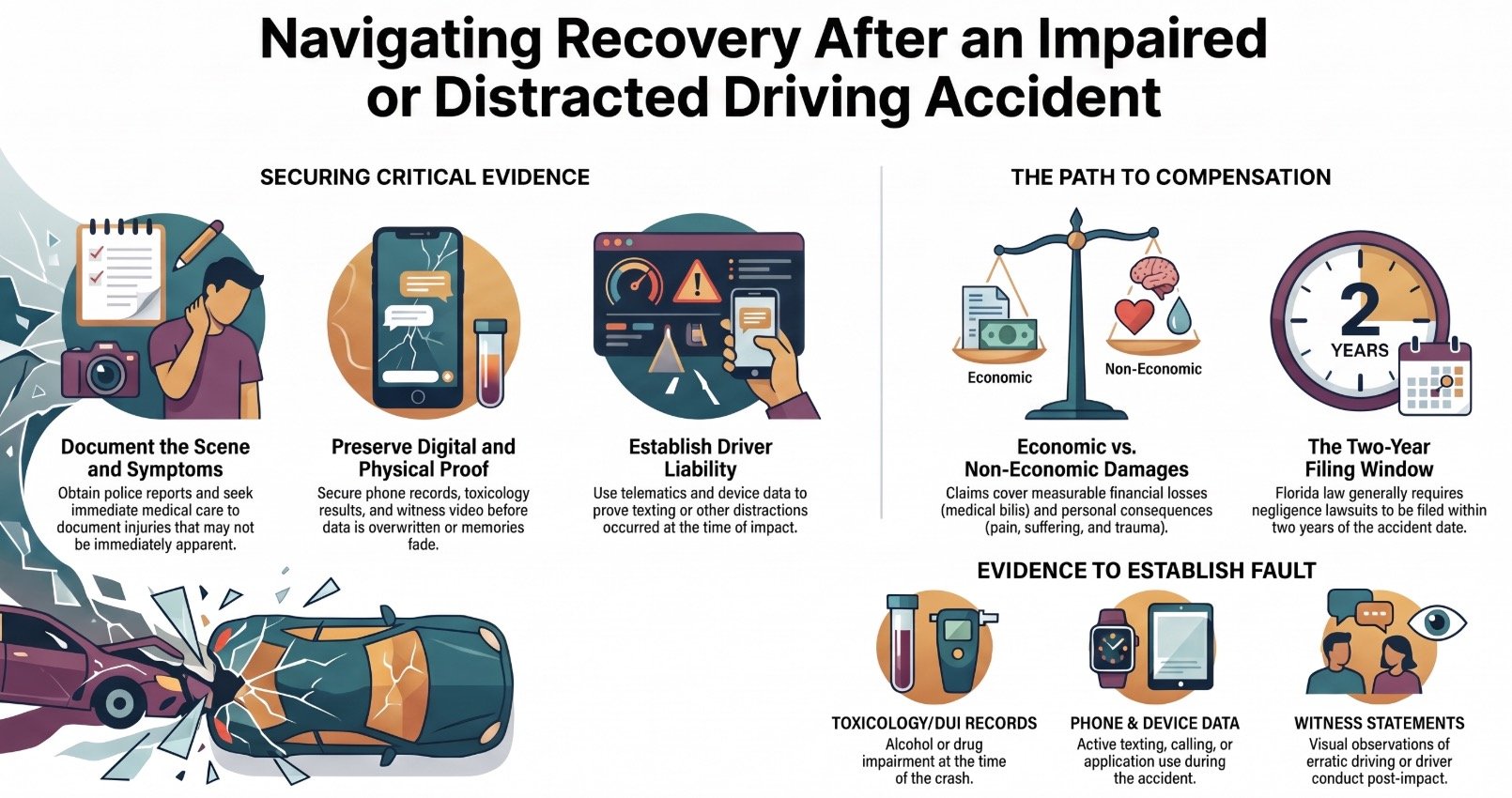
- A Palm Coast impaired and distracted driving lawyer investigates crash reports, witness accounts, vehicle damage, videos, and electronic evidence to establish liability.
- Attorneys review alcohol or drug impairment indicators, toxicology results, roadside observations, phone records, and other evidence showing unsafe driver conduct.
- Legal counsel documents diagnoses, treatment, prognosis, medical expenses, lost income, property damage, pain, and future care needs.
- Florida’s comparative negligence rules and legal deadlines can affect liability, compensation, and how quickly an injury claim should be pursued.
- A lawyer communicates with insurers, preserves evidence, evaluates available coverage, and protects injured people from harmful recorded statements or premature settlements.
How We Can Help With Your Palm Coast Car Accident Impaired & Distracted Driving Injury Claim
When a compromised or distracted driver causes a Palm Coast crash, an injured person may face significant medical expenses, lost income, and long-term physical limitations. A legal team can provide organized assistance while safeguarding the individual’s interests throughout the claim process.
Initial services may include reviewing collision reports, medical records, photographs, witness accounts, and available video footage. Evidence preservation is important because relevant materials can disappear, become incomplete, or lose reliability over time. Attorneys may also communicate with insurers, coordinate documentation, and help ensure that treatment-related information is presented accurately.
A lawyer can evaluate damages associated with medical care, rehabilitation, property loss, reduced earning capacity, and ongoing limitations. The team may prepare a Settlement plan based on documented losses, liability evidence, and the person’s anticipated needs. By managing communications and procedural demands, counsel can help the injured person focus on recovery and family responsibilities. Professional guidance may also promote respectful, informed decision-making and help prevent pressure to accept an inadequate resolution before the claim is fully understood.
Understanding Palm Coast Car Accident Impaired & Distracted Driving Injury Cases


Understanding Palm Coast car accident impaired and distracted driving lawsuit cases requires an examination of how unsafe conduct contributed to the collision and the harm that followed. These cases generally involve establishing responsibility, documenting injuries, and connecting medical consequences to the crash. A careful review may consider roadway conditions, vehicle damage, witness accounts, electronic records, and Accident scene evidence. Medical documentation can clarify the nature, duration, and probable cost of treatment, while employment records may demonstrate lost income or reduced earning capacity. Client interview preparation helps organize a person’s recollection, identify relevant documents, and present information accurately without speculation. Each suit also requires attention to Florida’s applicable liability and insurance rules. A professional evaluation can help preserve evidence, communicate with insurers, and ensure that injured individuals and their families receive informed guidance. The process should remain focused on factual accuracy, respectful service, and accountability for proven harm rather than assumptions about any driver’s conduct.
Don’t Wait. Call Our Florida Personal Injury Lawyers Now!
Common Causes of Palm Coast Car Accident Impaired & Distracted Driving
OUR CONSULTATIONSARE FREE
START YOUR FREE CASE REVIEW

Palm Coast car accidents commonly result from drunk driving collisions, drug-impaired driving, and other forms of impaired judgment. Texting behind the wheel can divert a driver’s eyes, hands, and attention from traffic conditions. Additional distracted driver behaviors, including phone use, eating, or adjusting vehicle controls, may also contribute to preventable crashes.
Drunk Driving Collisions
Drunk driving collisions occur when alcohol impairs a driver’s judgment, coordination, reaction time, or ability to maintain control of a vehicle. These crashes may involve speeding, improper lane changes, delayed braking, or failure to recognize traffic signals. Injured individuals and families often face medical expenses, lost income, vehicle damage, and lasting emotional consequences. A careful legal evaluation can help identify available insurance coverage, preserve evidence, and pursue compensation from responsible parties. The impaired driver may also face criminal charges, administrative penalties, and License suspension issues that affect employment and transportation. Legal counsel may address ignition lock defenses when advising a driver about license reinstatement or related proceedings. Attorneys serving Palm Coast communities can help victims understand deadlines, communicate with insurers, and seek accountability while protecting their legal interests throughout the process.
Drug-Impaired Driving


Drug-impaired driving collisions may result from the use of marijuana, prescription medication, illegal substances, or combinations of drugs that reduce alertness, coordination, judgment, or reaction time. Even legally obtained medication can impair a driver when taken incorrectly, combined with other substances, or used without understanding its warnings. Investigators may examine roadside observations, toxicology results, and Drug testing procedures to determine whether impairment contributed to a Palm Coast crash. A medical record review may identify prescribed medications, prior treatment, dosage instructions, and relevant health conditions. These records can help distinguish lawful use from unsafe conduct while clarifying the circumstances surrounding the collision. Victims and families may benefit from prompt legal guidance, evidence preservation, and a careful evaluation of available insurance coverage. Such efforts support accountability and help injured individuals pursue appropriate compensation for their losses.
Texting Behind The Wheel
When drivers compose, read, or send text messages, their visual, manual, and cognitive attention shifts away from traffic, substantially increasing the risk of a Palm Coast car accident. Texting risks remain significant even when traffic appears light or a message seems brief. A vehicle can travel a considerable distance while a driver’s eyes are focused on a screen, leaving insufficient time to recognize hazards, respond to changing signals, or protect nearby road users. Distraction myths often suggest that experienced drivers can text safely, but familiarity with a route does not eliminate unexpected pedestrians, cyclists, or sudden braking. Hands-free features may reduce manual demands, yet they do not remove mental distraction. Preventing these crashes requires drivers to silence notifications, secure devices, and address messages only after parking safely.
Distracted Driver Behaviors
Distracted driver behaviors encompass any activity that diverts a motorist’s eyes, hands, or concentration from the roadway, increasing the likelihood of a Palm Coast car accident. Common examples include adjusting music, eating, grooming, reaching for objects, using navigation applications, and engaging with passengers. These actions may appear brief, yet distraction patterns can develop when drivers repeatedly divide attention during traffic, turns, or changing road conditions. Visual, manual, and cognitive distractions can occur separately or at the same time, substantially reducing reaction time and situational awareness. Such conduct may constitute negligent driving when a motorist fails to exercise reasonable care under the circumstances. Identifying these behaviors can help injured individuals and their families understand how a collision occurred, preserve relevant evidence, and seek appropriate support while promoting safer choices for all road users.
Legal Rights of Palm Coast Car Accident Impaired & Distracted Driving Injury Victims
Individuals injured in a Palm Coast car accident involving an impaired or distracted driver may have important legal rights under Florida law. Depending on the circumstances, an injured person may seek compensation for medical expenses, lost income, property damage, pain, and continuing care.
Florida’s comparative negligence rules may affect recovery, so you must evaluate liability carefully.
Important steps may include:
- Medical documentation that records diagnoses, treatment, prognosis, and related costs.
- Accident reporting through law enforcement records, photographs, and witness accounts.
- Liability proof showing how impairment or distraction contributed to the collision.
- Evidence preservation involving vehicle damage, electronic records, surveillance footage, and communications.
A victim may also have rights under applicable insurance policies and may pursue a claim within Florida’s legal deadlines. Prompt communication with insurers can protect a claim, although recorded statements or settlements may affect future recovery. A qualified attorney can help preserve evidence, assess responsible parties, calculate damages, and advocate for fair treatment while the injured individual focuses on recovery and family responsibilities.
Why Do Palm Coast Car Accident Impaired & Distracted Driving Injuries Happen?
Understanding the causes of these collisions helps establish how impairment or distraction contributed to an injury and which evidence may support a legal claim. Impaired driving commonly involves alcohol, cannabis, prescription medication, or other substances that reduce judgment, coordination, reaction time, and awareness. Fatigue can produce similar effects, especially when a driver keeps driving despite diminished alertness.
Distracted driving injuries arise when attention shifts from traffic to texting, navigation systems, passengers, food, personal grooming, or other activities. Visual, manual, and cognitive distractions may operate separately or simultaneously, preventing timely hazard recognition. Speeding, aggressive steering, unsafe lane changes, and failure to yield can worsen the resulting impact.
Vehicle and roadway conditions may also influence injury severity. Safety device design, seat-belt use, airbag performance, vehicle size, lighting, and road maintenance affect how occupants experience a crash. Effective distracted driving prevention depends on public education, responsible technology use, enforcement, and transportation policies that reduce opportunities for inattention and impairment.
What Should You Do After a Palm Coast Car Accident Impaired & Distracted Driving Injury?
After a Palm Coast car accident involving impaired or distracted driving, the injured person should seek immediate medical care, even when symptoms initially appear minor. Report the accident to law enforcement, and preserve medical records, photographs, witness information, and other relevant documentation. These steps can restore the person’s health and help establish the facts surrounding the injury claim.
Seek Immediate Medical Care
Prompt medical evaluation is essential after a Palm Coast car accident involving suspected impaired or distracted driving, even when the injured person believes the condition is minor. Some injuries, including concussion, internal bleeding, and soft-tissue damage, may not produce immediate symptoms. A medical professional can identify hidden harm, develop a treatment plan, and explain warning signs that require urgent attention. The injured person should follow all discharge instructions, attend prescribed appointments, and maintain records of diagnoses, medications, referrals, and expenses. ER follow-up care may be necessary when symptoms persist or develop after the initial examination. Consistent treatment also helps the person recover from how the collision affected their health and daily activities. With permission, caregivers can assist with transportation and appointment scheduling while respecting the patient’s medical decisions and privacy.
Report the Accident
Once immediate medical needs are addressed, report the accident to law enforcement as soon as possible. Scene safety first: when feasible, keep injured individuals away from traffic, and give emergency personnel accurate information about hazards, injuries, and suspected impairment or distraction. Officers can investigate the collision, speak with involved drivers, and prepare an official report that may assist those affected.
Each person should provide factual observations without guessing, assigning blame, or minimizing symptoms. If language, hearing, or mobility barriers exist, responders should be informed so they can provide appropriate assistance. Identifying witnesses quickly can help officers locate people who observed the collision and clarify what occurred. Request medical documentation from treating providers and retain it for communication with insurers and authorized representatives. Prompt reporting helps protect injured people and supports a fair investigation.
Preserve Evidence and Documentation
Preserving evidence and documentation can help establish how a Palm Coast collision occurred and how the injuries affected those involved. Injured individuals or their supporters should photograph vehicle positions, roadway conditions, visible injuries, property damage, and relevant signs before evidence changes. Phone footage from witnesses may capture statements, traffic conditions, or driver behavior, but keep files unedited. Preserve backups in secure locations and retain original metadata whenever possible. Organize medical records, billing statements, repair estimates, insurance communications, and missed-work documentation promptly. Maintaining evidence logs can identify what was collected, when it was obtained, and who handled it. If you transfer physical items or electronic records, a documented chain-of-custody procedure helps demonstrate authenticity. Attorneys can guide preservation efforts and protect information from accidental loss.
Critical Evidence in a Palm Coast Car Accident Impaired & Distracted Driving Injury Case
Critical evidence can establish whether impairment or distraction caused a Palm Coast collision and support an injured party’s claim for compensation.
Relevant sources may include:
- Police accident reports
- Toxicology and DUI records
- Phone and device data
- Witness statements and video
Together, these materials can clarify the driver’s conduct, timing, and responsibility.
Police Accident Reports
When a Palm Coast crash may involve impaired or distracted driving, the responding officer’s accident report can provide an important early account of the event. It may identify roadway conditions, vehicle positions, reported statements, observed conduct, and apparent contributing factors. Although the report is not conclusive proof of liability, it can help preserve details that later become difficult to verify. Officers may also document citations, witness information, visible injuries, and whether drivers appeared confused, inattentive, or otherwise impaired. Related evidence, including body camera recordings and dashcam footage, may clarify conversations, movements, and scene conditions. A careful review can reveal inconsistencies requiring further investigation. Attorneys serving injured people may use the report to organize evidence, locate witnesses, and pursue a fair evaluation of responsibility and available compensation.
Toxicology And DUI Records
Toxicology results and DUI records may provide significant evidence in a Palm Coast impaired-driving injury case by documenting alcohol or drug testing, arrest-related observations, and the alleged driver’s compliance with investigative procedures. Laboratory reports can identify substances, concentrations, and collection times, while breath testing may help establish an alleged alcohol level near the collision. Attorneys may examine the chain of custody to determine whether samples were properly collected, preserved, transferred, and analyzed. DUI records can also reveal prior arrests, DUI convictions, completed evaluations, or license restrictions, although admissibility and relevance depend on applicable law. These materials may support a careful reconstruction of impairment and strengthen efforts to secure fair compensation for injured individuals. Counsel can coordinate with qualified experts to interpret results without overstating their significance or compromising the claim’s integrity.
Phone And Device Data
Phone and device data may supplement toxicology results and DUI records by showing whether an alleged driver was using a mobile phone or another electronic device before a Palm Coast collision. A Cell Phone may preserve call activity, text messages, application use, and location information, depending on the device and available records. Usage Logs can help establish the timing and duration of activity, particularly when compared with the collision time. Telematics Data from a vehicle, navigation system, or connected service may document hands-free commands, device connections, speed, braking, and other operational information. Attorneys may seek this evidence through preservation requests, subpoenas, or discovery procedures. Because digital records can be altered, deleted, or overwritten, prompt action helps protect reliable information for injured individuals and their families.
Witness Statements And Video
Witness statements and video recordings can provide critical evidence of impairment or distraction in a Palm Coast car accident injury case. Eyewitness credibility depends on factors such as the witness’s location, visibility, attention, and consistency. Promptly recorded accounts may preserve observations about phone use, erratic driving, alcohol odor, slurred speech, or unsafe conduct before and after the collision. Nearby businesses, traffic cameras, doorbell systems, and vehicle dashcams may also capture relevant events. Video preservation tips include quickly identifying potential sources, asking owners to retain footage, documenting the recording’s date and time, and avoiding edits or enhancements to the original file. Investigators may compare statements and recordings with crash reports, medical records, and physical evidence. Careful collection helps clarify responsibility and supports fair treatment for injured individuals, families, and other affected community members.
Long-Term Effects of Palm Coast Car Accident Impaired & Distracted Driving Injuries
Palm Coast car accident injuries caused by impaired or distracted driving may result in chronic pain, reduced mobility, and long-term disability. Survivors may also experience emotional and psychological trauma, including anxiety, depression, or post-traumatic stress. Ongoing medical treatment, rehabilitation, lost income, and related expenses can create substantial financial burdens over time.
Chronic Pain and Disability
When impaired or distracted driving injuries do not fully resolve, chronic pain and disability can markedly affect a person’s mobility, employment, and independence. Persistent back, neck, joint, or nerve pain may limit lifting, walking, driving, or maintaining consistent work hours. Some injured individuals require assistive devices, modified duties, home accommodations, or ongoing medical supervision. Effective chronic pain treatment may involve coordinated care from physicians, physical therapists, and other qualified providers, with records documenting symptoms, limitations, and treatment response. A thorough evaluation can also help establish whether impairment is temporary, permanent, or progressively worsening. Disability claim support can help organize medical evidence, employment records, and functional assessments. Timely legal guidance can help protect access to compensation for medical expenses, lost income, rehabilitation, equipment, and necessary long-term assistance after a qualifying crash.
Emotional and Psychological Trauma
Long-term injuries from impaired or distracted driving crashes may also produce emotional and psychological trauma that affects concentration, sleep, relationships, and the ability to return to normal routines. Post traumatic stress can develop when survivors repeatedly relive the collision, avoid driving, or remain alert for danger. Emotional distress may appear as sadness, irritability, guilt, or emotional numbness, sometimes affecting communication with family members, coworkers, and caregivers. Anxiety symptoms can include panic, persistent worry, difficulty concentrating, and physical tension that interfere with daily responsibilities. These reactions may emerge immediately or become more apparent as physical recovery progresses. Coping challenges are common, particularly when trauma changes a person’s independence or confidence. Compassionate support, counseling, and patient understanding can help survivors recognize symptoms, seek appropriate care, and rebuild stability while honoring their individual recovery process.
Ongoing Medical and Financial Costs
Because impaired or distracted driving injuries may require continuing treatment, their medical and financial consequences can persist long after the initial crash. Survivors may need follow-up appointments, prescription medication, physical therapy, adaptive equipment, or additional procedures. Rehabilitation expenses can accumulate while insurance disputes or coverage limits delay payment. Some injuries also prevent a person from returning to the same occupation, reducing household income and creating substantial wage loss. Families may face transportation costs, home modifications, caregiving expenses, and unpaid assistance from relatives. A careful assessment of anticipated treatment and diminished earning capacity can help identify the full scope of damages. Legal guidance may help injured individuals document these losses, communicate with insurers, and pursue compensation intended to support recovery, stability, and necessary long-term care.
Don’t Wait. Call Our Florida Personal Injury Lawyers Now!
Proving Liability in Palm Coast Car Accident Impaired & Distracted Driving Injury Cases
Establishing liability in a Palm Coast impaired or distracted driving injury case requires evidence showing that the driver owed a duty of care, violated that duty, and caused the resulting injuries and losses. Evidence may include police reports, witness statements, photographs, vehicle damage, medical records, and toxicology results when impairment is suspected. Phone records, application data, and surveillance footage can help demonstrate texting, calling, or other distracting conduct before impact. Traffic camera retrieval may preserve objective footage before recordings are overwritten. Driver narrative reconstruction can compare statements with physical evidence, timing, vehicle positions, and roadway conditions to identify inconsistencies. Accident reconstruction experts may analyze skid marks, debris, visibility, and impact forces to explain how the collision occurred. Documentation should also connect the crash to documented treatment, functional limitations, and other losses without relying on assumptions. A careful investigation protects injured people and helps courts evaluate responsibility fairly. Prompt evidence preservation is important because memories fade, vehicles are repaired, and digital records may be deleted or unavailable.
Dealing With Insurance Companies After a Palm Coast Car Accident Impaired & Distracted Driving Injury
After a Palm Coast car accident involving suspected impairment or distraction, an injured person may face insurance companies seeking statements, medical authorizations, and other information to confirm the extent of injuries. A thoughtful response can protect the individual while preserving access to appropriate benefits. Insurance representatives may request recorded interviews or broad authorizations that disclose seemingly unrelated medical information. An injured person generally should review such requests with qualified counsel before responding, particularly when liability or causation remains uncertain. Counsel can explain coverage basics, including available bodily injury benefits and potential Underinsured motorist protection when the responsible driver’s policy cannot fully address losses. A medical record should be maintained through consistent treatment and accurate communication with providers. A focused documentation strategy may include photographs, bills, wage records, witness information, and correspondence with insurers. These materials can support a clear evaluation of damages without exaggerating injuries. Prompt, organized communication also helps preserve evidence and ensures that the person’s interests remain represented throughout insurer discussions.
What to Expect During a Palm Coast Car Accident Impaired & Distracted Driving Injury Claim Process
A Palm Coast impaired or distracted driving injury claim typically begins with an initial evaluation of liability, injuries, and available insurance coverage. The evidence-gathering process may include medical records, crash reports, witness statements, vehicle data, and other documentation, followed by negotiations with the insurance company. If negotiations do not produce a fair resolution, the matter may proceed to settlement discussions or trial.
Initial Claim Evaluation
When a Palm Coast car accident claim involves suspected impaired or distracted driving, the initial evaluation examines how the collision occurred, who may be legally responsible, and whether the available evidence supports an injury claim. A legal professional typically reviews the reported facts, accident date, involved vehicles, injuries, and potential insurance coverage. Medical documentation basics include identifying treatment dates, diagnoses, restrictions, and whether injuries appear connected to the crash. Insurance proof requirements may include policy information, claim correspondence, and timely notice to applicable carriers. The evaluation also considers comparative fault, available damages, and whether the claim falls within Florida’s filing deadlines. This early review helps determine practical next steps while ensuring that the injured person receives informed guidance and that communication with insurers remains accurate, respectful, and appropriately documented.
Evidence Gathering Process
During the evidence-gathering process, the legal team identifies, preserves, and evaluates materials that may establish how the Palm Coast collision occurred and who bears responsibility. Scene documentation may include photographs, roadway conditions, vehicle positions, lighting, traffic controls, and visible injuries. Through witness interviews, attorneys or investigators seek independent accounts concerning speed, driver behavior, phone use, impairment indicators, and the sequence of events. Data preservation can protect cellphone records, vehicle electronic information, medical records, and other time-sensitive evidence before it changes or is lost. Video retrieval may involve obtaining surveillance footage, traffic-camera recordings, dashboard-camera files, or nearby business video. The team may also review police reports and consult qualified professionals when interpretation is necessary. This organized process supports accurate fact-finding and helps protect the injured person’s ability to pursue accountability.
Insurance Company Negotiations
Insurance company negotiations typically begin after the legal team evaluates the available evidence, documents the client’s injuries, and calculates the damages connected to the Palm Coast collision. Counsel then presents a demand supported by medical records, wage documentation, crash reports, witness statements, and evidence of impaired or distracted driving. The insurer may request additional information, question treatment decisions, or propose a lower amount. Attorneys assess each response carefully and address inaccuracies with organized documentation. Settlement leverage often comes from clear liability evidence, consistent medical care, credible testimony, and the demonstrated impact on daily life. Important claim value factors include injury severity, recovery duration, future medical needs, lost income, property damage, and available insurance coverage. Throughout discussions, the legal team communicates respectfully while protecting the injured person’s interests and seeking a fair, well-supported resolution.
Settlement Or Trial
If negotiations do not produce a fair resolution, the injured person and legal counsel may evaluate whether to accept a settlement or proceed toward trial. A settlement can provide timely compensation, reduce uncertainty, and help address medical expenses, lost income, and continuing care. Counsel generally reviews the proposed amount, insurance coverage, documented damages, and potential trial risks before recommending a course of action.
Mediation may be significant when the parties need a structured discussion assisted by a neutral mediator. Mediation can clarify disputed facts and encourage resolution without courtroom proceedings, although participation does not guarantee agreement. If settlement remains inadequate, the case may proceed through discovery, motions, and trial preparation. A jury trial strategy typically addresses liability, impairment, distraction, causation, and the full effect of the injuries. The attorney presents evidence clearly while seeking a fair result that supports the injured person’s recovery and future stability.
Compensation for Palm Coast Car Accident Impaired & Distracted Driving Injury Damages
Victims of impaired or distracted driving collisions in Palm Coast may be entitled to compensation for injuries and other damages caused by the negligent driver. Available recovery depends on the circumstances, evidence, insurance coverage, and the collision’s full impact on the injured person and family.
Potential compensation may address medical treatment, rehabilitation, prescribed care, property damage, lost wages, and reduced earning capacity. A claim may also include transportation expenses, such as rental car costs, when a damaged vehicle cannot be safely used. Documentation, including medical records, wage statements, repair estimates, photographs, witness accounts, and crash reports, can help establish the claim.
When a collision causes a fatality, surviving relatives may pursue wrongful death claims for legally recognized losses. Time limits and procedural requirements may apply, so prompt attention can help protect available rights. A qualified Palm Coast car accident attorney can investigate impairment or distraction, identify responsible parties, communicate with insurers, and pursue a fair resolution through settlement or litigation when appropriate.
Don’t Wait. Call Our Florida Personal Injury Lawyers Now!
Economic vs Non-Economic Damages in Palm Coast Car Accident Impaired & Distracted Driving Cases
Palm Coast car accident claims may include economic damages, such as medical expenses, lost income, and property repair costs. Non-economic damages can address pain and suffering, emotional distress, and diminished quality of life. Establishing these losses generally requires medical records, financial documentation, testimony, and other evidence connecting the damages to the impaired or distracted driver’s conduct.
Economic Damage Categories
Economic damages represent the measurable financial losses arising from an impaired or distracted driving collision in Palm Coast. These losses commonly include emergency transportation, hospital treatment, physician visits, prescription medication, rehabilitation, medical equipment, and other necessary healthcare expenses. Records such as invoices, receipts, insurance statements, and provider estimates can help establish what you owe or have already paid. When injuries require continuing care, future medical costs may include additional procedures, therapy, medication, monitoring, or assistive services. Lost income is another significant category. A claim may account for wage loss during recovery, reduced earning capacity, missed employment opportunities, and benefits no longer available because of the injury. Household services, transportation for treatment, and property damage may also qualify when supported by reliable documentation and connected directly to the collision and resulting harm.
Non-Economic Damage Types
Non-economic damages address the physical and personal consequences of an impaired or distracted driving collision that cannot be measured through bills or wage records. They may include physical pain, discomfort, reduced mobility, disfigurement, and loss of enjoyment of ordinary activities. Emotional distress can involve fear, anxiety, depression, sleep disruption, or trauma following the crash. An emotional distress evaluation may help describe the injury’s effect on daily functioning and relationships without reducing personal suffering to a simple calculation. Damages may also reflect loss of companionship, diminished independence, and inconvenience caused by lasting limitations. Pain-related proof can provide context for the severity and persistence of symptoms. Consideration of future mental health may be appropriate when trauma creates continuing risks, particularly for vulnerable individuals who require sustained support and compassionate attention.
Proving Accident Damages
After an impaired or distracted driving collision, proving accident damages requires organized evidence connecting the crash to measurable financial losses and personal harm. Economic damages may include emergency treatment, rehabilitation, prescription costs, vehicle repairs, lost wages, and reduced future earning capacity. Pay stubs, invoices, medical records, repair estimates, and employment documentation help establish these amounts. Non-economic damages address pain, emotional distress, diminished quality of life, disfigurement, and loss of companionship. Treatment notes, personal journals, family testimony, and professional evaluations may support these claims. Documentation mistakes, missing evidence, and inconsistent statements can weaken an otherwise valid case. Insurance delays may increase financial pressure, making prompt preservation of records especially important. A Palm Coast attorney can organize evidence, consult qualified experts, and present damages clearly while advocating for fair compensation.
When a Palm Coast Car Accident Impaired & Distracted Driving Injury Case Goes to Trial vs Settlement
When a Palm Coast car accident involves suspected impaired or distracted driving, the injured party may resolve the claim through settlement or proceed to trial, depending on the evidence, damages, and parties’ willingness to negotiate. Settlement can provide a defined recovery without the uncertainty, expense, and delay associated with courtroom proceedings. Negotiations may become more productive when medical documentation, witness accounts, vehicle records, and other admissible materials establish responsibility and losses. This evidence can also create Settlement Leverage while encouraging a fair resolution that supports the injured person’s recovery and ongoing needs.
If negotiations fail, litigation may proceed through discovery, Evidence Deadlines, and pretrial preparation. At trial, Jury Selection determines the community members who will evaluate the dispute. Opening Statements then frame the parties’ positions, followed by testimony, exhibits, and legal arguments. A verdict may provide closure, but it remains uncertain and can be appealed. The appropriate path depends on case strength, damages, risk tolerance, and informed strategic advice.
Florida Laws That May Affect Your Palm Coast Car Accident Impaired & Distracted Driving Case
Florida laws may affect a Palm Coast car accident impaired and distracted driving case by defining prohibited conduct, setting evidence standards, and limiting available compensation.
Vital considerations may include:
- Florida DUI penalties can support evidence of unlawful impairment, although criminal consequences and civil claims remain separate proceedings.
- Florida’s texting-while-driving restrictions may help establish negligence when phone records, witness accounts, or crash-scene evidence indicate prohibited use.
- Comparative negligence rules may reduce recovery if an injured person’s conduct contributed to the collision.
- Proof may include toxicology results, officer observations, surveillance footage, medical records, and testimony from qualified experts.
A careful legal review can identify violations, preserve reliable evidence, and present the injured person’s needs clearly. Potential distracted driving defenses may challenge whether the driver used a phone, whether that use caused the crash, or whether evidence was properly obtained. Liability may also involve multiple drivers, employers, vehicle owners, or other responsible parties. Because each case depends on its facts, an attorney serving accident victims can evaluate applicable statutes and pursue accountability while protecting the client’s interests. This analysis excludes filing deadlines, which require separate attention.
The Statute of Limitations for Palm Coast Car Accident Impaired & Distracted Driving Injury Cases
Although impaired or distracted driving may support a negligence claim, an injured person must file a Palm Coast car accident lawsuit within Florida’s applicable statute of limitations. Under current Florida law, negligence actions generally must be filed within two years after the accident. Claims involving wrongful death, government entities, or different legal theories may have separate deadlines and additional notice requirements. Because the deadline can determine whether a court will hear a claim, identifying the correct limitation period requires prompt attention to the accident’s facts and the parties involved.
Delay can also complicate evidence preservation. Vehicle data, surveillance recordings, phone records, witness recollections, medical documentation, and toxicology evidence may become unavailable or less reliable over time. Insurance negotiations do not necessarily extend the statutory deadline, even when discussions remain active. An injured person should therefore track all relevant dates, retain records, and seek qualified legal information promptly. Timely action helps protect accountability and preserves an opportunity to pursue lawful compensation for injuries and related losses.
How a Palm Coast Car Accident Impaired & Distracted Driving Lawyer Can Help You
Prompt attention to filing deadlines is only one part of protecting an impaired- or distracted-driving injury claim. A Palm Coast lawyer can serve the injured person by coordinating a thorough, evidence-based response while communicating with insurers and opposing counsel.
Key assistance may include:
- Reviewing DUI investigation steps, police reports, citations, toxicology results, and witness accounts
- Directing case evidence preservation, including vehicle data, phone records, photographs, and surveillance footage
- Applying Damages valuation methods to assess medical costs, lost income, rehabilitation, and lasting limitations
- Providing settlement negotiation tips and presenting a documented demand that reflects the claim’s full value
Counsel can also identify disputed facts, consult qualified medical or accident-reconstruction professionals, and explain procedural developments in clear terms. This support allows the injured individual and family to focus on recovery and essential responsibilities while the legal team handles more complex claim administration. A lawyer’s role remains centered on accountability, accurate valuation, and respectful advocacy for those affected by unsafe driving.
When to Contact a Palm Coast Car Accident Impaired & Distracted Driving Lawyer
Early contact with a Palm Coast impaired and distracted driving lawyer can help preserve evidence and establish a clear strategy before important information is lost or disputed. A consultation is appropriate soon after a collision, particularly when impairment, texting, fatigue, or other distraction may have contributed. Prompt legal attention helps preserve evidence, including photographs, vehicle data, witness accounts, surveillance footage, and relevant electronic records.
A lawyer may also help organize medical documentation, which can connect injuries to the crash and show the course of treatment. Contact becomes especially important when injuries require continuing care, work is missed, fault is contested, or insurance delays interfere with necessary financial support. Early review can identify deadlines, protect communications, and reduce the risk of unsupported statements being used against an injured person.
If negotiations stall or liability remains disputed, timely trial preparation may become necessary. Seeking guidance before signing releases or accepting payment allows the individual to make informed decisions while preserving options for recovery and fair treatment.
Why You Need an Experienced Palm Coast Car Accident Impaired & Distracted Driving Lawyer
An experienced Palm Coast car accident impaired and distracted driving lawyer can assess the evidence, identify responsible parties, and develop a legal strategy tailored to the collision’s circumstances. This guidance helps injured individuals and families pursue accountability while protecting their ability to serve their communities and recover from disruption.
Proving negligence often requires more than a driver’s citation or an initial incident report. Counsel can preserve vehicle data, review witness statements, and seek video surveillance from nearby businesses, residences, and intersections. Police dashcams may document conduct before or after impact, while traffic camera footage can clarify vehicle positions, signals, and timing. These sources may reveal texting, impairment, unsafe lane changes, delayed reactions, or other violations that contributed to the crash.
An experienced lawyer also can assess medical records, calculate future care needs, and address disputed liability. By coordinating evidence collection and communications with insurers, legal representation can reduce avoidable burdens and help ensure that injured people receive fair consideration under applicable law.
How to Choose the Right Palm Coast Car Accident Impaired & Distracted Driving Lawyer for Your Case
Selecting the right Palm Coast car accident impaired and distracted driving lawyer requires careful consideration of experience, communication, and case-specific knowledge. A qualified attorney should regularly handle collisions involving suspected texting, alcohol, drug impairment, fatigue, or other unsafe conduct. Reviewing professional credentials, courtroom experience, and prior results can help identify counsel prepared for intricate liability disputes.
During consultations, the lawyer should explain potential claims, available compensation, and the expected Case timeline in understandable terms. Clear communication allows an injured person and supporting family members to make informed decisions while focusing on recovery and community responsibilities. The attorney should also describe evidence handling procedures, including preserving phone records, surveillance footage, medical documentation, witness statements, and crash reports. Attention to these details may strengthen negotiations or litigation.
A suitable lawyer provides realistic assessments rather than promises. When choosing a firm, consider responsiveness, accessibility, ethical standards, and its ability to develop a strategy tailored to your injuries, losses, and service needs.
About The Law Offices of Anidjar & Levine
The Law Offices of Anidjar & Levine represents individuals injured in Palm Coast car accidents involving impaired or distracted drivers. The firm’s approach begins with Local case intake, allowing its team to review accident circumstances, identify potential claims, and determine appropriate next steps. Attorneys may review police reports, medical records, witness accounts, and other evidence related to impairment or distraction.
The firm also helps clients understand relevant community resources, including medical providers, rehabilitation services, and support organizations that may assist during recovery. Information about attorney credentials, professional experience, and case handling methods can help prospective clients evaluate whether legal representation suits their needs.
Clear client communication remains central to the process. Attorneys and staff provide case updates, explain legal options, and answer questions as investigations develop. By combining organized preparation with attentive service, the firm seeks to protect injured individuals’ interests while pursuing compensation for medical expenses, lost income, property damage, and other legally recoverable losses. Its work emphasizes accountability and practical guidance.
Frequently Asked Questions
Can I Afford a Palm Coast Impaired Driving Accident Lawyer Without Upfront Payment?
Yes, a Palm Coast impaired driving accident lawyer may be affordable without upfront payment. Many firms offer a no-cost consultation to evaluate the claim and explain Payment options and flexibility. If representation is appropriate, contingency fees allowed arrangements may permit payment only after recovery. This structure can defer upfront costs, but clients should review the written agreement, including fee percentages, case expenses, and circumstances requiring payment if compensation is not obtained.
Will My Accident Case Affect the Other Driver’s Criminal Charges?
An accident case can affect the other driver’s criminal charges, but it does not determine the outcome. Evidence from the civil matter may have an evidentiary impact on the criminal process, particularly regarding impairment, distraction, or causation. However, prosecutors independently evaluate admissible evidence and statutory requirements. Civil liability may be established separately from criminal guilt. In some circumstances, cooperation, restitution, or evidentiary weaknesses may support charge reduction, though no result is guaranteed.
Can Passengers Injured in the Crash File Separate Claims?
Yes, injured passengers may file separate claims against responsible drivers, even when the driver is a friend or relative. Passenger rights generally include pursuing compensation for medical expenses, lost income, pain, and other damages. Insurance coverage may determine what’s available to recover, while separate lawsuits may be necessary if insurers dispute liability or limits. Because claim timelines vary by jurisdiction and circumstances, each passenger should promptly preserve records and obtain individualized legal guidance.
What Happens if the At-Fault Driver Has No Auto Insurance?
If the at-fault driver has no auto insurance, the injured person may pursue uninsured liability through their own policy, if uninsured motorist coverage applies. Coverage options can include medical payments coverage, personal injury protection, health insurance, or a claim against the driver’s personal assets. Recovery may be limited if that driver lacks financial resources. Promptly reporting the crash, preserving evidence, and reviewing policy terms can help protect available compensation rights.
Can I Still Pursue Compensation if I Was Visiting Palm Coast?
Yes, a visitor may still pursue compensation after a Palm Coast crash, provided the evidence establishes another party’s liability and legally recognized damages. Out-of-town eligibility generally does not depend on Florida residency, although insurance coverage, comparative fault, and filing deadlines may affect the claim. Evidence from travel, including lodging records, transportation details, medical documentation, photographs, and witness information, can support the case. Prompt legal guidance helps preserve proof and protect available remedies.
—————————
Victims of impaired or distracted driving crashes may suffer serious injuries, financial losses, and an uncertain recovery. Understanding available legal rights and acting promptly can help preserve evidence, identify responsible parties, and pursue appropriate compensation. An experienced Palm Coast car accident lawyer can assess the circumstances, communicate with insurers, and protect the victim’s interests throughout the claim. The Law Offices of Anidjar and Levine offer informed guidance and determined representation for individuals seeking accountability after these preventable collisions, including through their St. Augustine Beach Personal Injury Lawyer resources.

