The Law Offices of Anidjar and Levine help you steer through every phase of an Orlando I‑10 car accident claim, from gathering medical records and police reports to evaluating liability under Florida’s pure comparative fault rule.
Our experienced team conducts thorough accident reconstruction, preserves dash‑cam video, and negotiates assertively with insurers to secure economic and non‑economic damages.
We protect your rights, clarify settlement timelines, and coordinate expert testimony when needed.
Continue to discover how our proven strategies and personalized communication as a Car Accident Lawyer in Orlando can maximize your compensation.
Main Takeaways
- Choose a lawyer with proven success in Orlando I‑10 car‑accident cases and transparent fee structures.
- Ensure the attorney conducts thorough evidence collection, including dash‑cam footage, police reports, and expert accident reconstruction.
- Verify the lawyer’s expertise in Florida’s comparative negligence law and ability to negotiate with insurers.
- Look for clear communication practices, prompt updates, and a client‑focused approach throughout the claim.
- Confirm the attorney’s credentials, bar standing, and disciplinary history before hiring.


How We Can Help With Your Orlando I-10 Car Accident Injury Claim
Because handling the aftermath of an Orlando I‑10 car accident can be overwhelming, we focus on guiding you through every step of your injury claim with precision and skill. We begin by gathering thorough medical records and police reports, ensuring that every detail of your injury is documented. Our team then conducts a thorough assessment of liability, which forms the foundation for effective insurance negotiation.
By leveraging our experience, we present a compelling case that highlights the extent of your damages, thereby strengthening your position during settlement discussions. We also clarify settlement timelines, outlining realistic expectations for each phase of the process, from initial demand to final payment. Throughout, we maintain clear communication, updating you on progress and answering questions promptly. Our commitment is to protect your rights, maximize your compensation, and alleviate the burden of navigating intricate legal and insurance systems.
OUR CONSULTATIONSARE FREE
START YOUR FREE CASE REVIEW

Understanding the Orlando I-10 Car Accident Injury Case
When you’re involved in an Orlando I‑10 car accident, the injury case quickly becomes a multifaceted interplay of medical evidence, liability analysis, and insurance negotiations. We examine the accident timeline, focusing on how traffic patterns and weather effects shaped the event. By reviewing vehicle speed, lane changes, and signal compliance, we assess contributory negligence and establish fault. Simultaneously, we gather medical records, diagnostic imaging, and physician statements to quantify injuries and forecast recovery.
We also scrutinize insurance policies, estimate coverage limits, and negotiate fair settlements. Our approach integrates expert testimony when necessary, ensuring that each element—traffic flow, precipitation, visibility, and road surface—receives rigorous evaluation. Throughout, we keep the client’s best interests at the forefront, translating complex data into clear, actionable strategies. This all‑encompassing methodology empowers victims to secure compensation while reinforcing safety awareness for the broader community.
Common Causes of Orlando I-10 Car Accident Injuries
We see that speeding and tailgating, distracted driving incidents, improper lane changes, and poor road maintenance all contribute greatly to injuries on Orlando’s I‑10. These factors create hazardous conditions that often lead to severe collisions and intricate liability issues. Understanding each cause helps us protect our clients and pursue the compensation they merit.
Speeding and Tailgating
Speeding and tailgating dominate the crash statistics on Orlando’s I‑10 corridor, and we see these behaviors directly translate into severe injuries for drivers and passengers alike. We recognize that speed-related psychology drives many to exceed limits, believing they can control the vehicle despite reduced reaction time. When a driver follows too closely, the vehicle’s stopping distance—comprising perception, reaction, and braking phases—often exceeds the gap, leaving no margin for error.
This combination creates high‑impact collisions that cause whiplash, traumatic brain injuries, and spinal damage. By recognizing these patterns, we can advise victims on liability, pursue appropriate compensation, and promote safer driving habits that protect our community from preventable harm.
Distracted Driving Incidents
Distracted driving incidents dominate the injury landscape on Orlando’s I‑10, as drivers frequently divert their attention to mobile devices, navigation systems, or other in‑vehicle distractions. We see that when a driver checks a mobile phone while traffic flows, reaction time drops dramatically, increasing the likelihood of rear‑end collisions and side‑impact crashes. Roadside distractions—such as billboards, construction signs, and pedestrians—further divide focus, causing lane drift and sudden braking.
Our experience shows that these combined factors produce severe whiplash, traumatic brain injuries, and broken limbs, often requiring extensive medical treatment and rehabilitation. By understanding these patterns, we can better advocate for victims, pursue full compensation, and promote public‑safety initiatives that reduce the prevalence of such preventable accidents.
Improper Lane Changes
Changing lanes without proper signaling or checking blind spots is a frequent catalyst for serious crashes on Orlando’s I‑10, where high traffic density leaves little margin for error. We see drivers neglecting lane discipline, assuming they can merge without regard for surrounding traffic. This habit often violates signaling etiquette, leaving other motorists unaware of sudden movements. When a vehicle abruptly cuts into another lane, the resulting loss of control can cause side‑impact collisions, whiplash, and severe injuries.
We advise maintaining a consistent speed, using turn signals well in advance, and continuously scanning mirrors and blind spots. By respecting lane discipline and adhering to signaling etiquette, we protect ourselves and fellow drivers, reducing the likelihood of costly accidents and ensuring safer travel for the community.
Poor Road Maintenance
Often, the deteriorating condition of Orlando’s I‑10—potholes, uneven pavement, and inadequate drainage—creates hazardous driving environments that directly contribute to serious injuries. We see drivers lose control when a sudden pothole liability forces abrupt wheel adjustments, often resulting in spinal or traumatic brain injuries. In many cases, drainage erosion compromises road surface integrity, causing unexpected dips that can topple vehicles.
As a team dedicated to protecting victims, we emphasize that these defects are not merely inconveniences but legal liabilities for the responsible agencies. By documenting the exact locations and conditions, we build compelling cases that hold municipalities accountable. Our commitment to serving those harmed by poor road maintenance propels us to pursue every avenue for just compensation.


Legal Rights of Orlando I-10 Car Accident Injury Victims
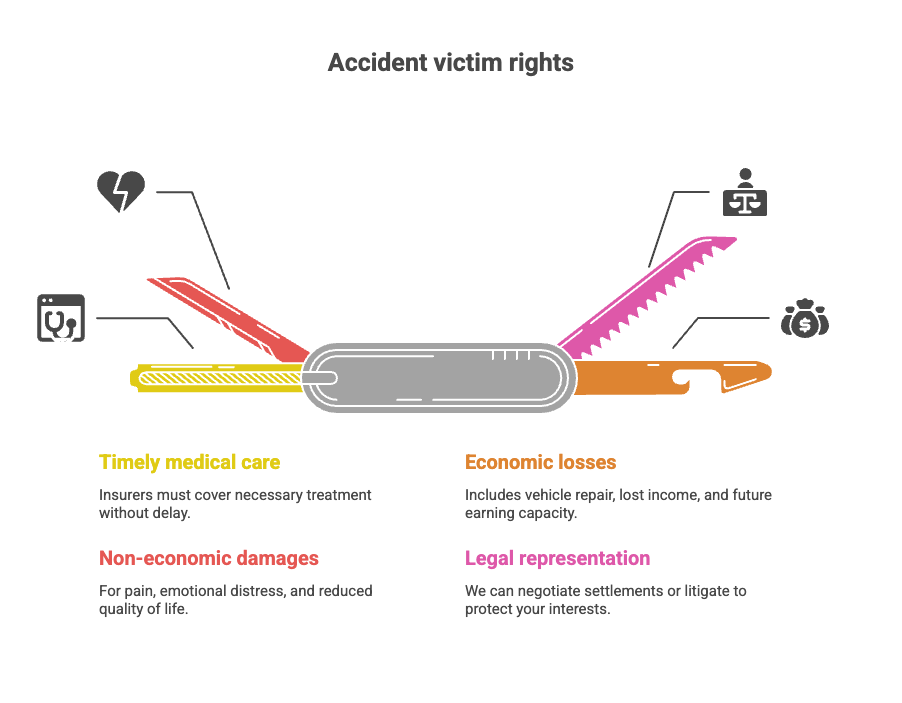
If you’ve been injured in a car accident on Orlando’s I‑10, you have specific legal rights that protect you and guarantee you can seek compensation for your losses. We must understand those rights so we can advocate effectively for victims and steer settlement negotiations with confidence. Our role includes ensuring medical costs, lost wages, and pain‑and‑suffering are fully addressed, while also preserving the right to a fair trial if needed.
By staying informed, we empower ourselves and those we serve to obtain just outcomes.
- Right to timely medical care – insurers must cover necessary treatment without delay.
- Right to compensation for economic losses – includes vehicle repair, lost income, and future earning capacity.
- Right to pursue non‑economic damages – for pain, emotional distress, and reduced quality of life.
- Right to legal representation – we can negotiate settlements or litigate to protect your interests.
Steps to Take After an Orlando I-10 Car Accident Injury
We should first secure medical attention to address any injuries promptly, then document the scene by photographing damage and gathering witness statements, and finally notify our insurance provider to initiate the claims process. This sequence protects our health, preserves vital evidence, and guarantees compliance with policy requirements. Following these steps helps us maintain a strong position for any subsequent legal actions.
Secure Medical Attention
Securing prompt medical attention after an Orlando I‑10 car accident is vital for protecting both your health and your legal rights. We advise you to assess injuries immediately and initiate emergency triage, ensuring that any life‑threatening conditions receive priority care. Coordinate transport logistics with professional responders, confirming that the ambulance follows the safest route to a qualified medical facility.
Once at the hospital, request a thorough examination and retain all medical records, as they will substantiate the extent of your injuries. We also recommend informing the attending physicians of the circumstances of the accident so they can accurately document relevant details. By acting swiftly and methodically, we safeguard your recovery while establishing a solid evidentiary foundation for any subsequent legal proceedings.
Document Scene Evidence
After receiving medical care, we turn our attention to preserving the factual record of the accident scene, which is indispensable for any future claim. First, we secure photographic documentation of every angle, including vehicle damage, lane markings, traffic signs, and any debris. We make certain images capture both wide views and close‑ups, using a steady hand or a tripod to avoid distortion.
Next, we gather witness statements while memories are fresh; we ask each witness to describe what they saw and note their contact information and relationship to the incident. We record these accounts in writing or audio, then verify details with the individuals involved. By compiling clear photos and reliable statements, we create a resilient evidentiary foundation that supports accurate reconstruction and strengthens our client’s position.
Notify Insurance Provider
Typically, we contact our insurance carrier as soon as possible after the Orlando I‑10 collision, because prompt notification helps preserve coverage rights and guarantees the claims process proceeds without unnecessary delays. We explain the incident clearly, provide the police report number, and share any medical documentation already obtained. While speaking with the adjuster, we emphasize policy considerations and ensure that all required disclosures are made to avoid future disputes.
We also ask about claim timelines to align our follow‑up actions with the insurer’s schedule. Maintaining a detailed log of all communications, including dates, names, and summaries, protects our interests and supports a smooth resolution. By acting swiftly and responsibly, we uphold our duty to serve others while safeguarding our legal and financial position.
How an Orlando I-10 Car Accident Lawyer Can Help You
When you’re involved in a collision on Orlando’s I‑10, we step in to guide the elaborate legal landscape on your behalf, ensuring that your rights are protected and your recovery is maximized. Our team understands that nighttime collisions and weather challenges can complicate evidence gathering and liability assessment, so we prioritize thorough investigations and strategic advocacy. We communicate directly with insurers, medical providers, and witnesses, translating complicated legal concepts into clear actions that serve your best interests.
By leveraging our experience, we aim to secure fair compensation while minimizing stress for you and your family.
- Conduct all‑encompassing accident reconstruction, including analysis of nighttime visibility and adverse weather conditions.
- Gather and preserve essential evidence such as dash‑cam footage, police reports, and weather data.
- Negotiate assertively with insurance companies to achieve equitable settlements.
- Represent you confidently in court if negotiations fail, protecting your rights at every stage.
Long-Term Effects of Orlando I-10 Car Accident Injuries
We recognize that chronic pain often persists long after the initial injury, requiring ongoing management strategies. Over time, many victims experience reduced mobility that can limit daily activities and affect long‑term independence. Additionally, the emotional and cognitive repercussions—such as anxiety, depression, and memory difficulties—can compound the physical challenges and influence overall recovery.
Chronic Pain Management
Because many survivors of Orlando I‑10 collisions experience persistent discomfort, we must address chronic pain as a central component of long‑term injury care. We recognize that chronic pain can erode daily function and emotional well‑being, so we prioritize evidence‑based strategies that empower patients and their families. Treatment innovations such as multimodal therapy, targeted nerve blocks, and personalized rehabilitation programs now offer measurable relief while minimizing reliance on opioid medications.
We coordinate with physicians, physical therapists, and mental‑health experts to create all‑encompassing plans that adapt as recovery progresses. By monitoring pain levels, functional milestones, and medication usage, we guarantee that each intervention aligns with the patient’s goals and legal rights. Our collaborative approach safeguards health, supports sustained productivity, and reinforces our commitment to serving those affected by Orlando I‑10 accidents.
Mobility Limitations Over Time
Although many victims initially regain basic movement after an Orlando I‑10 collision, we often observe that mobility limitations can evolve and intensify over months and years. We see progressive stiffness emerging as scar tissue forms and muscles decondition, reducing range of motion and making everyday tasks increasingly arduous. To mitigate these effects, we recommend early engagement with physical therapy and, when necessary, the integration of assistive devices such as walkers, canes, or orthotic supports. These tools preserve independence while reducing strain on injured joints. By monitoring functional changes and adjusting rehabilitation plans, we help clients maintain purposeful activity, prevent further decline, and protect their long‑term quality of life. Our guidance emphasizes proactive management and informed decision‑making.
Emotional and Cognitive Impact
When an Orlando I‑10 collision leaves a survivor with lingering physical injuries, the emotional and cognitive repercussions often persist long after the body has recovered. We understand that post-traumatic stress can surface as intrusive memories, heightened anxiety, and avoidance of driving or traffic, which erodes confidence and hampers daily functioning. Cognitive decline may manifest as reduced attention, slower processing speed, and difficulty recalling details, affecting work performance and personal relationships.
By recognizing these patterns early, we can guide victims toward appropriate counseling, cognitive rehabilitation, and support networks, ensuring that they receive thorough care. Our proficiency enables us to advocate for necessary accommodations, protect rights, and foster a recovery environment that addresses both mind and body.
Proving Liability in Orlando I-10 Car Accident Car Accident Injury Cases
Establishing liability in Orlando I‑10 car accidents requires a systematic analysis of the facts, evidence, and applicable traffic laws. We begin by gathering police reports, dash‑cam footage, and witness statements to construct a clear timeline of events. Next, we assess comparative negligence, evaluating each driver’s contribution to the collision under Florida’s “pure comparative” rule, which allows fault to be apportioned proportionally. Our team then consults expert testimony, bringing in accident reconstruction authorities who can interpret skid marks, vehicle damage, and road conditions to pinpoint the negligent party. We also review traffic camera recordings and cellular data to corroborate our findings. By integrating these elements, we create a compelling narrative that demonstrates how the defendant’s breach of duty caused the plaintiff’s injuries. This methodical approach ensures the case rests on a solid evidentiary footing, increasing the likelihood of a favorable outcome for those we represent.
Compensation for Orlando I-10 Car Accident Damages
If you’ve been injured in an Orlando I‑10 collision, you’re entitled to recover a range of damages that reflect both the tangible and intangible losses you’ve suffered. We’ll guide you through the compensation categories, ensuring you understand each element and how it applies to your case. Economic damages cover medical expenses, including treatment, rehabilitation, and any outstanding medical liens that insurers may claim. Property loss compensation covers repair costs, the fair market value of a totaled vehicle, and any personal belongings damaged in the crash. Non‑economic damages compensate for pain, suffering, emotional distress, and loss of enjoyment of life, recognizing the personal impact beyond the bills. We also consider lost wages and future earning potential when your injuries affect your ability to work. By documenting every expense and loss, we help you build a thorough claim that maximizes recovery while adhering to legal standards.
The Statute of Limitations for Orlando I-10 Car Accident Injury Cases
Recovering compensation for your injuries is only half the battle; securing those damages also depends on filing your claim within Florida’s strict time limits. We must understand the statute nuances that govern Orlando I‑10 car accident injury cases, because missing a deadline can for your right to recovery. In Florida, the general limit is four years from the date of injury, but an exception applies when a government entity is involved, reducing the period to ninety days.
Tolling provisions may pause the clock if you are a minor, incapacitated, or if the defendant is out of state, yet we must act promptly once the tolling event ends. Medical liens can further complicate the timeline, as lien holders may file claims that affect your settlement. By staying vigilant about these deadlines and coordinating with all parties, we protect your interests and guarantee that justice is pursued without unnecessary delay.
Why You Need an Experienced Orlando I-10 Car Accident Lawyer
When a collision occurs on Orlando’s I‑10, the subtleties of traffic law, insurance negotiations, and medical documentation quickly overwhelm anyone trying to manage the aftermath alone. We appreciate that navigating these challenges demands more than basic knowledge of statutes; it requires seasoned skill to anticipate procedural hurdles and protect your rights. An experienced Orlando I‑10 car accident lawyer leverages deep familiarity with local courts to ensure that evidence is presented effectively and that claims are filed within statutory deadlines. We also recognize that post‑trial remedies—such as appeals or enforcement of judgments—often become necessary, and only a skilled attorney can pursue them without jeopardizing your recovery. Our commitment to strong client‑attorney rapport means we keep you informed, address concerns promptly, and tailor strategies to your unique circumstances. By entrusting us with your case, you secure a professional ally dedicated to maximizing compensation and safeguarding your future.
How to Choose the Right Orlando I-10 Car Accident Lawyer for Your Case
Having outlined why seasoned skill matters, we now focus on selecting the attorney who will best represent your I‑10 accident claim. We begin by reviewing each lawyer’s track record on similar cases, because proven results indicate the ability to steer through intricate liability issues. Next, we assess how transparently they discuss legal fees; a clear fee structure prevents surprise costs and aligns expectations. We also prioritize firms that demonstrate consistent, timely client communication, ensuring you receive updates and can ask questions without delay.
Personal rapport matters, so we recommend scheduling consultations to gauge empathy and commitment to your recovery. Finally, we verify credentials, bar association standing, and any disciplinary history, because ethical integrity underpins effective advocacy. By systematically evaluating experience, fee transparency, communication practices, and professional standing, we can confidently choose a lawyer who will protect your interests throughout the claims process.
About the Law Offices of Anidjar and Levine
We represent the Law Offices of Anidjar and Levine, a firm dedicated to protecting the rights of individuals injured on Orlando’s I‑10 corridor.
Our team draws strength from a founding history rooted in personal experience with traffic injuries, which fuels our commitment to justice.
Since our inception, we have cultivated a reputation for meticulous case preparation and aggressive negotiation, ensuring clients receive fair compensation.
Our attorneys collaborate closely, sharing knowledge and resources to navigate intricate liability issues.
In addition to courtroom advocacy, we prioritize community outreach, offering free seminars, legal clinics, and educational materials that empower residents to understand their rights.
This outreach reflects our belief that informed citizens can better protect themselves and their families.
By integrating compassionate service with rigorous legal strategy, we endeavor to uphold the highest standards of professional integrity while delivering tangible results for those affected by I‑10 accidents.
Frequently Asked Questions
Do I Need a Lawyer if My Insurance Denies My Claim?
Yes, we recommend hiring an attorney when your insurance denies your claim. An experienced lawyer can evaluate the denial, gather evidence, and draft a compelling appeal denial that challenges the insurer’s reasoning. We’ll guide you through the procedural steps, negotiate with the adjuster, and make certain your rights are protected. By consulting a professional early, you increase the likelihood of overturning the decision and securing the compensation you merit.
Can I File a Claim for Emotional Distress After the Accident?
We can file a claim for emotional damages if the accident caused a measurable psychological impact, provided we have documented evidence such as medical records, therapist notes, or a professional evaluation. We should gather all relevant documentation, demonstrate how the distress directly resulted from the incident, and articulate the severity and duration of symptoms. By presenting a clear, substantiated case, we increase the likelihood that insurers or courts will recognize and compensate for the psychological harm.
What if the Accident Was Caused by a Government‑Maintained Road?
We can pursue a claim if the government‑maintained road’s condition caused the crash, because government liability applies when negligent road maintenance leads to injury. We’ll investigate maintenance records, inspection reports, and any prior complaints to establish a breach of duty. If we prove the agency failed to repair hazards or ignored safety standards, we can seek compensation for damages, medical expenses, and related losses. Our approach guarantees thorough documentation and compliance with statutory notice requirements.
How Are Damages Calculated for a Future Medical Condition?
We calculate damages for a future medical condition by estimating the cost of future care based on the plaintiff’s projected life expectancy and the severity of the injury. We consider medical expenses, rehabilitation, assistive devices, and ongoing therapy, adjusting for inflation and discount rates. We also factor in lost earning capacity and non‑economic impacts, such as pain and suffering, to arrive at a thorough, fair compensation figure.
Is There a Deadline to Request Medical Records for My Case?
We must request your medical records promptly, as the statute of limitations will begin when you know of your injury, and any delay can jeopardize your claim. We’ll secure a HIPAA authorization so providers can release the necessary documents without violating privacy laws. Acting quickly guarantees we gather all evidence before deadlines expire, preserving your right to full compensation and maintaining the integrity of your case.
—————————
We stand ready to protect your rights and secure the compensation you merit after an Orlando I-10 car accident.
The Law Offices of Anidjar and Levine bring know-how and a deep understanding of local statutes and procedural nuances to provide thorough, aggressive representation.
By entrusting your case to us, you benefit from strategic advocacy, meticulous evidence gathering, and relentless pursuit of a favorable outcome.
Contact us promptly to begin the decisive, results-driven process with a Car Accident Lawyer in Orlando focused on justice and recovery.