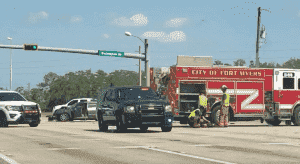
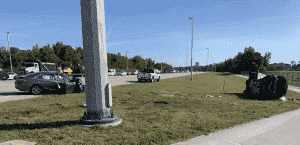
Law Offices of Anidjar and Levine helps protect an injured person’s claim by preserving crash evidence, reviewing police and medical records, and managing communications with insurers.
Counsel can investigate liability through witness statements, scene photos, vehicle data, and expert analysis.
An attorney also evaluates damages, including medical costs, lost income, and pain and suffering, while meeting deadlines and negotiating for fair compensation.
The sections below explain the process, rights, and practical steps in greater detail. For more information, visit Fort Myers Car Accident Lawyer.
Main Takeaways
- Move to safety, call police, and get prompt medical care after an I-10 crash to protect your health and document injuries.
- Preserve evidence by photographing vehicle damage, skid marks, road conditions, debris, signs, and visible injuries at the scene.
- Exchange insurance and contact details, gather witness information, and keep the police report number and all official correspondence.
- A Fort Myers car accident injury lawyer can investigate liability using reports, camera footage, black box data, vehicle inspections, and expert reconstruction.
- Your claim may seek medical costs, lost wages, reduced earning capacity, property damage, pain and suffering, and long-term care needs.


How We Can Help With Your Fort Myers I-10 Car Accident Injury Claim
After a collision on I-10 near Fort Myers, injured motorists often face immediate medical concerns, insurance complications, and uncertainty about how to protect a valid claim. In that setting, legal counsel can provide orderly support that allows families to focus on recovery and caring for others who depend on them.
A firm assisting with a Fort Myers I-10 car accident injury claim may gather records, preserve evidence, and communicate with insurers to reduce avoidable mistakes. It may obtain witness statements, review photographs, and coordinate documentation that shows the full impact of the crash. Counsel may also help clients address medical liens, organize billing matters, and monitor deadlines to ensure important rights are not lost.
When settlement discussions begin, the firm can present a clear demand supported by treatment history and financial losses. If disputes continue, it can prepare the matter for litigation while remaining committed to respectful service, accountability, and practical guidance throughout each stage.
OUR CONSULTATIONSARE FREE
START YOUR FREE CASE REVIEW

Understanding Fort Myers I-10 Car Accident Injury Cases
Legal support often begins with practical claim management, but a sound recovery strategy also requires a clear understanding of how Fort Myers I-10 car accident injury cases are evaluated. These matters are typically assessed based on evidence of injury severity, medical needs, lost income, property damage, and the extent to which another party failed to exercise reasonable care under changing roadway conditions.
On I-10, case analysis often considers I-10 traffic patterns, vehicle speeds, visibility, and the effects of rural-urban shifts on driver expectations and response times. Documentation from law enforcement, medical providers, witnesses, and roadway data can help clarify what occurred and how the injury affected daily responsibilities.
Comparative fault rules may also influence the value of a claim when more than one party shares responsibility. A careful review allows injured people and their families to make informed decisions, protect resources, and remain focused on serving their households and communities during recovery.
Common Causes of Fort Myers I-10 Car Accidents
Several recurring factors contribute to collisions on I-10 in the Fort Myers area, often turning routine travel into serious incidents. Distracted driving, speeding and aggressive behavior, impaired driving, and unsafe lane changes are among the most common causes identified in these cases. A clear understanding of these hazards helps frame how liability may arise and why certain crashes result in significant injuries.
Distracted Driving Hazards
Driver distraction remains one of the most persistent hazards on I-10 near Fort Myers, where high speeds and dense traffic leave little room for error. Even brief lapses in attention can place families, workers, and travelers at serious risk. Common forms include phone distraction, in-vehicle technology use, eating, grooming, and conversations that divert visual or mental focus from the roadway.
Pedestrian distraction also creates danger near ramps, rest areas, and service stations, where drivers may fail to notice people crossing or walking near traffic. Responsible drivers serve the community best by remaining alert, scanning conditions ahead, and keeping both hands available for safe control. When distraction causes a collision, injured individuals may face medical costs, lost income, and long recoveries that affect entire households and the broader community alike.
Speeding And Aggressive Driving
Along I-10 near Fort Myers, speeding and aggressive driving frequently contribute to serious collisions by reducing reaction time and increasing the force of impact. Drivers who exceed posted limits often struggle to respond to slowing traffic, lane changes, or roadway debris, placing nearby motorists in danger.
Aggressive behaviors such as unsafe weaving, abrupt braking, and ignoring following-distance rules further heighten the risk of crashes. Tailgating risks are especially severe on busy stretches of interstate, where one sudden stop can trigger a chain-reaction collision involving multiple vehicles.
In some cases, road rage exacerbates poor judgment and leads to reckless actions that endanger families, workers, and travelers alike. Recognizing these patterns helps communities promote safer driving habits, support injured individuals, and encourage accountability when preventable harm occurs on this roadway.
Impaired Driver Collisions
Impaired driving remains a major contributor to serious crashes on I-10, affecting Fort Myers motorists, passengers, and commercial traffic. These collisions often occur when judgment, reaction time, and attention are reduced, leaving little opportunity to prevent harm. Alcohol involvement continues to play a significant role, especially during late-night travel and holiday periods.
In other cases, prescription impairment contributes to dangerous driving when medications affect coordination, alertness, or decision-making. Even lawful prescriptions can create risks if warnings are ignored or dosages are misunderstood.
Because impaired drivers place many others in danger, community awareness, responsible choices, and prompt legal guidance can help protect injured people and support accountability. Careful investigation may identify signs of intoxication, toxicology evidence, witness observations, and other facts that clarify how the collision occurred.
Unsafe Lane Changes
Unsafe lane changes present another common source of serious I-10 collisions affecting Fort Myers travelers. These crashes often occur when drivers shift lanes without checking their blind spots, signaling in time, or allowing adequate distance from surrounding vehicles. On crowded interstate segments, abrupt movement can force nearby motorists to brake, swerve, or lose control, placing families, workers, and visitors at unnecessary risk.
A service-minded review of these accidents often highlights preventable conduct, including impatience, distraction, and failure to respect merge safety principles. Commercial trucks and passenger vehicles alike may create danger when they overtake, weave through traffic, or enter another lane without clear space. Careful driving practices, consistent mirror use, and deliberate signaling support safer travel for everyone sharing I-10 through the Fort Myers area each day.


Legal Rights of Fort Myers I-10 Car Accident Injury Victims
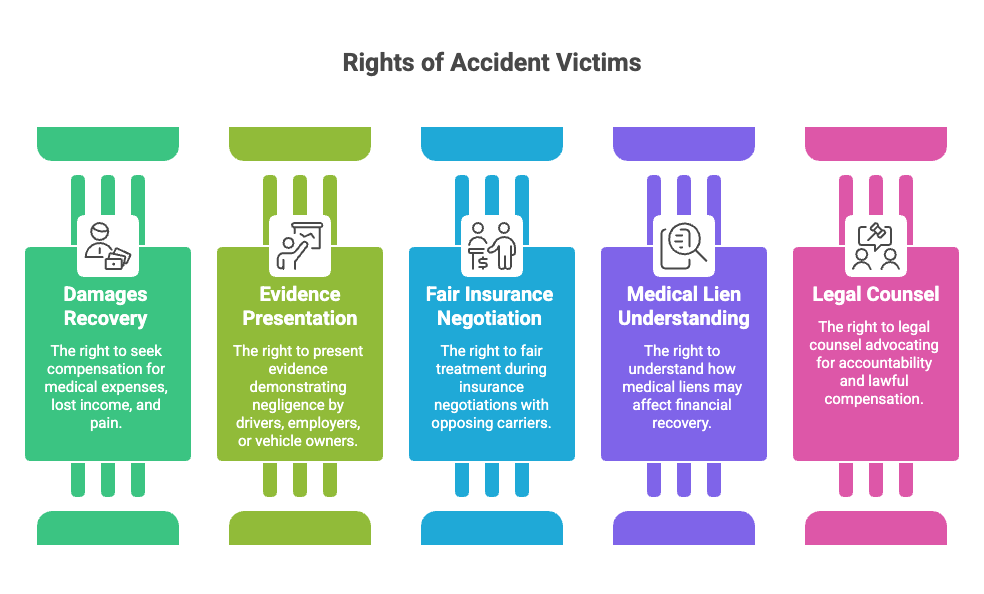
Accountability begins with understanding the legal protections available after a collision on I-10 near Fort Myers. Florida law generally allows injured victims to pursue compensation when another party’s negligence caused harm. These rights can support physical recovery, financial stability, and continued service to family and community.
A careful legal evaluation often clarifies available claims, deadlines, and obligations related to insurance negotiations and Medical liens.
- The right to seek damages for medical expenses, lost income, and pain.
- The right to present evidence showing negligence by drivers, employers, or vehicle owners.
- The right to fair treatment during Insurance negotiation with opposing carriers.
- The right to understand how Medical liens may affect any financial recovery.
- The right to legal counsel advocating for accountability and lawful compensation.
When catastrophic injuries occur, additional claims may involve future care costs, diminished earning capacity, and long-term support needs. Wrongful death rights may also protect surviving relatives under Florida law.
Steps to Take After a Fort Myers I-10 Car Accident Injury
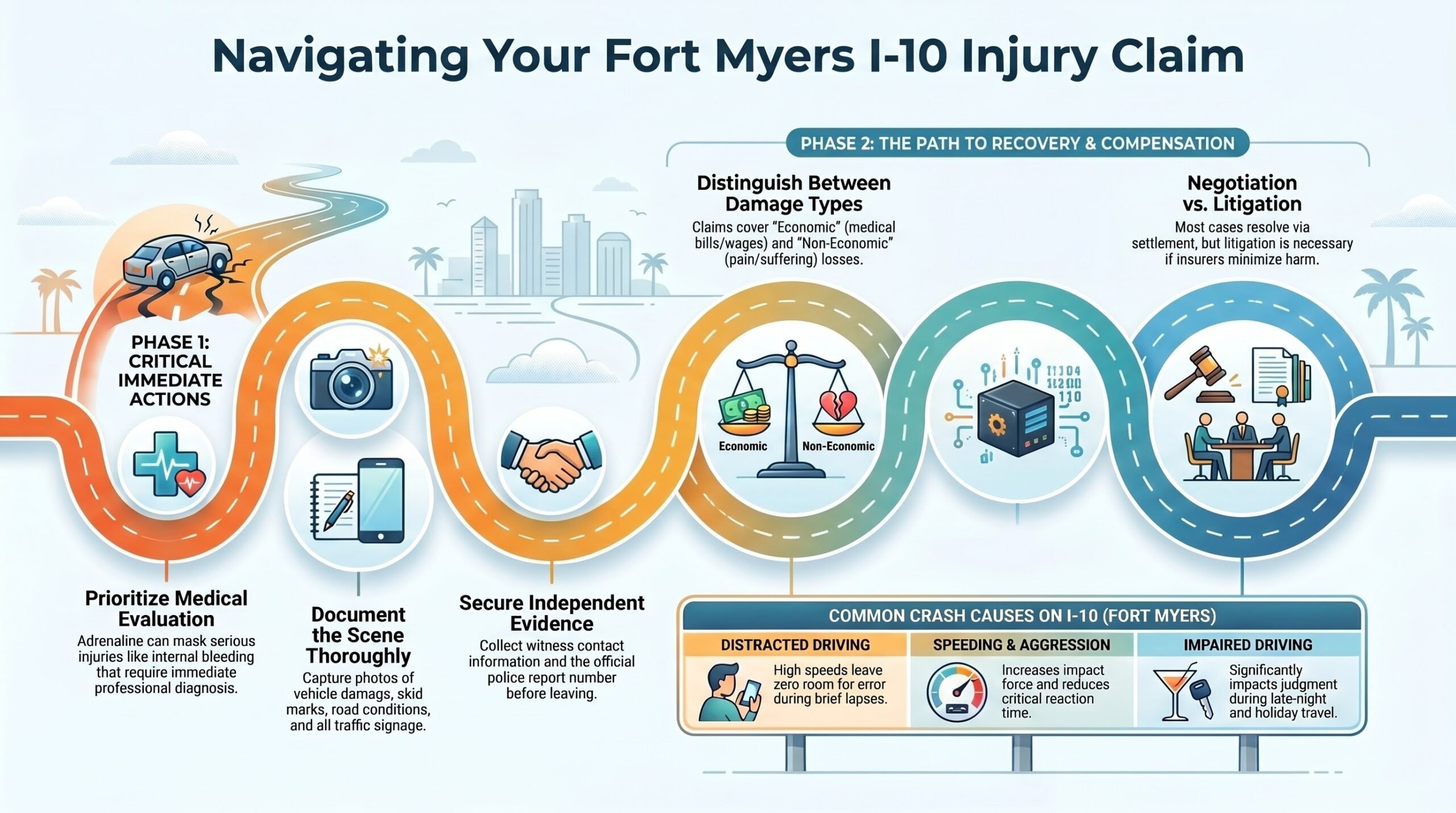
After a Fort Myers I-10 car accident injury, prompt medical attention is often the first priority, as it protects both health and any future injury claim. It is also important to document the accident carefully by preserving photographs, gathering contact information, and retaining any official reports. Once these immediate steps are addressed, contacting a lawyer can help ensure that legal rights are protected and that the next steps are handled appropriately.
Seek Medical Attention
In the moments following a collision on I-10, prompt medical attention should be treated as a priority, even when injuries appear minor. Adrenaline can conceal pain, and some serious conditions, including internal bleeding or head trauma, may not show immediate symptoms.
Evaluation by emergency responders, an urgent care provider, or a physician helps protect health and supports responsible decision-making for everyone affected. Timely examination creates injury documentation that identifies the extent of harm and establishes a clear treatment record.
It also allows medical professionals to recommend medications, imaging, physical therapy, or consultant referrals as needed. Consistent follow-up care is equally important, because missed appointments or delayed treatment can worsen recovery outcomes. Seeking care without delay reflects sound judgment and a commitment to mend, stability, and future well-being after a serious crash.
Document The Accident
Once medical needs have been addressed, careful documentation of the I-10 collision should begin as soon as conditions allow. Clear photographs of vehicle damage, skid marks, roadway conditions, traffic signs, debris, and visible injuries can provide important context. Names, contact information, and witness statements should also be gathered respectfully, since independent observations may clarify how the crash occurred.
A thorough record should include the date, time, location, weather, lane positions, and any statements made by involved drivers. If a police officer responds, the report number should be noted for future reference. Personal notes created soon after the event may help preserve details that fade quickly. This focus on evidence preservation serves not only the injured person, but also the broader goal of accountability, safety, and fair treatment for everyone affected.
Contact A Lawyer
Consulting a lawyer promptly can help protect legal rights, preserve vital evidence, and reduce the risk of costly mistakes when dealing with insurers or other parties involved in a Fort Myers I-10 collision. Early legal guidance may help an injured person understand obligations, deadlines, and options for seeking fair compensation while continuing to care for family and community responsibilities.
An attorney can review police reports, medical records, witness accounts, and insurance correspondence, then advise on the next appropriate steps. Many firms offer a free consultation, allowing individuals to ask informed questions before making decisions. It is also prudent to discuss fee structures, communication practices, and case timelines at the outset. Careful legal counsel often strengthens a claim and promotes a more orderly, service-minded recovery process after a serious roadway injury.
How a Fort Myers I-10 Car Accident Injury Lawyer Can Help You
After a collision on I-10, a Fort Myers car accident injury lawyer can provide vital guidance by evaluating the facts of the case, identifying potentially liable parties, and protecting the injured person from insurance tactics designed to limit compensation. Counsel also helps preserve evidence, review emergency procedures, and examine vehicle inspection records when a mechanical failure may have contributed to the crash.
After an I-10 collision, skilled legal counsel helps uncover liability, preserve evidence, and guard against insurer tactics that reduce compensation.
A lawyer may assist by:
- Investigating police reports, witness statements, and scene evidence
- Communicating with insurers and opposing counsel on the client’s behalf
- Calculating medical costs, lost income, and other recoverable damages
- Consulting experts to clarify fault, roadway conditions, or vehicle defects
- Preparing a strong claim for settlement negotiations or court if needed
This support allows injured people and their families to focus on recovery and caring for others. Through careful case management and informed advocacy, legal counsel promotes accountability, seeks fair compensation, and helps clients make sound decisions during a difficult period after a serious highway accident.
Long-Term Effects of Fort Myers I-10 Car Accident Injuries
Fort Myers I-10 car accident injuries may produce consequences that extend well beyond the initial recovery period. Many individuals face chronic pain challenges, emotional trauma that affects daily functioning, and lasting mobility limitations that interfere with work and routine activities. These long-term effects often require continued medical care, rehabilitation, and careful evaluation of the injured person’s future needs.
Chronic Pain Challenges
Often, chronic pain becomes one of the most disruptive long-term effects of an I-10 car accident injury, persisting long after fractures, soft tissue damage, or spinal trauma appear to have mended. Ongoing discomfort may limit mobility, disturb sleep, and reduce a person’s ability to care for family, work faithfully, or participate in community service.
Effective pain management often requires coordinated medical care, physical therapy, medication oversight, and consistent follow-up. When symptoms interfere with job duties, Workplace accommodations may become necessary, including modified schedules, reduced lifting, ergonomic equipment, or reassigned tasks.
These adjustments can help injured individuals remain productive while protecting their recovery. Because chronic pain can fluctuate, careful documentation of symptoms, treatment needs, and functional limitations remains important when evaluating long-term support, legal claims, and future care planning needs.
Emotional Trauma Impact
In many cases, the emotional effects of an I-10 car accident can remain long after visible injuries have stabilized, affecting a person’s sense of safety, concentration, and daily functioning. Survivors may experience anxiety, sleep disruption, irritability, or post-traumatic stress that interferes with work, relationships, and community involvement. Some become withdrawn, while others struggle with fear when traveling or with distress triggered by ordinary sounds and traffic conditions.
Emotional numbness may also develop, limiting a person’s ability to feel connected, hopeful, or fully present with loved ones. These consequences often warrant careful attention because they can hinder recovery even when medical treatment has progressed. Compassionate support, counseling, and consistent documentation of symptoms may help individuals and families better understand the harm suffered and pursue resources that promote long-term stability and restoration.
Lasting Mobility Limitations
Beyond the psychological toll of a serious collision, lasting mobility limitations can alter nearly every part of daily life after an I-10 car accident in the Fort Myers area. Survivors may face reduced strength, chronic pain, impaired balance, or limited range of motion that affects walking, driving, bathing, and household tasks. These changes often require ongoing rehabilitation, Assistive devices, and consistent support from family members or caregivers.
In many cases, Home modifications become necessary, including ramps, widened doorways, grab bars, and safer bathroom layouts. Such adjustments can protect dignity while improving independence and reducing the risk of further injury. Long-term mobility loss may also affect employment, community involvement, and the ability to care for others. Careful legal and medical planning can help injured individuals secure resources for sustained recovery.
Proving Liability in Fort Myers I-10 Car Accident Injury Cases
Establishing liability in a Fort Myers I-10 car accident injury case requires clear evidence that another party owed a duty of care, breached that duty, and directly caused the resulting injuries. This process often begins with police reports, witness statements, medical records, and photographs from the scene, all of which help clarify how the collision occurred.
Additional proof may come from a Traffic camera recording, vehicle damage analysis, and data preserved in a Black box. These sources can reveal speed, braking, lane changes, and driver reaction times before impact. Attorneys may also work with accident reconstruction professionals who explain intricate facts in a way judges and juries can understand.
In cases involving commercial vehicles, maintenance logs, driver schedules, and employer policies may show broader negligence. Careful investigation serves injured people and their families by identifying responsible parties and supporting accountability. Strong documentation creates a reliable foundation for seeking justice after a serious I-10 collision in Fort Myers.
Dealing With Insurance Companies After a Fort Myers I-10 Car Accident Injury
Many injured motorists discover that dealing with insurance companies after a Fort Myers I-10 car accident can become difficult almost immediately. Adjusters may request recorded statements, broad medical authorizations, or quick settlements before the full extent of harm is understood. A careful, service-minded approach often requires preserving records, communicating accurately, and avoiding comments that may be misinterpreted.
Insurers generally focus on limiting financial exposure, even when policyholders expect fair assistance. For that reason, families and advocates often benefit from organized documentation of treatment, lost income, repair estimates, and other accident-related losses. Policy negotiation may involve reviewing coverage terms, exclusions, and valuation methods with close attention to detail.
Claim deadlines also matter, because missed notice requirements or paperwork dates can weaken an otherwise valid demand. When communication remains professional, timely, and well-supported, injured people are better positioned to protect their interests while continuing to prioritize recovery, stability, and the well-being of those who depend on them.
What to Expect During a Fort Myers I-10 Car Accident Injury Claim Process
A Fort Myers I-10 car accident injury claim typically begins with immediate post-crash actions, including medical evaluation, evidence preservation, and formal reporting of the incident. It then proceeds to the filing of the injury claim and an insurance investigation, during which liability, damages, and supporting documentation are closely reviewed. Depending on the insurer’s response and the strength of the evidence, the matter may conclude through settlement negotiations or continue into litigation.
Immediate Post-Crash Steps
In the moments immediately following a collision on I-10 near Fort Myers, the injured party can expect several pivotal steps to shape the foundation of a future injury claim. Safety remains the first concern. If conditions permit, the injured person should move to a safer location, call police, and request medical assistance for anyone in need.
They should exchange information with all involved drivers, including names, insurance details, vehicle descriptions, and contact information. If able, they should photograph injuries, vehicle damage, debris, skid marks, and road conditions.
Witness names and statements may also prove helpful. Prompt medical evaluation is often crucial, even when symptoms seem minor, because some injuries may not appear for some time. Throughout this process, calm, respectful conduct can protect everyone involved and support a clear, accurate record.
Filing Your Injury Claim
After emergency concerns have been addressed, the injury claim process usually begins with notice to the applicable insurance carriers and the collection of records that describe how the crash occurred and how the injuries affected the claimant. Medical reports, bills, wage information, and crash documentation are organized to present a clear account of losses and needs. Careful attention is given to filing deadlines and nuances of the statute because missed requirements can limit recovery.
A proper claim also identifies all potentially responsible parties and the available sources of coverage. Throughout this stage, accuracy matters, as even small omissions can lead to avoidable disputes later. Many injured people find value in professional guidance that keeps the process orderly, protects important rights, and supports a service-minded goal of securing resources needed for restoration, stability, and continued care.
Insurance Investigation Process
During the insurance investigation process, carriers typically examine the crash from several angles before assigning value to the claim. Adjusters often review police reports, photographs, medical records, witness statements, and repair estimates to compare injuries, property damage, and fault allegations. They may request recorded statements, inspect vehicles, and analyze roadway conditions, traffic patterns, and prior treatment history.
In more intricate losses, insurers sometimes use accident reconstruction experts, forensic accounting, and third-party subpoenas to clarify disputed facts or financial losses. Employment records, billing data, and surveillance footage may also be gathered. This stage can feel demanding, yet careful cooperation and organized documentation often help protect the integrity of the claim. A Fort Myers I-10 car accident lawyer commonly monitors these requests, addresses inconsistencies, and works to ensure the investigation remains fair, accurate, and focused.
Settlement Or Litigation Path
Once the insurer has gathered and assessed the available evidence, the claim typically moves toward either negotiated settlement or formal litigation. During settlement discussions, counsel may present medical records, proof of wage loss, and a liability analysis to encourage fair compensation without undue delay. Many claims resolve through direct negotiation, especially when fault and damages are reasonably clear.
If settlement efforts stall, a lawsuit may be filed to protect the injured person’s rights and preserve important deadlines. The litigation process can include written discovery, depositions, motion practice, and court hearings. Courts may also require mediation, and mediation benefits often include reduced expense, faster resolution, and opportunities for practical compromise.
However, some disputes proceed to jury trials when parties cannot agree on responsibility, damages, or future care needs. Careful preparation remains crucial at every stage.
Compensation for Fort Myers I-10 Car Accident Injury Damages
Accountability is a central concern in Fort Myers I-10 car accident claims, particularly when an injured person faces medical bills, lost income, and lasting physical limitations. Compensation may be pursued to restore stability, encourage responsible conduct, and support a family’s ability to continue serving others despite serious disruption.
A legal claim often seeks payment for treatment costs, rehabilitation needs, reduced earning capacity, property loss, and other accident-related consequences. Evidence such as medical records, employment documentation, expert analysis, and witness statements helps establish the full scope of harm. Injured parties are also expected to act reasonably in pursuing care and avoiding unnecessary financial hardship, a principle often described as loss mitigation.
In cases involving extreme misconduct, courts may also consider punitive damages, not as routine relief, but as a measure intended to punish reckless behavior and deter similar harm. Careful case preparation helps make certain that compensation requests are credible, complete, and grounded in the facts.
Economic vs Non-Economic Damages in Fort Myers I-10 Car Accident Cases
Fort Myers I-10 car accident claims often involve both economic damages, such as medical expenses, lost income, and property loss, and non-economic damages, including pain and suffering, emotional distress, and loss of enjoyment of life.
These categories serve different purposes: economic losses reflect measurable financial harm, while non-economic losses address the personal effects of an injury. The value of either type of damage typically depends on records, testimony, and other evidence that supports the extent of the claimant’s losses.
Economic Damage Categories
In car accident litigation, economic damages refer to the measurable financial losses caused by a crash, while non-economic damages address the harder-to-quantify personal effects, such as pain, suffering, and reduced quality of life. These losses usually include medical bills, rehabilitation expenses, Lost wages, reduced earning capacity, and Property damage. They may also cover transportation costs for treatment, household services made necessary by injury, and other documented out-of-pocket expenses.
Because these categories can be verified through records, invoices, repair estimates, and employment documentation, they often form the foundation of a claim. Careful calculation helps injured individuals and families pursue resources needed for recovery, stability, and responsible future planning. A thorough review of economic losses supports fair accountability and promotes practical assistance after a serious Fort Myers I-10 collision.
Non-Economic Loss Examples
Beyond documented financial losses, car accident claims may also include non-economic damages, which address the personal harm that does not appear on bills or wage records. These losses often reflect how an injury affects daily life, relationships, and the ability to care for others consistently and compassionately.
Examples include physical pain, ongoing discomfort, pain interruption during sleep or ordinary tasks, emotional distress, anxiety, depression, and mental anguish. A person may also experience loss of enjoyment when hobbies, family activities, worship, or community service become difficult or impossible.
In serious cases, non-economic harm may involve disfigurement, permanent limitations, or diminished companionship with a spouse. These damages recognize that an I-10 collision can affect dignity, independence, and quality of life, even when the harm cannot be measured through receipts alone after a devastating crash.
Proving Damage Value
Accuracy plays a central role in establishing the value of damages after an I-10 collision, because both economic and non-economic losses must be supported by credible evidence rather than estimates or assumptions. Medical bills, wage records, repair invoices, and a thorough damage appraisal often establish measurable financial harm with the precision needed.
Non-economic damages, including pain, emotional distress, and diminished quality of life, require testimony, treatment notes, and consistent documentation showing how daily functioning changed.
A careful evaluation also considers future losses, such as ongoing rehabilitation, reduced earning capacity, and long-term care needs. Lawyers, insurers, and experts may compare current records with professional projections to assign fair value.
When evidence is organized and reliable, it strengthens claims, promotes responsible advocacy, and helps injured people pursue compensation that reflects the full impact of the crash.
When a Fort Myers I-10 Car Accident Injury Case Goes to Trial vs Settlement
Uncertainty often defines the period after a crash on I-10, particularly when an injured person must decide whether a claim is more likely to be resolved through settlement or to proceed to trial. In many Fort Myers cases, settlement occurs when liability evidence is strong, medical records are clear, and insurers recognize meaningful Settlement leverage.
Trial becomes more likely when fault is disputed, injuries are challenged, or offered compensation fails to reflect long-term losses and the needs of those affected.
A careful evaluation usually weighs Jury dynamics, Verdict unpredictability, and the likely Trial timeline. Settlement can provide faster financial relief, reduced stress, and more privacy, which may help families focus on recovery and caring for others.
Trial, however, may be necessary when an insurer refuses accountability or minimizes serious harm. In either path, preparation matters. Thorough investigation, credible expert support, and disciplined negotiation often influence whether a case resolves efficiently or requires a courtroom decision by a civil jury.
The Statute of Limitations for Fort Myers I-10 Car Accident Injury Cases
After an I-10 collision in Fort Myers, the time allowed to file a car accident injury claim can become as important as the evidence supporting it. Florida law sets strict filing deadlines, and missing them may prevent an injured person from recovering compensation for medical care, lost income, and other accident-related losses.
In many cases, the statute of limitations begins on the date of the crash, yet each matter depends on its facts and procedural posture. Certain statutory exceptions may alter that period, including circumstances involving minors, delayed discovery issues, or claims against government entities. Because these rules can affect families already focused on recovering and helping one another, careful attention to dates, records, and notice requirements serves a practical and compassionate purpose.
Respecting the statute of limitations preserves the opportunity to seek accountability, support community well-being, and pursue resources that may aid recuperation and restore stability after a serious Fort Myers I-10 collision.
When to Contact a Fort Myers I-10 Car Accident Injury Lawyer
Recognizing the need for legal guidance early can materially affect the outcome of a Fort Myers I-10 car accident injury claim. Contact is often appropriate soon after the crash, especially when injuries require treatment, fault is disputed, or insurers request statements. Early legal involvement helps preserve important information and encourages careful, service-minded decisions that protect all affected parties.
A prompt consultation may also be advisable when medical records begin documenting ongoing symptoms, missed work, or recommended future care. Legal guidance can support timely collection of witness statements, photographs, repair estimates, and other evidence before details fade or records become harder to obtain. It is also prudent to seek counsel if settlement offers arrive quickly, if multiple vehicles are involved, or if a family is unsure how to proceed responsibly.
By acting without unnecessary delay, injured individuals and those assisting them can better organize information, meet deadlines, and pursue a course that reflects diligence, accountability, and care for community well-being.
Why You Need an Experienced Fort Myers I-10 Car Accident Injury Lawyer
In the context of a Fort Myers I-10 collision claim, experienced legal representation is often necessary because the issues affecting liability, medical damages, insurance coverage, and procedural deadlines can become more complex than they first appear.
Multi-vehicle crashes, commercial traffic, and disputed fault frequently require careful investigation and disciplined case development. Experienced representation helps preserve evidence, organize medical records, and present losses in a manner that supports a fair and lawful recovery.
Local know-how also matters in claims arising from Fort Myers roadway conditions and regional insurance practices. An attorney familiar with nearby courts, filing requirements, and common defense tactics can anticipate problems before they disrupt a case. This guidance often benefits injured people and the families who support them, especially when energy should remain focused on recuperating and daily responsibilities.
Strong legal advocacy promotes accountability, protects legal rights, and helps injured individuals pursue compensation that can restore stability and support continued care after a serious interstate collision.
How to Choose the Right Fort Myers I-10 Car Accident Injury Lawyer for Your Case
For anyone pursuing compensation after a serious interstate collision, choosing the right Fort Myers I-10 car accident injury lawyer can materially affect the strength and outcome of the claim. An informed selection often begins with reviewing the lawyer’s experience handling high-speed roadway crashes, catastrophic injuries, and insurance disputes involving intricate liability issues.
A careful evaluation should also include communication practices, responsiveness, and a clear explanation of client expectations throughout investigation, negotiation, and possible litigation. Individuals seeking counsel that values service to others may benefit from choosing an attorney who demonstrates respect, patience, and consistent attention to each client’s needs.
It is also prudent to ask about case strategy, available resources, and whether the lawyer has trial experience if settlement efforts fail. Finally, reviewing fee structures in advance can help prevent misunderstandings and support a transparent professional relationship. Selecting counsel with skill, integrity, and compassion can provide meaningful guidance during a difficult period for injured families.
About The Law Offices of Anidjar & Levine
Client-focused representation defines The Law Offices of Anidjar & Levine’s approach to motor vehicle injury claims arising from serious interstate collisions.
The firm serves injured people and families with disciplined advocacy, responsive communication, and practical guidance after disruptive crashes involving commercial trucks, passenger vehicles, and other roadway hazards.
Its firm history reflects sustained work on behalf of accident victims throughout Florida, with attention to case preparation, evidence review, and insurance negotiations.
The attorneys and staff emphasize accessibility, helping clients understand their legal options while pursuing compensation for medical costs, lost income, property damage, and other losses resulting from I-10 collisions.
The office is also recognized through client testimonials that describe professionalism, attentiveness, and consistent follow-through during demanding periods.
Those accounts support the firm’s reputation for dependable service and organized representation.
For people seeking to protect others in their household and community, the firm presents a structured, service-oriented model grounded in accountability, clarity, and respect under pressure.
Frequently Asked Questions
Can I Recover Damages if I Was Partially at Fault?
Yes, a person may recover damages even when partially at fault, depending on the state’s comparative negligence rules. Under this framework, liability is apportioned according to each party’s share of fault, allowing proportionate recovery rather than a complete bar to compensation. For those seeking to serve and protect others, understanding these principles supports fair accountability. An attorney can assess evidence, explain fault allocation, and determine whether recovery remains available under applicable law.
Will My Immigration Status Affect My Car Accident Injury Claim?
Immigration status does not automatically prevent recovery in a car accident injury claim. Courts and insurers generally focus on liability, damages, and available evidence, rather than on immigration consequences unrelated to the crash. However, questions about identity, employment, or proof of residency may arise during the process. Careful legal guidance helps protect rights, limit unnecessary disclosure, and ensure the claim is presented accurately, respectfully, and in the injured person’s best interests.
Can I Change Lawyers During My Fort Myers Accident Case?
Yes, a person may change counsel during a Fort Myers accident case, including by switching attorneys when representation no longer serves the client’s interests. The decision should be made carefully, with attention to case timing, fees, and transfer of records. Florida rules generally allow this change, though court approval may be needed in active litigation. Clear communication helps protect the claim and supports a more effective path toward recovery.
Are Car Accident Settlements Taxable in Florida?
Car accident settlements in Florida are often not taxable when they compensate for physical injuries or medical expenses. However, taxable settlements may include punitive damages, interest, or amounts tied to lost wages in certain situations. Proper settlement exclusions depend on how the recovery is structured and documented. A careful review by qualified tax and legal professionals helps injured individuals protect their resources, comply with reporting requirements, and continue to serve their families responsibly.
What if the At-Fault Driver Was Uninsured or Underinsured?
If the at-fault driver was uninsured or underinsured, recovery may still be available through uninsured motorist coverage under the injured person’s own policy. That coverage can help pay medical costs, lost income, and other damages when the other driver lacks sufficient insurance. If losses exceed policy limits, additional avenues may be evaluated, including claims against other responsible parties. Careful review of all available coverage helps protect the injured person’s financial stability.
—————————
A Fort Myers I-10 car accident injury claim often involves medical, legal, and insurance issues that demand careful attention.
Prompt action, clear documentation, and a sound understanding of applicable rights can materially affect the outcome.
With experienced legal guidance, injured individuals may be better positioned to pursue fair compensation for their losses.
A Fort Myers Car Accident Lawyer from Law Offices of Anidjar and Levine provides representation focused on protecting clients’ interests and addressing the challenges that commonly arise after a serious highway collision.