
A Kendall property claim storm and weather damage lawyer can help owners document losses, review policy requirements, and respond to delayed, denied, or undervalued insurance claims. The Law Offices of Anidjar and Levine may examine inspection findings, repair estimates, weather records, exclusions, and deadlines to assess available options. Coverage and potential remedies depend on the policy, evidence, facts, and applicable law, and no particular result is guaranteed. For other legal matters, see Kendall Personal Injury Lawyer. The following sections explain common storm hazards, claim procedures, and considerations for choosing legal assistance.
Main Takeaways
- A Kendall storm-damage lawyer can review your property insurance policy, claim evidence, exclusions, limits, and filing deadlines.
- Counsel can help document wind, hail, flooding, lightning, or other storm damage and distinguish it from preexisting conditions.
- If your insurer delays, underpays, or denies a claim, a lawyer can request explanations and assess available review options.
- Preserve dated photos, inspection reports, repair estimates, receipts, damaged materials, weather records, and insurer correspondence.
- Coverage and legal options depend on the policy, evidence, facts, and applicable law; no outcome is guaranteed.
How We Can Help With Your Kendall Property Claim Storm & Weather Damage Injury Claim
After a storm or other severe weather damages a property, an experienced attorney can help the owner pursue a claim and address disputes with the insurer. Counsel can review the policy, document reported losses, and explain the steps needed to present a complete claim. Careful Policy interpretation can clarify which repairs may qualify for payment and what evidence the insurer may require. An attorney can also assess Coverage exclusions and explain how specific policy language may apply to the reported damage.
When an insurer delays, undervalues, or denies a claim, legal guidance can help the property owner respond with organized records and a clear account of the loss. Counsel may communicate with the insurer, evaluate proposed settlements, and identify unresolved issues that warrant further action. This support allows owners to focus on restoring safe, usable spaces for their households, employees, tenants, or neighbors. By approaching each matter with diligence and respect, an attorney can help protect the owner’s interests while supporting a fair review of the claim.
Understanding Kendall Property Claim Storm & Weather Damage Injury Cases


Understanding a Kendall property claim involving storm or weather damage begins with identifying how the event affected the property and what the insurance policy covers. A careful review of the policy helps clarify covered losses, applicable limits, and the documentation required to support a benefits request. Policy exclusions may restrict coverage for certain conditions, while endorsements or other provisions may affect how a loss is assessed. The policyholder’s account, photographs, repair estimates, and inspection findings can help establish the extent and timing of damage. Records should be preserved and submitted in an organized manner so the insurer can evaluate the claim accurately. Claim deadlines are also important; policies and applicable rules may impose time limits for notice, proof of loss, or legal action. Missing a deadline can affect available options. A qualified professional can explain relevant terms, identify unanswered questions, and help property owners pursue a fair review while protecting resources families and communities need.
Don’t Wait. Call Our Florida Personal Injury Lawyers Now!
Common Causes of Kendall Property Claim Storm & Weather Damage
OUR CONSULTATIONSARE FREE
START YOUR FREE CASE REVIEW

Storms can damage Kendall properties through high winds that tear roofing, break windows, and displace exterior materials. Hail may dent or puncture surfaces, while flooding and water intrusion can affect interiors and structural components. Lightning strikes and related power surges may also damage electrical systems and connected equipment.
Wind Damage
High winds can damage Kendall properties by lifting shingles, breaking windows, tearing away siding, and driving rain into exposed areas. Windborne debris impact may puncture roofing, crack glass, or damage exterior equipment, allowing further water intrusion. Roof uplift damage can loosen or displace shingles and other roofing materials, sometimes exposing underlayment and structural components. Even when damage is not immediately visible, displaced materials or compromised seals may lead to leaks and interior deterioration during later rainfall. Property owners can document affected areas, protect occupants from hazards, and arrange a professional inspection after a storm. Clear photographs, repair records, and timely notice to the insurer can help establish the scope and cause of loss. A careful assessment supports a fair claim and helps preserve the property for residents and the wider community.
Hail Damage


Hail can damage Kendall properties when falling ice strikes roofs, windows, siding, and exterior equipment. Hailstone formation begins when water droplets freeze in storm clouds and grow as strong air currents carry them through layers of moisture. Their size, density, and speed influence the force of each strike. A roof shingle impact may crack or dislodge protective granules, bruise underlying materials, or expose vulnerable areas to later deterioration. Metal vents, gutters, screens, and air-conditioning components can also become dented or impaired. Damage may be hard to spot from the ground, especially when marks are subtle or scattered across a roof. Property owners who document visible conditions and obtain a qualified inspection can help establish the extent and timing of storm-related harm. Prompt, accurate records also support fair claim review and informed repair decisions.
Flooding And Water Intrusion
Flooding and water intrusion can affect Kendall properties when heavy rainfall overwhelms drainage systems, waterways rise, or storm damage creates openings in roofs, windows, and exterior walls. Water may also enter through foundations, damaged seals, or backed-up drains, soaking flooring, insulation, and personal belongings. Even limited intrusion can weaken building materials and create conditions for mold growth if moisture is not addressed promptly. Where floodwater carries sewage contamination, affected areas may pose additional health concerns and require careful cleanup by qualified professionals. Property owners can help protect occupants and support a thorough claim by documenting visible damage, preserving receipts, and taking reasonable steps to prevent further loss. Professional assessment can identify concealed moisture and guide necessary repairs, including Mold remediation, while accurate records help establish the scope and cause of covered storm damage.
Lightning And Power Surges
Beyond water intrusion, lightning can damage Kendall properties by striking a building, nearby trees, or utility equipment and sending electrical surges through wiring and connected devices. A direct strike may ignite roofing or framing, while an indirect surge can destroy appliances, computers, security systems, and heating or cooling equipment. Damage may also affect concealed wiring, creating hazards that are not immediately visible. Property owners should arrange prompt inspections by qualified professionals and preserve damaged components, photographs, repair estimates, and other records for a potential insurance claim. Practical surge protection, including properly installed whole-building devices and point-of-use protectors, can reduce exposure but cannot eliminate every risk. During severe storms, lightning safety requires staying indoors, avoiding wired electronics and plumbing, and following official alerts. Careful documentation helps insurers assess losses and supports timely repairs that protect occupants and neighboring households.
Legal Rights of Kendall Property Claim Storm & Weather Damage Injury Victims
Kendall property owners affected by storms or severe weather may have legal rights when damage results from an insurer’s failure to honor valid policy obligations or another party’s negligence. Coverage depends on policy language, evidence, and applicable law. Owners may request written explanations for claim decisions and challenge unsupported denials or underpayments through available review procedures.
- Review the policy’s coverage limits, deadlines, and Policy exclusions.
- Preserve photographs, repair estimates, receipts, and insurer correspondence.
- Consider appraisal clauses when a covered loss involves disagreement over its value.
- Seek qualified legal guidance about potential claims and required filing deadlines.
A careful review can help owners understand whether an insurer followed its contractual duties and whether another responsible party may owe compensation. Timely documentation and clear communication can support a fair evaluation, while legal counsel may explain options without promising a particular result. Where property damage affects a household’s safety or stability, informed advocacy can help protect the owner’s interests and support responsible resolution. Rights and remedies vary by policy, facts, and governing law.
Why Do Kendall Property Claim Storm & Weather Damage Injuries Happen?
Storm and severe weather damage claims often arise when high winds, heavy rain, hail, or falling trees damage roofs, windows, and other parts of a property. Injuries may occur when weakened structures collapse, broken glass scatters, or water enters areas where people live or work. Slippery floors, exposed electrical systems, and unstable debris can create additional hazards for residents, visitors, and emergency personnel.
Some losses result from aging roofs, inadequate drainage, poorly secured outdoor equipment, or deferred maintenance that leaves a property more vulnerable to severe conditions. Construction defects and inadequate protective features may also contribute to damage when a storm places unusual stress on a building. In commercial and residential settings, limited warnings or blocked exits can increase the risk of injury during an emergency.
Storm preparedness and building resilience can reduce these hazards through sound construction, routine maintenance, and accessible safety measures. When preventable weaknesses contribute to harm, their role may become relevant in evaluating a property claim.
What Should You Do After a Kendall Property Claim Storm & Weather Damage Injury?
After a storm or weather-related injury, the affected person should seek prompt medical care and follow the treating professional’s recommendations. They should document property damage with dated photographs, videos, and records of related expenses. The insurer should be notified promptly, and copies of relevant evidence should be retained for the claim.
Seek Medical Care
Anyone injured by storm or severe weather damage at a Kendall property should seek prompt medical care, even if the injury initially appears minor. A qualified health care professional can assess visible and hidden injuries, recommend appropriate treatment, and identify symptoms that may worsen over time. This is especially important after falls, impacts from debris, or exposure to unsafe conditions.
The injured person should explain how the incident occurred and describe all symptoms, including pain, dizziness, or breathing difficulties. Following medical advice supports recovery and helps prevent complications. Follow-up appointments allow providers to monitor progress and adjust treatment when needed. Medication adherence is also important; prescriptions should be taken as directed, and side-effect concerns should be raised with a provider. Prompt, consistent care can protect the injured person’s health and support a safe return to daily responsibilities.
Document the Damage
Once immediate medical needs have been addressed, the injured person should document the property damage and conditions that contributed to the incident. Photographs and video can preserve the scene, including damaged structures, fallen branches, standing water, and hazards such as loose materials or exposed wiring. Take images from several angles when it is safe to do so, without disturbing evidence or risking further injury. A written Damage inventory should identify affected belongings, describe visible damage, and record when and where each item was found. Receipts, repair estimates, and ownership records can support those descriptions. If conditions threaten additional loss, reasonable temporary protection, such as covering a damaged roof, may be appropriate. The injured person should keep records of these steps and retain damaged items when safely possible.
Contact Your Insurer
Prompt notice to the insurer can help preserve a storm or weather damage claim and clarify the steps required under the policy. The property owner should report the loss through the insurer’s designated channel and provide the date, location, and a concise description of the damage. Photographs, repair estimates, and records of temporary measures can help support the initial notice, while copies of all communications should be retained.
Policy deadlines may govern when notice, proof of loss, and supporting documents must be submitted. The owner should review the policy and ask the insurer to explain required forms, inspection procedures, and coverage limits. Accurate answers and organized records can help adjusters assess the claim efficiently. If the insurer delays, disputes coverage, or requests unclear documentation, a qualified property-claim attorney may explain available options.
Critical Evidence in a Kendall Property Claim Storm & Weather Damage Injury Case
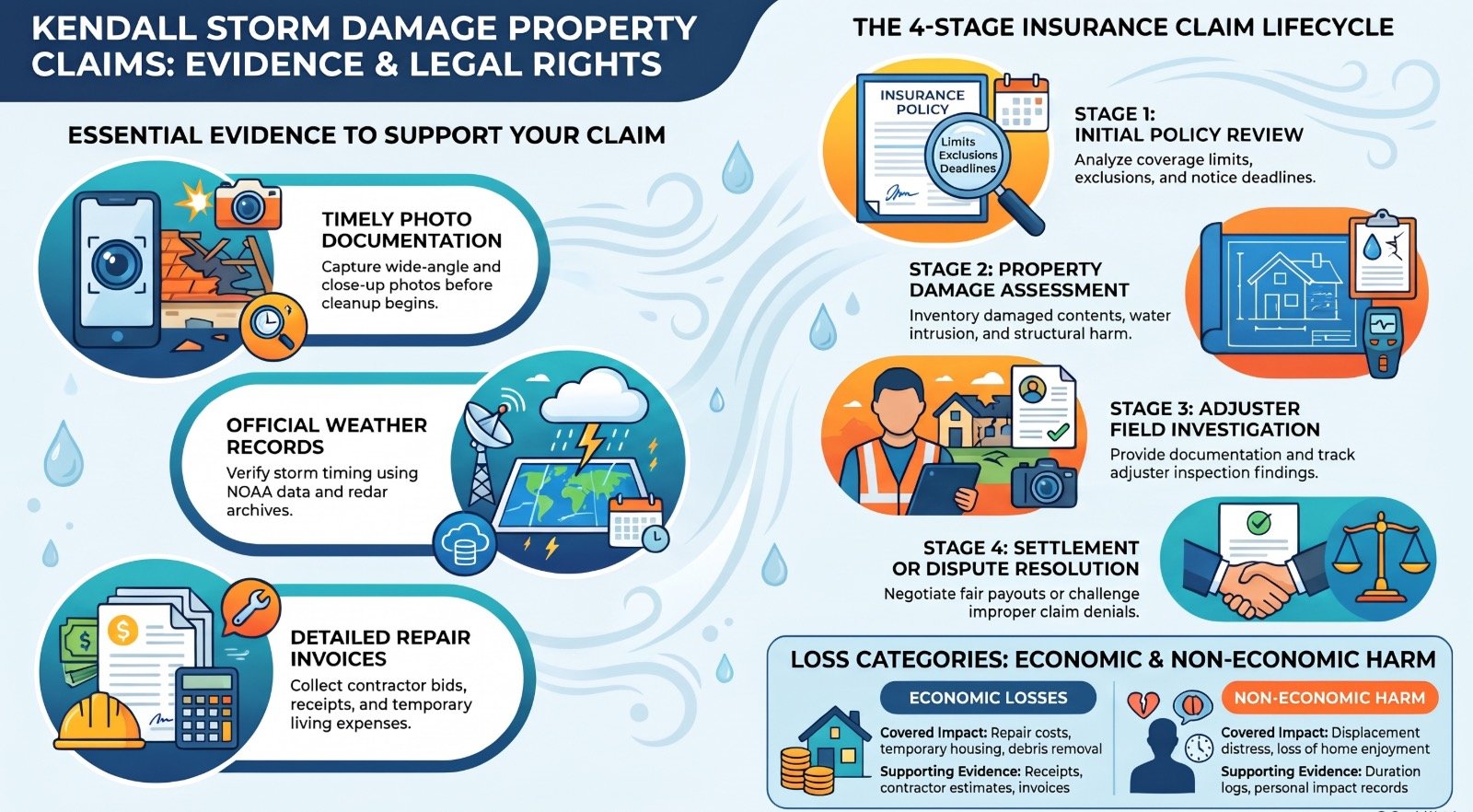
A well-supported storm damage claim depends on evidence that documents the property’s condition, the weather event, and the insurer’s response. Organized records can help establish the extent of the loss and clarify whether the proposed settlement reflects necessary repairs.
Crucial evidence may include:
- Photographs showing damage and affected areas
- Weather records confirming storm conditions and timing
- Repair estimates detailing the scope and cost of work
- Claim communications with the insurer, including letters and emails
Damage Photographs
How clearly can photographs show the extent of storm damage to a Kendall property? Well-framed images can document damaged roofing, broken windows, water intrusion, and affected belongings, helping explain the loss to insurers and other reviewers. Photographs taken soon after discovery may preserve visible conditions before cleanup or repairs alter the scene. A careful record should include both wide views that establish location and close-ups that reveal specific damage. Image metadata, such as capture dates and times, can help establish when images were created, while original files may retain useful details. Organizing photos by room, structure, and damage type makes the evidence easier to review and share. Property owners should photograph safely, avoid disturbing hazards, and retain unedited copies. Clear, respectful documentation can support a fair assessment and help those affected pursue appropriate recovery.
Weather Records
Weather records can help establish the conditions surrounding damage to a Kendall property. Official reports may show when a storm reached the area, how severe it was, and whether wind, hail, or heavy rainfall occurred near the reported loss. NOAA storm archives can provide historical observations and warnings that help place an event within a reliable timeline. Radar history records may offer additional detail about a storm’s movement and intensity, including conditions affecting a specific neighborhood. These sources can be compared with photographs, witness accounts, and the date damage was discovered. Accurate records may help clarify whether reported conditions match the claimed cause and support a fair review. Preserving relevant data promptly is important because some online records may be difficult to retrieve later. Careful documentation can help property owners and their representatives present clear, credible information.
Repair Estimates
When storm damage affects a Kendall property, repair estimates can document the work needed to restore the structure and the expected cost. A detailed estimate should identify damaged areas, necessary materials, labor, and any code-related work required for safe repairs. Contractor bids can provide useful comparisons, particularly when the scope and quality of proposed work are clearly stated. Photographs, inspection findings, and weather records may help support the conditions reflected in each estimate. Property owners serving tenants, customers, or community members may need timely, appropriate repairs to protect occupants and prevent further deterioration. Estimates should distinguish urgent stabilization from full restoration and note potential hidden damage that requires further inspection. Depreciation calculations may affect payment amounts, so review the basis for those figures alongside repair costs and documented property conditions.
Claim Communications
Claim communications can provide vital evidence in a Kendall storm or weather damage case by showing what was reported, when it was reported, and how the insurer responded. A clear Communication log can help establish the sequence of events, including claim submissions, inspection appointments, requests for records, and coverage decisions. It should note dates, participants, and the substance of each exchange while distinguishing confirmed facts from recollections.
Written correspondence, such as emails, letters, and claim portal messages, may document reported damage, repair concerns, and insurer instructions. Keeping complete copies helps prevent misunderstandings and supports consistent follow-up. Policyholders serving their households or communities can preserve these records as part of responsible claim management. Communications should remain factual, timely, and courteous, particularly when describing new damage or correcting an inaccurate claim summary. Organized records may help reviewers evaluate whether the claim was handled fairly and in accordance with the policy.
Long-Term Effects of Kendall Property Claim Storm & Weather Damage Injuries
Storm and weather-related injuries may produce chronic pain that persists long after the initial incident. Lasting mobility issues can interfere with daily activities and require continuing treatment or rehabilitation. These effects may also lead to ongoing medical expenses that should be considered in evaluating a property claim.
Chronic Pain
Chronic pain can persist long after a storm-related injury, limiting a property owner’s ability to work, sleep, and manage daily activities. Damage from falling debris, water exposure, or emergency repairs may cause lasting discomfort that requires continued medical attention. A qualified provider can assess the injury, document symptoms, and recommend appropriate Pain management, which may include medication, therapy, or other supervised care. Consistent records help clarify how pain affects routine responsibilities and whether treatment remains necessary. Sleep disruption is also common, as discomfort may make it difficult to rest and recover. Fatigue can then affect concentration, patience, and the ability to support family members or contribute at work. When evaluating a property claim, clear evidence of ongoing symptoms and related expenses can help establish the injury’s long-term impact.
Lasting Mobility Issues
Persistent pain may also interfere with walking, balance, or other routine movements after a storm-related injury. Damage to muscles, joints, or nerves can limit a person’s ability to stand, climb stairs, or move safely through the home and community. These restrictions may affect work, family responsibilities, and the ability to assist others with everyday tasks. Gait rehabilitation can help improve walking patterns, strength, and stability through structured exercises suited to the individual’s condition. Assistive devices, such as canes or walkers, may provide additional support and reduce the risk of falls. Recovery can vary, and some people continue to experience limited mobility despite treatment. Documenting these effects, including changes in daily activities and functional abilities, can help establish how an injury has altered a person’s independence and routine over time.
Ongoing Medical Expenses
Some injuries caused by storm-related property damage require medical care long after the initial incident. A person may need follow-up appointments, rehabilitation, medication, or expert services to address lasting effects. These costs can continue even after emergency treatment ends, creating financial pressure for households and limiting resources available to support others.
Medical bill forecasting helps estimate future expenses by reviewing treatment recommendations, expected recovery periods, and likely care needs. Accurate records of invoices, prescriptions, travel, and missed work can support this assessment. Treatment cost planning may also identify services that require ongoing payment and help distinguish predictable expenses from uncertain needs.
When a property claim involves injury, documentation of continuing care can clarify the full financial impact. A careful review of medical evidence and projected costs may help ensure long-term needs are considered when evaluating the claim.
Don’t Wait. Call Our Florida Personal Injury Lawyers Now!
Proving Liability in Kendall Property Claim Storm & Weather Damage Injury Cases
Proving liability in a Kendall storm or weather damage claim requires evidence connecting the loss to a covered event and showing that the insurer failed to meet its obligations under the policy. Property owners can preserve dated photographs, repair estimates, inspection reports, weather records, and receipts to document the damage and its timing. A clear record helps distinguish storm-related harm from preexisting conditions or later deterioration. The policy’s coverage terms, notice requirements, and deadlines should also be reviewed carefully. Policy exclusions may limit recovery, but their application depends on the wording and facts of the loss. If the insurer disputes the amount of damage, appraisal clauses may provide a process for resolving valuation disagreements, though they do not determine every coverage issue. Organized evidence supports a fair assessment and helps property owners pursue repairs that protect occupants, employees, and neighbors. When liability remains contested, qualified legal guidance can clarify available remedies and preserve important claim rights without delaying necessary safety measures.
Dealing With Insurance Companies After a Kendall Property Claim Storm & Weather Damage Injury
After documenting a Kendall storm or weather damage claim, property owners must communicate carefully with the insurer to protect their interests and keep the claim moving. They should provide accurate information, retain copies of correspondence, and answer reasonable requests without speculating about the cause or extent of damage. Clear, consistent communication can help prevent misunderstandings and support a fair review.
Policy interpretation matters when coverage depends on exclusions, deductibles, deadlines, or specific proof requirements. Owners should review the policy language and ask the insurer to explain unclear decisions in writing. If a requested statement or settlement release could affect recovery, independent legal guidance may help clarify its consequences before the owner agrees.
Insurers have obligations to handle claims honestly and within applicable requirements. Unreasonable delays, inadequate investigations, or unsupported denials may raise concerns about Bad faith, though each situation depends on its facts and governing law. Careful records and measured communication can help owners advocate for their households while preserving resources needed for repairs and community responsibilities.
What to Expect During a Kendall Property Claim Storm & Weather Damage Injury Claim Process
A storm or weather damage claim generally begins with an initial review of the policy, reported losses, and available evidence. The property owner may need to document damage while the insurer investigates the cause and extent of the loss. The process may conclude with a settlement or continue through a dispute if the parties disagree about coverage or payment.
Initial Claim Review
During the initial review, a Kendall property claim storm and weather damage lawyer examines the policy, damage records, and circumstances of the loss to identify coverage issues and gaps in evidence. A careful Policy review clarifies which storm-related events may qualify for benefits, what exclusions may apply, and whether notice requirements or deadlines affect the claim. The lawyer also assesses coverage limits, deductibles, and any special provisions that could influence the available recovery. This early assessment helps the property owner understand the insurer’s obligations and make informed decisions while the claim is pending. Counsel may identify questions that require clarification from the insurer or additional information from the policyholder. By addressing these issues promptly, the review can support a fair, orderly process and help confirm that the claim is presented accurately without overlooking relevant policy terms.
Damage Documentation
Accurate damage documentation helps establish the scope and cause of storm-related property loss. During this stage, the property owner or representative records visible damage to roofs, walls, flooring, and personal belongings. Dated photographs and videos can preserve conditions before repairs alter the evidence. A written inventory should identify affected items, their approximate age, and replacement or repair needs.
Moisture mapping can help locate water intrusion and assess its spread, including areas not readily visible. Material assessment considers the condition of building components and whether drying, repair, or replacement may be appropriate. Organize receipts for emergency services, temporary repairs, and damaged possessions with the records. Clear, consistent documentation supports an accurate account of losses, helps the claim process move efficiently, and allows property owners to prioritize safe steps that protect occupants and limit further damage.
Insurer Investigation
After a storm-related property claim is filed, the insurer typically investigates the reported damage to assess its cause, scope, and coverage under the policy. The process may include an Adjuster inspection of the home, outbuildings, and affected belongings. The adjuster may photograph damage, take measurements, review repair estimates, and ask questions about when and how the loss occurred. Policyholders can help maintain an accurate record by providing relevant photographs, receipts, maintenance records, and other requested information. The insurer may also consult contractors or experts when damage requires further assessment. A coverage analysis compares the investigation findings with policy language, limits, exclusions, and applicable conditions. Clear communication and organized documentation can help the insurer understand the property’s condition and the storm’s impact. The investigation informs the claim’s evaluation.
Settlement Or Dispute
Once the insurer completes its investigation, it may approve the claim, offer a partial payment, or deny coverage. A property owner should review the written decision, policy provisions, damage estimates, and any stated exclusions before accepting an offer. Settlement offers may not account for all covered repairs, temporary housing, or other documented losses. If the amount appears inadequate, supporting records, contractor estimates, photographs, and expert assessments can help explain the disagreement. The owner may submit a written appeal and request clarification from the adjuster. Dispute resolution may involve further negotiation, appraisal, mediation, or, when necessary, litigation, depending on the policy and applicable law. Timely responses and organized documentation can protect the claim while helping the owner restore the property and maintain safe conditions for family, tenants, and neighbors.
Compensation for Kendall Property Claim Storm & Weather Damage Injury Damages
Compensation for storm and weather damage in Kendall depends on the policy terms, the cause and extent of the loss, and the evidence supporting the claim. A covered claim may provide funds to repair or rebuild damaged structures, including roofs, walls, and other insured parts of a property. The amount available can depend on whether the policy pays replacement cost or actual cash value, as well as applicable limits, deductibles, and exclusions.
When a home cannot be safely occupied, Additional living expenses may help pay reasonable costs for temporary housing and other necessary increases in daily expenses, subject to policy conditions and limits. Contents replacement may address personal belongings damaged or destroyed by a covered event, with payment determined by the policy’s valuation method and supporting records.
Photographs, repair estimates, receipts, inventories, and timely notice can help substantiate the loss. Careful review of the settlement offer can identify overlooked damage or disputed items. A qualified property claim lawyer may help clarify coverage and pursue benefits available under the policy.
Economic vs. Non-Economic Damages in Kendall Property Claim Storm & Weather Damage Cases
In Kendall storm and weather damage claims, economic losses may include repair costs, damaged belongings, and other documented expenses. Non-economic harm can reflect disruption, distress, or loss of use, depending on the claim and applicable law. Clear records and supporting evidence help establish the nature and extent of each claimed damage.
Economic Losses
When a storm or severe weather damages property in Kendall, the resulting losses may include both economic damages, which have a measurable financial value, and non-economic harms, such as disruption to daily life. Economic losses can include reasonable repair costs, replacement of damaged belongings, and expenses required to prevent further harm. If a residence becomes unsafe, Temporary housing costs may be recoverable when supported by receipts and consistent with policy terms. Businesses may document lost revenue caused by property damage, interrupted operations, or restricted access, using financial records to show the amount and duration of the loss. Other expenses, such as debris removal, emergency repairs, and equipment rental, may also be relevant. Organized records, photographs, estimates, invoices, and correspondence can help establish the connection between the weather event and each claimed expense, supporting a thorough and fair review.
Non-Economic Harm
Beyond measurable expenses, storm and weather damage may cause non-economic harm by disrupting a household’s routines, privacy, and sense of security. Unlike repair costs or temporary housing expenses, these effects concern personal well-being rather than direct financial loss. Emotional Distress may arise when residents face prolonged displacement, uncertainty about their home’s condition, or repeated interruptions to daily life. Such strain can affect sleep, concentration, and family relationships, even after urgent repairs begin. Loss Enjoyment may also occur when damaged rooms, outdoor areas, or shared spaces can no longer be used as intended. For households that value caring for relatives, neighbors, or others, these disruptions may limit ordinary acts of hospitality and support. Non-economic harm is distinct from economic loss, though both may follow the same storm event.
Proving Your Damages
A well-supported property claim distinguishes economic losses from non-economic harm and connects each claimed loss to the storm or weather event. Economic damages may include repair costs, temporary housing, debris removal, and damaged belongings. A detailed Contents inventory should identify each item, its condition, age, purchase records, and replacement cost. Photographs, receipts, contractor estimates, and inspection reports can help establish both the damage and its cause. Salvage valuation should account for items that retain usable value, rather than treating them as wholly lost. Non-economic harm may involve disruption, loss of use, or distress caused by unsafe or uninhabitable conditions. Records showing the duration and practical effects of displacement can support these claims. Clear documentation helps insurers and decision-makers assess losses fairly and directs resources toward restoring affected households and communities.
When a Kendall Property Claim Storm & Weather Damage Injury Case Goes to Trial vs Settlement
For a Kendall property claim involving storm or weather damage, settlement may resolve the dispute without a trial, but litigation can become necessary when the parties disagree about coverage, causation, or the value of the loss. Settlement discussions allow both sides to assess evidence, negotiate payment, and avoid the time and expense of a courtroom proceeding. A fair resolution can help property owners restore damaged homes or businesses and return to serving their families, employees, and communities.
If negotiations fail, a trial gives each side an opportunity to present its position to a judge or jury. Trial testimony may come from the property owner, contractors, engineers, or other witnesses who can explain the damage and repair needs. Documents, photographs, and expert opinions may also support the claim. After the evidence is presented, jury deliberations determine disputed factual issues when a jury hears the case. The outcome is less predictable than a negotiated agreement, so the choice depends on the evidence, priorities, and willingness to accept risk.
Florida Laws That May Affect Your Kendall Property Claim Storm & Weather Damage Case
Florida law governs how storm and weather damage claims are reported, evaluated, and disputed, and its requirements can affect a Kendall property owner’s recovery. Policy terms and state rules shape the evidence insurers may request, the response they must provide, and the options available when coverage is contested. Understanding these requirements can help property owners protect homes and businesses that support families, employees, and the wider community.
- Prompt notice: Policies may require timely reporting and reasonable steps to prevent further damage.
- Proof of loss: An insurer may request forms, photographs, repair estimates, or other supporting records.
- Claim handling: Florida law sets standards for insurer investigations and communications, subject to applicable requirements.
- Dispute procedures: Policyholders should review Florida policy deadlines and appraisal clause rights before choosing a response.
Careful documentation can clarify the cause and extent of damage, while preserving relevant records supports a more reliable review. Because policy language and claim circumstances differ, legal guidance may help property owners understand their obligations and available remedies.
The Statute of Limitations for Kendall Property Claim Storm & Weather Damage Injury Cases
Beyond reporting and claim-handling requirements, deadlines may determine whether a Kendall property owner can pursue a storm or weather damage dispute in court. Florida law sets time limits for filing lawsuits, and the applicable period can depend on the claim’s legal basis, the loss date, and policy terms. Missing a deadline may bar recovery, even when the damage is documented and the owner has acted responsibly.
A property insurance dispute is not necessarily governed by the same deadline as a negligence claim. Contract actions, statutory claims, and disputes involving later-discovered damage may raise different timing questions. Policy appraisal can address disagreements about the amount of covered loss, but it does not automatically extend a court-filing deadline. Owners should distinguish appraisal procedures from litigation deadlines and preserve relevant notices, estimates, and correspondence.
Deadline exceptions may apply in limited circumstances, but they are fact-specific and should not be assumed. Prompt review of the policy, claim history, and governing law can help protect the owner’s ability to seek a fair resolution and maintain resources for the community.
Don’t Wait. Call Our Florida Personal Injury Lawyers Now!
How a Kendall Property Claim Storm & Weather Damage Lawyer Can Help You
When storm or weather damage leads to a disputed property claim, a Kendall property claim lawyer can help the owner evaluate coverage, organize evidence, and address insurer requests. The lawyer may review policy language, explain Policy interpretation, and assess whether coverage exclusions apply to the reported loss. This guidance can help property owners pursue a fair claim while preserving resources needed to maintain safe homes and serve their families and communities.
A Kendall property claim lawyer can help assess coverage, organize evidence, and respond to disputes after storm damage.
A lawyer may also assist by:
- Reviewing the policy, endorsements, and insurer correspondence for relevant terms.
- Organizing photographs, repair estimates, inspection reports, and other claim records.
- Comparing the insurer’s damage assessment with available evidence and contractor findings.
- Preparing clear responses to information requests and explaining disputed claim decisions.
When to Contact a Kendall Property Claim Storm & Weather Damage Lawyer
A property owner should consider contacting a Kendall property claim storm and weather damage lawyer if an insurer delays a decision, disputes the cause or extent of damage, or offers less than the documented repair costs. Prompt guidance may also be appropriate when a claim is denied without a clear explanation or when repeated requests for information leave the property owner uncertain about the next steps.
Policy deadlines can affect notice, documentation, and appeal rights, so a property owner should review the policy and insurer correspondence without delay. An attorney can assess whether a deadline is approaching and explain what records may help clarify the claim. This may include photographs, repair estimates, inspection reports, and communications with the insurer.
A lawyer may also review coverage exclusions cited by the insurer and compare them with the policy language and reported damage. Early consultation can help property owners make informed decisions while preserving resources needed to restore homes, businesses, and community spaces.
Why You Need an Experienced Kendall Property Claim Storm & Weather Damage Lawyer
An experienced Kendall property claim storm and weather damage lawyer can help a property owner assess whether an insurer’s decision aligns with the policy and the available evidence. After severe weather, that review can clarify what repairs may be covered and whether the claim was evaluated fairly.
Policy interpretation matters because insurance contracts can contain detailed conditions, limits, and notice requirements. A lawyer can explain how those terms apply to documented damage, identify missing information, and communicate with the insurer on the owner’s behalf. This support may be especially valuable when a delayed or reduced payment affects a household, nonprofit, or business that serves the community.
Coverage exclusions also require careful review. An insurer may rely on an exclusion to deny part of a claim, but its application depends on the policy language and facts. Experienced legal guidance can help organize records, address disputed findings, and pursue a reasoned resolution while allowing the property owner to focus on recovery and responsibilities to others.
How to Choose the Right Kendall Property Claim Storm & Weather Damage Lawyer for Your Case
Selecting the right Kendall property claim storm and weather damage lawyer requires more than reviewing advertisements or fee estimates. A careful evaluation helps property owners find counsel prepared to protect their interests while treating their concerns with respect. The lawyer’s experience with storm-related insurance disputes, claim documentation, and negotiations can indicate whether the practice fits the case.
Review Lawyer Credentials, including Florida licensure, relevant training, and disciplinary history. Prospective clients can ask how the lawyer handles disputed damage assessments, delayed decisions, and requests for additional evidence. Clear answers about communication practices and case responsibilities help establish reasonable expectations.
Fee Structures should be explained in writing, including any contingency arrangement, case expenses, and circumstances that could affect payment. Comparing terms is useful, but the lowest estimate alone may not reflect the scope of representation. A thoughtful consultation should allow the property owner to describe the damage, understand possible next steps, and assess whether the lawyer listens carefully. The final choice should rest on relevant experience, transparent terms, and professional judgment.
About The Law Offices of Anidjar & Levine
When storm or weather damage leads to an insurance dispute, the Law Offices of Anidjar & Levine represents property owners seeking guidance through the claims process. The firm helps clients understand policy terms, document losses, communicate with insurers, and evaluate options when a claim is delayed, underpaid, or denied. Its attorneys assess each matter based on the property damage, insurance coverage, and circumstances surrounding the loss.
Firm history provides context for the firm’s approach to representing individuals and families facing difficult legal issues. The attorneys explain procedures and help clients make informed decisions while pursuing outcomes supported by the facts and applicable law. Their role may include gathering records, reviewing insurer decisions, and negotiating or litigating disputes when appropriate.
Community involvement also reflects the firm’s connection to the people it serves. For Kendall property owners, local knowledge and clear communication can help make the claims process more manageable. Prospective clients can contact the firm to discuss their circumstances and potential next steps.

Frequently Asked Questions
Does Homeowners Insurance Cover Mold Discovered After Storm Damage in Kendall?
Homeowners insurance may cover mold discovered after storm damage in Kendall when the mold resulted from a covered event, such as wind-driven rain, and the homeowner took reasonable steps to limit further damage. Coverage depends on the policy’s terms, reporting deadlines, and coverage exclusions, including limits for mold remediation. Insurers may deny claims involving neglected leaks or delayed repairs. A prompt inspection, photographs, and professional documentation can help establish the cause and support a fair claim review.
Can I File a Claim if My Roof Was Damaged by Wind-Driven Rain?
A homeowner may file a claim when wind-driven rain damages a roof, but coverage depends on the policy and the cause of the loss. Insurers commonly distinguish rain entering through storm-created openings from water intrusion caused by wear, poor maintenance, or defective construction. The homeowner should promptly document the damage, protect the property from further harm, and notify the insurer. A qualified professional can assess the Roof Leak and review applicable coverage terms.
Will Filing a Storm Damage Claim Affect My Homeowners Insurance Premium?
Filing a storm damage claim may affect a homeowner’s premium, but an increase is not automatic. Insurers consider policy terms, claim history, state rules, and whether the loss resulted from a widespread weather event. Premium increase risks may include higher renewal costs or losing claim-free discounts, depending on the carrier’s practices. The homeowner should review the policy, ask the insurer how claims are evaluated, and weigh potential costs against covered repair needs before deciding.
Can I Hire a Public Adjuster to Inspect My Storm-Damaged Property?
Yes, a property owner can generally hire a licensed public adjuster to inspect storm-damaged property and help document losses for an insurance claim. Public adjuster inspection rights may depend on state law, licensing rules, and the insurer’s access requirements. The owner should review adjuster fee agreements carefully, confirm the fee structure in writing, and understand any cancellation terms before signing. The adjuster represents the owner, not the insurance company, and cannot guarantee claim approval.
What Should I Do if My Property Is Uninhabitable After a Storm?
If a storm leaves a property uninhabitable, occupants should leave promptly and contact emergency services if anyone faces immediate danger. They should request a qualified safety inspection checklist covering structural damage, utilities, and contamination before reentry. Temporary housing options may include insurer-provided additional living expense benefits, local disaster assistance, or community shelters. Residents should document damage from a safe location, notify their insurer, retain receipts, and follow official guidance while repairs are assessed and arranged.
—————————
Storm and weather damage claims can involve complicated policy terms, disputed losses, and strict filing deadlines. Property owners in Kendall may benefit from promptly documenting damage, preserving repair records, and carefully reviewing insurer decisions. When coverage is delayed, denied, or undervalued, a lawyer can assess the claim, explain available options, and represent the owner’s interests. The Law Offices of Anidjar and Levine can review the circumstances and help property owners determine appropriate next steps under Florida law. For other legal matters, learn more about a Kendall Personal Injury Lawyer.