
The Law Offices of Anidjar and Levine can evaluate whether excessive speed, a red-light violation, or another unsafe driving act contributed to a collision. The review may include police reports, witness accounts, photographs, vehicle damage, and medical records. Injured people may pursue compensation for eligible medical expenses, lost income, pain, and other damages, subject to Florida law, insurance coverage, and comparative fault. A Tampa Personal Injury Lawyer can explain how evidence, deadlines, and legal guidance may affect a claim.
Main Takeaways
- A Tampa car accident lawyer can assess whether speeding or another traffic violation contributed to your crash and injuries.
- Speeding can reduce reaction time, increase stopping distance, and make collisions more severe, even below the posted limit.
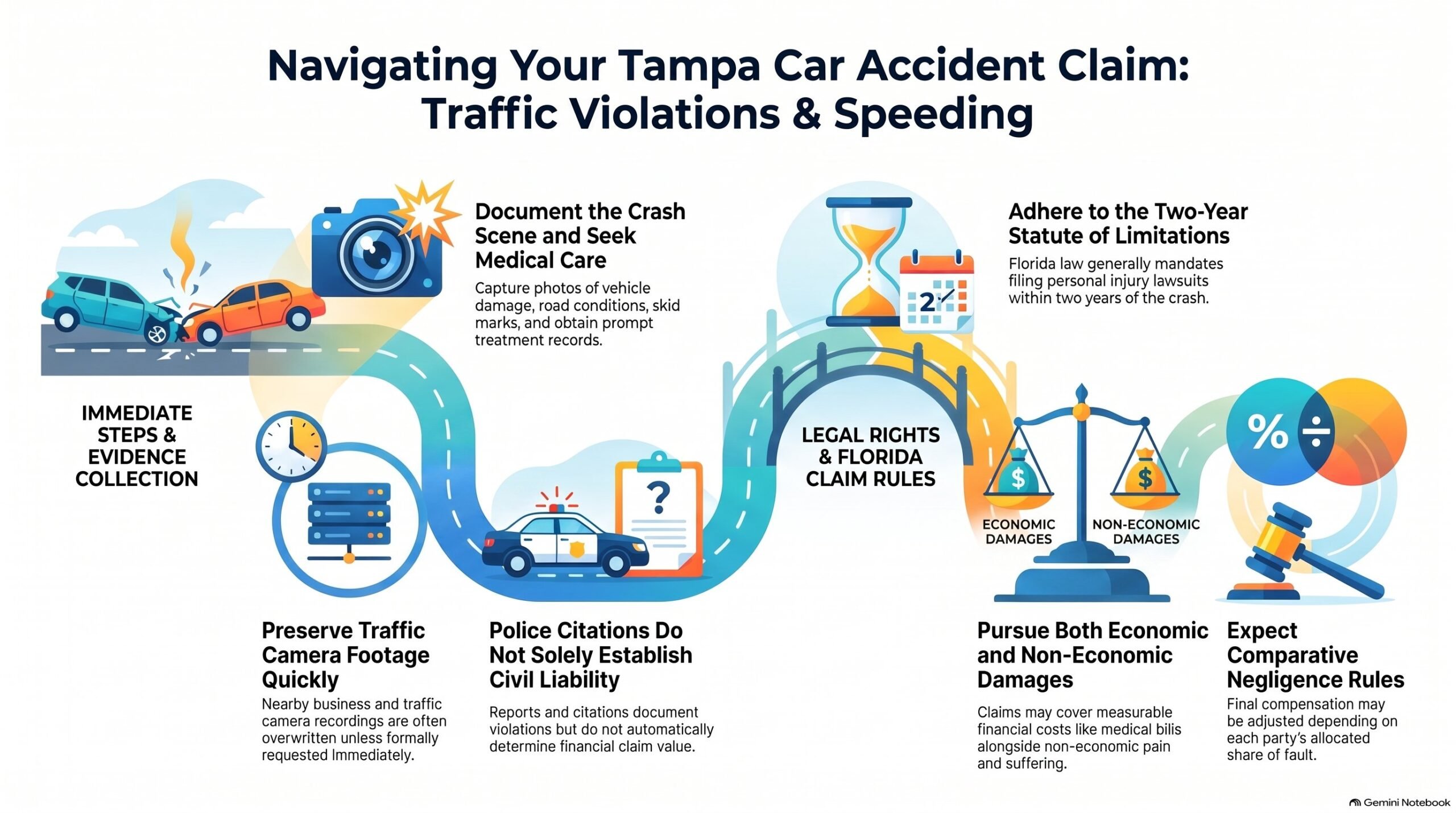
- Citations and police reports may help explain a crash, but they do not alone establish civil liability or claim value.
- Preserve evidence promptly, including photos, witness details, medical records, and nearby camera footage that could be overwritten.
- Florida claims may involve comparative fault and legal deadlines; discuss fees, strategy, and settlement options before hiring counsel.


How We Can Help With Your Tampa Car Accident Traffic Violations & Speeding Injury Claim
After a Tampa crash involving speeding or another traffic violation, injured people may face medical expenses, lost income, and disputes over who caused the collision. A legal team can help by organizing records, communicating with insurers, and explaining practical options while the injured person focuses on recovery. This support can reduce avoidable delays and help ensure important information is preserved.
Counsel may review medical bills, employment records, repair estimates, and correspondence to assess documented losses. The team can also explain the Claim Timeline, including expected steps, deadlines, and factors that may affect progress. Regular updates help clients make informed decisions and understand what information remains outstanding.
Before representation begins, the Fee Structure should be explained clearly, including how legal fees and case expenses are handled. A service-focused practice should answer questions respectfully, protect confidential information, and provide realistic guidance rather than promises. With organized preparation and consistent communication, injured people can pursue fair consideration of their claim while attending to treatment, family responsibilities, and recovery needs.
OUR CONSULTATIONSARE FREE
START YOUR FREE CASE REVIEW

Understanding Tampa Car Accident Traffic Violations & Speeding Injury Cases
When a Tampa collision involves speeding or another traffic violation, determining how the conduct contributed to the crash is central to understanding an injury claim. A citation may document an alleged violation, but it does not by itself establish who caused the collision or determine the value of an injured person’s losses. Evidence such as crash reports, witness accounts, photographs, and medical records may help clarify the events and their effects.
Florida’s traffic laws can affect both injury claims and a driver’s record. Tampa traffic citation consequences may include fines, court requirements, or other penalties, depending on the alleged offense and circumstances. Under the Florida driver point system, certain convictions add points to a license, and accumulated points can lead to suspension. These administrative consequences are distinct from civil responsibility for injuries.
A careful review can help injured people understand available options and support fair outcomes. Clear, accurate information also helps families and community members make informed decisions as they pursue accountability and recovery.
Common Causes of Tampa Car Accident Traffic Violations & Speeding
Common causes of Tampa traffic violations and speeding-related crashes include excessive speed and reckless driving, which can reduce a driver’s ability to respond safely to changing conditions. Distracted driving, failure to yield, and running red lights also create serious collision risks at intersections and along busy roadways. Identifying the conduct involved can help clarify how a crash occurred and which traffic rules may have been violated.
Speeding and Reckless Driving
Speeding and reckless driving are leading causes of serious car accidents in Tampa, where heavy traffic and changing road conditions can leave little room for error. Drivers who exceed posted limits have less time to respond to sudden stops, merging vehicles, or hazards near intersections. Florida speeding thresholds vary by location and circumstances, and violations may bring fines, points, or other consequences. Driving at a speed unsafe for current conditions can create danger even when a driver remains within the posted limit.
Reckless driving involves a willful or wanton disregard for the safety of people or property. Aggressive actions, unsafe passing, and excessive speed may support such a charge when the required facts are established. Reckless driving penalties can include fines, license consequences, and possible jail time. Safer choices protect passengers, other road users, and Tampa residents who depend on predictable traffic behavior.
Distracted Driving
Distracted driving occurs when a driver’s attention shifts from the road to a phone, navigation system, passengers, or another activity. In Tampa traffic, even a brief lapse can prevent a driver from noticing changing conditions, slowing vehicles, or hazards ahead. These Distracted Driving Risks include delayed reactions, missed signals, and loss of vehicle control, increasing the likelihood of a collision and resulting injuries. Texting, adjusting music, eating, and reaching for objects can also divert attention, even when a driver’s eyes remain on the road. Phone Use Laws restrict certain phone activities while driving, and violations may carry legal consequences. Drivers who understand these rules and limit distractions help protect passengers, other motorists, cyclists, and pedestrians. After a crash, evidence of distraction may be relevant when determining whether a traffic violation contributed to the incident.
Failure to Yield
When drivers fail to yield the right of way, they can create sudden hazards at Tampa intersections, crosswalks, and highway entrances. These incidents may occur when motorists overlook pedestrians, misjudge another vehicle’s distance, or enter a roadway without checking for approaching traffic. Yield sign violations can also lead to collisions when a driver proceeds despite another road user having priority. Understanding right-of-way rules helps motorists make safer decisions and reduces risks to passengers, cyclists, pedestrians, and other drivers. Failure to yield may result in a citation and can affect how responsibility is assessed after a crash. A careful review of the circumstances, including signs, road conditions, and witness accounts, can clarify what happened. Drivers who prioritize others’ safety help protect Tampa’s shared roads.
Running Red Lights
Running a red light can cause severe collisions at Tampa intersections, particularly when a driver enters after the signal changes and crosses the path of vehicles with the right of way. These crashes may involve turning vehicles, pedestrians, cyclists, or people lawfully traveling through the intersection. Common contributing factors include distraction, speeding, impaired driving, and misjudging signal timing. Drivers may also accelerate to beat a changing light, leaving little time to stop safely. Red light cameras can record certain violations and may provide evidence about a vehicle’s entry into an intersection. However, camera records alone may not establish every detail of a collision, so investigators may review signal records, witness accounts, and physical evidence. Careful attention to traffic signals helps protect all road users and supports safer travel throughout Tampa.
Don’t Wait. Call Our Florida Personal Injury Lawyers Now!


Legal Rights of Tampa Car Accident Traffic Violations & Speeding Injury Victims
Tampa car accident victims injured by speeding or other traffic violations may have the right to seek compensation from the driver whose negligence caused the crash. Florida law allows injured people to pursue damages for documented losses, subject to applicable deadlines and insurance rules. A careful review of the facts can help clarify available options and protect the interests of those affected.
Key rights and considerations may include:
- Compensation: A claim may address medical expenses, lost income, pain, and other legally recognized losses.
- Evidence review: Police reports, witness accounts, photographs, and treatment records can help establish what happened and support a claim.
- Insurance communication: Victims may seek guidance before providing recorded statements or accepting a settlement that could undervalue their losses.
- Privacy and support: Respect victim privacy throughout the process. Community resources, including medical providers and support services, may assist with recovery and practical needs.
Legal guidance can explain deadlines, preserve relevant information, and help victims make informed decisions while pursuing fair treatment. Each claim depends on its specific evidence and circumstances.
Why Do Tampa Car Accident Traffic Violations & Speeding Injuries Happen?
Understanding why traffic violations lead to serious crashes can help explain how liability may arise. In Tampa, speeding, tailgating, unsafe lane changes, and running red lights can leave drivers too little time to respond to changing traffic conditions. Higher speeds also increase stopping distances and impact force, making severe injuries more likely in a collision.
Distraction, fatigue, impairment, and failure to yield can further compromise judgment and vehicle control. These behaviors may endanger passengers, pedestrians, cyclists, and other motorists who depend on predictable driving. However, not every crash results from a driver’s conduct alone. Road design hazards, including obscured signs, poor lighting, or confusing intersections, can contribute to dangerous conditions. Vehicle maintenance defects, such as worn brakes or damaged tires, may also affect a vehicle’s ability to stop or navigate safely.
Identifying the circumstances behind a collision can clarify how preventable choices or conditions contributed to harm and inform an assessment of responsibility.
What Should You Do After a Tampa Car Accident Involving Traffic Violations & Speeding?
After a Tampa crash involving a traffic violation or speeding, injured people should first check for injuries and call 911 if needed. They should document the scene, vehicle damage, and relevant details while preserving available evidence. Contacting a lawyer can help clarify legal options and protect their interests.
Check for Injuries
Check for injuries immediately, but do not move anyone with a head, neck, or back injury unless there is immediate danger, such as fire. After a Tampa collision, a calm response can help protect everyone at the scene. Drivers should assess immediate safety by checking for hazards, including traffic, smoke, or leaking fuel, while keeping themselves and others away from danger. They should ask whether anyone needs help and look for visible bleeding, difficulty breathing, confusion, or severe pain. Some injuries may not be obvious at first, so treat each person with care and monitor them for changes. If anyone is injured or appears unwell, call 911 and provide the dispatcher with the location and known symptoms. Follow emergency personnel’s instructions and avoid giving injured people food, drink, or medication.
Document the Crash
Once immediate safety and medical needs have been addressed, documenting the crash can help preserve an accurate account of a Tampa collision involving an alleged traffic violation or speeding. If it is safe, those involved can record the date, time, location, weather, road conditions, and direction of travel. Photo documentation may capture vehicle damage, skid marks, traffic signals, signs, debris, and the surrounding roadway before conditions change. Take images from several angles without entering traffic or disturbing evidence. Scene sketching can show vehicle positions, travel lanes, points of impact, and nearby landmarks, with measurements or estimates clearly identified. You can also note witness names and contact details, along with the responding officer’s information and report number. Accurate, neutral records may help clarify events and support a reliable account for everyone affected.
Contact a Lawyer
When should an injured person contact a lawyer after a Tampa crash involving alleged speeding or another traffic violation? A person may seek legal guidance promptly, especially when injuries require treatment, fault is disputed, or an insurer requests a statement or settlement. Early advice can help preserve evidence, identify witnesses, and clarify deadlines without interfering with medical care.
A lawyer can review crash reports, photographs, medical records, and insurance communications to assess potential claims. The injured person should provide accurate information and avoid speculation about fault. Before choosing counsel, the person can ask about relevant experience, case strategy, and expected costs. Some firms offer a Free consultation to discuss the facts and possible next steps. Under contingency fees, legal fees generally depend on recovery, but the agreement should explain expenses and terms. Timely, informed decisions can protect the person’s interests and support a fair process.
Don’t Wait. Call Our Florida Personal Injury Lawyers Now!
Critical Evidence in a Tampa Car Accident Traffic Violations & Speeding Injury Case
A strong Tampa car accident injury claim may depend on evidence that clarifies how the crash occurred and documents its consequences. Relevant records can help establish traffic violations, vehicle speed, and the extent of resulting injuries.
Crucial evidence may include:
- Police crash reports
- Traffic camera footage
- Speed and skid evidence
- Medical records and witness accounts
Police Crash Reports
Police crash reports can provide essential evidence in Tampa car accident cases involving traffic violations or speeding. Officers may record the collision’s location, time, road conditions, vehicle damage, and statements from drivers or witnesses. The report may also identify suspected violations, describe contributing factors, and note whether citations were issued. These details can help clarify how a crash occurred and support a careful assessment of resulting injuries and losses.
Retrieving the report early is important because it may guide further investigation and preserve information while memories remain fresh. A report is not necessarily a final determination of fault, and errors or missing details may require attention. When appropriate, you can request corrections through the responsible agency, with supporting evidence provided for review. Accurate records can help injured people pursue accountability and protect the interests of others affected by the collision.
Traffic Camera Footage
Traffic camera footage may provide an objective record of a Tampa crash involving alleged speeding or other traffic violations. Nearby intersection, business, or roadway cameras may capture vehicle movements, signal conditions, and events before or after impact. Such recordings can help clarify disputed accounts and support a fair assessment of responsibility, particularly when injuries affect a person’s ability to describe the collision.
Camera retention is often limited, and recordings may be overwritten or deleted unless promptly requested and preserved. A lawyer may identify relevant camera operators and seek available footage through appropriate procedures. Footage authentication is also important; records about the camera, recording process, and file handling can help establish that a clip is reliable and complete. Careful preservation and review can protect evidence that serves injured people and supports an accurate understanding of the crash.
Speed And Skid Evidence
How fast a vehicle was traveling may be clarified by physical evidence left at the crash scene. Skid marks, tire scuffs, gouges, and debris patterns can help investigators assess braking, direction, and the point of impact. Tire mark analysis considers the length and condition of marks, road surface, vehicle characteristics, and other scene measurements. These details may support vehicle speed reconstruction, but they rarely establish an exact speed on their own. Investigators must account for factors such as wet pavement, uneven surfaces, anti-lock braking systems, and whether a mark came from the vehicle involved. Photographs, measurements, and prompt preservation of the scene can strengthen later review. Careful analysis may help clarify whether speed or a traffic violation contributed to the collision and support a fair assessment of responsibility.
Medical Records And Witnesses
Medical records and witness accounts can help establish how a Tampa crash occurred and whether a traffic violation or excessive speed contributed to an injury. Emergency department notes, diagnostic images, treatment plans, and follow-up records may document the nature and timing of harm. Medical Record Authentication helps confirm that records are complete, accurately attributed, and admissible when required. Consistent documentation can also connect an injury to the collision and clarify its effects on daily activities.
Witnesses may describe vehicle movements, traffic signals, road conditions, or statements made at the scene. A Witness Credibility Assessment considers what each person could observe, how soon the account was recorded, and whether it remains consistent with physical evidence. Careful review protects the integrity of the investigation and supports a fair evaluation of responsibility, while respecting the needs of injured people and those assisting them.
Long-Term Effects of Tampa Car Accident Traffic Violations & Speeding Injuries
Injuries caused by traffic violations or speeding may have consequences that continue long after initial medical treatment. Some people experience chronic pain or disability, lasting emotional trauma, and financial strain from ongoing care or reduced ability to work. These effects can shape daily life and may require sustained medical, personal, and financial support.
Chronic Pain And Disability
A Tampa car accident caused by speeding or another traffic violation can leave a person with chronic pain or lasting disability, even after initial treatment ends. Injuries to the spine, joints, or nerves may limit mobility and interfere with daily tasks, employment, and caregiving responsibilities. Some conditions require continuing medical evaluations, rehabilitation, medication, or other forms of Pain management. A careful treatment record can help document symptoms, functional limits, and the care needed over time.
When disability affects work or access to public spaces, disability accommodations may support greater independence and participation. These can include modified duties, mobility aids, or changes to a home or vehicle. Families and service providers may help coordinate practical support, while clinicians assess ongoing needs. Understanding the long-term effects of an injury can guide informed decisions about care, accessibility, and financial planning.
Lasting Emotional Trauma
Even when physical injuries begin to recover, a Tampa car accident caused by speeding or another traffic violation may leave lasting emotional effects. Survivors may experience post-traumatic stress, including intrusive memories, heightened alertness, sleep disruption, or difficulty returning to everyday routines. Emotional triggers such as sirens, traffic congestion, or approaching intersections can renew distress and make travel feel unsafe. These responses may affect relationships, concentration, and a person’s ability to participate confidently in work, family, and community life. Compassionate support from loved ones can help, but persistent symptoms may require assessment by a qualified mental health professional. Counseling and other evidence-based care can provide strategies for managing fear and restoring a sense of control. Recognizing emotional harm as a serious consequence of a crash can encourage timely care and informed recovery decisions.
Ongoing Financial Strain
The financial effects of a Tampa car accident caused by speeding or another traffic violation may continue long after initial treatment. Follow-up care, rehabilitation, prescriptions, and assistive equipment can create expenses that persist for months or years. When injuries prevent someone from working, reduced income may compound these costs and disrupt household budgeting. Medical debt may accumulate even when insurance covers part of the treatment, particularly if care is ongoing or specialized. Families may need to adjust savings, postpone necessary purchases, or rely on support from others. These pressures can also affect a person’s ability to care for and support loved ones. Careful documentation of medical bills, lost wages, and related expenses can help clarify the full financial impact and support informed decisions about available recovery options after a serious collision.
Proving Liability in Tampa Car Accident Traffic Violations & Speeding Injury Cases
When a Tampa crash involves speeding or another traffic violation, proving liability requires evidence that connects the driver’s conduct to the collision and resulting injuries. Investigators may review police reports, witness statements, traffic-camera footage, vehicle damage, and event data recorder information. These records can help establish whether a driver exceeded the speed limit, ignored a signal, or failed to yield, and whether that conduct contributed to the impact.
Medical records and expert analysis may connect the collision to specific injuries and document their effects. Preserving photographs, contact details, and other available evidence can support an accurate reconstruction, while prompt medical evaluation helps establish a clear record of harm. Each case depends on its facts; a traffic citation may be relevant but does not alone establish legal responsibility.
Comparative negligence may apply when more than one person’s conduct contributed to the crash. Under liability apportionment, responsibility can be divided according to each party’s share of fault. Careful review of the evidence helps clarify those contributions and supports a fair assessment.
Dealing With Insurance Companies After a Tampa Car Accident Traffic Violations & Speeding Injury
After a Tampa crash involving speeding or another traffic violation, how you communicate with insurance companies can affect how a claim is evaluated. Insurers may review police reports, witness accounts, photographs, and medical records when determining responsibility and injury-related losses. Accurate, consistent information helps protect the integrity of that review and supports fair consideration of everyone affected.
An injured person may be contacted by an insurer representing another driver. Before providing Recorded Statements or signing releases, the person can seek legal guidance, particularly when injuries are still being evaluated. Early descriptions may omit important details or be interpreted without the full context of the collision. Insurers may also raise Policy Limits, which can influence available coverage but do not determine the full value of an injury claim.
Promptly preserving relevant documents and directing questions to the right representative can reduce confusion. Clear communication helps injured people focus on recovery and family responsibilities while ensuring information is handled accurately, and their interests are treated with respect.
What to Expect During a Tampa Car Accident Traffic Violations & Speeding Injury Claim Process
A Tampa car accident injury claim typically begins with a case evaluation, including the circumstances of the crash and the potential effects of any traffic violations or speeding. Evidence and documentation are then gathered to support the claim, followed by negotiations with the insurance company over liability and compensation. If the parties cannot reach an acceptable settlement, the dispute may proceed to court for resolution.
Initial Case Evaluation
An initial case evaluation examines how a traffic violation or speeding may have contributed to a Tampa car accident and the resulting injuries. During this review, an attorney considers the collision circumstances, the nature of the injuries, and the potential impact of the other driver’s conduct. The evaluation also addresses case eligibility, including whether the injured person has a valid claim and which parties may be responsible. No outcome is guaranteed, and the assessment depends on the facts available at that stage. The Evaluation timeline can vary depending on the claim’s complexity, the severity of the injuries, and the time needed to understand the client’s needs. A careful review helps clarify possible legal options, expected next steps, and how pursuing a claim may support recovery while respecting the interests of others affected.
Evidence And Documentation
Building on the initial evaluation, evidence and documentation help establish how a traffic violation or speeding contributed to a Tampa car accident and the resulting injuries. Evidence preservation may include securing photographs of vehicle damage, roadway conditions, traffic signals, and visible injuries. Witness names and contact details can help clarify what occurred, while available video footage may capture the collision or events immediately before it. Medical records, treatment notes, and expense records connect the injuries to the crash and show their effects over time. Police reports and citations may identify alleged violations, though they do not alone determine fault. Documentation standards require accurate, organized records and careful handling of original materials. A lawyer may collect relevant evidence, request records, and track deadlines, helping guarantee the injured person’s account is supported by reliable information.
Insurance Claim Negotiations
Once the available evidence has been reviewed, insurance negotiations typically begin with a claim supported by collision records, alleged traffic violations, injuries, and related expenses. The insurer assesses liability, the severity of harm, and whether the documented losses fall within applicable Policy limits. Adjusters may request medical records, wage information, or clarification about the crash before evaluating the claim. A careful response should address those requests accurately while protecting private information and preserving a clear record of communications. When speeding or another traffic violation is alleged, its relevance to fault may be disputed, so evidence and applicable law remain central. Insurers must handle claims fairly; unreasonable delay or improper conduct may raise bad-faith concerns. Counsel can explain policy terms, evaluate offers, and help injured people pursue a fair process.
Settlement Or Court Resolution
If negotiations do not resolve a Tampa car accident injury claim, the parties may consider settlement terms or proceed to court. A settlement can provide compensation without a trial, but its terms should account for documented injuries, treatment costs, lost income, and other supported losses. Before accepting an offer, the injured person may review its scope and whether it resolves future claims arising from the collision.
The Mediation Process offers a structured opportunity for both sides to discuss evidence and possible terms with a neutral facilitator. If no agreement is reached, the claim may proceed through litigation. Courtroom Preparation can involve organizing medical records, crash reports, witness statements, and testimony about the effects of the injuries. A court evaluates the evidence and applicable law before deciding liability and damages. Throughout either path, careful preparation helps protect the injured person’s interests and supports a fair resolution.
Compensation for Tampa Car Accident Traffic Violations & Speeding Injury Damages
When a driver’s traffic violation or speeding causes a crash in Tampa, injured people may seek compensation for losses supported by the evidence. A claim may cover physical injuries, property damage, and other legally recognized harm. The available recovery depends on the facts, applicable Florida law, and the strength of documentation linking the violation to the collision and resulting injuries.
Evidence may include crash reports, photographs, witness accounts, medical records, and expert analysis. These materials can help establish how the driver’s conduct contributed to the crash and clarify the extent of the harm. Prompt medical attention and careful recordkeeping can support an accurate assessment while helping injured people focus on recovery.
Damage Caps may apply in limited circumstances, so the rules governing a particular claim require careful review. Punitive Damages are not automatic; they may be considered only when evidence meets Florida’s legal standard for particularly wrongful conduct. Each case requires an individualized evaluation of liability, proof, and potential recovery.
Economic vs Non-Economic Damages in Tampa Car Accident Traffic Violations & Speeding Cases
Economic damages may include medical expenses, lost income, and costs related to vehicle repair or replacement. Non-economic damages address harms such as pain, emotional distress, and reduced quality of life. Establishing either category generally requires evidence linking the losses to the crash and supporting their extent.
Economic Losses
A Tampa car accident caused by speeding or another traffic violation can create both economic and non-economic losses. Economic losses are measurable financial costs linked to the crash and its consequences. They may include emergency care, hospital treatment, medication, rehabilitation, and necessary medical equipment. Repair or replacement costs for a damaged vehicle and other property may also qualify. When injuries prevent a person from working, Lost wages may reflect income missed during recovery. If lasting limitations reduce the ability to perform prior duties or maintain the same work schedule, reduced earning capacity may be considered. Records such as medical bills, pay statements, repair estimates, and employment documentation can help establish these amounts. Careful documentation supports a clear assessment of financial harm and helps guarantee that a claim accounts for the practical costs imposed by the collision.
Non-Economic Harm
Beyond measurable financial costs, a Tampa car accident involving speeding or another traffic violation may cause non-economic harm that affects an injured person’s daily life. These losses concern physical discomfort, emotional strain, and changes to personal routines rather than bills or missed income. An injured person may experience persistent pain, anxiety, sleep disruption, or difficulty returning to activities that once provided meaning. Loss of Enjoyment can arise when injuries limit hobbies, family participation, or community service. Such changes may also contribute to Damaged Relationships, particularly when pain or emotional distress affects communication and shared responsibilities. Non-economic harm can influence independence, confidence, and overall well-being long after the collision. In a traffic-violation case, courts may consider these effects alongside economic losses when evaluating the crash’s broader impact on the injured person and those who rely on them.
Proving Damages
When a Tampa collision involves speeding or another traffic violation, proving damages requires evidence that connects the crash to the injured person’s losses. Economic damages may include medical expenses, lost income, rehabilitation costs, and future care needs. Records such as bills, pay statements, treatment notes, and repair estimates can document these amounts and support accurate Damage valuation.
Non-economic damages address losses without a fixed price, including pain, emotional distress, and limits on daily activities. Consistent medical documentation and testimony from the injured person and those familiar with the impact may help explain these effects. Expert testimony from medical providers or financial professionals can clarify prognosis, future expenses, or reduced earning capacity.
A careful, evidence-based presentation helps insurers or a jury assess the full consequences of the crash and reach a fair determination.
Don’t Wait. Call Our Florida Personal Injury Lawyers Now!
When a Tampa Car Accident Traffic Violations & Speeding Injury Case Goes to Trial vs Settlement
Although many Tampa car accident claims involving traffic violations or speeding are resolved through settlement, some proceed to trial when the parties dispute fault, the extent of the injuries, or the value of the claim. Settlement can provide a more predictable resolution and avoid the time, expense, and uncertainty of a courtroom proceeding. It may also allow injured people to focus on recovery while reaching an agreement that addresses documented losses.
Trial may be considered when negotiations do not produce a fair offer or when evidence requires a jury’s assessment. Counsel typically evaluates witness accounts, medical records, crash evidence, and each party’s credibility before recommending a course. A clear Jury Verdict Strategy helps organize how evidence and testimony may support the requested compensation. A Trial Preparation Timeline also helps clients understand important steps, expected commitments, and the likely duration of proceedings. The decision should reflect the injured person’s needs and informed priorities, with careful attention to serving their long-term well-being.
Florida Laws That May Affect Your Tampa Car Accident Traffic Violations & Speeding Case
Florida law can shape how a Tampa car accident claim involving speeding or another traffic violation is evaluated. Several rules may affect how fault, insurance coverage, and available compensation are assessed. Understanding these provisions can help injured people make informed decisions and support a fair process for everyone involved.
Florida traffic laws, insurance rules, and fault assessments can shape compensation after a Tampa car accident.
- Florida’s no-fault system generally requires drivers to seek initial medical benefits through personal injury protection coverage. Florida no-fault thresholds may affect when an injured person can pursue a claim against an at-fault driver for certain damages.
- Traffic laws establish duties such as obeying speed limits and traffic signals. A violation may be evidence of negligence, but the circumstances and other evidence still matter.
- Under comparative negligence rules, a person’s recovery may be reduced by that person’s share of responsibility. Fault allocation can depend on each party’s conduct.
- Insurance requirements and policy terms may influence available coverage. Records, witness accounts, and medical documentation can help clarify how these rules apply to a specific collision and assist those seeking accountability.
The Statute of Limitations for Tampa Car Accident Traffic Violations & Speeding Injury Cases
Time limits can determine whether an injured person may pursue compensation after a Tampa car accident involving speeding or another traffic violation. Under Florida law, an injured person generally has two years from the date of a negligence-based crash to file a personal injury lawsuit. A wrongful death claim generally must be filed within two years of the death. Missing the applicable deadline can bar recovery, even when evidence indicates that speeding or another traffic violation caused serious harm.
Certain circumstances may affect when a deadline begins or whether the filing period is paused. These Deadline Exceptions and Tolling Rules can depend on factors such as the injured person’s age, legal capacity, or a defendant’s absence from Florida. The rules are specific, and not every delay or difficulty qualifies for an extension. Because deadlines may vary by claim and circumstances, prompt attention to the crash date and relevant records can help preserve options. Accurate timing also supports responsible planning for injured people and those who depend on them.
How a Tampa Car Accident Traffic Violations & Speeding Lawyer Can Help You
A Tampa car accident traffic violations and speeding lawyer can investigate how a driver’s conduct contributed to a crash and explain the injured person’s legal options. Through a careful Case Assessment, counsel can organize relevant records, evaluate evidence, and identify issues that may affect a claim. This work can support people seeking accountability while helping them make informed decisions.
A careful case assessment can clarify how traffic violations contributed to a crash and help injured people understand their legal options.
- Reviewing evidence: Counsel may examine crash reports, photographs, witness accounts, and available video to clarify how the collision occurred.
- Assessing violations: The lawyer can consider whether speeding or another traffic violation may have contributed to the injuries, while distinguishing allegations from established facts.
- Calculating losses: Review medical expenses, lost income, and other documented effects to understand the claim’s potential value.
- Developing Legal Strategy: Counsel can communicate with insurers, present supporting evidence, and pursue a resolution consistent with the client’s circumstances.
When to Contact a Tampa Car Accident Traffic Violations & Speeding Lawyer
After a Tampa car accident involving suspected speeding or another traffic violation, prompt legal guidance can help preserve evidence and clarify available options. Early legal consultation is particularly important when someone is injured, fault is disputed, or a citation has been issued. A lawyer can review the crash circumstances, explain relevant deadlines, and help the involved parties understand what information may be needed.
When practical, contact should occur before giving detailed statements to insurers or responding to a traffic citation. Photographs, witness contact details, vehicle damage records, and medical documentation may become harder to obtain as time passes. Timely advice can help protect these materials and prevent avoidable missteps while the facts are still being established.
A lawyer can also assess citation defense strategies, including whether the alleged violation is supported by available evidence. For people focused on helping injured relatives or other affected individuals, prompt guidance can clarify next steps and support informed decisions without delaying necessary medical care or cooperation with emergency responders.
Why You Need an Experienced Tampa Car Accident Traffic Violations & Speeding Lawyer
When a crash involves suspected speeding or another traffic violation, an experienced Tampa lawyer can assess how the evidence affects both the citation and any related injury claim. The lawyer can review reports, witness accounts, roadway conditions, and available video to identify disputed facts and explain their significance. This careful analysis supports a focused Citation defense while helping ensure relevant evidence is preserved.
Traffic allegations can carry consequences beyond a fine. Points, increased insurance costs, or license restrictions may affect a person’s ability to work, care for family, or continue serving the community. A lawyer can explain available options, deadlines, and potential outcomes, helping the client make informed decisions about license protection. When an injured person also needs support, counsel can address how a citation may relate to responsibility without treating the allegation as proof of fault. Experienced guidance can reduce confusion, protect procedural rights, and help each affected person pursue a fair resolution based on the evidence and applicable law.
How to Choose the Right Tampa Car Accident Traffic Violations & Speeding Lawyer for Your Case
Selecting the right Tampa car accident traffic violations and speeding lawyer requires careful attention to the lawyer’s relevant experience, communication, and approach to the evidence. A careful review can help injured people choose counsel prepared to protect their interests while supporting their recovery and responsibilities to others.
Lawyer credentials should include a valid Florida license and experience handling traffic citations, speeding allegations, and accident-related claims. The lawyer should explain how police reports, witness accounts, photographs, and other records may affect the case. Clear answers about possible outcomes and procedural deadlines can help clients make informed decisions without unrealistic promises.
Communication also matters. A prospective client should understand who will provide updates, how questions will be answered, and what information the lawyer needs. The Fee structure should be explained in writing, including how charges are calculated and whether case expenses are separate. Comparing these factors helps you assess fit, understand obligations, and choose representation aligned with the case’s needs and your priorities.
About The Law Offices of Anidjar & Levine
The Law Offices of Anidjar & Levine represents people facing legal issues after car accidents, including matters involving traffic violations and speeding allegations.
The firm helps clients understand the legal process, evaluate options, and address the consequences of an accident-related citation or claim.
Its attorneys handle injury and insurance cases, seeking to protect clients’ interests through informed guidance and representation.
The firm’s history provides context for its approach to serving people facing difficult circumstances.
The attorneys draw on experience with personal injury matters and explain relevant procedures so clients can make considered decisions.
Each case depends on its facts, and outcomes cannot be guaranteed.
Community involvement is another aspect of the firm’s public presence.
Through outreach and service efforts, the firm engages with communities in Florida and supports initiatives intended to assist residents.
For individuals seeking help after a collision, understanding the firm’s services, communication practices, and experience can help them assess whether its approach fits their needs.
Frequently Asked Questions
Can a Speeding Ticket Affect My Florida Car Insurance Rates?
Yes. A speeding ticket can affect Florida car insurance rates, although the increase depends on the insurer, driving history, and severity of the violation. Some insurers may raise premiums at renewal, while others may not apply a surcharge for a minor offense. Florida insurance rate increases can vary considerably. The duration of the speeding ticket surcharge also varies by company and policy, so drivers should review their renewal notice and ask their insurer how long the violation may affect premiums.
What Happens if I Receive a Traffic Citation After a Tampa Crash?
A traffic citation after a Tampa crash may require payment, a court appearance, or a timely challenge, depending on the alleged violation. Review citation payment deadlines promptly because missing them can lead to added penalties or license consequences. The recipient should preserve relevant records and obtain legal guidance before responding. Citation evidence requirements may include officer observations, photographs, witness accounts, and crash reports, which can affect whether the citation is upheld or contested.
Can I Contest a Speeding Ticket Issued After an Accident?
Yes, a driver can contest a speeding ticket issued after an accident, but the crash does not automatically invalidate the citation. A defense may involve challenging radar evidence, disputing officer observations, or presenting reliable records that question the alleged speed. The driver should review the citation, preserve relevant evidence, and note applicable deadlines. Because traffic procedures and potential consequences vary, prompt legal guidance can help protect the driver’s rights and support a fair process.
Do Traffic Violations Add Points to My Florida Driver’s License?
Yes, many moving traffic violations add Florida driver license points, although the amount depends on the offense and circumstances. For example, speeding generally carries points, while certain nonmoving violations may not. Accumulating points within specified periods can lead to suspension under Florida’s point suspension thresholds: 12 points in 12 months, 18 in 18 months, or 24 in 36 months. Drivers should review their citation and official record to confirm the consequences and available options.
Could a Traffic Citation Affect My Ability to Rent a Car?
A traffic citation can affect a person’s ability to rent a car, but the outcome depends on the violation, the rental company’s policies, and whether driving privileges remain valid. Rental company screening may review license status or driving history, particularly after serious or repeated offenses. Citation disclosure requirements vary, so applicants should answer questions truthfully and check the agreement before booking. A citation alone does not automatically prevent someone from renting a vehicle.
—————————
A Tampa crash involving speeding or another traffic violation can leave injured people facing medical costs, lost income, and difficult insurance decisions.
Understanding available legal options and preserving evidence can help protect a claim.
The Law Offices of Anidjar and Levine represents injury victims, and a Tampa Personal Injury Lawyer can review the circumstances, explain applicable rights, and pursue compensation when the facts support it.
Timely legal guidance may help make certain that important deadlines and procedural requirements are not overlooked.