An injury changes everything in an instant. Evidence fades, deadlines approach, and insurers move fast. We move faster — protecting your Fort Lauderdale claim from day one.
If you or someone you love has been injured in Fort Lauderdale, you’re likely dealing with pain, mounting bills, missed work, and an insurance system that wasn’t designed to make things easy for you. The Law Offices of Anidjar & Levine is here to stand beside you — reviewing your records, gathering evidence, handling insurer communications, and building the strongest possible case so you can focus on what matters most: getting better.
You don’t have to face this alone. The sections below walk through what to expect, what your rights are under Florida law, and how an experienced Fort Lauderdale personal injury lawyer can make a real difference in what you recover.
Main Takeaways
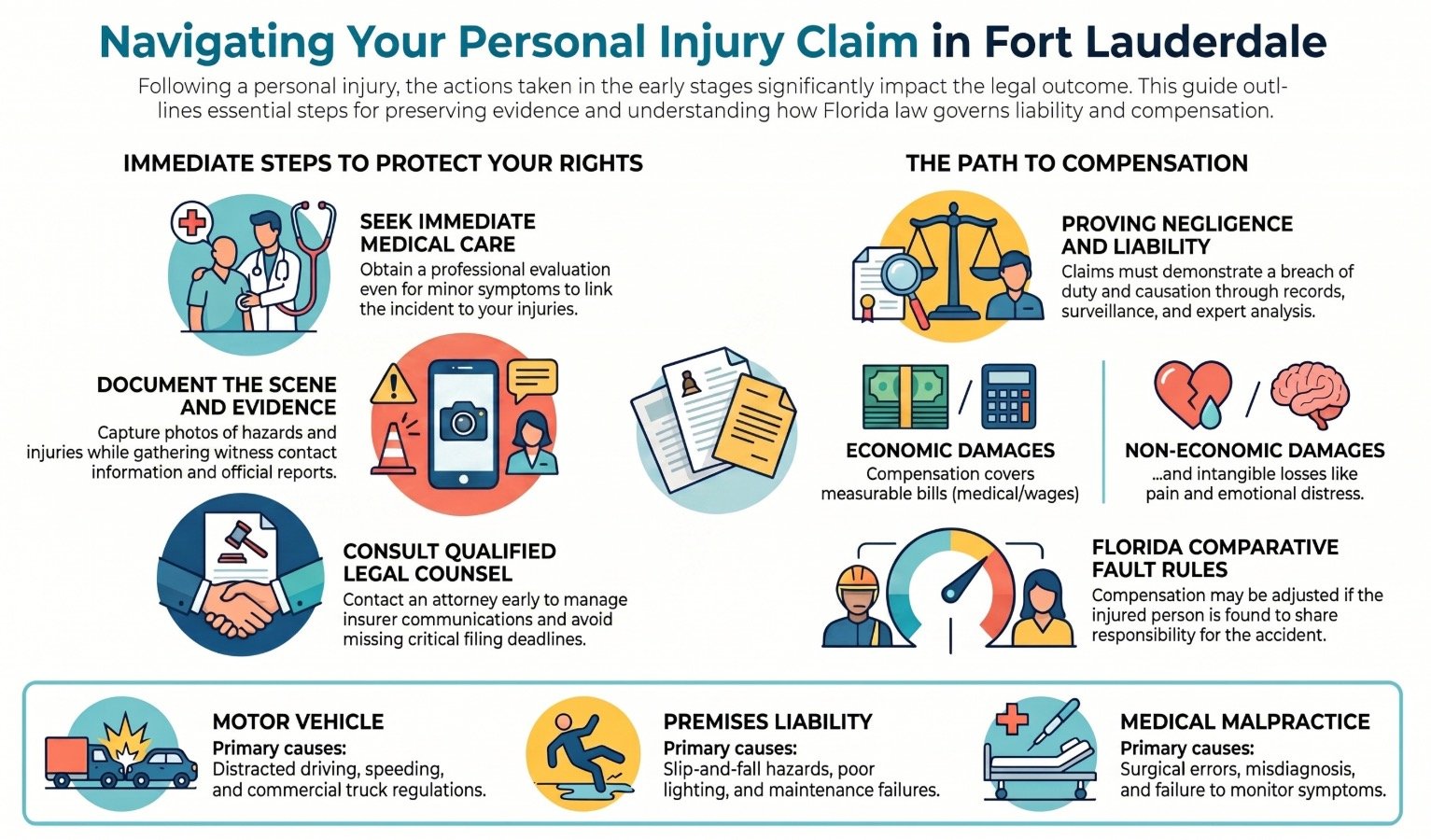
- Seek immediate medical care after an injury to protect your health and create records linking the incident to your damages.
- Preserve evidence by photographing the scene, injuries, property damage, hazards, and gathering witness names, reports, and receipts.
- A Fort Lauderdale personal injury lawyer evaluates duty, breach, causation, damages, insurance coverage, and Florida comparative fault issues.
- Strong claims rely on medical records, police reports, photos, surveillance, witness statements, and expert analysis when needed.
- Compensation may include medical expenses, lost income, reduced earning capacity, rehabilitation costs, property damage, and pain-related losses.
How We Can Help With Your Fort Lauderdale Personal Injury Claim
The days after an injury are often the hardest. You’re in pain, you’re worried about money, and you’re being asked to make decisions you’ve never had to make before — while the insurance company has already started building its case. That’s exactly where we come in.
We sit down with you early, listen carefully to what happened, and take the burden of the legal process off your shoulders. Our team reviews your records, handles insurer communications so you don’t have to, and builds a strategy around what you actually need — not just what’s easiest to prove. We explain every step in plain language, work on contingency so there’s no upfront cost to you, and remain available when you have questions. Our goal is simple: give you one less thing to worry about while you heal.
Understanding Fort Lauderdale Personal Injury Cases


When someone else’s carelessness turns your life upside down, the law gives you a path to hold them accountable and recover what you’ve lost. A personal injury claim in Fort Lauderdale arises when another party’s negligence causes you real harm — and proving it generally means showing that they had a duty to act safely, they failed to meet it, and you suffered measurable losses as a result.
OUR CONSULTATIONSARE FREE
START YOUR FREE CASE REVIEW

What that looks like in practice varies widely — a car crash on I-95, a dangerous property condition, a medical error, a workplace incident. But the common thread is this: you were hurt through no fault of your own, and Florida law recognizes your right to seek compensation for what that has cost you — medically, financially, and personally. Understanding that framework is the first step toward knowing your options, and we’re here to walk you through every part of it.
Fort Lauderdale Personal Injury — Florida Crash Statistics
The scale of personal injury in Florida underscores why prompt legal action matters. According to FLHSMV 2022 Florida Traffic Crash Facts, the state recorded 401,523 crashes, resulting in 3,535 fatalities and more than 253,888 injuries, with total economic losses exceeding $9.4 billion. Broward County — home to Fort Lauderdale — consistently ranks among the top counties statewide for crash frequency, reflecting the density of traffic along I-95, US-1, and the Broward Boulevard corridor. Nationally, NHTSA distracted driving data shows that distraction-related crashes claim more than 3,000 lives per year — a pattern that plays out on Fort Lauderdale roadways every day.


Physical crash evidence — skid marks, debris fields, traffic control device positions — can disappear within 24 to 72 hours, and surveillance footage at commercial properties is often overwritten on the same cycle. These statistics reinforce a single practical point: the strength of a Fort Lauderdale personal injury claim is often determined in the hours and days immediately after the incident, not weeks later when an attorney is first consulted.
Fort Lauderdale Personal Injury Claim — What You Can Recover, What Insurers Challenge, and the Deadlines You Cannot Miss
Most injured people don’t know what their claim is worth, which damages are hardest to prove, or how quickly the window to act closes. This chart shows exactly what compensation looks like, where insurers push back hardest, and the three deadlines that can end a valid claim entirely.
Florida HB 837 (2023) — what changed and why it matters for your Fort Lauderdale claim: Before March 24, 2023, Florida used pure comparative fault, meaning even a plaintiff who was 99% responsible for their own injury could recover 1% of their damages from the remaining at-fault party. HB 837 converted Florida to modified comparative fault: if you are found more than 50% responsible, you recover nothing. This change created a direct financial incentive for insurers to investigate fault allocation aggressively from the moment a claim is filed. Every statement you make, every gap in your treatment, and every inconsistency in your account of the incident can be used to push your fault percentage above 50%. An attorney who understands how this evaluation works — and who begins building an accurate, evidence-supported counter-record immediately after the injury — is the most effective protection against it.
Florida PIP and No-Fault Coverage in Fort Lauderdale Injury Claims
Florida requires every registered vehicle owner to carry at least $10,000 in Personal Injury Protection (PIP) coverage. PIP operates on a no-fault basis, meaning it pays regardless of who caused the crash — but only within specific limits and under strict conditions. PIP covers 80% of reasonable medical expenses and 60% of documented lost wages, both subject to the $10,000 cap. If a treating physician, physician assistant, or advanced registered nurse practitioner does not certify an Emergency Medical Condition (EMC), benefits are capped at $2,500 instead of $10,000. Initial treatment must be received within 14 days of the crash, or PIP benefits are forfeited entirely.
PIP does not cover pain and suffering, property damage, or the remaining 20% of medical bills and 40% of lost wages. To recover those losses, an injured person must either pursue a liability claim against the at-fault driver or demonstrate that their injuries meet Florida’s serious injury threshold — permanent injury within a reasonable degree of medical probability, significant and permanent scarring or disfigurement, or death. When injuries exceed PIP limits and meet the threshold, a Fort Lauderdale personal injury lawyer can pursue a full tort claim against the responsible party for all remaining economic and non-economic damages.
For a complete explanation of how Florida’s no-fault system works in practice, see our guide: Florida PIP Insurance Explained: How No-Fault Really Works.
Event Data Recorders and Black Box Evidence in Fort Lauderdale Crash Claims
Most vehicles manufactured after 2012 contain an Event Data Recorder (EDR) — commonly referred to as a black box — that captures critical data in the seconds before and during a crash. EDR data typically includes vehicle speed, throttle input, brake application, steering angle, seat-belt status, and airbag deployment timing. This data can confirm or directly contradict an opposing party’s account of how the crash occurred, making it one of the most powerful pieces of evidence in a Fort Lauderdale personal injury claim.
EDR data is not permanent. The recorder typically overwrites its prior data when the vehicle’s ignition is cycled after a subsequent crash event. Once overwritten, the data cannot be recovered. For that reason, we send formal evidence-preservation demands to the vehicle owner, their insurer, and any other involved parties immediately after being retained — often within the first 24 hours. When the vehicle is recovered or secured, we work with certified EDR specialists to retrieve and analyze the data using manufacturer-specific software. In disputed liability cases, EDR evidence often resolves the core factual question that drives the entire claim.
Read more about how black box data affects vehicle-related injury claims: How Black Box Data Can Make or Break Your Florida Truck Accident Case.
Common Causes of Fort Lauderdale Personal Injury Cases
Personal injury claims in Fort Lauderdale often arise from several recurring circumstances that lead to serious physical, emotional, and financial harm. Among the most common causes are car and truck collisions, slip-and-fall accidents, medical malpractice claims, and workplace injury incidents, each of which presents distinct legal and evidentiary issues. A clear understanding of these categories helps frame how liability is assessed and why injured parties may pursue compensation.
Car and Truck Collisions
Many car and truck collisions in Fort Lauderdale stem from preventable conduct, including distracted driving, speeding, impaired operation, unsafe lane changes, and failure to yield the right of way. These incidents often cause severe injuries because commercial trucks carry greater loads, have wider turning radii, and have longer stopping distances than passenger vehicles.
In many cases, investigators examine whether drivers and companies followed delivery protocols and cargo regulations. Fatigue, overloaded trailers, poor maintenance, and inadequate driver training can all increase crash risks. Evidence may include electronic logging data, inspection records, dash camera footage, and witness accounts. A careful legal review helps injured people understand how negligence may have contributed to the collision. This process also supports accountability, promotes safer transportation practices, and benefits the broader community by fostering more responsible roadway conduct.
Slip and Fall Accidents
Several hazardous property conditions can lead to slip-and-fall accidents in Fort Lauderdale, especially when owners or occupiers fail to address known dangers within a reasonable time. These incidents often arise in grocery stores, apartment developments, restaurants, parking areas, and public walkways where safety practices are neglected.
Common hazards include wet floors, uneven sidewalks, loose carpeting, broken handrails, cluttered aisles, and improper lighting that obscures changes in elevation or hidden obstacles. In many cases, routine inspection and timely maintenance could prevent serious harm to visitors, tenants, customers, and workers. Property owners and managers are generally expected to take reasonable steps to protect those who enter lawfully. When they disregard foreseeable risks, injured individuals may face painful setbacks that affect their ability to care for themselves, support loved ones, and continue serving their communities safely.
Medical Malpractice Claims
A medical malpractice claim in Fort Lauderdale generally arises when a provider’s conduct falls below accepted standards of care and directly causes preventable harm. Courts often examine records, expert opinions, and evidence of whether the patient suffered additional injury, delayed recovery, or worsened conditions due to medical negligence.
Common examples include surgical mistakes, misdiagnosis, medication errors, birth injuries, and failures to monitor symptoms or respond to complications. Liability may also involve inadequate communication, especially when informed consent was not properly obtained before treatment. For families focused on protecting others, understanding these claims supports safer care and greater accountability. A Fort Lauderdale personal injury lawyer may evaluate causation, damages, and procedural deadlines, helping injured patients pursue compensation while encouraging higher standards across the medical community.
Workplace Injury Incidents
Beyond medical negligence, personal injury claims in Fort Lauderdale also frequently arise from workplace injury incidents that leave employees facing medical expenses, lost income, and prolonged physical limitations. These cases often involve falls, equipment failures, repetitive stress injuries, exposure to toxic substances, and other occupational hazards that could have been reduced through proper training, maintenance, or supervision.
A Fort Lauderdale personal injury lawyer may evaluate whether third-party negligence contributed to the harm, especially when unsafe contractors, defective machinery, or negligent property owners played a role. While workers’ compensation may provide important benefits, it does not always address the full impact of an injury. Careful legal guidance helps injured workers pursue available remedies, protect their rights, and secure resources that support recovery, family stability, and a safe return to productive employment.
Legal Rights of Fort Lauderdale Personal Injury Claimants
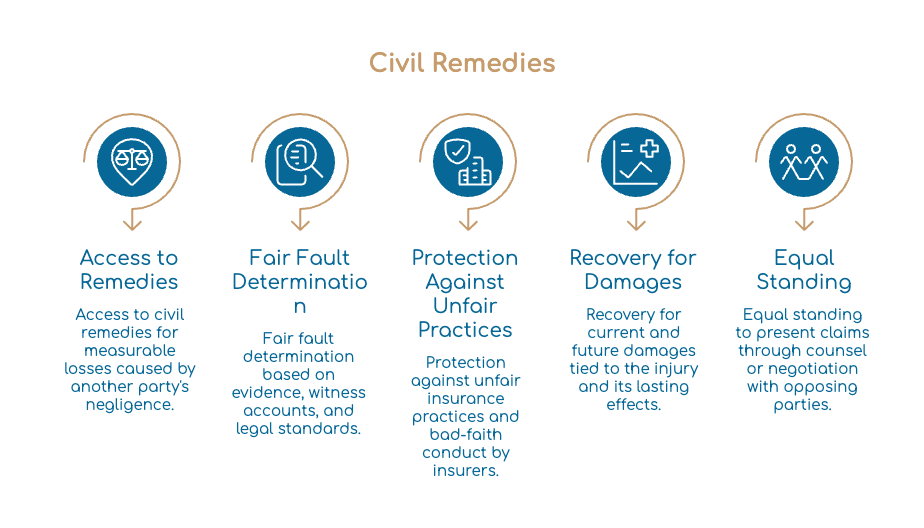
When you’re hurt because of someone else’s carelessness, Florida law gives you the right to pursue accountability — and to be made as whole as possible. These aren’t abstract legal principles. They’re real protections that exist because the law recognizes that what happened to you wasn’t fair, and that you shouldn’t have to bear the financial and personal cost of someone else’s negligence alone. Compensation for medical bills, lost wages, property damage, and the pain you’ve endured may all be available to you.
- Access to civil remedies for measurable losses caused by another party’s negligence
- Fair fault determination based on evidence, witness accounts, and legal standards
- Protection against unfair insurance practices and bad-faith conduct by insurers
- Recovery for current and future damages tied to the injury and its lasting effects
- Equal standing to present claims through counsel or negotiation with opposing parties
Florida law also recognizes comparative negligence, which means recovery can be adjusted if an injured person shares responsibility. Under HB 837 (2023), a finding of more than 50% fault bars recovery entirely. Even so, injured individuals retain important legal protections. A clear understanding of these rights helps community-minded readers advocate responsibly for those harmed by negligence while respecting lawful procedures and shared civic obligations.
Our Fort Lauderdale Personal Injury Law Practice Areas
No matter how you were hurt, the Fort Lauderdale personal injury lawyers at the Law Offices of Anidjar & Levine want to help. No matter how you were hurt, our Fort Lauderdale personal injury lawyers are here to help you get answers and the compensation you need.
- Fort Lauderdale Car Accident Lawyers: We handle all aspects of car accident cases, from minor collisions to major crashes. Our goal is to secure fair settlements for our clients.
- Fort Lauderdale Motorcycle Accident Lawyers: Motorcyclists are vulnerable on the roads. We ensure those injured in motorcycle accidents get the compensation they need to recover.
- Fort Lauderdale Truck Accident Lawyers: Truck accidents involve complex legal issues. We handle negotiations with trucking companies and insurers to ensure fair settlements.
- Fort Lauderdale Wrongful Death Lawyers: Losing a loved one due to negligence is devastating. We support families in seeking justice and compensation for wrongful death claims.
- Fort Lauderdale Bicycle Accident Lawyers: We protect the rights of cyclists injured due to others’ negligence. Our attorneys ensure you receive proper compensation for your injuries.
- Fort Lauderdale Bus Accident Lawyers: Bus accidents can result in severe injuries. Our attorneys handle all aspects of these cases, including dealing with bus companies and insurers.
- Fort Lauderdale Pedestrian Accident Lawyers: Pedestrians are at high risk on the roads. We advocate for those injured in pedestrian accidents to ensure they receive proper compensation.
- Fort Lauderdale Slip-and-Fall Lawyers: Property owners have a duty to keep their premises safe. We represent individuals injured in slip-and-fall accidents, working to recover compensation for medical expenses, lost income, and pain and suffering.
Steps to Take After a Fort Lauderdale Personal Injury
In the immediate aftermath of an injury, you’re probably shocked, in pain, and unsure what to do first. That’s completely understandable — and it’s exactly why knowing these steps matters. The actions you take in the first hours and days after a Fort Lauderdale accident can have a lasting effect on both your health and your ability to recover what you’re owed.
Seek Immediate Medical Care
Your health comes first — always. Even if you feel okay at the scene, please get evaluated by a medical professional as soon as possible. Adrenaline can mask serious injuries, and conditions like concussions, internal bleeding, and soft tissue damage often don’t reveal themselves right away. The Mayo Clinic notes that traumatic brain injuries in particular can present with subtle early symptoms that worsen significantly if left untreated.
Getting evaluated right away also creates the medical record that connects your injuries to the accident — which is essential to your claim. Continue attending every appointment, following prescribed treatment, and showing up for therapy and follow-up care. Gaps in treatment can be used against you by insurers who argue your injuries couldn’t have been serious. Consistent care protects both your recovery and your case.
Gather Crucial Evidence
If you’re physically able to do so, take photos and notes at the scene before anything is moved or cleaned up. We know this is the last thing on your mind when you’re hurting and shaken — but this documentation can be the difference between a strong claim and an uphill battle.
Photograph the vehicles, your visible injuries, road conditions, traffic signs, and any hazards that played a role. Write down what happened in your own words as soon as you can, while your memory is fresh. Get the names and contact information of anyone who witnessed the incident. Keep copies of the police report, any incident records, receipts, and documentation of damaged property.
For a detailed breakdown of which medical records matter most to your claim, see: What Medical Records Matter Most in a Florida Injury Claim.
We can help you organize it all once we connect — but the sooner you preserve it, the better.
Contact Injury Counsel
You don’t need to have everything figured out before you call. Most people reach out to us confused, overwhelmed, and unsure whether they even have a case — and that’s completely okay. A conversation costs you nothing and gives you real clarity on where you stand.
Reaching out early matters because evidence disappears, deadlines approach fast, and the insurance company is already at work. The sooner we’re involved, the more we can do to protect your claim. We’ll explain your options honestly, walk you through what the process looks like, and clarify how fees work — typically on a contingency basis, meaning you pay nothing unless we recover for you. Choosing the right attorney is a personal decision, and we want you to feel informed and comfortable, not pressured.
How a Fort Lauderdale Personal Injury Lawyer Can Help You
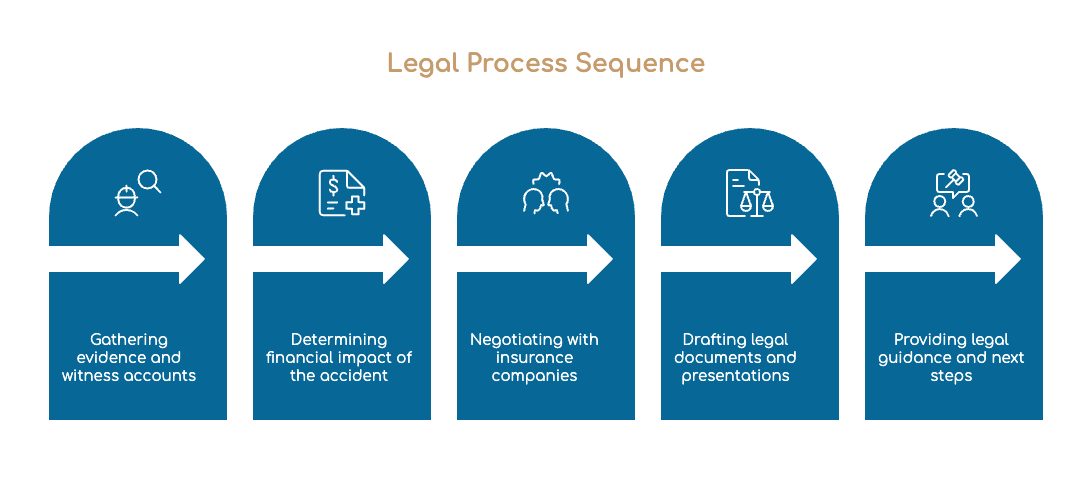
A serious injury touches every part of your life — your ability to work, your relationships, your daily routine, your sense of security. A Fort Lauderdale personal injury lawyer’s job isn’t just to file paperwork. It’s to understand what this has cost you in every sense and to fight to ensure that cost is fully recognized and fairly compensated.
We take the legal burden off you so you can focus on healing.
- Investigates accidents, records, and witnesses thoroughly to build a complete factual foundation
- Calculates medical costs, lost income, future care needs, and related losses accurately
- Communicates with insurers and opposing counsel strategically to protect your interests
- Prepares claims, negotiations, and litigation materials carefully and on deadline
- Advises clients on lawful options and practical next steps throughout the process
Having someone genuinely in your corner — someone who knows the system and cares about what happens to you — transforms the experience of going through a personal injury claim. You deserve that kind of support, and we’re here to provide it.
Long-Term Effects of Fort Lauderdale Personal Injuries
One of the hardest things about a serious injury is that the impact doesn’t end when you leave the hospital. The pain lingers. The anxiety doesn’t simply go away. The bills keep coming even after treatment ends. And sometimes, the person you were before the accident — the way you moved, worked, and connected with the people you love — feels out of reach. These lasting effects are real, they are recognized under Florida law, and they belong in your claim.
Chronic Pain Challenges
If you’re still in pain weeks or months after your injury, you are not being dramatic — and you are not alone. Chronic pain is one of the most common and most undercompensated consequences of serious accidents. It can make it hard to sleep, work, take care of your family, or simply move through your day the way you used to.
Managing persistent pain often requires ongoing treatment: medication, physical therapy, interventional procedures, and sometimes significant lifestyle changes that quietly reshape your life. Assistive devices, modified work duties, and reduced activity levels add up to real, lasting losses — financially and personally. A thorough personal injury claim accounts for all of it, not just the emergency room visit, but the months and years of treatment and adjustment that follow.
Emotional Trauma Impact
The emotional aftermath of a serious accident is real — and it deserves to be taken seriously. Anxiety, depression, sleep disruption, and post-traumatic stress are common responses to trauma, and they don’t simply disappear once the physical wounds heal. You may find yourself avoiding certain roads, flinching at sounds, or feeling disconnected from the people and activities that used to bring you comfort.
These experiences affect your relationships, your ability to work, and your quality of life in ways that can be just as significant as physical injuries. They are recognized as compensable losses under Florida law, and they belong in your claim. We make sure these harms are fully documented and clearly communicated — because what you’ve been through emotionally matters, not just what shows up on an X-ray.
Reduced Earning Capacity
Income stability often changes after a serious injury, especially when lasting impairments limit a person’s ability to perform prior job duties or compete in the labor market at the same level as before. Reduced earning capacity reflects more than immediate lost wages; it also encompasses diminished future opportunities, fewer promotions, and restricted access to physically or mentally demanding work. In Fort Lauderdale cases, careful evaluation may consider education, training, work history, medical limitations, and expected career progression before the accident. This harm can produce career disruption, forcing workers into lower-paying roles or part-time schedules that do not meet prior financial responsibilities.
For context on how various injury types and documentation quality affect long-term compensation outcomes, see: Average Personal Injury Settlements in Florida by Case Type.
A thorough legal claim may seek fair compensation for these long-term losses, helping injured individuals and their families preserve stability, dignity, and the ability to continue supporting others in meaningful ways.
Proving Liability in Fort Lauderdale Personal Injury Cases
Establishing liability in a Fort Lauderdale personal injury case requires clear evidence that another party owed a duty of care, breached that duty, and caused measurable harm as a result. Courts evaluate police reports, medical records, photographs, surveillance footage, and witness statements to determine how the incident occurred and whether the defendant acted unreasonably under the circumstances.
Florida law may also require analysis of comparative fault, meaning responsibility can be shared when an injured person contributed to the event. In these matters, careful documentation helps present a fair account that supports accountability and service to those harmed. Expert testimony may strengthen a claim by explaining medical causation, accident reconstruction, industry standards, or the long-term effects of injuries. Consistent treatment records and timely reporting often reinforce credibility. When evidence links the breach of duty to specific losses, there is a stronger foundation for pursuing accountability and promoting safer conduct within the Fort Lauderdale community.
Dealing With Insurance Companies After a Fort Lauderdale Personal Injury
If the insurance company has already called you, there’s something important you need to know: their job is to protect their bottom line, not your wellbeing. Adjusters are often friendly and sympathetic on the phone — and that friendliness is intentional. Anything you say can be used to minimize what they pay you.
You have no obligation to give a recorded statement, sign a broad medical records release, or accept any settlement offer before you fully understand the extent of your injuries. Early settlements almost always undervalue what you’re owed — because no one knows the complete picture yet. Before responding to any insurer contact, talk to an attorney first. We can handle those communications on your behalf, so you don’t have to choose your words carefully while you’re still in pain. That’s exactly what we’re here for.
What to Expect During a Fort Lauderdale Personal Injury Claim Process
One of the most common questions we hear is: “How long is this going to take, and what’s actually going to happen?” That’s a fair question — and not knowing can make an already difficult situation feel even more overwhelming. Here’s how the process typically unfolds, so you know what to expect at every stage.
Initial Case Evaluation
The first step is a free conversation — no pressure, no commitment required. We listen to what happened, ask questions to understand the full picture, and give you an honest assessment of your situation. This isn’t a sales pitch. It’s a genuine evaluation of whether you have a valid claim, what it might be worth, and what the path forward looks like.
We’ll walk through timelines, your immediate needs, how insurance coverage applies, and what to expect at each stage. Many people leave this first meeting feeling relieved — because even when the situation is difficult, having a clear picture is far better than uncertainty. We want you to walk away feeling informed and supported, not pressured into anything.
Evidence and Documentation
In personal injury litigation, evidence and documentation shape nearly every stage of the claim process, from early negotiations to potential trial preparation. Medical records, incident reports, photographs, witness statements, and employment documents often establish how an injury occurred, how severe it became, and how daily responsibilities were affected over time.
A Fort Lauderdale personal injury lawyer typically helps organize these materials promptly, because delays can weaken accuracy and create avoidable disputes. Physical items may require a clear chain of custody to preserve reliability and prevent allegations of tampering. Digital evidence, including surveillance footage or phone data, may also demand secure collection and careful review. In more intricate matters, expert authentication may be necessary to confirm that records, images, or specialized findings are accurate, relevant, and suitable for presentation in court.
Negotiation and Settlement
How a personal injury claim progresses through negotiation and settlement often depends on the strength of the evidence, the clarity of the damages, and the insurer’s willingness to evaluate the matter fairly. During this stage, counsel typically presents a demand package, outlines losses, and responds to insurer questions with organized support.
Settlement tactics may include timed demands, careful review of policy limits, and measured counteroffers designed to encourage reasonable resolution. Mediation strategies can also help both sides assess risk, clarify disputed facts, and focus on fair compensation for medical costs, lost income, and related harm. Throughout negotiations, effective representation serves injured people by protecting their interests, promoting accountability, and seeking outcomes that support recovery and stability. Clear communication and patience often improve the chances of meaningful resolution without unnecessary delay.
Filing a Lawsuit
Filing a lawsuit becomes necessary when settlement efforts do not yield a fair result or when the legal deadline to bring a claim approaches. In Fort Lauderdale, counsel prepares a complaint, identifies liable parties, and files it in the proper court while addressing statute-of-limitations requirements and jurisdictional considerations.
After filing, each defendant must be served formally, then given time to respond. The court may schedule hearings, issue deadlines, and require the exchange of evidence through discovery. During this stage, attorneys gather records, question witnesses, consult experts, and evaluate damages with care and discipline. Motions may narrow disputed issues or seek dismissal of unsupported claims. Even after suit begins, settlement remains possible and often encouraged. If a resolution is not reached, the case proceeds to trial, where evidence is presented to a judge or jury.
Compensation for Fort Lauderdale Personal Injury Damages
Several forms of compensation may be available in a Fort Lauderdale personal injury claim, depending on the nature of the accident, the severity of the injuries, and the extent of the resulting losses. Recovery often reflects documented medical needs, rehabilitation costs, lost income, reduced earning ability, and property damage. Careful case preparation may also involve insurance coverage reviews, which help identify available limits, disputed exclusions, and policy terms that affect payment.
A thorough claim presentation usually relies on records, expert opinions, and credible testimony to show how the injury affected daily functioning and future needs. Attorneys may work with physicians, vocational experts, and financial professionals to support pain valuation and demonstrate the practical impact of long-term harm. In matters involving severe trauma or permanent impairment, compensation may also address ongoing assistance, adaptive equipment, and home modifications. Prompt legal review often helps preserve evidence, prevent undervaluation, and promote a resolution that respects both accountability and the injured person’s recovery and dignity.
Economic vs. Non-Economic Damages in Fort Lauderdale Personal Injury Cases
Fort Lauderdale personal injury cases often involve both economic damages — such as medical expenses, lost wages, and rehabilitation costs — and non-economic damages, including pain and suffering, emotional distress, and loss of enjoyment of life. These categories differ in how they are measured: financial records often support economic losses, while testimony, medical evidence, and related documentation may help establish non-economic harm. A clear understanding of each type of damage is important when evaluating a claim and determining the overall value of a personal injury case.
Economic Damage Examples
Many economic damages in a Fort Lauderdale personal injury case involve measurable financial losses that can be documented with bills, wage records, and other objective evidence. These damages commonly include emergency care, hospital treatment, prescription costs, rehabilitation expenses, and anticipated future medical needs supported by professional opinions. They may also cover lost wages when an injured person misses work during recovery, as well as diminished earning capacity if lasting limitations affect employment. In motor vehicle and premises liability matters, property damage may be recoverable for repairs or replacement of a vehicle, bicycle, phone, or other personal items. Travel costs for medical appointments, household assistance necessitated by the injury, and other out-of-pocket expenses may also qualify. Careful documentation helps attorneys present a clear, complete claim for full financial recovery.
Non-Economic Losses Explained
Non-economic losses address the human impact of an injury rather than direct financial costs. These damages are losses that do not appear as bills or wage statements, yet they can profoundly affect daily life and relationships.
Common examples include physical pain, emotional distress, loss of enjoyment, inconvenience, disfigurement, and diminished life quality. In a community-minded setting, recognizing these harms reflects respect for dignity, independence, and the ability to care for loved ones or contribute meaningfully to others. Non-economic damages thus acknowledge that an injury may disrupt sleep, confidence, mobility, companionship, and peace of mind. While economic losses capture measurable expenses, pain valuation and related non-economic considerations address the broader, deeply personal consequences that follow serious harm.
Proving Damage Value
Establishing damage value requires more than listing losses, because each category of harm must be supported by credible evidence and tied to the injury at issue. Economic damages often rely on medical bills, wage records, treatment plans, and expert opinions that project future costs with reasonable certainty. Non-economic damages require a different showing because pain, emotional distress, and loss of enjoyment are not measured by invoices.
In Fort Lauderdale personal injury cases, careful damage valuation also considers consistency in testimony, the severity and duration of symptoms, and the injury’s impact on daily service to family and community. Photographs, journals, and witness statements may strengthen this proof. Effective presentation matters because how intangible harm is communicated can influence how it is understood, weighed, and translated into a fair monetary figure under Florida law.
When a Fort Lauderdale Personal Injury Case Goes to Trial vs. Settlement
In a Fort Lauderdale personal injury case, the path to settlement or trial usually depends on the strength of the evidence, the extent of the injuries, and the parties’ willingness to agree on fair compensation. Settlement often serves everyone better when liability is clear, damages are well documented, and prompt recovery support is needed. It can reduce stress, control costs, and provide resources that help injured people and their families move forward with dignity.
Trial becomes more likely when fault is disputed, insurers minimize losses, or settlement offers fail to reflect long-term harm. In those circumstances, counsel prepares witnesses, medical proof, and demonstrative evidence for presentation before a jury. Careful attention to how facts are organized and explained may influence the outcome. A thoughtful approach to the case at every stage also matters, because rulings and the record developed during litigation can affect options beyond any single decision point. Whether resolved by agreement or a court decision, the objective remains accountability, compensation, and meaningful support for recovery.
The Statute of Limitations for Fort Lauderdale Personal Injury Cases
Whether a personal injury claim ends in settlement or proceeds to trial, timing can determine whether the case may be pursued at all. In Fort Lauderdale cases, the statute of limitations sets the legal deadline for filing suit, and missing that deadline can bar recovery entirely, regardless of the severity of the injury or clear fault.
Florida HB 837, signed on March 24, 2023, reduced the negligence filing deadline from four years to two years from the date of the incident for claims arising on or after that date. Certain limited circumstances may affect when the period begins or whether it is tolled — including the discovery rule in cases where an injury’s cause was not immediately known, incapacity, or claims against government entities with separate notice requirements. Careful attention to these rules helps preserve accountability and supports fair outcomes for injured people. Timely action also protects evidence, witness memory, and orderly court review.
When to Contact a Fort Lauderdale Personal Injury Lawyer
If you’re reading this, now is probably the right time to call.
You don’t need to wait until you feel completely ready or have all the answers. You don’t need a police report in hand or a confirmed diagnosis. What you need is someone who can tell you clearly and honestly what your situation looks like and what your options are. That conversation is free, and it doesn’t obligate you to do anything.
The earlier you reach out after a Fort Lauderdale injury, the more we can do. Evidence can be preserved before it disappears, deadlines can be tracked, and harmful missteps with insurers can be avoided. If you’re still receiving medical treatment, if fault is unclear, or if an insurance company has already contacted you with a settlement offer — those are all strong signals that you need legal support now. You’ve been through enough already. Let us handle the rest.
Why You Need an Experienced Fort Lauderdale Personal Injury Lawyer
Insurance companies are not on your side. They have adjusters, attorneys, and years of experience settling claims for as little as possible. When you’re injured, exhausted, and trying to recover, that imbalance of power can work against you in ways you may not even realize.
An experienced Fort Lauderdale personal injury lawyer levels that playing field. We know what your claim is actually worth — not just the bills you have today, but the treatment you’ll need in the future, the wages you’ve lost, and the pain that doesn’t show up in any record. We know the tactics insurers use to reduce payouts, and we know how to counter them with evidence, strategy, and persistence. Having representation that insurers take seriously changes how your claim is evaluated from the very first contact. You deserve an advocate with that kind of standing in your corner.
How to Choose the Right Fort Lauderdale Personal Injury Lawyer for Your Case
Choosing the right attorney is one of the most important decisions you’ll make after an injury — and it’s okay to take it seriously. The right lawyer isn’t just the one with the biggest billboard. It’s the one who listens to you, explains things in plain language, and makes you feel like a person rather than a case number.
When you’re evaluating a Fort Lauderdale personal injury lawyer, look for genuine experience handling cases like yours, honest answers about what to expect, and clear communication about who will be working on your case day to day. Ask how fees work — most reputable personal injury attorneys work on contingency, meaning no fee unless they recover for you. Read reviews from real clients, ask questions about the firm’s approach, and trust your instincts about whether you feel heard. The attorney-client relationship carries you through one of the hardest periods of your life — make sure it’s built on trust.
Real Reviews From Our Clients!
“I highly recommend Anidjar & Levine — the lawyers and support staff did a great job settling my case and getting me more money than I ever thought possible. They always took my calls or called me back in a very timely manner. This is a firm that actually cares about their clients. They take the necessary time with you and make you feel like family and not just a client!”
“Ryan took great care of both me and my case from start to finish. He was always available when I had questions and explained each step clearly. What really stood out was when Glen Levine personally showed up alongside Ryan to represent me during my deposition — it showed how committed they are. I never had to worry about anything because their team took care of everything. A huge weight off my shoulders.”
“The attorneys and staff at Anidjar & Levine are fantastic! They truly went above and beyond. My attorneys checked in with me frequently to keep me updated and made a stressful situation so much easier. This was my first ever accident and Avery fought extremely hard to get me the best possible result. If you are ever in an accident, Anidjar & Levine should be one of the first calls you make!”
Reviews reflect genuine client experiences posted on Google. Individual experiences and results vary. Past results do not guarantee a similar outcome in future cases.
About The Law Offices of Anidjar & Levine
Founded in 2005 by Marc Anidjar and Glen Levine, the firm began as a two-person operation working out of a construction office conference room. Over the past 20 years, that modest start has grown into one of Florida’s most recognized personal injury practices — with more than $1 billion recovered in settlements for injury clients across the state. We bring that same determination and depth of experience to every case we handle.
We started this firm because we believe injured people deserve a real advocate — not a case number in a queue. When you’re hurting and overwhelmed, you need someone who picks up the phone, explains what’s happening in plain language, and fights for you with everything they have.
Our clients tell us that what sets us apart isn’t just the outcomes — it’s being treated with honesty and genuine respect throughout the process. We listen before we strategize. We explain before we act. We stay with you from the first conversation through the resolution of your case. Fort Lauderdale is our community, and when our neighbors are harmed through no fault of their own, we take that personally. If you’re ready to talk, we’re ready to listen.
Frequently Asked Questions
Can I Switch Personal Injury Lawyers During My Fort Lauderdale Case?
Yes, a person may change counsel during a personal injury case, provided that new representation is secured or the client proceeds without counsel. They should review the retainer agreement, case status, and any possible fee dispute before making that decision. Courts and insurers usually accommodate the shift, though timing can affect momentum. A careful evaluation of communication, strategy, and trust will often determine whether a change best protects the client’s interests.
Will My Personal Injury Settlement Affect Medicare or Medicaid Eligibility?
Yes, a personal injury settlement can affect Medicare or Medicaid eligibility. Medicare recovery may require reimbursement for conditional payments related to injury care. Medicaid eligibility can also change because settlement funds may count as assets or income unless properly structured. In some cases, a Medicaid spenddown or special needs trust helps preserve benefits. Careful planning serves the injured person and family by protecting support while meeting reimbursement and reporting obligations.
Are Personal Injury Settlements in Florida Considered Taxable Income?
Personal injury settlements in Florida are generally not considered taxable income when they compensate for physical injuries or sickness. However, taxable portions may arise from punitive damages, interest, or compensation for lost wages in certain circumstances. Proper settlement allocation is important because it helps distinguish nontaxable recovery from amounts the IRS may tax. Careful documentation and qualified guidance support responsible decisions that protect resources intended to serve a person’s ongoing needs.
Can Social Media Posts Hurt My Fort Lauderdale Injury Claim?
Yes, social media posts can damage an injury claim. Insurers and defense counsel may use photos, comments, location tags, and third-party posts to challenge the severity of injuries or credibility. Privacy settings offer limited protection because shared content can still be copied or disclosed by others. A careful claimant serves the process best by avoiding discussion of the incident, physical condition, activities, and recovery while the claim remains pending.
What if I Was Injured While Visiting Fort Lauderdale From Out of State?
An out-of-state visitor injured in Fort Lauderdale may still pursue compensation under Florida law, depending on where and how the incident occurred. The matter can involve hotel liability, premises negligence, or motor vehicle claims with interstate insurance considerations. Prompt medical care, preservation of records, and timely reporting generally strengthen the case. Coordinating legal and insurance communication across state lines often helps protect rights and supports an orderly recovery process for all.
What Is the Statute of Limitations for a Personal Injury Claim in Fort Lauderdale?
Under Florida HB 837, signed on March 24, 2023, the statute of limitations for most personal injury negligence claims is two years from the date of the incident. Missing this deadline typically bars recovery entirely, regardless of how serious the injuries are or how clearly the other party was at fault. Certain exceptions may apply in limited circumstances — such as the discovery rule, incapacity, or claims involving government entities. Promptly contacting an attorney helps protect these deadlines.
What Happens if I Was Partially at Fault for My Fort Lauderdale Injury?
Florida uses modified comparative fault under HB 837 (2023). If you are found more than 50% responsible for the incident, you cannot recover any compensation. If your fault is 50% or less, your recovery is reduced in proportion to your share of responsibility — for example, 20% fault on $100,000 in damages yields $80,000 in recovery. Thorough evidence collection and an accurate account of how the injury occurred help minimize unwarranted fault attributions by insurers.
You didn’t choose this. But you do get to choose what happens next.
A Fort Lauderdale personal injury claim can feel overwhelming — the pain, the paperwork, the insurance calls, the uncertainty about whether things will ever return to normal. But you don’t have to face any of it alone.
A Fort Lauderdale personal injury lawyer from The Law Offices of Anidjar & Levine is ready to review your situation, answer your questions honestly, and stand beside you every step of the way. Reach out today — the consultation is free, and that first conversation may be the most important one you have.
Past results do not guarantee a similar outcome in future cases.