

The Law Offices of Anidjar and Levine helps Florida policyholders evaluate property coverage, document storm-related losses, and address disputes involving wind, hail, flooding, storm surge, lightning, or hurricane damage. Counsel may review policy terms, exclusions, deductibles, deadlines, and insurer communications while coordinating evidence such as photographs, estimates, receipts, inspections, and expert assessments. Legal assistance can also address improper denials, delayed investigations, or inadequate payments. For related legal guidance, visit our Florida Personal Injury Lawyer page to learn more about available protections, evidence requirements, and when professional assistance may be appropriate.
Main Takeaways
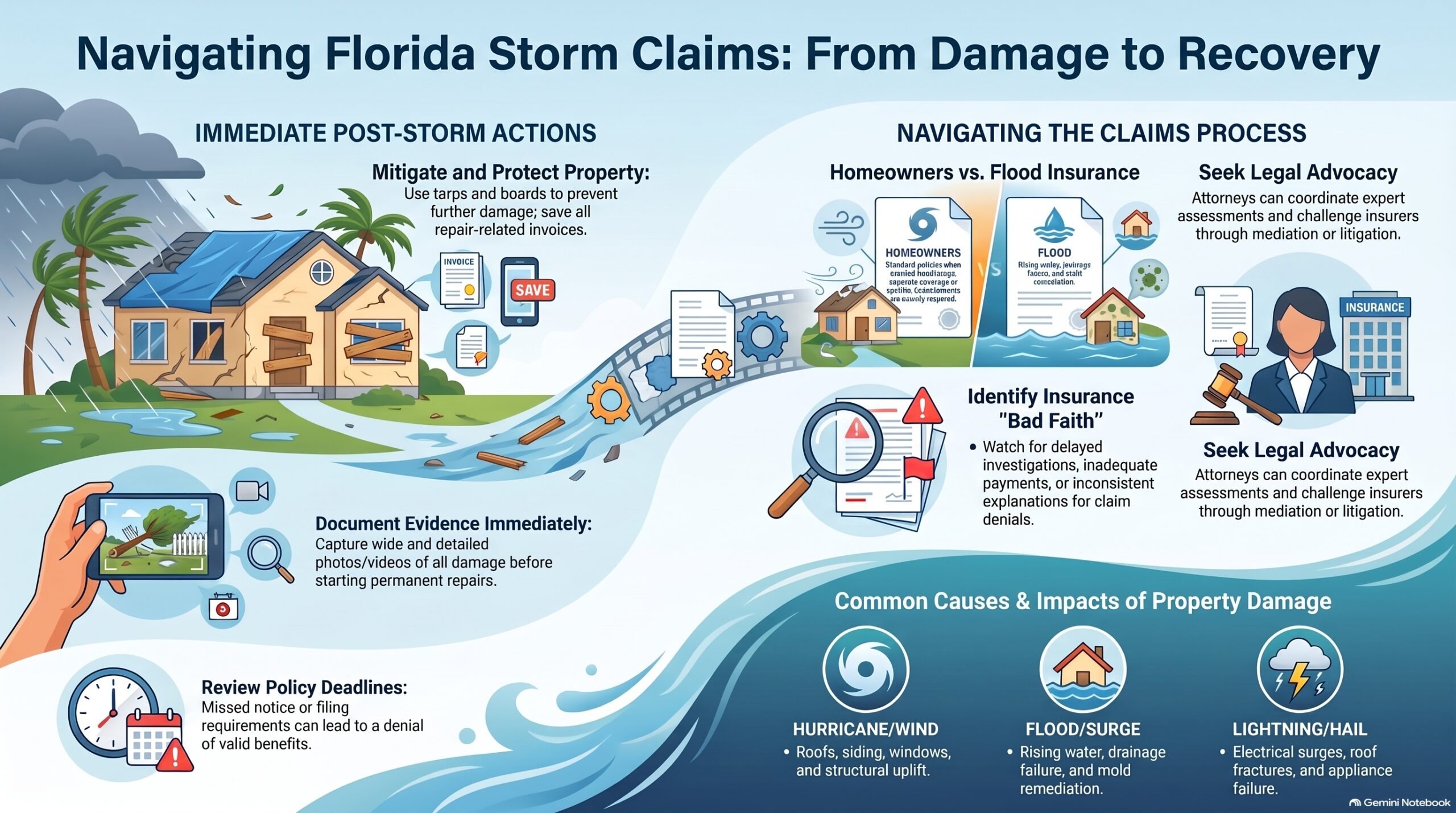
- A Florida storm damage lawyer can review your policy, exclusions, deductibles, deadlines, and available coverage for wind, hail, flooding, or related losses.
- Preserve photographs, videos, weather reports, repair estimates, receipts, inspection reports, and communications supporting the cause and extent of damage.
- Promptly mitigate additional damage by using tarps, covering broken windows, removing water, and saving all related invoices and work orders.
- An attorney can challenge claim denials, delayed investigations, underpayments, inconsistent explanations, and failures to provide clear coverage decisions.
- Depending on the policy and circumstances, you may pursue appraisal, mediation, an appeal, statutory remedies, or litigation.


How We Can Help With Your Florida Property Claim Storm & Weather Damage Injury Claim
When a storm or severe weather event damages a Florida property, experienced legal counsel can help the policyholder pursue the benefits available under the applicable insurance policy. A qualified legal team can review the policy, examine available evidence, and identify coverage that may apply to wind, hail, water, or other storm-related losses. Counsel can also help organize photographs, repair estimates, receipts, inspection reports, and communications needed to present a clear claim.
Attention to Policy Deadlines is crucial because missed notice or filing requirements can jeopardize otherwise valid benefits. Legal representatives can communicate with the insurer, respond to requests for information, and monitor the claim’s progress while protecting the policyholder’s interests. When insurers issue Claim Denials, undervalue damage, or delay payment, counsel can evaluate the stated reasons and pursue an appropriate response under Florida law. This assistance allows property owners to focus on safety and recovery while a dedicated advocate works to seek fair treatment and available policy benefits.
OUR CONSULTATIONSARE FREE
START YOUR FREE CASE REVIEW

Understanding Florida Property Claim Storm & Weather Damage Injury Cases
Florida property claim storm and weather damage cases involve determining whether a policy covers the reported loss, identifying the cause and extent of the damage, and establishing the insurer’s obligations under the policy. A careful review examines coverage provisions, exclusions, deductibles, proof requirements, and evidence documenting the property’s condition before and after the event. Policy denial appeals may require organized photographs, repair estimates, inspection reports, correspondence, and expert opinions addressing disputed issues. Claimants should also monitor Florida insurer deadlines because missed response or filing periods can affect available remedies. When water intrusion creates hazardous conditions, mold remediation costs may become part of the claimed damages if supported by appropriate testing and invoices. Coverage disputes can also involve building code violations, particularly when repairs require upgrades or additional work. Qualified legal guidance helps clarify rights, preserve evidence, communicate with insurers, and pursue fair treatment while recognizing the practical needs of property owners and communities seeking safe, stable recovery.
Common Causes of Florida Property Claim Storm & Weather Damage
Florida property claim storm and weather damage commonly arises from hurricanes, windstorms, flooding, and storm surge. Hail and lightning can also damage roofing, siding, electrical systems, and other insured property. Understanding these causes helps clarify the nature of the loss and the coverage issues that may affect a claim.
Hurricane Damage
How does hurricane damage affect a Florida property claim? A hurricane can create widespread property damage through storm surge, flooding, rain intrusion, falling trees, and prolonged power disruption. Policy language often separates covered causes from exclusions, making timely documentation crucial. Property owners should photograph affected areas, preserve damaged materials when safe, and report losses promptly. Hurricane inspection checklists can help organize observations, receipts, emergency repairs, and communications with insurers. An accurate assessment should distinguish hurricane-related damage from preexisting conditions and identify all affected structures and personal property. When an insurer undervalues or denies a valid claim, legal professionals may assist with evidence review, policy interpretation, and Denied claims appeals. Their work can help policyholders pursue fair treatment while supporting families, businesses, and communities recovering from a severe storm.
Windstorm Losses
When severe winds strike, they can damage roofs, siding, windows, fences, and other structural components, creating a substantial Florida property claim storm and weather damage. Windstorm coverage may protect against losses caused by hurricanes, tornadoes, straight-line winds, or other identified perils, subject to policy terms, deductibles, exclusions, and applicable limits. Insurers may evaluate whether wind caused the damage, whether maintenance issues contributed to it, and whether the policy was active when the event occurred. Policyholders should promptly report losses, preserve damaged materials when safe to do so, photograph affected areas, and maintain records of repairs and related expenses. A claim denial may result from disputed causation, late notice, insufficient documentation, or an applicable exclusion. Careful review and timely assistance can help affected property owners understand available remedies and pursue fair treatment.
Flooding And Storm Surge
Although flooding and storm surge often accompany hurricanes and tropical systems, they are distinct causes of property damage that may be treated differently under an insurance policy. Flooding may result from rising water, overwhelmed drainage systems, or prolonged rainfall, while storm surge involves seawater pushed inland by powerful winds. Standard homeowners policies typically exclude flood damage, requiring separate flood coverage or a careful review of applicable endorsements. Prompt photographs, videos, receipts, repair estimates, and water-level information can support a claim. Effective Storm documentation tips include preserving damaged materials when safe to do so and documenting cleanup efforts before disposal. Coverage disputes may involve causation, exclusions, policy limits, and competing expert opinions. Insurance adjuster negotiation should remain organized, evidence-based, and respectful. A qualified professional can help affected property owners understand deadlines, document losses, and pursue available benefits.
Hail And Lightning Damage
Hail and lightning can cause substantial property damage during Florida’s severe thunderstorms, even when a storm does not produce hurricane-force winds. Hail may fracture shingles, damage tile, dent metal surfaces, and expose roof materials to moisture. Lightning can ignite fires, destroy electrical systems, and damage appliances through power surges. Property owners should prioritize storm safety by remaining indoors, avoiding plumbing fixtures, and using surge protection when appropriate. After conditions improve, careful inspection can help identify missing roofing materials, punctures, scorch marks, smoke damage, and interior leaks. Photographs, repair estimates, weather reports, and maintenance records may support an insurance claim. Prompt temporary repairs can reduce additional losses, but permanent work should generally await proper documentation and communication with the insurer. Professional evaluation is particularly important when roof protection or electrical components appear compromised.
Don’t Wait. Call Our Florida Personal Injury Lawyers Now!


Legal Rights of Florida Property Claim Storm & Weather Damage Injury Victims
Florida property owners affected by storms and severe weather may have important legal rights when damage results in an insurance claim.
Florida law and policy terms may support a policyholder’s right to:
- Receive a timely, good-faith investigation and clear explanation of coverage decisions.
- Submit photographs, estimates, receipts, and other evidence supporting the amount of loss.
- Pursue claim-denial appeals, appraisal, mediation, or litigation when an insurer improperly limits or denies benefits.
- Seek professional guidance concerning deadlines, documentation, settlement offers, and potential statutory remedies.
A qualified advocate can help preserve evidence, communicate with insurers, and evaluate whether the adjustment process complied with contractual and legal duties. Depending on the circumstances, disputes may involve coverage interpretation, valuation, causation, or negligence defenses asserted by responsible parties. Property owners should avoid signing releases or accepting final payments without understanding their effect on future recovery. Prompt consultation may protect available options, particularly when emergency repairs, business interruptions, or disputed estimates complicate the claim. Assistance focused on fair treatment can also help families, tenants, and community organizations to proceed through recovery with greater confidence and accountability.
Why Do Florida Property Claim Storm & Weather Damage Injuries Happen?
Storm- and weather-related property claim injuries often arise when severe conditions damage roofs, windows, electrical systems, or other structures and the resulting hazards are not promptly addressed. Exposed wiring, unstable ceilings, broken glass, and water accumulation can create dangerous conditions for occupants, visitors, and workers.
Some injuries result from negligent repairs performed after a hurricane, flood, tornado, or severe storm. Contractors may use unsuitable materials, overlook structural weaknesses, or fail to correct hidden water damage. Improper maintenance can also allow deteriorated roofs, drainage systems, trees, or electrical components to become more hazardous during extreme weather.
Insurance-related conduct may contribute indirectly. Delayed claims can postpone funds needed for required remediation, leaving dangerous conditions unresolved. Wrongful denials may similarly prevent policyholders from obtaining coverage for repairs that would reduce risks. Property owners, insurers, contractors, and other responsible parties may thus contribute to injury through unsafe practices, inadequate oversight, or failure to honor applicable obligations.
What Should You Do After a Florida Property Claim Storm & Weather Damage Injury?
After a Florida storm or weather-related property injury, the property owner should document all visible damage with photographs, videos, and written records. Immediate repairs may help prevent further loss, but receipts and other evidence should be preserved to support a potential claim. Consulting a qualified property insurance lawyer can help protect the owner’s rights and address disputes with the insurer.
Document All Damage
Documenting every visible sign of storm or weather damage is an important step in protecting a property claim. Safety First should guide the process, so occupants should avoid unstable areas and never enter hazardous spaces merely to obtain evidence. From a safe location, photographs and videos can record damaged roofing, siding, windows, ceilings, flooring, landscaping, and personal property. Images should include wide views that establish location and detailed views showing the condition of each item. A written inventory can identify the date, approximate extent, and apparent cause of damage. Important records may include weather reports, maintenance documents, purchase receipts, and prior photographs. A Roof Inspection should be documented through photographs and a qualified professional’s written findings, while preserving original files and maintaining organized copies for insurers and representatives.
Seek Immediate Repairs
Prompt repairs can help prevent further damage after a Florida storm or weather-related property loss, but they should be approached carefully. Property owners should take reasonable Emergency mitigation steps, such as covering broken windows, placing tarps over exposed areas, removing standing water, and arranging professional drying services. These measures may protect occupants and preserve the structure while permanent work is evaluated. Receipts, photographs, work orders, and contractor information should be retained to document costs and conditions. Repairs should address urgent safety concerns without concealing damage or discarding damaged materials before they are properly recorded. If the property cannot safely be occupied, residents may need Temporary housing assistance and should maintain records of lodging, meals, transportation, and related expenses. Safety should remain the priority, particularly where electrical, structural, or contamination hazards exist.
Contact Your Lawyer
Consulting a Florida property claim attorney promptly can help protect an owner’s legal rights after storm or weather-related damage, particularly when injuries, disputed coverage, or significant losses are involved. Counsel can review the policy, document conditions, and explain Insurance claim timelines before crucial deadlines expire. An attorney may also coordinate communications with insurers, contractors, adjusters, and medical providers, helping prevent incomplete statements or overlooked evidence. Following an injury, the owner should preserve photographs, repair estimates, correspondence, receipts, and witness information. Medical records requests should be handled carefully because relevant documentation may support both physical injury and resulting financial losses. Legal guidance can clarify whether additional claims or remedies exist while allowing the owner to focus on safety, recovery, and assisting affected family members or community members.
Don’t Wait. Call Our Florida Personal Injury Lawyers Now!
Critical Evidence in a Florida Property Claim Storm & Weather Damage Injury Case
A Florida property claim storm and weather damage case generally depends on organized evidence establishing the event, the resulting losses, and the insurer’s obligations.
Important materials may include:
- Storm damage documentation
- Photographs and videos
- Insurance policy records
- Expert damage assessments
Together, these records can clarify the extent of the damage and support an accurate evaluation of the claim.
Storm Damage Documentation
When a storm damages a Florida property, thorough documentation can establish the cause, scope, and timing of the loss. Property owners should preserve repair estimates, invoices, contractor statements, inspection reports, weather alerts, and communications with insurers or emergency personnel. Records should identify when damage was discovered, which areas were affected, and what temporary measures prevented additional harm. Timeline tracking creates an organized account of events, including notice dates, claim submissions, inspections, and insurer responses. Tenants should also maintain lease provisions, payment records, maintenance requests, and communications with landlords, because Renter rights may depend on prompt notice and proof of unsafe conditions. Documentation should remain dated, accurate, and securely stored. A complete file can help representatives, adjusters, and legal professionals evaluate coverage, responsibility, and the assistance needed for affected households.
Photographs And Videos
Photographs and videos can provide persuasive evidence of storm damage, unsafe conditions, and the events surrounding a Florida property claim or injury case. Images should capture damaged roofs, broken windows, flooding, fallen trees, exposed wiring, and hazardous debris from multiple angles. A continuous video may show water intrusion, structural movement, or dangerous conditions that photographs cannot fully convey. Recording the date, location, weather conditions, and person taking each image can strengthen its reliability. Images taken during evacuation route planning may document blocked roads, missing signs, or other hazards affecting safe movement. During post storm safety checks, individuals should avoid entering unstable areas and should prioritize personal safety over documentation. Original files should be preserved without editing, while copies can be organized chronologically for attorneys, investigators, and other authorized professionals.
Insurance Policy Records
Insurance policy records establish the coverage terms, exclusions, deductibles, endorsements, and reporting requirements that govern a Florida storm or weather damage claim. A complete copy of the policy, declarations page, renewal notices, and amendments can clarify which protections applied when the loss occurred. These records also help identify policy deadlines, notice obligations, proof-of-loss requirements, and conditions that may affect payment. Reviewing correspondence and claim logs may reveal adjuster tactics, changing explanations, or inconsistencies preceding claim denials. Maintaining organized records of every submission, response, and recorded statement can prevent documentation gaps and preserve a reliable account of compliance. Policy language should be examined carefully, because exclusions may contain exceptions, limitations, or separate provisions for wind, water, mold, or hurricane-related losses. Such evidence supports fair evaluation and informed assistance.
Expert Damage Assessments
Skilled expert damage assessments can provide essential evidence in a Florida storm or weather damage claim by identifying the cause, scope, and estimated cost of property loss. A licensed engineer, adjuster, or qualified contractor may inspect roofing, structural components, electrical systems, and interior finishes. The assessment can document Wind Speed, rainfall, flooding, or other conditions relevant to the reported event. It may also distinguish storm-related damage from deterioration, improper maintenance, or preexisting conditions. Detailed photographs, measurements, moisture readings, repair estimates, and written conclusions help clarify the claim for insurers, property owners, and legal representatives. When Roof Failures contribute to water intrusion, an expert can explain whether wind uplift, debris impact, installation defects, or maintenance issues caused the loss. Prompt evaluation helps preserve evidence and supports fair, efficient claim resolution.
Long-Term Effects of Florida Property Claim Storm & Weather Damage Injuries
Storm- and weather-related injuries may produce chronic pain, reduced mobility, and lasting limitations that affect daily activities and employment. Ongoing medical treatment, rehabilitation, and monitoring may be necessary, creating expenses that continue well beyond the initial incident. These physical and financial burdens can also contribute to significant emotional strain, particularly when recovery remains uncertain.
Chronic Pain And Limitations
When storm- or weather-related property damage leads to unsafe living conditions, affected individuals may experience chronic pain and lasting physical limitations while attempting to remain in or repair the home. Falls, lifting debris, exposure to moisture, and repetitive repair tasks can aggravate existing conditions or create new injuries. Persistent discomfort may restrict walking, bending, driving, sleeping, or performing household responsibilities. These limitations can also interfere with employment and caregiving duties, creating financial and practical hardships for affected households. Pain documentation should clearly describe symptoms, functional restrictions, triggering activities, and their effects on daily life. Disability evidence may include work limitations, activity records, witness observations, and statements from qualified professionals. Organized records help demonstrate how unsafe conditions contributed to continuing impairment and assist advocates in presenting a complete, accurate account of the individual’s losses.
Ongoing Medical Treatment
Ongoing medical treatment may be necessary when injuries from storm- or weather-related property damage result in lasting symptoms or complications. Patients may require expert evaluations, physical therapy, diagnostic testing, or procedures to monitor recovery and address conditions that do not resolve promptly. Consistent injury follow-ups can help physicians identify changes, adjust treatment plans, and document continuing limitations. Medication Records should accurately identify prescriptions, dosages, treatment dates, and reported side effects, creating a reliable history of care. Medical providers may also recommend activity restrictions, assistive devices, or rehabilitation exercises to preserve function and prevent further harm. Individuals should attend scheduled appointments and promptly report worsening symptoms. Thorough clinical documentation can clarify the nature, duration, and medical significance of injuries connected to the property damage.
Financial And Emotional Strain
Financial and emotional strain can persist after storm or weather-related property damage causes injuries that require extended treatment or limit a person’s ability to work. Medical bills, reduced earnings, transportation costs, and necessary home adjustments may place sustained pressure on household resources. At the same time, uncertainty surrounding recovery and claim resolution can contribute to anxiety, disrupted sleep, and difficulty maintaining family responsibilities. Insurance paperwork may become especially burdensome when an injured person must document treatment, lost income, damaged belongings, and continuing needs. Property valuation discussions can create additional stress when estimates fail to account for repair costs, safety concerns, or diminished use of the home. Careful documentation, organized communication, and informed assistance can help affected individuals protect their interests while pursuing fair support for recovery and long-term stability.
Proving Liability in Florida Property Claim Storm & Weather Damage Injury Cases
Establishing liability in a Florida property claim involving storm or weather damage requires evidence that the insurer, property owner, contractor, or another responsible party failed to meet a legal or contractual duty. Evidence may include photographs, inspection reports, repair invoices, weather records, maintenance histories, witness statements, and expert evaluations connecting the damage to a specific omission or act. Negligence standards generally require proof of a duty to protect, a breach of duty, causation, and measurable damages. For example, a property owner may be responsible when neglected maintenance worsens storm damage, while a contractor may be responsible for defective repairs. An insurer’s contractual obligations may also become relevant when covered damage is mishandled, although policy language and applicable law control. Comparative fault can affect recovery if the claimant’s conduct contributed to the loss. Careful documentation preserves facts, supports fair evaluation, and helps protect affected individuals and families from unsupported liability determinations. Objective evidence remains crucial.
Dealing With Insurance Companies After a Florida Property Claim Storm & Weather Damage Injury
After documenting the cause and extent of storm-related damage, the claimant must communicate carefully with the insurance company. All notices, photographs, repair estimates, receipts, and correspondence should be organized and submitted in accordance with the policy’s requirements. Statements should remain accurate and consistent, particularly when an adjuster requests information about the property’s condition, prior repairs, or temporary protective measures.
A claimant should avoid authorizing unnecessary repairs, signing broad releases, or accepting a settlement before understanding the covered losses. Professional guidance can support insurer negotiation, clarify policy language, and help preserve evidence while repairs proceed. If the carrier issues a Claim denial, the written explanation should be reviewed against the policy, inspection findings, and submitted documentation. An attorney may challenge unsupported exclusions, undervaluation, or delays and determine whether the conduct suggests bad faith. Prompt, respectful communication helps protect the claimant’s interests while permitting the insurer a fair opportunity to evaluate the reported damage.
What to Expect During a Florida Property Claim Storm & Weather Damage Injury Claim Process
A Florida storm and weather damage claim typically begins with an initial assessment of the reported loss, followed by documentation of property conditions and related injuries. The insurer then investigates the circumstances, evaluates coverage, and reviews supporting evidence before presenting or negotiating a settlement. If the parties cannot reach a fair resolution, the claimant may consider litigation to pursue appropriate compensation.
Initial Claim Assessment
When a Florida property owner reports storm or weather damage, the initial claim assessment begins with a review of the policy, the reported loss, and the circumstances surrounding the event. A Policy Coverage Review determines whether the policy may apply, including relevant deductibles, exclusions, limitations, and deadlines. The insurer may confirm the date of the storm, the property’s location, and the type of event alleged to have caused the loss. Weather Loss Documentation, such as official storm information or available historical records, may help establish whether conditions were consistent with the reported occurrence. The assessment also identifies necessary communications, requested records, and potential issues affecting claim handling. A careful initial evaluation promotes accurate guidance, supports fair treatment, and helps property owners understand the process without prejudging coverage or responsibility.
Damage Documentation Process
With the initial claim assessment complete, the damage documentation process focuses on creating a clear, organized record of the property’s condition and the losses allegedly caused by the storm or weather event. Photographs and videos should capture exterior elevations, roofing, windows, interior rooms, personal belongings, and visible water intrusion from multiple angles. A written inventory can identify damaged items, approximate ages, purchase information, and repair or replacement costs. Receipts, invoices, maintenance records, and temporary living expenses should be preserved in a secure file. Moisture Monitoring may document concealed dampness in walls, flooring, or insulation and help establish changing conditions over time. Prompt drying, ventilation, and qualified remediation support Mold Growth Prevention. A dated log of observations, emergency measures, and communications can help maintain an accurate, accessible record for the claim.
Insurer Investigation Steps
The insurer’s investigation typically begins after notice of the storm or weather damage claim and may include a review of the policy, an interview with the policyholder, and an inspection of the property. The adjuster may photograph affected areas, examine repair estimates, compare reported damage with available weather information, and request receipts, maintenance records, or prior inspection reports. Policyholders should provide accurate information while preserving damaged materials, when safe, and keeping copies of every submission. A clear Documentation timeline can help establish when the storm occurred, when damage was discovered, and when mitigation efforts began. The insurer should also explain applicable policy response deadlines, including requests for additional information and claim decisions. Careful organization supports a complete investigation and helps ensure that relevant facts receive appropriate consideration.
Settlement Or Litigation
After the investigation is completed, a Florida property claim may proceed toward settlement or litigation, depending on the insurer’s coverage position and the extent of the disputed loss. During settlement discussions, the policyholder’s representative may present repair estimates, photographs, expert opinions, and documentation supporting the claimed damages. A carefully planned Mediation strategy can encourage productive negotiations while preserving the policyholder’s interests. Accurate valuation and proof of policy compliance may create settlement leverage, particularly when coverage defenses appear unsupported. If negotiations fail, litigation may begin through a filed complaint, followed by discovery, depositions, expert evaluations, and potentially trial. Throughout either path, counsel generally explains risks, costs, timelines, and available remedies. The process should remain organized and service-oriented, helping affected property owners pursue a fair resolution without unnecessary delay or confusion.
Compensation for Florida Property Claim Storm & Weather Damage Injury Damages
When a covered storm or weather event damages a Florida property, the resulting claim may include compensation for repairs, replacement costs, temporary living expenses, and other losses recognized under the insurance policy and applicable law. Recoverable amounts generally depend on policy terms, covered causes, deductibles, limits, and evidence establishing the property’s condition before and after the event. Documentation may include photographs, contractor estimates, invoices, receipts, inspection reports, and communications with the insurer. A careful claim evaluation can identify damage that was overlooked during an initial inspection, including water intrusion, mold-related repairs, structural deterioration, and damage to personal property. Medical record delays may affect claims involving physical injuries associated with unsafe conditions, making timely documentation important. When an insurer unreasonably delays investigation, undervalues covered damage, or refuses payment without a sound basis, insurance bad faith concerns may arise. Legal guidance can help affected property owners preserve evidence, interpret coverage, and pursue an appropriate resolution.
Economic vs Non-Economic Damages in Florida Property Claim Storm & Weather Damage Cases
Economic losses may include repair costs, replacement expenses, temporary housing, and other measurable property-related financial burdens. Non-economic impacts can involve disruption of daily life, loss of use, and diminished enjoyment of the property, although these damages may be more difficult to quantify. Proving damage valuation generally requires organized records, expert assessments, photographs, and evidence connecting the losses to the covered storm or weather event.
Economic Property Losses
Storm and weather damage can cause substantial economic property losses, including reasonable repair costs, replacement of destroyed materials, debris removal, and necessary mitigation. Covered losses may also include emergency water extraction, temporary protective measures, and additional expenses required to prevent mold growth after flooding or roof failure. Property owners should preserve damaged materials when safe to do so, obtain itemized estimates, and maintain receipts for labor, supplies, lodging, and other directly related expenditures. Detailed photographs, videos, inspection reports, contractor invoices, and insurer communications provide valuable documentation tips for establishing the scope and value of a claim. Policyholders should review coverage limits, deductibles, exclusions, and deadlines before authorizing extensive work. A qualified professional can help organize evidence, assess reasonable valuation, and present the claim in a manner that supports prompt, fair consideration.
Non-Economic Property Impacts
Beyond repair costs and other measurable financial losses, storm and weather damage may cause significant non-economic impacts on property. Displaced residents can experience emotional distress when a home no longer provides safety, stability, or privacy. Ongoing exposure to damaged spaces may disrupt sleep, routines, family relationships, and a person’s ability to participate in ordinary activities. These quality of life losses can be particularly serious for older adults, children, individuals with disabilities, and households already facing hardship. The loss of cherished belongings, familiar surroundings, or a sense of security may also create consequences that extend beyond physical restoration. A careful claim review should recognize these human effects while treating affected policyholders with dignity, patience, and respect. Counsel serving others can help ensure that these experiences are not overlooked during claim discussions.
Proving Damage Valuation
A well-supported property claim distinguishes measurable economic losses from non-economic effects that may not be directly reflected in repair invoices. Economic evidence may include contractor estimates, invoices, photographs, engineering opinions, temporary housing costs, debris removal, and receipts for damaged personal property. Policyholders should preserve records showing dates, payment amounts, depreciation, and the basis for Replacement Cost calculations. Non-economic effects, such as loss of use, disruption, inconvenience, and diminished enjoyment, may require detailed statements, calendars, correspondence, and testimony explaining their practical consequences. Coverage terms and Florida law determine whether these effects are recoverable. Appraisal Disputes commonly arise when insurers and policyholders assign different values to covered damage, scope, or depreciation. An organized valuation package helps representatives present accurate information, address disagreements, and pursue fair treatment for affected property owners.
Don’t Wait. Call Our Florida Personal Injury Lawyers Now!
When a Florida Property Claim Storm & Weather Damage Injury Case Goes to Trial vs Settlement
When a Florida property claim involving storm or weather damage proceeds toward resolution, the parties typically must decide whether settlement or trial is the more appropriate path. Settlement may provide faster assistance, reduce litigation expense, and help property owners begin necessary repairs without extended uncertainty. It can also allow insurers and policyholders to negotiate practical terms when documentation supports a reasonable valuation.
Trial may become necessary after an Insurance denial, persistent appraisal disputes, or disagreement over causation and the extent of covered damage. Each side presents evidence, witnesses, photographs, expert opinions, and verification of repair costs to support its position. Counsel may also address allegations of spoliation of evidence if relevant records, damaged materials, or communications were not preserved.
A settlement conference can clarify disputed issues before trial, but no resolution should be accepted without evaluating future repair needs and available proof. A careful legal assessment helps protect the client’s interests while promoting a fair, informed outcome for those affected by severe weather.
Florida Laws That May Affect Your Florida Property Claim Storm & Weather Damage Case
Florida law can significantly shape how a storm- or weather-damage property claim is investigated, presented, and resolved. A careful review may help property owners, families, and community advocates understand responsibilities while pursuing fair treatment.
- Policy interpretation: Florida insurance statutes and policy language may define covered perils, exclusions, deductibles, appraisal rights, and duties after loss. These provisions often influence coverage disputes involving wind, rain, flooding, or resulting damage.
- Claim handling: Insurers generally must acknowledge communications, conduct reasonable investigations, and explain coverage decisions. Unreasonable delays or inadequate investigations may support an insurance bad-faith evaluation, depending on the facts.
- Evidence preservation: Photographs, repair estimates, mitigation invoices, weather records, damaged materials, and communications can clarify causation and the amount of loss. Professional guidance may help preserve evidence before repairs alter conditions.
- Claim timelines: Policy requirements may govern prompt notice, proof of loss, inspections, examinations, and cooperation. Missing a required procedural step can complicate recovery, even when damage appears substantial.
Because legal requirements vary by policy and circumstances, qualified counsel can help interpret applicable Florida law and promote an orderly, informed claim process for affected property owners.
The Statute of Limitations for Florida Property Claim Storm & Weather Damage Injury Cases
The statute of limitations can restrict the time available to file a lawsuit over storm or weather-related property damage, making timely legal evaluation important. Florida law generally requires property insurance lawsuits to be filed within a specified period after the date of loss, subject to statutory exceptions and policy requirements. Because deadlines may differ according to the loss, policy language, and applicable amendments, a property owner should identify the controlling date rather than rely on assumptions.
Insurance claim deadlines may also arise before litigation, including prompt notice, proof-of-loss, and cooperation requirements. Missing these obligations can create disputes concerning coverage, regardless of the underlying damage. Documentation of the storm, resulting conditions, repair estimates, communications, and payments can help establish a reliable timeline.
Adjusting firm practices may affect when information is provided, how inspections are scheduled, and whether claim communications clarify next steps. These practices do not necessarily extend statutory periods. Prompt attention to deadlines protects the interests of property owners and supports informed decisions about preserving potential claims.
How a Florida Property Claim Storm & Weather Damage Lawyer Can Help You
Legal deadlines and policy requirements are only part of protecting a storm or weather-damage claim. A Florida property claim storm and weather damage lawyer can provide disciplined guidance while treating the policyholder’s interests with care and accountability.
The lawyer may assist by:
- Reviewing coverage terms, exclusions, endorsements, deductibles, and proof-of-loss obligations to identify potential Policy coverage disputes.
- Organizing photographs, repair estimates, receipts, engineering opinions, and other evidence that clarifies the property’s condition and the extent of loss.
- Communicating with insurers and their representatives, reducing confusion while presenting a supported, consistent claim position.
- Conducting settlement negotiation based on documented damages, applicable policy language, and the practical interests of the affected property owner.
This assistance can help ensure that decisions reflect reliable evidence rather than incomplete inspections or unsupported valuation methods. Counsel may also coordinate with qualified professionals whose observations strengthen the claim’s factual foundation. By applying careful analysis and professional advocacy, the lawyer helps promote fair treatment and responsible resolution for individuals, families, and organizations recovering from severe Florida weather events.
When to Contact a Florida Property Claim Storm & Weather Damage Lawyer
When a storm or weather event causes significant property damage, early consultation with a Florida property claim storm and weather damage lawyer may help preserve evidence and protect the policyholder’s position. Prompt guidance can clarify Initial claim timing, including notice deadlines, documentation requirements, and reasonable steps to prevent additional damage. A lawyer may also be contacted when the cause or extent of loss is disputed, repairs are urgent, or important records are difficult to obtain.
Insurance response delays can justify legal consultation, particularly when communications become inconsistent, inspections are postponed, or payment decisions remain unexplained. Policyholders may benefit from assistance before signing releases, accepting partial payments, or authorizing permanent repairs that could affect later evaluation. Contact is also appropriate when a claim is denied, underpaid, or closed without a clear explanation. Early attention allows relevant photographs, estimates, correspondence, and damaged materials to be organized while conditions remain verifiable, supporting a more orderly claim process for all involved.
Why You Need an Experienced Florida Property Claim Storm & Weather Damage Lawyer
Selecting an experienced Florida property claim storm and weather damage lawyer can provide informed oversight when coverage, causation, or valuation is disputed. Such counsel can review policy language, document damage, and identify whether an insurer’s position reflects a Wrong Claim assessment or an unsupported limitation. Careful Policy Interpretation may clarify exclusions, deductibles, deadlines, and obligations that affect recovery.
An attorney’s involvement can also help address Denied Coverage after hurricanes, windstorms, flooding, hail, or other severe weather events. Counsel may organize records, evaluate estimates, and present evidence in a manner that supports the policyholder’s position while preserving important rights. This assistance can reduce confusion for property owners seeking to protect homes, businesses, employees, tenants, or community resources.
Experienced representation is particularly valuable in Claims Disputes involving incomplete investigations, delayed payments, conflicting cause determinations, or undervalued losses. By applying established legal and insurance principles, counsel can promote a fair review and pursue appropriate remedies when negotiations fail, helping affected individuals and organizations recover with accountability and clarity.
How to Choose the Right Florida Property Claim Storm & Weather Damage Lawyer for Your Case
The right Florida property claim storm and weather damage lawyer should be evaluated through experience, communication, and a demonstrated ability to handle disputed insurance claims. A prospective client should review the attorney’s history with wind, hail, hurricane, flood, and other property losses, while confirming whether similar matters reached favorable resolutions. Clear communication is equally important. The lawyer should explain policy provisions, evidence requirements, potential obstacles, and expected timelines in language the property owner can understand.
Before retaining counsel, clients should compare attorney fee structures, including contingency percentages, case expenses, and any charges payable if recovery is unsuccessful. They should also determine claim deadlines because policy notice requirements and Florida limitation periods can affect the right to pursue benefits. A careful consultation should address documentation, inspections, expert involvement, and the process for challenging an insurer’s valuation or coverage decision. Selecting counsel on these objective considerations helps property owners make informed decisions and preserve resources while seeking a fair resolution.
About The Law Offices of Anidjar & Levine
With experience handling disputed residential and commercial property insurance claims, the Law Offices of Anidjar & Levine represents Florida property owners seeking compensation for storm, wind, hurricane, hail, water, and other covered damage.
The firm’s attorneys evaluate policy language, inspect claim documentation, and identify whether an insurer properly investigated and valued the loss.
Their legal strategy may address delayed payments, denials, underpayment, disputed causation, and disagreements concerning the scope of covered repairs.
The Law Offices of Anidjar & Levine emphasizes Client communication throughout the claims process.
Attorneys and staff can explain available options, gather relevant records, and help clients understand significant decisions before pursuing negotiations or litigation.
This approach supports property owners who may be managing repairs, business interruptions, or displacement after severe weather.
Frequently Asked Questions
Does Homeowners Insurance Cover Flood Damage After a Florida Storm?
Homeowners insurance generally does not cover flood damage after a Florida storm. Flood coverage is typically purchased through a separate policy, although some policies may address limited water damage from wind-driven rain, roof failure, or plumbing events. Policy limits, deductibles, and exclusions determine whether payment is available. The homeowner should promptly document the damage, prevent further loss when safe to do so, and review the policy carefully before submitting a claim or seeking professional assistance.
Will Filing a Storm-Damage Claim Increase My Insurance Premiums?
Filing a storm-damage claim can increase premiums, but there is no automatic increase in every case. Insurers commonly evaluate claim frequency, repair costs, prior losses, policy terms, and regional catastrophe trends when determining future rates. A single legitimate claim may have a limited impact on premiums, particularly when widespread storm damage affects many policyholders. However, repeated claims can influence underwriting decisions, renewal terms, deductibles, or availability. Policyholders should review their policy and document any damage carefully before filing a claim.
Can I Make Temporary Repairs Before an Insurance Adjuster Inspects My Property?
Yes, temporary repairs may generally be made before an insurance adjuster inspects the property, particularly when necessary to prevent further damage or protect occupants. The policyholder should thoroughly photograph and document the conditions, retain receipts, and preserve damaged materials when practical. Emergency mitigations should remain limited to vital protection. Before major work, the policyholder should seek Board-up authorization as required and provide reasonable access to the adjuster for inspection.
What Happens if My Mortgage Lender Is Listed on the Insurance Claim Check?
When a mortgage lender is listed on an insurance claim check, the lender typically must endorse it before funds become available. This requirement protects the lender’s collateral and may involve depositing the proceeds into an escrow payment account or releasing money in stages as repairs progress. The policyholder should review endorsement requirements, promptly contact the lender and insurer, and provide estimates, invoices, and completion documentation to prevent avoidable delays in receiving claim funds.
Can Contractors Legally Waive My Storm-Damage Insurance Deductible in Florida?
Florida law generally prohibits contractors from waiving, rebating, or concealing a homeowner’s insurance deductible. A promised deductible refund may constitute insurance fraud, expose the contractor and policyholder to penalties, and jeopardize claim payment. An Assignment of Benefits transfers certain policy rights but does not authorize deductible avoidance. Ethical contractors should provide accurate estimates, document all work, and require the insured to pay the deductible in accordance with the law. Legal counsel can promptly evaluate questionable proposals.
—————————
Florida property owners facing storm or weather damage may encounter substantial repair costs, coverage disputes, and difficult negotiations with insurers.
Prompt legal guidance can help preserve evidence, interpret policy obligations, and pursue the compensation available under Florida law.
The Law Offices of Anidjar and Levine evaluates each claim carefully and advocates for an informed, effective resolution.
Individuals should avoid unnecessary delays and seek qualified legal guidance regarding their property claim, storm damage, or weather-related dispute.
For additional legal assistance, visit an experienced Florida Personal Injury Lawyer.

