

The Law Offices of Anidjar and Levine help Florida policyholders evaluate property insurance coverage and pursue benefits after leaks, burst pipes, appliance failures, or storm-related water damage. A Florida property claim water and pipe damage lawyer may organize photographs, repair estimates, inspection reports, and correspondence, and address exclusions, deductibles, notice requirements, delays, undervaluation, or denials. Recoverable losses may include mitigation, structural repairs, personal property, mold remediation, and temporary housing. For related legal assistance, visit our Florida Personal Injury Lawyer page for further information about claim rights, evidence preservation, and dispute options.
Main Takeaways
- A Florida property claim lawyer can evaluate coverage for burst pipes, leaks, appliance failures, roof leaks, and storm-related water damage.
- Legal support includes reviewing exclusions, deductibles, notice requirements, deadlines, and proof-of-loss obligations.
- Preserve photographs, videos, repair records, invoices, estimates, inspection findings, and communications with insurers immediately after the loss.
- A lawyer may challenge claim denials, payment delays, undervaluation, inadequate mitigation coverage, and disputes over the scope of repairs or appraisals.
- Claims may include emergency mitigation, structural repairs, personal property replacement, temporary relocation, and mold remediation, when covered.


How We Can Help With Your Florida Property Claim Water & Pipe Damage Injury Claim
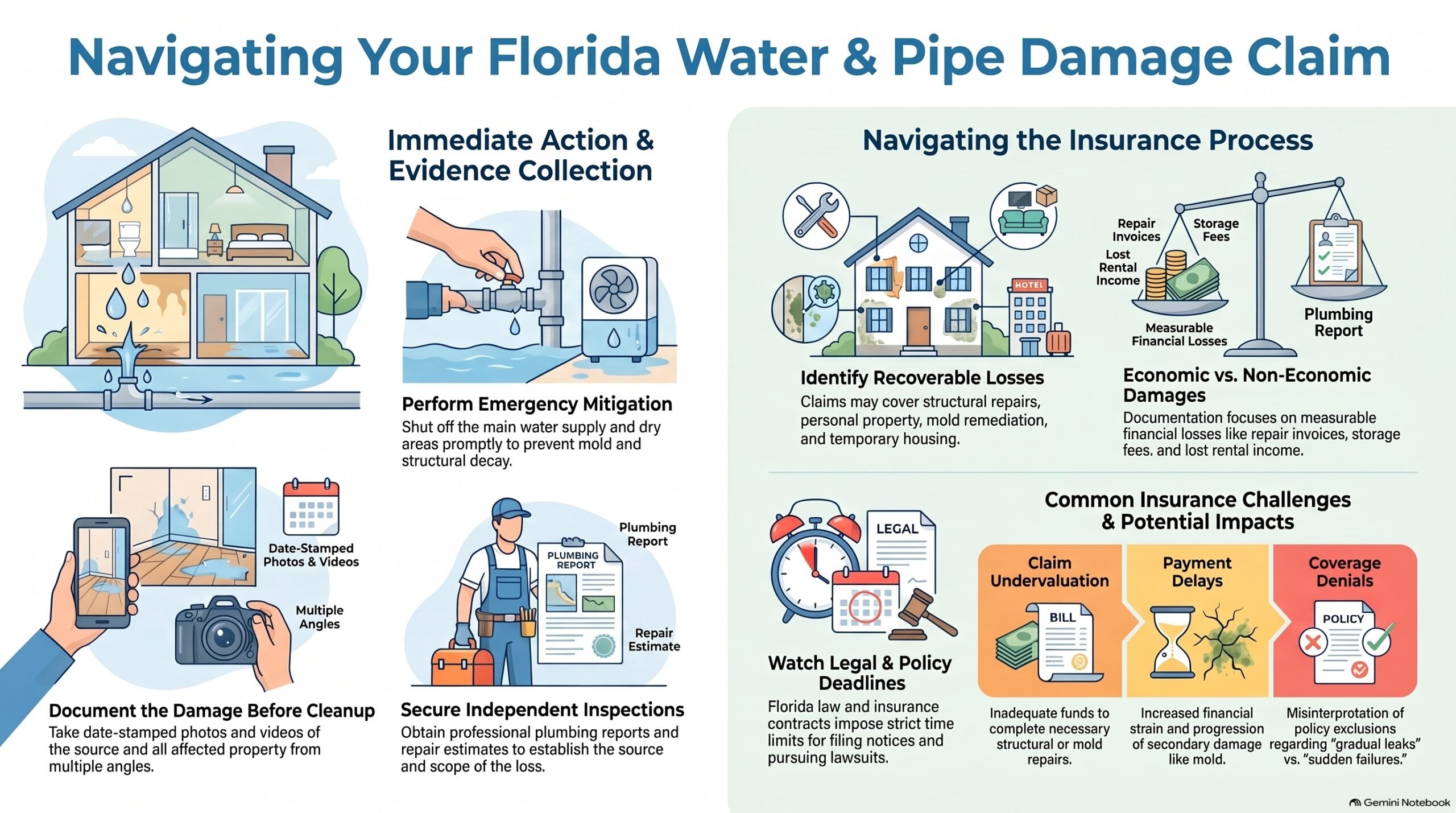
A Florida property claim involving water or pipe damage can require careful documentation, policy analysis, and timely communication with insurers. A qualified legal team can help organize photographs, repair records, invoices, inspection findings, and correspondence so the claim presents a clear account of the loss. Counsel may review applicable coverage provisions, exclusions, deadlines, and proof-of-loss requirements, and identify information that could affect the evaluation.
When an insurer delays payment, undervalues damage, or issues a denial, representation can help protect the policyholder’s contractual rights. Assistance may include preparing Insurance denial appeals, responding to coverage explanations, and communicating with adjusters or other representatives. The team can also examine whether associated losses, including temporary relocation expenses and mold remediation costs, were properly considered under the policy.
Through careful preparation and professional advocacy, the process can become more organized and transparent. The goal is to help affected property owners pursue fair treatment while allowing them to focus on safety, recovery, and the needs of those they serve.
OUR CONSULTATIONSARE FREE
START YOUR FREE CASE REVIEW

Understanding Florida Property Claim Water & Pipe Damage Injury Cases
In Florida, property claim water and pipe damage cases generally arise when leaks, burst pipes, or plumbing failures cause covered damage to a home or commercial property. These cases require careful review of the insurance policy, damage reports, photographs, repair estimates, and communications with the insurer. Coverage may depend on exclusions, deductibles, notice requirements, and whether the claimed loss resulted from a sudden event or an ongoing condition.
The claim may include costs for emergency mitigation, structural repairs, replacement of personal property, and temporary relocation. Mold health risks can also become relevant when moisture remains untreated, particularly for occupants with respiratory vulnerabilities. Disagreements frequently concern the scope and value of covered repairs, creating potential Insurance appraisal disputes. A thorough evaluation helps clarify policy obligations, preserve evidence, and identify unreasonable delays or underpayments. Professionals serving affected property owners can provide organized guidance while treating each claim with accuracy, diligence, and respect.
Common Causes of Florida Property Claim Water & Pipe Damage
Florida property water and pipe damage commonly results from burst pipes, roof leaks, appliance failures, and storm-related flooding. Each cause can affect structural materials, personal property, and the scope of an insurance claim in different ways. Identifying the source and documenting the resulting damage are important steps in evaluating coverage and pursuing appropriate compensation.
Burst Pipes
When a pipe bursts, water can spread rapidly through walls, ceilings, flooring, and personal property, creating extensive damage before the source is contained. Common causes include freezing temperatures, corrosion, deteriorated connections, excessive water pressure, and sudden failures in aging plumbing systems. Appliances, supply lines, and improperly installed fittings may also rupture without warning. Emergency mitigation steps include shutting off the main water supply, disconnecting electricity in affected areas when safe to do so, removing standing water, and contacting qualified restoration professionals. Prompt action can limit mold growth, structural deterioration, and additional losses to personal property. Insurance claim tips include photographing the source and damage, preserving failed components, recording mitigation expenses, and notifying the insurer promptly. A careful inventory and clear timeline can help document the claim and support fair evaluation of covered losses.
Roof Leak Damage
Roof leaks can cause significant water damage even when the initial opening appears minor. Damaged shingles, deteriorated flashing, clogged gutters, and storm-related impacts may allow rainwater to enter beneath roofing materials. Once inside, moisture can spread through insulation, framing, and drywall, creating a Ceiling Leak that may appear far from the original entry point. Persistent dampness can weaken structural components, stain interior finishes, and contribute to Mold Growth that threatens indoor air quality. Florida’s heavy rainfall, hurricanes, and intense sunlight can accelerate roof deterioration, making timely inspection crucial. Property owners should document visible damage, preserve repair records, and take reasonable steps to prevent additional loss without concealing evidence. A careful assessment can help determine whether the roof condition and resulting interior damage support a property insurance claim. Representatives serving affected owners can assist with evaluating coverage and pursuing appropriate benefits.
Appliance Water Leaks
Appliance water leaks can develop from failed supply lines, worn seals, loose connections, or internal component damage, allowing water to spread through flooring, cabinets, walls, and adjacent rooms. Dishwashers, washing machines, refrigerators, and water heaters commonly cause this type of property damage. Prompt water leak detection may limit structural deterioration, mold growth, and damage to personal belongings. Property owners should photograph affected areas, preserve damaged components, and promptly report the loss to the appropriate insurer. Preventative maintenance tips include inspecting hoses, replacing aging connectors, checking shutoff valves, and monitoring unusual moisture near appliances. Documentation of maintenance, emergency services, repair estimates, and replacement costs can support an accurate claim evaluation. A qualified professional may help identify covered damage, clarify policy requirements, and protect the interests of affected households.
Storm-Related Flooding
Storm-related flooding can force water through compromised roofs, windows, doors, and other openings, damaging ceilings, walls, flooring, electrical systems, and personal property. Heavy rainfall, hurricanes, tropical storms, and inadequate drainage may also overwhelm exterior defenses, allowing contaminated water to enter the structure. Promptly evaluating ceiling damage can help identify hidden saturation, weakened materials, and hazards associated with electrical components or structural instability. Property owners should document affected areas with photographs, preserve damaged materials when safe to do so, and promptly report losses in accordance with applicable insurance requirements. Professional drying and cleanup may be necessary to prevent mold growth, limit deterioration, and protect occupants from unsanitary conditions. When insurers question whether flooding resulted from covered wind damage, excluded rising water, or delayed maintenance, knowledgeable guidance can help clarify evidence, policy language, and available remedies.
Don’t Wait. Call Our Florida Personal Injury Lawyers Now!


Legal Rights of Florida Property Claim Water & Pipe Damage Injury Victims
When water or pipe damage affects a Florida property, injured or financially harmed victims may have legal rights to seek compensation under applicable insurance policies and Florida law. Coverage may address reasonable repairs, personal property losses, additional living expenses, and certain injury-related damages, depending on policy language and documented circumstances.
A careful review can help a claimant understand duties, exclusions, deadlines, and available remedies.
- Photographs can preserve the sight of soaked flooring, stained walls, damaged belongings, and standing water before cleanup changes the scene.
- A written evidence-preservation checklist may help organize invoices, repair estimates, communications, receipts, inspection reports, and medical records.
- An insurance dispute timeline can identify notice dates, inspections, claim decisions, requests for information, and unresolved delays.
Victims may be entitled to prompt, fair claim handling and an explanation for denials or underpayments. Legal counsel can communicate with insurers, protect applicable rights, evaluate evidence, and pursue negotiation or litigation when appropriate. Early, organized action supports accountability and helps affected individuals recover resources needed for safe restoration.
Why Do Florida Property Claims for Water & Pipe Damage Happen?
Florida property claim water and pipe damage injuries often arise from sudden plumbing failures, hidden leaks, defective components, poor maintenance, or delayed repairs that allow water to spread through a structure. Aging supply lines, failed water heaters, clogged drains, and storm-related intrusion can saturate floors, walls, and personal property. These conditions may create slip hazards, electrical dangers, structural deterioration, and exposure to contaminated water. Inadequate Preventive maintenance frequently permits minor defects to become extensive losses. Regular plumbing inspections can identify corrosion, weakened connections, pressure problems, and slow leaks before substantial damage develops. Florida’s heat and moisture also increase the likelihood of microbial growth when wet materials remain untreated. Effective mold prevention depends on prompt drying, appropriate ventilation, and sustained humidity control. Property owners, managers, and service providers who understand these causes can better protect occupants and preserve safe living environments. Insurance disputes may arise when responsibility, coverage, or the timing of damage becomes contested.
What Should You Do After a Florida Property Claim for Water & Pipe Damage?
After a water or pipe-damage incident, the affected individual should document the damage with photographs, videos, repair records, and written notes. Immediate medical care should be obtained for any injury, with related treatment and expenses carefully preserved. A property lawyer can then evaluate the insurance claim, protect the individual’s rights, and guide communications with the insurer.
Document the Water Damage
Prompt documentation should begin as soon as it is reasonably safe to do so following water or pipe damage. A property owner or assisting representative should photograph and video each affected area before cleanup, capturing standing water, damaged flooring, walls, ceilings, furniture, appliances, and visible pipe failures. Images should show the scope and location of damage, with timestamps preserved whenever possible.
Written records should identify when the incident occurred, when it was discovered, and what actions were taken to limit additional loss. Receipts, repair estimates, contractor communications, and insurance correspondence should be retained in an organized file. Mold documentation should include photographs of discoloration, odors, and affected materials, while records should note any sewage exposure or contaminated water. Careful documentation can help clarify causation, support a claim, and assist those responsible for evaluating recovery needs.
Seek Immediate Medical Care
When a property owner, tenant, or worker suffers an injury from water or pipe damage, immediate medical evaluation should take priority over documenting the condition or beginning extensive cleanup. A 911 emergency response may be necessary for severe bleeding, suspected fractures, electric shock, breathing difficulty, loss of consciousness, or exposure to contaminated water. Even injuries that appear minor can worsen because falls, hidden structural hazards, and waterborne contaminants may cause delayed symptoms. Medical personnel can assess the condition, provide treatment, and identify precautions that support a safe recovery. Until help arrives, the injured person should remain still if movement could worsen the injury, avoid contact with electrical sources, and receive appropriate first aid from a qualified individual. If safe to swallow, dehydration prevention tips include drinking small amounts of clean water while awaiting evaluation.
Contact a Property Lawyer
A Florida property lawyer can help an injured property owner, tenant, or worker evaluate potential claims arising from water or pipe damage. Legal counsel can review medical records, photographs, repair invoices, inspection reports, and communications with insurers or property managers. This assessment may clarify whether negligence, unsafe conditions, inadequate maintenance, or policy coverage contributed to the losses.
Prompt consultation also helps preserve evidence and identify deadlines affecting property and injury claims. A lawyer may advise on property-damage mitigation steps, including documenting the source of the leak, preventing further damage, and coordinating reasonable emergency repairs. If an insurer denies coverage or undervalues a claim, counsel can explain the insurance denial appeal process and pursue appropriate remedies. By seeking professional guidance, an affected individual can make informed decisions while protecting personal interests and supporting an orderly resolution.
Don’t Wait. Call Our Florida Personal Injury Lawyers Now!
Critical Evidence in a Florida Property Claim Water & Pipe Damage Injury Case
Critical evidence can establish the cause, extent, and financial impact of a Florida water or pipe damage claim.
Key records include:
- Photographs showing damaged rooms, materials, and personal property;
- Plumbing inspection reports and repair cost estimates; and
- Insurance correspondence documenting notices, statements, and claim decisions.
Together, these materials provide a clear foundation for evaluating coverage and supporting the property owner’s position.
Photographic Damage Documentation
Thorough photographic documentation establishes objective evidence of the water and pipe damage underlying a Florida property claim. Clear images should capture affected rooms, flooring, walls, ceilings, cabinetry, personal property, and visible standing water from multiple angles. Close photographs can preserve details such as staining, discoloration, warped materials, peeling finishes, and damaged contents. Images taken before cleanup, during mitigation, and after the work is completed may demonstrate the damage’s progression and the necessity of restoration services. Date-stamped files, organized by location, help maintain a reliable record for the property owner, insurer, and advocates serving the claimant’s interests. Documentation should also show conditions associated with Mold exposure, including visible growth or moisture-related deterioration. In settlement negotiations, well-organized photographs can clarify the claimed losses and support a fair evaluation without overstating the evidence.
Plumbing Inspection Reports
When a plumbing failure causes water and pipe damage, an independent inspection report can provide essential evidence concerning the source, timing, and extent of the loss. A qualified inspector may identify failed connections, burst lines, concealed corrosion, or hidden leaks that photographs alone cannot establish. The report should document affected materials, observed moisture patterns, and conditions that may support a claim for resulting Residential mold. Moisture testing, thermal imaging, and other appropriate methods can help distinguish active damage from preexisting conditions while preserving objective findings. Prompt inspection may also reduce disputes arising from insurance delays, particularly when conditions change after the incident. A clear report can assist policyholders, insurers, and representatives in understanding causation and necessary mitigation. It should include photographs, testing data, dates, and the inspector’s credentials.
Repair Cost Estimates
Accurate repair cost estimates help establish the financial scope of a Florida property claim involving water and pipe damage. A qualified contractor should document the necessary labor, materials, drying services, demolition, and replacement costs, while distinguishing between emergency mitigation and permanent repairs. Estimates should identify each affected area and explain how conditions such as broken tile, damaged cabinetry, flooring deterioration, or structural moisture contribute to the total cost. When appropriate, Mold Testing and remediation projections should be listed separately, with supporting measurements and professional findings. Photographs, invoices, and itemized bids can strengthen the estimate’s reliability and help evaluate whether proposed work addresses the complete loss. Clear estimates also assist those serving affected property owners by presenting repair needs in an organized, verifiable format without overstating damage or including unrelated improvements.
Insurance Correspondence Records
Insurance correspondence records can provide essential evidence in a Florida property claim involving water and pipe damage. Emails, letters, claim forms, inspection notices, and recorded statements may establish when the insurer received notice, what information was requested, and how the claim was evaluated. These records can clarify Policy coverage disputes by showing the insurer’s explanations, reservation-of-rights language, and responses to evidence concerning the loss. They may also reveal timeline delays, including unanswered communications, postponed inspections, or extended periods without a coverage decision. Accurate records help demonstrate whether the policyholder cooperated and whether the insurer followed applicable duties and procedures. A complete, organized correspondence file can assist counsel in identifying inconsistencies, preserving important deadlines, and presenting a clear claim history. It also supports fair treatment for affected property owners and their families.
Long-Term Effects of Florida Property Claim Water & Pipe Damage Injuries
Long-term water and pipe damage may lead to chronic health complications if mold, contaminants, or persistent dampness remain unresolved. Structural damage can progress through weakened materials, hidden decay, and worsening foundation or plumbing problems. These conditions may also create substantial financial and emotional strain through repair costs, disrupted living arrangements, and prolonged uncertainty.
Chronic Health Complications
How can a Florida property claim involving water or pipe damage affect health long after the visible moisture has been removed? Chronic complications may persist when affected occupants experience respiratory irritation, recurring sinus problems, asthma exacerbation, or unusual fatigue. Mold exposure can trigger allergic reactions and inflammatory symptoms, particularly among children, older adults, and people with existing lung conditions. Some individuals may also develop sensitivity that limits their ability to work, sleep, or participate in ordinary activities. Medical documentation can help link ongoing symptoms to the original incident and identify necessary treatment. Disability impacts may include reduced earning capacity, frequent appointments, medication costs, and reliance on family assistance. A careful claim review should address these long-term consequences, preserve relevant records, and support fair consideration of ongoing health needs without overstating causation.
Structural Damage Progression
When water or pipe damage is not fully contained, deterioration can continue behind walls, beneath flooring, and around structural supports after visible moisture disappears. Porous materials may swell, weaken, or separate, while concealed moisture can corrode fasteners and compromise subflooring. The mold growth timeline may begin within one to three days, especially where ventilation is limited, increasing contamination risks and complicating later repairs. An effective emergency mitigation planning process should identify the source, document affected areas, remove saturated materials, and promote thorough drying. Professionals may use moisture meters and targeted inspections to locate hidden damage before it spreads. If neglected, structural movement, sagging surfaces, and reduced load-bearing capacity can develop gradually. Prompt evaluation helps protect occupants, preserve evidence, and support responsible property restoration after a covered loss.
Financial And Emotional Strain
Water and pipe damage can impose financial and emotional burdens that extend well beyond the initial cleanup. Property owners may face repair expenses, temporary housing costs, increased utility bills, and disputes over insurance coverage. Budgeting stress often develops when reimbursement is delayed or denied, forcing families to balance critical needs against restoration demands. Prolonged displacement can disrupt employment, education, and household routines, while uncertainty may contribute to anxiety, sleep difficulties, and strained relationships. Older adults, children, and individuals with health conditions may require additional assistance during remediation. These family caregiving concerns can increase both practical responsibilities and emotional fatigue. Detailed records, timely professional guidance, and compassionate support can help affected households pursue appropriate benefits, protect their interests, and recover with greater stability. Clear communication also helps families coordinate services and make informed decisions.
Proving Liability in Florida Property Claim Water & Pipe Damage Injury Cases
Establishing liability in a Florida property claim involving water or pipe damage requires evidence connecting the loss to a specific act, omission, or failure to maintain the premises. Relevant proof may include photographs, repair invoices, maintenance records, plumbing reports, and statements from witnesses who observed leaks, flooding, or hazardous conditions. Evidence preservation should begin immediately, including retaining damaged materials and documenting when the problem was discovered, reported, and addressed.
Liability may involve a landlord, property manager, contractor, association, utility provider, or another responsible party, depending on ownership and control of the affected system. Records showing prior complaints or notice can help demonstrate that a dangerous condition existed and that reasonable corrective action was not taken. Qualified professionals may evaluate the source, timing, and scope of the damage while distinguishing preexisting conditions from newly caused losses. An insurance delay can increase deterioration, but documentation should establish the original condition and subsequent changes. Careful organization of evidence supports accurate evaluation and fair accountability.
Dealing With Insurance Companies After a Florida Property Claim: Water & Pipe Damage Injury
After a Florida property claim involving water or pipe damage, policyholders should communicate with the insurer carefully and preserve a complete record of the claim. Prompt notice, accurate descriptions, and consistent statements can help prevent avoidable disputes about coverage or causation. Claimants should retain photographs, repair estimates, invoices, inspection reports, and correspondence to create organized water-leak documentation that reflects the damage and mitigation efforts.
Policy timeline management is also important. The policyholder should note the date of notice, adjuster contacts, requests for records, inspections, payments, and written coverage decisions. Communications should remain factual and avoid speculation about fault, preexisting conditions, or the ultimate repair cost. Before signing releases, accepting final payments, or making recorded statements, the policyholder may benefit from reviewing the implications with qualified counsel.
An attorney can help preserve rights, identify unreasonable delays, and communicate with the insurer while treating the claimant’s concerns with diligence and respect. Careful preparation supports informed decisions without prematurely addressing the broader claim process.
What to Expect During a Florida Property Claim Water & Pipe Damage Injury Claim Process
The process generally begins with an initial assessment of the water and pipe damage to determine its cause, scope, and urgency. The policyholder then files an insurance claim and preserves thorough documentation, including photographs, repair estimates, receipts, and related communications. If the insurer disputes coverage, undervalues the loss, or causes delays, the claim may require formal negotiation or legal assistance to pursue a timely resolution.
Initial Damage Assessment
When water or a burst pipe damages a Florida property, an initial damage assessment documents the source, scope, and severity of the loss before repairs alter crucial evidence. A qualified professional may inspect ceilings, walls, flooring, plumbing fixtures, electrical systems, and personal belongings for visible and concealed damage. Moisture readings, photographs, videos, measurements, and dated notes can create a reliable condition record. The assessment should also identify potential mold growth, unsafe structures, contamination, and other health risks that require prompt protective measures. Residents should preserve damaged materials when reasonably safe and avoid discarding items before they are documented. Policy documentation, including declarations pages, endorsements, exclusions, and applicable deductibles, helps clarify available protections. A careful assessment supports informed decisions and protects the interests of affected occupants without prematurely assigning responsibility.
Filing Your Insurance Claim
How should a Florida property owner begin a water or pipe damage claim? The policyholder should promptly notify the insurer through the designated claims channel and request a claim number, an adjuster assignment, and a written explanation of the applicable policy requirements. Policyholder timelines may govern notice, emergency mitigation, cooperation, and submission of claim materials, so compliance can help prevent avoidable disputes. The insurer typically reviews the reported loss, determines whether an inspection is necessary, and issues a coverage position or payment decision. The policyholder should communicate accurately, preserve relevant correspondence, and avoid making unsupported admissions about causation or responsibility. If the insurer denies or limits coverage, a Coverage denial appeal may require a written response addressing policy language and the stated grounds for denial. Legal guidance can help protect rights throughout the process.
Documenting Water And Pipe Damage
Following notice of the claim, thorough documentation can help establish the extent, timing, and likely cause of water or pipe damage. The policyholder should photograph and record affected rooms, flooring, ceilings, personal property, standing water, and visible pipe conditions before cleanup, when safely possible. A written account should identify when the issue was discovered, what actions were taken, and whether weather, a plumbing failure, or another event may have contributed. Receipts, invoices, repair estimates, plumber statements, and temporary housing records can support the claim file. Documentation should also preserve the mitigation timeline, including water extraction, drying, material removal, and follow-up inspections. If contamination is suspected, mold testing reports may provide useful evidence concerning conditions and recommended treatment. Organized records allow representatives to evaluate the loss efficiently and accurately.
Resolving Disputes And Delays
Disputes and delays in a Florida water or pipe damage claim may arise over coverage, causation, the scope of repairs, or the value of the loss. The policyholder should promptly review insurer correspondence, preserve relevant records, and respond to requests without making unsupported statements. Coverage denial appeals may require a written explanation, policy analysis, photographs, invoices, and evidence connecting the damage to a covered event. Mold remediation issues can create additional disagreement when moisture remains, testing is incomplete, or the insurer disputes whether treatment is necessary. Independent contractors and qualified experts may help document the appropriate repair plan and estimated costs. If communications fail, a formal demand, appraisal, mediation, or legal action may provide a structured path toward resolution while protecting the policyholder’s rights and supporting a fair outcome.
Compensation for Florida Property Claim Water & Pipe Damage Injury Damages
Compensation for water and pipe damage may include the reasonable cost of emergency mitigation, repairs, replacement of damaged materials, and restoration of the property to its pre-loss condition. Covered expenses may also involve water extraction, drying, debris removal, temporary protection, and necessary structural or system repairs. When Mold contamination develops because water was not promptly addressed, reasonable remediation and related testing may be considered, provided the policy and evidence support coverage. Health impacts associated with contaminated conditions can require documentation from qualified professionals and may influence the scope of necessary remediation. Photographs, invoices, inspection reports, repair estimates, and records of communications can help establish the property’s condition and the services required. A careful claim presentation should connect each requested expense to the covered loss, avoid unsupported estimates, and, when feasible, preserve damaged materials. Legal counsel may assist policyholders in identifying recoverable amounts and presenting evidence while protecting the interests of affected occupants.
Economic vs Non-Economic Damages in Florida Property Claim Water & Pipe Damage Cases
Economic damages may include repair costs, replacement expenses, temporary housing, lost rental income, and other measurable financial losses. Non-economic losses, such as inconvenience, disruption of daily life, and reduced use or enjoyment of the property, may also be considered depending on the claim and applicable law. Proving these damages generally requires organized records, photographs, professional assessments, receipts, and other evidence establishing the nature and value of the loss.
Economic Damage Categories
Florida property claim water and pipe damage cases generally involve economic losses that can be documented through invoices, estimates, financial records, and other objective evidence. Common categories include emergency water extraction, drying, plumbing repairs, replacement of damaged flooring, drywall, cabinetry, insulation, and personal property. Reasonable expenses for temporary housing, storage, debris removal, and utility services may also qualify when displacement or remediation makes the residence unusable. Professional inspection, engineering, and mitigation fees can support the claim when they are necessary and properly documented. Costs associated with Water Safety measures, such as sanitation and contaminated-water cleanup, may be recoverable. Mold Prevention efforts, including controlled drying, antimicrobial treatment, and necessary testing, may likewise constitute compensable mitigation expenses. Coverage, causation, depreciation, deductibles, and policy conditions ultimately affect valuation.
Non-Economic Losses Explained
Although water and pipe damage claims primarily involve measurable financial losses, certain alleged harms fall outside the scope of traditional economic damages. Non-economic losses generally refer to inconvenience, disruption, anxiety, loss of comfort, or diminished enjoyment associated with a damaged home. In Florida property disputes, these losses may be difficult to recover because insurance policies typically cover property damage and related expenses rather than personal distress. Nevertheless, prolonged displacement, unsafe living conditions, or repeated delays involving water restoration and mold mitigation can impose substantial personal burdens on occupants. The relevance of such harm depends on the policy language, the nature of the claim, and applicable Florida law. A careful evaluation distinguishes compensable property-related consequences from generalized frustration, helping claimants and their representatives pursue fair treatment while responsibly serving affected households.
Proving Property Claim Damages
Establishing damages in a Florida property claim requires separating documented financial losses from alleged non-economic harm and connecting each loss to the covered water or pipe damage. Economic damages may include reasonable repair costs, emergency mitigation, damaged contents, temporary housing, and lost rental income when supported by insurance documentation, invoices, photographs, expert opinions, and proof of payment. The claimant should preserve damaged materials when safe to do so and maintain a dated record of inspections, communications, and expenses. Non-economic damages, such as inconvenience, stress, or disruption, are generally more difficult to recover in a property insurance dispute and may require circumstances beyond a mere delay in claim processing. Coverage analysis must address deductibles, causation, wear and tear, maintenance issues, and policy exclusions. A careful presentation helps insurers, adjusters, and courts evaluate the claimed losses fairly and accurately.
Don’t Wait. Call Our Florida Personal Injury Lawyers Now!
When a Florida Property Claim Water & Pipe Damage Injury Case Goes to Trial vs. Settlement
When water intrusion or a burst pipe causes significant property damage in Florida, the claim may be resolved through settlement or proceed to trial, depending on the strength of the evidence, the insurer’s position, and the amount in dispute. Settlement negotiation often provides a faster, more predictable resolution, allowing property owners to address repairs, replacement needs, and related losses without the uncertainty of courtroom proceedings. A well-supported claim valuation helps establish a reasonable settlement range by organizing invoices, photographs, contractor estimates, expert opinions, and records of damaged contents. Trial readiness becomes important when an insurer denies responsibility, undervalues the loss, delays payment, or refuses to engage in meaningful negotiations. An effective evidence strategy identifies the source of the damage, documents its progression, and links each requested amount to reliable supporting records. Counsel may recommend trial when litigation offers the strongest opportunity for fair recovery, while settlement may better serve clients seeking efficiency and reduced expense. The appropriate path depends on preparation, objectives, and informed evaluation of risks.
Florida Laws That May Affect Your Florida Property Claim Water & Pipe Damage Case
Florida laws governing property insurance claims may materially affect a water or pipe damage dispute, including the policyholder’s duties, available coverage, claim deadlines, and the insurer’s obligations. Understanding these requirements helps those serving affected homeowners preserve evidence and pursue fair treatment.
Florida property insurance laws govern water-damage claims, deadlines, policyholder duties, coverage questions, and insurer obligations.
- Homeowner Duties: A policyholder generally must promptly report damage, protect the property from further damage, and cooperate reasonably with the insurer’s investigation.
- Water Mitigation: Florida requirements and policy provisions may require reasonable emergency measures, such as shutting off water, drying affected areas, and documenting damaged materials.
- Insurance Deadlines: Notice, proof-of-loss, examination, and supplemental-claim deadlines may apply, while Florida law also regulates claim communications and payment practices.
The Duty to Disclose may require complete and accurate information about the loss, repairs, prior damage, and relevant policy conditions. Coverage may depend on exclusions, endorsements, causation, and whether maintenance issues contributed to the loss. Because legal and policy requirements vary, careful documentation and timely professional guidance can help protect the homeowner’s interests while supporting an efficient, good-faith resolution.
The Statute of Limitations for Florida Property Claim Water & Pipe Damage Injury Cases
Timely action is particularly important after a water or pipe loss because Florida law limits the period in which a property owner may bring a lawsuit or pursue certain insurance-related remedies. Deadlines can depend on the date of loss, the policy language, the type of claim, and whether statutory changes apply. Florida generally imposes a limited period for filing breach-of-insurance-contract actions, while notice requirements and policy provisions may create earlier obligations. A delayed filing may allow an insurer to challenge the claim, regardless of the severity of the damage.
A responsible Insurance claim strategy begins with identifying every potentially applicable deadline and promptly documenting communications. The Evidence preservation checklist should include photographs, videos, repair invoices, damaged materials, mitigation records, policy documents, and written notices. Claimants should avoid assuming that ongoing discussions extend a limitations period. Because factual circumstances can affect the calculation, a qualified professional should promptly review the loss and explain the available options. Acting early helps preserve information, supports fair treatment, and protects the interests of affected property owners and communities.
How a Florida Property Claim Water & Pipe Damage Lawyer Can Help You
A Florida property claim water and pipe damage lawyer can evaluate the loss, interpret the applicable insurance policy, and identify coverage issues that may affect the claim. The lawyer may help a policyholder organize evidence, communicate with the insurer, and present a complete account of the property’s condition and necessary repairs.
- Photographs, invoices, plumbing reports, and moisture readings can create a clear record of the damage.
- Water mitigation tactics, including drying, extraction, and mold prevention, may limit additional losses.
- A detailed estimate can connect covered damage to reasonable repair and replacement costs.
Legal counsel can review adjuster findings, address disputes regarding causation, and explain policy duties that influence claim handling. If an Insurance claim is denied, the lawyer can examine the stated reasons, compare them with the policy language, and identify factual or procedural weaknesses. The lawyer may also assist with negotiations, preserve relevant documentation, and support a fair resolution that helps restore safe, functional property for occupants and communities.
When to Contact a Florida Property Claim Water & Pipe Damage Lawyer
Recognizing when legal guidance is warranted can protect a policyholder’s rights and improve the handling of a water or pipe damage claim. A lawyer should be contacted promptly after significant flooding, hidden moisture, mold concerns, or damage affecting structural components and personal property. Early consultation is also appropriate when an insurer delays inspection, requests extensive documentation, issues a reservation of rights, or communicates that coverage may be limited or denied.
Policyholders should consider Insurance dispute timelines before waiting for repairs, negotiations, or an internal review to conclude. Deadlines in the policy or under Florida law may affect notices, proofs of loss, supplemental claims, and litigation. Immediate evidence preservation is particularly important when water sources, damaged materials, receipts, photographs, and repair records could change or disappear. A lawyer can help identify time-sensitive steps while the facts remain available. Contact is likewise prudent when contractors and insurers provide conflicting assessments, leaving the policyholder uncertain about necessary work, payment responsibility, or claim documentation.
Why You Need an Experienced Florida Property Claim Water & Pipe Damage Lawyer
Because water and pipe damage claims often involve competing interpretations of policy language, causation, and the scope of repairs, experienced legal counsel can provide meaningful protection for the policyholder. A qualified lawyer can assess coverage provisions, identify potentially applicable exclusions, and connect the reported loss to credible evidence. This guidance is especially important when hidden moisture, mold concerns, or continuing structural damage complicate the claim.
Counsel can also support evidence preservation by directing the policyholder to protect damaged materials, obtain qualified inspections, and maintain photographs, invoices, and repair records. Attention to documentation deadlines helps prevent avoidable procedural problems and preserves the ability to pursue benefits under the policy. During insurance negotiation, an attorney can evaluate the insurer’s position, challenge unsupported valuations, and present a well-organized demand for covered repairs.
Professional representation may also reduce confusion for property owners seeking to restore safe, habitable conditions while serving the needs of family members, tenants, or the community. A lawyer’s informed involvement promotes accountability, accuracy, and fair treatment throughout the claim process.
How to Choose the Right Florida Property Claim Water & Pipe Damage Lawyer for Your Case
Selecting the right Florida property claim water and pipe damage lawyer requires careful evaluation of the attorney’s experience, communication practices, and understanding of insurance coverage disputes. A qualified lawyer should explain policy provisions clearly, identify potential coverage issues, and describe realistic legal options without making unsupported promises.
Effective Client communication is crucial throughout the claim. Prospective clients should ask how promptly the lawyer responds, who will provide updates, and whether important decisions are explained thoroughly. The attorney should also present a focused claim strategy that addresses evidence, deadlines, insurer communications, and potential settlement or litigation.
Damage documentation can greatly influence the strength of a claim. The lawyer should understand how photographs, repair estimates, invoices, maintenance records, and expert reports establish the nature and value of losses. When causation or the scope of repair is disputed, expert consultation may provide objective support.
Reviewing qualifications, professional standing, case-management procedures, and fee arrangements helps property owners select counsel capable of protecting their interests and serving their household responsibly.
About The Law Offices of Anidjar & Levine
The Law Offices of Anidjar & Levine represents Florida property owners pursuing insurance claims involving water intrusion, burst pipes, plumbing failures, and related structural damage.
The firm evaluates available coverage, documents losses, and addresses disputes involving delayed investigations, insufficient payments, or claim denials.
Its attorneys work to clarify policy obligations and present evidence supporting the property owner’s position.
A Client-Centered Strategy guides each matter, recognizing that every building, loss, and policy presents distinct circumstances.
The firm may assist with communication, claim preparation, damage assessment, and negotiations with insurance representatives.
When appropriate, it also pursues litigation to protect a client’s legal interests.
Transparent Communication Methods help property owners understand significant developments, potential challenges, and available options throughout the process.
The firm’s approach is designed to reduce uncertainty while maintaining careful attention to deadlines and documentation requirements.
By serving individuals, families, and businesses affected by property damage, the Law Offices of Anidjar & Levine seeks to provide informed representation and accountable guidance during demanding insurance disputes.
Frequently Asked Questions
Does Homeowners Insurance Cover Gradual Pipe Leaks or Only Sudden Water Damage?
Homeowners insurance often covers sudden, accidental pipe ruptures and resulting water damage, but gradual pipe leaks are treated differently. Coverage may be denied when seepage develops over time, particularly if the insurer determines that neglected maintenance, corrosion, wear, or an unresolved defect caused the loss. Policy exclusions control the outcome, while some policies cover resulting damage but not pipe replacement. A careful review of policy language, evidence, and prompt reporting can clarify available protection.
Can Renters File Claims for Belongings Damaged by Burst Pipes?
Renters can generally file claims under renters insurance for personal belongings damaged by burst pipes, subject to policy coverage, exclusions, and deductibles. Landlord responsibility typically concerns the building and necessary repairs, while tenants should promptly notify management and their insurer. Tenant documentation should include photographs, receipts, inventory records, and communications. Strong proof of damages supports valuation. Claim deadlines vary by policy and jurisdiction, so prompt reporting and careful compliance are critical for preserving available benefits and remedies.
How Are Water Damage Claims Handled After a Hurricane or Tropical Storm?
After a hurricane or tropical storm, insurers typically investigate reported water damage, determine the cause, and compare losses with policy coverage, exclusions, deductibles, and limits. Policyholders should, when safe, promptly prevent further damage, preserve damaged materials, and maintain claim documentation, including photographs, repair estimates, receipts, and communications. Hurricane timelines may affect deadlines for reporting losses, submitting proof, and completing repairs, so timely notice and organized records can materially support fair evaluation.
What Happens if Mold Develops After Water Damage From a Leaking Pipe?
When mold develops after a pipe leak, the affected area should be restored promptly, thoroughly documented, and evaluated by qualified professionals. Delayed action may worsen structural damage and increase the health impacts of mold, particularly for individuals with respiratory conditions or allergies. Remediation timelines depend on moisture levels, material damage, and the extent of contamination. A property owner should notify the insurer quickly, preserve photographs and repair records, and avoid permanent repairs before inspection, unless emergency measures are necessary to prevent further harm.
Can a Public Adjuster Help Estimate Repairs for My Property Damage Claim?
A public adjuster can help estimate repair costs for a property damage claim by inspecting affected areas, identifying covered losses, and preparing a detailed valuation for submission to the insurer. A public adjuster overview typically includes policy review, damage assessment, and claim negotiation. Their documentation guidance may help organize photographs, invoices, contractor estimates, and mitigation records. The policyholder should verify licensing, fees, and potential conflicts before authorizing representation.
—————————
Water and pipe damage can cause extensive property losses, insurance disputes, and financial strain for Florida homeowners.
A Florida property claim water and pipe damage lawyer can evaluate coverage, document losses, address insurer delays or denials, and pursue the compensation available under the policy.
The Law Offices of Anidjar and Levine provides guidance throughout the claims process, helping property owners protect their rights and make informed decisions after covered damage occurs.
For additional legal assistance, visit our Florida Personal Injury Lawyer page.

