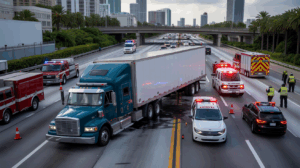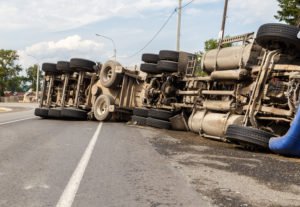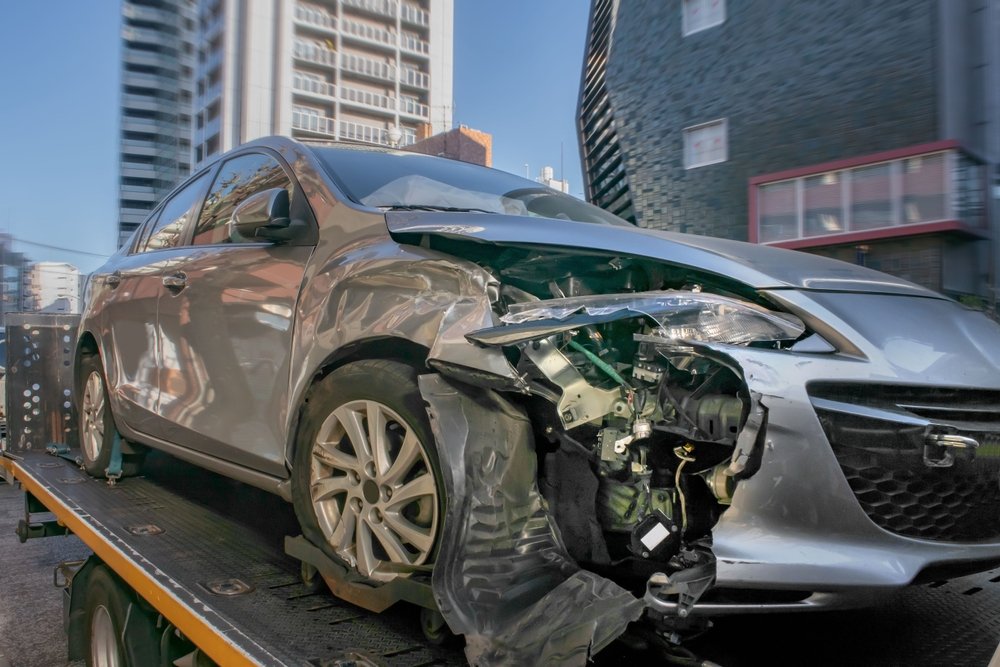
If a truck caused your Jacksonville car accident, you can recover compensation for your injuries. Truck accident cases often involve multiple liable parties beyond just the truck driver.
Trucking companies may share liability for driver negligence, and multiple insurance policies often provide coverage. Understanding the unique aspects of truck accident claims helps victims identify all responsible parties and pursue maximum compensation for serious injuries.
A Jacksonville truck accident lawyer experienced in commercial vehicle cases knows how to obtain critical evidence, including driver logs, maintenance records, black box data, and corporate safety policies that reveal the full scope of negligence in trucking accidents.
Why Truck Accidents Differ From Regular Car Crashes
Commercial truck accidents involve fundamentally different dynamics than collisions between passenger vehicles. The massive size and weight disparity between 80,000-pound tractor-trailers and 3,000-pound cars means truck accidents typically cause catastrophic injuries even at relatively low speeds.
Federal Motor Carrier Safety Regulations establish specific requirements for truck drivers and trucking companies that don’t apply to regular drivers. These regulations govern driver qualification, hours of service, vehicle maintenance, cargo securement, and operational safety. Violations of these federal regulations can establish negligence in truck accident cases.
Trucking companies face responsibility for their drivers’ actions as their employer. They are also responsible for negligent hiring and training decisions, and for systemic safety failures that contribute to crashes.


Multiple Parties Who May Be Liable in Truck Accidents
Truck accident investigations often reveal numerous potentially liable parties beyond the truck driver who was operating the vehicle at the time of the collision. Identifying all responsible parties becomes critical when injuries are severe, and no single insurance policy provides adequate coverage to fully compensate for damages.
Trucking Companies and Corporate Liability
When truck drivers cause crashes while hauling loads, making deliveries, or performing other job duties, their employers share responsibility for resulting damages. Trucking companies also face direct liability for their own negligent conduct, separate from driver actions.
Companies that fail to properly screen drivers before hiring, provide inadequate training, pressure drivers to violate hours of service regulations, defer necessary maintenance to save costs, or implement unsafe operational policies create conditions that lead to preventable accidents. These corporate failures support independent claims against trucking companies.
Third-Party Maintenance and Loading Companies
Truck maintenance companies that service commercial vehicles can be held liable when inadequate repairs or inspections contribute to accidents. Brake failures, tire blowouts, and steering system malfunctions that result from substandard maintenance create liability for the companies responsible for keeping trucks roadworthy.
Cargo loading companies face liability when improperly secured or unbalanced loads contribute to accidents. Overloaded trucks, unevenly distributed cargo, and inadequately secured freight create dangerous conditions that can cause drivers to lose control.
Federal Regulations That Establish Trucking Standards
Hours of service regulations limit how long truck drivers can operate vehicles without rest breaks. Drivers cannot exceed 11 hours of driving time following 10 consecutive hours off duty, and they cannot drive beyond 14 hours after coming on duty. These rules aim to prevent driver fatigue, a leading cause of truck involvement in Jacksonville car accidents.
Vehicle maintenance requirements mandate regular inspections and repairs of safety-critical systems. Pre-trip inspections must occur before each drive, and comprehensive inspections must be performed annually. Maintenance records document whether trucking companies fulfilled these obligations or deferred necessary repairs that created dangerous conditions.
Driver qualification standards require commercial driver’s licenses, medical certifications, clean driving records, and specific training. Trucking companies must verify that drivers meet these qualifications before hiring and must conduct ongoing monitoring. Hiring unqualified drivers or retaining drivers with poor safety records demonstrates negligent hiring practices.
How Truck Insurance Policies Provide Higher Coverage Limits
Federal law requires commercial trucks to carry significantly higher insurance coverage than passenger vehicles. Interstate trucking companies must maintain minimum liability coverage of $750,000 to $5 million, depending on the type of cargo they haul. This money can help you recover compensation after your Jacksonville car accident.
Most trucking companies carry insurance well above minimum requirements, with policies often providing $1 million or more in liability coverage per accident. These higher limits better protect seriously injured victims than the minimal coverage required for passenger vehicles in Florida.
However, catastrophic injuries may still exceed even these substantial policy limits when accidents cause permanent disabilities, traumatic brain injuries, or wrongful deaths. Umbrella and excess liability policies provide additional coverage layers beyond primary insurance policies.


Critical Evidence in Truck Accident Cases
Electronic logging devices, onboard computers, and event data recorders capture information about vehicle speed, braking, and driver actions in the moments before crashes. This black box data provides objective evidence about how accidents occurred.
Driver logs, whether electronic or paper-based, reveal whether drivers complied with hours of service regulations or were operating while fatigued. These records show patterns of regulatory violations that demonstrate systemic problems rather than isolated mistakes. Discrepancies between electronic logs and paper logs may show falsification of records.
Maintenance records document whether trucks received required inspections and repairs. Service histories reveal patterns of deferred maintenance, repeated problems with specific vehicle systems, and whether identified safety issues were properly addressed.
Protecting Evidence Through Legal Action
Attorneys can send spoliation letters immediately after accidents, demanding that companies preserve all relevant evidence for your case. These preservation demands create legal consequences if companies fail to keep them.
Federal regulations require trucking companies to maintain certain records for specific time periods, but many documents can be legally destroyed after retention periods expire. Quick legal action ensures evidence gets preserved before destruction occurs and before electronic data gets overwritten by newer information.
Get Compensation for Your Jacksonville Truck Accident
Contact our Jacksonville truck accident lawyer today if you were injured by a truck in a car accident. Our attorneys understand federal trucking regulations, corporate liability theories, and how to investigate accidents involving commercial vehicles.
We identify all responsible parties, pursue compensation from all available insurance sources, and fight for maximum recovery for the catastrophic injuries that truck accidents often cause.