1.0 Introduction: The Unique Legal Challenges of Multi-Vehicle Collisions
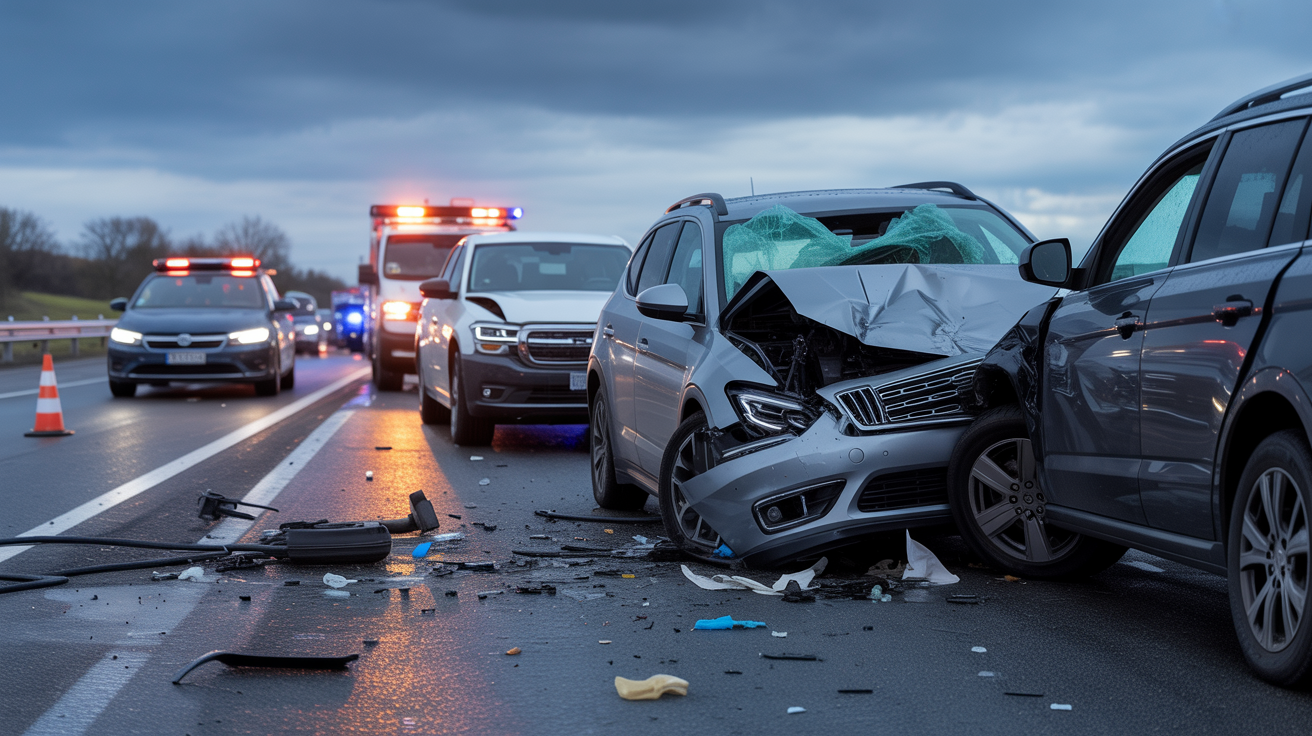
Multi-vehicle accidents on Tampa’s congested roadways present legal complexities far exceeding those of standard two-car incidents, requiring a sophisticated and strategic approach to liability determination and compensation recovery. These incidents are not merely larger accidents; their structure and consequences create a fundamentally more challenging legal environment.
Learn More: Tampa Multi-Vehicle Accident Injury Lawyer
The core problem is that these cases involve intricate chain-reaction sequences, multiple potentially at-fault parties, and competing insurance companies, all of which complicate the process of securing fair compensation for victims. Insurers frequently engage in blame-shifting tactics, attempting to minimize their financial responsibility by pointing fingers at other drivers involved. This creates a contentious and confusing landscape for injured parties who must navigate multiple claims simultaneously.
The purpose of this document is to analyze the common causes, investigative procedures, and key legal principles, such as comparative negligence, that are essential for legal professionals handling these complex claims in Tampa. By deconstructing the elements of a multi-vehicle accident claim, this analysis provides a framework for understanding the strategic imperatives required for a successful outcome.


2.0 Analysis of Causation Factors in Tampa Multi-Vehicle Accidents
Identifying the root causes of a multi-vehicle collision is the foundational step in building a robust liability case against multiple negligent parties. A precise understanding of the initial event and the subsequent chain reaction is critical for apportioning fault and countering the defensive arguments of insurers. Several preventable factors are consistently observed as catalysts for catastrophic chain-reaction collisions in the Tampa area.
Distracted Driving Chain Reactions
Distracted driving is a primary cause of multi-vehicle pile-ups, creating a dangerous domino effect on congested highways. When drivers are distracted by cellphones or suffering from drowsiness, their reaction times decrease significantly, preventing them from responding to sudden changes in traffic flow. This failure to brake in time can initiate a devastating sequence of collisions, a risk that is particularly acute during rush hour on high-traffic corridors like Interstate 275 and the Veteran’s Expressway. The legal strategy must focus on securing evidence of this distraction—such as cellphone records or witness testimony—to establish the initial breach of duty that set the catastrophic chain of events in motion.
Poor Weather and Visibility Issues
Tampa’s subtropical climate introduces sudden and severe weather conditions that dramatically reduce visibility and contribute to multi-vehicle accidents. Heavy afternoon thunderstorms can create torrential rain, while morning fog often blankets roadways. Compounding these issues is the intense glare from the Florida sun. Liability in these cases hinges on demonstrating that one or more drivers failed to adjust their speed or increase their following distance in response to these deteriorated conditions, a clear violation of their duty to operate their vehicle safely.
Aggressive Lane Change Collisions
Reckless driving, characterized by aggressive weaving across multiple lanes without proper signaling or safety margins, frequently destabilizes traffic flow and leads to chain-reaction crashes. When a driver makes a sudden, aggressive lane change, surrounding vehicles have minimal time to react. The resulting side-swipe dynamics can create unpredictable vehicle trajectories, causing cars to spin into adjacent lanes. Proving this behavior is critical not only for establishing negligence but also for building a potential case for punitive damages by demonstrating a conscious disregard for public safety.
Defective Vehicle Brake Failures
While driver error is common, mechanical failure can be an equally devastating and legally distinct cause. Defective brake systems represent a serious hazard, with failures stemming from design flaws, material defects in components, or electronic malfunctions in modern anti-lock braking systems (ABS). In these scenarios, the investigation must pivot to address a potential shift in the chain of causation. This moves the case into the realm of product liability law, requiring a different set of evidentiary standards, expert witnesses such as mechanical engineers, and potentially different defendants, including vehicle and parts manufacturers.
While identifying these causal factors is foundational, translating them into undeniable proof of liability demands a rigorous and methodical investigative framework.
3.0 The Investigative Framework for Establishing Liability
In the chaotic aftermath of a multi-vehicle collision, the investigative phase is where a legal team seizes control of the narrative from competing insurers. Where multiple parties offer conflicting accounts, a thorough investigation is the only reliable method to reconstruct the event, establish a clear sequence of fault, and build an evidentiary foundation that counteracts blame-shifting tactics.
- Evidence Collection at the Scene The immediate collection of physical evidence is paramount. This involves documenting the scene with extensive photography, capturing all vehicles, their license plates, and the specific damage sustained. It is also crucial to document broader environmental factors, including road conditions, skid marks, traffic signals, and debris patterns. Modern techniques like drone documentation provide invaluable overhead perspectives that help clarify the complex positioning and interaction of vehicles.
- Witness Statements Independent witness testimony is often crucial for corroborating the sequence of events. It is essential to secure the contact information of any witnesses at the scene and obtain their statements while memories are still fresh. These accounts can provide an unbiased perspective that cuts through the conflicting narratives of the involved drivers.
- Official and Expert Reports A formal investigation relies on both official records and expert analysis. This includes gathering and analyzing the official police report, which provides a preliminary assessment. To build a more compelling case, accident reconstruction specialists must be commissioned. These experts analyze physical evidence like vehicle damage patterns and collision angles to provide expert testimony that scientifically establishes the sequence of events and clarifies how each driver’s actions contributed to the pile-up.
- Footage Review Objective video evidence can be dispositive in proving liability. The investigation should include sourcing and reviewing any available traffic camera footage. This footage can establish an indisputable, real-time timeline of the collision sequence, effectively neutralizing disputes over who struck whom and when.
The objective evidence gathered through this process provides the factual bedrock for applying Florida’s primary legal doctrine for apportioning fault: comparative negligence.
4.0 The Application of Florida’s Comparative Negligence Doctrine
Mastery of Florida’s comparative negligence law is the primary tool for mitigating blame-shifting tactics and preserving a client’s recovery potential in multi-vehicle accident cases. This legal principle directly governs how liability is distributed among multiple parties and, as a result, dictates the final compensation awarded. It is the legal lens through which all evidence of fault is ultimately viewed.
The principle of comparative negligence, as it applies in Florida, stipulates that an injured party can recover damages even if they are partially at fault for the accident. However, the total compensation they are entitled to receive is reduced proportionally to their assigned percentage of fault.
Applying this doctrine in a multi-vehicle context presents significant complexities. Key strategic challenges include:
- Assigning precise and defensible fault percentages among multiple drivers. This requires translating evidence from accident reconstruction reports—such as collision vectors and crush damage—into a legally defensible percentage that can withstand challenges from multiple opposing counsel.
- Countering sophisticated defense arguments from multiple insurance companies that aggressively attempt to shift a disproportionate share of blame onto the injured client to reduce their own payout.
- Leveraging expert testimony, particularly from accident reconstruction specialists, to provide a scientific and objective basis for fault allocation that can withstand scrutiny in negotiations or at trial.
A concrete example illustrates this in practice: If you’re found 30% responsible, you’ll receive 70% of total damages.This calculation underscores the high stakes involved in arguing fault percentages, as every point shifted represents a substantial change in the final recovery.


5.0 Scope of Damages and Compensation in Multi-Vehicle Claims
Securing comprehensive compensation for victims requires a meticulous and forward-looking valuation of all current and future losses. The devastating consequences of these crashes often extend far beyond initial medical bills, creating long-term physical, psychological, and financial burdens that must be accounted for in any fair settlement or award. Compensation is categorized into economic, non-economic, and, in some cases, punitive damages.
- Economic Damages (Quantifiable Losses)
- Medical Expenses: All costs for current medical care as well as expert-validated projections for future treatment needs, such as ongoing physical therapy or surgeries.
- Lost Wages: Income lost due to the inability to work during the recovery period.
- Reduced Earning Capacity: In cases of permanent disability, compensation for the permanent diminishment of a victim’s lifetime income potential.
- Property Damage: Costs to repair or replace the victim’s vehicle and any other personal property destroyed.
- Non-Economic Damages (Intangible Losses)
- Pain and Suffering: Compensation for the physical pain and emotional distress resulting from the injuries.
- Mental Anguish: Addresses psychological trauma such as Post-Traumatic Stress Disorder (PTSD), flashbacks, sleep disruption, and survivor guilt.
- Loss of Life’s Enjoyment: Compensation for the victim’s inability to participate in hobbies, recreational activities, and other aspects of life previously enjoyed.
- Punitive Damages
- In cases involving egregious negligence or intentional reckless behavior, punitive damages may be sought. The purpose is not to compensate the victim but to punish the wrongdoer and deter similar dangerous conduct in the future.
Successfully calculating and recovering these damages requires not only strong evidence but also strict adherence to procedural rules and strategic case management.
6.0 Procedural Deadlines and Strategic Management of Complex Claims
Successful outcomes in multi-vehicle accident cases depend equally on the strength of the evidence and on disciplined adherence to strict procedural rules and sophisticated case management. Navigating a claim against multiple opposing parties requires a proactive legal strategy designed to manage complexity, anticipate defensive tactics, and preserve the client’s legal rights at every stage.
Statute of Limitations
A critical procedural hurdle is Florida’s statute of limitations. For most personal injury lawsuits, state law provides a two-year window from the date of the accident to file a claim. However, nuances and filing exceptions can exist. The risk of delay cannot be overstated; waiting too long to take legal action can result in the complete forfeiture of the right to seek compensation, regardless of the severity of the injuries or the clarity of the evidence.
Strategic Negotiation and Litigation
The primary challenge in managing a multi-vehicle claim is negotiating with multiple insurance companies simultaneously. A common tactic employed by insurers is to delay and deny by shifting blame among the various parties, each attempting to minimize their own financial responsibility. This creates a complex, multi-front negotiation that requires a cohesive legal strategy that anticipates defense tactics, maintains clear client communication, and demonstrates a credible willingness to proceed to litigation if fair settlement offers are not forthcoming.
Addressing Special Scenarios
Multi-vehicle accidents often present unique circumstances that require specialized strategic approaches. Common challenges include:
- Uninsured or Hit-and-Run Drivers: When an at-fault driver is uninsured or flees the scene, the immediate steps are to file a police report to document the incident and then pursue a claim through the client’s own uninsured motorist (UM) coverage. This ensures a path to recovery even when the negligent party cannot be held directly accountable.
- Commercial Vehicle Involvement: The presence of a commercial vehicle fundamentally alters the strategic landscape. These vehicles are federally required to carry significantly higher liability insurance limits, typically ranging from $750,000 to $1 million or more. This creates a larger potential pool for recovery in cases involving catastrophic injuries.
- Medical Liens: After an accident, healthcare providers may place a lien on a future settlement to ensure their bills are paid. An effective legal strategy includes negotiating these medical liens to reduce the amount the client ultimately owes, thereby maximizing their net recovery from the settlement.
Managing these multifaceted legal, procedural, and financial challenges effectively underscores the need for specialized legal expertise.
7.0 Conclusion: Key Takeaways for Legal Professionals
The legal complexities in collisions following a multi-vehicle incident in Tampa create a complex web of competing interests, intricate fact patterns, and nuanced legal doctrines. Successfully representing a victim requires a strategic approach that combines rapid investigation with a deep understanding of Florida’s comparative negligence laws and insurance carrier tactics. The process demands meticulous preparation, from preserving evidence at the scene to conducting a comprehensive valuation of long-term damages.
For legal professionals navigating these challenging cases, several strategic directives are critical for protecting a client’s rights and maximizing their recovery:
- Seize the Evidentiary High Ground: An immediate, expert-led investigation is non-negotiable. It pre-empts defensive narratives and establishes a factual baseline from which all negotiations must proceed.
- Weaponize the Doctrine of Comparative Negligence: A masterful application of Florida’s fault-apportionment system is the primary offensive tool for neutralizing blame-shifting and protecting a client’s claim from being unfairly diminished.
- Execute a Unified Multi-Front Negotiation: A proactive and coordinated strategy is required to manage simultaneous negotiations with multiple insurers, preventing them from leveraging chaos to minimize their individual liabilities at the client’s expense.
- Quantify the Full Human and Financial Cost: Effective representation must go beyond immediate medical bills to account for the full spectrum of long-term physical, psychological, and financial consequences, ensuring the client’s future needs are met.