When you suspect a loved one is being mistreated in a nursing home, the situation can feel overwhelming and confusing. Families are often paralyzed by uncertainty, questioning what they are seeing and unsure of the next steps to take.
This emotional turmoil is understandable, but it can also lead to inaction at a time when decisive steps are most critical.
Learn More: Florida Nursing Home Abuse Injury Lawyer
The purpose of this article is to cut through the confusion and reveal several critical, often-overlooked truths about Florida nursing home law and residents’ rights. Understanding these realities is not just about learning legal facts; it is about arming you with the precise knowledge needed to counter facility tactics and protect your family member.
By grasping these key points, you can move from a position of uncertainty to one of empowerment, ready to take effective action.
1. “Invisible” Neglect Is Often the Most Dangerous Form of Abuse
While families are often conditioned to look for overt signs of physical abuse, such as unexplained bruises, some of the most common and severe injuries in care facilities arise from neglect. These harms are often “invisible” at first glance but can have devastating consequences.
Common forms of neglect include dehydration, malnutrition, pressure ulcers, and preventable infections. These issues are rarely the result of a single mistake but often stem from systemic failures like chronic understaffing, inadequate staff training, or poor hydration protocols that fail to account for residents’ medical needs. This point is crucial because it shifts a family’s focus toward more subtle but critical warning signs. Sudden weight loss, unexplained confusion, new pressure ulcers, or a sudden decline in mobility are all red flags that demand immediate attention.
Though neglect can be less visible than overt abuse, it’s one of the most common and dangerous causes of injury in Florida nursing homes—often manifesting as dehydration, malnutrition, pressure ulcers, and preventable infections.


2. The Race to Preserve Evidence Starts Immediately
Building a strong nursing home abuse or neglect claim depends entirely on the quality of the evidence, and that evidence can begin to disappear the moment you voice a concern. It is imperative to document everything before the facility has an opportunity to alter records, clean a room, or change its story. The need for urgency cannot be overstated.
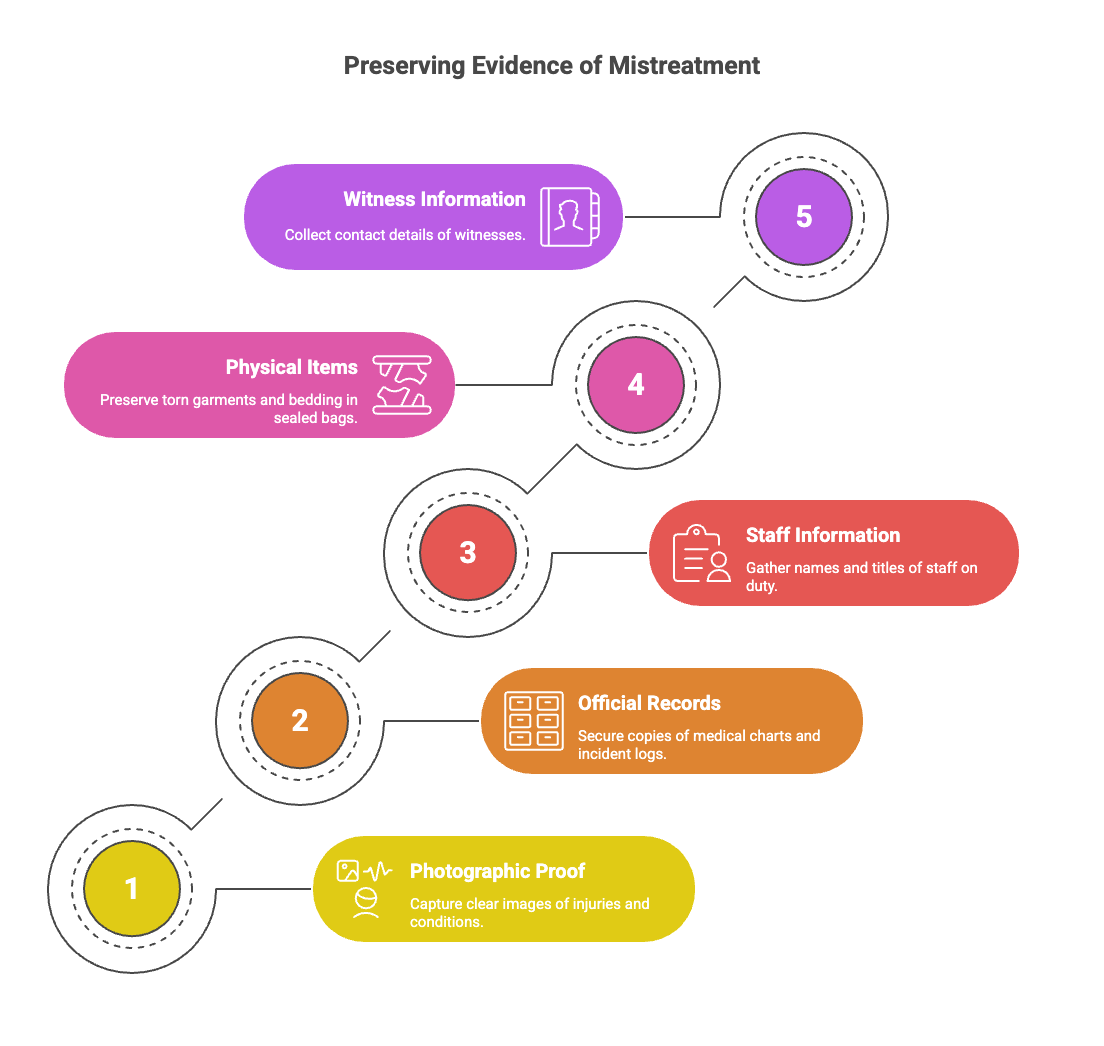
If you suspect mistreatment, you should immediately begin to preserve the following types of evidence:
- Photographic Proof: Take clear, well-lit photos of any injuries, the resident’s room condition, medical devices, and specific environmental hazards.
- Official Records: Secure copies of all medical charts, medication lists, care plans, and facility incident logs.
- Staff Information: Gather the full names and titles of all nurses, aides, and other staff members on duty at the time the incident occurred or when the neglect was discovered.
- Physical Items: Carefully preserve any physical evidence, such as torn garments or bedding, by placing them in a sealed bag to maintain a transparent chain of custody.
- Witness Information: Collect the names and contact information of any other residents, family members, or visitors who may have witnessed the conditions or events.
Taking these steps immediately is the single most effective way to protect your family’s legal options. It creates a credible, chronological record and mitigates the risk of evidence being lost or intentionally destroyed—an act known as spoliation.
3. A Case Can Succeed Even if Your Loved One Cannot Testify
One of the most heartbreaking fears families face is the belief that if their loved one has dementia, Alzheimer’s, or is otherwise unable to communicate, there is no way to prove abuse. This is a dangerous misconception. A strong and successful case can absolutely be built without the resident’s direct testimony.
In these situations, the case relies on a comprehensive collection of alternative evidence. Attorneys establish what occurred by meticulously analyzing medical records, facility surveillance footage, staffing logs, and the facility’s prior violation histories. This documentation is then paired with witness statements and, critically, expert testimony from geriatricians, nurses, and forensic experts. These specialists can explain how the resident’s injuries are a direct result of a breach in the standard of care. This is a powerful and reassuring truth, as it ensures that the most vulnerable residents—who are often the primary targets of abuse and neglect—can still have their rights defended.
4. The Law Has a Strict, Unforgiving Clock
In Florida, the law sets a firm deadline for filing a legal claim for nursing home abuse or neglect. This deadline, known as the statute of limitations, is two years from the date the injury was discovered or reasonably should have been discovered.
This is not a flexible guideline; it is a strict and unforgiving rule. Missing this deadline can permanently bar a family from seeking compensation, no matter how clear the evidence of abuse may be.
Missing the deadline usually bars recovery, regardless of the claim’s validity.
It is also important to know that in tragic cases where the abuse or neglect results in a resident’s death, a different two-year clock applies, which begins on the date of death. The unforgiving nature of these deadlines is a primary reason why families should seek experienced legal counsel without delay to ensure their rights are preserved.


5. Full Compensation Covers More Than Just Medical Bills
When families consider seeking compensation, their focus is often limited to the immediate medical bills resulting from an injury. However, a successful claim is designed to address the full scope of harm—physical, emotional, and financial—that the abuse has caused. The goal is restorative justice, not just paying invoices.
Full compensation in a Florida nursing home abuse case can include damages for a wide range of losses, such as:
- Future medical care, specialized caregiving, and long-term rehabilitation needs.
- Costs for necessary assistive devices.
- Compensation for physical disability.
- The resident’s physical pain, mental suffering, and emotional distress.
- Loss of dignity and the loss of enjoyment of life.
- The costs associated with relocating the resident to a safer facility.
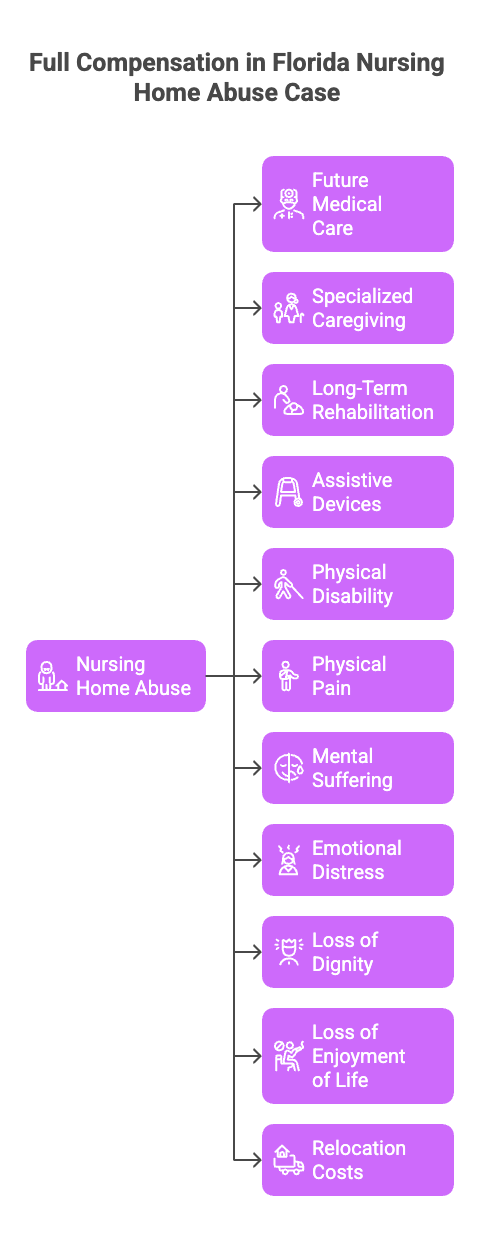
Understanding the full extent of recoverable damages is key. A legal claim should account for the complete physical, emotional, and financial toll of the abuse, securing the resources necessary for healing, safety, and dignified care moving forward.
In the fight against nursing home abuse, knowledge and swift, informed action are a family’s most powerful tools. By understanding that neglect can be as dangerous as overt abuse, that evidence must be preserved immediately, and that strict deadlines govern legal rights, you can better advocate for your loved one.
Protecting a family member is not just about reacting to harm—it is about decisively enforcing their rights and ensuring their voice is heard, even when they cannot speak for themselves.