



If your loved one got the wrong drug or dose in a Fort Lauderdale nursing home, you can’t wait.
The Law Offices of Anidjar and Levine can help you secure charts, MARs, incident reports, pharmacy logs, and hospital records, and move quickly to preserve surveillance and other evidence before it disappears.
You’ll also get help pushing the facility to correct unsafe practices, proving liability with expert review, and handling insurance negotiations or a lawsuit.
Learn more about your options by speaking with a Fort Lauderdale Nursing Home Abuse and Neglect Lawyer today.
Key Takeaways
- A Fort Lauderdale nursing home wrong medication lawyer investigates errors, connects them to injuries, and pursues compensation for residents and families.
- They quickly secure records like MARs, charts, physician orders, pharmacy logs, incident reports, staffing sheets, and surveillance footage before evidence disappears.
- They guide immediate steps: obtain emergency evaluation, contact poison control, request medication details, and demand prompt care changes to protect the resident.
- They build the claim with witness interviews, expert reviews, medical documentation, and a full loss calculation, then negotiate or litigate against insurers.
- They track Florida deadlines tied to injury, discovery, or death, using preservation letters and subpoenas when facilities delay or withhold records.
How We Can Help With Your Fort Lauderdale Nursing Home Wrong Medication Claim
When a nursing home gives the wrong medication or the wrong dose, you can act quickly to protect your loved one and your legal rights. You don’t have to carry this alone; you can focus on comfort and safety while we handle the legal load.
We listen to your goals, explain options clearly, and move fast to preserve evidence. You’ll get help requesting charts, MARs, incident reports, pharmacy logs, and facility policies, and you’ll know what to document and when.
You can count on us to communicate with the facility, coordinate family meetings, and press for immediate care changes. We’ll calculate losses, track medical follow-up, and build a demand that reflects the full extent of the harm.
If insurance disputes arise, you’ll have steady support answering adjusters, challenging denials, and negotiating firmly. When a settlement isn’t fair, you’ll be ready to pursue litigation with a team that serves your family first.
Understanding Fort Lauderdale Nursing Home Wrong Medication Cases
Although a medication error can look like a simple mix-up, Fort Lauderdale nursing home wrong medication cases often involve a chain of preventable failures—bad orders, poor charting, missed allergies, ignored drug interactions, or sloppy MAR administration.
When you’re trying to protect an older adult who depends on others, you need to understand how those failures show up in records, routines, and outcomes.
You’ll often see warning signs in progress notes, lab results, essential signs, and sudden behavior changes. You can also compare pharmacy fills, physician orders, and medication administration records to spot mismatches.
Even with electronic prescribing, you may find gaps in verification, unclear handoffs, or late updates that put residents at risk. Staff burnout can compound the problem by reducing double-checks and follow-through, even among caring workers.
Common Causes of Fort Lauderdale Nursing Home Wrong Medications
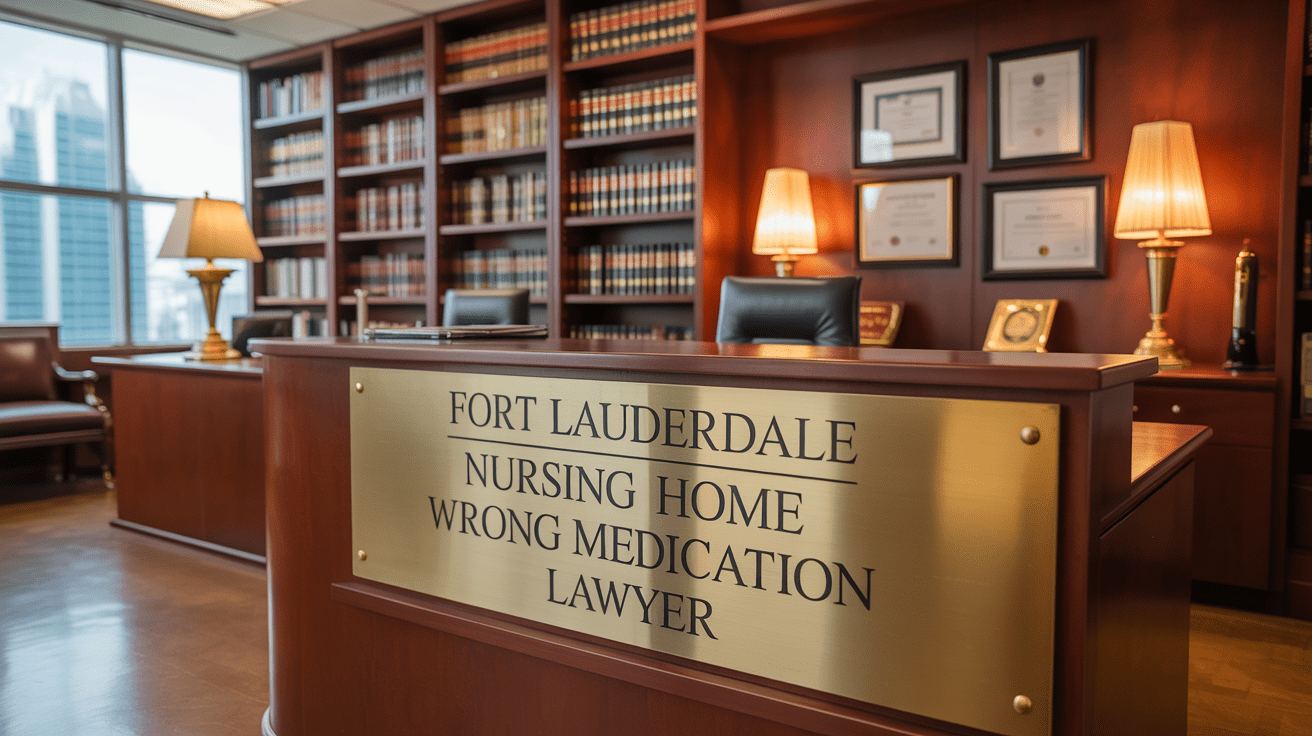
You’ll often see wrong medications in Fort Lauderdale nursing homes start with prescription transcription errors, where orders get copied or entered incorrectly.
You can also face medication administration mistakes and drug interaction oversights when staff give the wrong dose, at the wrong time, or miss dangerous combinations.
When a facility doesn’t provide adequate staff training, these preventable errors can become routine and put your loved one at risk.
Prescription Transcription Errors
Prescription transcription errors can slip through the cracks fast, turning a correct doctor’s order into the wrong medication, dose, or schedule once it’s copied into a nursing home’s chart or electronic system.



When you serve residents, you rely on clean handoffs, but rushed charting, unclear abbreviations, and poor handwriting legibility can distort directions. Even with electronic prescribing, staff may manually re-enter orders, select the wrong drug from look-alike menus, or miss an updated discontinuation.
Faxed or scanned orders can omit decimals or timing notes, and verbal clarifications can be misrecorded. You can reduce harm by insisting on read-backs for clarifications, standardized order formats, and prompt reconciliation when records don’t match the prescriber’s intent.
Medication Administration Mistakes
When staff move fast to cover multiple residents and shift schedules, medication administration mistakes can happen right at the bedside. You may see the wrong resident receive a dose, a pill get crushed when it shouldn’t, or a patch placed on the wrong site.
If you’re trying to serve with compassion, you still need tight checks: verify two identifiers, confirm allergies, and compare the MAR to the label during medication reconciliation.
You can also prevent harm by watching the administration timing. A delayed dose, an early repeat dose, or giving meds with the wrong meal status can change how well treatment works and raise risks. Speak up when you’re short-staffed, document refusals, and request a second check for high-alert meds.
Drug Interaction Oversights
Even if each dose goes to the right resident at the right time, a medication can still cause harm if it clashes with another drug, supplement, or even certain foods. In a nursing home, residents often take multiple prescriptions, so missed interaction checks can trigger confusion, bleeding, falls, or dangerous sedation.


You can help prevent this by keeping an up-to-date medication list that includes over-the-counter products and herbal remedies, and by asking whether diet changes affect dosing. Strong pharmacy communication matters, especially after hospital discharges or specialist visits, when new orders arrive quickly.
You should also ask about genetic testing when appropriate, since metabolism differences can make standard doses unsafe. By advocating for careful review, you protect the resident’s dignity, comfort, and safety.
Inadequate Staff Training
Too often, nursing homes hand medication duties to staff who haven’t received thorough, ongoing training on administration basics, documentation, and red-flag side effects. When you’re committed to caring for elders, gaps like these can turn compassion into harm—wrong doses, missed allergies, and overlooked contraindications happen fast when routines replace skill.


You can push for safer care by asking how the facility verifies staff competencies before allowing med passes, and how often refreshers occur when policies or resident conditions change. You should also expect clear supervision, double-check processes, and immediate reporting when errors occur.
Strong programs include hands-on simulations, competency checklists, and periodic training audits that catch drift before it becomes a crisis. If leadership ignores the need for education, you’ll often see repeated mistakes and preventable hospitalizations.
Legal Rights of Fort Lauderdale Nursing Home Wrong Medication Victims
Although a wrong medication error in a Fort Lauderdale nursing home can feel overwhelming, you still have clear legal rights to demand answers, protect your loved one, and seek compensation for the harm.
Florida law and federal regulations recognize resident rights, and your steady family advocacy can help guarantee the facility doesn’t quietly move on without accountability.
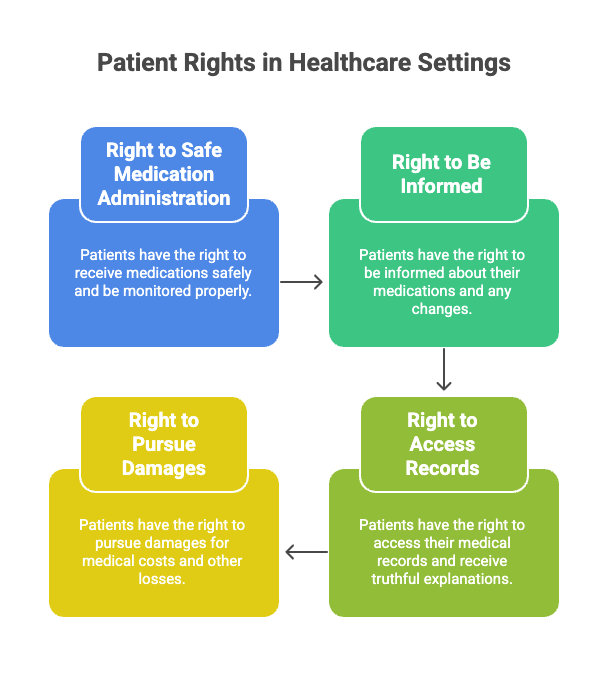
You can assert these core protections:
- The right to safe medication administration, proper monitoring, and prompt medical attention when something goes wrong.
- The right to be informed about medications, side effects, and any changes to prescriptions or dosing.
- The right to access crucial records and receive truthful explanations about the error, staffing, and supervision.
- The right to pursue damages for medical costs, pain, disability, and, in severe cases, wrongful death.
Steps to Take After a Fort Lauderdale Nursing Home Wrong Medication
If you suspect a Fort Lauderdale nursing home gave the wrong medication, get immediate medical care to protect your health and stop further harm.
Document the medication error by saving the pill bottles, requesting the MAR and chart records, and recording symptoms, dates, and staff names.
Then contact a nursing home medication lawyer to protect your rights and take action quickly.
Seek Immediate Medical Care
When a nursing home gives your loved one the wrong medication in Fort Lauderdale, don’t wait to “see how they do”—get medical care right away.
Ask staff to call 911 if symptoms appear, and request an emergency assessment even if they seem stable; some reactions are delayed.
If your loved one can be transported safely, take them to an ER or urgent care and tell the clinicians the name of the drug, the dose, and the time it was given, as best you can.
Call poison control for guidance on overdose risks, dangerous interactions, and what signs require immediate treatment.
Stay calm and advocate firmly.
Your quick action protects their health and honors your commitment to serve them with dignity and compassion always.
Document Medication Errors
Often, the strongest way to protect your loved one after a wrong medication in a Fort Lauderdale nursing home is to document everything before details disappear. Write down the drug name, dose, time given, who administered it, and your loved one’s symptoms. Photograph labels, MAR entries, pill packs, and any new bruising or rash.
Ask for copies of records and note when staff refuse or delay.
| What you record | How do you capture it | Why it matters |
|---|---|---|
| Medication details | Photos + notes | Prevents denial |
| Symptoms/changes | Timeline log | Shows harm |
| Staff statements | Exact quotes | Exposes gaps |
File internal error reporting in writing, request an incident number, and keep a calm, service-minded tone—you’re advocating for safer care for everyone.

Contact A Nursing Home Lawyer
Reach out to a Fort Lauderdale nursing home medication lawyer as soon as you’ve stabilized your loved one, because early legal help can lock down records, preserve surveillance footage, and stop the facility from quietly rewriting the story.
You can best serve your loved one by getting guidance before speaking in depth with administrators or signing anything.
Bring your notes, pill bottles, discharge papers, and the names of witnesses, then ask the lawyer to send a preservation letter and request the MAR, care plan, and incident reports.
Use family consultations to align relatives on goals and protect your loved one’s dignity.
Ask clear questions about fee structures, deadlines, and what communications you should route through counsel.
Don’t wait; prompt action strengthens your case and accountability.
How a Fort Lauderdale Nursing Home Wrong Medication Lawyer Can Help You
Although a wrong-medication error in a Fort Lauderdale nursing home can feel overwhelming, a dedicated lawyer can step in quickly to protect your loved one and your legal rights.
You don’t have to steer through charts, policies, and corporate insurers alone. Your attorney will coordinate with medical providers, document what happened, and push for immediate safeguards so your loved one receives appropriate care.
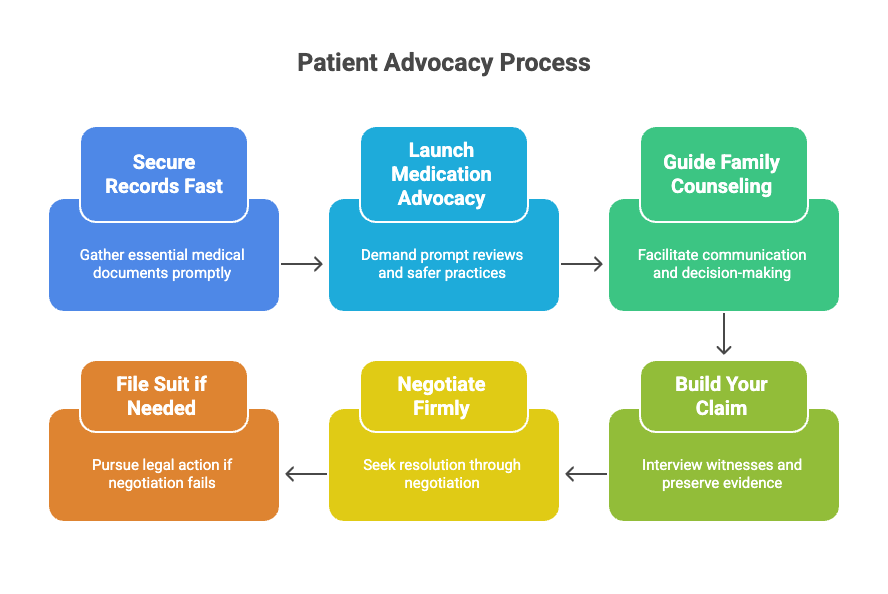
- Secure records fast, including MARs, physician orders, and pharmacy logs.
- Launch medication advocacy by demanding prompt reviews, corrections, and safer administration practices.
- Guide family counseling to communicate with staff, set boundaries, and stay united in decision-making.
- Build your claim by interviewing witnesses, preserving evidence, and negotiating firmly—or filing suit if needed.
You’ll gain a clear plan, compassionate support, and accountability focused on restoring dignity and protecting others from repeat errors.
Long-Term Effects of Fort Lauderdale Nursing Home Wrong Medication Injuries
When a nursing home gives you the wrong medication, the harm can last long after the immediate reaction fades.
You may face chronic organ damage, cognitive or neurological decline, and worsening mobility that robs you of independence. Knowing these long-term risks helps you spot complications early and protect your health.
Chronic Organ Damage Risks
Even a single wrong medication or dose in a Fort Lauderdale nursing home can start damage that doesn’t show up until weeks or months later.
You may see subtle fatigue, swelling, dark urine, bruising, appetite loss, or jaundice before anyone links symptoms to the error.
Some drugs strain the kidneys and can trigger progressive renal decline, especially when dehydration or infections are present.
Others injure the liver, and without timely hepatic monitoring, abnormal enzymes can rise silently until failure risks increase.
You can help by requesting medication reconciliation after any change, asking why each drug is needed, and insisting on lab checks when high-risk meds are used.
If staff dismiss concerns, document symptoms and dates, and seek medical review quickly.
Cognitive And Neurological Decline
Because the brain depends on a precise chemical balance, the wrong medication in a Fort Lauderdale nursing home can trigger cognitive and neurological decline that lingers long after the immediate reaction fades.
You may notice worsening confusion, slowed processing, new tremors, mood shifts, or sleep disruption, making it harder to recognize loved ones or follow conversations.
Even after the drug stops, lingering toxicity or interactions can impair attention and short-term recall, increasing fall risk and agitation.
You can serve your resident best by insisting on a prompt neuropsychological assessment to document changes and guide care. Ask the facility to review the full medication list, monitor labs, and coordinate with a neurologist or pharmacist. Pursue memory rehabilitation early, and track daily function so you can spot setbacks fast and advocate with confidence.
Reduced Mobility And Independence
Although a medication error may start with dizziness or sedation, it can end with long-term reduced mobility and lost independence for your loved one in a Fort Lauderdale nursing home.
When the wrong drug weakens muscles, triggers falls, or worsens balance, you may see fewer walks, more time in bed, and faster deconditioning.
You’ll likely need to advocate for prompt therapy, safer transfers, and a medication review that prevents repeat harm.
If mobility doesn’t return, your loved one may rely on assistive devices and require home modifications just to move safely, bathe, or eat with dignity.
As you serve them, document changes, request care-plan updates, and advocate for staffing support that protects independence and preserves daily routines.
Proving Liability in Fort Lauderdale Nursing Home Wrong Medication Cases
Build a strong wrong-medication case in a Fort Lauderdale nursing home by proving who made the error, how it happened, and how it harmed your loved one. You’ll connect the dots through records, staff interviews, medication audits, and clear timelines that show a preventable breakdown in care.
| What to prove | Evidence to gather | What it shows |
|---|---|---|
| Duty of care | Care plans, MARs, policies | The facility owed safe medication handling |
| Breach | Orders, pharmacy logs, shift notes | Wrong drug/dose/time or missed monitoring |
| Causation | Vital signs, labs, ER notes, symptom journal | The error triggered the decline |
| Notice/system failure | Prior incident reports, training files | Patterns, understaffing, and poor supervision |
You’ll ask who transcribed the order, who dispensed it, and who administered it. You’ll also compare physician orders to the Medication Administration Record, track late or omitted doses, and document adverse reactions. When you ground every claim in objective proof, you help protect other residents, too.
Compensation for Fort Lauderdale Nursing Home Wrong Medication Damages
Once you’ve shown how the medication error happened and tied it to your loved one’s decline, the next step is putting a dollar value on those losses. You can pursue repayment for medical bills, rehab, and any added medication costs tied to treating side effects or reversing the mistake.
If your loved one needs higher-level care, you can seek damages for increased nursing services, mobility aids, and transportation to appointments.
You may also recover for pain, suffering, and loss of dignity, because service-centered families know harm isn’t only financial. When you’ve had to step in, you can claim the value of unpaid time and support, and you can request caregiver counseling to help you cope and keep showing up with patience.
If the conflict escalates, family mediation can preserve unity while you pursue accountability. Your lawyer can explain settlement timelines, compare offers to likely verdict ranges, and document every expense so the recovery matches the real impact.
The Statute of Limitations for Fort Lauderdale Nursing Home Wrong Medication Cases
When a nursing home gives your loved one the wrong medication in Fort Lauderdale, the clock to file a lawsuit can start running before you’ve even gotten clear answers. Florida law sets strict time limits, and missing them can block a claim no matter how serious the harm. You’ll want to treat the date of injury, the date the mistake was discovered, and any death-related timeline as urgent markers.
Statute nuances can matter, especially if records were delayed, symptoms appeared later, or the facility’s conduct was concealed. Ask for medication administration logs, incident reports, pharmacy records, and hospital notes right away, and document who you spoke with and when. If your loved one can’t advocate for themselves, you may need to act quickly to preserve evidence and protect their dignity.
Keep your focus on service: timely action helps prevent repeat errors, supports safer care for other residents, and meets filing deadlines.
Why You Need an Experienced Fort Lauderdale Nursing Home Wrong Medication Lawyer
Even if the facility calls a wrong-medication error a “simple mix-up,” you need an experienced Fort Lauderdale nursing home wrong medication lawyer to uncover what really happened, lock down records before they disappear, and connect the mistake to your loved one’s injuries. You’re trying to protect someone who can’t always speak up, and you shouldn’t have to fight a system built to minimize harm. A lawyer can demand MARs, pharmacy logs, staffing sheets, and incident reports, then spot patterns tied to staff burnout, rushed passes, or ignored warnings. Your family advocacy gains power when it’s backed by subpoenas, expert review, and a clear damages story.
| What’s needed | What the facility says | What your lawyer does |
|---|---|---|
| Immediate record hold | “We’ll look into it.” | Sends preservation notice |
| Medication timeline | “No deviation” | Reconstructs admin details |
| Staffing context | “Adequate coverage” | Proves burnout links |
| Medical causation | “Unrelated decline” | Secures expert opinions |
How to Choose the Right Fort Lauderdale Nursing Home Wrong Medication Lawyer for Your Case
Finding the right lawyer matters as much as proving the medication error itself, because the facility controls the records, the narrative, and the timeline unless you push back quickly. Start by choosing someone who regularly handles nursing home negligence and medication harm, not just general injury claims.
Ask how they obtain MARs, pharmacy logs, incident reports, and hospital records, and how quickly they send preservation letters.
During attorney selection, look for a counselor who treats your loved one as a person, not a file. You want patient advocacy: clear updates, plain-language explanations, and respect for your family’s goals. Ask who’ll manage your case day to day, what experts they use (geriatric nursing, pharmacology), and how they prove causation when symptoms look “age-related.”
Confirm fee terms in writing, review past results, and choose the lawyer who listens, acts decisively, and stays mission-focused on safety.
About the Law Offices of Anidjar and Levine
Two things set the Law Offices of Anidjar and Levine apart in Fort Lauderdale nursing home medication cases: fast action and client-focused support.
You get a team that moves quickly to secure records, preserve evidence, and press facilities to explain dangerous medication errors, so your loved one’s care can improve now—not later.
Their firm history reflects steady advocacy for injured Floridians, and you’ll feel it in every call returned and every update delivered.
| What you’re facing | What you need | What you can restore |
|---|---|---|
| Fear after a wrong dose | Clear answers, fast | Safety and dignity |
| Guilt for trusting a facility | Respectful guidance | Peace for your family |
| Anger at preventable harm | Strong accountability | Compassionate justice |
You’re not just pursuing compensation—you’re protecting other residents, too. Client testimonials often mention being treated like family while the lawyers handle insurers, deadlines, and negotiations with purpose. You stay informed, supported, and empowered to serve your loved one.
Frequently Asked Questions
What Documents Should I Gather Before Contacting a Wrong Medication Lawyer?
Gather medical records showing the medication orders, MARs, physician notes, discharge summaries, and any lab results tied to the error.
Collect billing statements, pharmacy receipts, and insurance explanations of benefits to track costs.
Save incident reports, care plans, and written communications with staff.
Keep a symptom timeline, photos, and names of witnesses.
Bring guardianship papers and advance directives if relevant.
You’ll help clarify what happened and how to protect others.
Can the Nursing Home Retaliate if I File a Complaint or Lawsuit?
A nursing home can try to retaliate, but you’ve got retaliation protections, and it’s illegal in many cases.
You should document any changes in care, visitation limits, or threats right away.
Follow the reporting process: file with the facility administrator, your state’s long-term care ombudsman, and the health department.
You can request a care plan meeting, transfer options, and written explanations.
Always keep serving your loved one’s best interests.
Will My Loved One’s Immigration Status Affect a Wrong Medication Case?
In most cases, your loved one’s immigration status won’t block a wrong medication claim, and you can still seek safety and accountability.
You usually focus on the care errors and medical harm, not citizenship. Still, ask your attorney about any immigration consequences if records get shared, and protect privacy.
If your case involves benefits, avoid assumptions about family sponsorship—get tailored guidance so you serve and safeguard your loved one.
Can I Move My Loved One Immediately Without Harming the Legal Claim?
Yes, you can move your loved one right away, and you usually won’t harm the claim.
Prioritize safety by immediately relocating, but document everything first: medications, charts, photos, and the facility’s incident reports.
Request complete records in writing and keep receipts for new care.
As part of your legal strategy, avoid signing releases or accepting settlements before counsel reviews them.
Prompt medical evaluation also helps identify harm caused by the wrong medication.
How Are Confidential Medical Records Obtained During a Nursing Home Lawsuit?
You obtain confidential medical records in a nursing home lawsuit through formal legal requests.
Your lawyer asks for signed releases, then uses attorney subpoenas and court orders if facilities resist.
You must comply with medical privacy laws, so only relevant records are produced under protective agreements.
You can also gather records from hospitals, pharmacies, and physicians.
You’ll review what’s been received, flag gaps, and request supplements to ensure the full story supports your loved one.
——————
You don’t have to face a Fort Lauderdale nursing home wrong medication case alone.
If your loved one was harmed, you can take action, protect their rights, and demand accountability from the facility.
Start by gathering records, reporting the incident, and getting medical care right away.
With an experienced Fort Lauderdale Nursing Home Abuse and Neglect Lawyer, you’ll understand your options, meet essential deadlines, and pursue fair compensation.
Contact the Law Offices of Anidjar and Levine to help you move forward.


We Can Help.