




If you suspect a nursing home medication mistake in Fort Lauderdale, you need the Law Offices of Anidjar and Levine to move fast to secure MARs, physician orders, pharmacy logs, and incident reports before records change.
With help from a Fort Lauderdale Nursing Home Abuse and Neglect Lawyer, you can gather evidence, interview witnesses, and work with medical professionals to link the error to your loved one’s decline.
You’ll also get support handling calls, deadlines, and insurer pressure while pursuing compensation and accountability. Keep going to see what steps matter most.
Key Takeaways
- A Fort Lauderdale medication error lawyer can quickly secure MARs, physician orders, pharmacy logs, and incident reports before records disappear.
- They investigate duty, breach, and causation by matching medication discrepancies and symptom timelines to policy violations, understaffing, or supervision gaps.
- They coordinate with medical experts to review dosing, interactions, allergies, and monitoring failures, linking the error to injury or decline.
- They handle calls, paperwork, negotiations, and filing deadlines, including special rules for discovery, concealment, incapacity, and wrongful death.
- They guide families on documentation and care changes, helping prevent repeat harm and pursuing accountability from facilities, staff, pharmacies, or physicians.
How We Can Help With Your Fort Lauderdale Nursing Home Medication Error Claim



Take control of what happened to your loved one by letting our team step in and build your Fort Lauderdale nursing home medication error claim. You’ll get clear guidance, steady communication, and a plan that honors your loved one’s dignity while protecting your family’s future.
You can rely on us to gather records, interview witnesses, preserve evidence, and coordinate with medical professionals so you don’t carry the burden alone. We’ll handle calls, paperwork, and deadlines, and you’ll stay informed at every step. We’ll also lead family meetings to align goals, answer questions, and reduce conflict during a painful time.
If your loved one needs a safer placement or added support, we’ll help you act quickly.
You’ll also receive practical support with financial planning for ongoing care costs, replacement services, and household stability while your case moves forward.
Understanding Fort Lauderdale Nursing Home Medication Error Cases
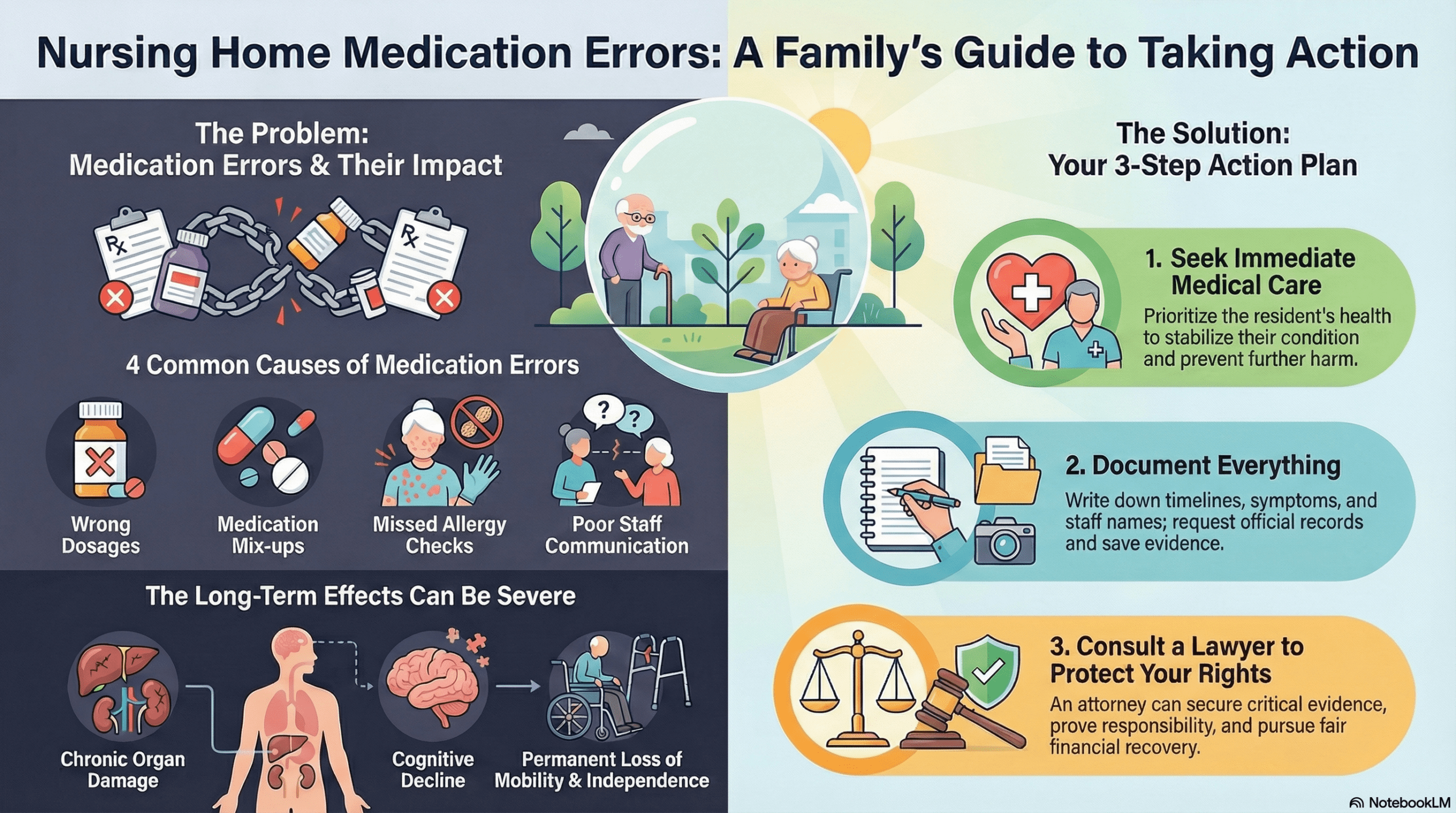
When a nursing home gives the wrong drug, the wrong dose, or misses a scheduled medication, the harm can escalate fast—especially for residents with complicated conditions. If you suspect a medication error in Fort Lauderdale, you’ll want to understand what makes it a legal case: a duty to provide safe care, a breach of that duty, and a direct link between the mistake and the resident’s decline.
| What you document | Why it matters | How it helps |
|---|---|---|
| Medication records | Shows timing and dosage | Clarifies discrepancies |
| Care notes | Tracks symptoms and changes | Connects harm to error |
| Policies and training | Reveals staff training gaps | Establishes standards |
You can also look for whether the facility used electronic safeguards like barcode scans, alerts, and double-check workflows. When those protections fail—or aren’t used—you may have stronger proof. Your steady advocacy honors the resident’s dignity and helps prevent future harm.
Common Causes of Fort Lauderdale Nursing Home Medication Errors
When you look at Fort Lauderdale nursing home medication errors, you’ll often see wrong dosages or timing and simple medication mix-ups at the center of the problem.
You may also find that staff skip allergy checks, putting residents at risk of dangerous reactions.
And when the care team doesn’t communicate clearly, those mistakes can stack up fast.
Wrong Dosage Or Timing


Too often, nursing home residents in Fort Lauderdale receive the right medication but at the wrong dose or the wrong time. You might see a pill cut incorrectly, a missed dose, or a double dose after a shift change. Timing errors can be just as harmful, especially with diabetes, heart, seizure, or pain medicines that require steady levels.
When staff rush, skip chart checks, or rely on memory, residents can suffer dizziness, falls, bleeding, withdrawal, or uncontrolled symptoms. You can help prevent harm by insisting on clear MAR documentation, routine dosage reconciliation after hospital returns, and consistent patient counseling with residents and families about schedules, food interactions, and “hold” parameters.
If errors persist, you can act quickly to protect someone who can’t advocate alone.
Medication Mix-Ups
Medication mix-ups can slip through the cracks fast in a busy Fort Lauderdale nursing home, and you may not realize it until a resident suddenly seems sedated, confused, or in pain again.
You often see errors when look-alike pill bottles get stored together, residents share similar names, or a rushed handoff shifts meds to the wrong cart.
Weak prescription labeling can hide crucial details like strength, route, or updated instructions, so staff administers the right drug the wrong way.
Breakdowns in pharmacy coordination also matter: late deliveries, partial fills, or uncommunicated formulary substitutions can push caregivers to “borrow” doses or rely on outdated blister packs.
If you’re serving residents, insist on double-checks at pick-up, clear MAR notes, and strict cart organization every shift.
Missed Allergy Checks


All too often, missed allergy checks trigger preventable reactions in Fort Lauderdale nursing homes, especially during admissions, hospital returns, or last-minute prescription changes. When you serve residents, you must verify allergies before giving any new drug, changing a dose, or switching brands.
Strong Allergy protocols protect residents who can’t self-advocate, and Staff training helps you spot cross-reactive meds and hidden ingredients.
| Risk point | What you do |
|---|---|
| Intake history incomplete | Confirm allergies with records and family |
| Chart not updated after ER visit | Reconcile orders against documented allergies |
| PRN meds given quickly | Pause, check allergy list, then administer |
If a facility skips these steps, you can push for accountability and safer routines. Document symptoms and request immediate evaluation.
Poor Staff Communication
Often, poor staff communication turns a routine medication pass into a serious error in Fort Lauderdale nursing homes when nurses, aides, pharmacy staff, and on-call providers don’t share updates clearly during shift changes, hospital returns, or new orders.
When you serve residents, you rely on accurate handoffs: what changed, what was discontinued, and what must be monitored.
If the MAR isn’t updated, a verbal order isn’t read back, or a pharmacy clarification doesn’t reach the floor, you can give the wrong dose or duplicate therapy.
Cultural barriers and language gaps can also distort instructions, especially under time pressure.
You help prevent harm by asking for confirmation, documenting promptly, using standardized SBAR reports, and speaking up when something doesn’t match the resident’s condition or care plan.
Legal Rights of Fort Lauderdale Nursing Home Medication Error Victims
When a nursing home’s medication mistake harms you or someone you love in Fort Lauderdale, Florida law gives you the right to demand accountability and pursue compensation.
If a Fort Lauderdale nursing home medication error causes harm, Florida law lets you demand accountability and pursue compensation.
You don’t have to accept excuses or silence; you can insist on safe care that honors dignity and protects your community’s elders.
- Access records: You can request medication logs, MARs, care plans, and incident reports to see what happened and when.
- Invoke Family rights: You can participate in care decisions, question orders, and demand transparency from administrators and providers.
- Report negligence: You can file complaints with state regulators and push for corrective action that prevents harm to others.
- Seek Financial recovery: You can pursue damages for medical bills, pain and suffering, disability, and, in tragic cases, wrongful death losses.

Steps to Take After a Fort Lauderdale Nursing Home Medication Error
If you suspect a Fort Lauderdale nursing home medication error, you should get immediate medical care to prevent further harm.
You’ll also want to document what happened—medication names, dosages, dates, symptoms, and any communications with staff.
Then report the incident to the facility and appropriate authorities, and consult counsel to protect your rights and preserve crucial evidence.
Seek Immediate Medical Care
In the hours after a suspected medication error, seek immediate medical care to stabilize your loved one and limit complications. Call 911 if symptoms are severe, sudden, or life-threatening, and don’t wait for the facility to “monitor” things.
Ask for an emergency assessment to check breathing, blood pressure, blood sugar, and neurological status, especially if you notice confusion, rash, unusual sleepiness, vomiting, or trouble walking. Request pain management that’s safe and appropriate, and ask the treating clinician to review all current prescriptions and recent doses to identify possible interactions or overdose.
If your loved one can’t communicate well, you can speak up with calm urgency to ensure providers understand baseline behavior and conditions. Stay with them when possible to support comfort and prevent delays.
Document The Error
After your loved one’s condition is stable, start documenting the medication error right away so the facts don’t get “smoothed over” later. Write down who gave the drug, what it was, the dose, the time, and how your loved one reacted.
Create an incident timeline that starts before the first symptom and continues through every change in condition, treatment, and staff response.
Ask for copies of medication administration records, physician orders, care plans, and crucial sheets, and note any missing pages or corrections.
Save pill bottles, blister packs, and discharge papers.
Take photo evidence of labels, packaging, medication carts, and visible injuries like rashes or bruising.
Record names of witnesses and your own observations while details stay fresh, accurate, and essential for everyone involved.

Report And Consult Counsel
Once you’ve gathered the essential facts, report the medication error through the nursing home’s administrator and request a written incident report, then file a complaint with the Florida Agency for Health Care Administration (AHCA) and, when appropriate, local law enforcement. Next, consult counsel so you can protect your loved one and help prevent harm to other residents.
A lawyer can preserve records, guide family meetings, and coordinate with physicians while you stay focused on care. You’ll also get support responding to insurers and strengthening insurance claims without signing rushed releases.
| Action | Purpose |
|---|---|
| Notify administrator | Trigger internal investigation |
| Request incident report | Lock in details |
| Report to AHCA | Start state oversight |
| Call police (if needed) | Address criminal neglect |
| Consult counsel | Protect rights, evidence |
How a Fort Lauderdale Nursing Home Medication Error Lawyer Can Help You
Although medication mistakes in a nursing home can feel overwhelming, a Fort Lauderdale nursing home medication error lawyer can step in quickly to protect your rights and build a strong claim. You don’t have to confront the facility alone or guess what to do next; your lawyer guides you with calm, service-minded support rooted in client advocacy and evidence preservation.
- Stabilize the facts: you’ll get help requesting MARs, physician orders, pharmacy logs, and incident reports before they disappear.
- Coordinate care communications: you’ll document symptoms, clarify orders, and keep the care team accountable without disrupting treatment.
- Prove responsibility: you’ll identify negligent staff actions, policy violations, understaffing, and supervision gaps that led to the error.
- Pursue fair recovery: you’ll calculate losses, negotiate firmly, and, if needed, file suit to compel transparency.
With focused counsel, you can protect your loved one and help prevent harm to others.
Long Term Effects of Fort Lauderdale Nursing Home Medication Error Injuries
When a Fort Lauderdale nursing home makes a medication error, you may face lasting injuries that don’t fade after the immediate crisis.
You can end up with chronic organ damage or experience cognitive and neurological decline that changes how you think and function day to day.
You might also lose mobility and independence, turning routine tasks into ongoing challenges.
Chronic Organ Damage
Lasting harm can follow a single nursing home medication error, especially if the wrong drug or dose strains critical systems over days or weeks.
You may see slow-developing kidney, liver, heart, or lung injury that doesn’t fully reverse, even after the prescription changes.
Repeated overdosing, dangerous interactions, or missed monitoring can create cumulative toxicity, turning a short mistake into permanent impairment.
In some cases, the damage advances into progressive organopathy, with worsening function, fatigue, swelling, shortness of breath, or abnormal labs that demand ongoing care.
If you serve an elder, track symptoms, request medication lists, and insist on timely bloodwork and follow-up.
You can protect dignity by acting early and documenting every change for accountability and healing.
Cognitive And Neurological Decline
Medication mistakes don’t just strain the kidneys, liver, or heart—they can also alter the brain in ways that linger long after the order gets corrected. If you’re caring for a loved one, you may notice confusion, agitation, or sudden changes in personality after a wrong dose, dangerous interaction, or missed medication.
These errors can trigger neural inflammation, reducing oxygen delivery and disrupting neurotransmitters. Over time, that stress may contribute to memory decline, slower processing, poor judgment, and worsening dementia symptoms. Sedatives, anticholinergics, blood thinners, and insulin are common culprits when monitoring fails.
You can serve best by documenting symptoms, requesting medication reconciliation, and insisting on timely neuro checks. When a facility ignores warning signs, you can seek accountability so safer systems protect every resident.
Loss Of Mobility Independence
Even if the prescription gets fixed quickly, a medication error can steal your loved one’s mobility and independence for months or permanently. Over-sedation, blood pressure crashes, dizziness, or muscle weakness can trigger falls, fractures, and fear of walking. You may watch them stop joining meals, activities, or worship because standing feels unsafe.
You can help by pushing for a full mobility assessment, pain control that doesn’t overmedicate, and timely therapy. Ask the facility to document strength, gait, and transfer ability, then implement Rehabilitation options such as physical therapy, balance training, and occupational therapy for safe dressing and bathing.
Request Assistive devices that match their needs—walkers, wheelchairs, grab bars, bed alarms, or lift supports—and make sure staff actually use them. Protect their dignity by insisting on consistent, skilled assistance and fall-prevention plans.

Proving Liability in Fort Lauderdale Nursing Home Medication Error Cases
Although medication mistakes in nursing homes can look like simple mix-ups, you can still prove liability in a Fort Lauderdale case by tying the error to a specific duty and a specific breakdown. Start by identifying who was responsible for your loved one’s safe medication management: the facility, nurses, pharmacy vendors, or supervising physicians.
Then match that duty to a failure, such as skipped double-checks, wrong dose calculations, missed allergy screening, or delayed monitoring after a new drug.
You’ll strengthen the case by collecting the paper trail. Request MARs, physician orders, and electronic records showing timestamps, overrides, and missed documentation. Compare them to the care plan and state and federal regulations. Look for gaps in staff training, understaffing patterns, and poor handoff communication.
Use witness statements, incident reports, and expert review to connect the breach to the resident’s decline. Clear, service-driven advocacy keeps your focus on safety and accountability for everyone.
Compensation for Fort Lauderdale Nursing Home Medication Error Damages
Once you’ve shown who caused the error and how it harmed your loved one, the next step is putting a fair dollar value on the damage. You’ll seek compensation that reflects both the immediate crisis and the long road to recovery, so your loved one can regain stability and dignity.
Damages often include hospital bills, physician visits, rehabilitation, and added caregiving costs. If the mistake caused lasting injury, you can pursue payment for ongoing treatment, assistive devices, and future care planning. You may also claim compensation for pain, suffering, disability, and loss of enjoyment of life, because harm isn’t only financial.
When a medication error contributes to a wrongful death, you can request support for funeral expenses and the family’s losses.
Strong documentation matters. Medication reconciliation records, pharmacy logs, and chart notes help connect the error to specific expenses and justify Financial reimbursement that truly serves your family’s needs.
The Statute of Limitations for Fort Lauderdale Nursing Home Medication Error Cases
Before you can pursue compensation, you need to know how long Florida law gives you to file a nursing home medication error lawsuit in Fort Lauderdale. In most cases, you must act within the state’s statute deadlines, which often start when the injury happens or when you reasonably discover it.
If you’re advocating for a loved one who can’t speak up, tracking dates and preserving records helps you honor their dignity and protect others from repeat harm.
Florida rules can also allow filing exceptions. For example, the clock may pause when the facility conceals the mistake, records are altered, or the resident lacks legal capacity and no representative is in place. Wrongful death claims can have different time limits than injury claims, so you’ll want to confirm which deadline applies.
Don’t wait for the facility to “make it right”—take timely steps so your service-minded care leads to real accountability.
Why You Need an Experienced Fort Lauderdale Nursing Home Medication Error Lawyer
Because nursing home medication error claims often hinge on fast-moving medical facts and strict reporting rules, you need a Fort Lauderdale lawyer who knows how to lock down records, spot charting red flags, and build a case that holds the facility—and its insurers—accountable.
You can’t rely on the facility to preserve MARs, eMAR logs, pharmacy deliveries, or incident reports once questions start. An experienced attorney moves quickly to secure those records, align them with hospital findings, and identify whether the error came from wrong dose, missed dose, contraindicated drugs, or delayed monitoring.
You also need someone who can expose systemic failures like weak Staff training, rushed handoffs, and ignored alerts. When Prescription audits reveal repeat discrepancies, your lawyer can connect patterns to staffing levels and supervision lapses.
With the right legal support, you protect your loved one, prevent future harm to other residents, and demand meaningful changes and justice.
How to Choose the Right Fort Lauderdale Nursing Home Medication Error Lawyer for Your Case
Start by looking for a Fort Lauderdale nursing home medication error lawyer who treats your case like an evidence sprint, not a paperwork exercise. You want someone who listens to your loved one’s story, then moves fast to secure MARs, pharmacy logs, incident reports, and staffing schedules tied to staff ratios.
| What you need | What to ask | Good sign |
|---|---|---|
| Investigation plan | “How will you prove the error?” | Specific record list and timeline |
| Clinical fluency | “Do you use nursing/pharmacy experts?” | Clear explanation of standards |
| Communication | “How often will you update me?” | Set cadence, direct access |
| Trial readiness | “Have you tried similar cases?” | Comfort explaining risks and strategy |
Choose a lawyer who welcomes family advocacy, respects your goals, and treats your role as a partner in protecting residents. You’ll serve others best when your lawyer blends urgency, compassion, and disciplined follow-through from day one.
About the Law Offices of Anidjar and Levine
When your loved one suffers harm from a nursing home medication mistake, the Law Offices of Anidjar and Levine moves quickly to investigate and protect your claim.
You get a team that gathers records, interviews witnesses, and works with medical professionals to pinpoint what went wrong and who’s responsible.
You’re treated like a partner in the process, with clear updates and practical guidance at every step. The firm focuses on accountability, including whether poor staff training, unsafe handoff routines, or ignored warnings contributed to the error.
You’ll see patient advocacy in action through clear communication with insurers, careful documentation of damage, and a steady push for care changes that prevent repeat harm.
You don’t have to carry the burden alone.
The firm handles calls, paperwork, and deadlines, so you can focus on your loved one’s recovery and on supporting your community with strength and compassion.
Frequently Asked Questions
What if My Loved One Was Harmed in a Different Florida County?
If your loved one was harmed in a different Florida county, you can still pursue a claim—you’ll likely file where the facility operates, and your case may involve a jurisdictional transfer for convenience or fairness.
You’ll gather records, notify insurers, and work with local counsel as needed.
If providers or pharmacies cross state lines, you’ll also need interstate coordination.
You’ll keep the focus on accountability and protecting others.
Can the Nursing Home Retaliate if We Report a Medication Error?
They shouldn’t retaliate if you report a medication error, and laws give you retaliation protections and whistleblower rights. You can speak up, file a complaint, or request an investigation without losing access to care or facing intimidation.
Still, retaliation can happen, so you should document changes in treatment, sudden discharge threats, or restricted visits. You can report concerns to Florida regulators and seek legal help to safeguard your loved one.
Do I Need the Resident’s Consent to Obtain Medical and Pharmacy Records?
You usually do need the resident’s patient consent to obtain medical and pharmacy records, unless you already have legal authority. If the resident can’t consent, you’ll need proxy authorization from a healthcare surrogate, guardian, or personal representative.
You can still request limited information for care coordination, but full records typically require written permission. Ask the facility and pharmacy for their HIPAA forms, and keep everything documented carefully.
Are Medication Errors Reportable to Florida State Agencies or Regulators?
Yes, you can and often must report medication errors to Florida regulators.
You’ll typically report to the Agency for Health Care Administration (AHCA) for nursing homes, and in some cases to the Florida Department of Health or the Board of Pharmacy.
If the mistake causes serious harm, it may qualify as an adverse event and trigger mandatory reporting timelines.
You can also file an incident report with the facility to protect residents.
Can We Switch Nursing Homes During the Investigation and Still Pursue a Claim?
Yes, you can switch nursing homes during the investigation and still pursue a claim. You may need to change residence to protect your loved one’s safety and dignity while you continue the process.
Act quickly to preserve evidence: request complete medical records, medication logs, care plans, incident reports, and photos, and write down names and dates. Don’t sign releases or settlements without guidance.
You can keep advocating while ensuring compassionate care.
—————————-
If you suspect a nursing home medication error harmed your loved one in Fort Lauderdale, you don’t have to handle it alone.
You can protect their rights, demand answers, and pursue compensation for medical costs, pain, and ongoing care.
Act quickly to preserve records and meet Florida’s deadlines.
With the Law Offices of Anidjar and Levine and an experienced Fort Lauderdale Nursing Home Abuse and Neglect Lawyer on your side, you’ll have someone to investigate, negotiate, and fight for accountability, so you can focus on your family.


We Can Help.