

The Law Offices of Anidjar and Levine can evaluate whether a Jacksonville nursing home resident suffered harm due to medication negligence, understaffing, poor documentation, pharmacy errors, or unsafe medication practices. Case reviews may involve physician orders, medication administration records, pharmacy logs, care plans, staff training records, and health changes following the error. Legal support can help preserve evidence, manage communications with the facility or its insurer, and pursue compensation under Florida law. For broader injury-related guidance, visit our Jacksonville Personal Injury Lawyer page. The sections below explain key rights, causes, evidence, and legal options.
Main Takeaways
- A Jacksonville nursing home medication errors lawyer can investigate negligence, understaffing, poor supervision, or unsafe medication procedures.
- Attorneys review physician orders, medication logs, pharmacy records, charts, care plans, and facility policies for preventable failures.
- Claims may involve missed doses, wrong drugs, incorrect timing, duplicate doses, dispensing mistakes, or failure to monitor adverse reactions.
- Legal support helps preserve evidence, manage communications with the facility or insurer, and pursue compensation for medication-related harm.
- Florida nursing home protections require competent care, proper documentation, safe medication administration, and respect for resident dignity.


How We Can Help With Your Jacksonville Nursing Home Medication Errors Injury Claim
When a nursing home medication error causes harm, a Jacksonville nursing home medication errors lawyer can help determine whether the injury resulted from negligence, understaffing, poor recordkeeping, improper supervision, or a breakdown in medication administration procedures. Legal support may include reviewing medical charts, pharmacy records, physician orders, dosage logs, and facility policies to identify where care failed. For families committed to protecting vulnerable residents, this process can bring clarity and direction during a difficult time.
A lawyer may also examine Medication error reporting practices to determine whether the facility properly documented the incident, notified appropriate parties, and responded with corrective action. Staff accountability policies may be reviewed to assess whether employees were trained, supervised, and disciplined in accordance with accepted standards. Through investigation, evidence preservation, and communication with insurers or facility representatives, legal counsel can help pursue compensation while supporting safer care for other residents.
OUR CONSULTATIONSARE FREE
START YOUR FREE CASE REVIEW

Understanding Jacksonville Nursing Home Medication Errors Injury Cases
Although medication errors in nursing homes can appear to be isolated mistakes, they often reflect deeper failures in clinical oversight, staffing practices, communication, or compliance with established care protocols. In Jacksonville injury cases, the focus is not limited to an incorrect dose or a missed dose, but extends to the resident’s condition, the facility’s duties, and the preventable harm that followed. These claims often require careful review of physician orders, administration records, care plans, pharmacy documentation, and changes in the resident’s health.
Medication reconciliation may be especially important when residents enter a facility, return from the hospital, or receive new prescriptions. Proper nursing oversight is also central, because vulnerable residents frequently depend on trained staff to administer medications safely and monitor adverse reactions. For families devoted to protecting an elder’s dignity, these cases provide a structured path to accountability. A lawyer may evaluate whether the evidence supports neglect, causation, and recoverable damages under Florida law.
Common Causes of Jacksonville Nursing Home Medication Errors
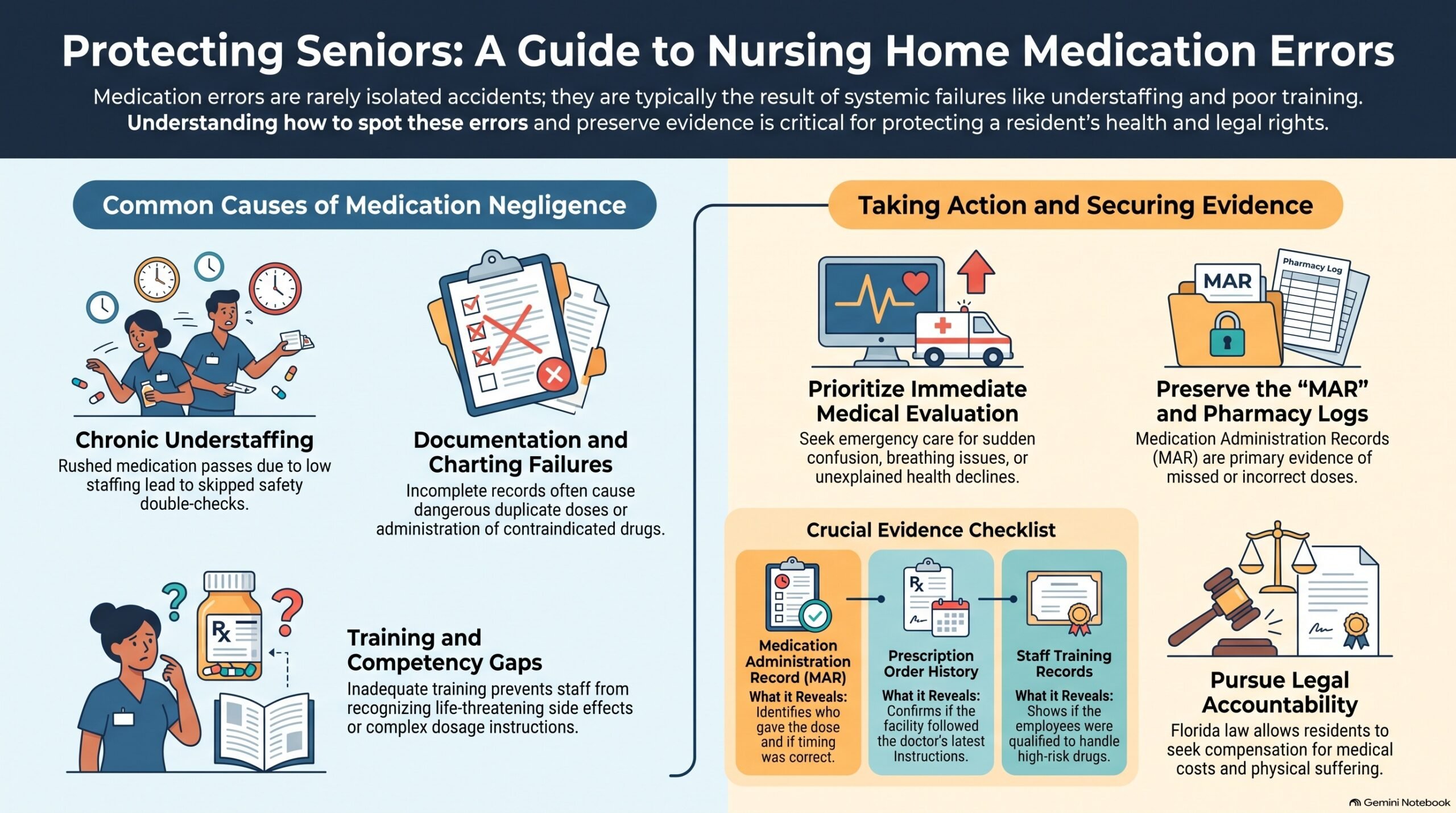
Medication errors in Jacksonville nursing homes often arise from preventable breakdowns in staffing, communication, and oversight. Understaffed nursing shifts, poor medication documentation, inadequate staff training, and pharmacy dispensing mistakes can each increase the risk of a resident receiving the wrong medication, dose, or schedule. Identifying these causes is critical when evaluating whether a facility’s conduct contributed to a resident’s injury.
Understaffed Nursing Shifts
Because safe medication administration depends on careful timing, documentation, and patient-specific review, understaffed nursing shifts can create serious conditions for preventable errors in Jacksonville nursing homes. When too few nurses or aides are available, essential safeguards may be rushed, delayed, or overlooked during high-demand medication passes. Residents with complicated conditions often require Medication reconciliation, careful observation, and timely communication with prescribers or pharmacists. Short staffing can also weaken double-check protocols, especially for insulin, blood thinners, pain medications, or other high-risk drugs. In facilities committed to serving vulnerable residents, adequate staffing is not merely an operational concern; it is a patient safety obligation. Persistent understaffing may indicate broader failures in planning, supervision, and resource allocation, increasing the risk of avoidable harm to residents who depend on consistent care.
Poor Medication Documentation
Short staffing often contributes to charting failures, but poor medication documentation can also arise from weak procedures, inadequate training, and poor supervision. In Jacksonville nursing homes, medication records guide caregivers in providing consistent, attentive service to protect residents. When entries are incomplete, late, or unclear, a resident may receive a missed dose, duplicate dose, or contraindicated drug. Wrongful medication labeling can further confuse staff, especially when handwritten notes, pharmacy updates, or transfer records conflict. Inaccurate dosage calculation may also be carried into the chart, creating repeated risk each time the order is followed. Reliable documentation should identify the medication, dose, time, route, prescriber, and resident response. When facilities fail to maintain accurate records, vulnerable residents may suffer preventable harm, making accountability critical to improving care.
Inadequate Staff Training
When nursing home staff lack proper training, residents may face serious risks during medication administration. Training gaps can lead to missed doses, improper timing, confusion between residents, or failure to recognize dangerous side effects. In Jacksonville facilities, aides and nurses may serve vulnerable residents with intricate medication needs, making clear instruction and ongoing competency checks essential. Workload pressures can worsen these risks when employees are expected to complete medication tasks quickly, without sufficient supervision or support. Understaffed coverage may also place inexperienced workers in roles beyond their preparation, increasing the chance of preventable harm. Facilities devoted to resident care should ensure staff understand dosage directions, monitoring duties, documentation practices, and communication protocols. Proper training supports safer care, protects dignity, and helps residents receive medications as prescribed.
Pharmacy Dispensing Mistakes
Medication safety in Jacksonville nursing homes can also be compromised before a drug ever reaches the resident, particularly when a pharmacy dispenses the wrong medication, strength, dosage form, or quantity. These errors may arise from look-alike drug names, rushed order entry, unclear prescriptions, or failures in inventory control. Once an incorrect product is delivered, nursing staff may unknowingly administer it unless safeguards are followed carefully. Medication double-checking provides an important opportunity to compare the dispensed drug against the physician’s order, resident profile, and administration record. Pharmacy label verification is equally important, because inaccurate labels can misdirect even attentive caregivers. Facilities committed to serving vulnerable residents should maintain clear reporting systems, prompt communication with pharmacists, and consistent review procedures to reduce preventable harm and support safer care.
Don’t Wait. Call Our Florida Personal Injury Lawyers Now!


Legal Rights of Jacksonville Nursing Home Medication Errors Injury Victims
Residents harmed by medication errors in Jacksonville nursing homes may have legal rights under Florida law, especially when the error results from negligent prescribing, dispensing, administration, monitoring, or documentation. These rights protect vulnerable residents and support families seeking accountability with dignity and purpose.
- Right to safe care: Facilities must follow accepted standards when giving medications, reviewing orders, and responding to adverse reactions.
- Right to accurate records: Florida Medication Records may help show whether staff followed dosage instructions, timing requirements, and physician directives.
- Right to pursue compensation: Injured residents may seek damages for medical expenses, pain, decline in health, disability, or wrongful death when Care Facility Negligence caused harm.
- Right to investigation and advocacy: Families may request records, report concerns, and consult counsel to determine whether legal action is appropriate.
These protections help guarantee that residents are treated with competence, respect, and attentive care.
Why Do Jacksonville Nursing Home Medication Errors and Injuries Happen?
Why do preventable medication injuries occur in Jacksonville nursing homes, despite written orders, pharmacy controls, and regulatory requirements? Many errors arise from systems that place vulnerable residents at risk before any single dose is given. Staffing culture can influence whether nurses feel supported, rushed, or pressured to complete medication rounds without adequate verification. When facilities tolerate shortcuts, incomplete documentation, or repeated interruptions, the chance of administering the wrong drug, dose, or time increases.
Communication breakdowns also contribute to serious harm. Orders may change after hospital discharge, physician review, or pharmacy consultation, yet those changes may not reach every caregiver responsible for implementation. Residents with memory loss, swallowing difficulty, kidney disease, or multiple prescriptions require careful monitoring, because small deviations can produce major consequences. Medication injuries often reflect failures in training, supervision, chart review, and accountability. In well-run facilities, safety depends on consistent teamwork, careful observation, and a shared commitment to resident dignity and protection.
What Should You Do After a Jacksonville Nursing Home Medication Error Injury?
After a Jacksonville nursing home medication error injury, the resident should receive immediate medical care to address harm and prevent further complications. Family members should document medication names, dosages, timing, symptoms, and communications with facility staff. Legal counsel may then review the facts, preserve critical evidence, and determine whether negligence contributed to the injury.
Seek Immediate Medical Care
When a medication error is suspected in a Jacksonville nursing home, prompt medical evaluation is essential to protect the resident’s health and establish the nature of the injury. Staff, family members, or advocates should seek Emergency medical support if the resident shows breathing problems, severe confusion, loss of consciousness, chest pain, uncontrolled bleeding, or sudden weakness. Even mild changes may signal a serious reaction, especially for frail residents or those with chronic conditions. A physician can assess complications, order necessary testing, and begin restorative treatment without delay. Caregivers should document symptom history, including when changes began, what was observed, and whether symptoms worsened or improved. This information helps medical providers respond appropriately and supports later review of whether the nursing home met its duty of care.
Document Medication Details
Because medication details can change quickly or be corrected without explanation, the resident’s family or advocate should preserve every available record as soon as possible. Helpful materials may include the medication administration record, pharmacy labels, discharge instructions, physician orders, and Medication consent forms. Families should note the drug name, dose, schedule, prescribing provider, and the time symptoms first appeared. If possible, photographs of pill bottles, blister packs, or written instructions can help confirm what was provided. Notes about staff handoff communication may also be important, especially when a shift change or transfer occurred near the time of the error. A clear timeline, supported by dates, names, and observations, can assist medical providers in understanding the injury and help protect the resident’s care needs. Copies should be stored securely for future reference.
Contact Legal Counsel
In serious medication error cases, legal counsel can help a resident’s family evaluate whether the injury resulted from neglect, improper administration, inadequate supervision, or a breakdown in facility procedures. An attorney may review Medication Records, physician orders, pharmacy communications, and facility policies to identify inconsistencies that caring relatives or advocates might miss. Legal guidance also helps preserve evidence, properly request records, and determine whether expert review is needed to understand the resident’s harm.
Because legal deadlines can affect the right to seek accountability, families should not delay when concerns arise. Counsel can explain available options, communicate with insurers or facility representatives, and protect the resident’s interests while loved ones focus on care, comfort, and safety. This support promotes informed decisions during a difficult period.
Critical Evidence in a Jacksonville Nursing Home Medication Errors Injury Case
Critical evidence in a Jacksonville nursing home medication errors injury case often determines whether the mistake can be traced to a preventable failure in care.
Key records may include:
1. Medication Administration Records, 2. Prescription Order History, 3. Staff Training Records, and 4. Resident Health Changes.
These materials can help establish what medication was ordered, how it was administered, whether staff were properly prepared, and how the resident’s condition changed afterward.
Medication Administration Records
When a medication error is suspected, the Medication Administration Record, often called the MAR, is one of the first documents reviewed to determine what was ordered, what was given, when it was administered, and who handled the dose. In a Jacksonville nursing home injury case, this record may reveal missed doses, late administration, duplicate entries, or unexplained initials. It can also show whether staff followed timing instructions, food requirements, monitoring duties, or hold parameters tied to resident safety. Care plan reviews may be compared with the MAR to determine whether medication needs were properly incorporated into daily care. Pharmacy verification may further confirm whether documented administration matched dispensed medications. Accurate MAR review helps identify preventable harm and supports accountability for vulnerable residents.
Prescription Order History
Because medication orders can change frequently in a long-term care setting, the prescription order history is a key source for determining whether a Jacksonville nursing home followed the correct physician instructions. This record may show when a drug was prescribed, discontinued, had its dosage changed, or was replaced. In an injury case, it helps compare medical directions with pharmacy records and administration notes. Medication reconciliation may reveal whether staff identified conflicts, omissions, or duplicate therapies during care transitions in care. Prescription verification can also show whether the facility confirmed unclear orders before giving medication. When reviewed carefully, the order history may identify delays, transcription mistakes, or unauthorized changes. This evidence supports a clear assessment of whether resident safety was protected through careful, responsible medication management and informed oversight.
Staff Training Records
Although medication errors may involve a single administration event, staff training records can show whether a Jacksonville nursing home prepared its employees to follow safe medication practices before the injury occurred. These records may include orientation materials, annual in-service logs, medication pass evaluations, HIPAA compliance basics, and policies for documenting refusals or missed doses. They can also identify whether nurses, aides, or temporary staff received instruction matched to their duties. Staff competency verification is especially important because it indicates whether the facility has confirmed that personnel can read orders, measure dosages, use electronic medication systems, and report concerns through proper channels. In a medication error case, these documents may help determine whether the facility promoted careful service, accountability, and resident protection, or allowed preventable gaps in training to continue.
Resident Health Changes
Staff training records may show whether a facility prepared employees to prevent medication errors, but changes in residents’ health can help indicate what occurred after an error likely occurred. In a Jacksonville nursing home medication errors injury case, records of declining alertness, falls, confusion, vomiting, pain, or abnormal health indicators may connect harm to an incorrect dose, missed drug, or dangerous interaction. Medication reconciliation can reveal whether changes followed admission, transfer, or discharge planning failures. Care notes, hospital records, and physician communications may also show whether staff performed side-effect monitoring with reasonable diligence. Consistent tracking of resident symptoms is especially important when a vulnerable person cannot clearly describe their distress. These health changes help clarify timing, causation, and whether attentive care could have aided recovery or prevented further injury.
Don’t Wait. Call Our Florida Personal Injury Lawyers Now!
Long-Term Effects of Jacksonville Nursing Home Medication Errors Injuries
Medication errors in Jacksonville nursing homes may cause long-term injuries that extend beyond the immediate medical crisis. Residents can face chronic health complications, increased risks of cognitive decline, and reduced physical stability, depending on the medication involved and the delay in corrective treatment. These outcomes often create ongoing care needs, including additional monitoring, expert treatment, and changes to daily support plans.
Chronic Health Complications
When a nursing home resident receives the wrong medication, an incorrect dose, or a drug that should never have been prescribed, the harm may extend far beyond the immediate reaction. Chronic health complications may include kidney strain, liver damage, uncontrolled blood pressure, cardiac irregularities, gastrointestinal injury, or worsened diabetes management. Frail residents often have limited physical reserves, making recovery slower and complications more difficult to repair. Medication reconciliation is vital after transfers, hospital visits, or prescription changes, because overlooked conflicts can create lasting harm. Consistent side effect monitoring also helps caregivers identify developing problems before they become permanent conditions. In Jacksonville nursing homes, careful oversight supports resident dignity and safety. When medication errors cause enduring medical decline, documentation may help determine whether preventable neglect contributed to the resident’s condition and future care needs.
Cognitive Decline Risks
Because many nursing home residents already face age-related cognitive vulnerability, medication errors can accelerate confusion, memory loss, and diminished decision-making capacity. In Jacksonville facilities, the wrong drug, missed dose, or Medication dosage confusion may disrupt brain function, especially when residents take multiple prescriptions for chronic conditions. Sedatives, pain medications, blood pressure drugs, and antipsychotics can cause lasting cognitive harm when improperly administered or monitored. A breakdown in staff communication may prevent caregivers from recognizing sudden disorientation, hallucinations, or worsening forgetfulness as warning signs rather than as ordinary aging. These failures can reduce a resident’s ability to participate in care decisions, report symptoms, or maintain personal dignity. For families and advocates committed to serving vulnerable elders, cognitive decline linked to medication errors merits careful review, documentation, and accountability under applicable standards.
Ongoing Care Needs
After a serious drug-related injury, a Jacksonville nursing home resident may require ongoing care that extends well beyond the immediate medical crisis. Long-term needs may include monitoring organ function, stabilizing blood pressure or blood sugar, addressing falls, and managing changes in cognition or mobility. Attentive caregivers often must coordinate experts, therapy providers, pharmacists, and facility staff to reduce further harm and support daily dignity.
Care plan continuity becomes critical when a resident’s condition changes after a medication error. Updated instructions, clear documentation, and consistent staff communication help guarantee that recovery goals are followed across shifts. Medication reconciliation reviews also serve an important protective role, identifying duplications, contraindications, dosage concerns, and omitted prescriptions before additional injuries occur. These measures reflect careful stewardship of vulnerable residents’ health and safety needs.
Proving Liability in Jacksonville Nursing Home Medication Errors Injury Cases
To establish liability in a Jacksonville nursing home medication error case, the evidence must show that a resident was harmed due to a preventable failure in the medication process. This may involve proving that staff administered the wrong drug, gave an incorrect dose, missed a scheduled medication, or failed to monitor harmful side effects.
Evidence preservation is crucial because medication records, physician orders, pharmacy logs, and nursing notes may reveal where the breakdown occurred. Witness statements from staff, residents, family members, or visiting caregivers can also clarify whether proper procedures were followed. These accounts may show patterns of understaffing, poor communication, or delayed response to warning signs.
Liability often depends on comparing the facility’s conduct to accepted care standards. When records and testimony show that a nursing home failed to act with reasonable care, a claim may support accountability for the resident’s injury and help protect others from similar harm.
Dealing With Insurance Companies After a Jacksonville Nursing Home Medication Errors Injury
When a medication error injures a nursing home resident, insurance companies may quickly become involved to assess exposure and limit potential payouts. Their representatives may request records, statements, or authorizations before the full medical impact is understood. Families seeking to protect a vulnerable resident should approach these communications carefully, ensuring that compassion for the resident is matched with practical caution.
Coverage verification is an important early concern, especially when multiple policies may apply, including facility liability coverage, professional malpractice coverage, or corporate umbrella policies. Insurers may raise documentation disputes over medication orders, administration records, pharmacy logs, or physician instructions. They may also rely on technical policy language to reduce responsibility.
Insurance denial appeals may be necessary when a carrier refuses to acknowledge covered harm. A well-organized presentation of medical records, care standards, and facility conduct can strengthen settlement leverage while preserving the resident’s dignity, needs, and long-term care interests.
What to Expect During a Jacksonville Nursing Home Medication Errors Injury Claim Process
A Jacksonville nursing home medication error injury claim typically begins with an initial case evaluation, in which the facts, injuries, and potential liability are reviewed. The process then moves into evidence collection, including medical records, medication logs, witness statements, and facility policies, followed by structured settlement negotiations. If a fair resolution cannot be reached, the claim may proceed to litigation and trial, where liability and damages are formally determined.
Initial Case Evaluation
The initial case evaluation for a Jacksonville nursing home medication errors injury claim typically begins with a careful review of the resident’s medical history, medication records, facility documentation, and the circumstances surrounding the suspected error. During this stage, the legal team assesses whether the facts support claims of negligence, causation, and measurable harm. Medication proof may be considered preliminarily to determine whether the prescribed drug, dosage, timing, or administration method appears inconsistent with accepted care. A billing investigation may also help identify treatment patterns, pharmacy charges, or unexplained services tied to the resident’s condition. The evaluation remains focused on determining whether the claim has legal standing and whether pursuing it may protect the resident’s dignity, safety, and access to responsible care.
Evidence Collection Process
After the initial case evaluation, the evidence collection process focuses on securing records that may confirm how the medication error occurred and whether it caused injury. Relevant materials may include medication administration records, physician orders, pharmacy logs, care plans, nursing notes, incident reports, and hospital records. These documents help identify Medication error types, such as wrong dosage, missed doses, improper timing, or contraindicated drugs. Attorneys may also review staffing schedules, training files, prior complaints, and internal audits to detect patterns of staff negligence. Witness statements from residents, family members, nurses, or aides may clarify what occurred before and after the incident. Expert review can link the medication error to a decline in health, hospitalization, or other harm, while preserving the injured resident’s dignity and supporting accountable care.
Settlement Negotiation Steps
Once records, witness accounts, and expert opinions have clarified the circumstances of the medication error, settlement negotiations may begin with a structured presentation of the resident’s claim. Counsel typically outlines the injury, needed care, financial losses, and the facility’s departures from accepted duties. A careful negotiation strategy helps protect the resident’s dignity while seeking fair compensation for harm that proper attention might have prevented. Insurer negotiations may involve written demands, responses, and documentation supporting medical needs, pain, and future safeguards. If direct discussions stall, the parties may follow a Mediation timeline, allowing a neutral facilitator to encourage practical resolution. Settlement confidentiality can limit public disclosure, so families should understand any proposed terms before agreement. Each step should remain focused on accountability, recovery, and service to the resident’s welfare.
Litigation And Trial
When settlement efforts do not resolve a Jacksonville nursing home medication error claim, litigation may begin with the filing of a formal complaint in court. The facility then answers, and both sides prepare for trial through discovery, motions, and witness preparation. Attorneys organize courtroom evidence, including medication records, care plans, pharmacy communications, expert opinions, and incident reports. Witness credibility is especially important when nurses, administrators, physicians, residents, or family members describe what occurred and how the error affected care. Proof of damages may include medical expenses, pain, a decline in health, and the need for additional support. During trial, each side presents arguments and evidence before the judge or jury. After closing statements, jury deliberations determine whether negligence occurred and what compensation should be awarded under Florida law.
Compensation for Jacksonville Nursing Home Medication Errors Injury Damages
Although every case depends on its specific facts, compensation for injuries from a Jacksonville nursing home medication error may include the full range of losses caused by the facility’s negligence. Recovery is intended to address harm that followed a preventable overdose, missed dose, contraindicated drug, delayed administration, or failure to monitor side effects. A claim may consider medical consequences, the need for additional care, and the impact on the resident’s safety, dignity, and daily stability.
In evaluating compensation, attorneys may review medication records, physician orders, pharmacy communications, staffing patterns, and facility policies. Evidence of regulatory compliance issues can help show whether the nursing home failed to meet required standards of care. In some situations, medication errors may also relate to wrongful discharge claims, particularly when a resident is transferred or removed after preventable decline. The goal is to secure accountability and resources that support proper care, protection, and respectful treatment.
Economic vs Non-Economic Damages in Jacksonville Nursing Home Medication Errors Cases
In Jacksonville nursing home medication error cases, damages are often divided into economic losses and non-economic harm. Economic damages may include medical cost recovery and other proven financial losses, supported by records, bills, and expert analysis. Non-economic damages address pain and suffering, reflecting the physical discomfort, emotional distress, and reduced quality of life caused by the medication error.
Medical Cost Recovery
Because medication errors in nursing homes can cause immediate harm and long-term medical complications, cost recovery often requires a careful review of both economic and non-economic damages. Economic recovery may include hospital bills, physician care, laboratory testing, rehabilitation, corrective medications, transportation, and future treatment needs. These financial damages must be supported by records, invoices, expert opinions, and evidence linking the error to the resident’s decline. In Jacksonville cases, insurance claims may involve multiple parties, including the nursing home, pharmacy, prescribing provider, or contracted staff. A careful claim review can also reveal patient safety failures, such as poor charting, missed allergies, or inadequate monitoring. By documenting these losses, legal advocates help protect vulnerable residents while promoting facility accountability and responsible care practices for families.
Pain And Suffering
Financial losses tell only part of the harm caused by a nursing home medication error, since residents may also endure pain, fear, confusion, loss of independence, and a reduced quality of life. These non-economic damages address the human impact of unsafe medication practices, particularly when an error worsens an existing condition or creates new limitations. A resident may experience distress after repeated sedation, untreated pain, allergic reactions, or preventable withdrawal symptoms. Failures in Medication dose verification and side effect monitoring can leave vulnerable individuals suffering without prompt recognition or comfort. In Jacksonville cases, pain and suffering evaluations often consider the resident’s physical discomfort, emotional strain, dignity, and diminished daily engagement. Careful attention to these harms helps honor the resident’s experience and supports accountability in compassionate elder care.
Proving Financial Losses
After a nursing home medication error causes injury, proving financial losses requires clear documentation that connects the unsafe medication practice to measurable costs. Economic damages may include hospital bills, physician visits, rehabilitation, additional prescriptions, transportation, and increased long-term care needs. Medication billing, medical records, pharmacy logs, and care plans can help show what treatment was required and why it became necessary after the error.
Non-economic damages address harm that is less easily measured, such as pain, distress, loss of dignity, and reduced quality of life. In Jacksonville cases, these losses may be supported through clinical notes, witness observations, and evidence of functional decline. Careful proof helps distinguish preventable harm from preexisting conditions, allowing the resident’s needs to be presented accurately, with respect, and with accountability.
When a Jacksonville Nursing Home Medication Errors Injury Case Goes to Trial vs Settlement
When a Jacksonville nursing home medication errors injury case is evaluated for trial or settlement, the decision often depends on the strength of the evidence, the severity of the harm, and the facility’s willingness to accept responsibility. Settlement may offer a timely resolution, reduce stress for an injured resident, and preserve resources for care needs. It can also provide privacy and certainty when liability is reasonably clear.
Trial may be necessary when a facility disputes fault, minimizes injuries, or offers inadequate compensation. Trial strategy differences often involve more in-depth witness preparation, expert testimony, analysis of medical timelines, and the presentation of facility practices. Jury persuasion tactics may focus on clear medication records, caregiver duties, preventable harm, and the human impact on a vulnerable resident. A legal team may weigh the risks of trial against the value of a fair settlement, keeping the resident’s dignity, safety, and long-term needs at the center of the decision.
Don’t Wait. Call Our Florida Personal Injury Lawyers Now!
Florida Laws That May Affect Your Jacksonville Nursing Home Medication Errors Case
The choice between settlement and trial is shaped not only by the facts of a medication error but also by Florida laws governing nursing home care, resident rights, negligence claims, and available damages. In Jacksonville, these rules help determine whether a Florida Nursing Home failed to provide safe, attentive care.
Florida nursing home laws shape how medication errors are evaluated, resolved, and pursued for resident accountability.
- Resident Rights: Florida law protects dignity, informed consent, privacy, and freedom from avoidable harm during medication administration.
- Staff Negligence: A claim may involve missed doses, wrong medications, poor monitoring, or failure to follow physician orders.
- Medicare Policy: Federal payment standards may influence documentation, staffing expectations, and compliance duties tied to quality care.
- Available remedies: Florida law may permit recovery for medical expenses, pain and suffering, disability, and losses arising from preventable injury.
These laws guide how evidence is reviewed, how responsibility is assessed, and how advocates may seek accountability for vulnerable residents needing diligent protection.
The Statute of Limitations for Jacksonville Nursing Home Medication Errors Injury Cases
Although every medication error case depends on its specific facts, strict filing deadlines can determine whether an injured nursing home resident or family may pursue compensation in Jacksonville. Under Florida law, claims involving nursing home negligence, medical negligence, or wrongful death may carry different limitation periods, and the applicable deadline may depend on when the injury was discovered, or reasonably should have been discovered.
Medication error cases often require careful attention to dates, including when an incorrect dose was administered, when symptoms appeared, and when staff documented concerns. Medication change documentation and pharmacy order verification may be important in determining when the error occurred and whether the facility had notice of the risk. Families serving vulnerable residents should preserve records promptly, because delay can affect both legal rights and access to evidence.
If a resident dies from a medication error, a separate wrongful death deadline may apply. Timely review helps protect the resident’s interests and preserves accountability.
How a Jacksonville Nursing Home Medication Errors Lawyer Can Help You
Accountability often begins with a careful review of how the medication error occurred, who was responsible for administering or supervising the drug, and whether the nursing home followed required safety procedures. A Jacksonville nursing home medication-errors lawyer can review records, consult with qualified medical professionals, and determine whether neglect contributed to resident harm. This work supports families seeking protection for vulnerable loved ones and promotes safer care for others.
- Investigating records: The lawyer may examine physician orders, medication logs, pharmacy notes, and incident reports.
- Assessing facility practices: Medication management audits can reveal missed doses, improper storage, or repeated documentation failures.
- Evaluating staff conduct: Staff accountability policies help identify whether nurses, aides, or supervisors ignored established duties.
- Pursuing appropriate remedies: Legal action may seek compensation for injuries and encourage stronger resident safeguards.
Through organized evidence review and clear advocacy, counsel helps families pursue justice with dignity and purpose.
When to Contact a Jacksonville Nursing Home Medication Errors Lawyer
When a resident experiences unexplained illness, sudden cognitive changes, abnormal bleeding, severe sedation, or hospitalization after receiving medication, prompt legal guidance may be necessary. Families, guardians, and advocates should consider contacting a Jacksonville nursing home medication-errors lawyer when staff cannot clearly explain which medication was given, why it was administered, or whether a prescribing physician approved the dose.
Legal review may also be appropriate when medication concerns appear alongside Resident Neglect, missed treatments, poor monitoring, or repeated charting inconsistencies. If a facility responds with threats, transfer pressure, or Wrongful Discharge, outside guidance can help preserve the resident’s stability and dignity. A lawyer may also review Arbitration Agreements, admission documents, and Facility Policies that affect available options.
Early contact is often important when records may be altered, witnesses may leave employment, or the resident’s condition is worsening. Timely action helps protect vulnerable residents and supports responsible caregiving standards.
Why You Need an Experienced Jacksonville Nursing Home Medication Errors Lawyer
After medication-related concerns are identified, the next step often requires more than a general complaint to the facility. An experienced Jacksonville nursing home medication errors lawyer can evaluate records, medication administration logs, physician orders, and pharmacy documentation to determine how harm occurred. This review may reveal Medication misidentification, missed doses, improper timing, dangerous interactions, or failures in monitoring vulnerable residents.
A lawyer familiar with nursing home standards can also assess whether staffing compliance, supervision, and internal reporting practices contributed to the error. These issues often involve layered responsibilities among nurses, aides, administrators, physicians, and contracted pharmacies. Careful legal analysis helps protect residents whose needs may otherwise be overlooked.
For families and advocates committed to serving an elder’s dignity and safety, experienced counsel provides structure, accountability, and direction. Legal guidance can preserve evidence, clarify liability, and pursue appropriate remedies while allowing loved ones to focus on care, comfort, and continued support.
How to Choose the Right Jacksonville Nursing Home Medication Errors Lawyer for Your Case
Selecting the right Jacksonville nursing home medication errors lawyer requires careful attention to experience, case strategy, and familiarity with long-term care regulations. Families should look for counsel who understands medication administration records, pharmacy procedures, staffing patterns, and the clinical duties owed to vulnerable residents. A qualified lawyer should be able to determine whether an error involved the wrong drug, dosage, timing, route, or a failure to monitor for harmful reactions.
The selection process should also consider how the lawyer investigates harm. Reconstructing the medication timeline can clarify when the error occurred, who was responsible, and how the delay affected the resident. Preserving witness testimony is equally important, especially when nurses, aides, physicians, or family members observed warning signs or unsafe practices.
Those seeking accountability for a loved one should choose a lawyer who communicates clearly, prepares evidence methodically, and treats the resident’s dignity as central to the case. This careful approach supports both justice and safer care.
About The Law Offices of Anidjar & Levine
For families evaluating legal representation, The Law Offices of Anidjar & Levine offers guidance in nursing home medication error cases involving preventable harm, negligent care practices, and violations of resident safety duties.
The firm assists clients in Jacksonville by reviewing records, identifying departures from Nursing home policies, and evaluating whether staff followed required medication protocols.
Its attorneys examine how errors occurred, including missed doses, improper administration, harmful drug interactions, or failures to monitor residents after medication changes.
This careful approach supports families seeking accountability while protecting residents who may be unable to speak for themselves.
The firm also helps clients understand legal options, evidence requirements, and potential compensation for medical costs, pain, and related losses.
By managing communication with insurers, facilities, and responsible parties, The Law Offices of Anidjar & Levine allows families to focus on care, dignity, and the well-being of vulnerable loved ones.
Frequently Asked Questions
Can Medication Errors Be Reported Anonymously in Jacksonville Nursing Homes?
Yes, medication errors in Jacksonville nursing homes may be reported anonymously through facility grievance systems, Florida’s health care complaint channels, or adult protective services when neglect is suspected. Anonymous reporting can help staff, residents, and families raise concerns while serving vulnerable patients. However, providing details improves the quality of the investigation. Whistleblower protections may apply when employees report unsafe practices in good faith, especially through proper regulatory or supervisory channels.
Are Nursing Homes Required to Notify Families About Medication Mistakes?
Yes, nursing homes generally must notify the family when a medication error causes harm, poses a significant risk, or requires changes to treatment, especially when the resident lacks capacity. Consent requirements may affect who receives details, but facilities must inform the resident’s representative when required by law, care planning rules, or facility policy. Prompt disclosure supports safety, dignity, and accountability, helping families advocate appropriately while serving the resident’s health and welfare.
Can Pharmacy Contractors Be Responsible for Nursing Home Medication Errors?
Yes. Pharmacy contractors may be responsible when their conduct contributes to a resident’s medication injury. Pharmacy contractor liability can arise from dispensing errors, improper labeling, missed drug interactions, delayed deliveries, or inadequate communication with nursing staff. Responsibility may also depend on contractual duties and medication management oversight practices. Those serving residents should review records, pharmacy logs, and care protocols to determine whether the contractor failed to meet required standards.
Do Medication Errors Affect a Nursing Home’s License or Inspection Record?
Yes. Medication errors can affect a nursing home’s license and inspection record when they indicate unsafe practices, poor supervision, or systemic neglect. Consequences for medication reporting may include citations, corrective action plans, fines, or license restrictions. The impact of the state inspection depends on severity, recurrence, harm to residents, and whether staff acted promptly to protect residents. Facilities committed to serving vulnerable people must maintain accurate administration, documentation, and timely reporting standards.
Can Residents Refuse Medications in a Jacksonville Nursing Home?
Yes, residents may refuse medications in a Jacksonville nursing home, provided they have decision-making capacity or act through an authorized representative. Staff should respect resident refusal while ensuring informed consent, explaining benefits, risks, and possible consequences. Caregivers must document the refusal, notify the physician when appropriate, and monitor for harm. Service-minded care requires honoring autonomy while protecting safety through clear communication, lawful procedures, and prompt clinical follow-up.
—————————
Medication errors in Jacksonville nursing homes can cause serious harm, particularly when residents rely on careful monitoring and accurate dosage management.
These cases require prompt investigation, clear evidence, and a thorough understanding of nursing home negligence laws.
The Law Offices of Anidjar and Levine can help injured residents and their families evaluate their legal options, pursue accountability, and seek fair compensation.
For additional legal guidance, contact a Jacksonville Personal Injury Lawyer to discuss steps that may protect your rights and support your recovery.

