

The Law Offices of Anidjar and Levine can help Miami property owners report fire and smoke losses, review policy requirements, and challenge unsupported insurance decisions. Effective claims may require prompt documentation of structural damage, smoke residue, belongings, repair costs, and fire-origin findings. Owners should preserve photographs, reports, invoices, and insurer communications, while seeking medical care for smoke exposure or burns. If someone is injured, a Miami Personal Injury Lawyer may be able to help. A lawyer can assess deadlines, coverage, and available remedies. The sections below explain important causes, evidence, rights, and legal options.
Main Takeaways
- A Miami fire and smoke damage lawyer can help document property losses and communicate with your insurer about the claim.
- Photograph affected rooms and belongings promptly, and preserve fire reports, inspection notes, estimates, invoices, and receipts.
- Request qualified assessments of structural damage, smoke residue, odors, indoor air quality, and firefighting-water damage.
- Keep records of claim communications, inspections, cleanup, repairs, and any evidence that may change during restoration.
- Review your policy and claim deadlines with a lawyer; legal advice depends on your circumstances and policy terms.
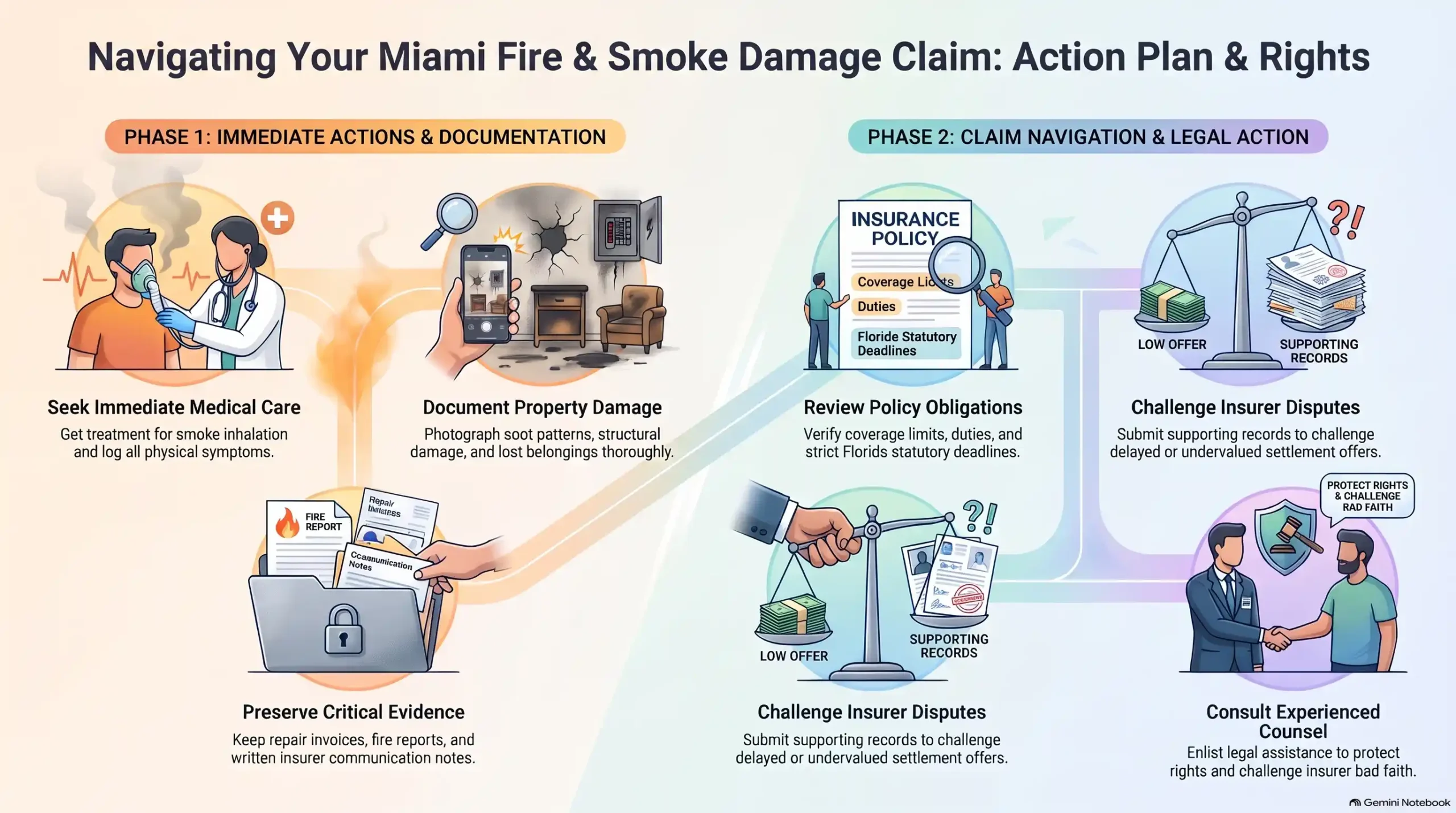


How We Can Help With Your Miami Property Claim Fire & Smoke Damage Injury Claim
A Miami property claim fire and smoke damage lawyer can help property owners document losses, interpret policy requirements, and pursue compensation after a fire. Legal counsel may organize photographs, repair estimates, receipts, and other records into a clear account of the property damage. This preparation can help owners provide insurers with consistent, complete information while preserving time for urgent household or community responsibilities.
Claim filing support may include reviewing forms, tracking deadlines, preparing supporting materials, and communicating with the insurer. A lawyer can explain Policy interpretation issues, including coverage terms, exclusions, limits, and duties required by the contract. When questions arise about a payment decision, counsel can assess the insurer’s stated reasons and identify appropriate steps for seeking review.
The process is tailored to the property owner’s circumstances and the available documentation. By managing claim-related tasks carefully, legal professionals can reduce administrative burdens and support informed decisions. Their role is to pursue a fair resolution while treating each client’s needs with respect and diligence.
OUR CONSULTATIONSARE FREE
START YOUR FREE CASE REVIEW

Understanding Miami Property Claim Fire & Smoke Damage Injury Cases
When a fire or smoke event damages a Miami property, the resulting claim may involve more than visible structural repairs. Residents, workers, and visitors may suffer injuries that require prompt medical assessment and careful documentation. Smoke inhalation physiology helps explain how airborne particles and gases can affect breathing, oxygen delivery, and other body functions, sometimes with symptoms that emerge after exposure. Medical records can connect reported symptoms to the event and describe the treatment required.
Burn injury classification identifies the depth and extent of tissue damage, helping clinicians determine care needs and assess recovery. A claim may also account for related losses, including medical expenses, reduced ability to work, and continuing rehabilitation. The evidence should distinguish physical injury from property damage while showing how each loss relates to the incident. For property owners and others seeking to support affected people, clear records and timely communication can help preserve accurate information. Each case depends on its facts, medical findings, and applicable insurance terms.
Common Causes of Miami Property Claim Fire & Smoke Damage
Fire and smoke damage in Miami properties can result from several common sources, including kitchen fires, electrical malfunctions, and heating equipment failures. Wildfires may also threaten buildings, while intentionally set fires can cause substantial property losses. Identifying the cause is often important when evaluating an insurance claim.
Kitchen Fires
Although kitchen fires may begin with a brief cooking mishap, they can cause extensive damage to a Miami property. Grease flare-ups often occur when oil overheats or spills onto a hot burner, allowing flames to spread quickly to cabinets, appliances, and nearby materials. Unattended cooking is another common cause, especially when a resident leaves a stove or oven running without supervision. Smoke can travel beyond the kitchen, leaving residue and odors on walls, furnishings, and personal belongings. Heat and firefighting water may also damage rooms adjacent to the fire, increasing repair needs. Prompt reporting, careful documentation, and professional assessment can help property owners establish the extent of covered losses. A qualified claim representative can review policy terms and support a fair, complete evaluation of resulting damage.
Electrical Malfunctions
Beyond cooking-related incidents, electrical malfunctions are another common source of fire and smoke damage in Miami properties. Damaged wiring, loose connections, and aging electrical components can generate heat or sparks that ignite nearby materials. Arc faulting occurs when electricity jumps across an unintended gap, potentially producing enough heat to start a fire inside walls or ceilings. Overloaded circuits also create hazards when too many devices draw power through a single circuit, causing wires to overheat. These problems may remain hidden until smoke, burning odors, or visible flames appear. Property owners who maintain safe electrical systems help protect residents, employees, and visitors from preventable harm. After an electrical fire, careful documentation of damage and prompt reporting to the insurer can support a property claim. Qualified professionals can assess the cause and extent of loss.
Heating Equipment
Heating equipment can cause fire and smoke damage in Miami properties when it is poorly maintained, improperly installed, or used too close to combustible materials. Furnace malfunctions may result from worn components, blocked vents, or neglected servicing. These failures can produce excessive heat, ignite nearby materials, or release smoke that spreads through a building. Boiler hazards include pressure-related failures, fuel leaks, and faulty controls, each of which may create dangerous conditions and damage surrounding property.
Regular inspections and prompt repairs can help property owners reduce these risks and protect residents, employees, and visitors. When a heating system causes a fire, smoke may affect rooms beyond the area where the incident began. A thorough assessment can document damage to structures, belongings, and indoor air quality, supporting a clear property claim and timely recovery.
Wildfires and Arson
Wildfires and intentional acts of arson can cause extensive fire and smoke damage to Miami properties. Although wildfires are less common in urban areas, dry conditions, wind, and nearby vegetation can allow flames to threaten homes and businesses. Smoke may also travel beyond the fire’s immediate path, damaging interiors and belongings. Wildfire evacuation planning helps property owners and residents leave safely, protect vulnerable neighbors, and follow official emergency instructions. Arson prevention strategies include securing vacant buildings, maintaining exterior lighting, limiting access to combustible materials, and reporting suspicious activity to authorities. After a fire, owners should document visible damage, preserve relevant records, and promptly notify their insurer. A careful claim process can help establish the extent of covered losses and support timely repairs, allowing affected communities to recover and serve residents effectively.
Don’t Wait. Call Our Florida Personal Injury Lawyers Now!


Legal Rights of Miami Property Claim Fire & Smoke Damage Injury Victims
When a fire or smoke event damages a Miami property or causes injury, affected individuals may have legal rights under insurance policies and Florida law. These protections can help property owners and injured residents seek fair treatment while preserving resources for families, tenants, and others who depend on them. Policyholder rights include receiving clear information about policy terms and having a claim reviewed in good faith. When coverage disputes arise, records and timely communication can support a careful assessment of available remedies.
- Review policy protections: A policyholder may examine covered losses, exclusions, deadlines, and duties required after an incident. Understanding these terms can clarify what documentation the insurer may request.
- Pursue a fair claim review: Florida law provides standards for insurer conduct. A claimant may challenge an unsupported denial or payment and request an explanation.
- Seek legal guidance: An attorney can assess potential claims, explain deadlines, and help protect the interests of injured people and affected property owners.
Rights depend on the policy, evidence, and circumstances. Prompt attention can help preserve options and support an orderly resolution for everyone affected.
Why Do Miami Property Claim Fire & Smoke Damage Injuries Happen?
Fire and smoke injuries in Miami properties often result from electrical faults, unattended cooking, malfunctioning appliances, or inadequate fire-safety measures. These hazards can arise in homes, apartment buildings, workplaces, and shared facilities where residents, employees, or visitors depend on safe conditions. Aging wiring, overloaded circuits, blocked exits, and poorly maintained alarms may increase the likelihood that a small incident becomes a serious emergency.
Fire spread dynamics depend on available fuel, ventilation, building layout, and the materials used in walls, furnishings, and insulation. Flames can move rapidly through connected rooms, while smoke may travel through hallways and ventilation systems, reaching people far from the source. Toxic combustion byproducts, including gases and fine particles, can impair breathing, reduce visibility, and cause harm before occupants recognize the danger. Children, older adults, people with disabilities, and those with respiratory conditions may face heightened risks when evacuation is delayed. Understanding these causes helps property owners and managers protect occupants and identify preventable safety failures.
What Should You Do After a Miami Property Claim Fire & Smoke Damage Injury?
After a fire or smoke-related injury, prompt medical care should be the first priority, even when symptoms appear minor. Injured individuals should document their injuries and treatment, preserving relevant records and photographs. They may also contact a lawyer to understand their options for pursuing a property claim.
Seek Medical Care
Anyone exposed to fire or smoke during a property incident should seek prompt medical care, even if symptoms seem mild or delayed. A qualified clinician can assess possible burns, breathing problems, and effects of smoke inhalation that may not be immediately apparent. Emergency symptoms, including difficulty breathing, confusion, chest pain, or severe burns, require immediate emergency services rather than a routine appointment. People with less urgent concerns should still arrange an evaluation as soon as possible and explain the circumstances of exposure. Medical professionals can recommend follow-up care, testing, or expert referrals when symptoms or examination findings warrant additional attention. Following treatment instructions and attending scheduled appointments can support recovery and reduce the risk of complications. Prompt care also helps guarantee that people who may need assistance receive appropriate medical attention without delay.
Document Your Injuries
Medical care should be followed by careful documentation of any injuries linked to the fire or smoke exposure. A clear record can help establish how the incident affected a person and support accurate communication with medical providers, insurers, and others involved in the recovery process.
An Injury photo log can show visible burns, irritation, or other changes over time. Photographs should be dated, stored securely, and accompanied by brief notes identifying the affected area. A symptom journal can record coughing, breathing difficulties, headaches, sleep disruption, or changes in daily activities. Entries should include when symptoms began, their severity, and whether they improve or worsen. Also retain copies of discharge instructions, prescriptions, test results, and appointment records. Consistent documentation helps caregivers and family members understand ongoing needs and provides a dependable account of the injury’s course.
Contact a Lawyer
When a fire or smoke exposure causes injury and property loss, consulting a lawyer can help clarify the steps involved in pursuing an insurance claim. A qualified attorney can review policy terms, explain deadlines, and identify documentation needed to support medical expenses, repair costs, and other losses. Prompt legal guidance may also help preserve evidence and prevent avoidable errors in communications with an insurer.
Before choosing counsel, the injured property owner can verify attorney credentials, including experience with fire and smoke damage claims, licensing, and relevant disciplinary history. A Free consultation may provide an opportunity to discuss the circumstances, ask about fees, and understand possible next steps without an immediate commitment. Clear communication helps make certain the lawyer understands the claim’s impact and the client’s priorities. Legal support can also help claimants pursue a fair resolution while maintaining accurate records and meeting applicable deadlines.
Critical Evidence in a Miami Property Claim Fire & Smoke Damage Injury Case
A strong fire and smoke injury claim relies on evidence that establishes the fire’s origin, the extent of property damage, and the connection between exposure and injury.
Essential evidence commonly includes:
- Fire origin findings and photographs documenting smoke damage.
- Medical records describing diagnoses, treatment, and related expenses.
- Witness accounts and expert statements addressing how the fire occurred and caused harm.
Fire Origin Evidence
Determining where and how a fire began can be central to a Miami property claim involving fire and smoke damage. Qualified investigators examine the scene, document physical conditions, and consider potential ignition sources before drawing conclusions. Their findings may help clarify whether a fire resulted from an electrical failure, equipment malfunction, cooking activity, or another cause.
Fire pattern analysis can reveal how flames moved through a structure and where they may have originated. Investigators may also use burn depth mapping to compare damage across walls, floors, and other surfaces. These observations should be recorded promptly because cleanup or repairs can alter important evidence. Photographs, measurements, witness accounts, and expert reports may support a reliable assessment. Careful preservation and impartial review can help property owners, insurers, and affected occupants understand the circumstances and fairly evaluate responsibility.
Smoke Damage Documentation
After the fire’s origin has been assessed, documenting smoke damage can help establish the extent of a property loss and support a Miami insurance claim. A careful record should identify affected rooms, surfaces, fixtures, and belongings, including areas where smoke traveled beyond visible fire damage. Smoke residue mapping can show the distribution and severity of contamination, while dated photographs and video preserve conditions before cleanup begins. A contents inventory should list damaged items with descriptions, approximate ages, purchase information, and estimated replacement costs when available. Inspection notes, cleaning estimates, and invoices can further explain the work required to restore the property. Records should be organized, accurate, and shared with the insurer as required by policy. Thorough documentation helps claim reviewers assess losses consistently and supports fair consideration of affected households and property owners.
Medical Injury Records
When fire or smoke exposure causes physical symptoms, medical records can provide essential evidence in a Miami property claim involving injury. Prompt evaluation helps document symptoms, identify necessary treatment, and establish when concerns began. Records may include emergency department reports, diagnostic test results, prescriptions, follow-up visits, and referrals to experts. Physician Treatment Notes can explain reported symptoms, clinical findings, recommended care, and changes in a patient’s condition over time. Consistent Medical Record Organization makes it easier to track appointments, preserve itemized bills, and connect treatment to the reported exposure. Individuals should retain copies of records and provide accurate information to healthcare professionals. These documents can help insurers assess the nature and cost of an injury claim. Careful recordkeeping also supports fair consideration of people affected by a fire, without overstating medical conclusions.
Witness And Expert Statements
Witness and expert statements can help clarify how a fire or smoke exposure occurred and how it affected a property or its occupants. Prompt Witness Interviews may preserve observations from residents, visitors, first responders, and maintenance staff before memories fade. Their accounts can identify when smoke appeared, which areas were affected, and whether alarms or safety systems operated. Consistent statements may support a clearer timeline, while differences can signal questions requiring further review.
Expert Testimony can explain fire patterns, smoke movement, building conditions, and the cause or extent of damage. Medical professionals may also describe how exposure relates to reported injuries and treatment needs. These opinions should be grounded in reliable records, inspections, and recognized methods. In combination, firsthand observations and qualified analysis can help insurers, investigators, and decision-makers assess a claim fairly and determine what evidence remains necessary.
Don’t Wait. Call Our Florida Personal Injury Lawyers Now!
Long-Term Effects of Miami Property Claim Fire & Smoke Damage Injuries
Fire and smoke injuries may cause lasting health effects that continue long after the immediate danger has passed. Chronic respiratory problems and permanent skin damage can require ongoing treatment and affect daily activities. Emotional trauma and stress may also persist, making appropriate medical evaluation important.
Chronic Respiratory Problems
Smoke exposure during a property fire can cause respiratory problems that persist long after the immediate danger has passed. Fine particles and toxic gases may irritate the airways, worsen asthma, or reduce lung function. Airway inflammation can lead to ongoing coughing, wheezing, chest tightness, and shortness of breath, sometimes appearing after an initial delay. In severe cases, scarring may develop in lung tissue, including pulmonary fibrosis, which can restrict breathing and limit daily activities.
Medical evaluation helps identify the extent of injury and supports appropriate treatment. Pulmonary testing, imaging, and follow-up care may be recommended based on symptoms and exposure history. People experiencing persistent breathing difficulties should document symptoms and seek professional guidance. Clear medical records can also help establish the connection between fire-related smoke exposure and continuing health effects when a property claim is being reviewed.
Lasting Skin Damage
When heat, flames, or toxic residues injure the skin, the effects may continue after the immediate wounds have recovered. Burn depth, infection, and delayed treatment can influence recovery and leave lasting changes. Permanent scarring may restrict movement when it forms across joints, while damaged nerves can cause numbness, sensitivity, or persistent pain. Severe injuries may require skin grafts, follow-up procedures, and extended wound care. Smoke-related chemicals and contaminated building materials can also irritate exposed skin or worsen existing conditions. These consequences may affect a person’s ability to work, provide care, or complete daily tasks. Medical records, photographs, treatment plans, and professional assessments can help document the injury’s progression and future needs. In a property claim, this evidence may support requests for appropriate compensation for treatment, rehabilitation, and related losses.
Emotional Trauma and Stress
After a fire or smoke exposure, emotional effects may persist long after physical injuries begin to heal. Survivors may experience anxiety, sleep disruption, low mood, or heightened alertness, particularly when reminders of the incident arise. Emotional triggers can include smoke odors, alarms, damaged belongings, or returning to the property. These reactions may interfere with work, relationships, and daily responsibilities, even when visible injuries have healed. A person may also grieve lost possessions or feel uncertain about housing and financial stability. Support from trusted relatives, counselors, and community services can help survivors address these challenges. Effective coping strategies may include counseling, structured routines, and gradual exposure to reminders under professional guidance. When distress remains severe or persistent, timely mental health care can support recovery and help restore a sense of safety and control.
Proving Liability in Miami Property Claim Fire & Smoke Damage Injury Cases
Proving liability in a Miami fire or smoke damage claim requires evidence connecting the loss to a responsible party’s conduct or legal duty. The facts may show whether a property owner, manager, contractor, or another party caused the fire or failed to address a known hazard. Premises liability standards generally require examining control of the property, reasonable inspection practices, and whether a dangerous condition was foreseeable. Records of repairs, inspection logs, fire reports, photographs, and witness accounts can help establish what happened and when.
Evidence of negligent maintenance may include ignored electrical problems, blocked exits, defective alarms, or failure to maintain fire suppression equipment. Evidence should also connect the alleged breach to the resulting property damage or injury. In some cases, qualified fire investigators or building professionals can assess the origin, spread, and contributing conditions. Careful documentation supports a fair evaluation of responsibility and helps affected residents, workers, and neighbors pursue accountability while preserving reliable evidence. Each claim depends on its specific circumstances and applicable law.
Dealing With Insurance Companies After a Miami Property Claim: Fire & Smoke Damage Injury
Once responsibility for a Miami fire or smoke damage loss is under review, communication with insurers can shape how the claim is evaluated. Property owners may need to describe damaged rooms, smoke exposure, interrupted services, and related expenses while ensuring their account is accurate. Policyholder communications should remain factual, organized, and consistent with available records. Photographs, repair estimates, receipts, and written correspondence can help clarify the reported loss.
Insurers may examine policy terms, exclusions, deadlines, and the connection between the fire and claimed damage. Careful interpretation of coverage can identify which losses may qualify for payment and which questions require further documentation. A property owner should avoid speculation about the cause or extent of damage and request clarification when an insurer’s position is unclear. Legal counsel may help review policy language, respond to requests, and address disputes over coverage or valuation. Clear, respectful exchanges can support a fair assessment while helping property owners preserve resources needed to restore safe, usable spaces for residents and neighbors.
What to Expect During a Miami Property Claim Fire & Smoke Damage Injury Claim Process
A fire and smoke damage claim typically begins with an initial review of the policy and the reported losses. The claimant then documents property damage and related injuries while the insurer investigates coverage, cause, and the extent of the loss. The process may conclude with a settlement, or proceed to a dispute if the parties disagree over payment or responsibility.
Initial Claim Review
During the initial review of a Miami fire and smoke damage claim, the insurer typically examines the policy, the reported cause of the loss, and the available evidence of property damage. This early assessment helps determine which policy provisions may apply and what information is needed to evaluate the request. Policy review includes checking limits, deductibles, exclusions, deadlines, and duties required of the policyholder after a loss. Coverage analysis considers whether the reported fire or smoke event falls within the insured risks and whether any stated limitation may affect payment. The insurer may also ask questions about the property, the incident, or the policyholder’s account. Clear, timely communication supports an orderly review and helps prevent avoidable misunderstandings. The initial decision may address coverage, request further information, or explain the insurer’s position.
Damage Documentation
As the claim proceeds, thorough documentation helps establish the extent and cause of fire and smoke damage to the property. Clear records can help property owners present an accurate account and support a fair resolution. Photographing soot patterns, burned surfaces, and affected rooms from multiple angles can preserve details that may change during cleanup. Images should include wide views and close-ups, with dates and locations recorded when possible. Inventorying damaged belongings also helps organize the claim. A list should identify each item, describe its condition, note its approximate age and value, and include receipts or other proof of ownership when available. Retain records of temporary repairs, cleaning, and related expenses. Consistent documentation gives the claim a reliable factual foundation and helps guarantee that losses affecting residents, employees, or community services are clearly represented.
Insurer Investigation
Once the initial damage record is assembled, the insurer typically investigates to assess the cause and scope of the fire and smoke loss. An adjuster may inspect the property, photograph affected areas, review repair estimates, and ask how the incident occurred. The insurer may also consult fire reports, building records, or experts to evaluate damage to structural materials and personal belongings. The insurer may request recorded statements from the policyholder or witnesses; responses should be accurate and limited to personal knowledge. Reservation notices may explain that coverage remains under review while the insurer investigates specific policy terms or facts. The policyholder can help the process by providing requested documents, preserving damaged items when safe, and keeping a record of communications. Prompt, organized cooperation supports a fair evaluation and helps protect the interests of everyone affected.
Settlement or Dispute
After the insurer completes its investigation, it may approve payment, make a partial offer, or deny some or all of the fire and smoke damage claim. The policyholder should review the decision against the policy, repair estimates, and documented losses, including smoke remediation and damaged belongings. Settlement Offers may not reflect the full cost of restoring the property or addressing related expenses. If the amount appears inadequate, the policyholder can submit supporting records, request reconsideration, and explain any disputed findings. Clear documentation can help the insurer evaluate the claim fairly and support timely recovery for residents and others affected by the fire. When direct discussions do not resolve disagreements, Dispute Resolution options may include appraisal, mediation, or legal action, depending on policy terms and applicable Florida law. A qualified attorney can explain available procedures and deadlines.
Compensation for Miami Property Claim Fire & Smoke Damage Injury Damages
Compensation for fire and smoke damage to a Miami property may cover repairs or replacement of damaged structures and belongings, as well as additional living expenses when the home is temporarily uninhabitable. Depending on the policy, covered costs may include debris removal, smoke remediation, and necessary repairs to electrical or plumbing systems. Temporary housing expenses may be reimbursable while restoration work prevents safe occupancy, subject to policy limits and documentation requirements.
A claim may also address losses affecting a home-based or commercial operation. Business interruption coverage can help replace lost income when fire damage forces a business to suspend or reduce operations, if the policy includes that protection. Insurers generally require records showing the damage, expenses, and operational impact. Photographs, repair estimates, receipts, and financial statements can support a clear assessment.
A careful review of policy language helps identify applicable coverage, exclusions, deadlines, and limits. Prompt reporting and organized records can help property owners and businesses seek benefits while supporting the needs of occupants, employees, and customers affected by the disruption.
Economic vs. Non-Economic Damages in Miami Property Claim Fire & Smoke Damage Cases
In Miami fire and smoke damage claims, economic losses may include repair costs, damaged belongings, and additional living expenses. Non-economic harm can involve disruption, distress, or loss of use, depending on the policy and applicable law. Claimants generally need clear documentation to establish the extent and value of each category of damages.
Economic Losses
Fire and smoke damage can create both economic and non-economic losses, but these categories are assessed differently in a Miami property claim. Economic losses are measurable financial costs linked to the damage and its consequences. They may include repairs, replacement of damaged belongings, debris removal, and reasonable expenses for temporary housing while the property is unsafe or undergoing restoration. If a fire disrupts a business or prevents someone from working, documented lost income may also be relevant, subject to policy terms and supporting records. Receipts, invoices, estimates, payroll information, and proof of payments can help establish the amount and connection to the incident. A careful claim review can distinguish covered costs from unrelated expenses and identify missing documentation. Clear accounting supports a fair assessment and helps preserve resources for affected households and businesses.
Non-Economic Harm
Although property claims primarily address measurable financial losses, fire and smoke damage can also cause non-economic harm, such as emotional distress, disruption to daily life, or loss of the home’s use and comfort. Emotional suffering may arise from displacement, uncertainty, and the strain of living amid damaged belongings or ongoing repairs. Residents may experience diminished enjoyment of their home when smoke odors, safety concerns, or restricted access interfere with ordinary routines. These effects can extend beyond the property itself, affecting family relationships, privacy, and a sense of stability. In Miami fire and smoke damage claims, non-economic harm is distinct from repair costs and other direct financial losses. Recognizing this distinction helps guarantee that the impact on residents is considered alongside the practical expense of restoring the home and daily life.
Proving Damages
A well-documented claim distinguishes measurable financial losses from harm that does not have a direct price. Economic damages may include repair costs, temporary housing, cleaning, damaged belongings, and lost income when fire or smoke disrupts work. Receipts, contractor estimates, invoices, photographs, and inventories help establish the amount and cause of each loss. Contents valuation should account for an item’s condition, age, and replacement cost, supported by purchase records or comparable listings. Insurers may apply depreciation, making depreciation disputes a significant part of claim review; policy terms can determine whether withheld amounts are recoverable after replacement. Non-economic harm, such as distress or disruption to daily life, requires separate evidence and may be subject to policy limits or legal restrictions. Organized records help claimants present accurate losses and support fair resolution.
When a Miami Property Claim Fire & Smoke Damage Injury Case Goes to Trial vs Settlement
When settlement negotiations fail to produce a fair resolution, a Miami fire and smoke damage claim may proceed to trial, where a judge or jury evaluates the evidence and determines liability and damages. Trial offers a formal process for presenting repair records, photographs, expert assessments, and testimony about the loss. The court may decide whether the insurer handled the claim appropriately and what compensation the evidence supports.
Settlement can provide a more predictable outcome and may resolve a dispute sooner, avoiding the uncertainty, expense, and time associated with trial. However, an offer may not reflect the documented scope of damage or the needs of affected occupants. The claimant generally weighs the proposed amount against the strength of the evidence and the practical demands of continued litigation.
Trial preparation includes organizing records, preparing witnesses, and developing a clear presentation of the claim. A lawyer can explain available options and help property owners assess risks, while keeping the goal of restoring safe, usable housing in view.
Don’t Wait. Call Our Florida Personal Injury Lawyers Now!
Florida Laws That May Affect Your Miami Property Claim Fire & Smoke Damage Case
Florida law can shape how a Miami property owner documents, pursues, and resolves a fire or smoke damage claim. Policy terms and state requirements may influence the evidence insurers consider, the scope of covered repairs, and the options available when a disagreement arises.
Owners who maintain clear records can also support safer, faster restoration for tenants, employees, and neighbors.
- Policy duties: A policy may require prompt notice, reasonable steps to protect property from further damage, and cooperation with the insurer’s investigation. Owners should retain receipts, photographs, and repair records.
- Appraisal procedures: A Florida policy appraisal clause may provide a process for resolving disputes about the amount of a loss. Its scope and requirements depend on the policy language and circumstances.
- Repair standards: Matching regulations and applicable building codes may affect how damaged materials are replaced. Insurers and owners may dispute whether repairs must produce a reasonably consistent appearance or satisfy current safety requirements.
Because coverage depends on policy wording and facts, legal review can clarify obligations and preserve resources for affected occupants.
The Statute of Limitations for Miami Property Claim Fire & Smoke Damage Injury Cases
How long an injured person has to bring a claim after a fire- or smoke-related injury in Miami depends on the legal basis of the case and the circumstances. Florida law generally allows two years to file a negligence action for personal injury, including injuries caused by fire or smoke exposure. A property damage claim may have a different deadline, so the nature of the loss matters.
The deadline can depend on when the injury occurred or was discovered, as well as the parties involved and the legal theory asserted. Special rules may apply when a government entity is responsible, because notice requirements and shorter timelines can affect a case. Other claim exceptions may pause or alter the filing period in limited circumstances, such as when the injured person is a minor, or the responsible party cannot be located.
Missing a deadline can bar recovery, regardless of the injury’s severity. Timely attention to applicable dates helps preserve options and supports accountability for those affected.
How a Miami Property Claim Fire & Smoke Damage Lawyer Can Help You
A Miami property claim fire and smoke damage lawyer can help property owners document losses, interpret insurance policy terms, and respond to disputes over coverage or payment.
This support can also help households protect their ability to recover while maintaining safe, stable living arrangements.
- Organize evidence: Counsel can help compile photographs, repair estimates, inventories, receipts, and reports from fire officials or restoration professionals. Clear records may support the value and cause of claimed damage.
- Assess policy obligations: A lawyer can review coverage limits, exclusions, and duties imposed on the policyholder. The review may clarify Fire claim deadlines and help make sure required notices and documents are submitted accurately.
- Address practical needs: Counsel can explain Temporary housing options and assess whether the policy provides benefits for additional living expenses. This guidance can help families plan responsibly while repairs proceed and preserve funds for necessary needs.
When an insurer questions a claim or delays payment, legal representation can support informed communication and a documented response, while keeping the claim focused on policy terms and proven losses.
When to Contact a Miami Property Claim Fire & Smoke Damage Lawyer
Prompt legal advice may be appropriate when a fire or smoke claim is denied, payment is delayed, or the insurer disputes the cause or extent of the damage. A policyholder may also consider contacting counsel when the insurer requests extensive documentation, offers an amount that appears insufficient, or raises questions about coverage terms. Early consultation can help clarify deadlines, preserve relevant records, and identify what information may be needed to support the claim. It may be useful before signing a release or accepting a settlement, since those steps can limit further recovery.
Attorney selection is also important when a claim involves substantial property loss, business interruption, or disagreement over repair estimates. A prospective client can ask about experience with property insurance disputes, communication practices, fees, and the process for evaluating a claim. Prompt attention is particularly valuable when the property serves employees, tenants, customers, or community members who depend on timely repairs. Legal guidance can help the policyholder understand available options while decisions remain open.
Why You Need an Experienced Miami Property Claim Fire & Smoke Damage Lawyer
When a fire or smoke claim involves disputed coverage, complicated damage, or a significant financial loss, an experienced Miami property claim lawyer can help the policyholder assess the insurer’s position and identify available options. Such guidance can clarify what documentation may support the claim, including repair estimates, inventories, photographs, and records of temporary expenses. A lawyer can also explain Policy Interpretation issues, helping the policyholder understand how exclusions, limits, and duties after loss may apply to the facts.
If the insurer delays, undervalues damage, or denies coverage without adequate support, counsel can evaluate the response and explain potential remedies. Where the evidence suggests Insurance Bad Faith, an attorney can help preserve relevant communications and assess whether further action is warranted. This work can reduce confusion during a difficult recovery and help property owners pursue benefits they are owed under the policy. By addressing coverage questions and claim-handling concerns, experienced legal support can help protect the resources needed to restore a home or business and support its occupants.
How to Choose the Right Miami Property Claim Fire & Smoke Damage Lawyer for Your Case
Selecting the right Miami property claim fire and smoke damage lawyer requires careful consideration of the attorney’s experience, communication practices, and approach to disputed insurance claims. A suitable candidate should have a record of handling property damage matters involving fire, smoke, cleanup costs, and insurer disagreements. Reviewing Attorney credentials can help confirm licensing, relevant experience, and professional standing. Prospective clients may also ask how the lawyer evaluates damage, gathers supporting records, and addresses delayed or underpaid claims.
The communication style matters throughout a demanding recovery process. A lawyer should explain available options in clear terms, respond within a reasonable time, and provide updates as the claim progresses. During an initial consultation, clients can assess whether the attorney listens carefully, answers questions directly, and sets realistic expectations. It may also help to understand the fee arrangement and what documents are needed to begin. Careful comparison allows property owners to choose representation suited to their circumstances while preserving time and attention for family, employees, tenants, or others affected by the loss.
About The Law Offices of Anidjar & Levine
The Law Offices of Anidjar & Levine represents clients in property damage matters, including disputes involving fire and smoke losses.
The firm assists property owners who face repair costs, interrupted use of their homes or businesses, and disagreements with insurers over coverage or payment.
Its role may include reviewing policy terms, organizing claim documentation, communicating with insurance representatives, and pursuing available legal remedies when a dispute remains unresolved.
Firm history provides context for the firm’s approach to client service and its work across injury and insurance-related matters.
For property owners, a clear explanation of the claims process can help them make informed decisions during a difficult recovery.
The firm’s attorneys and staff may also help clients understand what records can support a claim, such as photographs, repair estimates, and proof of damaged belongings.
Community involvement reflects a commitment to serving people beyond individual legal matters.
Prospective clients can contact the firm to discuss their circumstances, understand potential next steps, and determine whether legal representation is appropriate.

Frequently Asked Questions
Can I Stay in My Home While Fire and Smoke Damage Repairs Are Underway?
Whether a resident can remain at home during fire and smoke repairs depends on a qualified professional’s assessment of safe occupancy. Extensive smoke residue, damaged electrical systems, structural instability, or inadequate ventilation may require temporary relocation. Repair hazards, including dust, chemicals, and exposed wiring, can also threaten residents and workers. The property owner should follow fire officials’ and contractors’ guidance, document conditions, and consult the insurer about coverage for temporary housing when needed.
Does Homeowners Insurance Cover Smoke Damage to Belongings and Clothing?
Homeowners insurance often covers smoke-damaged belongings and clothing when smoke damage results from a covered event, such as a fire. Coverage for smoke-damaged clothing may include cleaning or replacement, depending on the policy and whether restoration is practical. Personal Property Replacement Limits, deductibles, exclusions, and actual-cash-value terms can affect payment. The policyholder should document losses, retain receipts, and promptly report the claim so the insurer can assess eligible items and applicable limits.
How Can I Document Smoke Odor That Persists After Professional Cleaning?
Document persistent smoke odor systematically after professional cleaning. Odor persistence documentation begins with dated notes describing each affected room, the odor’s strength, and conditions such as closed windows or operating ventilation. Photograph cleaning records, damaged belongings, and any areas where residue remains. Request post-cleaning odor testing from a qualified indoor environmental professional, with written findings and testing methods. Preserve invoices, reports, and communications, and avoid further cleaning until you have documented evidence for responsible review.
Can I Recover Costs for Temporary Housing After a Covered Fire?
Yes, a covered fire may qualify a policyholder for reimbursement of reasonable temporary accommodation costs when the home is uninhabitable. This coverage, often called Additional Living Expenses, generally addresses necessary increases in housing and related living costs, subject to policy limits and terms. The policyholder should keep receipts, document displacement dates, and obtain insurer approval when practical. The insurer will assess whether expenses are reasonable and directly connected to the covered loss.
What Should I Do if My Mortgage Lender Receives Part of My Insurance Payment?
If a mortgage lender receives part of an insurance payment, the homeowner should promptly request a written explanation of the funds and the lender’s release requirements. The insurer’s payment documents and mortgage agreement can clarify how proceeds must be handled. For a Mortgage Check Endorsement, the lender may require repair estimates, contractor information, or inspections before releasing funds. If delays or disputed conditions arise, document communications and seek guidance on lender disbursement disputes to protect timely repairs and household stability.
—————————
Fire and smoke damage claims can involve substantial property losses, disputed coverage, and serious health concerns.
Miami property owners should document the damage, preserve relevant records, and carefully review insurer communications.
When a claim is delayed, underpaid, or denied, legal guidance may help clarify available options and protect the owner’s interests.
The Law Offices of Anidjar and Levine can assess the circumstances, explain potential next steps, and pursue a fair resolution based on the evidence and applicable policy terms.
For help with a related injury matter, see our Miami Personal Injury Lawyer page.

