A Hialeah car accident vehicle and equipment failures lawyer at The Law Offices of Anidjar and Levine can investigate whether defective brakes, tires, steering components, safety systems, or inadequate repairs contributed to a collision. The investigation may involve preserving the vehicle, reviewing maintenance and inspection records, examining event data, and consulting qualified experts. Florida law may permit claims against negligent drivers, repair providers, manufacturers, or other responsible parties. Recovery depends on the evidence, injuries, and applicable deadlines. Learn more from a Hialeah Personal Injury Lawyer.
Main Takeaways
- A Hialeah vehicle-failure lawyer can assess whether defective brakes, tires, steering, airbags, or other equipment contributed to a crash.
- Potentially responsible parties may include drivers, vehicle owners, manufacturers, distributors, and repair providers.
- Preserve the vehicle, damaged parts, maintenance records, photographs, and witness details for investigation.
- Prompt medical care and thorough documentation can help establish injuries, symptoms, and related expenses.
- Florida comparative negligence may reduce compensation, and deadlines apply; an attorney can explain options and requirements.
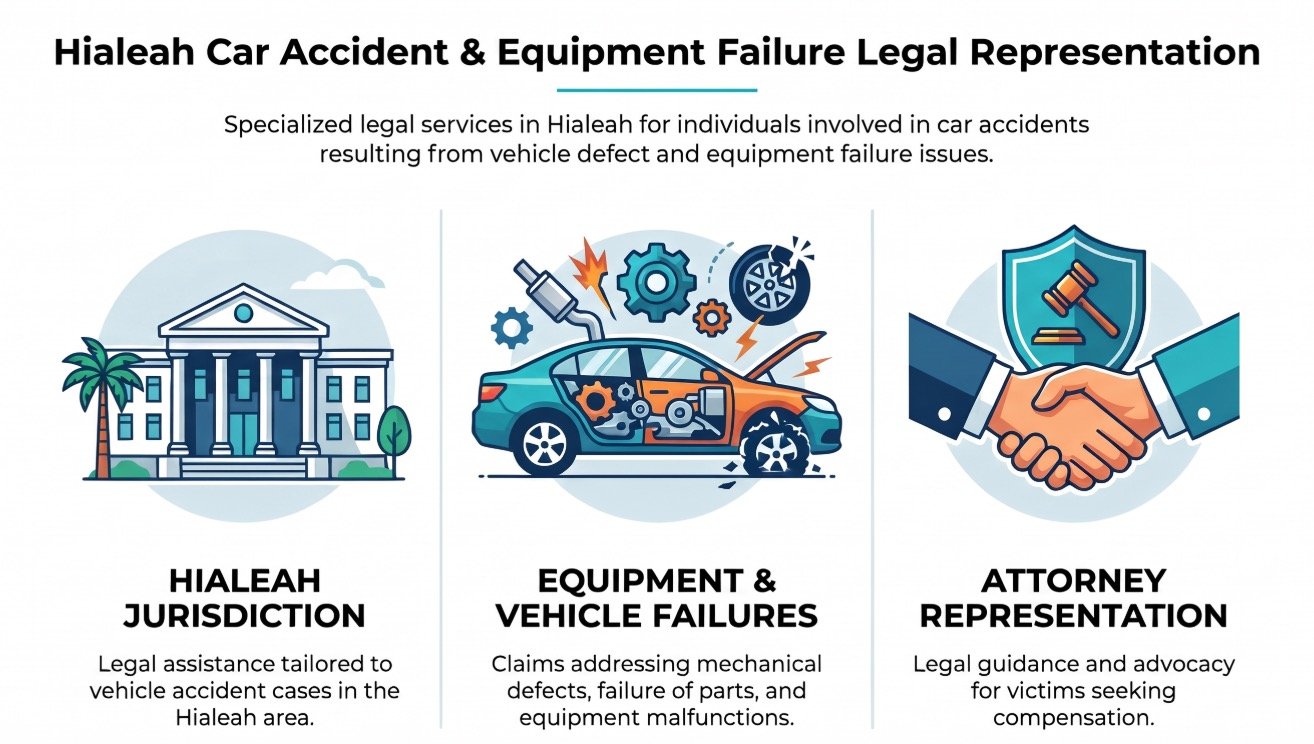
How We Can Help With Your Hialeah Car Accident Vehicle & Equipment Failures Injury Claim
When a vehicle or equipment failure causes a crash in Hialeah, determining who may be responsible can require a careful review of the vehicle, maintenance records, and available evidence. A legal team can help injured people understand their options and pursue a claim while they focus on recovery and family responsibilities.
Support may include gathering repair histories, inspection reports, photographs, witness statements, and other relevant records. Counsel can communicate with insurers, organize documentation, and explain claim deadlines and procedural requirements. This assistance may help clarify Claim eligibility, including whether evidence supports a request for compensation and which parties may need to be considered.


Attorney collaboration can also help make certain that legal and investigative tasks are coordinated. Depending on the circumstances, counsel may consult qualified professionals to assess the failure and preserve relevant evidence. The process should remain responsive to the injured person’s needs, with clear updates and practical guidance at each stage. No outcome can be guaranteed, and each claim depends on its facts and applicable law.
Understanding Hialeah Car Accident Vehicle & Equipment Failures Injury Cases
OUR CONSULTATIONSARE FREE
START YOUR FREE CASE REVIEW

Vehicle and equipment failure cases arise when a defect or malfunction, such as faulty brakes, a tire failure, or a defective safety system, contributes to a Hialeah car accident. These injury cases require careful evaluation of how the vehicle’s condition relates to the collision and resulting harm. A claim may involve questions about the vehicle, its components, maintenance history, and the actions of parties responsible for inspection, repair, or manufacture.
Evidence can include vehicle inspections, service records, photographs, witness accounts, and medical documentation. Crash reconstruction may help clarify the sequence of events and whether a malfunction affected the driver’s ability to respond. Investigators may also consider roadway conditions, impact points, and damage patterns when evaluating the incident. The analysis should distinguish a mechanical issue from other contributing factors and establish how injuries occurred.
A clear understanding of the evidence can help injured people and their families pursue accountability while supporting safer practices for others who share Hialeah roads.
Don’t Wait. Call Our Florida Personal Injury Lawyers Now!
Common Causes of Hialeah Car Accident Vehicle & Equipment Failures


Vehicle and equipment failures in Hialeah car accidents may result from brake system malfunctions, tire blowouts, or defective airbags. Steering and suspension defects can also impair a driver’s ability to control a vehicle. Identifying the specific failure can help clarify how the crash occurred and who may be responsible.
Brake System Failures
Brake system failures can prevent a driver from slowing or stopping in time to avoid a collision. In Hialeah, worn brake pads, damaged rotors, and neglected maintenance may reduce a vehicle’s stopping ability. Brake fade can occur when repeated or prolonged braking generates excessive heat, making the brakes less responsive. Hydraulic leaks may lower brake fluid pressure, weakening the system or causing it to fail. Defective components and improper repairs can also contribute to sudden braking problems. Drivers who notice unusual noises, a soft pedal, warning lights, or longer stopping distances should have the vehicle inspected promptly. When a brake defect causes a crash, investigators may examine service records, vehicle condition, and repair history to identify its source. This evidence can help determine responsibility and support those affected by the collision.
Tire Blowouts
Tire blowouts can cause a driver to lose control, particularly at highway speeds or in heavy traffic. Common causes include underinflation, worn tread, overloading, impact damage, and prolonged heat exposure. In Hialeah, high temperatures can increase tire stress, making routine inspections and proper inflation especially important. Tread separation hazards may arise when a tire is damaged, poorly maintained, or defective. A separated tread can disrupt steering and create debris that endangers nearby motorists. Drivers should recognize blowout warning signs, including vibration, bulges, cracks, uneven wear, or repeated pressure loss. When a blowout occurs, sudden braking or sharp steering can worsen the loss of control. Vehicle owners should preserve damaged tires and maintenance records after a crash. These materials may help investigators determine whether neglect, road conditions, or a product defect contributed.
Defective Airbags
When an airbag fails to deploy, deploys unexpectedly, or releases metal fragments, it can cause severe injuries and complicate a Hialeah car accident investigation. Airbags are designed to reduce harm during certain collisions, but defective sensors, inflators, wiring, or control modules may prevent them from operating properly. Incorrect airbag deployment timing can expose occupants to avoidable impact injuries, particularly when a bag opens too early or too late. Some inflator failures have also caused metal fragments to strike drivers and passengers. Airbag chemical exposure may irritate the eyes, skin, or respiratory system after deployment, although the powder released is not always hazardous. Investigators can preserve the vehicle, review recall and repair records, and examine event data to identify possible defects. Careful documentation can support injured people seeking accountability and help protect others from similar failures.
Steering and Suspension Defects
Steering and suspension defects can cause a driver to lose control of a vehicle or make it difficult to respond to changing road conditions in Hialeah. These failures may result from poor design, manufacturing errors, inadequate maintenance, or worn components. A Steering linkage fracture can prevent the wheels from responding properly to steering input, leaving the driver unable to guide the vehicle safely. Suspension geometry defects may affect tire contact, stability, and braking, particularly during turns or sudden shifts. Drivers, passengers, and other road users can face serious risks when a vehicle veers unexpectedly or becomes difficult to control. After a collision, inspecting steering and suspension components may help determine whether a defect contributed to the crash. Preserving the vehicle and repair records can help investigators evaluate the cause and support accountability.
Legal Rights of Hialeah Car Accident Vehicle & Equipment Failures Injury Victims
Vehicle or equipment failures can leave Hialeah crash victims with injuries and legal claims involving more than the other driver. Florida law may allow an injured person to seek compensation from parties whose negligence or defective products contributed to the collision. Depending on the evidence, potential claims may involve a driver, vehicle owner, manufacturer, distributor, or repair provider. Product liability claims may apply when a defective component causes harm, while negligence claims may address careless maintenance or repairs.
Vehicle failures may create claims against drivers, owners, manufacturers, distributors, or repair providers, depending on the evidence.
Victims and their families may need support to understand available options and protect their interests.
Relevant steps can include:
- Preserve the vehicle and damaged equipment for inspection.
- Keep medical records, repair documents, photographs, and witness information.
- Consult a qualified attorney about deadlines and responsible parties.
Florida comparative negligence may reduce compensation if an injured person shares fault, but it does not automatically bar recovery. Each claim depends on its facts, applicable law, and proof of damages. Legal guidance can help families pursue accountability while focusing on recovery and meeting their needs.
Don’t Wait. Call Our Florida Personal Injury Lawyers Now!
Why Do Hialeah Car Accident Vehicle & Equipment Failures Injuries Happen?
Understanding potential legal claims begins with identifying how a failure contributed to the crash and resulting injuries. Vehicle and equipment failures can arise from defective design, faulty manufacturing, inadequate maintenance, or worn components. Brake problems may prevent a driver from slowing in time, while tire defects can cause a blowout or loss of traction. Steering or suspension failures may make a vehicle difficult to control, particularly during a turn or evasive action.
Sudden loss of vehicle control can also result from malfunctioning lights, airbags, seat belts, or other safety equipment. These failures may increase the likelihood of a collision or worsen injuries when one occurs. Roadway hazards, including debris, standing water, and uneven pavement, can interact with equipment problems and make a dangerous situation more severe. Investigating combinations of roadway hazards and equipment failure can help clarify how an incident developed. Understanding these causes supports efforts to identify responsible parties and improve safety for drivers, passengers, and others sharing Hialeah roads.
What Should You Do After a Hialeah Car Accident Involving Vehicle & Equipment Failures?
After a Hialeah crash involving a vehicle or equipment failure, the injured person should seek prompt medical care and follow the provider’s recommendations. They should document the suspected failure, including visible damage and relevant circumstances, without altering the vehicle or equipment. Preserving photographs, repair records, and other evidence may help establish how the failure contributed to the accident.
Seek Medical Care
Prompt medical evaluation is essential after a Hialeah car accident involving vehicle or equipment failure, even when injuries appear minor. An Emergency assessment can identify hidden trauma, including head, neck, or internal injuries that may not cause immediate symptoms. If emergency responders recommend transport, the injured person should accept care and provide clinicians with an accurate account of symptoms and the collision. Anyone who declines transport should still seek prompt evaluation at an appropriate medical facility. A clinician can assess injuries, recommend treatment, and explain warning signs that require urgent attention. Following medical instructions and attending follow-up appointments supports recovery and helps providers identify changes in the person’s condition. Consistent care also creates a clear medical record, which may assist those coordinating treatment and seeking appropriate support for the injured person.
Document Vehicle Failures
When a vehicle or piece of equipment may have contributed to a Hialeah car accident, preserving evidence can help clarify what failed and when. A careful written account can also help investigators understand how the failure affected those involved. The driver or owner should note warning lights, unusual sounds, steering or braking problems, and any equipment malfunction observed before or during the collision. Record dates, locations, and descriptions while memories remain clear.
Relevant maintenance records can show whether a defect was reported or a repair was recommended. Repair invoices, inspection reports, service communications, and Recall notices may help identify recurring problems or unresolved safety concerns. The account should distinguish direct observations from information learned later. Accurate documentation can help insurers, qualified experts, and legal counsel evaluate responsibility and pursue appropriate remedies for injured people.
Preserve Evidence
Promptly preserving evidence can help establish whether a vehicle or equipment failure contributed to a Hialeah car accident and the resulting injuries. The injured person or a designated representative should photograph the vehicle, damaged components, roadway, and visible injuries, if it is safe to do so. They should keep clothing, child safety seats, and other damaged property in their current condition. Repairs, disposal, or alterations may remove important details.
Evidence preservation also includes securing maintenance records, repair invoices, inspection reports, and communications about known defects. The vehicle should be stored securely, with access limited and documented. A lawyer can send a written preservation notice to the owner, insurer, repair facility, or manufacturer, requesting that relevant parts and records not be destroyed. These steps support spoliation prevention and help protect a fair investigation that serves everyone affected.
Critical Evidence in a Hialeah Car Accident Vehicle & Equipment Failures Injury Case
Establishing whether a vehicle or equipment failure caused a crash may require evidence from several sources. Essential records can help show the vehicle’s condition, reveal how it operated before impact, and clarify whether a defect or maintenance lapse contributed to the injuries.
Relevant evidence may include:
- Inspection records and maintenance history documenting reported problems, repairs, and service intervals.
- Event data recorder information showing vehicle speed, braking, and other data captured near the collision.
- Expert testimony explaining the failure and its connection to the crash and resulting injuries.
Vehicle Inspection Records
Vehicle inspection records can help determine whether a mechanical defect contributed to a Hialeah car accident and whether it existed before the crash. These documents may include inspection reports, technician notes, test results, photographs, and repair recommendations made during an evaluation. Their findings can help clarify whether a component was damaged, worn, improperly installed, or otherwise unsafe before the collision. Pre-purchase inspections may also provide a useful record of a vehicle’s condition before ownership changed, while an Inspection Checklist can show which systems were examined and what concerns were identified. Investigators may compare dated records with physical evidence from the vehicle and the circumstances of the crash. Preserving these materials can assist injured people, their families, and others seeking accountability by supporting a careful, evidence-based review of potential equipment failures.
Maintenance History
Maintenance history can help show whether a mechanical problem existed before a Hialeah car accident and whether routine care or a needed repair was overlooked. Records of oil changes, brake service, tire replacement, and other repairs may establish how a vehicle was maintained over time. Comparing those entries with manufacturer-recommended service intervals can reveal missed inspections or delayed work that may have contributed to a failure. Maintenance documentation may include invoices, work orders, receipts, and notes from repair shops or fleet operators. These materials can help identify who serviced the vehicle, what concerns were reported, and whether recommended repairs were completed. Preserving complete records can support a careful investigation and help clarify responsibility. Accurate maintenance evidence may also help those seeking fair treatment for injured people and their families.
Event Data Recorder
An event data recorder may preserve important information about a vehicle’s operation shortly before and during a Hialeah car accident involving a suspected mechanical or equipment failure. Depending on the vehicle and system, recorded details may include speed, braking, acceleration, seat belt use, and airbag deployment. This information can help clarify the sequence of events and whether a component malfunction may have affected the driver’s ability to respond.
EDR data retrieval should be handled carefully to preserve the original information and document how it was obtained. The crash event recording may be limited, overwritten, or unavailable, so prompt preservation of the vehicle can matter. Records should be considered alongside maintenance history, physical damage, and other available evidence. Careful collection supports a fair assessment of the incident and helps protect the interests of people injured in the collision.
Expert Testimony
When a suspected vehicle or equipment failure contributes to a Hialeah car accident, expert testimony can help explain how the failure occurred and whether it affected the collision. Qualified engineers, mechanics, or accident reconstruction experts may examine damaged components, maintenance records, inspection reports, and available event data. Their findings can clarify whether a defect, improper repair, or worn part played a role, while distinguishing evidence from assumptions.
Expert Qualifications matter because a witness’s training and experience influence the weight given to an opinion. Testimony Preparation may include reviewing records, inspecting the vehicle, and explaining conclusions in clear, supportable terms. Experts may also address alternative causes, such as driver actions or road conditions. Their analysis can help a court or insurer evaluate responsibility and damages, supporting a fair process for injured people and others affected by the crash.
Don’t Wait. Call Our Florida Personal Injury Lawyers Now!
Long-Term Effects of Hialeah Car Accident Vehicle & Equipment Failures Injuries
Vehicle and equipment failures can cause injuries that continue to affect a person long after a Hialeah car accident. Chronic pain and reduced mobility may limit daily activities, work, and independence. Lasting emotional effects can also disrupt well-being and may require ongoing care.
Chronic Pain
Chronic pain can develop after a Hialeah car accident involving defective or failed vehicle equipment, even when initial injuries appear manageable. Damaged restraints, faulty airbags, or a tire failure may contribute to injuries that continue causing discomfort after emergency treatment ends. Persistent pain can affect concentration, mood, and a person’s ability to meet work or family responsibilities. Sleep disruption may further reduce daily functioning and make symptoms harder to manage. Medical professionals can assess the source and duration of pain, recommend appropriate treatment, and monitor changes over time. Pain management may include medication, therapy, or other medically supervised approaches tailored to the individual’s condition. Consistent records of symptoms, appointments, and treatment can help clarify the injury’s ongoing effects. A careful evaluation may also inform decisions about future care and accident-related claims.
Reduced Mobility
Reduced mobility may follow a Hialeah car accident involving failed or defective equipment, particularly when injuries affect the spine, joints, or limbs. Limited movement can make walking, standing, climbing stairs, or completing routine tasks difficult. These restrictions may persist after initial treatment and require ongoing rehabilitation, medical monitoring, or changes to a home or workplace. Adaptive mobility aids, such as canes, walkers, or wheelchairs, may help injured individuals move more safely and maintain independence. Accessible transportation can also support attendance at medical appointments, work, and community activities. The level of assistance needed depends on the injury, recovery progress, and daily environment. When another party’s negligence contributed to a collision, documentation of mobility limitations and related care needs may help clarify the injury’s long-term effects and associated expenses.
Lasting Emotional Effects
After a Hialeah car accident caused by a vehicle or equipment failure, emotional effects may continue long after physical injuries begin to recover. A person may experience anxiety, sleep disruption, or persistent fear when traveling, particularly if a defective component contributed to the collision. Post-traumatic stress can involve intrusive memories, heightened alertness, and distress around reminders of the crash. These symptoms may affect concentration, relationships, and the ability to return to work or routine responsibilities. Some individuals also experience social withdrawal, avoiding friends, family, or community activities that once provided support. Recognizing these changes can help injured people seek appropriate mental health care and communicate their needs to those assisting with recovery. When emotional harm persists, documenting symptoms and treatment may also help clarify the accident’s continuing effects on daily life and well-being.
Proving Liability in Hialeah Car Accident Vehicle & Equipment Failures Injury Cases
When a vehicle or equipment failure contributes to a crash, proving liability in Hialeah requires evidence that identifies the defect, explains how it caused the collision or injuries, and establishes who was responsible for the failure. Investigators may examine the vehicle, damaged components, maintenance records, repair history, and crash reports. Photographs, witness accounts, and electronic data can help establish when the failure occurred and how it affected the driver’s ability to respond.
Defect liability may involve a design flaw, a manufacturing error, or inadequate warnings. An independent expert can assess whether a component failed under expected conditions and whether proper maintenance would have prevented the incident. Manufacturer responsibility may arise when a defective product reaches consumers or when safety instructions omit material risks. A repair shop, parts supplier, or vehicle owner may also bear responsibility if careless work or neglected maintenance contributed to the failure. Careful evidence preservation helps clarify each party’s role and supports a fair assessment of the injured person’s claim.
Dealing With Insurance Companies After a Hialeah Car Accident Vehicle & Equipment Failures Injury
Insurance discussions after a Hialeah crash involving vehicle or equipment failure can be complicated because several parties may dispute who caused the defect or bears responsibility for the resulting injuries. Insurers may represent drivers, manufacturers, repair shops, or other businesses, each with different interests. Injured people should provide accurate information while avoiding assumptions about fault before the available evidence is reviewed.
Recorded statements can carry lasting consequences. Before answering detailed questions, an injured person may benefit from understanding the request and consulting a qualified attorney, particularly when pain, medication, or incomplete information could affect the response. Documents, photographs, repair records, and medical information should be preserved and shared carefully.
Coverage disputes may arise over policy limits, exclusions, responsible parties, or whether a particular policy applies. Clear, timely communication can help protect access to benefits, but an insurer’s position should not be treated as a final determination of responsibility. Careful review can support fair consideration of the injured person’s needs and recovery.
What to Expect During a Hialeah Car Accident Vehicle & Equipment Failures Injury Claim Process
A vehicle or equipment failure injury claim typically begins with an initial review of the accident, injuries, and available evidence. The investigation may examine the vehicle defect and its role in the crash, while insurers assess responsibility and damages during negotiations. If the parties cannot reach an acceptable settlement, the claim may proceed to trial.
Initial Claim Review
During the initial claim review, the insurer and the injured person’s legal representative examine how a vehicle or equipment failure may have contributed to the Hialeah crash and resulting injuries. This early assessment helps clarify the claim’s scope and identify information needed to support a fair, timely resolution.
Initial eligibility screening may address applicable insurance coverage, filing deadlines, the injured person’s status, and whether reported losses relate to the collision. The representative can explain these requirements and help the claimant understand each step, allowing attention to remain on recovery and family responsibilities.
A claim documentation checklist may include the crash report, medical records, photographs, repair or towing receipts, insurance details, and correspondence. The insurer may request additional records to evaluate injuries, expenses, and lost income. Prompt, organized responses can reduce delays and help all parties assess the claim consistently.
Vehicle Defect Investigation
When a suspected vehicle or equipment defect may have contributed to a Hialeah crash, investigators examine the vehicle, relevant components, and available records to determine how the failure occurred. They may document damage, preserve parts, and review maintenance histories, recall notices, repair invoices, and manufacturer materials. Crash reconstruction can help establish vehicle movements, impact forces, and whether a mechanical failure plausibly affected the collision. Qualified experts may conduct component testing to assess whether a part broke, malfunctioned, or failed under ordinary use. The investigation may also consider whether repairs, modifications, or prior warnings played a role. Careful evidence preservation is important because damaged components can change or be discarded after a crash. Findings can help clarify responsibility and support an injured person’s pursuit of accountability while informing safety measures that may protect others from similar failures.
Insurance Negotiations
Once a vehicle defect investigation identifies evidence relevant to the crash, insurers may assess how that evidence affects responsibility and the value of an injury claim. During negotiations, the insurer may review repair records, expert findings, medical documentation, and evidence of lost income. Claimants may be asked to provide additional records or answer questions about the collision and their injuries. A careful response helps keep the review focused on documented facts and the effects of the crash. A Settlement strategy may account for the strength of the defect evidence, the extent of documented losses, and applicable policy limits. Those limits can shape the funds available from an insurer, though other potentially responsible parties may require separate evaluation. Clear communication and organized documentation can support a fair assessment while protecting the injured person’s interests throughout the claims process.
Settlement Or Trial
Whether a vehicle or equipment failure claim resolves through settlement or proceeds to trial depends on the evidence, the documented losses, and the parties’ assessment of responsibility. During settlement discussions, the injured person’s representatives may present repair records, medical documentation, expert findings, and evidence of lost income. A proposed agreement should account for current expenses and reasonably supported future needs. If the parties cannot agree, the claim may proceed to court, where each side presents evidence and witnesses. The court process may require preparation for discovery, testimony, and jury deliberations. A sound courtroom strategy addresses how technical evidence will be explained and how responsibility and damages will be established. Throughout the process, careful evaluation can help injured people pursue fair compensation while preserving their ability to support family and community responsibilities.
Compensation for Hialeah Car Accident Vehicle & Equipment Failures Injury Damages
A vehicle or equipment failure can cause a serious crash even when a driver takes reasonable precautions. When defective brakes, tires, airbags, or other components contribute to a collision, injured people may seek compensation from parties whose conduct or products caused the harm. Potentially responsible parties can include drivers, vehicle owners, manufacturers, repair shops, or suppliers, depending on the evidence.
Compensation may address medical treatment, rehabilitation, prescriptions, and necessary assistance during recovery. Lost income may also be considered when injuries prevent a person from working, while future expenses can cover ongoing care or a reduced ability to earn. Records such as medical reports, repair invoices, employment documents, and expert assessments can help establish the connection between the failure, the crash, and resulting losses.
A careful investigation can identify how the component failed and whether maintenance, design, or manufacturing played a role. Because evidence may be altered or lost, promptly preserving the vehicle and relevant records can help protect an injured person’s claim and support a fair resolution.
Economic vs Non-Economic Damages in Hialeah Car Accident Vehicle & Equipment Failures Cases
Vehicle and equipment failures may cause both measurable financial losses and personal harm that is harder to quantify. Economic damages can include medical expenses, lost income, and repair costs, while non-economic damages may address pain, emotional distress, and reduced quality of life. Establishing either category generally requires evidence connecting the losses to the crash and supporting their extent.
Economic Losses
When a vehicle or equipment failure causes a car accident in Hialeah, the resulting financial harm may extend well beyond repair costs. Economic losses include measurable expenses and income reductions linked to the collision. They may cover emergency care, follow-up treatment, medication, rehabilitation, transportation to appointments, and other reasonable medical costs. Damaged vehicles and personal property may also require repair or replacement. If injuries prevent a person from working, Lost wages can account for income missed during recovery. When lasting limitations affect the ability to perform prior duties or maintain employment, diminished earning capacity may represent future financial loss. Records such as pay statements, tax returns, medical bills, repair estimates, and employment documentation can help establish these amounts. Careful accounting supports a claim by reflecting documented losses and helps those seeking fair compensation.
Non-Economic Harm
Beyond documented expenses and lost income, a Hialeah car accident caused by vehicle or equipment failure may also result in non-economic harm. These losses concern the personal effects of an injury rather than bills or reduced earnings. They may include physical pain, emotional distress, anxiety, and disruption to daily routines. A person who once worked, cared for family, or served the community may find those responsibilities difficult during recovery. Loss of enjoyment can arise when injuries prevent participation in meaningful activities, relationships, or community commitments. Damaged relationships may also follow when pain, stress, or changed abilities affect communication and shared responsibilities. Such effects differ from economic losses because they do not have a direct price tag. Their significance may vary with the injury and its lasting impact on the person’s life.
Proving Damages
Proving damages in a Hialeah car accident involving vehicle or equipment failure requires evidence connecting the crash to the injured person’s losses. Economic damages include measurable costs such as medical bills, rehabilitation, lost wages, and vehicle repairs. Damage documentation may include invoices, employment records, repair estimates, photographs, and expert assessments linking the failure to the collision. Non-economic damages address less tangible effects, including pain, emotional distress, and reduced ability to participate in daily activities. Medical records and consistent accounts of these limitations can help establish their scope. Claims may also include future expenses when ongoing treatment, assistive equipment, or reduced earning capacity is reasonably anticipated. Qualified professionals can estimate these costs using medical findings and work history. Clear, organized evidence helps insurers, attorneys, and courts fairly assess the full impact of the crash.
When a Hialeah Car Accident Vehicle & Equipment Failures Injury Case Goes to Trial vs Settlement
In a Hialeah car accident involving a vehicle or equipment failure, settlement may resolve an injury claim without a trial, but the outcome depends on the evidence, the parties’ positions, and the available compensation. Settlement discussions can address responsibility, injury-related losses, and the risks each side faces in court. A claimant may consider whether an offer provides meaningful support for recovery and future needs, while the opposing party may assess the strength of the evidence and potential exposure. If negotiations do not produce an acceptable resolution, the case may proceed to trial. There, each side presents evidence about the failure, the collision, and resulting harm. Trial testimony from injured people, witnesses, and qualified experts can help explain how the incident occurred and what losses followed. After hearing the evidence and arguments, jurors may deliberate and decide disputed issues. A trial can provide a formal decision, but its result is uncertain and may take substantial time.
Florida Laws That May Affect Your Hialeah Car Accident Vehicle & Equipment Failures Case
Whether a Hialeah vehicle or equipment failure claim settles or proceeds to trial, Florida law shapes how responsibility and compensation are assessed. The applicable rules may involve driver conduct, vehicle maintenance, defective components, and the actions of manufacturers or repair providers. Understanding these principles can help injured people pursue accountability while supporting safer roads and products.
- Florida comparative negligence: If an injured person shares responsibility for a crash, compensation may be reduced according to that person’s percentage of fault. Florida’s modified comparative negligence rule generally bars recovery when the claimant is more than 50 percent responsible.
- Product liability claims: A claim may arise when a defective vehicle or component causes injury. Evidence may address a design flaw, manufacturing defect, or inadequate warning, as well as whether the defect contributed to the harm.
- Evidence and responsibility: Maintenance records, inspection reports, photographs, and expert analysis may help clarify whether negligent service, a product defect, or another act caused the failure.
These rules can affect negotiations and trial decisions. Each case depends on its facts, the available evidence, and the parties’ conduct.
The Statute of Limitations for Hialeah Car Accident Vehicle & Equipment Failures Injury Cases
Because vehicle and equipment failure cases may require extensive investigation, the deadline for filing a lawsuit is an important early consideration. Florida law generally gives an injured person two years from the date of a negligence-based accident to file a personal injury lawsuit. Missing that deadline can prevent recovery, regardless of the strength of the evidence or the seriousness of the injuries.
Deadline calculation depends on the claim’s facts and the parties involved. A case involving a government entity may require earlier notice and compliance with additional procedures. The date an injury is discovered, a person’s age, or a defendant’s absence from Florida may also affect when the period begins or whether it is paused. These claim exceptions are fact-specific and should not be assumed to apply.
Preserving a timely opportunity to seek compensation can support injured people and their families as they address medical needs and other losses. Prompt attention to applicable deadlines helps protect that opportunity.
How a Hialeah Car Accident Vehicle & Equipment Failures Lawyer Can Help You
After identifying the filing deadlines, an injured person may need to determine whether a vehicle or equipment defect contributed to the crash. A Hialeah lawyer can help investigate the circumstances, preserve relevant evidence, and assess potential responsibility. This work may involve reviewing maintenance records, examining damaged components, and consulting qualified experts. A careful Case Strategy can clarify which parties may be accountable, including manufacturers, repair providers, or other entities.
The lawyer may also coordinate with medical providers and insurers, organize records documenting injuries and losses, and explain available legal options. Claim Advocacy can help make certain that evidence of the person’s needs is presented accurately and that settlement discussions reflect the documented harm.
Support may include:
- Gathering photographs, witness accounts, and vehicle inspection findings.
- Reviewing product warnings, service histories, and applicable safety standards.
- Preparing clear claim materials that recognize the injured person’s recovery needs.
When to Contact a Hialeah Car Accident Vehicle & Equipment Failures Lawyer
Prompt legal guidance may be important if a crash involves a defective vehicle part, faulty repair, or equipment failure. A person should consider contacting a lawyer soon after receiving medical care and addressing immediate safety needs. Early consultation can help preserve the vehicle, damaged components, photographs, repair records, and other evidence before they are altered, discarded, or lost. It may also help clarify which parties should be notified and what information should be documented.
Consultation timing matters even when the cause remains uncertain. A lawyer can review available facts and explain practical next steps without requiring a person to reach a final conclusion about the failure. Prompt deadlines may apply to legal claims, insurance notices, or evidence preservation, and the relevant periods can depend on the circumstances. Waiting for a complete medical recovery or a final repair assessment may consequently create avoidable difficulties. Those supporting an injured person can assist by organizing records and noting important dates, while allowing the person to make informed decisions about seeking legal advice.
Why You Need an Experienced Hialeah Car Accident Vehicle & Equipment Failures Lawyer
When a crash may involve a defective vehicle part, faulty repair, or equipment failure, an experienced Hialeah car accident lawyer can help identify the evidence and legal issues that may affect a claim. Such cases can require more than documenting injuries and vehicle damage. A lawyer may arrange inspections, preserve damaged components, review maintenance records, and consult qualified experts before evidence is lost or altered.
Attorney experience can also help connect a mechanical failure to the collision and assess which parties may bear responsibility, including manufacturers, repair shops, or other entities. These claims may involve technical records and competing explanations, making careful investigation important to a fair evaluation. A lawyer can communicate with insurers, organize supporting documentation, and explain available legal options while the injured person focuses on recovery and family responsibilities.
Local representation offers familiarity with Hialeah roads, courts, and community resources. That knowledge can support practical case coordination and help guarantee that concerns receive attentive, informed consideration throughout the claims process.
How to Choose the Right Hialeah Car Accident Vehicle & Equipment Failures Lawyer for Your Case
Choosing a lawyer for a vehicle or equipment failure claim requires attention to experience, investigative resources, and communication practices. A suitable attorney should understand how defective components, maintenance errors, or equipment malfunctions can contribute to a collision. The lawyer should also know how to preserve evidence, consult qualified experts, and identify potentially responsible parties.
Prospective clients can review Attorney credentials, including licensing status, relevant case experience, and professional standing. They may ask how the lawyer approaches investigations, explains legal options, and keeps clients informed about important developments. A clear communication style helps clients make considered decisions and understand what information or cooperation may be needed.
It can also be useful to discuss fees, expected timelines, and the process for evaluating a claim before making a decision. A lawyer’s answers should be direct and realistic, not promising a particular result. Careful selection can help injured people pursue accountability while protecting their interests and supporting safer practices for others on Hialeah roads.
About The Law Offices of Anidjar & Levine
The Law Offices of Anidjar & Levine represents people injured in car accidents and other incidents throughout Florida, including Hialeah. The firm handles claims involving vehicle and equipment failures, helping clients understand their options after a crash. Its work may include investigating how a defective component, maintenance issue, or other failure contributed to an injury.
The firm’s history provides context for its focus on representing injured people and pursuing accountability through the legal process. The attorneys assess available evidence, communicate case developments to clients, and explain potential next steps in clear terms. Their approach focuses on serving people facing the practical and financial effects of an accident.
Attorney credentials and experience can matter when evaluating legal representation, especially in cases that require careful review of technical evidence. The firm’s attorneys work to identify responsible parties and present claims supported by the facts. Individuals considering a claim can contact the office to discuss their circumstances and learn whether legal assistance may be appropriate.
Frequently Asked Questions
Can I Pursue a Claim if a Defective Vehicle Part Caused the Crash?
Yes, an injured person may pursue a claim if a defective vehicle part caused a crash. Potentially responsible parties may include the manufacturer, distributor, or seller, depending on how the defect arose. Proving Defect Causation generally requires evidence connecting the faulty component to the collision and resulting injuries, often through inspection and expert analysis. Product Liability Deadlines vary, so prompt legal review can help preserve evidence, identify responsible parties, and protect the injured person’s rights.
Who May Be Responsible for a Vehicle or Equipment Defect?
Responsibility for a vehicle or equipment defect may rest with the vehicle manufacturer, a component supplier, or another business involved in designing, assembling, distributing, or repairing the product. Vehicle manufacturer liability may arise from unsafe design, production errors, or inadequate warnings. Component supplier responsibility may apply when a defective part contributed to the crash. A maintenance provider could also be accountable if improper repairs caused or worsened the failure, subject to evidence and applicable law.
Should I Repair My Vehicle Before a Mechanic Inspects It?
A vehicle should not be repaired before a qualified mechanic inspects it, unless immediate work is necessary to prevent further damage or guarantee safety. Preserving the vehicle in its post-crash condition can help identify defects and determine whether a failure contributed to the collision. Before repairs, the owner should photograph damage, retain removed parts, and obtain written inspection findings. Documenting crash damage and arranging temporary transportation can protect evidence while supporting safe, reliable service to others.
Can a Vehicle’s Event Data Recorder Help Explain the Crash?
Yes. A vehicle’s event data recorder may preserve information about speed, braking, throttle use, and seat belt status shortly before or during a collision. Investigators can compare these records with physical evidence, witness accounts, and vehicle damage to support crash reconstruction. However, the data may be limited, overwritten, or unavailable, and it does not independently establish fault. Prompt preservation and review by a qualified professional can help protect evidence and clarify what occurred.
What if a Recall Was Issued for the Defective Part After My Accident?
A recall issued after a crash may support a claim that a defective part contributed to the collision, but it does not establish fault on its own. Recall timing matters: investigators must determine when the defect arose, whether it caused the failure, and whether the manufacturer knew of the risk. Retroactive notice may help show earlier awareness. Preserving the vehicle, repair records, recall notices, and crash data can assist a thorough investigation and protect others.
—————————
Vehicle and equipment failures can complicate a Hialeah car accident claim, especially when a defective component or negligent repair may have contributed to the crash. Prompt investigation can help preserve evidence, identify potentially responsible parties, and clarify legal options. An injured person may benefit from guidance tailored to the facts, applicable deadlines, and documented losses. The Law Offices of Anidjar and Levine can review the circumstances and explain potential next steps without promising a particular outcome. Learn more from a Hialeah Personal Injury Lawyer.