
A Fort Lauderdale grocery store slip-and-fall lawyer at The Law Offices of Anidjar and Levine can assess whether a hazardous condition caused an injury and whether the store knew or should have known about it. The lawyer may help preserve surveillance footage, obtain incident and inspection records, communicate with insurers, and evaluate documented medical costs, lost income, and other losses. Prompt medical care and accurate incident records can support a claim. Learn more about a Fort Lauderdale Personal Injury Lawyer and your options after a supermarket fall.
Main Takeaways
- A Fort Lauderdale grocery store slip-and-fall lawyer can assess your injuries, losses, and options for pursuing a claim.
- Florida claims generally require evidence that a hazardous condition caused the fall and the store knew or should have known about it.
- Preserve evidence by photographing the hazard, recording witness details, reporting the incident, and keeping your clothing and footwear.
- Seek prompt medical care, follow treatment instructions, and document symptoms, appointments, and related expenses.
- A lawyer can request relevant records, seek preservation of surveillance footage, handle insurer communications, and negotiate or prepare for trial.
How We Can Help With Your Fort Lauderdale Slip & Fall Grocery & Supermarkets Injury Claim
When a grocery store or supermarket’s unsafe condition causes a slip and fall, an injured person may face medical expenses, lost income, and uncertainty about how to pursue a claim. A Fort Lauderdale attorney can help by explaining available options and handling communications with the store, its insurer, and other involved parties. This support can reduce administrative burdens while the injured person focuses on recovery and family responsibilities.
The attorney may gather relevant records, organize correspondence, and track deadlines so important information is not overlooked. A clear Claim strategy can be developed around the client’s needs, documented losses, and goals for resolving the matter. When medical providers or other professionals are involved, case coordination can help keep information organized and ensure requests are addressed promptly.
Throughout the process, the attorney can provide updates, answer questions, and explain significant decisions in plain language. Each client receives attention tailored to the circumstances, with practical guidance intended to support an informed path forward.
Understanding Fort Lauderdale Slip & Fall Grocery & Supermarkets Injury Cases


Fort Lauderdale grocery and supermarket slip-and-fall cases often depend on whether a hazardous condition caused the fall and whether the business knew or should have known about it. To assess responsibility, investigators may examine how long the condition existed, whether employees had an opportunity to address it, and what procedures the store followed. Evidence can include incident reports, surveillance footage, witness accounts, and records showing when staff inspected the area. Store inspection schedules may help establish whether reasonable checks occurred and whether the business responded appropriately to identified risks.
OUR CONSULTATIONSARE FREE
START YOUR FREE CASE REVIEW

Florida premises-liability law generally requires proof that the business had actual or constructive knowledge of the dangerous condition. Constructive knowledge may be shown by evidence that the condition existed long enough to be discovered or occurred regularly. Supermarket safety policies can provide context, but a policy alone does not determine liability. Each claim turns on its specific facts, the available evidence, and the resulting injuries. Careful review can clarify accountability and support fair treatment for injured customers.
Don’t Wait. Call Our Florida Personal Injury Lawyers Now!
Common Causes of Fort Lauderdale Slip & Fall Grocery & Supermarkets
Slip-and-fall hazards in grocery stores often arise from spilled liquids or food, as well as produce and refrigeration leaks that leave floors wet. Cluttered or narrow aisles can obstruct safe passage, while damaged flooring and unsecured mats may create uneven surfaces. Identifying these common conditions helps clarify how preventable hazards can contribute to customer injuries.
Spilled Liquids and Food


Spilled liquids and dropped food can quickly turn grocery and supermarket aisles into hazardous walking surfaces. Leaking beverage containers may leave clear or sticky residues that are difficult to see, especially on polished floors. Dropped ice cream can soften and spread, creating a slick patch that may cause a shopper to lose balance. Other food spills, including sauces or crushed items, can also create uneven or slippery conditions. These hazards may arise during stocking, customer handling, or routine shopping activity. Store operators and staff can help protect shoppers by regularly inspecting aisles, promptly cleaning spills, and placing warning signs when a surface remains wet. When a fall occurs, the spill’s location, visibility, and duration may be relevant to evaluating whether reasonable care was taken to maintain a safe premises.
Produce and Refrigeration Leaks
Produce sections and refrigeration units can create slippery conditions when water, condensation, or melting ice reaches grocery-store floors. Misted coolers may release moisture as shoppers open doors or move between temperature-controlled areas. Produce displays can also drip from rinsed fruits and vegetables, melting ice, or blocked or poorly maintained drainage systems. A Refrigerant puddle near a cooler may indicate a leak or equipment problem that requires prompt attention. Even a thin film of water can reduce traction, particularly on smooth flooring, and may be difficult to see under store lighting. Grocery operators can help protect customers by inspecting these areas regularly, addressing leaks without delay, and placing clear warnings while floors are wet. When a fall occurs, photographs, incident reports, and maintenance records may help establish how the hazard developed and whether it was addressed.
Cluttered or Narrow Aisles
Cluttered or narrow aisles can leave grocery shoppers with little room to avoid hazards or pass safely. Displays, restocking carts, and merchandise left outside designated areas may obstruct walking paths, forcing customers to turn suddenly or squeeze past one another. When Aisle width is insufficient for shoppers and carts to move comfortably, a person may have difficulty seeing obstacles or maintaining a safe route. Cart congestion can also develop near promotions, checkout areas, or popular products, increasing the chance of contact, abrupt stops, and loss of balance. Store operators are expected to organize merchandise and manage traffic to support safe access. Employees who notice blocked passages or crowded sections can help by promptly clearing obstructions, repositioning displays, and directing shoppers toward less congested routes. These measures protect customers and support orderly service.
Damaged Floors and Mats
Damaged floors and unsecured mats can create sudden hazards for grocery shoppers, particularly in areas with steady foot traffic. Uneven tile may shift, crack, or rise above the surrounding surface, catching a shopper’s shoe and causing a fall. Loose carpeting near entrances, checkout lines, or refrigerated displays can also bunch or curl when repeatedly crossed. These defects may be difficult to notice when shoppers are watching for carts, products, or other people.
Store operators should inspect walking surfaces regularly and arrange prompt repairs when damage is found. Mats should lie flat, remain secured, and be suitable for the conditions where they are placed. Clear warnings or temporary barriers can help protect shoppers while a hazard is addressed. When a fall occurs, photographs, witness details, and incident reports may help document the condition and how long it existed.
Legal Rights of Fort Lauderdale Slip & Fall Grocery & Supermarkets Injury Victims
When a shopper is injured by a hazardous condition in a Fort Lauderdale grocery store or supermarket, Florida premises-liability law may provide a path to compensation. Customers may seek recovery when a store’s negligence causes harm. Retailer accountability depends on the facts, including whether the business knew or should have known of the condition and failed to address it or provide adequate warning.
An injured person may be entitled to pursue compensation for:
- Reasonable medical expenses and necessary future care.
- Lost income and reduced earning capacity.
- Physical pain and limitations.
- Emotional distress associated with the injury.
- Other losses supported by evidence.
A claim generally requires proof of the hazardous condition, the retailer’s notice, and a connection between the condition and the injury. Florida’s comparative-fault rules may affect recovery if the injured person shares responsibility. Prompt medical attention, photographs, witness details, and preserved records can help document the claim. Legal guidance can clarify deadlines, evidence requirements, and available options, while supporting a fair process for injured shoppers and their families.
Why Do Fort Lauderdale Slip & Fall Grocery & Supermarket Injuries Happen?
Grocery and supermarket slip-and-fall injuries in Fort Lauderdale often result from hazardous conditions that develop during routine store operations. Spilled liquids, dropped produce, leaking refrigeration units, and tracked-in rainwater can leave floors slick. Debris from packaging or merchandise may also obstruct aisles, while freshly mopped surfaces can remain dangerous if warning signs are missing or poorly placed.
Store Layout can contribute to these risks when narrow aisles, crowded displays, or obstructed sightlines make hazards difficult to see or avoid. Customer Traffic increases throughout the day, particularly near entrances, checkout areas, and popular product sections. As shoppers move through these spaces, spills and fallen items may occur faster than staff can identify and address them.
Other contributing conditions include uneven flooring, damaged mats, loose tiles, and inadequate lighting. When inspection routines are inconsistent, or employees do not promptly respond to reported hazards, unsafe conditions may persist. These circumstances can expose shoppers to preventable falls and serious injuries during ordinary grocery visits.
What Should You Do After a Fort Lauderdale Slip & Fall Grocery & Supermarkets Injury?
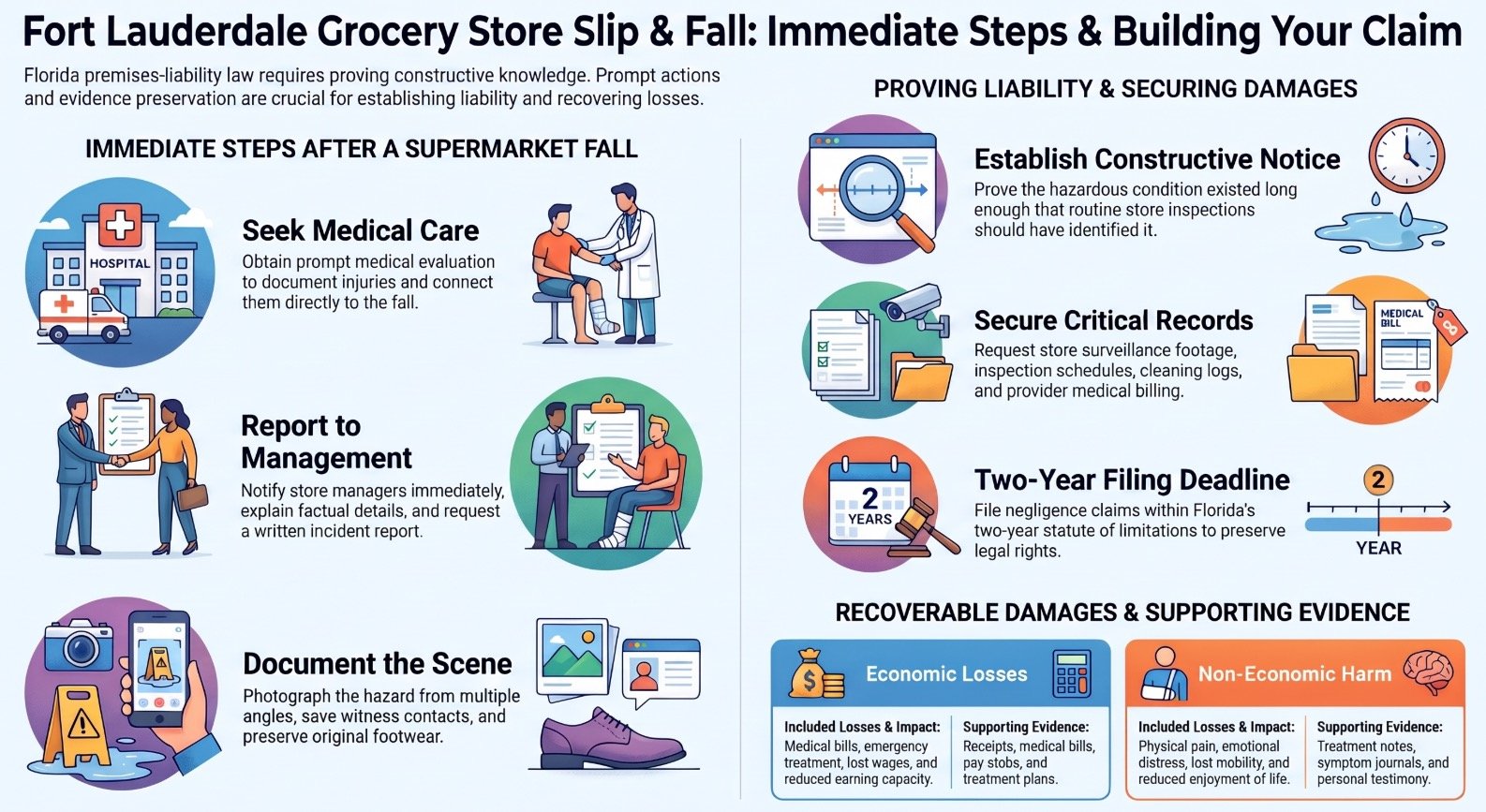
After a grocery store slip and fall, the injured person should seek prompt medical attention, even if symptoms initially seem minor. Report the incident to store management and request that the report be documented. Photographs of the hazard, surrounding area, and any visible injuries can help preserve details about the scene.
Seek Medical Attention
Prompt medical attention is essential after a slip and fall in a Fort Lauderdale grocery store, even if the injury initially appears minor. A qualified healthcare provider can assess visible and less obvious injuries, recommend appropriate treatment, and identify conditions that may worsen without care. Delayed symptoms, including pain, swelling, dizziness, or limited movement, should also be evaluated promptly.
The injured person should describe how the fall occurred and provide accurate information about symptoms and medical history. Following the provider’s treatment instructions can support recovery and reduce the risk of further harm. Keeping a record through symptom tracking may help communicate changes during follow-up appointments. Medical records and care instructions can also help clarify the nature and progression of the injury. Timely care protects the injured person’s health and supports informed decisions about recovery.
Report The Incident
Once immediate medical needs have been addressed, the injured person should report the fall to a store manager or another responsible employee. Prompt Store notification gives the business an opportunity to respond, assist, and create an incident report while details are still current. The injured person should explain when and where the fall occurred, describe the circumstances in clear, factual terms, and identify any known witnesses. They should ask for the manager’s name and how to obtain a copy of the report or its reference number. If the employee is unavailable or declines to document the incident, the injured person can contact the store’s corporate office. Calm, direct communication with the manager helps ensure the report reflects the event accurately. The injured person should avoid guessing about causes or accepting blame before the facts are established.
Document The Scene
If the area is safe to approach, the injured person should document the scene before employees clean or alter it. A companion may assist if the person needs medical attention or cannot move safely. Photograph hazard conditions from several angles, including the substance, nearby displays, warning signs, and the surrounding floor. Include wider images that show the hazard’s location within the store, and avoid disturbing anything. Record the date, time, store location, and witness names, along with brief notes on what was observed. Preserve footwear and clothing worn during the fall in their original condition, since they may help clarify how the incident occurred. Do not post images publicly or confront employees. These careful steps can support an accurate account and help protect others from similar hazards.
Critical Evidence in a Fort Lauderdale Slip & Fall Grocery & Supermarkets Injury Case
Evidence can help establish how a grocery store hazard arose, whether the store had notice of it, and how the fall caused injury.
Relevant materials may include:
- Incident reports documenting the store’s response
- Surveillance footage showing the hazard or fall
- Witness statements describing conditions and events
- Medical records connecting the fall to the injuries
- Photographs of the hazard, footwear, and surrounding area
Incident Reports
How quickly a grocery store documents a fall can affect how much reliable information remains available about the incident. An incident report may record the date, time, location, reported hazard, employees involved, and steps taken afterward. These details can help clarify what staff knew and how the store responded, while supporting a fair assessment of the injured person’s experience.
Incident report accuracy matters because omissions, vague descriptions, or errors may complicate later review. The injured person should preserve any available copy and note discrepancies promptly. Report access rights can depend on the circumstances and applicable law; a store may not provide the report voluntarily, and it may contain private information about others. A lawyer can request relevant records and assess whether the report supports the claim, without treating it as conclusive proof of fault.
Surveillance Footage
Alongside an incident report, grocery store surveillance footage may help establish what happened before, during, and after a fall. Video may show the condition of an aisle, the presence of a spill or obstruction, and whether employees inspected or addressed the hazard. It can also clarify the timing of events and help determine whether store procedures were followed. Because recordings may be overwritten or deleted under video retention policies, prompt action can be important. Footage preservation requests can ask the store to retain relevant recordings from the incident area and nearby cameras. The request should identify the date, approximate time, and locations involved. A careful review may assist injured people seeking accountability and help stores address safety concerns, while the footage’s availability and clarity can affect its evidentiary value.
Witness Statements
Witness statements can help clarify the circumstances of a grocery store fall in Fort Lauderdale. Customers, employees, and other people nearby may have observed the hazard, the fall, or store staff’s response. Their accounts can help establish where the incident occurred, how long a spill or obstruction was present, and whether warnings were visible. Ask each witness for contact information and a clear account of what they personally saw, without pressure to speculate or agree with another person’s version.
Witness Credibility depends on factors such as the witness’s opportunity to observe, consistency, and impartiality. Statement Preservation is also important because memories can fade and witnesses may become difficult to locate. Promptly recording statements, noting when and where they were obtained, and retaining relevant contact details can help preserve reliable evidence for evaluating responsibility and supporting a fair resolution.
Medical Records
Medical records provide vital evidence in a Fort Lauderdale grocery store slip-and-fall case by documenting injuries, treatment, and effects on daily functioning. Emergency department notes, diagnostic images, physician assessments, and therapy records can help establish when symptoms began and how they developed. Consistent reporting of pain and limitations may also clarify the incident’s impact, while gaps in treatment or prior conditions may require careful explanation.
Prompt medical evaluation supports the injured person’s health and creates a reliable account of observed symptoms. Collect records from relevant providers and organize them by date, with Record retention practices that preserve complete copies and related bills. Privacy safeguards are necessary when records are requested, stored, or shared. A focused review can help clarify the extent of harm and support a fair assessment of responsibility and damages.
Don’t Wait. Call Our Florida Personal Injury Lawyers Now!
Long-Term Effects of Fort Lauderdale Slip & Fall Grocery & Supermarket Injuries
A grocery store slip and fall can lead to chronic pain and reduced mobility that persist long after the initial injury. Some victims also experience lasting nerve damage, which may affect sensation, strength, or daily activities. These physical effects can contribute to emotional distress and ongoing financial strain from treatment and lost income.
Chronic Pain and Mobility
Why can a grocery store fall affect someone long after the initial injury? A fall in a Fort Lauderdale supermarket may damage joints, bones, or soft tissue, leaving persistent pain that interferes with ordinary movement. Standing, walking, and completing household tasks can become difficult, limiting a person’s independence and ability to support family or community responsibilities.
Treatment may involve physical therapy, prescribed medication, and other Pain management strategies tailored to the injury. Some people also rely on mobility aids, such as canes or walkers, while recovering or managing lasting limitations. These supports can help reduce strain and make daily activities safer, though needs may change over time. Medical follow-up can document symptoms, assess progress, and guide appropriate care. When chronic pain affects work or routine activities, records of treatment and functional limits may help explain the injury’s continuing impact.
Lasting Nerve Damage
When a grocery store fall in Fort Lauderdale damages nerves, its effects may persist after bruises or other visible injuries have recovered. Nerve trauma can cause numbness, tingling, burning sensations, weakness, or increased sensitivity in affected areas. These symptoms may interfere with balance, hand coordination, or the ability to stand and walk safely. Their duration depends on the type and severity of the injury, and recovery may require ongoing medical assessment.
Clinicians may recommend diagnostic testing, medication, physical therapy, or other care tailored to the affected nerves. Nerve regeneration can be slow, and some injuries leave lasting changes in sensation or strength. Careful follow-up helps identify complications and adjust treatment. Consistent neuropathy management can support function and reduce symptom disruption, while appropriate accommodations may help individuals participate safely in daily activities and serve others.
Emotional and Financial Strain
Beyond physical symptoms, a serious grocery store fall in Fort Lauderdale can create lasting emotional and financial strain. Persistent pain or reduced mobility may limit a person’s independence, disrupt family responsibilities, and make routine errands difficult. Some injured shoppers also experience anxiety about returning to stores, changes in mood, or reduced confidence in public settings. These effects can affect relationships and require support from family, counselors, or community services.
Medical appointments, rehabilitation, prescription costs, and missed work can place sustained pressure on household finances. Caregivers may also need to adjust schedules or reduce paid hours to assist with recovery. Careful Household Budgeting can help families track expenses and plan for ongoing needs, while access to appropriate treatment may support Emotional Resilience. Recognizing these broader consequences helps injured people and those serving them respond with practical, compassionate support.
Proving Liability in Fort Lauderdale Slip & Fall Grocery & Supermarkets Injury Cases
In Fort Lauderdale grocery and supermarket slip-and-fall cases, proving liability generally requires evidence that the store knew or should have known about a hazardous condition and failed to address it or provide an adequate warning. Evidence may include photographs, witness accounts, incident reports, and records showing when a spill, fallen item, or other danger appeared. Constructive notice can be established when a hazard existed long enough that reasonable employees should have discovered it through ordinary care. Inspection logs, cleaning schedules, and employee testimony may help show whether the store conducted a reasonable hazard inspection and responded to problems promptly. The condition’s location and visibility can also matter, particularly when merchandise or displays obstructed a customer’s view. A person seeking accountability should preserve relevant information and document the scene when possible, while prioritizing medical attention. Careful evidence gathering can help clarify how the hazard arose, whether store procedures were followed, and whether the failure to act contributed to the injury.
Dealing With Insurance Companies After a Fort Lauderdale Slip & Fall Grocery & Supermarkets Injury
After documenting the hazard and reporting the fall, an injured grocery store customer may receive calls or requests for information from the store’s insurer. Adjuster communications may concern the incident, the customer’s injuries, or medical care. The insurer may seek prompt answers, but an injured person can take time to understand each request and respond accurately.
A customer should provide truthful, consistent information and avoid guessing about details that remain unclear. Before discussing the event, the customer may review photographs, incident reports, and other records. Recorded statements can be used to assess an account, so the customer should understand the purpose and scope of a request before agreeing to participate. The customer may ask for questions in writing or seek legal guidance before responding.
Medical information should be shared carefully and only as appropriate to the claim. Organized records and clear communication can help prevent misunderstandings while preserving the customer’s ability to focus on treatment and daily responsibilities.
What to Expect During a Fort Lauderdale Slip & Fall Grocery & Supermarkets Injury Claim Process
A Fort Lauderdale grocery store slip and fall claim typically begins with an evaluation of the incident, injuries, and potential liability. The process then involves collecting evidence, such as photographs, witness statements, and relevant store records, before settlement negotiations begin. If the parties cannot reach an agreement, the claim may proceed to trial preparation.
Initial Case Evaluation
An initial case evaluation helps determine whether a grocery store or supermarket may be legally responsible for a slip-and-fall injury and what evidence could support a claim. During this review, an attorney typically asks how the incident occurred, where it happened, and what injuries or treatment followed. The discussion may also address whether the store knew, or reasonably should have known, about a hazardous condition and failed to respond appropriately. Consultation preparation can include organizing a clear timeline, identifying known witnesses, and bringing relevant medical or insurance information. These details help the attorney assess case eligibility, potential legal issues, and the practical steps available. The evaluation also gives the injured person an opportunity to understand possible responsibilities, deadlines, and next steps. No outcome is guaranteed; the assessment depends on the circumstances and applicable law.
Evidence Collection
When a grocery-store slip and fall occurs, prompt evidence collection can help establish how the hazard developed, whether the store knew or should have known about it, and how the incident caused the reported injuries. An injured person may document the scene, including the substance, surrounding conditions, warning signs, and footwear, if it is safe to do so. Photographs, witness names, incident reports, medical records, and receipts can help preserve relevant details. Store surveillance footage and inspection or cleaning logs may also clarify when the hazard appeared and what employees observed. Evidence preservation matters because video may be routinely deleted and physical conditions can change quickly. A lawyer can request records and identify witnesses while maintaining chain of custody for collected materials. Careful documentation supports a fair assessment of responsibility and injury-related losses.
Settlement Negotiations
After evidence has been gathered, settlement negotiations may begin with the grocery store or its insurer. The injured person’s representative typically presents a demand describing the fall, the store’s alleged responsibility, documented losses, and the compensation sought. A sound Demand strategy accounts for medical expenses, lost income, continuing treatment, and the effect of injuries on daily activities. The insurer may request records, question liability, or make a counteroffer. Negotiations can involve several exchanges, and any offer should be reviewed against the available evidence and the injured person’s needs. Mediation timing depends on the parties’ progress, the completeness of medical information, and whether direct discussions have stalled. A neutral mediator may help clarify disputed issues and explore resolution. Any settlement should be considered carefully before acceptance, particularly when future care remains uncertain.
Trial Preparation
If settlement negotiations do not resolve a grocery store slip and fall claim, the case may proceed toward trial, making careful preparation essential. The legal team reviews medical records, incident reports, photographs, store inspection logs, and witness statements to organize evidence and identify disputed facts. The injured person may prepare for questioning about the fall, treatment, and its effects on daily responsibilities. Expert witnesses may explain medical conditions or store safety practices when needed. During Jury selection, attorneys and the court assess prospective jurors for impartiality. At trial, courtroom testimony from the injured person, witnesses, and experts may help establish how the hazard arose and whether the store acted reasonably. Preparation also covers exhibits, objections, and courtroom procedures, helping you present a clear account while respecting the court’s process and the needs of everyone involved.
Don’t Wait. Call Our Florida Personal Injury Lawyers Now!
Compensation for Fort Lauderdale Slip & Fall Grocery & Supermarkets Injury Damages
Compensation for a grocery store slip-and-fall injury in Fort Lauderdale may cover medical expenses, lost income, reduced future earning capacity, and pain and suffering. The available recovery depends on the evidence, the injuries, and how the incident affects the injured person’s daily life. Documented treatment, medical records, and professional assessments can help establish the nature and extent of harm.
Pain severity and symptom duration may influence how an injury is evaluated. A person with lasting limitations may require Future care, including rehabilitation, follow-up visits, or assistive services. The projected cost and necessity of that care should be supported by appropriate medical evidence.
A claim may also account for time away from work and changes in the ability to perform job duties. Earnings and employment records can help clarify these effects. A careful review of the circumstances, injuries, and supporting documentation helps determine what compensation may be available under Florida law. Each case depends on its specific facts.
Economic vs. Non-Economic Damages in Fort Lauderdale Slip & Fall Grocery & Supermarkets Cases
Economic losses in grocery and supermarket slip-and-fall cases may include medical expenses, lost wages, and other documented costs. Non-economic damages may address pain, emotional distress, and limits on daily activities. Establishing either category generally requires evidence connecting the fall to the claimed harm and supporting the amount sought.
Economic Losses
When a grocery-store slip and fall in Fort Lauderdale causes injury, damages may include both economic losses and non-economic harm. Economic losses are measurable financial costs linked to the incident and its effects. They may include emergency care, hospital treatment, medication, physical therapy, medical equipment, and reasonable travel expenses for appointments. Records such as bills, receipts, insurance statements, and treatment plans can help document these costs. Lost income may also be recoverable when an injury prevents a person from working during recovery. If lasting limitations interfere with the ability to perform job duties or pursue prior employment, reduced earning capacity may be relevant. A careful assessment considers both current expenses and reasonably anticipated future costs. Clear documentation helps establish the financial impact and supports a fair evaluation of the injured person’s claim.
Non-Economic Harm
Beyond measurable financial costs, a grocery-store slip and fall in Fort Lauderdale may cause non-economic harm, including physical pain, emotional distress, and loss of enjoyment of daily activities. These effects can extend beyond the immediate injury, disrupting sleep, limiting independence, and making routine tasks more difficult. Pain and Suffering may include ongoing discomfort, anxiety about walking in public places, or frustration caused by reduced mobility. Such harm can also affect relationships when an injured person cannot participate in family responsibilities or community activities as before. Loss of Enjoyment may arise when injuries prevent someone from pursuing hobbies, social engagements, or ordinary routines that once brought fulfillment. These personal consequences differ from medical bills and lost income, yet they may substantially affect a person’s well-being and ability to contribute to others’ lives.
Proving Damages
Establishing damages in a Fort Lauderdale grocery-store slip and fall case requires evidence of both measurable financial losses and personal harm. Economic damages may include emergency treatment, medication, rehabilitation, lost wages, and reduced earning capacity. Damage documentation, such as medical records, bills, pay statements, and receipts, helps connect these losses to the fall. When injuries require ongoing treatment, medical opinions and care plans can support estimates of future care costs.
Non-economic damages address harms without a precise price, including pain, emotional distress, loss of independence, and reduced ability to participate in daily activities. Consistent treatment records and clear descriptions of changes in routine may help demonstrate their impact. A careful assessment considers both categories, avoids unsupported estimates, and reflects the injured person’s circumstances. Thorough evidence can help decision-makers evaluate the claim fairly and understand the full consequences of the incident.
When a Fort Lauderdale Slip & Fall Grocery & Supermarkets Injury Case Goes to Trial vs Settlement
Whether a Fort Lauderdale grocery store slip-and-fall claim settles or proceeds to trial depends on the evidence, the severity of the injuries, and the parties’ willingness to resolve disputed issues. Settlement may provide a more predictable resolution and avoid the time, expense, and uncertainty of a courtroom proceeding. Negotiations can address documented losses and the practical needs of an injured person while allowing both sides to retain control over the outcome.
A trial may become necessary when the parties disagree about responsibility, the extent of the harm, or the value of the claim. The injured person may present records, witness accounts, and trial testimony to explain how the incident affected daily life and ability to serve others. Store representatives may offer a different account, and a judge or jury evaluates the evidence. Jury deliberations follow the presentation of the case and determine the verdict. Neither path guarantees a particular result; the choice depends on the circumstances, informed advice, and the injured person’s priorities.
Florida Laws That May Affect Your Fort Lauderdale Slip & Fall Grocery & Supermarkets Case
Florida law sets important rules for grocery store slip-and-fall claims, including what an injured person must show about a hazardous condition and the store’s knowledge of it. Under Florida’s premises liability standards, a customer generally must establish that a dangerous condition existed and that the store had actual or constructive knowledge of it. Evidence may include:
Customers generally must show that a hazardous condition existed and that the store knew or should have known about it.
- Spilled liquids, dropped produce, or other hazards in a customer area.
- How long the condition remained before the fall.
- Whether employees created the hazard or received notice about it.
- Inspection and cleanup practices, including relevant store records.
- Photographs, witness accounts, and medical documentation.
A store may argue that the hazard was open and obvious or that the customer did not use reasonable care. Florida comparative negligence can reduce compensation when an injured person shares responsibility for the fall; the degree of fault may affect recovery. These rules help clarify what evidence matters and how responsibility may be assessed. Careful documentation can also support a fair evaluation of the incident and its effects.
The Statute of Limitations for Fort Lauderdale Slip & Fall Grocery & Supermarkets Injury Cases
Evidence of a store’s knowledge and the circumstances of a fall may support a claim, but an injured person must also act within the time allowed by law. In Florida, the deadline for filing a negligence lawsuit is generally two years from the date of the injury. This period applies to many grocery store slip-and-fall cases, though the facts and applicable law can affect how the deadline is calculated. Missing it may prevent recovery, regardless of the seriousness of the harm or the store’s responsibility.
Deadline exceptions may apply in limited circumstances, including certain cases involving minors or a defendant’s absence from Florida. Claim tolling can pause the limitations period when specific legal requirements are met, but it is not automatic. The rules are fact-dependent, and waiting to determine whether an exception applies can put a claim at risk. Prompt attention to the filing deadline helps preserve the injured person’s ability to seek accountability and supports a fair resolution for everyone affected.
How a Fort Lauderdale Slip & Fall Grocery & Supermarkets Lawyer Can Help You
A Fort Lauderdale slip-and-fall lawyer can help an injured grocery store customer assess the claim, preserve relevant records, and understand the steps required to pursue compensation. Counsel can explain how evidence of a hazardous condition and the store’s response may affect responsibility. Local attorney access can also support communication with nearby businesses, witnesses, and medical providers while keeping the process organized.
A lawyer may assist by:
- Reviewing incident reports, photographs, receipts, and available surveillance footage.
- Identifying witnesses and preserving statements before details become difficult to recall.
- Gathering medical records that document injuries, treatment, and related expenses.
- Communicating with the store or insurer and evaluating settlement proposals.
- Explaining the legal fee structure and discussing potential case costs.
This support can help an injured person pursue fair treatment while reducing avoidable burdens on family members and caregivers. Counsel can also clarify what information is needed to assess losses and present a well-supported claim, allowing the customer to make informed decisions throughout the legal process.
When to Contact a Fort Lauderdale Slip & Fall Grocery & Supermarkets Lawyer
After a grocery store fall, contacting a Fort Lauderdale slip-and-fall lawyer promptly can help an injured customer understand available options and protect information relevant to a claim. Early attorney consultation may also help preserve details about the incident, such as the hazard’s location, witness contact information, and store communications. A customer should seek medical attention first when needed and report the fall to store management. Photographs, receipts, and copies of incident reports may help document events, provided gathering them does not delay care or create further risk.
There is no need to wait until treatment is complete to ask about legal rights or deadlines. A lawyer can explain how timing may affect a potential claim and what information may be useful. During an initial discussion, the customer can also ask about legal fee arrangements, including whether fees depend on recovery and what costs may apply. Prompt, informed action can support a fair process while allowing the injured person to focus on recovery and daily responsibilities.
Why You Need an Experienced Fort Lauderdale Slip & Fall Grocery & Supermarkets Lawyer
When a grocery store fall causes an injury, an experienced Fort Lauderdale slip-and-fall lawyer can assess how Florida premises-liability law may apply to the circumstances. The lawyer can examine whether a dangerous condition existed, whether the store knew or should have known about it, and whether it took reasonable steps to address the hazard. This review may include incident reports, surveillance footage, employee accounts, and records concerning Store Inspection Standards.
An experienced attorney can also evaluate how Corporate Safety Policies relate to the store’s response and whether established procedures were followed. By organizing evidence and explaining legal requirements, counsel can help an injured person understand available options and make informed decisions. This work may also encourage safer practices that protect customers and employees throughout the community. Because grocery-store claims can involve changing conditions and detailed records, timely investigation matters. Legal guidance can clarify the issues without assuming every fall establishes liability, while helping ensure relevant facts receive careful consideration.
How to Choose the Right Fort Lauderdale Slip & Fall Grocery & Supermarkets Lawyer for Your Case
Choosing the right Fort Lauderdale slip-and-fall lawyer for a grocery-store claim requires careful attention to relevant experience, communication, and case strategy. A careful selection can help an injured person pursue accountability while preserving time and energy for recovery and family responsibilities.
A prospective client can review lawyer credentials, including licensing, relevant premises-liability experience, and disciplinary history. Experience with grocery-store hazards such as spills, obstructed aisles, and inadequate warnings may help counsel identify evidence and assess liability. The lawyer should explain how records, photographs, witness statements, and medical documentation may support the claim.
Communication also matters. The lawyer should describe likely steps, answer questions clearly, and set realistic expectations without promising a particular result. Before signing an agreement, the client should understand fee structures, case expenses, and how any recovery would be distributed. A written engagement agreement can clarify these terms.
Comparing several qualified attorneys may reveal differences in preparation and approach. The right choice is a professional whose experience, explanations, and strategy align with the client’s needs and circumstances.
About The Law Offices of Anidjar & Levine
The Law Offices of Anidjar & Levine represents injured people in Fort Lauderdale, including those pursuing slip-and-fall claims. The firm assists clients seeking accountability when unsafe conditions in grocery stores or supermarkets cause harm. Its work may include reviewing incident details, gathering available evidence, communicating with insurers, and explaining legal options so clients can make informed decisions.
Firm history and attorney credentials are relevant considerations for people evaluating legal representation. Prospective clients can review the firm’s background, practice areas, and lawyer information to understand the experience and services available. A lawyer can assess whether facts support a claim, identify potential responsible parties, and discuss applicable deadlines. The firm’s role is to provide legal guidance while treating clients with respect and keeping them informed about case developments.
For people who value serving others, attentive representation can help injured individuals pursue fair treatment and focus on recovery. Each matter depends on its specific evidence and circumstances.

Frequently Asked Questions
Can I File a Claim if I Fell in a Grocery Store Parking Lot?
A person may file a claim after falling in a grocery store parking lot, but recovery depends on the evidence and applicable law. The injured person generally must show that a dangerous condition, such as a spill, pothole, or poor lighting, caused the fall and that the store knew or reasonably should have known about it. Injury records, photographs, witness accounts, and property maintenance history may help establish responsibility. A prompt legal review can clarify available options.
What if I Fell While Shopping With a Child or Mobility Aid?
A fall while shopping with a child or using a mobility aid may support a claim if a hazardous condition caused the injury and the store knew or reasonably should have known about it. Child supervision does not automatically prevent recovery, and the child’s presence may require careful documentation of events. Mobility accommodations, including accessible routes and safe aisle conditions, may be relevant. Prompt medical care, photographs, witness details, and legal guidance can help preserve evidence.
Can a Store Be Responsible if I Slipped on a Recently Cleaned Floor?
A store may be responsible if it failed to use reasonable care when cleaning created a slipping hazard. Relevant facts include how long the floor remained wet, whether Wet Floor Warning Signs were clearly placed, and whether staff promptly addressed the condition. Cleaning Schedule Records may help establish when the area was cleaned and inspected. Responsibility depends on the circumstances, including whether the store knew or reasonably should have known of the danger.
Will My Health Insurance Need Repayment From a Settlement?
A health insurer may require repayment from a personal injury settlement when it paid medical expenses related to the incident. These Health Insurance Liens can depend on the policy, applicable law, and the source of coverage. Settlement Reimbursement is not always automatic or equal to the full amount paid; the insurer’s claim may be reviewed or negotiated. The injured person should confirm all repayment obligations before distributing settlement funds to guarantee accurate accounting and protect others’ interests.
Can I Pursue a Claim if I Fell at a Store While Visiting Fort Lauderdale?
A visitor may pursue a claim after a fall at a Fort Lauderdale store if the store’s negligence contributed to the injury. Under Florida premises liability law, a store may be responsible when it knew or should have known about a hazardous condition and failed to address it or provide adequate warning. Eligibility for a visitor injury claim depends on the available evidence, the cause of the fall, and the resulting harm; prompt documentation can help protect the visitor’s rights.
—————————
A grocery store slip-and-fall can leave an injured person facing medical expenses, lost income, and uncertainty about what to do next. The Law Offices of Anidjar and Levine can review the circumstances, explain potential legal options, and help preserve relevant evidence. Because Florida claims depend on specific facts and deadlines, timely guidance matters. Anyone injured in a Fort Lauderdale supermarket should document the incident, seek appropriate medical care, and consult a qualified Fort Lauderdale Personal Injury Lawyer about the available path forward.