

The Law Offices of Anidjar and Levine can investigate whether inadequate supervision, unsafe conditions, or failures to follow a resident’s care plan contributed to a nursing home fall injury. A fall alone does not establish facility liability; evidence must connect a lapse in reasonable care to the harm. Prompt medical evaluation and preservation of records, photographs, witness accounts, and surveillance footage may help clarify what occurred. Families can learn how legal review, resident protections, and timely action may affect a potential claim with a Fort Lauderdale Personal Injury Lawyer.
Main Takeaways
- A Fort Lauderdale nursing home fall lawyer can assess whether inadequate supervision, unsafe conditions, or improper transfers contributed to an injury.
- A fall alone does not prove negligence; liability depends on the evidence, applicable duties, and circumstances.
- Seek prompt medical care, report the fall in writing, and document injuries, observations, and staff responses.
- Preserve relevant evidence, including care plans, medical records, incident reports, witness details, and surveillance footage.
- A lawyer can explain potential claims, compensation, reporting options, and deadlines without guaranteeing an outcome.


How We Can Help With Your Fort Lauderdale Nursing Home Falls & Fall Injuries Injury Claim
When a nursing home fall causes serious injury, an attorney can help the resident or family investigate what happened and pursue a claim against responsible parties. The legal team can start by listening to the family’s concerns, identifying immediate priorities, and explaining available options clearly. Careful review of facility records, incident reports, and other relevant information may help determine whether the home failed to provide appropriate support or supervision.
Claim eligibility depends on the circumstances of the fall, the resident’s injuries, and the evidence connecting those injuries to a responsible party’s conduct. An attorney can assess these factors and explain potential limits, deadlines, and next steps without promising a particular outcome. Consistent attorney communication helps families understand the progress of the matter and make informed decisions.
OUR CONSULTATIONSARE FREE
START YOUR FREE CASE REVIEW

Understanding Fort Lauderdale Nursing Home Falls & Fall Injuries Injury Cases
Understanding a nursing home fall injury case begins with examining how the fall occurred and whether the facility met its duties to protect the resident. The review considers the resident’s care plan, relevant records, and the facility’s policies, while respecting privacy and Resident dignity. It also assesses whether staff responded appropriately after the incident and arranged necessary medical attention.
A claim may involve questions about the standard of care, the connection between a facility’s conduct and the injury, and the resulting losses. Medical documentation can help establish the nature and extent of harm, while witness accounts and incident reports may clarify the sequence of events. Each case depends on its specific facts and applicable Florida law.
Fall prevention is an important part of responsible care, but a fall alone does not establish liability. A careful investigation helps determine whether reasonable safeguards were provided and whether the facility fulfilled its obligations. This process can support accountability and encourage safer, more respectful care for residents.
Common Causes of Fort Lauderdale Nursing Home Falls & Fall Injuries
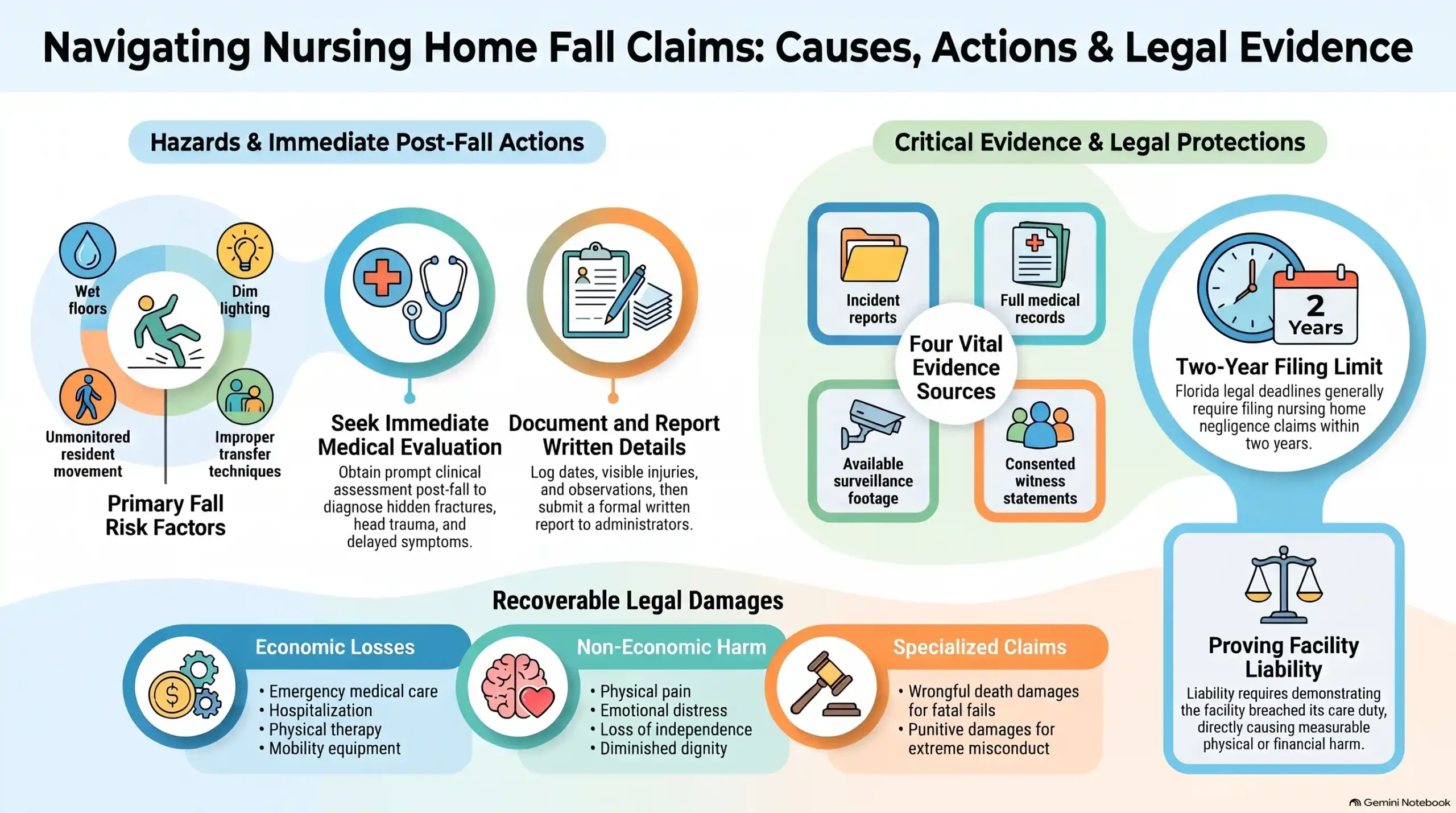
Common causes of nursing home falls include wet or uneven floors and poor lighting, which can make it difficult for residents to move safely. Falls may also occur when supervision is inadequate or staff do not provide appropriate assistance. Unsafe transfers between beds, chairs, and mobility devices can further increase the risk of injury.
Wet Or Uneven Floors
Wet or uneven floors can create serious fall hazards for nursing home residents, particularly those with limited mobility or balance. Spilled liquids, recently mopped surfaces, loose rugs, and damaged flooring can make walking difficult and increase the risk of injury. Residents may be unable to recognize or avoid these hazards, especially when using mobility aids or relying on staff assistance. Facilities should promptly clean spills, mark wet areas, secure rugs, and repair cracked or raised surfaces. Regular Flooring inspection can help staff identify worn materials, uneven changes in level, and other risks before a resident is hurt. Clear procedures for hazard removal also support safer movement throughout resident rooms, hallways, and shared spaces. When a facility fails to address known floor hazards, the resulting fall may raise concerns about whether reasonable safety measures were taken.
Poor Lighting
Poor lighting can make it difficult for nursing home residents to see obstacles, changes in floor level, or the edges of steps, increasing the risk of falls. A Dim hallway may conceal furniture, personal belongings, or other hazards along a resident’s route. Burned bulbs in bedrooms, bathrooms, stairwells, and common areas can also leave important walking surfaces poorly illuminated. Facilities should maintain adequate lighting throughout resident spaces and promptly replace failed bulbs. Staff responsible for building maintenance should regularly inspect lights, including those near entrances and passageways between rooms. When lighting is insufficient, residents may misjudge distances or have difficulty identifying safe places to step. Clear visibility supports residents’ mobility and independence while helping protect them from preventable injuries. Persistent lighting problems may indicate that facility maintenance practices require review.
Lack Of Supervision
When residents need help walking, transferring, or responding to sudden changes in balance, inadequate supervision can increase the risk of a fall. Nursing home staff should monitor residents according to their care plans and respond promptly when assistance is requested. Staffing shortages may leave fewer caregivers available to observe residents, check on those at elevated risk, or provide timely support. Delayed assistance can become especially dangerous when a resident attempts to move independently while waiting for help. Facilities should assess individual mobility needs, communicate changes in condition, and maintain supervision appropriate to each resident’s abilities. Without these safeguards, a fall may result in serious injury and avoidable loss of independence. Reviewing staffing records, care plans, and incident reports can help determine whether inadequate supervision contributed to a resident’s fall.
Unsafe Transfers
Unsafe transfers can cause serious falls when residents are moved between beds, wheelchairs, toilets, or other surfaces without appropriate assistance. A resident’s mobility, balance, strength, and care plan should guide each transfer. Staff members should use a safe Transfer technique, explain the movement, provide required support, and avoid rushing or pulling a resident by the arms. When a person cannot be moved safely by hand, mechanical lifts or other prescribed equipment may be necessary. Facilities should ensure equipment is available, maintained, and used by trained staff. A transfer may become dangerous when staffing is inadequate, instructions are ignored, or a resident’s changing condition is overlooked. Falls during transfers can lead to fractures, head injuries, and loss of confidence. Careful procedures help protect residents and preserve their dignity.
Don’t Wait. Call Our Florida Personal Injury Lawyers Now!


Legal Rights of Fort Lauderdale Nursing Home Falls & Fall Injuries Injury Victims
Fort Lauderdale nursing home residents injured in falls may have legal rights when a facility’s negligence contributed to the incident. Florida law provides protections for residents, including the right to appropriate care, dignity, and freedom from neglect. When a fall causes harm, a resident or authorized representative may seek information about the event and consider a legal claim.
Potential rights and steps may include:
- Requesting access to relevant care records, incident reports, and communications, subject to applicable privacy rules.
- Seeking an independent review of medical needs, injuries, and the care provided before and after the fall.
- Reporting concerns to appropriate state authorities or long-term care oversight agencies.
- Consulting a qualified attorney about possible compensation and applicable filing deadlines.
Resident rights remain important even when a person depends on others for daily support. Family advocacy can help preserve records, communicate concerns, and make certain the resident’s preferences are respected. A legal review can assess whether the facility failed its duties and whether that failure caused measurable losses. Each matter depends on its facts and evidence.
Why Do Fort Lauderdale Nursing Home Falls & Fall Injuries Happen?
Understanding why a fall occurred can help determine whether a resident’s injury resulted from an unavoidable accident or a preventable failure in care. Nursing home falls may stem from mobility limitations, poor balance, vision problems, or confusion that makes it difficult to recognize hazards. Wet floors, cluttered walkways, inadequate lighting, and improperly maintained equipment can also create unsafe conditions.
Medication side effects may cause dizziness, weakness, drowsiness, or changes in blood pressure, increasing the likelihood of a fall. Staff should monitor residents for these effects and communicate concerns to appropriate medical professionals. A thorough Fall risk assessment helps identify individual needs, including assistance with transfers, mobility aids, supervision, and environmental adjustments. When a resident’s condition changes, the care plan may require timely review.
Falls can also occur when staffing shortages or inadequate training prevent workers from providing needed support. Understanding the contributing circumstances helps distinguish unavoidable incidents from risks that responsible care practices could have reduced. Each resident’s needs and surroundings warrant careful attention.
What Should You Do After a Fort Lauderdale Nursing Home Falls & Fall Injuries?
After a nursing home fall, the resident should receive prompt medical care, even if injuries are not immediately apparent. Document the incident and any visible injuries, including the date, time, location, and circumstances. The fall should also be reported to nursing home staff or management, and a record of the report should be kept.
Seek Medical Care
Prompt medical evaluation is essential when a nursing home resident falls, even if the injury appears minor or the resident reports no pain. Staff should arrange an Emergency evaluation when the resident loses consciousness, has severe pain, bleeding, confusion, difficulty breathing, or cannot move normally. A clinician can assess for fractures, head trauma, and other conditions that may not be immediately apparent. Even without urgent symptoms, the resident should receive timely assessment because some injuries develop or worsen over time. Medical professionals should be told about the fall, observed changes, relevant health conditions, and medications so they can make informed decisions. If initial findings do not explain ongoing pain or reduced mobility, a specialist consultation may be appropriate. Prompt, compassionate care can protect the resident’s health and support recovery.
Document the Incident
Promptly documenting a nursing home fall can preserve important details about what happened and how staff responded. A designated family member can record the date, time, location, and circumstances described by the resident or observed firsthand. Notes should distinguish direct observations from information provided by others, including staff, and avoid assumptions about the cause. A Personal Journal can track the resident’s symptoms, mobility, emotional state, and changes in daily activities after the incident. Photographs may help capture visible injuries, damaged belongings, or conditions in the area, when permitted and appropriate. Families should keep relevant care records, discharge instructions, and written communications, and organize copies by date. Family Updates can keep relatives informed through consistent, factual summaries. Careful records support the resident’s well-being and help preserve an accurate account for later review.
Report the Fall
Once the incident has been recorded, the resident’s representative should report the fall to the nursing home’s administrator or designated supervisor as soon as practical. Prompt notification gives staff an opportunity to assess the resident, arrange appropriate medical attention, and preserve relevant records. The representative should provide the known details, including when and where the fall occurred, any observed injuries, and changes in the resident’s condition. A written report or follow-up email can help confirm what was communicated and when. The representative should request the facility’s account of the event and ask what steps will be taken to address immediate safety concerns. Family communication should remain clear and factual, particularly when multiple relatives are involved. If staff do not respond or concerns remain unresolved, the representative should document those efforts and consider seeking outside guidance.
Don’t Wait. Call Our Florida Personal Injury Lawyers Now!
Critical Evidence in a Fort Lauderdale Nursing Home Falls & Fall Injuries Case
Evidence can help establish how a nursing home fall occurred, whether staff followed appropriate procedures, and how the injury affected the resident. Identify and preserve relevant records and accounts promptly, as some evidence may be lost or altered over time.
Important sources may include:
- Incident reports
- Medical records
- Surveillance footage
- Witness statements
Incident Reports
After a fall at a Fort Lauderdale nursing home, what staff record can help clarify how the incident occurred and how the resident was treated? An incident report may document the time, location, observed circumstances, witnesses, and immediate steps staff took. These details can help families and their representatives assess whether the facility responded appropriately and identify questions that require further investigation.
Incident timelines can be important when accounts differ, or details are incomplete. A report may show when staff discovered the resident, whom they notified, and what actions followed. Report retention also matters because facilities may have policies governing how such records are created, stored, and preserved. Families can request that relevant documents be maintained and seek legal guidance about access. Incident reports should be reviewed alongside other evidence, while avoiding assumptions that a report alone establishes fault or provides a complete account.
Medical Records
Medical records can provide a detailed account of a resident’s condition before and after a fall at a Fort Lauderdale nursing home. Entries may document mobility, medications, prior complaints, essential signs, injuries, and treatment, helping clarify the resident’s needs and the facility’s response. Comparing records over time can reveal changes that warrant attention, including delayed assessments or gaps in care. A careful review may also identify whether staff followed the resident’s care plan and promptly notified appropriate parties.
Record retention practices matter because original entries and related documentation may be important to understanding what occurred. Any chart corrections should be reviewed for timing, authorship, and explanation, since changes can affect the record’s reliability. Preserving complete, accurate medical documentation supports a fair investigation and helps protect residents’ interests while establishing the facts surrounding an injury.
Surveillance Footage
When available, surveillance footage can help clarify how a fall occurred and how staff responded at a Fort Lauderdale nursing home. Video may show the resident’s movements, the surrounding conditions, and the timing of assistance. It can also reveal whether staff followed applicable safety procedures or whether a hazard remained unaddressed. Footage preservation is important because recordings may be overwritten or deleted under routine retention policies. A prompt written request can help identify relevant cameras and preserve recordings covering the incident and the period before and after it. Not every area is monitored, and camera blind spots may limit what the video establishes. The footage should be reviewed alongside other case evidence, including medical records, to assess its context, reliability, and significance without drawing conclusions beyond what it actually shows.
Witness Statements
Witness statements can provide important evidence about a fall at a Fort Lauderdale nursing home, particularly when surveillance footage is unavailable or incomplete. Residents, visitors, and staff may describe the conditions before the incident, the resident’s movements, or how quickly assistance arrived. Their accounts can help clarify whether hazards were present and whether staff followed appropriate safety procedures.
Witness credibility depends on factors such as firsthand knowledge, consistency, and the ability to recall events accurately. Investigators may compare accounts with medical records, incident reports, and other available evidence. Because memories can fade and staff may leave the facility, statement preservation is important. Recording each account promptly, with the witness’s consent, can help retain specific details and reduce later misunderstandings. Respectful, careful interviews also support a fair review of the resident’s needs and the facility’s response.
Long-Term Effects of Fort Lauderdale Nursing Home Falls & Fall Injuries
Falls in nursing homes can cause chronic pain and lasting mobility loss, limiting a resident’s independence and daily activities. Some injuries may also lead to persistent cognitive changes that affect memory, judgment, or communication. Emotional distress and reduced social engagement can further shape a resident’s quality of life over time.
Chronic Pain and Mobility Loss
A nursing home fall can cause injuries that continue to affect a resident long after the initial treatment ends. Fractures, soft-tissue damage, and injuries to the back or joints may lead to persistent pain that interferes with sleep, personal care, and daily routines. A resident may require ongoing pain management, physical therapy, or follow-up medical visits to address these effects.
Reduced strength, balance, or joint function can also limit walking and make transfers more difficult. Mobility aids, such as walkers or wheelchairs, may become necessary, and some residents may need help with activities they previously performed independently. These changes can increase reliance on caregivers and restrict participation in social and recreational activities. Careful monitoring, appropriate rehabilitation, and consistent support can help protect safety, preserve function, and maintain the resident’s dignity and quality of life.
Lasting Cognitive Changes
When a fall causes a head injury, lasting cognitive changes may affect a nursing home resident’s memory, attention, or decision-making. These effects can follow a concussion, brain bleed, or other trauma, and their severity may become clearer over time. Memory impairment may make it difficult to recall instructions, recognize familiar routines, or communicate important needs. Cognitive decline can also interfere with planning, judgment, and the ability to complete everyday tasks safely. A resident may require increased supervision, rehabilitation, or medical evaluation to address these changes. Staff observations and clinical records can help document shifts in thinking after a fall and guide appropriate care. When a facility fails to assess or respond to a resident’s needs, the resulting harm may warrant careful review of the circumstances and care provided.
Emotional and Social Effects
After a fall, fear of another injury may lead a nursing home resident to withdraw from activities or avoid walking, even after physical injuries begin to recover. Reduced participation can weaken relationships with other residents and staff, limiting the companionship that supports well-being. Social isolation may deepen when a resident misses meals, group programs, or family visits because of anxiety or mobility concerns. Emotional distress can also appear as sadness, irritability, loss of confidence, or persistent worry about falling again. These changes may affect sleep, appetite, and willingness to engage in rehabilitation. Staff and family members can help by reassuring the resident, encouraging safe participation, and respecting the resident’s pace. When these effects persist, a clinical assessment may identify needed support. Documentation of behavioral changes can also help clarify the fall’s lasting impact.
Proving Liability in Fort Lauderdale Nursing Home Falls & Fall Injuries Injury Cases
Proving liability in a Fort Lauderdale nursing home fall case requires evidence that the facility failed to meet its duty to provide reasonable care and that this failure caused the resident’s injuries. Investigators may examine whether staff assessed the resident’s fall risk and created an appropriate prevention plan. Relevant evidence can include medical records, incident reports, witness statements, photographs, and maintenance logs. Staffing records may show whether enough caregivers were available to assist residents and respond to known needs. Safety protocols can reveal whether the facility required timely checks, safe transfers, clear walkways, and proper use of mobility aids. The evidence must link a specific lapse to the fall and resulting harm, not merely establish that an accident occurred. Medical documentation can help explain the injuries and their relationship to the incident. Promptly preserving records is important because details may become harder to verify over time. A careful review can help families seek accountability and support safer care for residents.
Dealing With Insurance Companies After a Fort Lauderdale Nursing Home Falls & Fall Injuries Injury
Insurance companies representing a nursing home may contact a resident or family soon after a fall, often seeking statements or offering a settlement. Their representatives may request recorded interviews, medical authorizations, or details before the full extent of the resident’s injuries is known. Families can respond carefully, provide only accurate information, and avoid signing documents they do not understand. Prompt attention should remain on the resident’s safety, treatment, and dignity.
Insurance adjuster tactics may include questioning whether the facility’s conduct contributed to the fall, emphasizing preexisting conditions, or presenting an early offer as a convenient resolution. Review such communications without pressure. A settlement offer evaluation should account for medical expenses, continuing care needs, lost income where applicable, and the effects of pain or reduced independence. Relevant records, incident reports, and care documentation can help clarify the offer’s scope. Families may seek qualified legal guidance before accepting terms or releasing claims, particularly when future treatment needs remain uncertain. Careful review helps protect the resident’s interests while keeping decisions grounded in evidence.
What to Expect During a Fort Lauderdale Nursing Home Falls & Fall Injuries Injury Claim Process
A nursing home fall injury claim typically begins with an initial case review to assess the circumstances and potential liability. Evidence collection then supports the claim, while negotiations may address the responsible parties’ response and proposed compensation. If the matter is not resolved through negotiations, the process may continue toward a formal resolution and compensation for eligible losses.
Initial Case Review
During an initial case review, an attorney typically assesses how the fall occurred, the resident’s injuries, and whether the nursing home may have failed to meet its duties. An Initial consultation gives the resident or family an opportunity to explain their concerns and describe the assistance the resident needs. The attorney may ask about the facility’s care practices, the resident’s health before the incident, and the injury’s effects on daily life. This discussion helps clarify the family’s goals and whether legal action could support the resident’s well-being and hold the facility accountable. The attorney also considers case eligibility, including potential deadlines and whether the circumstances may support a claim. After reviewing the information provided, the attorney can explain possible next steps, likely challenges, and whether further evaluation is appropriate, without promising a particular outcome.
Evidence Collection
Evidence collection helps establish how a nursing home fall occurred, what injuries followed, and whether the facility’s care contributed to the incident. A careful review may include medical records, incident reports, care plans, staffing schedules, and communications about the resident’s condition. Photographs of the room, flooring, footwear, mobility aids, and visible injuries can help document relevant conditions. Witness accounts from staff, residents, and visitors may clarify the events before and after the fall. Evidence preservation is important because records or physical conditions may change over time. The facility may be asked to retain surveillance footage, maintenance logs, and other materials relevant to the incident. Proper chain of custody documentation can help show that collected items remained identifiable and reliable. This process supports a thorough assessment of the resident’s needs and the care provided.
Claim Negotiations
Once the available records and other materials have been reviewed, claim negotiations can begin with a clearer understanding of the fall, the resident’s injuries, and the care provided. The representative may present the findings to the nursing home or its insurer and explain how the evidence supports concerns about supervision, safety measures, or staff response. A Settlement strategy should reflect the documented facts, applicable duties, and the resident’s needs, while allowing room for informed discussion. Negotiation tactics may include responding to disputed accounts, clarifying gaps in facility records, and requesting explanations for relevant care decisions. The family may be asked to provide further information or consider proposals during this stage. Careful communication helps keep discussions focused on accountability and the resident’s welfare. Legal guidance can help assess statements and protect the claim’s integrity.
Resolution And Compensation
When negotiations conclude, a Fort Lauderdale nursing home fall claim may be resolved through a settlement or, if the parties cannot agree, a lawsuit and trial. A settlement generally requires a written agreement specifying payment and the claims being released. Settlement timelines vary with the injury’s severity, available evidence, insurance review, and whether court approval is required. If litigation proceeds, the court may determine liability and damages after considering testimony and records.
Compensation may address medical expenses, rehabilitation, necessary future care, pain and suffering, and other losses supported by evidence. In a fatal fall, eligible family members may pursue damages under Florida law. Compensation distribution depends on the claim’s legal basis, outstanding medical liens, attorney fees, and any applicable court orders. Careful review helps confirm funds are allocated appropriately and supports the resident’s continuing needs.
Compensation for Fort Lauderdale Nursing Home Falls & Fall Injuries Injury Damages
Compensation after a nursing home fall in Fort Lauderdale may cover medical expenses, rehabilitation, pain and suffering, and other losses caused by the injury. A claim may also cover necessary changes to living arrangements, assistive devices, and ongoing care when injuries affect a resident’s independence. The available recovery depends on the evidence, the severity of harm, and the circumstances surrounding the fall.
A nursing home’s failure to provide appropriate supervision or maintain safe conditions may support a negligence claim. Records, incident reports, witness accounts, and professional assessments can help establish how the injury occurred and what care is required. Families seeking accountability may work with counsel to document losses and protect the resident’s interests throughout the process.
In cases involving particularly reckless or intentional misconduct, Punitive damages may be considered where permitted by law. If a fall results in a resident’s death, eligible family members may pursue a wrongful death claim. Each matter requires careful review of applicable law and facts.
Economic vs Non-Economic Damages in Fort Lauderdale Nursing Home Falls & Fall Injuries Cases
Economic damages may include medical expenses, rehabilitation costs, and other financial losses resulting from a nursing home fall. Non-economic damages address harm such as pain, emotional distress, and reduced quality of life. Establishing either category generally requires evidence connecting the fall to the claimed losses and harm.
Economic Losses
A nursing home fall can create substantial financial losses in addition to physical harm. Economic damages address measurable expenses and income losses linked to the incident. They may include emergency treatment, hospital care, rehabilitation, medication, medical equipment, and transportation to appointments. When an injury requires ongoing support, reasonable costs for additional nursing or personal care may also be considered. Documentation, such as invoices, medical records, and payment statements, can help establish these amounts.
Lost wages may apply when an injured resident or a family caregiver loses income because of the fall and resulting care needs. The value of household services may also be relevant when the resident can no longer perform tasks previously completed independently. A careful accounting of past expenses and reasonably anticipated future costs helps clarify the financial impact and supports a compensation claim.
Non-Economic Harm
Beyond measurable expenses, a nursing home fall may cause non-economic harm, including physical pain, emotional distress, loss of independence, and reduced enjoyment of daily activities. These effects can alter a resident’s sense of security and ability to participate in familiar routines. A person who once moved confidently may become afraid to walk, bathe, or accept assistance. The resulting diminished independence can affect relationships with family, caregivers, and other residents. Loss of dignity may arise when injuries require intimate care or prevent a resident from making ordinary personal choices. Emotional suffering may also include anxiety, frustration, sadness, or isolation, particularly when recovery is difficult. Unlike medical bills or lost income, these harms do not have a direct price. They nevertheless represent meaningful consequences of a fall and merit thoughtful consideration in a claim.
Proving Damages
Establishing damages in a Fort Lauderdale nursing home fall case requires evidence connecting the fall to the resident’s losses. Economic damages may include emergency care, hospitalization, rehabilitation, medication, mobility equipment, and additional assistance. Medical records, bills, care plans, and receipts can document these expenses. When injuries require ongoing treatment, financial projections from qualified professionals may estimate future medical and support costs. Lost income may also be relevant for residents who worked.
Non-economic damages address harm without a direct price, including pain, emotional distress, loss of independence, and reduced quality of life. Testimony from the resident, family members, and caregivers can help describe changes after the fall. Damage valuation considers the evidence as a whole, including injury severity, treatment needs, and lasting effects. Accurate documentation helps present a clear account of the resident’s losses and supports fair compensation.
Don’t Wait. Call Our Florida Personal Injury Lawyers Now!
When a Fort Lauderdale Nursing Home Falls & Fall Injuries Injury Case Goes to Trial vs Settlement
Whether a Fort Lauderdale nursing home fall and injury case proceeds to trial or resolves through settlement depends on the evidence, the parties’ willingness to negotiate, and the strength of the legal claims. Settlement can provide a more predictable resolution and avoid the time and uncertainty of a trial. Negotiations may address compensation for documented losses while allowing the facility to resolve the dispute without a public court proceeding. Any proposed agreement should be evaluated carefully in light of the resident’s needs and the available evidence.
If negotiations do not produce an acceptable outcome, the case may proceed to trial. The parties present evidence, and a judge or jury determines responsibility and damages. Trial preparation can include jury selection, witness preparation, and courtroom testimony from caregivers, medical professionals, and others with relevant knowledge. The process may take longer, and its outcome cannot be guaranteed. A careful assessment of the resident’s interests, the strength of the evidence, and the likely demands of each path can help guide decisions throughout the case.
Florida Laws That May Affect Your Fort Lauderdale Nursing Home Falls & Fall Injuries Case
Florida law sets standards for nursing home care and may shape how a Fort Lauderdale fall injury claim is evaluated. These rules address resident safety, staffing, care planning, and the facility’s duty to respond to known risks. Resident rights include receiving adequate care and being treated with dignity, while regulatory oversight may help identify whether a facility followed applicable requirements.
Several legal sources may be relevant to a fall investigation:
- Florida’s nursing home statutes establish resident protections and facility responsibilities.
- State regulations address assessments, supervision, and fall-prevention practices.
- Federal requirements may apply to facilities participating in Medicare or Medicaid.
- Negligence principles may help determine whether a breach of duty caused an injury.
Records such as care plans, incident reports, and staffing documentation can help clarify what occurred and whether reasonable safeguards were used. A careful review can also distinguish an unavoidable accident from a preventable lapse. Applying these standards may support accountability and encourage safer care for residents and families.
The Statute of Limitations for Fort Lauderdale Nursing Home Falls & Fall Injuries Injury Cases
Reviewing a nursing home’s safety practices may help explain how a fall occurred, but filing deadlines can determine whether an injured resident or family can pursue a claim. Under Florida law, the time limit depends on how the claim is classified and the facts surrounding the injury. Negligence claims generally must be filed within two years, while claims treated as medical negligence may involve different deadlines and pre-suit procedures. Because classification can be disputed, families should not assume that one deadline applies to every case.
Filing Requirements may include submitting a complaint in the proper court and meeting any applicable pre-suit notice obligations. Missing a deadline can prevent a claim from proceeding, even when the resident suffered serious harm. Deadline Exceptions may apply in limited circumstances, such as when an injury was not reasonably discoverable, or the injured person is legally incapacitated. These rules are fact-specific and may have strict limits. Promptly preserving records and obtaining reliable legal information can help families protect a resident’s rights.
How a Fort Lauderdale Nursing Home Falls & Fall Injuries Lawyer Can Help You
A Fort Lauderdale nursing home falls and fall injuries lawyer can investigate the circumstances of a resident’s fall, identify potential failures in the facility’s safety practices, and explain the legal options available to the resident or family. The lawyer may review care plans, incident reports, staffing records, and medical documentation to assess whether reasonable safeguards were followed. This work can help clarify how the injury occurred and whether neglect or inadequate supervision contributed.
An Attorney consultation can also help families understand relevant evidence, potential damages, and the steps involved in pursuing a claim. Through family advocacy, counsel can communicate with the facility, seek records, and represent the resident’s interests while the family focuses on care and support.
Assistance may include:
- Reviewing fall-prevention policies and supervision practices.
- Consulting qualified medical or safety professionals.
- Organizing records that document injuries and treatment.
- Explaining settlement discussions and litigation procedures.
When to Contact a Fort Lauderdale Nursing Home Falls & Fall Injuries Lawyer
Prompt legal guidance may help families preserve evidence and understand their options after a nursing home fall, particularly when the resident suffers an injury, the facility’s account is unclear, or similar incidents have occurred. An Attorney consultation may be appropriate once immediate medical needs are addressed, especially if the resident experiences a fracture, head injury, worsening condition, or repeated falls. Families may also seek guidance when staff delays reporting the incident, records appear incomplete, or explanations conflict with what witnesses observed.
Early contact can help relatives identify relevant records and information, including incident reports, care plans, photographs, and witness names. They should record dates and communications while details remain fresh, and request copies of available documents through proper channels. Claim timing can depend on the circumstances and applicable legal deadlines, so families should avoid assuming there is ample time to act. A prompt discussion can clarify potential next steps without requiring a decision to pursue a claim. The resident’s safety and dignity should remain central throughout.
Why You Need an Experienced Fort Lauderdale Nursing Home Falls & Fall Injuries Lawyer
When a nursing home fall causes serious injury or raises questions about the facility’s response, an experienced Fort Lauderdale lawyer can help families assess the circumstances and identify relevant legal issues. A lawyer can examine care records, incident reports, staffing information, and the resident’s needs to determine whether preventable risks were addressed. This review may clarify how the fall occurred and whether the facility followed appropriate safety practices.
Understanding Negligence Standards is critical because a fall alone does not establish legal responsibility. The circumstances, applicable duties, and evidence of a failure to meet those duties must be considered. An experienced attorney can explain these issues clearly and help families understand what information may support a claim.
Legal guidance can also promote Facility Accountability by seeking answers about supervision, fall prevention, and the response to injury. A careful investigation may help protect the resident’s interests, support access to appropriate care, and encourage safer practices for others living in the facility.
How to Choose the Right Fort Lauderdale Nursing Home Falls & Fall Injuries Lawyer for Your Case
Choosing the right Fort Lauderdale nursing home falls lawyer requires careful attention to the attorney’s experience with elder neglect claims, investigative approach, and ability to clearly explain the legal process. Families seeking accountability should assess whether counsel understands nursing home safety standards and can identify evidence relevant to a fall, such as care plans, incident reports, and staffing records.
Attorney credentials offer a useful starting point. A prospective client can review licensing status, relevant case experience, and familiarity with Florida injury claims. The attorney should also describe how the investigation will proceed, what information may be needed, and what outcomes are legally possible without promising a result.
Reliable client communication is equally important. The lawyer should respond to questions, provide meaningful updates, and explain decisions in understandable terms. Family members may also consider whether the attorney listens carefully to concerns about the resident’s needs and dignity. Comparing these factors can help them select representation suited to the case and the family’s commitment to protecting vulnerable residents.
About The Law Offices of Anidjar & Levine
The Law Offices of Anidjar & Levine represents people injured through negligence, including residents harmed in nursing home falls.
The firm assists families seeking answers, accountability, and resources after a loved one is injured in a care facility.
Its attorneys review the circumstances of a fall, assess available evidence, and explain legal options clearly.
Firm history reflects a focus on representing individuals and families facing the consequences of serious injuries.
In nursing home cases, that work may involve examining staffing practices, safety procedures, incident reports, and the facility’s response to a resident’s needs.
Each matter depends on its facts, and the firm evaluates claims with attention to the harm and the questions families need addressed.
Community involvement is another part of the firm’s presence in Florida.
By supporting local initiatives and serving people across the region, the firm maintains connections with the communities where clients live.
Families can contact the firm to discuss concerns and learn what steps may be available.

Frequently Asked Questions
Can Nursing Home Staff Face Disciplinary Action After a Resident’s Fall?
Yes, nursing home staff can face disciplinary action after a resident’s fall, depending on facility policy and the circumstances. Staff Disciplinary Procedures may include retraining, written warnings, suspension, or termination when an investigation identifies violations of safety protocols or inadequate supervision. Negligence Consequences may also include regulatory reporting, licensing review, or legal liability. A fall alone does not establish misconduct; the facility should assess the evidence, resident care plan, and applicable standards.
Can a Family Member File a Complaint Against a Florida Nursing Home?
Yes. A family member may file a complaint about a Florida nursing home, including concerns about a resident’s fall, inadequate supervision, or unsafe conditions. The Florida complaint process generally allows concerns to be reported to the Florida Agency for Health Care Administration, which investigates complaints involving licensed facilities. Agency reporting options may include submitting a complaint online or by telephone. The family should provide dates, names, records, and a clear description of the concern.
What Happens if a Resident Falls Repeatedly at the Same Facility?
Repeated falls may indicate that a resident’s risks are not being identified or adequately addressed. The facility should promptly assess the resident, investigate each incident, notify appropriate contacts, and revise Fall prevention plans to reflect changes in mobility, medication, or health. Families can request incident reports and care-plan updates. Recurring injury patterns may warrant review by regulators or legal counsel, particularly if records suggest preventable hazards, delayed responses, or failures to provide appropriate supervision and assistance.
Can a Nursing Home Retaliate Against Residents or Families Who Report Safety Concerns?
A nursing home should not retaliate against residents or families for raising good-faith safety concerns. Federal protections generally prohibit facilities from interfering with residents’ rights to voice grievances, and state laws may provide additional safeguards. Protection from retaliation can include reporting to regulators, ombudsmen, or facility administrators. Anonymous safety reporting may be available, although details can affect whether concerns are investigated. If threats, reduced care, or other adverse treatment follow a report, document incidents and seek guidance from an appropriate advocate or regulator.
Who Investigates Suspected Abuse or Neglect at a Fort Lauderdale Nursing Home?
Suspected abuse or neglect at a Fort Lauderdale nursing home may be investigated by Florida AHCA, which licenses and regulates long-term care facilities, and by state protective services when allegations involve vulnerable adults. The local Long-Term Care Ombudsman Program can conduct an Ombudsman investigation into resident-care concerns and advocate for residents’ rights. Report immediate danger to emergency services. Families and staff can also submit complaints directly to the appropriate state agencies for review and follow-up.
—————————
A fall in a nursing home may cause serious injury and raise questions about whether staff provided appropriate care.
Families can protect a resident’s interests by documenting the incident, preserving relevant records, and seeking prompt legal guidance.
Fort Lauderdale Personal Injury Lawyer The Law Offices of Anidjar and Levine can review the circumstances, explain potential legal options, and assess whether negligence contributed to the harm.
Timely action may help preserve evidence and support a claim for compensation under applicable Florida law.

