

The Law Offices of Anidjar and Levine can review how an injury occurred, identify potentially responsible parties, and explain legal options without promising a result. Product claims may involve unsafe designs, manufacturing errors, or inadequate warnings, while abuse and neglect claims may concern failures in supervision or care. Medical records, incident reports, witness accounts, and preserved products may help assess liability. An individual case review can clarify deadlines, potential damages, and practical next steps. Learn more about working with a Fort Lauderdale Personal Injury Lawyer. The sections below explain these issues further.
Main Takeaways
- A Fort Lauderdale lawyer can review defective-product injuries and abuse or neglect claims, identify potentially responsible parties, and explain legal options.
- Product cases may involve unsafe designs, manufacturing errors, inadequate warnings, or failures to inspect, maintain, repair, or address known hazards.
- Abuse and neglect claims may involve inadequate supervision, understaffing, poor training, or failures to provide food, medication, hygiene, or necessary care.
- Preserve the product, packaging, labels, instructions, receipts, photographs, medical records, and incident reports; avoid altering or discarding evidence.
- Ask about relevant experience, credentials, deadlines, and records needed; potential compensation depends on the circumstances, applicable law, and documented losses.


How We Can Help With Your Fort Lauderdale Defective Products, Abuse & Neglect Injury Claim
A defective product or abuse or neglect can cause serious injuries and raise difficult questions about responsibility and available compensation. A careful response can help injured people and their families understand their options while protecting their ability to pursue accountability.
The process may begin with a Case Evaluation that considers the circumstances, available records, and the impact of the injury. Counsel can explain relevant deadlines, identify information that may be needed, and outline practical next steps without promising a particular outcome. When appropriate, Legal Representation may include communicating with insurers or other involved parties, organizing supporting documentation, and presenting a claim for compensation.
Each matter requires attention to the individual’s needs, privacy, and circumstances. Clear communication can help families make informed decisions and reduce uncertainty during a difficult period. A legal team may also coordinate with medical providers and other professionals, while keeping the client informed about developments. This support allows injured people to focus on care and recovery as the claim proceeds.
OUR CONSULTATIONSARE FREE
START YOUR FREE CASE REVIEW

Understanding Fort Lauderdale Defective Products Types of Abuse & Neglect Injury Cases
Understanding these cases begins with identifying how a product defect, abuse, or neglect caused harm and who may be legally responsible. In Fort Lauderdale, a claim may involve an injured consumer, a child, an older adult, or another person who depended on a caregiver or institution for safety. Product liability basics focus on whether a manufacturer, distributor, or seller may be accountable for a defective product and whether that defect contributed to the injury. Abuse and neglect claims instead examine whether a person or organization with a duty of care failed to protect someone or provide appropriate assistance.
Evidence may include medical records, product documentation, incident reports, witness accounts, and information about the injured person’s care. Consumer safety standards can help clarify whether a product or care provider met applicable duties, although each case depends on its facts. A careful review can identify responsible parties, explain available legal options, and support efforts to secure treatment and protect others from preventable harm.
Common Causes of Fort Lauderdale Defective Products: Types of Abuse & Neglect
Defective product injuries may arise from unsafe designs, manufacturing errors, or inadequate warnings that fail to explain foreseeable risks. Negligent maintenance can also create hazards when a product is not properly inspected, repaired, or serviced. Identifying the cause helps clarify how responsibility may be assessed in a Fort Lauderdale injury claim.
Design Defects
When a product’s design creates an unreasonable risk of harm, the danger may affect every item made according to that design, even when each product is manufactured as intended. Examples may include unstable furniture, medical devices with inadequate safeguards, or equipment that exposes users to preventable hazards during ordinary use. Identifying a design flaw requires examining the product’s purpose, foreseeable use, warnings, and the risks its features create. A claim may also consider whether safer alternative designs were practical and could have reduced the danger without undermining the product’s function. These concerns can be especially significant when a defective item is used to support or care for a vulnerable person. A careful review may help clarify how the design contributed to an injury and what safety measures could better protect consumers and those who serve them.
Manufacturing Errors
A manufacturing error occurs when a product departs from its intended design during production, assembly, or packaging. Unlike a design defect, the problem may affect only certain units or batches rather than every product of that type. Errors can arise from faulty materials, inconsistent quality checks, improper equipment settings, or rushed Factory assembly. A missing fastener, contaminated substance, weak weld, or component misalignment may cause a product to malfunction or create an unreasonable risk of injury. These failures can be especially consequential when a product is used to care for, protect, or assist another person. Records, product labels, inspection reports, and expert analysis may help identify where the defect occurred and whether it contributed to harm. Affected consumers may seek legal guidance about available remedies and responsibility.
Inadequate Warnings
Even a properly manufactured product may pose unreasonable risks if its instructions or warnings fail to explain foreseeable hazards. Inadequate warnings can leave consumers, caregivers, and others who assist them without the information needed to use a product safely. Warning label clarity matters: instructions should identify specific dangers, explain appropriate precautions, and remain readable and understandable to the intended audience. Hazard communication may also be inadequate when warnings omit risks associated with ordinary use, foreseeable misuse, or interactions with other products. A warning placed where users are unlikely to see it may provide little practical protection. When a person suffers harm after relying on incomplete or confusing instructions, the circumstances may raise questions about whether the manufacturer adequately disclosed known risks. A Fort Lauderdale product liability lawyer can assess the warnings and resulting injury.
Negligent Product Maintenance
Negligent product maintenance can create serious hazards when equipment is not inspected, serviced, or repaired according to applicable instructions and safety standards. In care facilities, schools, and workplaces, staff and visitors may rely on products functioning safely. Missed inspections, delayed repairs, improper replacement parts, and inadequate staff training can allow defects to persist or worsen. Inspection protocol failures may leave risks undiscovered, while gaps in maintenance records can make it difficult to determine whether required service occurred or who was responsible. These problems may involve lifts, medical devices, appliances, or other equipment that supports people’s daily needs. Organizations should follow manufacturer guidance, document service, and remove unsafe products from use until repairs are completed. When deficient maintenance contributes to injury, the circumstances may warrant review of responsibility and available legal options.
Don’t Wait. Call Our Florida Personal Injury Lawyers Now!


Legal Rights of Fort Lauderdale Defective Products Types of Abuse & Neglect Injury Victims
When a defective product, abuse, or neglect causes injury, victims in Fort Lauderdale may have legal rights to seek compensation and other remedies. Depending on the circumstances, an injured person or authorized representative may pursue a civil claim against a responsible manufacturer, seller, caregiver, or institution. Available remedies may include payment for medical care, lost income, rehabilitation, and pain and suffering. Legal rights education can help families understand options and deadlines, while victim support may connect them with appropriate services.
Victims may pursue compensation for injuries caused by defective products, abuse, or neglect, depending on the circumstances and applicable law.
- A right to be heard: Victims may report suspected abuse or neglect and seek protection from further harm.
- A right to accountability: Evidence may support a claim against parties whose conduct or product contributed to an injury.
- A right to compensation: Recoverable damages depend on the facts, applicable law, and documented losses.
- A right to informed guidance: Qualified legal counsel can explain procedures, preserve relevant records, and help protect a victim’s interests.
Each case requires individual review, and prompt action may preserve important legal options.
Why Do Fort Lauderdale Defective Products, Types of Abuse & Neglect Injuries Happen?
Defective product injuries and incidents of abuse or neglect in Fort Lauderdale can arise from different failures, including unsafe design, inadequate warnings, improper maintenance, inadequate supervision, or disregard for a person’s care needs. These problems may develop when manufacturers prioritize cost or speed over Product Safety, or when suppliers fail to identify and correct known hazards. A product can also become dangerous if instructions are unclear, inspections are missed, or repairs do not meet appropriate standards.
In care settings, injuries may result from understaffing, insufficient training, poor communication, or failures to provide food, medication, hygiene, and necessary supervision. Such conditions can leave older adults, children, and people with disabilities exposed to preventable harm. Abuse may involve intentional conduct, while neglect can stem from inadequate systems or disregard for established responsibilities.
Effective Corporate Accountability depends on examining how decisions, policies, and oversight contributed to the injury, rather than treating each incident as unavoidable.
What Should You Do After a Fort Lauderdale Defective Products Types of Abuse & Neglect Injury?
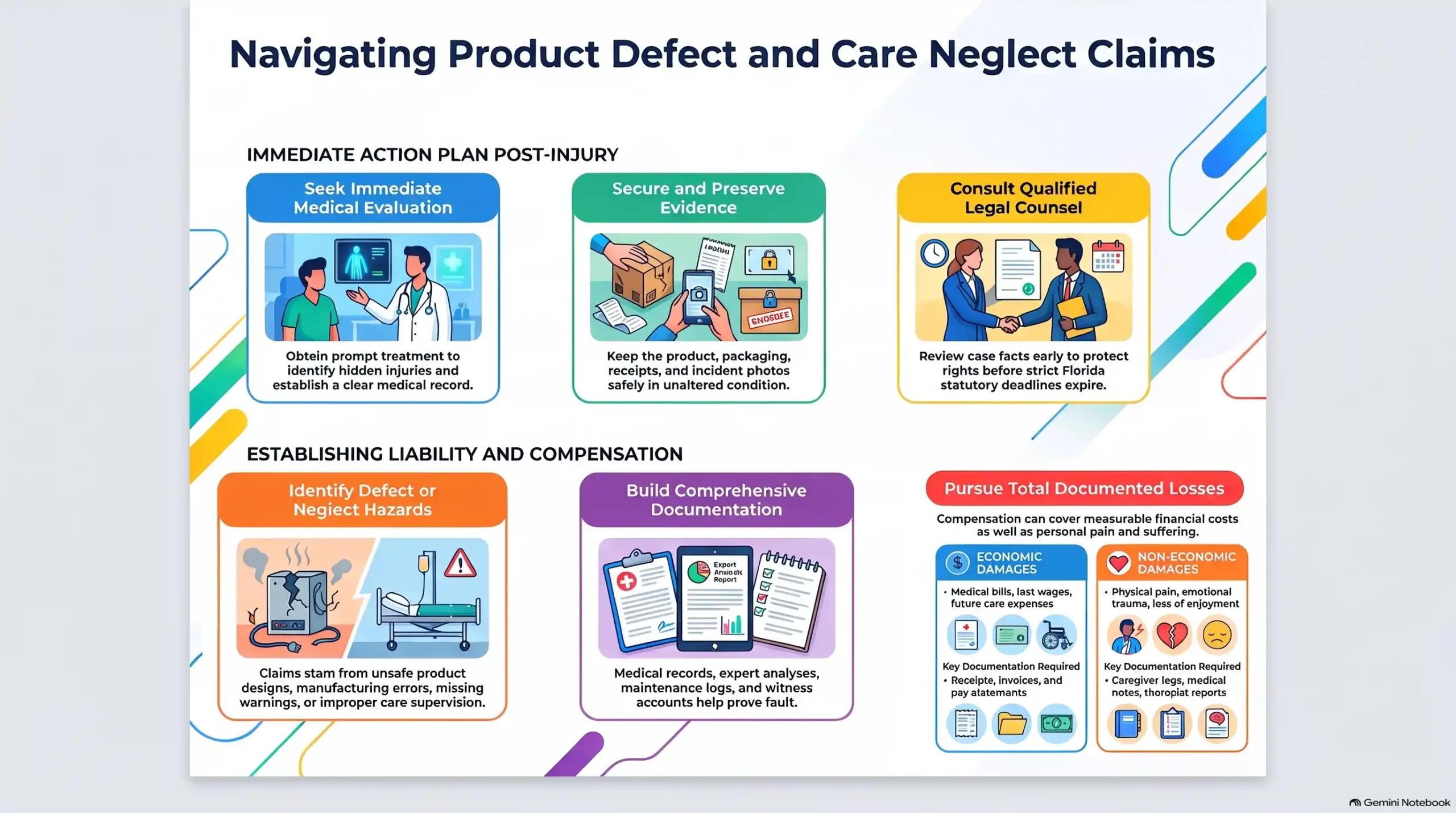
After an injury involving a defective product or abuse or neglect, the injured person should seek immediate medical care and follow the treating provider’s instructions. Preserve the product and related packaging, receipts, and records without alteration, as they may help establish what occurred. Consulting a lawyer can clarify available legal options and help protect relevant evidence.
Seek Immediate Medical Care
Prompt medical evaluation is vital following an injury involving a defective product, abuse, or neglect, even if the harm initially appears minor. A qualified clinician can identify hidden injuries, assess symptoms, and recommend appropriate care. For severe pain, breathing difficulty, heavy bleeding, loss of consciousness, or other urgent symptoms, Emergency treatment should be obtained by calling 911 or going to an emergency department. For less urgent concerns, a prompt appointment with a healthcare provider can still help prevent complications and establish a clear record of the injury. Medical triage helps determine the appropriate level of care based on the person’s condition and reported symptoms. Caregivers and witnesses should share accurate information about what happened, when symptoms began, and any changes observed. Timely treatment supports recovery and helps guarantee vulnerable individuals receive needed attention.
Preserve the Defective Product
If it is safe to do so, the injured person or a responsible caregiver should preserve the product involved in the incident. The item may provide important evidence about how the injury occurred, so do not discard, repair, clean, or alter it. Any packaging, labels, instructions, receipts, and accessories should also be retained, as they may help identify the product and its condition.
Secure storage can reduce the risk of damage, loss, or unauthorized handling. The product should be kept in a dry, protected location, away from children and other people who might use or modify it. Photographs may document its appearance and the surrounding scene, but should not replace preserving the item itself. Caregivers should maintain chain documentation by recording who handled or stored the product, when, and where. These steps help protect reliable evidence for any later review.
Consult a Lawyer
Once the product and related evidence have been secured, consulting a lawyer can help clarify the injured person’s legal options. A lawyer can assess whether a defect, inadequate warning, or negligent handling contributed to the injury and identify potentially responsible parties. The injured person or a concerned caregiver should ask about the lawyer’s experience with product liability and abuse or neglect claims, reviewing attorney credentials and relevant case history. During a Free consultation, the lawyer may explain possible next steps, deadlines, and the records needed to evaluate the matter. Medical documentation, purchase information, photographs, and incident reports can help support that review. A careful consultation also allows families to weigh whether the lawyer communicates clearly and respects the injured person’s needs. Prompt legal guidance may help preserve claims and protect access to appropriate compensation.
Don’t Wait. Call Our Florida Personal Injury Lawyers Now!
Critical Evidence in a Fort Lauderdale Defective Products, Abuse & Neglect Injury Case
Evidence can help establish how a defective product or abuse or neglect caused an injury and what followed.
Essential records and accounts may preserve details that could otherwise be lost:
- The product and its packaging, retained without alteration
- Medical records documenting injuries and treatment
- Incident notes, photographs, and other documentation
- Witness statements capturing what was seen or heard
Defective Product Preservation
Preserving a defective product after an injury can be crucial to determining what failed and who may be responsible. The item may contain evidence of a design flaw, manufacturing defect, or inadequate warning. Do not repair, alter, discard, or return it to a seller before documenting its condition and considering preservation options. Photographs can record the product, its packaging, labels, and visible damage, while purchase records and instructions can help establish its history.
A clear Chain of Custody should identify each person who handled the item and when. Secure Storage can protect it from further damage, contamination, or unauthorized access. In cases involving abuse or neglect, careful preservation may also help clarify how the product was used and whether safeguards were missing. These steps support a fair, reliable investigation.
Medical Records
Medical records can provide an important account of the injuries and treatment involved in a Fort Lauderdale defective product, abuse, or neglect case. These records may document symptoms, diagnoses, procedures, medications, and a patient’s response to care. They can help establish when an injury became apparent and whether treatment needs to continue over time. In cases involving vulnerable individuals, records may also show changes in health that required attention, supporting a careful review of the care provided.
Medical record privacy should be respected throughout collection and review. Access generally requires proper authorization, and sensitive information should be handled securely. Record retention is also important because missing or incomplete files may limit the ability to understand the medical history. Copies of relevant records, including provider notes and test results, can help qualified professionals assess the injury and support a thorough evaluation.
Incident Documentation
Clear incident documentation can help establish what occurred, when it happened, and who may have been involved in a Fort Lauderdale defective product, abuse, or neglect injury case. Records created soon after an event may preserve details that become difficult to recall later. An Incident timeline can identify when an injury was discovered, what actions followed, and whether conditions changed. It may include dated notes, photographs of the product or surroundings, incident reports, and relevant care or maintenance records. A communication log can track contacts with caregivers, facility administrators, manufacturers, or other responsible parties, including the dates, topics, and responses. Documents should be stored securely and kept in their original form when possible. Consistent records can help those seeking accountability explain the circumstances clearly and support a careful review of the claim.
Witness Statements
Witness statements can help clarify how a defective product, abuse, or neglect incident occurred and what followed. People who saw the event, its immediate aftermath, or relevant conditions may describe details that records do not capture. Their accounts can help establish when an injury occurred, how a product was used, or whether warning signs were present.
Witness credibility depends on factors such as the person’s opportunity to observe, ability to recall events, and consistency over time. Investigators may compare statements with medical records, photographs, incident reports, and other available evidence. Statement inconsistencies do not automatically make an account unreliable, but they may require careful review to determine whether differences reflect memory limits or conflicting facts.
Prompt, accurate interviews can preserve useful information and help those responsible for care or safety understand what happened. Witnesses should report only what they personally observed.
Long-Term Effects of Fort Lauderdale Defective Products Types of Abuse & Neglect Injuries
Injuries caused by defective products, abuse, or neglect may lead to chronic physical pain that requires ongoing treatment. Survivors may also experience lasting emotional trauma, affecting their well-being and daily activities. These consequences can create ongoing financial strain through medical costs, lost income, and related expenses.
Chronic Physical Pain
Chronic physical pain may persist long after an injury caused by a defective product, abuse, or neglect has recovered. In Fort Lauderdale, lasting pain can affect a person’s ability to work, complete daily tasks, and participate in activities that support independence. The source may include nerve damage, fractures, burns, or injuries that did not receive timely care. A qualified medical provider can assess symptoms and recommend appropriate Pain management, which may involve medication, physical therapy, or other supervised treatment. Consistent evaluation can help identify changes and reduce the risk of further complications. Mobility limitations may require assistive devices, home adjustments, or caregiver support. For those serving injured individuals, recognizing persistent pain and respecting reported symptoms can help connect them with care and preserve dignity while recovery continues.
Lasting Emotional Trauma
Emotional trauma can persist even after physical injuries from a defective product, abuse, or neglect have recovered. Survivors may experience anxiety, sadness, sleep disruption, or difficulty concentrating as they adjust to changes in safety and daily routines. Certain places, sounds, or interactions can become emotional triggers, prompting distress long after the original event. These responses may affect relationships and make it harder to participate in family, work, or community life.
Support from qualified mental health professionals can help survivors identify coping strategies and address lasting effects. A patient, respectful approach from relatives, caregivers, and others who serve the community can also support trust rebuilding. Recovery does not follow a uniform timeline, and emotional needs may change over time. Recognizing these effects can help survivors receive appropriate care without judgment or pressure.
Ongoing Financial Strain
Financial strain can continue long after a defective product, abuse, or neglect causes harm. Injuries may require ongoing treatment, rehabilitation, assistive equipment, or home modifications, while reduced ability to work can limit household income. These combined costs can disrupt budgets, forcing families to delay necessary expenses or rely on savings intended for other needs.
When medical bills and daily costs exceed available resources, debt accumulation may follow. Interest, missed payments, and collection activity can deepen financial pressure over time. Caregivers who reduce work hours to support an injured person may also lose wages and benefits, adding another lasting burden. Careful records of treatment expenses, lost income, and related costs can help clarify the financial impact. Legal guidance may help affected individuals understand available options and pursue compensation where the facts and law support a claim.
Proving Liability in Fort Lauderdale Defective Products, Abuse & Neglect Injury Cases
Proving liability in a Fort Lauderdale defective product, abuse, or neglect case requires evidence connecting the responsible party’s conduct to the injury. The evidence must identify how a product defect, unsafe practice, or failure to provide proper care caused harm. Applicable liability standards depend on the claim and the parties involved, including manufacturers, sellers, caregivers, or care facilities.
Product cases may require records showing a design flaw, manufacturing error, or inadequate warning, along with proof that the defect existed when the product left the responsible party’s control. Abuse or neglect claims may rely on care plans, incident reports, medical records, witness accounts, and evidence of unmet safety duties. Expert testimony can explain technical defects, medical consequences, or accepted standards of care when those issues are beyond ordinary understanding.
A careful investigation helps preserve relevant evidence and clarify each party’s role. Establishing these facts supports accountability and may help injured people obtain resources for treatment, recovery, and continued care.
Dealing With Insurance Companies After a Fort Lauderdale Defective Products, Abuse & Neglect Injury
After a defective product, abuse, or neglect injury in Fort Lauderdale, insurers may contact the injured person or their family to discuss the claim. Their questions may concern the incident, medical care, or the injured person’s daily limitations. Families focused on protecting and supporting someone in recovery may find these discussions difficult, particularly when facts are still being gathered.
Insurer communication boundaries help keep conversations accurate and manageable. The injured person or an authorized representative can request that questions be submitted in writing, keep records of calls, and avoid speculation about details they cannot confirm. They should not sign releases or accept payment without understanding what rights those documents may affect.
Recorded statement risks include incomplete answers, misunderstood wording, or comments later presented without context. A person may ask why a statement is needed and seek legal guidance before agreeing. Careful communication can protect the injured person’s interests while allowing family members and caregivers to concentrate on providing practical support.
What to Expect During a Fort Lauderdale Defective Products, Abuse & Neglect Injury Claim Process
A Fort Lauderdale defective products, abuse, or neglect injury claim typically begins with an initial case review to assess the circumstances and identify potential legal claims. Evidence collection then helps establish how the injury occurred and who may be responsible, while negotiations may lead to a settlement. If the parties cannot reach an agreement, the claim may proceed to trial for resolution.
Initial Case Review
During an initial case review, a Fort Lauderdale lawyer evaluates how the alleged defective product, abuse, or neglect caused the injury and identifies the evidence needed to assess the claim. The review typically begins with case screening and conflict checks to determine whether the firm can consider the matter and represent the prospective client. The lawyer asks about the incident, the injured person’s condition, and any care or support received. These details help clarify the potential legal issues, responsible parties, and deadlines that may affect a claim. For matters involving vulnerable people, the review also considers whether immediate protective or reporting steps may be appropriate. The lawyer explains the general process, discusses possible challenges, and identifies what further information may be needed before deciding whether to proceed. This early assessment helps families make informed decisions while focusing on the injured person’s needs.
Evidence Collection
Once representation is established, evidence collection helps clarify how the injury occurred and who may be responsible. Counsel may request the product, packaging, instructions, purchase records, and photographs of the scene and injuries. Medical records and care documentation can show the harm sustained and its effect on daily life. In cases involving abuse or neglect, investigators may also examine relevant facility records, incident reports, staffing information, and witness accounts. Preserving the item in its existing condition can prevent changes that complicate later review. A documented Evidence chain records who handled or stored materials and when, supporting their reliability. Investigators may interview witnesses and gather information about product design, manufacture, or use. Expert analysis can assess defects, safety warnings, and the connection between the product and the injury, helping establish a clear, evidence-based account.
Negotiations and Settlement
After the evidence has been reviewed, settlement negotiations may begin with insurers, manufacturers, care providers, or other responsible parties. During this stage, the injured person’s representative presents the claim’s documented losses and explains how the defective product, abuse, or neglect caused harm. A Settlement negotiation strategy considers medical expenses, future care needs, lost income, and the personal impact of the injury. It also accounts for disputed facts and the strength of available evidence. The parties may exchange offers and supporting information over several rounds. If direct discussions do not resolve disagreements, mediation preparation can help participants organize records, clarify priorities, and evaluate possible terms with a neutral mediator. Any proposed agreement should be reviewed carefully to confirm its scope, payment terms, and effect on the injured person’s ability to obtain appropriate care.
Trial and Resolution
If settlement negotiations do not resolve the claim, the injured person or their representative may pursue a trial in a Florida court. The process may begin with pretrial motions and Jury Selection, during which attorneys question prospective jurors to identify conflicts and assess impartiality. Each side then presents evidence, including medical records, product information, and testimony from witnesses or qualified experts. The defense may challenge the evidence and offer its own account of the injury and responsibility. After closing arguments, the judge explains the applicable law, and jurors deliberate before returning a verdict. If the court finds liability, it may award damages for medical costs, lost income, and other legally recognized harm. Either party may seek verdict appeals if a legal error may have affected the outcome. A lawyer can explain review options and deadlines.
Compensation for Fort Lauderdale Defective Products Types of Abuse & Neglect Injury Damages
Compensation for injuries caused by defective products, abuse, or neglect may cover both financial losses and the harm a person has suffered. The available damages depend on the evidence, the nature of the injury, and its effects on the person’s daily life. Recoverable losses may include medical expenses, rehabilitation costs, assistive equipment, and necessary in-home care. A claim may also address Lost income when an injury prevents a person from working, as well as diminished earning capacity if lasting limitations reduce future employment opportunities. These damages can be important when supporting someone whose injuries affect independence, stability, or ability to participate in community life. Compensation may also account for physical pain, emotional distress, and reduced enjoyment of ordinary activities. In cases involving abuse or neglect, the circumstances and resulting harm may influence the types of damages pursued. Careful documentation of treatment, expenses, work impacts, and personal changes can help establish the extent of the injury and support a fair assessment.
Economic vs Non-Economic Damages in Fort Lauderdale Defective Products Types of Abuse & Neglect Cases
Economic damages compensate for measurable financial losses, such as medical expenses, lost income, and care costs. Non-economic damages address less tangible harm, including pain, emotional distress, and loss of quality of life. Comparing these categories helps clarify how compensation may reflect both the documented costs and broader effects of an injury.
Economic Damages
When a defective product or abuse or neglect causes injury in Fort Lauderdale, damages may include both measurable financial losses and non-financial harm. Economic damages cover documented costs and lost income linked to the injury. They may include emergency treatment, hospital care, medication, rehabilitation, medical equipment, and transportation to appointments. Future expenses can also be considered when ongoing treatment, support, or accessibility changes are reasonably expected. Lost earnings may cover wages missed during recovery, while reduced earning capacity may apply if the injury limits a person’s ability to work over time. Records such as bills, pay statements, employment documents, and professional assessments can help establish these losses. In cases involving vulnerable people, careful documentation can support a claim for resources needed to restore stability and provide appropriate care. The amount depends on the evidence and circumstances.
Non-Economic Damages
Beyond documented bills and lost income, an injury may cause substantial harm not captured in financial records. Non-economic damages address the personal effects of a defective product injury, including physical discomfort, emotional distress, and changes to daily life. Pain and suffering may reflect ongoing symptoms, recovery-related hardship, or lasting limitations. Loss of enjoyment may arise when an injured person can no longer participate in activities, relationships, or routines that previously provided meaning and fulfillment. In abuse and neglect cases, these harms may also involve diminished dignity, fear, or reduced independence. Their impact can vary according to the injury and the person’s circumstances. Careful documentation of symptoms, treatment experiences, and changes in daily functioning can help explain these effects. A Fort Lauderdale attorney may assess how applicable law addresses such claims.
Comparing Damage Types
In Fort Lauderdale defective product, abuse, and neglect cases, damages are generally divided into economic and non-economic categories. Economic damages cover measurable financial losses, including medical bills, rehabilitation expenses, lost income, and the cost of future care. Records, expert assessments, and employment documentation may help establish these amounts.
Non-economic damages address personal harm that does not have a precise price, such as pain, emotional distress, loss of independence, and reduced quality of life. Acute injuries may cause immediate suffering, while cumulative damage can develop through repeated exposure, ongoing neglect, or prolonged mistreatment. Both patterns may affect a person’s ability to work, maintain relationships, or participate in daily activities.
A careful claim distinguishes these categories while showing how each loss arose. This approach can support fair compensation and help protect the injured person’s needs.
Don’t Wait. Call Our Florida Personal Injury Lawyers Now!
When a Fort Lauderdale Defective Products Types of Abuse & Neglect Injury Case Goes to Trial vs Settlement
A defective-products injury claim involving abuse or neglect may proceed to trial if the parties dispute liability, the extent of the harm, or the compensation owed. At trial, each side presents evidence, witness testimony, and expert opinions to explain how a product failure contributed to injury and what support the affected person may need. The judge or jury evaluates that evidence, and Jury deliberations follow closing arguments before a verdict is reached. A trial can provide a public decision, but its outcome is uncertain, and the process may require substantial time and preparation.
Many claims resolve through settlement, allowing parties to agree on compensation without a trial. Settlement timing depends on the strength of available evidence, the clarity of medical needs, and whether meaningful negotiations occur. An agreement may reduce delay and uncertainty, helping families focus on care and stability. However, settlement terms should be reviewed carefully, since accepting an offer generally ends the claim. Counsel can assess whether negotiation or trial better serves the injured person’s needs.
Florida Laws That May Affect Your Fort Lauderdale Defective Products Types of Abuse & Neglect Case
When a defective product contributes to abuse or neglect injuries in Fort Lauderdale, several Florida laws may affect who can be held responsible and what compensation may be available.
These rules help clarify duties owed by manufacturers, sellers, caregivers, and facilities while supporting accountability for people harmed.
- Florida product liability law may allow claims based on a product’s dangerous design, manufacturing defect, or inadequate warnings. Evidence can help show how the defect contributed to an injury.
- Comparative negligence may reduce compensation if an injured person’s conduct contributed to the harm. Responsibility may also be divided among multiple parties.
- Florida negligence and elder-abuse or vulnerable-adult protections may apply when a caregiver or facility failed to provide reasonable care. Their duties depend on the circumstances.
- Federal preemption may limit certain state claims when federal law governs a product, including some regulated medical devices. The specific product and applicable regulations matter.
These laws may intersect, so careful review can help families pursue accountability while protecting the dignity and needs of injured people.
The Statute of Limitations for Fort Lauderdale Defective Products Types of Abuse & Neglect Injury Cases
How long an injured person has to file a claim depends on the facts and legal basis of the case. In Florida, many negligence and product liability claims generally must be filed within two years, but the applicable period may differ based on when the injury occurred, when it was discovered, and the parties involved. A claim arising from abuse or neglect may also follow different rules, particularly when a minor or vulnerable adult is affected.
The Limitations deadline can be affected by statutory exceptions, including rules that pause or extend the filing period in specific circumstances. Under the discovery rule, the time to sue may begin when an injury is discovered, or reasonably should have been discovered, rather than on the date of exposure or the incident. This principle does not apply uniformly to every claim, and deadlines can be strict. Delayed filing may prevent a court from considering the case, limiting the injured person’s ability to seek accountability and resources for recovery. Prompt attention to dates and records is consequently important.
How a Fort Lauderdale Defective Products, Abuse & Neglect Lawyer Can Help You
Legal guidance can help injured people and their families understand their options after harm involving a defective product, abuse, or neglect. A Fort Lauderdale lawyer can investigate the circumstances, explain relevant legal principles, and help families pursue accountability while protecting the dignity of those affected.
- Investigating what happened: Counsel can gather records, examine products, and consult qualified professionals to clarify how an injury or mistreatment occurred.
- Preserving important evidence: Medical documents, incident reports, photographs, and witness accounts can help establish the harm and its effects on a person’s daily life.
- Seeking fair compensation: A lawyer can assess losses such as treatment costs, ongoing care, and emotional suffering, then present a supported claim to responsible parties.
- Advancing safer practices: Pursuing product accountability may encourage manufacturers and care providers to address hazards and improve protections for others.
This work supports Consumer safety and respects the needs of vulnerable people. By handling legal procedures and communications, counsel can help families focus on care, recovery, and service to their loved ones and community.
When to Contact a Fort Lauderdale Defective Products, Types of Abuse & Neglect Lawyer
Prompt legal guidance may be important after a defective product causes injury or a person experiences suspected abuse or neglect. A Fort Lauderdale lawyer may be contacted as soon as a safety concern becomes apparent, particularly when someone needs medical care, faces continuing danger, or cannot protect their own interests. Early contact can help preserve relevant records and clarify which deadlines may apply.
Families and caregivers may seek an Urgent Consultation when a vulnerable person has unexplained injuries, inadequate supervision, or unsafe living conditions. Suspected abuse or neglect should also be reported to appropriate authorities or protective services; legal contact does not replace immediate safety measures or emergency assistance.
For product-related harm, a lawyer may be contacted after an injury, malfunction, or discovery that a product could pose a hazard. Product Recalls may raise questions about continued use and potential risks. Affected individuals should retain the product, packaging, receipts, photographs, and medical records when safe, and seek guidance before discarding evidence or making statements to insurers.
Why You Need an Experienced Fort Lauderdale Defective Products, Abuse & Neglect Lawyer
When a defective product causes injury or abuse or neglect is suspected, an experienced Fort Lauderdale lawyer can help identify the issues that require attention and explain available legal options. Such cases may involve injuries to children, older adults, or people who rely on caregivers, making careful fact-finding crucial. A lawyer can examine how the product was designed, manufactured, marketed, or maintained and assess whether a warning or safety measure was inadequate. In suspected abuse or neglect matters, counsel can help distinguish product-related harm from other causes while preserving relevant records and evidence.
An experienced attorney can also review Product recall history, safety notices, and reports of similar incidents to clarify whether a hazard was known or should have been addressed. This work may support corporate accountability and help establish responsibility for preventable harm. By coordinating with appropriate professionals and explaining procedural requirements, counsel can help affected individuals and families pursue remedies while supporting safer practices for others.
How to Choose the Right Fort Lauderdale Defective Products, Abuse & Neglect Lawyer for Your Case
Choosing the right Fort Lauderdale lawyer for a defective product or suspected abuse or neglect case requires carefully evaluating the attorney’s relevant experience and approach. The attorney should understand the evidence and legal issues involved, whether the matter concerns an unsafe product, inadequate supervision, or possible neglect. Relevant experience can help identify responsible parties, preserve records, and assess the harm suffered.
Attorney credentials provide useful context, but they should be considered alongside practical case experience and a clear explanation of the legal process. A prospective client can ask how the attorney would investigate the matter, what information is needed, and how progress will be reported. The attorney’s communication style should be respectful, responsive, and understandable, especially when families are managing difficult circumstances.
A careful selection process also includes discussing fees, expected timelines, and potential challenges before making a decision. Choosing counsel who treats the affected person with dignity and explains options plainly can support informed decisions throughout the case.
About The Law Offices of Anidjar & Levine
The Law Offices of Anidjar & Levine represents people in Fort Lauderdale injury matters, including claims involving defective products and allegations of abuse or neglect.
The firm assists individuals and families seeking accountability after preventable harm, including people who want to protect others from similar risks.
Its attorneys review the circumstances, explain available legal options, and pursue claims for compensation when the evidence supports them.
Firm History reflects the firm’s work on personal injury matters and its focus on representing people facing the consequences of serious injuries.
Each case depends on its specific facts, applicable law, and available evidence, so the firm’s approach may vary according to a client’s needs.
Community Involvement is another aspect of the firm’s presence in South Florida.
The firm has supported local organizations and community initiatives, reflecting an interest in serving residents beyond individual legal matters.
For those considering representation, learning about the firm’s experience, communication practices, and approach to client service can help inform a careful decision.
Frequently Asked Questions
Can I File a Claim if a Product Was Recalled After My Injury?
Yes, an injured person may be able to file a claim even if the product was recalled afterward. Recall timing can help establish that a safety concern existed, but it does not automatically prove liability or guarantee compensation. The claimant should promptly seek medical care, retain the product and packaging, and preserve receipts, photographs, and communications. This evidence preservation can support an investigation. A qualified attorney can assess deadlines, causation, and available legal options.
What if I Modified the Product Before It Caused My Injury?
A claim may remain possible, but Product modification can affect whether the manufacturer is responsible for the injury. The central issue is whether the change caused or contributed to the harm, or whether the product was defective despite the alteration. The alteration’s impact depends on the modification’s nature, timing, and connection to the failure. A careful review of the product, records, and injury evidence can help determine responsibility and protect the injured person’s interests.
Can a Retailer Be Liable for Selling a Defective Product?
A retailer can be liable for selling a defective product, depending on the circumstances and applicable law. Retailer liability may arise when the seller knew or should have known of a dangerous defect, misrepresented the product, or failed to meet required safety obligations. Sales responsibility can also depend on the retailer’s role in distribution and any changes made to the product. An injured person should preserve evidence and seek case-specific legal guidance.
Do I Need to Keep the Defective Product After Reporting My Injury?
Yes, the injured person should generally keep the product after reporting the injury, because it may be crucial evidence in a liability claim. Do not repair, alter, discard, or return the product without legal guidance. Careful documentation of evidence, including photographs, receipts, packaging, and incident details, can help preserve relevant facts. Preservation duties may apply once a claim is anticipated, so store the product safely and limit access.
Can I Pursue a Claim if the Product Was Purchased Secondhand?
Yes, a claim may be possible even when the product was purchased secondhand. Secondhand Product Ownership does not automatically eliminate recovery, but responsibility depends on the product’s condition, defect, cause of injury, and applicable law. The injured person should preserve the item and avoid repairs or alterations. Purchase Documentation Requirements may include receipts, messages, seller details, and payment records; other evidence, such as photographs and witness accounts, can help establish the product’s history and the circumstances of the injury.
—————————
Defective products, abuse, or neglect can cause serious, lasting injuries. Identifying who may be responsible often requires a careful investigation.
Victims and families can preserve relevant records, document the harm, and seek qualified legal guidance promptly.
The Law Offices of Anidjar and Levine can review the circumstances, explain potential legal options, and help pursue compensation when the evidence supports it.
A Fort Lauderdale Personal Injury Lawyer can also assess how Florida law may apply and help protect important rights.

