A Fort Lauderdale truck accident companies and brands lawyer at The Law Offices of Anidjar and Levine can investigate whether a driver, carrier, vehicle owner, maintenance provider, cargo business, or manufacturer contributed to a collision and resulting injuries. The investigation may include crash reports, driver and maintenance records, electronic data, loading documents, contracts, and company safety practices. Potential claims depend on evidence linking specific conduct or a product to the harm. Medical records and other documentation can help establish losses. Learn more from a Fort Lauderdale Personal Injury Lawyer.
Main Takeaways
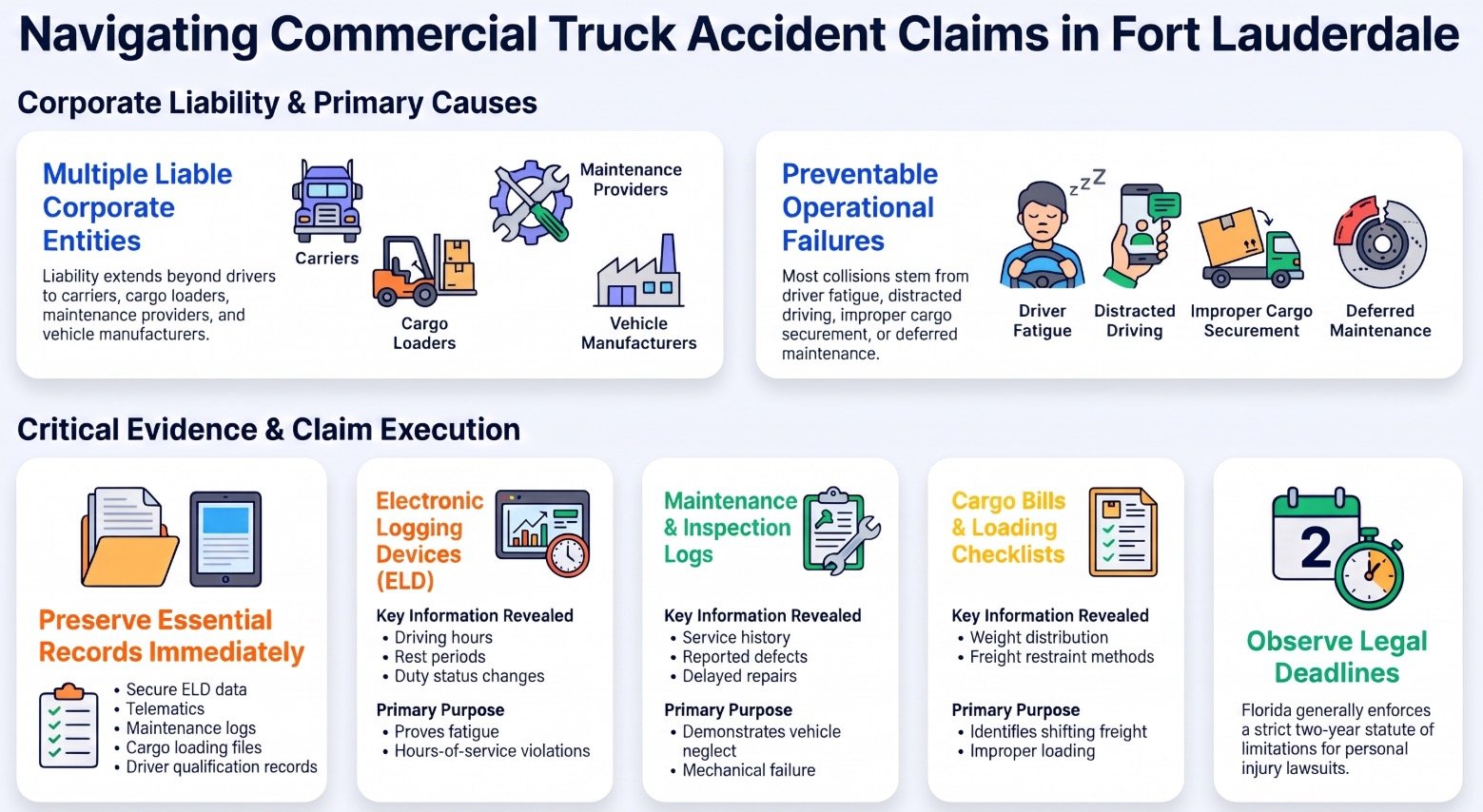
- A Fort Lauderdale truck accident lawyer can investigate the driver, carrier, truck owner, maintenance provider, cargo loader, and vehicle or parts manufacturers.
- A company’s involvement or brand name alone does not establish liability; evidence must connect its conduct or product to the crash and injuries.
- Promptly preserve ELD and telematics data, driver and maintenance records, inspection reports, dispatch communications, and cargo documents.
- Investigators can examine fatigue, distraction, unsafe schedules, poor maintenance, inadequate training, defective components, and improperly loaded or secured freight.
- Medical records, bills, wage information, and evidence of lasting physical or emotional effects can help document losses and evaluate potential claims.
How We Can Help With Your Fort Lauderdale Truck Accident Companies & Brands Injury Claim
When a truck accident involves a commercial carrier or vehicle manufacturer, determining responsibility may require a detailed investigation. A careful review can help identify relevant parties, preserve evidence, and clarify how the collision occurred. This process may include examining driver records, maintenance documents, dispatch information, vehicle components, and available crash reports.


Counsel can explain Claim Eligibility by reviewing the injured person’s circumstances, the available evidence, and applicable deadlines. That assessment helps determine whether a claim may be brought against a driver, carrier, manufacturer, or another responsible party. Legal Representation can also help coordinate communications, organize records, and present documented losses to insurers or other parties.
OUR CONSULTATIONSARE FREE
START YOUR FREE CASE REVIEW

A claim may involve medical expenses, lost income, rehabilitation needs, and other effects on daily life. Clear documentation supports an accurate evaluation of these losses. Through a measured, evidence-based approach, counsel can help injured people and families pursue accountability while reducing avoidable burdens during recovery. Each matter requires individual review before reaching conclusions.
Understanding Fort Lauderdale Truck Accident Companies & Brands Injury Cases
Truck accident injury cases involving companies or vehicle brands often require careful analysis of who owned, operated, maintained, or manufactured the vehicle. Identifying these parties helps clarify which legal duties apply and what evidence matters to an injured person’s claim. A carrier may be responsible for its employees’ conduct or for decisions made through its operations, while another business may have controlled the truck or its upkeep. A manufacturer may also face scrutiny when a vehicle component or design is alleged to have contributed to the harm.


Commercial carrier oversight can include policies, records, and supervision that show how a company managed its responsibilities. Evidence of a fleet safety culture may help explain whether the organization treated safety obligations as a priority. These questions require a fact-specific review of contracts, employment relationships, maintenance documents, and vehicle records. A careful assessment can support accountability while helping affected individuals and families pursue fair compensation and protect others from preventable harm. Each claim depends on applicable law and available proof.
Don’t Wait. Call Our Florida Personal Injury Lawyers Now!
Common Causes of Fort Lauderdale Truck Accident Companies & Brands
Truck accidents in Fort Lauderdale may result from driver fatigue or distracted driving, both of which can impair a driver’s ability to respond safely to changing road conditions. Improper cargo loading can affect a truck’s stability, while poor vehicle maintenance may contribute to mechanical failures. Identifying the cause is an important step in evaluating how an accident occurred and who may be responsible.
Driver Fatigue
Driver fatigue is a serious safety risk in commercial trucking, where long shifts, overnight routes, and inadequate rest can impair a driver’s attention and reaction time. Circadian rhythm disruption may make it harder for drivers to remain alert during overnight or early-morning hours, even when they believe they can continue safely. Tight delivery schedules, extended driving periods, and insufficient opportunities for rest can increase this risk. Trucking companies and brands have a responsibility to establish realistic schedules, monitor compliance with hours-of-service rules, and provide suitable rest periods. Some fleets use fatigue detection systems to identify signs of reduced alertness, but technology does not replace responsible scheduling and driver training. When a fatigued driver causes a collision, investigators may examine work records, dispatch communications, and company policies to determine whether preventable conditions contributed to the crash.
Distracted Driving
When a commercial vehicle operator shifts attention from the road, even briefly, the risk of a serious collision can increase. Distracted driving may involve texting, adjusting navigation, eating, or responding to dispatch communications while driving. These in-cab distractions can delay a driver’s recognition of traffic changes and reduce the time available to brake or guide safely. Hands-free technology may limit the need to hold a device, but it does not eliminate the mental demands of a call or voice command. Employers and drivers can support safer roads by setting clear communication practices, planning routes before departure, and stopping in a safe location when attention is needed elsewhere. After a collision, investigators may review phone records, vehicle data, and witness accounts to determine whether distraction contributed to the event.
Improper Cargo Loading
Improper cargo loading can make a commercial truck unstable and increase the risk of a serious collision on Fort Lauderdale roads. When freight shifts during transit, a driver may struggle to guide or stop safely, putting nearby motorists and pedestrians at risk. Proper Load securement helps prevent cargo from moving, falling, or spilling onto busy streets. Weight distribution also matters because an uneven load can affect a truck’s balance, handling, and braking response, particularly during turns or sudden evasive actions.
Companies responsible for loading freight may need to follow applicable safety rules and verify that cargo is secured before a truck departs. When loading practices fall short, investigators may examine shipping records, photographs, and witness accounts to determine how the cargo contributed to a crash. Identifying those responsible can help injured people pursue appropriate compensation.
Poor Vehicle Maintenance
Poor vehicle maintenance can leave a commercial truck unsafe to operate on Fort Lauderdale roads. Trucking companies and maintenance providers must inspect vehicles, address reported problems, and follow applicable safety requirements. When they postpone repairs or overlook warning signs, essential components may fail during a trip.
Brake system defects can reduce stopping power, making it harder for a driver to respond to traffic or road hazards. Worn tires, improper inflation, or delayed replacement may also contribute to tire blowouts, which can cause a truck to veer into nearby lanes. Other neglected parts, including lights and steering components, can impair safe operation.
Maintenance records, inspection reports, and repair histories may help establish whether a company knew about a defect and failed to correct it. Such evidence can clarify how a preventable mechanical problem contributed to a collision.
Legal Rights of Fort Lauderdale Truck Accident Companies & Brands Injury Victims
Truck accident victims in Fort Lauderdale may have legal rights to seek compensation from the parties responsible for their injuries, including a truck driver, trucking company, vehicle owner, or maintenance provider. A claim may address medical expenses, lost income, rehabilitation costs, and other documented losses.
The available options depend on the evidence, applicable law, and each party’s role.
- Victims may pursue compensation when negligence or another legally recognized basis for liability caused their injuries.
- Claims may involve companies or brands if evidence connects their conduct or products to the harm. Product recalls and safety records may help establish corporate accountability, but do not alone prove liability.
- Affected individuals may preserve medical records, bills, photographs, witness details, and relevant communications to support a claim.
- Legal deadlines can limit the time to file, so prompt review of the circumstances may protect a victim’s rights.
Seeking fair compensation can also support families and communities by encouraging responsible conduct and helping injured people access necessary care. Each claim requires an individual assessment.
Why Do Fort Lauderdale Truck Accident Companies & Brands Injuries Happen?
Understanding why these injuries occur can help clarify which parties may bear responsibility. Truck crashes involving company fleets or recognizable brands often result from preventable failures in operations, maintenance, or oversight. Driver fatigue, distraction, speeding, and inadequate training can impair judgment and vehicle control. Tight delivery schedules may encourage unsafe driving practices, while insufficient rest periods can increase fatigue-related risks.
Mechanical problems also contribute to serious collisions. Poor inspection routines, neglected repairs, overloaded trailers, or improperly secured cargo can make a truck difficult to control and increase stopping distances. Companies that hire drivers without appropriate screening or fail to monitor safety records may expose road users to additional danger.
Brand safety depends on more than protecting a company’s public image; it requires practices that reduce foreseeable harm. Effective corporate accountability includes enforcing safety policies, maintaining vehicles, and supervising contractors and employees. Without these safeguards, injured people and communities may face lasting consequences, and responsibility may extend beyond the driver to other entities whose decisions contributed to the crash.
What Should You Do After a Fort Lauderdale Truck Accident Companies & Brands Injury?
After a truck accident, injured individuals should seek prompt medical care, even if their symptoms seem minor at first. They should document the crash by preserving photographs, witness information, and relevant records. A truck accident lawyer can clarify legal options and help protect important evidence.
Seek Medical Care
Prompt medical care is vital after a truck accident in Fort Lauderdale, even when injuries seem minor or symptoms have not yet developed. A medical professional can identify conditions that may worsen without timely treatment, including head, neck, and internal injuries. Anyone experiencing severe pain, difficulty breathing, confusion, or significant bleeding should seek an Emergency room evaluation immediately. For less urgent concerns, a prompt appointment with a qualified healthcare provider can establish an appropriate treatment plan. Patients should describe all symptoms accurately and follow the clinician’s instructions, including recommended testing, medication, and follow-up visits. When necessary, providers can arrange expert referrals for injuries requiring focused assessment or ongoing care. Timely treatment supports recovery and helps patients understand their health needs, so they can make informed decisions and meet their responsibilities to others.
Document the Crash
When it is safe to do so, documenting a Fort Lauderdale truck crash can preserve important evidence about how the collision occurred and who may be responsible. Scene photography should capture vehicle positions, damage, skid marks, road conditions, traffic signs, and visible injuries. Images taken from several angles may help clarify details that change when vehicles are moved, or the roadway is cleared. If possible, record the truck’s company name, identifying numbers, license plate, and any visible branding without entering traffic or interfering with emergency response. Witness names and contact information can support later efforts to understand the event. Record witness statements promptly, and keep each person’s account in their own words. Preserve relevant documents, photographs, and messages, and do not alter original files. Accurate records may help protect everyone’s interests.
Contact a Truck Accident Lawyer
Once immediate safety concerns are addressed and you preserve available evidence, a person injured in a Fort Lauderdale truck crash may benefit from consulting a truck accident lawyer. An Urgent Consultation can help clarify potential claims, applicable deadlines, and practical next steps. The lawyer may review crash reports, medical records, photographs, and information about the truck, carrier, and other involved parties. This review can identify evidence to preserve and questions that require further investigation.
Legal Representation may also help an injured person communicate with insurers and assess settlement proposals without overlooking documented losses. The lawyer can explain possible compensation for medical care, lost income, and other legally recognized harm. Prompt advice is particularly useful when responsibility is disputed, or several companies may be involved. A careful consultation supports informed decisions and lets the injured person focus on recovery and family responsibilities.
Critical Evidence in a Fort Lauderdale Truck Accident Companies & Brands Injury Case
Important evidence can help establish how a truck accident occurred and whether the driver or carrier failed to meet safety obligations.
Relevant records may include:
- Electronic logging data
- Driver qualification records
- Maintenance and inspection logs
- Cargo loading documentation
Electronic Logging Data
How long a truck driver was behind the wheel before a crash can be difficult to establish from witness accounts alone. Electronic logging device (ELD) records can help show driving time, rest periods, and changes in duty status before a collision. Prompt ELD data preservation matters because records may be overwritten or become harder to retrieve over time. Attorneys can request relevant logs and examine whether entries appear complete and consistent with the reported trip. Telematics cross-checks may compare logging data with vehicle location, engine activity, dispatch records, and other available information. These sources can reveal discrepancies that warrant further investigation, but they do not prove fault on their own. Careful review can help clarify whether federal hours-of-service limits were followed and support a fair assessment of the harm suffered by injured people.
Driver Qualification Records
A truck driver’s qualification file can help establish whether the carrier verified the driver’s fitness and eligibility before assigning them to operate a commercial vehicle. These records may include the driver’s application, license information, medical certification, safety history, and prior employment history. Reviewing them can show whether the carrier followed applicable Qualification standards and identified concerns that required further review. For example, records may reveal an expired credential, a disqualifying driving event, or gaps in the carrier’s screening process. Such evidence can help clarify whether the company exercised reasonable care when selecting and retaining the driver. In a Fort Lauderdale truck accident case, a careful review may support a more complete account of how the crash occurred and who may be responsible. Promptly preserving these documents can help protect injured people’s interests.
Maintenance and Inspection Logs
When a truck’s mechanical condition may have contributed to a crash, maintenance and inspection logs can help show whether the vehicle was properly examined and repaired. These records may identify recurring defects, missed service intervals, or incomplete repairs before the collision. They can also help establish whether a carrier followed applicable Inspection Standards and responded appropriately to reported problems. A careful review may compare dated entries with repair invoices, inspection reports, and the vehicle’s service history. Log Retention practices matter because missing or altered records can limit the ability to determine what a company knew and when it knew it. Preserving these materials promptly can support a fair investigation and help injured people seek accountability. Their review may clarify whether preventable maintenance failures contributed to harm and inform responsible safety improvements.
Cargo Loading Documentation
Cargo loading documentation can reveal whether freight was secured, balanced, and within weight limits before a truck crash. A bill of lading identifies the shipment, its contents, and the parties responsible for handling it. A loading checklist may record how the driver distributed, restrained, and inspected the cargo before departure. These records can help investigators determine whether shifting freight, improper weight distribution, or inadequate securement contributed to a collision or worsened injuries.
The documents may also clarify which company or contractor controlled each loading task. Comparing records with photographs, inspection findings, and driver statements can expose inconsistencies or missing safety steps. Preserving these materials promptly matters because electronic entries and paper records may be altered, lost, or routinely discarded. For injured people and their families, reliable documentation can support a careful, evidence-based review of responsibility and safety practices.
Don’t Wait. Call Our Florida Personal Injury Lawyers Now!
Long-Term Effects of Fort Lauderdale Truck Accident Companies & Brands Injuries
Truck accident injuries may produce long-term effects that continue well beyond initial treatment. Some individuals experience chronic pain and lasting mobility limitations that interfere with daily activities and work. Emotional distress and cognitive changes may also persist, requiring ongoing care and affecting quality of life.
Chronic Pain
Chronic pain can persist long after a Fort Lauderdale truck accident, even after visible injuries have recovered. It may arise from damaged nerves, soft-tissue trauma, or other injuries sustained in a collision involving a commercial vehicle. Persistent discomfort can interfere with concentration, routine tasks, and a person’s ability to care for family or contribute to community responsibilities. Sleep disruption may further affect mood, energy, and daily functioning. A medical professional can assess the source and severity of symptoms and recommend appropriate Pain management, which may include medication, therapy, or other supervised care. Consistent documentation of symptoms, treatment, and related expenses can help clarify the injury’s continuing effects. When a trucking company’s conduct or a vehicle defect contributed to the crash, legal guidance may help an injured person understand available options for seeking compensation.
Lasting Mobility Limitations
Persistent pain may accompany lasting mobility limitations after a Fort Lauderdale truck accident, but restricted movement can also result from fractures, spinal injuries, or damage to muscles and joints. These conditions may interfere with walking, standing, lifting, or completing routine tasks and may require ongoing rehabilitation and assistive devices. A treating provider can document functional restrictions, recommend appropriate care, and assess whether limitations are expected to persist. Such records may help clarify the injury’s effect on daily activities and future support needs. Changes to a home or workplace, including wheelchair accessibility features, may improve safe movement and independence. Adaptive transportation can help injured people reach medical appointments, work, and community services. Family members, caregivers, and service providers may coordinate practical assistance while respecting the injured person’s needs and promoting continued participation in everyday life.
Emotional and Cognitive Effects
After a Fort Lauderdale truck accident, emotional and cognitive effects may continue long after visible injuries have recovered. Survivors may experience anxiety, depression, sleep disruption, or post-traumatic stress, particularly when reminders of the collision trigger distress. Head injuries can also affect memory, concentration, judgment, and the ability to manage everyday responsibilities. These changes may strain relationships and make returning to work or community service difficult. A timely evaluation by qualified medical and mental health professionals can identify concerns and guide appropriate care. Treatment may include counseling, medication, or cognitive rehabilitation to strengthen attention, memory, and problem-solving skills. Family members and caregivers can support recovery by encouraging consistent treatment and communicating patiently. Documented symptoms and care records may also help explain the lasting effects when an injured person seeks legal guidance.
Proving Liability in Fort Lauderdale Truck Accident Companies & Brands Injury Cases
Proving liability in a Fort Lauderdale truck accident case requires identifying each party whose conduct contributed to the crash and supporting those claims with reliable evidence. Potentially responsible parties may include the driver, trucking company, vehicle owner, maintenance provider, or a manufacturer whose defective component caused harm. Evidence such as crash reports, witness statements, vehicle inspection records, driver logs, and electronic data can help establish what happened and whether safety duties were breached.
A careful investigation may reveal failures involving driver training, hours-of-service rules, vehicle maintenance, cargo loading, or hiring practices. These findings can clarify whether a company’s policies or oversight contributed to the collision. Corporate accountability depends on connecting specific conduct to the injuries, rather than relying on assumptions about a company’s size or reputation. Brand responsibility may also arise when a manufacturer or affiliated business played a role in creating or distributing an unsafe product. Promptly preserving records and consulting qualified professionals can help injured people build a complete, evidence-based account of responsibility.
Dealing With Insurance Companies After a Fort Lauderdale Truck Accident Companies & Brands Injury
Once potential responsibility has been identified, injured people may need to communicate with several insurers representing the truck driver, trucking company, vehicle owner, or other parties. Each insurer may assess the available information from its own perspective, so clear, accurate communication is important. Injured people can provide basic facts while avoiding guesses about fault, injury severity, or events they cannot confirm. They may also direct requests for recorded statements or broad medical authorizations to a qualified legal representative before responding.
Policyholder obligations may require insured drivers or companies to report the collision and cooperate with their insurers. Those duties do not necessarily require an injured person to provide a statement to another party’s insurer. Policy language may also include coverage exclusions that affect which losses or conduct are covered. Review requests for documents, explanations of coverage, and communications about medical expenses carefully. Organized records and respectful, measured responses can help protect accurate information while supporting a fair resolution for everyone affected.
What to Expect During a Fort Lauderdale Truck Accident Companies & Brands Injury Claim Process
A Fort Lauderdale truck accident injury claim typically begins with an initial case review to assess the circumstances, potential liability, and available insurance coverage. Evidence collection then helps establish how the collision occurred and the extent of the resulting injuries and losses. The process may proceed to settlement negotiations before reaching a final claim resolution.
Initial Case Review
During an initial case review, a Fort Lauderdale truck accident lawyer typically evaluates how the collision occurred, the injuries involved, and the available evidence. The process may begin with an Intake questionnaire covering the incident, treatment, work impact, and the assistance the injured person may need. Conflict screening helps determine whether the firm can ethically consider the matter, including whether prior or current relationships create a conflict.
The lawyer may discuss potential responsibility, applicable deadlines, and the general steps involved in pursuing a claim. The review also helps clarify the client’s priorities, such as obtaining support for medical needs or addressing lost income. No outcome can be guaranteed, and an early assessment may change as additional information becomes available. This initial discussion allows both sides to assess whether representation is appropriate and how the claim may proceed.
Evidence Collection
After the initial review, evidence collection helps clarify how the truck crash occurred and which parties or companies may bear responsibility. Counsel may secure police reports, photographs, vehicle data, maintenance records, driver logs, and delivery documents before they are lost or altered. These materials can reveal whether equipment defects, unsafe loading, driver conduct, or company policies contributed to the collision. Witness Interviews may provide independent accounts of traffic conditions, vehicle movements, and events immediately before impact. Investigators can also inspect the crash site and vehicles, documenting physical marks and other details relevant to Scene Reconstruction. Medical records and employment information may establish the injuries and their effects on daily life. Careful collection preserves reliable information, supports a thorough assessment, and helps guarantee that evidence is available to clarify the claim’s factual basis.
Settlement Negotiations
Once the evidence and damages have been evaluated, settlement negotiations may begin with the trucking company or its insurer. The injured person’s representative may present a demand supported by records, repair estimates, lost income documentation, and other relevant proof. The insurer may respond with questions, request additional materials, or propose a different amount. A careful Negotiation Strategy considers documented losses, potential future needs, and the risks of accepting an offer before fully understanding the impact of the injuries. Settlement Timing varies according to the intricacy of the crash, the availability of records, and the parties’ willingness to negotiate. Clear, professional communication can help keep discussions focused and productive. Throughout this stage, the injured person may review each proposal with counsel and decide whether its terms reasonably reflect the claim’s supported value.
Claim Resolution
How a truck accident claim is resolved depends on the available evidence, the extent of the injuries, and whether the parties can reach an agreement. After negotiations, the insurer may offer compensation, or the parties may continue discussions while investigating liability and documenting losses. Settlement timelines vary according to injury treatment, evidence collection, and the number of companies or insurers involved. A claimant may need to understand the full medical outlook before evaluating an offer, since accepting payment can end the right to seek additional compensation.
Before signing, the claimant should review the release terms carefully, including which parties are protected and which claims are waived. If the parties cannot reach an agreement, the claim may proceed to litigation, where a court can decide responsibility and damages. Clear records and timely communication can support an orderly resolution and help preserve resources for those affected.
Compensation for Fort Lauderdale Truck Accident Companies & Brands Injury Damages
When a truck crash disrupts a company’s operations or damages its brand, the resulting losses may extend beyond physical property damage. Affected owners, employees, and customers may face consequences that call for careful assessment. Compensation may address injuries to individuals as well as harm to business interests, subject to the evidence and applicable law.
For an injured person, recoverable damages may reflect medical needs, physical limitations, and effects on daily responsibilities. Lost earning capacity may be considered when an injury limits the ability to work or advance professionally. Diminished life enjoyment may also be relevant when lasting symptoms interfere with family duties, community service, or other meaningful activities.
Businesses may seek recovery for documented disruption, damaged equipment, interrupted services, or harm to customer relationships. Records, witness accounts, and professional evaluations can help show how the collision affected operations and people who depend on them. A Fort Lauderdale truck accident lawyer can assess potential claims, identify supporting evidence, and explain available legal options.
Economic vs Non-Economic Damages in Fort Lauderdale Truck Accident Companies & Brands Cases
Truck accident damages may include economic losses, such as medical expenses, lost income, and property damage, as well as non-economic harm, including pain and emotional distress. The value of each category depends on the injuries and their effects on the claimant’s life. Supporting records, expert assessments, and other evidence can help establish the extent of these damages.
Economic Losses
Economic losses are the measurable financial costs caused by a truck accident, including medical expenses, lost income, reduced future earning capacity, and property damage. These damages may include emergency treatment, rehabilitation, prescription medication, and necessary medical equipment. Records such as invoices, employment documents, and repair estimates can help establish the amount and connection to the collision.
Lost wages may reflect time away from work during recovery, while diminished earning capacity may apply when injuries limit a person’s ability to perform their former job or earn at the same level. Future losses can require careful assessment of expected treatment, work restrictions, and career prospects. In cases involving commercial carriers or vehicle manufacturers, evidence may also clarify responsibility for the financial harm. Accurate documentation helps ensure claims account for current expenses and reasonably supported losses over time.
Non-Economic Harm
In addition to measurable financial losses, truck accident claims may include non-economic damages for harm that does not have a direct price, such as physical pain, emotional distress, and loss of enjoyment of daily activities. These effects can alter a person’s routines, relationships, and sense of independence long after a collision. Emotional distress may involve anxiety, fear, or sleep disruption associated with the crash and its consequences. Loss of enjoyment may reflect an inability to participate in family activities, hobbies, or community service that once gave daily life meaning. Such harm is distinct from medical bills or lost income, though it may arise from the same injuries. In Fort Lauderdale truck accident cases, non-economic damages recognize an injury’s personal impact and how it can limit a person’s ability to contribute to others.
Proving Damages
When a truck collision causes lasting harm, proving damages requires evidence that connects the crash to both financial losses and personal effects. Economic damages may include medical expenses, rehabilitation costs, lost wages, and reduced future earning capacity. Damage documentation such as invoices, employment records, tax returns, and medical reports helps establish these amounts and link them to the collision. Non-economic damages address pain, emotional distress, loss of independence, and reduced enjoyment of daily activities. Treatment notes, personal accounts, and observations from family members or caregivers may support these effects. Valuation methods consider the severity and duration of harm, the recovery outlook, and the effect on ordinary responsibilities. Clear, consistent evidence helps a claim reflect the injured person’s needs, supports fair compensation, and helps protect the family’s stability.
Don’t Wait. Call Our Florida Personal Injury Lawyers Now!
When a Fort Lauderdale Truck Accident Companies & Brands Injury Case Goes to Trial vs. Settlement
After a Fort Lauderdale truck accident, an injured person may settle a claim or pursue compensation at trial if negotiations fail. A settlement can provide compensation without the uncertainty, expense, and time associated with a courtroom proceeding. It may also allow the injured person to avoid recounting difficult events in public. Before accepting an offer, the parties assess the evidence, documented losses, and likely trial outcomes.
When negotiations do not produce an acceptable resolution, a trial allows each side to present evidence and question witnesses before a judge or jury. Jury Decision Factors may include witness credibility, the clarity of accident evidence, and the strength of the claimed damages. A Trial Preparation Strategy typically involves organizing records, preparing witnesses, and presenting a clear account of how the collision affected the injured person. The decision to settle or proceed depends on the individual circumstances, the available evidence, and the risks each option carries. Careful evaluation can support an informed choice that serves the injured person’s needs.
Florida Laws That May Affect Your Fort Lauderdale Truck Accident Companies & Brands Case
The choice between settling a claim and proceeding to trial may depend on how Florida law applies to the facts of a Fort Lauderdale truck accident. Several rules can shape responsibility, available compensation, and the evidence needed to support a claim. Understanding them can help injured people and their families make informed decisions while protecting their ability to seek fair treatment.
- Comparative negligence: Florida’s modified comparative negligence rule may reduce compensation according to an injured person’s share of fault. A person found more than 50 percent responsible generally cannot recover damages.
- Commercial insurance: Trucking companies may carry policies subject to state and federal requirements. Coverage depends on the vehicle’s use, operation, and applicable regulations.
- Employer responsibility: A company may be liable for a driver’s conduct within the scope of employment. Records about hiring, training, maintenance, and supervision may help establish responsibility.
- Insurance deadlines: Policies may require prompt notice and cooperation. Missing these requirements can complicate a claim, so timely reporting and careful documentation are important.
The Statute of Limitations for Fort Lauderdale Truck Accident Companies & Brands Injury Cases
Because Florida law sets firm deadlines for filing injury claims, the statute of limitations can affect whether someone injured in a Fort Lauderdale truck accident can seek compensation in court. For most negligence claims arising from accidents on or after March 24, 2023, Florida generally allows two years from the date of injury to file a lawsuit. Earlier incidents may be governed by a different deadline, so the accident date matters.
The Filing deadline may differ when a claim involves a death, a government entity, or another legally distinct circumstance. Special notice requirements can apply to claims against public bodies, and missing them may affect the right to proceed. A discovery rule may govern certain claims when an injury or its cause was not reasonably apparent, but it does not automatically extend every deadline.
Prompt attention to these time limits can preserve a person’s ability to pursue accountability and support those affected. Because exceptions are fact-specific, confirm the applicable deadline promptly.
How a Fort Lauderdale Truck Accident Companies & Brands Lawyer Can Help You
A Fort Lauderdale truck accident lawyer can help injured people protect their claims while investigating how the crash occurred and who may be responsible. Counsel can also explain legal options and gather evidence to support a fair assessment of losses. This work may serve both the injured person and the wider community by encouraging safer practices and Corporate accountability.
A truck accident lawyer can investigate responsibility, preserve evidence, and pursue fair compensation while encouraging safer practices and corporate accountability.
- Identify responsible parties: The lawyer can examine the roles of drivers, trucking companies, vehicle owners, and other potentially liable entities.
- Preserve and review evidence: Records, electronic data, maintenance files, and witness accounts can help clarify events and reveal safety failures.
- Assess damages: Counsel can document medical expenses, lost income, rehabilitation needs, and other effects to support a complete claim.
- Address company conduct: Legal advocacy may expose practices that contributed to harm, while reinforcing that brand reputation does not replace responsibility.
Through investigation, negotiation, or litigation, a lawyer can seek compensation and promote accountability without overstating what the evidence establishes.
When to Contact a Fort Lauderdale Truck Accident Companies & Brands Lawyer
After a truck crash, contacting a Fort Lauderdale truck accident lawyer promptly can help preserve evidence and clarify potential claims against drivers, trucking companies, or other responsible parties. Early guidance is especially important when someone has suffered serious injuries, a fatality has occurred, or several vehicles and commercial entities may be involved. An Immediate Consultation can help identify urgent steps, including documenting injuries, retaining available records, and directing communications with insurers.
A lawyer may also advise families and injured people before they provide recorded statements or accept proposed payments. Trucking companies and their insurers may begin reviewing the collision soon after it occurs, while vehicle data, witness recollections, and other evidence can become harder to obtain over time. Prompt action can support a fair investigation and help ensure relevant parties are identified.
Seeking counsel does not require certainty about fault. It gives affected people a way to understand deadlines, protect their interests, and pursue Corporate Accountability while focusing on recovery and family needs.
Why You Need an Experienced Fort Lauderdale Truck Accident Companies & Brands Lawyer
Experienced counsel can help injured people and families assess the roles of trucking companies, vehicle owners, maintenance providers, and other potentially responsible parties. An experienced lawyer can preserve evidence, identify relevant records, and examine whether company policies or operational decisions contributed to a collision. These steps may clarify how driver conduct, vehicle condition, scheduling practices, or contractor relationships affected roadway safety.
Truck accident claims can involve multiple organizations and insurance representatives, each with separate interests. Counsel can coordinate the investigation, communicate with those entities, and explain how available evidence relates to potential legal responsibility. This work supports Corporate accountability by examining whether companies met applicable duties and responded appropriately to known risks.
A lawyer may also evaluate fleet safety oversight, including training, inspections, maintenance procedures, and supervision. Thorough analysis can help families understand their options while allowing injured people to focus on recovery. By presenting documented facts and addressing disputed issues, experienced counsel can help pursue fair compensation and encourage safer practices that protect drivers, passengers, and the wider community.
How to Choose the Right Fort Lauderdale Truck Accident Companies & Brands Lawyer for Your Case
Choosing counsel for a truck accident claim involving a company or commercial fleet requires careful attention to relevant experience, investigative resources, and communication practices. A suitable lawyer should understand commercial vehicle regulations, liability issues, and the evidence needed to evaluate a collision involving a business or fleet operator. Reviewing Lawyer credentials can help confirm licensing, relevant case experience, and a record of handling claims against commercial defendants. Prospective clients may also ask how the lawyer investigates crashes, preserves records, and coordinates with qualified experts.
Client communication is another important consideration. The lawyer should explain legal options clearly, provide reasonable updates, and identify who will respond to questions. A dependable process helps injured people and their families make informed decisions while managing recovery and other responsibilities. Discuss fee arrangements, expected timelines, and the client’s role before representation begins. Comparing several qualified lawyers can clarify differences in approach and support a careful choice based on the case’s needs, rather than promises of a particular outcome.
About The Law Offices of Anidjar & Levine
The Law Offices of Anidjar & Levine represents people injured in truck accidents and other serious incidents in Florida. The firm assists clients seeking accountability and compensation after collisions involving commercial vehicles, delivery fleets, and other businesses. Its work may include investigating how a crash occurred, identifying responsible parties, and addressing communications with insurers.
An attorney’s background can help clients understand how a legal team approaches complex injury claims. The firm’s attorneys handle personal injury matters, including cases involving serious injuries, disputed liability, or substantial losses. Each case depends on its facts, available evidence, and applicable law, so outcomes cannot be guaranteed.
The firm values direct client communication and practical guidance throughout the legal process. Its firm values also include serving people facing difficult circumstances and helping them pursue lawful remedies. For injured individuals and families, clear explanations about deadlines, evidence, and potential next steps can support informed decisions. A consultation can provide an opportunity to discuss the incident, ask questions, and learn whether representation may be appropriate.

Frequently Asked Questions
Can I File a Claim if a Defective Truck Part Contributed to the Crash?
A claim may be available if a defective truck part contributed to the crash and caused injury or loss. Product liability law may allow an injured person to pursue responsible manufacturers, distributors, or other parties, depending on the facts. Relevant defect evidence can include the failed component, maintenance records, inspection reports, and expert analysis. Preserving the part and documenting the crash promptly can help determine whether the defect played a substantial role.
Who May Be Responsible When a Truck’s Manufacturer or Maintenance Provider Contributed to an Accident?
Responsibility may extend to the truck manufacturer, a maintenance provider, the trucking company, or other parties whose conduct contributed to the collision. Manufacturer liability may arise when a defective design, production flaw, or inadequate warning makes a truck or component unsafe. Maintenance negligence may apply when a provider performs deficient repairs or overlooks a known defect. Investigators assess records, inspections, and expert findings to identify responsible parties and support a fair claim for injured people.
Can a Truck’s Electronic Control Module Reveal How the Collision Happened?
Yes. A truck’s electronic control module may record information such as speed, braking, throttle position, and engine activity shortly before or during a collision. This data can support crash speed analysis and help investigators assess how the event unfolded, though it may not provide a complete account. Because records can be overwritten or lost, prompt ECM data preservation is important. Qualified experts can interpret the information alongside physical evidence, witness statements, and other vehicle records.
What Happens if a Trucking Company Goes Out of Business Before My Claim Is Resolved?
If a trucking company closes before a claim is resolved, recovery may still be possible through its insurance coverage, bankruptcy proceedings, or claims against other responsible parties. Bankruptcy protection can pause collection efforts and impose deadlines for filing a claim, so prompt legal review is important. A successor company may face successor liability in limited circumstances, depending on how it acquired the business and assumed its obligations. Records and evidence should be preserved.
Can a Truck Accident Claim Involve Multiple Companies or Corporate Entities?
Yes. A truck accident claim can involve several companies or corporate entities, depending on who owned the vehicle, employed the driver, arranged the shipment, or maintained the truck. Corporate ownership structures may separate these responsibilities among related businesses, while Contractual carrier relationships can divide duties between carriers, brokers, and contractors. Identifying each party’s role helps clarify potential liability and available insurance. Records, contracts, and employment arrangements may be vital to a thorough investigation.
—————————
Truck accident claims involving commercial companies and vehicle brands may require careful investigation, prompt evidence preservation, and a clear understanding of applicable law. Injured people may face medical expenses, lost income, and disputes over responsibility or compensation. The Law Offices of Anidjar and Levine can review the facts, explain your options, and pursue a claim on your behalf. Seeking legal guidance early may help protect important evidence and support informed decisions throughout the claims process. Learn more from a Fort Lauderdale Personal Injury Lawyer.