
A Naples car accident spine, back, and neck lawyer can help injured people pursue compensation when another party’s negligence caused a collision. These injuries may affect muscles, discs, nerves, or vertebrae, and symptoms can appear hours or days later. Prompt medical evaluation and consistent records can document diagnoses, treatment, work limitations, and future needs. The Law Offices of Anidjar and Levine may review evidence, communicate with insurers, and assess settlement offers under Florida law. Learn more from a Naples Personal Injury Lawyer. The following sections explain important causes, claim steps, and legal considerations.
Main Takeaways
- A Naples car accident lawyer can assess whether another driver’s negligence caused your spine, back, or neck injury.
- Seek prompt medical care; symptoms such as pain, stiffness, numbness, or weakness may appear hours or days after a crash.
- Medical records, imaging, treatment notes, and symptom tracking can document your diagnosis, recovery, and daily limitations.
- Preserve scene photos, witness details, police reports, and vehicle damage records to help establish how the collision occurred.
- An attorney can review documented medical costs, work effects, and medically supported future needs when evaluating a claim.
How We Can Help With Your Naples Car Accident Spine, Back & Neck Injury Claim
A car accident can cause spinal, back, and neck injuries that require extensive treatment and disrupt daily life. When someone is injured, a Naples car accident lawyer can help manage the claim while they focus on recovery. The process may include organizing medical records, documenting treatment costs, and gathering evidence that explains how the collision affected the person’s health and ability to work.
A thoughtful Claim strategy accounts for both current losses and anticipated needs supported by medical information. Counsel can communicate with insurers, review settlement proposals, and identify documentation gaps before responding. This work can reduce avoidable delays and help guarantee that the injured person’s concerns receive careful attention.


Effective attorney advocacy also means explaining options clearly and respecting the client’s decisions. When appropriate, the lawyer can coordinate with medical providers and other professionals while keeping the client informed. With steady guidance, an injured person can pursue fair compensation without managing every claim detail alone.
Don’t Wait. Call Our Florida Personal Injury Lawyers Now!
Understanding Naples Car Accident Spine, Back & Neck Injury Cases
OUR CONSULTATIONSARE FREE
START YOUR FREE CASE REVIEW

Understanding how spine, back, and neck injuries develop after a Naples car accident can clarify why symptoms and treatment needs vary from person to person. The force involved may affect muscles, ligaments, discs, nerves, or vertebrae, and the resulting condition may not be immediately apparent. Some people experience pain or stiffness soon after a collision, while others notice weakness, numbness, or reduced mobility later.
A careful Spinal injury diagnosis considers reported symptoms, physical findings, medical history, and appropriate imaging. This process helps clinicians distinguish soft-tissue injuries from conditions involving the spinal cord or nerve roots and guide suitable care. Neck trauma mechanisms can produce different patterns of injury, so an evaluation should account for how symptoms began and whether they change over time.


Accurate records and consistent follow-up can help patients communicate their needs to healthcare providers and insurers. When injuries affect daily activities, clear documentation supports informed decisions about treatment, recovery expectations, and available legal options. Each case requires individual assessment because symptoms, medical findings, and recovery timelines differ.
Common Causes of Naples Car Accident Spine, Back & Neck
Spine, back, and neck injuries in Naples car accidents may result from distracted driving, speeding, or other reckless behavior. Rear-end collisions can place substantial force on occupants, while unsafe lane changes may cause sudden impacts. Understanding these common causes can clarify how a crash can lead to serious injury.
Distracted Driving
Distracted driving can cause a sudden collision that places substantial force on the spine, back, and neck. A driver who looks away from the road, handles a device, or focuses on another activity may miss changing traffic conditions. Phone Distraction is a frequent concern because reading or sending a message can divert attention from driving, even briefly. In-car notifications may also draw a driver’s eyes and thoughts away from the roadway, particularly when alerts appear unexpectedly. These lapses can delay braking or steering and contribute to a rear-end or side-impact crash. Occupants may experience abrupt movement that strains spinal structures and causes lasting pain or limited mobility. Recognizing distraction as a possible cause can help injured people seek appropriate medical care and understand their legal options.
Speeding And Reckless Driving
Speeding and reckless driving can worsen a collision by increasing the force on the spine, back, and neck. Excessive speed reduces the time available to respond to changing traffic conditions and can make a driver’s actions less predictable. Aggressive maneuvers, such as unsafe passing or abrupt lane changes, may also place nearby motorists at risk. Road rage can also lead to dangerous decisions when anger drives a driver to disregard traffic laws or others’ safety.
Local speed enforcement helps discourage violations, but it cannot prevent every crash. When a collision occurs, the resulting impact may cause strains, sprains, or more serious spinal injuries, sometimes with symptoms that appear later. Careful documentation of the scene, medical findings, and witness accounts can help clarify how reckless conduct contributed to the harm and support an informed evaluation of available options.
Rear-End Collisions
Rear-end collisions are a common cause of back and neck injuries in Naples, particularly when a driver follows too closely or fails to stop in time. In these crashes, the force of impact can move occupants abruptly, even at relatively low speeds. Rear-end mechanics help explain how a struck vehicle’s sudden acceleration may strain muscles, ligaments, and spinal structures. Injury severity can depend on impact force, vehicle design, seating position, and whether occupants were prepared for the collision.
Whiplash Dynamics describe the rapid movement of the head and neck as the torso is pushed forward, followed by the head’s movement. This motion may cause pain, stiffness, headaches, or reduced mobility, sometimes appearing hours or days later. Prompt medical assessment can identify injuries and support appropriate treatment. Careful documentation also helps clarify how the collision affected an injured person’s health and daily activities.
Unsafe Lane Changes
Unsafe lane changes can cause serious Naples car accidents when a driver changes lanes without checking blind spots or leaving enough space. These collisions may force another vehicle to brake suddenly, swerve, or strike a nearby car. The resulting impact can injure the spine, back, or neck, sometimes causing symptoms that emerge hours or days later.
Drivers can reduce these risks with consistent blind-spot checks and proper turn signal use. A signal should provide nearby motorists with adequate notice, but it does not grant the right of way. Before changing lanes, a driver should assess traffic, confirm there is enough space, and change lanes gradually when conditions permit. When a careless lane change causes injury, prompt medical attention and accurate documentation can help protect the injured person’s health and support a clear account of the incident.
Legal Rights of Naples Car Accident Spine, Back & Neck Injury Victims
Naples car accident victims who suffer spine, back, or neck injuries may have the right to seek compensation for medical expenses, lost income, and other damages. Florida law permits injured people to pursue claims when another party’s negligence caused harm. Available compensation may also include rehabilitation costs, reduced future earning capacity, and pain and suffering, depending on the evidence and circumstances.
Victims may protect their interests by taking several practical steps:
- Preserve medical records, bills, wage information, and other documentation related to the injury.
- Avoid giving recorded statements or accepting a settlement before you understand the full extent of your losses.
- Consult a qualified attorney to assess deadlines, insurance coverage, and potential claims.
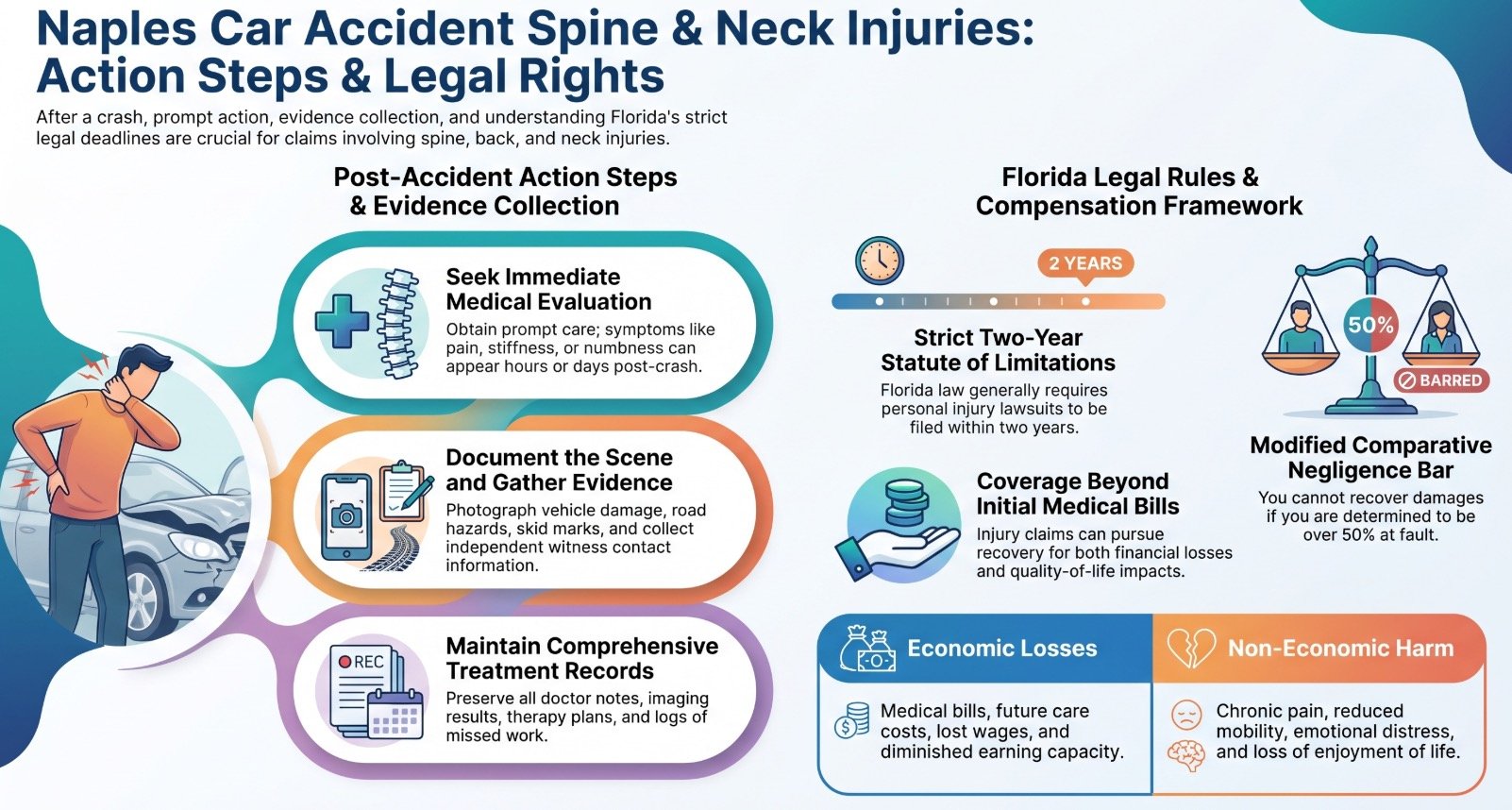
Comparative negligence may reduce compensation if an injured person shares responsibility for the crash. Florida’s modified comparative negligence rule generally bars recovery when that person is more than 50 percent at fault. Uninsured motorist coverage may provide another source of benefits when the responsible driver lacks adequate insurance. Careful claim review can help protect victims and support their families while they focus on recovery.
Why Do Naples Car Accident Spine, Back & Neck Injuries Happen?
How do spine, back, and neck injuries occur in a car accident? They often result from sudden forces that move the body faster than its muscles and joints can respond. In a collision, the torso may be restrained while the head continues forward or backward, straining the neck. A side impact or rollover can twist the spine and compress surrounding tissues. Even a relatively low-speed crash can cause injury when force is transferred through the vehicle.
Seatbelt biomechanics influence how that force travels across the chest, shoulder, and pelvis. A properly positioned belt helps restrain the body, but abrupt loading can still injure the back or neck. Occupant positioning also matters: a person sitting too close to the steering wheel, turned toward another passenger, or leaning forward may experience uneven forces. Age, prior conditions, and the collision’s direction can affect injury severity. These mechanisms explain why similar crashes may produce different outcomes among occupants.
What Should You Do After a Naples Car Accident Spine, Back & Neck Injury?
After a Naples car accident involving a spine, back, or neck injury, prompt medical care can identify serious conditions and create a record of treatment. When it is safe, documenting the scene and preserving relevant evidence may help clarify how the collision occurred. A lawyer can explain your legal options and help protect your interests.
Seek Medical Care
Prompt medical evaluation is essential after a car accident, even when neck, back, or spine pain seems mild or delayed. A healthcare professional can identify injuries that may not be immediately apparent and recommend appropriate care. Prompt assessment also helps establish a treatment plan focused on recovery and reducing the risk of further harm.
Patients should describe symptoms accurately, including pain, stiffness, numbness, weakness, or changes that develop over time. If symptoms worsen or serious warning signs arise, urgent medical attention may be necessary. A primary care provider may arrange a specialist referral when the injury requires evaluation by an orthopedist, neurologist, or other qualified clinician. Following prescribed care, attending appointments, and reporting new symptoms support treatment adherence. Consistent communication with providers helps ensure care responds to changing needs and supports a safer recovery.
Document The Scene
When it is safe, documenting the accident scene can preserve details that may help explain how a spine, back, or neck injury occurred. A person at the scene can photograph vehicle positions, damage, skid marks, traffic signals, road conditions, and visible injuries, as long as these actions do not delay medical care or create additional danger. Images should include both wide views and close details, with the location and time recorded when possible. You can also collect witness names and contact information, along with brief, factual notes about what each person observed. Document roadside hazards, such as poor lighting or obstructed signs, because they may have contributed to the collision. Debris preservation may help clarify impact points, but no one should handle or move hazardous materials. Safety and assistance remain priorities.
Contact A Lawyer
A person with a spine, back, or neck injury from a Naples car accident may benefit from contacting a lawyer once immediate medical needs are addressed. Early legal guidance can protect the injured person’s interests while letting them focus on treatment and recovery. A lawyer can explain how Florida law may apply, identify deadlines, and outline practical steps for preserving medical records, repair estimates, and other relevant evidence. During an initial discussion, the person can describe the collision, symptoms, and care received, then ask how the firm handles similar claims.
A Free Consultation may provide an opportunity to understand available options without an initial fee. The person may also ask about Attorney Availability, expected communication, and who will manage the matter. Prompt, informed action can support a fair process and help the injured person pursue appropriate compensation.
Critical Evidence in a Naples Car Accident Spine, Back & Neck Injury Case
A strong spine, back, or neck injury claim may depend on evidence that connects the collision to the injuries and documents their effects. Relevant records may include medical documentation, accident scene photographs, witness accounts, and evidence of vehicle damage.
Essential materials include:
- Medical records describing diagnoses, treatment, and recovery
- Scene photographs and witness statements documenting the collision
- Vehicle damage evidence that may help establish the impact’s severity
Medical Records
Medical records can establish how a Naples car accident affected the spine, back, or neck and whether the injury required ongoing care. They may document symptoms, examination findings, diagnoses, treatment plans, and changes in a patient’s condition over time. Consistent records can help connect an injury to the collision and show how it affected daily activities, work, or mobility. Prompt evaluation and honest symptom reporting help providers build an accurate clinical history. Follow-up notes, imaging reports, prescriptions, and therapy records may further clarify the nature and duration of care. Record retention is important because missing documents can make the treatment timeline harder to assess. Provider coordination can help confirm that each treating professional provides relevant records. Organized, complete documentation may assist insurers, medical reviewers, and others evaluating the claim and the patient’s needs.
Accident Scene Photos
Photographs taken at a Naples car accident scene can preserve details that may help explain how a collision occurred and how it affected the people involved. Images may show vehicle damage, debris, skid marks, road conditions, traffic signs, and vehicle positions. These details can help clarify the force and direction of impact, which may be relevant when evaluating reported spine, back, or neck injuries.
Photo angles matter because a single view may omit important context. Wide shots can show the overall scene, while closer images document specific damage or hazards. When safe, take photographs promptly and without altering the scene. Image metadata, including timestamps and location data, may help establish when and where images were captured. Preserving original files supports accurate review and responsible claim evaluation.
Witness Statements
Witness statements can provide an independent account of how a Naples collision occurred and what followed. Independent witnesses may describe traffic signals, vehicle movements, road conditions, and the actions of those involved. Their observations can clarify disputed details and provide context for spine, back, or neck injuries. Promptly recording each witness’s name and contact information can help preserve access to relevant evidence. A statement is most useful when it reflects what the witness personally saw or heard, rather than assumptions or information learned later. Witness credibility may depend on consistency, ability to observe the event, and freedom from bias. Investigators may compare accounts with other available evidence to identify agreements or conflicts. Respectful, careful interviews can preserve accurate recollections and support a fair assessment of responsibility and injury-related claims.
Vehicle Damage Evidence
Vehicle damage can provide important evidence about how a Naples collision occurred and the forces involved. Photographs of damaged vehicles, taken before repairs, may document impact locations, intrusion, and the condition of safety features. These details can help investigators assess the collision and identify evidence relevant to reported spine, back, or neck injuries. Vehicle repair estimates and total loss valuations may also record the extent and cost of damage, but they do not, by themselves, establish the severity of an injury. A careful review can compare physical damage with statements, medical records, and other available evidence. Preserving photographs, repair documents, and valuation reports can help insurers, medical professionals, and legal representatives evaluate a claim. Timely documentation can help protect an injured person’s interests and support a fair, evidence-based assessment.
Don’t Wait. Call Our Florida Personal Injury Lawyers Now!
Long-Term Effects of Naples Car Accident Spine, Back & Neck Injuries
Spine, back, and neck injuries from a Naples car accident may cause chronic pain that persists long after initial treatment. Some people experience reduced mobility, which limits daily activities and work. Lasting nerve damage may also lead to numbness, weakness, or other ongoing symptoms.
Chronic Pain
Chronic pain can persist long after a Naples car accident, even when initial treatment has ended. Spine, back, and neck injuries may cause ongoing aching, burning, or sharp discomfort that interferes with sleep, concentration, and daily responsibilities. Symptoms can vary over time, and Pain flare triggers may include prolonged activity, stress, or changes in routine. Identifying these patterns can help injured people communicate clearly with healthcare providers and follow appropriate treatment plans.
Chronic pain coping may involve prescribed care, counseling, pacing activities, and practical support from family or community services. Consistent medical records can document symptom severity, treatment needs, and how they affect everyday life. When pain continues despite reasonable care, the injured person may face added expenses and uncertainty about future needs. Legal guidance can help clarify options for pursuing compensation while preserving access to appropriate support.
Reduced Mobility
Reduced mobility may develop when a Naples car accident causes lasting damage to the spine, back, or neck. Stiffness, limited range of motion, or difficulty standing and walking can interfere with work, household responsibilities, and community participation. The extent of these limitations depends on the injury and the person’s recovery. Medical professionals may recommend physical therapy, assistive equipment, or changes to daily routines to support safe movement and preserve independence. Mobility aid options can include canes, walkers, or wheelchairs, selected according to individual needs and clinical guidance. Adaptive home modifications, such as grab bars, ramps, and accessible bathroom fixtures, may reduce hazards and make routine tasks more manageable. Family members and caregivers can help coordinate support while respecting the injured person’s preferences and encouraging participation in decisions about care and accommodations.
Lasting Nerve Damage
In addition to limiting movement, a Naples car accident injury to the spine, back, or neck may cause lasting nerve damage. A collision can compress, stretch, or sever nerves, disrupting signals between the brain and body. Resulting neuropathy symptoms may include persistent pain, tingling, numbness, weakness, or reduced coordination. These problems can interfere with work, caregiving, and ordinary activities, limiting a person’s ability to support others.
Recovery depends on the injury and the timing of treatment. Nerve regeneration may occur slowly, and some damage may remain permanent despite medical care. Qualified healthcare professionals can evaluate the injury, identify affected nerves, and guide treatment, rehabilitation, and monitoring. Medical records also document the injury’s effects and ongoing needs. Prompt assessment is important when symptoms appear or worsen, particularly if weakness or loss of sensation develops.
Proving Liability in Naples Car Accident Spine, Back & Neck Injury Cases
Proving liability in a Naples car accident involving a spine, back, or neck injury requires evidence that another party’s negligence caused the collision and resulting harm. Establishing responsibility often begins with examining how the crash occurred and whether a driver failed to follow traffic laws or act with reasonable care.
Evidence may include police reports, witness statements, photographs, traffic citations, and available surveillance footage. In some vehicles, black box data can help clarify speed, braking, and other actions immediately before impact. These records may support or challenge collision accounts, but each must be assessed alongside the full circumstances.
Medical documentation also connects the crash to the claimed injury. Treatment records, diagnostic imaging, and qualified medical opinions can explain when symptoms began and how the collision affected the person’s spine, back, or neck. Careful evidence gathering helps establish both fault and the nature of the harm, supporting a fair determination of responsibility and accountability.
Dealing With Insurance Companies After a Naples Car Accident Spine, Back & Neck Injury
After a Naples car accident causes a spine, back, or neck injury, insurance discussions can affect how insurers evaluate and resolve a claim. Insurers may request medical records, crash details, and treatment information. Accurate, consistent responses help prevent misunderstandings, while incomplete accounts may complicate injury assessment.
Before providing Recorded statements, an injured person may benefit from understanding the request’s purpose and reviewing relevant facts. Statements made soon after a collision can be incomplete, particularly when pain or medication affects concentration. Questions about prior conditions or symptoms should be answered truthfully and with appropriate context.
An insurer’s settlement offer should be considered in light of documented care, anticipated treatment, lost income, and other supported losses. Policy limits may restrict available coverage, even when the injury’s effects are substantial. Clear communication and careful review of proposed terms can help protect a fair evaluation. For those supporting injured people, patience and accurate information can make insurance interactions more manageable.
What to Expect During a Naples Car Accident Spine, Back & Neck Injury Claim Process
A spine, back, or neck injury claim typically begins with a medical assessment to identify the injury and guide treatment. The injured person or their representative then files an insurance claim and gathers medical records, accident reports, and other evidence to document the losses. Depending on the evidence and negotiations, the claim may resolve through a settlement or proceed to litigation.
Initial Medical Assessment
Because spine, back, and neck injuries may not be fully apparent at the scene, an initial medical assessment is an important early step in a Naples car accident claim. A clinician typically reviews the collision, symptoms, medical history, and any changes in movement or sensation. The examination may include a neurological screening to assess strength, reflexes, coordination, and signs of nerve involvement. Depending on the reported symptoms and findings, spinal imaging, such as X-rays, CT scans, or MRI, may help identify fractures or soft-tissue damage. Prompt evaluation can guide appropriate treatment and document the condition before symptoms change. Follow-up visits may be recommended when pain, numbness, weakness, or limited mobility continues. Clear medical records help providers coordinate care and give the injured person reliable information about recovery needs and restrictions.
Insurance Claim Filing
Medical records from the initial assessment can support the next step in a Naples car accident spine, back, or neck injury claim: filing an insurance claim. The injured person or an authorized representative generally notifies the relevant insurer and requests the appropriate Claim Forms. These forms may ask about the collision, treatment, and the benefits sought. Forms should be completed accurately and submitted according to the insurer’s instructions. Filing Deadlines may apply under an insurance policy or Florida law, and missing a deadline can affect available benefits or legal options. Promptly reviewing the applicable requirements can help prevent avoidable delays. If you have questions about coverage, forms, or time limits, a qualified attorney can explain the process and communicate with the insurer while you focus on necessary care and recovery.
Evidence And Documentation
Once you file an insurance claim, organized evidence can help establish how the collision occurred, the injuries sustained, and the losses claimed. Evidence Preservation may include photographs of vehicle damage, roadway conditions, visible injuries, and relevant traffic controls. Witness names and contact details, police reports, and available camera footage can also help clarify events. Medical records are especially important for spine, back, and neck injuries, which may develop or worsen after the crash. Treatment notes, diagnostic results, prescriptions, and provider recommendations can document symptoms and care. Receipts for transportation, medication, and other accident-related expenses may support claimed costs. A Documentation Timeline can connect the collision, symptoms, appointments, and missed work, while helping identify gaps or inconsistencies. Store records securely and update them as treatment continues to support accurate review and responsible claim handling.
Settlement Or Litigation
How a Naples car accident claim proceeds depends on the available evidence, the extent of the spine, back, or neck injuries, and the insurer’s assessment of responsibility and damages. After reviewing medical records, treatment needs, lost income, and other documented losses, the insurer may present Settlement Offers. An injured person should assess whether an offer accounts for current harm and reasonably anticipated care before accepting it. If negotiations do not produce a fair resolution, litigation may allow the parties to present evidence and arguments in court. The process can involve discovery, expert testimony, and hearings, which require time and preparation. Litigation Costs, including filing fees and professional services, should be considered alongside potential outcomes. Careful evaluation helps claimants make informed decisions, preserve resources, and pursue compensation that reflects the documented effects of the collision.
Compensation for Naples Car Accident Spine, Back & Neck Injury Damages
Because spine, back, and neck injuries can cause lasting pain and limit a person’s ability to work or manage daily activities, compensation after a Naples car accident may extend beyond immediate medical bills. A claim’s value depends on the injury’s effects, the treatment required, and the evidence linking those losses to the collision. Medical records, diagnostic findings, and professional assessments can help establish the nature and expected course of an injury.
A claim may account for rehabilitation, medication, assistive devices, and future care costs when ongoing treatment is reasonably anticipated. If an injury prevents a person from returning to the same work or reduces future income, Lost earning capacity may also be considered. Compensation can address practical consequences such as difficulty performing household responsibilities or maintaining independence. Careful documentation helps show how the injury has changed daily life and what support may be needed. A Naples car accident lawyer can review the available evidence and explain potential recovery options under Florida law.
Economic vs Non-Economic Damages in Naples Car Accident Spine, Back & Neck Cases
Economic losses in Naples spine, back, and neck injury cases may include medical expenses, lost income, and future treatment costs. Non-economic damages address harm such as pain, reduced mobility, and diminished quality of life. Establishing both categories typically requires clear evidence linking the crash to the injuries and documenting their effects.
Economic Losses
After a Naples car accident, spine, back, or neck injuries can create financial losses that continue well beyond initial treatment. Economic damages may include medical bills, rehabilitation costs, prescription expenses, and necessary transportation to appointments. Records such as invoices, treatment plans, and payment statements can help document these costs.
Lost wages may arise when pain, limited mobility, or medical appointments prevent an injured person from working. If the injury restricts future employment or reduces the ability to perform prior duties, diminished earning capacity may also be considered. Evaluating that loss can require employment records, wage history, and evidence about work limitations.
Carefully accounting for current and anticipated expenses helps clarify an injury’s financial impact. Legal counsel may review available documentation and explain how Florida law assesses recoverable economic losses.
Non-Economic Harm
In addition to documented expenses and lost income, spine, back, and neck injuries may cause non-economic harm that is less readily measured in dollars. Such harm can affect a person’s comfort, independence, and ability to participate in ordinary routines. Persistent pain may interfere with sleep, family responsibilities, and social connections, even when it does not require additional medical treatment. Emotional distress may also arise from uncertainty about recovery, reduced mobility, or the lasting effects of an injury. Loss of enjoyment can occur when someone can no longer take part in recreation, community activities, or meaningful service to others as before. These personal effects differ from financial losses because they do not have a direct price tag. Recognizing them helps show how an accident can alter daily life beyond measurable expenses and earnings.
Proving Damages
How damages are documented can shape the evaluation of a Naples car accident claim involving a spine, back, or neck injury. Economic damages may include medical bills, rehabilitation costs, prescription expenses, lost wages, and reduced future earning capacity. Records, receipts, employer statements, and treatment histories can help establish these losses and connect them to the collision. Damage documentation should also reflect anticipated care when an injury requires ongoing treatment.
Non-economic damages address harm that does not have a fixed price, including pain, limited mobility, emotional distress, and reduced participation in family or community life. Consistent medical notes and personal accounts may show how symptoms affect daily responsibilities. Expert testimony from treating providers or qualified experts can explain the injury, prognosis, and functional limits. Careful evidence supports a fair assessment and helps decision-makers understand the full impact.
Don’t Wait. Call Our Florida Personal Injury Lawyers Now!
When a Naples Car Accident Spine, Back & Neck Injury Case Goes to Trial vs. Settlement
Whether a Naples car accident spine, back, or neck injury case proceeds to trial or settles depends on the strength of the evidence, the extent of the injuries, and the parties’ willingness to reach a fair agreement. Settlement can provide a more predictable resolution and avoid the time and demands of courtroom proceedings. Negotiations may continue as medical records, expert opinions, and evidence of how the injury affects daily life become clearer. A settlement generally requires the injured person to accept agreed compensation to resolve the claim.
If the parties cannot agree, a trial allows a judge or jury to evaluate the evidence and determine responsibility and damages. The process may include Jury selection, presentation of medical records, and trial testimony from the injured person, treating providers, and other witnesses. Trial outcomes are uncertain, and proceedings can take considerable time. The appropriate path depends on the case’s circumstances and the injured person’s priorities. Careful preparation can support a fair resolution, whether reached through negotiation or a court’s decision.
Florida Laws That May Affect Your Naples Car Accident Spine, Back & Neck Case
Florida laws can shape a Naples car accident claim involving spine, back, or neck injuries, from establishing liability to determining available compensation. Understanding these rules can help injured people pursue recovery while protecting their ability to support family and community responsibilities.
- Personal injury protection requirements: Florida generally requires drivers to carry personal injury protection coverage. This coverage may pay a portion of medical expenses and lost income after a crash, regardless of fault, subject to policy limits and eligibility requirements.
- Florida comparative negligence rules: Florida follows a modified comparative negligence system. An injured person may recover damages when their share of fault is 50 percent or less, but compensation is reduced by that percentage. A person found more than 50 percent responsible generally cannot recover damages.
- Evidence and liability: Medical records, crash reports, witness accounts, and expert assessments can help establish how the collision occurred and document the extent of spinal, back, or neck injuries.
These laws may affect insurance negotiations and the amount ultimately available for recovery. Each claim depends on its specific facts and applicable coverage.
The Statute of Limitations for Naples Car Accident Spine, Back & Neck Injury Cases
A Naples car accident claim involving spine, back, or neck injuries must generally be filed within the applicable statute of limitations, or the injured person may lose the right to seek compensation through the courts. Under Florida law, the Filing deadline for most negligence claims is two years from the date the cause of action accrues. This period determines whether an injured person can pursue accountability and recover medical care, lost income, and other losses.
The Discovery rule may affect when a claim accrues in limited circumstances, particularly when an injury or its connection to the collision could not reasonably be identified immediately. However, delayed symptoms do not automatically extend the deadline, and specific facts and legal exceptions matter. Different rules may apply to claims involving government entities, wrongful death, or minors. Preserving records and noting treatment dates can help clarify the timeline. Because missing a deadline may bar recovery, confirm the applicable period promptly with reliable legal guidance.
How a Naples Car Accident Spine, Back & Neck Lawyer Can Help You
When a collision causes spine, back, or neck injuries, a Naples car accident lawyer can help you assess potential claims and manage the steps needed to pursue compensation. The lawyer can investigate the crash, identify responsible parties, and organize records that support the claim. This work can reduce administrative burdens while the injured person focuses on medical care and personal responsibilities.
Legal assistance may include:
- Gathering police reports, witness statements, medical records, and other relevant evidence.
- Explaining how Treatment options and recovery timelines may affect documentation of losses and future needs.
- Communicating with insurers, evaluating settlement proposals, and presenting a claim for appropriate compensation.
A lawyer can also consult qualified professionals to clarify injury-related expenses, lost income, and how symptoms affect daily activities. Clear, accurate information helps decision-makers understand an injury’s practical consequences. By carefully managing legal details, counsel can protect the injured person’s interests and support a fair resolution, while allowing family members and caregivers to focus on practical assistance during recovery.
When to Contact a Naples Car Accident Spine, Back & Neck Lawyer
Prompt legal guidance may be valuable after a collision causes back, neck, or spine symptoms, particularly when pain worsens, treatment continues, or the injury affects work and daily activities. An early consultation can help an injured person understand key deadlines, preserve records, and identify practical steps while medical care continues. A lawyer may be contacted even before the full extent of an injury is known, since some symptoms develop gradually and treatment plans can change.
Contact is also appropriate when an insurer requests a recorded statement, disputes responsibility, or proposes a settlement before the person understands future care needs. Medical documentation should remain the priority, and legal discussions should not delay necessary treatment. When selecting an attorney, the injured person can ask about experience with collision-related spine injuries, communication practices, fees, and the claim evaluation process. Choosing counsel who explains options clearly can support informed decisions and help the person focus on recovery, family responsibilities, and other daily obligations.
Why You Need an Experienced Naples Car Accident Spine, Back & Neck Lawyer
An experienced Naples car accident spine, back, and neck lawyer can help an injured person address the legal and practical challenges of a claim while medical care continues. These injuries may require ongoing treatment, and their effects can complicate daily responsibilities and future planning. Legal guidance can help protect the injured person’s interests without distracting from recovery.
Attorney Experience matters when evaluating medical records, documenting how an injury affects work and ordinary activities, and identifying the evidence needed to support a claim. An attorney can communicate with insurers, respond to disputed allegations, and explain how Florida law may apply. This support can also help families and caregivers understand the process as they assist someone recovering.
A sound Case Strategy connects the available evidence to the person’s documented losses and anticipated needs. Counsel can coordinate claim steps, track deadlines, and assess settlement proposals against the known facts. With informed representation, an injured person can make considered decisions and pursue accountability while focusing on treatment and rehabilitation.
How to Choose the Right Naples Car Accident Spine, Back & Neck Lawyer for Your Case
Choosing the right Naples car accident spine, back, and neck lawyer requires careful consideration of the attorney’s experience with injury claims, communication practices, and approach to case preparation. A suitable attorney should understand how these injuries affect daily activities, treatment needs, and future earning capacity. Credentials can confirm licensing and relevant experience, while a history of handling motor vehicle injury claims may show familiarity with insurance disputes and evidence requirements.
Prospective clients can ask how the lawyer evaluates medical records, consults qualified professionals, and develops a fact-based strategy. Clear client communication is equally important. The attorney should explain available options, likely stages, and potential challenges in understandable terms, and provide a reliable way to receive updates. A careful selection process also considers whether the lawyer listens respectfully and treats the injured person’s concerns seriously. These qualities can support informed decisions and help an injured individual pursue fair compensation while managing the practical demands of recovery.
About The Law Offices of Anidjar & Levine
The Law Offices of Anidjar & Levine represents people injured in motor vehicle accidents, including those who sustain spine, back, or neck injuries in Naples. The firm helps clients seek compensation for medical expenses, lost income, and other losses related to a crash. Its attorneys can explain legal options, review relevant records, and communicate with insurers while a claim proceeds.
The firm’s history provides context for its work and its focus on representing injured individuals. When evaluating a case, the legal team may review accident reports, treatment records, and other evidence to assess liability and damages. Each matter depends on its facts, and we cannot guarantee any result.
Community involvement is also part of the firm’s public presence. Supporting local organizations and initiatives can help strengthen the communities where clients live and recover. For people facing the demands of an injury claim, the firm offers legal guidance intended to clarify the process and help them make informed decisions about next steps.

Frequently Asked Questions
Can a Car Accident Worsen a Pre-Existing Back or Neck Condition?
Yes. A car accident can aggravate a pre-existing back or neck condition, causing increased pain, reduced mobility, or new symptoms. Medical professionals assess whether the collision worsened the earlier condition and what treatment is needed. Prior Medical Records can help establish the person’s health before the crash, while current evaluations and other Aggravation Evidence may document changes afterward. Clear, timely records can support appropriate care and help clarify responsibility for accident-related harm.
What if Spine or Neck Symptoms Appear Days After the Collision?
Spine or neck symptoms may emerge days after a collision, so take delayed discomfort seriously. The injured person should promptly seek medical evaluation, describe when symptoms began, and explain any changes to a clinician. Documenting delayed symptoms helps create an accurate record of symptoms and care. The Injury Diagnosis Timeline may clarify how the condition developed and support appropriate treatment decisions. Urgent or worsening symptoms require immediate medical attention.
Can I Pursue a Claim if I Was a Passenger in the Vehicle?
Yes. A passenger may pursue compensation when another driver’s negligence caused the collision, and Passenger Injury Rights may also apply when the vehicle’s driver contributed to the crash. Available recovery can depend on fault, injury evidence, and applicable coverage. Multiple Insurance Policies may provide potential sources of payment, including policies covering the driver or vehicle. Prompt medical care and careful documentation can help establish the connection between the collision and any injuries. A qualified attorney can assess the available options.
Do I Need to Attend an Independent Medical Examination?
Whether you must attend an IME depends on who requests it and the applicable insurance policy or court order. An injured passenger may need to attend an insurer-arranged examination when the policy or legal process requires it. Failure to appear could affect benefits or the claim. Prepare for the examination by confirming the appointment, bringing relevant records, and answering questions accurately. The person should consult counsel before attending, especially if the request’s purpose is unclear.
Can I Recover Damages if I Missed Work for Medical Appointments?
Yes, an injured person may recover Lost wages for appointments when accident-related medical visits require missed work, depending on the available evidence and applicable law. Documenting missed work is crucial: records should identify appointment dates, hours lost, wages or leave used, and the medical reason for each visit. Employers’ attendance and payroll records, appointment confirmations, and provider documentation can support the claim. Recovery is not automatic, and insurers may dispute unsupported losses or unrelated appointments.
—————————
Spine, back, and neck injuries from a Naples car accident may require extensive treatment and affect your ability to work and manage daily responsibilities. Prompt medical care and careful documentation can support your health and a potential claim. An experienced attorney can assess liability, explain your legal options, and handle communications with insurers. The Law Offices of Anidjar and Levine represents injured people seeking accountability and compensation. Learn more from a Naples Personal Injury Lawyer. Each case depends on its specific facts and applicable law.