
A Naples car accident head-and-brain injuries lawyer can help injured people understand their legal options after a collision. Brain injuries can result from direct impact or sudden movement, and symptoms may appear over time. Medical care and complete records can document the diagnosis, treatment, and lasting effects. The Law Offices of Anidjar and Levine may help preserve crash evidence, communicate with insurers, identify potentially responsible parties, and pursue compensation for supported losses. Learn more from a Naples Personal Injury Lawyer.
Main Takeaways
- A Naples car accident head and brain injury lawyer can explain legal options after a crash-related injury.
- Seek prompt medical care; concussion symptoms may appear later, and normal imaging does not rule out brain injury.
- Preserve medical records, crash photographs, witness details, and vehicle damage to document injuries and the circumstances of the collision.
- Evidence such as traffic signals, roadway conditions, skid marks, and vehicle positions may help establish responsibility.
- Treatment, rehabilitation, and lasting cognitive or physical effects can show recovery needs and daily limitations.
How We Can Help With Your Naples Car Accident Head & Brain Injury Claim
A car accident head or brain injury can require extensive medical care and affect a person’s ability to work and manage daily responsibilities. When families face these demands, a legal team can provide practical guidance and help protect the injured person’s interests. Counsel can review available records, identify immediate needs, and explain the steps to pursue compensation. A thoughtful Claim strategy may include gathering medical documentation, communicating with insurers, and evaluating how the injury affects future care, employment, and everyday activities. This work lets families focus on treatment and recovery while receiving clear updates about the claim. Family support can be important during a difficult period, and attorneys can help relatives understand what information may assist the process. Each matter requires careful attention to its circumstances. By offering organized case management, responsive communication, and informed advocacy, legal counsel can help an injured person and family make considered decisions without adding unnecessary confusion to an already demanding situation.
Understanding Naples Car Accident Head & Brain Injury Cases
Understanding a Naples car accident head or brain injury case starts with identifying the injury type and severity and how it affects the person’s health and daily life. A careful evaluation may consider symptoms, medical history, examination findings, and changes in memory, concentration, balance, or behavior. Some effects appear immediately, while others develop over time, making follow-up care important.


Injury severity assessment helps medical professionals determine appropriate treatment and document the person’s condition. Diagnostic imaging options, such as computed tomography or magnetic resonance imaging, may help identify bleeding, swelling, fractures, or other structural concerns. A normal scan does not necessarily rule out a concussion or other brain injury, so clinical assessment remains vital.
OUR CONSULTATIONSARE FREE
START YOUR FREE CASE REVIEW

Records from emergency care, specialists, rehabilitation providers, and follow-up visits can clarify the injury’s course and its practical consequences. This information may help caregivers and legal professionals understand the required support, the expected recovery process, and whether lasting limitations affect work, independence, or daily responsibilities.
Common Causes of Naples Car Accident Head & Brain Injuries
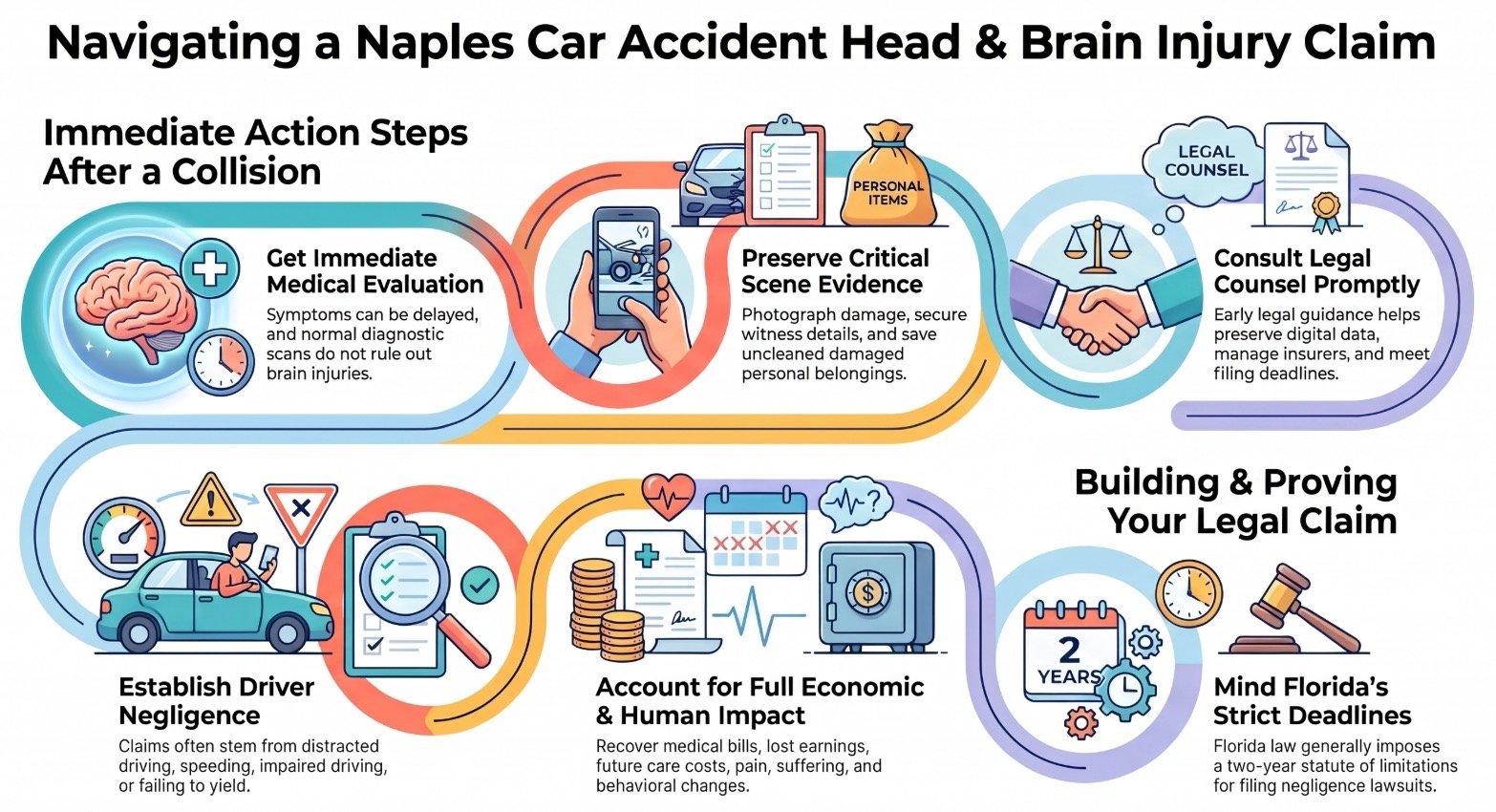
Head and brain injuries in Naples car accidents may result from distracted driving, speeding, or other reckless behavior. Impaired driving can also reduce a motorist’s judgment and reaction time, increasing the risk of a serious collision. Failure to yield may cause sudden impacts that lead to significant head trauma.
Distracted Driving


When drivers divert their attention from the road, even briefly, they may miss hazards or fail to react in time to prevent a collision. In-car phone use, including texting, calling, or checking navigation, can draw a driver’s eyes and attention away from surrounding traffic. Dashboard distractions, such as adjusting entertainment systems or climate controls, may also interfere with a driver’s ability to respond safely. These lapses can contribute to crashes that cause head and brain injuries, including concussions and traumatic brain injuries. A driver may also become distracted by eating, interacting with passengers, or reaching for objects inside the vehicle. Identifying the source of distraction can help clarify how a collision occurred and support efforts to hold responsible parties accountable. Timely medical care and legal guidance can help injured people and their families address the consequences.
Speeding and Reckless Driving
Speeding and reckless driving can leave Naples motorists with little time to avoid a collision or reduce its force. When a vehicle travels too fast for traffic, weather, or road conditions, a crash may produce severe impact forces that contribute to head and brain injuries. Speed Limit Violations also increase stopping distance and can make it harder for drivers to respond safely to sudden changes.
Aggressive Driving Actions, such as tailgating, unsafe passing, and abrupt lane changes, may place nearby road users at risk. These actions can trigger collisions involving other vehicles, cyclists, or pedestrians, with consequences that extend beyond the driver who made the decision. Careful driving and reasonable speeds help protect the community. When a crash causes a serious injury, documenting the circumstances may help clarify how the collision occurred and support an injured person’s pursuit of accountability.
Impaired Driving
Impaired driving can place Naples motorists at serious risk by reducing judgment, coordination, and reaction time. Alcohol, cannabis, prescription medications, and other substances may affect a driver’s ability to respond safely to changing road conditions. Even when impairment is not obvious, a motorist may misjudge distance, drift from a lane, or fail to react promptly, increasing the risk of a collision and severe head or brain injuries.
Florida law prohibits driving while impaired, and DUI penalties may include fines, license suspension, treatment requirements, or incarceration, depending on the circumstances. Law enforcement may use sobriety checkpoints to identify suspected impaired drivers and promote roadway safety. Those affected by a suspected impaired-driving crash may preserve relevant records and seek appropriate medical and legal guidance.
Failure to Yield
Failure to yield can lead to serious collisions on Naples roads, particularly at intersections, crosswalks, and highway entrances. Drivers who disregard signs, signals, or another road user’s right of way may cause intersection collisions involving vehicles, pedestrians, or cyclists. A sudden impact can force occupants’ heads to strike windows, dashboards, or other surfaces, resulting in concussions or more serious brain injuries. Yield violations may occur when a driver turns across oncoming traffic, enters a roadway without checking for approaching vehicles, or fails to stop for someone in a marked crosswalk. These incidents can leave injured people facing medical treatment, lost income, and lasting effects on daily life. Careful investigation can help establish how the collision occurred and identify responsible parties, supporting injured individuals and their families as they seek appropriate recovery resources.
Don’t Wait. Call Our Florida Personal Injury Lawyers Now!
Legal Rights of Naples Car Accident Head & Brain Injury Victims
When a car accident in Naples causes a head or brain injury, the injured person may have legal rights to seek compensation from those whose negligence contributed to the crash. These Legal Rights may include pursuing payment for documented losses and future needs, subject to evidence and applicable law.
A claim can address:
- Medical expenses, rehabilitation, and reasonably anticipated care related to the injury.
- Lost income, reduced earning capacity, and other financial effects supported by records.
- Pain, suffering, and changes to daily activities, when recognized under Florida law.
The injured person may also have a duty to preserve relevant records, follow medical advice, and provide accurate information during the claims process. A representative may help protect the person’s interests, particularly when cognitive effects make decisions or communication difficult. Claim Deadlines apply, and missing a filing limit can restrict recovery. Because deadlines and available compensation depend on the facts and governing rules, timely legal guidance can help the injured person and family make informed decisions and pursue fair treatment.
Why Do Naples Car Accident Head & Brain Injuries Happen?
How do Naples car accidents cause head and brain injuries? These injuries often occur when a collision forces the head to strike a window, steering wheel, or other surface. Even without direct impact, a sudden change in speed can cause the brain to move inside the skull, damaging delicate tissue. The severity may depend on collision force, vehicle design, and whether occupants use available restraints.
Common contributing factors include distracted driving, speeding, impaired driving, unsafe turns, and failure to yield. Busy roads and poorly planned intersections can increase conflicts among vehicles, pedestrians, and cyclists, raising the likelihood of abrupt or high-impact crashes. Vehicle safety features, such as airbags and seat belts, may reduce some risks, but they cannot prevent every head injury.
Older adults and children may face particular vulnerability because of age-related or developmental differences. Understanding how these crashes occur can help communities support safer driving practices, improve road planning, and protect people who depend on safe transportation.
What Should You Do After a Naples Car Accident Head & Brain Injury?
After a Naples car accident involving a head or brain injury, the injured person should seek immediate medical care, even if symptoms appear mild. They should document the crash, injuries, and related expenses while preserving relevant records. Once urgent medical needs are addressed, consulting a brain injury lawyer may help clarify legal options.
Seek Immediate Medical Care
Anyone who may have suffered a head or brain injury in a Naples car accident should seek medical care immediately, even if symptoms seem mild or are not yet apparent. A prompt evaluation can identify injuries that may worsen without timely treatment and help protect the injured person’s health. If the person is unconscious, confused, vomiting, experiencing a severe headache, or showing weakness, emergency services should be called. Otherwise, a responsible companion can arrange prompt transport to an emergency room rather than letting the injured person drive. Medical professionals can perform a Neurological Assessment, monitor changes, and determine whether imaging or further care is needed. Symptoms such as dizziness, memory problems, or unusual drowsiness should be reported clearly. Seeking care also lets clinicians provide guidance and support for recovery.
Document the Accident
Once immediate medical needs are addressed, documenting the Naples car accident can help preserve information about the collision and any resulting head or brain injury. If safe, the injured person or a trusted companion can record the scene, including vehicle positions, road conditions, traffic signs, and visible hazards. Photograph Vehicle Damage from several angles, capturing close details and wider views that show the damage in context. Preserve Damaged Belongings, such as a cracked helmet, glasses, or clothing, without cleaning or altering them. The injured person can also note the date, location, weather, and witness names, along with a brief account of events while memories remain clear. Securely organize copies of medical records, discharge instructions, and related expenses. These careful steps can help others understand what happened and support accurate reporting.
Contact a Brain Injury Lawyer
When should a person with a suspected head or brain injury contact a lawyer? Contact a lawyer as soon as urgent medical needs are addressed, especially if symptoms, treatment, or recovery may affect the person’s ability to manage a claim. Early legal guidance can help preserve evidence, identify responsible parties, and prevent avoidable mistakes when communicating with insurers. A lawyer may also coordinate with medical providers and explain how records can document the injury’s effects on work, daily activities, and future care.
Many firms offer a Free consultation to review the circumstances and explain possible next steps. Prospective clients should ask how contingency fees work, including what costs may be charged and when payment is due. Clear answers help families make informed decisions, protect the injured person’s interests, and support a fair recovery.
Critical Evidence in a Naples Car Accident Head & Brain Injury Case
Evidence in a Naples car accident head and brain injury case can help establish how the crash occurred and the extent of the resulting harm.
Essential sources may include:
- Medical records documenting diagnosis, treatment, and recovery.
- Accident-scene evidence and witness statements describing the collision.
- Digital evidence, such as vehicle data, surveillance footage, or relevant phone records.
Medical Records
How can medical records establish the nature and extent of a head or brain injury after a Naples car accident? Records from emergency departments, physicians, imaging centers, and rehabilitation providers can document symptoms, diagnostic findings, treatment decisions, and changes in cognitive or physical function. Collectively, these details may show how an injury developed and affected daily activities over time. Consistent documentation can also help distinguish accident-related conditions from prior health concerns and support informed review of future care needs.
Patients and authorized representatives can request relevant records while observing applicable Privacy Protections. Careful Record Retention helps preserve complete files, including test results, medication histories, referrals, and follow-up notes. Missing or delayed documentation may complicate an evaluation, so records should be gathered and organized promptly. A clear medical history helps professionals assess the injury accurately and explain its effects to those determining appropriate support.
Accident Scene Evidence
Medical records can explain the injuries and treatment that followed a crash, while accident scene evidence may help show how the collision occurred and contributed to a head or brain injury. Photographs, roadway measurements, vehicle damage, and traffic control details can preserve conditions that may change soon after a collision. Skid mark analysis may help indicate braking, direction of travel, and the force or sequence of impact. Debris field mapping can document where vehicle fragments landed, offering further insight into the collision’s location and movement. When carefully collected and interpreted, these materials may help clarify whether unsafe driving or hazardous road conditions played a role. Promptly preserving scene evidence supports a thorough review and helps injured people pursue accountability and recovery resources, while respecting the needs of those affected.
Witness Statements
Witness statements can help clarify the events leading to a Naples car accident and the conditions surrounding the impact. Independent observers may describe vehicle movements, traffic signals, road conditions, and the timing of the collision. Their accounts can help explain how the crash occurred and whether the injured person showed signs of head trauma afterward. Investigators and legal representatives may record each witness’s observations promptly, while memories remain clear. Statement consistency across accounts can strengthen the factual record, although differences may arise because people viewed the event from separate positions. Witness credibility may depend on factors such as visibility, attention, impartiality, and the ability to recall details accurately. A careful review can distinguish direct observations from assumptions. Reliable statements may help clarify disputed facts and support a fair assessment of the injured person’s needs and claim.
Digital Evidence
Alongside witness accounts, digital evidence can help reconstruct a Naples car accident and document its effects. Event Data recorded by a vehicle may show speed, braking, seat belt use, and other information shortly before or during impact. Vehicle Telematics, including GPS records and connected-car data, may help establish a vehicle’s location, route, and timing. Dash camera footage, nearby security video, and photographs can also clarify road conditions, traffic signals, and the sequence of events. In a head or brain injury claim, medical records and device data may help document symptoms, treatment, and changes in daily functioning. Such evidence can be overwritten, lost, or altered, so timely preservation matters. Careful collection and review can support a fair assessment of responsibility and help injured people obtain resources needed for recovery.
Long-Term Effects of Naples Car Accident Head & Brain Injuries
Long-term effects of head and brain injuries from Naples car accidents may include changes in concentration, memory, and other cognitive abilities. Some individuals also experience emotional or behavioral changes that affect relationships and daily routines. Persistent physical challenges, including pain, balance problems, or reduced mobility, may require ongoing care and support.
Cognitive and Memory Changes
After a Naples car accident, a head or brain injury can affect memory, concentration, processing speed, and decision-making well beyond the initial recovery period. These changes may interfere with work, household responsibilities, and the ability to support family or community members. Short-term memory difficulties can cause a person to forget recent conversations, appointments, or instructions, even when older memories remain clear. Some individuals need written reminders, structured routines, or additional time to complete ordinary tasks.
Injuries may also impair executive functioning, including planning, organizing, prioritizing, and adjusting to unexpected demands. A person may struggle to follow multistep directions or make decisions efficiently. Symptoms can vary over time and may not be immediately apparent to others. Medical assessment and ongoing documentation can help identify cognitive limitations, guide rehabilitation, and clarify the support needed for daily activities and responsibilities.
Emotional and Behavioral Effects
A brain injury from a Naples car accident can cause lasting changes in mood, emotional control, and behavior. Mood swings may arise without an obvious trigger, while irritability, anxiety, or sadness can affect daily interactions. These changes may strain relationships and make it harder to participate in family, work, or community responsibilities. Social withdrawal can develop when a person feels overwhelmed by conversations or uncertain about how others will respond. In some cases, reduced patience or impaired judgment may lead to conflict or decisions that differ from the person’s usual values. Family members and caregivers may notice these patterns before the injured person recognizes them. A clinical evaluation can help identify emotional effects and guide appropriate support. Consistent understanding from loved ones can also help preserve dignity and strengthen recovery.
Ongoing Physical Challenges
Emotional changes may occur alongside persistent physical problems from a Naples car accident head or brain injury. Survivors may experience chronic pain, recurring headaches, dizziness, weakness, or reduced coordination. These symptoms can interfere with work, family responsibilities, and routine activities, even after initial treatment ends. Mobility limitations may make walking, driving, or completing household tasks difficult, increasing reliance on family members and other caregivers. Some injuries also affect balance, vision, sleep, or stamina, requiring continued medical care and rehabilitation. A qualified provider can assess lasting symptoms and recommend appropriate treatment, assistive devices, or therapy. Detailed medical records help document how physical challenges affect daily life and future care needs. When another party’s negligence caused the crash, legal guidance may help survivors and their families understand options for seeking compensation for ongoing losses.
Proving Liability in Naples Car Accident Head & Brain Injury Cases
Proving liability in a Naples car accident involving a head or brain injury requires evidence that another party’s negligence caused the crash and resulting harm. Negligence Standards focus on whether a driver or other responsible party failed to act with reasonable care under the circumstances. Examples may include speeding, distracted driving, unsafe turns, or failure to yield. Investigators may review crash reports, photographs, vehicle damage, traffic-camera footage, and witness accounts to establish how the collision occurred.
Causation Analysis connects the conduct to both the crash and the diagnosed injury. Medical records, imaging, expert evaluations, and expert testimony may help explain how the impact caused or worsened a brain injury and its effects on daily life. Because symptoms can appear or change over time, consistent documentation may clarify the injury’s progression. Evidence may also show whether another party, such as an employer or vehicle owner, is responsible. A careful assessment supports accountability and helps protect the injured person’s ability to pursue appropriate legal remedies.
Dealing With Insurance Companies After a Naples Car Accident Head & Brain Injury
After a Naples car accident causes a head or brain injury, insurance companies may seek statements and records while the full effects of the injury remain unclear. Adjusters may request recorded statements, medical authorizations, or details about symptoms and treatment. Because brain injuries can affect memory, concentration, and communication, an injured person may not yet be able to describe the full impact accurately. Careful, truthful communication helps protect the person’s interests without overstating or minimizing the injury.
Before signing documents or responding to broad requests, the injured person can review what is being requested and seek guidance from a qualified professional. Handle medical records thoughtfully, especially when a request extends beyond collision-related care. An insurer’s early offer may not account for continuing treatment, rehabilitation, lost income, or future support needs. Policy limits may also affect available coverage, but they do not establish the injury’s full value. Clear documentation and measured responses can help families focus on recovery while preserving accurate information.
What to Expect During a Naples Car Accident Head & Brain Injury Claim Process
A Naples car accident head and brain injury claim typically begins with an evaluation of the circumstances, injuries, and potential sources of compensation. Medical records and other documentation help establish the extent of the harm, while insurance negotiations address liability and damages. If negotiations don’t resolve the claim, the parties may take further legal steps to reach a resolution.
Initial Case Evaluation
How does an initial case evaluation begin in a Naples car accident head or brain injury claim? During an initial consultation, an attorney typically asks how the collision occurred, what effects the injury has had, and what outcome the injured person seeks. The discussion helps determine whether the facts support a claim and what steps to take next. Consultation preparation can include noting important events, identifying involved parties, and preparing questions about representation, communication, and fees. This organization can help the attorney understand the person’s priorities, including responsibilities to family or others who depend on them. The evaluation timeline varies with case intricacy, available information, and the need for further investigation. An attorney may explain potential challenges, deadlines, and options without guaranteeing a result. The injured person can then decide whether to proceed.
Medical Documentation
Because head and brain injuries may develop or change over time, medical documentation is central to evaluating a Naples car accident claim. The injured person may need ongoing examinations, diagnostic imaging, and expert treatment to identify symptoms and track recovery. Consistent records help show when symptoms began, how they affect daily activities, and what care providers recommend. Provider coordination can help ensure treating professionals receive relevant information and that evaluations address the injury’s full course. Review medical records for accuracy, including dates, symptoms, medications, and treatment details. If an entry is incomplete or incorrect, record corrections may be requested through the provider’s established process. Organized documentation can support a clear account of the injury and its effects while helping the legal team assess the claim responsibly.
Insurance Negotiations
Once medical records establish the nature and course of a head or brain injury, insurance negotiations can address how the crash affected the injured person and what compensation may be appropriate. The insurer may review treatment records, wage information, witness accounts, and evidence about daily limitations. A detailed, consistent presentation can help clarify the injury’s impact and support a reasoned evaluation. Negotiations may also consider future care needs when medical providers can explain them. The available Policy limits can affect the amount an insurer may pay, while settlement authority determines who can approve proposed terms and whether additional review is required. A lawyer may communicate with the insurer, respond to requests, and explain the basis for the claim. This process can help injured people focus on recovery while their interests receive careful attention.
Claim Resolution
What follows negotiations depends on whether the parties agree on compensation and the injured person’s future needs. If they reach a settlement, the insurer typically prepares release agreements for review and signature. These documents may end the claim and prevent further recovery for the covered injuries, so you should consider their terms carefully before accepting. For head and brain injuries, unresolved symptoms or uncertain treatment needs can affect whether a proposed amount adequately addresses future care, lost income, and support. Settlement timelines vary with medical progress, evidence gathering, insurer review, and the claim’s complexity. If negotiations do not produce an acceptable resolution, the injured person may consider filing a lawsuit. That process can involve discovery, expert opinions, and court proceedings. Each step should account for the person’s long-term needs and ability to access appropriate care.
Compensation for Naples Car Accident Head & Brain Injury Damages
Compensation for head and brain injuries after a Naples car accident may cover medical treatment, rehabilitation, lost income, reduced earning capacity, and the effects of lasting cognitive or physical limitations. A claim may account for emergency care, expert appointments, medication, therapy, and follow-up treatment recommended by qualified providers. When recovery requires support at home, expenses for nursing assistance, transportation to appointments, or adaptive equipment may also be relevant. Lost wages reflect time away from work during treatment, while reduced earning capacity addresses limitations that affect future employment. Documentation connects these needs to the collision and explains how they affect daily responsibilities, family care, and community participation. Medical records, employment information, receipts, and professional evaluations can help establish the scope of losses. Because brain injuries may change over time, a careful assessment should consider anticipated care and functional needs, not only expenses already incurred. Legal guidance can help injured people and families pursue compensation that supports recovery and long-term stability.
Economic vs Non-Economic Damages in Naples Car Accident Head & Brain Injury Cases
In Naples car accident head and brain injury cases, damages may include economic losses such as medical expenses, lost income, and future care costs. Non-economic damages address harm that is not easily measured in dollars, including pain, emotional distress, and reduced quality of life. Establishing these losses with medical records, financial documentation, and other evidence is central to proving a claim.
Economic Losses and Expenses
Economic losses in a Naples car accident head or brain injury case include measurable financial harm caused by the crash, such as medical bills, rehabilitation costs, lost wages, and reduced future earning capacity. These expenses may include emergency treatment, expert visits, medication, assistive equipment, and ongoing therapy. Lost wages can account for income missed during recovery, while reduced earning capacity may reflect lasting limits on a person’s ability to work. Household services may also be relevant when an injured person cannot perform routine tasks and must pay for necessary assistance. Documentation such as invoices, employment records, treatment reports, and professional assessments can help establish the amount and cause of these losses. Careful accounting helps the injured person and their supporters identify financial needs and evaluate compensation for verifiable expenses.
Non-Economic Harm
Beyond documented bills and lost income, a head or brain injury may cause non-economic harm that is not measured by receipts or pay records. These damages concern the personal effects of an injury, including physical discomfort, emotional strain, and changes to daily life. Pain and Suffering may reflect ongoing headaches, cognitive difficulties, anxiety, or the burden of adapting to limitations. Loss of Enjoyment may arise when symptoms prevent someone from participating in family routines, community service, hobbies, or other meaningful activities. Such effects can influence relationships and a person’s sense of independence, even when they do not create a direct financial expense. In Naples car accident cases, courts consider non-economic damages separately from medical costs and lost earnings. They recognize the human consequences of injury and the disruption to a person’s life.
Proving Your Damages
Proving damages after a head or brain injury requires evidence that connects the crash to both measurable financial losses and personal harm. Medical records, diagnostic imaging, and treating professionals’ opinions can help establish the injury’s cause, severity, and expected course. Damages documentation may include hospital bills, rehabilitation costs, prescription expenses, and records of missed work. For future losses, medical assessments and employment evidence can support estimates of ongoing care needs or reduced earning capacity. Careful loss calculations should distinguish past expenses from reasonably anticipated costs and account for reliable supporting evidence. Non-economic harm, including pain, cognitive changes, and reduced ability to participate in family or community life, may be shown through treatment notes and consistent accounts from the injured person and those who assist them. Organized proof helps decision-makers fairly assess the full impact.
When a Naples Car Accident Head & Brain Injury Case Goes to Trial vs Settlement
When a head or brain injury claim follows a Naples car accident, the decision to settle or proceed to trial depends on the strength of the evidence, the extent of the injury, and whether the parties can agree on fair compensation. A settlement may resolve the claim without a courtroom hearing, allowing an injured person and family to avoid the demands and uncertainty of trial. Negotiations can address medical needs, changes in daily functioning, and the support needed to maintain quality of life.
Trial may be considered when the parties disagree about responsibility, the seriousness of the injury, or appropriate compensation. The process involves presenting evidence to a judge or jury, including medical records, expert opinions, and witness testimony. After the case is presented, the jury deliberates, and the outcome is not guaranteed. Counsel can assess the available evidence, explain potential risks, and help the injured person make an informed choice. The decision should reflect the person’s needs and long-term interests.
Don’t Wait. Call Our Florida Personal Injury Lawyers Now!
Florida Laws That May Affect Your Naples Car Accident Head & Brain Injury Case
Florida law can shape how a Naples head or brain injury claim is evaluated, including who may be held responsible and what compensation may be available. Several rules may affect recovery and the evidence needed to support a claim. Understanding them can help injured people and their families make informed decisions while preserving resources for care and recovery.
- Florida’s no-fault system generally requires drivers to seek initial medical benefits through personal injury protection coverage. PIP benefit limits may leave substantial treatment expenses unpaid, particularly when a brain injury requires continuing care.
- A person may pursue a claim against an at-fault driver when legal requirements for injury severity are met. Medical records, expert assessments, and evidence of future needs can help establish the injury’s nature and financial impact.
- Under comparative negligence rules, compensation may be reduced when an injured person shares responsibility. Florida’s modified system generally bars recovery if that person is found more than 50 percent at fault, subject to statutory exceptions.
These provisions can affect claim strategy and the documentation needed to support fair compensation.
The Statute of Limitations for Naples Car Accident Head & Brain Injury Cases
Beyond fault and available compensation, filing deadlines can determine whether a Naples car accident head or brain injury claim can proceed. Florida law generally gives an injured person two years from the crash to file a negligence lawsuit. Missing that deadline may lead to dismissal, regardless of the injury’s severity or the strength of the evidence.
Head and brain injuries can be difficult to recognize immediately. However, delayed symptoms do not automatically extend the filing period, so documenting the collision and obtaining medical evaluation promptly can help preserve vital records. The applicable deadline may differ when a government entity is involved, when a claimant is a minor, or when another legally recognized circumstance applies.
These Deadline Exceptions are fact-specific and should not be assumed. Filing Requirements may also include notice obligations, court procedures, and supporting documentation. Timely action helps protect a person’s ability to seek accountability and obtain resources that support recovery, family stability, and continued service to the community.
How a Naples Car Accident Head & Brain Injury Lawyer Can Help You
Because head and brain injuries can affect memory, judgment, and daily functioning, a Naples car accident lawyer can help coordinate the legal process while the injured person focuses on treatment. The lawyer can investigate the collision, preserve relevant records, and communicate with insurers to ensure important details aren’t overlooked. This work can also reduce demands on relatives who are helping with care.
A lawyer may assist by:
- Gathering crash reports, medical records, witness accounts, and other evidence to document how the injury occurred and its effects.
- Organizing Early symptom tracking, treatment information, and professional assessments to connect the injury with changes in daily functioning.
- Supporting Family support planning by explaining claim procedures and identifying records that show caregiving needs and related expenses.
The lawyer can evaluate available insurance coverage, prepare claim materials, and address disputes about responsibility or damages. Clear communication helps the injured person and family understand decisions, protect their interests, and focus on recovery and practical support.
When to Contact a Naples Car Accident Head & Brain Injury Lawyer
A person with a suspected head or brain injury should consider contacting a Naples car accident lawyer once immediate medical needs are addressed, particularly if symptoms emerge or worsen after the collision. Early Warning Signs may include persistent headaches, confusion, dizziness, memory problems, nausea, or changes in mood and concentration. Prompt medical evaluation remains critical because some injuries aren’t immediately apparent and can worsen over time.
An Attorney Consultation may be appropriate when another driver’s conduct contributed to the crash, medical expenses are accumulating, or questions arise about insurance forms and deadlines. A person may also seek guidance if an insurer requests a recorded statement or offers a settlement before the injury’s effects are clear. Keeping medical records, collision details, and communications organized can help make the discussion more useful. Family members or caregivers can assist when symptoms interfere with decision-making. Timely advice can help protect the injured person’s ability to pursue a claim while keeping attention on treatment and recovery.
Why You Need an Experienced Naples Car Accident Head & Brain Injury Lawyer
When a car accident causes a suspected head or brain injury, an experienced Naples lawyer can help address the legal and insurance issues that may affect a claim. These injuries can require ongoing evaluation, treatment, and support, while symptoms may emerge or change over time. A lawyer can help document how the crash affected the injured person’s health, work, and daily responsibilities.
Attorney experience matters when insurers question an injury’s cause, severity, or long-term effects. Counsel can gather medical records, obtain relevant expert opinions, preserve evidence, and communicate with insurers so they don’t overlook important details. This work can also reduce the administrative burden on families and caregivers, allowing them to focus on the person’s recovery and well-being.
A sound case strategy considers both current losses and reasonably supported future needs. An attorney can assess available evidence, explain legal options, and pursue a claim grounded in documented facts, while keeping the injured person’s interests central throughout the process.
How to Choose the Right Naples Car Accident Head & Brain Injury Lawyer for Your Case
Choosing the right Naples head and brain injury lawyer requires careful consideration of the attorney’s relevant experience, communication practices, and approach to case preparation. A prospective client can review Attorney qualifications, including experience with traumatic brain injuries, car accident claims, and negotiations or litigation involving complicated medical evidence. The lawyer should understand how brain injuries can affect memory, concentration, employment, and daily independence, and recognize that symptoms can change over time.
Clear communication helps clients and families understand case developments, legal options, and what they can expect. During an initial consultation, they can ask who will handle the claim, how often the attorney will provide updates, and how they will answer questions. The attorney should explain fees and procedures plainly, without promising a particular outcome.
Careful preparation also matters. The lawyer should identify relevant records, consult appropriate medical professionals when needed, and assess how the collision has affected the injured person’s future needs. Choose an attorney whose experience, responsiveness, and preparation align with the client’s circumstances and goals.
About The Law Offices of Anidjar & Levine
With offices serving clients across Florida, The Law Offices of Anidjar & Levine represents people injured in car accidents, including those in Naples. The firm assists clients facing the practical and financial consequences of serious injuries, including head and brain trauma. Its legal team may investigate collisions, gather records, communicate with insurers, and pursue compensation supported by evidence. Each matter depends on its specific facts, and no outcome can be guaranteed.
Firm history reflects the practice’s development in serving injured people and their families throughout Florida. Its work includes explaining legal options and helping clients understand the steps involved in a claim. The firm’s attorney values include clear communication, thorough preparation, and attention to each client’s circumstances. These principles can be important when an injury affects a person’s health, work, and daily responsibilities. For Naples residents, learning about the firm’s approach, experience, and available services can help them decide whether to seek a consultation after a car accident.
Frequently Asked Questions
Can I Pursue a Claim if My Brain Injury Symptoms Appeared Days After the Crash?
You may pursue a claim even if brain injury symptoms appear days after a crash, as long as evidence connects the injury to the collision. Delayed symptoms do not automatically defeat a case, but prompt medical evaluation is important for diagnosis and care. A Brain Injury Diagnosis, treatment records, and witness accounts can help establish causation. Delayed Symptom Documentation should include symptom onset, changes, and related medical visits. Claim deadlines and legal requirements vary by jurisdiction.
What if I Had a Pre-Existing Condition That Worsened After the Accident?
A pre-existing condition does not automatically prevent a person from pursuing compensation if a crash made it worse. Aggravation of Prior Conditions may be considered when medical evidence shows the accident caused a measurable change in symptoms, function, or treatment needs. Medical History Documentation helps distinguish earlier limitations from new harm. Prompt evaluation and consistent records can support a clear account, while a qualified attorney can explain applicable deadlines and evidence requirements.
Can Family Members Seek Compensation for Changes in My Personality or Behavior?
Family members generally cannot claim compensation solely for another person’s personality or behavior changes, but those changes may support the injured person’s damages claim. Behavioral Changes linked to a crash-related brain injury can help demonstrate effects on daily functioning, relationships, and quality of life. In limited circumstances, relatives may have separate claims under applicable law. Evidence such as medical assessments, treatment records, and firsthand observations can help establish the cause and extent of the Family Impact.
How Are Attorney Fees Handled if I Cannot Afford to Pay Upfront?
When upfront payment isn’t possible, a lawyer may offer Contingency Fee Arrangements, taking an agreed percentage of any settlement or court award instead of hourly fees. The client generally owes no attorney fee if the case produces no recovery, subject to the written agreement. Case Cost Advances may cover filing fees, records, and expert expenses, but repayment rules vary. The client should review all terms, deductions, and financial responsibilities before signing.
Can I Still File a Claim if the At-Fault Driver Was Uninsured?
Yes. An injured person may still pursue compensation when the at-fault driver is uninsured. Uninsured motorist coverage can pay for covered losses, subject to policy limits and terms. Personal injury protection may also help with medical expenses and lost wages, regardless of fault. Available benefits depend on the insurance policy, applicable law, and the circumstances of the crash. Promptly reporting the collision and preserving medical and financial records can help protect the claim.
—————————
A serious head or brain injury can affect a person’s health, independence, and financial stability long after a Naples car accident. Prompt medical care and careful documentation can help protect both recovery and a potential claim. An experienced attorney can assess the evidence, explain your legal options, and pursue compensation from the responsible parties. The Law Offices of Anidjar and Levine can review the circumstances and help injured people and their families understand their options under Florida law. Learn more about a Naples Personal Injury Lawyer.