If speeding or another traffic violation contributed to your Port Charlotte crash, The Law Offices of Anidjar and Levine can review the evidence and explain your options. A citation may support a claim, but it doesn’t automatically establish civil liability; the violation must be connected to the collision and your injuries. We can review crash reports, witness accounts, photographs, available video, and medical records. Florida deadlines and comparative fault rules may affect your claim. Learn more from a Port Charlotte Personal Injury Lawyer. Below, we explain essential evidence, potential losses, and next steps.
Main Takeaways
- A Port Charlotte car accident lawyer can investigate whether speeding or another traffic violation contributed to a crash and resulting injuries.
- A citation may support a claim, but it does not automatically establish civil liability; evidence must connect the violation to the harm.
- Relevant evidence may include police reports, witness accounts, photographs, traffic footage, vehicle data, and crash-reconstruction analysis.
- Preserve medical records, wage information, photos, and other loss documentation, and promptly request footage before it is overwritten.
- A lawyer can explain deadlines, insurers, fees, and options; compensation may include medical costs, lost income, and pain and suffering.
How We Can Help With Your Port Charlotte Car Accident Traffic Violations & Speeding Injury Claim
After a Port Charlotte crash involving speeding or another traffic violation, we can investigate how the collision occurred, identify the responsible parties, and pursue compensation for your injuries and losses. We’ll listen carefully to your account, explain your options, and help you make informed decisions while you focus on recovery and your responsibilities to those who depend on you.
Our team can gather available records, communicate with insurers, organize evidence of your losses, and prepare a claim that clearly presents your needs. We’ll also review medical documentation and other relevant materials to understand how the crash has affected your health, work, and daily life. You won’t have to manage each step alone.


We’ll discuss the Claim timeline, explain what may affect progress, and keep you updated as your matter develops. If negotiations don’t produce a fair resolution, we can assess the next steps with you. Throughout the process, we’ll treat your concerns with respect and work diligently to pursue an outcome that supports your recovery.
Don’t Wait. Call Our Florida Personal Injury Lawyers Now!
Understanding Port Charlotte Car Accident Traffic Violations & Speeding Injury Cases
OUR CONSULTATIONSARE FREE
START YOUR FREE CASE REVIEW

When a traffic violation or excessive speed contributes to a Port Charlotte crash, the legal and factual issues can extend beyond who received a citation. A citation may document an officer’s conclusion, but it doesn’t automatically establish civil liability or fully address an injured person’s losses. We’ll examine available evidence to understand how the collision occurred and whether a driver’s conduct fell below the standard of reasonable care.
That review may include police reports, witness accounts, photographs, vehicle damage, and electronic records. Crash reconstruction can help explain vehicle movement, impact timing, and how speed relates to the resulting injuries. We may also assess roadway design, visibility, signage, and other conditions that could affect responsibility. Medical records and expert opinions can help connect the collision to your injuries and future needs.
Common Causes of Port Charlotte Car Accident Traffic Violations & Speeding


We often see Port Charlotte crashes caused by speeding, distracted driving, and other violations that reduce a driver’s ability to respond safely. Failure to yield and running red lights can also cause serious collisions, especially at busy intersections. We’ll explain how these behaviors contribute to accidents and the legal issues that may follow.
Speeding
Speeding is a common cause of traffic violations and serious crashes in Port Charlotte, where drivers may exceed posted limits or travel too fast for road, weather, and traffic conditions. Higher speeds reduce the time available to react and increase the force of impact, putting drivers, passengers, pedestrians, and other road users at greater risk. When a collision occurs, we can help you examine how speed may have contributed and identify evidence relevant to responsibility and damages. A citation alone doesn’t establish every fact about a crash. Speeding citation defenses may involve reviewing the officer’s observations, the location and conditions of the stop, and radar calibration records. We can also assess whether the alleged speed was connected to the collision. By carefully evaluating the evidence, we help you pursue a fair resolution while supporting safer roads for everyone.
Distracted Driving
Distractions such as texting, adjusting a navigation system, or reaching for an object can take a driver’s attention from the road and contribute to crashes in Port Charlotte. Even a brief glance away can prevent someone from noticing changing traffic conditions or a person in the roadway. When we drive, we owe others our full attention, including passengers, pedestrians, and nearby motorists.
We can reduce risk by silencing phone notifications before starting a trip and entering directions while parked. Hands-free technology may help us keep our hands on the wheel, but it doesn’t eliminate the mental distraction of a call or voice command. Drivers should postpone nonessential tasks until they reach a safe destination. If a distracted driver causes a crash, we can help you understand your options and pursue accountability.
Failure to Yield
When drivers fail to yield the right of way, they can create dangerous conflicts at intersections, crosswalks, and highway entrances in Port Charlotte. Right-of-way rules help drivers, pedestrians, and cyclists anticipate one another’s movements. We must follow these rules when turning, entering traffic, or approaching a marked crossing, even when another road user’s actions seem unpredictable. Failing to yield can lead to a collision, serious injuries, and failure-to-yield citations. These citations may affect a driver’s record and insurance costs, while the crash itself can leave others facing physical, financial, and emotional burdens. If you’ve been injured because another driver didn’t yield, we can help you understand your options. We’ll review the available evidence, explain the legal process, and work to protect your interests while respecting your recovery.
Running Red Lights
Running a red light can turn an ordinary trip through Port Charlotte into a serious collision, particularly at busy intersections. Drivers may run a light because they’re distracted, rushing, or misjudge how much time remains before it changes. These choices can endanger pedestrians, cyclists, and motorists with the right of way.
When a crash occurs, we can help you understand how traffic laws and available evidence may affect your claim. Witness accounts, traffic-camera footage, and vehicle damage can help clarify what happened. Red Light Penalties may include fines and other consequences, and a violation may also affect who is responsible for injuries or losses.
We encourage drivers to slow down, obey signals, and protect Intersection Safety. If you’ve been hurt, prompt legal guidance can help preserve important evidence and support your recovery.
Legal Rights of Port Charlotte Car Accident Traffic Violations & Speeding Injury Victims
If a speeding or other traffic violation caused your Port Charlotte crash, Florida law may allow you to seek compensation from the responsible driver. We can help you understand your rights as a victim and the legal protections available while you focus on recovery and supporting those who depend on you.
Depending on the evidence and circumstances, you may pursue compensation for:
- Medical expenses, including reasonable future treatment costs.
- Lost income and reduced earning capacity.
- Pain, suffering, and the effects of lasting injuries.
- Property damage and other documented losses.
We’ll explain how Florida’s comparative fault rules may affect a claim if you share responsibility. You generally must act within the applicable filing deadline, so preserving records and seeking timely legal guidance can matter. Keep medical bills, wage information, photographs, and crash reports when available. We can review the facts, communicate with insurers, and help you evaluate settlement offers. No outcome is guaranteed, but informed decisions can protect your interests and help you pursue a fair recovery without losing sight of your family and community responsibilities.
Why Do Port Charlotte Car Accident Traffic Violations & Speeding Injuries Happen?
Speeding and other traffic violations can cause crashes in Port Charlotte when drivers exceed safe limits, ignore signals, follow too closely, or fail to yield. These choices reduce reaction time and make collisions more severe, putting drivers, passengers, pedestrians, and cyclists at risk. When drivers recognize how crashes develop, we can better support safer roads for everyone.
Distraction, fatigue, impairment, and aggressive driving can also lead motorists to miss hazards or misjudge distance. Road design factors, including limited sightlines, confusing intersections, and poorly marked lanes, may increase danger when drivers fail to adjust their behavior. Weather conditions such as heavy rain can reduce visibility and traction, making speeding or abrupt braking especially hazardous. Congestion and unfamiliar routes can further encourage unsafe decisions, especially when drivers rush or ignore posted rules.
Injuries often result from several conditions acting together, not a single isolated mistake. By recognizing these risks, we can encourage careful driving and help protect the people who depend on safe, attentive road users every day.
What Should You Do After a Port Charlotte Car Accident Involving Traffic Violations & Speeding?
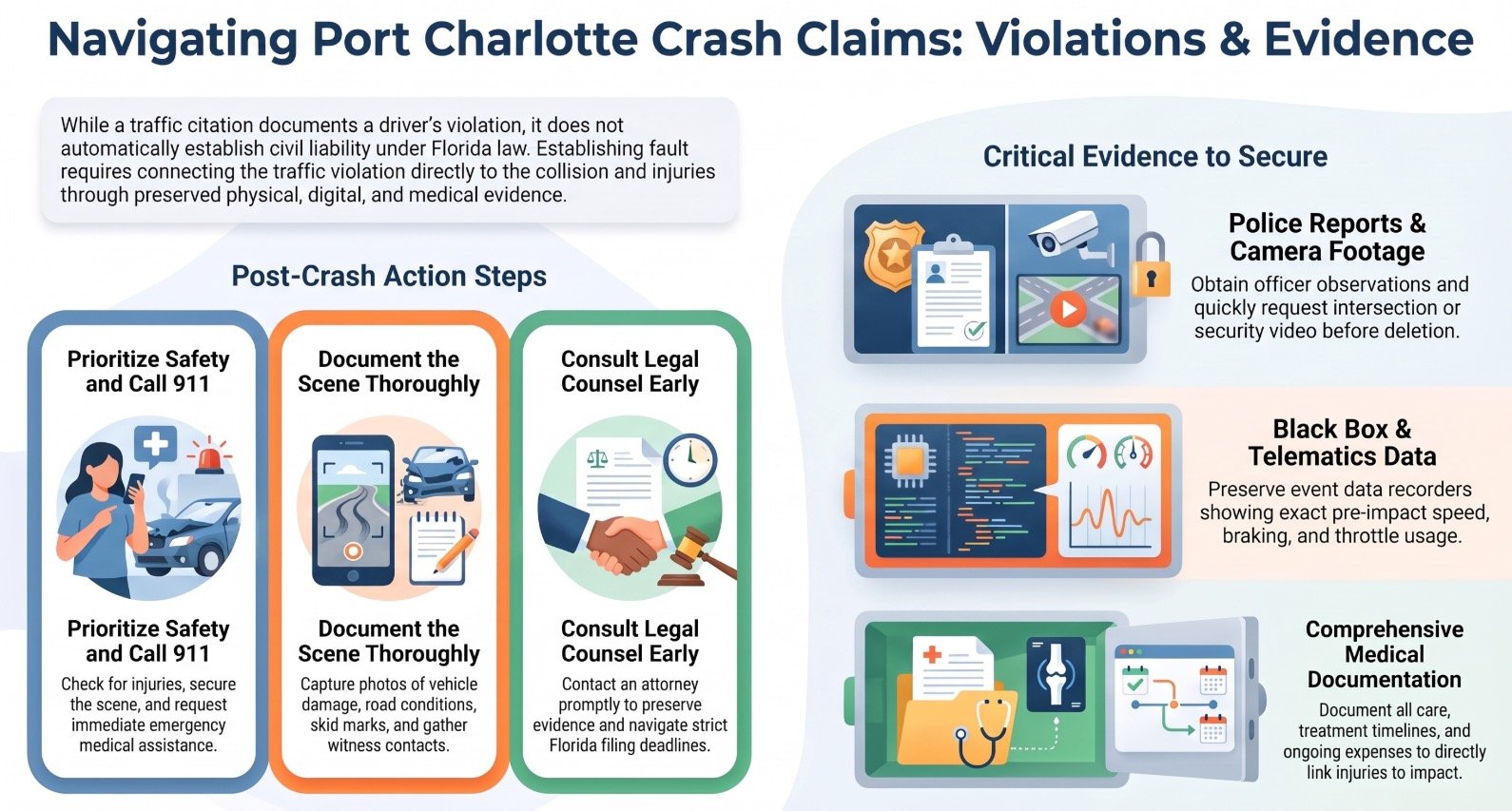
After a Port Charlotte crash, we should first check for injuries and call 911 if anyone needs immediate medical care. Document the scene by taking photos, gathering witness details, and preserving relevant records. Then contact a lawyer to understand your options and protect your rights.
Check for Injuries
Your safety and everyone else’s come first, so check for injuries as soon as the vehicles have stopped and the scene is safe. Prioritize Scene safety by watching for traffic, fire, leaking fuel, or other hazards before approaching anyone. If the area isn’t secure, move to a safer location only when you can do so without worsening an injury. Ask whether anyone needs help, but don’t assume someone is unharmed just because they’re conscious or say they feel fine. Call 911 for emergency response if someone is injured, trapped, unresponsive, or in immediate danger. Follow the dispatcher’s instructions and share clear details about the location and apparent needs. Don’t move an injured person unless danger requires it. Offer calm reassurance, and let trained responders assess injuries when they arrive.
Document the Crash
Once everyone is safe and emergency responders are on the way, document the crash while the details are still clear. If you can do so safely, take Scene photographs showing vehicle positions, damage, road conditions, traffic signs, signals, and any visible skid marks. Capture wide views and close details, and avoid entering traffic or disturbing evidence. Record the date, time, location, weather, and your recollection of how the collision occurred. Note any statements about speeding or other traffic violations, but distinguish what you observed from what others reported. Gather witness contacts, including names, phone numbers, and brief descriptions of what each person saw. Exchange required information with the other driver and provide accurate details to responding officers. Preserve relevant messages and receipts, and keep copies of reports and records for your files.
Contact a Lawyer
If you were injured in a Port Charlotte crash involving suspected speeding or another traffic violation, we recommend contacting a car accident lawyer promptly. We can help you understand your options while you focus on medical care and recovery. Bring available crash reports, photographs, witness details, medical records, and insurance correspondence to an initial meeting. Ask whether the firm offers a Free consultation, what services it includes, and how fees work before you decide to proceed. Review the lawyer’s credentials, including relevant experience handling injury claims involving traffic violations, and ask who will manage your case. A lawyer can investigate the collision, preserve evidence, communicate with insurers, and assess potential compensation. Prompt advice may help protect important evidence and deadlines. We encourage you to seek guidance before accepting a settlement.
Critical Evidence in a Port Charlotte Car Accident Traffic Violations & Speeding Injury Case
We’ll assess the evidence that can clarify how the crash occurred and support your injury claim.
Essential records may include:
- Police crash reports
- Traffic camera footage
- Vehicle data records
- Medical documentation.
We can use these sources jointly to evaluate fault, speed, and the extent of your injuries.
Police Crash Reports
A police crash report can provide vital evidence in a Port Charlotte car accident involving alleged speeding or another traffic violation. It may document the responding officer’s observations, driver and witness statements, road conditions, vehicle damage, and any citations issued. We can use these details to understand how authorities initially assessed the collision, while recognizing that a report isn’t a final ruling on fault. Report access may depend on agency procedures and applicable rules, so we can help you identify where and how to request the document. Review the report promptly for errors or missing information. If you find inaccuracies, record amendments may be possible through the investigating agency, though changes aren’t guaranteed. We can compare the report with other available evidence to support a fair, accurate account and protect your interests.
Traffic Camera Footage
When available, traffic camera footage can show how a collision unfolded and help clarify whether speeding or another traffic violation contributed to a Port Charlotte car accident. We can help identify sources of camera footage, including nearby intersection cameras, business security systems, and residential doorbell cameras. Each source may capture a different angle, signal sequence, or vehicle movement that helps establish what happened. However, recordings may be overwritten or deleted quickly, so preservation deadlines matter. We can promptly request that relevant footage be retained and determine who controls it. If you’re injured, this evidence may support your account, strengthen an insurance claim, and help protect your ability to seek compensation. We’ll assess whether the footage is clear, complete, and properly obtained, while respecting the privacy and interests of everyone affected by the collision.
Vehicle Data Records
If a vehicle involved in a Port Charlotte crash has an event data recorder, its stored information may help show what happened just before and during impact. Event data recorders may capture details such as speed, braking, throttle use, and seat belt status, depending on the vehicle and system. We can help you identify potentially relevant records and act promptly to preserve them before they’re lost, overwritten, or the vehicle is repaired or sold. Telematics evidence from connected vehicles may also include location, trip timing, or driving information, though availability varies. These records can help us assess whether speeding or another traffic violation contributed to the collision. Access may require owner consent, legal process, or manufacturer cooperation. We’ll explain the options, protect your interests, and pursue reliable evidence to support accountability and fair treatment for everyone affected.
Medical Documentation
Prompt medical documentation can connect your injuries to a Port Charlotte crash involving alleged speeding or another traffic violation. We can help you gather records showing what happened after the impact, from emergency care and diagnostic tests to follow-up visits and rehabilitation. Keep every bill, referral, prescription, and provider note, and request copies promptly so important details aren’t lost. Organizing medical records makes it easier to spot gaps, compare findings, and share relevant evidence with insurers or legal counsel. Treatment timeline documentation can also show when symptoms began, how they changed, and whether you followed recommended care. Tell each provider about all symptoms, even those that seem minor, and describe how the crash affected daily activities. Accurate records support a clearer account of your injuries and help others evaluate your claim fairly.
Don’t Wait. Call Our Florida Personal Injury Lawyers Now!
Long-Term Effects of Port Charlotte Car Accident Traffic Violations & Speeding Injuries
A serious crash caused by a traffic violation or speeding can leave you with chronic pain and mobility limits that affect daily life. We’ll also consider lasting emotional distress and how it may shape your recovery. Ongoing medical expenses can add financial pressure, so we’ll explain why these long-term effects matter when evaluating your claim.
Chronic Pain And Mobility Limits
When a speeding driver causes a crash in Port Charlotte, the resulting injuries can lead to chronic pain and lasting limits on movement. These effects may interfere with work, caregiving, and everyday tasks, even after initial treatment ends. We can help you understand how medical records, treatment plans, and professional assessments document the injury’s ongoing impact.
Chronic pain management may involve coordinated care from physicians and other practitioners. Consistent treatment can help address symptoms and support safer daily activity, though recovery varies from person to person. Mobility rehabilitation may include guided exercises, therapy, or assistive devices to improve strength and function. We encourage you to follow your providers’ recommendations and keep records of appointments, limitations, and expenses. If a traffic violation or speeding caused the collision, clear documentation can help show how the injuries affect your life and the support you need.
Lasting Emotional Distress
After a crash caused by speeding or another traffic violation, emotional distress may persist long after physical injuries begin to recover. You may feel anxious when driving, riding in a vehicle, or approaching the crash location. Trauma triggers can include sirens, sudden braking, or traffic conditions that remind you of the collision. Sleep disruption, recurring memories, and difficulty concentrating may also affect your daily routine and relationships. These effects can make it harder to care for family, serve your community, or fulfill responsibilities at work. We encourage you to take persistent emotional changes seriously and discuss them with a qualified mental health professional. Keeping notes about symptoms and how they affect your life can help you explain your experience. When another driver’s violation caused the crash, we can help you understand your legal options.
Ongoing Medical Expenses
Emotional recovery may take time, and serious injuries from a speeding or traffic-violation crash can also require ongoing medical care. We may need follow-up appointments, medication, physical therapy, or additional procedures long after the initial treatment ends. These costs can strain a household and make it harder to support family members or serve our community.
When we assess a claim, we should consider Future treatment, not only bills already received. Medical records and qualified professional opinions can help explain the care we may need and its expected cost. We should also account for medical inflation, which can increase treatment costs over time. Keeping organized records of appointments, prescriptions, travel, and expenses helps us document the financial impact. A careful evaluation can support a claim that reflects our long-term needs.
Proving Liability in Port Charlotte Car Accident Traffic Violations & Speeding Injury Cases
Proving liability in a Port Charlotte car accident involving a traffic violation or speeding requires more than showing that a driver broke the law; we must connect that conduct to the crash and your injuries. We examine how the violation contributed to the collision and whether the driver’s actions fell below the care required under applicable Negligence standards. A speeding citation, for example, may support your claim, but it doesn’t automatically establish responsibility for every resulting injury.
We gather evidence such as crash reports, photographs, vehicle damage, traffic camera footage, and available electronic data. We also identify witnesses and assess witness credibility by comparing their accounts with physical evidence and other reliable records. Medical documentation can help establish the nature and timing of your injuries and connect them to the crash.
Our careful investigation serves your interests by building a clear, evidence-based account of what happened. We’ll evaluate whether another party’s conduct caused your harm and explain what the available proof can establish.
Dealing With Insurance Companies After a Port Charlotte Car Accident Traffic Violations & Speeding Injury
When an insurer investigates a Port Charlotte crash involving speeding or another traffic violation, we help you respond carefully and protect your claim. You may want to cooperate, especially if another person’s injuries have disrupted their life, but you don’t have to accept pressure or guess. We can help you keep communications accurate and focused.
Before giving recorded statements, understand that insurers may use your words to assess fault, injuries, and coverage. We can review requests, explain what information is relevant, and help you avoid speculation. Share factual details, and don’t minimize pain or describe injuries before you understand their full effects.
We also examine available policy limits because they can affect what compensation may be available. An insurer’s early offer may not reflect the harm caused by a speeding driver or other violation. We’ll compare the offer with your documented losses and clearly explain your options, so you can make informed decisions while focusing on recovery and supporting those who depend on you.
What to Expect During a Port Charlotte Car Accident Traffic Violations & Speeding Injury Claim Process
We’ll start with an initial case review to assess your injuries, the traffic violations, and the evidence available. Next, we’ll gather records and other documentation, then negotiate with the insurers on your behalf. We’ll explain your options as your claim progresses and work toward a fact-based resolution.
Initial Case Review
An initial case review helps us assess how a traffic violation or speeding may have contributed to your Port Charlotte car accident and injuries. During an attorney consultation, we’ll listen to your account, discuss your concerns, and learn how the crash has affected your health, work, and daily responsibilities. We’ll explain the claim process, answer your questions, and identify the legal issues that may shape your options. Our initial case assessment considers the available facts, potential liability, injury-related losses, and any deadlines that could affect your claim. We’ll also discuss what support you may need as you focus on recovery and caring for those who depend on you. This review doesn’t guarantee an outcome, but it helps us provide informed guidance and determine appropriate next steps jointly.
Evidence Collection
After the initial case review, we begin gathering and preserving evidence that may show how a traffic violation or speeding contributed to the Port Charlotte crash and your injuries. We may arrange Scene photography to document vehicle damage, road conditions, traffic controls, sightlines, and other details that could change over time. We also seek available video from nearby businesses, homes, or traffic cameras before recordings are erased. Through witness interviews, we learn what people observed before, during, and after the collision, and we record their contact information for follow-up. We’ll request relevant crash reports and examine physical evidence, such as vehicle components or roadway marks, when available. Medical records and treatment documentation can help connect your injuries to the crash. We organize these materials carefully so your account rests on reliable, preserved facts.
Insurance Negotiations
How do insurance negotiations work in a Port Charlotte car accident claim involving speeding or another traffic violation? We review the evidence collected, including the crash report, witness accounts, and medical records, then present a clear account of how the other driver’s conduct caused your injuries. A traffic citation may support your position, but it doesn’t automatically establish liability or determine the claim’s value.
We communicate with the insurer, address questions about fault, and document your losses so the discussion reflects the full impact on your health, work, and daily responsibilities. We also examine available Policy limits, since coverage can affect the options for pursuing compensation. Settlement timing varies with the investigation, treatment progress, and the insurer’s response. We’ll explain each development and help you assess proposals carefully, without pressuring you to decide before you understand the terms.
Claim Resolution
After we present your claim and review any settlement proposals, we’ll help you evaluate your options for resolution. We’ll explain how each offer compares with your documented losses, medical needs, and the crash’s impact on your ability to serve your family and community. Before accepting, we’ll confirm the insurer has proper Settlement authority and review the release terms carefully. A release may end your right to seek additional compensation for collision-related injuries, so we’ll clarify what claims it covers and whether any obligations remain. If an offer doesn’t fairly address your losses, we can discuss continuing negotiations or other options. You’ll make the final decision with a clear understanding of the risks, timing, and likely consequences of each option.
Compensation for Port Charlotte Car Accident Traffic Violations & Speeding Injury Damages
When a driver’s speeding or other traffic violation causes a crash in Port Charlotte, we can pursue compensation for the injuries and losses the collision caused. We’ll investigate how the violation contributed to the collision and document the harm you’ve experienced. A careful Damage valuation can account for medical care, rehabilitation, lost income, and other proven effects of the crash. We’ll also review available insurance coverage and identify the evidence needed to support your claim, such as medical records, bills, wage information, and crash reports.
Your recovery should reflect the collision’s actual consequences, not assumptions about what you need. We’ll explain settlement options, assess proposed terms, and help you make informed decisions while you focus on recovery and your responsibilities to loved ones. Settlement taxation may depend on the type of compensation and applicable tax rules, so we’ll encourage you to consult a qualified tax professional. We’ll work to pursue a fair resolution supported by reliable evidence and applicable law.
Economic vs Non-Economic Damages in Port Charlotte Car Accident Traffic Violations & Speeding Cases
We distinguish economic losses, such as medical bills and lost income, from non-economic harm, including pain and reduced quality of life. To assess what your Port Charlotte car accident claim may cover, we’ll examine how the crash affected you financially and personally. We’ll also explain how records, expert opinions, and other evidence can help prove your damages.
Economic Losses
After a Port Charlotte car accident involving an alleged traffic violation or speeding, economic losses can include measurable costs caused by the crash. We can help you identify expenses supported by records, such as emergency care, follow-up treatment, medication, rehabilitation, and necessary medical equipment. Keep bills, receipts, and insurance statements so we can document how the collision affected your finances. If injuries kept you from working, Lost wages may include income you missed during recovery. When lasting limitations affect your ability to earn, diminished earning capacity may also be considered. We can review pay records, employment information, and medical opinions to assess these losses. You don’t have to sort through complicated calculations alone; careful documentation helps us present a clear account of your financial damages while pursuing fair compensation.
Non-Economic Harm
Although economic losses can be measured through bills and income records, non-economic harm reflects how a crash affects your daily life. After a speeding or traffic-violation collision, you may experience pain, anxiety, disrupted sleep, or strain in relationships. These effects matter even when they don’t appear on a receipt. Emotional suffering can make routine responsibilities harder and limit the support you provide to family, coworkers, and your community. A serious injury may also cause Loss of enjoyment when you can no longer participate in hobbies, social activities, or other meaningful parts of life. We consider these personal consequences alongside financial losses when evaluating the overall impact of a crash. Florida law may allow compensation for qualifying non-economic damages, but each case depends on its circumstances and applicable legal requirements.
Proving Damages
To prove damages in a Port Charlotte car accident case involving speeding or another traffic violation, we connect the crash to both your financial losses and its effects on your daily life. We gather medical bills, repair estimates, wage records, and receipts to show measurable economic losses. Damage documentation also includes treatment records and provider statements explaining your injuries and recovery needs. If your injuries limit work, caregiving, or routine activities, we use your account and supporting evidence to describe those changes.
Non-economic damages may include pain, emotional distress, and reduced enjoyment of life. We present these effects clearly while respecting your privacy and priorities. Medical opinions and care plans can help establish future care costs, including ongoing treatment or rehabilitation. By organizing reliable evidence, we can explain the full impact and pursue fact-based compensation.
Don’t Wait. Call Our Florida Personal Injury Lawyers Now!
When a Port Charlotte Car Accident Traffic Violations & Speeding Injury Case Goes to Trial vs. Settlement
Whether a Port Charlotte car accident claim settles or goes to trial depends on the strength of the evidence, the extent of your injuries, and whether the parties can agree on fault and compensation. We’ll review the available records, witness accounts, and medical information with you, then explain the practical choices each path presents.
Settlement can provide a defined resolution without a courtroom decision, but the amount and settlement timing depend on negotiations and the information available. We’ll help you assess any offer against your documented losses and future needs, rather than pressuring you to accept quickly. This approach also helps you focus on recovery and your responsibilities to those who depend on you.
If negotiations don’t produce an acceptable result, we may present your case at trial. We’ll prepare you for testimony, organize the evidence, and explain how the judge and jury evaluate the dispute. After we present evidence and arguments, the jury deliberates, and the verdict may differ from either party’s expectations.
Florida Laws That May Affect Your Port Charlotte Car Accident Traffic Violations & Speeding Case
Florida law can shape how we establish fault, document your losses, and pursue compensation after a Port Charlotte crash involving a traffic violation or speeding.
We’ll examine the rules that apply and explain how they may affect your claim and your ability to support others who depend on you.
- Florida speed limit statutes set maximum speeds, but drivers must also adjust for road, weather, and traffic conditions. Exceeding a limit may help show negligence.
- Traffic citations and crash reports can provide evidence, but they don’t automatically decide civil liability. We’ll assess the full record, including witness accounts and available video.
- Florida’s comparative negligence rules may reduce your recovery if your actions contributed to the collision. Under current law, a claimant found more than 50 percent responsible generally can’t recover damages, subject to exceptions.
- Florida’s no-fault system generally requires drivers to seek initial medical benefits through personal injury protection coverage. Serious injuries may allow you to pursue a claim against the at-fault driver.
We’ll connect these laws to your circumstances and pursue a careful, evidence-based approach.
The Statute of Limitations for Port Charlotte Car Accident Traffic Violations & Speeding Injury Cases
After a Port Charlotte crash involving speeding or another traffic violation, strict filing deadlines can affect your right to seek compensation. Florida law generally gives injured people two years to file a negligence lawsuit, including claims arising from car accidents. The deadline usually runs from the crash date, so waiting can put your ability to recover damages at risk.
Filing deadlines differ for wrongful death claims and may also depend on who caused the collision. Claims involving a government entity can require earlier notice and additional procedural steps. Missing a controlling deadline may prevent a court from hearing your case, even when another driver’s violation contributed to serious injuries.
Some tolling exceptions may pause or extend a deadline, such as when a defendant conceals their identity or a claimant faces a qualifying legal disability. These rules are narrow and fact-specific. We encourage you to preserve records and confirm the applicable dates promptly, so your claim remains available and you can focus on supporting those who depend on you.
How a Port Charlotte Car Accident Traffic Violations & Speeding Lawyer Can Help You
A lawyer can help you pursue a Port Charlotte car accident claim while protecting your ability to recover compensation. We can assess how speeding or another traffic violation contributed to the collision, explain your options, and manage communications with insurers. Our case strategy will reflect your injuries, available evidence, and practical goals, including your ability to care for family or continue serving your community.
We can help by:
- Gathering crash reports, photographs, witness accounts, and other relevant evidence.
- Reviewing medical records and documenting how injuries affect your daily responsibilities.
- Addressing allegations of fault and explaining how Florida’s comparative negligence rules may apply.
- Calculating documented losses and presenting a supported compensation demand.
Through clear Attorney client communication, we’ll keep you informed, answer questions, and explain important decisions in understandable terms. We can also negotiate with insurers and, when appropriate, present your claim in court. You’ll have guidance focused on protecting your interests while you recover and meet your responsibilities.
When to Contact a Port Charlotte Car Accident Traffic Violations & Speeding Lawyer
Contact a Port Charlotte car accident traffic violations and speeding lawyer as soon as possible if you’ve been injured, received a citation, or face questions about fault. Early guidance can help us preserve important details, such as photographs, witness names, medical records, and reports, while events remain clear. If someone else depends on you for care or support, prompt action can also help you understand what steps may protect your household.
Don’t wait for an insurance decision or a court notice before seeking Legal consultation. A lawyer can review the citation, explain how the alleged violation may affect your claim, and identify information you should gather. Filing deadlines may limit how long you have to pursue compensation or respond to legal proceedings, so acting promptly matters. If you’ve already missed a deadline or received a summons, contact counsel immediately to discuss available options. Bring any paperwork, messages, and records related to the collision so we can assess the situation and help you make informed decisions.
Why You Need an Experienced Port Charlotte Car Accident Traffic Violations & Speeding Lawyer
When a crash involves a traffic citation or speeding allegation, an experienced Port Charlotte lawyer can help you understand how the violation may affect your case. We can review the evidence, explain how traffic rules apply, and identify issues that may affect responsibility for the collision. A citation does not automatically establish fault in a civil claim, and the surrounding facts warrant careful review.
Attorney experience matters when we assess crash reports, witness accounts, vehicle damage, and other records. We can also communicate with insurers, respond to arguments about your conduct, and protect your opportunity to seek compensation for losses. Our case strategy should reflect the evidence and your needs, not assumptions based on a ticket alone.
How to Choose the Right Port Charlotte Car Accident Traffic Violations & Speeding Lawyer for Your Case
Choosing the right Port Charlotte car accident traffic violations and speeding lawyer requires more than reviewing a firm’s website or promises of results. Look for counsel who listens carefully, explains your options, and understands how traffic citations may affect an injury claim. Ask about experience handling speeding allegations, disputed fault, and insurance negotiations in cases like ours.
Review the Attorney’s credentials, including Florida licensure, relevant courtroom experience, and any history of professional discipline. Ask how the lawyer will investigate the crash, preserve evidence, communicate updates, and involve us in decisions. Clear answers help us judge whether counsel will treat our concerns with care and respect.
Discuss fee structures before signing an agreement. We should understand whether fees depend on recovery, which case expenses may arise, and how those costs are handled if the case doesn’t succeed. Compare written agreements, not just quoted percentages. A thoughtful consultation can help us choose a lawyer whose approach, communication, and terms fit our needs and goals.
About The Law Offices of Anidjar & Levine
The Law Offices of Anidjar & Levine represents people injured in car accidents, including cases involving speeding allegations and other traffic violations. We help you understand your options, address questions about fault, and pursue compensation for losses supported by the facts. When a traffic citation or speeding claim complicates an injury case, we work to explain how the available evidence may affect your claim.
Our firm’s history reflects a commitment to representing injured people and helping them seek accountability after serious harm. We approach each matter with attention to its circumstances, keeping you informed as we review records, communicate with insurers, and prepare your case. You merit clear guidance and respectful service throughout the process.
We also value community involvement and the responsibility to serve people beyond the courtroom. Our work is guided by the belief that individuals and families should have access to meaningful legal support after an accident. If you’re considering your next steps, we can discuss your situation and explain how we may assist.
Frequently Asked Questions
Can a Speeding Ticket Affect My Car Insurance Rates in Florida?
Yes, a speeding ticket can affect your Florida car insurance rates. We recommend checking your policy and asking your insurer how it handles violations, since Insurance rate increases depend on your driving record, the violation, and company rules. Insurer reporting practices also vary, and a ticket may not affect your premium immediately. You can review your options, including contesting an inaccurate citation, to protect your record and keep your coverage affordable.
What Happens if I Receive a Traffic Citation After a Crash?
If you receive a traffic citation after a crash, you must address it separately from any insurance claim or injury matter. We can help you review the alleged violation, understand potential penalties, and identify available options. Check the citation deadlines carefully; missing a response or payment date may lead to added fees or license consequences. Preserve crash documentation, including photographs, witness details, and reports, so we can assess the circumstances and advise you on next steps.
Can I Contest a Speeding Ticket While Pursuing an Injury Claim?
Yes, we can contest a speeding ticket while pursuing an injury claim, but each matter may affect the other. We should review the ticket evidence, crash records, and statements before choosing a hearing strategy, since admissions or inconsistent accounts could influence your injury case. We can help you meet court deadlines, present a focused defense, and protect your claim. Avoid discussing fault publicly, and preserve all relevant documents and communications.
Do Traffic Violations Add Points to My Florida Driver’s License?
Yes, many moving violations add points to your Florida driver’s license, though some offenses carry no points or may bring other penalties. Under Florida’s license point system, the assigned number depends on the violation, and points can affect your driving privileges and insurance. We can help you review the citation, verify its classification, and understand your options. Florida’s point suspension thresholds generally trigger suspension after 12 points within 12 months, 18 within 18 months, or 24 within 36 months.
Can a Passenger Be Cited for Contributing to a Car Accident?
A passenger generally can’t be cited merely for riding in a vehicle involved in a crash. We can help you understand when Passenger Liability may arise: an officer might cite a passenger for a separate violation, such as interfering with the driver or failing to comply with a safety law. Contributing Conduct could also affect civil responsibility if the passenger’s actions helped cause the collision. The specific facts and applicable Florida law determine the outcome.
—————————
If a speeding driver or traffic violation caused your injuries, The Law Offices of Anidjar and Levine can help you understand your options and pursue compensation. We’ll review the crash, explain how Florida law may apply, and communicate with insurers while you focus on recovery. Evidence can become harder to obtain over time, so contact us promptly to discuss your case. Learn more from a Port Charlotte Personal Injury Lawyer and find out what steps may come next.