If you fell on a hazardous walkway or structure in Clearwater, The Law Offices of Anidjar and Levine can investigate who controlled the area, how the hazard arose, and whether the responsible party knew or should have discovered it. We can help preserve evidence, review inspection and repair records, and document your injuries and losses. Florida law may allow compensation if negligence caused your fall, though your conduct could affect your recovery. Learn more from a Clearwater Personal Injury Lawyer. Below, we explain your rights, potential claims, and how we can help.
Main Takeaways
- A Clearwater slip-and-fall lawyer can assess whether a walkway or structural hazard caused your fall and whether someone failed to use reasonable care.
- Common hazards include wet surfaces, uneven pavement, damaged steps, loose railings, poor drainage, and inadequate lighting.
- Liability may depend on who controlled the property, how the hazard arose, and whether the responsible party knew or should have discovered it.
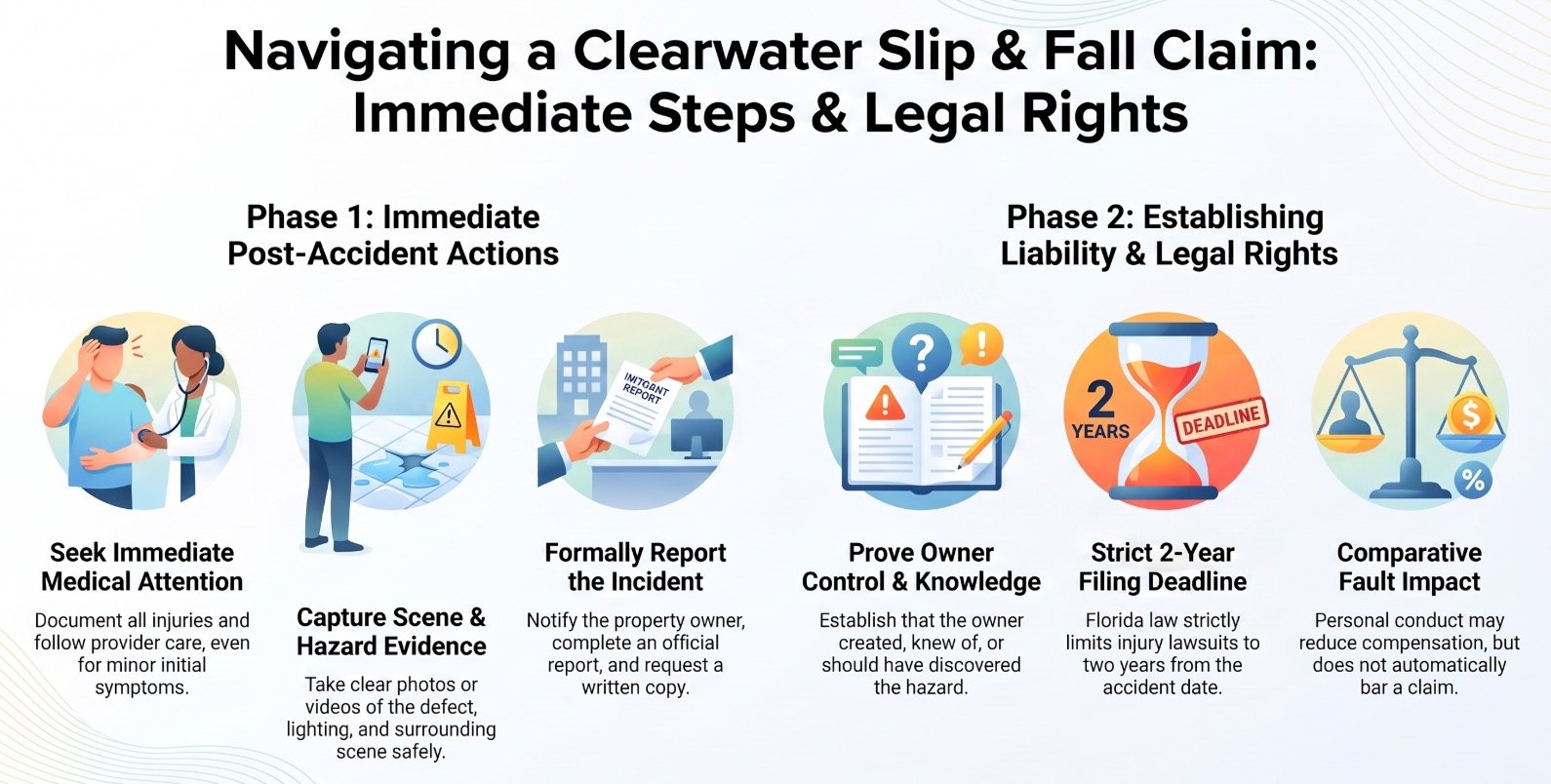
- Photograph the hazard if safe, report the fall promptly, collect witness details, and request preservation of relevant surveillance footage and records.
- Seek medical care, follow treatment advice, and keep medical records and bills documenting your injuries and recovery.
How We Can Help With Your Clearwater Slip & Fall Walkways & Structures Injury Claim
When a walkway or structure causes a serious fall in Clearwater, we can help you pursue a claim against the party responsible for maintaining it. We’ll listen carefully to your concerns, explain your options, and help you make informed decisions while you focus on your recovery and responsibilities.
Our work begins with a Claim Evaluation tailored to your circumstances. We’ll review available records, assess the harm you’ve suffered, and identify the information needed to support your position. We’ll communicate with involved parties on your behalf and help protect you from pressure to accept an inadequate resolution.


We’ll develop a Legal Strategy that reflects your goals and the facts of your claim. Throughout the process, we’ll provide clear updates, answer your questions, and prepare each step with care. If negotiations don’t produce a fair outcome, we can explain the next options and represent your interests. Our purpose is to reduce your burden and pursue accountability through a careful, professional approach. You merit attentive guidance as you work toward stability.
Don’t Wait. Call Our Florida Personal Injury Lawyers Now!
Understanding Clearwater Slip & Fall Walkways & Structures Injury Cases
OUR CONSULTATIONSARE FREE
START YOUR FREE CASE REVIEW

Clearwater slip and fall cases involving walkways and structures turn on whether a property owner or another responsible party failed to address a hazardous condition. We examine how the condition arose, who controlled the area, and whether those responsible had a reasonable opportunity to correct it or provide a warning. These questions help establish whether the facts support a premises liability claim under Florida law.
Our review also considers the duties that apply to the property and the people who use it. Structural maintenance records, inspection practices, incident reports, photographs, and witness accounts may help show what the responsible party knew or should have known. We connect that evidence to your injuries and losses, while accounting for any disputes over responsibility or the extent of harm.
Common Causes of Clearwater Slip & Fall Walkways & Structures


When we assess a Clearwater slip-and-fall claim, we look for hazards such as wet or slippery surfaces and uneven walkways. Broken steps or railings can also create serious risks, particularly when poor lighting makes them difficult to see. We’ll explain how these conditions may contribute to a fall and what evidence can help establish its cause.
Wet or Slippery Surfaces
Wet or slippery surfaces can turn otherwise safe walkways into serious fall hazards. In Clearwater, rainwater tracked through entrances, leaking equipment, freshly mopped floors, and spilled drinks can leave paths slick without warning. Businesses and property owners should inspect these areas, clean spills promptly, and use visible warning signs while floors dry. When they overlook these precautions, visitors, customers, and workers may face preventable Wet Floor Hazards.
Outdoor surfaces also become dangerous when rain, irrigation, or standing water reduces traction. Polished stone, smooth tile, and painted walkways can increase slick surface risks, especially where people enter or exit buildings. We can help you understand whether a property owner knew, or reasonably should have known, about a dangerous condition and failed to address it. By examining the circumstances, we can explain your options and support your effort to seek accountability.
Uneven Walkways
Uneven walkways can cause sudden trips or falls, especially when cracks, raised pavement, loose pavers, or damaged steps disrupt a person’s path. These hazards may develop gradually, making them difficult to notice until someone is injured. Pavement heaving can lift sections of a path after soil shifts, drainage problems, or repeated temperature changes. Tree roots can also push paving upward or create gaps that catch a visitor’s foot. Property owners and managers should inspect walkways regularly, address defects promptly, and provide clear warnings while repairs are pending. When we help you assess a fall, we look at how the uneven surface developed, whether those responsible knew or should have known about it, and what steps they took to protect people using the property. These details can help establish accountability and support an injured person’s recovery.
Broken Steps and Railings
Broken steps and loose or missing railings can turn an ordinary route into a serious fall hazard. Cracked stair treads may shift underfoot, while worn, uneven, or damaged steps can cause visitors to lose balance. Loose handrails may fail when someone reaches for support, and missing railings can leave stairways or raised walkways without a needed safeguard.
Property owners and managers should inspect these areas regularly, repair damage promptly, and restrict access when they can’t correct a hazard right away. These steps help protect residents, customers, employees, and other visitors who rely on safe passage. If you fell because a step or railing was defective, document the condition if you can safely do so, report the incident, and seek medical care. We can help you assess whether negligent maintenance contributed to your injuries.
Poor Lighting and Visibility
Poor lighting can make walkways, stairways, and other shared areas hard to navigate, especially when it hides changes in elevation, obstacles, or damaged surfaces. Dim Lighting may prevent visitors from noticing a wet floor, loose paving, or an uneven step before they reach it. In parking areas and building entrances, burned-out bulbs or poorly placed fixtures can create dark patches that increase fall risk.
Glare, shadows, overgrown landscaping, or objects blocking sightlines can also reduce visibility. We expect property owners and managers to take reasonable steps to maintain safe conditions for people using their premises. That may include replacing failed lights, improving fixture placement, and clearing visual obstructions. When poor lighting contributes to a fall, we can help you examine what happened and identify whether preventable hazards played a role.
Legal Rights of Clearwater Slip & Fall Walkways & Structures Injury Victims
If a walkway or structure in Clearwater causes a slip-and-fall injury, Florida law may give you the right to seek compensation from the party responsible for maintaining the property. Premises liability law requires property owners and others in control of premises to use reasonable care for visitors’ safety. We can help you understand whether the responsible party failed that duty and how the failure relates to your injuries.
Property owners must use reasonable care to keep premises safe, and may be responsible when unsafe conditions cause a slip-and-fall injury.
You may pursue damages for documented losses, subject to the evidence and applicable law.
We’ll help you identify records and information that can support your claim, including:
- Medical expenses and future treatment needs
- Lost income and reduced earning capacity
- Pain, suffering, and effects on daily activities
- Evidence of the property owner’s responsibility
- Documentation connecting the incident to your injuries
Florida’s comparative negligence rule may reduce your recovery if your own conduct contributed to the accident. It doesn’t automatically prevent a claim. We can review the facts, explain potential issues, and help you make informed decisions while protecting your rights and pursuing fair compensation.
Why Do Clearwater Slip & Fall Walkways & Structures Injuries Happen?
Why do walkways and structures cause slip-and-fall injuries in Clearwater? Often, hazards develop when property owners fail to maintain surfaces people rely on every day. Weather exposure can leave walkways wet, covered in algae, or uneven, while heavy rain may collect in poor drainage areas. Sand and debris can also reduce traction, especially near entrances and outdoor paths.
Structural design can contribute to falls when stairs lack consistent riser heights, handrails are missing, or ramps are too steep. Cracked pavement, loose tiles, damaged steps, and poorly lit passageways can further hide hazards. Even a small defect can become dangerous when visitors must maneuver around it while carrying items or assisting others.
These conditions are not always unavoidable. Regular inspections, prompt repairs, effective drainage, adequate lighting, and clear warnings can help protect residents, customers, and guests. When those responsible for a property overlook hazards, people may suffer serious injuries that disrupt their ability to work, care for family, and serve their communities.
What Should You Do After a Clearwater Slip & Fall Walkways & Structures Injury?
After a Clearwater slip and fall, we recommend seeking medical attention promptly, even if your injuries seem minor. We can help you document the hazard with clear photographs and notes before conditions change. Report the incident to the property owner or manager, and keep a record of when and how you made the report.
Seek Medical Attention
Seek medical attention promptly after a Clearwater slip and fall, even if your injuries seem minor. Some conditions, including concussions and internal injuries, may not cause immediate symptoms. A qualified medical professional can assess your condition, identify injuries, and recommend appropriate treatment options. Follow the provider’s instructions, attend recommended appointments, and tell them about any changes in your symptoms. If you experience Emergency symptoms such as severe pain, confusion, difficulty breathing, heavy bleeding, or loss of consciousness, call 911 or go to an emergency department immediately. Prompt care supports your recovery and helps prevent complications from worsening. Taking medical advice seriously helps protect our health and keeps us better able to support those who depend on us. Keep copies of discharge instructions and medical bills for your personal records, and ask your provider when to return to normal activities.
Document The Hazard
If you can do so safely, document the hazard that caused your Clearwater slip and fall before it changes or disappears. Take clear photographs or video of the walkway or structure, including the specific defect and the surrounding area. Capture details such as lighting, warning signs, nearby obstacles, and the surface’s condition. If witnesses saw the hazard or your fall, ask for their names and contact information; their observations may help clarify what happened. Keep the original files and note when and where you created them. Don’t touch, move, or recreate the condition, since doing so could affect evidence or put someone else at risk. We can help you identify additional hazard documentation and send preservation requests to protect relevant records or video before they’re lost.
Report The Incident
Once you’ve documented the hazard, report the fall promptly to the property owner, manager, or another responsible party. Clear Incident notification helps staff respond to the hazard and creates a record of what happened. Ask to complete an incident report, and request a copy or the report number for your records.
When describing the fall, focus on report accuracy. State when and where it occurred, what you observed, and what injuries or symptoms you experienced. Avoid guessing about the cause or minimizing your condition. If you don’t know an answer, say so rather than speculate.
Keep your account factual and consistent, and note whom you notified and when. If possible, communicate in writing or follow up in writing after speaking with staff. A timely, accurate report can help protect others from the same danger.
Critical Evidence in a Clearwater Slip & Fall Walkways & Structures Injury Case
We’ll help you identify and preserve evidence showing how a walkway or structure became hazardous and how the fall caused your injuries. Clear records and prompt documentation can strengthen your account.
Crucial evidence may include:
- Photographs of the scene, hazard, and surrounding area
- Inspection and maintenance records
- Statements and contact information from witnesses
- Medical records documenting your injuries and treatment
- Incident reports and any available surveillance footage
Incident Scene Photographs
Photographs taken soon after a slip-and-fall incident can preserve details of a walkway or structure that may change before an investigation begins. If you can, capture the area from several angles, including close views of the substance, uneven surface, damaged feature, or missing warning sign, and wider views showing its location. We can use these images to understand what you encountered and explain the conditions to insurers, property representatives, or a jury. Include relevant lighting and nearby features, but don’t put yourself or others at risk to take a picture. Preserve original files, since Photo metadata may help establish when and where images were created. Consider privacy considerations by avoiding unnecessary images of injured people or bystanders, and obtain permission when practical. Prompt, careful documentation can help us present your experience clearly and responsibly.
Hazard Inspection Records
When a walkway or structure causes a fall, inspection records may show whether the property owner identified a hazard before the incident and what steps followed. We can review maintenance logs, inspection schedules, repair requests, and work orders to understand how the property was monitored. These documents may reveal recurring problems, missed inspections, delayed repairs, or actions taken to address unsafe conditions. We’ll compare recorded dates and descriptions with the circumstances of your fall and consider whether the owner followed reasonable safety procedures. Records may also help establish how long a hazard existed and whether staff had an opportunity to correct it or warn visitors. If documents are incomplete or inconsistent, we can assess what additional evidence may clarify the property’s practices. Careful review helps us pursue accountability and support safer walkways and structures for everyone.
Witness Statements
Witness statements can clarify how a walkway or structural hazard caused a fall and what happened immediately afterward. We can speak with people who saw the incident, noticed the dangerous condition beforehand, or responded at the scene. Their accounts may help establish when the hazard appeared, whether it was visible, and how the property owner or staff addressed it. We’ll ask witnesses to describe only what they personally observed, without guessing or adopting another person’s version of events.
Witness credibility depends on accurate, consistent details and a clear account of each person’s opportunity to observe. Preserving prompt statements matters because memories can fade and contact information may be lost. We can record names, dates, and firsthand observations, then preserve written or recorded accounts appropriately. Careful documentation helps us present reliable evidence and seek accountability that supports safer walkways for others.
Medical Documentation
Prompt medical documentation can connect a walkway or structural hazard to the injuries you suffered in a Clearwater slip and fall. We can help you organize records that show when symptoms began, what treatment you received, and how your condition changed. Treatment timelines may clarify whether pain or mobility problems appeared immediately or developed later. Keep appointment summaries, imaging results, prescriptions, discharge instructions, and bills, and tell each provider how the fall occurred. Consistent details can help clinicians document your symptoms and assess possible causes. With your permission, we can coordinate with your providers to gather relevant records and understand recommendations without disrupting your care. Follow prescribed treatment and report new symptoms promptly. Complete, accurate documentation can support a clearer account of your losses and help us evaluate the evidence responsibly.
Don’t Wait. Call Our Florida Personal Injury Lawyers Now!
Long-Term Effects of Clearwater Slip & Fall Walkways & Structures Injuries
A walkway or structural fall can leave you with chronic pain and reduced mobility long after the initial injury. We’ll also consider whether lasting nerve damage affects your daily activities and ability to work. These consequences can create significant emotional and financial strain for you and your family.
Chronic Pain and Mobility
Although some slip-and-fall injuries seem manageable at first, back, joint, or nerve damage can cause chronic pain and lasting mobility problems. We can help you understand how persistent symptoms may affect daily routines, work, and your ability to care for others. A physician may recommend Pain management options, such as medication, physical therapy, or other treatments tailored to your condition. Follow-up care can track progress and identify changes that require attention. If walking, standing, or using stairs becomes difficult, mobility aids may support safer movement and greater independence. We can also help you document treatment, limitations, and related expenses after a fall on unsafe walkways or structures. Clear records can help link your injury to the incident and support a compensation claim that addresses ongoing needs.
Lasting Nerve Damage
Persistent pain and reduced mobility may accompany lasting nerve damage after a slip and fall on unsafe walkways or structures. The impact can compress, stretch, or injure nerves, affecting how signals travel between the body and brain. You may experience numbness, tingling, burning sensations, weakness, or heightened sensitivity in the affected area. This sensory impairment can interfere with daily tasks and make it harder to serve your family and community as you once did. Recovery varies according to the injury’s severity and location. Nerve regeneration may occur slowly, and some damage can remain permanent despite treatment. We can help you understand how medical evaluations document these changes and why ongoing care matters. Prompt assessment can identify treatment options and clarify your injury’s lasting effects.
Emotional and Financial Strain
When a slip and fall injury affects your ability to work or manage daily responsibilities, the emotional and financial strain can continue long after the incident. Reduced income, medical expenses, and ongoing rehabilitation may disrupt your Household Budget, especially when recovery limits your capacity to earn or care for others. We recognize that these pressures can create Family Stress, as loved ones take on additional duties and worry about future stability.
We can help you identify the losses connected to your injury and understand what documentation may support a claim. Keep records of treatment costs, missed work, and changes to daily activities. These details can clarify how the fall has affected your household over time. By reviewing the circumstances and available evidence, we can help you pursue compensation that addresses both financial losses and the broader effects of recovery.
Proving Liability in Clearwater Slip & Fall Walkways & Structures Injury Cases
To prove liability in a Clearwater slip and fall case involving a walkway or structure, we must show that a dangerous condition caused your injury and that the responsible property owner or occupier failed to use reasonable care. Premises liability standards require us to establish that the owner created the hazard, knew about it, or should have discovered it through reasonable inspections. We’ll examine how long the condition existed, whether staff followed inspection procedures, and whether repairs or warnings were appropriate. Constructive notice evidence may include maintenance records, inspection logs, photographs, surveillance footage, and witness accounts showing the hazard was present long enough to be found. We’ll also connect the condition to your injuries through medical records and other reliable documentation. Your prompt report and careful account can help preserve important details. By building a clear, evidence-based timeline, we can explain how the property’s unsafe walkway or structure caused harm and identify the people responsible for protecting visitors.
Dealing With Insurance Companies After a Clearwater Slip & Fall Walkways & Structures Injury
After a Clearwater walkway or structural slip and fall, the insurance company may contact you before you understand the full extent of your injuries or have gathered important evidence. We recommend that you remain courteous but avoid guessing about details or minimizing your pain. Insurers may request Recorded Statements, yet you don’t have to answer immediately or provide a statement without understanding how your words could affect your claim. We can help you communicate accurately and protect your interests while you focus on medical care and recovery.
Keep copies of medical records, photographs, incident reports, and messages with the insurer. Share only information relevant to the incident, and don’t sign forms or accept a settlement before reviewing its terms and considering future treatment needs. If the insurer raises questions about responsibility, delays communication, or issues Claim Denials, we can assess the stated reasons and explain your options. Careful, informed communication helps preserve your ability to seek fair compensation and continue serving the people who depend on you.
What to Expect During a Clearwater Slip & Fall Walkways & Structures Injury Claim Process
We’ll start with an initial case review to assess your claim and identify issues that may affect the outcome. Next, we’ll gather evidence and negotiate a settlement with the responsible parties and their insurers. If we don’t reach a fair resolution, we’ll explain what to expect as the case proceeds to court.
Initial Case Review
What happens during an initial case review after a Clearwater slip and fall? We begin by listening carefully as you explain how the incident affected your health, work, and daily responsibilities. During an Initial Consultation, we’ll ask about the location, the circumstances of your fall, and the care you’ve received. You can also tell us what concerns you most and what outcome would help you move forward.
Next, we conduct a Case Evaluation to assess whether the facts may support a claim and identify the legal issues involved. We’ll explain how property-owner responsibilities may apply, discuss potential challenges, and outline possible next steps. Our goal is to give you a clear, candid assessment so you can make informed decisions. We’ll answer your questions and treat your experience with respect throughout this process.
Evidence Gathering
Because evidence can change or disappear quickly, we begin gathering it as soon as possible. We’ll ask you to describe the fall, the walkway or structure, and any hazards you noticed. Your account helps us identify what to document and whom to contact.
We may photograph the scene, measure relevant areas, and collect records about inspections, maintenance, and repairs. Evidence preservation matters, so we can ask property owners to retain materials that could otherwise be lost. If surveillance footage exists, we’ll seek it promptly because businesses may erase recordings on a routine schedule.
We’ll also gather medical records and bills, incident reports, witness statements, and other documentation that connects the dangerous condition to your injuries. By organizing these materials carefully, we can present a clear account of what happened, support your claim, and respect your recovery and privacy.
Settlement Negotiations
Once we’ve organized the evidence and assessed your injuries, we can begin settlement negotiations with the property owner’s insurer. We’ll prepare a clear demand that explains how the walkway or structure created a hazard, how the incident caused your injuries, and what losses you’ve experienced. A careful Demand evaluation helps us account for medical expenses, lost income, future care, and the effect on your daily responsibilities. We’ll review the insurer’s response with you, explain any proposed terms, and identify whether the offer fairly reflects your documented needs. Our negotiation strategy will rely on evidence and a realistic assessment of the claim, not pressure or promises. We’ll keep you informed, answer your questions, and seek terms that support your recovery while allowing you to focus on family, work, and serving others.
Court Proceedings
If settlement negotiations don’t resolve your claim, we can file a lawsuit and guide you through the court process. We’ll prepare and submit the required documents, explain deadlines, and help you understand each stage. The case may involve written questions, document exchanges, depositions, and pretrial hearings. These steps let both sides review evidence, including photographs, incident reports, medical records, and testimony about the walkway or structure.
If trial becomes necessary, we’ll explain Courtroom Procedures and help you prepare to testify clearly. Jury selection lets both parties question potential jurors and identify conflicts that could affect fairness. At trial, we’ll present evidence, question witnesses, and respond to the opposing side’s arguments. The judge or jury will assess responsibility and damages. We’ll keep you informed and protect your interests throughout the proceedings.
Compensation for Clearwater Slip & Fall Walkways & Structures Injury Damages
A serious fall on a walkway or around a building can lead to compensation for medical expenses, lost income, pain and suffering, and other documented losses. We can help you identify the damages connected to your injury and present supporting records, such as treatment bills, wage statements, and photographs of the hazard. Compensation may also account for future care or reduced ability to work when reliable evidence supports those needs. The amount available depends on the facts, the responsible parties, and applicable insurance coverage. We’ll explain how Florida law may affect your claim, including whether any Compensation Caps apply; limits can vary by claim and defendant. If a settlement is appropriate, we can review its terms and discuss whether a lump sum or Structured Settlements better fits your circumstances. Our goal is to pursue fair recovery while helping you make informed decisions. We’ll keep you updated, answer questions, and treat your concerns with care throughout the process.
Economic vs. Non-Economic Damages in Clearwater Slip & Fall Walkways & Structures Cases
We distinguish economic losses, such as medical bills and lost income, from non-economic damages for pain and suffering. To assess what your Clearwater slip-and-fall claim may include, we consider how the injury affects your health, work, and daily life. We’ll also explain the evidence needed to support each type of damage.
Economic Losses
When a slip and fall on a walkway or other structure causes injury, the financial impact may extend well beyond the initial medical bill. We can help you identify and document economic losses tied to the incident, including emergency care, follow-up treatment, medication, rehabilitation, and necessary medical equipment. Keep bills, receipts, insurance statements, and appointment records so we can link each expense to your injury. You may also recover lost wages when missed work reduces your income. If your injuries limit the duties or hours you can manage, reduced earning capacity may affect your future financial security. We’ll review employment records, pay history, and medical evidence to assess these losses. Careful documentation helps us present a clear account of the financial burden and pursue fair compensation for the support you need.
Pain and Suffering
Beyond medical bills and lost income, a Clearwater slip and fall injury may cause pain, emotional distress, and limits on daily activities. These effects are non-economic damages, distinct from measurable financial losses such as treatment costs or missed wages. Pain severity varies, and an injury may disrupt sleep, mobility, family responsibilities, or community service. Emotional distress may include anxiety, frustration, or reduced confidence after a fall. We can help you understand how these personal effects fit within a claim and how Florida law treats non-economic damages. No two people experience an injury the same way, so your daily-life impact matters. By considering both financial losses and personal harm, we can present a fuller account of how the fall has changed your life and the lives of those who depend on you.
Proving Damages
Proving damages in a Clearwater slip and fall case requires evidence that connects the fall to both financial losses and personal harm. We help you organize records that show how the incident affected your health, work, and daily responsibilities.
Economic damages include medical bills, rehabilitation costs, lost wages, and reduced earning capacity. Keep invoices, pay records, and treatment documentation to support each claimed expense. Damage valuation also considers future expenses, such as continuing therapy or anticipated medical care, when supported by qualified providers.
Non-economic damages address pain, emotional distress, and limits on ordinary activities. These losses may not appear on a receipt, so consistent treatment notes, personal records, and accounts from people who know you can help explain their impact. We assess both categories carefully to present a clear, well-supported claim that reflects your needs and losses.
When a Clearwater Slip & Fall Walkways & Structures Injury Case Goes to Trial vs. Settlement
A Clearwater walkway or structure injury case may settle if the parties can agree on responsibility and damages, but unresolved disputes may require a trial. We’ll assess the evidence, your medical needs, and the likely costs and demands of continuing litigation. Settlement can provide a defined outcome without a courtroom decision, and it may let you focus sooner on recovery and serving the people who depend on you. However, you shouldn’t accept an offer that fails to account for the harm you’ve experienced.
If negotiations stall, we prepare to present your case to a judge or jury. Trial readiness means organizing records, witness accounts, and expert opinions so we can explain how the incident occurred and affected your life. Jury considerations may include the clarity of the evidence, the credibility of witnesses, and the extent of your losses. We’ll discuss the risks, timing, and potential outcomes with you, then help you make an informed choice. Whether we negotiate or proceed to trial, our goal is to pursue a fair result.
Florida Laws That May Affect Your Clearwater Slip & Fall Walkways & Structures Case
Florida law sets deadlines and standards that can shape how we pursue a Clearwater slip-and-fall claim involving a walkway or structure. Premises Liability rules generally require property owners to use reasonable care to maintain safe conditions and address hazards. The facts matter: we’ll examine what the owner knew or should have known, how the hazard arose, and whether warning or repair was practical.
Several legal principles may affect how we build your case:
- Building Codes may help identify safety requirements for stairs, handrails, ramps, or walkways.
- Code violations can support evidence of unsafe conditions, but they don’t automatically establish liability.
- Florida’s comparative fault rules may reduce recovery if a claimant shares responsibility for a fall.
- Evidence of notice, inspection practices, and repair efforts can influence the owner’s responsibility.
- Medical records and witness accounts can connect the hazard to your injuries and losses.
We’ll assess these issues carefully, explain how they apply, and pursue a fair outcome that supports your recovery and ability to serve others.
Don’t Wait. Call Our Florida Personal Injury Lawyers Now!
The Statute of Limitations for Clearwater Slip & Fall Walkways & Structures Injury Cases
Because filing deadlines can affect your right to seek compensation, we’ll identify the statute of limitations that applies to your Clearwater slip-and-fall injury case. In Florida, you generally have two years from the date of a negligence-based injury to file a lawsuit. This Filing deadline can determine whether a court will hear your claim, so don’t assume that negotiations or ongoing treatment extend it.
Some cases involve facts that weren’t immediately apparent. The discovery rule may affect when a limitations period begins, but it doesn’t automatically apply to every slip-and-fall injury. The specific facts and applicable law matter, and exceptions may change the deadline. Claims involving government property can also carry separate notice requirements and shorter time limits.
We encourage you to preserve records and note important dates while you focus on your recovery and responsibilities to others. Confirming the correct deadline early can protect your ability to pursue accountability and seek compensation for the harm you’ve suffered.
How a Clearwater Slip & Fall Walkways & Structures Lawyer Can Help You
When a fall leaves you injured and with unanswered questions, a Clearwater slip-and-fall lawyer can help you understand your options and protect your claim. We’ll explain Premises liability basics and assess whether property owner duties were met. We help you pursue fair treatment while you focus on recovery and the responsibilities that matter to you.
We can support your claim by:
- Investigating the walkway or structure and documenting hazards.
- Gathering photographs, incident reports, witness accounts, and other relevant records.
- Reviewing maintenance practices, inspection logs, and notice of the dangerous condition.
- Organizing medical records and evidence of lost income and other losses.
- Communicating with insurers and presenting a clear, evidence-based account of your injuries.
We’ll evaluate how the fall occurred, identify potentially responsible parties, and explain the legal issues in plain language. If negotiations don’t produce a fair resolution, we can discuss available legal options and represent your interests. Throughout the process, we’ll keep you informed, answer questions, and treat your concerns with care and respect.
When to Contact a Clearwater Slip & Fall Walkways & Structures Lawyer
Contact a Clearwater slip-and-fall lawyer promptly after a fall involving a walkway or structure, especially if you’re injured, the hazard remains, or responsibility is disputed. Early legal guidance helps preserve important information while details are still clear. Report the incident to the property owner or manager, seek medical care, and keep copies of records, photographs, and messages related to the fall.
Contact us even if your injuries seem minor at first. Some conditions develop over time, and timely documentation can help connect your symptoms to the incident. If a property representative asks you to provide a statement or sign paperwork, we can help you understand what they’re requesting before you respond.
Claim Deadlines may limit how long you have to pursue compensation, and the applicable period can depend on the facts and parties involved. We can review the timing and explain your options. Reaching out soon also helps us address urgent questions and support your next steps while you focus on recovery and caring for those who depend on you.
Why You Need an Experienced Clearwater Slip & Fall Walkways & Structures Lawyer
An experienced Clearwater slip-and-fall lawyer can help you identify who may be responsible for a walkway or structural hazard and what evidence supports your claim. We can investigate the incident, preserve photographs and records, and determine whether a property owner or another party failed to address a dangerous condition. This work matters because hazards may be repaired quickly, and important details can otherwise disappear.
Attorney experience also helps us assess how Florida law applies to your circumstances, organize medical and other supporting documentation, and explain the potential value and limits of a claim. We can communicate with insurers and opposing parties while you focus on your recovery and responsibilities to those who depend on you.
Through local advocacy, we can help Clearwater residents seek accountability when unsafe walkways or structures cause harm. Our role is to make the process clearer, protect your interests, and pursue a fair resolution based on the available evidence and applicable law.
How to Choose the Right Clearwater Slip & Fall Walkways & Structures Lawyer for Your Case
Choosing the right Clearwater slip-and-fall lawyer for a walkway or structural hazard case requires more than comparing experience; consider how the attorney investigates claims, explains your legal options, and communicates with you. We can assess whether a lawyer promptly preserves evidence, reviews maintenance records, and identifies who controlled the hazardous area. Ask how the attorney will keep you informed and involve you in decisions, especially if your goal is to protect others from similar injuries.
Review Attorney Credentials, including Florida licensure, relevant case experience, and any disciplinary history. Ask about the firm’s approach to cases involving broken steps, uneven surfaces, or inadequate lighting, and how it evaluates liability and damages. Clear answers can help us judge whether the attorney understands the specific risks in your claim.
Discuss Fee Structures before signing an agreement. Confirm whether fees depend on recovery, which case costs may apply, and how those costs are handled if the claim doesn’t succeed. Choose counsel who communicates plainly and treats your concerns with care.
About The Law Offices of Anidjar & Levine
When a walkway or structural hazard causes a serious fall, The Law Offices of Anidjar & Levine can help you understand your legal options and the steps involved in pursuing a claim. We work with injured people and families seeking accountability after unsafe conditions cause harm.
Our Firm History reflects a practice focused on representing individuals, not property owners or insurance companies. We investigate how a fall occurred, identify potentially responsible parties, and gather records, photographs, and witness accounts that may support your case. We also explain the process clearly, so you can make informed decisions about your next steps.
Our Client Commitment means treating your concerns with respect and keeping you informed as your claim progresses. We understand an injury can disrupt work, family responsibilities, and daily life. We’ll listen to your priorities, answer your questions, and assess the available evidence with care. If you choose to work with us, we’ll pursue a fair resolution while helping you focus on recovery.

Frequently Asked Questions
Can I File a Claim if I Fell on a Walkway at a Friend’s Home?
Yes, you may be able to file a claim if your friend’s negligence caused your fall, such as failing to repair a hazardous walkway or warn you about it. Friend’s home liability depends on the circumstances, including whether the danger was foreseeable and whether your friend knew or should’ve known about it. Guest injury compensation may cover medical costs and other losses. We can help you document the hazard and assess your options.
Does a Property Owner Have to Repair a Walkway Defect Immediately?
A property owner generally doesn’t have to repair a walkway defect immediately, but must take reasonable steps to address a dangerous condition. Repair Deadlines depend on the hazard’s severity, how long it existed, and whether the owner knew or should’ve known about it. After receiving a Hazard Notice, the owner may need to repair the defect, block access, or provide a warning within a reasonable time. We can help you assess whether the response met legal duties.
Can I Bring a Claim if I Was Wearing Inappropriate Footwear?
Yes, you may still bring a claim if you wore inappropriate footwear. We’ll assess whether the property owner’s negligence contributed to your fall and whether your shoes also played a role. Footwear Comparative Negligence may reduce your compensation if a court finds your choices partly responsible, but it doesn’t automatically bar recovery. We can review Shoe Tread Evidence, the walkway’s condition, and witness accounts to help establish responsibility and pursue a fair outcome.
Are Landlords Responsible for Walkway Hazards in Apartment Complexes?
Yes, landlords may be responsible for walkway hazards in apartment communities when they control or maintain the area. We can assess whether Landlord inspection duties required reasonable checks and whether the landlord promptly maintained common areas. Responsibility may depend on who controlled the walkway, what the landlord knew or should have discovered, and whether they took reasonable steps to repair the hazard or warn residents. Your footwear may affect a claim, but it doesn’t automatically bar recovery.
Can a Family Member Pursue a Claim After a Fatal Walkway Fall?
Yes, we can help you determine whether an eligible family member may pursue a Wrongful Death claim after a fatal walkway fall. Florida law limits who may bring the claim, generally requiring the personal representative to act for the estate and surviving relatives. We’ll assess whether a property owner’s negligence contributed to the fall, explain available Survivor Compensation, and guide you through deadlines and evidence needed to protect your family’s rights.
—————————
If you were injured by a dangerous walkway or structure in Clearwater, The Law Offices of Anidjar and Levine can help you understand your options and pursue a claim. Our attorneys can investigate the hazard, preserve evidence, and address questions about responsibility and compensation. Acting promptly may help protect important evidence and meet legal deadlines. We’ll explain each step, answer your questions, and work to protect your interests while you focus on your recovery. Learn more about working with a Clearwater Personal Injury Lawyer.