The Law Offices of Anidjar and Levine help Clearwater property owners pursue insurance claims for hurricane winds, hail, heavy rain, storm surge, and flooding. We review policy terms, document damage, organize repair estimates and other evidence, and address disputed coverage or reduced payments. If a storm-related hazard also caused an injury, we can help assess potential responsibility and preserve relevant records. Learn more about our Clearwater Personal Injury Lawyer services. Each claim depends on its facts and policy language. Below, you’ll find what to expect and how to protect your interests.
Main Takeaways
- A Clearwater property claim lawyer can review whether your policy covers storm, wind, hail, or rain damage.
- Coverage depends on policy terms, exclusions, deductibles, deadlines, and the documented cause of damage.
- Preserve photos, repair estimates, receipts, inspection reports, and insurer communications to support your claim.
- Request written explanations for denied or reduced payments, and keep a record of insurer conversations and instructions.
- A lawyer can help address disputed damage or delays; consider qualified guidance before accepting a settlement.
How We Can Help With Your Clearwater Property Claim Storm & Weather Damage Injury Claim
When a storm damages your Clearwater property, we can help you understand your policy, document the loss, and pursue the benefits you’re owed. We’ll listen carefully to your concerns, explain your options, and help you take practical steps to protect your home or business.
Our team can review policy terms, organize photographs, repair estimates, receipts, and other supporting records, then prepare a clear claim presentation. We’ll track Claim filing deadlines and communicate with the insurer so important requirements don’t go overlooked. If the insurer questions coverage or applies a limitation, we can assess the reasons and respond to policy exclusion disputes with evidence and policy language.
You shouldn’t have to manage a complicated claim without guidance while trying to restore your property and serve your family, employees, or community. We’ll keep you informed, answer your questions, and help pursue a fair resolution. Our support focuses on the claim process and available policy benefits, so you can make informed decisions at each stage.
Understanding Clearwater Property Claim Storm & Weather Damage Injury Cases


Storm and weather damage claims arise when events such as hurricanes, severe winds, hail, or heavy rain harm a home or business, but coverage depends on the policy’s terms and the cause of the loss. We help you understand how insurers assess a covered loss and what documentation may support your claim. A careful review of the policy, repair estimates, photographs, and communications can clarify where the parties agree and where they differ.
OUR CONSULTATIONSARE FREE
START YOUR FREE CASE REVIEW

Policy exclusions may limit coverage, while other provisions set deadlines, duties, or conditions for payment. We explain these terms in practical language so you can make informed decisions and protect the resources your household or organization needs. If the insurer disputes the amount of damage, appraisal clauses may provide a process for resolving that valuation disagreement, subject to the policy’s requirements. We can help you evaluate available options, respond to questions, and pursue fair treatment while keeping your priorities and responsibilities in view.
Don’t Wait. Call Our Florida Personal Injury Lawyers Now!
Common Causes of Clearwater Property Claim Storm & Weather Damage
In Clearwater, hurricane winds can tear off roofing and siding, while heavy rainfall can cause leaks and interior water damage. Hail can dent roofs and break windows, creating openings that expose your property to further harm. Storm surge flooding can also inundate buildings, and we’ll explain how these hazards may affect a property claim.
Hurricane Winds


Hurricane-force winds can damage Clearwater properties by tearing off shingles, breaking windows, and allowing rain to enter through openings in the building envelope. Windborne debris may strike siding, doors, and glass, creating damage that affects both a building’s structure and its contents. Strong gusts can also cause roof uplift, loosening roofing materials or exposing vulnerable areas beneath them. After a storm, document visible damage with photographs and keep records of repairs and related expenses. We can help you understand how your insurance policy may evaluate wind damage and what evidence may support your claim. A careful, timely review can protect your interests while letting you focus on your family, employees, tenants, or others who depend on you.
Heavy Rainfall
When heavy rainfall overwhelms roofs, gutters, drainage systems, or nearby waterways, water can enter Clearwater properties and damage ceilings, walls, flooring, and personal belongings. Rainfall intensity and drainage capacity help determine whether a property can manage a storm without water intrusion. Even when a building appears sound, clogged gutters, blocked drains, or low-lying areas may allow water to collect and seep inside. Leaks can also develop around windows, doors, and roof openings, while saturated ground may contribute to water entering foundations. We encourage you to document visible damage, keep people away from unsafe areas, and report the loss to your insurer promptly. Keep receipts for reasonable emergency repairs and preserve damaged materials when safe. We can help you review the policy and pursue a fair assessment of covered storm damage.
Hail Damage
Hail can damage Clearwater properties by denting metal roofing, cracking shingles, breaking windows, and puncturing screens or siding. Even small hailstones can weaken roofing materials, letting later rain enter and damage ceilings, insulation, or belongings. We recommend arranging a careful inspection after a hailstorm, especially when damage isn’t obvious from the ground. Roof shingle bruising can appear as soft spots or fractures that compromise a shingle’s protective surface. Granule loss detection also matters because missing granules can expose asphalt to sunlight and accelerate deterioration. Document visible damage with photos, keep repair records, and protect damaged areas when it’s safe. We can help you understand policy requirements, report the loss promptly, and present clear evidence to your insurer. A thorough claim can support repairs that preserve your property and help protect everyone who depends on it.
Storm Surge Flooding
Storm surge can push seawater into Clearwater homes and businesses, flooding ground floors, garages, and nearby streets. Strong winds and low air pressure drive water toward shore, while high tides can increase flood depth and reach. Understanding Storm surge mechanics helps us explain why damage may extend beyond areas that typically flood during heavy rain.
Local coastal inundation patterns depend on shoreline shape, drainage capacity, elevation, and the storm’s direction and timing. Saltwater can damage flooring, electrical systems, appliances, and building materials, while contaminated floodwater may create additional health concerns. We can help you document affected areas, preserve repair records, and review whether your policy addresses storm surge, flood, or wind damage. Clear evidence supports a careful claim assessment and helps property owners pursue repairs that protect residents, employees, and the broader community.
Legal Rights of Clearwater Property Claim Storm & Weather Damage Injury Victims
Florida law gives Clearwater property owners the right to seek payment for covered storm and weather damage under their insurance policies. We can help you understand your Policyholder rights and take informed steps to protect your household and those who depend on you. Your policy’s terms, deadlines, and coverage exclusions matter, so review them carefully before accepting a decision or payment.
- Report the loss promptly. Notify your insurer within the policy’s required timeframe and keep a record of your notice.
- Document damage. Preserve photographs, repair estimates, receipts, and communications to support your claim.
- Request a clear decision. Ask the insurer to explain any denial, reduced payment, or coverage position in writing.
- Seek qualified guidance. We can review policy language, assess the insurer’s handling, and explain available options.
You don’t have to navigate a disputed claim alone. By acting carefully and sharing accurate information, we can pursue fair treatment while helping you make sound decisions for your property and community. We’ll also help you track important claim deadlines.
Why Do Clearwater Property Claim Storm & Weather Damage Injuries Happen?
Severe weather can damage roofs, windows, and other parts of a property, while unsafe conditions during or after an event may also cause physical injuries. We often see injuries arise when high winds, heavy rain, hail, or flooding expose people to hazards they couldn’t reasonably anticipate. Failing roofing materials can send shingles, tiles, or debris falling onto residents, visitors, or workers. Deteriorating window seals may let water inside, weakening nearby surfaces and creating slippery floors or damaging electrical systems. Fallen branches, loose exterior fixtures, and broken glass can also cause cuts, impact injuries, or falls. After a storm, hidden structural damage may make ceilings, stairs, or walkways unsafe, especially when people enter a building to help others or protect belongings. In Clearwater, heavy rain and coastal winds can worsen existing maintenance problems. When property owners fail to address known hazards, preventable conditions can increase injury risk during severe weather.
What Should You Do After a Clearwater Property Claim Storm & Weather Damage Injury?
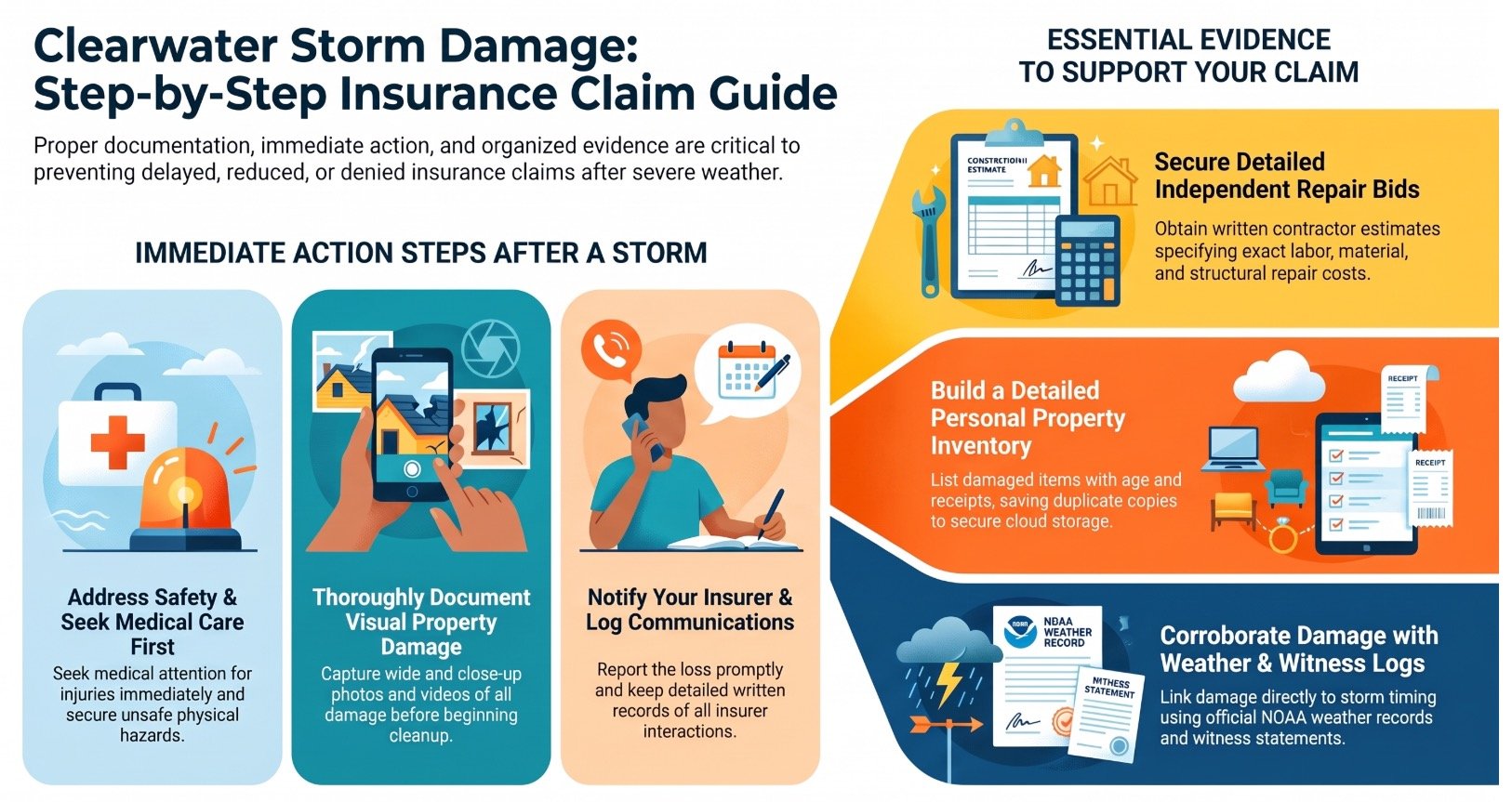
After storm or weather damage causes an injury, we should seek medical care promptly, even if symptoms seem minor. Document the damage with clear photographs, notes, and receipts before making repairs, when it’s safe to do so. Then contact your insurer promptly and keep records of all communications and claim-related expenses.
Get Medical Care
If a storm-related property incident in Clearwater injures you, seek medical care promptly, even if your symptoms seem minor. Some injuries, including head trauma and soft-tissue damage, may worsen or become apparent later. We encourage you to call emergency services for severe symptoms and visit a qualified medical professional for other concerns. Explain how the incident occurred and describe every symptom, even if it seems unrelated. Follow the provider’s treatment recommendations, attend follow-up appointments, and ask questions if you don’t understand your diagnosis or care plan. Careful medication management can help prevent missed doses, harmful interactions, or other complications. If you’re responsible for caring for others, arrange support while you recover rather than delaying treatment. Prompt, consistent care protects your health and creates a clear clinical record of your injuries and recovery needs.
Document the Damage
Once you’re safe and have addressed any urgent medical needs, document the storm damage as soon as conditions allow. We can help protect everyone involved by recording what happened carefully and avoiding unsafe areas. Photograph and video damaged rooms, belongings, and visible hazards from several angles. Include wide views showing the location and close-ups revealing details. Note the date, time, and affected areas, and keep receipts for emergency repairs or temporary lodging.
Create a Personal property inventory listing damaged or missing items, their approximate age, purchase price, and current condition. Gather receipts, warranties, appraisals, and earlier photographs when available. Use a Digital backup strategy by saving copies in secure cloud storage or another location separate from the property. Preserve original files and written notes, and don’t discard damaged items until you’ve documented them, unless you must remove them for safety.
Contact Your Insurer
When conditions are safe, contact your insurer promptly to report the storm damage and begin a property claim. We can help you prepare by gathering your photographs, repair estimates, and a clear account of when and how the damage occurred. Ask the insurer to confirm your claim number, explain the next steps, and arrange an inspection. Keep notes of each conversation, including the representative’s name, date, and any instructions, so we can track commitments and protect an accurate record.
Review your policy and coverage limits before discussing repairs or settlement. Understand deductibles, exclusions, deadlines, and documentation requirements, and ask questions when terms are unclear. Provide truthful, consistent information, and save copies of every message and form. If the insurer delays, disputes the damage, or offers less than repairs may require, we can seek qualified guidance before you accept.
Critical Evidence in a Clearwater Property Claim Storm & Weather Damage Injury Case
To support your Clearwater property claim, we’ll focus on evidence that documents the damage, conditions, and resulting costs. Preserve these records promptly, since they can help establish what happened and support your claim.
Essential evidence includes:
- Photographs of storm damage
- Weather reports
- Repair estimates
- Witness statements
Storm Damage Photographs
Photographs can preserve crucial evidence of storm damage before repairs, cleanup, or changing weather alter the scene. We recommend taking clear images as soon as it’s safe, while avoiding hazards such as unstable structures and exposed wiring. Capture wide views of each affected area, then photograph close details of roof openings, broken windows, water intrusion, and damaged belongings. Panoramic coverage can show how damage relates across rooms or exterior surfaces, while focused images clarify specific conditions. Include undamaged areas when they provide useful context, and take multiple angles without moving debris. Preserve original files because Photo metadata may record when an image was captured. Keep copies organized by location and date, and avoid editing the originals. We can help you present these images clearly to support a fair, well-documented property claim.
Weather Reports
Weather reports can help establish the conditions surrounding a storm and connect those conditions to damage at your property. We can review official records to identify when severe weather reached your area and what hazards forecasters observed. NOAA archives may provide historical data on rainfall, wind speeds, hail, and storm timing. We can compare those records with your photographs, inspection notes, and account of when damage appeared. This evidence can help clarify whether a storm caused the loss or worsened an existing condition. Because weather data can be complicated, careful radar interpretation matters. Radar images may show a storm’s path and intensity, but they require context and reliable analysis. We can help organize relevant reports and explain how they support a clear, accurate claim, while keeping your property’s recovery and community responsibilities in view.
Repair Estimates
Weather records can show when a storm reached your area, while repair estimates help document the cost of the resulting damage. We can use detailed estimates to connect visible harm to necessary repairs and present a clearer account of your property loss. Ask qualified contractors to inspect affected areas, describe the required work, and provide written bids. These documents should identify labor, materials, and any urgent measures needed to protect the building from further damage. We can also compare material pricing with current local costs, since outdated or incomplete figures may understate the work’s true value. Keep invoices, photographs, and revised estimates in one place, and note why each change became necessary. This organized evidence can help us evaluate an insurer’s decision and advocate for a fair, accurate claim.
Witness Statements
What did others observe before, during, or after the storm? Neighbors, tenants, contractors, and first responders may have seen conditions that clarify how damage occurred and when it began. We can help you identify relevant witnesses and ask focused questions about roof leaks, flooding, fallen trees, or delayed repairs. Their accounts may support your description of the loss and help insurers assess your property claim fairly.
Witness credibility matters. We should record each person’s name, contact information, firsthand observations, and any relationship to you. Clear, consistent accounts carry more weight than speculation or secondhand reports. Statement timing also matters: witnesses should document their recollections promptly, while details remain fresh. We can preserve signed statements and compare them with photographs, repair records, and weather data. Careful documentation helps us present reliable evidence and pursue a thorough, responsible claim.
Don’t Wait. Call Our Florida Personal Injury Lawyers Now!
Long-Term Effects of Clearwater Property Claim Storm & Weather Damage Injuries
Storm-related injuries can affect your health and daily life long after the immediate damage is addressed. We’ll explain how chronic pain and limited mobility, as well as respiratory complications, may persist and require ongoing care. We’ll also consider lasting emotional distress and how these effects can shape your recovery and property claim.
Chronic Pain and Mobility
Even after a property storm or weather injury has passed, chronic pain and reduced mobility can disrupt daily routines and limit your ability to work. Lingering discomfort may make it difficult to lift supplies, travel to appointments, or care for people who depend on you. We can help you understand how these limitations affect your daily life and ability to serve others.
Your medical team may recommend Pain management strategies, physical therapy, or mobility aids to support safer movement and preserve independence. Follow treatment guidance and keep records of symptoms, appointments, and related expenses. These details can help show how an injury continues to affect your work and responsibilities.
When an insurer disputes lasting effects, we can review your claim, gather relevant evidence, and explain your options. You merit a careful assessment of the support and compensation your recovery may require.
Respiratory Health Complications
After storm damage exposes a property to mold, dust, or other airborne irritants, respiratory symptoms may persist and interfere with work and daily activities. Indoor mold can trigger coughing, wheezing, shortness of breath, or worsening asthma, while lingering airway inflammation may make breathing difficult even after repairs begin. We encourage you to seek medical evaluation and follow your provider’s treatment plan, especially if symptoms continue or worsen. Keep records of diagnoses, medications, missed work, and how your condition limits routine responsibilities. These details can help show the connection between storm-related exposure and ongoing health effects. If you serve others at work or in your community, persistent symptoms may also affect your ability to meet those commitments. We can help you document these losses and address disputes over whether your property insurance covers necessary remediation and related expenses.
Lasting Emotional Distress
When storm or weather damage disrupts your home, the uncertainty, displacement, and financial strain can lead to lasting emotional distress. You may experience anxiety, sleep problems, or difficulty concentrating long after repairs begin. These effects can interfere with work, relationships, and your ability to support others who depend on you. We encourage you to seek appropriate care rather than dismissing persistent symptoms. Trauma counseling can help you process the event and develop practical ways to manage stress. Honest conversations with family members may also reduce family strain and clarify what support everyone needs. Keep records of symptoms, treatment, and related expenses, and share them with your healthcare provider. If an insurance dispute adds pressure, we can help you understand your options and pursue fair consideration of documented losses.
Proving Liability in Clearwater Property Claim Storm & Weather Damage Injury Cases
Proving liability in a Clearwater storm damage claim requires more than showing that severe weather harmed your property. We must identify who had a legal duty to protect people or property and show how a failure to meet that duty contributed to the loss. This may involve a property owner who neglected roof maintenance, a manager who ignored a known hazard, or a contractor whose careless work left a structure vulnerable. Duty allocation clarifies each party’s responsibilities, and evidence of contractor negligence may show that faulty repairs or installation worsened the damage.
We can help you preserve photographs, repair records, inspection reports, witness accounts, and other evidence that documents conditions before and after the storm. Timelines and maintenance histories can also show whether a responsible party knew, or should have known, about a risk. By connecting specific conduct to the harm, we can present a clear, fact-based account and support fair accountability for those affected.
Dealing With Insurance Companies After a Clearwater Property Claim Storm & Weather Damage Injury
Insurance companies may contact you soon after a Clearwater storm damages your property, but their interests may not align with yours. We can help you approach each conversation carefully while protecting your ability to pursue fair compensation. Provide accurate information, keep copies of letters and emails, and record the date, time, and substance of phone calls. Avoid guessing about damage or accepting a quick payment before you understand what it covers. If an adjuster requests a recorded statement or broad access to personal records, we can help you assess the request and respond appropriately.
Clear Policyholder communication can reduce misunderstandings and preserve a useful record of your claim. We can review policy language, compare the insurer’s position with available evidence, and identify questions that need clear answers. During claim negotiation, we can present documented losses and explain why a proposed settlement may not address necessary repairs or related expenses. Our guidance helps you advocate for your household while staying focused on recovery and the needs of those who depend on you.
What to Expect During a Clearwater Property Claim Storm & Weather Damage Injury Claim Process
We’ll begin by reviewing your claim and documenting the storm or weather damage to support your request. The insurer will investigate the loss, and we’ll help you understand its findings and respond to any questions. We’ll then assess a settlement offer or address a dispute if the insurer doesn’t provide fair compensation.
Initial Claim Review
After a storm damages your Clearwater property, the initial claim review helps us understand what happened, identify the losses, and determine what evidence may support your claim. We’ll listen as you explain the event, when it happened, and how it affected your home or business. This conversation helps us identify important questions and understand your priorities, including any concerns about keeping your household or operations safe. During our Policy review, we’ll examine relevant terms, deadlines, exclusions, and duties so you know what your insurer may require. Our coverage analysis will assess how the policy may apply to the reported damage and clarify potential issues that could affect payment. We’ll explain our findings in clear language, discuss practical next steps, and help you make informed decisions as you pursue a fair resolution.
Damage Documentation
As we review the policy and reported losses, we’ll document the storm damage to support a clear, well-grounded claim. We’ll help you photograph affected rooms, exterior surfaces, and damaged belongings before repairs or cleanup change their condition. Include wide views and close-ups, and note when and where you took each image. An Inventory checklist can identify each item, its age, condition, and estimated replacement cost, supported by receipts or other available records. For water intrusion, we may recommend moisture mapping to document damp areas and help explain how much material is affected. Keep temporary repair invoices, contractor estimates, and records of steps taken to protect people and property. Organized documentation makes your account easier to understand and helps preserve details while you focus on your household and community.
Insurer Investigation
What happens when the insurer investigates a storm damage claim in Clearwater? Expect the insurer to review your policy, inspect the property, and assess the evidence you’ve provided. An adjuster may photograph damaged areas, take measurements, and ask when the storm occurred or when you first noticed the damage. We should answer accurately, share relevant records (including repair estimates and photographs), and keep copies of everything submitted.
A Claim file audit can help us identify missing documents, inconsistent damage descriptions, or unanswered questions before the review progresses. We should also carefully review policy interpretation, since coverage depends on the policy’s terms, exclusions, and conditions. If the insurer requests access or additional information, we can coordinate promptly and document each interaction. Careful cooperation helps create a clear record of the loss and supports a fair, informed review.
Settlement or Dispute
Once the insurer completes its investigation, we can evaluate its decision and determine whether the proposed settlement reflects the documented storm damage and applicable policy terms. We’ll compare the offer with repair estimates, photographs, receipts, and other evidence, then explain any gaps before you decide how to proceed. If you still dispute the insurer’s assessment, we can submit supporting documentation and request a fair reconsideration. Your policy may also offer mediation options, allowing both sides to work toward a resolution with help from a neutral professional. When disagreements concern the amount of loss, the Appraisal Process may offer another path, subject to the policy’s requirements. We’ll clarify deadlines, costs, and potential outcomes, so you can make informed choices while protecting your property and maintaining the resources you need to serve your household and community.
Compensation for Clearwater Property Claim Storm & Weather Damage Injury Damages
After storm or weather damage, the compensation available through a Clearwater property claim depends on your policy, the cause and extent of the loss, and the evidence supporting your claim. We can help you identify covered damage and clearly document what your household or property has lost. Depending on your coverage, a claim may include reasonable repair or rebuilding costs, temporary housing expenses, and the replacement or repair of damaged personal belongings. If a covered event makes a rental property uninhabitable, Lost rental income may also be recoverable under applicable policy terms. Keep receipts, photographs, repair estimates, and records of communications with your insurer; these materials can help substantiate the amount requested. We’ll review policy limits, exclusions, deductibles, and deadlines so you understand what the insurer may owe. Our goal is to help you pursue the benefits your policy provides, so you can restore the property and keep supporting those who depend on you.
Economic vs Non-Economic Damages in Clearwater Property Claim Storm & Weather Damage Cases
We distinguish economic losses, such as repair costs and damaged belongings, from non-economic harm, including disruption and loss of use. To support your claim, we’ll identify the losses the policy covers and document how the storm affected your property and daily life. Clear records, photographs, estimates, and other evidence can help establish the damages you’re seeking.
Economic Losses
When a storm damages a Clearwater property, the financial impact can extend beyond repair costs. We can help you identify the measurable losses caused by covered damage and document them carefully for your insurer. These economic losses may include temporary housing, debris removal, damaged equipment, and reasonable costs to protect the property from further harm. If you operate a business, Business interruption may also create lost revenue while storm damage prevents normal operations. You may need records showing prior income, ongoing expenses, repair estimates, and the length of the interruption to support your claim. We can review these materials and explain how the policy applies. By clearly documenting your financial losses, we can help you pursue the benefits you need to restore your property and keep serving your community.
Non-Economic Harm
Storm damage can cause more than measurable financial losses; it may also disrupt your sense of security and daily life. While economic damages address costs such as repairs and temporary housing, non-economic harm reflects the personal impact of living through a damaged or unsafe home. You may experience Emotional suffering, including stress, anxiety, or difficulty sleeping, as you manage uncertainty and disruption. Damage can also reduce your enjoyment of your home, privacy, routines, and time with family. These effects matter because a home often supports stability and connection, not merely shelter. When we help you understand your property claim, we consider how the storm has affected your well-being alongside its financial consequences. Recognizing both categories gives a fuller picture of your losses and the support you may need.
Proving Damages
To support a Clearwater property claim, you’ll need evidence linking the covered storm or weather event to your losses and showing their extent. We can help you organize records that distinguish economic damages from non-economic harm. Economic losses may include repair costs, damaged belongings, temporary housing, and other expenses caused by the event. Preserve photographs, receipts, Contractor Invoices, estimates, and payment records, and keep copies of messages with your insurer. If your policy withholds recoverable depreciation until repairs are complete, document the work and submit required proof to pursue Depreciation Recovery. Non-economic harm, such as disruption to family routines or the strain of displacement, may also matter, though coverage and available remedies depend on the policy and applicable law. Clear documentation helps us present your losses accurately and advocate for a fair review.
When a Clearwater Property Claim Storm & Weather Damage Injury Case Goes to Trial vs Settlement
Whether a Clearwater storm damage claim settles or proceeds to trial depends on the evidence, the insurer’s response, and the amount of compensation at stake. We can assess whether negotiations offer a fair resolution or whether presenting the dispute in court may better serve your interests. Settlement can provide a more predictable outcome and avoid the demands of trial, but you shouldn’t accept an offer that fails to address supported losses. We’ll review the insurer’s position, explain the risks, and help you weigh any proposed agreement.
If negotiations stall, a trial allows both sides to present evidence and arguments to a judge or jury. The Trial Timeline can vary based on the case’s complexity, court scheduling, and preparation needs. At trial, we’ll explain the evidence clearly and advocate for a result that reflects the harm your property suffered. Jury Deliberations occur after the jury hears the case and receives instructions. We’ll prepare you for each stage and keep your goals central as you decide how to proceed.
Florida Laws That May Affect Your Clearwater Property Claim Storm & Weather Damage Case
Florida law sets deadlines and standards that can shape how we handle your Clearwater storm or weather damage property claim. We’ll review the rules that may affect your options and help you pursue a fair resolution while protecting the resources your household or organization needs.
- Prompt notice: Florida notice deadlines may require you to report damage within a set period. We’ll check the applicable requirements and help you document when and how you notified your insurer.
- Proof of loss: Your policy may require a sworn statement or supporting records. We’ll organize estimates, photographs, receipts, and repair documents to present a clear account of your losses.
- Claim handling: Florida law establishes standards for insurers’ responses and investigations. We’ll track communications and address delays or disputes with evidence and careful follow-up.
- Appraisal: If you and your insurer disagree about the loss amount, policy appraisal rights may provide a process for resolving valuation disputes. We’ll review your policy before recommending this option.
These rules can influence negotiations, so we’ll explain how they apply to your circumstances.
The Statute of Limitations for Clearwater Property Claim Storm & Weather Damage Injury Cases
You must file a lawsuit over storm or weather damage to property within the deadline set by Florida law, and missing it can bar recovery even if the claim is valid. Florida law generally gives property owners five years to file a lawsuit based on a written contract, including many insurance disputes. However, the applicable period can depend on the policy, the loss date, and current law, so we shouldn’t assume every claim follows the same timeline.
Separate Policy deadlines may require prompt notice, proof of loss, or other action well before a lawsuit deadline. Missing a contractual requirement can complicate a claim even when the statutory filing period remains open. We should review the policy and preserve records of the damage, communications, and repair costs as soon as possible.
Appraisal options may address disagreements about the amount of a covered loss, but appraisal generally doesn’t extend the deadline to sue. Acting promptly helps protect resources needed to restore homes, support families, and serve the community.
How a Clearwater Property Claim Storm & Weather Damage Lawyer Can Help You
When storm damage disrupts your home or business, a Clearwater property claim lawyer can help you understand your policy and respond to an insurer’s decisions. We can explain your rights, organize claim information, and help you pursue a fair review while you focus on protecting your family, employees, and community.
A Clearwater property claim lawyer can help you understand your policy and pursue a fair review after storm damage.
- Policy interpretation: We review relevant terms and explain how limits, conditions, and deadlines may apply to your loss.
- Damage documentation: We help organize photographs, repair estimates, invoices, and other records that support the claim.
- Coverage disputes: We assess the insurer’s reasoning, including its use of Coverage exclusions, and identify questions that merit a clear response.
- Claim communication: We prepare focused correspondence and help present supporting information so the insurer can evaluate the loss accurately.
Our role is to make a complicated process more manageable and help your position be clearly presented. By addressing policy language and evidence carefully, we help you seek resources needed to restore damaged property and continue serving those who depend on you.
When to Contact a Clearwater Property Claim Storm & Weather Damage Lawyer
Contact a Clearwater property claim storm and weather damage lawyer if your insurer delays, disputes coverage, offers less than the documented repair costs, or asks you to make decisions before you understand your policy. Early guidance can help us identify important steps while you focus on protecting your household, employees, or neighbors affected by the storm.
Contact counsel promptly after discovering damage, especially when the insurer requests recorded statements, inspections, estimates, or settlement documents. We can help you understand what information to preserve and how to respond accurately without overlooking relevant facts. Review Policy deadlines carefully; notice requirements, proof-of-loss forms, and appeal periods may limit how much time you have to act.
Ask for legal guidance if the insurer cites coverage exclusions or denies part of your claim. A clear explanation of the policy language and the damage record can help you assess your options. You don’t need to wait for a final denial to seek advice, especially when delays could complicate repairs or documentation. Early action helps keep the claim process orderly.
Why You Need an Experienced Clearwater Property Claim Storm & Weather Damage Lawyer
Because storm claims often involve disputed damage, policy exclusions, and strict deadlines, an experienced Clearwater property claim storm and weather damage lawyer can help protect your interests. We can review your policy, assess the insurer’s explanation, and determine whether the evidence supports their decision. When you’re focused on restoring your home and keeping your family or employees safe, clear guidance can help you make informed choices.
Storm losses may involve hidden water intrusion, roof damage, or repairs that reveal additional problems. We can organize records, coordinate relevant inspections, and explain how Policy exclusions may affect coverage. If contractor negligence contributed to the damage or complicated repairs, we can help distinguish those issues from the insurer’s obligations under your policy.
We can also communicate with the insurance company, respond to requests, and challenge an unfair claim outcome through appropriate legal channels. With experienced support, you can focus on recovery and the people who depend on you while we work to protect your rights.
How to Choose the Right Clearwater Property Claim Storm & Weather Damage Lawyer for Your Case
Choosing the right Clearwater property claim storm and weather damage lawyer starts with evaluating relevant experience, communication, and a clear approach to your claim. We can begin Attorney selection by asking whether a lawyer has handled storm-related property disputes and understands Florida insurance practices. Look for someone who can explain the claims process, identify potential challenges, and outline practical next steps without promising a particular result.
Communication matters throughout a claim. Choose counsel who responds clearly, keeps us informed, and treats our questions with respect. This is especially important when we’re focused on protecting our homes and supporting the people who depend on us. Ask who will manage the case and how often you can expect updates.
Before signing an agreement, review fee structures and any costs we may owe. Request written terms, clarify how fees are calculated, and ask about expenses if the claim doesn’t succeed. A careful comparison helps us make an informed choice and pursue fair consideration of our property loss.
About The Law Offices of Anidjar & Levine
At The Law Offices of Anidjar & Levine, we represent clients facing property insurance disputes, including claims involving storm and weather damage. We understand that damage to your home or business can disrupt daily life and threaten your financial stability. Our role is to help you understand your options and pursue a fair response from your insurer.
Our Firm History reflects a commitment to representing people who need practical legal guidance during difficult circumstances. We review policy terms, assess claim records, and communicate with insurers on our clients’ behalf. When a dispute requires further action, we explain the process and help you make informed decisions.
Our Attorney Values include careful preparation, clear communication, and respect for every client’s concerns. We recognize that serving others requires listening closely and treating each matter with diligence. You can expect us to discuss your claim honestly, outline potential next steps, and keep you informed as your case progresses. We work to protect your interests while pursuing a resolution supported by the facts and applicable insurance terms.
Don’t Wait. Call Our Florida Personal Injury Lawyers Now!

Frequently Asked Questions
Does Homeowners Insurance Cover Temporary Housing After a Storm Makes My Home Uninhabitable?
Yes, homeowners insurance often covers temporary housing when a covered storm makes your home uninhabitable. We can help you review your policy’s Loss of Use coverage, which may pay reasonable Additional Living Expenses, such as lodging and increased meal costs, while repairs are underway. Coverage limits, deductibles, and exclusions vary, and insurers may require receipts and proof of damage. We should promptly document expenses, report the claim, and confirm requirements with your insurer.
Can I File a Claim for Storm Damage to a Rental Property?
Yes, we can help you file a claim for storm damage to a rental property. Your policy’s rental property coverage may pay for repairs to covered damage, subject to its limits, exclusions, and deductible. We’ll review your policy, document the loss, and submit evidence to the insurer. For landlord storm claims, prompt notice and clear records of damage, repair costs, and lost rental income can help protect your interests and support affected tenants.
What Happens if My Mortgage Lender Is Listed on the Insurance Payment?
If your mortgage lender is listed on the insurance payment, the insurer may require its endorsement before releasing the funds. We can help you understand the Mortgage endorsement process and identify documents your lender needs. The lender may hold the payment in escrow and issue a lender disbursement in stages as repairs progress, often after reviewing estimates or inspections. We should confirm the lender’s requirements promptly so you can coordinate repairs and protect the property.
Can I Dispute an Insurer’s Preferred Contractor’s Repair Estimate?
Yes, we can dispute an insurer’s preferred contractor’s repair estimate if it omits necessary work, uses inadequate materials, or understates costs. For effective challenging of repair estimates, we should document damage, compare the estimate with an independent contractor’s detailed assessment, and submit supporting photographs, invoices, and professional opinions. Clear contractor scope disputes help identify specific differences and justify requested revisions. We can ask the insurer to reinspect and explain its decision in writing before approving repairs or accepting payment.
Does Flood Insurance Cover Storm Surge Damage to My Clearwater Property?
Yes, flood insurance generally covers storm surge damage because surge is flooding from coastal water, but coverage depends on your policy and the facts of the loss. We recommend reviewing your declarations, exclusions, and flood policy limits before relying on payment. Standard homeowners insurance usually excludes flood damage, including storm surge. If your insurer denies or reduces your claim, we can help you assess the policy language, document damage, and challenge an unsupported decision.
—————————
If a storm or severe weather event has damaged your Clearwater property, The Law Offices of Anidjar and Levine can help you understand your insurance options and pursue the benefits your policy provides. We’ll review your claim, explain your rights, and address disputes over coverage, repair costs, or delays. Prompt action can help preserve evidence and protect important deadlines. Contact us to discuss your circumstances and learn how we can assist with your property claim. You can also learn more about a Clearwater Personal Injury Lawyer.