The Law Offices of Anidjar and Levine can help injured victims in Orlando investigate suspected impaired or distracted driving, preserve time-sensitive evidence, and identify responsible parties. Alternative evidence may include crash reports, witness accounts, surveillance footage, vehicle data, phone records, toxicology results, and medical documentation. An Orlando Personal Injury Lawyer can communicate with insurers, evaluate policy limits and damages, address comparative fault allegations, and pursue available compensation within Florida’s deadlines. The following information explains important legal considerations and claim-handling steps.
Main Takeaways
- An Orlando impaired or distracted driving lawyer investigates crash causes, including alcohol, drugs, texting, fatigue, speeding, and unsafe driving.
- Attorneys preserve evidence such as crash reports, surveillance footage, phone records, witness statements, vehicle data, and medical documentation.
- Legal counsel identifies responsible drivers, employers, insurers, or other liable parties and builds evidence-based claims.
- Lawyers communicate with insurers, evaluate policy limits, document damages, and negotiate compensation for medical expenses, lost income, and future treatment.
- Injured individuals should seek prompt medical care, report the crash, preserve evidence, avoid premature releases, and consider Florida filing deadlines.
How We Can Help With Your Orlando Car Accident Impaired & Distracted Driving Injury Claim
When an impaired or distracted driver causes a collision in Orlando, an injured person may face medical expenses, lost income, and lasting physical or emotional harm. Legal assistance can protect that person’s interests while keeping recovery the immediate priority.
An attorney may investigate the crash, preserve available evidence, identify responsible parties, and communicate with insurers on the injured person’s behalf. Counsel can also assess medical documentation, employment losses, and other damages to support a properly developed claim. When a collision results in a fatality, assistance with a Wrongful Death Claim may help surviving family members pursue accountability and available compensation.
The opposing insurer may assert a Comparative Negligence Defense, alleging that the injured person contributed to the collision or worsened the harm. A careful review of witness statements, records, and roadway evidence may address that contention. Through informed guidance and compassionate service, legal professionals can help clients make decisions grounded in evidence, fairness, and applicable Florida law.
Understanding Orlando Car Accident Impaired & Distracted Driving Injury Cases


Understanding an Orlando impaired or distracted driving injury case begins with identifying how the collision occurred and which forms of evidence support that conclusion. A careful review may include crash reports, photographs, surveillance footage, vehicle data, witness statements, medical records, and relevant communications. These materials can help establish liability, connect injuries to the collision, and clarify the full scope of financial and personal harm.
Evidence preservation tips include copying reports, documenting injuries promptly, keeping medical appointments, saving damaged property, and avoiding posts or statements that could be misinterpreted. Time-sensitive evidence may require formal requests before it is lost or overwritten.
OUR CONSULTATIONSARE FREE
START YOUR FREE CASE REVIEW

An informed insurance negotiation strategy evaluates policy limits, documented losses, future treatment, and disputed responsibility before settlement discussions begin. Legal professionals can organize evidence, communicate with insurers, and protect an injured person’s interests throughout the process. This structured approach lets families and service-minded advocates focus on recovery while pursuing accountability through the right legal channels.
Don’t Wait. Call Our Florida Personal Injury Lawyers Now!
Common Causes of Orlando Car Accident Impaired & Distracted Driving
Impaired and distracted driving crashes in Orlando commonly result from alcohol consumption, texting while driving, and operating a vehicle under the influence of drugs. Passengers may also distract drivers by having disruptive conversations, blocking visibility, or demanding attention at critical moments. Each behavior can reduce reaction time, impair judgment, and increase the likelihood of a serious collision.
Drunk Driving


Drunk driving is a serious cause of Orlando car accidents because alcohol can impair judgment, slow reaction time, reduce coordination, and weaken a driver’s ability to evaluate hazards. An impaired motorist may speed, drift across lanes, disregard traffic signals, or fail to respond promptly to changing road conditions. These actions can place drivers, passengers, pedestrians, and cyclists at substantial risk of injury. Evidence in an impaired-driving claim may include police reports, breath or blood test results, witness statements, and dashcam footage. Officers may also document a driver’s behavior, speech, balance, and performance during a Field sobriety test. Individuals injured in an alcohol-related collision may need medical care, transportation assistance, and guidance regarding insurance and legal options. Promptly preserving evidence can help protect their interests.
Texting While Driving
Texting while driving is a common form of distracted driving that diverts a motorist’s visual, manual, and cognitive attention from the roadway. Reading or composing a message can keep a driver from recognizing traffic signals, pedestrians, lane changes, or sudden hazards. Even brief phone interaction may substantially increase the likelihood of a collision, particularly in congested Orlando traffic or near crosswalks and intersections. Drivers who cause crashes while texting may face civil liability for resulting injuries, property damage, and other losses. Florida’s texting penalties may also include fines, points, and heightened consequences for violations in designated areas or involving certain circumstances. Preventing these incidents requires drivers to silence phones, use hands-free features responsibly, and address messages only after reaching a safe, lawful location. Families and witnesses can help promote safer roadways by discouraging phone use behind the wheel.
Drug-Impaired Driving
When a driver operates a vehicle after using illegal drugs, prescription medication, or other substances that impair judgment, coordination, or reaction time, the risk of a serious collision increases. Drug-impaired driving can cause delayed responses, poor lane control, unsafe speed choices, and an inability to recognize developing hazards. Prescription misuse may occur when a person takes medication without medical direction, combines drugs with alcohol, or drives despite known side effects such as drowsiness or dizziness. Even medications used properly can affect some individuals more strongly than expected. These impairments may resemble distracted driving because attention becomes divided between the roadway and the drug’s effects. Drivers have a responsibility to evaluate whether they are fit to drive and arrange transportation when necessary. Victims may benefit from prompt medical care, documentation, and qualified legal guidance.
Distracted Passengers
Passengers can become a major distraction when they engage the driver in intense conversation, block the driver’s view, reach for controls, or create sudden noise and movement inside the vehicle. These distraction mechanisms can divert attention from traffic signals, pedestrians, lane markings, and changing road conditions. Passenger negligence may also involve encouraging speeding, using a phone near the driver, or failing to secure children and belongings that could shift during travel. Although passengers do not control the vehicle, their conduct can increase crash risks and limit the driver’s ability to respond safely. Responsible passengers should support attentive driving by keeping conversations manageable, avoiding unnecessary interference, and addressing urgent needs during a safe stop. When injuries result, an Orlando attorney can examine passenger conduct and other contributing circumstances.
Legal Rights of Orlando Car Accident Impaired & Distracted Driving Injury Victims
Victims injured in Orlando car accidents caused by impaired or distracted drivers may have the right to pursue compensation for medical expenses, lost income, property damage, pain and suffering, and other legally recognized losses.
Their legal rights may include:
- Seeking insurance benefits and filing a personal injury claim within applicable Florida deadlines.
- Requesting compensation from responsible drivers, employers, or other liable parties when evidence supports it.
- Applying Comparative fault rules, which may reduce recovery if a victim’s conduct contributed to the collision.
- Taking Evidence preservation steps, including obtaining medical records, photographs, witness information, vehicle data, and relevant communications.
Prompt medical attention and consistent treatment can document injuries and support a claim. A qualified attorney may investigate liability, communicate with insurers, evaluate damages, and protect a victim from pressured settlements. Survivors and families may also have rights involving wrongful-death claims when fatal injuries occur. Careful legal guidance helps injured individuals understand available remedies while preserving dignity, accountability, and access to necessary resources.
Why Do Orlando Car Accident Impaired & Distracted Driving Injuries Happen?
Impaired and distracted driving injuries in Orlando often result from preventable decisions that reduce a driver’s ability to perceive hazards, judge distance, and respond promptly. Alcohol, cannabis, prescription medications, and other substances may slow reaction time, impair coordination, or distort judgment. Distraction from texting, navigation systems, conversations, food, or passengers can divert visual, manual, and mental attention from traffic.
These behaviors become especially dangerous on busy roads, near intersections, and in changing weather or at night. Speeding, tailgating, unsafe lane changes, and failure to yield may compound impairment or distraction, increasing the likelihood and severity of a collision. Some injuries also arise when a driver operates a vehicle while fatigued, because exhaustion can produce effects similar to impairment.
Determining why a crash occurred may require examining Roadside evidence, surveillance footage, and dashcam review. Those sources can help clarify driver conduct, traffic conditions, and timing while supporting an objective assessment of contributing factors. Understanding these causes promotes accountability and informs efforts to protect Orlando road users.
What Should You Do After an Orlando Car Accident Impaired & Distracted Driving Injury?
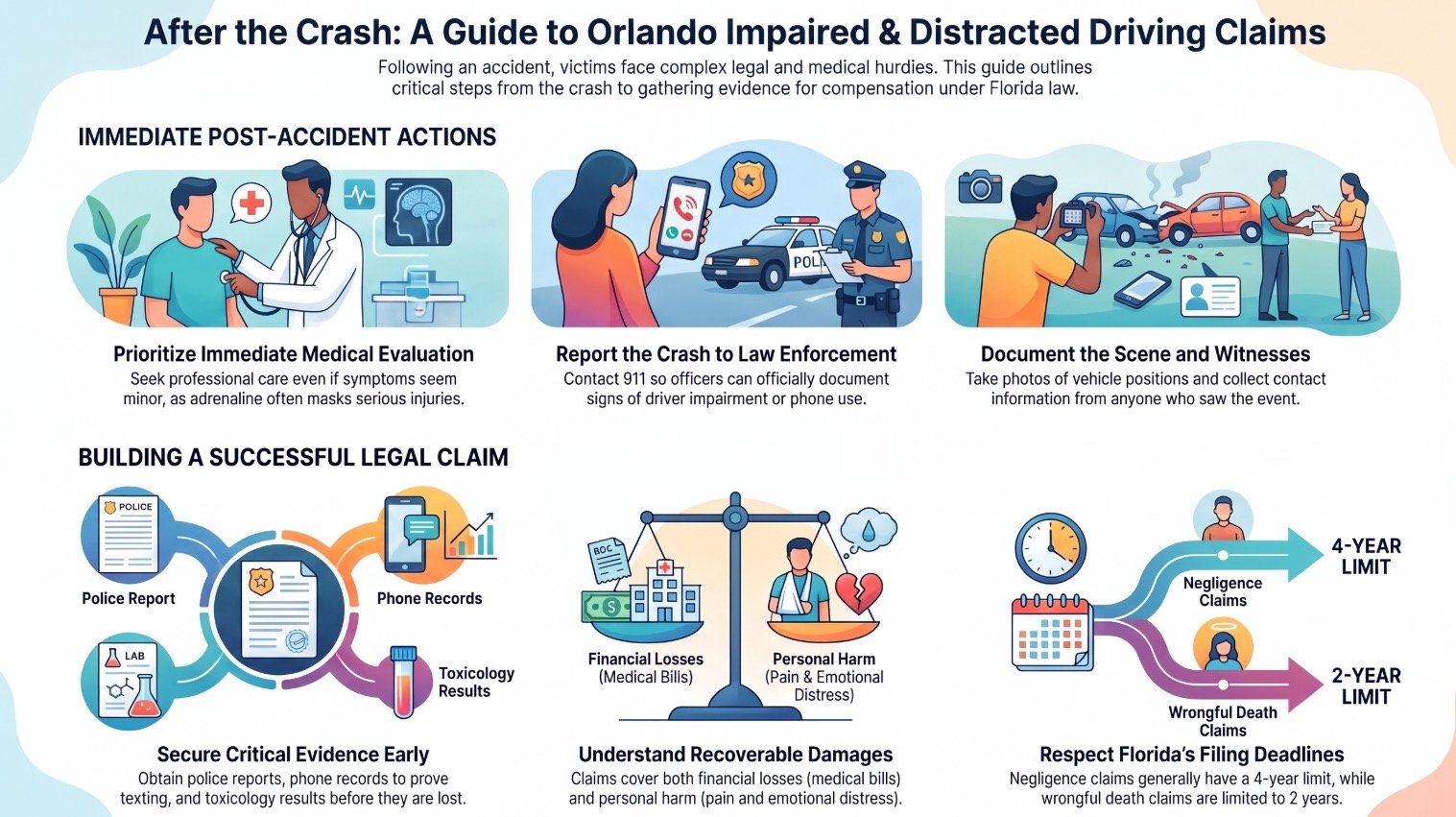
After an impaired or distracted driving injury, the injured person should seek immediate medical care, even if symptoms initially appear minor. Report the crash to law enforcement, and preserve medical records, photographs, witness information, and other evidence. Document treatment, property damage, lost income, and related expenses to establish the full extent of the resulting damages.
Seek Immediate Medical Care
When a collision involves suspected impaired or distracted driving, prompt medical evaluation is essential, even if the injured person feels capable of leaving the scene. Emergency response priorities include obtaining emergency assistance, accepting transportation for urgent assessment, and following medical instructions without delay. Avoiding secondary injury may require remaining still, limiting movement, and allowing trained responders to evaluate possible head, neck, internal, or spinal trauma. The importance of prompt evaluation extends beyond immediate treatment because adrenaline can conceal symptoms that later recur. Medical professionals can identify injuries, establish appropriate care, and recommend monitoring or follow-up services. The injured person should note when symptoms begin, change, or intensify, including pain, dizziness, confusion, weakness, or nausea. When to document symptoms matters: record written observations promptly and share them accurately with healthcare providers.
Report the Crash
A crash involving suspected impaired or distracted driving should be reported to law enforcement promptly, particularly when injuries, significant property damage, or disputed circumstances are present. Calling 911 allows dispatchers to coordinate police, emergency medical care, and other assistance. The involved person should prioritize Scene safety by moving away from traffic when possible, activating hazard lights, and avoiding confrontation with another driver. If immediate danger exists, remaining inside a secured vehicle may be appropriate until responders arrive. Officers can assess the situation, identify potential impairment or distraction, and prepare an official crash report. Individuals should provide accurate, factual information without speculating about causes or assigning blame. They should also call witnesses, when safe, and provide their names and contact information to responding officers. Cooperation with emergency personnel helps protect everyone involved and supports an orderly investigation.
Document Evidence and Damages
Documenting evidence and damages can help preserve information needed to evaluate an impaired or distracted driving injury claim. When safe, photograph vehicle positions, roadway conditions, visible injuries, property damage, and relevant traffic signs. Witness names and contact information, responding officer details, and available video recordings may also support the account. Organize medical records, discharge instructions, prescriptions, treatment bills, mileage, and work absence documentation chronologically. Retain insurance documentation, including policy information, claim numbers, adjuster communications, and settlement offers, without altering or discarding original materials. Detailed notes about pain, limitations, and changes in daily activities can clarify injury valuation issues. Prompt legal guidance may help preserve evidence, address disputed fault, and present damages accurately while supporting fair treatment.
Critical Evidence in an Orlando Car Accident Impaired & Distracted Driving Injury Case
A strong impaired or distracted driving injury claim depends on timely, reliable evidence that connects the conduct to the collision and resulting harm.
Major sources may include:
- Police reports documenting observations, citations, testing, and crash conditions.
- Witness statements describing impairment, distraction, traffic movements, and driver behavior.
- Phone and app records that may indicate texting, calling, or other device use.
- Medical records, photographs, vehicle damage, roadway evidence, and other crash documentation.
Together, these materials can help establish liability, causation, and the full extent of the injured person’s losses.
Police Reports
Police reports often provide the earliest official account of an Orlando car accident involving suspected impaired or distracted driving. Officers may document roadway conditions, vehicle positions, visible injuries, citations, and observations concerning alcohol, drugs, phone use, or other distractions. These details can help establish how the collision occurred and identify evidence requiring further investigation. Reports may also note whether field sobriety testing, chemical testing, or arrests occurred, although recorded observations are not automatically conclusive proof of liability. An attorney can evaluate the report for inconsistencies, omissions, and statements that support an injured person’s claim. Additional materials, including Dashcam footage, toxicology results, photographs, and vehicle data, may clarify the recorded events. Police narrative summaries can organize initial findings, but legal conclusions should be based on the complete evidentiary record.
Witness Statements
When available, witness statements can provide an independent account of an Orlando car accident involving suspected impaired or distracted driving. Observers may describe vehicle movements, traffic signals, driver behavior, lighting, weather, and events immediately before and after the collision. Their information can help clarify disputed facts and support a careful evaluation of liability and injuries.
Eyewitness credibility depends on the person’s location, visibility, attentiveness, ability to perceive events, and relationship to those involved. Investigators may compare each account with physical evidence, photographs, medical records, and the police report. Statement consistency is also important; substantial changes may affect reliability, while details that remain stable can strengthen an account. Witnesses should provide truthful information without speculation. Promptly identifying and preserving contact information can help the injured person’s legal team serve the interests of all affected parties.
Phone And App Records
Phone and app records may provide important evidence in an Orlando car accident involving suspected impaired or distracted driving. These records can help establish whether a driver was texting, browsing, calling, searching, or using social media shortly before the collision. Authorized legal investigations may examine call logs, message timestamps, application activity, device data, and cloud-stored information. Such texting evidence can clarify the driver’s actions and timing, particularly when recollections differ, or witnesses observed only part of the event. Cellphone forensics may preserve relevant information without altering the original device, supporting a reliable review by qualified professionals. Attorneys may seek records through consent, preservation requests, subpoenas, or court orders, while respecting privacy requirements. Prompt action is important because data can be deleted, overwritten, or lost through routine device updates.
Medical And Crash Evidence
Medical and crash evidence can help establish both the nature of an Orlando car accident and the injuries caused by suspected impaired or distracted driving. EMT documentation may record observed symptoms, statements, crucial signs, treatment decisions, and the time emergency personnel reached the scene. Hospital records, diagnostic images, physician notes, and rehabilitation records can connect those findings to continuing pain, limitations, or required care.
Crash evidence may include photographs, vehicle damage assessments, roadway conditions, surveillance footage, black-box data, and witness accounts. Together, these materials can clarify impact forces, vehicle positions, and whether the collision pattern matches the reported events. Toxicology reports may provide information concerning alcohol or drug use, although interpretation depends on collection procedures and timing. Preserving these records promptly supports a careful evaluation of responsibility, damages, and the injured person’s recovery needs.
Long-Term Effects of Orlando Car Accident Impaired & Distracted Driving Injuries
Long-term injuries from impaired or distracted driving crashes may cause chronic pain that interferes with mobility, employment, and daily activities. Survivors may also experience emotional and psychological trauma, including anxiety, depression, or post-traumatic stress. Continuing treatment, rehabilitation, medication, and supportive care can create substantial ongoing medical expenses.
Chronic Pain Conditions
When impaired or distracted driving causes an Orlando car accident, resulting injuries may develop into chronic pain conditions that persist long after the initial trauma appears to have healed. Neck, back, joint, and nerve injuries can produce recurring discomfort, limited mobility, and sleep disruption, affecting work and daily responsibilities. Effective Pain Management may require coordinated treatment, physical therapy, medication, and periodic medical evaluations. Patients should understand potential Medication Side Effects, including impaired alertness or coordination, particularly when driving or operating equipment. Physicians may need to document how symptoms affect Driving Capacity and recommend temporary restrictions when safety is uncertain. Detailed records can also help address Liability Questions by connecting ongoing conditions to the collision and demonstrating necessary care. Legal guidance may help injured individuals protect access to treatment and pursue appropriate compensation for ongoing medical needs.
Emotional and Psychological Trauma
Emotional and psychological trauma can accompany the physical consequences of an Orlando car accident caused by impaired or distracted driving. Survivors may experience anxiety, depression, sleep disruption, irritability, or fear of traveling, even after visible injuries improve. Some develop post-traumatic stress symptoms, including intrusive memories, heightened alertness, and avoidance of locations associated with the collision. These effects can interfere with employment, family responsibilities, and relationships, making compassionate support important during post-crash recovery. Mental health evaluations and treatment records may provide legal documentation of the trauma’s connection to the accident. Clear documentation can also assist when insurance disputes arise over the seriousness or duration of psychological harm. A qualified attorney may help protect the survivor’s interests while coordinating with medical and counseling professionals throughout the legal process.
Ongoing Medical Expenses
Because impaired or distracted driving injuries may require continuing care, future medical expenses can become a substantial part of an Orlando car accident claim. These costs may include rehabilitation, prescription medication, diagnostic testing, assistive equipment, expert consultations, and anticipated surgery. Rehab therapy may remain necessary for months or years when injuries affect mobility, cognition, or daily functioning. A claim may also address future treatment, provided the need and estimated cost are supported by reliable medical evidence. Physicians, life-care planners, and financial professionals can evaluate prognosis, treatment frequency, inflation, and expected duration of care. Maintaining medical records, invoices, treatment recommendations, and insurance statements helps document these losses. An attorney may present this evidence to pursue compensation that supports continued recovery and reduces the financial burden on injured individuals and their families.
Proving Liability in Orlando Car Accident Impaired & Distracted Driving Injury Cases
Establishing liability in an Orlando car accident involving impaired or distracted driving requires evidence connecting the driver’s conduct to the collision and resulting injuries. Investigators may examine police reports, witness statements, traffic-camera recordings, vehicle data, and cellphone records to determine whether alcohol, drugs, texting, or another distraction affected the driver’s decisions. Chemical testing, field-sobriety observations, and admissions can further support impairment allegations.
Medical records and expert testimony may explain how the collision caused specific injuries, while photographs, scene measurements, and crash-reconstruction analysis can clarify what occurred. A thorough investigation should also consider whether other contributing factors, including Faulty Traffic Enforcement or Negligent Vehicle Maintenance, played a role. Liability may extend beyond the impaired driver when another responsible party negligently created or failed to prevent a dangerous condition. Preserving evidence promptly is important because recordings, electronic data, and physical conditions can change. A qualified Orlando attorney can organize these facts and present a clear, evidence-based claim on the injured person’s behalf.
Don’t Wait. Call Our Florida Personal Injury Lawyers Now!
Dealing With Insurance Companies After an Orlando Car Accident Impaired & Distracted Driving Injury
Once liability evidence has been gathered, communication with insurance companies becomes a significant part of pursuing compensation after an Orlando car accident involving impaired or distracted driving. Insurers may request medical records, employment information, photographs, and other documentation supporting the injured person’s losses. Each submission should be accurate, complete, and consistent with available evidence.
Adjusters may seek recorded statements or propose an early settlement before the full extent of injuries is known. Legal counsel can help protect the claimant from unintentionally minimizing symptoms, accepting unfavorable terms, or releasing claims prematurely. Communications should remain professional, factual, and limited to relevant information.
When an insurer undervalues or denies a valid claim, counsel may evaluate policy language, liability evidence, medical documentation, and applicable deadlines. Claim denial appeals can address factual errors, unsupported conclusions, or overlooked damages through organized written submissions. This careful advocacy helps ensure injured individuals and their families receive fair consideration while preserving resources needed for recovery and continued service to others.
What to Expect During an Orlando Car Accident Impaired & Distracted Driving Injury Claim Process
An impaired or distracted driving injury claim typically begins with an initial evaluation of liability, injuries, and available insurance coverage. The evidence-gathering process may include collecting crash reports, medical records, witness statements, phone records, and other relevant documentation. After reviewing the evidence, the claimant may enter insurance negotiations, with the matter concluding through a settlement or proceeding to trial if necessary.
Initial Claim Evaluation
How a claim begins can substantially affect the direction of an Orlando impaired or distracted driving injury case. During the initial evaluation, a legal professional reviews the reported collision, injuries, medical treatment, and potential sources of compensation. The discussion may clarify the client’s immediate needs, applicable deadlines, and the distinctions between personal injury protection benefits and liability claims. The team pays close attention to fault determination, especially when impairment, phone use, fatigue, or other distracted conduct may have contributed to the crash. The evaluation also considers whether comparative negligence could affect recovery. The firm then develops an informed insurance strategy to address communications, coverage questions, and settlement positioning. This stage does not establish a final outcome. Instead, it provides a practical framework to protect the injured person’s interests as the claim moves through subsequent review and resolution.
Evidence Gathering Process
During the evidence-gathering process, an Orlando car accident lawyer typically examines the collision circumstances, the nature of the reported impairment or distraction, and the injuries allegedly caused by the crash. The lawyer may collect photographs, crash reports, medical records, witness statements, and documentation of vehicle damage. Scene safety remains important because evidence should be obtained without creating additional risks for injured individuals, responders, or others nearby. Counsel may also identify available traffic-camera, surveillance, dashboard-camera, or cellphone footage and promptly preserve it before recordings are overwritten. Records concerning toxicology testing, citations, field sobriety observations, and electronic device use may help clarify disputed conduct. Investigators can document roadway conditions, lighting, signage, and weather. This organized review helps preserve reliable information while supporting an accurate evaluation of the claim.
Insurance Company Negotiations
Once the available evidence has been organized, insurance company negotiations typically focus on liability, the extent of the injuries, and the value of the resulting losses. A lawyer may present medical records, wage documentation, crash reports, witness statements, and evidence of impaired or distracted driving to support the claim. Adjusters often review this material, request additional information, and assess whether the policy applies. Claim timelines can vary according to treatment progress, documentation, insurer responsiveness, and the intricacy of disputed facts. Throughout discussions, counsel may address medical expenses, lost income, rehabilitation needs, and other measurable damages while protecting the injured person’s privacy and interests. A settlement strategy should reflect the evidence, applicable coverage, and anticipated needs rather than pressure for premature resolution. Clear communication helps the claimant make informed decisions during negotiations.
Settlement Or Trial
Whether an impaired or distracted driving claim proceeds to settlement or trial depends on the available evidence, the parties’ positions, and the injured person’s expected recovery. Counsel typically evaluates crash reports, medical records, witness statements, toxicology results, and insurance coverage before recommending a path. A negotiation strategy may seek compensation for treatment, lost income, ongoing limitations, and other documented damages while accounting for disputed liability or future medical needs. Settlement can provide a defined resolution without courtroom uncertainty, but an injured person generally should understand the release terms and long-term consequences before agreeing. If negotiations fail, trial preparation may include depositions, expert opinions, exhibits, and testimony concerning impairment, distraction, causation, and damages. The court then determines liability and compensation based on admissible evidence each side presents.
Compensation for Orlando Car Accident Impaired & Distracted Driving Injury Damages
Victims injured by impaired or distracted drivers in Orlando may pursue compensation for medical expenses, lost income, property damage, pain and suffering, and other losses caused by the collision. A claim may also address future treatment, rehabilitation, necessary transportation, and household assistance when supported by reliable documentation. Establishing liability generally requires evidence linking the driver’s impairment or distraction to the crash, such as police reports, toxicology results, witness accounts, photographs, surveillance footage, and phone records. Insurance claim deadlines can limit recovery if you don’t provide notice or complete required filings promptly. Crash evidence timelines also matter because video may be overwritten, vehicle damage may be repaired, and witness memories may fade. An attorney can help preserve relevant evidence, communicate with insurers, evaluate settlement proposals, and pursue litigation when negotiations do not provide appropriate relief. Prompt medical care and organized records can further support the claim while helping injured individuals receive services needed for recovery. Each case depends on its facts, applicable law, and available proof.
Economic vs Non-Economic Damages in Orlando Car Accident Impaired & Distracted Driving Cases
In impaired and distracted driving cases, economic damages may include medical expenses, lost income, and future treatment costs resulting from the accident. Non-economic damages generally address pain, emotional distress, reduced quality of life, and other personal harms that lack a direct financial value. Proving these losses requires reliable evidence, such as medical records, employment documentation, expert testimony, and accounts of the accident’s lasting effects.
Economic Damages
Economic damages represent the measurable financial losses arising from an Orlando car accident, including medical expenses, lost income, property damage, and future treatment or reduced earning capacity. You can document these losses with invoices, employment records, repair estimates, and professional projections. Medical bills may include emergency care, hospital services, diagnostic testing, medication, rehabilitation, and necessary follow-up treatment. Lost wages can include missed work during recovery, reduced hours, diminished earning capacity, or employment benefits unavailable because of the injury. Property-related damages may cover vehicle repairs, replacement costs, towing, rental transportation, and personal items damaged in the collision. A careful evaluation should account for both current expenses and reasonably anticipated costs, helping affected individuals pursue compensation that addresses their practical financial needs after an impaired or distracted driver causes harm.
Non-Economic Damages
Non-economic damages address the physical pain, emotional distress, reduced quality of life, and other personal consequences that follow an Orlando car accident involving impaired or distracted driving. Unlike medical bills or lost wages, these losses do not have an immediately stated dollar value. They may include ongoing discomfort, anxiety, sleep disruption, disfigurement, loss of companionship, and limitations on family, professional, or recreational activities. Florida law may permit recovery for qualifying injuries, although the amount depends on the circumstances and severity of the harm. Shared fault issues can reduce a claimant’s financial recovery when the injured person contributed to the accident. Punitive damages are separate from compensatory damages and may be considered when particularly reckless or intentional conduct warrants additional punishment. A fair evaluation recognizes both measurable expenses and lasting human consequences.
Proving Accident Losses
Establishing accident losses requires clear proof that connects the impaired or distracted driver’s conduct to each claimed injury and expense. Economic damages may include emergency treatment, continuing medical care, rehabilitation, prescription costs, lost wages, reduced earning capacity, vehicle repairs, and necessary household services. Records such as invoices, pay statements, medical evaluations, and repair estimates support these measurable claims. Non-economic damages address pain, emotional distress, disability, disfigurement, loss of enjoyment, and disruption of family relationships. Because these harms lack fixed prices, testimony, treatment histories, and daily-impact documentation can assist damages valuation. Liability proofing should include crash reports, witness accounts, photographs, phone records, toxicology results, and evidence of traffic violations. A carefully organized claim enables insurers, courts, and community-focused advocates to evaluate losses fairly and pursue compensation that supports the injured person’s recovery.
When a Orlando Car Accident Impaired & Distracted Driving Injury Case Goes to Trial vs Settlement
When an Orlando car accident injury claim involves impaired or distracted driving, the decision to pursue settlement or proceed to trial depends on the strength of the evidence, the severity of the injuries, and the parties’ willingness to accept a fair resolution. Evidence preservation can include medical records, crash reports, photographs, witness accounts, vehicle data, and communications that may clarify how the collision occurred. Strong documentation may support Insurance negotiation and encourage a resolution without court involvement. Settlement can provide compensation more quickly, reduce uncertainty, and spare injured individuals and families the demands of testimony. Trial may become necessary when an insurer disputes responsibility, undervalues losses, or refuses to offer appropriate compensation. In court, attorneys present evidence, question witnesses, and explain the injury’s effects on treatment, work, daily activities, and future needs. The appropriate path depends on the claim’s objectives, risks, and available proof, with decisions guided by the injured person’s interests and long-term well-being.
Florida Laws That May Affect Your Orlando Car Accident Impaired & Distracted Driving Case
Florida laws can noticeably affect an Orlando impaired or distracted driving case by establishing rules for driver conduct, evidence, liability, and available compensation.
Therefore, these provisions may shape how an injured person and the community receive fair, orderly treatment.
- Impaired driving: Florida’s DUI laws prohibit operation with prohibited alcohol or drug impairment. A conviction may support liability, although the civil claim still requires proof of causation and damages.
- Distracted driving: Florida’s texting-while-driving restrictions can provide relevant evidence regarding unsafe conduct, particularly when records or witnesses establish phone use.
- Comparative Negligence: Florida may reduce an award according to an injured person’s share of fault. Evidence concerning speed, attention, and safety practices can therefore become significant.
- Uninsured Motorist coverage: When an at-fault driver lacks adequate insurance, an injured person’s policy may provide additional compensation, subject to policy terms and required procedures.
Other Florida rules govern admissible evidence, insurance claims, and damage calculations. An attorney can evaluate these provisions, help protect the injured person’s interests, and pursue accountability responsibly.
The Statute of Limitations for Orlando Car Accident Impaired & Distracted Driving Injury Cases
Statutes of limitations add a strict time requirement to impaired and distracted driving injury claims in Orlando. Florida law generally provides four years to bring a negligence action for personal injuries, although special circumstances may shorten or extend that period. Wrongful death claims generally must be filed within two years. The deadline may depend on the accident date, the injured person’s circumstances, the defendant’s identity, or when damage was reasonably discovered. Missing the applicable deadline can prevent a court from considering otherwise valid compensation claims.
Early attention also helps preserve evidence concerning impairment, phone use, vehicle damage, medical treatment, and witness observations. Comparative negligence may reduce recovery when an injured person is assigned a percentage of fault, while punitive damages eligibility can depend on proving intentional misconduct or gross negligence. Because filing rules include exceptions and procedural requirements, affected individuals should identify the governing deadline promptly and keep complete records to support a fair evaluation of their losses.
How an Orlando Car Accident Impaired & Distracted Driving Lawyer Can Help You
An Orlando car accident impaired and distracted driving lawyer can help injured individuals investigate the collision, identify responsible parties, and pursue compensation under applicable Florida law. The lawyer may coordinate a crash investigation and organize an evidence timeline that clarifies how impairment or distraction contributed to the event.
An Orlando impaired and distracted driving lawyer investigates crashes, identifies liable parties, and pursues compensation for injured individuals under Florida law.
- Fault determination: Police report analysis, witness credibility assessments, and mobile data retrieval can help establish liability.
- Medical documentation: Counsel can organize treatment records, diagnoses, and prognoses to connect injuries with the collision.
- Damage valuation: Economic losses, future care needs, property damage, and non-economic harm may be evaluated effectively.
- Insurance negotiation: A lawyer can present documented claims, address insurer disputes, and build negotiation leverage to support a fair resolution.
This work allows injured people and their families to receive informed, respectful assistance while preserving important evidence and presenting a coherent claim. Legal guidance can also help ensure that communications, settlement proposals, and supporting materials accurately reflect the consequences of the crash.
When to Contact an Orlando Car Accident Impaired & Distracted Driving Lawyer
When impairment or distraction may have contributed to a collision, injured individuals should contact an Orlando car accident impaired and distracted driving lawyer as soon as possible, preferably before making detailed statements to insurers. Early contact lets counsel identify time-sensitive concerns while the circumstances are clear and records are available.
Immediate medical evaluation should take priority, even when symptoms appear minor. Medical records can document injuries and connect them to the collision. A lawyer may also help organize insurance documentation, including claim forms, correspondence, photographs, repair estimates, and medical bills, to preserve important information.
Police evidence may include crash reports, citations, field observations, toxicology results, or references to phone use. Because these materials often require timely requests, early legal attention can help you gather them. Witness contact is likewise important; names, phone numbers, and statements can become difficult to locate as time passes.
Prompt consultation helps injured people understand reporting deadlines and protect accurate information while seeking fair treatment.
Why You Need an Experienced Orlando Car Accident Impaired & Distracted Driving Lawyer
Effective representation often requires more than collecting medical records or submitting an insurance claim. An experienced Orlando car accident impaired and distracted driving lawyer can investigate how a collision occurred, identify responsible parties, and present facts in a manner that supports a client’s recovery. Impaired or distracted driving cases may involve disputed timelines, incomplete accounts, electronic data, witness testimony, and challenging insurance positions. Counsel can coordinate Evidence preservation, including photographs, vehicle inspections, phone records, surveillance footage, and relevant driving history, before crucial information disappears. Legal guidance also helps protect injured individuals from statements or settlements that may undervalue their losses. When a crash causes fatal injuries, the lawyer can assist families pursuing Wrongful death claims while addressing financial damages and applicable legal requirements. This support lets clients and their families focus on healing and supporting those who depend on them, while a qualified advocate manages the investigation, negotiations, and litigation needed to pursue fair accountability.
How to Choose the Right Orlando Car Accident Impaired & Distracted Driving Lawyer for Your Case
Choosing the right Orlando car accident impaired and distracted driving lawyer requires careful evaluation of the attorney’s experience, investigative resources, and approach to client representation. A qualified attorney should understand how impairment, phone use, fatigue, and other distractions may have contributed to a collision. During the initial Client consultation, the lawyer should listen carefully, explain potential legal options, and identify the client’s immediate needs without making unrealistic promises.
The attorney’s case strategy should reflect the available facts, the severity of the injuries, and the responsible parties’ conduct. Thorough evidence review may include crash reports, medical records, witness statements, surveillance footage, vehicle data, and relevant communication records. Clear explanations of investigative steps can help clients and families make informed decisions while protecting their interests.
Experience with settlement planning is also important. A lawyer should assess future medical care, lost income, and other damages before evaluating any resolution. Professionalism, responsiveness, and a service-oriented commitment can indicate whether counsel is prepared to advocate responsibly throughout the claim.
About The Law Offices of Anidjar & Levine
The Law Offices of Anidjar & Levine represents individuals injured in Orlando car accidents, including collisions involving impaired or distracted driving. The firm carefully evaluates each matter, recognizing that clients may face medical treatment, lost income, property damage, and lasting personal consequences after a crash.
During client consultations, attorneys gather information about the collision, review available evidence, and explain potential legal options in clear terms. This process may include examining police reports, medical records, witness accounts, vehicle damage, and available video or electronic records. The firm’s attorneys then develop a case strategy that reflects the circumstances of the injury, the available proof, and the client’s objectives.
The office serves injured individuals by managing communications with insurers, pursuing appropriate compensation, and protecting legal rights throughout the claim. Although every case presents different facts, the firm provides focused guidance and regular updates. Individuals considering legal assistance can contact the office to discuss their circumstances and learn whether representation may be appropriate.
Don’t Wait. Call Our Florida Personal Injury Lawyers Now!
Frequently Asked Questions
Can I Recover Damages if the Impaired Driver Was Uninsured or Underinsured?
An injured person may recover damages even when the impaired driver lacks insurance, but collection depends on available policies and assets. Uninsured Coverage under the injured person’s policy may compensate for medical expenses, lost income, and qualifying pain-related losses, subject to policy terms. If insurance exists but is inadequate, Underinsured Limits may provide additional compensation after the at-fault driver’s coverage is exhausted. Prompt legal review can preserve evidence, meet deadlines, and support a fair recovery.
What Happens if the At-Fault Driver Faces Criminal Charges After the Crash?
Criminal charges may proceed separately from the injured person’s civil claim, potentially affecting available evidence and settlement strategy. Evidence collection should preserve reports, recordings, medical documentation, and witness accounts before information disappears. Criminal liability may establish significant facts, but a conviction does not automatically determine civil damages. Plea negotiations can alter admissions and trial testimony, while sentencing impact may influence restitution, insurance discussions, and the court’s assessment of the conduct involved.
Can Passengers Injured by a Distracted Driver File Separate Claims?
Yes. Injured passengers may file individual claims against a distracted driver, even when multiple occupants were hurt in the same crash. Separate passenger liability analysis can address each person’s injuries, medical expenses, lost income, and future needs. A joint claim filing may simplify communication, but coordinating insurance claims remains critical to prevent conflicts. Counsel can also request accident evidence, including phone records, witness statements, photographs, and vehicle data, while preserving each passenger’s independent recovery rights.
How Does a Commercial Vehicle Accident Differ From a Personal Vehicle Crash?
A commercial vehicle accident differs from a personal vehicle crash because commercial drivers and companies may share responsibility, while federal regulations, employer policies, maintenance records, and industry-specific insurance can affect liability. Evidence may include driver logs, dispatch data, vehicle inspections, and electronic recordings. Traffic fault timelines often require prompt preservation efforts. An effective insurance claim strategy considers multiple policies, corporate defenses, and injury consequences while protecting the interests of all affected individuals.
Can Family Members Pursue Compensation After a Fatal Impaired-Driving Accident?
Family members may pursue compensation after a fatal impaired-driving accident through a wrongful death claim, depending on their relationship, financial dependence, and applicable state law. Wrongful death eligibility commonly includes surviving spouses, children, or parents, while other relatives may qualify under limited circumstances. Recoverable damages can include funeral expenses, lost income, medical costs, and loss of companionship. Statute deadlines control filing, so prompt consultation with a qualified attorney helps preserve evidence, rights, and service to the surviving family.
—————————
Victims of impaired or distracted driving crashes may suffer serious injuries, financial losses, and uncertainty about their recovery. Understanding available legal rights and acting promptly can help preserve crucial evidence and support a claim for appropriate compensation. An experienced Orlando car accident lawyer can investigate the collision, identify liable parties, address insurance challenges, and protect the victim’s interests throughout the legal process. The Law Offices of Anidjar and Levine offer informed guidance and determined representation, including through an experienced Orlando Personal Injury Lawyer, for individuals seeking accountability after a preventable accident.