

The Law Offices of Anidjar and Levine, a Florida property claim disputes and process lawyer, evaluates coverage, exclusions, valuation, investigation practices, and payment delays under the applicable policy and Florida law. Counsel may review claim files, inspections, estimates, photographs, invoices, expert reports, and communications to identify unsupported denials or underpayments. Legal assistance can also preserve evidence, address process-related injuries and third-party liability, and pursue negotiation, appraisal, mediation, regulatory assistance, or litigation. For related injury matters, visit our Florida Personal Injury Lawyer resource. The following information explains these disputes, legal rights, and available options in greater detail.
Main Takeaways
- Florida property claim lawyers review policies, exclusions, endorsements, inspections, estimates, and correspondence to identify coverage or handling problems.
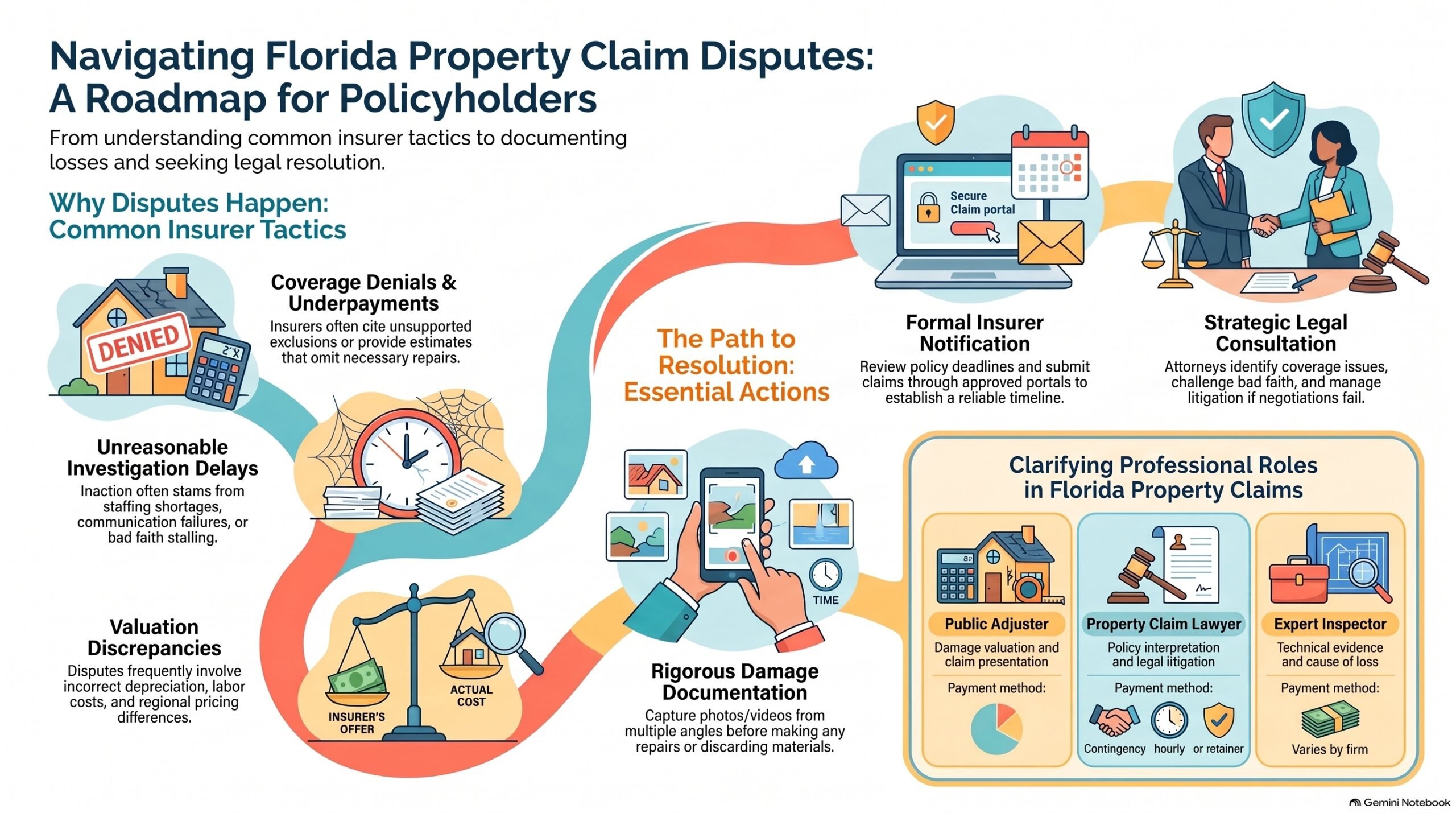
- Disputes commonly involve claim denials, underpayment, delayed investigations, valuation differences, depreciation, causation, or insufficient damage documentation.
- Organizing photographs, invoices, repair records, contractor statements, receipts, and insurer communications can strengthen evaluation of the claimed loss.
- Counsel may challenge incomplete investigations, incorrect policy interpretations, unsupported exclusions, and estimates that omit covered damage or necessary repairs.
- Settlement negotiations or litigation may pursue available Florida remedies while addressing building damage, contents, additional living expenses, and payment delays.


How We Can Help With Your Florida Property Claim Disputes & Process Injury Claim
When a Florida property claim is disputed, experienced legal representation can help determine whether an insurer has properly evaluated the covered damage and complied with its contractual obligations. Counsel may review the policy, available correspondence, inspection reports, estimates, and photographs to identify coverage issues or unsupported conclusions. Careful damage documentation can clarify the property’s condition, the scope of repairs, and the relationship between reported losses and applicable policy provisions.
A representative may also assist with evidence preservation, including organizing invoices, maintenance records, contractor statements, temporary repair receipts, and communications with the insurer. This preparation helps protect important information while allowing the claim to be presented in a coherent, well-supported manner. Where appropriate, counsel can communicate with adjusters, request necessary explanations, challenge incomplete investigations, and pursue remedies authorized by Florida law. The objective is to safeguard the policyholder’s interests, promote an accurate evaluation, and support a fair resolution without unnecessary burden on individuals already managing property damage and related responsibilities.
OUR CONSULTATIONSARE FREE
START YOUR FREE CASE REVIEW

Understanding Florida Property Claim Disputes & Process Injury Cases
Understanding Florida property claim disputes requires examining the insurance policy, the insurer’s investigation, and the evidence supporting the claimed loss. A property claim dispute may arise when an insurer and policyholder disagree over coverage, valuation, documentation, or payment timing. Careful policy interpretation helps clarify covered property, exclusions, conditions, limits, and duties required after a loss. The claim file, photographs, repair estimates, receipts, expert opinions, and relevant communications can provide vital support for determining each position. A structured review also helps determine whether the insurer’s adjustment process reasonably addressed the reported damage and the available evidence. When disagreement continues, settlement negotiations may offer an efficient path toward resolution while preserving the policyholder’s ability to pursue further remedies. Legal guidance can assist with organizing evidence, explaining rights, communicating with insurers, and determining proposed agreements. A focused, informed process promotes fair treatment and supports individuals seeking to protect their homes, businesses, and communities after significant property damage.
Common Causes of Florida Property Claim Disputes & Process
Florida property claim disputes commonly arise from disagreements over policy coverage, delayed claim investigations, or insurers’ assessments of property damage. When claims are underpaid or denied, policyholders may need to review the insurer’s reasoning and pursue a formal appeal. Understanding these causes and the applicable process can clarify the steps available for addressing unresolved claims.
Policy Coverage Disputes
Policy coverage disputes arise when an insurer and policyholder disagree over whether a property loss falls within the terms of an insurance policy. Disagreements may involve the scope of coverage, including whether the policy covers the building, personal property, additional living expenses, or specific causes of damage. Insurers may contend that a loss results from an excluded condition, while policyholders may maintain that covered damage caused or contributed to the claimed loss. Exclusions disputes often require careful review of definitions, endorsements, limitations, and policy language governing concurrent causes. Photographs, repair estimates, inventories, expert opinions, and prior property records may help clarify the nature and extent of damage. A qualified attorney can analyze the policy, identify potentially favorable provisions, and explain available options while treating the policyholder’s interests with diligence and respect.
Delayed Claim Investigations
When an insurer takes an extended time to investigate a property claim, the resulting delay can create uncertainty about coverage, repairs, and financial recovery. Common causes include incomplete inspections, repeated requests for documentation, staffing shortages, communication failures, or reliance on multiple experts. Although an insurer may need reasonable time to evaluate extensive damage, unexplained inaction can interfere with necessary repairs and increase hardship for property owners and those they serve. Claim Handling Timelines should be monitored carefully, including inspection dates, submitted records, adjuster communications, and requests for additional information. Persistent delays may raise concerns about Bad Faith Evaluations when the investigation lacks diligence, transparency, or a reasonable explanation. A documented record can help clarify whether the insurer acted promptly and consistently with policy obligations and Florida’s claims-handling standards.
Underpaid Property Damage
Although an insurer may acknowledge coverage for a property loss, its payment may not fully reflect the reasonable cost of restoring the damaged structure or replacing affected contents. Underpayment can result from incomplete inspections, overlooked damage, depreciation disputes, policy interpretation, or bad repair estimates that underestimate labor, materials, code compliance, and regional pricing. Contents may also be valued below their actual replacement cost when inventories, receipts, or evidence of condition receive insufficient consideration. Delayed settlement payouts can intensify the financial impact, particularly when policyholders must secure temporary housing, prevent further damage, or continue paying contractors. A careful comparison between the insurer’s estimate and documented repair proposals can identify omissions and valuation differences. Photographs, invoices, expert evaluations, and organized correspondence may help establish the amount reasonably required for complete restoration and support fair claim resolution.
Denied Claim Appeals
A denied property insurance claim may be challenged when the insurer’s decision rests on an incomplete investigation, an inaccurate interpretation of policy language, or insufficient evidence regarding the cause and extent of damage. A careful appeal begins with a review of the policy, denial letter, exclusions, and applicable appeal timelines. Evidence preservation is crucial; photographs, repair estimates, invoices, inspection reports, expert opinions, and damaged materials should be organized before conditions change. Clear communication with the insurer can correct factual misunderstandings and create a reliable record of the dispute. If informal reconsideration fails, the policyholder may pursue appraisal, mediation, regulatory assistance, or litigation, depending on the policy and circumstances. An experienced representative can evaluate coverage, identify procedural violations, and develop a settlement strategy that protects the claimant’s interests while supporting a fair resolution for affected property owners.
Don’t Wait. Call Our Florida Personal Injury Lawyers Now!


Legal Rights of Florida Property Claim Disputes & Process Injury Victims
Florida property claim disputes can materially affect property owners and process injury victims who depend on insurance benefits to address physical damage, medical expenses, and related losses. Florida law may provide rights to policy information, fair claim handling, timely communications, and payment when covered losses are established. A careful review can help identify whether an insurer complied with contractual and statutory duties.
Florida insurance disputes may involve coverage, claim handling, communications, and payment obligations affecting property owners and injury victims.
- A claimant may request claim records, preserve evidence, and seek qualified legal guidance concerning rights under Florida law.
- A Public adjuster may assist with damage evaluation and valuation, while counsel can address coverage, liability, and dispute procedures.
- A documented Claim timeline can clarify notice, inspections, decisions, payments, and delays, particularly when documentation mistakes affect evaluation.
Process injury victims should preserve medical records, bills, photographs, correspondence, and witness information. They may also have the right to pursue compensation through negotiation, appraisal, mediation, or litigation, depending on the policy terms and applicable law. Timely assistance can protect evidence and support fair treatment for affected individuals and families.
Why Do Florida Property Claim Disputes & Process Injuries Happen?
Understanding the causes of Florida property claim disputes and process injuries can clarify how preventable failures, conflicting evidence, and inadequate claim handling lead to financial and physical harm. Disputes often arise when insurers interpret policy language narrowly, undervalue covered losses, delay inspections, or rely on incomplete investigations. Differences between adjuster estimates, contractor assessments, and documentation may further complicate the evaluation of storm, fire, water, or structural damage.
Process injuries can occur when unsafe conditions remain during inspections, remediation, or property access. Poorly maintained premises, defective equipment, inadequate warnings, and rushed work may expose residents, contractors, or visitors to avoidable risks. Negligence disputes commonly develop when responsibility is shared among property owners, insurers, restoration companies, and other service providers. Questions involving third-party liability may arise when an independent contractor or vendor contributes to the harm. Conflicting accounts, missing records, and unclear contractual duties can make it difficult to establish causation and financial responsibility. These conditions frequently intensify both claim delays and personal injuries.
What Should You Do After a Florida Property Claim Dispute & Process Injury?
After a Florida property claim dispute or property damage, the affected party should promptly document all damage with photographs, records, and detailed notes. The insurer should receive timely written notice, and all communications and claim-related documents should be carefully preserved. Consulting a qualified Florida property claims lawyer can help assess coverage, protect legal rights, and guide the next steps.
Document the Damage
When property is damaged, the policyholder should begin documenting the condition immediately, before repairs or further deterioration alter the evidence. Evidence collection should cover every affected area, including structural components, personal belongings, flooring, ceilings, and visible moisture. Photos and records should include wide views that establish the location, along with close-up images that capture specific damage, discoloration, debris, and relevant identifying details. A written inventory can describe what was damaged, when it was discovered, and the apparent extent of loss. Preserving receipts, purchase information, maintenance records, contractor estimates, and temporary repair invoices may help establish value and condition. Damaged materials should not be discarded unless necessary for safety, and any removed items should be photographed and stored when practical. Accurate documentation can assist fair evaluation and protect the policyholder’s interests.
Notify Your Insurer
Prompt notice to the insurer is an important step in protecting a policyholder’s rights after property damage occurs. The policyholder should review the policy’s reporting requirements, identify the loss date and cause, and provide a clear initial description of the damage. Notice should be submitted through an approved channel, such as the insurer’s claims portal, designated email, or telephone line. A copy of every submission, reference number, and insurer communication should be preserved with the damage records. The policyholder should cooperate with reasonable inspection requests while avoiding unsupported estimates or statements about coverage. Written confirmation of the claim helps establish a reliable timeline. If the insurer requests additional information, timely responses can reduce administrative delays. Maintaining organized records is particularly important if the claim later involves a denial or disagreement over benefits.
Consult a Lawyer
A Florida property claim dispute may warrant consulting a lawyer if the insurer delays payment, undervalues the damage, requests burdensome documentation, or issues a denial that appears inconsistent with the policy and the available evidence. Legal counsel can review the policy, evaluate communications, and identify whether policy exclusions were properly applied. Counsel may also help organize photographs, repair estimates, receipts, and reports from a qualified Home inspection professional. Early guidance can preserve deadlines, prevent inadvertent statements, and support a fair presentation of the claim. A lawyer may negotiate with the insurer, request reconsideration, or explain available dispute-resolution and litigation options. Individuals assisting affected homeowners should encourage prompt, informed action while avoiding promises about outcomes. Careful documentation and honest communication strengthen the process and help protect the claimant’s rights.
Don’t Wait. Call Our Florida Personal Injury Lawyers Now!
Critical Evidence in a Florida Property Claim Disputes & Process Injury Case
A Florida property claim disputes and process injury case often depends on organized, credible evidence, including:
- Property damage documentation and insurance policy records.
- Repair estimates and invoices.
- Expert inspection reports.
Together, these materials can clarify the damage, applicable coverage, repair costs, and the basis for challenging an insurer’s decision.
Property Damage Documentation
When property damage occurs, thorough documentation provides essential evidence for evaluating a Florida property claim dispute and establishing the scope of the policyholder’s losses. Photographs and videos should capture affected rooms, structural materials, personal property, and visible conditions from multiple angles. A dated record of the damage, emergency measures, cleanup efforts, and resulting changes can help preserve an accurate chronology. For water intrusion or suspected contamination, professional moisture testing may identify hidden saturation and support timely remediation. Mold evidence, including photographs, sampling reports, and inspection findings, may clarify whether growth developed after a covered event. Receipts, repair estimates, inventories, and contractor observations can further demonstrate the extent and value of claimed losses. Careful documentation enables counsel and evaluators to serve policyholders responsibly while reducing disputes over conditions, causation, and necessary repairs.
Insurance Policy Records
Although policy records may appear routine, they often provide necessary evidence in a Florida property-claim dispute and a process-injury case. The complete policy, declarations page, endorsements, exclusions, and renewal documents can establish the policy coverage facts governing the loss. These records may clarify covered causes, deductibles, limits, conditions, notice requirements, and deadlines that influence whether an insurer handled a claim properly. Preserving every version is important because coverage language may change over time, particularly after renewals or midterm amendments. Correspondence transmitting policy documents can also help establish what information the policyholder received and when. Careful claims documentation should thus include the policy itself, relevant notices, and the insurer’s explanations of applicable provisions. Organized records enable counsel, courts, and clients to accurately assess responsibilities and support fair service to affected property owners.
Repair Estimates and Invoices
Repair estimates and invoices provide objective evidence of the property damage, the work required, and the costs incurred during restoration. These records should identify affected areas, proposed materials, labor charges, dates, payments, and remaining balances. Consistent documentation can help establish whether claimed expenses reasonably relate to a covered loss rather than unrelated improvements or deferred maintenance. Photographs, contracts, receipts, and proof of payment may further connect the work to the reported event. Counsel may review discrepancies between estimates, invoices, and insurer valuations to identify underpayment or unsupported charges. During deposition strategy, organized financial records can support focused questions for property owners, contractors, and claim representatives. For trial preparation, complete chronological files help present damages clearly and responsibly, enabling decision-makers to evaluate the claim and pursue a fair resolution for those affected.
Expert Inspection Reports
Expert inspection reports can provide independent, detailed evidence regarding the cause, scope, and severity of property damage in a Florida claim dispute. A qualified inspector may document storm impacts, construction defects, water intrusion, mold conditions, or deterioration that existed before the reported event. Photographs, measurements, moisture readings, and testing results can clarify disputed facts and help distinguish covered damage from excluded conditions.
The report should identify the inspector’s qualifications, inspection methods, observations, and conclusions. Accurate documentation supports an organized chain of evidence, particularly when materials are preserved and findings are recorded promptly. An insurer, policyholder, or attorney may use the report to evaluate repair needs, challenge an inadequate adjustment, or assess whether additional investigation is warranted. When litigation develops, Expert witness testimony can explain technical findings and establish a credible basis for the claimed damages.
Long-Term Effects of Florida Property Claim Disputes & Process Injuries
Florida property claim disputes may create lasting financial strain as unpaid benefits, repair costs, and related expenses accumulate. Ongoing property damage can worsen when necessary repairs are delayed, potentially reducing the property’s value and affecting habitability. Prolonged legal stress may also burden affected parties, particularly when negotiations, investigations, or litigation drag on.
Lasting Financial Strain
Often, unresolved property claim disputes create financial strain that extends well beyond the initial damage. Delayed repairs may require households to rely on savings, credit, or assistance from relatives and community organizations. When hidden damage is later identified, the resulting repair costs can exceed original estimates, creating obligations that are difficult to manage. Denied payments may also leave policyholders responsible for contractors’ invoices, temporary accommodations, deductibles, and other necessary expenses. These pressures can disrupt budgets, reduce funds available for education or medical care, and impair a family’s ability to support others. A careful review of policy language, claim records, estimates, and communications may clarify whether benefits were improperly withheld. Legal guidance can help affected individuals pursue fair treatment while preserving financial stability and planning for recovery.
Ongoing Property Damage
Unresolved property claim disputes can allow covered damage to worsen while repairs remain delayed or incomplete. Moisture may spread through walls, roofs, or flooring, increasing the risk of mold, structural deterioration, and unsafe living conditions. Temporary measures can also fail when insurers do not promptly authorize necessary work, leaving property owners to protect occupants, belongings, and neighboring structures without reliable reimbursement. Documentation of changing conditions, mitigation efforts, inspections, and repair estimates can help establish how continued damage relates to the original covered event. During settlement negotiation, clear evidence may support payment for both immediate repairs and resulting deterioration. If an insurer misrepresents coverage, ignores relevant evidence, or unreasonably delays adjustment, the circumstances may warrant review for insurance bad faith. Timely legal guidance can help preserve property, safety, and available remedies.
Prolonged Legal Stress
As property claim disputes span months or years, the legal process can cause sustained stress for owners already coping with financial uncertainty and disrupted living conditions. Repeated requests for records, inspections, and statements may interrupt work, family responsibilities, and recovery efforts. The emotional toll can include persistent anxiety, sleep disruption, frustration, and reduced confidence in achieving a fair resolution. Legal uncertainty may also delay repairs, relocation decisions, and financial planning, leaving households unable to establish stability. These pressures can affect relationships and physical health, particularly when damage remains unresolved. A structured process, clear communication, and informed guidance may reduce confusion and help owners make measured decisions. Counsel serving affected communities can clarify responsibilities, preserve evidence, and pursue appropriate remedies while recognizing the long-term human consequences of unresolved property disputes.
Proving Liability in Florida Property Claim Disputes & Process Injury Cases
How is liability established in a Florida property claim dispute or process injury case? Liability generally depends on proving a duty, a breach, causation, and measurable damages. In property disputes, relevant evidence may include photographs, repair records, inspection reports, maintenance logs, weather data, and policy provisions. A claimant must connect the responsible party’s conduct or covered event to the documented loss.
In process injury cases, medical records, incident reports, witness statements, and safety procedures can clarify how an injury occurred and whether reasonable precautions were omitted. Timely preservation of evidence is necessary because conditions, physical hazards, and memories can change over time. Attorneys may consult qualified professionals to evaluate construction, engineering, safety, medical, or valuation issues. Careful Expert witness preparation helps present reliable opinions and explain technical facts clearly. A disciplined Settlement negotiations strategy should be based on substantiated liability, causation, and damages while recognizing the claimant’s need for fair resolution and the broader goal of serving affected individuals responsibly.
Dealing With Insurance Companies After a Florida Property Claim Disputes & Process Injury
After a Florida property claim dispute or process injury, communications with an insurance company should be handled carefully and supported by organized evidence. The policyholder should provide timely notice, preserve photographs, repair estimates, receipts, inspection reports, and correspondence, and maintain a clear timeline of the claim. Statements should remain accurate, consistent, and limited to facts directly relevant to the loss. An insurer may request recorded interviews, examinations, or additional documentation; each request should be reviewed carefully before responding.
Written communication can reduce misunderstandings and create a reliable record of decisions, requests, and deadlines. Policyholders should avoid speculative explanations, admissions concerning responsibility, or premature settlement agreements that may restrict later recovery. When payments are delayed, coverage positions shift, or investigations appear incomplete, the circumstances may warrant a legal review for potential bad-faith handling. Counsel can help preserve evidence, interpret policy obligations, and communicate in a manner that protects the claimant while supporting a fair resolution for affected property owners.
What to Expect During a Florida Property Claim Disputes & Process Injury Claim Process
A Florida property claim process generally begins with filing a timely claim and providing insurers with clear evidence of the property damage and related losses. Claimants should maintain photographs, repair estimates, receipts, and other records, respond accurately to insurer requests, and review settlement offers carefully. If negotiations fail, the matter may proceed through formal disputes, appeals, mediation, or litigation.
Filing Your Property Claim
When a Florida property owner files an insurance claim, the process typically begins with prompt notice to the insurer, documentation of the damage, and an inspection of the affected property. The policyholder should review Policy Deadlines carefully, as delayed notice may lead to coverage disputes or limit available benefits. The claim submission generally identifies the date, cause, and location of the loss and provides policy information and reliable contact details. The insurer may assign an adjuster to investigate coverage and determine the next procedural steps. During this stage, Evidence Preservation remains important; the owner should avoid unnecessary repairs or disposal of affected materials unless safety requires immediate action. Clear communication with the carrier, timely responses, and organized records can help protect the claim and support a fair, efficient review.
Documenting Damage And Losses
Extensive documentation establishes the factual foundation of a Florida property claim and helps clarify the scope of the insurer’s potential obligations. Photographs and videos should capture each affected area from multiple angles before cleanup or repairs begin. Written descriptions can identify visible damage, suspected causes, dates, and safety concerns. Receipts, invoices, estimates, and records of temporary lodging or emergency services may support claimed expenses. A detailed inventory should identify damaged or destroyed belongings, including approximate age, purchase information, condition, and replacement cost. During the Evaluation of Repairs, qualified professionals can document the necessary work and distinguish preexisting conditions from newly reported damage. Claim Deadlines should be reviewed carefully, because late submissions or missing materials may complicate evaluation. Organized, dated records help preserve accuracy and assist those responsible for presenting a complete claim.
Negotiating With Insurers
Clear communication and careful preparation shape negotiations with an insurer during a Florida property claim. The policyholder typically presents photographs, repair estimates, receipts, and other records supporting the claimed damage and requested payment. An insurer may review coverage, question valuation, request additional information, or propose a settlement based on its investigation. A representative should compare any offer with documented repair costs, policy limits, deductibles, and applicable exclusions before accepting it. Effective settlement negotiation tactics include responding in writing, correcting factual errors, and explaining why the evidence supports a greater amount. Counsel may also assess whether delays, inadequate investigation, or unsupported denials suggest bad faith insurance practices. Professional communication and organized records can help protect the policyholder’s interests and encourage a fair, efficient resolution during the claims process.
Resolving Disputes And Appeals
Disputes over a Florida property claim may proceed through additional documentation, supervisory review, appraisal, mediation, or litigation, depending on the policy terms and the nature of the disagreement. When Coverage Denials arise, the policyholder generally benefits from a prompt review of the exclusions, deadlines, and the insurer’s explanations. An attorney may develop an Appeal Strategy identifying coverage language, factual errors, and overlooked damages. Evidence Preservation remains critical and includes photographs, repair estimates, invoices, inspection reports, communications, and records showing the property’s condition before and after the loss. During Settlement Negotiations, organized evidence can support a clear valuation and expose unsupported adjustments. If informal resolution fails, mediation may provide a structured opportunity for compromise. Litigation may follow, requiring pleadings, discovery, expert testimony, and adherence to procedural deadlines while protecting the claimant’s interests.
Compensation for Florida Property Claim Disputes & Process Injury Damages
When a Florida property claim dispute involves an insurer’s failure to properly investigate, evaluate, or pay a covered loss, the policyholder may seek compensation for resulting financial harm and, in appropriate cases, for injuries caused by the claims-handling process. A careful review may identify unreasonable delays, inadequate communication, misrepresentations, or bad-faith investigations that caused additional hardship. Counsel can assess policy language, claim records, expert findings, and correspondence to determine whether the insurer breached contractual or statutory duties. Effective claim negotiation strategies may support a prompt resolution, while litigation may be necessary when the carrier refuses a fair adjustment. In suitable cases, recovery may address losses directly connected to the insurer’s conduct, as well as legally recognized injuries arising from the dispute process. Each matter requires individualized evaluation because coverage, causation, documentation, and applicable Florida law affect available remedies. Professionals serving affected policyholders can help preserve evidence, communicate with insurers, and pursue accountability while treating the client’s circumstances with diligence and respect.
Economic vs Non-Economic Damages in Florida Property Claim Disputes & Process Cases
Economic damages may include repair expenses, lost use, and other measurable financial losses arising from a property claim dispute. Non-economic losses, such as inconvenience or disruption, may also warrant consideration depending on the circumstances and applicable Florida law. Establishing either category generally requires persuasive documentation, credible evidence, and a clear connection between the claimed loss and the insurer’s conduct.
Economic Damages Explained
Florida property claim disputes may involve both economic and non-economic damages, depending on the nature of the loss and the legal issues presented. Economic damages are measurable financial losses supported by invoices, estimates, receipts, and other reliable records. They may include repair or replacement costs, emergency mitigation expenses, debris removal, temporary housing, lost rental income, and damage to personal property. The recoverable amount can depend on policy limits, covered perils, deductibles, exclusions, and applicable valuation provisions. A coverage denial may create a dispute over whether the insurer properly interpreted the policy or evaluated the documented costs. A liability investigation may also examine causation, responsible parties, and whether claimed expenses resulted from the covered event. Careful documentation helps policyholders, adjusters, and advocates evaluate the claim fairly and pursue appropriate resolution.
Non-Economic Losses Considered
Non-economic losses generally refer to harm that is not readily measured through invoices, receipts, or repair estimates. In Florida property-claim disputes, these losses may include emotional distress, inconvenience, anxiety, loss of use, and disruption of ordinary household activities. They can arise when storm damage, water intrusion, or an insurer’s delayed response materially interferes with a resident’s safety and sense of stability. Such harm differs from Personal Injury Damages, which typically address bodily injury and related personal consequences. Coverage language and Florida law determine whether non-economic losses are recoverable, because many property policies focus primarily on direct physical loss and associated economic expenses. Comparative Negligence may also affect recovery when a claimant’s conduct contributed to the claimed harm. Legal guidance helps affected individuals understand available remedies while serving their families and communities responsibly.
Proving Damages In Disputes
Proving damages in a Florida property claim dispute requires organized evidence that connects the claimed loss to the covered event and establishes its monetary or personal impact. Economic loss may include repair invoices, replacement estimates, mitigation expenses, additional living costs, lost rental income, and documented reductions in property value. Photographs, videos, maintenance records, inventories, receipts, contractor reports, and expert opinions can help establish causation, scope, and reasonable pricing. Non-economic damages are less common in property claims but may be recognized under applicable law or policy terms, covering inconvenience, displacement, or substantial personal disruption. A claimant should separate covered damage from preexisting conditions and unsupported speculation. Complete documentation allows counsel to evaluate liability, communicate accurately with insurers, and develop a settlement strategy that advances fair compensation while serving the claimant’s practical needs.
Don’t Wait. Call Our Florida Personal Injury Lawyers Now!
When a Florida Property Claim Disputes & Process Injury Case Goes to Trial vs Settlement
A Florida property claim dispute or process injury case may proceed to trial when the parties cannot agree on coverage, liability, damages, or the value of the claim. Trial requires organized evidence, credible witnesses, and a clear presentation of how the loss occurred and what compensation is warranted. Counsel may develop a trial strategy that addresses disputed documents, expert opinions, and testimony while preparing the claimant for questioning.
Settlement may be preferable when it provides timely compensation, reduces litigation expense, and avoids the uncertainty of a jury’s decision. Negotiations can occur before filing, during discovery, or shortly before trial. A well-supported claim, complete records, and demonstrated readiness to proceed may create leverage for settlement without compromising professional conduct or the claimant’s objectives.
If negotiations fail, the court determines the outcome based on admitted evidence and legal arguments. The decision to settle or proceed should consider expected recovery, costs, timing, risks, and the claimant’s need for dependable resolution.
Florida Laws That May Affect Your Florida Property Claim Disputes & Process Case
Florida property claim disputes and process cases are governed by laws that address insurance coverage, claim handling, evidence, deadlines, and available remedies. Florida statutes and insurance regulations may determine how a policy is interpreted, what exclusions apply, and whether an insurer responded appropriately after receiving notice of damage.
Important considerations include:
- Insurer duties: Carriers generally must investigate claims reasonably, communicate pertinent information, and evaluate covered losses in good faith.
- Coverage thresholds: Policy limits, deductibles, valuation provisions, and proof requirements can affect whether payment is available and how much may be owed.
- Claim timeframes: Statutory and policy-based periods may require prompt notice, documentation, examinations, and responses during the adjustment process.
Florida law may also regulate appraisal, mediation, matching obligations, and evidence supporting causation and repair costs. A careful review helps representatives serve property owners responsibly, preserve relevant records, and present accurate claims. Because requirements vary by policy language and loss circumstances, qualified legal guidance can clarify rights, defenses, and appropriate next steps.
The Statute of Limitations for Florida Property Claim Disputes & Process Injury Cases
When a property claim dispute involves alleged injury, the statute of limitations may determine how long an affected party has to file a lawsuit. Florida deadlines vary depending on the claim’s legal basis, the date of loss, and whether the dispute involves bodily injury, property damage, or both. A negligence action generally requires prompt attention, whereas contract-based insurance disputes may be subject to different limitation periods and policy requirements. Exceptions can apply when injuries are discovered later, the claimant is a minor, or another legal circumstance delays accrual. Comparative Negligence may reduce recovery when an injured person shares responsibility, but it does not necessarily extend the filing deadline. UM Coverage disputes can involve separate contractual questions and notice obligations, particularly after an uninsured or underinsured driver causes harm. Preserving records, reporting losses, and identifying the applicable deadline supports orderly resolution and protects the interests of affected individuals, families, and communities seeking accountability. Missing a deadline may permanently bar otherwise valid relief.
How a Florida Property Claim Disputes & Process Lawyer Can Help You
Effective representation can help protect a policyholder’s rights after a property claim is denied, delayed, underpaid, or otherwise disputed. A Florida property claim disputes lawyer can assess the policy, organize supporting evidence, and explain available remedies in clear, practical terms.
This assistance allows policyholders and those serving them to approach the dispute with greater accuracy and confidence.
- Counsel can review coverage provisions, exclusions, deadlines, damage estimates, photographs, invoices, and claim denial letters to identify inconsistencies or overlooked benefits.
- Counsel can communicate with insurers, request claim information, and present a well-supported position that addresses factual and legal issues.
- Counsel can conduct settlement negotiations and, when appropriate, prepare the matter for litigation while protecting the policyholder’s interests throughout the process.
When to Contact a Florida Property Claim Disputes & Process Lawyer
Recognizing a potential coverage problem early can help a policyholder preserve evidence, meet applicable deadlines, and avoid statements that could complicate the claim. A Florida property claim disputes lawyer may be contacted when damage is denied, underpaid, delayed, or questioned without a clear explanation. Early guidance can also be appropriate when a policyholder is uncertain about notice requirements, proof of loss, mitigation duties, or competing causes of damage.
A policyholder should consider organizing a Timeline for claims, including the loss date, inspections, repairs, communications, and payments. An Evidence checklist may include photographs, videos, invoices, estimates, receipts, maintenance records, and relevant policy documents. If communication from the Insurer becomes confusing, inconsistent, or overly demanding, a legal review may help clarify what has been requested and how responses should be documented. Counsel may further assess a potential Settlement strategy when the insurer’s valuation does not reflect covered losses. Prompt attention supports orderly decision-making and helps protect the policyholder’s ability to pursue available remedies.
Why You Need an Experienced Florida Property Claim Disputes & Process Lawyer
An experienced Florida property claim disputes lawyer can evaluate the policy, investigate the loss, and identify whether an insurer’s coverage position or valuation is supported by the available evidence. That review helps property owners understand their rights and respond accurately to disputed claims.
Professional assistance can also prevent Documentation errors that may weaken a claim. Counsel can organize photographs, repair estimates, receipts, expert opinions, and correspondence, and establish a reliable Claim timeline. These steps support Evidence preservation and clarify how the damage occurred, when notice was provided, and whether required policy conditions were satisfied.
An experienced lawyer may further recognize patterns suggesting insurance bad faith, such as unreasonable delays, incomplete investigations, or unsupported claim denials. By addressing procedural and evidentiary issues, legal counsel helps protect funds needed for repairs, recovery, and community service. This guidance allows an owner to make informed decisions while ensuring that communications with the insurer remain focused, documented, and consistent with the policy’s requirements and Florida law.
How to Choose the Right Florida Property Claim Disputes & Process Lawyer for Your Case
Selecting the right Florida property claim disputes lawyer requires careful consideration of the attorney’s experience with insurance policies, property damage investigations, and resolving disputed claims. A suitable lawyer should clearly explain the claims process, identify potential coverage issues, and provide realistic assessments of available remedies. Reviewing professional credentials, relevant case experience, and client communications can help property owners make an informed decision.
The lawyer’s approach to Settlement strategies should also receive careful attention. Effective counsel evaluates documentation, policy language, repair estimates, and evidence of the insurer’s conduct before recommending a resolution. Knowledge of negotiation tactics may improve the client’s ability to pursue fair payment without unnecessary delay. Prospective clients should ask how the attorney handles contested valuations, denied claims, and disagreements concerning causation or deadlines.
A lawyer who listens carefully and responds promptly can better understand the property owner’s needs. Clear fee arrangements, written explanations, and a commitment to responsible advocacy further support a productive professional relationship throughout the claim process.
About The Law Offices of Anidjar & Levine
The Law Offices of Anidjar & Levine represents Florida property owners in disputes involving denied, delayed, or underpaid insurance claims.
Its attorneys assist clients seeking fair treatment after hurricanes, flooding, fires, roof damage, and other covered losses.
The firm evaluates policy language, claim records, adjuster findings, and communications to identify weaknesses in an insurer’s position.
Counsel may investigate Claim Denial Reasons, including alleged exclusions, late notice, insufficient proof, or disagreements about the cause and value of damage.
The firm also helps clients organize evidence, including photographs, invoices, expert opinions, and Documenting Repair Estimates that clarify the property’s condition and necessary work.
This preparation can support negotiations or litigation when appropriate.
The Law Offices of Anidjar & Levine presents each matter according to its specific facts and applicable policy provisions.
Its work is intended to help property owners protect their financial interests while pursuing benefits that insurers are contractually obligated to evaluate and pay in good faith.
Frequently Asked Questions
Can I File a Florida Property Claim Dispute Without Hiring an Attorney?
Yes, a property owner may file a claim dispute in Florida without hiring an attorney. Self-representing options include communicating with the insurer, submitting supporting records, requesting a written explanation of coverage, and pursuing mediation or appraisal when permitted. The Florida Claim Process requires careful attention to policy deadlines, notice requirements, damage documentation, and claim-related correspondence. Because procedural mistakes can reduce recovery, the owner may consult a qualified professional before signing releases or accepting payment.
What Fees Do Florida Property Claim Dispute Lawyers Typically Charge?
Florida property claim dispute lawyers typically charge through upfront retainers, hourly billing, contingency fees, or a combination of these arrangements. Hourly rates and retainers vary based on experience, case complexity, and anticipated litigation. Under contingency fees, the lawyer receives an agreed-upon percentage of any settlement or judgment, with case expenses typically addressed separately. Clients should request a written fee agreement explaining costs, responsibilities, and payment obligations before representation begins.
Can My Insurer Cancel My Policy After I File a Property Damage Claim?
An insurer generally cannot cancel a policy solely because a policyholder filed a legitimate property damage claim, particularly after coverage has commenced, unless Florida law or the policy provides a valid basis for cancellation. However, insurer nonrenewal may occur at the end of a policy term with proper notice and lawful justification. Postclaim cancellation may be permitted for nonpayment, material misrepresentation, fraud, or substantial underwriting changes. A policyholder should promptly review notices and seek qualified assistance.
How Are Public Adjusters Different From Florida Property Claim Lawyers?
Public adjusters represent policyholders in estimating damage, preparing Claim Documentation, and negotiating with insurers. They generally seek a settlement and are paid through a percentage of the recovery. Florida property claim lawyers provide legal advice, interpret policy obligations, protect procedural rights, and pursue disputes through litigation when necessary. A lawyer can address coverage denials, unfair claim handling, and legal deadlines, while a public adjuster primarily manages claim presentation and valuation.
Can I Reopen a Previously Settled Florida Property Insurance Claim?
A previously settled Florida property insurance claim may be reopened, but success depends on the settlement agreement, undiscovered damage, misrepresentation, fraud, or other legally recognized grounds. Reopening settlements is generally difficult when a release permanently resolved all covered losses. The policyholder should review claim records, payment documents, and correspondence, then consult qualified counsel promptly. Statute timelines, contractual deadlines, and notice requirements may restrict available remedies, so delay can jeopardize otherwise valid rights.
—————————
Florida property claim disputes can involve significant financial losses and complex insurance procedures.
An experienced attorney can evaluate policy obligations, investigate damage, address improper denials or delays, and pursue compensation available under Florida law.
Because deadlines and documentation requirements may affect a claim, prompt legal guidance is important.
The Law Offices of Anidjar and Levine provides informed representation to policyholders seeking a fair resolution and helps protect their rights throughout the claims process.
For related legal assistance, visit our Florida Personal Injury Lawyer page.

