
The Law Offices of Anidjar and Levine can help survivors of sexual abuse or assault assess potential claims, identify responsible parties, preserve evidence, and pursue compensation for medical care, counseling, lost income, emotional trauma, and reduced quality of life. Claims may involve perpetrators, employers, property owners, institutions, or negligent supervisors, depending on the facts. Deadlines in Florida vary, and criminal proceedings are not required in a civil case. Learn more from a Florida Personal Injury Lawyer about liability, evidence, reporting options, and how to select appropriate legal representation.
Main Takeaways
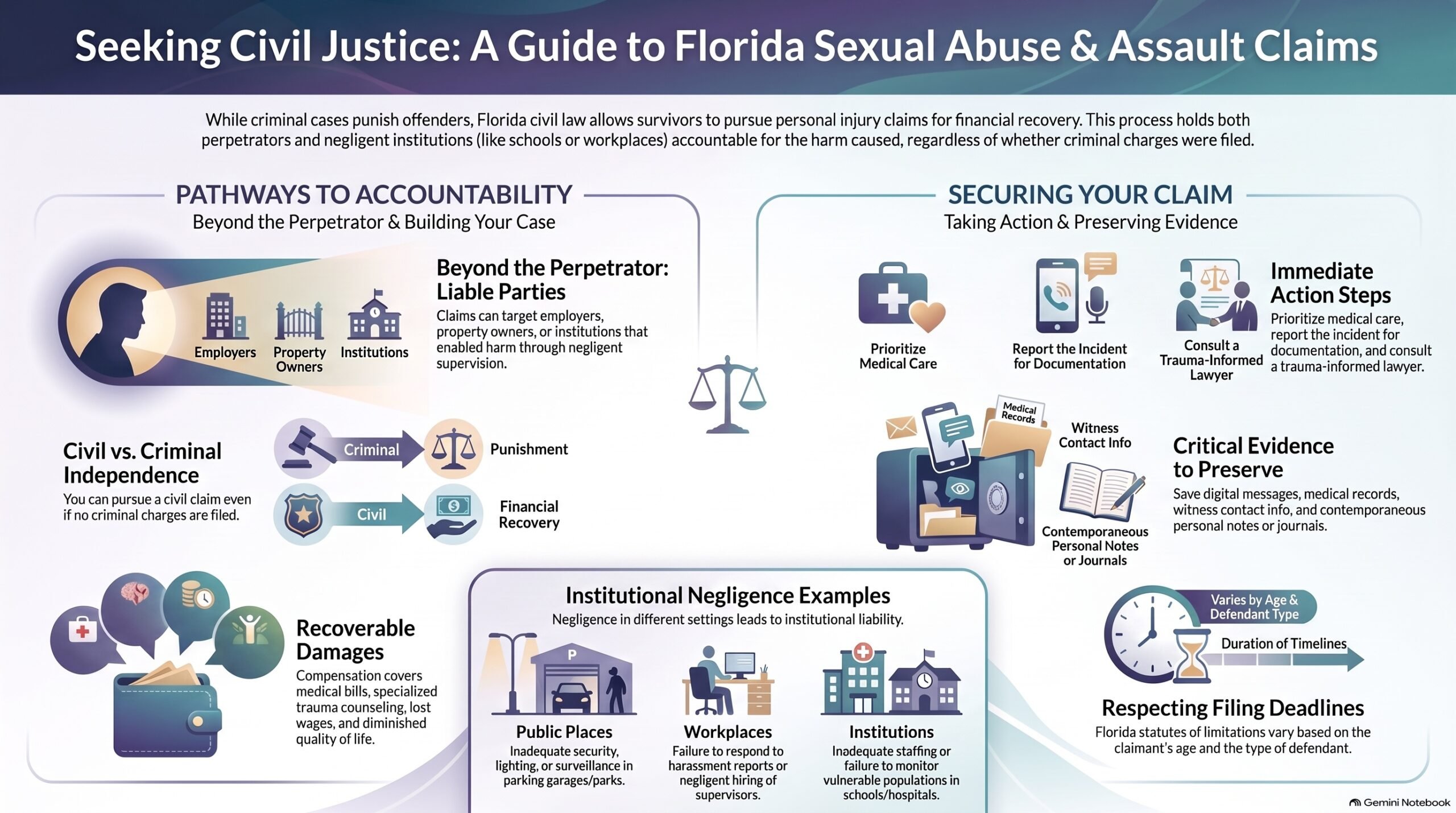
- Florida sexual abuse and assault claims may involve unwanted touching, coercion, exposure, exploitation, or conduct without legally valid consent.
- Potentially responsible parties may include perpetrators, employers, property owners, institutions, or others who negligently enabled foreseeable harm.
- Recoverable damages can include medical treatment, counseling, lost income, reduced earning capacity, emotional trauma, and diminished quality of life.
- Important evidence includes medical records, digital communications, surveillance footage, witness information, employment records, and contemporaneous personal documentation.
- A Florida lawyer can evaluate liability, preserve evidence, communicate with insurers, identify deadlines, and explain civil remedies regardless of the criminal case outcome.


How We Can Help With Your Florida Personal Injury Sexual Abuse & Assault Types Injury Claim
When a person suffers harm from sexual abuse or assault in Florida, pursuing a personal injury claim may require a careful examination of the conduct, resulting injuries, responsible parties, and available evidence. A legal team can provide structured guidance while treating each client with dignity, patience, and respect. Counsel may investigate relevant records, identify potentially liable parties, preserve evidence, and communicate with insurers or opposing counsel. The process can also include reviewing deadlines, evaluating damages, and explaining how Florida law may affect a claim.
Support extends beyond courtroom strategy. Attorneys can help clients understand available compensation options for medical care, counseling, lost income, and other documented losses. They may coordinate with trusted professionals whose services support trauma recovery while protecting confidential information as fully as possible. Clear communication allows informed decisions without pressure. By managing legal responsibilities carefully, a firm can reduce administrative burdens and help injured individuals and their families pursue accountability through an organized, compassionate process tailored to their circumstances.
OUR CONSULTATIONSARE FREE
START YOUR FREE CASE REVIEW

Understanding Florida Personal Injury Sexual Abuse & Assault Types of Injury Cases
Understanding a Florida personal injury sexual abuse or assault case begins with identifying the conduct involved, the harm sustained, and the parties who may bear legal responsibility. A case may involve physical injuries, psychological trauma, medical expenses, lost income, or continuing treatment needs. Legal analysis also considers whether an individual, institution, employer, property owner, or other responsible party owed a duty of care and failed to meet it.
A careful evaluation typically includes gathering medical records, counseling documentation, witness information, communications, and other relevant materials. Evidence preservation is crucial because digital records, surveillance footage, and recollections can change or disappear. The claimant’s account should be documented respectfully and consistently, without unnecessary exposure to avoidable questioning.
Florida law imposes courthouse filing deadlines that may vary according to the claimant’s age, the type of claim, and the defendant involved. Early legal guidance helps preserve rights, assess available remedies, and pursue accountability while reducing additional burdens on the injured person.
Common Causes of Florida Personal Injury Sexual Abuse & Assault Types
Common causes of sexual abuse and assault injuries in Florida include incidents in public places, workplace sexual harassment, and abuse within institutional settings. These cases may also arise from negligent security or inadequate supervision, particularly when foreseeable risks are not properly addressed. Each circumstance requires careful evaluation of the surrounding facts, responsible parties, and resulting personal injuries.
Sexual Assault In Public Places
Sexual assault in public places can occur in locations such as parking garages, public transportation, parks, entertainment venues, and crowded events where offenders may exploit limited supervision or confusion. Victims may experience unwanted touching, coercion, exposure, or other conduct without freely given consent. Bystanders, security personnel, transportation providers, and property owners may help reduce risks by recognizing warning signs, preserving evidence, contacting emergency services, and supporting access to medical and legal assistance. Florida premises-liability claims may depend on foreseeability, notice, security measures, and compliance with applicable public safety standards. An alleged offender may raise consent defenses, but consent must be voluntary, informed, and legally valid under the circumstances. Prompt reporting can assist investigations, although delayed reporting does not invalidate a victim’s account or eliminate available civil remedies.
Workplace Sexual Harassment
Workplace sexual harassment occurs when unwelcome sexual conduct, requests, comments, or other sex-based behavior affects an individual’s employment, creates a hostile work environment, or involves an abuse of workplace authority. It may include unwanted touching, sexual propositions, explicit messages, repeated remarks, or employment decisions conditioned on submission. Conduct can be perpetrated by supervisors, coworkers, clients, or other individuals connected to the workplace. A person experiencing harassment may face anxiety, lost income, professional harm, or other personal injuries. Reports should be documented and directed to appropriate workplace channels when doing so is reasonably safe. Workplace retaliation, including termination, demotion, reduced hours, or intimidation, may create additional legal concerns. Depending on the circumstances, employer liability may arise from negligent supervision, inadequate reporting procedures, or failure to respond appropriately.
Abuse In Institutional Settings
When abuse occurs in an institutional setting, the perpetrator may exploit authority, trust, supervision, or a victim’s dependence on the organization. Such settings can include schools, residential treatment centers, nursing facilities, hospitals, religious organizations, and detention facilities. Individuals may face heightened vulnerability because of age, disability, illness, isolation, or reliance on caregivers for daily needs. Consent and capacity issues can complicate the question of whether meaningful agreement existed, particularly when an individual could not understand, communicate, or freely refuse the conduct. Abuse may involve sexual contact, coercion, exploitation, exposure, or grooming behaviors. Affected individuals may experience fear, shame, confusion, and lasting psychological harm. Victim trauma support can promote safety, preserve dignity, and connect survivors with counseling, medical care, advocacy, and legal resources while respecting their autonomy and privacy.
Negligent Security And Supervision
Institutional abuse may also result from negligent security or inadequate supervision by an organization responsible for protecting residents, patients, students, or other vulnerable individuals. Such failures may include insufficient staffing, poorly screened employees, defective locks, inadequate lighting, or a failure to monitor areas where abuse could occur. Organizations serving vulnerable populations generally have a responsibility to establish and enforce reasonable safety measures. If administrators ignore prior complaints, permit unauthorized access, or fail to investigate an alleged trespass, their conduct may contribute to preventable harm. Supervisors may also breach protocols by disregarding warning signs, failing to separate individuals when necessary, or neglecting mandatory reporting duties. A careful review of policies, staffing records, incident reports, and security practices can help determine whether negligent supervision or security contributed to the reported assault.
Don’t Wait. Call Our Florida Personal Injury Lawyers Now!


Legal Rights of Florida Personal Injury Sexual Abuse & Assault Types Injury Victims
Florida personal injury victims of sexual abuse or assault may have legal rights to pursue compensation for physical injuries, emotional trauma, medical expenses, lost income, and other resulting damages. Florida law may permit civil claims even when criminal charges are not filed or do not result in conviction.
An attorney can evaluate deadlines, responsible parties, available insurance, and evidence while protecting the survivor’s dignity.
- A victim may seek payment for treatment, counseling, rehabilitation, and future care.
- Documented emotional harm, lost earning capacity, and reduced quality of life may support a damages claim.
- Consent and capacity are legally significant when determining whether conduct was authorized or whether a person could provide meaningful agreement.
- Reporting procedures may involve law enforcement, medical providers, employers, schools, licensing agencies, or protective authorities, depending on the circumstances.
Survivors and supportive advocates can preserve records, avoid direct contact with an alleged perpetrator, and obtain informed legal guidance. Each case requires individualized review because procedural requirements and limitation periods may vary.
Why Do Florida Personal Injury Sexual Abuse & Assault Types of Injuries Happen?
Why do sexual abuse and assault injuries occur? They arise when an individual uses power, coercion, manipulation, or violence to violate another person’s autonomy and bodily boundaries. Risk may increase in settings where authority, dependence, isolation, or unequal access to resources limits a person’s ability to resist or obtain protection. Perpetrators can exploit trust, disability, age, intoxication, or professional and family relationships. Some injuries result from physical force, while others develop through prolonged abuse, intimidation, or exposure to unsafe environments.
Institutional failures may also allow misconduct to continue. Inadequate supervision, ignored warning signs, ineffective safeguards, and cultures that protect influential individuals can create opportunities for abuse. Survivors may experience trauma effects involving physical pain, anxiety, sleep disruption, impaired concentration, and long-term emotional distress. Reporting challenges can further conceal misconduct, particularly when fear, shame, dependency, concerns about retaliation, or uncertainty about being believed discourage disclosure. Understanding these contributing conditions helps communities develop prevention practices and serve affected individuals with informed, respectful support.
What Should You Do After a Florida Personal Injury Sexual Abuse & Assault Types Injury?
After a sexual abuse or assault injury, the affected individual should seek immediate medical care to address physical concerns and preserve relevant documentation. Reporting the assault to law enforcement or another appropriate authority may support safety and accountability, subject to the individual’s circumstances. Consulting a Florida personal injury lawyer can help clarify legal rights, potential claims, and available protections.
Seek Immediate Medical Care
Prompt medical care should be sought as soon as possible following a sexual abuse or assault-related injury, even when the person does not initially notice significant symptoms. A qualified healthcare professional can evaluate hidden injuries, address pain, provide preventive treatment, and assess risks involving sexually transmitted infections or pregnancy. Timely examination may also support the preservation of evidence when the individual chooses to pursue legal options. Medical personnel can respectfully explain available procedures, protect privacy, and accurately document physical findings. The injured person may request a support person, interpreter, or advocate during care. Follow-up appointments can monitor recovery and identify delayed symptoms. Trauma counseling may help address emotional effects and connect the individual with appropriate community services. Care providers should offer compassionate assistance without pressure, judgment, or assumptions about subsequent decisions.
Report The Assault
Reporting a sexual assault to law enforcement or another appropriate authority can establish an official record and may help protect the injured person from further harm. The injured person may contact local police, the sheriff’s office, or a confidential sexual assault hotline, depending on immediate needs and personal circumstances. If danger remains, reaching a secure location and requesting emergency assistance should take priority. Advocates can explain reporting options, accompany the individual during an interview, and help with Safety planning. A report should be made as accurately as possible, although trauma can affect memory and recall. The individual should avoid confronting the alleged offender and, when feasible, preserve relevant messages, clothing, photographs, or other evidence. Trauma counseling may provide support while the person considers reporting and begins recovery.
Consult A Personal Injury Lawyer
Consulting a personal injury lawyer can help an injured person understand available civil remedies, preserve important evidence, and evaluate potential claims against the responsible party or an institution that may be legally responsible. A lawyer can explain filing deadlines, required proof, and options for seeking compensation for medical care, lost income, counseling, and related harm. Early legal guidance may also support the preservation of documents, including medical records, messages, photographs, reports, and other information relevant to the incident. The injured person may benefit from trauma counseling and should consider receiving appropriate medical and emotional support without delay. A lawyer can communicate with insurers and opposing parties, reducing unnecessary pressure while protecting the person’s interests. Trusted advocates should respect the survivor’s decisions, maintain confidentiality, and coordinate with supportive professionals throughout the process.
Critical Evidence in a Florida Personal Injury Sexual Abuse & Assault Types Injury Case
Critical evidence can preserve the truth and support accountability in a Florida sexual abuse or assault injury claim:
- Medical records documenting physical and emotional harm;
- Witness statements confirming relevant events;
- Digital evidence, including messages or recordings; and
- Incident documentation such as reports and contemporaneous notes.
Careful preservation of these materials may strengthen the injured person’s case while protecting essential facts from being lost or disputed.
Medical Records
Medical records can establish the nature, timing, and extent of injuries associated with sexual abuse or assault, making them important evidence in a Florida personal injury claim. Records may include emergency evaluations, diagnostic testing, prescriptions, follow-up examinations, and documented symptoms. They can also reflect psychological effects, including anxiety, depression, post-traumatic stress, and the need for trauma therapy. Consistent clinical documentation may help connect treatment to the reported event and demonstrate continuing medical needs. Providers may record relevant history, physical findings, recommended care, and limitations affecting daily activities or employment. Consent documentation can clarify examinations, procedures, and disclosures, supporting accurate interpretation of the treatment record. Preservation of complete records, including billing statements and referral notes, can assist counsel in evaluating damages while protecting the survivor’s privacy and dignity.
Witness Statements
When available, witness statements can provide independent accounts of events surrounding alleged sexual abuse or assault and may support a survivor’s description of what occurred. Witnesses may have observed conduct, heard disclosures, noticed injuries, or recognized changes in behavior after an incident. Their accounts should be recorded accurately, without leading questions, speculation, or pressure that could affect recollection. Attorneys may assess each statement’s consistency, timing, and relationship to the parties while protecting the survivor’s privacy and dignity. Statements from caregivers, teachers, coworkers, medical personnel, or others may help establish notice, opportunity, or the effects of alleged misconduct. Careful evidence preservation can assist trauma recovery by reducing the burden placed on the survivor to repeatedly recount painful events. Prompt legal guidance also helps evaluate statute deadlines and preserve testimony before memories fade or witnesses become unavailable.
Digital Evidence
Building on witness accounts, digital evidence may help establish communications, timing, notice, and the circumstances surrounding alleged sexual abuse or assault. Text messages, emails, direct messages, call logs, and relevant platform records may reveal contact patterns, threats, coercion, requests for secrecy, or reports made to others. Metadata and account information can sometimes assist with authentication, although screenshots alone may require additional verification. A careful review should preserve original files, surrounding context, and reliable information about how records were obtained. Legal counsel may evaluate whether the collection and use comply with Florida procedures, privacy protections, and applicable consent laws. Because these materials can expose highly sensitive information, handling should prioritize victim privacy, limit unnecessary disclosure, and preserve the integrity of potential evidence for appropriate legal review.
Incident Documentation
Incident documentation can provide a contemporaneous account of the alleged conduct, its effects, and the steps taken afterward, making it an important form of evidence in a Florida personal injury sexual abuse or assault case. A survivor, caregiver, witness, or advocate may record dates, locations, statements, observed injuries, emotional changes, and reported responses. Documenting timelines accurately helps establish sequence, notice, and potential connections between the incident and resulting harm. Records should distinguish direct observations from information reported by others and should preserve original wording when possible. Preserving physical evidence, including clothing, photographs, medical materials, and relevant objects, may also support later evaluation. Secure storage, restricted access, and prompt delivery to the appropriate authorities or counsel can help maintain reliability while respecting the survivor’s dignity, safety, and privacy.
Don’t Wait. Call Our Florida Personal Injury Lawyers Now!
Long-Term Effects of Florida Personal Injury Sexual Abuse & Assault Types Injuries
Sexual abuse and assault injuries can produce lasting physical conditions that require continuing medical care and rehabilitation. Survivors may also experience ongoing emotional trauma, including anxiety, depression, post-traumatic stress, and difficulty maintaining relationships. These effects can lead to substantial financial and social consequences, including treatment costs, lost income, reduced opportunities, and diminished community participation.
Lasting Physical Injuries
Lasting physical injuries may develop after sexual abuse or assault, even when initial wounds appear minor or resolve quickly. Survivors may experience chronic pelvic or abdominal pain, nerve damage, headaches, sleep disruption, or complications affecting mobility and daily functioning. Some injuries require repeated examinations, prescription treatment, surgery, physical therapy, or specialized medical equipment. Timely evaluation can identify conditions that are not immediately apparent and document diagnoses, treatment needs, and anticipated expenses. Trauma recovery plans should address medical referrals, accessible care, transportation, and continuity of treatment without requiring survivors to repeatedly explain sensitive circumstances. In employment-related cases, documentation of workplace harassment may help link physical consequences to the reported conduct and preserve relevant evidence. Supportive advocates can assist survivors in obtaining care while protecting privacy, dignity, and legal rights.
Ongoing Emotional Trauma
Emotional trauma may continue long after physical injuries have recovered or medical treatment has ended. Survivors may experience persistent fear, shame, anger, emotional numbness, or difficulty trusting others. PTSD symptoms can include intrusive memories, nightmares, avoidance, heightened alertness, sleep disruption, and distress triggered by reminders of the assault. These effects may interfere with relationships, work, education, and ordinary daily activities, even when no visible injury remains. A compassionate support network can help survivors feel heard without pressure to disclose more than they choose. Mental health professionals can evaluate symptoms and recommend appropriate therapy options, including trauma-focused cognitive behavioral therapy, eye movement desensitization and reprocessing, or other evidence-based approaches. Consistent care may support stabilization and recovery, while legal advocates can help identify resources that protect each survivor’s dignity and autonomy.
Financial And Social Consequences
Although physical injuries may recover, the financial and social consequences of sexual abuse or assault can continue for years. Survivors may face medical bills, counseling expenses, lost income, and reduced employment opportunities when trauma interferes with concentration, attendance, or career advancement. Emotional triggers can make ordinary workplaces, relationships, or public settings difficult to move through, increasing isolation and dependence on limited resources. Housing instability may arise when lost wages, family conflict, or unsafe living conditions prevent consistent residence. Social consequences can also include damaged trust, disrupted support networks, and unfair stigma, although responsibility always belongs to the perpetrator. Attorneys, advocates, and service providers can help survivors identify compensation options, benefits, emergency housing, and confidential counseling. A coordinated response may reduce financial pressure while supporting safety, dignity, and long-term recovery.
Proving Liability in Florida Personal Injury Sexual Abuse & Assault Types of Injury Cases
Proving liability in a Florida personal injury sexual abuse or assault case requires evidence establishing who caused the harm and whether another party’s negligence or misconduct contributed to the incident. Relevant proof may include medical records, photographs, electronic messages, witness testimony, employment records, and documented statements made near the time of the event. The injured person’s account remains important, particularly when supported by consistent details and surrounding circumstances.
Liability may extend beyond the direct perpetrator when an institution, property owner, employer, or caregiver failed to supervise, investigate warnings, maintain safe conditions, or protect a vulnerable individual. Consent and Capacity are evaluated carefully because agreement may be invalid if a person lacked legal capacity, was coerced, or could not understand the circumstances. Civil liability is separate from criminal prosecution, and a Criminal Defense Strategy does not determine the outcome of a civil claim. Attorneys can preserve evidence, identify responsible parties, and present the case with sensitivity while protecting the claimant’s dignity and safety.
Dealing With Insurance Companies After a Florida Personal Injury Sexual Abuse & Assault Injury
Dealing with insurers after a Florida sexual abuse or assault injury requires caution, because adjusters may seek statements, records, or authorizations that could affect the value or validity of a civil claim. A victim should avoid discussing fault, diagnosis, treatment, or personal history without legal guidance. Casual remarks, recorded interviews, and broad medical releases may be taken out of context or used to challenge damages. Victim documentation should be preserved carefully, including medical bills, counseling records, employment losses, incident reports, and communications with insurers. Documents should be provided only when relevant and properly reviewed. An attorney can identify applicable coverage, communicate with adjusters, and assess whether policy limits may restrict available compensation. Multiple policies, institutional coverage, or other responsible parties may require separate evaluation. Settlement warrants careful scrutiny, particularly before the victim’s medical condition and long-term needs are fully understood. Prompt, organized communication helps protect privacy, preserve evidence, and support fair treatment throughout insurance discussions.
What to Expect During a Florida Personal Injury Sexual Abuse & Assault Types Injury Claim Process
A Florida sexual abuse or assault injury claim generally begins with an initial case consultation, during which an attorney assesses the circumstances, potential claims, and available legal options. The evidence collection process may include medical records, witness accounts, law enforcement reports, and other documentation, followed by required insurance and legal filings. Depending on the evidence and negotiations, the matter may conclude through a settlement or proceed to trial.
Initial Case Consultation
The initial case consultation gives the injured person an opportunity to explain the circumstances of the alleged sexual abuse or assault, describe resulting physical and psychological harm, and identify any available evidence. A Florida personal injury attorney may discuss potential legal theories, responsible parties, filing deadlines, and the general stages of a civil claim. The consultation also allows the injured person to ask questions about confidentiality, communication, fees, and available legal remedies without pressure to proceed. Because these cases can involve significant emotional distress, a compassionate professional should use trauma-informed communication and respect the person’s pace and decisions. Referrals to trauma support, counseling resources, or victim advocacy organizations may be appropriate when additional assistance is needed. The attorney can then explain realistic options and next steps.
Evidence Collection Process
Evidence collection establishes the factual foundation of a Florida personal injury sexual abuse or assault claim. A legal team may help preserve relevant records, identify witnesses, and organize information concerning the alleged conduct, injuries, and resulting losses. The individual may be asked to describe events chronologically, identify locations, and provide names of persons who observed changes or received disclosures. Medical records, counseling notes, photographs, communications, employment information, and other contemporaneous materials can support the account. Trauma documentation should be handled sensitively, accurately, and only through appropriate channels. A police report, when available, may provide an official record of reported allegations, although its absence does not necessarily determine whether a civil claim is valid. Preserving digital evidence and avoiding alteration of messages or files can also protect credibility. Throughout collection, privacy, dignity, and personal safety remain priorities.
Insurance And Legal Filings
Once relevant records and other supporting materials have been preserved, insurance communications and legal filings may shape the next stage of a Florida personal injury sexual abuse or assault claim. An attorney may notify applicable insurers, review policy language, and identify reporting deadlines. Coverage can involve an injured person’s automobile policy, a responsible party’s liability policy, or other available sources. PIP coverage denials may require careful review of medical documentation, policy requirements, and written explanations. If another driver or vehicle contributed to the harm, counsel may also examine UM/UIM limits and possible notice obligations. A complaint or related filing may be prepared when negotiations or insurance procedures cannot protect the claimant’s interests. Throughout this phase, the legal team can communicate respectfully, protect privacy, and help the claimant respond accurately without unnecessary disclosure.
Settlement Or Trial Proceedings
When a Florida personal injury sexual abuse or assault claim proceeds beyond insurance communications, the parties may resolve it through settlement negotiations or present the dispute at trial. During negotiations, counsel evaluates liability, damages, available insurance, and the client’s objectives before discussing a proposed resolution. Evidence preservation remains crucial, including medical records, communications, witness information, and relevant digital materials. If negotiations fail, litigation may involve discovery, expert review, motions, and preparation for testimony. A carefully planned deposition strategy can help obtain reliable statements while limiting unnecessary stress for the injured person and other witnesses. At trial, each side presents evidence, examines witnesses, and makes legal arguments before a judge or jury. Throughout either path, qualified counsel can explain decisions and promote a process that respects safety, dignity, and accountability.
Compensation for Florida Personal Injury Sexual Abuse & Assault Types Injury Damages
Compensation for sexual abuse or assault injuries in Florida may include damages for medical treatment, counseling, lost income, reduced earning capacity, and the physical and psychological effects of the misconduct. A claim may also address necessary rehabilitation, safety measures, and other documented consequences connected to the offense. The value of recovery depends on the available evidence, the severity and duration of the harm, and the conduct of the responsible parties. Punitive damages may be available when the defendant’s behavior was intentional, malicious, or grossly negligent, serving both accountability and deterrence. Separate employment-related claims may arise if an employer retaliated against a reporting individual, including through wrongful termination. Counsel may evaluate whether supervisors, institutions, businesses, or other entities share responsibility under applicable Florida law. Because statutory limitations can affect when a lawsuit must be filed, prompt legal review is important. A qualified attorney can preserve evidence, explain available remedies, and pursue compensation while protecting the claimant’s dignity, privacy, and safety.
Economic vs Non-Economic Damages in Florida Personal Injury Sexual Abuse & Assault Types Cases
Florida sexual abuse and assault claims may involve economic damages, including medical expenses, counseling costs, lost income, and reduced earning capacity. Non-economic damages address harm such as emotional distress, loss of enjoyment of life, and lasting psychological effects. Establishing financial losses generally requires organized records, expert testimony, and evidence linking each expense to the underlying injury.
Economic Damages
Because sexual abuse and assault can affect a survivor’s finances as well as physical and emotional well-being, damages in a Florida personal injury claim may include both economic and non-economic losses. Economic damages compensate for identifiable financial harm caused by the incident. They may include emergency treatment, counseling, medication, rehabilitation, and future medical care, supported by documentation of medical expenses. A claim may also address lost wages, reduced earning capacity, transportation to appointments, and necessary household or caregiving services. If clothing, electronic devices, or other belongings were damaged during the assault, proof of property damage can help establish eligibility for reimbursement. Receipts, invoices, wage records, insurance statements, and professional estimates may strengthen the claim. Careful recordkeeping allows counsel to present an accurate financial calculation and seek recovery for expenses reasonably connected to the misconduct.
Non-Economic Damages
Non-economic damages address the personal impact of sexual abuse or assault that cannot be measured through bills or financial records. In Florida personal injury cases, these damages may recognize physical discomfort, emotional distress, humiliation, loss of enjoyment, and diminished quality of life. Survivors may experience Traumatic Stress, anxiety, depression, sleep disruption, fear, or difficulty maintaining relationships and ordinary routines. Pain and suffering may persist long after the incident, even after visible injuries have healed. The value of these losses depends on the circumstances, the severity and duration of harm, and the effect on the survivor’s daily life. A claim may also address psychological treatment needs without treating emotional harm as merely financial. Careful documentation and compassionate advocacy help present the survivor’s experience accurately while respecting personal privacy and dignity.
Proving Financial Losses
Proving financial losses in Florida personal injury sexual abuse and assault cases requires clear evidence connecting each claimed expense or lost income to the conduct and resulting harm. Economic damages may include medical treatment, counseling, medication, transportation, rehabilitation, and reduced earning capacity. Damages documentation should include invoices, receipts, insurance statements, employment records, tax documents, and expert wage analyses. Medical necessity evidence, such as provider opinions and treatment plans, can demonstrate that services were reasonable and related to the injury. Non-economic damages, including pain, emotional distress, and diminished quality of life, do not depend on a specific receipt but may be supported by testimony, therapy records, and professional evaluations. Careful organization helps the court distinguish compensable losses from unrelated costs and supports fair recovery for the injured person.
When a Florida Personal Injury Sexual Abuse & Assault Types Injury Case Goes to Trial vs Settlement
When a Florida personal injury sexual abuse or assault case proceeds to trial rather than settlement, the parties entrust the outcome to a judge or jury after presenting evidence, witness testimony, and legal arguments. A trial may provide an opportunity for a survivor to seek public accountability, although participation can involve emotional strain, detailed questioning, and extended uncertainty. The trial timeline may include preparation, discovery, motions, jury selection, testimony, deliberation, and a decision. Scheduling depends on the case’s complexity, court availability, and the number of witnesses.
Settlement offers a private resolution without requiring the parties to complete a trial. Negotiations may address financial compensation, confidentiality, payment structure, and other agreed terms. A survivor generally retains the authority to accept or decline an offer, while counsel evaluates its adequacy and risks. Strong documentation, credible testimony, and readiness for trial can create leverage in settlement negotiations. Regardless of the chosen path, careful preparation helps protect the survivor’s interests and supports informed decision-making throughout the process.
Don’t Wait. Call Our Florida Personal Injury Lawyers Now!
Florida Laws That May Affect Your Florida Personal Injury Sexual Abuse & Assault Types Case
The legal framework governing a Florida personal injury sexual abuse or assault case can affect liability, available damages, filing deadlines, and the evidence required to support a claim. Several laws may operate in unison, requiring careful evaluation by counsel and compassionate support from those serving survivors.
> Florida sexual abuse and assault laws may work together to shape liability, damages, deadlines, and evidentiary requirements.
- Criminal penalties: Prosecutors may pursue charges for offenses such as sexual battery, exploitation, or abuse. Criminal proceedings are separate from civil claims, although developments in one may provide important information for the other.
- Civil liability: Florida negligence, premises liability, employment, and vicarious liability principles may allow claims against perpetrators, institutions, employers, or others whose conduct contributed to the harm.
- Evidence preservation: Medical records, counseling documentation, communications, photographs, digital accounts, and witness information should be protected promptly. Proper preservation can strengthen credibility and prevent key evidence from disappearing.
- Victim protections, including privacy measures, protective orders, trauma-informed procedures, and safeguards against intimidation, may help survivors participate more safely.
A qualified Florida attorney can identify applicable statutes, coordinate with support professionals, and pursue accountability while respecting each survivor’s dignity and choices.
The Statute of Limitations for Florida Personal Injury Sexual Abuse & Assault Types Injury Cases
Because filing deadlines can vary by the nature of the conduct, the survivor’s age, and the identity of the potentially responsible parties, Florida’s statute of limitations requires prompt legal evaluation in sexual abuse and assault injury cases. Civil claims may involve different deadlines depending on whether the alleged abuser was an individual, institution, business, or governmental entity. Special rules can apply to childhood sexual abuse, delayed discovery, fraud, concealment, and claims involving public agencies. Government defendants may require an additional notice period before a lawsuit proceeds.
Criminal vs. civil deadlines are separate. Prosecutors may pursue criminal charges under applicable statutes even when a civil limitations period has expired, while a civil action seeks financial compensation for injuries and related losses. The proper jurisdiction and Venue can affect filing requirements, procedural rules, and available remedies. Because limitation periods can be intricate and exceptions are narrowly construed, preserving records, identifying responsible parties, and obtaining a timely assessment support informed decisions and protect the survivor’s opportunity to seek accountability.
How a Florida Personal Injury Sexual Abuse & Assault Types Lawyer Can Help You
How can a Florida personal injury sexual abuse and assault lawyer assist a survivor? A lawyer can provide steady guidance while protecting the survivor’s dignity, privacy, and legal interests. Through trauma-informed care, counsel listens without judgment and explains each decision in understandable terms. The lawyer may:
- Evaluate evidence, medical records, and documented losses to clarify the harm suffered.
- Explain Consent laws and how Florida courts may assess coercion, incapacity, and unlawful conduct.
- Communicate with insurers, institutions, or opposing counsel so the survivor is not required to manage every difficult interaction.
- Pursue appropriate compensation for treatment, lost income, emotional suffering, and other legally recognized damages.
A dedicated attorney can also coordinate with trusted professionals, preserve important information, and develop a strategy consistent with the survivor’s goals. This support helps restore a measure of control during an uncertain process. By combining legal knowledge with respectful advocacy, counsel serves survivors responsibly while seeking accountability and resources that can support recovery and personal stability.
When to Contact a Florida Personal Injury Sexual Abuse & Assault Types Lawyer
When should a survivor contact a Florida personal injury sexual abuse and assault lawyer? Contact may be appropriate as soon as the survivor feels physically safe and able to discuss potential legal options. Early guidance can help preserve relevant records, identify responsible parties, and clarify deadlines without requiring an immediate decision to file a claim. A consultation may also be useful when medical expenses, counseling costs, lost income, or continuing emotional effects have resulted from the abuse or assault.
Survivors often have confidentiality concerns, particularly when the alleged offender is known to them, connected to an organization, or involved in an ongoing investigation. A lawyer can explain how communications and records may be handled, while respecting the survivor’s control over personal information. During an initial meeting, trauma-informed interviews should promote safety, dignity, and accurate communication rather than pressure. A survivor may seek a consultation even when evidence is incomplete, memories are difficult to organize, or the incident occurred years earlier.
Why You Need an Experienced Florida Personal Injury Sexual Abuse & Assault Types Lawyer
An experienced Florida personal injury sexual abuse and assault lawyer can help a survivor evaluate legal options, identify potentially responsible parties, and pursue compensation under applicable state law. Experience is particularly important when allegations involve institutions, employers, caregivers, or multiple defendants with differing duties and insurance coverage.
Counsel can coordinate Evidence preservation, including medical records, electronic communications, employment files, and other materials that may become unavailable. Legal guidance also helps assess witness credibility, address conflicting accounts, and present testimony in a manner that respects the survivor’s experience while meeting evidentiary requirements. An informed attorney can explain how civil claims may relate to criminal investigations without compromising either process.
A lawyer may also help connect the survivor with therapy support and other appropriate services while maintaining confidentiality and protecting legal interests. Careful case management is crucial because statutory deadlines can limit recovery if claims are not filed on time. Skilled representation allows survivors and their families to focus on safety, restoration, and informed decisions throughout the legal process.
How to Choose the Right Florida Personal Injury Sexual Abuse & Assault Types Lawyer for Your Case
Selecting the right Florida personal injury sexual abuse and assault lawyer requires careful evaluation of the attorney’s experience, approach, and ability to handle sensitive claims. Choosing legal representation should involve reviewing the lawyer’s background with abuse and assault matters, including experience communicating with survivors and pursuing compensation from responsible parties. A prospective client may ask how the attorney protects confidentiality, explains legal options, and accommodates individual needs throughout the process. Evaluating case strategy is also vital. The lawyer should identify potential defendants, applicable filing deadlines, available evidence, and realistic objectives without making unsupported promises. Clear communication regarding fees, case expenses, decision-making authority, and expected timelines can help prevent misunderstandings. References, professional standing, and relevant disciplinary history may provide additional insight. A lawyer who demonstrates patience, respect, preparation, and sound judgment can better support a survivor seeking accountability while reducing unnecessary stress during a difficult legal proceeding. This careful assessment promotes informed decisions and effective advocacy.
About The Law Offices of Anidjar & Levine
The Law Offices of Anidjar & Levine represents individuals pursuing compensation after serious personal injuries, including claims involving sexual abuse and assault.
The firm evaluates each matter carefully, recognizing that survivors may face substantial physical, emotional, and financial consequences.
Its legal team may investigate relevant evidence, identify potentially responsible parties, and explain available legal options under Florida law.
Through Confidential consultations, prospective clients can discuss their circumstances privately and learn how a claim may proceed.
Attorneys may also address filing deadlines, evidentiary concerns, insurance communications, and the potential value of damages without promising a particular outcome.
The firm’s approach emphasizes informed decision-making while allowing survivors to maintain control over important choices.
In addition to legal guidance, the firm can help identify survivor support resources for counseling, safety planning, and related needs.
Individuals seeking representation may benefit from documenting treatment, preserving communications, and obtaining advice before speaking with opposing parties.
Each case remains dependent on its specific facts and applicable law.
Frequently Asked Questions
Can I Remain Anonymous During a Florida Sexual Abuse Lawsuit?
A survivor may sometimes remain anonymous during a Florida sexual abuse lawsuit, but anonymity is not guaranteed. Courts may permit anonymous filings when privacy, safety, or trauma concerns justify them, often requiring a specific motion and supporting explanation. Confidentiality limits still apply because defendants generally have rights to notice and evidence. Court records, hearings, and discovery may disclose identifying information. An attorney can request protective orders and explain available safeguards before filing.
Will My Sexual Abuse Case Become Part of the Public Record?
A sexual abuse case may become part of the public record because court filings and hearings are generally accessible. However, the court may permit sealed records or protective orders when privacy, safety, or the interests of a vulnerable party justify restricted access. The availability of anonymity depends on the judge, applicable Florida law, and case circumstances. An attorney can request appropriate protections and explain which documents, if any, remain publicly available.
Can Family Members Attend Meetings With My Florida Personal Injury Lawyer?
Family members may attend meetings with a Florida personal injury lawyer if the client and attorney agree, but the client’s preferences and privacy remain central. A Confidential consultation is generally protected by the attorney-client privilege; however, the presence of unnecessary third parties can affect that protection. The attorney may recommend private discussions for sensitive matters, while relatives can provide support, information, or assistance with decisions. Legal support should remain client-directed throughout the representation.
What Happens if the Alleged Abuser Has No Money or Insurance?
If the alleged abuser has no money or insurance, collecting a judgment may be difficult, but it is not necessarily impossible. A lawyer can investigate assets, employment, property, or other responsible parties and evaluate settlement options, including structured payments. Potential claims may also exist against negligent institutions or organizations. The survivor should discuss deadlines, evidence, and realistic recovery prospects with counsel. Legal aid resources may help those unable to afford representation.
Can I Change Lawyers During an Ongoing Sexual Abuse Case?
Yes, a client generally may change lawyers during an ongoing sexual abuse case, although court approval or procedural requirements may apply after litigation begins. The client should review the Fee Agreement Changes, including outstanding costs, liens, and payment obligations, before ending representation. A replacement lawyer can evaluate the record and recommend Case Strategy Updates. Prompt communication helps prevent missed deadlines, preserves evidence, and supports continuity for the client and others who rely on responsible legal advocacy.
—————————
Florida sexual abuse and assault injury claims involve complex legal, medical, and emotional issues.
Victims may be entitled to compensation for medical treatment, lost income, pain and suffering, and other damages, depending on the circumstances and applicable deadlines.
An experienced Florida Personal Injury Lawyer can evaluate the evidence, identify potentially responsible parties, and protect the claimant’s interests throughout the legal process.
The Law Offices of Anidjar and Levine offer informed guidance and dedicated representation to help victims pursue accountability and the financial recovery allowed by law.