
The Law Offices of Anidjar and Levine help Gainesville car accident victims with head and brain injuriesprotect their rights, document losses, and pursue compensation for medical care, lost income, reduced earning ability, pain, and future support needs. Our team gathers medical records, crash evidence, witness statements, wage information, and expert opinions while managing insurers and liability disputes. If low settlement offers overlook ongoing symptoms or long-term limitations, we prepare the claim for litigation. Learn more from a Gainesville Personal Injury Lawyer about how these claims work and which steps matter most.
Main Takeaways
- A Gainesville car accident head and brain injury lawyer can protect rights and pursue compensation for medical care, lost income, and future needs.
- Strong claims rely on medical records, crash evidence, witness statements, wage documentation, imaging, and expert opinions.
- Common causes include distracted driving, speeding, drunk driving, unsafe turns, failure to yield, motorcycle crashes, and pedestrian impacts.
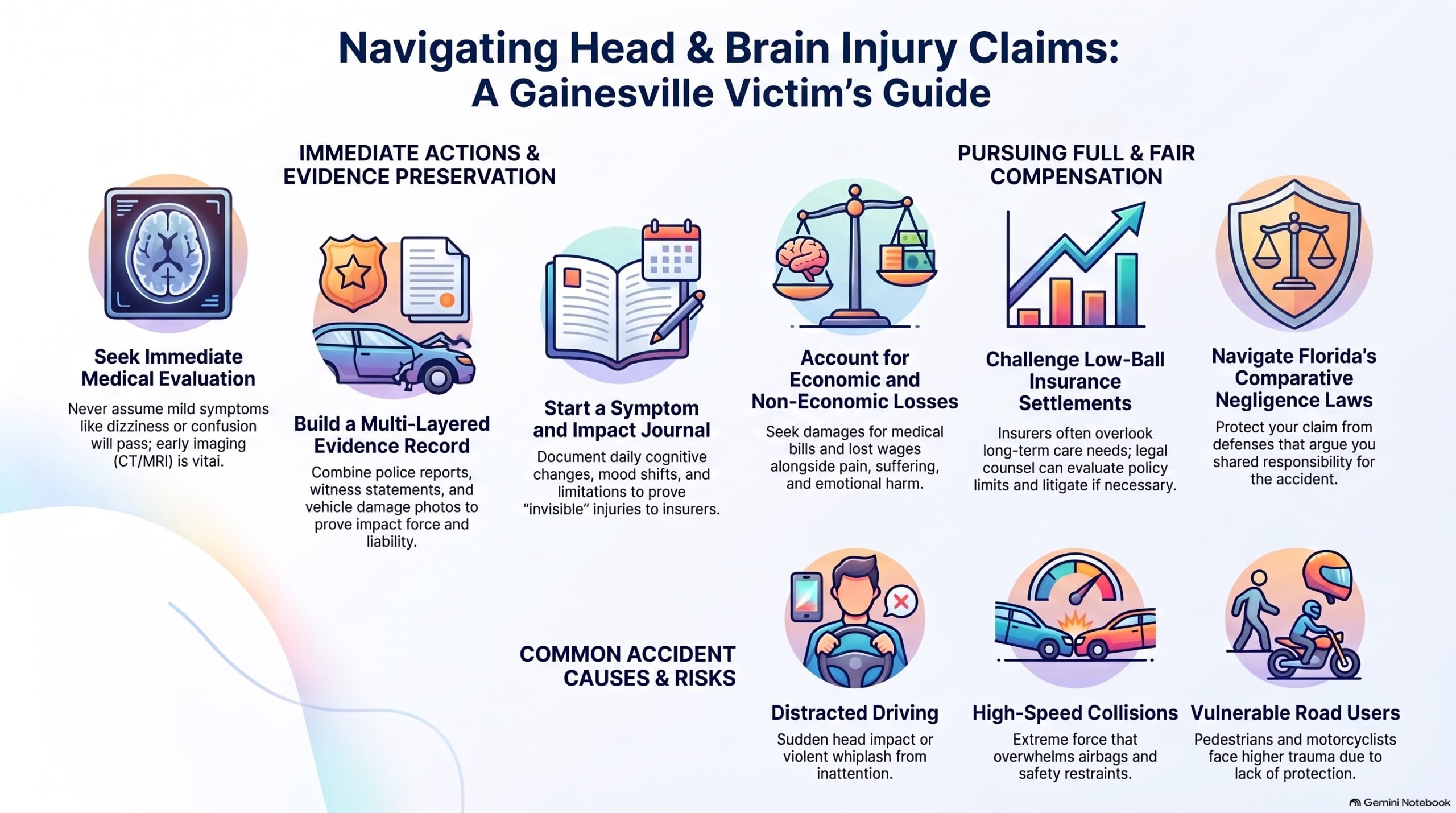
- Seek immediate medical care for dizziness, confusion, headaches, nausea, vision changes, memory problems, mood shifts, or worsening symptoms.
- An attorney can handle insurers, evaluate policy limits, challenge low offers, and prepare litigation when negotiations fail.


How We Can Help With Your Gainesville Car Accident Head & Brain Injury Claim
After a car accident causes a head or brain injury, we can help you protect your rights, document your losses, and pursue the compensation you’re entitled to seek. We begin by listening to your priorities, because your recovery, family responsibilities, and service to others matter. Then, we gather medical records, crash evidence, witness statements, wage information, and expert opinions that show how the injury affects your life.
We also manage communications with insurers, employers, medical providers, and opposing parties, so you can focus on treatment and stability. Our team develops an insurance strategy designed to address available coverage, policy limits, liability disputes, and future care needs. When assessing damages, we evaluate medical expenses, lost income, diminished earning capacity, pain and suffering, and long-term support needs. If negotiations don’t produce a fair result, we prepare your claim for litigation and advocate firmly for accountability.
OUR CONSULTATIONSARE FREE
START YOUR FREE CASE REVIEW

Understanding Gainesville Car Accident Head & Brain Injury Cases
Building on the ways we support your claim, it’s important to understand how Gainesville car accident head and brain injury cases develop, because these injuries often involve complex medical, legal, and insurance issues. We look beyond the initial diagnosis and examine how the injury affects your memory, work, caregiving duties, and daily service to others. Medical records, specialist opinions, imaging, and documented symptoms help us connect the crash to your current and future needs.
We also evaluate liability and damages with care. Comparative fault defenses may arise when an insurer argues you share responsibility, so we gather evidence that protects your position. Insurance coverage limits can also affect recovery, especially when long-term treatment, rehabilitation, or lost earning capacity exceeds available policies. By identifying these issues early, we help you pursue compensation that reflects the full impact of your injury while preserving your ability to support yourself, your family, and your community.
Common Causes of Gainesville Car Accident Head & Brain
We often see head and brain injuries arise from crashes caused by distracted driving, excessive speed, impaired motorists, and impacts involving motorcycles or pedestrians. When you’re struck in these situations, the force can cause serious trauma, even if symptoms don’t appear immediately. We’ll identify the cause of the collision, connect it to your injury, and help you understand the legal options available.
Distracted Driving Crashes
When a driver diverts attention from the road, even for a few seconds, a Gainesville car accident can cause a sudden head impact, violent whiplash, or other forces that lead to traumatic brain injuries. We often see how Cellphone distraction, including texting, dialing, or reading notifications, prevents drivers from recognizing stopped traffic, pedestrians, and changing signals. These distracted driving patterns can turn routine travel into a serious collision with lasting cognitive, physical, and emotional consequences.
We help you understand how inattention may have contributed to your injury, while serving your need for clear guidance and accountability. Evidence may include phone records, witness statements, vehicle data, and crash scene details. By identifying distractions early, we can preserve proof, explain fault, and support your claim accurately.
High-Speed Collisions
Because speed magnifies the force of impact, high-speed collisions often cause some of the most severe head and brain injuries in Gainesville car accidents. We help you examine speed-related causation factors, including posted limits, road design, traffic flow, and driver reaction time. When vehicles travel too fast, braking distance calculations often show that a driver had no practical ability to stop before impact. Even modern protections have limits, especially when extreme force overwhelms airbags, crumple zones, and restraint systems. We also encourage prompt post-crash concussion screening, because symptoms may appear subtle while brain trauma progresses. By identifying how speed contributed to the crash, we support your effort to protect the injured, pursue accountability, and secure care needed for recovery.
Drunk Driving Accidents
Impairment turns an ordinary drive into a serious threat, especially when alcohol affects judgment, reaction time, coordination, and attention. We see how drunk driving crashes can cause violent head movement, direct impact, and oxygen deprivation that may lead to concussion, bleeding, swelling, or traumatic brain injury. When we serve injured people, we look beyond the police report and examine bar receipts, witness statements, toxicology results, crash reconstruction, and DUI checkpoint data to identify accountability. Alcohol impairment can also overlap with fatigue, medication use, or conditions involved in Sleep apnea accidents, making a careful investigation required. If you or someone you support suffered a head or brain injury, we help preserve evidence, document losses, and pursue compensation with discipline, compassion, and purpose after a preventable Gainesville collision.
Motorcycle And Pedestrian Impacts
Although motorcycles and pedestrians differ in movement and protection, both face a high risk of severe head and brain injury during a Gainesville traffic collision. We help you examine how driver inattention, unsafe turns, speeding, impaired driving, and failure to yield place vulnerable road users in danger. A rider may strike the pavement or another vehicle with violent force, while a pedestrian has no structural protection at all.
We also assess whether Seatbelt compliance affected other occupants, because that evidence can clarify impact forces and injury patterns. When a driver flees, hit-and-run identification becomes crucial to accountability and recovery. We gather witness statements, surveillance footage, crash reports, and medical records to support your claim and serve your family’s need for justice.
Don’t Wait. Call Our Florida Personal Injury Lawyers Now!


Legal Rights of Gainesville Car Accident Head & Brain Injury Victims
Legal rights matter after a Gainesville car accident causes a head or brain injury, especially when symptoms disrupt work, mobility, memory, or daily life. We help you understand those rights so you can protect your health, family, and ability to serve others with stability.
After a brain injury crash in Gainesville, understanding your rights can help protect your health, stability, and future.
You may have the right to seek compensation for medical care, lost income, reduced earning ability, pain, and future support needs. We also work to preserve evidence, address insurance pressure, and explain how Negotiation tactics can affect settlement timelines.
- You qualify for medical documentation that reflects the full impact of the injury, not only the first emergency visit.
- You can challenge low insurance offers when they ignore ongoing symptoms, caregiving demands, or long-term limitations.
- You may pursue accountability when another party’s conduct caused preventable harm and changed your daily responsibilities.
We focus on protecting your claim while you focus on recovery and service.
Why Do Gainesville Car Accident Head & Brain Injuries Happen?
When a crash forces the head to strike a surface or move violently, the brain can suffer serious trauma even without visible wounds. We see these injuries arise from sudden stops, rollovers, side impacts, and rear-end collisions that whip the neck and head beyond normal limits. The brain may strike the skull, twist, or stretch delicate nerve tissue, causing concussions, bleeding, swelling, or lasting cognitive changes.
In Gainesville, risks increase when drivers speed, follow too closely, run red lights, or drive while distracted or impaired. Passengers, bicyclists, pedestrians, and motorcyclists remain especially vulnerable because they have less protection from impact forces. Concussion prevention requires careful driving, proper restraint use, and attention to roadway conditions that can endanger others. Helmet safety also matters for riders, cyclists, and scooter users, since a well-fitted helmet can reduce the severity of head trauma. We recognize how prevention serves the whole community, protecting families, caregivers, and neighbors.
What Should You Do After a Gainesville Car Accident Head & Brain Injury?
After a Gainesville car accident causes a head or brain injury, we need to act quickly to protect your health and legal rights. We recommend that you seek immediate medical care, document accident evidence when possible, and avoid assumptions about the severity of your symptoms. We can also help you contact legal help promptly, so essential evidence is preserved and your claim is positioned properly from the start.
Seek Immediate Medical Care
Even if you feel stable at the scene, you should seek immediate medical care for any suspected head or brain injury after a Gainesville car accident. We should not assume mild dizziness, confusion, headache, nausea, or vision changes will pass safely. Prompt evaluation helps restore your health, guides treatment, and creates a clear medical record of your condition.
First, choose emergency contacts who can speak with providers, help arrange transportation, and watch for signs you may miss. If symptoms worsen, they should call 911 or take you to the emergency department immediately. Second, note symptom changes, including sleepiness, memory problems, balance issues, mood shifts, or repeated vomiting. We encourage you to follow discharge instructions, attend follow-up visits, and ask questions when anything feels uncertain.
Document Accident Evidence
Because evidence can disappear quickly, we recommend documenting the accident scene and your injuries as soon as it’s safe to do so. If you’re able, photograph vehicle positions, roadway conditions, traffic signals, debris, visible injuries, and damage from several angles. We also suggest recording short videos, noting weather, lighting, and any hazards that may have contributed to the crash. Preserve information about helmet usage, seat belt use, and protective equipment, since these details may help clarify injury mechanisms. If witnesses are present, politely collect their names and contact information. When possible, note the presence of nearby cameras at businesses, homes, or intersections. Skid mark analysis may later help explain speed, braking, and impact direction. Keep damaged clothing, helmets, and personal items unaltered, stored securely.
Contact Legal Help
Promptly contacting legal help can protect your rights while medical providers evaluate the full extent of a head or brain injury. We can help you preserve evidence, communicate with insurers, and avoid statements that may weaken your claim. If symptoms worsen or new limitations appear, we can connect those developments to your case timeline and request records before they become harder to obtain.
When you seek an emergency consultation, bring police reports, medical discharge papers, photographs, witness details, and insurance information if available. We’ll review immediate needs, identify liable parties, and explain deadlines that affect recovery. By acting early, you give us time to carefully serve your interests, support your restoration priorities, and pursue compensation for treatment, lost income, and long-term care.
Critical Evidence in a Gainesville Car Accident Head & Brain Injury Case
We build a strong Gainesville head and brain injury claim by identifying evidence that connects the crash, the trauma, and your losses
Important proof often includes:
1. police accident reports, 2. medical imaging results, and 3. witness statements, with vehicle damage evidence helping confirm the force and mechanics of impact.
When we preserve and analyze this evidence early, we can better protect your right to fair compensation.
Police Accident Reports
After a serious Gainesville crash, the police accident report often becomes one of the first pieces of evidence we review in a head or brain injury case. We examine the officer’s narrative, diagrams, citations, witness names, roadway conditions, and statements made at the scene. These details help us understand how the collision occurred and whether comparative negligence may become an issue.
We also use the report to guide evidence preservation. If the report identifies nearby cameras, damaged vehicles, skid marks, or witnesses, we act quickly to protect that information before it disappears. For you and your family, this process supports accountability and service to the truth. While the report isn’t the final word, it provides a structured starting point for building a careful, well-supported claim.
Medical Imaging Results
The police report can point us toward what happened on the roadway, but medical imaging helps show what happened inside the injured person’s head. We review each CT scan, MRI findings, and related physician notes to connect visible trauma with symptoms, treatment needs, and long-term limitations. These records can reveal bleeding, swelling, fractures, diffuse axonal injury, or subtle changes that may not be apparent on an initial examination.
We also study imaging timelines, because when scans were ordered and repeated can matter. A delayed diagnosis may show how symptoms progressed after the crash, while prompt imaging can support the severity of immediate trauma. By organizing these results carefully, we help you present evidence that serves the injured person’s recovery, medical care, and legal claim.
Witness Statements
When a crash causes a head or brain injury, witness statements can clarify details that medical records and police reports don’t fully capture. We look for accounts describing confusion, loss of balance, delayed responses, or changes in behavior after impact. These observations may help connect your symptoms to the collision, especially when injuries are not immediately visible.
We evaluate Eyewitness credibility, statement consistency, and the witness’s opportunity to observe the events. Independent bystanders, passengers, first responders, and nearby workers may each provide useful perspectives. We also compare statements with timing, road conditions, and your medical history to identify reliable support for your claim. By gathering these accounts promptly, we help preserve important evidence, protect your rights, and support your recovery with care.
Vehicle Damage Evidence
Because impact forces often leave measurable clues, vehicle damage evidence can play a pivotal role in a Gainesville car accident head and brain injury case. We examine crush patterns, airbag deployment, broken glass, frame distortion, and intrusion into the passenger compartment to help show how your head or brain injury occurred. These details can support medical findings and clarify the force involved. We also look for Surveillance footage that captures the collision from nearby businesses, traffic cameras, or homes. When available, vehicle telemetry may reveal speed, braking, direction control, and seatbelt use before impact. By preserving and analyzing this evidence quickly, we help protect your claim and serve the larger purpose of promoting accountability, safer conduct, and fair recovery after a serious crash in our community.
Long-Term Effects of Gainesville Car Accident Head & Brain Injuries
We help you understand how head and brain injuries can affect memory, concentration, judgment, and other cognitive functions long after a Gainesville car accident. We also consider emotional and behavioral changes, including mood instability, irritability, anxiety, or personality shifts that may disrupt daily life. Because these injuries often require ongoing care, we assess your future medical needs when building a claim for full and fair compensation.
Cognitive Changes
After a Gainesville car accident, cognitive changes can affect nearly every part of an injured person’s daily life, even when outward symptoms appear limited. We often see survivors struggle with memory impairment, missed appointments, misplaced items, or difficulty recalling instructions that once felt routine. Focus difficulties may also interfere with reading, driving decisions, work tasks, school responsibilities, and conversations with loved ones. When you’re trying to serve your family, employer, or community, these changes can create real barriers to reliability and independence. We help you recognize how cognitive symptoms connect to the crash, medical records, and daily limitations. Careful documentation matters, because insurers may minimize problems they cannot easily see. By identifying these effects early, we can pursue evidence that supports treatment needs and long-term recovery planning.
Emotional And Behavioral Effects
Long after the physical injuries begin to stabilize, emotional and behavioral changes can continue to disrupt a survivor’s relationships, work, and sense of control. We often see families struggle when patience, judgment, or emotional regulation changes after a Gainesville crash. A person who once served others with steadiness may become withdrawn, irritable, impulsive, or anxious, creating tension with coworkers, spouses, children, and friends.
We also understand how memory impairment can intensify these challenges. Missed commitments, repeated questions, or difficulty following conversations may appear careless, yet they can reflect real neurological harm. When these effects interfere with daily life, we help you recognize their seriousness and protect your rights. Your claim should account for how these changes affect dignity, responsibility, and the ability to contribute meaningfully.
Ongoing Medical Needs
As symptoms evolve, head and brain injuries often require continued medical attention that extends well beyond the emergency room. We help you recognize how follow-up care may include neurology visits, cognitive therapy, vision care, medication management, and monitoring for seizures, headaches, or memory loss. Rehabilitation planning allows families to coordinate treatment, transportation, work restrictions, and home adjustments with greater confidence.
We also understand that recovery rarely affects only the injured person. Caregiver support may become necessary when loved ones must manage appointments, supervise daily routines, or respond to sudden changes in behavior. When we evaluate a Gainesville car accident claim, we consider these continuing needs, not just initial hospital bills. Long-term care costs can shape your future, and they require careful documentation.
Don’t Wait. Call Our Florida Personal Injury Lawyers Now!
Proving Liability in Gainesville Car Accident Head & Brain Injury Cases
When a head or brain injury follows a Gainesville car accident, proving liability requires evidence that connects the other party’s conduct to the crash and the resulting harm. We help you build that connection with police reports, witness statements, vehicle damage evidence, roadway conditions, and accident reconstruction when the collision mechanics are disputed.
We also focus on medical records because they show how symptoms developed, what treatment was necessary, and whether the trauma is consistent with the crash forces. Strong proof of causation matters, especially when a person had family, work, or community responsibilities before the collision and now needs support.
Florida’s Comparative fault rules can reduce recovery if another party claims you shared responsibility. We address those claims with facts, timelines, and expert analysis, not assumptions. By organizing liability evidence early, we protect your position and help show how careless driving caused a serious injury that changed your daily life and ability to serve others.
Dealing With Insurance Companies After a Gainesville Car Accident Head & Brain Injury
After a Gainesville car accident causes a head or brain injury, insurance companies often begin evaluating the claim before the full medical picture is clear. We acknowledge that you may want to cooperate, especially when adjusters sound helpful, but early statements can affect your ability to serve your family’s needs and protect your recovery.
We encourage you to avoid recorded statements, broad medical releases, or quick settlement offers without guidance. Head and brain injuries may worsen over time, and insurers may rely on incomplete records to limit responsibility. We help you organize medical documentation, monitor police report updates, and respond to requests carefully and promptly.
Independent legal options can give you space to focus on treatment while we communicate with the insurer. Our role is to protect the value of your claim, preserve vital evidence, and help you make informed decisions that support your health, dignity, and long-term stability.
What to Expect During a Gainesville Car Accident Head & Brain Injury Claim Process
We guide you through each stage of a Gainesville car accident head or brain injury claim, starting with an initial medical evaluation and careful evidence gathering. We use medical records, accident documentation, and witness information to support your insurance claim negotiations. If the insurer won’t offer fair compensation, we are prepared to pursue the matter through settlement negotiations or trial.
Initial Medical Evaluation
Because head and brain injuries can worsen quickly, the initial medical evaluation is one of the most important steps in a Gainesville car accident claim. We encourage you to seek emergency care immediately, even when symptoms seem mild. Physicians may assess consciousness, memory, balance, vision, speech, and pain response, and order imaging or neurological testing as needed. We also help you understand why it matters to document trauma care accurately from the beginning, since early treatment can guide recovery and protect your ability to serve your family, workplace, and community. During follow-up care, concussion symptom tracking may include headaches, confusion, nausea, sleep changes, dizziness, or mood shifts. We take these signs seriously, because timely medical attention supports both your health and the responsible handling of your claim.
Evidence And Documentation
Gathering strong evidence begins as soon as your condition allows, and careful documentation can shape every stage of a Gainesville car accident head and brain injury claim. We help you preserve police reports, medical records, diagnostic imaging, discharge instructions, prescriptions, photographs, and witness information. We also encourage you to track symptoms, missed work, caregiving needs, and daily limitations, because these details show how the injury affects your service to family, work, and community.
With proper H2 framing, this step supports the attorney’s strategy by connecting the crash, the medical findings, and the lasting consequences. We organize records, identify gaps, and request additional documentation when needed. By building a complete factual record early, we position your claim for careful review and stronger accountability.
Insurance Claim Negotiations
After the evidence record begins to take shape, insurance claim negotiations often become the next critical stage in a Gainesville car accidenthead and brain injury case. We present your medical history, prognosis, lost income, caregiving needs, and daily limitations in a clear demand package. We also address liability disputes, policy limits, and insurer arguments before they reduce the value of your claim. As negotiations progress, we keep you informed, explain each offer, and evaluate whether it reflects the full human and financial impact of your injury. We serve you by protecting your dignity, your recovery needs, and your family’s stability. At the same time, we continue deposition preparation and trial strategy building, so the insurer understands that we’re prepared to advance your case if negotiations fail.
Settlement Or Trial
If negotiations don’t produce a fair resolution, your Gainesville car accident head and brain injury claim may move toward settlement review, mediation, or trial. We prepare you for each step, explaining the risks, timelines, and evidence that may shape the outcome. Our Negotiation strategy focuses on your medical needs, lost income, caregiving demands, and long-term support, so any proposed settlement reflects real harm, not convenience.
If trial becomes necessary, we present your story with disciplined preparation and respect for the people affected by your injury. We address jury trial dynamics, including witness credibility, medical testimony, and how jurors may evaluate symptoms of invisible brain injury. We stand with you, protect your dignity, and pursue accountability that supports recovery, service, and stability for your future.
Compensation for Gainesville Car Accident Head & Brain Injury Damages
Recovering compensation for a Gainesville car accident head or brain injury requires a clear accounting of how the injury has affected your health, work, finances, and daily life. We help you document the full impact with medical records, expert opinions, employment information, and testimony from those who know your daily limitations. Our goal is to present a complete claim that reflects the seriousness of the trauma and the support you may need moving forward.
Head and brain injuries can alter decision-making, mobility, memory, mood, and independence. We approach catastrophic injury valuation with careful attention to long-term care needs, future earning ability, and the practical burdens placed on your family. When a crash causes a fatal brain injury, Wrongful death claims may help surviving relatives seek accountability and needed financial stability. We work to protect your rights while honoring the service, care, and responsibility you continue to show others.
Economic vs Non-Economic Damages in Gainesville Car Accident Head & Brain Cases
We separate your damages into economic losses, such as medical bills and lost wages, and non-economic losses, including pain, emotional harm, and reduced quality of life. We’ll assess how your head or brain injury has affected your finances, daily function, and long-term well-being. We also focus on proving these losses with medical records, expert opinions, wage documentation, and clear evidence of your ongoing limitations.
Medical Bills And Wages
After a head or brain injury in a Gainesville car accident, medical bills and lost wages often make up the core of an injury claim. We help you document emergency care, imaging, hospitalization, therapy, medication, and follow-up treatment, because each expense shows the financial cost of recovery. We also review insurance statements and provider balances to ensure every charge gets noticed. For wages, we gather pay records, employer letters, tax documents, and schedules as Lost Wage Proof. If your injury limits hours, duties, promotions, or future earning ability, we address that Job Impact with clear evidence. Our goal is to present economic damages in a way insurers and courts can verify, so your claim reflects the real financial burden placed on you and those who depend on your service.
Pain And Emotional Harm
Financial losses tell only part of the story in a Gainesville head or brain injury claim. We also consider how pain, fear, confusion, and lost independence affect your daily life. These non-economic damages recognize the human cost of harm, especially when symptoms change relationships, work habits, and service to others.
We know recovery often requires Therapy and counseling, trauma recovery planning, stress management, and long-term support. You may need help rebuilding routines, managing fatigue, or coping with anxiety after a crash. We approach these losses with care because dignity matters, not just receipts. When we evaluate emotional harm, we focus on how the injury limits your ability to care for family, serve your community, and live with stability. These damages merit serious attention.
Proving Brain Injury Losses
To prove brain injury losses in a Gainesville car accident case, we must connect the diagnosis, daily limitations, and future needs to clear evidence. We gather medical records, imaging, neuropsychological testing, wage documents, and care plans to show economic damages, including treatment costs, lost income, and reduced earning capacity. We also document non-economic damages, such as memory loss, fatigue, mood changes, and loss of independence, through family statements and evidence of daily impact. Accident reconstruction can explain the force of the crash, while eyewitness corroboration can support how the collision occurred and how you changed afterward. We work to present losses with accuracy and dignity, so the claim reflects both measurable expenses and the human harm that affects your service, relationships, and daily purpose after trauma.
When a Gainesville Car Accident Head & Brain Injury Case Goes to Trial vs Settlement
When a Gainesville car accident causes a head or brain injury, the case may resolve through settlement, but it can proceed to trial if the insurer refuses to recognize the full extent of the harm. We prepare every case as if a jury may hear it, because that preparation often strengthens negotiations and protects your ability to seek fair compensation.
Settlement may serve you well when the evidence clearly shows liability, medical needs, lost income, and long-term effects. Trial may become necessary when the defense disputes diagnosis, causation, future care, or the injury’s effect on daily service, family duties, and work.
If trial is required, we guide you through each stage, including Jury selection, witness testimony, expert presentation, and closing arguments. We aim to present your story with dignity, accuracy, and purpose, so decision-makers understand both the medical evidence and the human responsibility to help restore what was taken.
Florida Laws That May Affect Your Gainesville Car Accident Head & Brain Case
Trial strategy and settlement value both depend on the Florida laws that govern your Gainesville car accident head or brain injury case. We evaluate these rules carefully, because your recovery may support your family, restore stability, and help you continue serving others.
Florida law shapes your case strategy, settlement value, and path toward recovery after a serious injury.
- No-fault coverage: Florida generally requires injured people to first use personal injury protection benefits. We review available benefits, medical documentation, and PIP limits to determine what early expenses may be paid.
- Comparative negligence: If an insurer claims you share blame, your compensation may be reduced. We challenge unfair allegations with evidence, witness statements, and accident analysis.
- Fault determination: Serious head and brain injuries often require proof beyond initial insurance benefits. We identify negligent drivers, unsafe conduct, vehicle issues, and supporting medical proof.
These laws shape negotiations and litigation. We apply them with discipline, so your claim reflects the full impact of your injuries and the responsibility owed by others.
Don’t Wait. Call Our Florida Personal Injury Lawyers Now!
The Statute of Limitations for Gainesville Car Accident Head & Brain Injury Cases
Because strict filing deadlines can control your right to recover damages, we evaluate the statute of limitations as early as possible in every Gainesville car accident head or brain injury case. In Florida, personal injury claims generally must be filed within two years from the crash date, and missing that deadline can prevent a family from pursuing accountability.
Head and brain injuries may create practical challenges because symptoms can progress, medical needs can change, and caregiving responsibilities can overwhelm daily life. Even so, the filing period usually continues to run. We also consider whether tolling exceptions may apply, such as issues involving a minor, incapacity, concealment, or other legally recognized circumstances. These exceptions are limited, so you shouldn’t rely on them without careful review.
How a Gainesville Car Accident Head & Brain Lawyer Can Help You
After a serious crash, we help you protect your legal claim while you focus on medical care, recovery, and family responsibilities. We investigate the collision, identify liable parties, preserve evidence, and work with medical professionals to document traumatic brain injury symptoms, future care needs, and the full effect on your daily life.
We protect your claim while you focus on medical care, recovery, and your family.
- We build a clear record of damages, including treatment costs, lost income, reduced earning capacity, and support needs.
- We handle insurers, challenge unfair denials, and address insurance bad faith when carriers place profits over people.
- We pursue accountability through settlement negotiations or litigation, including Wrongful death claims when a family has lost a loved one.
Our role is to carry the legal burden with discipline and purpose. We recognize that many injured people want to return to serving their families, workplaces, and communities, and we work to secure resources that support that path.
When to Contact a Gainesville Car Accident Head & Brain Lawyer
When should you speak with a Gainesville car accident head and brain lawyer? We recommend reaching out as soon as medical needs are stabilized, especially when head symptoms appear after a collision. Headaches, dizziness, confusion, memory problems, nausea, vision changes, or unusual fatigue may signal injuries that warrant prompt attention.
Emergency signs, such as loss of consciousness, seizures, worsening confusion, repeated vomiting, or unequal pupils, require immediate medical care before any legal step. After treatment begins, we can help you understand important timing concerns, including insurance deadlines that may affect your ability to seek compensation.
Early contact also supports evidence preservation. Crash photos, vehicle damage, witness information, medical records, and camera footage can disappear quickly. When we act promptly, we help protect facts that may matter to your claim. If you serve family, coworkers, or community members who depend on you, timely guidance can protect your wellness, responsibilities, and future.
Why You Need an Experienced Gainesville Car Accident Head & Brain Lawyer
Although any car accident claim can become complicated, head and brain injury cases often require a deeper level of legal and medical understanding. We recognize that you may be supporting an injured loved one while trying to make responsible decisions under pressure. An experienced Gainesville lawyer helps protect that person’s dignity, future care, and financial stability.
We use Medical documentation to connect symptoms, diagnoses, treatment needs, and long-term limitations to the crash. We also conduct damage calculations that account for medical bills, lost income, reduced earning capacity, rehabilitation, and the personal effects of cognitive or physical impairment. These details matter because insurers often minimize injuries that are difficult to see.
Through focused insurance negotiation, we present evidence clearly and challenge unfair settlement positions. If the insurer refuses to act responsibly, trial preparation allows us to build the case for court from the beginning rather than as an afterthought. This experience helps serve your family well.
How to Choose the Right Gainesville Car Accident Head & Brain Lawyer for Your Case
Because head and brain injury cases require careful legal judgment, you should choose a Gainesville car accident lawyer who understands both the medical evidence and the long-term consequences of these injuries. We encourage you to seek counsel who listens carefully, respects your goals, and treats your recovery as part of a broader duty to protect your family and community.
Ask about Client communication expectations early, including response times, updates, and who will handle daily questions. Strong representation also includes Case strategy meetings, where we review liability, insurance issues, medical opinions, and settlement risks. Your lawyer should explain Proof of damages, such as treatment records, wage loss, future care needs, and testimony from qualified professionals. You should also expect prompt Evidence preservation steps, including securing crash reports, vehicle data, photographs, video, and witness statements. By choosing carefully, you help ensure your claim is prepared with discipline, compassion, and purpose.
About The Law Offices of Anidjar & Levine
The Law Offices of Anidjar & Levine helps injured people in Gainesville pursue compensation after serious car accidents, including collisions that cause head and brain injuries.
We comprehend how these cases affect your health, work, family, and ability to serve others with stability and confidence.
Our team brings Local attorney history and Injury claim experience to every case we handle.
We investigate the crash, gather medical records, consult appropriate experts, and address insurance company tactics with focused preparation.
We also keep you informed, answer your questions, and manage legal deadlines so you can concentrate on recovery.
We believe injured clients merit attentive representation, not unnecessary confusion.
When you work with us, we seek damages for medical care, lost income, pain and suffering, and future needs.
Our aim is to protect your rights, strengthen your claim, and help you move forward after a serious car accident in Gainesville.
Frequently Asked Questions
Can a Mild Concussion Still Justify a Legal Claim?
Yes, a mild concussion can justify a legal claim when it disrupts your health, work, or daily service to others. We look for Medical proof, including diagnosis, symptoms, treatment records, and recovery time limits. We also consider fault, damages, and whether the injury created measurable losses. A lawyer’s evaluation helps you understand claim value, deadlines, and evidence needs, so you can act responsibly and protect your rights.
How Are Child Brain Injuries Handled After Gainesville Car Accidents?
Child brain injuries require prompt evaluation, careful documentation, and ongoing monitoring because symptoms may emerge as development continues. We help you coordinate medical imaging review, expert opinions, school records, and therapy needs to show how the injury affects daily life. We also address longterm care planning, future education support, and family burdens. By serving the child’s best interests, we pursue accountability and resources that protect their recovery and future.
Can Pre-Existing Neurological Conditions Affect My Injury Claim?
Yes, pre-existing neurological conditions can affect your injury claim, but they don’t prevent recovery. We help you show medical causation by separating prior symptoms from crash-related harm. When a collision worsens an existing condition, injury aggravation may support a compensation claim. We work with physicians, records, and experts to present clear evidence, so you can pursue fair relief while continuing to serve your family, work, and community with stability.
Should I Keep a Symptom Journal After a Brain Injury?
Yes, we recommend keeping a symptom journal after a brain injury. Symptom tracking helps you document pain, memory issues, mood changes, sleep problems, and limits in daily service to others. Daily updates create recovery records that show patterns, setbacks, and progress. We can use this information as legal evidence, helping to connect your condition to the injury and providing medical providers with clearer details for treatment decisions.
Can Family Members Help Document Behavioral Changes After the Crash?
Yes, we can ask family members to document behavioral changes after the crash. You may notice irritability, confusion, sleep disruption, memory problems, or withdrawal before clinicians do. We recommend dated notes, specific examples, and observed triggers. These records can support Medical evidence, eyewitness statements, school records, and employment notes. When we serve an injured person, careful documentation helps explain daily limitations, treatment needs, and the injury’s broader impact.
—————————
If you suffered a head or brain injury in a Gainesville car accident, Gainesville Personal Injury Lawyer The Law Offices of Anidjar and Levine can help you protect your rights and pursue fair compensation.
We’ll investigate the crash, document your losses, handle communications with insurers, and build a claim that reflects the full impact of your injuries.
You don’t have to manage this process alone.
Contact us today to discuss your case and learn how we can assist you.