

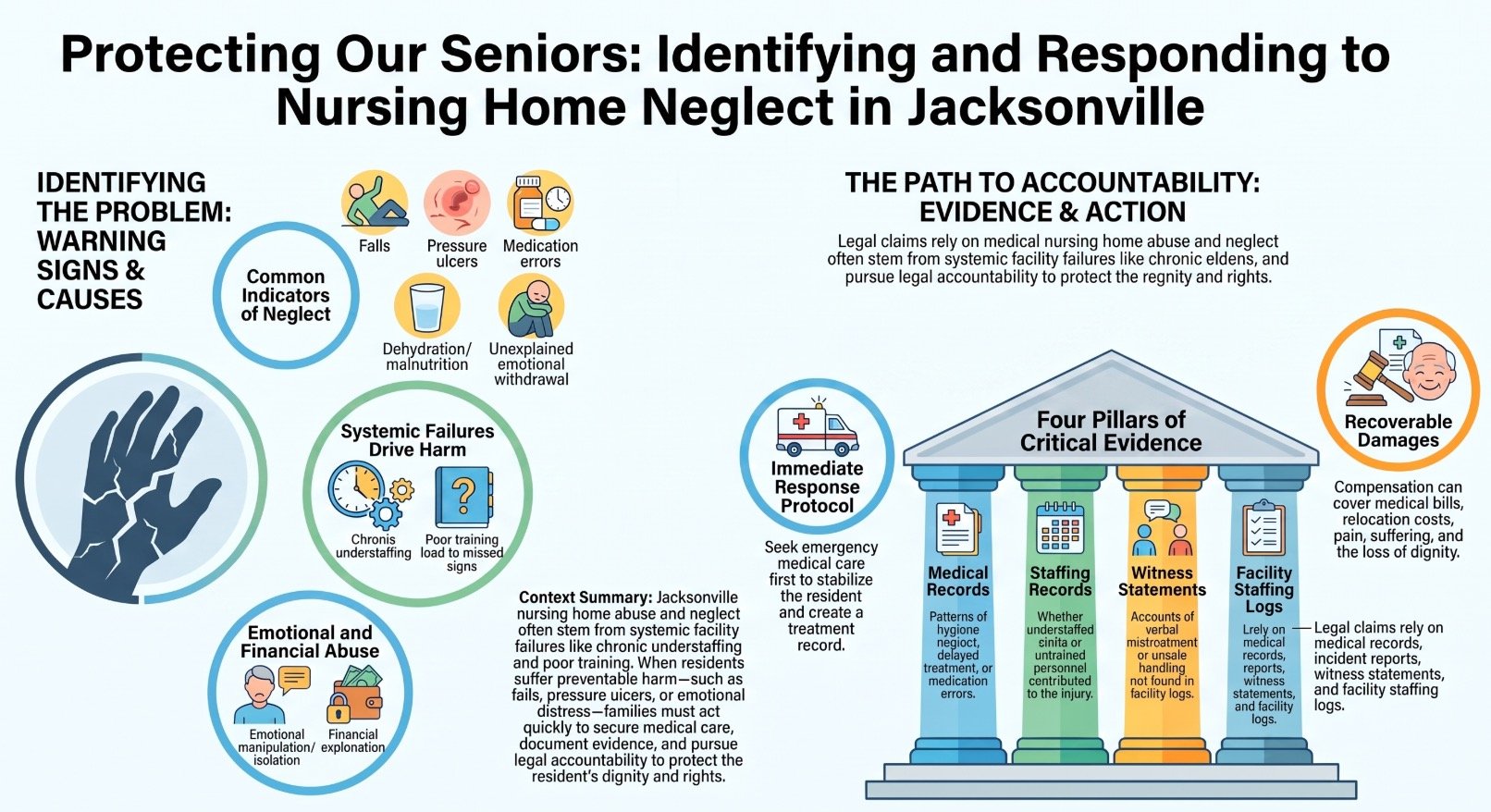
The Law Offices of Anidjar and Levine help families evaluate suspected nursing home abuse and neglect in Jacksonville, including falls, pressure ulcers, medication errors, dehydration, malnutrition, poor hygiene, inadequate supervision, and emotional harm. Legal support may involve reviewing medical records, incident reports, staffing records, photographs, witness statements, and care plans to determine whether preventable harm occurred. Counsel can also address facility responsibility, insurance issues, damages, and residents’ rights. Families seeking broader injury guidance can visit the Jacksonville Personal Injury Lawyer page. The sections below explain these claims, common causes, evidence, and available legal options.
Main Takeaways
- Jacksonville nursing home abuse and neglect claims may involve falls, pressure ulcers, medication errors, dehydration, malnutrition, poor hygiene, or emotional mistreatment.
- A lawyer can investigate staffing failures, unsafe conditions, poor training, missed warning signs, and facility policy breakdowns.
- Families should seek medical care, document injuries, photograph conditions, preserve records, and gather witness information quickly.
- Legal claims may pursue recovery for medical expenses, pain, emotional harm, disability, and reduced dignity or independence.
- Jacksonville legal support can review contracts, preserve evidence, explain options, and pursue accountability against facilities or responsible parties.
How We Can Help With Your Jacksonville Nursing Home Types of Abuse & Neglect Injury Claim
When signs of mistreatment or neglect appear in a nursing home, a Jacksonville lawyer can help families determine what happened, who may be responsible, and what legal options are available. Legal guidance may begin with listening to concerns, reviewing timelines, and identifying the resident’s urgent safety needs. Counsel can explain Family Legal Options, including claims against facilities, staff, management companies, or other responsible parties, while keeping the resident’s dignity and well-being central.
A lawyer may also support Evidence Preservation by seeking records, photographs, staffing information, care plans, incident reports, and witness statements before important details are lost. This process can help clarify whether staff followed standards of care and whether preventable harm occurred. Families often best support loved ones by acting promptly, asking focused questions, and relying on informed advocacy. Through careful investigation and measured legal action, a Jacksonville lawyer can help pursue accountability, protection, and appropriate recovery for the injured resident.
Understanding Jacksonville Nursing Home Types of Abuse & Neglect Injury Cases


After reviewing how legal support may assist families, it is important to understand what nursing home abuse and neglect injury cases in Jacksonville often involve. These matters may concern physical harm, emotional mistreatment, medication errors, malnutrition, dehydration, falls, pressure ulcers, poor hygiene, or unsafe supervision. They often require careful review of medical records, facility notes, witness accounts, photographs, and prior complaints.
OUR CONSULTATIONSARE FREE
START YOUR FREE CASE REVIEW

A case may also examine whether a resident’s condition worsened because staff ignored warning signs or failed to follow care plans. Families who serve aging loved ones should recognize that Medicare coverage limits may affect payment for treatment, but they do not excuse substandard care. Evidence of chronic negligence patterns can show that an injury was not isolated, but part of a broader failure to protect residents. Understanding these cases helps families identify harm, preserve important information, and seek accountability with dignity, patience, and a commitment to resident safety and well-being.
Common Causes of Jacksonville Nursing Home Types of Abuse & Neglect
Common causes of Jacksonville nursing home abuse and neglect often arise from systemic failures, including chronic understaffing and poor staff training. Inadequate supervision can allow warning signs to go unnoticed, while unsafe facility conditions may increase the risk of preventable harm. These factors can create an environment where vulnerable residents are exposed to avoidable injuries, neglect, and mistreatment.
Chronic Understaffing


Although staffing shortages can arise from budget constraints, turnover, or poor management, chronic understaffing in Jacksonville nursing homes often creates conditions where abuse and neglect become more likely. When too few caregivers are available, residents may wait longer for meals, hygiene assistance, repositioning, medication support, or responses to call lights. These delays can contribute to falls, infections, pressure injuries, dehydration, and emotional distress. Facilities committed to serving vulnerable adults must evaluate Staff turnover rates alongside resident incident trends to identify whether staffing gaps are harming daily care. Chronic understaffing may also increase employee fatigue, creating rushed interactions and reduced oversight. Families, advocates, and legal professionals may review schedules, complaints, and care records to determine whether a facility consistently failed to provide adequate supervision and necessary assistance.
Poor Staff Training
When nursing home employees lack proper training, routine care tasks can become sources of preventable harm for Jacksonville residents. Staff members may misunderstand mobility assistance, hygiene needs, nutrition support, infection control, or medication reminders, increasing the risk of neglect or unsafe handling. Poor instruction can also weaken Resident advocacy, because caregivers may fail to recognize signs of pain, fear, dehydration, or emotional withdrawal. Effective training should include family communication, so concerns are received respectfully and documented accurately. Facilities must also teach incident escalation, ensuring that injuries, behavioral changes, or suspected mistreatment reach appropriate personnel without delay. Clear reporting protocols help employees understand when and how to report abuse, neglect, or hazardous conditions. Without this foundation, vulnerable residents may suffer avoidable harm despite caregivers’ good intentions.
Inadequate Supervision
How can residents remain safe if no one is consistently monitoring their needs, risks, and daily condition? Inadequate supervision can allow injuries, medical decline, wandering, dehydration, or conflicts between residents to go unnoticed until serious harm occurs. Nursing homes must assess each resident’s limitations, behavioral concerns, and care requirements, then provide attentive oversight that supports resident safety. When staff fail to respond to call lights, skip required checks, or ignore changes in condition, patient rights may be violated. Such failures can reflect staff negligence, especially when a resident depends on caregivers for mobility, meals, medication reminders, or protection from foreseeable risks. Facility accountability requires proper staffing, clear supervision protocols, and prompt intervention when warning signs appear. Careful monitoring is a core duty, not an optional service in long-term care.
Unsafe Facility Conditions
Because facility hazards can place vulnerable residents at immediate risk, unsafe conditions often become a significant factor in nursing home abuse and neglect claims. Poor lighting, wet floors, broken handrails, unsecured rugs, malfunctioning beds, and blocked walkways may create dangers that careful management should identify and correct. In Jacksonville facilities, these conditions can undermine Falls Prevention efforts, especially for residents with mobility limits, cognitive impairment, or medication-related dizziness. A safe environment requires regular inspections, prompt repairs, clear documentation, and effective communication among caregivers, maintenance personnel, and supervisors. Staff Accountability is central when hazards are ignored, complaints are dismissed, or safety protocols are not followed. When unsafe conditions contribute to injury, families may seek review of maintenance records, incident reports, and staffing practices to determine whether neglect occurred.
Don’t Wait. Call Our Florida Personal Injury Lawyers Now!
Legal Rights of Jacksonville Nursing Home Abuse & Neglect Injury Victims
After nursing home abuse or neglect occurs in Jacksonville, injured residents may have legal rights under Florida law to pursue accountability and compensation. These rights may include claims for medical expenses, pain, disability, emotional harm, and losses tied to reduced dignity or independence. Nursing home contracts should be reviewed carefully, because admission paperwork may affect dispute procedures, notice issues, or responsible parties. Resident rights education also helps families recognize when care falls below lawful standards and when advocacy is needed.
Florida nursing home residents may seek accountability when neglect harms health, dignity, or independence.
Legal protections may support action when evidence shows:
- A resident left unattended, calling for help in a dim hallway
- Untreated wounds worsening beneath unchanged bandages
- Personal belongings missing from a quiet bedside table
- A fearful resident withdrawing from trusted visitors
Families, guardians, and service-minded advocates may help preserve records, report concerns, and seek legal guidance. Timely action can protect vulnerable residents while promoting safer care within Jacksonville long-term care facilities.
Why Do Jacksonville Nursing Home Types of Abuse & Neglect Injuries Happen?
When care systems fail to match resident needs with proper staffing, supervision, and training, nursing home abuse and neglect injuries may become more likely in Jacksonville facilities. Many residents require consistent help with bathing, mobility, nutrition, wound care, and medication management. If Staffing ratios are too low, caregivers may rush vital tasks, miss warning signs, or leave vulnerable residents unattended. These conditions can contribute to falls, pressure injuries, dehydration, infections, and emotional harm.
Injuries may also arise when facilities lack effective policies, accountability, or communication between shifts. Poor hiring practices, limited background screening, and inadequate training can place residents in the care of individuals unprepared for intricate needs. medication errors may occur when records are incomplete, staff members are distracted, or physicians’ orders are not followed. For families and advocates focused on service, understanding these causes helps identify whether harm reflects an isolated mistake or a broader failure to provide safe, dignified care.
What Should You Do After a Jacksonville Nursing Home Types of Abuse & Neglect Injury?
After a suspected nursing home abuse or neglect injury in Jacksonville, prompt medical care can protect the resident’s health and create an important treatment record. Evidence should be carefully documented, including photographs, witness information, incident reports, and any changes in the resident’s condition. Legal help may then assess responsibility, preserve vital evidence, and determine available options for recovery.
Seek Immediate Medical Care
Why is prompt medical attention essential following suspected nursing home abuse or neglect in Jacksonville? Immediate evaluation can identify fractures, infections, dehydration, pressure injuries, malnutrition, adverse drug reactions, or psychological distress before conditions worsen. A qualified clinician can stabilize the resident, order necessary tests, adjust unsafe medications, and determine whether emergency treatment or hospitalization is required. Timely care also supports Medication error reporting when incorrect dosages, missed prescriptions, or harmful drug interactions are suspected. Medical professionals are trained to recognize patterns that may reflect unmet care needs and caregiver responsibility standards, helping make certain the resident receives appropriate protection and treatment. Families, guardians, or advocates should prioritize the resident’s health first, contact emergency services when danger appears immediate, and arrange prompt follow-up with appropriate providers after initial care.
Document Abuse Evidence
How can evidence be preserved before memories fade or conditions change? After addressing medical needs, careful documentation helps restore the resident’s dignity and supports a truthful account of events. Preservation timing is important because bruises recover, rooms are cleaned, and records may become harder to locate. A trusted family member, caregiver, or advocate may record dates, times, staff names, medication concerns, missed care, unsafe conditions, and any statements the resident makes. Clear photos and videos of injuries, bedding, call lights, hazards, or unsanitary conditions may provide context when obtained respectfully and lawfully. Keep written notes factual, avoiding guesses or accusations. Organize and store copies of discharge papers, care plans, incident reports, and communications securely to create a reliable record for later review and appropriate protective action.
Contact Legal Help
Once immediate safety, medical care, and documentation are underway, legal guidance can help determine whether the facts indicate neglect, physical abuse, emotional harm, financial exploitation, or another rights violation in a Jacksonville nursing home. Families, guardians, or concerned advocates may contact a nursing home abuse lawyer to review records, facility reports, photographs, and each Witness statement. Early consultation supports safeguarding evidence before memories fade, documents disappear, or conditions change. Counsel can explain available claims, reporting duties, deadlines, and protective steps for the resident’s continued care. This guidance also helps loved ones communicate with administrators, insurers, and investigators without weakening potential claims. By seeking qualified legal help, those serving a vulnerable resident can pursue accountability, prevent further harm, and support dignity within the care setting.
Critical Evidence in a Jacksonville Nursing Home Types of Abuse & Neglect Injury Case
In a Jacksonville nursing home abuse or neglect injury case, essential evidence helps establish what occurred, when it occurred, and whether the facility failed to meet required standards of care.
Important materials often include:
- Medical records showing injuries, treatment, and changes in condition
- Incident reports documenting falls, altercations, or unexplained harm
- Witness statements from residents, staff, visitors, or family members
- Facility staffing records revealing shortages, missed supervision, or inadequate coverage
Together, these records can clarify responsibility and support a focused legal evaluation.
Medical Records
Medical records often serve as a central source of proof in a Jacksonville nursing home abuse or neglect injury case, because they can show what care was provided, what symptoms were documented, and whether staff responded appropriately to a resident’s condition. These records may include physician notes, nursing assessments, medication administration records, wound care charts, care plans, and therapy documentation. When reviewed carefully, they can reveal Medication management errors, delayed treatment, unexplained changes in condition, or patterns suggesting hygiene neglect. They may also show whether staff followed physician orders, monitored known risks, and updated care plans when a resident’s needs changed. For families and advocates seeking accountability, accurate records help clarify whether the facility honored its duty to protect, preserve dignity, and provide attentive care for vulnerable residents.
Incident Reports
Incident reports provide another important layer of evidence, separate from routine medical charting, because they are typically created when a specific event occurs within a Jacksonville nursing home. These reports may document falls, medication errors, elopement events, resident altercations, unexplained injuries, or delayed responses to care needs. Their value often depends on timing, completeness, and whether the description matches other records. A careful review may reveal omissions, inconsistent explanations, or efforts to minimize the seriousness of an event. Incident reports can also identify staff members on duty, relevant timelines, and whether video evidence should have been preserved. When reviewed with medical records and facility policies, they may help evaluate preventability, supervision, and reporting compliance. They also support assessments of Witness credibility without replacing separate, detailed witness statements in litigation.
Witness Statements
Witness statements can become decisive evidence in a Jacksonville nursing home abuse or neglect case because they may describe events, conditions, and staff conduct that do not appear fully in facility records. Residents, family members, visitors, contractors, and conscientious employees may observe bruising, fearfulness, delayed assistance, unsafe transfers, verbal mistreatment, or unexplained behavioral changes. Their accounts can help establish timelines, identify responsible individuals, and reveal patterns affecting vulnerable residents.
Corroborating testimony is especially valuable when several witnesses describe similar conduct from different perspectives. Attorneys may evaluate witness credibility by considering consistency, opportunity to observe, bias, memory, and whether the statement aligns with medical records or photographs. Careful collection of these statements supports accountability, protects residents, and strengthens efforts to secure a just result.
Facility Staffing Records
When a nursing home abuse or neglect claim involves questions about supervision, delayed care, or unsafe resident handling, facility staffing records can provide important evidence of whether the facility had enough qualified personnel on duty. These records may include schedules, time sheets, assignment sheets, call logs, and agency staffing documentation. They can show understaffed shifts, excessive workloads, missed breaks, or reliance on untrained personnel. Staffing policy reviews help compare actual practices with written requirements, care plans, and regulatory expectations. When paired with incident frequency analysis, these records may reveal patterns between low staffing levels and falls, medication errors, pressure injuries, or delayed responses. For families seeking accountability and safer care, staffing evidence can clarify whether preventable harm resulted from operational choices rather than isolated events within the facility.
Long-Term Effects of Jacksonville Nursing Home Types of Abuse & Neglect Injuries
The long-term effects of nursing home abuse and neglect in Jacksonville may extend far beyond the initial injury, often involving chronic physical health issues, emotional trauma, and reduced quality of life. These consequences can require ongoing medical treatment, psychological support, and increased supervision to prevent further harm. Families may also face significant financial care burdens, making a careful assessment of damages crucial in any injury claim.
Chronic Physical Health Issues
Although some nursing home injuries appear isolated at first, chronic physical health issues can develop when abuse or neglect is repeated, untreated, or concealed. Residents may experience worsening mobility, persistent infections, malnutrition, dehydration, pressure ulcers, or complications from untreated fractures. Inconsistent medication management can also aggravate diabetes, heart disease, seizure disorders, or pain conditions, especially when medication error patterns remain undocumented or uncorrected. These outcomes may reduce independence and increase the need for intensive medical oversight.
Caregivers, advocates, and legal professionals serving vulnerable residents often review medical records, staff notes, pharmacy logs, and hospitalization histories to identify preventable decline. A careful investigation may reveal whether neglect, understaffing, poor supervision, or delayed treatment contributed to lasting physical harm. Chronic conditions demand accountability, timely intervention, and sustained protection for residents.
Emotional Trauma Impacts
Physical decline is not the only crucial lasting harm that may follow nursing home abuse or neglect, as emotional trauma can persist long after visible injuries have recovered. Residents may develop anxiety, depression, withdrawal, sleep disturbance, or fear of caregivers, especially when mistreatment involved humiliation, threats, isolation, or repeated disregard. These conditions can reduce trust, impair communication, and interfere with medical cooperation. In some cases, emotional distress may contribute to Cognitive decline, particularly when stress, loneliness, and fear disrupt daily stability. Survivor testimonials often reveal patterns that records alone may not show, including changes in mood, dignity, and sense of safety. For families, advocates, and care professionals, recognizing these effects is crucial to protecting vulnerable residents and promoting compassionate, accountable care within Jacksonville nursing facilities.
Financial Care Burdens
When abuse or neglect causes lasting injury, the financial consequences may continue long after emergency treatment or an initial facility investigation has ended. Residents may require rehabilitation, wound care, mobility equipment, counseling, or transfer to a safer setting, creating expenses that strain family resources and public benefits. Caregivers who are committed to service may also lose wages while attending appointments, monitoring records, or arranging protective support. Financial review can reveal Medicaid fraud, billing errors, or charges for services never provided, which may deepen the harm and obscure accountability. Long-term costs often include medication changes, expert visits, transportation, and increased supervision. Careful documentation of invoices, benefit statements, and care plans helps identify preventable losses and supports efforts to secure needed care, reimbursement, and responsible oversight.
Proving Liability in Jacksonville Nursing Home Types of Abuse & Neglect Injury Cases
Because abuse and neglect claims often involve vulnerable residents, incomplete records, and disputed accounts, proving liability in a Jacksonville nursing home injury case requires a careful review of both the facility’s conduct and the resident’s resulting harm. Liability may depend on showing that staff failed to follow care plans, ignored warning signs, delayed treatment, or allowed unsafe conditions to continue. Relevant proof may include medical charts, incident reports, staffing records, photographs, witness statements, and expert opinions on accepted care standards.
A thorough investigation also considers whether the injury was preventable and whether neglect caused measurable losses. Damages calculation may address medical expenses, pain, emotional distress, disability, and reduced quality of life. When a facility denies responsibility, trial evidence must clearly connect the misconduct to the resident’s injury. This process helps families seek accountability while honoring the resident’s dignity, safety, and right to compassionate care.
Don’t Wait. Call Our Florida Personal Injury Lawyers Now!
Dealing With Insurance Companies After a Jacksonville Nursing Home Types of Abuse & Neglect Injury
After a suspected nursing home abuse or neglect injury in Jacksonville, insurance companies often become involved quickly and may begin evaluating the claim before the family understands the full extent of the harm. Adjusters may request statements, medical authorizations, or records that appear routine but can affect how responsibility is assessed. Families seeking to protect a vulnerable resident’s dignity should be cautious, organized, and focused on accurate documentation.
Insurance issues may involve facility liability policies, Medicare coverage, private health benefits, and payment provisions within nursing home contracts. These sources can create confusion about who is responsible for medical expenses, recovery care, and related losses. A lawyer can communicate with insurers, review policy positions, and help prevent pressure for an early resolution that undervalues the injury. This support allows family members to continue serving the resident’s health, safety, and emotional needs while preserving important evidence and protecting the resident’s legal interests.
What to Expect During a Jacksonville Nursing Home Types of Abuse & Neglect Injury Claim Process
A Jacksonville nursing home abuse or neglect injury claim often begins with an initial case evaluation, where the circumstances, injuries, and potential liability are reviewed. The process then typically moves to evidence gathering, including medical records, facility documents, witness statements, and other proof needed to support the claim. Depending on the facts, the matter may proceed through negotiations with insurers or, when a fair resolution is not offered, the filing of a lawsuit.
Initial Case Evaluation
During the initial case evaluation, a Jacksonville nursing home abuse and neglect lawyer reviews the known facts, identifies signs of mistreatment, and determines whether the resident’s injuries may support a legal claim. This meeting often centers on the resident’s condition, the timeline of concerns, prior complaints, and the facility’s responses. The lawyer may ask careful questions about changes in health, behavior, hygiene, mobility, nutrition, or emotional well-being. Resident advocacy remains central, because the evaluation considers safety, dignity, and the need for prompt protection. Family communication is also important, as relatives often provide context about care patterns and observed warning signs. The lawyer then explains potential legal options, expected responsibilities, and possible next steps, while maintaining a respectful focus on the resident’s recovery.
Evidence Gathering Process
Once a potential claim is identified, the evidence gathering process focuses on preserving records, documenting injuries, and establishing how the nursing home’s conduct may have caused harm. Counsel may request medical charts, care plans, staffing logs, incident reports, photographs, surveillance footage, and prior complaint histories. Family observations, witness statements, and timelines can help clarify changes in health, hygiene, behavior, or emotional well-being. This stage also examines Types of damages, including medical expenses, pain, emotional distress, disability, or loss of dignity. Expert witnesses may review records to assess whether accepted standards of care were violated and whether neglect or abuse contributed to the resident’s injuries. Careful documentation supports accountability, protects vulnerable residents, and helps those serving affected families pursue a claim grounded in reliable proof and compassionate responsibility.
Negotiating With Insurers
After organizing evidence, negotiations with insurers typically begin with a demand package that explains the resident’s injuries, the facility’s alleged failures, and the damages being sought. Insurers may review medical records, staffing notes, photographs, incident reports, and witness statements before responding. Counsel may use Evidence preservation strategies to ensure materials remain available, accurate, and protected from alteration. During this stage, insurer negotiation tactics may include disputing causation, minimizing pain, questioning preexisting conditions, or offering an amount below the claim’s documented value. A lawyer may answer these positions with clear timelines, expert input, and records showing preventable harm. The process often requires patience, service-minded advocacy, and careful communication, especially when the resident’s dignity, safety, and future care needs remain central to resolution.
Filing A Lawsuit
If negotiations do not produce a fair resolution, filing a lawsuit may become the next step in a Jacksonville nursing home abuse or neglect injury claim. This stage begins with a formal complaint, which identifies the alleged misconduct, injuries, responsible parties, and requested damages. Attorneys may rely on medical records, witness statements, facility policies, and Neglect Documentation to present a clear account of harm. After filing, the case enters discovery, where both sides exchange evidence, take depositions, and evaluate liability. This process can reveal staffing failures, ignored care plans, or supervision gaps tied to Caregiver Accountability. While many lawsuits still resolve before trial, preparation remains critical. A focused legal approach helps protect vulnerable residents, support families, and promote higher standards of care within Jacksonville facilities.
Compensation for Jacksonville Nursing Home Types of Abuse & Neglect Injury Damages
When nursing home abuse or neglect causes harm, compensation may address both the resident’s immediate losses and the long-term consequences of the injury. In Jacksonville cases, careful evidence handling can preserve medical records, photographs, witness statements, staffing logs, and facility reports that support the claim. This organized approach helps establish liability proof by connecting the resident’s harm to unsafe care, poor supervision, or failures in facility procedures.
A lawyer may evaluate available settlement options while considering the resident’s dignity, safety, and ongoing care needs. Compensation can support medical treatment, relocation costs, protective services, and other needs created by the misconduct. Calculating damages requires a practical review of documented expenses, future care needs, and the broader impact on the resident’s daily life. For families and advocates committed to service, pursuing compensation can promote accountability, provide resources for recovery, and encourage higher standards of care within Jacksonville nursing homes.
Economic vs Non-Economic Damages in Jacksonville Nursing Home Types of Abuse & Neglect Cases
In Jacksonville nursing home abuse and neglect cases, damages may include both economic losses, such as medical bills and related financial costs, and non-economic harm, such as pain and suffering. Each category requires careful documentation, since financial records, medical evidence, and witness accounts can affect a claim’s value. Understanding how these damages are proven helps clarify the compensation that may be available for injuries caused by mistreatment or neglect.
Recoverable Financial Losses
After nursing home abuse or neglect, recoverable financial losses may include both economic and non-economic damages, depending on the resident’s injuries, the facility’s conduct, and the evidence available. Economic damages may cover medical treatment, hospital stays, rehabilitation, relocation costs, transportation, replacement of damaged property, and reimbursement of bills for expenses caused by improper care. When financial exploitation occurs, recovery may also involve stolen funds, unauthorized withdrawals, coerced transfers, pension loss, or misused benefits. These losses require records, invoices, account statements, care plans, and witness information to support the claim. Non-economic damages address personal harms without a fixed invoice, but this section focuses on measurable losses. Careful documentation helps advocates, families, and legal professionals pursue accountability while protecting the resident’s dignity and resources.
Pain And Suffering
Financial losses show only part of the harm caused by nursing home abuse or neglect, because many residents also endure pain, fear, humiliation, anxiety, loss of independence, and diminished quality of life. These non-economic damages recognize the human impact of resident abuse, including physical discomfort, emotional distress, and the loss of dignity that vulnerable adults may experience. In Jacksonville cases, Neglect liability may arise when poor care, unsafe conditions, medication errors, or inadequate supervision cause suffering beyond measurable expenses. Families serving an injured resident often seek accountability not only for bills, but also for the hardship imposed on daily life. When abuse or neglect contributes to wrongful death, surviving loved ones may also face grief and loss that reflect the profound personal consequences of substandard care.
Proving Damage Value
How damage value is proven often depends on separating measurable losses from the personal harm caused by nursing home abuse or neglect. Economic damages may include hospital bills, rehabilitation costs, medication expenses, relocation expenses, and the value of additional care required because safety failed. Non-economic damages address pain, fear, humiliation, loss of dignity, and reduced quality of life. A careful damages calculation connects each category to records, testimony, and the resident’s condition before and after the incident.
Medical negligence standards guide whether the facility’s conduct fell below accepted care requirements. Evidence preservation is critical, including charts, photographs, staffing logs, and witness statements. Expert witness selection also matters, because qualified professionals can explain injuries, future care needs, and the human impact with accuracy and compassion for vulnerable residents.
When a Jacksonville Nursing Home Types of Abuse & Neglect Injury Case Goes to Trial vs Settlement
When a Jacksonville nursing home abuse or neglect injury case is evaluated for trial or settlement, the central question is whether the available evidence supports a fair resolution without court intervention. Counsel may review medical records, staffing patterns, witness accounts, photographs, care plans, and expert opinions to determine the strength of liability and damages. Trial strategy basics include identifying essential witnesses, preparing exhibits, examining jury themes, and anticipating defenses that may minimize the resident’s suffering.
Settlement negotiation factors often include injury severity, permanency of harm, prior facility conduct, available insurance, litigation costs, and the family’s need for closure. A settlement may spare vulnerable residents and caregivers from prolonged testimony, while still promoting accountability. Trial may become necessary when responsibility is denied, compensation is inadequate, or disputed facts require public resolution. In either path, the focus remains on dignity, protection, and meaningful recovery. Decisions should reflect evidence, compassion, and realistic case risks.
Don’t Wait. Call Our Florida Personal Injury Lawyers Now!
Florida Laws That May Affect Your Jacksonville Nursing Home Types of Abuse & Neglect Case
A decision to settle or proceed to trial does not occur in isolation, because Florida law shapes the rights, deadlines, evidence standards, and remedies available in a Jacksonville nursing home abuse or neglect case. These laws guide how facilities must protect residents, document care, respond to injuries, and honor Florida Resident Rights. They also interact with Elder Care Regulations that set minimum expectations for staffing, supervision, nutrition, medication management, and dignity.
Key legal considerations may include:
- A resident’s room kept clean, safe, and free from avoidable hazards.
- Care charts showing missed meals, untreated wounds, or delayed medication.
- Staff training records showing whether caregivers were prepared to care for frail residents.
- Inspection reports describing patterns of neglect behind quiet facility doors.
When evaluated carefully, these rules may help determine whether harm resulted from isolated error, systemic understaffing, poor oversight, or disregard for required care standards in Jacksonville long-term care settings, and whether it affects legal accountability.
The Statute of Limitations for Jacksonville Nursing Home Types of Abuse & Neglect Injury Cases
Because legal deadlines can control whether a claim may be heard, the statute of limitations is a critical issue in Jacksonville nursing home abuse and neglect injury cases. Florida law generally sets specific time limits for bringing injury, wrongful death, and related claims, and missed deadlines may prevent review, regardless of the seriousness of the harm. A careful overview of filing deadlines helps families understand when the clock may begin, including the date of injury, discovery of neglect, or death.
Some circumstances may affect these limits. Legal tolling options can pause or extend the filing period in narrow situations, such as delayed discovery, incapacity, concealment, or other legally recognized barriers. These issues require close attention, especially when residents cannot clearly report mistreatment or records are incomplete. For those committed to protecting vulnerable elders, timely action preserves evidence, supports accountability, and helps ensure concerns about abuse or neglect are addressed within Florida’s required legal timeframe.
How a Jacksonville Nursing Home Types of Abuse & Neglect Lawyer Can Help You
In nursing home abuse and neglect cases, a Jacksonville lawyer can help evaluate the facts, identify responsible parties, and determine which legal claims may apply under Florida law. Counsel may review medical records, facility policies, inspection histories, and witness accounts to build a clear picture of what occurred.
- Spotting neglect patterns in missed meals, untreated wounds, or repeated falls
- Tracing reporting chain issues from aides to nurses, administrators, and outside agencies
- Preserving photographs, care logs, incident reports, and medication records
- Coordinating with medical professionals to explain injuries and unmet care needs
This legal support helps families, guardians, and advocates take informed action for vulnerable residents. A lawyer may address facility defenses, assess damages, and pursue accountability from owners, operators, staff members, or contractors when their conduct contributed to harm. By organizing evidence and presenting claims clearly, counsel helps transform concern into a structured legal response centered on resident dignity and safety.
When to Contact a Jacksonville Nursing Home Types of Abuse & Neglect Lawyer
When warning signs suggest that a resident may be experiencing abuse or neglect, legal guidance should be sought as soon as possible to protect evidence and clarify available options. Contact may be appropriate after unexplained injuries, sudden weight loss, medication errors, poor hygiene, repeated falls, emotional withdrawal, or staff refusal to answer reasonable questions. Families, clergy, caregivers, and concerned visitors who seek to serve vulnerable residents should act promptly when safety appears uncertain.
Address immediate concerns through Emergency response steps, including calling 911, requesting urgent medical care, or notifying facility leadership when a resident faces imminent harm. After safety is stabilized, patient advocate support can help document concerns, preserve photographs, collect records, and communicate with appropriate agencies. A Jacksonville nursing home abuse and neglect lawyer may then review the circumstances, identify reporting obligations, and help determine whether further legal action is warranted to protect the resident’s dignity, well-being, and rights.
Why You Need an Experienced Jacksonville Nursing Home Types of Abuse & Neglect Lawyer
After immediate safety concerns are addressed and early documentation begins, experienced legal counsel can help determine whether the facts indicate neglect, physical abuse, emotional mistreatment, financial exploitation, or another violation of a resident’s rights. Nursing home cases often involve incomplete records, conflicting explanations, and residents who may be unable to clearly describe what occurred. A seasoned Jacksonville lawyer can evaluate medical charts, staffing patterns, photographs, witness accounts, facility policies, and prior complaints to identify failures that harmed a vulnerable person.
Effective representation also helps preserve evidence before records are altered, misplaced, or lost. Counsel may send preservation notices, obtain relevant documentation, and consult medical or care experts to assess causation. Proving damages requires connecting injuries, fear, decline, financial losses, or loss of dignity to specific conduct or systemic failures. For families seeking accountability while honoring a loved one’s wellbeing, skilled legal guidance can provide structure, direction, and protection throughout the process.
How to Choose the Right Jacksonville Nursing Home Types of Abuse & Neglect Lawyer for Your Case
Because nursing home abuse and neglect cases require both legal judgment and careful fact development, selecting the right Jacksonville lawyer should involve more than a general review of credentials. Families should look for counsel familiar with facility records, care plans, incident reports, and medical timelines, since early evidence preservation can protect a vulnerable resident’s story from being lost or distorted.
A suitable lawyer should understand how Staffing negligence proof is developed, including schedules, training records, and prior complaints. The lawyer’s approach to witness credibility also matters, especially when residents, aides, nurses, or family members provide differing accounts. In severe cases, counsel should be prepared to evaluate Wrongful death damages with care, dignity, and attention to the family’s losses.
The decision should reflect trust, communication, and a demonstrated commitment to protecting elders. Those serving an injured resident should choose an advocate who treats the case as both a legal duty and a human responsibility.
About The Law Offices of Anidjar & Levine
For families evaluating legal representation, The Law Offices of Anidjar & Levine offers counsel focused on protecting injured nursing home residents and holding negligent facilities accountable. The firm addresses claims involving abuse, neglect, unsafe supervision, medication errors, falls, poor hygiene, and failures to meet Nursing home standards. Its attorneys review records, investigate facility practices, consult appropriate professionals, and identify conduct that may have placed a vulnerable resident at risk.
The firm’s approach reflects a commitment to service, dignity, and resident rights advocacy. By guiding families through each stage of a claim, the legal team helps them understand available remedies while reducing the burden of managing intricate legal procedures. The Law Offices of Anidjar & Levine also works to pursue compensation for medical care, pain, emotional harm, and other losses tied to mistreatment. For Jacksonville families seeking accountability, the firm provides focused representation grounded in preparation, communication, and respect for those harmed.
Frequently Asked Questions
Can Nursing Home Abuse Involve Emotional Manipulation or Isolation?
Yes, nursing home abuse can involve emotional manipulation or isolation. Coercive control may appear when staff or others restrict communication, limit visitors, threaten consequences, or make a resident feel dependent and powerless. Emotional intimidation can include humiliation, persistent criticism, or fear-based pressure. Those committed to serving vulnerable adults should recognize these behaviors as serious warning signs, document concerns carefully, and seek appropriate protective intervention when safety or dignity is compromised.
Are Jacksonville Nursing Homes Required to Report Suspected Abuse?
Yes. Jacksonville nursing homes must report suspected abuse, neglect, exploitation, or abandonment under Florida mandatory reporting laws. Staff members, administrators, and certain professionals must notify agencies, including the Florida Abuse Hotline or appropriate regulatory authorities. Prompt reporting helps protect vulnerable residents, preserve evidence, and support timely intervention. Those serving older adults should understand that uncertainty does not excuse silence when reasonable suspicion exists.
Can Hidden Cameras Be Used in a Nursing Home Room?
Hidden cameras may be used in a nursing home room only when consent requirements are satisfied, and privacy boundaries are respected. The resident, or an authorized representative, generally must consent, and roommates may also have privacy rights. Recording should avoid bathrooms, changing areas, or conversations involving nonconsenting parties. Anyone serving vulnerable residents should consult state law, facility policy, and legal counsel before installation, because improper surveillance may create liability.
What Agencies Inspect Jacksonville Nursing Homes for Abuse Complaints?
Florida’s Agency for Health Care Administration conducts State inspection activities and complaint investigations for Jacksonville nursing homes. The Florida Department of Health may address professional licensing concerns, while Adult Protective Services reviews reports involving vulnerable adults. Federal oversight may involve the Centers for Medicare and Medicaid Services when certified facilities are implicated. A concerned caregiver, resident, or service-minded advocate may report suspected abuse promptly, preserving details that support timely review and recovery.
Can Family Members Visit After Reporting Nursing Home Neglect?
Yes, family members generally may visit after reporting nursing home neglect. Visitation rights and family access cannot be restricted in retaliation for using reporting procedures, as long as visits respect Resident privacy, safety, and care needs. Facilities may apply reasonable clinical or security limits, but those limits must be lawful and documented. Concerned relatives should continue monitoring conditions, communicate respectfully with staff, and report any interference to regulators or appropriate oversight agencies.
—————————
Nursing home abuse and neglect claims require prompt attention, careful investigation, and informed legal action. Victims and their families may have the right to pursue compensation for injuries, medical expenses, pain, and related losses. A Jacksonville nursing home abuse and neglect lawyer can evaluate the circumstances, identify potentially liable parties, and protect the victim’s interests throughout the legal process. The Law Offices of Anidjar and Levine provide experienced guidance for families seeking accountability and meaningful legal remedies. Learn more from a Jacksonville Personal Injury Lawyer.

