
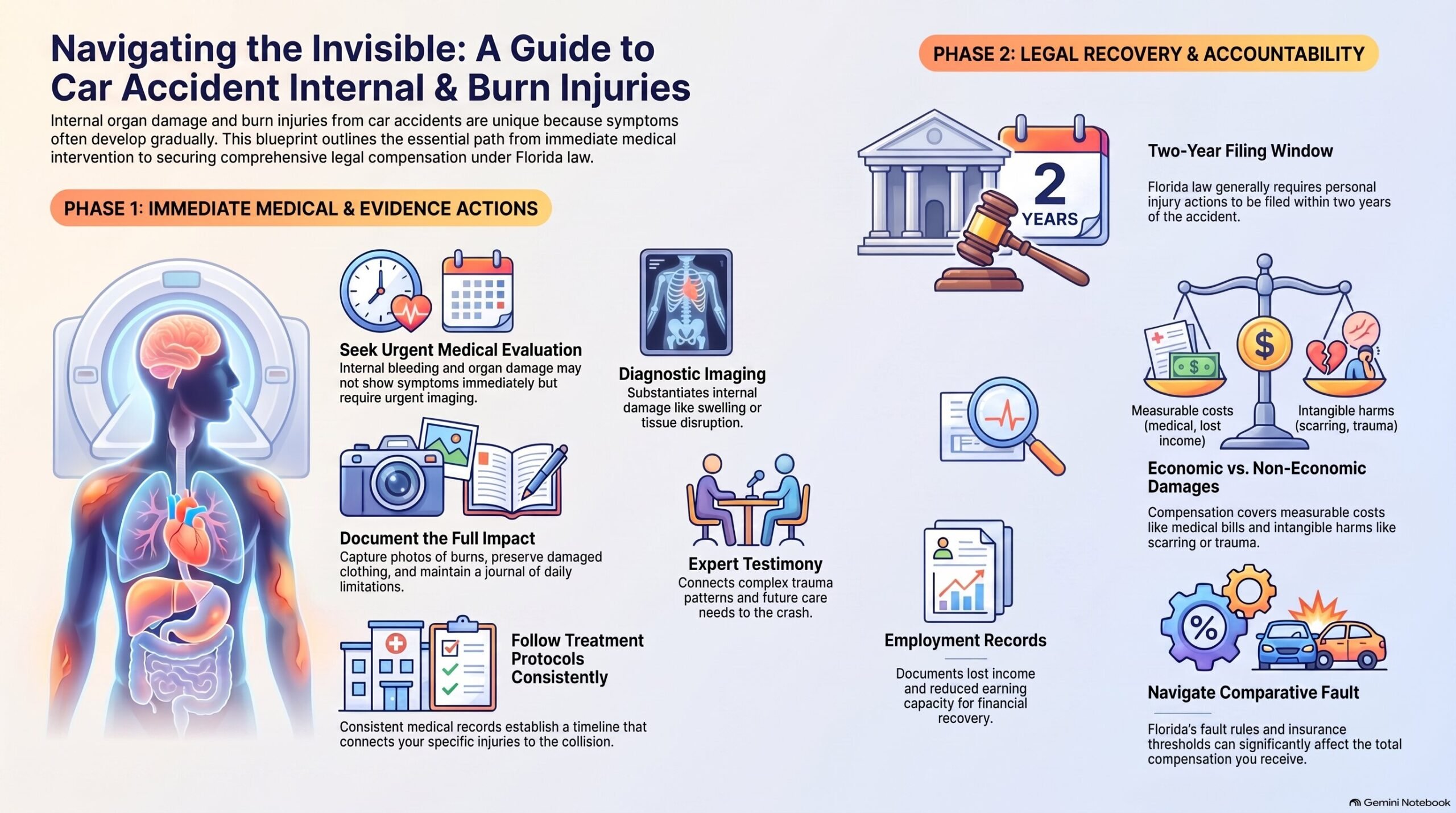
West Palm Beach car accident victims with internal organ damage or burn injuries may face delayed complications, extensive treatment, lost income, and lasting limitations.
The Law Offices of Anidjar and Levine can help preserve evidence, identify liable parties, evaluate insurance coverage, and pursue compensation for medical expenses, rehabilitation, pain, scarring, and future care.
Prompt medical attention and consistent documentation are critical.
Florida deadlines and comparative-fault rules may affect recovery.
Learn more from a West Palm Beach Personal Injury Lawyer.
Main Takeaways
- A West Palm Beach car accident lawyer can investigate internal organ and burn injuries, identify responsible parties, and pursue available insurance coverage.
- Internal injuries may develop gradually, making prompt medical evaluation, imaging, laboratory testing, and consistent follow-up especially important.
- Legal claims may include hospital bills, rehabilitation, lost income, pain, functional limitations, scarring, and anticipated future medical care.
- Preserve photographs, medical records, damaged clothing, vehicle evidence, witness information, employment records, and relevant communications.
- An attorney can negotiate with insurers and prepare litigation while addressing Florida deadlines and comparative-fault rules.


How We Can Help With Your West Palm Beach Car Accident Internal, Organ & Burns Injury Claim
When a car accident causes internal organ damage or severe burns, the resulting injuries may be difficult to identify immediately and can require extensive medical care. Legal assistance can help an injured person pursue appropriate compensation while reducing administrative burdens during recovery.
A lawyer may review medical records, collision reports, photographs, witness accounts, and other materials to establish how the injuries occurred and how they affect daily life. Evidence preservation is critical because vehicle damage, treatment documentation, and physical conditions may change or become unavailable over time. Counsel can also identify potentially responsible parties and applicable insurance coverage.
An informed Insurance negotiation strategy may address hospital expenses, rehabilitation, lost income, future care, and other documented losses. The legal team can communicate with insurers, evaluate settlement proposals, and challenge efforts to minimize the claim. When negotiations do not produce a fair resolution, counsel may prepare the matter for litigation and provide organized support throughout each stage of the process.
OUR CONSULTATIONSARE FREE
START YOUR FREE CASE REVIEW

Understanding West Palm Beach Car Accident Internal, Organ & Burns Injury Cases
Understanding these cases begins with recognizing that internal organ injuries and burn injuries may involve different symptoms, treatment requirements, and long-term consequences than more visible accident injuries. Some conditions emerge gradually, making prompt medical evaluation essential even when initial discomfort appears limited. Physicians may use imaging, laboratory testing, surgical procedures, or specialized wound care to identify and treat damage.
A thorough claim typically depends on Injury Documentation describing symptoms, diagnoses, procedures, limitations, and prognosis. Hospital Records can establish the timing and extent of treatment, while follow-up records may show continuing complications, rehabilitation needs, or future medical concerns. Evidence Preservation should include photographs, damaged clothing, medical bills, employment records, and relevant communications. Witness Statements may help clarify the injured person’s condition immediately after the collision and any observed changes afterward.
These materials assist in evaluating medical expenses, lost income, pain, functional impairment, and anticipated care. Careful organization also helps legal professionals present the full impact of the injury to insurers, courts, and families seeking accountability and support.
Common Causes of West Palm Beach Car Accident Internal, Organ & Burns
Internal organ injuries and burns in West Palm Beach car accidents may result from distracted driving, speeding, or other reckless conduct. Impaired driving can further increase the severity of collisions, while vehicle defects may contribute to crashes, fires, and burn injuries. Each cause may require careful examination of driver behavior, vehicle condition, and the circumstances surrounding the accident.
Distracted Driving
Distracted driving is a common cause of car accidents in West Palm Beach, particularly when motorists use mobile phones, adjust navigation systems, eat, or focus on passengers instead of the road. Phone use can involve texting, calling, checking notifications, or using applications while a vehicle is in motion. Distracted passengers may divert a driver’s attention through conversations, arguments, or requests that require visual focus. GPS navigation can also pose risks when drivers enter destinations, read changing directions, or manipulate devices instead of monitoring traffic.
Other in-car distractions include adjusting music, searching for items, grooming, and reaching across the cabin. These behaviors can delay braking and reduce awareness of surrounding vehicles, pedestrians, and roadway conditions. Careful attention helps motorists protect passengers and others who rely on safe, responsible driving.
Speeding And Reckless Driving
Speeding and reckless driving can cause car accidents in West Palm Beach by reducing a motorist’s reaction time and increasing the force of impact. Speeding consequences may include severe internal injuries, organ damage, burns, fractures, and life-threatening blood loss when vehicles collide at high velocity. Drivers who exceed posted limits may also struggle to stop before intersections, crosswalks, or sudden traffic hazards. Reckless hazard behaviors, including aggressive passing, tailgating, racing, and ignoring traffic signals, can place occupants, pedestrians, and other motorists in immediate danger.
The resulting crashes may require emergency treatment, surgery, rehabilitation, and long-term assistance with daily activities. Prompt medical evaluation and careful documentation can help identify the extent of harm. Families and caregivers may support injured individuals while legal professionals assess available remedies and pursue accountability for negligent conduct.
Impaired Driving
When a driver operates a vehicle while impaired by alcohol, prescription medication, or illicit substances, judgment, coordination, and reaction time may become significantly compromised. Impairment can lead to lane departures, delayed braking, unsafe turns, and collisions that cause internal injuries, organ damage, or severe burns. In evaluating a claim, investigators may examine toxicology results, medical records, witness accounts, surveillance footage, and the driver’s statements.
Alcohol impaired liability may involve evidence that consumption or substance use contributed substantially to the crash, although legal responsibility depends on the circumstances and applicable Florida law. Attorneys may also assess whether the available evidence supports a showing of reckless conduct, particularly when the driver ignored evident safety risks. A careful review can help injured individuals and their families pursue accountability, compensation, and appropriate support during recovery.
Vehicle Defects And Fires
Vehicle defects and post-collision fires can turn an otherwise survivable crash into a source of internal injuries, organ damage, and severe burns. Faulty fuel systems, weak door latches, defective airbags, and electrical failures may allow flames or toxic smoke to spread rapidly. A defective design can also increase cabin intrusion, trapping occupants and complicating emergency treatment. Investigators may examine Safety compliance records, recall history, maintenance evidence, and manufacturer testing to determine whether a dangerous condition contributed to the injuries.
Fire safety standards and crashworthiness analysis can help evaluate fuel containment, structural integrity, restraint performance, and evacuation access. Preserving the vehicle, photographs, medical records, witness accounts, and inspection reports may assist professionals serving affected families. Prompt investigation can clarify responsibility and support appropriate recovery for those harmed.


Legal Rights of West Palm Beach Car Accident Internal, Organ & Burns Injury Victims
Individuals who suffer internal organ or burn injuries in a West Palm Beach car accident may have substantial legal rights under Florida law.
Depending on the circumstances, an injured person may seek compensation from responsible parties for injuries arising from the collision.
- Emergency treatment, surgery, rehabilitation, and future medical needs
- Lost wages, reduced earning capacity, and necessary household assistance
- Physical pain, scarring, disfigurement, and diminished quality of life
- Property damage and other documented financial losses
- Wrongful death damages available to eligible surviving family members
Medical documentation can establish the nature, severity, and probable duration of internal or burn injuries. Prompt evaluation and consistent follow-up may also help demonstrate how the injuries affect daily activities and employment. Evidence preservation is important because photographs, medical records, witness information, vehicle data, and relevant communications may support a claim. Florida deadlines and comparative-fault rules can affect recovery, so legal guidance may be valuable. Serving injured individuals includes protecting their dignity, explaining available remedies, and coordinating with qualified professionals while claims are investigated and negotiated.
Don’t Wait. Call Our Florida Personal Injury Lawyers Now!
Why Do West Palm Beach Car Accident Internal, Organ & Burns Injuries Happen?
Internal organ and burn injuries in West Palm Beach car accidents often result from the severe forces and hazardous conditions created during a collision. Sudden impact can compress the abdomen or chest, damaging the liver, spleen, kidneys, lungs, or other organs without producing visible wounds. Seat belts, steering wheels, dashboards, and deployed airbags may also cause blunt-force trauma or penetrating injuries when body parts strike fractured materials. Burns can arise from fires, fuel ignition, hot fluids, electrical systems, or chemical substances released during a crash.
The burn severity may depend on exposure time, temperature, the depth of affected tissue, and the size and location of the wound. Delayed symptoms can make internal bleeding difficult to recognize, increasing the importance of rapid response by trained professionals. Medical specialists may evaluate organ function, blood loss, respiratory damage, and the risk of infection. Detailed trauma documentation can help explain injury mechanisms, treatment needs, and the long-term consequences for affected individuals and their families.
What Should You Do After a West Palm Beach Car Accident Internal, Organ & Burns Injury?
After a West Palm Beach car accident involving internal, organ, or burn injuries, the injured person should seek immediate medical care, even if symptoms initially appear minor. Medical records, injury photographs, accident details, and other evidence should be documented promptly to support potential claims. Once urgent treatment is addressed, contacting a personal injury lawyer can help protect legal rights and evaluate available compensation.
Seek Immediate Medical Care
When a West Palm Beach car accident may have caused internal, organ, or burn injuries, prompt medical care should be obtained even if the affected person appears stable. Internal bleeding, organ damage, and serious burns may worsen without obvious early symptoms. An Emergency room evaluation can identify hidden trauma through examination, imaging, monitoring, and appropriate treatment. The injured person should explain every symptom, including pain, dizziness, breathing difficulty, abdominal tenderness, confusion, or changes in skin condition.
Medical instructions should be followed carefully, and emergency services should be contacted when symptoms are severe or rapidly developing. Follow-up appointments may also be necessary because some complications emerge later. To support continuity of care and accountability, the injured person should preserve medical records, discharge instructions, prescriptions, and treatment recommendations from every provider.
Document Injuries and Evidence
Although medical treatment should remain the immediate priority, the injured person should document injuries and preserve available evidence as soon as circumstances permit. Photographs should capture visible burns, swelling, bruising, dressings, damaged clothing, vehicle positions, roadway conditions, traffic controls, and other relevant details. Because internal or organ injuries may not appear immediately, dated photographs and a written symptom journal can help track pain, limitations, medical instructions, and changes in condition.
Photo preservation techniques include keeping original files, retaining metadata when possible, creating secure backups, and avoiding filters or alterations. Witness statement collection should occur promptly, with names, contact information, observations, and statements recorded accurately. The person should preserve medical records, discharge instructions, prescriptions, bills, employment-related documentation, and damaged personal items without discarding or modifying them. These organized materials may assist those evaluating what occurred and providing appropriate support.
Contact a Personal Injury Lawyer
A personal injury lawyer should be contacted promptly to evaluate potential claims arising from internal injuries, organ damage, burns, and other consequences of a West Palm Beach car accident. Early legal guidance can help protect an injured person’s rights while treatment continues. Counsel may explain insurance requirements, investigate liability, preserve vehicle and scene evidence, and coordinate witness statement collection before memories fade.
The lawyer can also address the urgency of medical documentation by helping to organize emergency records, diagnostic imaging, expert evaluations, treatment plans, and projected future care. Internal injuries may worsen or remain difficult to detect, making consistent medical follow-up particularly important. A lawyer may communicate with insurers, assess compensation for medical expenses, lost income, pain, and long-term impairment, and pursue a resolution that supports the injured person and affected family.
Critical Evidence in a West Palm Beach Car Accident Internal, Organ & Burns Injury Case
Critical evidence can establish the severity, cause, and financial impact of internal organ and burn injuries after a West Palm Beach collision.
Relevant materials may include:
- Medical records documenting diagnosis, treatment, and prognosis
- Diagnostic imaging showing internal damage or burns
- Accident scene photographs, videos, and vehicle data
- Police reports and witness statements
- Expert testimony regarding causation, treatment, and long-term effects
Together, these sources can help clarify liability and support an injured person’s claim.
Medical Records
Medical records provide critical evidence in a West Palm Beach car accident case involving internal organ damage or burn injuries because they document the nature, severity, and progression of the harm. Emergency department notes, expert evaluations, medication lists, and discharge instructions can establish when symptoms appeared and how the patient responded to treatment. Consent forms may confirm authorized care, while a medical release can allow relevant providers to share records for claim evaluation.
Consistent treatment timelines help connect the injuries to the collision and identify gaps that opposing parties may question. Detailed injury documentation also records pain complaints, functional limitations, procedures, complications, and medical recommendations. Organized records assist attorneys, insurers, and courts in understanding the claimant’s needs and evaluating damages while supporting efforts to secure appropriate care and fair compensation.
Diagnostic Imaging
Imaging studies can substantiate internal organ damage and burn-related complications that may not be fully apparent during an initial examination. Computed tomography scans, ultrasounds, and MRI results can reveal bleeding, swelling, tissue disruption, or damage involving the abdomen, chest, brain, and other vulnerable structures. These findings assist physicians in determining treatment priorities and documenting the progression of serious injuries.
Detailed radiology reports may link observed abnormalities to trauma described in the medical record, supporting injury verification when symptoms develop gradually or examinations are inconclusive. Imaging also establishes a baseline for follow-up care, including repeat studies, referrals to medical specialists, and monitoring for complications such as infection, scarring, or impaired organ function. Preserving imaging files and reports helps ensure that medical professionals and those serving injured individuals can accurately assess the full extent of harm.
Accident Scene Evidence
Accident scene evidence can help establish how a collision caused internal organ damage, burns, or other injuries that were not immediately visible. Photographing roadway conditions, vehicle positions, traffic signals, skid marks, debris, and visible damage can preserve details that may disappear once vehicles are moved or repairs begin. Images of deployed airbags, broken glass, seat belts, and fire-related damage can also help connect the impact to claimed injuries. Witness statements may describe the collision sequence, sounds, flames, smoke, or the injured person’s condition before emergency transport.
Police reports, 911 recordings, surveillance footage, and photographs taken by bystanders may provide additional documentation. Prompt preservation of this material can assist an injured person’s pursuit of accountability and fair compensation while supporting a clear, fact-based presentation of the accident’s consequences.
Expert Testimony
Expert testimony can clarify how the collision produced internal organ damage, burns, or other injuries that may not be fully explained by photographs or initial records alone. Qualified physicians can connect trauma patterns, diagnostic findings, surgeries, and continuing symptoms to the crash. Their analysis may also explain why certain injuries appeared gradually or required delayed treatment. A carefully organized medical timeline helps show the progression from emergency care through rehabilitation and future medical needs.
Specialists may address whether burns resulted from fuel, airbags, chemicals, or vehicle fires, while other experts can evaluate organ impairment and permanent limitations. This expert interpretation gives decision-makers a reasoned basis for assessing causation, severity, and damages. By presenting complex medical information clearly, testimony can support fair treatment and informed service to injured individuals.
Long-Term Effects of West Palm Beach Car Accident Internal, Organ & Burns Injuries
Long-term effects may include chronic pain, reduced mobility, and limitations that interfere with employment and daily activities. Organ damage can lead to ongoing complications that require monitoring, medication, or additional treatment. Burn scarring may cause physical discomfort, restricted movement, and lasting psychological trauma.
Chronic Pain and Limitations
When internal organ damage or severe burns from a West Palm Beach car accident do not fully resolve, injured individuals may experience chronic pain, reduced mobility, and lasting physical limitations. Ongoing symptoms can interfere with work, household responsibilities, personal care, and meaningful participation in community life. Medical professionals may recommend Pain management options, including medication, physical therapy, counseling, or other appropriate interventions.
Disability accommodations may support safe employment, transportation, education, and access to vital services. Documentation should describe limitations in daily activities, such as difficulty walking, lifting, sleeping, concentrating, or remaining seated for extended periods. Treatment continuity planning helps coordinate appointments, prescriptions, rehabilitation, and follow-up care, especially when recovery requires multiple providers. Supportive relatives, caregivers, and service organizations can assist while respecting the injured person’s independence, preferences, and changing needs.
Organ Damage Complications
Organ damage from a West Palm Beach car accident can produce complications that persist long after emergency treatment and visible wounds have improved. Injuries to the liver, kidneys, spleen, intestines, or bladder may lead to impaired function, infection, internal bleeding, or the need for additional surgery. Some complications develop gradually, making follow-up care critical even when initial symptoms appear manageable. Ongoing monitoring can document medication needs, dietary restrictions, reduced stamina, and limitations on work or daily responsibilities.
A medical evidence checklist may include imaging studies, operative reports, expert opinions, laboratory results, treatment bills, and prognosis statements. These records help clarify causation, severity, and future medical needs. A careful Compensation strategy should account for continuing treatment, diminished earning capacity, household assistance, and other losses while supporting informed decisions that protect affected individuals and their families.
Burn Scarring and Trauma
Burn injuries from a West Palm Beach car accident can leave lasting physical and psychological effects, even after wounds have closed and immediate treatment has ended. Scars may restrict movement, cause chronic pain, increase sensitivity, or require continuing medical care. Visible changes can also affect confidence, relationships, employment, and willingness to participate in community activities. Appropriate burn scarring treatment options may include compression garments, silicone applications, physical therapy, injections, laser procedures, or reconstructive surgery, depending on the injury’s severity and location.
Emotional consequences may involve anxiety, depression, sleep disruption, or post-traumatic stress. Trauma rehabilitation planning should coordinate physicians, therapists, mental health professionals, and support services to address these needs over time. Thorough documentation of treatment, limitations, and prognosis can help injured individuals obtain appropriate resources and accountability.
Proving Liability in West Palm Beach Car Accident Internal, Organ & Burns Injury Cases
Establishing liability in West Palm Beach car accident cases involving internal, organ, or burn injuries requires clear evidence connecting the defendant’s conduct to both the collision and the resulting medical harm. Causation evidence may include crash reports, photographs, surveillance footage, vehicle data, witness accounts, and qualified accident-reconstruction testimony. These materials can help demonstrate negligence, such as distracted driving, speeding, impaired operation, or failure to yield.
Medical documentation must also establish that the collision caused the claimed injuries, including damage that was not immediately apparent. Emergency records, diagnostic imaging, surgical reports, expert opinions, and treatment histories can clarify the nature, severity, and expected duration of internal or organ injuries. Burn assessments may address tissue damage, procedures, scarring, and functional limitations.
Proving damages requires organized evidence of medical expenses, lost income, rehabilitation needs, pain, disability, and future care. A careful investigation preserves crucial information and accurately presents the injured person’s circumstances, supporting accountability and informed service to those affected.
Dealing With Insurance Companies After a West Palm Beach Car Accident Internal, Organ & Burns Injury
After liability and medical causation have been supported, communication with insurance companies becomes an important part of protecting a West Palm Beach car accident claim involving internal, organ, or burn injuries. Adjusters may request medical records, employment information, photographs, and details about symptoms or treatment. Responses should remain accurate, consistent, and limited to information relevant to the claim.
Policy claim deadlines should be identified promptly because missed notice requirements or filing periods can jeopardize available benefits. A claim representative may also offer an early settlement before the full extent of internal damage, organ impairment, scarring, or burn complications is known. Careful review is necessary before accepting or signing any release.
A recorded statement strategy can help prevent speculation, omissions, or statements taken out of context. The injured person may benefit from organizing treatment dates, diagnoses, expenses, and functional limitations before speaking with an insurer. When communication becomes difficult, a qualified attorney can help preserve evidence, address insurer requests, and advocate for fair consideration while serving the client’s best interests.
What to Expect During a West Palm Beach Car Accident Internal, Organ & Burns Injury Claim Process
A West Palm Beach car accident internal, organ, and burns injury claim typically begins with an evaluation of liability, injury severity, and available insurance coverage. The process then involves collecting medical evidence, documenting long-term effects, and negotiating with insurers based on the supported damages. If negotiations do not yield an adequate resolution, the injured party may consider settlement or trial.
Initial Claim Evaluation
When a West Palm Beach car accident claim involves internal organ damage or burn injuries, the initial evaluation focuses on the circumstances of the collision, the severity of the medical conditions, and the evidence supporting liability. A legal review may consider police reports, photographs, witness accounts, insurance information, and statements about how the injuries affected daily responsibilities. Evidence preservation steps should begin promptly, while emergency documentation tips include recording providers, diagnoses, restrictions, and significant changes in symptoms.
Medical treatment priorities remain immediate safety, stabilization, and compliance with professional instructions rather than claim strategy. Burn care documentation should reflect treatment dates, procedures, pain levels, recovery progress, and functional limitations. Early evaluation also identifies responsible parties, coverage issues, filing deadlines, and potential defenses. A careful, service-oriented assessment helps protect the injured person’s interests while preserving accurate information for subsequent review.
Medical Evidence Collection
Medical evidence collection builds the factual foundation for evaluating internal organ damage and burn injuries in a West Palm Beach car accident claim. The process may include hospital records, emergency reports, diagnostic images, surgical notes, medication histories, and photographs documenting burns as they recover. Providers may also prepare opinions concerning causation, permanency, treatment needs, and anticipated complications. A legal team generally organizes these materials chronologically and compares them with accident reports and witness accounts.
Patient authorization is often required before records can be obtained, making Consent and liability considerations important throughout the process. Detailed documentation can clarify injuries that were not immediately apparent and help address insurance claims disputes. Preserving bills, rehabilitation records, expert evaluations, and employment restrictions also supports a complete assessment of damages while protecting the injured person’s privacy and dignity.
Insurance Negotiations
Although insurers may present negotiations as a routine settlement process, internal organ damage and burn injuries often require careful evaluation before any offer is accepted. Adjusters may request medical records, treatment forecasts, employment information, and evidence describing how injuries affect daily responsibilities. A representative can organize this documentation and communicate with insurers without allowing premature conclusions about recovery.
Negotiations should account for emergency care, surgeries, rehabilitation, scarring, pain, lost income, and potential future medical needs. When another driver has insufficient insurance, Underinsured motorists coverage may provide an additional source of compensation, subject to the injured person’s policy terms. A careful policy limits negotiation examines available coverage, liability evidence, and documented damages. Clear communication helps protect the injured person’s interests while supporting a fair, well-informed evaluation of the claim.
Settlement or Trial Options
Settlement discussions may resolve a West Palm Beach car accident claim without the uncertainty and expense of a trial, but the decision should reflect the full scope of internal organ damage and burn injuries. An attorney may develop an insurance negotiation strategy using medical records, surgical reports, expert opinions, projected treatment costs, lost income, and evidence of lasting impairment. Because some complications emerge later, a settlement should account for future care before a release is signed.
If negotiations fail or an insurer undervalues the claim, litigation may provide another path. Trial preparation can include depositions, medical testimony, accident reconstruction, and the presentation of trial evidence concerning liability and damages. The injured person generally decides whether to accept an offer, while counsel explains risks, timelines, likely expenses, and the potential value of pursuing judgment.
Compensation for West Palm Beach Car Accident Internal, Organ & Burns Injury Damages
Internal organ damage and burn injuries from a West Palm Beach car accident can require extensive treatment, prolonged rehabilitation, and ongoing care. Compensation may address necessary medical services, including emergency treatment, surgery, hospitalization, expert evaluations, medication, wound care, and reconstructive procedures. Future care requirements should be documented when injuries result in lasting limitations or require ongoing monitoring.
Medical evidence collection is vital to establish the nature, severity, and progression of internal and burn injuries. Ambulance records, diagnostic imaging, operative reports, photographs, physician statements, and rehabilitation documentation may support a claim. Records should also identify how injuries affect daily activities, employment responsibilities, and caregiving obligations.
A West Palm Beach car accident lawyer may assess available insurance coverage, investigate the crash, and assist with proving liability. Helpful evidence can include collision reports, vehicle data, witness accounts, roadway photographs, and applicable traffic records. Legal guidance can help preserve evidence, communicate with insurers, and pursue a resolution that reflects the documented consequences of the injuries.
Economic vs Non-Economic Damages in West Palm Beach Car Accident Internal, Organ & Burns Cases
Economic damages may cover medical treatment, rehabilitation, lost income, and other measurable costs arising from internal, organ, or burn injuries. Non-economic damages address less tangible harm, including pain, emotional distress, disfigurement, and reduced quality of life. Calculating total compensation requires evaluating both categories, as well as the injury’s severity, prognosis, and long-term effects.
Economic Damages
When a car accident causes internal organ damage or severe burns, the injured person may pursue economic damages to restore measurable financial losses resulting from the injuries. These damages commonly include emergency transportation, hospitalization, surgery, medication, rehabilitation, medical equipment, and ongoing treatment. Records from healthcare providers, pharmacies, insurers, and medical billing departments can help establish the amounts reasonably connected to the collision. Income-related losses may include missed work, reduced earning capacity, and benefits lost during recovery.
Pay stubs, employer statements, tax returns, and documentation of lost wages can support a claim for past income. When injuries affect long-term employment prospects, vocational evidence and future income projections may help estimate anticipated losses. Careful documentation allows courts, insurers, and legal representatives to evaluate financial harm and pursue appropriate compensation.
Non-Economic Damages
Beyond documented financial losses, a person with internal organ damage or severe burns may seek non-economic damages for the physical pain, emotional distress, disfigurement, and reduced quality of life caused by the collision. These damages address harms that do not come with precise invoices. Internal injuries may produce persistent discomfort, limitations, fear, or sleep disruption, while burns can cause scarring, sensitivity, and lasting changes in appearance. Medical records, treatment notes, pain management planning, and testimony from caregivers may help explain the injury’s daily effects.
Emotional distress documentation, including counseling records and observations from family members, may further support claims involving anxiety, trauma, or diminished enjoyment of life. A careful account of these personal consequences helps decision-makers understand the human impact beyond financial losses, without treating suffering as a simple calculation.
Calculating Total Compensation
Accurately calculating total compensation requires separating economic damages from non-economic damages while considering how internal injuries, organ damage, or severe burns may affect the injured person’s future. Economic damages may include emergency treatment, hospitalization, rehabilitation, medication, lost income, reduced earning capacity, property damage, and projected Future medical needs. Experts may evaluate treatment plans, permanent limitations, and necessary care to develop reliable estimates.
Non-economic damages address pain, emotional distress, disfigurement, scarring, loss of enjoyment, and diminished quality of life. Their value depends on the injury’s severity, duration, visibility, and effect on personal relationships and daily activities. A thorough review of liability evidence can establish fault and strengthen the damages analysis. Medical records, employment documentation, expert opinions, photographs, and witness statements may help present a complete claim that serves the injured person’s long-term interests.
When a West Palm Beach Car Accident Internal, Organ & Burns Injury Case Goes to Trial vs Settlement
Although settlement can resolve a West Palm Beach car accident claim more efficiently, a case involving internal injuries, organ damage, or serious burns may proceed to trial when liability, medical causation, or the full value of damages remains disputed. Settlement discussions typically involve medical records, expert opinions, treatment projections, evidence of lost income, and documentation of pain, disability, and necessary support. Effective damages negotiation seeks compensation that reflects both current losses and long-term consequences, while protecting an injured person from accepting an inadequate offer.
A trial becomes more likely when insurers deny responsibility, challenge the severity of injuries, or refuse to cover future care. Trial preparation may include depositions, testimony from physicians and life-care professionals, accident reconstruction, and organized presentation of financial evidence. A court then evaluates credibility and determines responsibility and damages. Counsel generally explains each option, considers the client’s medical needs and personal circumstances, and recommends the path most likely to support recovery and continued care. The decision remains with the injured individual.
Don’t Wait. Call Our Florida Personal Injury Lawyers Now!
Florida Laws That May Affect Your West Palm Beach Car Accident Internal, Organ & Burns Case
Florida laws may affect how a West Palm Beach car accident claim involving internal injuries, organ damage, or serious burns is investigated, valued, and resolved. Florida’s no-fault system generally requires an injured person to seek initial medical benefits through personal injury protection, regardless of fault. The no-fault threshold may permit a claim against another driver when injuries involve significant and permanent loss, permanent injury, or substantial scarring and disfigurement.
Florida’s no-fault system may affect initial benefits, while serious, permanent injuries can support a claim against the at-fault driver.
Relevant considerations may include:
- Personal injury protection benefits and applicable deductibles
- Bodily injury insurance coverage and available policy limits
- Comparative negligence and each driver’s assigned share of fault
- Medical documentation linking symptoms to the collision
- Economic and noneconomic damages supported by reliable evidence
Comparative negligence can reduce compensation if the injured person contributed to the crash. Insurance coverage may also determine whether meaningful recovery is available, particularly when treatment is extensive. Counsel serving injured individuals can examine medical records, crash evidence, and policies to present a clear, responsible claim while protecting the person’s interests.
The Statute of Limitations for West Palm Beach Car Accident Internal, Organ & Burns Injury Cases
When internal injuries, organ damage, or severe burns result from a West Palm Beach car accident, the injured person must act within the applicable statute of limitations to preserve a potential legal claim. Florida generally allows two years for many personal injury actions arising from negligence, although the precise deadline may depend on the accident date, the parties involved, and the type of claim. Claims against governmental entities can involve shorter notice requirements and different procedures.
A person who delays may lose the ability to seek compensation for medical treatment, lost income, rehabilitation, and other damages, even when injuries were difficult to diagnose initially. Comparative negligence rules may also affect recovery if the injured person contributed to the crash. If the injuries cause death, surviving relatives may face separate deadlines for wrongful death claims. Because exceptions and filing requirements can alter the calculation, prompt legal evaluation helps preserve evidence and identify the correct deadline.
How a West Palm Beach Car Accident Internal, Organ & Burns Lawyer Can Help You
A West Palm Beach car accident internal, organ, and burns lawyer can help an injured person protect legal rights while addressing the medical and financial consequences of severe trauma. Counsel can investigate the collision, identify responsible parties, and preserve evidence concerning vehicle damage, roadway conditions, and witness accounts.
A West Palm Beach attorney can investigate severe car accident injuries while protecting evidence, legal rights, and potential compensation.
The attorney may also coordinate with medical providers and qualified professionals to explain how injuries affect treatment, work, independence, and long-term needs.
Services may include:
- Reviewing insurance coverage and available sources of compensation
- Documenting internal injuries, organ damage, and burn-related losses
- Managing Client communication with insurers and opposing representatives
- Calculating medical expenses, lost income, and future care costs
- Developing a settlement strategy supported by evidence and expert opinions
Through careful preparation, the lawyer can present a clear claim that recognizes both measurable losses and the practical burdens placed on families and caregivers. The attorney’s role is to serve the injured person through informed guidance, organized advocacy, and responsible legal decision-making.
When to Contact a West Palm Beach Car Accident Internal, Organ & Burns Lawyer
Prompt legal guidance is particularly important after a collision involving internal injuries, organ damage, or serious burns, because these conditions may worsen or require extensive treatment even when symptoms are not immediately apparent. A person should contact a West Palm Beach car accident internal, organ, and burns lawyer as soon as practical after receiving emergency care or learning that significant injuries may be involved. Immediate consultation is especially appropriate when hospitalization, surgery, burns requiring specialized treatment, lost income, or continuing pain affects daily responsibilities.
Urgency criteria also include disputed fault, an insurer requesting a recorded statement, or another driver denying responsibility. Early assistance can help preserve evidence before vehicles are repaired, surveillance footage is overwritten, or witnesses become difficult to locate. Evidence preservation may involve photographs, medical records, employment documentation, and accident-related communications. A consultation is also prudent when symptoms develop days after a crash, treatment recommendations are unclear, or settlement discussions begin before the full medical outlook is known. Serving injured individuals requires timely attention to health, documentation, and legal deadlines.
Don’t Wait. Call Our Florida Personal Injury Lawyers Now!
Why You Need an Experienced West Palm Beach Car Accident Internal, Organ & Burns Lawyer
Experienced legal representation can provide important protection after a collision involving internal injuries, organ damage, or serious burns. These conditions may require extensive treatment, rehabilitation, ongoing care, and time away from work, while symptoms can be difficult to document immediately. An experienced West Palm Beach attorney can investigate the crash, preserve evidence, consult qualified medical professionals, and connect documented injuries to the collision.
Legal counsel also helps assess the full scope of damages, including medical expenses, lost income, reduced earning capacity, pain, and the need for long-term support. Insurers may minimize the severity of injuries, dispute causation, or delay payment. Skilled representation can identify insurance bad faith and pursue appropriate remedies when claim handling violates legal duties.
If a collision causes a fatality, counsel may also assist surviving relatives with wrongful death claims and related financial losses. By managing negotiations and litigation, an attorney allows injured individuals and families to focus on recovery and serving their communities.
How to Choose the Right West Palm Beach Car Accident Internal, Organ & Burns Lawyer for Your Case
When selecting a West Palm Beach car accident lawyer for internal injuries, organ damage, or severe burns, injured individuals should evaluate the attorney’s experience with complex injury claims, medical evidence, and insurance disputes. A suitable advocate should understand how trauma affects long-term health, employment, mobility, and family responsibilities.
Client questions to ask may include how similar cases were handled, which damages can be pursued, who will manage communications, and how progress will be reported. Clear answers can help families make informed decisions while they concentrate on recovery and support one another.
Potential clients should also examine the lawyer’s professional credentials, courtroom experience, investigative resources, and approach to collaboration with medical and financial professionals. Contingency fee transparency is essential; the representation agreement should explain fees, case expenses, liens, and any circumstances that could affect the final recovery. Comparing consultations, carefully reviewing written terms, and selecting counsel who communicates respectfully can help injured individuals protect their interests and serve their families responsibly.
About The Law Offices of Anidjar & Levine
The Law Offices of Anidjar & Levine represents individuals and families pursuing compensation after serious car accidents in West Palm Beach and throughout Florida.
Its practice focuses on helping injured people address medical expenses, lost income, property damage, and other consequences associated with collisions.
This law office overview includes a commitment to accessible communication, careful case preparation, and individualized attention.
Attorneys evaluate accident evidence, review insurance coverage, consult relevant professionals, and identify responsible parties.
These steps can help clarify the legal options available to a person coping with internal injuries, organ damage, or burns.
The firm’s legal team’s experience includes handling injury claims involving complicated medical conditions and disputed liability.
Although every case presents different facts, the attorneys work to develop strategies aligned with each client’s circumstances and objectives.
By serving clients with diligence and professionalism, the firm seeks fair compensation while reducing administrative burdens during the recovery process.
Individuals considering legal representation may contact the office to discuss their accident and potential claim.
Frequently Asked Questions
Can I Afford a West Palm Beach Car Accident Internal Injury Lawyer?
Affordability often depends on the lawyer’s payment options and the case’s circumstances. Many West Palm Beach injury attorneys accept contingency fees, meaning the client generally pays no attorney fee unless compensation is recovered. The agreement should clearly explain the percentage, case expenses, and responsibility for medical or filing costs. A prospective client can request a free consultation, compare written fee agreements, and discuss access to justice, especially when internal injuries require substantial medical care.
Will My Case Remain Confidential When Discussing Sensitive Injuries?
Sensitive injury discussions are generally protected by attorney-client confidentiality, allowing individuals to speak candidly about medical conditions, emotional effects, and accident circumstances. Privacy Protections typically restrict disclosure without informed consent, subject to narrow legal exceptions. Confidentiality Limits may arise when information must be shared to pursue a claim, comply with court orders, or prevent imminent harm. A prospective client should ask counsel how records, communications, and third-party disclosures will be handled before providing detailed information.
Can Family Members Participate in Decisions About My Injury Claim?
Yes, family members may participate in decisions about an injury claim when the injured person authorizes their involvement. The client generally retains control over claim decisions, including settlement approval and legal strategy. Family involvement can provide practical support, especially when injuries impair communication or judgment, but relatives cannot direct the matter without proper authority. A lawyer should explain confidentiality, obtain informed consent, and clarify each participant’s role before sharing sensitive information or pursuing action.
What if My Injuries Affect My Ability to Communicate?
When injuries affect communication, the injured person may authorize a trusted family member or representative to assist with phone communication and claim-related decisions. Medical documentation should explain cognitive, speech, hearing, or language limitations, while interpreters can address language barriers without relying solely on relatives. Written communications, accessible formats, and recorded instructions may reduce misunderstandings. Legal counsel can help protect the person’s rights, confirm decision-making authority, and coordinate respectful support throughout the claim process.
Can I Change Lawyers if I’M Dissatisfied With My Current Representation?
Yes, an injured person can generally change lawyers if dissatisfied with current representation, although court approval or procedural requirements may apply once litigation begins. Consultation options with another attorney can clarify legal substitution, fees, deadlines, and case status. Dissatisfaction remedies may include requesting the file, documenting concerns, and negotiating outstanding costs. The current attorney may consent to withdrawal, while the court may decide whether attorney withdrawal is permitted if consent is unavailable.
—————————
Internal organ damage and burn injuries from a West Palm Beach car accident can require extensive medical care, prolonged recovery, and significant financial resources.
Victims should protect their legal rights by seeking prompt medical attention, preserving relevant evidence, and consulting qualified counsel.
A West Palm Beach Personal Injury Lawyer from The Law Offices of Anidjar and Levine can evaluate the circumstances, identify liable parties, and pursue available compensation for medical expenses, lost income, pain, and other documented losses.