

The Law Offices of Anidjar and Levine help Boca Raton residents and families investigate injuries caused by inadequate supervision, medication errors, unsafe conditions, poor training, or failures to follow care plans in nursing homes, assisted living facilities, and other care settings.
A Boca Raton Personal Injury Lawyer can help preserve medical records, incident reports, photographs, staffing information, and witness accounts while evaluating duty, breach, causation, and available compensation.
Representation may involve insurers, regulatory agencies, or civil litigation.
Families can learn how evidence, reporting duties, and legal rights may affect these claims.
Main Takeaways
- A Boca Raton negligence lawyer investigates whether inadequate supervision, unsafe conditions, or improper care caused preventable injury.
- Attorneys preserve medical records, incident reports, photographs, video, staffing information, and communications before evidence disappears.
- Potential claims may involve medication errors, falls, inadequate training, poor facility conditions, abuse, or untreated medical needs.
- Lawyers evaluate duty, breach, causation, and damages, consulting qualified professionals when specialized opinions are necessary.
- Compensation may include medical expenses, rehabilitation, pain, emotional distress, and other losses recognized under Florida law.


How We Can Help With Your Boca Raton Neglect & Care Settings Injury Claim
When neglect or an injury occurs in a Boca Raton care setting, an experienced personal injury attorney can investigate the circumstances, identify responsible parties, and pursue compensation for the resulting harm. Counsel may begin by preserving medical records, incident reports, photographs, staffing information, and communications that clarify what occurred. A thorough facility investigation can examine supervision, training, medication practices, maintenance, and compliance with applicable safety requirements. The attorney may also interview witnesses and consult qualified professionals when focused review is necessary.
Throughout the claim process, legal guidance can help families communicate with insurers and care providers without compromising their important rights. Patient advocacy guidelines may provide a framework for respectful communication, informed decision-making, and protection of the injured person’s dignity. Counsel can assess documented losses, including medical expenses, ongoing treatment, diminished quality of life, and other legally recognized damages. By managing deadlines, evaluating evidence, and communicating with involved parties, an attorney can help clients pursue accountability while supporting the individual’s recovery and long-term needs.
OUR CONSULTATIONSARE FREE
START YOUR FREE CASE REVIEW

Understanding Boca Raton Neglect & Care Settings Injury Cases
Boca Raton neglect and care settings injury cases generally involve harm caused by inadequate supervision, unsafe conditions, improper medical care, or a failure to meet established standards of care. These claims examine whether a facility, caregiver, or responsible professional owed a duty, breached that duty, and caused measurable injury.
The circumstances may involve residents, patients, children, or vulnerable adults receiving assistance in institutional or residential settings. Each case requires careful evaluation of records, policies, staffing information, treatment decisions, and the person’s resulting physical or emotional condition. Liability proof strategies should connect the conduct to the injury through reliable documentation, qualified opinions, and consistent timelines.
Evidence preservation steps may include requesting medical and incident records, documenting visible injuries, identifying witnesses, preserving communications, and securing relevant photographs or video. Prompt attention can help prevent lost information and support an accurate review. Legal guidance may also clarify filing deadlines, responsible parties, and available remedies while promoting accountability and safer care.
Common Causes of Boca Raton Neglect & Care Settings
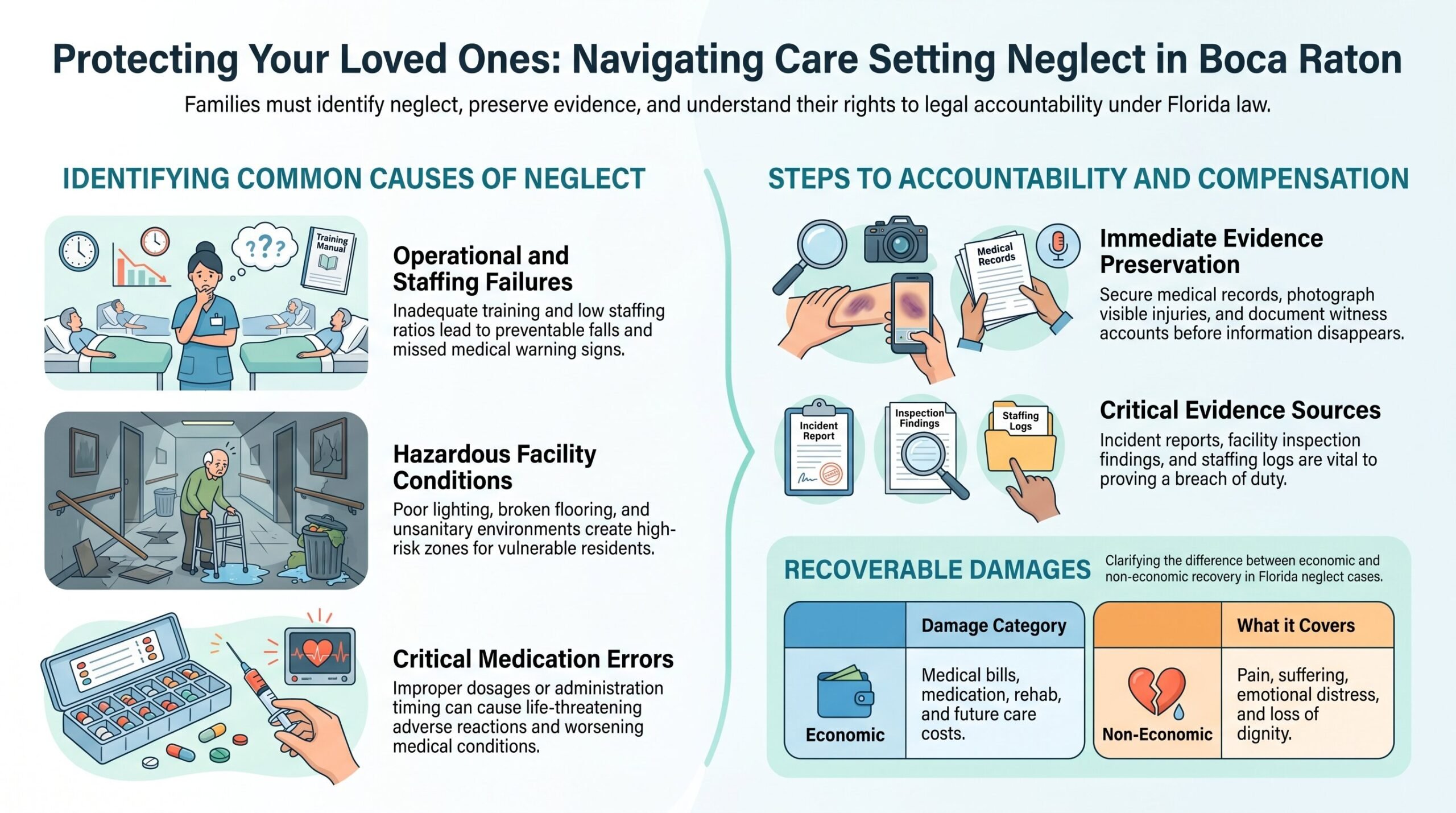
Common causes of neglect in Boca Raton care settings may include inadequate staff training, medication errors, poor facility conditions, and insufficient supervision. These problems can arise from operational failures, staffing deficiencies, or inadequate oversight. Identifying the underlying cause is crucial when evaluating whether a facility breached its duty of care.
Inadequate Staff Training
Inadequate staff training can create conditions in which neglect develops through preventable errors, missed warning signs, and improper responses to residents’ needs. Employees may lack instruction on safe transfers, personal hygiene, nutrition support, fall prevention, and recognizing changes in physical or emotional condition. Without consistent supervision, newly hired personnel may perform duties based on incomplete guidance or assumptions rather than on established care plans.
Care staffing ratios also influence whether trained employees have sufficient time to apply procedures carefully and respond promptly to residents. Effective programs should include documented orientation, competency evaluations, refresher instruction, and clear reporting protocols. Resident rights awareness is equally important because staff must understand privacy, dignity, informed participation, and freedom from abuse or retaliation. When facilities overlook these responsibilities, preventable harm may result from systemic failures in preparation.
Medication Errors
Medication errors may arise when staff members fail to follow prescribed instructions, misread labels, administer incorrect dosages, or give medications at the wrong time. These mistakes can cause adverse reactions, worsening conditions, hospitalization, or other serious injuries, particularly among older adults and individuals with intricate medical needs. Facilities should maintain clear Medication administration protocols requiring identity verification, dosage checks, accurate documentation, and timely communication with prescribing professionals.
Prescription reconciliation errors may occur when a resident’s medication list is incomplete, outdated, or inaccurately transferred during admission, discharge, or a change in care. Staff members must promptly report suspected errors, monitor affected residents, and seek appropriate medical evaluation. When inadequate safeguards or careless conduct contribute to harm, families may consult a Boca Raton neglect and care settings injury lawyer regarding available legal remedies.
Poor Facility Conditions
When a facility fails to maintain safe and sanitary premises, residents may face injuries that range from falls and infections to burns or exposure to hazardous conditions. Broken flooring, inadequate lighting, leaking plumbing, extreme temperatures, and unsanitary bathrooms can create preventable dangers. Accumulated debris, malfunctioning equipment, or improperly stored cleaning chemicals may also threaten residents’ health and safety. Responsible facilities should conduct regular inspections, promptly repair hazards, and document corrective actions.
Effective Safety Protocols require sanitation schedules, accessible maintenance reporting, appropriate emergency procedures, and consistent compliance with building and health regulations. These measures support Neglect Prevention by reducing environmental risks before someone is restored. When management ignores known deficiencies or delays necessary repairs, the resulting injuries may indicate a failure to provide reasonable care. Families should document hazardous conditions and related medical consequences.
Lack of Supervision
Beyond unsafe physical conditions, residents may face serious harm when staff members fail to provide appropriate supervision. Insufficient monitoring can allow falls, wandering, medication errors, conflicts, or untreated medical symptoms to occur without timely intervention. Residents with dementia, mobility limitations, or behavioral health needs may require individualized observation, yet understaffed facilities sometimes rely on inadequate routines rather than documented care plans.
Frequent staff turnover can worsen these risks by leaving unfamiliar caregivers responsible for residents whose needs are not fully understood. A communication breakdown between shifts, supervisors, and medical providers may also prevent important changes from being reported. Effective supervision requires sufficient staffing, clear assignments, regular safety checks, and prompt escalation of concerns. When those safeguards are absent, facility operators may face questions regarding whether preventable injuries resulted from neglect or inadequate care.
Don’t Wait. Call Our Florida Personal Injury Lawyers Now!


Legal Rights of Boca Raton Neglect & Care Settings Injury Victims
Boca Raton neglect and care-setting injury victims may have legal rights when inadequate supervision, unsafe conditions, medical errors, or other failures in care cause harm. Those rights may include seeking compensation for medical expenses, rehabilitation, pain, emotional distress, and other losses recognized under Florida law. Affected individuals or authorized representatives can request records, preserve evidence, and consult a qualified attorney about potential claims and deadlines.
Boca Raton residents’ rights may include respectful treatment, appropriate medical attention, safe living conditions, privacy, and freedom from retaliation.
Family reporting duties may include promptly reporting suspected mistreatment to facility administrators, state agencies, or law enforcement when warranted.
- Victims may pursue accountability through insurance claims, administrative complaints, or civil litigation.
- Legal representatives may act when an injured resident lacks decision-making capacity.
- Documentation, witness information, photographs, and medical records can support an investigation.
A careful legal review helps clarify responsibility, available remedies, and the steps needed to protect a vulnerable person’s interests while supporting dignified care.
Don’t Wait. Call Our Florida Personal Injury Lawyers Now!
Why Do Boca Raton Neglect & Care Settings Injuries Happen?
Neglect and injuries in Boca Raton care settings often result from inadequate staffing, insufficient training, poor supervision, unsafe premises, or failures to follow established care plans. These conditions can leave residents without timely assistance, proper medication management, adequate nutrition, or necessary monitoring. Injuries may also arise from falls, untreated medical symptoms, pressure sores, preventable infections, or improper transfers. Facility leadership may contribute to harm when it prioritizes cost reduction over safe staffing and individualized care. Weak communication between employees, residents, families, and healthcare providers can allow warning signs to go unreported or unresolved.
In some facilities, inaccurate records, delayed incident reports, and inadequate maintenance further increase risks. Facility billing disputes may create additional pressure when financial priorities interfere with the delivery of appropriate services. Effective resident rights advocacy helps identify systemic failures and supports accountability for organizations responsible for protecting vulnerable individuals. Understanding these causes helps caregivers and communities promote safer, more respectful care environments.
What Should You Do After a Boca Raton Neglect & Care Settings Injury?
After a Boca Raton neglect or care-setting injury, the injured person should obtain immediate medical care, even if symptoms initially appear minor. Medical records, photographs, witness information, and other evidence should be preserved to document the injuries and circumstances. The alleged neglect should also be reported promptly to the appropriate facility authorities and regulatory agencies.
Seek Immediate Medical Care
When an injury occurs in a nursing home, assisted-living facility, or other care setting, the injured individual should receive immediate medical evaluation, even if the harm initially appears minor. Prompt assessment can identify fractures, infections, pressure injuries, medication reactions, or internal complications that may worsen without treatment. Medical professionals can stabilize the person, recommend appropriate follow-up, and communicate urgent concerns to caregivers and responsible family members.
Medication side effects monitoring is especially important when new prescriptions, missed doses, or incorrect administration may have contributed to the injury. Clinicians should also focus on identifying signs of dehydration, including confusion, weakness, dizziness, reduced urination, and dry mouth. If symptoms are severe, emergency services may be necessary. Caregivers and advocates should prioritize the individual’s safety, comfort, and timely access to qualified medical attention.
Document Injuries And Evidence
Prompt medical care should be followed by careful documentation of the injury and the circumstances surrounding it. A responsible family member or advocate should promptly photograph visible injuries, using a consistent photo timeline that records dates, locations, and changes in appearance. Written notes should describe pain, mobility limits, emotional distress, and statements made by the injured person or witnesses. Relevant clothing, bedding, medical supplies, and environmental conditions should be preserved when appropriate.
Care records, medication logs, incident forms, staffing information, and communications should be requested and retained as digital records or secure copies. Comparing entries may reveal Documentation gaps, inconsistent accounts, or delayed treatment. Organized evidence can clarify caregiver accountability and help professionals evaluate what occurred. A dated evidence log should identify each item, its source, and its method of preservation.
Report The Neglect Promptly
Neglect should be reported promptly to the appropriate authority once the injured person is medically stable and immediate safety concerns have been addressed. Reports may be directed to facility administrators, Florida’s Agency for Health Care Administration, Adult Protective Services, or law enforcement, depending on the circumstances. The reporting party should provide dates, observations, names, photographs, medical records, and witness information while preserving original documents.
Patient communication should be recorded carefully, including statements about unmet needs, medication errors, unsafe conditions, or delayed treatment. Billing disputes may reveal broader administrative problems, but they should remain separate from allegations involving physical harm or inadequate care. A report should request confirmation of receipt and document each follow-up contact. Legal counsel may help protect evidence, identify responsible parties, and address retaliation concerns.
Don’t Wait. Call Our Florida Personal Injury Lawyers Now!
Critical Evidence in a Boca Raton Neglect & Care Settings Injury Case
Critical evidence can help establish whether neglect or unsafe conditions caused the injury and whether the facility failed to meet its responsibilities. Key sources include medical records, incident reports, witness statements, and facility inspection findings.
These materials may clarify the events, document resulting harm, and identify prior safety concerns.
- Medical records documenting injuries, treatment, and prognosis
- Incident reports and witness statements describing what occurred
- Facility inspection findings identifying violations or unsafe conditions
Medical Records
When an injury occurs in a Boca Raton care setting, medical records can provide objective evidence of the resident’s condition, treatment, and changes over time. Progress notes, medication lists, nursing assessments, diagnostic results, and discharge summaries may help establish whether appropriate care was provided and when a decline became apparent. Consistent record retrieval can also identify gaps, unexplained changes, or delayed responses that warrant careful review.
Because these materials contain protected health information, HIPAA privacy requirements and evidence privacy must guide collection, storage, and disclosure. Authorized representatives and their counsel generally obtain records through proper written requests, subpoenas, or applicable legal procedures. Medical records should be preserved promptly, maintained in complete form, and compared with testimony and other evidence without altering original entries or relying on unsupported conclusions.
Incident Reports
Incident reports can document the circumstances surrounding an injury in a Boca Raton care setting, including the reported time and location, witnesses, immediate response, and notifications to medical personnel or family members. These records may reveal whether staff followed safety protocols, provided timely assistance, and escalated concerns appropriately. Their accuracy can depend on incident reporting timelines, because delayed entries or unexplained revisions may raise questions about reliability.
Documentation best practices include recording objective observations, preserving original entries, identifying the personnel involved, and noting treatment or transfer decisions. Families and legal representatives may examine these reports alongside medical records, staffing information, and facility policies. A complete report can help clarify institutional responses, identify potential departures from required care, and support an informed evaluation of injuries and accountability without premature conclusions.
Witness Statements
Witness statements can provide important accounts of how an injury occurred, what care staff observed, and how personnel responded in a Boca Raton care setting. Statements from residents, visitors, nurses, aides, and other personnel may clarify timelines, identify safety concerns, and describe communications before and after an incident. Because memories can change, prompt interviews and carefully documented accounts may strengthen the reliability of this evidence.
A witness’s position, opportunity to observe, and relationship to the injured person can affect how the information is evaluated. Consistent testimony may support allegations of inadequate supervision or delayed assistance, while conflicting accounts may require further review. Attorneys can use these statements when resolving disputes, assessing liability, and developing settlement strategies that encourage accountability and support the injured person’s recovery.
Facility Inspection Findings
Facility inspection findings can provide independent evidence of unsafe conditions, inadequate staffing, sanitation problems, or failures to follow required care procedures in a Boca Raton facility. Reports may document repeated deficiencies, corrective-action deadlines, citations, and whether administrators addressed known risks. These records can help establish notice and clarify whether an injury resulted from an isolated event or continuing neglect. Investigators may compare inspection observations with medical records, staffing logs, medication records, and witness statements.
Video surveillance can also reveal conditions that inspections did not capture, but its use must comply with HIPAA privacy requirements and applicable facility policies. A qualified attorney can request relevant public records, preserve inspection materials, and assess their significance with appropriate professionals. This evidence may support accountability and safer care for vulnerable residents.
Don’t Wait. Call Our Florida Personal Injury Lawyers Now!
Long-Term Effects of Boca Raton Neglect & Care Settings Injuries
Boca Raton neglect and care-setting injuries may result in chronic physical disabilities that limit mobility, independence, and quality of life. Emotional and psychological trauma can persist long after the initial injury, affecting relationships, confidence, and daily functioning. Ongoing medical treatment, rehabilitation, personal assistance, and related financial needs may create substantial long-term burdens for injured individuals and their families.
Chronic Physical Disabilities
Chronic physical disabilities can arise when neglect or substandard care causes injuries that permanently impair mobility, strength, coordination, or bodily function. Residents may require wheelchairs, customized equipment, ongoing rehabilitation, or assistance with basic activities. Common causes include untreated falls, pressure injuries, medication errors, inadequate nutrition, and delayed medical attention. Caregiver burnout can contribute to missed repositioning, unsafe transfers, or incomplete monitoring, particularly when facilities lack staffing, training, or supervision.
Documented neglect indicators may include unexplained injuries, repeated falls, sudden functional decline, poor hygiene, and inconsistent care records. Families and advocates should preserve medical documentation, incident reports, photographs, and witness accounts. A qualified attorney can evaluate whether negligent conduct caused the disability and identify responsible parties. Early investigation may protect evidence, clarify long-term care needs, and support appropriate compensation.
Emotional And Psychological Trauma
Emotional and psychological trauma may accompany the long-term physical effects of neglect or injuries in care settings. Survivors may experience anxiety, depression, shame, irritability, sleep disruption, or withdrawal from relationships and activities once considered meaningful. Some individuals develop persistent fear around caregivers, medical treatment, or institutional environments, particularly when mistreatment involves humiliation, isolation, or ignored complaints.
Cognitive changes and communication difficulties can make these effects harder to recognize, especially for older adults or people with disabilities. Caregiver negligence patterns, including repeated inattention or unexplained changes in behavior, warrant careful documentation and prompt concern. Family reporting tips include listening without judgment, recording observations, preserving relevant communications, and reporting suspected abuse through appropriate channels. Compassionate advocacy can help restore dignity, strengthen safety, and support emotional recovery over time.
Ongoing Medical And Financial Needs
Long-term neglect or injuries in care settings may create continuing medical and financial needs that extend well beyond the initial incident. Residents may require rehabilitation, expert visits, medication management, mobility equipment, or assistance with daily activities. These services can impose substantial costs on residents and families, particularly when recovery is incomplete or permanent impairment develops. Reliable documentation of symptoms, treatment recommendations, expenses, and changes in functioning can help clarify future needs.
Caregiver accountability may also involve examining whether resident communication occurred, warning signs were reported, and staffing ratios supported safe supervision. A careful assessment can identify expenses related to home modifications, transportation, replacement care, and lost income for family members providing assistance. Legal guidance may help preserve evidence and secure resources to support continued care, dignity, and stability.
Proving Liability in Boca Raton Neglect & Care Settings Injury Cases
When a resident suffers an injury in a Boca Raton nursing home, assisted living facility, or other care setting, liability generally depends on whether the facility or its staff failed to provide the level of care required under the circumstances. Evidence may include medical records, care plans, staffing documents, incident reports, photographs, surveillance footage, and witness statements. These materials can show whether staff ignored warning signs, failed to supervise, administered medication improperly, or neglected required safety measures.
A wrongful transfer may also support a claim when a resident is moved without appropriate planning, communication, or medical safeguards. Employee misconduct, including abuse, falsification of records, or disregard for established procedures, may create individual and institutional responsibility. The resident’s family and legal representatives typically examine whether the conduct caused the injury and whether management knew, or should have known, about unsafe conditions. Establishing these facts requires careful investigation, attention to applicable regulations, and analysis of the resident’s documented needs.
Dealing With Insurance Companies After a Boca Raton Neglect & Care Settings Injury
Insurance companies may contact an injured resident or the resident’s family soon after a Boca Raton neglect or care-setting injury is reported. Representatives may request recorded statements, medical authorizations, or other information while presenting themselves as helpful. Families serving an injured person should respond carefully and avoid speculation, admissions, or premature agreements.
An insurer’s interests may differ from the resident’s needs. Adjusters can emphasize preexisting conditions, question the seriousness of harm, or characterize neglect as an unavoidable accident. Denied claims may result from alleged evidence gaps, disputed causation, or policy limitations rather than an absence of legitimate harm. As a result, records should be preserved, including care plans, medication logs, photographs, incident reports, communications, and medical documentation.
A qualified Boca Raton neglect and care settings injury lawyer can communicate with insurers, identify incomplete investigations, and evaluate available coverage. Families should avoid signing releases or accepting payment until they understand which rights may be affected. Prompt, organized communication helps protect the resident’s interests while allowing caregivers to focus on safety, treatment, and recovery.
What to Expect During a Boca Raton Neglect & Care Settings Injury Claim Process
A Boca Raton neglect and care settings injury claim typically begins with an initial case evaluation to assess liability, damages, and available legal options. The process may include collecting medical records, facility documentation, witness statements, and other evidence before negotiations concerning injury compensation begin. If a fair resolution cannot be reached, the claimant may need to prepare for trial with assistance from legal counsel.
Initial Case Evaluation
During an initial case evaluation, a Boca Raton neglect and care settings injury lawyer reviews the circumstances surrounding the alleged harm, identifies potentially responsible parties, and determines whether the available facts support a legal claim. The discussion may address the resident’s condition, the type of care expected, and how the incident affected the individual and family. Counsel may explain applicable Florida laws, filing deadlines, potential claims, and available legal remedies in clear terms.
Attention may also be given to care setting safety, including whether the facility protects residents from foreseeable risks. Staff accountability policies can help clarify expected duties, supervision standards, and organizational responsibility. The evaluation allows families to ask questions, understand possible next steps, and decide whether pursuing a claim could promote accountability and improved care for others.
Evidence Collection Process
Once a claim is deemed viable, the evidence-gathering process begins by preserving records and documenting the resident’s condition, care history, and reported injuries. Investigators may request medical charts, medication records, incident reports, staffing schedules, training materials, and facility policies. Interviews with the resident, family members, caregivers, and witnesses can clarify timelines and identify inconsistencies. Preserving photo evidence is also important, requiring original files, accurate dates, and secure storage to help establish changes in physical condition.
Physical evidence, clothing, call-button records, surveillance footage, and electronic communications may warrant prompt preservation because some materials can be altered or routinely deleted. Reviewers may compare documentation across residents and dates to identify patterns of staff negligence. Cooperation with lawful requests helps protect vulnerable individuals while maintaining reliable, admissible evidence throughout the claim.
Negotiating Injury Compensation
When negotiating injury compensation, the parties assess the documented harm, applicable liability, and financial losses before discussing a settlement. In a Boca Raton neglect claim, records may show how caregiver negligence caused injury, whether informed consent requirements were met, and which services or safeguards were omitted. A demand may include medical expenses, rehabilitation costs, pain and suffering, lost income, and ongoing care. If wrongful discharge followed a report of unsafe conditions, related employment losses may also affect valuation.
Punitive damages are considered only when conduct was especially reckless or intentional, subject to applicable law. The injured person or representative typically reviews an insurer’s response, requests supporting documentation, and evaluates counteroffers with legal guidance. Negotiations may resolve the matter through a written agreement that identifies payment terms, releases, and any future-care limitations.
Preparing for Trial
Preparing for trial requires organizing evidence, identifying witnesses, and establishing how the neglect or unsafe care setting caused the claimed injuries. Counsel typically reviews medical records, incident reports, facility policies, photographs, and communications to develop a clear chronology. How negligence is proven often depends on establishing a duty of care, a failure to meet applicable standards, and a direct causal link between that failure and the harm suffered. Witness interviews may include residents, family members, employees, physicians, and other qualified professionals.
During jury trial preparation, attorneys assess testimony, address anticipated defenses, prepare exhibits, and explain courtroom procedures to the claimant. Settlement discussions may continue, but trial readiness ensures that the claimant’s interests remain protected if negotiations fail. The process also helps present reliable evidence to the jury respectfully and clearly.
Compensation for Boca Raton Neglect & Care Settings Injury Damages
Compensation for neglect or injuries in Boca Raton care settings may address the full range of losses caused by substandard supervision, inadequate staffing, unsafe conditions, or improper medical care. A claim may seek payment from an operator, facility, medical professional, staffing company, or other responsible party, depending on the evidence. Determining liability requires examining records, incident reports, policies, witness accounts, and the resident’s condition before and after the event. Shared negligence standards may affect recovery when more than one party contributed to the harm, while caregiver duty breaches can establish that expected protection or assistance was not provided.
Families and injured residents may also pursue compensation through settlement discussions, insurance claims, or civil litigation. Prompt legal review can preserve evidence and clarify which parties should be held accountable. A Boca Raton negligence and care settings injury lawyer may coordinate with medical professionals and investigators to present a clear account of the harm and support a fair resolution.
Economic vs Non-Economic Damages in Boca Raton Neglect & Care Settings Cases
Economic damages may include medical expenses, rehabilitation costs, lost income, and other objectively documented financial losses. Non-economic damages address less measurable harms, such as pain, emotional distress, diminished quality of life, and loss of companionship. Calculating total compensation requires evaluating both categories alongside the evidence, severity of injuries, and long-term effects of the neglect.
Economic Damages Explained
When neglect or unsafe care causes injury, the resulting claim may involve both economic and non-economic damages. Economic damages address measurable financial losses connected to the harm. They may include ambulance transportation, emergency treatment, hospitalization, medication, rehabilitation, assistive devices, and necessary medical follow-up. If an injured person requires additional care, recoverable costs may also involve in-home assistance, facility-based services, transportation, and future treatment projected by qualified professionals.
Lost wages and reduced earning capacity can apply when injuries prevent work or limit future employment. In wrongful death claims, economic damages may include funeral expenses, lost financial support, and services the deceased provided to dependents. Careful records strengthen these calculations. Because legal timelines can restrict recovery, families should preserve bills, employment documentation, and care plans promptly while seeking informed legal guidance.
Non-Economic Damages Considered
Although non-economic damages lack a fixed invoice, they address the personal effects of neglect or unsafe care, including pain, emotional distress, humiliation, loss of enjoyment of life, and diminished independence. In Boca Raton care-setting cases, these losses may follow falls, untreated conditions, inadequate supervision, or conduct that compromises dementia patient safety. The seriousness of harm can be informed by medical records, caregiver observations, family testimony, and evidence concerning staff-to-patient ratios.
A resident’s fear, confusion, embarrassment, or inability to participate in familiar activities may demonstrate consequences beyond medical bills. These damages also recognize disrupted relationships and the loss of dignity that vulnerable individuals merit. Their evaluation remains fact-specific and may reflect the resident’s age, condition, daily experience, and the nature of the facility’s alleged neglect.
Calculating Total Compensation
A total compensation assessment in Boca Raton neglect and care-setting cases generally combines economic damages with non-economic damages to reflect both measurable financial losses and personal harm. Economic damages may include medical treatment, rehabilitation, medications, replacement services, and future care needs. Non-economic damages can address pain severity, emotional distress, loss of dignity, reduced quality of life, and lasting psychological effects. Accurate valuation depends on medical records, invoices, expert opinions, witness accounts, and documentation guidance regarding symptoms and daily limitations.
Evidence may also support caregiver accountability by connecting unsafe conduct or omissions to the resulting injuries. Claim strategy planning should evaluate liability, insurance coverage, comparative fault, and projected damages before negotiations or litigation. A careful assessment helps families pursue fair compensation while preserving resources for continued care, recovery, and compassionate support.
When a Boca Raton Neglect & Care Settings Injury Case Goes to Trial vs Settlement
The decision to resolve a Boca Raton neglect and care settings injury case through settlement or trial depends on the strength of the evidence, the parties’ willingness to negotiate, and the extent of the injured person’s damages. Settlement may provide a faster, more predictable resolution while reducing the stress, expense, and uncertainty associated with courtroom proceedings. Effective settlement negotiation tactics can present documented losses, future care needs, and accountability concerns in a manner that encourages meaningful compensation.
Trial becomes more likely when liability remains disputed, negotiations fail, or the proposed payment does not reflect the person’s injuries and long-term needs. A careful Trial preparation strategy may include organizing medical records, preserving facility documentation, identifying witnesses, consulting qualified experts, and preparing clear testimony. Although a verdict can provide full legal accountability, outcomes remain uncertain, and litigation may require substantial time. Counsel generally evaluates risks, evidence, and the injured individual’s and family’s personal priorities before recommending either path.
Florida Laws That May Affect Your Boca Raton Neglect & Care Settings Case
Florida laws governing neglect and injuries in care settings may affect liability, available damages, filing deadlines, and the evidence required to support a claim. Florida statutes may impose duties on nursing homes, assisted-living facilities, hospitals, and individual caregivers concerning supervision, staffing, records, medication, and safe conditions. Federal Medicare regulations may also establish operational standards, although a regulatory violation does not automatically prove negligence.
Relevant considerations include:
- Florida’s nursing-home and assisted-living protections may support claims involving abuse, neglect, inadequate care, or rights violations.
- Medical-malpractice requirements may apply when professional medical judgment or treatment is central to the alleged injury.
- The Florida complaint process generally requires a properly supported filing that identifies the parties, the factual basis, and the requested relief.
Evidence can include care plans, incident reports, photographs, witness statements, staffing records, and medical documentation. Comparative fault principles may influence recovery when multiple parties contributed to the harm. A qualified attorney can evaluate statutory duties, preserve evidence, identify responsible entities, and pursue accountability while respecting the dignity and safety of vulnerable residents.
The Statute of Limitations for Boca Raton Neglect & Care Settings Injury Cases
Because filing deadlines can determine whether a claim proceeds, Boca Raton neglect and care-setting injury cases should be evaluated promptly under the applicable Florida statute of limitations. Florida deadlines vary according to the legal theory, the injury, the defendant, and whether special rules apply to minors, government entities, or fraud. The limitations period may begin when the injury occurred or when the injured person reasonably discovered, or should have discovered, the harm and its potential connection to neglect.
A careful Potential Causes timeline can help identify relevant events, including symptoms, medical evaluations, reports, facility notices, and discovery of possible wrongdoing. Delays may weaken evidence and can result in dismissal even when serious harm occurred. Certain circumstances may pause or alter the deadline, but those exceptions are narrowly applied and require precise analysis. Families seeking to protect vulnerable individuals should preserve records and obtain timely legal information. Attorney Fee Agreements should also be reviewed early so responsibilities, costs, and representation terms are understood before filing decisions are made.
How a Boca Raton Neglect & Care Settings Injury Lawyer Can Help You
When neglect or unsafe care causes injury, a Boca Raton neglect and care settings injury lawyer can evaluate the circumstances, identify potentially responsible parties, and determine which legal claims may apply. The lawyer may gather records, review facility policies, consult qualified professionals, and preserve evidence supporting the individual’s account. This process can clarify whether staff, administrators, contractors, or other entities failed to meet applicable standards.
- Explain patient rights and available legal protections
- Conduct a careful damages calculation addressing medical costs, rehabilitation, lost income, and related losses
- Pursue accountability while seeking fair results for compensating victims
Counsel can also communicate with insurers and opposing representatives, reducing the burden on injured individuals and their families. When appropriate, the lawyer may negotiate a settlement or present the matter in court. Throughout the process, responsible legal guidance helps protect dignity, promote safer care practices, and support informed decisions without making promises about outcomes. The lawyer’s role remains focused on evidence, applicable law, and the client’s interests.
When to Contact a Boca Raton Neglect & Care Settings Injury Lawyer
Recognizing the appropriate time to contact a Boca Raton neglect and care settings injury lawyer can help preserve evidence and clarify available legal protections. A consultation may be appropriate when an older adult or dependent person suffers unexplained injuries, malnutrition, dehydration, medication errors, pressure sores, or sudden emotional changes. Immediate legal guidance can also be considered when staff provide inconsistent explanations, records appear incomplete, or caregiver communication becomes evasive or unusually restricted.
Family members, advocates, and concerned professionals do not need to wait for a confirmed diagnosis of neglect before seeking information. Prompt contact may help identify relevant documents, photographs, medical records, witness accounts, and facility policies before they are lost or altered. If there is immediate danger, emergency services and appropriate protective authorities should be contacted first. Emotional support for the affected individual should remain a priority throughout the process. A timely consultation can also help families understand reporting options and determine practical next steps while maintaining the person’s dignity, safety, and access to necessary care.
Why You Need an Experienced Boca Raton Neglect & Care Settings Injury Lawyer
An experienced Boca Raton neglect and care-settings injury lawyer can assess complex evidence, identify responsible parties, and protect the legal rights of an injured older adult or dependent person. Such cases may involve medical records, staffing documents, surveillance footage, witness accounts, and regulatory findings that require careful interpretation. Counsel can determine whether a facility, employee, contractor, or another party contributed to the harm and can pursue appropriate remedies through negotiation or litigation.
Legal guidance also helps families understand deadlines, preserve evidence, and avoid making statements or entering into agreements that could weaken a claim. When reporting abuse results in Wrongful Termination or Employee Retaliation, an attorney may evaluate related employment protections while pursuing accountability for the underlying injury. Knowledge of Civil Court Procedure allows counsel to manage pleadings, discovery, motions, and trial requirements effectively. Although the Small Claims Process may appear accessible, it can be inadequate for serious injuries and complex liability disputes, making experienced representation vital for serving vulnerable individuals.
How to Choose the Right Boca Raton Negligence & Care Settings Injury Lawyer for Your Case
Selecting the right Boca Raton neglect and care settings injury lawyer requires careful evaluation of the attorney’s experience, investigative resources, and approach to vulnerable-client cases. A qualified lawyer should understand nursing-home regulations, assisted-living standards, and the evidence needed to establish neglect, abuse, or inadequate supervision. Prospective clients should ask how the attorney investigates medical records, incident reports, staffing concerns, and facility policies.
Vet coordination may also be important when injuries require immediate medical attention, rehabilitation, or ongoing expert care. Clear communication is another key consideration. The lawyer should explain potential legal options, deadlines, costs, and case developments in understandable terms while respecting the family’s concerns. Client testimonials can provide insight into responsiveness, professionalism, and commitment to protecting vulnerable individuals, although they should be considered alongside verifiable credentials. Families may also review disciplinary history, trial experience, and professional standing before making a decision. A careful selection process helps ensure the injured person’s interests remain central.
About The Law Offices of Anidjar & Levine
The Law Offices of Anidjar & Levine represent individuals and families pursuing accountability after injuries or mistreatment in nursing homes, assisted-living facilities, and other care settings.
Its attorneys evaluate reported harm, review facility records, and identify whether inadequate supervision, staffing, training, or medical attention contributed to an injury.
The firm serves clients who may be coping with physical pain, emotional distress, disability, or the loss of a loved one.
Investigations can involve interviews with witnesses, caregivers, physicians, and administrators, as well as examination of inspection reports and internal policies.
A careful overview of vicarious liability may help explain when an employer could be held responsible for an employee’s conduct.
The firm also provides a guide to negligence standards by discussing applicable duties, evidence, deadlines, and potential legal remedies.
Each matter requires an individualized assessment because care facilities, responsible parties, and circumstances differ.
Through focused advocacy and clear communication, the firm seeks to protect vulnerable people and advance fair treatment throughout the legal process.
Frequently Asked Questions
What Types of Facilities Can Be Involved in Neglect and Care Setting Injuries?
Neglect and care-setting injuries can occur in assisted living residences, nursing homes, hospitals, group homes, rehabilitation centers, and behavioral-health facilities. Home health agencies may also be involved when caregivers provide services in a patient’s residence. Each setting carries distinct responsibilities involving supervision, medication management, hygiene, nutrition, mobility assistance, and emergency response. Failures in staffing, training, monitoring, or communication can place vulnerable individuals at substantial risk of preventable injury.
Can Family Members Pursue a Claim on Behalf of an Incapacitated Victim?
Yes, family members may pursue a claim for an incapacitated victim, but authority depends on the circumstances. Legal standing commonly rests with a court-appointed guardian, authorized representative, or personal representative of the victim’s estate. Next-of-kin rights may permit certain relatives to seek damages after death, though they do not automatically authorize litigation during incapacity. Counsel can evaluate medical evidence, guardianship documents, deadlines, and applicable Florida law to protect the victim’s interests.
How Are Nursing Home Neglect Injuries Different From Medical Malpractice?
Nursing home neglect injuries arise from inadequate care, supervision, hygiene, nutrition, or safety measures, whereas medical malpractice generally involves a healthcare professional’s negligent diagnosis, treatment, or clinical decision. Neglect Evidence may include staffing records, care plans, incident reports, photographs, and witness statements. Medical malpractice typically requires expert testimony regarding the applicable professional standard. In either matter, Damages Proof must connect the violation to physical harm, emotional suffering, medical expenses, and other measurable losses.
Can Neglect Be Reported Anonymously to Florida Regulators?
Yes, neglect can often be reported anonymously to Florida regulators, although anonymity may limit investigators’ ability to request clarification or provide updates. A concerned person may contact the appropriate Florida regulators or submit a filing complaint through an authorized reporting channel. The report should identify the facility, describe specific conduct, and include dates, witnesses, and records when available. Evidence protection is important, so originals should be preserved and shared securely.
What Happens if the Responsible Care Facility Closes or Declares Bankruptcy?
If a responsible care facility closes or declares bankruptcy, the bankruptcy impact may limit or delay recovery, but it does not automatically erase potential claims. The injured person or representative should promptly seek legal notice of bankruptcy proceedings, identify available insurance, and preserve records. A facility closure may result in the transfer of operations or records elsewhere. Strict claim deadlines, including bankruptcy filing deadlines and Florida limitation periods, can determine whether compensation remains available to serve the affected individual.
—————————
Victims of neglect in Boca Raton care settings may suffer serious injuries, lasting harm, and significant financial burdens.
A qualified Boca Raton Personal Injury Lawyer can investigate the circumstances, identify responsible parties, preserve critical evidence, and pursue compensation under Florida law.
The Law Offices of Anidjar and Levine carefully evaluate each claim and help clients understand their legal options.
Prompt legal consultation may protect important rights and support a more informed response to suspected neglect or abuse.

