

The Law Offices of Anidjar and Levine help victims of financial exploitation and theft in Boca Raton investigate unauthorized transactions, identify responsible parties, and protect their remaining assets.
Counsel may review bank records, contracts, communications, medical documentation, and caregiving arrangements to evaluate consent, capacity, authority, intent, and damages.
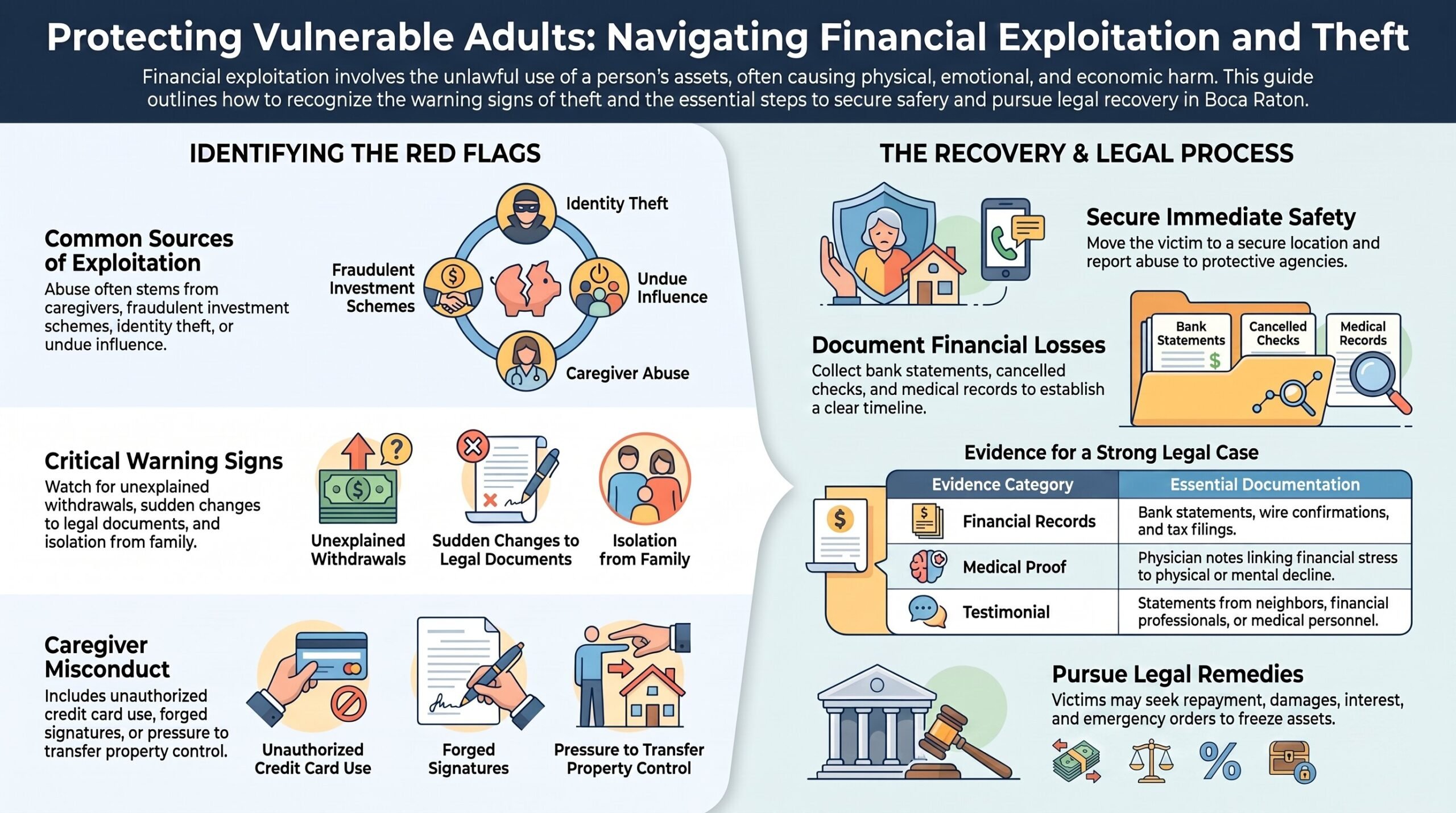
Legal remedies can include repayment, damages, interest, attorney fees, and emergency orders restricting further transfers.
Prompt action also supports evidence preservation and coordination with banks, investigators, and protective agencies.
Learn more by consulting a Boca Raton Personal Injury Lawyer about available protections and legal options.
Main Takeaways
- A Boca Raton lawyer can investigate suspected financial exploitation, theft, caregiver abuse, identity theft, and undue influence.
- Counsel reviews bank records, contracts, communications, medical documentation, and caregiving arrangements to identify unauthorized transactions and responsible parties.
- Potential civil remedies may include repayment, damages, interest, attorney fees, and emergency orders protecting assets from further transfers.
- Prompt action helps preserve evidence, secure accounts, report suspected abuse, and address injuries or urgent safety concerns.
- Attorneys can evaluate the misuse of power of attorney, financial losses, medical expenses, emotional harm, and strategies for pursuing recovery.


How We Can Help With Your Boca Raton Financial Exploitation & Theft Injury Claim
When financial exploitation or theft causes injury, a Boca Raton attorney can investigate the circumstances, identify responsible parties, and pursue compensation for the resulting losses. Counsel can review account records, communications, contracts, and caregiving arrangements to establish how funds or property were obtained. The legal team may also coordinate with financial professionals, medical providers, and other relevant witnesses while preserving evidence for a potential claim.
A representative can explain Elder victim rights and help protect an affected person from further unauthorized transactions or coercion. Depending on the circumstances, counsel may communicate with banks, insurers, fiduciaries, family members, and opposing parties to seek corrective action. The attorney can evaluate available remedies, manage required filings, and maintain communication with the client and authorized supporters.
Proof of damages may include account statements, property valuations, medical bills, care costs, and records documenting emotional or physical consequences. By organizing this evidence and presenting it clearly, representation can support a focused demand for recovery while treating the affected individual with dignity and respect.
OUR CONSULTATIONSARE FREE
START YOUR FREE CASE REVIEW

Understanding Boca Raton Financial Exploitation & Theft Injury Cases
Financial exploitation and theft injury cases involve the unlawful use, transfer, or withholding of another person’s money or property, along with any physical, emotional, or financial harm that follows. These matters may require careful evaluation of ownership records, financial transactions, medical documentation, communications, and witness accounts. The central questions often concern consent, authority, capacity, intent, causation, and the extent of resulting losses. A civil claim may address depleted assets, unauthorized transfers, medical expenses, emotional distress, and other damages permitted under applicable law.
Criminal investigations and protective proceedings can also affect the timing, evidence, and strategy of a civil case. Individuals and families seeking to serve and protect vulnerable survivors may benefit from prompt legal guidance that preserves evidence and identifies responsible parties. Depending on the circumstances, counsel may evaluate elder fraud defenses, pursue recovery through litigation or settlement, and explain survivor compensation options. Each claim requires an individualized assessment because available remedies depend on the facts, applicable statutes, and supporting proof.
Common Causes of Boca Raton Financial Exploitation & Theft
Common causes of financial exploitation and theft in Boca Raton include caregiver financial abuse, fraudulent investment schemes, and identity theft. Relatives may also exert undue influence to control an individual’s financial decisions or access to assets. Recognizing these patterns can help identify exploitation and support timely legal intervention.
Caregiver Financial Abuse
Caregiver financial abuse occurs when a person entrusted with another individual’s daily care misuses access to money, accounts, property, or personal information for unauthorized benefit. This conduct may involve unauthorized withdrawals, altered beneficiaries, forged signatures, misuse of credit cards, or pressure to surrender control of assets. Older adults and individuals with disabilities can face heightened risk when illness, isolation, or dependence limits their ability to monitor transactions.
Evaluating caregiver control requires examining who handles banking, bills, passwords, documents, and property, while distinguishing legitimate assistance from unauthorized use. Gathering financial records, including statements, receipts, account alerts, and tax documents, may help identify unexplained transfers or spending patterns. Prompt reporting to trusted relatives, financial institutions, protective agencies, or qualified counsel can help preserve evidence and protect the individual’s remaining resources.
Fraudulent Investment Schemes
When an investment opportunity promises unusually high returns with little or no risk, it may be a fraudulent scheme designed to obtain money through deception. Such schemes can target older adults, inexperienced investors, or individuals seeking reliable income. Promoters may use fabricated performance records, false credentials, pressure tactics, or misleading explanations of intricate products. Some solicit funds for nonexistent ventures, while others operate Ponzi arrangements that depend on payments from later participants.
Investor due diligence, including verifying registrations, reviewing written disclosures, and consulting an independent professional, can help identify warning signs. Risk mitigation also requires limiting concentrated investments and questioning guarantees that appear unrealistic. When deception causes financial loss, affected individuals may benefit from preserving communications, transaction records, and promotional materials for legal review and potential recovery efforts.
Identity Theft
Identity theft occurs when another person obtains and uses an individual’s identifying information, such as a Social Security number, account credentials, or financial records, without authorization. In Boca Raton, perpetrators may acquire data through phishing messages, stolen mail, data breaches, compromised devices, or deceptive requests for account verification. Unauthorized transactions, new credit applications, and altered contact information can create substantial financial and administrative consequences.
Prompt reporting to financial institutions, law enforcement, and credit bureaus may help limit continuing losses. Credit bureau monitoring can identify unfamiliar inquiries or accounts, while fraud impact assessments can document economic harm, disrupted access to funds, and related expenses. Affected individuals may benefit from preserving statements, correspondence, and electronic records. Legal guidance can help evaluate recovery options and support efforts to protect the person’s financial interests.
Undue Influence by Relatives
Undue influence by relatives can cause financial exploitation when a family member uses trust, dependence, or emotional pressure to control another person’s financial decisions. This conduct may involve isolating an older adult, restricting access to accounts, or persuading the individual to sign documents without meaningful understanding. Relatives may misuse Power of attorney checks, transfers, beneficiary changes, or property transactions for personal benefit.
Warning signs include sudden financial changes, unexplained withdrawals, unpaid expenses, and a caregiver who refuses to permit private conversations. Financial consent disputes often arise when the affected person’s capacity, intentions, or understanding is questioned. Careful documentation, respectful interviews, account reviews, and independent legal guidance can help clarify whether consent was voluntary. Supportive professionals should prioritize safety, dignity, and prompt reporting when exploitation appears likely.
Don’t Wait. Call Our Florida Personal Injury Lawyers Now!


Legal Rights of Boca Raton Financial Exploitation & Theft Injury Victims
Boca Raton financial exploitation and theft injury victims may have legal rights to pursue compensation and other remedies when another person or entity wrongfully takes, controls, or misuses their money or property. Available options depend on the evidence, relationship involved, and applicable Florida law.
A qualified advocate can help protect the victim’s interests while coordinating with appropriate agencies and family supports.
- Civil claims may seek repayment, damages, interest, and attorney fees.
- Emergency court orders may help preserve property or restrict further transfers.
- Reports to law enforcement may support an investigation and potential criminal liability.
- Banks, fiduciaries, or institutions may have duties concerning suspicious transactions.
- Documentation can strengthen asset recovery efforts and preserve important deadlines.
Victims or authorized representatives should promptly secure account records, communications, contracts, and relevant medical or capacity evidence. Legal counsel may also evaluate guardianship, probate, trust, or elder-protection remedies when appropriate. Each matter requires an individualized review, and prompt action can reduce further losses while providing responsible service to the affected person.
Why Do Boca Raton Financial Exploitation & Theft Injuries Happen?
Financial exploitation and theft injuries often occur when an individual gains access to another person’s finances through deception, pressure, manipulation, or abuse of trust. In Boca Raton, these injuries may arise when an older adult depends on relatives, caregivers, friends, or professionals for daily assistance and financial management. Isolation, cognitive decline, illness, disability, and unfamiliarity with electronic banking can increase vulnerability. Some perpetrators misuse passwords, redirect benefits, create unauthorized accounts, or pressure a person into transferring property. Power of Attorney breaches may occur when an agent uses authority for personal benefit rather than the principal’s stated interests.
Elder consent issues can also arise when apparent approval is obtained through coercion, confusion, or inadequate disclosure. Financial institutions, service providers, and family members may fail to recognize warning signs, allowing losses to continue. These circumstances can produce significant financial harm, emotional distress, housing instability, and related physical injuries when victims experience stress, neglect, or deprivation of necessary care.
Don’t Wait. Call Our Florida Personal Injury Lawyers Now!
What Should You Do After a Boca Raton Financial Exploitation & Theft Injury?
After suspected financial exploitation or theft, the affected person should first confirm immediate safety and address any ongoing threats or unauthorized access. Financial losses should be documented through account statements, transaction records, communications, and other relevant evidence. Prompt consultation with qualified legal counsel can help protect rights, preserve evidence, and identify appropriate legal remedies.
Ensure Immediate Safety
Immediate safety should be the first priority when suspected financial exploitation or theft has caused injury or placed an individual at risk. The affected person should move to a secure location away from anyone who may pose a threat, when doing so does not increase danger. Emergency medical services should be contacted for injuries, urgent health concerns, or immediate threats. A responsible caregiver, advocate, or authority should remain present if the person cannot safely stay alone. Securing trusted contacts can create a reliable support network and reduce isolation during the initial response. Individuals who observe coercion, neglect, or abuse should consider reporting suspected abuse to appropriate Florida protective agencies or law enforcement. If communication is monitored, assistance should be requested discreetly through a safe device or trusted professional.
Document Financial Losses
Once immediate safety has been addressed, the affected person or a trusted representative should begin documenting all financial losses and related injuries. Bank statements, canceled checks, credit reports, account alerts, receipts, and correspondence can establish when transactions occurred and how funds were diverted. A chronological record should identify suspicious withdrawals, unauthorized purchases, property transfers, debt, and resulting medical or living expenses.
Loan document review may reveal unfamiliar applications, altered terms, cosigned obligations, or collateral used without informed consent. Hidden account tracing can help identify accounts, transfers, or assets that are not apparent from ordinary records. Copies should be preserved securely, while originals remain protected. Photographs of damaged property, medical records, and written observations concerning physical or emotional harm may also clarify the full impact and support accurate loss calculations.
Contact Legal Counsel
In the aftermath of suspected financial exploitation or theft-related injury, the affected person or a trusted representative should promptly contact qualified legal counsel. An attorney can evaluate immediate risks, explain available protections, and identify appropriate civil or criminal referrals. Counsel may also help preserve financial records, secure accounts, notify institutions, and prevent further transfers while respecting the individual’s dignity and preferences.
If a power of attorney exists, the attorney can review its scope, validity, and potential misuse. Legal guidance is particularly important when the suspected wrongdoer is a caregiver, relative, fiduciary, or other person with access to assets. A representative should provide counsel with a clear timeline, relevant communications, medical information, and documented losses. Prompt consultation can support informed decisions, protect vulnerable individuals, and help pursue recovery without unnecessary confrontation or delay.
Don’t Wait. Call Our Florida Personal Injury Lawyers Now!
Critical Evidence in a Boca Raton Financial Exploitation & Theft Injury Case
Critical evidence can establish the financial loss, unauthorized activity, and resulting physical or emotional harm in a Boca Raton financial exploitation and theft injury case. A careful review may include financial records, bank transaction history, medical documentation, and witness statements.
Preserving these materials promptly can help clarify the timeline and support a claimant’s position.
- Financial records showing ownership, income, expenses, or losses
- Bank transaction history identifying unusual withdrawals or transfers
- Medical documentation connecting harm to the alleged exploitation or theft
- Witness statements describing transactions, conduct, or changes in condition
- Communications and related documents that help establish intent and chronology
Financial Records
Financial records often provide the clearest evidence of suspected financial exploitation or theft, showing how an older or vulnerable person’s assets were accessed, transferred, or depleted. These documents may include account statements, canceled checks, wire confirmations, loan paperwork, tax filings, receipts, and records of property sales. Taken together, they can reveal unusual withdrawals, unauthorized signatures, unexplained debts, or transactions inconsistent with the person’s needs and established practices.
They may also help establish when conduct occurred and whether a caregiver, relative, fiduciary, or other person benefited. Understanding how police investigate suspected exploitation can help preserve relevant documents and identify inconsistencies requiring further review. Organized records may serve as financial fraud proof in civil or criminal proceedings, assisting attorneys, investigators, courts, and families seeking accountability and protection for vulnerable individuals.
Bank Transaction History
Bank transaction history can establish a clear timeline of suspected financial exploitation or theft by documenting deposits, withdrawals, transfers, and other account activity. These records may reveal unusual patterns, including sudden withdrawals, unfamiliar recipients, repeated online purchases, or transfers inconsistent with an account holder’s customary conduct. In cases involving a Reverse mortgage, transaction histories can help trace how loan proceeds were received and spent. They may also support scam detection by identifying payments to suspicious businesses or individuals.
Detailed entries can provide evidence of prepaid card fraud, particularly when funds were diverted through repeated card loads or unauthorized purchases. Financial professionals and attorneys may use this information to develop a chargeback strategy, request account protections, and communicate accurately with investigators. Preserving original statements, transaction identifiers, and related correspondence strengthens the review and accountability processes.
Medical Documentation
Medical documentation can connect suspected financial exploitation or theft to the physical and psychological injuries experienced by an account holder. Treatment records may identify anxiety, depression, sleep disruption, confusion, medication changes, or physical decline following disputed transactions or loss of necessary resources. Physician notes, diagnostic evaluations, prescriptions, and hospitalization records can establish the timing, severity, and persistence of these conditions.
They may also document whether financial stress interfered with nutrition, housing, transportation, or access to care. When reviewed alongside financial statements, medical evidence can help clarify causation and the extent of damages. Consistent records may support witness credibility by providing objective details that do not depend solely on recollection. Relevant providers should preserve complete files, while authorized representatives should obtain records lawfully and protect the account holder’s privacy throughout the legal process.
Witness Statements
Witness statements can clarify how suspected exploitation or theft occurred and how the account holder’s condition changed afterward. Neighbors, caregivers, relatives, financial professionals, and medical personnel may describe unusual withdrawals, pressure, confusion, or changes in routine. Statement credibility depends on the witness’s opportunity to observe events, consistency, neutrality, and ability to distinguish firsthand knowledge from assumptions. Detailed accounts should identify dates, communications, transactions, and individuals involved.
Corroborating documents, including bank records, messages, appointment notes, and power-of-attorney instruments, may strengthen the testimony and reveal inconsistencies. Because vulnerable witnesses may face witness intimidation, questioning should occur respectfully and without unnecessary pressure. Counsel may evaluate protective measures, including witness protection, confidential interviews, or court orders, when safety or independence appears threatened. Prompt preservation reduces memory loss and supports a reliable, compassionate investigation.
Long-Term Effects of Boca Raton Financial Exploitation & Theft Injuries
Financial exploitation and theft injuries can produce lasting financial instability, affecting housing, healthcare, credit, and overall independence. Emotional trauma may continue through anxiety, diminished trust, and difficulty managing financial decisions. Ongoing legal challenges, including recovery efforts and liability disputes, can further prolong the consequences for affected individuals.
Lasting Financial Instability
Lasting financial instability often follows when exploitation or theft depletes a person’s savings, disrupts the payment of key expenses, or creates unauthorized obligations. Missed payments, overdraft charges, and depleted reserves can continue to affect housing, medical care, transportation, and other essential needs long after the incident is discovered. Unauthorized accounts or transactions may also damage credit histories, making loans, insurance, and employment-related screenings more difficult or expensive.
A structured recovery plan can support budget recovery by prioritizing necessities, documenting losses, and addressing disputed charges. Credit repair may require correcting inaccurate reports, communicating with creditors, and monitoring accounts for continued misuse. Legal guidance can help identify recoverable losses and pursue appropriate remedies, allowing affected individuals to regain financial stability and protect their remaining resources.
Emotional Trauma Effects
Emotional trauma may persist long after financial exploitation or theft is discovered, particularly when the conduct involved a trusted caregiver, relative, or professional. Affected individuals may experience anxiety, shame, anger, sleep disruption, diminished confidence, or withdrawal from relationships. These reactions can interfere with medical care, financial decision-making, and participation in community life. Supportive relatives, advocates, and service providers can help restore safety by listening without judgment, respecting personal choices, and maintaining consistent communication.
Therapy support options may include trauma-informed counseling, support groups, and services addressing anxiety or depression. Careful records of emotional symptoms, treatment, and related limitations may assist with legal documentation requirements while preserving the individual’s privacy. Prompt professional attention can identify urgent mental-health concerns and encourage recovery through practical routines, trusted assistance, and renewed independence.
Ongoing Legal Challenges
Recovery from emotional trauma may occur alongside legal challenges that continue for months or years after exploitation or theft is discovered. Criminal prosecution can require cooperation with investigators, repeated interviews, and patience while authorities evaluate evidence. Separately, civil remedies may address repayment, property recovery, accounting, or damages, although collecting a judgment can present additional obstacles. Protective orders may help restrict contact, intimidation, or further access to finances when safety concerns remain.
Court proceedings can also affect family relationships, housing, healthcare decisions, and long-term financial planning. Reliable victim support, including legal guidance, counseling, and social services, may help an affected person understand responsibilities and make informed choices. Careful documentation of transactions, communications, and expenses can strengthen claims while preserving an accurate record for investigators and the court.
Proving Liability in Boca Raton Financial Exploitation & Theft Injury Cases
Proving liability in Boca Raton financial exploitation and theft injury cases generally requires clear evidence that the defendant improperly obtained, used, or controlled another person’s assets and caused a measurable financial loss. Relevant proof may include bank statements, account records, contracts, communications, surveillance footage, witness testimony, and documentation of diminished property or unpaid obligations. A claimant may also need to establish authority, intent, undue influence, breach of fiduciary duty, or another wrongful act connecting the defendant to the loss.
Evidence preservation challenges can arise when records are deleted, accounts are closed, memories fade, or vulnerable individuals cannot clearly describe events. Promptly securing documents and identifying witnesses thus supports a reliable investigation. An attorney may coordinate financial reviews, subpoena records, and protect evidence through appropriate legal procedures.
The distinction between criminal and civil liability is important. Criminal authorities determine whether prosecution is warranted, while a civil action may seek restitution or damages under a different burden of proof. Each matter should be evaluated independently and carefully.
Dealing With Insurance Companies After a Boca Raton Financial Exploitation & Theft Injury
Insurance coverage may provide a source of compensation after financial exploitation or theft causes loss of covered property, medical expenses, or related injury. Policyholders should promptly review applicable policies, identify reporting deadlines, and preserve correspondence, receipts, account records, medical documentation, and evidence linking the loss to the claimed event.
Insurance adjuster tactics may include requesting recorded statements, narrowing the incident description, disputing causation, or characterizing losses as excluded conduct. A careful, consistent presentation helps prevent misunderstandings and protects the claimant’s position. Communications should remain factual, avoid speculation, and address only information supported by available records.
When a claim is denied or undervalued, a Denial appeal strategy may involve obtaining the written basis for the decision, comparing it with policy language, correcting factual errors, and submitting organized supporting evidence. A qualified attorney can assess coverage, communicate with the carrier, and help serve the injured person’s interests without making unsupported promises. Prompt professional review is particularly important when deadlines, vulnerable victims, or multiple policies are involved.
What to Expect During a Boca Raton Financial Exploitation & Theft Injury Claim Process
A Boca Raton financial exploitation and theft injury claim generally begins with an initial case evaluation to assess the allegations, damages, and available legal options. The evidence collection process may include financial records, communications, medical documentation, and witness statements, followed by settlement negotiations with the responsible parties or their insurers. If negotiations fail, the matter may proceed to trial, where the court determines liability, damages, and the final resolution.
Initial Case Evaluation
During an initial case evaluation, a Boca Raton financial exploitation and theft injury lawyer examines the circumstances surrounding the alleged misconduct, the victim’s financial losses, and any resulting physical or emotional harm. The lawyer listens to the client’s account, identifies potential responsible parties, and considers whether civil claims may be available. This meeting also helps clarify the client’s goals, immediate concerns, and ability to participate in the process.
Confidentiality requirements are explained so the individual can discuss sensitive financial, medical, and personal information with greater confidence. The lawyer may provide guidance concerning evidence preservation, including steps to prevent relevant records or communications from being altered or discarded. No outcome is guaranteed, but the evaluation can establish realistic expectations, identify urgent protective measures, and determine whether pursuing the matter would serve the victim’s interests.
Evidence Collection Process
After an initial evaluation, evidence collection typically begins with identifying and preserving records that may establish the exploitation, theft, resulting losses, and related injuries. Evidence preservation steps may include securing bank statements, canceled checks, account agreements, invoices, benefit records, property documents, and communications with the suspected wrongdoer. Digital transaction logs can reveal payment dates, account access, transfers, device identifiers, and unusual activity.
A legal professional may request records from financial institutions, caregivers, businesses, medical providers, and government agencies when authorized. Witness statements, surveillance footage, photographs, and written accounts of changes in the affected person’s condition may also provide important context. Records should be stored securely, with original files maintained and alterations avoided. A documented collection process helps establish authenticity, chronology, financial impact, and the connection between exploitation and harm.
Settlement Negotiations
Once records and other supporting evidence have been organized, settlement negotiations may begin with a demand that outlines the alleged exploitation, financial losses, related injuries, and compensation sought. Counsel may present bank statements, contracts, medical documentation, caregiver records, and communications supporting the claim. If Medicare fraud or other misconduct affected available benefits, those concerns may require careful coordination with relevant agencies and insurers.
The opposing party may accept the demand, request additional information, or propose different terms. Attorneys evaluate each response by considering liability, damages, insurance coverage, collectability, and the client’s immediate needs. Asset recovery strategies may include tracing transferred funds, identifying property, and seeking voluntary repayment agreements. Negotiations should remain documented and measured, helping protect vulnerable individuals while pursuing a resolution that reflects the evidence and established losses.
Trial And Resolution
If settlement negotiations do not resolve the dispute, a Boca Raton financial exploitation and theft injury claim may proceed to trial, where each side presents evidence and legal arguments before a judge or jury. Before trial, counsel typically completes evidence preservation, document review, and witness interviews to establish how the exploitation occurred and how losses affected the victim. Financial records, communications, medical information, and testimony may help demonstrate liability and damages.
The opposing party may challenge the evidence, dispute causation, or assert defenses. During trial, attorneys present opening statements, examine witnesses, introduce exhibits, and deliver closing arguments. The judge or jury then determines responsibility and, when supported, awards compensation. A resolution may also occur through mediation, dismissal, or an agreed judgment, allowing the matter to conclude without a verdict.
Compensation for Boca Raton Financial Exploitation & Theft Injury Damages
Compensation for financial exploitation and theft injuries may include recovery of stolen funds, reimbursement for related financial losses, and damages for emotional distress caused by the misconduct. A Boca Raton claim may also address costs incurred while restoring accounts, securing services, or correcting unauthorized transactions. Effective damages calculation requires a careful review of account statements, contracts, communications, medical records, and other materials that link the misconduct to the resulting harm. Victim documentation should clearly chronologically identify dates, amounts, responsible parties, witnesses, and continuing consequences.
Evidence preservation is critical because electronic messages, transaction histories, surveillance recordings, and business records may change or disappear. If an insurer refuses coverage, an insurance denial may require prompt examination of policy language, notice requirements, exclusions, and claim-handling conduct. Legal counsel may coordinate with financial institutions, investigators, caregivers, and agencies to protect the affected person’s interests. Timely action can support accountability and help secure resources needed for stability, recovery, and continued care.
Economic vs Non-Economic Damages in Boca Raton Financial Exploitation & Theft Cases
Economic damages generally include documented financial losses, such as stolen funds, recovery expenses, and related medical or professional costs. Non-economic damages may address emotional distress, loss of security, and other personal harms that are more difficult to quantify. Proving total losses requires organized records, credible testimony, and evidence connecting each claimed loss to the exploitation or theft.
Economic Damage Calculations
When financial exploitation or theft causes measurable monetary loss, a Boca Raton victim may pursue economic damages based on documented financial harm rather than speculation. Calculations typically begin with identifying unauthorized withdrawals, diverted assets, fraudulent charges, and unpaid obligations attributable to the conduct. Bank statements, account histories, receipts, tax records, contracts, and expert analyses can provide evidence of economic harm and establish reliable documentation of losses.
The calculation may include the principal amount taken, costs required to restore accounts, reasonable investigation expenses, and interest or other legally recoverable financial consequences. A careful review should distinguish losses resulting from the alleged exploitation from unrelated transactions or ordinary market changes. Organized records help demonstrate causation, reduce disputes, and present a clear damages model. Counsel may also evaluate whether statutory remedies or restitution provisions alter the recoverable amount.
Non-Economic Harm
Documented financial losses address the measurable economic damage caused by exploitation or theft, but a Boca Raton victim may also experience non-economic harm that is not reflected in account records. Such harm may include anxiety, humiliation, loss of independence, damaged relationships, and persistent fear about future financial decisions. Emotional distress impacts can be especially significant when the alleged wrongdoer was a trusted caregiver, relative, or adviser. A victim may withdraw socially, lose confidence, or require counseling and support.
Attorneys serving vulnerable individuals should present these consequences respectfully and avoid treating them as secondary concerns. Credibility evidence gathering may include testimony from family members, caregivers, counselors, and other observers who can describe changes in conduct and well-being. These accounts help convey the personal significance of the alleged misconduct.
Proving Total Losses
Establishing total losses in a Boca Raton financial exploitation or theft case requires separating measurable economic damages from non-economic harm while showing how both resulted from the alleged misconduct. Economic damages may include stolen funds, unauthorized transfers, lost investment growth, overdraft charges, professional fees, medical expenses, and costs incurred to restore credit or secure accounts. Bank statements, tax records, transaction histories, expert calculations, and fraud scheme metrics can help establish the amount and timing of the financial loss.
Document loss valuation may address missing records, destroyed property, or impaired access to indispensable documents. Non-economic damages can include distress, humiliation, anxiety, diminished independence, and reduced quality of life. Testimony from the affected person, caregivers, and professionals may connect these harms to the conduct and support a complete, credible damages presentation.
When a Boca Raton Financial Exploitation & Theft Injury Case Goes to Trial vs Settlement
The decision to resolve a Boca Raton financial exploitation and theft injury case through settlement or trial depends on the strength of the evidence, the extent of the losses, and the parties’ willingness to accept legal and financial risk. Settlement may provide a faster, more predictable resolution while reducing the stress, expense, and uncertainty of courtroom proceedings. Settlement timelines vary based on document review, negotiations, mediation, and the parties’ responses to proposed terms. A trial may become necessary when liability is disputed, the offered compensation does not reflect documented losses, or accountability remains a central concern.
Trial preparation can include depositions, expert testimony, exhibit organization, and Jury selection, followed by opening statements, witness examination, and closing arguments. A court’s decision may provide a definitive outcome, but trial results are never guaranteed. Counsel can help evaluate evidence, estimate litigation costs, and compare proposed resolutions with the client’s practical needs, long-term security, and desire to protect others.
Florida Laws That May Affect Your Boca Raton Financial Exploitation & Theft Case
Florida law may affect nearly every aspect of a Boca Raton financial exploitation and theft injury case, including how liability is established, which damages may be recovered, and when a claim must be filed. Florida’s vulnerable-adult protection laws may apply when an older or impaired person is deceived, coerced, or improperly deprived of money or property. Elder abuse allegations can support protective interventions and civil remedies, while theft statutes may create separate criminal consequences.
Important legal considerations include:
- Fiduciary duties owed by caregivers, agents, trustees, or family members
- Evidence of unauthorized transfers, forged documents, coercion, or deception
- Whether Criminal intent is required for a particular offense or claim
- Compensatory damages, restitution, punitive damages, and equitable relief
- Mandatory reporting duties for professionals and certain caregivers
Florida law may also recognize claims involving negligence, breach of fiduciary duty, conversion, or exploitation of a power of attorney. Each theory has distinct proof requirements. A careful review of records, communications, witness accounts, and financial activity can help protect vulnerable individuals and guide responsible legal action.
The Statute of Limitations for Boca Raton Financial Exploitation & Theft Injury Cases
Although the deadline may depend on the legal theory involved, Florida’s statute of limitations can determine whether a Boca Raton financial exploitation or theft injury claim proceeds or is barred. Civil claims may involve different limitation periods depending on whether the alleged conduct supports negligence, breach of fiduciary duty, conversion, fraud, or another cause of action. The date of discovery may matter when exploitation was concealed, but delayed discovery is not automatically available and requires legally recognized circumstances.
Criminal intent issues can affect related proceedings without necessarily extending a civil filing deadline. A claimant should preserve account records, communications, medical documentation, and other proof of damages before evidence becomes unavailable. Florida’s statute-of-limitations rules may apply to minors, incapacitated individuals, concealment, or other limited situations, but those rules are fact-specific. Because an expired deadline can eliminate otherwise valid relief, prompt legal evaluation supports responsible protection of vulnerable adults and helps preserve accountability for financial harm. The applicable period may also differ when governmental entities or estates are involved.
How a Boca Raton Financial Exploitation & Theft Injury Lawyer Can Help You
A Boca Raton financial exploitation and theft injury lawyer can provide structured legal guidance when a vulnerable adult or family member faces suspected misuse of funds, property theft, or related harm. Counsel may review records, identify responsible parties, and explain civil remedies without placing additional burdens on caregivers or advocates.
A lawyer can help by:
- Preserving bank statements, contracts, messages, and other relevant evidence.
- Coordinating investigations into unauthorized transfers, theft, or coercion.
- Communicating with financial institutions, insurers, and opposing parties.
- Addressing Insurance Denial Letters and evaluating potential coverage disputes.
- Identifying Privacy Law Violations arising from improper disclosure or records access.
Legal counsel may also prepare demand letters, negotiate restitution, and pursue litigation when voluntary resolution is unavailable. Through careful case management, the lawyer can help protect dignity, preserve confidentiality, and seek accountability for losses or related injuries. Counsel may coordinate with trusted professionals, including accountants and care providers, while maintaining clear communication with authorized family representatives. This support enables responsible advocates to serve vulnerable individuals effectively while protecting their legal interests.
When to Contact a Boca Raton Financial Exploitation & Theft Injury Lawyer
Prompt legal guidance may be warranted as soon as suspected financial exploitation, theft, coercion, or related injury is identified. A concerned relative, professional, or Financial caregiver should act promptly when unusual withdrawals, altered documents, missing property, pressured transactions, or unexplained injuries appear. Early consultation can help clarify immediate safety concerns, reporting options, and steps for fraud prevention without delaying necessary medical or protective assistance.
Contact becomes especially important when an alleged wrongdoer controls accounts, housing, transportation, medications, or communication. A lawyer may also help identify practical measures for document preservation, including bank records, messages, contracts, photographs, and relevant medical information. Witness timelines should be recorded while recollections remain clear, with dates, statements, transactions, and observed changes documented objectively.
Urgent assistance may be appropriate when assets are being transferred, access is restricted, threats are made, or a vulnerable person cannot advocate independently. Prompt action can support coordinated responses with trusted family members, financial institutions, medical providers, adult protective services, or law enforcement, as circumstances require.
Why You Need an Experienced Boca Raton Financial Exploitation & Theft Injury Lawyer
When suspected exploitation or theft involves injury, coercion, or significant financial loss, experienced legal representation can provide structure and informed direction. An attorney can help preserve records, identify responsible parties, and pursue remedies while protecting the affected person’s dignity and immediate interests. This guidance is especially important when cognitive impairment, dependency, or unequal relationships make independent decision-making difficult.
A knowledgeable lawyer can coordinate civil claims with reports to appropriate agencies, explain procedural requirements, and address urgent concerns involving assets, medical care, or housing. Counsel may also help families develop Self-Defense Planning and Home Safety Planning when threats, manipulation, or unauthorized access create continuing risks. These measures can support stability without placing the burden of investigation solely on a vulnerable individual or caregiver.
Experienced representation further promotes accountability by presenting organized evidence and accurately valuing financial and physical harm. It allows supporters to focus on compassionate service while legal responsibilities are handled methodically, preserving options for recovery and safeguarding the person’s future interests.
How to Choose the Right Boca Raton Financial Exploitation & Theft Injury Lawyer for Your Case
Selecting the right Boca Raton financial exploitation and theft injury lawyer requires careful evaluation of the attorney’s experience, investigative resources, and ability to manage sensitive cases involving vulnerable individuals. A lawyer should understand elder abuse laws, financial misconduct, civil remedies, and the challenges of preserving records, testimony, and other evidence.
During a legal consultation, prospective clients can ask how the attorney evaluates allegations, identifies responsible parties, and coordinates with appropriate professionals. Clear Client communication is also crucial. The lawyer should promptly explain developments, answer questions directly, and provide realistic assessments without making unsupported promises.
The fee structure should be presented in writing, including payment responsibilities, litigation expenses, and any conditions affecting the client’s recovery. A thoughtful case strategy should address immediate protections, evidence preservation, negotiation, and, when necessary, trial preparation.
Reviews, professional credentials, and relevant results may provide additional insight, but each case requires individualized analysis. Selecting counsel who demonstrates diligence, compassion, and ethical judgment helps protect vulnerable individuals and hold others accountable.
About The Law Offices of Anidjar & Levine
The Law Offices of Anidjar & Levine represent clients in Boca Raton and throughout Florida in cases involving financial exploitation, theft, and related injuries.
The firm assists older adults, families, and caregivers who are addressing suspected abuse, unauthorized transactions, property loss, or harm connected to neglect and wrongdoing.
Its attorneys examine available records, identify potentially responsible parties, and explain legal options in language clients can understand.
A Legal Consultation may help families evaluate immediate protective measures, evidence preservation, reporting obligations, and potential civil claims.
The firm also recognizes that Elder Care concerns often involve complicated relationships among relatives, professional caregivers, facilities, and financial institutions.
Through case preparation and advocacy, the attorneys seek to protect clients’ rights and pursue appropriate compensation when misconduct causes financial or physical harm.
Their approach is centered on careful investigation, responsive communication, and representation tailored to each client’s circumstances.
Individuals seeking assistance can discuss their situation directly with the firm to determine suitable next steps.

Frequently Asked Questions
Can Family Members Report Suspected Financial Exploitation on Behalf of a Vulnerable Adult?
Yes. Family members may report suspected financial exploitation on behalf of a vulnerable adult, even without formal authority. The Reporting process commonly involves contacting Adult Protection Services, law enforcement, or another designated state agency, depending on the circumstances. Reports should identify the adult, describe suspected conduct, provide supporting information, and explain any immediate danger. Prompt reporting can help preserve assets, initiate protective measures, and connect the individual with appropriate legal and social services.
Will Pursuing a Claim Affect the Victim’s Relationship With the Alleged Exploiter?
Pursuing a claim can affect the victim’s relationship with the alleged exploiter, particularly when family ties, dependence, or shared living arrangements exist. The Power dynamics may shift, causing resistance, withdrawal, or increased pressure from the accused person. The emotional impact can include guilt, fear, grief, or relief. A careful, service-oriented approach should prioritize safety, dignity, and informed consent while involving trusted professionals who can explain options and reduce unnecessary conflict.
Can Stolen Funds Be Recovered if the Perpetrator Has Already Spent Them?
Stolen funds may still be recovered after they have been spent, although success depends on the money’s movement, the perpetrator’s remaining assets, and available legal remedies. Investigators may pursue tracing accounts, transaction records, property purchases, or transfers to third parties. Recovering losses can involve restitution, civil judgments, asset freezes, or negotiated repayment. Prompt action improves the likelihood of preserving evidence and identifying recoverable assets, while professional guidance helps protect the victim’s interests.
Are Financial Exploitation Claims Confidential During Investigation or Litigation?
Financial exploitation claims are not automatically confidential during investigation or litigation. Confidentiality Protections may apply through privacy laws, protective orders, sealed filings, mediation rules, or agreements limiting disclosure. Evidence Privacy is especially important when records contain medical, financial, or identifying information about vulnerable individuals. Courts may permit necessary disclosures to opposing parties, witnesses, or agencies. A qualified attorney can request appropriate safeguards while pursuing recovery and protecting the affected person’s dignity and interests.
What Happens if the Alleged Exploiter Is a Caregiver or Family Member?
When the alleged exploiter is a caregiver or family member, authorities and courts may impose heightened scrutiny because trust and access can facilitate abuse. Caregiver liability may arise through unauthorized withdrawals, coercion, neglect, or misuse of a power of attorney. Reporting concerns promptly to Adult Protective Services, law enforcement, financial institutions, or an attorney can preserve evidence and protect the vulnerable person. Confidentiality may apply during portions of an investigation or proceeding.
—————————
Financial exploitation and theft can result in significant financial, emotional, and personal harm, especially when vulnerable individuals are targeted.
Boca Raton victims may have legal options to seek compensation and hold responsible parties accountable.
The Law Offices of Anidjar and Levine evaluate the circumstances, identify potentially liable parties, and explain available remedies.
Consulting an experienced Boca Raton financial exploitation and theft injury lawyer, including a Boca Raton Personal Injury Lawyer, may help preserve evidence, protect legal rights, and support a well-prepared claim.

