

The Law Offices of Anidjar and Levine can evaluate whether healthcare providers in Boca Raton violated accepted standards of care and caused preventable harm.
A medical neglect and infection injury review may include medical records, laboratory results, medication histories, facility policies, billing documents, and treatment timelines.
Qualified medical experts can address delayed diagnosis, unsafe conditions, medication errors, and causation.
Potential damages may include medical expenses, lost income, rehabilitation, pain, and long-term complications.
Learn more by consulting a Boca Raton Personal Injury Lawyer about legal rights, evidence preservation, and available claim strategies.
Main Takeaways
- A Boca Raton medical neglect lawyer can investigate suspected infections, identify responsible parties, and evaluate potential legal claims.
- Liability generally requires proving a provider breached the applicable standard of care and caused the infection or related injuries.
- Medical records, laboratory results, medication histories, photographs, billing documents, and symptom timelines may help establish negligence and damages.
- Qualified medical experts can assess whether the infection was caused by delayed diagnosis, poor hygiene, surgical complications, or medication errors.
- Prompt medical treatment, evidence preservation, and legal review are important because Florida claims involve procedural requirements and filing deadlines.


How We Can Help With Your Boca Raton Medical Neglect & Infections Injury Claim
When medical neglect or an infection causes injury, a Boca Raton medical neglect and infection injury lawyer can investigate the circumstances and identify the parties who may be legally responsible. The lawyer can organize medical records, treatment timelines, billing information, and communications that may clarify what occurred and how the injury affected the individual. By consulting qualified medical professionals, counsel may assess whether care fell below accepted standards and whether that failure contributed to harm.
Representation can also support communications with insurers, healthcare providers, and opposing counsel while protecting the claimant’s interests. The legal team may explain settlement vs. trial factors, including evidentiary strength, anticipated costs, timing, and the predictability of outcomes. It can further apply appropriate methods for calculating damages to evaluate medical expenses, rehabilitation, lost income, diminished earning capacity, and other legally recognized losses. Throughout the claim, careful preparation helps ensure that the individual and family receive informed guidance while pursuing accountability and fair compensation.
OUR CONSULTATIONSARE FREE
START YOUR FREE CASE REVIEW

Understanding Boca Raton Medical Neglect & Infections Injury Cases
Medical neglect and infection injury cases in Boca Raton generally involve allegations that a healthcare provider failed to meet accepted standards of care, resulting in preventable harm. These matters require examining whether the provider acted reasonably under the circumstances and whether that conduct caused an identifiable injury. Evidence may include medical records, treatment notes, laboratory results, staffing information, facility policies, and testimony from qualified professionals.
Care plan failures can arise when symptoms, risks, or changing medical needs are not properly assessed, documented, communicated, or addressed. Infection control breaches may also receive careful scrutiny when healthcare personnel fail to follow established precautions, monitoring procedures, or response protocols. A case generally depends on connecting the alleged departure from accepted practice to the infection, worsening condition, additional treatment, or other measurable harm.
Compassionate legal review can help affected patients and families understand their rights, preserve important evidence, and pursue accountability while supporting safer care for others. Each claim remains dependent on its specific facts, applicable standards, and available proof.
Common Causes of Boca Raton Medical Neglect & Infections
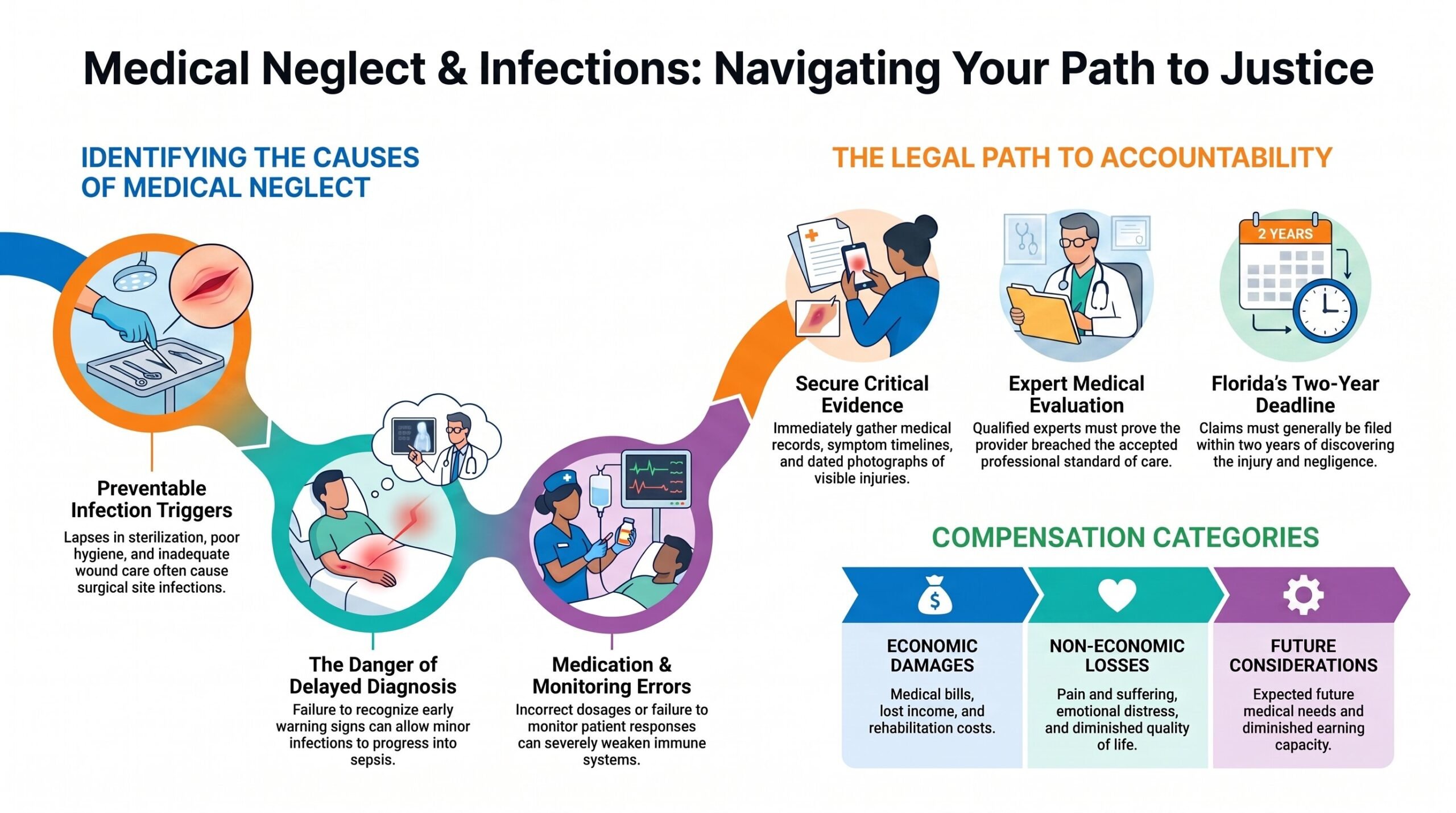
Common causes of medical neglect and infections include delayed diagnosis, surgical site infections, medication errors, and poor hygiene practices. Each issue may result from inadequate procedures, communication failures, insufficient oversight, or departures from accepted medical standards. Identifying the underlying cause is critical when evaluating potential negligence and resulting injuries.
Delayed Diagnosis
Delayed diagnosis can allow an infection to progress before appropriate treatment begins, increasing the risk of tissue damage, sepsis, extended hospitalization, or other serious complications. Causes may include overlooked symptoms, incomplete examinations, failure to order appropriate testing, or misinterpretation of laboratory results. In some circumstances, inadequate patient communication prevents clinicians from learning about worsening pain, fever, drainage, or functional changes.
Effective infection prevention depends on timely recognition, accurate documentation, and prompt evaluation when warning signs appear. Treatment delays may also result when test results are not reviewed, referrals are postponed, or follow-up instructions are unclear. Evaluating potential negligence requires comparing the care provided with applicable standards of care and accepted clinical practices. Careful review of records can help determine whether an avoidable delay contributed to the patient’s injuries.
Surgical Site Infections
Surgical site infections may arise when preventable lapses occur before, during, or after an operation, including inadequate sterilization, improper wound care, contaminated equipment, or failure to administer appropriate antibiotics. Pre-surgery compliance can reduce these risks when providers review medical histories, address existing infections, cleanse the operative area, and provide clear preparation instructions. During surgery, staff must follow sterile procedures, maintain clean instruments, and limit unnecessary exposure of the incision.
Afterward, appropriate monitoring and wound-care guidance support recovery and timely treatment of warning signs, such as increasing redness, swelling, drainage, fever, or worsening pain. When healthcare personnel overlook these safeguards, patients may experience prolonged recovery, additional procedures, scarring, or systemic illness. Careful documentation can help clarify whether negligent conduct contributed to the infection and resulting harm.
Medication Errors
Medication errors may occur when healthcare providers prescribe, dispense, or administer the wrong drug, dose, or schedule, or fail to account for allergies, interactions, and existing medical conditions. These mistakes can weaken immunity, delay treatment, or create complications that increase a patient’s susceptibility to infection. In hospitals, medication reconciliation helps staff compare a patient’s current medicines with new orders during admission, transfers, and discharge. Incomplete records, unclear handwriting, electronic charting mistakes, and communication failures can undermine this safeguard.
High-risk patients, including older adults, infants, and individuals with kidney or liver disease, may require additional review because standard doses can produce serious effects. When providers overlook warning signs or fail to monitor responses, affected patients may need further care, experience prolonged recovery, or suffer preventable harm.
Poor Hygiene Practices
When healthcare facilities fail to maintain proper hygiene, patients may face preventable exposure to bacteria, viruses, and other infectious agents. Unsanitary rooms, inadequately disinfected equipment, contaminated surfaces, and poor hand hygiene can allow infections to spread among vulnerable individuals. These risks may increase when staff neglect glove changes, sterilization procedures, laundry protocols, or appropriate isolation measures. Facilities have a duty to establish and enforce infection prevention policies that address cleaning schedules, employee training, waste disposal, and monitoring requirements.
Failure to follow these safeguards may constitute medical neglect, particularly when an infection causes serious illness, additional treatment, or prolonged hospitalization. Patient rights include receiving care in a reasonably clean and safe environment. Documentation of unsanitary conditions, symptoms, staff complaints, and treatment can help clarify whether negligent hygiene practices contributed to an injury.


Legal Rights of Boca Raton Medical Neglect & Infections Injury Victims
Boca Raton medical neglect and infection injury victims may have the legal right to seek compensation when a healthcare provider’s failure to meet accepted standards of care causes additional recovery. Depending on the evidence, recoverable damages may include medical expenses, lost income, rehabilitation costs, pain and suffering, and diminished quality of life. Patient communication failures and informed consent violations may also support a claim when they prevented a patient from understanding material risks or obtaining timely treatment.
Victims and families can protect their interests by preserving records, documenting symptoms, identifying witnesses, and promptly consulting a qualified medical malpractice attorney. Florida law imposes specific procedural requirements and filing deadlines, so early legal review is important.
Potential rights may include:
- Requesting complete medical records and billing documents
- Seeking an independent evaluation of the resulting infection or harm
- Pursuing negotiation, mediation, or litigation when appropriate
A legal professional can assess responsibility, evidence, damages, and available remedies while helping families pursue accountability and continued care.
Don’t Wait. Call Our Florida Personal Injury Lawyers Now!
Why Do Boca Raton Medical Neglect & Infections Injuries Happen?
Understanding why these injuries occur can help clarify whether a provider’s conduct may have fallen below the accepted standard of care. Boca Raton medical neglect and infection injuries may arise when patients do not receive timely assessments, appropriate treatment, or necessary monitoring. Staffing Shortages can increase workloads, delay responses to symptoms, and make it harder for personnel to follow established procedures consistently. Inadequate Infection Control may permit harmful organisms to spread through poorly sanitized equipment, improper hand hygiene, contaminated surfaces, or failures to isolate contagious patients. Communication breakdowns among physicians, nurses, facilities, and families can also lead to missed warnings, medication errors, or delayed interventions.
Additional contributing factors may include insufficient training, incomplete records, defective policies, and inadequate supervision. Although complications can occur even with reasonable care, preventable injuries may indicate departures from professional standards. A careful evaluation generally considers the patient’s condition, the care provided, applicable protocols, and the timing of each decision.
What Should You Do After a Boca Raton Medical Neglect & Infections Injury?
After suspected medical neglect or an infection-related injury, the patient should seek immediate medical care to address urgent health concerns and prevent further complications. Detailed records of symptoms, treatments, medical bills, and communications can help document the injury and its effects. Consulting a medical neglect lawyer can clarify available legal options and help preserve relevant evidence.
Seek Immediate Medical Care
When a patient develops an infection or other injury because of suspected medical neglect, prompt medical evaluation should be treated as an immediate priority. A qualified clinician can assess the condition, identify potential complications, and provide treatment before the harm becomes more serious. Immediate wound care may include cleaning, covering, draining, or otherwise treating an affected area under professional guidance. Patients should follow prescribed instructions carefully and report worsening pain, redness, swelling, fever, drainage, or other concerning changes without delay.
Infection prevention tips include keeping dressings clean, washing hands before touching the injury, taking medications exactly as directed, and attending recommended follow-up appointments. Emergency services may be necessary for severe symptoms, including difficulty breathing, confusion, rapidly spreading redness, or signs of systemic infection. Safety should remain the primary consideration.
Document Your Injuries
Documenting injuries can help preserve important evidence of suspected medical neglect and support later medical, insurance, or legal review. Affected individuals should photograph visible wounds, swelling, redness, drainage, or other changes, using consistent lighting and including dates when possible. Pain severity tracking can show whether discomfort improves, worsens, or changes after treatment. Symptom diary keeping should record fevers, chills, fatigue, medication effects, and difficulties with daily activities.
Each entry should include the date, approximate time, symptom description, and any response from healthcare personnel. Copies of discharge papers, prescriptions, laboratory results, appointment notices, and billing records should be stored securely. Witnesses may also provide written observations about changes in condition. Records should remain factual and organized, without altering original photographs or documents, so that healthcare, insurance, or legal reviewers can accurately evaluate the progression.
Consult a Medical Neglect Lawyer
Organized injury records can provide a medical neglect lawyer with a clearer account of the infection, treatment history, and resulting harm. A lawyer can review medical charts, medication records, photographs, bills, and witness statements to determine whether the standard of care was met. Relevant concerns may include Infection control failures, delayed diagnosis, inadequate monitoring, improper medication, or Patient communication issues that prevented timely treatment.
Early legal guidance can help preserve evidence, identify responsible parties, and explain potential claims without interfering with necessary medical care. The injured person should follow current treatment recommendations and avoid public statements about the incident. A qualified Boca Raton attorney may also coordinate with medical professionals to assess causation, long-term needs, and available compensation. Prompt consultation supports accountability and informed decisions.
Don’t Wait. Call Our Florida Personal Injury Lawyers Now!
Critical Evidence in a Boca Raton Medical Neglect & Infections Injury Case
Critical evidence can establish whether inadequate care contributed to an infection and related injuries. A case review typically examines medical records, documents the infection timeline, evaluates expert testimony, and identifies facility safety violations.
Key materials may include:
- Medical records, treatment notes, test results, and medication histories
- A dated account of symptoms, diagnoses, procedures, and treatment changes
- Expert opinions and reports concerning the standard of care and facility conditions
Medical Records Review
When a suspected medical neglect case involves an infection, a thorough review of the medical records can establish how the condition developed, progressed, and was treated. Records may include examination notes, nursing entries, medication administration logs, laboratory results, imaging, discharge instructions, and communications among providers. Careful comparison can reveal whether warning signs were documented, whether testing or treatment was delayed, and whether staff followed applicable policies.
The review also helps construct a patient timeline by organizing symptoms, assessments, interventions, and changes in condition without relying solely on memory. Entries may identify clinicians, caregivers, or other individuals with relevant knowledge, supporting witness identification. A qualified legal team may obtain complete records, preserve electronic data, and consult with medical professionals to evaluate whether the documented care met accepted standards and whether it contributed to harm.
Infection Timeline Documentation
A detailed infection timeline can clarify how symptoms emerged, how healthcare providers responded, and whether delays contributed to a patient’s recovery. Patient record timelines should identify appointments, reported symptoms, examination findings, diagnostic testing, treatment decisions, and follow-up instructions in chronological order. Important entries may include fever, swelling, drainage, worsening pain, abnormal results, emergency visits, and changes in prescribed care.
Pharmacy records can help establish when medications were ordered, filled, and taken, particularly when delays in antibiotic prescriptions may have allowed an infection to progress. The timeline should also compare documented symptoms with communication records, including portal messages and telephone calls. Preserving these details supports a clear review of changing conditions and the care provided. Consistent documentation can help protect patients and promote accountability when preventable harm is suspected.
Expert Witness Testimony
Medical expert testimony can help determine whether healthcare providers in Boca Raton met the accepted standard of care and whether a lapse contributed to an infection or related treatment. Qualified experts may review medical records, laboratory results, medication histories, and the documented timeline of the infection. They can explain whether symptoms warranted earlier testing, treatment, referral, or follow-up, and whether the claimed injury is medically consistent with the alleged delay.
Experts may also address Patient consent laws by evaluating whether risks, alternatives, and infection-related concerns were adequately explained before treatment. Their opinions can clarify whether infection control standards were followed during relevant care, without relying on speculation. In litigation, credible testimony helps attorneys present nuanced medical information clearly, enabling injured patients and families to pursue accountability and informed legal remedies.
Facility Safety Violations
Facility safety violations may provide necessary evidence that a Boca Raton healthcare provider failed to maintain conditions reasonably necessary to prevent patient infections. Investigators may examine inspection reports, maintenance records, incident logs, and photographs documenting unsafe conditions. Evidence of Staff training failures may indicate that employees lacked instruction on hand hygiene, the use of personal protective equipment, isolation procedures, or infection reporting.
Sanitation protocol gaps may appear through incomplete cleaning schedules, improperly stored supplies, contaminated equipment, or inadequate disposal practices. Witness statements from patients, families, and workers can help establish when these conditions existed and whether management knew about them. Such evidence may support a connection between facility negligence and a patient’s illness. Prompt preservation of records and photographs is important because conditions may change before a formal investigation occurs. Families seeking accountability may consult qualified legal counsel.
Don’t Wait. Call Our Florida Personal Injury Lawyers Now!
Long-Term Effects of Boca Raton Medical Neglect & Infections Injuries
Medical neglect and infection injuries can produce chronic health consequences that persist long after the initial treatment. Affected individuals may also experience emotional and psychological effects, including anxiety, depression, or trauma-related distress. Ongoing treatment, rehabilitation, medication, and monitoring can create substantial costs that require careful evaluation.
Chronic Health Complications
When inadequate diagnosis or treatment allows an infection or other injury to progress, the resulting harm may extend well beyond the initial episode. Chronic complications can include persistent pain, tissue damage, impaired organ function, mobility limitations, recurrent infections, or the need for additional procedures. Some patients require prolonged medication, rehabilitation, monitoring, or assistance with ordinary activities. These consequences may affect employment, independence, and the ability to support family or community responsibilities.
Healthcare facilities can reduce preventable harm through Patient safety training, staff accountability, Infection control protocols, and sanitation enforcement. When those safeguards are ignored, delayed, or inadequately implemented, medical records may help establish how an avoidable condition developed and worsened. A qualified attorney can evaluate whether negligent care contributed to lasting physical impairment, treatment costs, and continuing medical needs.
Emotional and Psychological Effects
Emotional and psychological effects may persist after medical neglect or an infection-related injury has been treated. Individuals may experience anxiety and trauma when recalling symptoms, treatment delays, or interactions that undermined their trust in healthcare providers. Some develop PTSD symptoms, including intrusive memories, heightened alertness, avoidance, or intense reactions to medical settings. Sleep disturbance can further impair concentration, mood, and daily functioning, particularly when discomfort or fear remains unresolved.
Emotional distress may also contribute to isolation, irritability, depression, and difficulty maintaining family or workplace responsibilities. Compassionate support from loved ones and qualified mental health professionals can help affected individuals identify these responses and pursue appropriate coping strategies. Documentation of persistent psychological changes may also help explain the injury’s broader effect on a person’s quality of life and relationships.
Ongoing Treatment Costs
Long-term effects may include ongoing treatment costs that extend well beyond the initial diagnosis or hospitalization. Patients may require follow-up examinations, prescription medications, laboratory testing, wound care, or additional procedures to address complications associated with an infection or delayed diagnosis. Some individuals also need pain management options when symptoms persist or nerve damage develops.
Rehabilitation planning can involve physical therapy, occupational therapy, assistive equipment, and transportation to appointments, creating continuing financial demands. Lost income may compound these expenses when recovery limits a person’s ability to work or provide care for others. Documentation of invoices, treatment recommendations, insurance payments, and related travel costs can help establish the scope of future needs. Legal guidance may assist affected patients in evaluating whether compensation could address medically supported, long-term expenses.
Don’t Wait. Call Our Florida Personal Injury Lawyers Now!
Proving Liability in Boca Raton Medical Neglect & Infections Injury Cases
Establishing liability in a Boca Raton medical neglect and infection injury case requires evidence that a healthcare provider breached the applicable standard of care and that the breach caused the patient’s infection or related harm. Evidence may include medical records, laboratory results, treatment timelines, photographs, and testimony from qualified medical experts. These materials can show whether staff failed to maintain sanitary conditions, recognize warning signs, order appropriate testing, administer timely treatment, or provide necessary follow-up care.
Medication documentation errors may reveal that an incorrect drug or dosage was given, a prescription was omitted, or an essential allergy was overlooked. Patient consent violations may establish that treatment proceeded without adequate disclosure of material risks, alternatives, or foreseeable infection-related complications. Attorneys may compare the provider’s conduct with accepted practices and investigate policies, staffing, and communication failures. Preserving records promptly helps clarify causation, identify responsible parties, and support a patient’s pursuit of accountability and recovery.
Dealing With Insurance Companies After a Boca Raton Medical Neglect & Infections Injury
When a Boca Raton medical neglect or infection injury claim is reported, insurance companies may seek statements, medical authorizations, and other information that could affect the evaluation of damages and liability. A claimant should provide accurate information while avoiding speculation, admissions, or recorded statements before obtaining informed legal guidance. Broad authorizations may permit access to unrelated medical history, creating privacy concerns and opportunities to challenge causation.
Common insurance company tactics include minimizing symptoms, disputing whether an infection resulted from negligent care, attributing it to preexisting conditions, and offering an early settlement before the full medical impact is understood. Claim delay strategies may involve repeated documentation requests, unexplained silence, or prolonged reviews, increasing financial pressure on an injured patient and their family.
Organized records, written communications, treatment summaries, and expense documentation can help protect the claim’s accuracy. A qualified attorney may communicate with adjusters, evaluate proposed releases, and advocate for fair treatment, while the injured person focuses on recovery and continued care for loved ones.
What to Expect During a Boca Raton Medical Neglect & Infections Injury Claim Process
A Boca Raton medical neglect and infection injury claim typically begins with an initial case evaluation to assess the facts, potential liability, and available legal options. The process may include a detailed review of medical records, followed by insurance claim negotiations supported by documented evidence. If negotiations do not produce a fair resolution, litigation may proceed through court, discovery, settlement discussions, or trial.
Initial Case Evaluation
During an initial case evaluation, a Boca Raton medical neglect and infection injury lawyer reviews the patient’s medical history, treatment records, symptoms, and the circumstances surrounding the suspected infection. The evaluation helps determine whether the reported harm may involve a preventable lapse in care and whether legal action could support the patient’s recovery. Patient evidence gathering may include organizing photographs, billing information, discharge instructions, communications, and a detailed timeline of events.
The lawyer may also ask about ongoing treatment, functional limitations, expenses, and the assistance required at home. An Expert medical review can help assess whether the circumstances warrant further investigation and identify questions that require clarification. The process typically includes a discussion of potential claims, practical objectives, available resources, and applicable deadlines, without promising a particular outcome.
Medical Record Review
Medical record review establishes the factual foundation of a Boca Raton medical neglect and infection injury claim by examining the patient’s history, diagnostic findings, treatment decisions, and documented outcomes. A qualified legal team compares the care provided with applicable diagnosis standards and accepted medical practices. Records may reveal delayed testing, missed symptoms, inadequate monitoring, or failures involving infection prevention. Reviewers also assess medication orders, nursing notes, laboratory results, imaging, discharge instructions, and communications among providers.
Documentation can identify whether hygiene protocols were followed and whether consent violations occurred before procedures or treatment changes. The analysis carefully considers timelines, linking suspected negligence to the infection, complications, and required care. This process helps preserve an accurate account, support compassionate advocacy, and identify questions requiring testimony from qualified medical professionals.
Insurance Claim Negotiations
Following a medical record review, insurance claim negotiations address how the insurer evaluates liability, medical expenses, and the losses associated with an infection or other injury. The claimant’s representative typically presents organized evidence, including treatment records, expert opinions, billing documentation, and information concerning ongoing care. A Claim Value Assessment considers medical costs, lost income, pain, disability, and related impacts.
Insurers may raise Coverage Disputes regarding policy terms, causation, exclusions, or whether care met accepted standards. Prompt, well-supported responses can help prevent a Wrongful Denial and clarify the factual basis for responsibility. Settlement Leverage may arise from consistent documentation, credible medical evidence, and a carefully calculated demand. Negotiations often involve counteroffers and requests for additional information, while the injured person’s interests and recovery remain central throughout the process.
Litigation And Resolution
When negotiations do not produce an acceptable resolution, the claim may proceed to litigation, where the injured person must establish that negligent medical care caused or contributed to the infection and resulting losses. The process generally begins with filing a complaint, followed by discovery, depositions, medical-record review, and expert testimony. Evidence preservation is critical because treatment notes, laboratory results, billing records, photographs, and communications may demonstrate how the infection developed and affected daily life.
Trial strategy planning evaluates liability, causation, damages, and potential defenses while ensuring evidence is presented clearly and responsibly. Many claims resolve through mediation or settlement before trial, but preparation remains important. If a jury hears the case, counsel presents testimony and documentation, while the opposing side may challenge causation, damages, or compliance with medical guidance.
Compensation for Boca Raton Medical Neglect & Infections Injury Damages
Compensation for Boca Raton medical neglect and infection injuries may cover medical expenses, lost income, reduced earning capacity, pain and suffering, and other losses caused by substandard care. A claim may also address continuing treatment, rehabilitation, necessary assistance, and costs associated with preventing further complications. The damages calculation generally depends on medical records, billing statements, employment documentation, expert opinions, and evidence connecting the infection or injury to the provider’s conduct. Settlement factors may include liability strength, the severity and duration of harm, available insurance coverage, future medical needs, and the parties’ willingness to resolve the dispute.
An attorney may investigate whether delayed diagnosis, inadequate sanitation, improper monitoring, or failure to follow accepted procedures contributed to the condition. Claimants can support recovery efforts by preserving records, following medical instructions, documenting symptoms, and providing complete information to counsel. Timely legal guidance can help protect procedural rights and promote accountability while seeking compensation that reflects the injury’s established consequences.
Economic vs Non-Economic Damages in Boca Raton Medical Neglect & Infections Cases
Economic damages may include medical expenses, rehabilitation costs, lost income, and other quantifiable financial losses resulting from medical neglect or infection. Non-economic losses can involve pain and suffering, emotional distress, diminished quality of life, and lasting impairment. Calculating total compensation requires determining documented financial harm, as well as the severity and lasting effects of the injury.
Economic Damage Categories
Which losses may be recoverable depends on the harm caused by the alleged medical neglect or infection and the evidence connecting that harm to the provider’s conduct. Economic damages may include reasonable past and future medical expenses, such as hospital care, physician visits, diagnostic testing, rehabilitation, prescription drugs, and treatment for complications. If a Medication Error caused additional care or prolonged recovery, related costs may be considered, provided they are supported by medical records and expert opinions.
Recoverable amounts may also include lost wages, diminished earning capacity, transportation expenses, in-home assistance, and necessary medical equipment. Evidence Preservation is important because bills, employment records, treatment histories, and receipts can establish the financial impact. Calculations should account for documented expenses, expected future needs, insurance payments, and any applicable legal limitations.
Non-Economic Losses
Non-economic losses may arise when medical neglect or an infection causes pain, emotional distress, disfigurement, loss of enjoyment of life, or a diminished ability to participate in ordinary activities. These losses do not have fixed market prices, yet they reflect substantial effects on a patient’s dignity, relationships, independence, and daily functioning. Pain vs. suffering distinguishes physical discomfort from broader psychological and lifestyle consequences, including anxiety, fear, depression, and trauma associated with negligent care.
Evidence may include medical records, treatment history, testimony from family members, and observations of changes in behavior or abilities. In a Wrongful Death matter, surviving relatives may seek recognition of their grief, loss of companionship, and deprivation of guidance. Legal counsel can help present these personal harms clearly while honoring affected individuals and families.
Calculating Total Compensation
Determining total compensation in a Boca Raton medical neglect or infection case requires a careful assessment of both economic and non-economic damages. Economic damages may include hospital bills, follow-up treatment, prescription costs, rehabilitation, lost wages, reduced earning capacity, and future medical care. Documentation, expert opinions, and evidence preservation help establish the extent and causal link between negligent conduct and resulting losses. Non-economic damages address pain, emotional distress, disability, disfigurement, loss of enjoyment, and diminished quality of life.
Their value depends on the injury’s severity, duration, treatment demands, and effect on personal relationships. A thorough evaluation also considers comparative fault, insurance coverage, and applicable Florida law. During settlement negotiation, counsel may present organized records, testimony, and medical projections to pursue compensation that serves the injured person’s long-term recovery and security.
When a Boca Raton Medical Neglect & Infections Injury Case Goes to Trial vs Settlement
A Boca Raton medical neglect and infection injury case may resolve through settlement or proceed to trial, depending on the strength of the evidence, the parties’ willingness to negotiate, and the extent of the injured patient’s losses. Settlement can provide a defined recovery without the uncertainty, expense, and time associated with courtroom proceedings. Negotiations may occur before filing or after discovery clarifies the medical records, treatment history, and disputed issues.
A trial becomes more likely when the parties cannot agree on responsibility or on fair compensation. Each side presents evidence, examines witnesses, and explains how the alleged neglect affected the patient and those providing care. The jury then evaluates credibility and causation. Jury deliberations may produce different verdict outcomes, including findings for either party and an award that differs from proposed settlement amounts. A patient-focused legal team can help families assess practical risks, preserve evidence, and choose the resolution path that best supports recovery and accountability.
Florida Laws That May Affect Your Boca Raton Medical Neglect & Infections Case
Because Florida medical negligence law governs both liability and recovery, these cases require careful attention to statutory deadlines, medical standard-of-care requirements, and proof of causation. Florida medical malpractice claims generally require evidence that a healthcare provider breached the accepted standard of care and that the breach caused an infection, worsening condition, or other compensable harm.
Florida medical negligence claims require proof of a breach of the standard of care, causation, and compliance with strict statutory deadlines.
- Florida’s pre-suit investigation and notice requirements may apply before a lawsuit is filed.
- Comparative negligence rules can affect the amount of damages ultimately recovered.
- Recordkeeping, expert testimony, and informed-consent principles may influence liability.
Florida law also recognizes specific damage limitations, insurance considerations, and procedures affecting claims against public hospitals or governmental entities. Statute-of-limitations extensions may arise in narrowly defined circumstances, such as delayed discovery or concealment, but eligibility depends on the facts and the governing statutory provisions. A careful review can help preserve a patient’s ability to seek accountability while supporting a fair outcome. Legal counsel may coordinate medical records, expert evaluations, and required notices so that families caring for injured loved ones receive informed guidance throughout the process.
The Statute of Limitations for Boca Raton Medical Neglect & Infections Injury Cases
Florida’s statute of limitations sets the deadline for filing a medical negligence claim involving an infection, delayed diagnosis, or other treatment-related injury. In Florida, a claim generally must be filed within two years after the injured person discovered, or reasonably should have discovered, the negligence and resulting injury. A four-year statute of repose may independently bar claims, even when discovery occurs later, subject to limited exceptions, including fraud, concealment, or misrepresentation. For minors and certain circumstances, different rules may apply.
Prompt attention remains important because preserving records, identifying responsible parties, and evaluating causation can require substantial time. Comparative negligence rules may reduce a recovery when the patient’s conduct contributed to the harm, although they do not necessarily eliminate a claim. Hospital liability limits and statutory protections may also affect available damages or procedural requirements, depending on the facility’s status and the facts. Accurate deadlines should be assessed promptly to protect patients and families seeking accountability.
How a Boca Raton Medical Neglect & Infections Injury Lawyer Can Help You
When medical neglect or an infection causes serious harm, legal counsel can help determine whether the available evidence supports a claim of medical negligence. A Boca Raton attorney can explain how to gather evidence, including medical records, billing statements, photographs, witness accounts, and facility communications. Counsel may also preserve relevant electronic records before they are altered or lost.
The attorney can compare the provider’s conduct with infection control standards and identify possible departures from accepted medical practices. Qualified professionals may review the treatment history and provide expert testimony concerning causation, preventability, and the extent of the injury.
Legal guidance may include:
- Organizing records and documenting symptoms, treatment, and lasting limitations
- Identifying responsible parties, insurers, and potentially relevant institutional policies
- Preparing damage calculations for medical expenses, lost income, rehabilitation, and future care
Through careful investigation and clear communication, counsel can help injured individuals and their families pursue accountability and present evidence supporting fair compensation and improved patient safety.
When to Contact a Boca Raton Medical Neglect & Infections Injury Lawyer
Early legal guidance may protect a potential claim after medical neglect or a healthcare-associated infection causes injury. A Boca Raton medical neglect and infection injury lawyer may be contacted when a patient develops an unexplained infection, experiences delayed diagnosis, receives improper treatment, or suffers harm after discharge. These circumstances can constitute Medical Neglect Triggers that require timely review.
Families should also seek guidance when records appear incomplete, staff provide conflicting explanations, or a facility reports an infection without clearly addressing its source. Hospital Staffing Shortages may contribute to missed monitoring, delayed responses, medication errors, or inadequate hygiene, although each situation requires careful evaluation rather than assumptions.
Prompt contact is particularly important when serious symptoms continue, additional treatment becomes necessary, or a patient dies following suspected neglect. Preserving medical records, discharge instructions, bills, photographs, and communications can help clarify what occurred. Early consultation also allows concerns to be documented while witnesses, electronic records, and facility reports remain available, supporting responsible action on behalf of the injured person.
Why You Need an Experienced Boca Raton Medical Neglect & Infections Injury Lawyer
An experienced Boca Raton medical neglect and infection injury lawyer can evaluate whether a healthcare provider’s conduct fell below accepted standards and contributed to a patient’s injury. Such a review may reveal missed warning signs, delayed treatment, inadequate sanitation, or failures to communicate important changes in condition. Medical records, laboratory results, medication histories, and witness accounts can help establish how an infection developed or worsened.
Legal experience also supports effective Patient advocacy by ensuring that the injured individual’s concerns receive careful attention throughout the claims process. Counsel can coordinate with qualified medical professionals to explain whether appropriate precautions, testing, and treatment were provided. Proper infection documentation is particularly important because photographs, test results, discharge instructions, and treatment timelines may clarify the source and consequences of an infection.
An experienced lawyer can address communication with insurers, preserve relevant evidence, and calculate medical expenses, lost income, rehabilitation needs, and other damages. This assistance allows patients and families to focus on recovery while pursuing accountability through informed, responsible action.
How to Choose the Right Boca Raton Medical Neglect & Infections Injury Lawyer for Your Case
Selecting the right Boca Raton medical neglect and infection injury lawyer requires careful consideration of experience, medical knowledge, and professional resources. A qualified attorney should understand how infections develop, how treatment standards apply, and how delayed care may affect a patient’s recovery. Reviewing the lawyer’s experience with hospital negligence, diagnostic failures, medication errors, and infection-related injuries can help families identify suitable representation.
Effective case preparation also requires a disciplined review of evidence. The attorney should know how to obtain medical records, preserve photographs, consult independent medical professionals, and identify inconsistencies in treatment documentation. Depending on the circumstances, counsel may verify patient communication logs, assess hospital sanitation protocols, and examine staffing records, discharge instructions, and laboratory results. Clear communication is equally important. A dependable lawyer explains legal options, responds within reasonable periods, and treats patients and families with dignity. Fee arrangements, anticipated expenses, and case responsibilities should be discussed before representation begins to enable informed decisions focused on accountability and service.
About The Law Offices of Anidjar & Levine
The Law Offices of Anidjar & Levine represent individuals and families pursuing claims involving medical neglect, preventable infections, and other forms of healthcare-related harm.
Its attorneys evaluate whether providers followed accepted standards, documented key care, and responded appropriately to warning signs.
When Hospital negligence causes additional injury, the firm may investigate records, staffing practices, treatment decisions, and communications among medical professionals.
The firm also examines potential infection liability in hospitals, nursing facilities, clinics, and other healthcare settings.
This review can involve hand hygiene, sterilization, isolation procedures, medication administration, wound care, and timely diagnosis.
Attorneys may consult qualified medical professionals to clarify whether a preventable infection resulted from a breach of duty and contributed to a patient’s damages.
The Law Offices of Anidjar & Levine seek accountability while helping clients understand their legal options.
Its approach emphasizes thorough preparation, clear communication, and respectful service for people facing serious physical, financial, and emotional consequences after inadequate medical care or institutional failures.

Frequently Asked Questions
Can I File a Claim if I Signed a Hospital Consent Form?
A patient may still file a claim after signing a hospital consent form. Consent form overview: such documents generally authorize identified treatments and acknowledge ordinary risks; they do not excuse negligent care, undisclosed risks, preventable infections, or treatment outside the agreed scope. Liability depends on evidence, causation, and damages. Florida statute limits, including filing deadlines and procedural requirements, can affect eligibility, so preserving records and obtaining qualified legal guidance promptly is important.
Does Medical Neglect Affect My Immigration Status or Healthcare Eligibility?
Medical neglect generally does not automatically change a person’s immigration status or healthcare eligibility. However, affected individuals should preserve medical records and obtain qualified legal guidance before communicating with immigration authorities or applying for benefits. A claim for compensation is usually separate from immigration proceedings, though specific facts may require an immigration waiver. Eligibility for federal benefits depends on program rules, status, income, and other requirements, not merely the existence of malpractice.
Can Family Members Pursue a Claim After a Patient Dies From Infection?
Yes, eligible family members may pursue a Wrongful Death claim if a patient dies from an infection caused by medical negligence, such as delayed diagnosis, inadequate treatment, or failure to prevent transmission. State law determines which relatives may file and how damages are allocated, including funeral expenses, lost support, and emotional losses. They should preserve medical records and consult qualified counsel promptly because Statute Deadlines can bar otherwise valid claims.
Are Medical Malpractice Settlements Taxable in Florida?
Medical malpractice settlements are often not taxable in Florida when they compensate for physical injuries or illness, including related medical expenses and pain and suffering. However, taxability rules depend on how the settlement is allocated and whether amounts represent lost wages, interest, or punitive damages. Settlement treatment may differ under federal law, even though Florida imposes no state income tax. A qualified tax professional can evaluate the agreement and reporting obligations.
Can I Change Lawyers if My Current Attorney Mishandles My Case?
A client may generally change counsel if the current attorney mishandles a case, subject to timing, court rules, and the fee agreement. Documented communication issues, missed deadlines, or suspected attorney misconduct can justify seeking independent advice about legal strategy and case reassignment. The client should request the file promptly and clarify unpaid fees. If serious harm occurred, a malpractice complaint may be appropriate, while court oversight may be required for substitution during active litigation.
—————————
Medical neglect and infection injuries can lead to lasting physical, emotional, and financial consequences.
Victims in Boca Raton may have legal options when substandard care, delayed diagnosis, unsafe practices, or inadequate treatment causes harm.
Boca Raton Personal Injury Lawyer: The Law Offices of Anidjar and Levine can evaluate the circumstances, identify potentially responsible parties, and explain available legal remedies.
Prompt consultation is important because evidence may disappear and Florida law imposes strict filing deadlines.
Qualified legal guidance can help protect a victim’s rights and pursue appropriate compensation.

