When an insurer shifts blame onto you, every percentage point matters. We challenge unfair fault claims and protect your right to full compensation under Florida law.
The Law Offices of Anidjar & Levine helps injured people in Gainesville protect their claims when insurers try to shift blame under Florida’s comparative negligence rules.
Our team investigates the facts, preserves evidence, reviews medical records and crash reports, challenges unfair fault allegations, and calculates damages for medical care, lost income, pain, and future needs.
We handle insurer communication, monitor deadlines, and evaluate settlement offers before litigation becomes necessary.
Learn how a Gainesville Car Accident Lawyer can help strengthen your case and protect your right to compensation.
Main Takeaways
- A Gainesville comparative negligence injury lawyer helps protect compensation when insurers argue you share fault.
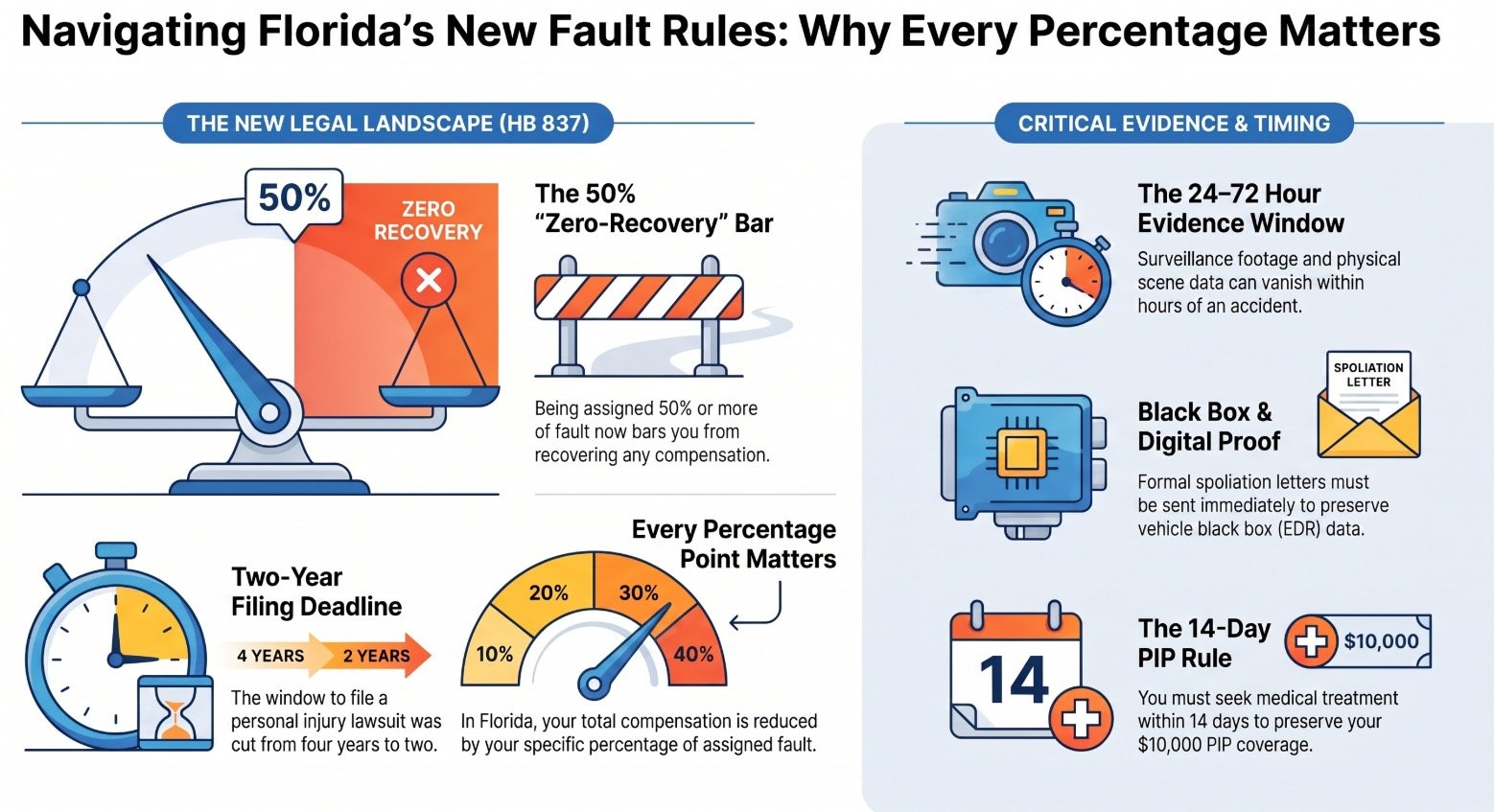
- Florida law can reduce injury compensation by your percentage of responsibility — and bar recovery entirely at 50% or more under HB 837 (2023).
- Lawyers investigate evidence, interview witnesses, review records, and challenge unfair comparative fault claims.
- Common cases include distracted driving, unsafe property conditions, workplace safety violations, and shared-fault crashes.
- Legal support includes insurer communication, damage calculation, settlement review, deadline tracking, and filing suit if needed.
How We Can Help With Your Gainesville Comparative Negligence Injury Claim
When another party tries to shift blame after an accident, we can help protect your rights and challenge any unfair attempt to reduce your compensation. We investigate the facts, preserve evidence, interview witnesses, and consult qualified experts when needed. Our team reviews police reports, medical records, photographs, and digital evidence to build a clear account of what happened.
We also manage communication with insurers, so you can focus on recovering and serving the people who rely on you. We track the insurance claim timeline, respond to requests, and press for a fair evaluation of your losses. When adjusters raise fault percentage limits or argue that your conduct caused part of the harm, we prepare a documented response supported by evidence. We calculate damages, assess settlement offers, and advise you before any decision. If negotiations fail, we are ready to file suit and advocate for you in court with disciplined, purposeful representation.
Understanding Gainesville Comparative Negligence Injury Cases


Comparative negligence can affect the value of an injury claim in Gainesville because Florida law allows compensation to be reduced by a person’s share of fault. We help you understand how this rule may influence recovery, especially when insurers argue that you contributed to your own harm. Comparative negligence basics require careful review of evidence, statements, medical records, and the conduct of every party involved.
OUR CONSULTATIONSARE FREE
START YOUR FREE CASE REVIEW

We also consider how Gainesville jurors may evaluate conduct when assessing fault. Jurors examine whether each person acted with reasonable care under the circumstances, then assign percentages of responsibility. Because even a small fault allocation can reduce compensation, we work to present your actions accurately and respond to unfair blame. Our goal is to protect your ability to recover while honoring the broader purpose of injury law — helping injured people regain stability and continue serving their families, workplaces, and communities.
Gainesville Comparative Negligence Injury Statistics: Why Fault Disputes Make Legal Help Essential
Florida’s injury data makes clear why comparative negligence claims require immediate, strategic attention. According to the FLHSMV 2022 Florida Traffic Crash Facts, Florida recorded 401,523 total crashes and more than 253,888 injuries in 2022 alone. NHTSA data shows that 3,308 people died in distracted driving crashes nationally in 2022 — crashes where both driver conduct and victim behavior are often disputed. In premises liability and workplace cases, fault splits between multiple parties are even more common.


Under Florida’s 2023 tort reform (HB 837), if an insurer successfully argues that you were 50% or more at fault, you recover nothing at all — a zero-recovery outcome that makes every fault argument a high-stakes battle. The lawsuit filing window was also cut from four years to two years, and the Florida Department of Financial Services warns consumers that delayed claims and missing documentation consistently undermine recoveries. Physical evidence from crash scenes can vanish within 24 to 72 hours, and insurer adjusters begin building fault narratives from the first call. Every day without legal counsel is a day that shifts the fault story away from accuracy and toward the insurer’s preferred outcome.
Common Causes of Gainesville Comparative Negligence Cases
We often see comparative negligence arise when several actions contribute to an injury, and we help you understand how fault may be divided. Distracted driving accidents, unsafe property conditions, shared fault crashes, and workplace safety violations can all affect the strength and value of your claim. By identifying each contributing factor early, we can build a clearer case and protect your right to fair compensation.
Distracted Driving Accidents
Although distracted driving may seem straightforward, these cases often raise complex questions about fault under Florida’s comparative negligence rules. A phone distraction can shift attention for seconds, yet those seconds may cause lasting harm to drivers, passengers, cyclists, or pedestrians. When we evaluate a crash, we look closely at call logs, messages, witness statements, vehicle data, and roadway evidence to understand each party’s conduct. The impact of distracted driving may support a claim against a careless driver, but insurers may still argue you shared fault by speeding, reacting late, or failing to remain alert.
We help you address those arguments with evidence and careful analysis. In car accident cases, we also send formal spoliation letters on the day we are retained to preserve vehicle black box (EDR) data — which can prove the other driver’s speed, braking, and steering at the moment of impact before that data is overwritten.
Learn more: How Black Box Data Can Help Your Car Accident Case.
By serving injured people diligently, we work to support your recovery and accurately present your role in the collision.
Unsafe Property Conditions
When unsafe property conditions cause a fall or another injury, fault often depends on what the property owner knew, what they should have known, and how the injured person acted before the incident. We examine whether negligent maintenance allowed hazards to remain, including inadequate lighting, broken sidewalks, unsafe stairs, spills, loose flooring, or missing warnings. We also consider whether you noticed the danger, had a reasonable chance to avoid it, or moved carefully under the circumstances. In Gainesville premises liability cases, comparative negligence may reduce recovery if both sides share responsibility. Still, property owners who welcome guests, customers, tenants, or service providers must act with reasonable care. We help you identify preventable hazards, preserve evidence, and pursue accountability while respecting the duty we all share to protect others.
Shared Fault Crashes
Collisions in Gainesville often involve more than one mistake, and Florida’s comparative negligence rules can affect how much compensation an injured person may recover. We closely examine shared-fault crashes, including rear-end impacts, intersection collisions, lane-change accidents, and crashes involving distracted or impaired driving. You may face accusations that you sped, failed to signal, or reacted too slowly, even when another driver caused substantial harm. We address witness credibility issues by comparing statements with crash reports, photos, video, and physical evidence.
We also review medical record disputes when insurers argue that injuries came from prior conditions or later events. By organizing facts carefully, we help present your role accurately, protect your claim from unfair blame, and support a fair outcome that serves your recovery.
Workplace Safety Violations
Shared-fault issues do not arise only on Gainesville roads; they also arise in workplace injury claims involving unsafe working conditions, poor supervision, or ignored safety rules. We see these disputes when an employer alleges that you contributed to an injury by bypassing procedures, failing to use protective equipment, or overlooking known hazards. In response, we examine whether safety training was adequate, consistent, and understandable. We also review hazard reporting records, inspection logs, witness statements, and prior complaints to determine whether management addressed risks before harm occurred. When workers serve customers, patients, students, or the public, the pressure to move quickly can increase the risk of danger. We help evaluate each party’s conduct, identify preventable violations, and protect your claim from unfair blame under comparative negligence principles.
Your Legal Rights After a Gainesville Comparative Negligence Injury
Even if you believe you were partly at fault for an accident in Gainesville, you still may have the right to pursue compensation under Florida’s comparative negligence law — as long as your assigned fault share is below 50%. We help you understand how your percentage of responsibility may affect recovery, while protecting your dignity and future needs.
Your rights may include:
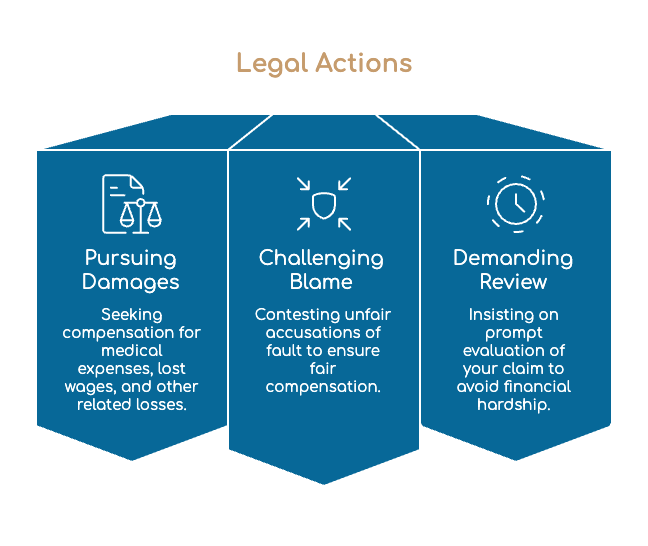
- Pursuing damages for medical care, lost income, reduced earning ability, pain, and other losses tied to the injury.
- Challenging unfair blame when insurers raise comparative fault defenses to reduce or deny what you qualify for.
- Demanding timely review of your claim, especially when insurance claim delays create hardship for you and those who depend on your support.
Many people who are injured want to recover, support their families, and return to meaningful work. We stand with you by gathering evidence, addressing liability disputes, and seeking a result that reflects the full impact of your injuries under Florida law.
Why Do Gainesville Comparative Negligence Injuries Happen?
When an accident involves more than one contributing factor, questions about fault can quickly become difficult. We often see comparative negligence issues arise because several people or organizations fail to meet basic safety responsibilities. A driver may speed while another person crosses outside a marked area. A store may overlook premises maintenance while a visitor fails to notice a warning sign. These overlapping choices can shape how responsibility gets assigned.
Community safety depends on steady attention to preventable risks. Negligent hiring can place unqualified employees in roles where they endanger others. Inadequate safety training can leave staff unprepared to operate equipment, assist guests, or respond to hazards. Poor property care can create sidewalk hazards, loose flooring, spills, or lighting problems that increase the risk of injury.
When we evaluate why these injuries happen, we look for every contributing failure. That careful review helps protect your rights while encouraging safer conduct throughout Gainesville’s public and private spaces.
What Should You Do After a Gainesville Comparative Negligence Injury?
After a Gainesville comparative negligence injury, protecting your health, evidence, and legal rights from the start is essential. You will want to seek medical care promptly, document the accident thoroughly, and preserve any information that may affect fault. Contacting a lawyer early also helps you understand how Florida’s comparative negligence rules may impact your claim.
Seek Medical Care
If you have been hurt in a Gainesville accident where fault may be disputed, prioritize medical care immediately. Check for urgent injuries, call 911 if symptoms are serious, and follow basic first-aid steps while waiting for help. Even if pain seems minor, do not assume you are unharmed — internal injuries, concussions, and soft tissue damage can worsen in the hours and days that follow.
Accept an emergency room evaluation when recommended, follow discharge instructions, and attend follow-up appointments with your physicians. Prompt treatment protects your health and supports recovery. It also helps ensure conditions are addressed before they become more severe. Seeking care quickly shows responsible concern for your well-being and matters when an insurer or jury later reviews fault.
Document the Accident
Because fault may be divided among several people or parties, document the accident as soon as you are safely able to do so. Start by taking clear photographs of vehicles, hazards, injuries, weather, lighting, traffic signals, and the surrounding area. These scene documentation steps help preserve details that may change quickly. Write down the time, location, names of witnesses, and anything each person said about what happened. If available, save surveillance footage, receipts, service records, or incident reports. A simple evidence checklist helps ensure you do not overlook important facts. When you gather accurate information, you support a fair review of responsibility and protect the interests of everyone affected by the injury.
Contact a Lawyer
Seek legal guidance as soon as immediate medical needs are addressed and the accident is documented. Early counsel helps preserve evidence and prevents statements that may unfairly increase your share of fault. A lawyer can review police reports, witness statements, medical records, and insurance communications to clarify liability before negotiations begin. You also gain a clear claim timeline, including notice requirements, investigation steps, settlement discussions, and filing deadlines. Because Florida’s comparative negligence rules can reduce compensation, prompt advice helps you understand risks and options. By acting quickly, you place your recovery, responsibilities, and long-term stability on a stronger legal foundation while maintaining focus and dignity.
Critical Evidence in a Gainesville Comparative Negligence Injury Case
In a Gainesville comparative negligence injury case, we use evidence to show what happened, who contributed to the accident, and how your injuries changed your life. Essential evidence often includes accident scene photos, witness statements, police crash reports, and medical treatment records.
For a full explanation of why documentation is so important to protecting your claim, read: Why Medical Records Matter in Personal Injury Cases.
When we organize this evidence early, we can better protect your claim against fault-shifting arguments.
Accident Scene Photos
Accident scene photos can become decisive evidence in a Gainesville comparative negligence injury case, especially where each party disputes how the collision or incident occurred. We use images to preserve roadway layout, skid marks, debris fields, weather conditions, signage, lane markings, and vehicle positions before cleanup changes the scene. These details can help show how responsibility should be fairly divided.
We also look for photos that support traffic light timing, visibility issues, and vehicle condition, including tire damage, broken lights, and impact points. Clear, dated photographs may strengthen your claim and limit unfair blame. If you can do so safely, capture wide views, close details, and surrounding hazards, then share them with counsel promptly for review.
Witness Statements
Because memories can fade quickly after a crash or serious incident, witness statements often provide essential support in a Gainesville comparative negligence injury case. We use careful statement collection to preserve what bystanders saw, heard, and did before details become uncertain. These accounts may strengthen timeline evidence, clarify how the event unfolded, and reduce disputes about each party’s share of fault. We also assess witness credibility by considering vantage point, consistency, relationship to the parties, and ability to observe important facts. When we help preserve witness accounts, we make sure they remain accurate, complete, and focused on relevant observations — protecting the injured person’s rights while promoting a fair, responsible evaluation of what happened.
Police Crash Reports
Witness statements can explain what people saw at the scene, but police crash reports often provide the first organized record of the collision and its immediate aftermath. We review these reports to identify driver statements, roadway conditions, citations, diagrams, officer observations, and listed insurance information. In a comparative negligence case, those details can help us challenge unfair blame or confirm facts that support your position.
We also compare the report with traffic camera footage, photographs, and physical evidence, because no single record should control the outcome. When officers list witnesses, we use that information to guide a witness credibility review and determine whose account appears consistent, complete, and reliable. By carefully evaluating the report, we help protect your right to fair compensation.
Medical Treatment Records
Medical treatment records show how your injuries developed, what care you received, and whether the collision caused or worsened your condition. We use these records to build symptom timelines, confirm treatment compliance, and connect medical findings to the crash. When insurers argue you share fault, complete records help protect the value of your claim by showing consistent care and objective diagnoses. They also provide insurance documentation that supports expenses, limitations, and future needs. We encourage you to attend appointments, follow instructions, and report changes honestly, because gaps can invite unfair challenges. Strong damage documentation includes emergency visits, imaging, therapy notes, prescriptions, and expert opinions. With organized records, we can present your harm clearly and help pursue accountability with accuracy, dignity, and care.
Florida PIP and No-Fault Coverage in Comparative Negligence Car Accident Cases
When a comparative negligence dispute arises from a car accident, Florida’s no-fault system adds another layer of complexity. Florida requires a minimum of $10,000 in Personal Injury Protection (PIP) coverage, which pays 80% of reasonable medical bills and 60% of lost wages regardless of who caused the crash. This means that even if you are found partly at fault, your own PIP coverage pays for initial treatment without waiting for a fault determination.
For a complete breakdown of how PIP works and its limitations, read: Florida PIP Insurance Explained.
However, PIP benefits are capped at $10,000 and require you to seek treatment within 14 days of the accident to preserve your coverage. When injuries exceed what PIP covers, pursuing a claim against the at-fault driver through Florida’s modified comparative fault rules becomes essential — and that is where your assigned fault percentage determines everything. We help you navigate both the PIP claim and the liability claim simultaneously, so no source of recovery is overlooked, and no deadline is missed.
Proving Liability in Gainesville Comparative Negligence Injury Cases
Because Florida’s comparative negligence system can reduce compensation based on each party’s share of fault, proving liability requires careful evidence and a clear theory of how the injury occurred. We help you identify what happened, who owed a duty of care, how that duty was breached, and how the breach caused your injuries. This process often requires witness statements, photographs, video footage, accident reports, medical records, and expert analysis.
To understand how compensation values are typically calculated in these cases, read: Average Car Accident Settlement in Florida.
We also focus on shared fault proof, because even small disputes about conduct can affect the value of your claim. If another party argues that you contributed to the accident, we work to place the facts in proper context — showing unsafe conditions, careless driving, inadequate warnings, or other preventable risks that the other party failed to address.
Dealing With Insurance Companies After a Gainesville Comparative Negligence Injury
How should you handle an insurer when it tries to shift blame onto you? Stay calm, careful, and consistent. Insurance adjusters may sound cooperative, yet their questions can frame your actions as careless. Before giving statements, signing forms, or discussing injuries, review the facts and protect your role as someone seeking justice and accountability.
We help you document medical care, witness information, photographs, and repair records, because strong records support fair treatment. Insurance claim deadlines also matter, and missing them can weaken an otherwise valid claim. We track those dates, preserve evidence, and respond with measured, accurate communication.
Fault percentage disputes require particular attention. If an insurer assigns you more responsibility than the evidence supports, your recovery can decrease — or disappear entirely under HB 837’s 50% bar. We challenge unsupported assumptions, compare the insurer’s position with available proof, and advocate for a fair assessment that respects your dignity and your need to move forward.
What to Expect During a Gainesville Comparative Negligence Injury Claim Process
We begin by evaluating your case, reviewing the evidence, and identifying how Florida’s comparative negligence rules may affect your recovery. We then examine each party’s fault percentage, address the insurance negotiation process, and protect you from arguments that could reduce your claim. If the insurer does not offer a fair settlement, we prepare to pursue a lawsuit and present your case with precision.
Initial Case Evaluation
An initial case evaluation often sets the direction for a Gainesville comparative negligence injury claim, especially when fault may be shared between the injured person and another party. We listen to your account, identify urgent needs, and consider how the injury has affected your daily responsibilities, work, and service to others. We also explain evidence preservation, including photos, witness statements, incident reports, and evidence of damaged property. Strong medical documentation helps connect your injuries to the event and supports a fair insurance negotiation. At this stage, we may discuss how a fault percentage can influence recovery, without reaching conclusions before the facts are reviewed. Our goal is to give you clear guidance, protect important records, and help you make informed decisions from the beginning of the claim process.
Fault Percentage Review
After the initial facts are organized, the fault percentage review focuses on what each party did — or failed to do — before the injury occurred. We examine conduct, timing, road conditions, warnings, witness accounts, and available records to understand how responsibility may be divided. We also consider whether your actions could be viewed as contributing to the harm, because even a small assigned percentage can affect recovery. This review helps us serve you with honesty and careful guidance, especially when an insurance dispute centers on blame rather than injury. We identify weaknesses early, strengthen supported facts, and prepare a clear position for later settlement negotiation. By addressing fault directly, we help you make informed decisions while protecting the value of your Gainesville injury claim.
Insurance Negotiation Process
When the insurance negotiation process begins, our focus shifts from gathering facts to presenting a clear, evidence-based demand. We organize medical records, wage information, liability evidence, and the fault percentage review into a persuasive claim package. We also conduct a coverage evaluation, because available policy limits can affect how we frame demands and respond to insurer positions.
You can expect the insurer to review damages, question comparative fault, and make counteroffers. We address those responses with documented proof and careful analysis, not pressure or guesswork. Because you may be focused on recovery and serving your family, workplace, or community, we manage communications and deadlines for you. Settlement timelines vary, but we press for timely review while protecting the full value of your claim.
Settlement or Lawsuit
If negotiations do not produce a fair result, we evaluate whether filing a lawsuit is the best next step for your Gainesville comparative negligence injury claim. We explain the risks, costs, timelines, and potential benefits so you can make a decision that supports your recovery and your responsibilities to those who depend on you. A lawsuit does not mean settlement ends; it often creates structure, deadlines, and stronger accountability. We follow evidence-preservation rules, gather witness testimony, request records, and prepare each claim as if a jury might hear it. Our trial strategy focuses on proving damages, addressing shared fault, and showing why the defendant should bear full legal responsibility for their conduct. Whether we resolve your case through settlement or trial, we pursue a result that serves your long-term needs.
Compensation for Gainesville Comparative Negligence Injury Damages
Because comparative negligence can reduce, but not always bar, an injured person’s recovery, compensation in a Gainesville injury claim depends on a careful analysis of fault and damages. We help you understand how your assigned share of responsibility may affect the amount you can pursue, and we work to protect the value of your claim.
When insurers argue that you contributed to an accident, we review the evidence, challenge unsupported allegations, and calculate the likely fault percentage reduction. This process helps us build a settlement negotiation strategy that reflects the facts, not assumptions designed to lower payment.
We also consider how compensation can support your recovery, stability, and ability to move forward as you care for yourself and others. By presenting a clear liability position and documented losses, we seek a result that accounts for comparative negligence without allowing it to unfairly define your claim or your future.
Economic vs. Non-Economic Damages in Gainesville Comparative Negligence Cases
We separate your damages into economic categories, such as medical bills, lost wages, and future care costs, and non-economic losses, such as pain, suffering, and reduced quality of life. We also evaluate the factors that support each non-economic claim, including injury severity, recovery limits, and long-term personal impact. Because comparative negligence can reduce your recovery by your percentage of fault, we calculate both damage types with that reduction in mind.
Economic Damage Categories
When an injury causes financial loss, economic damages identify the measurable costs that the accident has imposed on your life. We evaluate these losses through records, bills, employment documents, and reliable projections, so your claim reflects the true financial impact. Common categories include medical expenses for emergency care, hospitalization, surgery, therapy, prescriptions, and future treatment needs. We also document lost wages when your injuries prevent you from working, reduce your hours, or limit your earning capacity. Additional economic losses may include transportation to medical appointments, necessary home modifications, replacement services, and damaged property. In comparative negligence cases, we connect each cost to the accident and carefully prepare evidence because your assigned percentage of fault can reduce your recovery.
Our goal is to protect the resources you need to move forward.
Non-Economic Loss Factors
Financial records tell only part of the story after a serious injury. We also look at how harm changes daily life, relationships, dignity, and the ability to serve others. Non-economic losses may include physical pain, emotional distress, anxiety, scarring, loss of enjoyment, and disrupted family roles. We build a pain impact assessment through medical notes, personal journals, witness accounts, and consistent treatment history. This evidence helps show what a ledger cannot measure.
In Gainesville comparative negligence cases, insurers may raise comparative negligence defenses to question the extent of suffering or link it to prior conditions. We address those arguments with careful documentation and credible testimony. When you have carried pain quietly, we help present its full human impact with accuracy, respect, and purpose to support your recovery.
Fault Reduction Impact
Although damages may be fully proven, Florida’s comparative negligence rule can reduce both economic and non-economic damages by the injured person’s percentage of fault. We help you understand how that reduction affects medical bills, lost income, pain, suffering, and other losses tied to your Gainesville injury case. If a jury assigns you partial responsibility, the final award decreases by that same share — and under HB 837, reaching 50% or more eliminates recovery entirely. We review evidence carefully, because even a small shift in fault can change the resources available for your care, family, and recovery. We also monitor insurance claim timelines, as delayed reporting or missed deadlines can weaken leverage in negotiations. By addressing fault early, we protect the value of both financial and human losses with purpose and precision.
When a Gainesville Comparative Negligence Injury Case Goes to Trial vs. Settlement
As a comparative negligence claim develops, the choice between settlement and trial often depends on how clearly the evidence shows fault, damages, and the percentage of responsibility assigned to each party. We evaluate whether negotiations can produce a fair result, or whether presenting the case before a jury better protects your recovery. Settlement may serve you well when liability facts are strong, medical proof is organized, and the other side recognizes the risk of delay. We explain settlement timeline options so you can make informed decisions without feeling pressured.
When disputes remain over causation, credibility, or the value of your losses, trial may become necessary. We prepare each case with a thoughtful trial strategy, even when settlement remains possible, because preparation strengthens your position. Our role is to help you protect your stability and pursue accountability through the path most aligned with your evidence, goals, and long-term needs.
Florida Laws That May Affect Your Gainesville Comparative Negligence Case
When Florida law applies to your Gainesville comparative negligence case, the rules governing fault, deadlines, insurance, and damages can directly affect your recovery. We help you understand how these laws shape strategy, valuation, and negotiations, so you can focus on recovery and serving those who depend on you.
- Fault allocation: Florida’s modified comparative negligence rules reduce compensation by your percentage of fault, and the 50% fault bar may prevent recovery entirely if your share meets or exceeds that threshold under HB 837 (2023).
- Insurance considerations: Required coverage, policy exclusions, and available liability limits can determine how we pursue payment from responsible parties and insurers.
- Damages limits: Florida law may affect damages in specific claims, including certain cases involving government entities or statutory remedies.
We review each fact carefully, preserve evidence, and present your role in the community accurately and respectfully. Our goal is to protect your claim under Florida law while seeking a fair recovery.
The Statute of Limitations for Gainesville Comparative Negligence Injury Cases
Because deadlines can control whether you recover compensation at all, we treat the statute of limitations as a critical issue in every Gainesville comparative negligence injury case. In Florida, most negligence injury claims must be filed within 2 years of the date of injury under HB 837 (2023). If you miss that deadline, a court can dismiss your claim, even when another party clearly shares responsibility.
We also consider how the comparative fault timeline affects evidence, medical records, witness memory, and insurance communications. Acting promptly helps preserve facts that may show how responsibility should be divided. For people committed to serving family, coworkers, or the community, protecting a claim can also protect the resources needed for recovery and continued care.
Certain claims, including those involving government entities or unique circumstances, may require earlier notice or special procedures. Gainesville injury filings demand careful attention to dates, documents, and case facts — delay can create serious and avoidable risk.
How a Gainesville Comparative Negligence Injury Lawyer Can Help You
Meeting filing deadlines is only one part of protecting a comparative negligence claim in Gainesville. We help you build a clear record that shows what happened, who contributed to the harm, and how the injury has affected your ability to work, serve, and support others.
- We investigate the incident, preserve evidence, interview witnesses, and identify facts that reduce unfair blame placed on you.
- We respond to comparative fault defenses by showing how the other party’s conduct caused your losses, even if insurers argue you share responsibility.
- We challenge insurance claim denials, present medical documentation, calculate damages, and negotiate for a result that reflects the full impact of your injury.
When liability is disputed, careful preparation matters. We focus on facts, documentation, and persuasive advocacy, so your claim is not defined by an insurer’s assumptions or by incomplete information about your role in the accident.
When to Contact a Gainesville Comparative Negligence Injury Lawyer
After an accident, contact a Gainesville comparative negligence injury lawyer as soon as you suspect the other party, an insurer, or an opposing attorney may try to place part of the blame on you. People who serve others often minimize their own needs, but delay can weaken a valid claim. You should reach out when reports contain errors, witnesses disagree, photos are missing, or an adjuster asks for a recorded statement.
We also recommend contacting counsel promptly if you have pre-existing conditions, because insurers may argue your injuries were not caused by the accident. Early guidance can help protect medical documentation and clarify what changed after the incident. You should also act before settlement deadlines approach, since rushed decisions may limit your recovery. When comparative fault arises, timely action allows us to preserve evidence, address allegations of fault, and help you move forward with care, discipline, and purpose.
Why You Need an Experienced Gainesville Comparative Negligence Injury Lawyer
Timely contact matters, but experience determines how effectively your lawyer can respond when comparative negligence shapes your injury claim. We understand that you may be focused on recovery, supporting your family, and returning to serving others. An experienced Gainesville comparative negligence injury lawyer helps protect that purpose by addressing blame before it reduces your recovery.
We examine evidence, medical records, witness accounts, and accident details with care. When an insurance dispute arises, we challenge unfair claims that you caused more of the harm than the facts support. We also develop a fault strategy that explains what happened, who acted negligently, and how each decision contributed to your injuries.
Comparative negligence requires more than proving that someone hurt you. It requires limiting inaccurate fault assignments that can reduce compensation — or eliminate it entirely under HB 837. With experienced legal guidance, we help you pursue accountability while you focus on recovery, stability, and the people who depend on you.
How to Choose the Right Gainesville Comparative Negligence Injury Lawyer for Your Case
When comparative negligence may affect your claim, choosing the right lawyer requires more than a review of credentials or location. Look for counsel who can evaluate evidence carefully, explain fault allocation, and protect your ability to recover fair compensation.
Ask how the lawyer handles negligence defense strategies, including claims that you caused or worsened your injuries. A strong advocate should identify witness issues, accident details, medical documentation, and insurance arguments before they damage your case. We also recommend discussing settlement timeline expectations early, so you understand how investigations, treatment, negotiations, and possible litigation may affect resolution.
Look for a lawyer who communicates clearly, respects your priorities, and prepares every claim with service-minded diligence. By choosing someone who listens, answers directly, and acts with purpose, you can ensure your case receives the careful attention it requires while you focus on recovery and supporting those who depend on you.
Real Reviews From Our Clients!
Richard Powers ★★★★★
“Anidjar & Levine handled my injury case with dedication and care. The insurance company tried to put a lot of the blame on me, but the attorneys pushed back with evidence and would not back down. They kept me informed throughout the whole process and got me a result I was genuinely happy with. I would recommend them to anyone dealing with a difficult insurance situation.”
Maddie Dalby ★★★★★
“I was involved in an accident and wasn’t sure what to do. Anidjar & Levine stepped in immediately and handled everything professionally. They were responsive, knowledgeable, and made me feel like my case truly mattered. The outcome exceeded my expectations and I couldn’t be more grateful for their hard work.”
Anna T. ★★★★★
“After my accident, I felt overwhelmed and didn’t know where to start. Anidjar & Levine was recommended to me and I am so glad I made that call. They handled the insurance company directly, kept me updated every step of the way, and fought hard for the compensation I deserved. A truly compassionate and professional team.”
About The Law Offices of Anidjar & Levine
Founded in 2005 by Marc Anidjar and Glen Levine, the firm began as a two-person operation working out of a construction office conference room. Over the past 20 years, that modest start has grown into one of Florida’s most recognized personal injury practices — with more than $1 billion recovered in settlements for injury clients across the state. We bring that same determination and depth of experience to every case we handle.
The Law Offices of Anidjar & Levine represents injured clients in Gainesville with a focus on clear guidance, careful preparation, and responsive legal service. We understand that comparative negligence can affect your recovery, so we review each fact with care and explain how Florida law may apply to your claim.
Our personal injury team works to protect your interests while you focus on recovery and supporting those who depend on you. We gather evidence, communicate with insurers, evaluate fault arguments, and prepare each case for settlement or litigation when necessary.
With experience in Gainesville matters, we recognize the roads, intersections, medical providers, and community concerns that may shape an injury case. We do not treat your case as routine. We listen, answer questions, and keep you informed at each stage. If someone argues you share blame, we work to present the strongest available evidence on your behalf after a serious accident. Call us today for a free consultation.
Past results do not guarantee a similar outcome in future cases. Each case is evaluated individually based on its unique facts and circumstances.
Frequently Asked Questions
Can Comparative Negligence Affect My Health Insurance Reimbursement?
Yes, comparative negligence can affect your health insurance reimbursement. We evaluate policy limits, reimbursement scope, health data, and claim documentation to determine how fault allocations may reduce recoverable amounts. If you are partially responsible, insurers or lienholders may adjust repayment demands based on the net settlement amount. We help you carefully review obligations, protect available benefits, and support a fair resolution while you continue serving others with stability and dignity.
Will Social Media Posts Hurt My Gainesville Injury Claim?
Yes, social media posts can hurt your injury claim. We advise you to protect case privacy, because insurers may use photos, comments, check-ins, or posts to question your injuries or credibility. We guide evidence collection carefully, including preserving helpful content and avoiding harmful updates. You should not delete relevant posts without legal advice. We build a legal strategy that limits exposure while helping you serve your family, community, and recovery responsibly.
Can I Switch Lawyers During a Comparative Negligence Case?
Yes, you can switch lawyers during a comparative negligence case, and we help you protect your claim while respecting your need for trusted service. Switching counsel requires careful timing, especially near deadlines, mediation, or trial. We will review your agreement, secure your file, and coordinate the substitution procedure. If litigation has begun, court approval may be required, and we will work to prevent delay or prejudice to your case.
Are Gainesville Jury Attitudes Important in Shared-Fault Injury Cases?
Yes, they matter because jurors decide how fault is shared and what damages are fair. We consider local jury expectations, community values, and the impact of evidence credibility on each side’s story. If you are trying to protect an injured person’s claim, you need testimony, records, and expert opinions presented clearly. We evaluate those attitudes early, so we can prepare arguments that respect jurors while protecting your claim.
Do Pre-Existing Conditions Reduce Comparative Negligence Compensation?
Yes, pre-existing conditions can reduce recovery only when evidence shows they were neither caused by nor worsened by the incident. We help you distinguish pre-existing injuries from new harm, using records, medical opinions, and testimony. The compensation impact depends on causation, aggravation, and assigned fault. If the accident worsened your condition, you may still recover for that added harm, supporting fair service to your needs.
How Long Do I Have to File a Comparative Negligence Injury Claim in Florida?
In Florida, most negligence injury claims must be filed within two years of the date of injury under Florida’s 2023 tort reform law (HB 837), which shortened the previous four-year window. Missing this deadline means a court can dismiss your claim even when another party clearly shares responsibility. Certain cases involving government entities may require earlier notice. Acting promptly protects your evidence, preserves witness accounts, and ensures your right to compensation is not lost by delay.
How Does Florida’s Modified Comparative Fault Rule Work Under HB 837?
Under Florida’s modified comparative fault rule (effective March 24, 2023), your compensation is reduced by your percentage of fault — but if you are found 50% or more at fault, you recover nothing at all. This is a critical change from Florida’s prior pure comparative negligence system, which allowed recovery even at 99% fault. Insurers routinely attempt to push fault above 50% to eliminate a payout entirely. We challenge those arguments with evidence, witness accounts, and expert analysis to protect your right to recovery.
If you were injured in Gainesville and share partial fault, you may still have a valid claim. We can review the facts, explain how comparative negligence affects your recovery, and pursue the compensation you are entitled to seek.
Our team understands Florida injury law and the evidence needed to protect your position.
Contact The Law Offices of Anidjar & Levine today for a free consultation with a Gainesville comparative negligence injury lawyer.
If your case involves a crash, our Gainesville Car Accident Lawyer can help you understand your legal options.