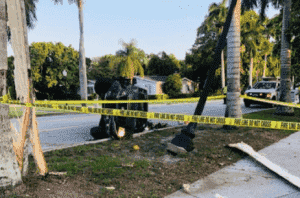
A Fort Myers Car Accident Lawyer at The Law Offices of Anidjar and Levine helps connect a violent collision to the psychological harm that follows, using medical records, mental health evaluations, symptom journals, and witness accounts.
Counsel manages insurer communications, challenges efforts to minimize invisible injuries, and pursues compensation for therapy, medication, lost income, and reduced quality of life. Prompt legal guidance also helps preserve evidence, protect deadlines, and support treatment continuity.
The sections below explain how these claims are built and valued.
Main Takeaways
- A Fort Myers PTSD car accident lawyer documents psychological injuries and links symptoms, treatment, and daily disruption to the crash.
- Strong PTSD claims use medical records, therapy notes, symptom journals, witness statements, and employment records to show ongoing impact.
- Lawyers challenge insurer tactics that minimize invisible injuries, request excessive records, or dispute whether the accident caused PTSD.
- To recover compensation, you must prove another party’s negligence caused the crash and substantially contributed to your PTSD.
- An attorney can pursue damages for counseling, medication, lost income, and other expenses while preparing for settlement or trial.
How We Can Help With Your Fort Myers PTSD Car Accident Injury Claim
Navigate through the aftermath of a serious collision with informed legal support, as a Fort Myers PTSD car accident lawyer can help an injured person pursue compensation for the psychological harm caused by another party’s negligence.
Legal counsel can assist by organizing records, documenting symptoms, and presenting a clear account of how trauma has affected daily responsibilities, relationships, and the ability to care for others. The firm may coordinate with qualified professionals who understand PTSD and guide an injured person toward practical coping strategies to support stability during the claims process. Attorneys also communicate with insurers, manage deadlines, and protect clients from tactics that minimize invisible injuries. When appropriate, they may identify treatment resources, including support groups, to encourage continued recovery and community connection. Throughout the claim, the focus remains on service, dignity, and careful advocacy.
This approach helps injured individuals seek financial relief while preserving energy for recovery, family obligations, and meaningful contributions to those who depend on them.
Understanding Fort Myers PTSD Car Accident Injury Cases
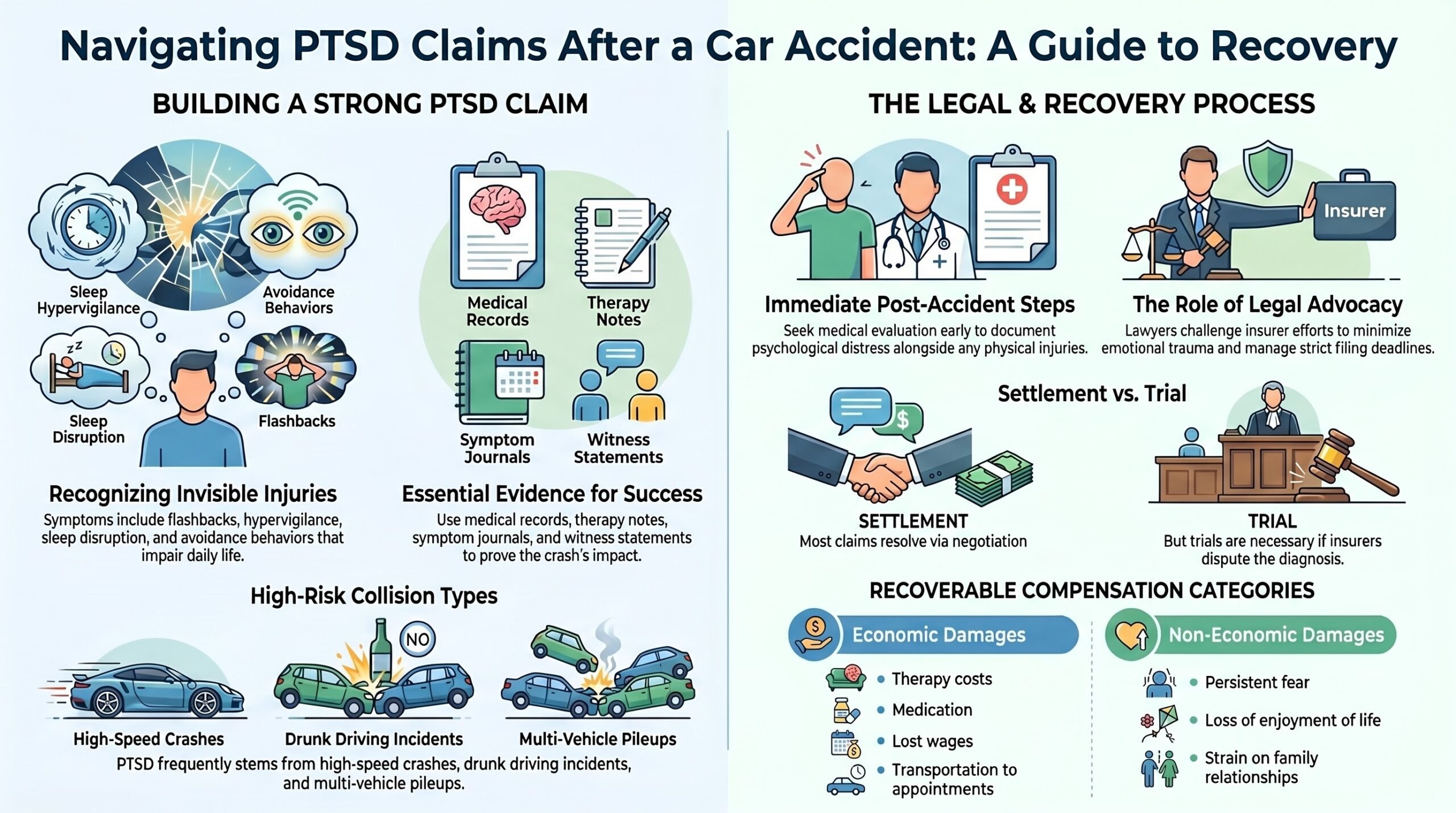
In Fort Myers, PTSD car accident injury cases often involve more than visible harm, because psychological trauma may develop after a violent collision even when physical injuries appear limited or recover with time. These claims center on how fear, intrusive memories, sleep disruption, and heightened alertness affect daily function, family relationships, and the ability to work or serve others consistently.


A careful review usually considers medical records, mental health evaluations, witness observations, and the timeline of symptoms after the crash. Documentation may show the need for counseling, medication, trigger management, and structured support designed to restore stability. Legal evaluation often examines whether the accident substantially contributed to the condition and whether losses include treatment costs, reduced earnings, and diminished quality of life. Strong cases also recognize that recuperation is not linear.
With appropriate care, many individuals build post-traumatic resilience, yet ongoing symptoms can still justify serious legal attention and compassionate advocacy after traumatic events.
Common Causes of Fort Myers PTSD Car Accident
OUR CONSULTATIONSARE FREE
START YOUR FREE CASE REVIEW

Several serious crash scenarios are frequently associated with PTSD after a Fort Myers car accident. High-speed collisions, drunk driving crashes, distracted driving incidents, and multi-vehicle pileups often involve sudden violence, loss of control, and lasting psychological trauma. These causes help explain why some accident victims experience significant emotional injuries in addition to physical harm.
High-Speed Collisions
Accelerating impact forces often make high-speed collisions among the most traumatic types of motor vehicle accidents in Fort Myers. When vehicles strike at highway speeds, occupants face abrupt deceleration, violent vehicle intrusion, and a heightened risk of catastrophic injury. Even when physical wounds appear manageable, the psychological aftermath may be profound and long-lasting.


These crashes often involve limited reaction time, severe property damage, and large speed differentials that intensify the force transferred to drivers and passengers. Survivors may later experience intrusive memories, hypervigilance, sleep disruption, or avoidance behaviors consistent with post-traumatic stress. Families, caregivers, and community advocates seeking to support injured individuals should recognize that emotional injuries can be as disabling as visible harm. Prompt medical evaluation, trauma-informed counseling, and careful legal guidance may help restore stability and protect recovery.
Drunk Driving Crashes
Shattering any expectation of predictable roadway behavior, drunk driving crashes often leave Fort Myers victims with both serious physical injuries and lasting psychological trauma. These collisions frequently involve delayed braking, improper lane changes, and reckless speed, creating terrifying circumstances that can trigger post-traumatic stress symptoms long after physical wounds begin to mend.
For those committed to protecting others, understanding these cases requires attention to both liability and harm. Evidence may include arrest records, witness statements, surveillance footage, and toxicology results, while questions about breathalyzer reliability can affect how impairment is evaluated. In some matters, investigation also extends to bar service practices when overserving contributed to the danger. A careful legal review helps identify responsible parties and supports victims seeking resources for medical care, counseling, and long-term recovery after devastating crashes.
Distracted Driving Incidents
Many distracted driving incidents in Fort Myers arise from conduct that diverts a driver’s eyes, hands, or attention from the road, such as texting, adjusting navigation, eating, or interacting with passengers. Even a brief lapse can prevent timely braking, lane control, or awareness of changing traffic conditions. Phone distraction remains a persistent factor, especially when drivers read messages, place calls, or use apps while moving.
These collisions can leave injured people coping with lasting emotional distress, including PTSD symptoms that disrupt work, sleep, relationships, and daily service to others. Pedestrian distraction also contributes when a driver fails to notice someone crossing, entering a driveway, or walking near traffic. Careful investigation often examines device use, witness observations, surveillance footage, and scene evidence to determine how inattention caused preventable harm and trauma.
Multi-Vehicle Pileups
Beyond collisions caused by distraction, multi-vehicle pileups in Fort Myers often occur when one act of negligence triggers a chain reaction involving several cars, trucks, or motorcycles in rapid succession. Speeding, tailgating, poor visibility, and sudden lane changes frequently combine to increase the severity of impacts and the number of injured victims.
These crashes often leave survivors facing physical injuries, shock, and lasting psychological trauma, including PTSD symptoms that may emerge well after the event. Because multiple parties, insurers, and witnesses are often involved, determining liability can be difficult and stressful for families already focused on recovery and on serving one another. Emergency response efforts may also be complicated by blocked lanes, fuel leaks, and secondary collisions. Careful legal guidance helps protect victims, preserve evidence, and support recovery with dignity.
Legal Rights of Fort Myers PTSD Car Accident Injury Victims
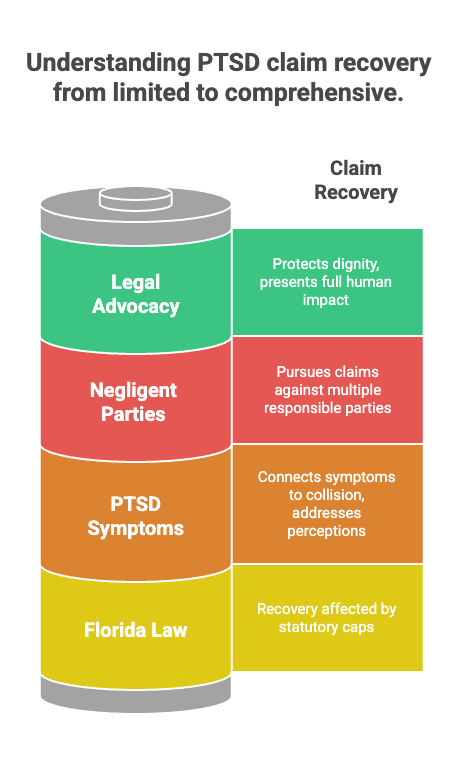
Under Florida law, individuals in Fort Myers who develop post-traumatic stress disorder after a car accident may have the right to pursue compensation when another party’s negligence caused the collision. These rights may include damages for medical care, therapy, lost income, and diminished quality of life, depending on the evidence and the relationship between the trauma and the crash.
- Florida law may allow recovery for both economic and noneconomic losses, though statutory caps can affect certain claims.
- Strong medical documentation often helps connect PTSD symptoms to the collision and address common jury perceptions.
- Victims may pursue claims against negligent drivers, employers, vehicle owners, or other responsible parties when facts support shared accountability.
- Compassionate legal advocacy can help protect dignity, present the full human impact of PTSD, and support fair outcomes that serve injured individuals and their families.
Clear legal guidance can help communities respond with care while upholding accountability and the rights of those harmed.
Steps to Take After a Fort Myers PTSD Car Accident Injury
After a Fort Myers car accident that leads to PTSD symptoms, immediate medical care is a vital first step, both for health reasons and for establishing a clear record of the injury. It is also important to document symptoms, treatment, and other evidence related to the crash, as this information may support any future claim. In many cases, contacting a PTSD car accident lawyer promptly helps guarantee that legal options are protected and that the matter is handled appropriately from the outset.
Seek Immediate Medical Care
Prompt medical attention is crucial when a Fort Myers car accident leads to symptoms of PTSD, even if physical injuries seem minor at first. Early evaluation can identify hidden trauma, address shock, and support emergency stabilization when necessary. Medical professionals may assess sleep disruption, panic, intrusive thoughts, and concentration problems alongside bodily injuries. This immediate response helps protect overall well-being and guides appropriate care.
Compassionate service to injured individuals often begins with timely treatment from emergency rooms, primary physicians, or mental health providers. A clinician may recommend counseling, medication, specialist referrals, or telehealth follow-up, depending on the person’s condition and daily needs. Seeking care without delay promotes recovery, reduces the risk of worsening symptoms, and creates a structured path toward healing for the individual and those who rely on that person.
Document Symptoms And Evidence
In the days and weeks that follow a Fort Myers car accident, careful documentation of PTSD symptoms and related evidence can play a significant role in both medical treatment and any future legal claim. Consistent records may help caregivers understand how trauma affects daily functioning, relationships, and the ability to serve family and community.
Useful documentation may include patient journals describing flashbacks, panic, avoidance, and mood changes. Sleep tracking can help show nightmares, insomnia, and disrupted rest patterns over time. Medical appointments, therapy notes, prescription records, photographs of injuries, and employment attendance records may also support a clear timeline. When possible, copies of the crash report, witness information, and communications with insurers should be preserved. Organized evidence often strengthens credibility and helps others respond with informed, compassionate support.
Contact A PTSD Lawyer
Once symptoms, treatment records, and accident-related evidence have been organized, contacting a Fort Myers PTSD car accident lawyer may help protect both legal rights and the value of a potential claim. Counsel can review liability, assess damages, and coordinate communications with insurers while the injured person focuses on recovery and family responsibilities.
An attorney may also identify deadlines, preserve essential documentation, and connect clients with community resources that strengthen stability during treatment. In service-minded households, clear legal guidance can reduce confusion and support informed decisions that benefit everyone involved. A lawyer familiar with PTSD claims may also explain how therapy records, expert opinions, and daily limitations affect compensation. When appropriate, counsel may recommend reputable support groups and other providers to help accident survivors build a practical network of care and advocacy during the legal process.
How a Fort Myers PTSD Car Accident Injury Lawyer Can Help You
Guiding a PTSD claim after a car accident often requires legal guidance that addresses both the psychological injury and the financial losses that follow. A Fort Myers PTSD car accident injury lawyer helps a claimant document trauma, connect treatment records to the crash, and present damages with clarity.
This support may include identifying therapy options, locating support groups, and gathering professional opinions explaining how symptoms affect daily functioning in family, work, and community.
- Reviews medical records, counseling notes, and crash evidence to build a credible claim.
- Calculates recoverable losses, including treatment costs, lost income, and related out-of-pocket expenses.
- Communicates with insurers to challenge minimization of emotional injuries and pursue fair compensation.
- Prepares the case for settlement or trial, while protecting deadlines and procedural requirements.
Through careful advocacy, the lawyer helps injured people seek resources that promote stability, accountability, and the capacity to continue serving others with dignity and care.
Long-Term Effects of Fort Myers PTSD Car Accident Injuries
Fort Myers PTSD car accident injuries can produce lasting emotional trauma that extends well beyond the initial collision and affects a person’s long-term mental health. These effects often disrupt daily life, including work performance, personal relationships, sleep patterns, and the ability to manage routine responsibilities. In many cases, ongoing treatment presents additional challenges, as recovery may require sustained therapy, medical support, and careful documentation of continued symptoms.
Emotional Trauma Lasting Effects
Following a serious car accident in Fort Myers, emotional trauma can persist long after physical injuries begin to recover, affecting a person’s ability to work, maintain relationships, sleep normally, and feel safe in everyday settings.
Many individuals experience chronic anxiety, intrusive memories, heightened alertness, and avoidance behaviors that continue for months or years after the collision. These symptoms may weaken emotional stability, diminish confidence, and create ongoing fear responses when reminders of the event appear. Without proper support, unresolved trauma can influence judgment, concentration, and a person’s ability to engage fully with treatment and recovery. Loved ones, caregivers, and community members often observe lasting changes in mood, trust, and emotional resilience.
Recognizing these effects early may help injured individuals pursue compassionate care, informed guidance, and meaningful resources that support long-term recovery after severe trauma.
Daily Life Disruptions
As emotional trauma continues beyond the initial aftermath of a collision, its effects often extend into nearly every part of daily life. Individuals coping with PTSD may struggle to maintain routines, concentrate at work, or manage household responsibilities with consistency. Sleep disturbances often leave them fatigued, irritable, and less able to respond patiently to others’ needs. Ordinary tasks, including driving, shopping, or attending community events, may trigger distress and avoidance. Over time, these limitations can reduce independence and participation in family, volunteer, and professional roles. Relationship strain may also develop when loved ones misinterpret withdrawal, hypervigilance, or emotional numbness.
In service-oriented households, these disruptions can affect caregiving, communication, and shared responsibilities, creating burdens that reach far beyond the injured person and impact the broader support network.
Ongoing Treatment Challenges
Over the months and years after a serious collision, treatment for PTSD often becomes a demanding and uneven process rather than a short course of care. Many survivors require sustained counseling, periodic reassessment, and careful support from providers and family members committed to their wellbeing.
Progress may stall when therapy obstacles arise, including financial strain, transportation limits, scheduling conflicts, or distrust rooted in trauma. Symptoms can also shift over time, requiring changes in approach and renewed effort. Medication management adds another layer of difficulty because dosages, side effects, and interactions must be closely monitored to maintain functioning and safety. For those seeking to serve and support injured individuals, understanding these long-term treatment demands is crucial. Consistent care, patience, and informed advocacy often remain necessary well beyond the initial recovery period.
Proving Liability in Fort Myers PTSD Car Accident Injury Cases
Establishing liability in Fort Myers PTSD car accident injury cases requires more than showing that a collision occurred. A claimant must connect another party’s negligent conduct to both the crash and the resulting psychological harm. This often involves police reports, scene photographs, vehicle damage, medical records, and witness statements that clarify how the event happened and how symptoms developed afterward.
Attorneys and courts generally examine whether a driver breached a duty of reasonable care by speeding, being distracted, being impaired, or engaging in other unsafe conduct. They also consider causation, which is especially important when PTSD symptoms emerge over time or overlap with prior trauma. Mental health evaluations, treatment timelines, and testimony from qualified professionals can help show that the accident substantially contributed to the condition.
For individuals motivated by care for family and community, careful proof of liability supports accountability and helps preserve access to needed treatment, stability, and long-term recovery resources after a serious crash.
Dealing With Insurance Companies After a Fort Myers PTSD Car Accident Injury
Once liability has been documented, the insurance process often becomes the next major obstacle in a Fort Myers PTSD car accident injury claim. Insurers may question whether emotional trauma is accident-related, minimize the severity of symptoms, or seek broad access to medical histories. A careful, service-minded approach helps protect the injured person’s dignity while keeping communications accurate and consistent.
Effective representation often focuses on organized records, clear medical support, and disciplined claims negotiation. Treatment notes, therapist opinions, and documentation showing how PTSD affects work, relationships, and daily responsibilities can strengthen the demand for fair consideration. Insurance carriers also evaluate policy limits, which may affect available compensation even when harm is substantial. For families and advocates trying to help, patience and thoroughness remain crucial. A lawyer can manage insurer correspondence, challenge unfair assumptions, and work to prevent pressure tactics from undermining a legitimate claim. This support allows the injured person to prioritize recovery and stability.
What to Expect During a Fort Myers PTSD Car Accident Injury Claim Process
A Fort Myers PTSD car accident injury claim typically begins with filing the initial claim and assembling records that document PTSD symptoms, treatment, and their effect on daily functioning. From there, the insurance investigation process generally involves reviewing medical evidence, accident-related information, and other materials submitted in support of the claim. The matter may then proceed toward settlement negotiations or, when necessary, litigation to resolve disputed issues and pursue appropriate compensation.
Filing The Initial Claim
Begin by gathering the necessary records, because the initial claim in a Fort Myers PTSD car accident case typically depends on clear documentation of both the collision and the resulting psychological injury. A claimant generally submits notice to the appropriate insurer, identifies involved parties, and provides basic facts supporting liability and damages.
Counsel often helps organize police reports, insurance information, witness contacts, and treatment records, and then presents the claim coherently to support a fair evaluation. Careful attention to statute nuances and timing strategy is important, because missed deadlines or premature submissions can weaken a case. During this stage, adjusters may request statements, authorizations, or supplemental materials. A disciplined response protects accuracy and advances the broader goal of securing resources that help injured individuals, families, and the community move toward stability.
Documenting PTSD Symptoms
Documenting PTSD symptoms requires consistent, credible records that connect the emotional injury to the Fort Myers car accident and show how the condition affects daily life. Helpful documentation often includes medical evaluations, therapy notes, medication histories, and careful symptom journaling that tracks nightmares, panic, avoidance, irritability, and disrupted routines.
Supporting records may also describe missed work, strained family relationships, and reduced ability to serve others in the home, workplace, or community. Statements from trusted relatives, coworkers, clergy, or caregivers can reinforce observed changes in behavior and functioning. Documentation should also note treatment barriers, including financial strain, transportation problems, language concerns, or fear of reliving the trauma during care. When these materials are organized and updated, they present a clearer picture of the condition’s severity, persistence, and practical consequences over time.
Insurance Investigation Process
Once symptom records are in place, the insurance investigation usually focuses on whether the PTSD diagnosis is credible, accident-related, and significant enough to justify compensation. Adjusters commonly review medical charts, emergency records, crash reports, witness statements, and employment history to compare symptoms with the collision timeline and daily functioning.
Insurers may request authorizations for prior mental health records, schedule independent psychological evaluations, and use forensic interviews to test the consistency of statements. In some claims, they also examine social media activity or consider covert surveillance when they suspect exaggeration. This process can feel intrusive, yet careful preparation and accurate reporting often help protect honest claimants. A service-minded legal team may organize records, identify unfair tactics, and make certain the investigation remains focused on facts, medical support, and the claimant’s genuine post-accident limitations and needs.
Settlement And Litigation
Many Fort Myers PTSD car accident claims move toward resolution through settlement discussions, although some proceed into litigation when liability, causation, or the extent of psychological harm remains disputed. During settlement, counsel may organize medical records, therapists’ opinions, and evidence of daily impact to present a clear measure of damages and encourage fair compensation. Effective mediation strategies can help parties evaluate risk, protect limited resources, and pursue outcomes that support treatment and family stability.
If negotiations fail, litigation may involve discovery, depositions, expert testimony, and pretrial motions addressing evidence or legal defenses. Courts may then examine whether the crash substantially contributed to PTSD and related losses. Throughout this process, careful preparation and respectful advocacy can serve injured individuals, promote accountability, and help communities respond compassionately to trauma after serious collisions.
Compensation for Fort Myers PTSD Car Accident Injury Damages
Accountability extends beyond vehicle repairs and emergency treatment, particularly when a serious crash leaves an individual with post-traumatic stress disorder that disrupts daily life, employment, and personal relationships. In Fort Myers cases, compensation may address the full impact of trauma when credible medical evidence, therapy records, and professional evaluations connect PTSD symptoms to the collision and show ongoing impairment.
A careful claim presentation may include emotional compensation for persistent fear, sleep disturbance, panic, social withdrawal, and loss of stability, which limit a person’s ability to care for family and contribute to the community. It may also consider treatment needs such as counseling, medication management, psychiatric support, and trauma-focused care expected after resolution. When symptoms interfere with work performance, concentration, attendance, or career progression, compensation can reflect reduced vocational capacity and future earning损失. Thorough documentation, consistent treatment, and reliable expert support often strengthen these claims and promote a result grounded in fairness, dignity, and service.
Economic vs Non-Economic Damages in Fort Myers PTSD Car Accident Cases
In Fort Myers PTSD car accident cases, damages are generally divided into economic and non-economic categories, each addressing a different type of loss. Economic damages typically include measurable financial harm, while non-economic damages may account for PTSD-related pain, emotional distress, and reduced quality of life. To recover either form of compensation in court, a claimant must present clear evidence that connects the accident to the documented losses.
Economic Damages Explained
Following a serious car accident, economic damages refer to the measurable financial losses tied to PTSD and related injuries, while non-economic damages address the harder-to-quantify personal effects such as emotional distress and reduced quality of life. In Fort Myers PTSD cases, these losses often include medical bills, therapy costs, prescription expenses, transportation to appointments, lost wages, and property damage. Economic damages may also cover future treatment, reduced earning capacity, and necessary vocational support when symptoms interfere with reliable employment. Careful documentation is crucial, because invoices, pay records, repair estimates, and expert opinions help establish the full financial impact.
A lawyer evaluating these claims typically seeks compensation that restores stability, supports continued care, and protects the injured person’s ability to meet family, work, and community responsibilities after a traumatic collision.
Non-Economic PTSD Losses
Many PTSD-related losses after a Fort Myers car accident do not appear on invoices or payroll records, yet they can substantially affect daily life and long-term well-being. These non-economic harms may include persistent fear, sleep disruption, irritability, social withdrawal, loss of enjoyment, and strain on family relationships. They often influence a person’s ability to care for others, participate in community life, and maintain emotional stability.
In this context, pain valuation addresses the human cost of trauma beyond measurable expenses. Non-economic losses may also involve humiliation, anxiety during travel, and the need for grief counseling after severe collisions or traumatic loss. A careful legal assessment considers how PTSD changes routines, diminishes independence, and weakens a person’s sense of safety, dignity, and peace. Such impacts can remain profound for years afterward.
Proving Damages In Court
Proof requires more than a diagnosis when PTSD damages are presented in a Fort Myers car accident case. Courts generally expect clear evidence linking the collision to measurable losses, including treatment costs, reduced earnings, and the daily effects of trauma. Medical records, therapy notes, employment documentation, and testimony from family members often help establish the scope of harm.
Economic damages are usually shown through bills, wage records, and expert projections of future care needs. Non-economic damages require careful proof of suffering, impaired relationships, and diminished quality of life. In disputed cases, forensic testimony may explain symptom severity, causation, and functional limitations. Damage apportionment can also become important when prior trauma, unrelated stressors, or preexisting conditions are alleged. Strong, service-minded advocacy focuses on accurate, credible, and well-supported proof for injured people.
When a Fort Myers PTSD Car Accident Injury Case Goes to Trial vs Settlement
Two primary paths typically emerge in a Fort Myers PTSD car accident injury case: settlement or trial, and the appropriate course depends on the strength of the evidence, the severity of the psychological harm, and the insurer’s willingness to offer fair compensation. Settlement may serve injured people efficiently when liability is clear, treatment records are consistent, and experts connect the crash to ongoing trauma.
Trial may become necessary when insurers dispute diagnosis, minimize emotional suffering, or refuse to value future care and diminished functioning. In that setting, Jury dynamics can influence how testimony from therapists, family members, and vocational experts is received. A carefully prepared case may help jurors understand invisible injuries and the daily limits they impose.
Settlement timing also matters. Early resolution can reduce stress and provide resources for treatment, yet delayed negotiations may produce stronger offers after discovery clarifies damages. The proper path is the one that best protects recovery, accountability, and long-term stability for those harmed.
The Statute of Limitations for Fort Myers PTSD Car Accident Injury Cases
In Florida, the statute of limitations can determine whether a person with PTSD after a Fort Myers car accident retains the right to pursue compensation at all. Missing the deadline can bar recovery, even when psychological harm is genuine, documented, and deeply disruptive to daily functioning and service to others.
For most negligence actions, Florida law imposes a defined filing period, but nuances of the statute may affect when that period begins or ends. The timeline can depend on the accident date, the discovery of injuries, and whether related claims involve wrongful death or uninsured motorist issues. Certain filing exceptions may apply in limited circumstances, such as cases involving minors, incapacity, or delayed identification of a responsible party. Because PTSD symptoms can emerge gradually, careful attention to medical records, diagnosis dates, and claim classification is crucial. A timely, well-documented case preserves the opportunity to seek damages for treatment costs, lost income, and the broader impact of trauma on personal and community life.
When to Contact a Fort Myers PTSD Car Accident Injury Lawyer
Once the filing deadline is understood, attention should turn to when legal counsel should be contacted for PTSD after a Fort Myers car accident. Contact is often appropriate as soon as symptoms such as panic, flashbacks, sleep disruption, or avoidance begin affecting daily responsibilities, treatment decisions, or family care.
Early consultation may also be wise when medical providers recommend post-trauma counseling, when an insurer requests statements, or when documentation of emotional harm becomes important. Prompt legal guidance can help preserve records, coordinate communication, and support a careful response that protects the injured person’s ability to pursue recovery.
Counsel may also be contacted when a household is struggling to balance service to others with the demands of trauma, appointments, and missed work. In many situations, families benefit from timely guidance while seeking clinical care and community support, including a support group resource, to promote stability, documentation, and informed decision-making after the collision.
Why You Need an Experienced Fort Myers PTSD Car Accident Injury Lawyer
Because PTSD claims after a Fort Myers car accident often depend on careful medical documentation, credible testimony, and a clear connection between the collision and the psychological harm, experienced legal representation can be important to the strength of the case. An experienced lawyer understands how insurers challenge invisible injuries and how to present records, expert opinions, and witness statements coherently and persuasively.
Skilled counsel also helps protect the injured person’s ability to pursue resources that support recovery and stability. This may include compensation connected to therapy options, medication, lost income, and the daily impact of trauma on family and community service. A knowledgeable attorney can also organize evidence demonstrating how symptoms interfere with work, relationships, and sleep, as well as practical coping strategies.
How to Choose the Right Fort Myers PTSD Car Accident Injury Lawyer for Your Case
When selecting a Fort Myers PTSD car accident injury lawyer, careful attention should be given to the attorney’s experience with psychological injury claims, familiarity with Florida motor vehicle accident law, and ability to assemble persuasive medical and testimonial evidence. A thoughtful review of prior case results, professional standing, and communication practices can help identify counsel capable of advancing a claim with diligence and compassion.
Prospective clients should also evaluate how clearly the lawyer explains strategy, deadlines, likely challenges, and client expectations throughout the process. Responsiveness matters, particularly when treatment records, expert opinions, and witness statements must be coordinated to support PTSD damages. It is also prudent to discuss fee structures at the outset, including contingency arrangements and litigation costs, so financial concerns do not hinder access to representation. An attorney who listens carefully, honors service-minded values, and provides consistent guidance may be better positioned to protect the injured person’s interests and recovery.
About The Law Offices of Anidjar & Levine
Serving injured clients across Florida, The Law Offices of Anidjar & Levine provides legal representation in car accident cases involving serious psychological harm, including post-traumatic stress disorder. The firm assists people facing emotional trauma, medical expenses, and uncertain futures by offering focused counsel and responsive communication throughout the legal process.
Its approach reflects a commitment to service, professionalism, and practical support for those harmed by another party’s negligence. Drawing from its firm history, the practice has developed procedures designed to reduce stress for clients while pursuing compensation for therapy, lost income, and other damages. Attorneys and staff emphasize accessibility, case preparation, and attention to individual circumstances. Client testimonials often describe consistent updates, respectful treatment, and a willingness to address questions promptly.
For individuals and families seeking guidance after a traumatic collision, the firm presents a structured, compassionate option grounded in advocacy, accountability, and a clear understanding of the challenges PTSD can create after a serious crash.
Frequently Asked Questions
Can Children Develop PTSD After Witnessing a Fort Myers Car Accident?
Yes, children can develop PTSD after witnessing a car accident. When child witnesses are exposed to sudden danger, injury, or death, their minds may struggle to process the event. Symptoms can include nightmares, avoidance, anxiety, irritability, and trauma play that repeats parts of the crash. Caregivers who support children effectively should watch for lasting changes in sleep, behavior, school performance, or mood, and seek qualified mental health support promptly.
Are PTSD Symptoms After a Car Accident Always Immediate?
No, PTSD symptoms after a car accident are not always immediate. Some individuals experience delayed onset, with distress emerging weeks or months later. Others show subtle symptoms at first, such as sleep disruption, irritability, or avoidance, which may be overlooked by those trying to help. Caregivers and advocates should observe changes carefully, because early recognition supports timely treatment, steadier recovery, and more effective service to those affected by trauma.
Can Pre-Existing Anxiety Worsen a PTSD Claim After a Car Accident?
Yes, pre-existing anxiety can complicate a PTSD claim after a car accident, but it does not bar recovery. Decision-makers often examine pre-existing symptoms and the comparative severity of the person’s condition before and after the collision. When records, evaluations, and credible observations show a clear worsening tied to the accident, the claim may remain strong. Careful documentation helps guarantee the injured person receives fair consideration and meaningful support.
Do I Need a PTSD Diagnosis Before Speaking With a Lawyer?
No, a person does not need a formal PTSD diagnosis before speaking with a lawyer. Early legal guidance can help protect the legal timeline, preserve evidence, and identify what medical records may later support the claim. An attorney can also advise on documenting symptoms, treatment, and daily limitations. Prompt consultation often benefits the injured person and others involved by reducing preventable errors while the medical evaluation continues after the accident.
Can Social Media Posts Affect My PTSD Car Accident Case?
Yes, social media posts can affect a PTSD car accident case. Insurers and defense counsel may review online activity for statements, photos, or interactions that appear inconsistent with reported symptoms. Careful evidence preservation is crucial, because deleted content may create additional problems. Privacy concerns also matter, yet private accounts are not always beyond discovery. In many cases, expert testimony helps explain why a person’s online presentation may not reflect actual psychological injury.
—————————
PTSD after a car accident can affect every aspect of a victim’s life, and pursuing compensation often requires clear evidence and informed legal guidance.
A Fort Myers Car Accident Lawyer can evaluate the claim, protect the victim’s rights, and seek recovery for both emotional and financial losses.
Anidjar and Levine assists injured individuals with focused representation, helping them move forward through a process that demands careful attention and experienced advocacy.