

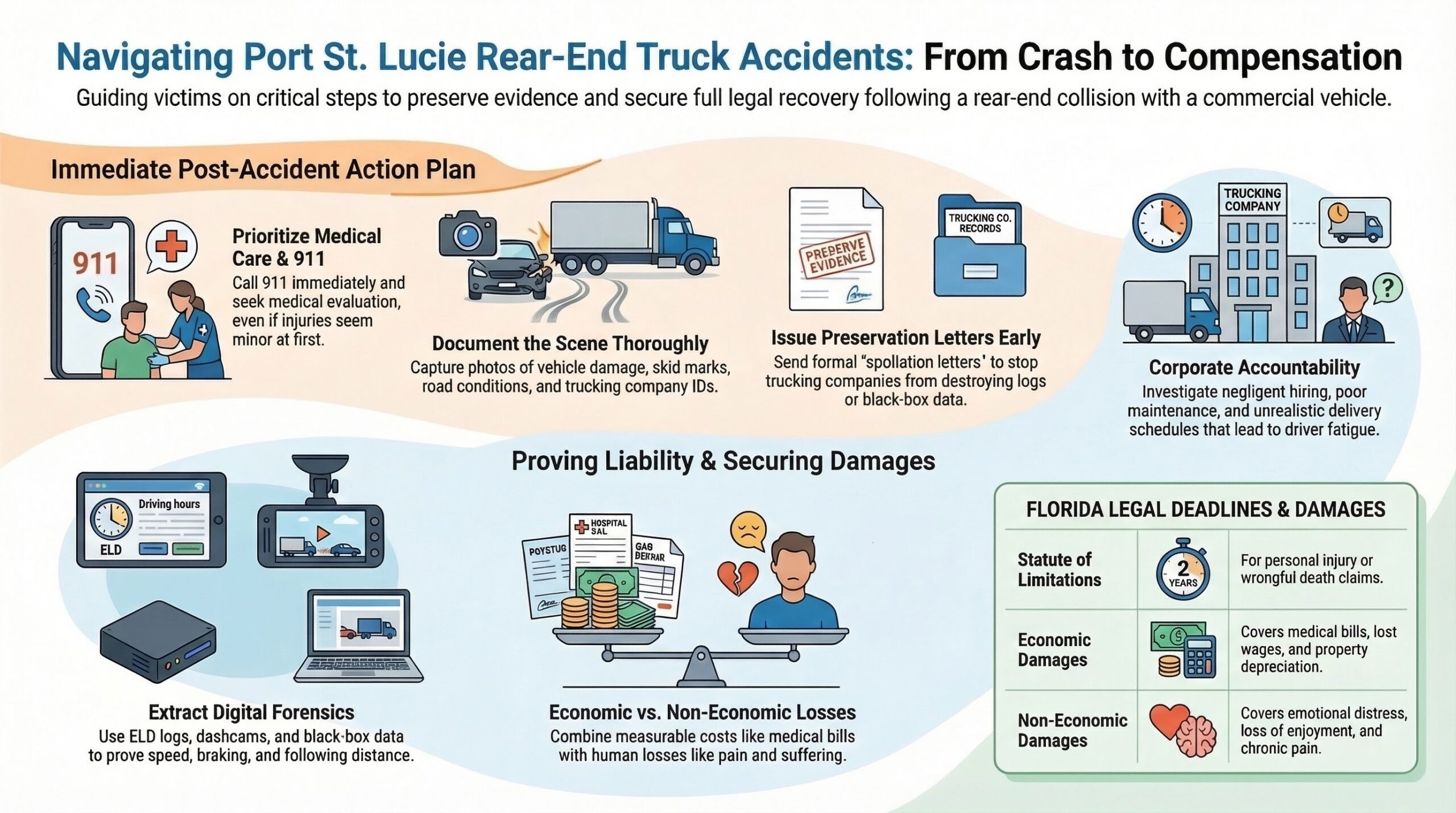
We handle Port St. Lucie rear-end truck accident claims by acting fast to preserve crash reports, photos, witness statements, dashcam footage, and electronic logging and black-box data.
At the Law Offices of Anidjar and Levine, we send preservation letters to stop record loss, investigate vehicle damage and maintenance issues, and use digital forensics to prove speed, braking, and following distance.
We document medical care, lost income, and future needs, then negotiate firmly or litigate when required.
Learn more from a Port St. Lucie Truck Accident Lawyer and continue for critical steps and timelines.
Main Takeaways
- A Port St. Lucie rear-end truck accident lawyer preserves critical evidence fast, including crash reports, dashcam video, ELD logs, and black-box data.
- They send spoliation letters to secure driver logs, dispatch records, maintenance files, GPS history, and 911 recordings before the records are altered.
- They investigate liability factors like distracted driving, tailgating, speeding, brake failure, poor maintenance, and weather or road-design conditions.
- They document damages through medical records, bills, lost wages, and future care needs, directly linking injuries and long-term effects to the collision.
- They build a demand package or lawsuit using experts, scene reconstruction, chain-of-custody documentation, and evidence of corporate policies on hiring, training, and scheduling.


How We Can Help With Your Port St. Lucie Rear-End Truck Accident Claim
Although a rear-end truck crash may look straightforward, we recognize these claims often turn on evidence that trucking companies and insurers move quickly to control.
We act promptly to secure crash reports, photographs, dashcam footage, and electronic logging data, and we send preservation letters to prevent spoliation.
We move fast to secure key evidence and send preservation letters to stop trucking companies from destroying or “losing” records.
We also coordinate with qualified professionals to document vehicle damage and connect your injuries to the collision through clear medical records.
We handle all insurer communications, so you don’t have to manage pressure, recorded statements, or shifting explanations.
We calculate your full losses, including treatment needs, lost income, and the daily impact on your family, and then we pursue a demand grounded in verifiable evidence.
If negotiations stall, we prepare the case for litigation and keep you informed at each step.
To serve you well, we offer Multilingual Support and Virtual Consultations, making access easier while you focus on recovery and stability.
OUR CONSULTATIONSARE FREE
START YOUR FREE CASE REVIEW

Understanding Port St. Lucie Rear-End Truck Accident Cases
Rear-end truck collisions in Port St. Lucie often raise intricate questions about liability, damages, and the evidence needed to support a claim.
We help you understand how these cases are evaluated by reviewing crash reports, vehicle damage patterns, and electronic data that may show speed, braking, and following distance.
We also consider Weather Effects, because rain, glare, and reduced visibility can change stopping distances and shape how investigators interpret a driver’s actions.
We’ll evaluate Road Design as well, since lane merges, short on-ramps, work zones, and signal timing can influence traffic flow and the space drivers have to react.
To serve you well, we focus on documenting injuries, linking medical findings to the collision, and calculating losses, including treatment costs, lost income, and future care needs.
With a clear, evidence-based approach, we can present your situation accurately and credibly.
Common Causes of Port St. Lucie Rear-End Truck Accidents
When we evaluate Port St. Lucie rear-end truck accidents, we often find that preventable driver choices and equipment issues play a central role.
We’ll explain how distracted truck driving, following too closely, speeding, or aggressive driving can eliminate safe stopping distance and lead to sudden, forceful impacts.
We’ll also address brake failure and poor maintenance, which can turn a manageable traffic slowdown into a serious collision.
Distracted Truck Driver
Losing focus for even a few seconds can turn a routine drive in Port St. Lucie into a serious rear-end truck crash.
Distractions often include mobile devices, dispatch messages, navigation adjustments, eating, or reaching for equipment.
When a driver’s attention shifts, reaction time shrinks, and heavy vehicles need far more distance to respond safely.
We help you identify whether logs, phone records, or onboard data show in-cab distraction at the crucial moment.
Strong Driver Monitoring policies can deter risky behavior, and documented violations may support accountability.
We also examine Cockpit Ergonomics because poorly placed controls, alerts, or storage can invite unsafe multitasking.
Following Too Closely
Driver distraction often reduces a trucker’s awareness of the space ahead, and that same lapse frequently shows up as following too closely.
When a driver fails to maintain safe vehicle spacing, a routine stop can turn into a rear-end impact, because a loaded truck needs substantial distance to react and brake.
We often see this pattern in congested Port St. Lucie traffic, where small gaps close quickly and leave no margin for error.
Tailgating psychology also plays a role, as some drivers misjudge stopping distance or feel pressured to keep pace, even when conditions demand more room.
If you were hit from behind, we can help document spacing failures through crash data, dash footage, and witness statements, then pursue accountability.
We focus on safety for everyone.
Speeding And Aggressive Driving
Although traffic often flows faster than posted limits on Port St. Lucie roads, speeding and aggressive driving can turn a routine trip into a rear-end truck collision.
When drivers rush, they shorten decision time, extend stopping distance, and reduce the margin for error around heavy commercial vehicles.
Aggressive lane changes, sudden cut-ins, and tailgating often escalate into road rage, which further undermines judgment and invites risky moves near a truck’s blind spots.
We encourage you to prioritize service to others by giving trucks room, signaling early, and keeping a steady pace, even when surrounding traffic pressures you to hurry.
Where available, speed deterrents like reduced-speed zones, signage, and enforcement reminders support safer choices and help prevent needless harm.
Brake Failure And Maintenance
Maintaining commercial truck brakes demands consistent inspections, timely repairs, and strict compliance with safety standards, because even minor wear can trigger a rear-end crash in Port St. Lucie.
When carriers delay service, pads glaze, lines leak, and air systems lose pressure, leaving drivers without the stopping distance they must protect others on the road.
We often see neglected drums and rotors, where missed Rotor Resurfacing increases heat, vibration, and fade during routine braking.
Modern fleets also rely on electronic safeguards, yet skipped ABS Calibration can cause wheel lockup, longer stops, or unstable braking on wet pavement.
If you’ve been hit from behind, we’ll examine maintenance logs, inspection reports, and component condition to identify preventable failures and pursue accountability for the harm done.


Legal Rights of Port St. Lucie Rear-End Truck Accident Victims
When a rear-end collision involves a commercial truck in Port St. Lucie, we want you to know you still have clear legal rights, even if the trucking company acts quickly to control the narrative.
We can pursue compensation for medical costs, lost income, property damage, and pain and suffering, while also demanding accountability that helps protect others on our roads.
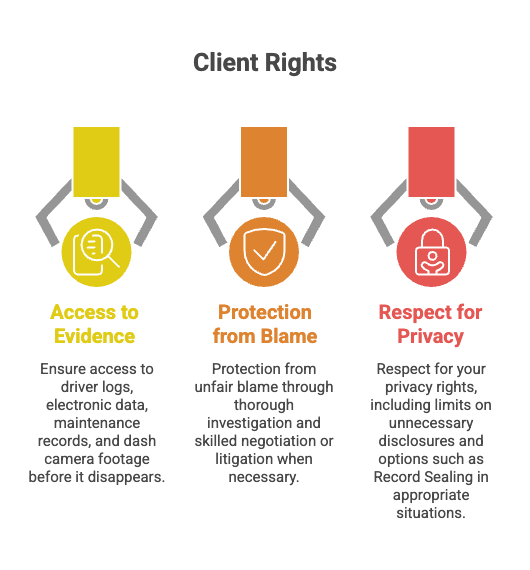
Your rights commonly include:
- Access to evidence, including driver logs, electronic data, maintenance records, and dash camera footage before it disappears.
- Protection from unfair blame, through thorough investigation and skilled negotiation or litigation when necessary.
- Respect for your Privacy Rights, including limits on unnecessary disclosures, and options such as Record Sealing in appropriate situations.
We’ll focus on preserving your dignity, aligning your claim with Florida law, and insisting on a fair result that supports your recovery and community safety.
Steps to Take After a Port St. Lucie Rear-End Truck Accident
After a Port St. Lucie rear-end truck accident, we’ll help you take the right steps in the right order, starting with immediate safety and prompt medical care.
We should then document the crash scene thoroughly, including photos, witness information, and crucial details that may support your claim.
Finally, we’ll guide you in notifying the proper insurers and contacting counsel early, so we can protect your rights and avoid preventable mistakes.
Ensure Safety And Medical Care
Although the shock of a rear-end collision with a truck can make it tempting to focus on property damage or fault, we should prioritize safety and medical care first.
If we can do so without risk, we’ll move ourselves and passengers out of traffic, activate hazard lights, and keep a calm, steady presence for others who may be shaken.
We should call 911 and request medical evaluation, even when pain seems minor, because delayed symptoms are common after impact.
If someone is seriously hurt, we won’t move them unless immediate danger requires it, and we’ll follow dispatch instructions while monitoring breathing and responsiveness.
For follow-up, we’ll use Telemedicine Access when appropriate, and we’ll pursue Preventive Education to recognize warning signs and protect our community.
Document The Accident Scene
Once we’ve secured everyone’s safety and requested medical help, we should begin documenting the accident scene
while details remain clear and evidence is still available.
We can take wide and close photos of vehicle positions, damage, skid marks, debris, road defects, traffic signals, and weather conditions, then record short videos that capture the full layout.
We should note the time, location, and lane directions, and gather names and contact information for witnesses who are willing to help others by sharing what they observed.
If a truck is involved, we can photograph company markings and identifying numbers visible on the cab or trailer.
As we collect images and notes, we should promptly create digital backups and maintain careful file organization so that materials remain accessible and unaltered.
Notify Insurers And Counsel
Before memories fade and reporting deadlines tighten, we should notify our auto insurer and, if applicable, the trucking company’s insurer with a clear, factual account of the rear-end crash, then promptly consult counsel to protect our interests.
We’ll share only what we can confirm, avoid guessing, and keep copies of every claim number, email, and recorded statement request.
When we involve counsel early, we can send Preservation letters that direct carriers and the trucking company to retain driver logs, black-box data, dispatch records, and maintenance files.
This step supports accountability and helps us serve others by keeping the process honest and evidence-based.
Counsel can also address Coverage disputes, coordinate medical billing issues, and stop unfair pressure to settle quickly.
With timely notice and guided communication, we protect our recovery and our community’s safety.
How a Port St. Lucie Rear-End Truck Accident Lawyer Can Help You
When a rear-end collision involves a commercial truck, we can step in quickly to protect your interests and start building a claim that reflects the true scope of your losses.
We coordinate evidence collection, preserve vital records, and handle insurer contact so you can focus on caring for your family and community.
Through consistent client communication, we keep you informed, confirm next steps, and answer questions with clear timelines.
We also provide fee transparency from the start, so you understand costs, expectations, and the value of each action we take on your behalf.
- We secure crash reports, witness statements, and electronic trucking data before it disappears.
- We document medical bills, wage disruption, and property damage to support accurate demands.
- We negotiate firmly, and if needed, prepare for litigation with organized filings and credible experts.
Our goal is simple: serve you with disciplined advocacy and reliable guidance throughout the process.
Long-Term Effects of Port St. Lucie Rear-End Truck Accident Injuries
We’ll explain how a rear-end truck crash in Port St. Lucie can leave you with chronic pain and reduced mobility that disrupts work, daily tasks, and long-term independence.
We’ll also address traumatic brain injury effects, including lasting headaches, memory problems, and diminished concentration that can change how you function over time.
Finally, we’ll cover emotional trauma and PTSD, since anxiety, sleep disruption, and persistent fear can continue long after the physical injuries begin to heal.
Chronic Pain And Mobility
Although rear-end truck collisions often look straightforward on a crash report, the long-term impact on chronic pain and mobility can be multifaceted and persistent.
We often see pain that lingers in the neck, back, hips, or knees, limiting range of motion and making routine tasks harder.
When you’re committed to serving your family, coworkers, or community, these limits can feel especially disruptive.
We encourage prompt evaluation, consistent treatment, and careful documentation because chronic symptoms may fluctuate and still reduce your functional capacity.
Rehabilitation can include strengthening, stretching, and Gait training to restore balance and reduce compensatory strain.
Some clients benefit from Adaptive equipment, such as braces, canes, or ergonomic supports, which can prevent setbacks and promote independence.
We’ll help clarify the medical and legal picture.
Traumatic Brain Injury Impacts
Clarity can fade after a rear-end truck collision, even if the head injury seems mild at first.
When the brain absorbs sudden force, you may notice slowed thinking, memory gaps, or reduced attention that disrupts work, caregiving, and community service.
We often see headaches, sleep disruption, and fatigue linger, limiting your ability to volunteer or support others consistently.
Sensory disorders can also appear, including light sensitivity, ringing in the ears, or balance problems that make daily tasks unsafe.
With prompt evaluation, we can document these changes and connect you with Cognitive rehabilitation, which targets concentration, planning, and problem-solving through structured therapy.
We’ll also track medication needs, follow-up imaging, and accommodations that protect your long-term independence and reliability.
Emotional Trauma And PTSD
After a rear-end truck crash, emotional shock can outlast visible injuries, and it often develops into long-term anxiety, depression, or post-traumatic stress disorder (PTSD).
You may notice intrusive memories, sleep disruption, irritability, or a constant sense of danger, even when physical recovery progresses.
We encourage you to treat these symptoms as legitimate injuries because early care can prevent chronic impairment.
Proven Coping Strategies include trauma-informed counseling, structured breathing, gradual exposure to driving, and consistent routines that restore stability.
Support Groups can also help, offering practical guidance and accountability while reducing isolation.
When you serve others, you may minimize your own needs, yet sustainable service requires personal recovery.
We’ll help you document emotional harm, coordinate care, and pursue compensation that fully reflects long-term consequences.
Proving Liability in Port St. Lucie Rear-End Truck Accident Car Accident Cases
When a rear-end crash involves a commercial truck in Port St. Lucie, we must prove more than simple inattention, because trucking rules, logbooks, and maintenance duties often shape fault.
We start by securing the crash report, scene photographs, and witness accounts, then we move quickly to preserve onboard data, driver hours records, and inspection histories.
These materials help us show whether the driver followed safe stopping distances, managed speed, and remained alert in traffic.
We also evaluate Corporate Liability, since unsafe hiring, poor training, unrealistic delivery schedules, or deferred repairs can push a driver into dangerous choices.
To connect facts to standards, we often rely on Expert Testimony from accident reconstructionists and trucking-safety professionals, who can explain braking performance, visibility, and stopping time.
By building a clear, service-minded case, we help you pursue accountability that can protect others on our roads.
Dealing With Insurance Companies After a Port St. Lucie Rear-End Truck Accident
Although a rear-end truck crash may look straightforward, insurance companies often move quickly to shape the narrative and limit what they pay.
We help you respond with care, because serving your family’s stability and your community’s well-being matters.
We recommend you report the collision promptly, stick to accurate facts, and avoid recorded statements until we review them.
We also gather medical documentation, repair estimates, and witness details so the adjuster can’t minimize harm or shift blame.
When insurers delay, deny, or pressure you into a low settlement, we watch for bad faith conduct and preserve evidence of it.
We also address subrogation issues early, including health insurers or benefit plans seeking reimbursement from any recovery.
By coordinating communications and documenting every exchange, we protect your voice, your time, and the resources you need to recover and continue serving others.
What to Expect During a Port St. Lucie Rear-End Truck Accident Claim Process
We’ll walk you through what to expect in a Port St. Lucie rear-end truck accident claim, starting with the initial claim filing and the critical evidence collection steps that can shape your case.
We’ll then explain how negotiation typically unfolds, what drives settlement value, and when it makes sense to press for stronger terms.
If the insurer won’t resolve the claim fairly, we’ll outline the litigation timeline so you can plan for the phases ahead with clear expectations.
Initial Claim Filing
Before a rear-end truck accident claim in Port St. Lucie can move forward, we’ll help you complete the initial filing with accuracy and respect for everyone involved.
We start by confirming the correct insurer or liable parties, then prepare a clear notice of claim that outlines basic incident details and the relief requested.
Many carriers now require online submissions through Filing Portals, and we’ll make certain each field is complete, consistent, and timely.
When forms must be executed, we’ll guide you through Digital Signatures and authorization language, so you don’t unintentionally waive important rights. A
fter submission, we track acknowledgments, claim numbers, and communication deadlines, and we coordinate professional updates so you can focus on recovery and serving your family and community.
Evidence Collection Steps
After the claim is filed and assigned, the next phase focuses on building a reliable factual record through disciplined evidence collection.
We’ll guide you through securing photographs, roadway measurements, and vehicle inspections, while promptly requesting the police report and any 911 recordings.
We also obtain witness statements early, because memories fade and timelines matter.
To protect others and promote accountability, we emphasize Chain Preservation for every item we collect, including repair invoices, medical records, and physical parts retained from the vehicles.
When available, we pursue Digital Forensics, such as electronic logging device data, dash camera footage, GPS history, and post-crash downloads from onboard systems.
We’ll coordinate with experts as needed, document your injuries and treatment, and maintain a clear, trustworthy evidence index throughout the process.
Negotiation And Settlement
Once the evidence file is organized and the claim moves into active review, negotiation becomes the stage where insurers test the strength of liability proof and the value of your damages.
We present a demand package, document medical needs, wages, and future care, and we counter low offers with clear comparisons to similar outcomes and the trucking company’s safety obligations.
You’ll see offers move in steps, and we’ll explain each number so you can decide with confidence and integrity.
If settlement becomes appropriate, we’ll review the release language, ensure you understand the Confidential Terms, and confirm who pays any outstanding liens.
We’ll also discuss Tax Implications, since certain damage categories may be treated differently.
Our goal is a resolution that supports your recovery and protects your ability to serve others.
Litigation Timeline Overview
Settlement talks can resolve many rear-end truck accident claims in Port St. Lucie, yet we prepare you for litigation when insurers refuse fair value.
We begin by filing the complaint, serving the defendants, and securing critical evidence, including driver logs, maintenance records, and electronic data.
Next, we move into discovery, where we exchange documents, take depositions, and consult experts to clarify fault and damages.
The court then issues an order that controls motion deadlines and sets parameters for court scheduling, so we track every date and keep you informed.
We may attend mediation or a pretrial conference, and we file targeted motions to narrow disputed issues.
If trial becomes necessary, we present your story with discipline, always aiming to protect your recovery and serve your family.
Compensation for Port St. Lucie Rear-End Truck Accident Damages
Calculating the full value of a rear-end truck collision in Port St. Lucie begins with documenting every loss and linking it to the crash with clear, credible evidence.
We work with your doctors, employers, and qualified experts to assemble records, timelines, and estimates that insurers can’t easily dismiss.
We also secure black box data, logs, and video when available, because early proof protects your ability to recover fair compensation.
When misconduct goes beyond negligence, we may pursue Punitive damages to promote safer conduct and protect others on our roads.
If long-term needs require stability, Structured settlements can deliver predictable payments while reducing the risk of funds being exhausted too quickly.
We negotiate assertively, but we also prepare every case as if it will be tried, since that posture often drives meaningful settlement offers.
Throughout, we keep you informed, so you can make decisions with confidence and serve your family well.
Economic vs Non-Economic Damages in Port St. Lucie Rear-End Truck Accident Cases
We’ll distinguish economic damages, such as medical bills, lost wages, and future care costs, from non-economic damages, including pain and suffering, mental distress, and loss of enjoyment of life after a Port St. Lucie rear-end truck crash.
We’ll explain how each category affects the value of your claim, and why accurate documentation and credible testimony matter.
We’ll also outline how we prove damages through records, expert opinions when needed, and clear links between the collision and your losses.
Economic Damages Overview
Accountability often begins with separating what a rear-end truck crash in Port St. Lucie costs in measurable dollars from everything else.
Economic damages focus on losses we can document with records, invoices, and credible estimates, so you can restore stability while continuing to serve your family and community.
We’ll typically pursue medical bills, future treatment costs, rehabilitation, prescription expenses, and mileage for necessary care.
We also calculate lost wages, reduced earning capacity, and the value of used leave time, supported by employer and payroll documentation.
Property damage includes repair or replacement, towing, rental costs, and careful Depreciation Calculations when a vehicle loses value after repairs.
We also consider Tax Implications for settlement allocations, so recovery reflects your true net loss.
Non-Economic Damages Explained
Although economic damages show what a rear-end truck crash in Port St. Lucie costs in dollars, non-economic damages address the human loss that can’t be tallied on a bill.
We focus on how pain, suffering, emotional distress, inconvenience, and loss of enjoyment of life can follow you long after the vehicles are repaired.
These harms often affect families as well, changing routines, relationships, and the ability to serve others in work and community.
Because these losses are subjective, Jury perceptions can influence how value is assigned, even when the impact is profound.
In serious cases, Expert testimony may clarify how injuries alter daily function, sleep, and mental health, helping assure the claim reflects the full scope of what was taken.
Proving Damages In Claims
Non-economic losses may be deeply personal, but a claim in a Port St. Lucierear-end truck case must translate them into provable damages.
We document economic losses with medical records, billing ledgers, wage statements, and employer verification, then project future care and reduced earning capacity through Expert Testimony.
We also prove non-economic harm by connecting symptoms to daily limits, using treatment notes, pain journals, and statements from family or caregivers who’ve seen the change.
Our Deposition Strategy focuses on clear timelines, consistent descriptions, and accountability from the driver and carrier representatives, so the record supports both kinds of damages.
When we build the file carefully, you’re better positioned to recover funds that restore stability and help you keep serving others in your community.
When a Port St. Lucie Rear-End Truck Accident Case Goes to Trial vs Settlement
When we evaluate a Port St. Lucie rear-end truck accident case, we compare the settlement value against the demands of trial.
We pursue settlement when liability is well supported, damages are documented, and the insurer shows readiness to negotiate in good faith.
Settlement can provide funds more quickly for medical care, vehicle replacement, and family stability, allowing you to focus on recovery and service to others.
We prepare for trial when the carrier denies fault, minimizes injuries, or refuses to address future needs.
Trial also becomes necessary when essential evidence must be presented under oath, or when accountability requires a public forum despite the risk of public exposure.
We’ll also weigh jury dynamics, including how jurors may view commercial safety rules, company conduct, and your credibility.
Throughout, we keep your goals central, explain risks and costs, and recommend the path that best protects long-term well-being and community safety.
The Statute of Limitations for Port St. Lucie Rear-End Truck Accident Cases
Because deadlines can determine whether you recover anything at all, we treat Florida’s statute of limitations as an essential starting point in every Port St. Lucie rear-end truck accident case.
In most situations, you must file a personal injury lawsuit within two years of the crash, and a wrongful death claim generally follows the same two-year window from the date of death.
These filing deadlines matter because missing them can bar the court from hearing your claim, regardless of fault or the seriousness of your injuries.
We also review whether tolling exceptions may apply, since certain facts can pause or extend the time to sue.
Examples can include a defendant who can’t be located, fraud that hides a cause of action, or other circumstances recognized by Florida law. We keep these rules in focus so you can pursue accountability and protect the resources your family needs to serve others.
When to Contact a Port St. Lucie Rear-End Truck Accident Lawyer After a Port St. Lucie Rear-End Truck Accident
Although you may feel pressured to “wait and see” after a Port St. Lucie rear-end truck accident, we encourage you to contact a lawyer as soon as you’re medically stable and safe.
Early guidance helps us preserve time-sensitive details, identify witnesses, and document vehicle damage before repairs or weather erases critical evidence.
If you notice worsening pain, missed work, or new symptoms, that’s another clear signal to reach out promptly, because delays can complicate accurate documentation.
We also recommend calling when an insurer asks for a recorded statement, requests broad medical authorizations, or proposes a quick settlement.
If press inquiries arise, we can help you respond in a way that protects your interests and respects the community’s need for accurate information.
Just as important, we’ll discuss online privacy, including what not to post and how to handle messages that could be used against you.
Why You Need an Experienced Port St. Lucie Rear-End Truck Accident Lawyer
Early contact helps us protect evidence and manage insurer pressure, but the next question is who should handle a rear-end truck claim once the stakes become clear.
We need experienced counsel because truck collisions rarely involve only two drivers; they can involve a carrier, a broker, a maintenance vendor, and multiple insurers, each shifting blame.
We track federal and state safety rules, demand driver logs and onboard data, and preserve scene and vehicle evidence before it disappears.
We also calculate the full cost of harm, including future care, reduced earning capacity, and the practical burdens families shoulder while serving their community.
With a disciplined strategy, we negotiate from a position of strength and, when necessary, litigate efficiently to secure fair compensation.
Our work supports more than a single case; through Public awareness and Legislative advocacy, we promote safer practices, deter repeat violations, and help protect others on Port St. Lucie roads.
How to Choose the Right Port St. Lucie Rear-End Truck Accident Lawyer for Your Case
When a rear-end truck crash becomes a contested claim, choosing the right Port St. Lucie rear-end truck accident lawyer begins with focused questions.
We should look for proven experience with commercial carriers, crash reconstruction, and federal trucking regulations, because these cases demand disciplined investigation and early preservation of evidence.
We can also ask how the lawyer approaches teamwork with medical providers and community resources, so our recovery supports both our family and those who rely on us.
Next, we should evaluate fee structures in writing, including contingency percentages, litigation costs, and how expenses are handled if the case doesn’t resolve.
We’ll also gauge communication style, such as who updates us, how often, and whether we can reach the team after hours.
Finally, we should review results in similar rear-end truck matters and confirm the lawyer’s readiness to take a case to trial when fair settlement efforts fail.
About The Law Offices of Anidjar & Levine
A strong legal team can make the difference between a quick denial and a well-supported recovery, and that’s the standard we bring at The Law Offices of Anidjar & Levine.
We represent people in Port St. Lucie after rear-end truck crashes with disciplined preparation, clear communication, and respect for your goals.
Our firm’s history reflects consistent advocacy for injured clients, built through careful casework, responsive service, and a commitment to community well-being.
We investigate collisions, preserve essential records, and coordinate with medical providers so your claim is supported by reliable evidence and clear damages.
You’ll work with a team that returns calls, explains options, and treats your time as valuable.
We also value accountability, and client testimonials help show how we serve families during difficult adjustments.
If you want counsel that prioritizes integrity, steady guidance, and results that support your recovery, we’re ready to help you move forward.
Frequently Asked Questions
Will My Case Require Hiring Accident Reconstruction or Trucking Industry Experts?
Your case may require accident reconstruction or trucking industry experts, but we won’t know until we complete an evidence assessment.
We review crash reports, photos, vehicle data, driver logs, and maintenance records to identify disputed fault or multifactorial causation.
When gaps exist, expert selection helps us clarify speeds, braking, visibility, and compliance with safety rules.
We’ll recommend experts only when their opinions strengthen your claim and support responsible outcomes.
Can I Recover Damages if I Was a Passenger in the Rear-Ended Vehicle?
Yes, we can often recover damages even if you were a passenger in the rear-ended vehicle.
We’ll assert your passenger rights, pursue compensation from the at-fault driver or trucking company, and carefully document every loss.
You may claim medical expenses, lost wages, pain and suffering, and future care needs when supported by records.
We’ll also coordinate insurance, so your care continues without avoidable financial strain.
What if the Truck Driver Was Working for Multiple Companies or Contractors?
If the truck driver worked for multiple companies or contractors, we can pursue recovery from each entity that directed the work, controlled the route, or set safety expectations.
We evaluate vicarious liability by reviewing dispatch records, payroll data, and supervision practices, then compare them against any contract ambiguity in leases or broker agreements.
We’ll also identify negligent hiring or maintenance duties, ensuring accountability aligns with the driver’s true employment relationships.
How Do Dashcam, ELD Logs, and Black Box Data Affect My Claim?
Dashcam footage, ELD logs, and black box data can strongly support your claim by showing speed, braking, hours, and impact timing.
We’ll move quickly on data preservation, since companies may overwrite or lose records.
We also address privacy concerns by requesting only relevant segments and securing protective orders when needed.
When these sources align, we can establish fault, challenge defenses, and pursue compensation that helps you and supports those you serve.
Can I Pursue Compensation if the Crash Worsened a Pre-Existing Condition?
Yes, we can pursue compensation when a crash worsens a pre-existing condition, and we’ll focus on aggravation damages rather than your prior baseline.
We must prove medical causation through records, imaging, and treating-provider opinions that compare symptoms before and after the collision.
We’ll document added treatment, increased pain, lost capacity, and related costs, and we’ll present this evidence clearly so the claim supports fair recovery.
—————————
Rear-end truck collisions in Port St. Lucie can leave you facing serious injuries, mounting expenses, and difficult decisions.
The Law Offices of Anidjar and Levine is prepared to investigate the crash, secure crucial evidence, identify all liable parties, and pursue full compensation through negotiation or litigation.
If you act promptly, we can help protect your rights and strengthen your claim before vital proof is lost.
Contact a Port St. Lucie Truck Accident Lawyer to discuss your case, understand your options, and move forward with confidence.

