
The Law Offices of Anidjar and Levine can examine whether an Uber or Lyft driver, another motorist, vehicle owner, rideshare company, or maintenance-related entity may share liability after a Jacksonville rideshare accident. These cases often depend on app status, trip records, driver activity logs, insurance policies, and evidence showing how the crash occurred. A Jacksonville Personal Injury Lawyer may also review comparative fault, coverage disputes, and damages. The following sections explain core liability issues, evidence needs, and claim considerations.
Main Takeaways
- A Jacksonville rideshare crash lawyer can identify all potentially liable parties, including drivers, vehicle owners, companies, and other motorists.
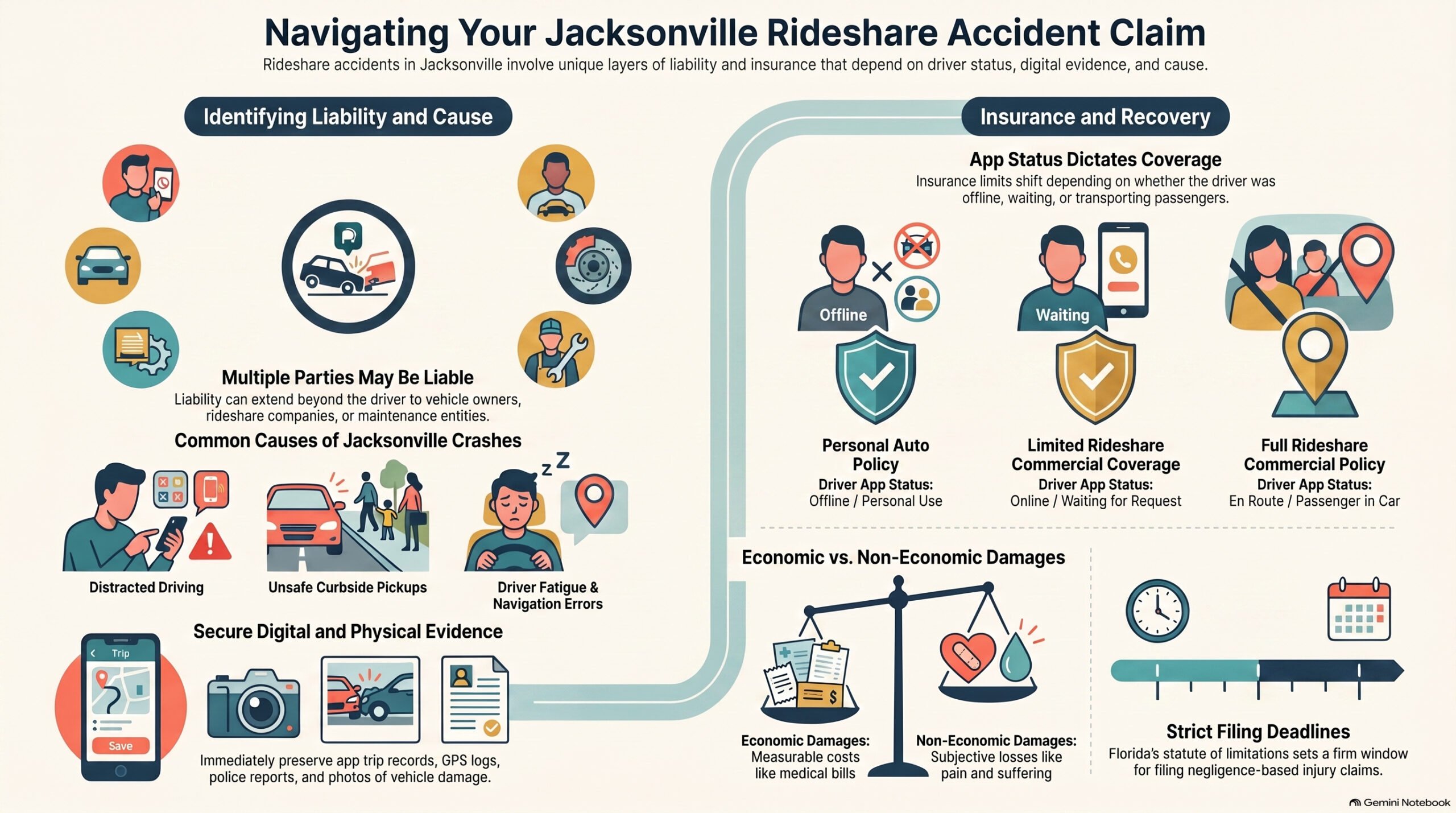
- Liability may depend on whether the rideshare driver was offline, waiting, en route, or transporting a passenger.
- Key evidence includes police reports, app trip records, driver activity logs, witness statements, vehicle damage, and medical records.
- Fault may involve distracted driving, unsafe pickups, speeding, fatigue, poor maintenance, defective parts, or dangerous road conditions.
- Insurance review should include personal policies, rideshare commercial coverage, declarations pages, endorsements, exclusions, and comparative negligence issues.


How We Can Help With Your Jacksonville Car Accident Rideshare At-Fault Parties Injury Claim
When a rideshare collision in Jacksonville raises questions about fault, insurance coverage, and the driver’s status in the app, a car accident lawyer can help identify every party that may be legally responsible. Counsel may gather police reports, app data, witness accounts, vehicle records, medical documentation, and insurance communications before key details are lost. This support can be especially important when Evidence tampering is suspected, or when digital trip information must be preserved quickly.
A lawyer may also coordinate with medical providers, assess damages, communicate with insurers, and protect the injured person from statements that could weaken the claim. For individuals committed to caring for family members, coworkers, or community responsibilities, this guidance can reduce administrative burdens during the recovery process. Counsel also monitors statute deadlines, prepares required filings, and pursues fair compensation through negotiation or litigation when necessary. Each step helps preserve accountability and supports a more orderly path toward resolution.
OUR CONSULTATIONSARE FREE
START YOUR FREE CASE REVIEW

Understanding Jacksonville Car Accident Rideshare At-Fault Parties Injury Cases
Understanding a Jacksonville rideshare accident claim begins with recognizing that fault may extend beyond the driver who caused the crash. These cases may involve rideshare companies, vehicle owners, other motorists, passengers, or entities responsible for hiring and safety practices. A careful review helps identify who owed a duty of care and how that duty may have been breached.
Rideshare background checks can become relevant when evaluating whether a company followed reasonable screening procedures before allowing a driver to transport passengers. Insurance coverage may also shift depending on whether the app was active, a ride was accepted, or a passenger was in the vehicle.
A passenger negligence analysis may be necessary when passenger conduct contributed to the circumstances of the injury or collision. For individuals committed to helping injured people regain stability, understanding these layers supports fair accountability and informed advocacy. Each case requires disciplined investigation, accurate documentation, and a balanced assessment of every party’s responsibility under Florida law.
Common Causes of Jacksonville Car Accident Rideshare At-Fault Parties
Common causes of Jacksonville rideshare accidents include distracted drivers, unsafe pickup stops, driver fatigue, and app navigation errors. These factors can create dangerous conditions for passengers, pedestrians, and other motorists, especially in congested areas or near busy curbside locations. Identifying the cause of the crash is crucial when determining which at-fault parties may bear legal responsibility.
Distracted Rideshare Drivers
Because rideshare drivers rely heavily on smartphones to accept trips, travel routes, communicate with passengers, and manage app-based alerts, distraction is a frequent factor in Jacksonville rideshare accidents. A driver who looks away to review a route change, respond to an in-app message, or monitor earnings may fail to notice slowed traffic, lane shifts, cyclists, or pedestrians. Phone notification distractions can divide attention at crucial moments, especially in busy corridors where careful service to others requires constant awareness of the roadway. Passenger communication overload may also create pressure to answer questions, clarify locations, or adjust preferences while the vehicle is moving. When distraction contributes to a crash, fault may involve the driver’s choices, platform demands, or both, requiring careful review of app data, statements, and surrounding evidence.
Unsafe Pickup Stops
When a rideshare driver stops in an unsafe location to pick up a passenger, the risk of a crash in Jacksonville can increase quickly. A sudden Pickup curbside near intersections, bus lanes, bike paths, or active driveways may force other motorists to brake, swerve, or enter opposing traffic. Passengers may also step into travel lanes before checking surroundings, creating hazards for drivers trying to act responsibly. Poor stopping choices can contribute to sidewalk collisions when vehicles mount curbs or block pedestrian paths. Near controlled intersections, traffic signal confusion may occur if a rideshare vehicle pauses where others expect it to move, especially during turning phases. Careful pickup planning helps protect passengers, pedestrians, and nearby drivers, supporting a safer transportation environment for the wider Jacksonville community and reducing avoidable harm.
Driver Fatigue
After long hours behind the wheel, rideshare drivers may experience fatigue that reduces attention, reaction time, and sound judgment on Jacksonville roads. Driver Fatigue can develop when drivers accept repeated ride requests, work late-night shifts, or balance rideshare work with other employment. Drowsy Driving may cause missed signals, delayed braking, lane drift, and poor speed control, placing passengers, pedestrians, and other motorists at risk. In severe cases, micro-sleeps can occur, causing a driver to lose awareness for seconds while the vehicle continues moving. Those brief lapses may be enough to cause serious collisions. When reviewing fault, investigators may consider driving hours, rest periods, trip records, and witness observations. Careful evaluation helps support accountability and protects the safety and dignity of injured people seeking fair recovery.
App Navigation Errors
Relying heavily on GPS guidance, rideshare drivers may make sudden or unsafe decisions when app navigation provides confusing directions, delayed route updates, or inaccurate location data. In Jacksonville traffic, Uber/Lyft Navigation can direct a driver across lanes, into restricted turns, or toward unfamiliar pickup points without adequate warning. These errors may increase the risk of rear-end collisions, sideswipes, or pedestrian injuries, especially near hospitals, schools, airports, and busy entertainment districts. App Glitches do not excuse unsafe driving, because drivers must still observe roadway conditions and protect passengers, pedestrians, and other motorists. When a crash occurs, investigators may review trip data, routing instructions, phone activity, and driver conduct to determine whether navigation issues contributed to fault, as well as company policies, driver judgment, and the duty to serve public safety responsibly.
Don’t Wait. Call Our Florida Personal Injury Lawyers Now!


Legal Rights of Jacksonville Car Accident Rideshare At-Fault Parties Injury Victims
Injured victims in Jacksonville rideshare crashes may have the right to pursue compensation when a driver, rideshare company, or another negligent party contributes to the collision. These rights may include claims for medical care, lost income, pain and suffering, disability, and related losses. Careful review of Rideshare policy coverage can help identify available insurance sources and responsible parties.
Key protections may involve:
- Access to applicable insurance based on the driver’s app status
- The right to seek medical treatment and document injuries
- Use of an Evidence preservation checklist to protect trip data
- Recovery for financial and personal losses caused by negligence
- Legal review of settlement offers before acceptance
A victim’s claim should be evaluated with attention to service, fairness, and accountability. Those assisting injured persons, including family members or advocates, can support recovery by helping preserve records, report the crash, and encourage prompt legal guidance after the incident.
Why Do Jacksonville Car Accident Rideshare At-Fault Parties Injuries Happen?
Understanding a victim’s legal rights also requires examining how rideshare crashes occur and which parties may have contributed to the harm. In Jacksonville, these injuries often arise from distracted driving, unsafe pickups, speeding, fatigue, or unfamiliarity with local traffic patterns. A rideshare driver may be monitoring the app, accepting requests, or maneuvering congested roads while carrying passengers who rely on careful service.
Other causes may involve negligent third-party drivers, poorly maintained vehicles, defective parts, or dangerous roadway conditions. Rideshare companies may also face scrutiny when background checks, driver monitoring, or safety policies are inadequate. Each factor affects Causation proof, because responsibility must be connected to the conduct that produced the injury.
These cases can become complicated when insurance coverage depends on the driver’s app status and trip phase. Disputed liability, medical documentation, and multiple insurers may also affect settlement timelines, requiring careful evaluation of each contributing factor.
What Should You Do After a Jacksonville Car Accident Rideshare At-Fault Parties Injury?
After a Jacksonville rideshare accident injury, an injured person should seek medical attention promptly, even when symptoms appear minor. Accident evidence, including photographs, witness information, and rideshare app details, should be preserved to help clarify fault and damages. A lawyer may then evaluate the available evidence, identify potentially responsible parties, and protect the injured person’s claim.
Seek Medical Attention
When a rideshare crash occurs in Jacksonville, prompt medical attention should be a top priority, even if symptoms appear minor at the scene. A physician can identify injuries that may not be immediately obvious, including soft-tissue damage, concussion symptoms, or internal injuries. Timely care also supports the injured person’s ability to recover and continue serving family, coworkers, and community responsibilities.
Medical providers may recommend prescription medications, diagnostic testing, therapy, or activity restrictions. The injured person should follow instructions carefully, attend follow-up appointments, and report any worsening condition without delay. Consistent symptom documentation and pain tracking can help providers understand recovery progress and adjust treatment when needed. Delayed care may complicate recovery, so medical evaluation should not be postponed after a rideshare-related collision in Jacksonville.
Document Accident Evidence
Because evidence can disappear quickly, a person injured in a Jacksonville rideshare accident should begin documenting the crash as soon as it is safe to do so. Photographs of vehicle positions, roadway conditions, traffic signals, skid marks, debris, and visible injuries can preserve important details for later review. The rideshare app screen, trip receipt, driver information, and communications with the platform should also be saved. If bystanders, passengers, or other drivers observed the crash, their names and contact information may support accurate Witness Statements. Police report numbers, emergency response details, and medical transport information should be recorded when available. These materials may assist insurers, investigators, and safety professionals in understanding fault, damages, and the need for Collision Reconstruction after a serious Jacksonville rideshare collision involving multiple parties.
Contact A Lawyer
Once evidence has been preserved, an injured person should consider contacting a lawyer promptly to protect the claim and address the layered liability issues common in Jacksonville rideshare accidents. Counsel can review police reports, medical records, app data, witness statements, and insurance communications to identify responsible parties and available coverage. This guidance helps prevent missed deadlines, incomplete notices, or statements that may weaken recovery. A lawyer may also coordinate Immediate evidence preservation while monitoring the Insurance claim timeline, including rideshare company reporting rules and insurer response periods. For those focused on restoring stability for family and community, legal support can reduce confusion and promote informed decisions. Early representation allows the injured person to pursue accountability while concentrating on treatment, work responsibilities, and care for others.
Critical Evidence in a Jacksonville Car Accident Rideshare At-Fault Parties Injury Case
Evidence in a Jacksonville rideshare accident case often determines which party may be liable and which insurance coverage may apply. Vital records can clarify whether the driver was logged into the app, transporting a passenger, or acting outside the rideshare platform at the time of the crash.
Important evidence may include:
- Rideshare app trip records and driver activity logs
- Driver status evidence showing online, waiting, or active ride periods
- Crash scene photographs, videos, and vehicle damage documentation
- Police reports, witness statements, and medical records
- Insurance policy proof from the driver, rideshare company, and other involved parties
Rideshare App Records
Rideshare app records often provide a detailed timeline of the trip, driver activity, passenger status, GPS movement, and communications surrounding a Jacksonville car accident. These records may include GPS tracking, trip history, metadata logs, route changes, pickup details, drop-off information, timestamps, and in-app messages. When carefully reviewed, they can help clarify where the vehicle traveled, when key events occurred, and how the ride progressed before impact. This information may assist injured passengers, other motorists, and their advocates in identifying responsible parties more accurately. Preserving these records is important because app-based data can be altered, limited, or lost over time. A lawyer may seek this evidence through preservation letters, subpoenas, or discovery requests, supporting a clearer account for those harmed and those seeking justice.
Driver Status Evidence
Driver status evidence can play a central role in determining which parties may be held responsible after a Jacksonville rideshare accident. This evidence may show whether the driver was offline, waiting for a ride request, traveling to pick up a passenger, or actively transporting one. Each status can affect available insurance coverage and the potential liability of the driver, rideshare company, or other parties. Driver identity verification is also important because records should confirm that the person using the account was the person operating the vehicle. Careful reconstruction of the event timeline can link app activity, trip acceptance, route data, and communications to the moments before impact. For those seeking to serve injured individuals, preserving this information helps support fair evaluation, accountability, and informed decisions during the injury claim process.
Crash Scene Documentation
At the collision location, thorough documentation can preserve details that later help identify at-fault parties in a Jacksonville rideshare injury case. Skid marks, vehicle resting positions, debris fields, traffic signals, lighting, weather, and road defects may clarify how the crash occurred. A careful record can also assist advocates, medical providers, and investigators who serve injured passengers or others seeking accountability.
Witness statement collection should occur promptly, while observations remain clear and before individuals leave the area. Names, contact information, and neutral descriptions of what each person saw may become valuable later. Photo timestamp verification can strengthen images of damage, injuries, rideshare vehicle markings, and roadway conditions. When documentation is organized and preserved, it supports a fair review of responsibility without relying solely on disputed recollections.
Insurance Policy Proof
Because insurance coverage can shift based on the rideshare driver’s status, policy proof is critical in identifying responsible parties after a Jacksonville rideshare accident. Records may include the driver’s personal auto policy, the rideshare company’s commercial policy, declarations pages, endorsements, and app status data indicating whether the driver was offline, waiting, en route, or transporting a passenger. This evidence helps clarify which insurer must respond and whether coverage exclusions apply. Accurate proof also supports policy limits negotiation, allowing injured parties and their advocates to evaluate available recovery with care and responsibility. When insurers dispute coverage, incomplete policy records can weaken appeals of claim denials. Thorough collection of policy materials promotes fair review, protects injured individuals, and helps service-focused legal teams pursue accountability from each party with potential financial responsibility.
Don’t Wait. Call Our Florida Personal Injury Lawyers Now!
Long-Term Effects of Jacksonville Car Accident Rideshare At-Fault Parties Injuries
Long-term injuries from Jacksonville rideshare accidents may involve chronic pain complications, emotional trauma, and lasting limits on daily function. These effects can require ongoing treatment, therapy, medication, and future medical evaluations. Identifying the at-fault parties is important when evaluating the full scope of damages, including projected care needs and long-term financial losses.
Chronic Pain Complications
Chronic pain after a Jacksonville rideshare car accident can become one of the most difficult long-term complications, especially when injuries involve the neck, back, shoulders, joints, or nerves. Persistent pain may limit caregiving, employment, transportation, and other service-focused responsibilities that require steady physical function. Whiplash flare-ups can occur weeks or months after the collision, particularly when soft-tissue injuries heal slowly or are aggravated by routine movement. Neuropathic symptoms, including burning, tingling, or radiating discomfort, may suggest nerve involvement and require careful medical evaluation. Treatment adherence remains important, as missed appointments or inconsistent therapy can complicate recovery and weaken documentation of ongoing limitations. Physicians may also impose activity restrictions to prevent further harm. These restrictions should be followed closely, especially when lifting, driving, standing, or assisting others safely.
Emotional Trauma Effects
Emotional trauma after a Jacksonville rideshare car accident can persist well beyond the initial physical recovery period, particularly when the collision involved sudden impact, serious injury, loss of control, or fear for personal safety. Survivors may experience post-crash anxiety, heightened vigilance in traffic, irritability, intrusive memories, or avoidance of rideshare travel. These symptoms can affect work, caregiving, community involvement, and the ability to serve others with steadiness and compassion. Sleep disturbance recovery may also become difficult when nightmares, pain-related worry, or fear of another collision disrupt normal rest. Emotional harm can strain family relationships, reduce concentration, and limit confidence in daily decisions. When evaluating fault and damages, these psychological effects merit careful attention, because they may meaningfully shape long-term stability and quality of life for injured passengers.
Future Medical Needs
After a Jacksonville rideshare car accident, future medical needs may become central to evaluating the full impact of injuries and identifying the parties responsible for the resulting losses. Serious harm may require ongoing physician visits, surgical follow-up, rehabilitation, medication management, mobility support, or home health assistance. Chronic Pain can limit work, caregiving, and community service, making accurate projections key for fair recovery. Medical experts may assess whether injuries will worsen, require assistive devices, or demand repeated treatment over time. Disability Planning may also be necessary when a person cannot return to prior duties or must adapt daily routines. By documenting anticipated care, costs, and functional limits, legal and medical professionals help secure that responsible parties account for both present harm and future care needs.
Proving Liability in Jacksonville Car Accident Rideshare At-Fault Parties Injury Cases
Establishing liability in a Jacksonville rideshare accident requires a careful review of how the collision occurred, who owed a duty of care, and whether that duty was breached. Relevant evidence may include police reports, app data, vehicle damage, driver statements, and medical documentation connecting injuries to the crash.
A careful investigation also considers whether the rideshare driver, another motorist, a vehicle owner, or another party contributed to the harm. Failure defenses may arise when a party claims someone did not act reasonably before or after the collision. Comparative negligence must also be assessed because fault may be apportioned among multiple parties under Florida law. Witness credibility is important, especially when accounts conflict about speed, signals, distraction, or lane position. Video surveillance from nearby businesses, traffic cameras, or dash cameras may clarify disputed facts. Strong liability evidence helps injured people seek accountability and supports fair service for those affected by preventable negligence.
Dealing With Insurance Companies After a Jacksonville Car Accident Rideshare At-Fault Parties Injury
Managing insurance communications after a Jacksonville rideshare accident requires caution because multiple policies may apply, and each insurer may seek to limit its financial exposure. The injured person may hear from the rideshare company’s carrier, the at-fault driver’s insurer, or another motorist’s insurer, each seeking information that may affect coverage. Recorded statements should be approached carefully, since incomplete answers can later be used to challenge the severity of injuries or the sequence of events.
A service-minded legal team can help protect the injured person from pressure while ensuring necessary information is shared accurately. Insurance adjusters may raise liability disputes, question medical billing, or delay review of treatment records. A Wrongful denial can also occur when an insurer misapplies policy terms or overlooks available coverage. Careful communication, organized documentation, and firm responses to insurer tactics help preserve the injured person’s ability to seek fair compensation with dignity and accountability after a serious rideshare collision.
What to Expect During a Jacksonville Car Accident Rideshare At-Fault Parties Injury Claim Process
A Jacksonville rideshare injury claim often begins with an initial case evaluation, where the facts, injuries, and available insurance coverage are reviewed. The process then focuses on identifying liable parties, which may include a rideshare driver, another motorist, or, under specific circumstances, a transportation network company. Strong injury evidence supports the claim, and careful negotiation is typically required to pursue fair compensation for medical costs, lost income, and related damages.
Initial Case Evaluation
During an initial case evaluation, a Jacksonville car accident rideshare at-fault-party lawyer reviews the facts of the collision, the rideshare driver’s status at the time of the crash, and the applicable insurance coverage. This meeting allows the injured person to present concerns, explain medical needs, and describe how the crash affected daily responsibilities and service to others.
The lawyer may examine police reports, photographs, medical records, app data, witness information, and prior communications with insurers. Early evidence preservation is often discussed because digital records and vehicle data can become harder to obtain over time. The evaluation may also address insurance dispute strategies, including how to respond to delayed answers, coverage questions, or settlement pressure while maintaining accurate documentation.
Identifying Liable Parties
In a rideshare injury claim, identifying liable parties requires a careful review of each person or company whose conduct may have contributed to the crash. Potentially responsible parties may include the rideshare driver, another motorist, a vehicle owner, or a company connected to maintenance or transportation services. Independent contractor liability may affect how responsibility is evaluated, because rideshare companies often classify drivers as independent contractors, yet coverage questions may still arise during active ride periods. The analysis also considers Florida’s comparative negligence, which can reduce recovery when more than one party is at fault. For those committed to helping injured neighbors, this step promotes accountability and fair allocation of responsibility. Clear identification of liable parties guides the claim, supports negotiations, and frames any subsequent litigation in Jacksonville.
Gathering Injury Evidence
After potential at-fault parties are identified, gathering injury evidence becomes a central part of a Jacksonville rideshare accident claim. This stage focuses on preserving facts that show how the crash harmed the injured passenger, driver, pedestrian, or other affected person. Medical records, diagnostic results, treatment plans, and physician notes help document the nature and extent of injuries. Photographs of visible wounds, damaged vehicles, road conditions, and rideshare app details may also support the claim. Witness statements can clarify how the collision occurred and whether a rideshare driver, another motorist, or another party acted carelessly. Surveillance footage from nearby businesses, traffic cameras, or residential systems may provide objective confirmation. Meticulous evidence collection serves the broader purpose of accountability, helping ensure injured people receive fair consideration under Florida law.
Negotiating Compensation Claims
Once evidence has been organized, negotiating compensation claims becomes the stage where liability, insurance coverage, and documented losses are evaluated against the facts of the Jacksonville rideshare accident. This process may involve the rideshare driver, another motorist, the transportation network company’s insurer, or multiple carriers. Each party may dispute responsibility, policy limits, or the extent of harm. Strong liability evidence, including crash reports, app data, witness accounts, and medical documentation, helps clarify fault and support a fair demand. During insurance negotiation, a lawyer may present injury costs, lost income, future care needs, and pain-related losses in a structured manner. For those committed to helping injured individuals, this stage requires patience, accuracy, and firm advocacy to pursue compensation that reflects the client’s full measurable harm.
Compensation for Jacksonville Car Accident Rideshare At-Fault Parties Injury Damages
When a rideshare crash in Jacksonville causes serious injuries, compensation may depend on which liable parties contributed to the collision and which insurance policies apply. A claim may involve the rideshare driver, another motorist, a vehicle owner, or a company whose conduct helped create unsafe conditions. Careful identification of each responsible party helps protect the injured person’s ability to seek full recovery.
Medical records often provide the foundation for proving injury damages, because they connect the crash to diagnosis, treatment, limitations, and provider recommendations. Documentation may also address future treatment, including surgery, therapy, follow-up care, medication, or assistive support. In intricate rideshare claims, this evidence can guide negotiations with insurers and support a demand that reflects the harm caused.
A Jacksonville lawyer may also evaluate policy limits, driver status within the rideshare app, and available coverage. This process helps ensure responsible parties are held accountable while injured individuals receive focused assistance.
Economic vs Non-Economic Damages in Jacksonville Car Accident Rideshare At-Fault Parties Cases
In Jacksonville rideshare accident cases, damages are commonly divided into economic and non-economic losses, each requiring careful evaluation. Economic damages may include medical expenses, lost income, and property damage, while non-economic damages may include pain and suffering and diminished quality of life. Proving these losses often depends on medical records, employment documentation, expert analysis, and evidence connecting the injuries to the rideshare collision.
Economic Damages Explained
Although every rideshare collision presents different facts, economic damages generally refer to the measurable financial losses a Jacksonville car accident victim incurs because of another party’s negligence. These losses may include ambulance charges, emergency treatment, hospitalization, surgery, rehabilitation, prescription costs, medical devices, and projected future care. They may also cover lost wages, reduced earning capacity, transportation expenses, property damage, and out-of-pocket costs paid while assisting recovery.
In rideshare cases, careful documentation supports a fair evaluation. Medical bills, employer records, repair estimates, receipts, and mileage logs help connect each loss to the crash. Insurance claim timelines can affect when records must be submitted, while evidence preservation helps protect app data, trip details, photographs, and witness information. Accurate proof enables responsible parties and insurers to assess financial harm more precisely.
Non-Economic Damages Explained
Non-economic damages often address the personal harm that cannot be measured through invoices, pay stubs, or repair estimates. In Jacksonville rideshare accident cases, these losses may include pain, emotional distress, inconvenience, disfigurement, loss of enjoyment, and harm to close personal relationships. They reflect how an injury changes daily life, including the ability to care for family, assist others, and participate in meaningful community roles. Fault types may influence how responsibility is assigned among a rideshare driver, another motorist, or other involved parties. Compensation factors can include injury severity, recovery length, lasting limitations, and the effect on ordinary activities. Because these damages are subjective, they require careful evaluation, measured presentation, and a clear connection between the collision and the human consequences experienced by the injured person.
Proving Rideshare Losses
To prove rideshare losses after a Jacksonville car accident, evidence is needed to distinguish financial harm from personal harm and to link each loss to the collision and the at-fault parties. Economic damages may include medical bills, lost wages, replacement transportation, Ride Delay Compensation, and documented out-of-pocket costs. Passengers’ Receipts, trip records, app screenshots, employer statements, and treatment invoices can support these claims with clarity.
Non-economic damages require different proof, often through medical evaluations, pain journals, witness accounts, and records showing reduced daily function. These losses may involve pain, emotional distress, inconvenience, and diminished quality of life. A careful review helps ensure injured passengers, drivers, or third parties present losses responsibly, while honoring the broader purpose of seeking fair accountability and protecting others from preventable harm.
When a Jacksonville Car Accident Rideshare At-Fault Parties Injury Case Goes to Trial vs Settlement
When liability, insurance coverage, or the value of damages remains disputed, a Jacksonville rideshare car accident injury case may proceed toward trial rather than resolve through settlement. Settlement is often pursued when the evidence, medical records, and financial losses support a fair resolution without placing the injured person through additional hardship. Florida Mediation may provide a structured setting for parties to exchange positions, clarify disputed issues, and consider practical outcomes before trial.
Trial becomes more likely when an insurer denies responsibility, undervalues injuries, or argues Comparative Negligence to reduce payment. In that setting, attorneys may present witness testimony, expert opinions, crash evidence, and documentation of medical needs or lost income. A trial can offer accountability, but it also involves delay, uncertainty, and added preparation. A careful case assessment helps determine whether settlement serves the injured person’s long-term recovery or whether trial is necessary to pursue appropriate compensation.
Florida Laws That May Affect Your Jacksonville Car Accident Rideshare At-Fault Parties Case
Florida law can substantially affect how responsibility is assigned, which insurance coverage applies, and how damages are pursued after a Jacksonville rideshare car accident. These rules guide injured passengers, drivers, pedestrians, and families seeking fair accountability while protecting the public interest.
Florida law helps determine accountability, insurance coverage, and recovery options after a rideshare accident in Jacksonville.
- Comparative Fault Rules may reduce compensation when an injured person shares responsibility for the crash.
- Florida’s no-fault system may require initial claims through personal injury protection coverage, depending on eligibility.
- Rideshare Insurance Disputes often arise over whether the driver was offline, waiting for a ride request, or transporting a passenger.
- Negligence standards may apply to careless driving, unsafe vehicle maintenance, distracted operation, or failure to follow traffic laws.
- Commercial and personal policy exclusions can affect which insurer must respond to a claim.
A careful legal review can help identify liable parties, preserve available coverage, and support a claim that promotes safety, responsibility, and meaningful recovery for those harmed.
Don’t Wait. Call Our Florida Personal Injury Lawyers Now!
The Statute of Limitations for Jacksonville Car Accident Rideshare At-Fault Parties Injury Cases
After a Jacksonville rideshare accident, the statute of limitations can determine whether an injured person retains the right to pursue compensation from an at-fault driver, rideshare company, insurer, or other responsible party. In Florida, most negligence-based injury claims must be filed within a limited period, and missing that deadline may bar recovery, regardless of the severity of harm. This time limit encourages timely investigation, preservation of records, and fair notice to all parties involved.
Rideshare cases may involve multiple layers of insurance, questions about driver status, and disputes over Comparative Negligence. These issues do not pause the filing deadline unless a specific legal exception applies. Injured passengers, pedestrians, drivers, or their families should also distinguish between court filing limits and settlement deadlines set by insurers. Negotiations may continue before suit, but informal discussions do not replace statutory compliance. Prompt attention to deadlines helps protect the injured person’s opportunity to seek lawful accountability and financial recovery.
How a Jacksonville Car Accident Rideshare At-Fault Parties Lawyer Can Help You
Meeting the statute of limitations is only one part of protecting a rideshare injury claim in Jacksonville, because liability may depend on driver conduct, app status, insurance coverage, and the actions of other parties. A lawyer can evaluate the facts carefully, helping injured people seek accountability while allowing families to focus on recovery and serving those who depend on them.
Key assistance may include:
- Clarifying liability roles among the rideshare driver, another motorist, the company, or a negligent third party.
- Preserving key footage from dashcams, traffic cameras, nearby businesses, and rideshare platform records.
- Reviewing insurance layers that may change based on whether the driver was waiting, en route, or carrying a passenger.
- Organizing medical documentation, wage loss records, and care-related expenses into a coherent damages presentation.
- Communicating with insurers and opposing parties to reduce pressure on the injured person and protect the claim’s integrity throughout the case.
When to Contact a Jacksonville Car Accident Rideshare At-Fault Parties Lawyer
When should an injured person contact a Jacksonville car accident rideshare at-fault parties lawyer? Contact should occur as soon as urgent medical needs are addressed and the injured person is safe. Early guidance may help preserve trip records, app data, witness information, police reports, photographs, and insurance communications before they become harder to obtain.
Prompt contact is especially important when injuries are significant, fault is disputed, multiple vehicles are involved, or the rideshare driver’s app status is unclear. These factors may affect which insurance policies apply and when notices should be sent. If a family is coordinating care for an injured loved one, timely legal contact can also support orderly communication with insurers while the person focuses on recovery.
A lawyer may also be contacted before discussing Settlement Timing, signing releases, or participating in Emergency Mediation. Acting early can help protect available information, clarify deadlines, and reduce avoidable pressure during a vulnerable period.
Why You Need an Experienced Jacksonville Car Accident Rideshare At-Fault Parties Lawyer
Rideshare accidents often involve layered liability issues that require careful legal analysis. A crash may implicate the rideshare driver, another motorist, the transportation network company, insurers, or vehicle owners. An experienced Jacksonville lawyer can examine app data, trip status, police findings, witness accounts, and insurance policies to identify every responsible party and preserve evidence before it disappears.
Effective representation also supports those who serve injured families, including caregivers, faith leaders, and community advocates seeking practical direction. Counsel can value medical losses, lost income, disability, and pain while applying a sound Florida settlement strategy that accounts for coverage disputes and comparative fault. In fatal cases, the lawyer can pursue Wrongful death compensation for eligible survivors, addressing funeral costs, lost support, and related damages. Skilled legal guidance helps ensure that claims are presented with accuracy, timelines are met, and responsible parties are held accountable through negotiation or litigation.
How to Choose the Right Jacksonville Car Accident Rideshare At-Fault Parties Lawyer for Your Case
Selecting the right Jacksonville car accident rideshare at-fault parties lawyer requires attention to experience, resources, and the ability to manage complex liability disputes. A qualified lawyer should understand how rideshare policies, driver conduct, corporate responsibilities, and third-party negligence may affect a claim. This knowledge helps injured clients pursue accountability while focusing on recovery and family obligations.
Prospective clients should review the lawyer’s case history, investigative approach, and willingness to gather evidence from app records, police reports, witnesses, and medical providers. Client communication expectations should also be discussed early, including response times, case updates, and who will handle daily questions. Clear communication supports trust and reduces uncertainty during a difficult process.
Attorney fee transparency is equally important. A lawyer should explain costs, contingency arrangements, and any potential deductions before representation begins. Choosing counsel with professionalism, compassion, and structured case management can help injured individuals seek fair compensation while protecting their legal interests.
About The Law Offices of Anidjar & Levine
The Law Offices of Anidjar & Levine represents injured clients in Jacksonville and throughout Florida, including those harmed in car accidents involving rideshare vehicles.
The firm assists individuals facing medical bills, lost income, vehicle damage, and uncertainty after collisions involving Uber, Lyft, or other transportation network companies.
Its attorneys evaluate liability among drivers, rideshare companies, insurers, and other responsible parties, while developing Compensation strategies tailored to the facts of each case.
They focus on careful claim documentation, including medical records, accident reports, witness statements, and insurance communications, to support a client’s right to recovery.
The firm’s approach reflects a commitment to service, accountability, and practical guidance during a difficult period.
By managing legal deadlines, negotiations, and case preparation, The Law Offices of Anidjar & Levine helps injured clients pursue fair outcomes while allowing them to focus on treatment, stability, and the restoration of their daily lives after a serious accident.

Frequently Asked Questions
Can Rideshare Passengers Sue if Another Passenger Caused the Crash?
Yes, rideshare passengers may sue when another passenger causes a crash through unsafe conduct, such as distracting the driver, interfering with vehicle controls, or creating a hazardous disturbance. Such cases may involve negligent passenger claims against the at-fault rider, while the driver, rideshare company, or other motorists may also be examined. Shared fault limits can affect recovery, requiring careful review of evidence to serve injured parties fairly and responsibly.
Does Uber or Lyft Deactivate Drivers After At-Fault Accidents?
Yes, Uber or Lyft may deactivate drivers after at-fault accidents, though the outcome depends on the investigation results, injury severity, and policy violations. Florida Uber policy may require prompt disclosure of crashes, while driver suspension rules often allow temporary removal during review. Lyft incident reporting also requires timely notice after collisions. Account deactivation timelines vary, ranging from immediate suspension to delayed termination, allowing platforms to protect passengers, support public safety, and meet insurance obligations.
Can Tourists File Rideshare Accident Claims in Jacksonville?
Yes. Tourists may file rideshare accident claims in Jacksonville when injured as passengers, pedestrians, or occupants of another vehicle. Tourist eligibility depends on proof of injury, fault, insurance coverage, and timely action under the applicable Jacksonville statute and Florida law. Those assisting injured visitors should help preserve trip records, medical documentation, and driver information, because these details support accountability and improve the claimant’s ability to seek fair compensation.
What if My Rideshare Driver Was Off-App During the Crash?
If the rideshare driver was off-app, the claim may proceed under personal auto insurance rather than company coverage. Off-app liability depends on whether the driver was logged out, awaiting requests, or acting independently. Florida DUI evidence may expand fault and damages considerations. Waiver Limits in rideshare agreements do not automatically bar claims. A careful review helps injured visitors, caregivers, and service-minded advocates identify responsible parties and available recovery sources.
Are Food Delivery Rideshare Accidents Handled Differently Than Passenger Rideshare Crashes?
Yes, food-delivery rideshare accidents are often handled differently from passenger rideshare crashes. Differences in insurance coverage and jurisdiction may affect whether the driver, the platform, or the personal insurer responds. Because no passenger is being transported, policy periods and commercial exclusions are reviewed closely. Comparative negligence and delivery liabilities also matter, including whether another driver, restaurant delay, or unsafe delivery conduct contributed. A careful review helps injured parties receive responsible, service-focused guidance.
—————————
Rideshare accident claims in Jacksonville may involve multiple at-fault parties, complex insurance rules, and substantial financial losses.
A qualified Jacksonville Personal Injury Lawyer can help identify liable parties, preserve critical evidence, and pursue compensation for medical expenses, lost income, pain and suffering, and other damages.
The Law Offices of Anidjar and Levine provide focused legal support for injured victims and their families.
Seeking legal guidance promptly may help protect your rights and support your pursuit of fair compensation.