

If an ER triage delay or misclassification in West Palm Beach worsened your condition, you can pursue a medical malpractice claim and demand accountability.
You should get immediate medical care, request prompt reassessment, and document symptoms, times, and staff interactions. Preserve wristbands, discharge papers, and ask in writing that the hospital retain triage notes, timestamps, and surveillance footage.
A West Palm Beach Medical Malpractice Lawyer from the Law Offices of Anidjar and Levine can quickly secure records, build a timeline, and prove causation and damages.
Main Takeaways
- Seek immediate medical reassessment if triage seems wrong, and call 911 for instability like chest pain, shortness of breath, or confusion.
- Preserve evidence by recording times, symptoms, staff names, and saving wristbands, discharge papers, medication labels, photos, and call logs.
- Request complete medical records, including triage notes, timestamps, and vital-sign logs, and ask the hospital in writing to retain surveillance footage.
- A West Palm Beach triage negligence lawyer evaluates protocol breaches, missed red flags, lack of reassessment, and whether delays measurably worsened your condition.
- Florida malpractice claims often have a two-year deadline, so consult promptly to protect your rights and preserve proof of causation and damages.
How We Can Help With Your West Palm Beach Triage Negligence Injury Claim
How can a missed or delayed triage decision in a West Palm Beach emergency setting affect your recovery and your legal rights?
You may lose crucial treatment time, face longer rehabilitation, and absorb costs that shouldn’t fall on your family.
When you’re committed to serving others, you merit counsel that serves you with the same discipline and care.
You can rely on our team to move quickly, preserve records, and coordinate timely second opinions that clarify your condition and strengthen your position.
Move quickly to preserve records and secure timely second opinions that clarify your condition and strengthen your position.
You’ll receive organized guidance on documenting symptoms, tracking expenses, and communicating with insurers so your statements stay accurate and consistent.
We’ll calculate current and future losses, prepare a clear demand package, and negotiate firmly while keeping you informed at each stage.
If talks stall, you can expect decisive litigation planning, including witness coordination and deadline control.
Through community outreach, we also connect you with practical resources that support stability while your claim progresses.
Understanding West Palm Beach Triage Negligence Injury Cases
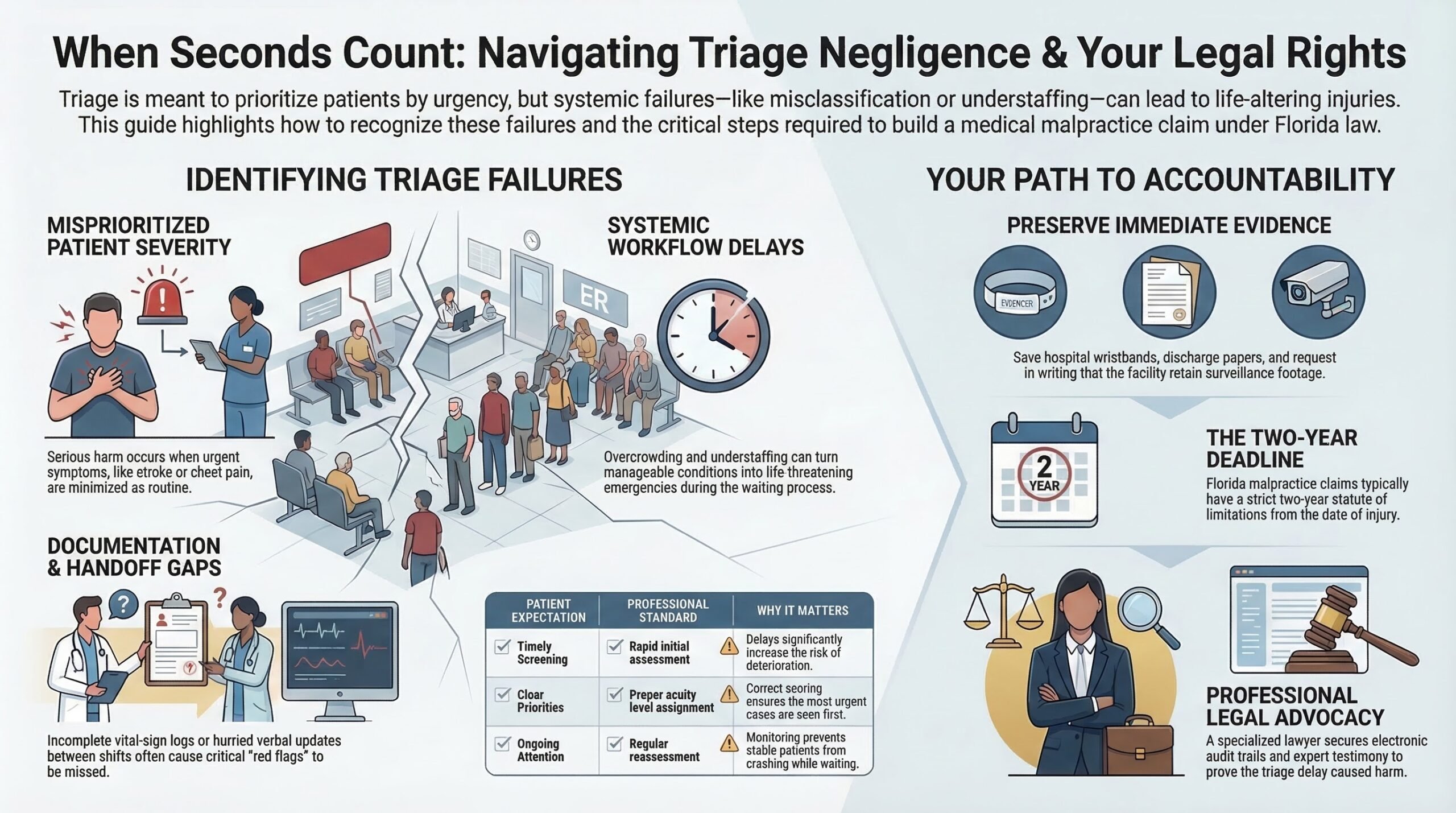
When does a triage mistake in a West Palm Beach emergency department cross the line from an unfortunate delay to actionable negligence? You’re typically looking at a breakdown in triage protocols or emergency workflows that a reasonably careful hospital team would’ve followed, and that failure contributes to harm you didn’t have to suffer.
You can focus on whether staff assessed you promptly, documented findings accurately, escalated warning signs, and reassessed you as your condition changed. You’ll also compare what should’ve happened under written policies and accepted standards, then connect the deviation to a measurable injury, such as worsening illness, preventable complications, or prolonged recovery.
Because you serve others, you may also value accountability that improves care for the next patient.
| What you expected | What should happen | Why it matters |
|---|---|---|
| Timely screening | Rapid initial assessment | Delays increase risk |
| Clear priorities | Proper acuity level | Guides next steps |
| Ongoing attention | Reassessment when worse | Prevents deterioration |

Common Causes of West Palm Beach Triage Negligence Injuries
You can suffer serious harm when triage staff misprioritize your condition’s severity, placing you behind less urgent cases despite clear warning signs.
You’re also at risk when the initial assessment is delayed, or when your symptoms aren’t fully documented, which can lead to missed red flags and improper routing of care.
When providers don’t communicate vital details clearly during handoffs, you can experience preventable delays in testing and treatment that worsen your outcome.
Misprioritized Patient Severity
Although triage is designed to sort patients by urgency within minutes, misprioritized patient severity remains a leading cause of preventable harm in West Palm Beach emergency settings.
When you serve patients at their most vulnerable, you rely on quick pattern recognition, but subtle red flags can be discounted.
Chest pressure may be labeled as indigestion, stroke symptoms may be treated as anxiety, or a child’s lethargy may be minimized as a routine illness.
Algorithm bias can also skew risk scoring when tools underweight atypical presentations, language barriers, or chronic conditions.
Decision fatigue compounds the danger during long shifts, pushing you toward shortcuts and overreliance on first impressions.
You reduce risk by verifying trends in physiologic signs, reassessing pain and mental status, and promptly raising concerns when the story doesn’t fit.
Delayed Initial Assessment


Because the first minutes in an emergency department often determine the entire course of care, a delayed initial assessment can turn a manageable condition into a life-altering injury. When you arrive seeking help, you expect prompt triage, yet overcrowding, understaffing, or broken intake workflows can leave you waiting while symptoms escalate.
OUR CONSULTATIONSARE FREE
START YOUR FREE CASE REVIEW

If clinicians don’t evaluate essential signs and risk factors quickly, you may deteriorate before treatment even begins, and your family may lose precious time to advocate for you. Facilities that rely on electronic triage must still train staff to respond to alerts, not just record them.
You can also look to time stamp audits to show gaps between arrival, screening, and provider contact, supporting accountability and safer, service-centered emergency care for everyone.
Incomplete Symptom Documentation
When triage staff record only partial symptoms, critical warning signs can be omitted from the medical record, delaying escalation of care. You can serve patients best by ensuring notes capture onset, severity, location, and associated red flags, not just the chief complaint.


If you omit evolving pain, shortness of breath, fever trends, medication use, or anticoagulants, the urgency score may stay artificially low. You also protect patients by documenting objective findings, including physiologic signs, mental status, and visible distress, with clear qualifiers.
Prioritize timestamp accuracy so changes over minutes are unmistakable, and reassessments show a defensible timeline. Complete documentation also reduces handoff gaps during shift changes, because the next clinician can act on a full picture without guessing.
Poor Provider Communication
If triage staff and treating providers don’t communicate clearly, crucial details can fall through the cracks, and patients can deteriorate in the waiting room without timely intervention.
You may see this when handoffs rely on hurried verbal updates, incomplete electronic notes, or unclear responsibility for reassessment. When you serve patients, you protect them by confirming who owns follow-up tasks, repeating back important symptoms, and escalating abnormal physiological parameters without delay.
Language barriers can also distort a sense of urgency, especially when no qualified interpreter is available, and family members translate under stress. You strengthen safety by promoting cultural competence, asking open-ended questions, and checking understanding in plain terms.
If communication failures cause harm, you may need legal guidance to hold the facility accountable and prevent recurrence.
Legal Rights of West Palm Beach Triage Negligence Injury Victims
Although triage decisions often happen in seconds, West Palm Beach injury victims still have clear legal rights when negligent screening, prioritization, or delays in treatment cause avoidable harm.
You’re entitled to safe, competent assessment, and you can demand accountability when a facility’s systems or staff fail.
Your rights include Appeal Rights when an insurer or hospital disputes the severity, timing, or necessity of care, and Privacy Protection for your medical information throughout any review or claim.
When you serve others, you also set a standard that strengthens patient safety for your community.
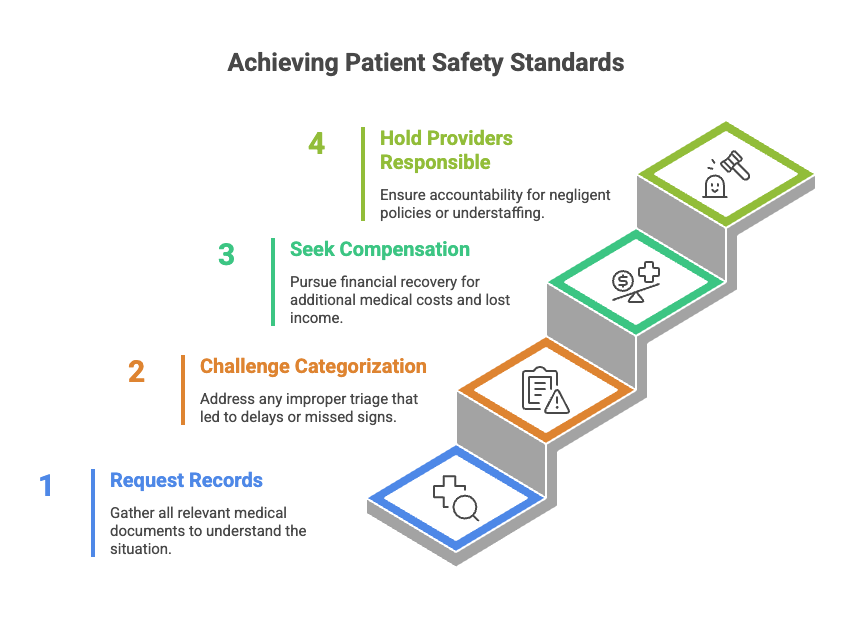
- You can request complete records, including triage notes, timestamps, and critical-sign logs.
- You can challenge improper categorization that led to harmful waiting times or missed warning signs.
- You can seek compensation for additional medical costs, lost income, and long-term limitations resulting from the delay.
- You can hold hospitals, contractors, and supervising providers responsible for negligent policies or understaffing.
Steps to Take After a West Palm Beach Triage Negligence Injury
After a West Palm Beach triage negligence injury, you should seek immediate medical care to protect your health and create a clear clinical record of your condition.
You’ll also want to preserve triage-related evidence, including discharge papers, triage notes, wristbands, timestamps, and the names of staff involved, since these details can quickly become difficult to retrieve.
As soon as you’re stable, you should contact a negligence lawyer, because you can’t rely on the hospital’s internal review process to protect your interests.
Seek Immediate Medical Care
Because triage errors can mask serious internal injuries and rapidly changing symptoms, you should seek immediate medical care as soon as you suspect you’ve been harmed.
Act on any Immediate Symptoms, including worsening pain, shortness of breath, confusion, weakness, or unusual bleeding, even if you were previously told to wait. Request a prompt reassessment, describe what changed, and state when symptoms began, so clinicians can prioritize you appropriately and prevent further decline.
Consider your Transport Options carefully and choose the safest path based on urgency.
If you feel unstable, call 911 for monitored transport and faster intervention. If symptoms are mild but persistent, go to the nearest emergency department with a responsible driver. Your timely action protects your health and preserves your ability to continue serving others.
Preserve Triage-Related Evidence
Preserving triage-related evidence starts the moment you notice something went wrong, and it can directly affect whether you can later prove a delay in care or a misprioritization. Write down times, symptoms, and every staff interaction, then save wristbands, discharge papers, and medication labels.
Ask the facility in writing to retain surveillance footage from entrances, triage desks, and hallways, and specify the date ranges.
| Evidence | How you preserve it | Why it matters |
|---|---|---|
| Triage notes, timestamps | Request copies, keep originals safe | Shows delay and priority decisions |
| Photos, texts, call logs | Back up, avoid edits | Confirms condition progression |
| Phone data | Preserve for device forensics | Verifies location and timing |
If family members served alongside you, gather their observations promptly, and keep a single, organized file.
Contact A Negligence Lawyer
Your records and retained materials only matter if they’re converted into a clear legal theory supported by admissible proof, and that’s where contacting a negligence lawyer becomes the next step. You’ll gain a focused review of the triage timeline, the applicable standards of care, and how the delay or misclassification caused harm.
During appointment scheduling, provide a concise summary of events, then follow a document checklist to supply ER intake notes, timestamps, discharge instructions, imaging, and billing records. You should also include the names of staff, witness contact information, and any prior complaints you filed.
Your lawyer can secure additional records, preserve electronic logs, and coordinate qualified medical review. By acting promptly, you protect your ability to seek accountability and promote safer practices for future patients and families in West Palm Beach.

How a West Palm Beach Triage Negligence Lawyer Can Help You
When triage errors lead to delayed treatment or a missed diagnosis, a West Palm Beach triage negligence lawyer can step in to protect your interests and build a clear case for accountability.
You’ll gain a focused advocate who aligns your pursuit of justice with service to your family and community, ensuring responsible care standards are reinforced.
With contingency agreements, you can pursue action without upfront legal fees, allowing you to prioritize recovery and resource stewardship.
Through medical networking, your lawyer can consult qualified clinicians who clarify what proper triage is required and where the breakdown occurred.
- Gather and preserve essential records, including intake notes, timestamps, and communications.
- Interview witnesses and staff, then identify policy violations or training gaps.
- Calculate documented losses, then demand fair resolution through insurers or hospital counsel.
- File suit when necessary, manage deadlines, and present a disciplined, evidence-based narrative.
Long-Term Effects of West Palm Beach Triage Negligence Injuries
When triage negligence occurs in West Palm Beach, you may face long-term harm that extends well beyond the initial emergency, changing your health, your work, and your daily stability.
You can develop chronic medical complications from delayed treatment, experience lasting cognitive impairment that affects memory and decision-making, and carry ongoing emotional trauma that disrupts sleep, relationships, and confidence.
Understanding these effects helps you document what you’re enduring and connect your injuries to the lapse in care.
Chronic Medical Complications
Although triage negligence may start as a missed warning sign or an unreasonable delay in care, it often leads to chronic medical complications that persist long after the initial emergency has passed.
When you’re discharged without timely testing or stabilization, you may later face infections, pressure injuries, or worsening cardiovascular and respiratory conditions that require ongoing treatment.
Delayed recognition of sepsis, stroke symptoms, or internal bleeding can cause organ dysfunction, limiting stamina and reducing your ability to serve others at home, work, or in your community.
You may also develop neuropathic pain from untreated compression injuries, prolonged swelling, or poorly managed fractures, and that pain can demand long-term medications and therapy.
Lasting Cognitive Impairment
Chronic complications don’t always stay confined to the body, because triage delays can also disrupt brain function in ways that linger for months or become permanent. If oxygen loss, untreated infection, or uncontrolled blood sugar continues too long, you may notice slowed processing, poor concentration, and reduced problem-solving that affects daily tasks and your ability to serve others reliably.
You might miss appointments, mismanage medications, or struggle to follow multi-step instructions, even when your physical injuries appear stable. Prompt evaluation can document deficits and guide care, including memory rehabilitation that targets practical routines and safety.
You can also benefit from neuroplasticity therapies designed to rebuild skills through structured repetition, pacing, and measurable goals. Clear records help connect these impairments to negligent triage decisions.
Ongoing Emotional Trauma
Even if your physical condition stabilizes, a triage delay can leave psychological injuries that don’t resolve on their own.
You may relive the emergency, question your judgment, or feel persistent guilt for needing help when others also suffered.
These reactions can affect how you serve your family, patients, congregation, or community, because your focus shifts from compassion to self-protection.
Ongoing emotional trauma often shows up as anxiety, irritability, and sleep disturbances that drain your stamina and decision-making.
You might withdraw from close relationships or experience attachment disruption when trust in caregivers and institutions erodes.
Over time, you may avoid hospitals, delay future care, and struggle to maintain a calm presence during crises.
When you document symptoms and seek counseling, you protect your health and strengthen a potential legal claim.
Proving Liability in West Palm Beach Triage Negligence Car Accident Injury Cases
Establishing liability in a West Palm Beach triage negligence car accident injury case starts with showing that a medical provider owed you a duty of care and then breached it during the triage process.
You’ll focus on what a reasonably careful triage nurse or physician would’ve done under similar emergency conditions, then compare that standard to the decisions made, including delayed assessment, missed red flags, or improper prioritization.
Next, you must prove the breach caused harm through a disciplined Causation Analysis.
You’ll connect the triage failure to a measurable worsening of your condition, often using timelines, critical signs, imaging results, and expert testimony to show that timely intervention would’ve changed the outcome.
You should also pursue Institutional Accountability by examining staffing levels, written protocols, training, and communication systems.
When policies, supervision, or overcrowding predictably drive unsafe triage, you can link organizational failures to individual errors and strengthen your liability proof.

Compensation for West Palm Beach Triage Negligence Damages
Once you’ve shown how a triage lapse caused your injuries, the next step is to put a reliable dollar value on what that failure cost you. You’ll document medical bills, rehabilitation, and future care needs, then measure wage loss and diminished earning capacity.
You can also seek non-economic damages for pain, disability, and loss of life’s normal activities, presented with clear, respectful evidence.
| Damage category | What you prove | Why it matters |
|---|---|---|
| Economic | invoices, pay records, care plans | anchors your claim in facts |
| Non-economic | journals, testimony, evaluations | reflects daily limitations |
| Future losses | expert projections, treatment timelines | prevents underpayment |
During insurance negotiations, you’ll stay service-minded and firm, correcting low offers without escalating conflict. A disciplined settlement strategy ties every dollar request to verified records, explains causation, and prepares you to proceed if fair value isn’t offered.
The Statute of Limitations for West Palm Beach Triage Negligence Injury Cases
Because triage negligence claims in West Palm Beach usually fall under Florida’s medical malpractice rules, you can’t wait to explore your legal options without risking your right to recover damages. In many situations, you must file within 2 years, and the clock often starts on the date of the injury.
However, the Discovery Rule may delay the start date when you couldn’t reasonably have known that negligent triage caused harm, though the law still imposes an outer deadline in most cases. You should also understand that Tolling Provisions can pause or extend the time limit in limited circumstances, such as concealment, incapacity, or other legally recognized barriers.
If you act promptly, you protect not only your own recovery but also the well-being of future patients by encouraging safer emergency care practices. Keep records, note important dates, and confirm timelines early to preserve your claim.
Why You Need an Experienced West Palm Beach Triage Negligence Lawyer
When triage mistakes in a West Palm Beach emergency setting lead to serious harm, you can’t afford to treat the legal process as a simple insurance claim.
You need counsel who can identify where protocols failed, connect that failure to your injury, and present the facts with the precision your case demands.
An experienced triage negligence lawyer moves quickly to preserve records, obtain incident logs, and secure expert review before evidence fades or policies shift.
You also benefit from guidance grounded in Local regulations that shape emergency care standards, hospital procedures, and pre-suit requirements.
Your lawyer can anticipate common defense strategies, challenge incomplete charting, and calculate damages that reflect future care, lost income, and the service you can no longer provide to others.
Cost transparency matters as well, because you’re entitled to a clear explanation of fees, case expenses, and timelines, so you can focus on recovery and accountability.
How to Choose the Right West Palm Beach Triage Negligence Lawyer for Your Case
How do you separate a capable triage negligence lawyer from one who’s simply persuasive in a consultation? You focus on proof, process, and values, because your case serves both your recovery and safer care for others. Ask how they investigate triage records, timelines, and staffing decisions, and whether they’ve handled similar emergency-department delays.
Demand fee transparency in writing, including costs, contingency terms, and what happens if you change counsel.
| What you check | What you ask | What you look for |
|---|---|---|
| Relevant triage experience | “How will you prove breach and causation?” | Clear plan, not slogans |
| Communication standards | “Who updates me, and how often?” | Specific cadence, access |
| Reputation and ethics | “May I review client testimonials?” | Consistent outcomes, credibility |
Choose the lawyer who treats you with dignity, answers directly, and commits to accountability, not pressure.
About the Law Offices of Anidjar and Levine
Accountability matters in triage negligence cases, and it should guide every step your legal team takes.
At the Law Offices of Anidjar and Levine, you’ll find a practice built on disciplined preparation and respect for the people you serve, so your claim stays focused on patient safety and measurable results.
You benefit from a team that prioritizes prompt communication, organized case management, and careful review of emergency records, timelines, and facility policies.
Their firm’s history reflects consistent advocacy for injured Floridians, with a steady approach that values integrity over shortcuts.
When you partner with the firm, you’ll receive clear guidance on next steps, realistic expectations, and support as you seek fair compensation and meaningful accountability.
You’ll also see their Community outreach in action through service-minded initiatives that reinforce a broader commitment to public well-being.
That perspective helps you pursue justice with purpose, not simply a payout.

Frequently Asked Questions
Can Triage Negligence Claims Involve Urgent Care Clinics or Telehealth Services?
Yes, you can bring triage negligence claims against urgent care clinics or telehealth services when you can show an unsafe delay, misclassification, or failure to escalate care.
You’ll evaluate Clinic Liability by reviewing intake notes, staffing, protocols, and whether your symptoms required timely referral or emergency transfer.
You’ll assess Telehealth Liability by examining screening questions, documentation, technology limits, and whether the clinician should’ve directed immediate in-person evaluation promptly.
What if I Signed ER Admission Paperwork or Consent Forms?
Signing ER admission paperwork or consent forms usually doesn’t block your claim, but it can shape what you agreed to under informed consent.
You can still challenge inadequate explanations, rushed signatures, or missing alternatives, especially when urgency limited real choice.
You should also examine waiver enforceability, since many waivers can’t excuse negligent care or improper triage.
If you’re advocating for safer care, you’ll document what you received and understood.
Can I Sue if a Family Member Died Due to a Triage Delay?
Yes, you can sue if a triage delay caused your family member’s death, but you must prove negligent delay and a direct link to the outcome.
You’ll typically need expert testimony to establish the standard of care and how the delay changed survivability.
You must also act within the statute of limitations for wrongful death, and preserve records, witness details, and timelines.
You’re honoring your loved one by pursuing accountability.
How are triage nurse records and ER Timestamps Obtained for My Case?
You obtain triage nurse records and ER timestamps through formal record requests, releases, and, when needed, a medical subpoena.
You’ll ask the hospital to preserve logs, then request the full chart and audit trails, including EMR-extracted time-stamped entries, triage notes, orders, and medication administration records.
If the facility delays or withholds data, you’ll seek a court order, and you’ll verify accuracy by comparing dispatch, registration, and monitoring system timestamps.
Will My Immigration Status Affect My Ability to Pursue Compensation?
Your immigration status usually won’t bar you from pursuing compensation, and it rarely changes Claim Eligibility under state negligence laws.
You can seek care and justice while honoring your responsibility to protect others from unsafe practices.
Immigration Protections may limit improper inquiries, and you can request confidentiality where appropriate.
Still, insurers might probe for leverage, so you should document damages carefully, keep records secure, and consult counsel early.
—————————
If triage negligence harmed you in West Palm Beach, you can’t afford delay or uncertainty. You should document your symptoms, preserve all hospital records, and follow up with qualified medical care, since gaps can weaken your claim.
You’re entitled to pursue compensation when improper screening, delayed evaluation, or misprioritization causes avoidable injury.
The Law Offices of Anidjar and Levine can investigate timelines, secure expert opinions, and negotiate firmly with insurers.
Whether you require assistance locally or need a West Palm Beach Medical Malpractice Lawyer, we ensure you’re positioned for a fair result.

