The Law Offices of Anidjar and Levine help injured drivers and passengers pursue compensation after rear-end collisions in Gainesville caused by negligent drivers. Our team protects your claim from the first call, gathers crash evidence, manages insurance communications, and documents losses such as medical bills, lost income, future care, pain, and vehicle damage. We also address comparative negligence issues and challenge unfair insurer tactics. Below, our Gainesville Car Accident Lawyer explains how these claims work, what steps to take, and how legal support can strengthen your case.
Main Takeaways
- A Gainesville rear-end car accident lawyer can protect your claim from the first call through final resolution.
- Prompt medical care and clear records help connect crash-related injuries to the rear-end collision.
- Evidence like photos, witness statements, crash reports, repair records, and video footage can strengthen your injury claim.
- Compensation may include medical expenses, lost wages, pain and suffering, emotional distress, vehicle damage, and out-of-pocket costs.
- An attorney can handle insurers, preserve evidence, assess fault, and help avoid mistakes that may reduce recovery.


How We Can Help With Your Gainesville Rear-End Car Accident Claim
After a rear-end collision, we can help you protect your claim from the first call through final resolution. We listen to your concerns, identify urgent needs, and build a plan that supports your recovery and responsibilities to others. Our team gathers records, preserves evidence, and manages insurance documentation so you can focus on medical care, work, family, and service commitments.
We also handle communications with adjusters, employers, and medical providers, reducing the risk of mistakes that may weaken your claim. Through careful damages valuation, we assess medical expenses, lost income, future care, pain, and other losses supported by the facts. We prepare each claim with discipline, present clear proof, and pursue fair compensation through negotiation or litigation when necessary. You shouldn’t have to carry this burden alone. We stand beside you with steady guidance, practical action, and a commitment to protecting your interests at every stage of the process.
OUR CONSULTATIONSARE FREE
START YOUR FREE CASE REVIEW

Understanding Gainesville Rear-End Car Accident Cases
When a rear-end crash occurs, we look beyond the point of impact to understand how the collision happened, who contributed to it, and how the injuries developed. We evaluate your medical treatment, vehicle damage, roadway conditions, insurance communications, and the timeline of events to present a clear, service-focused claim.
In these cases, evidence gathering matters because details can fade quickly. We work to preserve photographs, repair records, medical documentation, crash reports, and available video footage. We also review witness statements to help confirm what you experienced and to identify facts that support your position.
We understand that your goal may include recovering, protecting your family, and restoring stability. Our role is to serve you with steady guidance, careful preparation, and honest communication. By organizing the facts early, we help you move forward with a claim built on accuracy, diligence, and purpose after a Gainesville rear-end collision.
Common Causes of Gainesville Rear-End Car Accidents
We often see Gainesville rear-end car accidents caused by distracted driving, tailgating, sudden stops, and poor weather conditions.
When we review your case, we look closely at how each factor contributed to the crash and affected your injuries.
Distracted Driving
Distracted driving turns ordinary traffic into a serious hazard, especially in Gainesville rear-end car accidents, where a driver has only seconds to notice slowing or stopped vehicles.
We see how a glance at a phone, a navigation screen, or a passenger can prevent timely braking and cause preventable harm.
Texting hazards are especially serious because they take a driver’s eyes, hands, and attention away from the road at once.
When serving injured people, we examine records, witness statements, vehicle damage, and available digital evidence to identify distracted driving and show how it contributed to the crash.
You’re worthy of careful guidance when another driver’s inattention disrupts your health, work, and responsibilities.
We help protect your claim while you focus on recovery and caring for those who depend on you.
Tailgating
Too often, tailgating causes rear-end car accidents in Gainesville because it leaves a driver without enough space to react safely.
We recognize that every motorist has a duty to protect others by maintaining a proper following distance, especially in traffic, rain, or low-light conditions.
When drivers crowd another vehicle, they reduce visibility, increase pressure on the lead driver, and create unnecessary danger for families, workers, students, and visitors sharing the road.
We also know tailgating often appears with aggressive driving, including unsafe lane changes and excessive speed.
Speeding enforcement can help reduce these risks, but responsible choices remain critical.
If you were injured by a driver who followed too closely, we can evaluate the crash, identify negligence, and help you pursue accountability with care and purpose.
Sudden Stops
When a driver stops suddenly, the following motorist must still maintain enough distance to respond without causing a collision. Sudden stops often occur near intersections, driveways, or congested traffic, where one driver reacts to a hazard while another fails to adjust.
We examine rear-end dynamics by considering speed, reaction time, braking behavior, and available safety distance. These details help us determine the cause of the collision and whether a preventable lapse harmed you.
As advocates committed to serving injured people, we understand that a sudden stop doesn’t automatically excuse the rear driver. Every motorist must anticipate ordinary traffic changes and operate with care. When they do not, we work to identify negligence, preserve evidence, and pursue fair recovery for your injuries and losses.
Poor Weather Conditions
Poor weather conditions can quickly turn routine driving into a serious hazard, especially on Gainesville roads affected by heavy rain, fog, slick pavement, or reduced visibility. We recognize how these conditions demand greater care from every driver.
Foggy visibility can shorten reaction time, while glare conditions may prevent a driver from seeing brake lights ahead. Heavy rain increases the risk of hydroplaning, making it harder to stop before impact.
The presence of road debris after storms can also force sudden braking or unsafe swerving.
When we serve injured people after rear-end collisions, we closely examine whether the at-fault driver adjusted speed, following distance, and attention to the conditions.
You merit accountability when another driver fails to take reasonable precautions, especially when safe driving could have prevented your injuries.


Legal Rights of Gainesville Rear-End Car Accident Victims
After a rear-end crash in Gainesville, injured victims have the right to seek compensation when another driver’s negligence caused the collision.
We help you understand these rights so you can protect your health, family, and ability to serve others with stability.
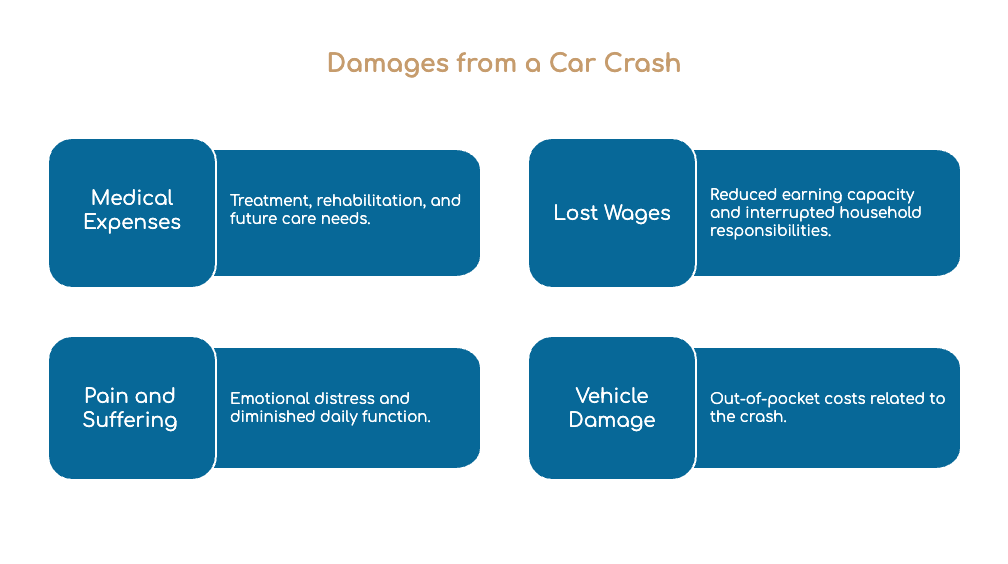
Your claim may include several losses, depending on the facts and available proof:
- Medical expenses, including treatment, rehabilitation, and future care needs
- Lost wages, reduced earning capacity, and interrupted household responsibilities
- Pain, suffering, emotional distress, and diminished daily function
- Vehicle damage and other out-of-pocket costs related to the crash
Florida law may apply Comparative negligence if multiple parties share fault.
Even then, you may still recover damages if the evidence supports your position.
Evidence preservation matters because insurance companies often closely review records, photos, repair estimates, and witness accounts.
We work to present your claim clearly, assert your rights, and pursue fair compensation with purpose and precision.
Steps to Take After a Gainesville Rear-End Car Accident
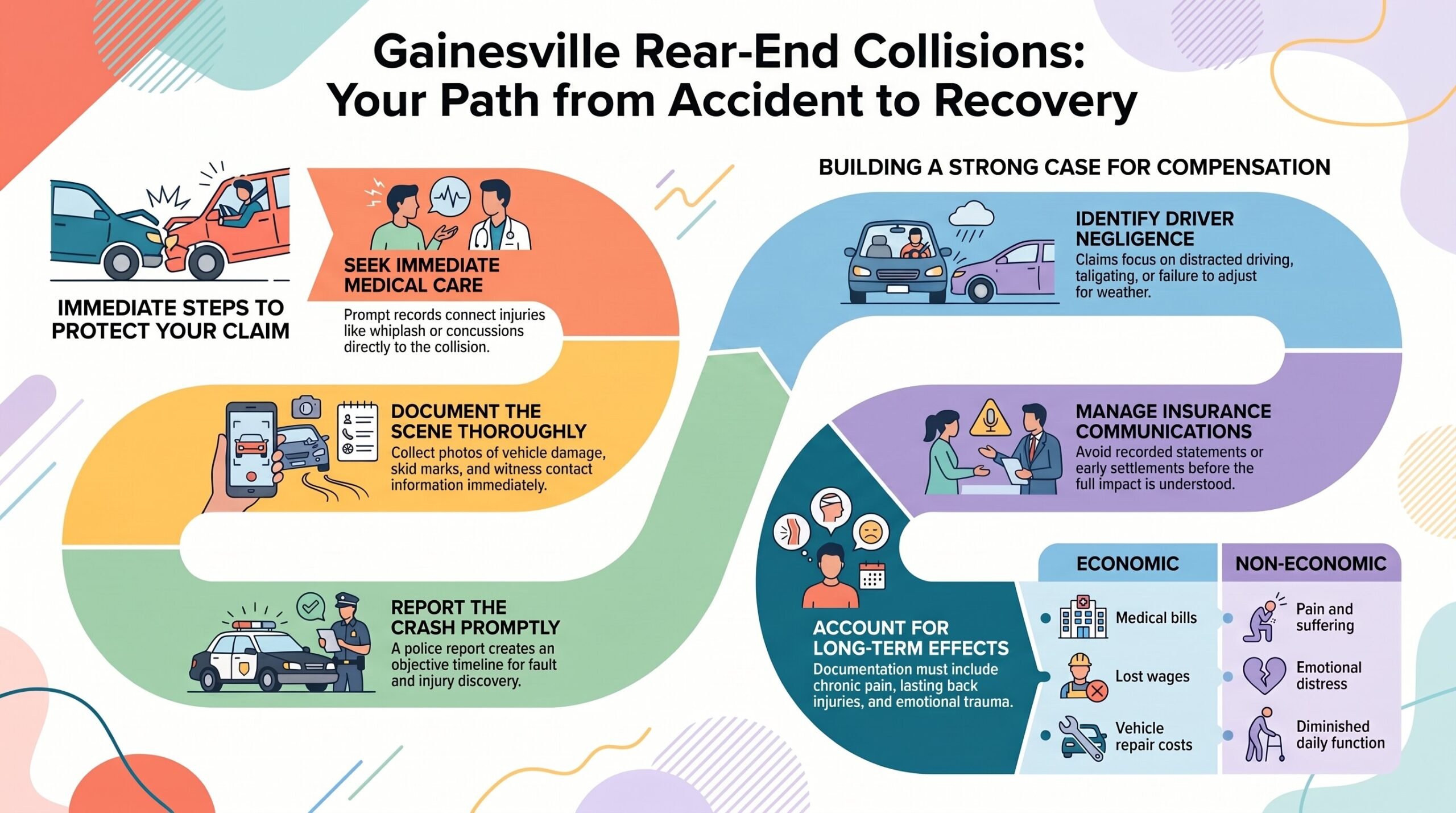
After a Gainesville rear-end collision, we need to act quickly to protect your health, preserve crucial evidence, and support any future injury claim.
We should guarantee you seek medical attention, document the scene, and gather information before details fade or conditions change.
We’ll also want to contact an attorney promptly, so your rights remain protected from the start.
Seek Medical Attention
Even if a rear-end collision seems minor, we should ensure medical attention as soon as possible to identify injuries that may not show symptoms right away.
Whiplash, concussions, back injuries, and soft tissue damage can worsen when untreated, limiting our ability to work, care for family, or serve others effectively.
We should accept an Emergency symptom assessment at the scene when offered, and then promptly follow up with a physician or urgent care provider.
Clear medical records connect the collision to our injuries and help ensure proper treatment.
We should accurately describe pain, dizziness, numbness, headaches, or reduced mobility, even if symptoms seem manageable.
If someone helped us obtain care, noting the identity of witnesses may also support later discussions with insurers or counsel.
Follow all instructions.
Document The Scene
Once we’ve addressed immediate medical needs, we should document the accident scene before vehicles are moved, if it’s safe to do so.
We can help protect everyone’s interests by recording clear, accurate details while conditions remain fresh.
Photographing damage to each vehicle, skid marks, debris, traffic signals, weather conditions, and visible injuries can preserve evidence that may later clarify what happened.
We should also note the exact location, lane positions, and time of the collision.
If bystanders stopped to assist, we should respectfully request their contact information, including names, phone numbers, and email addresses.
Their observations may support an accurate account.
We should exchange insurance and driver information with the other motorist, remain calm, and avoid statements that assign fault at the scene.
Contact An Attorney
When the immediate evidence is secured, we should contact an attorney as soon as possible to protect our rights and avoid mistakes that could weaken a claim.
We can serve our family and community best by seeking guidance before speaking with insurers, signing releases, or accepting payment.
During an Initial consultation, we should share the police report, photos, medical records, witness details, and repair estimates.
An attorney can explain deadlines, identify responsible parties, and manage communications so we can focus on recovery and responsibilities.
A careful case evaluation helps determine the value of medical care, lost income, vehicle damage, and long-term needs.
How a Gainesville Rear-End Car Accident Injury Lawyer Can Help You
After a rear-end collision, a Gainesville car accident injury lawyer can protect your rights, manage communications with insurers, and build a claim that reflects the full extent of your losses. We help you focus on recovery and service to those who depend on you, while we handle the legal demands that can quickly become overwhelming.
- We review Insurance paperwork for accuracy, deadlines, and unfair limits on your claim.
- We begin evidence preservation by collecting vehicle damage, medical records, photos, and crash reports.
- We handle insurance adjuster negotiations to ensure your statements aren’t used against you.
- We coordinate the collection of witness statements to strengthen fault and liability evidence.
When we guide your claim, we carefully document your damages, explain each step clearly, and pursue fair compensation through settlement discussions or litigation when necessary. You shouldn’t have to face insurers alone as you try to rebuild stability.
Long-Term Effects of Gainesville Rear-End Car Accident Injuries
We comprehend that a Gainesville rear-end collision can cause injuries that last well beyond the initial crash.
We’ll examine how chronic neck pain, lasting back injuries, and emotional trauma can affect your health, work, and daily life.
You should recognize these long-term effects early, because they may influence both your recovery and the value of your injury claim.
Chronic Neck Pain
Although a rear-end collision may seem minor at first, chronic neck pain can develop into a lasting and disruptive injury for many Gainesville accident victims. We often see pain that limits sleep, work, driving, caregiving, and community service, especially when soft tissue damage affects daily movement.
You may start with stiffness, headaches, or reduced range of motion, only to discover the symptoms persist beyond the ordinary whiplash recovery period. We help document medical treatment, therapy needs, missed income, and the practical impact on your ability to support others.
Clear records matter during insurance negotiations because insurers may undervalue neck pain when imaging doesn’t show obvious damage. We work to connect your symptoms to the crash, protect your claim, and pursue compensation that reflects your long-term needs.
Lasting Back Injuries
Lasting back injuries can reshape how you work, move, rest, and care for your family after a Gainesville rear-end collision. We often see spinal strain, disc damage, and nerve irritation limit your ability to lift, drive, serve clients, or support loved ones.
Whiplash symptoms may also involve the cervical spine, but force from impact can extend through the mid and lower back. When pain persists, you may need imaging, therapy, injections, work restrictions, or long-term treatment to preserve function.
We help you document these needs, connect them to the crash, and address insurance disputes that undervalue ongoing limitations. By building a clear record, we protect your claim and help you access the resources you need to recover and keep serving those who depend on you.
Emotional Trauma Effects
After a Gainesville rear-end collision, emotional trauma can persist long after physical injuries begin to mend.
We often see you struggle with driving anxiety, sleep disruption, irritability, and intrusive memories that interfere with work, caregiving, and community responsibilities.
Post-traumatic stress may develop when the crash feels unresolved, especially if pain, medical visits, or vehicle repairs keep reminding you of the impact.
We also recognize Survivorship Grief when you question why you recovered while others suffered more serious harm.
These emotional injuries merit careful documentation and respectful support.
We can help connect your symptoms to the collision, gather treatment records, and present the full impact of your losses.
When we serve your claim diligently, we protect your ability to recover and to continue serving others.
Proving Liability in Gainesville Rear-End Car Accident Cases
In a Gainesville rear-end car accident case, proving liability often begins by showing that the rear driver failed to exercise reasonable care under the circumstances. We examine how the collision occurred, whether traffic slowed predictably, and whether the following driver kept a safe distance.
Fault evidence may include skid marks, debris patterns, witness statements, and a traffic camera recording that confirms timing, speed, or lane position.
We also use Police report analysis to identify citations, driver admissions, road conditions, and officer observations. A careful vehicle inspection can reveal impact points, brake function, and damage consistent with the crash sequence.
When you come to us for guidance, we organize these facts purposefully because accountability supports your recovery and helps protect others on Gainesville’s roads.
Dealing With Insurance Companies After a Gainesville Rear-End Car Accident
Once liability evidence begins to take shape, the next challenge often involves dealing with insurance companies that seek to limit what they pay. We help you approach these conversations with preparation, patience, and a clear understanding of what fair treatment requires.
Adjusters may sound cooperative, but their questions often seek statements that reduce the value of your injury claim.
We encourage you to avoid quick recorded statements, broad medical authorizations, or early settlement offers before your losses are fully understood.
Strong claim documentation matters because it connects your injuries, treatment, missed work, and daily limitations to the rear-end collision.
Without organized records, insurers may dispute care, delay responses, or create underpaid claims that fail to reflect your needs.
Our role is to protect your position while you focus on recovery and serving those who depend on you.
We communicate firmly, present evidence clearly, and push back when insurers undervalue legitimate losses.
What to Expect During a Gainesville Rear-End Car Accident Claim Process
We help you understand each step of a Gainesville rear-end car accident claim, starting with reporting the crash and preserving crucial details.
We’ll also explain why medical treatment documentation matters, and how insurers review liability, injuries, and damages.
As the process moves forward, we guide you through settlement negotiations so you can make informed decisions with confidence.
Reporting The Crash
After a rear-end crash in Gainesville, promptly reporting the collision helps protect your well-being, your legal rights, and the strength of any injury claim. We encourage you to contact law enforcement, remain at the scene, and provide accurate, calm information.
A police report can record driver identities, insurance details, vehicle positions, and visible damage. It also helps create an objective timeline when fault or injury is later called into question.
We also help you understand why early evidence preservation matters. Photos, video, damaged vehicles, and roadway conditions can clarify how the crash occurred. Witness statements may confirm impact, traffic signals, or unsafe driving behavior.
When we act quickly, we preserve facts before memories fade, vehicles are repaired, or important details disappear. This careful reporting supports a more reliable claim process.
Medical Treatment Documentation
Although symptoms can seem minor at first, prompt medical care creates a clear record that connects your injuries to the rear-end crash.
We encourage you to attend every appointment, follow treatment instructions, and report any concerns to your providers, even if pain develops later.
Accurate records help protect your ability to serve your family, workplace, and community while you recover.
We also help you organize Insurance documentation, including emergency room notes, diagnostic results, prescriptions, therapy plans, and billing statements.
A detailed symptom timeline can show when headaches, neck pain, back pain, or limited mobility began and how they changed.
We recommend keeping copies of discharge papers and referrals.
Once your medical history is complete, we can present the extent of your injuries with greater clarity and precision.
Insurance Claim Review
During an insurance claim review, the insurer examines the crash report, medical records, vehicle damage, witness statements, and available policy coverage to decide whether it’ll accept liability and what it may offer for your losses.
We help you understand this review, protect your rights, and keep service to your family and community from being disrupted by avoidable mistakes.
Evidence preservation matters, so we gather photos, repair estimates, treatment notes, and communication records before details are lost.
Policy coverage limits can affect the claim’s value, especially when medical bills and lost income exceed the available insurance coverage.
We also monitor adjuster negotiation tactics, including requests for broad releases or recorded statements.
If the insurer issues an unfair refusal, we prepare the record for an appeal of the denied claim.
Settlement Negotiation Process
When the insurer finishes its claim review, settlement negotiations usually begin with a demand package that explains liability, your injuries, medical treatment, lost income, vehicle damage, and the long-term impact of the rear-end collision. We prepare this package to serve your recovery goals, not simply to request payment.
We identify liability factors, such as following distance, speed, distraction, weather, and prior admissions, then connect them to the evidence. We also assess the Evidentiary value of medical records, repair estimates, photographs, witness statements, and expert opinions.
The insurer may respond with a low offer, dispute treatment, or question causation. We answer with documented facts, firm reasoning, and measured advocacy.
If negotiations remain unfair, we will discuss litigation options while continuing to protect your claim and your future.
Compensation for Gainesville Rear-End Car Accident Damages
After a rear-end collision in Gainesville, compensation should reflect the full scope of your losses, not just the damage that’s immediately visible. We help you pursue payment that supports your recovery, protects your household, and allows you to continue caring for the people who rely on you.
Our work begins with a medical record review, because accurate documentation connects your injuries to the crash and supports your claim.
We also focus on proving the value of damages through organized evidence, treatment history, employment information, repair records, and professional opinions when needed.
This approach helps us present a clear demand that insurers can’t dismiss as incomplete or speculative.
We also conduct an insurance coverage analysis to identify all policies that may apply, including liability coverage, personal injury protection, and uninsured or underinsured motorist benefits.
Economic vs Non-Economic Damages in Gainesville Rear-End Car Accident Cases
We separate your losses into economic damages, such as medical bills and lost wages, and non-economic damages, such as pain and suffering.
We understand these categories affect how insurers and courts evaluate the full impact of a rear-end crash.
We’ll help you understand what evidence can prove damage value and support a fair compensation claim.
Medical Bills And Wages
Two categories of losses typically determine the value of a Gainesville rear-end car accident claim: economic and non-economic damages.
Here, we focus on economic losses tied to medical bills and missed wages.
We help you gather Accident documentation, including treatment records, invoices, prescriptions, diagnostic reports, and follow-up recommendations, so the claim reflects the care you needed.
We also review employment records, pay stubs, schedules, and employer statements to prepare accurate wage loss estimates.
If your injuries limit your ability to serve clients, support coworkers, or return to regular duties, those losses matter.
We present these figures clearly to insurers, linking each expense and loss of income to the crash.
Careful proof strengthens your claim and helps protect your financial stability after a rear-end collision.
Pain And Suffering
Medical bills and lost wages show the financial impact of a rear-end collision, but pain and suffering address the personal harm that doesn’t appear on an invoice.
We recognize that your injuries may affect your sleep, mobility, concentration, family responsibilities, and the quiet ability to serve others consistently. These losses are non-economic damages, and they matter because a crash can alter daily life beyond the measurable costs.
Medical documentation helps connect physical injuries to the discomfort, limitations, and emotional strain you experience. It also helps account for delayed symptoms, such as neck pain, headaches, or back stiffness, that may appear after the initial shock fades.
We consider how these effects affect your routines, relationships, and responsibilities, while keeping the focus on the fair recognition of your lived experience.
Proving Damage Value
Proving damage value starts with separating what can be calculated from what must be carefully explained. We document economic losses through medical bills, repair invoices, prescriptions, mileage, and wage loss quantification, so your claim reflects the financial burden caused by the crash. We also gather employer records and treatment plans to show future costs, not just past expenses.
Non-economic damages require a different presentation. We connect your pain, limitations, stress, and disrupted daily responsibilities to reliable proof. Evidence photography can show vehicle impact, visible injuries, and recovery conditions that support your account.
We also use medical narratives, personal journals, and witness statements to explain how the injury affects your ability to serve family, work, and community. Together, this evidence helps present a complete, credible damage claim.
When a Gainesville Rear-End Car Accident Case Goes to Trial vs Settlement
Although most Gainesville rear-end car accident claims resolve through settlement, we prepare each case as if a jury may ultimately decide it. That approach helps us serve you with diligence, discipline, and respect for the harm you have endured. Settlement may be appropriate when the insurer accepts responsibility and offers fair compensation.
Trial becomes necessary when fault, injury severity, medical needs, or financial losses remain disputed.
We begin with Evidence collection, including crash reports, photos, medical records, repair estimates, and available video. We also obtain witness statements to confirm how the collision occurred and its impact on your daily life.
If negotiations don’t lead to a just result, our trial preparation focuses on presenting clear proof, credible testimony, and a practical damages narrative. During jury selection, we look for impartial decision-makers who can evaluate the evidence fairly.
Our goal remains consistent: to pursue a resolution that serves your recovery.
The Statute of Limitations for the Gainesville Rear-End Car Accident Case
Because filing deadlines can control your right to recover compensation, we treat the statute of limitations in a Gainesville rear-end car accident case as an urgent legal issue from the start. We understand your priority may be restoring stability, supporting loved ones, and meeting medical needs, yet the law requires timely action to preserve a claim.
In Florida, injury claims generally must be filed within a set period, and missing that deadline can prevent recovery, even when liability seems clear.
We also account for Insurance negotiation timelines, since settlement discussions don’t usually pause the filing deadline. If negotiations continue too long, a lawsuit may be necessary to protect your rights.
We review accident dates, injury discovery issues, available evidence, and comparative fault considerations that may affect case value.
When to Contact a Gainesville Rear-End Car Accident Injury Lawyer After a Gainesville Rear-End Car Accident
Strict filing deadlines make early legal guidance important after a Gainesville rear-end car accident, but you don’t need to wait until a deadline approaches to contact us.
We encourage you to reach out as soon as you receive medical attention and have reported the crash.
Early contact helps us discuss when to file, identify responsible parties, and understand how the collision has affected your ability to work, care for family, and serve others.
Prompt action also supports evidence preservation.
Skid marks fade, vehicles get repaired, camera footage may be erased, and witnesses’ memories can weaken.
When we speak with you early, we can help document injuries, gather records, and protect information before it becomes difficult to obtain.
You should also contact us if an insurer calls, disputes fault, or offers a quick settlement.
We can explain your options and help you make informed decisions without unnecessary delay.
Why You Need an Experienced Gainesville Rear-End Car Accident Injury Lawyer
Case strategy matters in a Gainesville rear-end car accident claim, even when fault seems clear at first glance.
We grasp that you may be focused on healing, caring for family, and returning to work, yet the claim process can quickly become demanding.
An experienced lawyer helps protect your time, dignity, and financial stability while you serve others.
We identify every source of compensation, document medical losses, and connect the crash to your injuries with reliable proof.
Evidence preservation matters because skid marks fade, vehicles get repaired, and witnesses become difficult to reach.
We also recognize Insurance dispute tactics, including delayed responses, requests for broad statements, and attempts to minimize pain or preexisting conditions.
When we manage the legal burden, you can concentrate on recovery and responsibilities.
Strong advocacy helps ensure insurers evaluate the claim fairly, based on facts, law, and the full impact of the collision on your life.
How to Choose the Right Gainesville Rear-End Car Accident Injury Lawyer for Your Case
When you’re choosing a Gainesville rear-end car accident injury lawyer, you should look for more than general legal experience. We should focus on counsel who understands collision dynamics, insurance tactics, medical documentation, and the burdens an injured person carries after a crash.
Your lawyer should act promptly, because evidence preservation can determine whether essential photos, vehicle data, witness accounts, and roadway details remain available.
Prompt legal action helps preserve critical evidence before photos, vehicle data, witnesses, or roadway details are lost.
We also value Attorney communication. You should receive clear updates, direct answers, and guidance that helps you make informed decisions without unnecessary confusion.
A strong lawyer explains your options, sets realistic expectations, and prepares every claim as if it may require litigation.
As we evaluate representation, we should consider responsiveness, case strategy, resources, and a record of handling rear-end injury claims.
The right lawyer protects your interests while allowing you to focus on recovery, family, work, and the responsibilities you continue to serve.
About The Law Offices of Anidjar & Levine
At The Law Offices of Anidjar & Levine, we represent injured clients with a focus on prompt action, careful case development, and steady communication throughout the legal process.
We acknowledge that a rear-end collision can affect your health, work, and ability to care for others, so we handle the legal demands while you focus on recovery.
Our team begins with a thorough Case Evaluation, reviewing the crash facts, injuries, insurance issues, and available evidence.
We gather records, communicate with insurers, and pursue compensation for medical expenses, lost income, pain and suffering, and related losses.
We also prioritize Client Communication because you merit clear updates and practical guidance.
When you work with us, we answer your questions, explain each step, and help keep your case moving forward.
We’re committed to serving you with diligence, respect, and the steady advocacy you need after a serious rear-end accident in Gainesville.
Frequently Asked Questions
Can Passengers File Claims After a Gainesville Rear-End Accident?
Yes, passengers can file claims after a rear-end accident in Gainesville.
We help you assess Passenger eligibility, identify liable parties, and meet claim requirements with care and precision.
You’ll need evidence gathering, including crash reports, witness information, and photos, plus medical documentation showing your injuries and treatment.
We pursue available insurance coverage so you can focus on recovery, protect your rights, and continue serving those who depend on you.
What if the Other Driver Was Uninsured?
If the other driver was uninsured, we would help you pursue recovery through your own Uninsured motorist coverage, if available.
We review policy limits, medical payment benefits, health insurance coordination, and other coverage options that may protect you.
We also gather evidence, document losses, and promptly notify insurers, so you can focus on treatment and service to others.
If coverage disputes arise, we advocate firmly for fair compensation.
Will a Rear-End Accident Affect My Insurance Rates?
Yes, a rear-end accident can affect your Insurance premium, but the claim impact depends on fault, policy terms, prior claims, and state rules.
We help you understand how insurers evaluate liability, medical payments, vehicle damage, and uninsured motorist issues.
If you weren’t at fault, your rate may not rise, though reporting still matters.
We’ll guide you carefully, so you can protect your coverage while serving your family’s needs.
Can I Recover Damages for a Pre-Existing Injury?
Yes, we can help you restore damages when an accident aggravates a pre-existing injury.
We’ll compare your documented baseline with post-accident medical records, treatment changes, pain levels, and functional limits.
You should continue care, report symptoms honestly, and avoid minimizing prior conditions.
Insurers often dispute causation, so we build clear evidence showing how the crash restored your health, increased expenses, or reduced your ability to serve others.
Do I Need a Police Report for My Claim?
You don’t always need a police report, but we strongly recommend obtaining one whenever possible.
It supports evidence collection importance by recording parties, witnesses, location, and officer observations.
We also help you preserve medical records and documentation that connect your injuries to the crash and support fair compensation.
If no report exists, we can still build your claim using photos, witness statements, repair records, and documentation of prompt medical care.
—————————
If you were injured in a rear-end collision in Gainesville, The Law Offices of Anidjar and Levine can help you pursue the compensation you qualify for.
Our team understands how to investigate these crashes, identify liable parties, and protect your rights throughout the claims process.
You shouldn’t have to manage insurers, medical bills, and legal deadlines alone.
Contact a Gainesville Car Accident Lawyer today to discuss your case and learn how we can support your recovery.