

West Palm Beach truck accident victims may have claims involving improper loading, unsecured cargo, excessive weight, inadequate inspections, or regulatory violations. The Law Offices of Anidjar and Levine can help preserve photographs, electronic data, inspection records, cargo documents, maintenance files, and witness accounts before they disappear.
A West Palm Beach Personal Injury Lawyer can identify potentially liable drivers, carriers, shippers, loading contractors, and vehicle owners, then pursue compensation for medical care, lost income, rehabilitation, pain, and long-term limitations.
The sections below explain available legal options and investigative priorities.
Main Takeaways
- Investigate cargo securement, weight limits, inspections, driver qualifications, and compliance with federal and Florida trucking regulations.
- Preserve electronic logs, inspection reports, bills of lading, maintenance records, photographs, video, and witness statements promptly.
- Determine whether drivers, carriers, shippers, loading contractors, maintenance providers, or vehicle owners contributed to the crash.
- Connect regulatory violations, improper loading, cargo shifts, or overloaded trailers to the collision and resulting injuries.
- A West Palm Beach truck accident lawyer can manage insurers, protect evidence, evaluate damages, and pursue fair compensation.
How We Can Help With Your West Palm Beach Truck Accident Trucking Regulations & Loading Injury Claim
When a truck accident involves violations of trucking regulations or improper loading practices, an experienced West Palm Beach truck accident lawyer can investigate the circumstances and pursue compensation for the resulting injuries. The legal team can quickly preserve evidence by securing photographs, vehicle data, inspection materials, medical records, and witness accounts before information disappears or conditions change. Counsel can also identify liable parties, which may include a driver, trucking company, loading contractor, maintenance provider, or other responsible entity. A careful review of available evidence can help establish how the collision occurred and connect the conduct to the claimed harm. The lawyer may communicate with insurers, manage required filings, and protect an injured person from premature settlement pressure.


Assistance can include evaluating medical needs, documenting lost income, and presenting a demand supported by reliable records. Through organized representation, the firm seeks to reduce administrative burdens and advance a fair recovery while treating the injured person and family with dignity throughout the claim process.
Understanding West Palm Beach Truck Accident Trucking Regulations & Loading Injury Cases
OUR CONSULTATIONSARE FREE
START YOUR FREE CASE REVIEW

Understanding the trucking regulations and loading practices involved in a West Palm Beach truck accident can clarify how a collision occurred and which parties may be legally responsible. These cases may involve federal safety standards, Florida transportation rules, company policies, and contractual duties governing inspection, securement, weight limits, and driver qualifications.
An investigation typically examines inspection reports, dispatch records, electronic logging data, bills of lading, photographs, witness accounts, and Cargo damage documentation. Such evidence may show whether cargo shifted, exceeded permitted limits, or was secured according to applicable requirements. It may also identify Unsafe driver behavior, inadequate supervision, defective equipment, or failures by a shipper, carrier, loading contractor, or maintenance provider.


Injury claims require careful evaluation of medical records, lost income, rehabilitation needs, and long-term effects. Because trucking evidence can change or disappear, timely preservation requests and professional investigation are important. A clear, compassionate legal process can help injured individuals and families understand their options while supporting accountability and safer commercial transportation throughout the community.
Common Causes of West Palm Beach Truck Accident Trucking Regulations & Loading
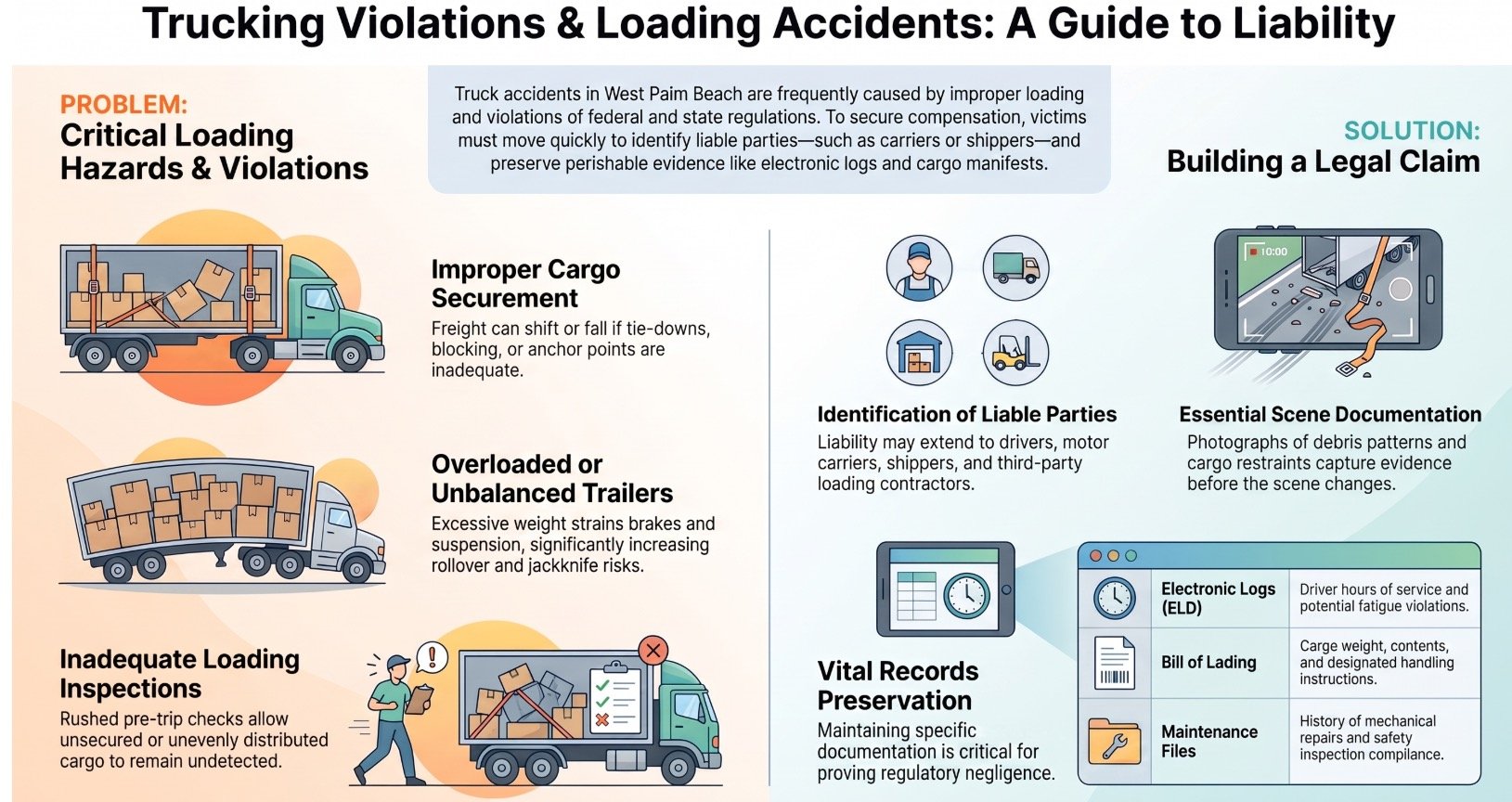
Common causes include improper cargo securement, overloaded trailers, and violations of applicable weight restrictions. Inadequate loading inspections may allow these conditions to go undetected before a truck enters the roadway. Each violation can increase crash risks and may become significant when determining liability in a West Palm Beach truck accident case.
Improper Cargo Securement
Improper cargo securement is a significant violation of trucking regulations because inadequately restrained freight can shift, fall, or destabilize a commercial vehicle during transport. Federal and state rules require carriers and drivers to select appropriate tie-downs, inspect restraints, and verify that cargo remains stable throughout a trip. Loose straps, damaged anchor points, inadequate blocking, and improper tension can allow materials to move into traffic or alter a truck’s handling. A Cargo tarp failure may also release debris, obstruct visibility, or create hazards for surrounding motorists. After a collision, investigators may conduct a chain slack investigation to determine whether insufficient tension contributed to movement or separation.
Preserving photographs, maintenance records, inspection reports, and witness accounts can help injured parties and their advocates evaluate compliance, support accountability, and pursue appropriate remedies.
Overloaded Truck Trailers
When a commercial trailer carries more weight than federal or Florida regulations permit, its braking, handling, suspension, and tire systems may be placed under dangerous strain. Overloading can also shift the trailer’s center of gravity, increasing instability during turns, sudden stops, or roadway emergencies. Common causes include inaccurate weighing, rushed loading procedures, poor communication between shippers and carriers, and failure to account for fuel or equipment weight. Cargo inspection logs may reveal repeated discrepancies, incomplete reviews, or missing corrective actions. Driver training lapses can further contribute when personnel are not taught to recognize uneven distribution, unsafe axle loading, or warning signs such as tire distress. Thorough inspections and accurate records help protect motorists, drivers, and communities by identifying hazardous loading practices before a preventable collision occurs.
Violated Weight Restrictions
Violating federal or Florida weight restrictions can impair a commercial truck’s braking, guiding, suspension, and tire performance, increasing the risk of a serious collision. Weight limits apply to the vehicle, axle groups, and designated routes, and may vary according to roadway conditions or permit requirements. A carrier that exceeds these limits may face overloading penalties, citations, permit consequences, and increased exposure to civil liability after a crash. Excess weight can also contribute to premature mechanical wear and reduced control during emergency operations. Drivers, motor carriers, and shipping parties may each have responsibilities concerning accurate weight information and cargo compliance. When a collision occurs, records such as weight tickets, bills of lading, and permits may help clarify whether restrictions were violated. Legal review can assist injured individuals seeking accountability and fair compensation.
Inadequate Loading Inspections
Inadequate loading inspections can allow unsecured, unevenly distributed, or improperly contained cargo to remain on a commercial truck before it enters West Palm Beach roads. Proper procedures should include cargo weight checks, tie-down inspections, container integrity checks, and confirmation that freight is positioned within applicable limits. When drivers, carriers, or loading personnel rush these steps, inspection compliance issues may develop and major hazards can go undetected. Shifting cargo can affect steering, braking, and vehicle stability, while loose materials may fall into traffic and endanger surrounding motorists. Commercial operators must follow federal and state safety requirements and keep records showing inspections occurred. Identifying inadequate inspections may help establish how a crash developed and clarify whether preventable loading failures contributed to injuries or property damage.
Legal Rights of West Palm Beach Truck Accident Trucking Regulations & Loading Injury Victims
Truck accident victims injured by trucking-regulation violations or improper loading may have legal rights to pursue compensation from responsible parties. A claim may address medical expenses, lost income, rehabilitation, pain, and other documented losses. Depending on the facts, potentially liable parties can include drivers, carriers, loading contractors, or vehicle owners.
Truck accident victims may seek compensation for medical costs, lost income, rehabilitation, pain, and other losses from responsible parties.
- Right to investigation: An injured person may request a prompt review of inspection records, electronic logs, cargo documents, maintenance files, and available video.
- Right to evidence preservation: Counsel may issue preservation requests to prevent destruction or alteration of records, photographs, onboard data, and physical cargo evidence.
- Right to representation: A lawyer can communicate with insurers, evaluate settlement offers, and protect the claimant from statements that could undermine recovery.
- Right to pursue trial strategy: If negotiations do not provide fair compensation, the claimant may seek relief in court through a carefully prepared trial strategy.
Timely legal guidance helps preserve claims and supports service to injured individuals and their families. Rules concerning deadlines and damages vary, requiring individualized review by qualified counsel.
Why Do West Palm Beach Truck Accident Trucking Regulations & Loading Injuries Happen?
Why do trucking regulations and loading injuries occur in West Palm Beach? These incidents often result from preventable failures during cargo preparation, transportation, and delivery. Inadequate cargo securement can allow freight to shift, fall, or destabilize a commercial vehicle, creating hazards for occupants and nearby motorists. Improper weight distribution may also compromise braking, alignment, and tire performance, particularly when operators disregard weight compliance requirements.
A rushed or incomplete loading inspection can leave damaged equipment, unsecured materials, or inaccurate shipment information undiscovered. Some companies may prioritize delivery schedules over careful procedures, while inadequate training can prevent workers from recognizing dangerous loading conditions. Driver fatigue, poor communication, and insufficient supervision may further increase the likelihood of regulatory violations. Federal trucking rules establish standards intended to protect workers, drivers, and the public, but injuries can occur when carriers, shippers, or contractors fail to follow them. Understanding these contributing conditions helps clarify how unsafe practices create serious risks throughout West Palm Beach’s transportation environment.
Don’t Wait. Call Our Florida Personal Injury Lawyers Now!
What Should You Do After a West Palm Beach Truck Accident Trucking Regulations & Loading Injury?
After a trucking regulations or loading-related injury, the injured person should seek immediate medical care, even if symptoms initially appear minor. Document and preserve accident-scene photographs, witness information, medical records, and other evidence promptly. Consulting a truck accident lawyer can help protect your legal rights and determine whether regulatory violations or improper loading contributed to the incident.
Seek Immediate Medical Care
Prompt medical evaluation should be obtained as soon as possible following a West Palm Beach truck accident involving a trucking-regulation or loading-related injury. Medical triage can identify urgent conditions, including internal bleeding, spinal trauma, fractures, or head injuries that may not be immediately apparent. Emergency imaging may be necessary when symptoms, impact forces, or physical findings indicate potential serious harm. A person should follow medical instructions, disclose all symptoms accurately, and explain any changes that develop after the initial examination. If transportation is needed, emergency services or another responsible adult should assist rather than allowing an injured individual to drive. Collect witness and contact details only when medically safe and without delaying treatment. Prompt care supports recovery, creates a clinical record, and supports informed decisions about recovery and legal assistance.
Document the Accident Scene
Documenting the accident scene can preserve evidence concerning whether a trucking-regulation violation, improper loading method, or unsecured cargo contributed to the injury. If medically able, an injured person or accompanying individual should photograph the vehicles, road conditions, traffic controls, skid marks, debris, visible cargo, and surrounding property before moving anything. Photographing damage from multiple distances and angles may help show impact locations and the condition of safety equipment. Collect names, telephone numbers, and brief witness statements from people who observed the collision or its immediate aftermath. Notes should identify the time, weather, lighting, and apparent sequence of events while memories remain fresh.
Preserve copies of trucking documents, identifying markings, and relevant video footage when available. Personal safety remains critical, and evidence collection should never interfere with emergency treatment or traffic control.
Consult a Truck Accident Lawyer
When a trucking-regulation violation or improper loading method may have contributed to an injury, consulting a truck accident lawyer can help preserve evidence and identify responsible parties. A lawyer can promptly seek inspection records, driver logs, cargo documents, onboard data, and available surveillance before information is lost. These materials may clarify whether inadequate securement, overloaded cargo, defective equipment, or hours-of-service violations caused or worsened the collision. Counsel can also evaluate fatigue liability by reviewing schedules, dispatch communications, rest periods, and employer supervision. Analyzing safety compliance may reveal failures involving training, maintenance, inspections, or federal and state requirements.
A legal representative can communicate with insurers, protect the injured person’s rights, and coordinate medical documentation without placing additional burdens on the family. Early advice also supports fair negotiations or litigation when appropriate.
Critical Evidence in a West Palm Beach Truck Accident Trucking Regulations & Loading Injury Case
Critical evidence can establish whether a trucking company, driver, or loading contractor violated safety requirements and contributed to the injury.
A West Palm Beach truck accident lawyer may assess the following records and physical proof:
- Truck Maintenance Records
- Driver Qualification Files
- Loading and Cargo Documentation
- Accident Scene Evidence
Truck Maintenance Records
Truck maintenance records can provide important evidence in a West Palm Beach truck accident involving alleged regulatory violations or improper loading. These records may show whether the carrier followed required inspection, repair, and maintenance schedules before the collision. Brake inspections, tire evaluations, wheel repairs, and documented defect corrections can help identify preventable mechanical failures. They may also reveal recurring problems, delayed repairs, or inconsistencies suggesting inadequate maintenance compliance. When reviewed alongside electronic logs, service invoices, inspection reports, and loading documentation, the records can clarify whether the truck was operated in a safe condition. Driver training records may indicate whether personnel understood inspection duties and defect-reporting procedures, but they
do not replace the maintenance evidence itself. Promptly preserving these materials can support accurate fact-finding and help protect injured individuals seeking accountability and fair treatment.
Driver Qualification Files
Driver qualification files provide a separate line of evidence in a West Palm Beach truck accident involving trucking regulations or loading-related injuries. These records can show whether a carrier properly investigated a driver’s qualifications before permitting commercial operation. Relevant materials may include the driver’s application, employment history, driving record, medical certifications, road-test results, and documentation of required safety training. They may also reveal prior crashes, license suspensions, substance-related violations, or other warning signs that warranted further review. Evidence of incomplete screening or ignored disqualifying information can support an argument that the carrier failed to exercise reasonable care.
Reviewing these files may clarify responsibility among the driver, motor carrier, and staffing entities. A careful evaluation also helps determine whether CDL compliance requirements were consistently monitored throughout the driver’s employment.
Loading And Cargo Documentation
When a commercial load shifts, spills, or exceeds legal limits, loading and cargo documentation can provide important evidence in a West Palm Beach truck accident involving trucking regulations or loading-related injuries. A cargo manifest review may identify the shipment’s weight, contents, destination, and handling instructions. Bills of lading can help establish who prepared, accepted, transported, or authorized the cargo, while weight tickets and loading records may reveal violations involving capacity or distribution. Shipping contracts, inspection checklists, and securement certifications can further clarify whether required procedures were followed. These records may support a careful evaluation of responsibility among carriers, brokers, shippers, and loaders. Preserving documents promptly is vital because electronic systems, handwritten records, and warehouse logs may change or disappear. Legal counsel can seek relevant materials and explain their significance to injured individuals and families.
Accident Scene Evidence
Beyond loading records and cargo documentation, physical evidence from the accident scene may clarify how a West Palm Beach truck collision occurred and whether trucking regulations or loading practices contributed to the injuries. Photographs should capture vehicle positions, roadway marks, damaged cargo, broken restraints, debris patterns, and visibility conditions before the scene changes. Investigators may inspect whether Cargo securement failed, shifted, or allowed materials to strike another vehicle.
Measurements, traffic-camera recordings, onboard video, and electronic control data can help establish speed, braking, driving behavior, and the impact sequence. Promptly identifying witnesses is also important because witness statements may preserve observations that physical evidence cannot show, including unsafe operation, unsecured materials, or unusual driver conduct. Attorneys and investigators can coordinate respectfully with first responders, preserve relevant evidence, and pursue accountability while supporting injured individuals and their families.
Don’t Wait. Call Our Florida Personal Injury Lawyers Now!
Long-Term Effects of West Palm Beach Truck Accident Trucking Regulations & Loading Injuries
Truck-loading injuries may produce chronic pain conditions that persist long after initial treatment and interfere with daily activities. Some victims experience permanent physical limitations, requiring continuing medical care, rehabilitation, or assistance with routine tasks. Ongoing emotional distress, including anxiety and trauma-related symptoms, may also affect recovery, employment, and overall quality of life.
Chronic Pain Conditions
Chronic pain conditions frequently develop after truck-loading injuries, particularly when damaged muscles, nerves, joints, or spinal structures do not recover properly. Persistent symptoms may include burning, aching, stiffness, or sensitivity that interferes with sleep, concentration, employment, and routine responsibilities. A chronic pain diagnosis generally requires a careful review of medical history, examinations, imaging, treatment responses, and documented symptom progression.
Physicians may recommend coordinated care involving medication management, physical therapy, behavioral support, injections, or other appropriate interventions. Treatment escalation planning helps clinicians adjust care when initial measures provide limited relief while monitoring safety and functional improvement. Consistent records can clarify the condition’s duration, severity, and relationship to the loading incident. Families and caregivers may assist with appointments, transportation, and daily support while treatment continues.
Permanent Physical Limitations
Some loading injuries lead to permanent physical limitations even after chronic pain treatment and rehabilitation have been pursued. Lasting damage may restrict lifting, standing, walking, reaching, or operating equipment, preventing an injured worker from returning to former duties. Nerve damage, spinal impairment, fractures, and joint injuries can reduce strength and coordination, sometimes requiring assistive devices or modified work. These workplace injuries may also limit household responsibilities and participation in community service, creating substantial practical burdens for affected individuals and their families. A careful investigation can determine whether overlooked regulations, unsafe loading practices, inadequate supervision, or defective equipment contributed to the harm.
Medical records, vocational assessments, and testimony from treating professionals help document functional losses and future care needs. Legal counsel can pursue compensation for diminished earning capacity, accommodations, and related expenses.
Ongoing Emotional Distress
Ongoing emotional distress may persist after a trucking-related loading injury, particularly when pain, physical limitations, and financial uncertainty interfere with daily life. An injured person may experience anxiety, depression, irritability, sleep disruption, or diminished confidence while adapting to changed responsibilities and reduced independence. These stress symptoms can affect employment, family relationships, medical recovery, and the ability to participate in community life. Trauma counseling may help identify productive coping strategies, address fear associated with transportation or workplaces, and support gradual emotional restoration. Documentation from qualified mental health professionals can clarify the duration, severity, and functional impact of distress.
When evaluating a claim, legal counsel may consider these continuing effects alongside medical records, treatment history, and testimony from relatives or caregivers who observe changes in behavior and daily functioning over time.
Proving Liability in West Palm Beach Truck Accident Trucking Regulations & Loading Injury Cases
Proving liability in West Palm Beach truck accident cases involving trucking regulations or improper loading requires establishing that a carrier, driver, loader, or other responsible party violated a legal duty and that the violation caused the collision and resulting injuries. Evidence may include driver qualification records, inspection reports, hours-of-service data, cargo manifests, loading procedures, photographs, and vehicle electronic records. Investigators can compare these materials with federal and Florida requirements concerning weight distribution, securement, maintenance, and safe operation. Witness statements should be handled promptly and carefully, preserving consistent accounts while identifying observations about speed, lane movement, cargo shifting, or unsafe conduct.
Effective post accident evidence preservation may include securing surveillance footage, vehicle damage photographs, cargo documentation, dispatch communications, and physical restraints before conditions change. Medical records and testimony can connect the crash to documented harm. A qualified attorney may coordinate experts, protect relevant evidence, and present a clear case that promotes accountability and supports the injured person’s recovery.
Dealing With Insurance Companies After a West Palm Beach Truck Accident Trucking Regulations & Loading Injury
When an insurance company evaluates a West Palm Beach truck accident involving alleged regulatory violations or improper loading, its representatives may seek statements, records, and settlement discussions that affect the injured person’s claim. The injured person should provide accurate information while avoiding speculation, recording statements without careful review, or accepting an offer too soon. Counsel can organize insurance documentation, including policy information, medical bills, wage records, crash reports, and evidence concerning cargo securement or driver compliance.
Effective Negotiation strategies may address liability, injury severity, future care, and the limits of available coverage. Coverage disputes can arise when multiple insurers, commercial policies, or exclusions are involved, making prompt policy review important. An attorney may communicate with adjusters, preserve relevant evidence, and present a supported demand designed to protect the injured person’s interests while avoiding unnecessary confrontation. The injured person should also monitor claim deadlines, notice requirements, and applicable limitation periods, because delay can weaken recovery rights and impede fair resolution.
What to Expect During a West Palm Beach Truck Accident Trucking Regulations & Loading Injury Claim Process
A truck accident injury claim typically begins with an initial case evaluation, followed by evidence gathering involving crash reports, driver records, vehicle data, and loading documentation. The team then assesses liability and damages under applicable trucking regulations, insurance requirements, and evidence of improper loading or other contributing conduct. The matter may conclude through settlement negotiations or proceed to trial if the parties cannot reach a fair resolution.
Initial Case Evaluation
During an initial case evaluation, a West Palm Beach truck accident lawyer reviews the collision circumstances, available evidence, and potential violations of trucking regulations or loading requirements. The lawyer considers whether unsafe weight distribution, unsecured cargo, inadequate inspections, or regulatory noncompliance may have contributed to the injuries. A preliminary liability analysis identifies potentially responsible parties, including drivers, carriers, brokers, maintenance providers, or loading contractors. The evaluation also includes a damages assessment addressing medical care, lost income, ongoing treatment, diminished earning capacity, and other legally recoverable losses. The lawyer anticipates liability defenses, such as comparative negligence, sudden emergencies, or challenges to causation.
Clients typically receive an explanation of potential claims, procedural deadlines, litigation risks, and possible resolution methods. This consultation establishes realistic expectations and supports informed decisions throughout the claim.
Evidence Gathering Process
An evidence-gathering process begins with preserving information that may establish how the truck crash occurred and who may be responsible. Counsel may request photographs, medical records, roadway conditions, vehicle maintenance files, cargo documents, and applicable driver qualification materials. Eyewitness interviews can clarify traffic signals, vehicle positions, loading conditions, and events immediately preceding the collision. Investigators may inspect the truck, trailer, crash site, and available surveillance footage before conditions change or evidence is discarded. Data subpoena requests may seek electronic logging records, dispatch communications, onboard computer information, GPS history, and inspection documentation from carriers, contractors, or other custodians.
Preservation letters can instruct relevant parties to retain records, recordings, and physical evidence. This organized process supports accurate reconstruction and helps protect information needed for later claim evaluation.
Liability And Damages
When evaluating liability and damages in a West Palm Beach truck accident claim, the analysis generally addresses both the conduct that caused the collision and the resulting losses. Investigators may examine driver behavior, trucking regulations, loading practices, maintenance records, employer oversight, and available witness or electronic evidence. A Comparative fault analysis may determine whether multiple parties contributed to the event and how responsibility affects recovery under Florida law. Damages can include medical expenses, rehabilitation, lost income, reduced earning capacity, property damage, pain, emotional distress, and diminished quality of life. Serious injuries may require documentation from treating professionals, employers, and financial experts.
Proving punitive damages generally requires evidence of intentional misconduct or gross negligence, not ordinary carelessness. Careful evaluation promotes accountability and supports fair treatment for injured individuals and families.
Settlement Or Trial
A West Palm Beach truck accident claim may conclude through settlement or proceed to trial, depending on the evidence, disputed issues, and parties’ willingness to resolve the matter. During settlement discussions, the parties evaluate medical records, lost income, vehicle damage, trucking regulations, loading practices, and potential negligence. Settlement vs litigation requires careful consideration of financial needs, case strength, timing, and the uncertainty of a courtroom decision. If negotiations fail, the claim may enter discovery, where witnesses, drivers, carriers, and experts provide testimony or documents. Trial strategy planning then addresses evidentiary challenges, jury presentation, regulatory violations, and calculating full damages. A legal representative can explain each option, protect the injured person’s interests, and encourage a resolution that supports recovery, accountability, and continued service to affected families and communities.
Don’t Wait. Call Our Florida Personal Injury Lawyers Now!
Compensation for West Palm Beach Truck Accident Trucking Regulations & Loading Injury Damages
Truck accident compensation may cover injuries caused by violations of federal and Florida trucking regulations, including excessive driving hours, inadequate maintenance, improper loading, or insufficient driver training. A careful investigation can connect the violation to the collision and identify each potentially responsible party, including carriers, drivers, brokers, maintenance providers, or loading contractors.
Claimants should preserve crash reports, photographs, electronic logging data, inspection records, witness information, and medical expense proof. Prompt documentation supports liability analysis and helps prevent important evidence from being lost. Claim timing also matters because policies may require timely notice, and Florida deadlines can limit when a lawsuit can be filed. An attorney can communicate with insurers, assess available coverage, and protect an injured person from premature settlement decisions. Families seeking to serve an injured relative should maintain treatment records and follow medical advice consistently. Compensation may address legally recognized losses established through evidence, subject to liability, comparative fault, coverage limits, and applicable procedural requirements.
Economic vs Non-Economic Damages in West Palm Beach Truck Accident Trucking Regulations & Loading Cases
Damages in trucking regulation and loading cases may include economic losses such as medical expenses, lost income, and future treatment costs. Non-economic claims can address pain, emotional distress, reduced quality of life, and other personal harms. Proving these losses generally requires medical records, employment documentation, expert analysis, and evidence connecting the damages to the truck accident.
Economic Damage Categories
When a collision involves trucking-regulation violations or improper loading, the resulting financial losses may be classified as economic damages. These damages reflect documented monetary harm and help injured individuals, families, and communities pursue practical recovery. Medical expenses may include emergency treatment, hospitalization, medication, rehabilitation, and necessary future care. Lost wages can address income missed during recovery, reduced earning capacity, or employment limitations caused by lasting physical restrictions. Repair costs may cover vehicle damage, towing, storage, and replacement transportation when supported by invoices or reliable estimates. Travel reimbursements can include mileage, parking, lodging, and other transportation expenses for medical appointments or important services.
Accurate records, receipts, employment documentation, and expert evaluations generally help establish the amount and connection between each claimed expense and the truck accident.
Non-Economic Damage Claims
Although non-economic damages do not correspond to specific bills or receipts, they may represent a substantial part of recovery after a truck accident caused by regulatory violations or improper loading. These damages address human consequences that cannot be measured solely through financial records. Compensation may include physical pain, emotional damages, mental anguish, disfigurement, loss of enjoyment of life, and inconvenience caused by lasting injuries. It may also recognize diminished companionship or strain in family relationships when an injured person can no longer fully participate in household or community activities. Non-economic compensation differs from punitive recovery, which may be available only when the trucking company’s conduct reflects intentional misconduct or gross negligence. A careful legal evaluation helps present these losses respectfully while seeking accountability and meaningful support for affected individuals.
Proving Trucking-Related Losses
Proving trucking-related losses requires connecting each claimed harm to the crash through reliable evidence and a clear legal theory. Economic damages may include medical bills, rehabilitation costs, lost wages, reduced earning capacity, vehicle repairs, and necessary future care. Records, expert opinions, employment documentation, and invoices can establish these amounts with reasonable certainty.
Non-economic damages address pain, emotional distress, disability, disfigurement, and diminished enjoyment of life. Testimony from the injured person, family members, and medical professionals may demonstrate how those losses affect daily living.
In trucking cases, Cargo securement records, truck inspection reports, maintenance histories, and driver logs can support causation. Overloading proof, weigh-station data, photographs, and a documented weight violation may show regulatory negligence. Careful evidence preservation enables counsel to present a complete claim while serving the injured party’s interests.
When a West Palm Beach Truck Accident Trucking Regulations & Loading Injury Case Goes to Trial vs Settlement
A truck accident injury case involving trucking regulations or improper loading may resolve through settlement or proceed to trial, depending on the strength of the evidence, the parties’ willingness to negotiate, and the extent of the victim’s damages. A settlement negotiation strategy may involve documenting medical needs, lost income, future care, and the trucking company’s responsibility. Counsel can present a demand supported by records, expert opinions, photographs, and witness accounts, while evaluating proposed terms carefully.
Trial becomes more likely when liability or damages remain disputed, negotiations stall, or an insurer declines to make a fair offer. Trial preparation tactics may include organizing exhibits, preparing witnesses, consulting qualified experts, and developing clear testimony about how the incident affected the injured person and family. Although a verdict may provide meaningful accountability, trial involves uncertainty, time, expense, and emotional demands. A lawyer can explain your options, protect your interests, and pursue the resolution that best supports recovery and long-term stability.
Florida Laws That May Affect Your West Palm Beach Truck Accident Trucking Regulations & Loading Case
Florida law may affect a West Palm Beach truck accident case involving trucking regulations or improper loading by establishing standards for driver conduct, vehicle operation, cargo securement, and financial responsibility. These requirements can help clarify whether a carrier, driver, loader, or maintenance provider failed to meet a legal duty.
- Florida traffic statutes may address speed, following distance, lane use, commercial vehicle operation, and post-collision duties.
- Federal trucking rules may govern hours of service, inspections, qualification requirements, maintenance, and cargo securement.
- Florida negligence principles may require proof that a violation or unsafe act contributed to the crash and caused documented harm.
- Insurance and commercial liability laws may identify potentially responsible parties and available coverage, while evidence such as bills of lading, electronic logs, inspection records, and photographs can support evaluation.
An attorney serving injured individuals may examine overlapping state and federal requirements, preserve relevant records, and explain how each rule could affect responsibility, compensation, and case strategy.
The Statute of Limitations for West Palm Beach Truck Accident Trucking Regulations & Loading Injury Cases
Because trucking regulation and loading claims may involve multiple defendants and extensive records, evaluate the applicable statute of limitations promptly after a West Palm Beach truck accident. Florida generally allows four years to pursue a negligence claim for personal injuries, although different deadlines may apply to wrongful-death actions, claims against governmental entities, or other legal theories. The negligence timeline typically begins when the injury occurs, but determining the filing date may require careful attention to the accident, diagnosis, and legally responsible parties.
Tolling exceptions can pause or alter the limitations period in limited circumstances, including a claimant’s minority or certain conditions affecting legal capacity. These exceptions are fact-specific and should not be presumed. Separate deadlines may also govern claims involving federal regulations, public vehicles, or contractual obligations. Preserving loading records, inspection reports, driver logs, medical documentation, and witness information supports accurate evaluation of timing issues. Prompt attention helps protect injured individuals and their families while ensuring responsible parties are identified fairly.
How a West Palm Beach Truck Accident Trucking Regulations & Loading Lawyer Can Help You
Timely legal review allows a West Palm Beach truck accident lawyer to meet filing deadlines while investigating the trucking regulations, loading practices, and parties involved in the collision. Counsel can organize evidence, identify responsible entities, and explain how regulatory violations may support an injured person’s claim.
Timely legal review helps identify responsible parties, preserve crucial evidence, and explain how trucking violations may support an injury claim.
- The lawyer may examine inspection reports, driver logs, maintenance records, and electronic data for inconsistencies or safety violations.
- Counsel can evaluate Driver health, fatigue indicators, qualifications, and compliance training to determine whether supervision or scheduling contributed to the crash.
- The lawyer may consult qualified reconstruction and medical professionals to connect loading failures, shifting cargo, or inadequate restraint systems with reported injuries.
- Counsel can communicate with insurers and opposing parties, preserve relevant evidence, and pursue fair compensation for medical care, lost income, rehabilitation, and other documented needs.
This work also helps families and community advocates understand accountability without relying on speculation. By presenting organized facts and applicable regulations, legal counsel supports a thorough, respectful process focused on protecting injured individuals and their dependents.
When to Contact a West Palm Beach Truck Accident Trucking Regulations & Loading Lawyer
When a truck collision causes injury, property damage, or uncertainty about the responsible parties, contacting a West Palm Beach truck accident lawyer promptly can protect important legal rights. A timely consultation helps an injured person understand the Contact timeline and identify steps that should occur after a collision.
Legal assistance may be appropriate immediately when medical treatment is needed, a death occurs, the truck driver disputes responsibility, or insurance representatives request statements or releases. Early contact also matters when a commercial vehicle, multiple motorists, or disputed loading practices may have contributed to the incident.
Counsel can address Evidence preservation by requesting relevant records and identifying witnesses before information disappears. A prompt cargo inspection may document shifting, overloading, defective restraints, or other conditions affecting the vehicle’s safety. Retain and organize photographs, medical records, bills, and communications.
Avoid signing settlement documents or providing recorded statements before getting legal guidance. Early communication supports orderly investigation and helps preserve options while facts remain available.
Why You Need an Experienced West Palm Beach Truck Accident Trucking Regulations & Loading Lawyer
An experienced West Palm Beach truck accident lawyer can evaluate the regulations, loading practices, and commercial relationships that may have contributed to a collision. This review may reveal violations involving weight limits, cargo securement, inspection duties, driver qualifications, or required operating procedures. Experienced counsel also understands how trucking companies, brokers, contractors, maintenance providers, and insurers may share information or responsibilities, helping preserve relevant records before they disappear.
A lawyer can gather Independent evidence from accident scenes, vehicle data, driver logs, dispatch records, loading documents, maintenance files, and witness accounts. CCTV footage from nearby businesses, traffic cameras, or onboard systems may clarify vehicle movements and timing. These efforts can address disputed facts and identify whether improper loading, equipment failure, fatigue, or regulatory noncompliance played a role.
How to Choose the Right West Palm Beach Truck Accident Trucking Regulations & Loading Lawyer for Your Case
Choosing the right West Palm Beach truck accident lawyer requires careful consideration of the attorney’s experience with federal and Florida trucking regulations, cargo-loading practices, and commercial liability disputes. A qualified lawyer should understand how violations involving hours of service, vehicle maintenance, securement, or weight limits may support a negligence claim.
During consultations, prospective clients should evaluate Client communication practices, including response times, explanation of legal developments, and accessibility for questions. The attorney should describe a practical case strategy tailored to injury severity, insurance coverage, and disputed responsibility. A thorough evidence review should address crash reports, electronic logging data, inspection records, loading documents, photographs, medical records, and witness accounts.
The fee structure should be explained in writing, including contingency percentages, litigation expenses, and circumstances that could create additional costs. A lawyer committed to serving injured people will provide candid assessments, preserve important evidence promptly, and coordinate proceedings with professionalism. Comparing qualifications, communication standards, investigative resources, and ethical commitments can help families select counsel prepared to protect their interests.
About The Law Offices of Anidjar & Levine
The Law Offices of Anidjar & Levine represents individuals and families affected by serious truck collisions in West Palm Beach and throughout Florida. Its attorneys assist clients seeking accountability after crashes involving commercial vehicles, unsafe loading practices, driver negligence, or violations of applicable regulations.
The firm examines collision reports, vehicle inspections, maintenance records, electronic logging data, employment information, and witness statements. This detailed review can help identify whether a trucking company, driver, cargo handler, or another party failed to follow required Safety standards. Attorneys also explain how federal and Florida regulations may affect liability and available compensation.
During claim evaluation, the firm considers medical expenses, lost income, property damage, future care needs, and the broader effects of an injury. Its approach is focused on informed decision-making, thorough preparation, and respectful communication. By investigating promptly and preserving relevant evidence, the firm serves injured people and families with diligence while pursuing a fair resolution through negotiation or litigation when appropriate.
Frequently Asked Questions
What Federal Regulations Govern Truck Loading and Cargo Securement in Florida?
Federal regulations governing truck loading and cargo securement in Florida primarily come from the Federal Motor Carrier Safety Administration (FMCSA), under 49 C.F.R. Parts 392 and 393. These rules require cargo securement systems to withstand forces from acceleration, braking, and shifting, while preventing loss, leakage, or movement. FMCSA oversight generally applies to interstate and certain commercial operations. Florida may impose additional requirements, but state rules cannot conflict with federal safety standards governing cargo securement.
Who Is Responsible for Inspecting Cargo Before a Commercial Truck Begins Driving?
The commercial driver is primarily responsible for inspecting cargo before driving, confirming that it is properly distributed, secured, and unlikely to shift. Under federal regulations and carrier agreements, the carrier, shipper, and loading personnel may share these duties. A thorough Driver pretrip checklist should document tie-downs, restraints, doors, and visible defects. The driver must also verify cargo-weighing accuracy and refuse to operate when loading conditions create an unreasonable safety risk for others.
Can Improperly Loaded Cargo Cause a Truck to Roll Over or Jackknife?
Improperly loaded cargo can cause both a truck rollover and jackknife. Uneven weight distribution, insufficient securement, excessive height, or cargo exceeding safe limits can shift during braking, turning, or sudden actions. These cargo shift impacts may alter the vehicle’s center of gravity, reduce traction, and destabilize the trailer. Critical rollover risk factors include excessive speed, sharp curves, abrupt handling, and improper braking. Proper inspection and securement help protect all roadway users.
Are Electronic Logging Devices Relevant to Trucking Regulation Violations?
Electronic logging devices are directly relevant to trucking regulation violations because they record a commercial driver’s hours driving, rest periods, and duty status. These records support compliance documentation and allow regulators to identify falsification, excessive driving, or repeated scheduling violations. Discrepancies may increase enforcement scrutiny, particularly after a collision or roadside inspection. Accurate entries help carriers and drivers demonstrate lawful operations, protect public safety, and support fair evaluation of regulatory compliance.
What Penalties May Trucking Companies Face for Cargo-Loading Violations?
Trucking companies may face substantial penalties for cargo-loading violations, including regulatory fines, out-of-service orders, corrective inspections, and suspension or revocation of operating authority. If improperly secured or distributed cargo causes a collision, the company may incur civil liability for bodily injuries, property damage, and related losses. Insurance consequences can include denied coverage, increased premiums, policy restrictions, or cancellation. Additional sanctions may follow when violations reflect negligent supervision, inadequate training, or falsified compliance records.
—————————
Trucking regulations and loading practices can greatly affect liability after a West Palm Beach truck accident. Victims may face serious injuries, financial losses, and complicated disputes involving drivers, carriers, loaders, or insurers. Prompt legal guidance can help preserve evidence, evaluate regulatory violations, and pursue appropriate compensation. The Law Offices of Anidjar and Levine can review the circumstances, explain available options, and advocate for an injured person’s interests.
A West Palm Beach Personal Injury Lawyer can help protect essential rights throughout the claims process.

