The Law Offices of Anidjar and Levine helps injured victims in West Palm Beach protect their rights after right-of-way collisions involving disputed timing, visibility, or traffic controls. Counsel can gather crash reports, witness statements, video footage, medical records, and other evidence to prove liability and address comparative fault under Florida law. Legal guidance also helps manage insurer communications and pursue compensation for medical expenses, lost income, property damage, and pain and suffering. For related representation, visit West Palm Beach Car Accident Lawyer. Additional points below explain the process.
Main Takeaways
- A West Palm Beach failure-to-yield accident lawyer investigates right-of-way violations, disputed timing, visibility issues, and traffic controls to establish fault.
- These cases often involve left-turn crashes, stop-sign violations, distracted driving, unsafe lane changes, and comparative negligence disputes.
- After a crash, seek prompt medical care, photograph the scene, gather witnesses, and preserve camera footage before it is deleted.
- Strong claims rely on police reports, citations, video, witness statements, vehicle damage, skid marks, and medical records linking injuries to the crash.
- A lawyer can handle insurers, protect against harmful statements, and pursue compensation for medical bills, lost income, pain, and long-term effects.


How We Can Help With Your West Palm Beach Failure To Yield Accident Injury Claim
At the outset, legal representation can play a decisive role in a West Palm Beach failure to yield accident injury claim by protecting the injured party’s rights and establishing a clear factual record.
Counsel can assist by gathering reports, witness statements, photographs, medical records, and other supporting evidence, then organizing that information into a coherent claim. This service-oriented approach helps relieve burdens on injured individuals and their families, allowing greater focus on recovery and community responsibilities. An attorney may also communicate with insurers, calculate losses, explain available legal options, and monitor settlement timelines so important opportunities are not missed.
When necessary, counsel can coordinate with medical providers, investigators, and other local resources to strengthen documentation and present the matter persuasively. Throughout the process, effective representation promotes fairness, accountability, and informed decision-making.
By managing procedural demands and advocating consistently, legal counsel helps position the injured party to pursue compensation with confidence, dignity, and proper support at every stage.
OUR CONSULTATIONSARE FREE
START YOUR FREE CASE REVIEW

Understanding West Palm Beach Failure To Yield Accident Injury Cases
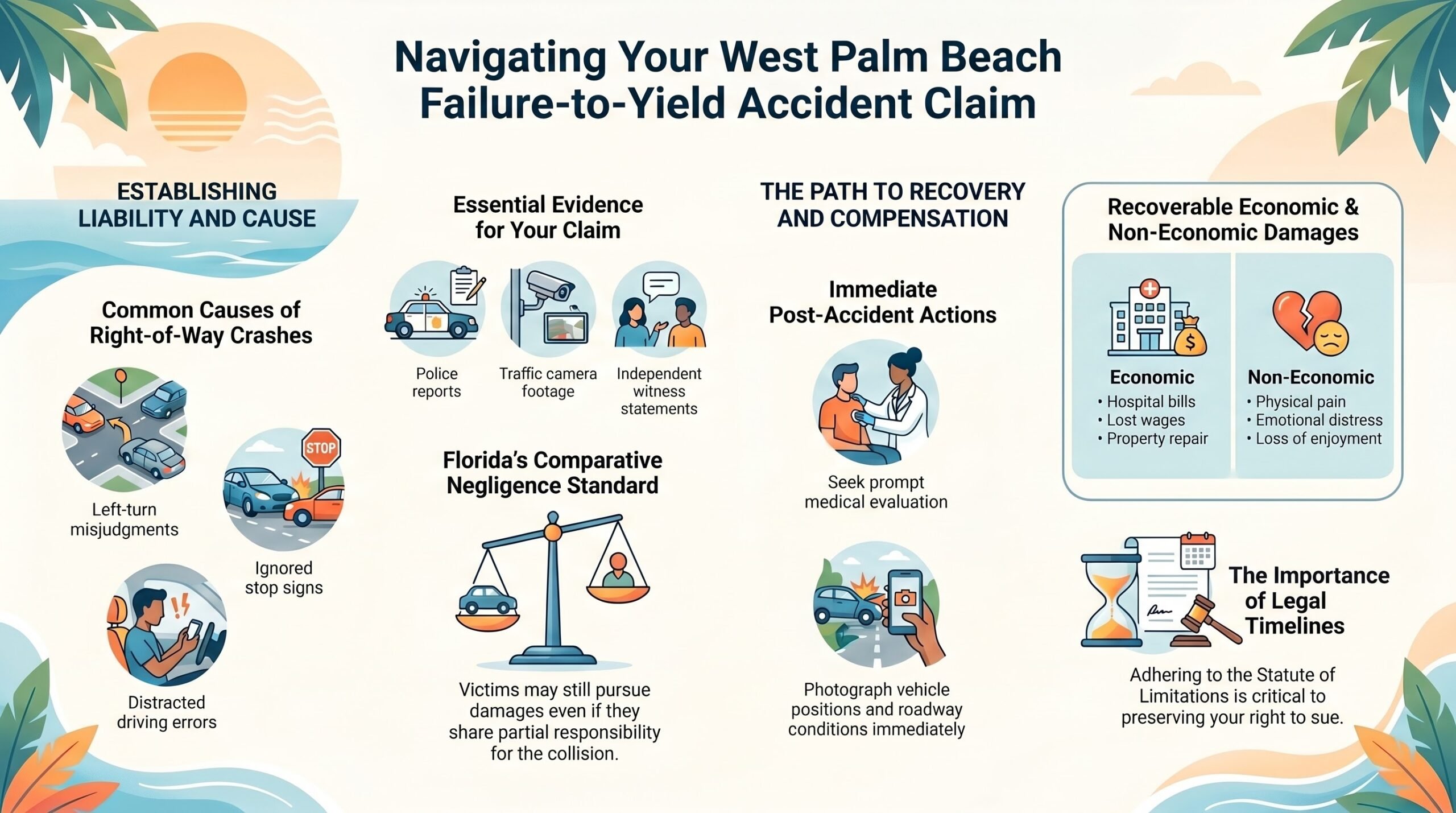
In West Palm Beach, failure-to-yield accident injury cases often arise when a driver, motorcyclist, bicyclist, or pedestrian is denied the right-of-way in violation of traffic rules. These matters frequently involve disputed timing, visibility, traffic control devices, and the conduct expected at Florida intersections under state law and local roadway conditions.
A careful review generally focuses on yielding obligations, available evidence, and whether each person acted with reasonable caution to protect others. Relevant evidence may include crash reports, witness statements, photographs, surveillance footage, vehicle damage, and medical records demonstrating the connection between the collision and the claimed injuries.
Legal analysis often examines comparative fault, because more than one party may share responsibility for what occurred. In service-oriented communities, understanding these cases helps injured individuals make informed choices, pursue accountability respectfully, and seek resources that support recovery, financial stability, and the well-being of their families after a serious roadway incident.
Common Causes of West Palm Beach Failure To Yield Accident
Several recurring factors contribute to failure-to-yield accidents in West Palm Beach, often arising when drivers misjudge left turns or disregard posted stop signs.
These collisions also frequently result from distracted driver errors, which impair attention, timing, and the ability to respond to surrounding traffic conditions.
In addition, unsafe lane changes can create sudden conflicts between vehicles, increasing the likelihood of serious roadway accidents.
Left Turn Misjudgments
Among the most frequent failure-to-yield scenarios in West Palm Beach, left turn misjudgments arise when a driver turns across oncoming traffic without allowing a safe gap to pass. These crashes often stem from poor intersection timing, rushed decisions, or inaccurate driver perception of another vehicle’s speed and distance.
Even a brief error can place passengers, motorcyclists, cyclists, and pedestrians in immediate danger.
In many cases, the turning driver believes there is enough room to proceed, yet changing traffic flow quickly eliminates that margin of safety. Sun glare, obstructed views, and heavy congestion can further impair judgment.
A careful review of roadway conditions, witness statements, and vehicle positions often helps clarify how the failure to yield occurred. Understanding these patterns supports safer driving practices and helps protect others from preventable harm in busy corridors.
Ignored Stop Signs
Ignored stop signs present another recurring source of failure-to-yield accidents in West Palm Beach, particularly at neighborhood intersections, commercial exits, and roads with obstructed sightlines. When motorists roll through or bypass these controls, they often enter crossing lanes without allowing other vehicles, cyclists, or pedestrians the lawful right of way.
Such violations can produce severe side-impact collisions and undermine pedestrian safety in areas where families, workers, and visitors rely on orderly movement. Even where traffic signals are absent, stop signs impose a clear duty to pause, observe, and proceed only when safe.
A careful review of roadway markings, visibility conditions, and witness accounts often reveals how a preventable crash occurred. Recognizing these patterns supports safer streets, helps injured people pursue accountability, and promotes greater care throughout the community.
Distracted Driver Errors
Distraction frequently causes drivers to miss vital right-of-way conditions at intersections, crosswalks, parking lot exits, and merge points throughout West Palm Beach.
When attention shifts from traffic signals, approaching vehicles, cyclists, or pedestrians, a driver may proceed without recognizing another person’s lawful path.
Common examples include phone distractions from texting, calling, using navigation, or checking notifications while moving or waiting to turn.
Other errors arise from eating, adjusting controls, speaking with passengers, or reacting to pedestrian distraction near busy sidewalks and storefronts.
Even a brief lapse can prevent a timely stop or proper scan for oncoming traffic.
Such conduct endangers families, visitors, and workers who rely on others to observe right-of-way rules.
Careful attention remains indispensable to protecting the public and reducing preventable failure-to-yield collisions.
Unsafe Lane Changes
At busy intersections and multilane roadways in West Palm Beach, unsafe lane changes frequently contribute to failure-to-yield accidents. These collisions often occur when drivers shift lanes without sufficient clearance, misjudge speed, or disregard another vehicle’s lawful position. Aggressive merging can force nearby motorists to brake suddenly or swerve, creating preventable danger for families, passengers, and pedestrians alike.
Blind-spot encroachment is another common factor, especially when a driver fails to check their mirrors or signals before moving over. In service to community safety, careful lane discipline remains crucial. Drivers are expected to yield before entering an occupied lane and to make movements only when movement can be completed safely. When that duty is ignored, serious injuries may follow, leaving injured people in need of legal guidance and practical support.


Legal Rights of West Palm Beach Failure To Yield Accident Injury Victims
Under Florida law, individuals injured in a West Palm Beach failure-to-yield accident have important legal rights that may allow them to pursue compensation for medical expenses, lost income, property damage, and pain and suffering.
These rights often depend on nuances of the statute, available insurance coverage, and evidence of how the collision occurred. Florida’s comparative negligence standard may reduce recovery if an injured person shares fault, yet it does not automatically bar a claim.
Florida law may allow West Palm Beach failure-to-yield victims to pursue damages even when comparative negligence applies.
- Victims may seek payment for current and future medical care, rehabilitation, and related out-of-pocket costs.
- They may recover lost wages, reduced earning capacity, and vehicle repair or replacement expenses.
- They may present evidence, witness statements, and expert opinions to support liability and damages.
- They may benefit from timely legal guidance that protects deadlines, preserves records, and advances accountability.
Why Do West Palm Beach Failure-to-Yield Accident Injuries Happen?
Often, West Palm Beach failure-to-yield accident injuries occur because a driver misjudges traffic conditions, ignores right-of-way rules, or proceeds through an intersection or turn without allowing sufficient time and space for others to react.
These crashes often occur in busy corridors where congestion, impatience, distraction, or limited visibility interfere with safe decision-making and timely braking.
In many cases, drivers focus on gaps in traffic but overlook cyclists, motorcyclists, or nearby walkers, increasing pedestrian risks.
Intersection design can also influence how these events occur, especially where signage is unclear, sightlines are obstructed, or turn lanes create confusion.
Weather, fatigue, speeding, and unfamiliar roads may further reduce a driver’s ability to yield appropriately.
Commercial vehicles and delivery traffic sometimes add pressure in areas with frequent stops and turning movements.
When right-of-way rules are neglected, even briefly, innocent people may suffer preventable harm that disrupts families, burdens caregivers, and strains community resources across West Palm Beach daily.
What Should You Do After a West Palm Beach Failure To Yield Accident Injury?
After a West Palm Beach failure-to-yield accident injury, prompt medical evaluation is important for restoring health and protecting the record of harm.
The accident scene should also be documented through photographs, witness information, and any available police report details, as this evidence may later support a claim.
An injury lawyer can then assess the circumstances, explain the available legal options, and help preserve the injured party’s rights.
Seek Immediate Medical Care
Seeking prompt medical evaluation should be a priority following a West Palm Beach failure-to-yield accident, even when injuries appear minor at first. Adrenaline can delay symptoms, while internal injuries, concussions, and soft tissue damage may worsen without timely treatment. An emergency evaluation helps identify urgent conditions, protects overall well-being, and creates a clear medical record tied to the collision.
Prompt care also supports pain management, follow-up treatment, and a safer recovery for those who continue serving family, coworkers, and the broader community. Physicians may recommend imaging, specialist referrals, medication, or physical therapy based on observed symptoms and clinical findings.
Consistent adherence to medical advice can reduce complications and demonstrate that the injured person acted responsibly after the crash. Immediate attention reflects prudence, compassion, and respect for personal and public safety.
Document The Accident Scene
At the scene of a West Palm Beach failure-to-yield collision, careful documentation can preserve vital evidence before vehicles are moved, debris is cleared, or memories begin to fade.
If conditions permit, individuals should record the positions of vehicles, skid marks, traffic signals, lane markings, and visible damage through clear, scene-photographing from multiple angles and distances.
They should also note weather, lighting, road conditions, and any obstructed signs or sightlines that may have contributed to the crash.
Debris mapping can help show points of impact and vehicle paths, especially where the fault is disputed.
Contact information for witnesses should be gathered respectfully, and brief statements may be noted while recollections remain fresh.
If officers respond, the responding agency, badge numbers, and report details should be documented for later reference and review.
Contact An Injury Lawyer
Consulting an injury lawyer promptly can help protect a claimant’s rights and clarify the next steps following a West Palm Beach failure-to-yield accident. Legal counsel can review police reports, medical records, and insurance communications, then identify deadlines, liability issues, and available compensation under Florida law.
An attorney may also provide an Emergency consultation when urgent questions arise regarding medical bills, lost income, or contact with an insurer. Early guidance often helps preserve evidence and prevent statements that could weaken a claim. In addition, counsel can explain Fee structures clearly, allowing families and caregivers to plan responsibly while focusing on recovery and service to others.
Critical Evidence in a West Palm Beach Failure To Yield Accident Injury Case
Establishing liability in a West Palm Beach failure-to-yield accident injury case often depends on the quality and preservation of crucial evidence.
A careful review of official records, visual proof, third-party accounts, and injury documentation can materially affect the strength of a claim.
The following sources are commonly recognized as central to demonstrating fault, causation, and damages:
- Police reports and citations
- Traffic camera footage
- Witness statements documentation
- Medical records proof
Police Reports And Citations
Police reports and traffic citations often serve as foundational evidence in a West Palm Beach failure-to-yield accident injury case because they document the responding officer’s observations, the parties involved, witness statements, roadway conditions, and any apparent traffic law violations. These records may help clarify fault, preserve details gathered in accordance with standard police procedures, and determine whether a driver was cited for failing to yield.
Although a citation does not alone prove negligence, it can support a broader evidentiary picture when combined with medical records, scene photographs, and testimony. If a cited driver pursues citation appeals, the outcome may affect how insurers and opposing parties evaluate responsibility.
Careful review of the report may also reveal inconsistencies, omissions, or neutral facts that help injured individuals pursue accountability and protect the well-being of those they serve.
Traffic Camera Footage
Beyond reports and citations, traffic camera footage can provide a direct visual account of how a West Palm Beach failure-to-yield collision occurred. When available, video may show vehicle positions, lane movements, signal timing, speed, and whether a driver entered an intersection without the right of way. This objective evidence can clarify disputed facts and support a careful reconstruction of events.
Footage from intersection cameras may also reveal road conditions, obstructions, and traffic flow in the moments before impact. In some cases, nearby business surveillance or a dashcam preserves additional angles that strengthen the evidentiary record.
Because recordings are often deleted quickly, prompt action is important for requesting, securing, and reviewing them. Properly obtained footage can help legal advocates pursue accountability and protect the injured person’s ability to seek fair recovery.
Witness Statements Documentation
In many failure-to-yield accident cases, witness statements provide essential context that may not appear fully in a crash report or video recording. Independent observations can clarify vehicle positions, signal use, speed, and right-of-way, helping to establish how the collision unfolded.
Careful documentation strengthens a claim by preserving details before memory fades. Prompt interviews, written summaries, and recorded accounts help preserve statements and reduce later disputes about what was seen or heard.
Attorneys often evaluate eyewitness credibility by considering vantage point, consistency, lighting, distractions, and any relationship to the parties involved. When statements are collected respectfully and organized thoroughly, they can help insurers, investigators, and courts assess responsibility fairly.
This process supports injured individuals and families seeking accountability, truth, and practical guidance after a serious roadway incident.
Medical Records Proof
Witness accounts may help explain how a failure-to-yield collision occurred, while medical records help show what that collision caused.
In a West Palm Beach injury claim, treatment notes, diagnostic imaging, physician assessments, and rehabilitation reports can connect the crash to specific physical harm and ongoing limitations.
These documents may also help demonstrate the timing, severity, and expected duration of injuries, which can guide a fair evaluation of damages. Consistent medical billing supports the scope of care received and may reveal future treatment needs.
Proper records authentication is equally important because insurers and courts often require reliable proof that records are complete, accurate, and tied to the injured person. When carefully organized, medical records can serve others by supporting accountability, clarifying losses, and helping injured individuals pursue the resources needed for recovery and continued well-being.
Long-Term Effects of West Palm Beach Failure To Yield Accident Injuries
Failure-to-yield accidents in West Palm Beach can cause injuries that continue to affect an individual long after the initial collision and emergency treatment.
These long-term effects often include chronic pain challenges and emotional trauma, both of which may interfere with daily functioning, employment, and overall quality of life.
In many cases, lasting mobility limitations further compound these difficulties, creating ongoing medical, personal, and financial burdens.
Chronic Pain Challenges
Beyond the immediate trauma, chronic pain is one of the most disruptive long-term effects associated with West Palm Beach failure to yield accidents. Persistent neck, back, joint, and nerve pain can limit mobility, reduce independence, and interfere with daily responsibilities, including work and caregiving.
For many injured people, Chronic fatigue develops as the body struggles to recover while coping with ongoing discomfort. Sleep disruption often follows, making concentration, patience, and physical recovery more difficult. Effective Pain management may require coordinated medical care, rehabilitation, and lifestyle adjustments tailored to the individual’s condition.
Without careful oversight, some patients also face risks tied to Medication dependence, especially when symptoms remain unresolved for extended periods. These challenges often require sustained support, practical accommodations, and informed legal advocacy to protect long-term well-being.
Emotional Trauma Impact
Long after physical injuries begin to stabilize, many people involved in West Palm Beach failure to yield accidents continue to experience significant emotional trauma. Symptoms may include anxiety, sleep disruption, irritability, recurring fear, and post-traumatic stress, all of which can affect relationships, work performance, and daily responsibilities. Loved ones often observe withdrawal, heightened vigilance, and difficulty trusting ordinary routines.
Meaningful recovery frequently requires compassionate support, counseling, and consistent care from professionals who understand trauma’s lasting effects. Faith communities, service-minded families, and dedicated advocates can help restore stability by encouraging treatment and patient communication.
Over time, many individuals strengthen Emotional resilience through therapy, structured coping strategies, and dependable encouragement. Recognizing these invisible injuries is vital because emotional harm merits attention, validation, and thoughtful intervention after a serious collision.
Lasting Mobility Limitations
For many injured individuals, reduced mobility becomes one of the most disruptive long-term consequences of a West Palm Beach failure to yield accident.
Lasting injuries to the spine, hips, knees, or nerves may limit walking, standing, lifting, and other basic activities that support independence and service to others.
These limitations often require ongoing treatment, structured rehabilitation, and the use of Assistive devices such as braces, canes, walkers, or wheelchairs.
In more serious cases, Home modifications, including ramps, widened doorways, and accessible bathrooms, may become necessary to restore safety and function.
Restricted movement can also affect employment, family responsibilities, and community involvement, creating practical burdens that extend far beyond the initial collision.
Careful legal evaluation helps document these losses so injured individuals can pursue resources needed for long-term support, stability, recovery, and dignity.
Proving Liability in West Palm Beach Failure To Yield Accident Injury Cases
Establishing liability in a West Palm Beach failure-to-yield accident injury case requires clear evidence that one driver had a legal duty to yield and failed to do so under the circumstances. Useful proof often includes crash reports, witness statements, intersection photographs, traffic camera footage, vehicle damage patterns, and medical records that connect the collision to the injured person’s losses.
Florida law may also require analysis of comparative liability when both drivers share some responsibility for the event. In those situations, attorneys and courts examine speed, signals, lane position, visibility, and right-of-way rules to determine each party’s percentage of fault. Expert testimony can strengthen a claim by explaining accident reconstruction findings, reaction times, roadway design, or how impact angles support one account over another.
Careful documentation helps families pursue accountability while protecting the interests of those affected. A thorough presentation of facts allows legal advocates to serve injured people with accuracy, dignity, and purpose.
Dealing With Insurance Companies After a West Palm Beach Failure To Yield Accident Injury
In the aftermath of a West Palm Beach failure to yield accident injury, communications with insurance companies can materially affect the value and direction of a claim. Insurers often request statements, medical authorizations, and recorded interviews soon after a collision. A careful, service-minded approach emphasizes accuracy, restraint, and documentation, so the injured person does not unintentionally minimize harm or accept unfair assumptions.
Insurance representatives may appear cooperative, yet their evaluations are guided by internal procedures, coverage terms, and financial interests. Organized records of treatment, wage loss, vehicle damage, and daily limitations can strengthen claim negotiation and support a fair presentation of damages. Attention to policy limits is also important because available coverage may influence resolution strategies and the resources ultimately accessible for care and recovery.
When communications remain measured and evidence-based, injured individuals are better positioned to protect their rights, preserve credibility, and pursue outcomes that support their families and communities after a serious traffic event.
What to Expect During a West Palm Beach Failure To Yield Accident Injury Claim Process
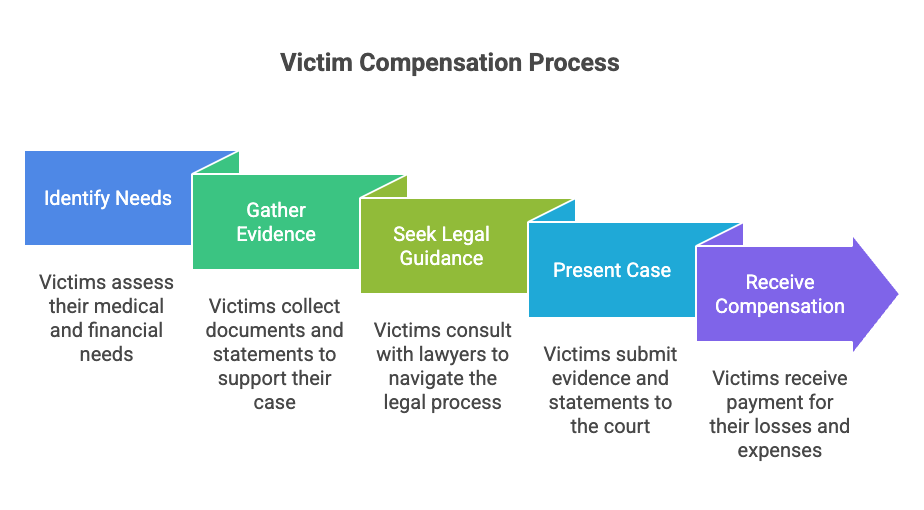
A West Palm Beach failure-to-yield accident-injury claim typically begins with prompt notice to insurers, the collection of basic records, and careful attention to filing requirements.
As the matter progresses, liability is assessed through police reports, witness statements, photographs, and other evidence, while the medical treatment timeline often shapes the value and direction of the claim.
The process may conclude through settlement negotiations, but if the parties cannot reach a fair resolution, litigation may become necessary.
Initial Claim Steps
Following a failure-to-yield crash in West Palm Beach, the initial injury claim process typically begins with prompt reporting, evidence preservation, and a careful review of the circumstances of the collision.
Injured individuals are often advised to notify insurers promptly because the timing of insurance can affect available benefits and procedural deadlines.
Early medical evaluation also supports recovery efforts while creating records documenting symptoms, treatment recommendations, and immediate concerns.
Claim forms, repair estimates, and wage-loss information are commonly collected during this stage to support an organized submission.
Communications with insurers should remain accurate and measured, since inconsistent statements may complicate the process or invite claim denial.
Legal guidance may help families and caregivers understand deadlines, protect rights, and focus attention on recovery, stability, and the ability to continue serving others in daily life.
Liability And Evidence
With liability under review, a West Palm Beach failure-to-yield injury claim often turns on whether the available evidence shows that one driver had a legal duty to yield and failed to do so under the circumstances. Investigators and counsel commonly examine crash reports, intersection layouts, vehicle damage, surveillance footage, witness statements, and phone data to determine how the collision occurred.
When accounts differ, Expert testimony may help clarify speed, sight lines, braking, and reaction time. Florida’s Comparative negligence principles can also affect recovery if both parties share fault. A careful review of traffic laws and roadway conditions helps identify each person’s role and supports fair accountability.
This evidence-centered approach serves injured people and the broader community by promoting truthful outcomes, responsible conduct, and a claims process grounded in diligence, transparency, and public safety.
Medical Treatment Timeline
Medical care often becomes the next major focus after fault and supporting evidence have been examined, because the course of treatment can shape both recovery and the value of a West Palm Beach failure-to-yield injury claim. Initial treatment commonly begins with emergency evaluation or urgent care, followed by imaging, specialist referrals, and written care instructions. Consistent follow-up is important because gaps in care may affect documented symptoms and measurable progress.
As recovery continues, providers may recommend additional appointments, medication management, pain treatment, or rehab such as physical therapy. Each stage creates records that show the diagnosis, limitations, and response to care.
Claimants are often encouraged to describe symptoms accurately, attend all appointments, and follow medical advice carefully. This steady timeline helps caregivers support healing while presenting a clear picture of injury-related needs.
Settlement Or Litigation
At this stage, a West Palm Beach failure-to-yield injury claim often moves into settlement discussions, although some matters proceed to litigation when liability, causation, or damages remain disputed.
During settlement negotiations, counsel typically presents medical records, wage-loss evidence, and proof of future needs to encourage a fair resolution that supports the injured person and their family. Insurers may respond with counteroffers, requests for clarification, or continued denial, requiring careful evaluation of risks and likely outcomes.
If negotiations stall, a measured Litigation strategy may include filing suit, conducting discovery, consulting experts, and preparing testimony for mediation or trial.
Throughout this phase, effective representation focuses on accountability, informed decision-making, and obtaining compensation that helps restore stability, protect long-term wellbeing, and serve the broader interests of justice for everyone involved.
Compensation for West Palm Beach Failure To Yield Accident Injury Damages
After a failure to yield collision in West Palm Beach, an injured person may be entitled to recover compensation for a broad range of damages caused by the crash. The amount pursued often depends on the severity of injuries, the length of recovery, and the degree to which daily responsibilities, service to family, and community involvement have been disrupted.
A careful claim evaluation may include emergency treatment, hospitalization, rehabilitation, prescriptions, and related travel costs. It may also consider lost income, reduced earning capacity, property loss, and other measurable financial setbacks.
In serious cases, medical valuation becomes important when projecting ongoing treatment needs, therapy, assistive equipment, and future caregiving. Documentation from physicians, vocational experts, and life care planners can help establish the full scope of harm.
By presenting complete evidence and a well-supported demand, counsel can pursue compensation that reflects the true impact of the collision and helps restore stability, dignity, and practical support for the injured person and loved ones.
Economic vs Non-Economic Damages in West Palm Beach Failure To Yield Accident Cases
In West Palm Beach failure to yield accident cases, damages are generally divided into economic and non-economic categories, each addressing a different aspect of the injured party’s losses.
Economic damages often include medical expenses, lost income, and other measurable financial costs, while non-economic damages may account for pain and suffering, emotional distress, and reduced quality of life.
The value of these damages depends on the strength of the supporting evidence, including financial records, medical documentation, and testimony regarding the injury’s overall impact.
Economic Damage Categories
From the outset, economic damages in a West Palm Beach failure-to-yield accident case refer to the measurable financial losses caused by the collision, while non-economic damages address the harder-to-quantify personal effects, such as pain, suffering, and reduced quality of life.
Economic damage categories commonly include emergency care, hospital bills, follow-up treatment, rehabilitation costs, medication expenses, lost wages, reduced earning capacity, and property damage. They may also include transportation to medical appointments, household assistance during recovery, and other out-of-pocket costs supported by records.
In service to injured individuals and their families, careful documentation of these losses helps present a clear picture of the financial burden created by another driver’s failure to yield. Accurate calculations and organized evidence often strengthen a claim and support fair recovery under Florida law.
Non-Economic Losses
Equally significant, non-economic losses in a West Palm Beach failure-to-yield accident case concern the intangible harms that do not appear on receipts or billing statements, yet often affect an injured person’s daily life in substantial ways. These losses may include physical pain, emotional distress, loss of enjoyment of life, inconvenience, scarring, and diminished ability to participate in family or community activities.
In service-oriented legal advocacy, careful attention to these harms helps guarantee the person behind the claim remains central to the case. Non-economic damages consequently recognize human suffering that extends beyond direct financial expense.
While pain valuation and quality adjustments are often referenced when describing these effects, the broader purpose is to acknowledge meaningful changes in comfort, relationships, independence, and overall well-being after a preventable collision.
Proving Damage Value
Clarity is essential when proving damage value in a West Palm Beach failure-to-yield accident case, because the strength of any claim depends not only on showing that harm occurred, but also on demonstrating its extent with reliable evidence.
Economic damages are commonly established through medical bills, wage records, repair estimates, and expert opinions addressing long-term care needs and future earning power.
Non-economic damages require a different form of proof, often relying on treatment history, physician observations, testimony from loved ones, and consistent documentation of pain, emotional distress, and reduced quality of life.
Careful damage valuation helps present a complete picture of loss, which supports fair recovery and responsible advocacy.
In service-minded representation, precise valuation promotes accountability, protects injured people, and helps families move forward with greater stability and dignity.
When a West Palm Beach Failure To Yield Accident Injury Case Goes to Trial vs Settlement
In many West Palm Beach failure-to-yield accident cases, the decision to proceed to trial or resolve the claim through settlement depends on the strength of the evidence, the extent of the injuries, and the parties’ willingness to negotiate in good faith.
Careful trial strategy often begins long before a courtroom date, while settlement dynamics may shift as medical records, witness accounts, and expert opinions become clearer.
Settlement may serve injured people well when liability is reasonably clear, and the insurer offers compensation that reflects medical needs, lost income, and future care.
Trial may become necessary when fault is disputed, damages are minimized, or negotiations fail to fully account for the human impact of the collision.
A thoughtful legal team evaluates risks, costs, timing, and the client’s broader goals, including the desire to protect family stability and personal dignity.
Whether through negotiated resolution or courtroom advocacy, the process should remain focused on accountability, fairness, and meaningful recovery.
Florida Laws That May Affect Your West Palm Beach Failure To Yield Accident Case
Beyond questions of trial strategy and settlement value, the outcome of a West Palm Beach failure-to-yield accident case may also be shaped by several Florida laws governing fault, insurance coverage, filing deadlines, and recoverable damages.
These rules often determine how responsibility is assigned and what compensation may be available to support an injured person’s recovery and future stability.
- Comparative negligence can reduce damages when both drivers share blame for the collision.
- Traffic ordinances and state right-of-way statutes may help show whether a motorist acted unreasonably.
- Florida’s no-fault insurance system may affect access to PIP benefits before broader injury claims proceed.
- Damage rules may influence recovery for medical costs, lost income, property loss, and noneconomic harm.
Courts, insurers, and counsel generally review these laws jointly, rather than in isolation. A careful legal assessment may help families, caregivers, and community-minded individuals understand obligations, protect evidence, and pursue a fair result.
The Statute of Limitations for West Palm Beach Failure To Yield Accident Injury Cases
After a failure to yield collision in West Palm Beach, the time allowed to file an injury lawsuit can be as important as the evidence used to prove fault. Florida law sets strict filing deadlines, and missing them can prevent an injured person from seeking compensation, regardless of how strong the claim may be.
In many negligence cases, the statute of limitations begins on the date of the crash. However, certain facts may affect that timeline. In limited circumstances, discovery tolling may apply when an injury or its cause could not reasonably have been known immediately.
Claims involving government entities, minors, or wrongful death may also follow different procedural rules or shortened notice requirements. Because these deadlines protect the fairness of the legal process for all parties, prompt attention serves both the injured individual and the broader interest of accountability.
Careful review of dates, records, and applicable exceptions is vital to preserving a valid claim under Florida law.
How a West Palm Beach Failure To Yield Accident Injury Lawyer Can Help You
When a failure-to-yield crash causes serious injury, a West Palm Beach accident lawyer can provide structure, investigation, and legal direction at a time when important decisions must be made quickly.
Counsel evaluates liability, preserves evidence, communicates with insurers, and measures damages so the injured person can focus on recuperation and family responsibilities.
- Review police reports, witness statements, medical records, and scene evidence to build a clear account of fault.
- Identify available insurance coverage, calculate present and future losses, and pursue fair compensation through negotiation.
- Connect injured individuals with Local resources, including medical providers, rehabilitation options, and support services that strengthen recovery.
- Present the claim with professionalism, supported by documentation, expert input, and Client testimonials that reflect reliable service and trust.
A lawyer also protects the process from avoidable mistakes, delays, and low settlement tactics.
This assistance supports accountability, preserves dignity, and helps families pursue outcomes that serve both recovery and long-term stability.
When to Contact a West Palm Beach Failure To Yield Accident Injury Lawyer
Recognizing the right time to seek legal counsel can materially affect the strength of a failure to yield injury claim in West Palm Beach. Prompt contact is often prudent after any collision involving injuries, disputed fault, unclear insurance communications, or missing evidence. Early guidance helps preserve records, identify witnesses, and support orderly next steps that protect all involved.
A lawyer should also be contacted when medical treatment is ongoing, vehicle damage is substantial, or an insurer requests statements, releases, or quick settlement decisions. In these situations, timely clarification of the statute may help a family understand important deadlines without confusion. A clear hiring timeline is especially valuable when the injured person is recovering, coordinating care, and trying to serve loved ones responsibly.
Seeking counsel soon after the crash, or as soon as concerns arise, can reduce avoidable setbacks and promote a more organized response. This approach supports informed choices, careful documentation, and steadier progress throughout the claims process.
Why You Need an Experienced West Palm Beach Failure To Yield Accident Injury Lawyer
Early legal guidance can protect a claim, but the value of representation often depends on the lawyer’s experience with failure to yield collisions in West Palm Beach. An experienced attorney understands how these crashes occur, how insurers challenge fault, and how local statutes shape liability, deadlines, and available compensation for injured people and their families.
Seasoned representation also helps preserve evidence that supports a stronger recovery. A lawyer with relevant experience can interpret crash reports, identify witnesses, obtain traffic camera footage, and work with medical providers to connect injuries to the collision.
When liability is disputed, expert testimony may clarify vehicle movement, right-of-way violations, and the long-term impact of physical harm. This level of advocacy can reduce costly mistakes and present a clear account of losses.
For those focused on restoring stability and continuing to serve loved ones and the community, experienced legal counsel provides structure, protection, and informed direction during a difficult period.
How to Choose the Right West Palm Beach Failure To Yield Accident Injury Lawyer for Your Case
In selecting counsel after a failure to yield collision, the focus should remain on qualifications that directly affect the strength and value of the claim. A careful review should include courtroom experience, settlement results, knowledge of Florida traffic injury law, and the ability to document medical losses with precision.
Equally important is Client rapport, because effective communication helps injured people make informed choices while continuing to care for their families and communities. An attorney should respond promptly, explain legal options clearly, and show consistent respect for the client’s goals.
Fee structures also merit close attention. Terms should be transparent, understandable, and presented before representation begins, so financial concerns do not interfere with recovery. It is also wise to weigh available resources, including investigators, expert witnesses, and staff support.
A firm with strong preparation practices and disciplined case management is better positioned to pursue accountability and secure compensation that reflects the full impact of the collision.
About The Law Offices of Anidjar & Levine
After evaluating the qualities that matter when choosing legal representation, attention may turn to the firm itself and the services it provides to injured clients.
The Law Offices of Anidjar & Levine presents itself as a practice focused on supporting accident victims through attentive guidance, clear communication, and responsive legal advocacy in West Palm Beach and throughout Florida.
Its firm history reflects growth built on representing injured people in personal injury matters, including motor vehicle collisions involving failure to yield.
The firm emphasizes accessibility, individualized attention, and practical assistance during difficult periods, helping clients pursue compensation for medical expenses, lost income, and related harms.
Client testimonials often highlight professionalism, compassion, and consistent updates, which can matter greatly to families seeking dependable counsel.
In a service-oriented context, the firm’s role extends beyond legal filings and negotiations, aiming to reduce burdens so injured individuals may focus on recovery while their claims are handled with diligence and care.
Frequently Asked Questions
Can I Recover Damages if the Other Driver Fled the Scene?
Yes, damages may still be recoverable if the other driver fled the scene. A claimant may pursue Insurance claims through personal coverage, including Uninsured motorists benefits, when the at-fault party cannot be identified.
Recovery often depends on prompt reporting, medical documentation, and available evidence such as witness statements or surveillance footage. Legal guidance can help protect the injured person’s rights and support a fair outcome that serves both accountability and community safety.
Will My Immigration Status Affect My Accident Injury Claim?
Immigration status does not automatically prevent an injured person from pursuing an accident claim. Courts and insurers generally focus on fault, injuries, and losses, rather than immigration concerns.
Still, case details can affect what evidence is needed and how communications are handled. Careful documentation assistance helps protect rights, support medical records, and present damages clearly. A qualified attorney can evaluate risks, address procedural issues, and guide the claimant through each step.
Can I Switch Lawyers During My Failure to Yield Case?
Yes, a person can change counsel in a failure-to-yield case, provided the transition complies with court rules and protects the client’s interests.
An attorney substitution is commonly used to formalize the change and notify all parties.
Careful timing matters, especially near hearings or settlement discussions.
New counsel should promptly review deadlines, liens, and strategy so the case proceeds efficiently and service to the injured party remains the central priority throughout.
Are Accident Settlement Proceeds Taxable in Florida?
In Florida, accident settlement proceeds are often not taxable when they compensate for physical injuries or illness.
However, tax implications may arise for portions covering lost wages, interest, or punitive damages.
Proper settlement reporting remains important, especially when multiple damage categories are included.
Those seeking to serve their families and communities wisely should review settlement terms carefully and obtain qualified tax guidance to secure accurate compliance and protect financial recovery.
How Are Attorney Fees Typically Structured for These Cases?
Attorney fees in these cases are typically structured through a contingency fee, meaning counsel is paid only if a recovery is obtained for the injured party. This approach often helps clients pursue justice while preserving resources for family and care needs.
In less common situations, an hourly retainer may apply, particularly for limited services or disputed matters. Fee percentages, costs, and responsibilities are usually defined clearly in a written agreement.
—————————
In West Palm Beach, failure-to-yield accident cases can be materially affected by informed legal guidance.
A qualified attorney can evaluate liability, protect the victim’s rights, and pursue fair compensation for medical costs, lost income, and related damages.
The Law Offices of Anidjar and Levine provides focused representation backed by experience and careful case preparation.
For injured individuals, timely legal action remains an important step toward financial recovery and accountability.
If you need help after a crash, consult a West Palm Beach Car Accident Lawyer.